Temperate, clear weather in Massachusetts on Thursday is expected to take a dark turn later on as a storm system brings a downpour and damaging winds, according to the National Weather Service.
Low temperatures in the low 20s to 30s Wednesday night are predicted to rise into the mid to high 40s on Thursday amid sunny skies, the weather service said. Lows in the low 40s and patchy fog are expected that night.
Western Massachusetts is predicted to begin experiencing rain first, around 1 a.m. on Friday, according to the weather service. Central Massachusetts is expected to see the downpour next, around 2 a.m., while Eastern Massachusetts is predicted to get precipitation around 3 a.m. The southeastern-most parts of the state aren’t expected to see rain until around 5 a.m. Friday.
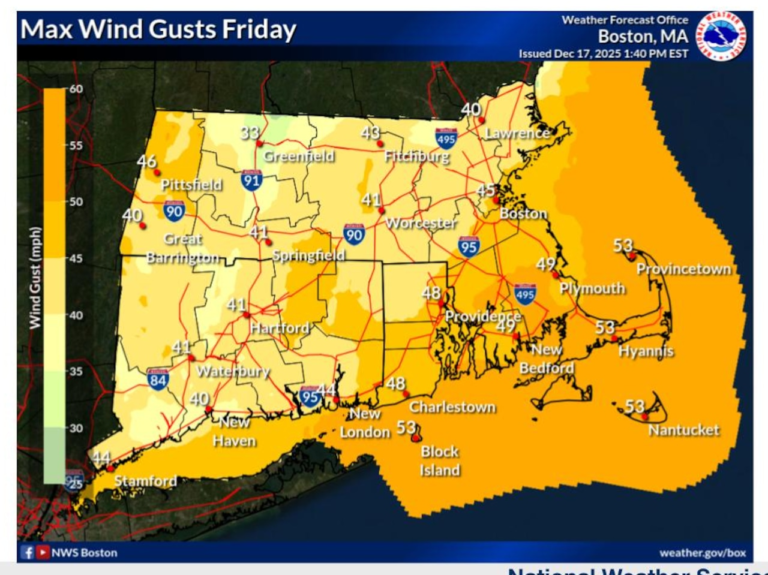
The Cape and Islands are predicted to experience the strongest winds during the storm, according to the weather service. Winds of 20 to 30 mph with gusts up to 55 mph are expected, and a High Wind Watch is set to go into effect for this part of the state sometime Friday morning and last through the afternoon.
The rest of Massachusetts is expected to be under a wind advisory from 4 a.m. Friday until 1 a.m. Saturday. Wind gusts of 40 to 50 mph are possible Friday morning and evening, and the Berkshires and Worcester Hills could see gusts up to 60 mph during the latter burst.
All of Massachusetts is expected to be under a high wind watch or wind advisory on Friday as a storm passes through.National Weather Service
During this time, damaging winds could blown down trees and power lines, and power outages are possible, according to the weather service. Travel is expected to be difficult, especially for tall vehicles.
High temperatures throughout Massachusetts are predicted to reach the mid to high 50s on Friday, according to the weather service. The downpour is expected to continue until the late afternoon, after which there is a chance of rain until the late evening.
Most of Massachusetts can expect to get about an inch of rain total during the storm, though some communities may see up to 2 inches, according to the weather service. The Berkshires and higher elevations in Central Massachusetts may also experience some snow as temperatures drop later on on Friday, but little to no accumulation is expected.
Overnight lows in the mid 20s are predicted for Friday night, according to the weather service. Saturday is expected to bring mostly sunny skies and highs in the mid 30s to low 40s.
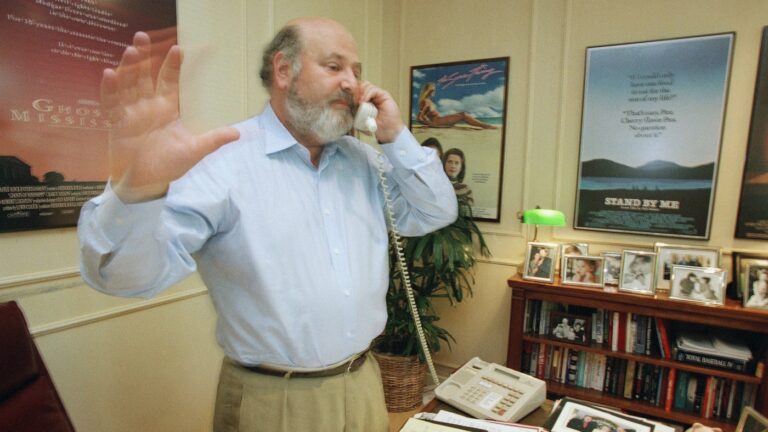
Rob Reiner at his office in Beverly Hills, Calif., in July 1998.
Reed Saxon/AP
hide caption
toggle caption
Reed Saxon/AP
Maybe an appreciation of Rob Reiner as a director should start with When Harry Met Sally…, which helped lay the foundation for a romantic comedy boom that lasted for at least 15 years. Wait — no, it should start with Stand By Me, a coming-of-age story that captured a painfully brief moment in the lives of kids. It could start with This Is Spinal Tap, one of the first popular mockumentaries, which has influenced film and television ever since. Or, since awards are important, maybe it should start with Misery, which made Kathy Bates famous and won her an Oscar. How about The American President, which was the proto-West Wing, very much the source material for a TV show that later won 26 Emmys?
On the other hand, maybe in the end, it’s all about catchphrases, so maybe it should be A Few Good Men because of “You can’t handle the truth!” or The Princess Bride because of “My name is Inigo Montoya, you killed my father, prepare to die.” Maybe it’s as simple as that: What, of the words you helped bring them, will people pass back and forth to each other like they’re showing off trading cards when they hear you’re gone?
There is plenty to praise about Reiner’s work within the four corners of the screen. He had a tremendous touch with comic timing, so that every punchline got maximum punch. He had a splendid sense of atmosphere, as with the cozy, autumnal New York of When Harry Met Sally…, and the fairytale castles of The Princess Bride. He could direct what was absurdist and silly, like Spinal Tap. He could direct what was grand and thundering, like A Few Good Men. He could direct what was chatty and genial, like Michael Douglas’ staff in The American President discussing whether or not he could get out of the presidential limo to spontaneously buy a woman flowers.
But to fully appreciate what Rob Reiner made in his career, you have to look outside the films themselves and respect the attachments so many people have to them. These were not just popular movies and they weren’t just good movies; these were an awful lot of people’s favorite movies. They were movies people attached to their personalities like patches on a jacket, giving them something to talk about with strangers and something to obsess over with friends. And he didn’t just do this once; he did it repeatedly.
Quotability is often treated as separate from artfulness, but creating an indelible scene people attach themselves to instantly is just another way the filmmakers’ humanity resonates with the audience’s. Mike Schur said something once about running Parks and Recreation that I think about a lot. Talking about one particularly silly scene, he said it didn’t really justify its place in the final version, except that everybody loved it: And if everybody loves it, you leave it in. I would suspect that Rob Reiner was also a fan of leaving something in if everybody loved it. That kind of respect for what people like and what they laugh at is how you get to be that kind of director.
The relationships people have with scenes from Rob Reiner movies are not easy to create. You can market the heck out of a movie, you can pull all the levers you have, and you can capitalize on every advantage you can come up with. But you can’t make anybody absorb “baby fishmouth” or “as you wish“; you can’t make anybody say “these go to 11” every time they see the number 11 anywhere. You can’t buy that for any amount of money. It’s magical how much you can’t; it’s kind of beautiful how much you can’t. Box office and streaming numbers might be phony or manipulated or fleeting, but when the thing hits, people attach to it or they don’t.
My own example is The Sure Thing, Reiner’s goodhearted 1985 road trip romantic comedy, essentially an updated It Happened One Night starring John Cusack and Daphne Zuniga. It follows a mismatched pair of college students headed for California: She wants to reunite with her dullard boyfriend, while he wants to hook up with a blonde he has been assured by his dirtbag friend (played by a young, very much hair-having Anthony Edwards!) is a “sure thing.” But of course, the two of them are forced to spend all this time together, and … well, you can imagine.
This movie knocked me over when I was 14, because I hadn’t spent much time with romantic comedies yet, and it was like finding precisely the kind of song you will want to listen to forever, and so it became special to me. I studied it, really, I got to know what I liked about it, and I looked for that particular hit of sharp sweetness again and again. In fact, if forced to identify a single legacy for Rob Reiner, I might argue that he’s one of the great American directors of romance, and his films call to the genre’s long history in so many ways, often outside the story and the dialogue. (One of the best subtle jokes in all of romantic comedy is in The American President, when President Andrew Shepherd, played by Michael Douglas, dances with Sydney Wade, played by Annette Bening, to “I Have Dreamed,” a very pretty song from the musical … The King and I. That’s what you get for knowing your famous love stories.)
Rob Reiner’s work as a director, especially in those early films, wasn’t just good to watch. It was good to love, and to talk about and remember. Good to quote from and good to put on your lists of desert island movies and comfort watches. And it will continue to be those things.
Another day, another nine-figure round for a nuclear startup.
Radiant Nuclear said today that it has raised more than $300 million, just one day after Last Energy said it had raised $100 million. Three weeks ago, X-energy raised $700 million, and in August, Aalo Atomics raised $100 million. Heck, Radiant itself raised $165 million just six months ago.
Given the string of investments, it seems reasonable to ask whether the nuclear world is in a bubble. Investment in the technology has tracked closely with the data center boom. AI requires tremendous amounts of electricity, and tech companies and data center developers have been rushing to secure supplies from sources ranging from nuclear fission to supersonic jet engines.
As long as tech companies’ power demands continue to grow, interest in nuclear is likely to remain strong. But there might be a winnowing of the field in the next year or two if startups don’t deliver on their promises, many of which revolve around starting their first reactor next year.
Some startups might be able to buy some time after that. First-of-a-kind reactors can be built by hand, but many nuclear startups are predicated on the idea that mass manufacturing will make fission cost-competitive. They might succeed at reaching criticality but stumble when they try to replicate their designs.
None of this is to say that Radiant will fall into that category; it may very well succeed. Rather, the company just happens to be the latest in a long list of nuclear startups that have announced eye-popping fundraises in the last few months. Anytime a market gets that frothy, the B-word is bound to pop up.
The new round was led by Draper Associates and Boost VC with participation from Ark Venture Fund, Chevron Technology Ventures, Friends & Family Capital, Founders Fund, and others. It values Radiant at more than $1.8 billion. Previous investors include Andreessen Horowitz, DCVC, Giant Ventures, and Union Square Ventures.
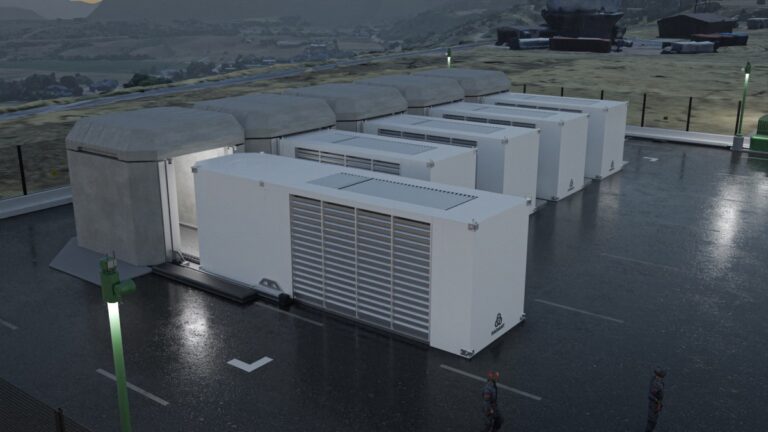
Radiant is developing a microreactor capable of generating 1 megawatt of electricity that can be delivered via semi. It will be cooled by helium and will have enough TRISO fuel — carbon and ceramic-coated beads of graphite and uranium that are designed to be more resistant to meltdowns — to last five months between refueling.
The startup is aiming to replace diesel generators at commercial and military sites. Customers will be able to buy the units outright or subscribe to a power-purchase agreement. When the reactor’s 20-year lifetime is up, the company will haul it away.
Like many nuclear startups, Radiant is targeting data centers as some of its first customers. The company signed a deal with data center developer Equinix in August to supply 20 of its reactors.
First, Radiant is building a demonstration reactor at the Idaho National Lab, which it hopes to begin testing in the summer of 2026. Many nuclear startups are on a similar timeline, one set by the Trump administration’s goal of three reactors achieving criticality — the moment when a nuclear reaction is self-sustaining — by July 4, 2026.
Radiant is one of 11 companies selected for that program, which doesn’t provide government grants or loans but instead speeds approval timelines.
I know what you’re thinking, didn’t OnePlus release a new phone just last month? It did. A little over five weeks after the announcement of the OP15, the company is back with the OnePlus 15R, a more affordable version of its new flagship that starts at $700 (or $200 less than its sibling). Off the top, this will be a shorter review because most of what I said about the OnePlus 15 also applies to the OP15R. It’s a great phone that asks you to make one pretty significant compromise.
OnePlus / Engadget
The OnePlus 15R has many of the same strengths as the more expensive OP15, but shaves off $200 off by compromising on cameras.
The OnePlus 15R’s screen is slightly cooler than that of the OnePlus 15. (Igor Bonifacic for Engadget)
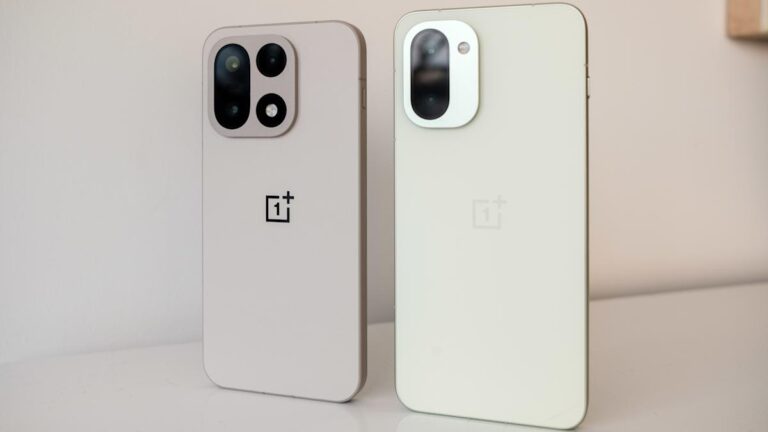
Like the OnePlus 15, the 15R looks like the OnePlus 13s and 13T, a pair of smaller, 6.32-inch phones the company released in India and China this past spring. I said the design of the OP15 was boring and derivative of the iPhone 16 Pro. The 15R has done nothing to change that opinion. With one fewer camera, the OP15R doesn’t look much different from the iPhone 12 I’ve been hanging on to since 2020.
That said, I’m more fond of the 15R’s mint breeze color (the phone is also available in charcoal black) than the sand storm shade of my OP15. We’re big fans of minty phones here at Engadget, and OnePlus has gone with a particularly pleasing hue of the color with its new phone. With the redesign, OnePlus has also improved the phone’s waterproofing, bringing it in line with the OP15. The new handset is IP69K-certified against moisture and dust, meaning it can withstand heated water shot at it at pressure. Like the OP15, the 15R trades OnePlus’ old Alert Slider for a new Plus Key. It functions like the iPhone’s Action button, allowing you to add a shortcut for a favorite feature. For example, you can configure it to open the camera app or act as a do not disturb toggle, among a few other options.
One departure from the OP15 is that the 15R has a larger 6.83-inch display, making it slightly taller than its sibling. OnePlus is marketing this as one reason buyers might pick the 15R over the OP15, but holding the phones side by side, there’s not much difference between the two. They’re both big, and you’ll either like that or won’t.
On top of being big, the 15R’s screen can refresh at a fast 165Hz in games. The two displays are also comparable in terms of resolution and brightness; both can push 1,800 nits of brightness. One difference I noticed is the OnePlus 15 has a warmer panel, even when the two phones are set to the same colorspace. I’ve reached out to OnePlus to find what might be causing the disparity, but for now it may be due to a quality control issue or oversight in the company’s software.
One last thing, OnePlus has upgraded the 15R to add an ultrasonic fingerprint sensor beneath the screen. This is placed in a nice spot toward the bottom third of the display, and it’s fast and accurate.
Performance and battery
The OnePlus 15R is also slightly thinner than the OnePlus 15. (Igor Bonifacic for Engadget)
The OnePlus 15R is the first phone in North America to arrive with Qualcomm’s latest Snapdragon 8 Gen 5 chipset. Not to be confused with the Snapdragon Gen 5 Elite in the OP15, this new chipset is similar to Qualcomm’s flagship system-on-a-chip but has a weaker CPU and GPU. This is reflected in benchmarks like Geekbench 6 where the OP15 handily outperforms the OP15R. It’s not even close, either, with the OP15 delivering standout single- and multi-core scores of 3,773 and 11,293, while the 15R put up more modest results of 2,857 and 9,512.
From that perspective, you’re losing a fair amount of performance, but real-world use tells a different story. Outside of the handful of games such as Call of Duty: Mobile and PUBG that support the OP15 and 15R’s 165Hz displays, the Snapdragon 8 Gen 5 offers more than enough muscle for the majority of applications. Even for most games (like the ones I like to play, including Diablo Immortal and League of Legends: Wild Rift), the Snapdragon 8 Gen 5 is a great match.
OnePlus also hasn’t skimped on the 15R’s other internal components. You’re still getting 12GB of LPDDR5X Ultra RAM and 256GB of UFS 4.1 storage. That’s the same configuration as the base model of the OP15. This translates to a phone that doesn’t miss a beat when switching between apps and loading files like images and videos.
The 15R has a slightly bigger battery, coming in at 7,400mAh, up from 7,300mAh on the OP15. In practice, the two phones offer the same amount of battery life. Putting them through both Engadget’s video rundown test, they both ran for 38 hours before their batteries died (which makes sense given the OP15R has a bigger screen). Like the OP15, the 15R comes with the OnePlus 55W SUPERVOOC charger in the box. The adapter can get the 15R from dead to 100 percent in less than an hour. If you hate charging your phone, the 15R makes that process as painless as possible, with a battery that both lasts long and won’t be at the outlet for hours.
Cameras
A closeup of the OnePlus 15R’s camera module. (Igor Bonifacic for Engadget)
By this point you’re probably wondering what OnePlus cut from the OP15 to make the 15R more affordable. The answer — quite literally — is an entire camera. The new phone is missing a telephoto camera, something you could find on its predecessor, the OnePlus 13R. And as far as I can tell, the two remaining cameras use the same 50-megapixel and 8MP sensors OnePlus shipped on last year’s model. The company also hasn’t upgraded the glass on either camera. That leaves the selfie camera as the only area to see some change in the form of a sharper 32MP sensor and the addition of autofocus.
Unfortunately, none of the 15R’s cameras stand out. As a whole, they suffer from the same set of problems that plague the OnePlus 15’s cameras. They’re fine out on a sunny day, but as soon as the light becomes a bit challenging, the 15R struggles with shadow details, resulting in muddy pictures. The more I’ve used both the OP15 and 15R, the more I’ve come to the conclusion that OnePlus needs to go back to the drawing board with its new Detail Max Engine. It feels like it’s holding back what should, at least on paper, be solid hardware.
Software
Despite it’s large size, the OnePlus 15R isn’t too heavy. (Igor Bonifacic for Engadget)
There’s not much to say here other than the 15R ships with OxygenOS 16, just like the OP15. OnePlus has also promised to support the 15R for the same amount of time as the OP15: four years with software updates and six years with security patches. That’s a shorter window than Google and Samsung, both of which promise seven years on all their latest phones. It’s hopefully something that OnePlus decides to change starting with the OnePlus 16. The reason I bring that up is that the company’s version of Android is one I like a lot. OxygenOS is slick, with animations that highlight the speed of the 15R’s processor and display. The fact the phone comes with the latest version of OxygenOS means you also get access to all of the company’s newest AI features, including its Mind Space hub where you can save screenshots and notes for an on-device model to transcribe and summarize.
Wrap-up
The OnePlus 15R comes in a lovely mint color. (Igor Bonifacic for Engadget)
In short, the OnePlus 15R is the phone for people who don’t care about photos and videos. That’s the same conclusion I came to with the OP15. If you’re a OnePlus fan, the 15R excels in all the areas you would expect the company’s devices to make a good showing: performance, battery life and display responsiveness. Given I wasn’t too impressed with the OP15’s camera, I would actually recommend the 15R over that model. For $200 off the starting price of the OP15, you’re getting a device that has almost all of the same strengths of its more expensive sibling.
Compared to other phones in its price range, such as the Pixel 10 and Galaxy S25 FE, the 15R is not as well-rounded, and can’t compete with those devices in camera quality, but you’re getting much better performance, battery life and a display they can’t match.
Nothing introduced “Lock Glimpse” earlier this year on its new budget-focused Phone (3a) Lite, and the sort of lockscreen “ads” appear to drain your battery from beyond the grave.
The “Lock Glimpse” experience is technically optional, though, as a setting exists to turn the feature off. But that doesn’t remove it, as the app powering it cannot be uninstalled.
As per usual, though, there is a more advanced way to fully remove the app using ADB commands, at which point you’re fully rid of the somewhat sketchy service. But, as it turns out, that seems to have an impact on battery life.
Advertisement – scroll for more content
Some have found that when the “Lock Glimpse” app is fully removed from the device, Nothing OS tries to restart it every 3 seconds, leading to unnecessary battery drain. The reason some users want to remove the app is, as a detailed Reddit post on the matter proves, it sends data requests to that sketchy clickbait farm within every 24 hours, even if the feature is fully turned off.
So, essentially, you’re choosing between full privacy or terrible battery life, which is a choice no one should be forced to make.
We’ll update this post if Nothing adds any context around this, but last time we asked about the sketchy partners being used for “Lock Glimpse,” no further information was provided.
A frozen dessert company has launched a nationwide recall after finding rocks and other hard objects in their products.
The recall is for Danone’s So Delicious Dairy Free Salted Caramel Cluster Non-Dairy Frozen Dessert pints with multiple expiration dates before Aug. 8, 2027, at retail stores nationwide, according to a statement from the Food and Drug Administration (FDA).
The voluntary recall was initiated on Dec. 15 after the company found small stones and other hard objects within the cashew inclusions.
The FDA says it’s been informed of the recall and that So Delicious Dairy Free is working swiftly with retail partners to remove the products from store shelves.
“In the meantime, the company has already identified and corrected this issue and will soon be able to bring back the frozen dessert so many people enjoy,” the statement reads. “So Delicious Dairy Free takes every consumer experience seriously and is initiating this voluntary recall in line with its commitment to product quality and consumer safety.”
Customers who have purchased the affected product should not eat it, the FDA said.
For information on refunds, people can contact the So Delicious Dairy Free Care Line at 1-833-367-8975. Customers can also reach out to the Consumer Care team via webform here.
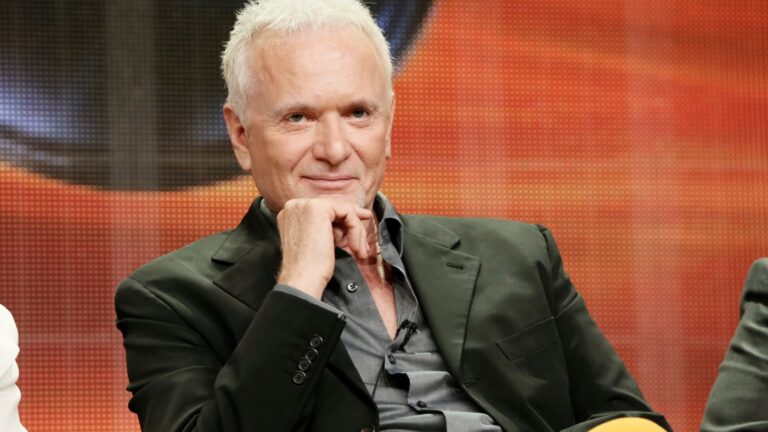
Anthony Geary attends the Disney ABC panel for “General Hospital” at the Beverly Hilton Hotel, July 26, 2012, in Beverly Hills, Calif.
Todd Williamson/AP/Invision
hide caption
toggle caption
Todd Williamson/AP/Invision
Anthony Geary, who rose to fame in the 1970s and ’80s as half the daytime TV super couple Luke and Laura on “General Hospital,” has died. He was 78.
“We are deeply saddened by the passing of Anthony Geary, whose portrayal of Luke Spencer helped define General Hospital and daytime television,” ABC said in a statement confirming his death.
Geary died Sunday in Amsterdam of complications from a surgical procedure three days prior.
“The entire ‘General Hospital’ family is heartbroken over the news of Tony Geary’s passing,” Frank Valentini, executive producer of the ABC show, said in a statement Monday. “Tony was a brilliant actor and set the bar that we continue to strive for.”
In a career spanning more than 40 years, Geary earned eight Daytime Emmy awards as Luke Spencer after joining the soap in 1978. Luke’s pairing with Genie Francis’ Laura Webber Baldwin (as she was known at the time) propelled the two onto magazine covers and into the cultural mainstream.
The 1981 wedding of Luke and Laura was a pop culture phenom done in two parts, drawing guest appearances that included Elizabeth Taylor. A record 30 million viewers watched.
“He was a powerhouse as an actor. Shoulder to shoulder with the greats. No star burned brighter than Tony Geary. He was one of a kind. As an artist, he was filled with a passion for the truth, no matter how blunt, or even a little rude it might be, but always hilariously funny,” Francis said in a statement.
Christian Jules Le Blanc, left, poses with Anthony Geary and Maura West, right, winners of the awards for outstanding lead actor and actress in a drama series for “General Hospital”, at the 42nd annual Daytime Emmy Awards at Warner Bros. Studios, April 26, 2015, in Burbank, Calif.
Richard Shotwell/AP/Invision
hide caption
toggle caption
Richard Shotwell/AP/Invision
In addition to his role as Luke, Geary had numerous TV and stage credits, including stints on other soaps: “The Young and the Restless” and “Bright Promise.” Geary played Luke on and off until 2015, though he returned for a cameo in 2017.
He lived a quiet life with husband Claudio Gama in Amsterdam.
In a 1993 interview, Geary spoke of the many highs and lows of playing Luke.
“I felt like I had to be Luke 24 hours a day or people would be disappointed,” he said. “As far as I’m concerned, they are mythic creatures. They come from two sides of the universe together and have a mutual connection, which is basically lust and appreciation for individuality. They love the eccentricity in each other.”
Geary’s Luke began as a small-time hitman recruited to dismantle the relationship of Laura and her first husband, Scotty Baldwin. Their story arc turned darker when Luke sexually assaulted Laura. The assault led to a redemption trail for Luke, who evolved into a hero and even served as mayor of the show’s small town, Port Charles.
“He was not created to be a heroic character,” Geary told ABC’s “Nightline” in 2015. “He was created to be an anti-hero, and I have treasured the anti-side of the hero and pushed it for a long time. … He’s not a white hat or a black hat, he’s all shades of grey. And that has been the saving grace of playing him all these years.”
Geary was born to Mormon parents in Coalville, Utah. He was discovered while attending the University of Utah and performing on stage. He joined a touring company of “The Subject was Roses,” which brought him to Los Angeles.
Over the years, he appeared frequently in stage productions alongside his screen work.
Geary’s first appearance on TV was as Tom Whalom on an episode of “Room 222.” He went on to appear in “All in the Family,” “The Partridge Family,” “The Mod Squad,” “Marcus Welby, M.D.,” “The Streets of San Francisco” and “Barnaby Jones.”
MoEngage, a customer engagement platform used by consumer brands across 75 countries, has raised $180 million in a Series F follow-on round just over a month after securing $100 million, with a majority of the latest funding providing liquidity to investors and employees through secondary transactions.
In the latest raise, about $123 million was secondary, including a $15 million employee tender that provided liquidity to 259 current and former employees, while the remaining $57 million was raised as primary capital and went into the business. The round was led by ChrysCapital and Dragon Funds, with participation from Schroders Capital and existing investors TR Capital and B Capital. Early backers, including Eight Roads Ventures, Helion Venture Partners, Z47, and Ventureast, sold shares in the secondary transactions.
The deal valued MoEngage at “well over” $900 million post-money, per a person close to the deal, who added that the startup was tracking toward $100 million in annualised recurring revenue this year. MoEngage did not disclose these figures.
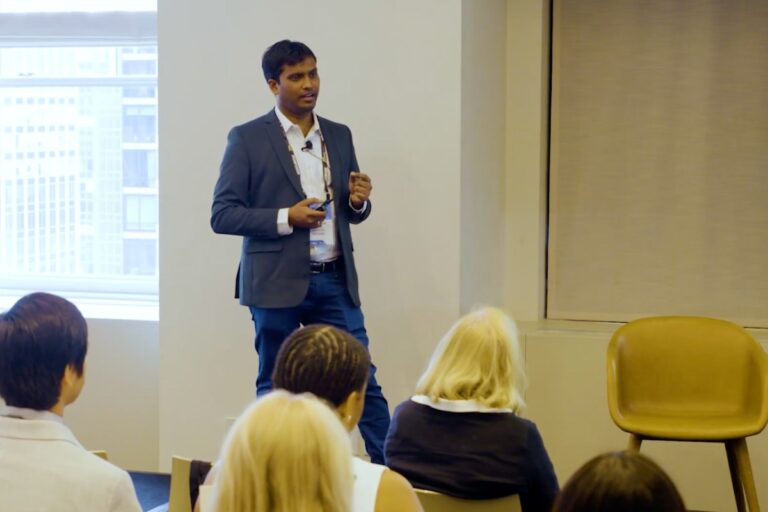
MoEngage plans to use the fresh capital to invest further in its Merlin AI suite and expand its use of AI agents to improve decision-making and efficiency for marketing teams, said Raviteja Dodda (pictured above), co-founder and chief executive, in an interview. The startup is also pushing deeper into product and engineering teams by bundling its analytics and transactional messaging tools into a broader offering, a move it expects to lift average contract values and expand its addressable market.
“When you look at customer engagement, it is not necessarily focused on marketing teams. There are product and engineering teams, which also focus on how to make sense of customer behavior and data,” Dodda said.
MoEngage also plans to use part of its fresh capital raise to pursue strategic acquisitions, particularly in the U.S. and Europe, targeting software companies that complement its customer engagement platform or help accelerate its expansion in those markets. It also targets small AI teams to bolster its intelligence-led offerings.
The 11-year-old startup, which has its headquarters in Bengaluru and San Francisco, already gets more than 30% of its revenue from North America, about 25% from Europe and the Middle East, and the remaining 45% from India and Southeast Asia.
Techcrunch event
San Francisco | October 13-15, 2026
MoEngage’s secondary-heavy structure of the raise reflects its late-stage position, allowing early investors and employees to take liquidity without forcing the company into a near-term public listing. This approach gives MoEngage flexibility to choose its next steps based on business priorities rather than investor exit timelines.
“It gives us the opportunity not to have an urgency with regard to going IPO,” Dodda said, adding that the startup still aims to go public in a couple of years, depending on market conditions and other factors.
MoEngage expects to turn earnings before interest, taxes, depreciation, and amortisation (EBITDA) positive this quarter and is targeting compound annual growth of about 35% over the next three years, Dodda said.
Bhavin Turakhia, co-founder and chief executive of fintech firm Zeta, a MoEngage customer, said the startup’s analytics and messaging tools have helped it improve onboarding, activation, and cross-sell across key customer journeys.
The secondary component of the round also enabled some early investors to exit fully. Ventureast, which backed MoEngage in 2018, is one of them. The VC firm recorded a roughly 10-times return on its investment on a blended basis, its partner Vinay Rao told TechCrunch.
Rao said that while many global customer engagement companies operate with cost structures geared toward the U.S. market, MoEngage has retained an India-based cost structure, which he said has helped it compete more effectively in the U.S. while scaling the business.
With the latest round, MoEngage has raised about $307 million in primary funding to date. Avendus advised MoEngage for the transaction.
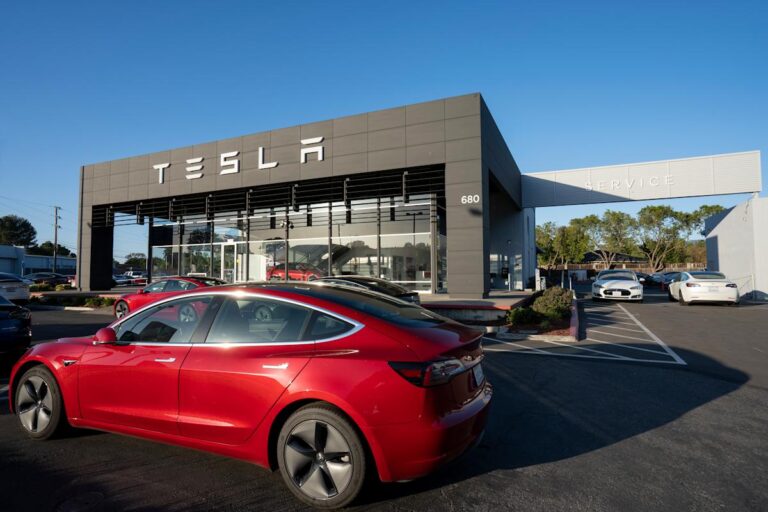
Tesla’s sales in California should be suspended for 30 days because its marketing around Autopilot and Full Self-Driving misled consumers, a California administrative law judge has ruled. Back in 2022, the California DMV accused the automaker of using deceptive language to advertise those products and making it seem like its vehicles are capable of level 5 autonomous driving. Tesla has since added the word “Supervised” to the name of its Full Self-Driving assistance technology.
As Bloomberg notes, the DMV asked the administrative law judge if a suspension is warranted based on the evidence it presented. Even though the judge has agreed that it is, the agency will give Tesla 90 days to explain its side and remove any untrue or misleading language in the marketing materials for the products. Tesla’s sales and manufacturing in California will only be suspended if it doesn’t comply within that timeframe.
“We’re really asking Tesla to do their job, as they’ve done in other markets, to properly brand these vehicles,” said California DMV director, Steve Gordon, in a statement.
A suspension in California could be devastating for the automaker. While new Tesla registrations in the state plummeted earlier this year, Reuters says California accounts for nearly a third of the company’s sales in the country. In addition, Tesla only manufactures its Model S and X vehicles in its Fremont plant, where it also produces Model 3 and Model Y units.
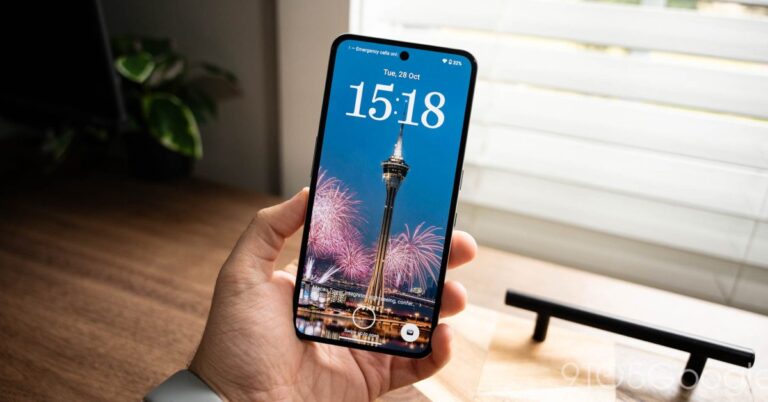
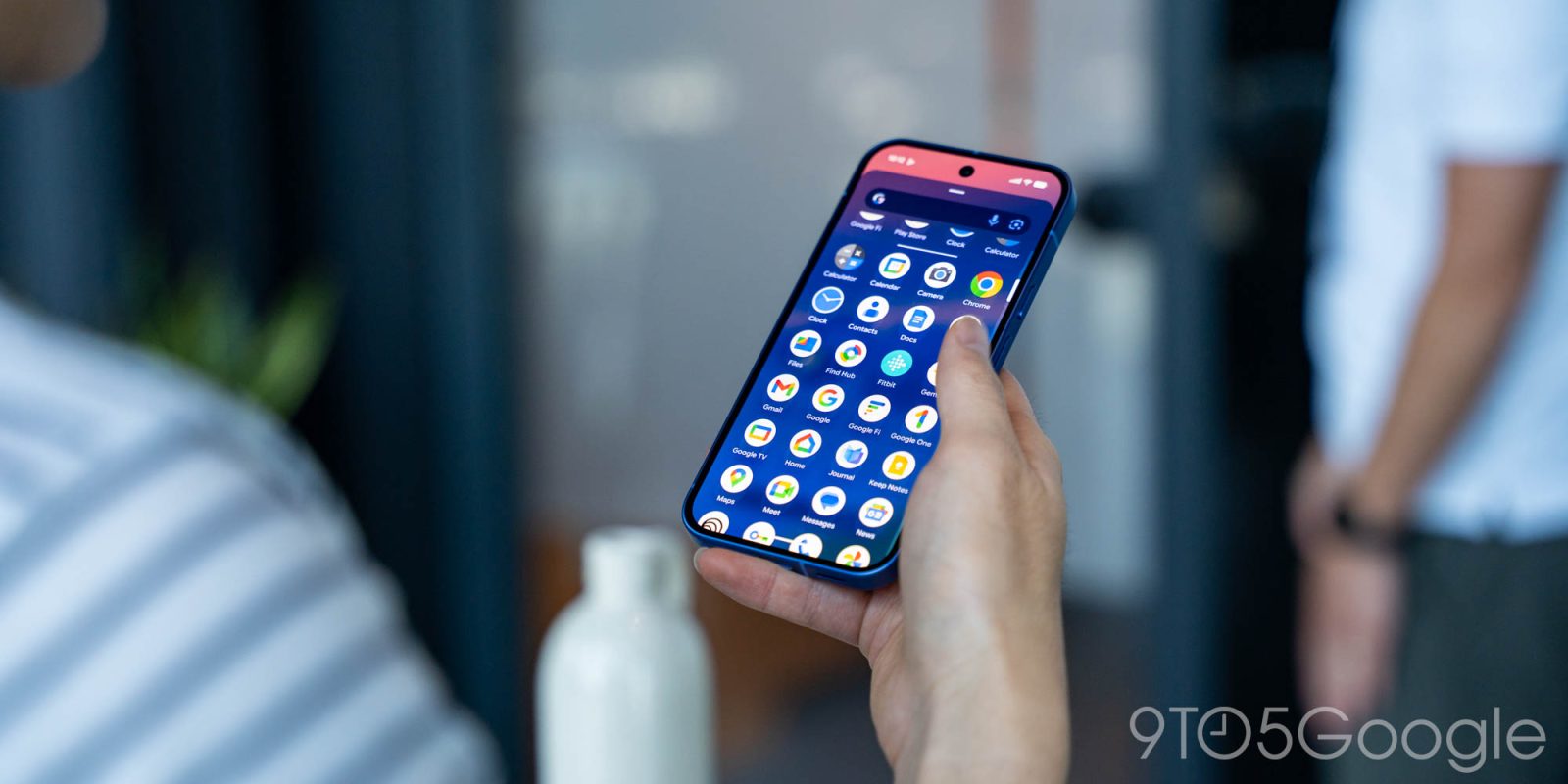
In the past few days, tapping the Pixel Launcher search bar opens a different screen powered by the Google app. This is not a bug and an intentional change.
Previously, the bar at bottom of your homescreen would open Pixel Launcher search. This translucent sheet with your wallpaper remaining visible at the top prompts you to “Search web and more.” There’s a row of app suggestions with previous queries housed in Material 3 Expressive containers.
Pixel Launcher vs. Google app
Now, you get a fullscreen experience powered by the Google app that is several years old, and the experience you get on every other Android device when you tap the Google Search bar homescreen widget. It’s also what you get when opening the full Google app to start a search.
Advertisement – scroll for more content
You can still launch apps this way, but you lose app search and shortcuts for Clock, Contacts, Pixel Tips, Play Store, Settings, and Wallet.
Easily access AI Mode, our most powerful AI search experience, right from your Pixel’s home screen search bar.
That’s presumably referring to the button at the right after voice search and Lens.
This update lets you quickly start and resume AI Mode journeys, so you can dig deeper on the web. You’ll also see more suggested apps in the top row, making it seamless to continue exploring on your device.
The main point of this update appears to be more immediate access to past AI Mode queries. This feels unnecessary, or at the very least something that can be added to the modern Pixel Launcher search UI.
Overall, this is an unfortunate visual and functional regression, though the former would be mitigated if the Google app finally modernized this screen.
You can still access Pixel Launcher search via the bar at the top of the app grid. You can get the old experience by enabling “Swipe up to start search,” though this is definitely breaking muscle memory.
FTC: We use income earning auto affiliate links.More.