Home Blog Page 118

Disney+ Hulu bundle is only $60 for one year, plus major savings on Apple TV+, HBO Max and others

0


Streaming deals come and go throughout the year, but they are most abundant around Black Friday. It’s been a testy year for streaming services to say the least, and one big manifestation of that has been continuously rising prices. Disney+ and HBO Max were just a couple of the streaming services that bumped up prices, which means it’s more important than ever to subscribe if and when you can get a discount. These are the best Black Friday streaming deals you can get this year; just note, though, that most require you to be either a new subscriber to get the deal, or a returning subscriber who hasn’t been a paid customer in a hot minute.

Best Black Friday streaming deals

Image for the large product module

Disney+

Apple TV+ — 6 months for $36: Apple TV+ is offering six months of access for only $36 for Black Friday, which comes out to a discounted price of $6 per month for the six-month period. The deal is live now for new and eligible returning subscribers and runs through December 1, giving you a chance to stream shows like Silo, The Morning Show and For All Mankind for less. The biggest caveat to the deal is that you must subscribe directly through Apple and not through a third-party service.

HBO Max — one year for $36: HBO Max’s Black Friday deal gives subscribers one year streaming for $36 through December 1. This Black Friday streaming deal is on the ad-supported option, which normally goes for $11 per month. With this discount, you’re getting it for $3 per month for one year. You can sign up via HBO Max’s website or, if you’re a Prime Video subscriber already, via that service as an add-on.

Sling TV Orange — day pass for only $1: Sling TV launched Day Passes earlier this year, giving users one-day access to a variety of its packages. This deal cuts $4 off the normal price of a day pass for Sling Orange. With that, you get unlimited access for 24 hours to Orange’s more than 30 channels that includes ESPN, CNN, TBS and others.

Paramount+ — two months of Essential or Premium for $6: This Black Friday deal brings the monthly price of either Paramount+ tier down to just $6 for two months, or $3 per month. The obvious better deal is on the Premium plan, which typically costs $13 per month.

Audible — three months for $3 + $20 Audible credit: For literally $1 per month, you can get access to Audible’s enormous library of published audiobooks, podcasts and Audible Originals (which can be anything from never-before-heard books to live performances). It’s only three months, after which you’ll have to cancel or renew at the regular price, but an audiobibliophile can cram a lot of listening into 90 days.

Starz — one year for $12: Pay upfront for one year and you can get more than $50 off a Stars annual subscription. There’s a month-to-month option too, which costs $3 per month for the first three months if you don’t want to commit to the full year. Either option gives you access to the entire Starz TV and movie library with offline viewing and no ads.

MasterClass — up to 50 percent off annual subscriptions: The MasterClass Black Friday deal discounts most subscription tiers by 50 percent when you pay for one year upfront. The Premium tier, the most expensive option, usually costs $20 per month but now only sets you back $10 per month for one year. That gives you access to the entire MasterClass content library, offline viewing and up to six simultaneous streams.

Plex — lifetime pass for $150: Plex offers personal media servers you can use to organize your digital collection — imagine your own curated Netflix homepage that nothing ever vanishes from. It’s also a streaming platform in its own right, with movies and TV from all genres and eras. Plex did just raise its prices, so now’s your chance to get a lifetime pass for close to what it used to cost.

Fubo TV — up to $30 off your first month: Fubo is arguably the best live TV streaming service for sports, and now new subscribers can save up to $30 on their first month. You’ll get that discount if you subscribe to the Elite plan, which normally costs $95 per month and provides access to 325 channels including ABC, NBC, CBS and Fox, and it includes ESPN Unlimited as well. If you’re looking for a more affordable plan, the News + Sports tier has a $10 discount for new subscribers.

DirecTV — starting at $50/month for one month: All of DirecTV’s signature packages are up to $45 off right now for your first month when you sign up. If you opt for the base “Entertainment” package, you’ll spend $50 for the first month and get access to over 90 channels, including many local stations as well as ESPN, ESPN 2 and Fox Sports 1. You’ll also be able to watch on the go with the DirecTV mobile app.



Source link

Google might be killing its Weather app on Android for Search redesign

0


Over the years, the Google Weather Android “app” has seen infrequent updates, and the company looks to now be getting rid of it entirely for a Google Search experience that has just been redesigned.

If you’re not on a Pixel device (with the fully native Pixel Weather), Google’s Weather “app” for your Android phone or tablet is actually an extension of Google Search. After saving the shortcut — with its sun icon badged by a ‘G’ — to your homescreen, the feed you get starts with a search bar that also lets you switch to other saved places. 

Pixel Weather vs. Google Weather

Froggy is front and center with the current temperature, high/low, condition, and feels like. Next is a carousel for Hourly forecast and 10-day forecast list that can be tapped to show details. Under Current conditions, you’ll find five cards: Wind, Humidity, UV Index, Pressure, and Sunrise & sunset. The Hourly details card has graphs for Precipitation, Wind, and Humidity.

Advertisement – scroll for more content

In recent weeks, we’ve seen indications that Google is getting rid of this more traditional app experience, which was last redesigned in 2023. (A year later the Pixel team released the new exclusive app.)

Since mid-October, a handful of reports have emerged about how the Weather shortcut has stopped launching the Weather “app” and instead opened Google Search results. For one user, the Google app displayed a “The weather page has moved” message: “Your home screen shortcut now leads to Google Search.”

Google might no longer want to maintain this Weather “app” that rarely gets updated. This migration is slowly rolling out and not appearing on any of the devices/accounts we checked today.

Another consideration here is how Google Weather for Wear OS is no longer available for new users. It remains available for those that already downloaded it, but going forward Google wants people to use the application that came with their wearable.

The same thing looks to be happening on phones, but Google’s answer is Search, which is actively updated.

Search Weather redesign 

In fact, the mobile UI — search: “weather” in the app or mobile web — was recently redesigned. Like before, there’s a card with the Froggy background that has the current temperature, condition, and feels like. However, the hour forecast is now incorporated and appears just above the weather mascot. 

The 10-day forecast is a carousel underneath that you can tap to update the hourly one above. Precipitation, Wind, Humidity, and Air quality appears as a list that can be expanded to obtain more details. The first three show you the hourly forecast, while it’s the bar for AQI. 

These are nice upgrades that just exist on a Google Search results page alongside other web links. The lack of a fullscreen experience is somewhat subpar and feels cluttered.

This redesign is live for all users on Android (and iOS), with a tap of “View all details” still opening the Weather app right now for most users. However, if the replacement server-side update/change has rolled out to your device, that bottom button is gone.

FTC: We use income earning auto affiliate links. More.


Source link

201K Walmart camping stoves recalled over explosion, fire hazard

0


Thousands of camping stoves sold at Walmart are being recalled over concerns of the products exploding and catching fire, according to the Consumer Product Safety Commission (CPSC).

The recall is specifically for 201,000 units of Ozark Trail Tabletop 1-Burner Butane Camping Stoves with the model number BG2247A1, which can be found on a gray label on the inside of the fuel compartment. The company’s stoves are dark green with an orange “Ozark Trail” logo printed on the front.

The stoves were sold at Walmart stores nationwide and online between March 2023 through October 2025 for between $8 and $45, the CPSC said.

The manufacturer of these Ozark camping stoves, China Window Industry Co., has received 26 reports of the camping stoves exploding and catching fire, including 16 reports of injuries such as second-degree burns.

Customers have been told to immediately stop using the stoves and to return the product to any Walmart retail store for a full refund.


Source link

Tom Stoppard, acclaimed playwright and screenwriter, dies at 88 : NPR

0


Tom Stoppard's plays include Arcadia, Rosencrantz and Guildenstern Are Dead and The Coast of Utopia. He also wrote screenplays for Brazil and Shakespeare in Love. He's pictured above in London in 2017.

Tom Stoppard’s plays include Arcadia, Rosencrantz and Guildenstern Are Dead and The Coast of Utopia. He also wrote screenplays for Brazil and Shakespeare in Love. He’s pictured above in London in 2017.

Justin Tallis/WPA Pool/Getty Images


hide caption

toggle caption

Justin Tallis/WPA Pool/Getty Images

Tom Stoppard's plays include Arcadia, Rosencrantz and Guildenstern Are Dead and The Coast of Utopia. He also wrote screenplays for Brazil and Shakespeare in Love. He's pictured above in London in 2017.

Tom Stoppard’s plays include Arcadia, Rosencrantz and Guildenstern Are Dead and The Coast of Utopia. He also wrote screenplays for Brazil and Shakespeare in Love. He’s pictured above in London in 2017.

Justin Tallis/WPA Pool/Getty Images

For more than a half century, Tom Stoppard was one of the most acclaimed playwrights in the English-speaking theater. He has died at age 88. Stoppard won a Laurence Olivier Award and five Tony Awards for Best Play. His work, including Travesties, The Real Thing and The Invention of Love was known for its language, wit and intellectual curiosity.

Stoppard’s death was reported by his agent.

Stoppard wrote erudite plays that touched on a broad range of topics – from his 1966 absurdist comedy Rosencrantz and Guildenstern Are Dead about two minor characters from Hamlet — to his 1993 drama Arcadia which included dialogue about Chaos Theory and Garden Landscaping. But when Arcadia opened in New York, Stoppard told me his plays were always about people, not abstract ideas.

“I’m not some kind of intellectual who’s importing very special ideas into the unfamiliar terrain of the theater. I don’t see it like that at all,” he said. “There’s something about the way the plays are written about which makes people think that they’re somewhat exclusive. And an exclusive playwright is a contradiction in terms.”

In 1999, Stoppard won an Oscar for his verbal gymnastics in his screenplay for Shakespeare in Love starring Joseph Fiennes as the young playwright and Gwyneth Paltrow as his inspiration for Juliet.

Tom Stoppard in 1981.

Tom Stoppard in 1981.

Roy Jones/Evening Standard/Getty Images


hide caption

toggle caption

Roy Jones/Evening Standard/Getty Images

Tom Stoppard in 1981.

Tom Stoppard in 1981.

Roy Jones/Evening Standard/Getty Images

English was not Stoppard’s first language. He was born Tomáš Sträussler in Czechoslovakia in 1937 to a Jewish family. When he was still a baby, his family fled to Singapore to escape the Nazis. When his father died, the family moved to India, where his mother remarried a British officer named Stoppard. In 1946, they settled in England. His family assimilated and Stoppard said he didn’t learn of his Jewish heritage until his 50s.

“It was a combination of my mother not looking backwards and liking to talk about the past, on the one hand,” Stoppard told Jeff Lunden in 2022. “On the other hand, there was my strange lack of curiosity. I’d been turned into a little English boy. I was very happy being a little English boy. I didn’t need to become somebody else. I already was somebody else.”

Stoppard never attended university. At 17, he began work as a journalist. Later he went on to become a theater critic, and finally a playwright.

“It’s a strange art form, isn’t it?” Stoppard mused during a rehearsal break in 2006. “There’s a lot of people in a large room, watching a few people at one end of the room dressing up and talking. And you’ve got to hear everything they say — you get to hear it once, you can’t turn the page back.”

Stoppard was talking about the difficulty of holding the audience’s attention through his epic nine-hour trilogy, The Coast of Utopia, about 19th-century Russian intellectuals. Movie star Ethan Hawke gave up seven months of more lucrative work to perform in The Coast of Utopia. He said the chance to read Stoppard’s lines was worth it.

“We’re used to being talked down to. We’re used to very simple ideas. We’re used to people not challenging us,” Hawke said. “I feel the great thing about watching Tom Stoppard, when you watch it, it makes you feel incredibly intelligent. Because you do get it. The ideas aren’t that complicated.”

In 1995, Stoppard said he loved the theater in all its forms.

“Things are done well, or they’re done not so well,” he said. “And that’s the only distinction which matters in the theater. I think that I consider myself to be at some place in the spectrum of entertainers. Theater is a popular art form. If I didn’t think that, I’d be trying to write some kind of book of essays perhaps. I don’t know. I love the theater. I’m a theater animal.”

And the theater loved him back. The adjective “Stoppardian” entered the Oxford English Dictionary in 1978. It means to employ elegant wit while addressing philosophical concerns — in the style of Tom Stoppard.


Source link

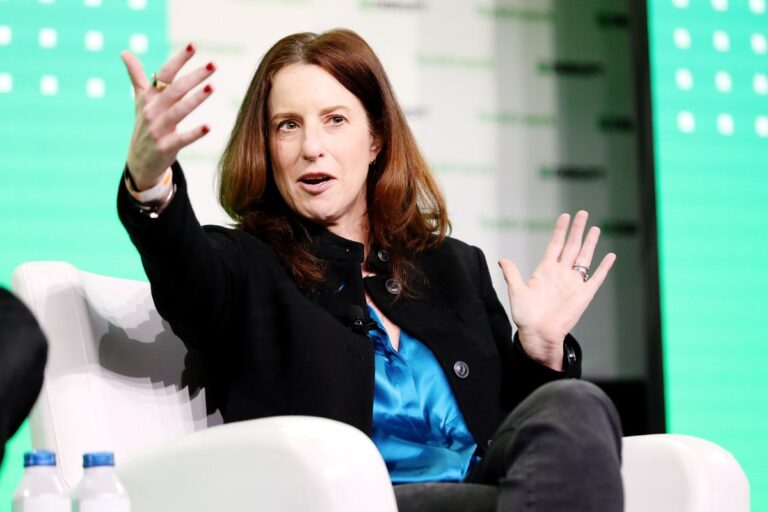
VC Kara Nortman bet early on women’s sports, and now she’s creating the market

0


When its season ended early this month, Angel City FC finished 11th out of 13 teams, a disappointing result for the Los Angeles soccer franchise that venture capitalist Kara Nortman co-founded in 2020. But the season’s struggles tell only part of a much larger story that’s reshaping how investors think about women’s sports.

Despite its lackluster on-field performance, Angel City itself has become a case study (including literally, inside Harvard Business School) in how to best construct a women’s sports property. The team’s celebrity ownership group, including Natalie Portman and Serena Williams, has helped generate nearly unprecedented buzz. The franchise has also been savvy about sponsorships, breaking records before players kicked a ball.

“We went from zero to $30 million in revenue. We sold out games. We built something people didn’t think was possible,” Nortman reflected in an interview last month, pointing to Angel City’s commercial success from the very outset of the team’s formation. “That really led to the formation of Monarch.”

That commercial success, not trophies, became the blueprint for Monarch Collective, the $250 million fund Nortman launched in 2023, which has become the first investment vehicle focused exclusively on women’s sports. While its origin story may be rooted in a team that has yet to win a playoff game, Monarch’s portfolio and influence have expanded far beyond Angel City’s training facility in Thousand Oaks, California.

The fund now holds stakes in three other National Women’s Soccer League clubs: San Diego Wave, Boston Legacy FC (debuting next year), and its newest investment, announced earlier this month, FC Viktoria Berlin. The deal for 38% of the German club, makes Monarch the first foreign investor to acquire a stake in a German women’s soccer team.

It’s a diverse collection that reflects Nortman’s conviction that women’s sports have reached an inflection point, regardless of any single team’s fortunes. The numbers support her optimism, too.

“The overall men’s sports market globally is estimated to be about half a trillion dollars,” Nortman explains. “The women’s sports market, when we started Monarch in 2023, was thought to be about half a billion dollars. It’s now closer to $3 billion.”

Techcrunch event

San Francisco
|
October 13-15, 2026

Tapping into that growth requires a different playbook than men’s sports, Nortman says. It’s not a simple rinse-and-repeat. “Like, how many men’s team owners are thinking about parachuting Sephora boxes from rafters? Or having at [a New York] Liberty [WNBA game] a Fenty cam for putting on your [Fenty] lipstick, or Angel City having a Hello Kitty collab night where people can’t figure out how to get their hands on the merch before it sells out?”

Angel City’s innovative approach to marketing and partnerships helped it build so much excitement that in the fall of last year, power couple Bob Iger and Willow Bay acquired a majority stake in it for $250 million, making it the most valuable women’s sports franchise in the world.

For Nortman, who left Upfront Ventures and more traditional venture capital to focus full-time on women’s sports, Angel City’s commercial achievements have continued to validate Monarch’s thesis. Though there’s current tension – certainly in the sports press, at least – between Angel City’s business success and its on-field performance, the team has inarguably proven that women’s sports can generate serious revenue with the right pieces in place.

Now, as with any successful new endeavor, the question is: can the momentum last? Nortman is acutely aware that women’s sports has seen promising moments evaporate before. She frequently references a striking historical parallel from 1920, when 60,000 people showed up in Liverpool, England, to watch the Dick, Kerr Ladies play football, which is a bigger crowd than most Premier League games draw today. The next year, the English Football Association banned women from playing, and the sport essentially disappeared for decades.

“Everyone gets to wake up and become the discoverer of women’s sports when they do,” Nortman says. “But it takes consistent, hard work to get that to play out into consistency.”

That hard work, she argues, requires more than just riding waves of attention from breakout stars like Caitlin Clark or Angel Reese. It demands systematic investment in infrastructure, governance, and operations – the unglamorous work of building sustainable businesses.

This is where Monarch’s approach diverges from typical venture capital. Rather than making passive bets on dozens of startups, Monarch is taking concentrated positions in a handful of teams and leagues, then getting deeply involved in operations. The fund describes its strategy as “venture-like markets” with “growth equity or private equity-like” risk management.

“We show up alongside control owners and add a lot of operational value,” Nortman explains. The goal is to help teams reach breakeven or profitability on their core operations, positioning them to benefit as higher-margin media revenue grows.

Monarch’s investment interest extend beyond soccer. The fund is more broadly focused on what Nortman calls sports with “no product-market risk,” meaning established formats with proven audiences.

“Is this a sport people like to watch on their computer or television?” she asks. “There are participatory sports, like pickleball, but are people going to sit home and create an event out of watching it?”

Indeed, while Monarch has stakes right now in four “football” clubs, it’s interested, too, in women’s basketball, golf, and tennis – sports with substantial media revenue potential, along with existing infrastructure.

The firm’s current limited partners include Melinda French Gates, former Netflix executives, and other wealthy individuals, and interest in its mission seems to be growing. For one thing, Monarch’s debut fund of $250 million is substantially more than the $100 million that Nortman and her co-founder – Jasmine Robinson, a former investor with the sports-, media-, gaming-, and fitness-focused growth stage firm Causeway – initially planned to raise. She says the increased size reflects the market’s rapid maturation during Monarch’s fundraising period.

“When we started raising the fund, nine out of 10 conversations were, ‘Yeah, we don’t think [women’s] basketball is really a thing,’” Nortman says, recalling a “lot of skepticism around it.” Then came Caitlin Clark’s meteoric rise, the WNBA’s record-breaking viewership, and suddenly basketball became the hottest sector in women’s sports.

That growing interest validates Nortman’s thesis that women’s sports investment isn’t about finding the single perfect team but about supporting an ecosystem where multiple franchises can thrive. Some will win championships. Some will struggle competitively but succeed commercially. The key is having enough capital and operational expertise distributed across the market to weather individual setbacks.

Already, Angel City appears to be inspiring other ownership groups. “You started having other teams – Kansas City, Bay FC, Washington D.C. Spirit – with female-led ownership groups come in and show they could build a real P&L,” Nortman notes. Whether intentionally or not, Angel City became a template.

As women’s sports enters what feels like a sustained boom period — the Golden State Valkyries just played their first WNBA next season, the NWSL is expanding, media rights deals are growing — Nortman remains cautiously optimistic about whether this moment will prove different from past surges in interest.

The key, she argues, lies in the fundamentals: strong league governance, owner commitment, infrastructure investment, and building genuine community connections. Media attention creates opportunity; operational excellence makes it sustainable.

“Every spike is an opportunity to create a consistent experience around it,” Nortman says. “You have to look at all the underlying criteria to see where it’s likely to stick around.”


Source link

Black Friday Apple deals include the AirPods 4 for 47 percent off

0


Apple’s AirPods 4 have dropped back down to a record low price in a Black Friday deal on Amazon. If you aren’t looking for active noise cancellation, the model without ANC is a steal at 47 percent off, bringing it down to just $69 from its usual price of $130.

The Apple AirPods 4 are the best budget AirPods you can get in 2025, with Apple’s H2 audio chip to support some of the more advanced audio features from more expensive models.

Image for the large product module

Apple

They offer Voice Isolation, Personalized Spatial Audio with dynamic head tracking and more. If you get the model without active noise cancellation, you won’t have features like Transparency Mode and Conversation Awareness, or Apple’s hearing health tools. But, the entry-level model still offers great sound quality for the price.

This model also features the redesigned shape, which makes for a more comfortable and secure fit so you don’t have to worry about them falling out of your ears. A force sensor on the stem allows for basic touch controls, including play and pause, play next track, previous track and answer a call. You can also summon Siri by pressing and holding the stem.

You can expect to get up to 5 hours of battery life on a charge with the non-ANC model, and up to 30 hours using the USB-C charging case.

Elsewhere when it comes to Black Friday AirPods deals, you can pick up the AirPods 4 with ANC for $100, the new AirPods Pro 3 for $220 and the AirPods Max (in certain colors) for $400.

Image for the mini product module


Source link

Google Messages redesigning link and YouTube previews

0


Google Messages for Android is redesigning how link and YouTube previews look inside conversations. 

The previous design showed the sent URL at the top with an image preview next. At the bottom, you’d get the page title, description, and domain.

This redesign hides the original link that you’re sent if there is nothing else in the message. First up is a taller cover image (in most cases) with less cropping. The bottom section has a more prominent background and larger title for improved readability. The domain is accompanied by the site favicon, but the useful page snippet has been removed.

Old vs. new

Advertisement – scroll for more content

When a link is accompanied by text, the preview might be narrower to fit the length of the message.

Removing the link is a bit on the extreme side, though it does make for a cleaner thread. In getting rid of the article preview, Messages is unfortunately matching Google Discover. 

If you rather see the full URL and don’t need previews, go to Messages settings > Automatic previews and turn off “Show all previews” or ”Show only web link previews.” The other option is long-pressing and copying to see the link. 

Meanwhile, as of this current beta, tapping on YouTube links opens the video in Google Messages’ restored picture-in-picture player. There is no way to directly open inside the YouTube app. Disabling the PiP system preference just opens it fullscreen inside Google Messages using the web player. Hopefully, this is just a bug during the beta. Additionally, another issue I’m having is “Sign in to confirm you’re not a bot,” with no actual option to do that from just the player window.

Overall, this redesign looks a bit nicer but is somewhat less functional. There should be some tweaks before a wider rollout. We’re seeing the new link previews with the latest Google Messages beta (version 20251121_00_RC01) this week.

FTC: We use income earning auto affiliate links. More.


Source link

Mega Millions numbers: Are you the lucky winner of Friday’s $80 million jackpot?

0


Are you tonight’s lucky winner? Grab your tickets and check your numbers. The Mega Millions lottery jackpot continues to rise after someone won the $344 million prize on March 25.

Here are the winning numbers in Friday’s drawing:

06-07-13-39-48; Mega Ball: 04

The estimated jackpot for the drawing is $80 million. The cash option is about $36.9 million. If no one wins, the jackpot climbs higher for the next drawing.

According to the game’s official website, the odds of winning the jackpot are 1 in 302,575,350.

Players pick six numbers from two separate pools of numbers — five different numbers from 1 to 70 and one number from 1 to 25 — or select Easy Pick. A player wins the jackpot by matching all six winning numbers in a drawing.

Jackpot winners may choose whether to receive 30 annual payments, each five percent higher than the last, or a lump-sum payment.

Mega Millions drawings are Tuesdays and Fridays and are offered in 45 states, Washington D.C. and the U.S. Virgin Islands. Tickets cost $5 each.

If you purchase a product or register for an account through a link on our site, we may receive compensation. By using this site, you consent to our User Agreement and agree that your clicks, interactions, and personal information may be collected, recorded, and/or stored by us and social media and other third-party partners in accordance with our Privacy Policy.


Source link

Supabase hit $5B by turning down million-dollar contracts. Here’s why.

0


Vibe coding has taken the tech industry by storm, and it’s not just the Lovables and Replits of the world that are winning. The startups building the infrastructure behind them are cashing in too. 

Supabase, the open-source database platform that’s become the backend of choice for the vibe-coding world, raised $100 million at a $5 billion valuation just months after closing $200 million at $2 billion. But co-founder and CEO Paul Copplestone has a surprising strategy: he keeps turning down million-dollar enterprise contracts from deep-pocketed but demanding customers. He’s betting instead that if he sticks to his own product vision, the world will come to him. So far, he’s been right.  

Today on TechCrunch’s Equity podcast, Julie Bort sat down with Copplestone to explore Supabase’s rise and what it means for vibe coding, developers and the database giants who have historically controlled this market. 

Subscribe to Equity on Apple Podcasts, Overcast, Spotify and all the casts. You also can follow Equity on X and Threads, at @EquityPod. 


Source link

Amazon’s Kindle Colorsoft is 32 percent off in this Black Friday deal

0


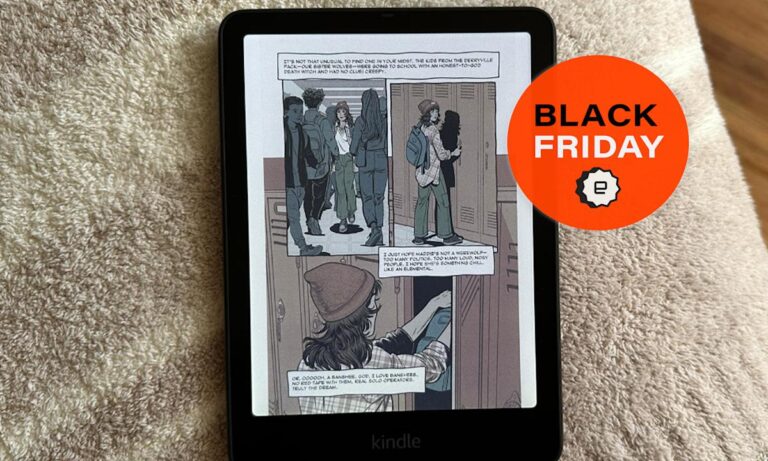
Amazon Black Friday deals have brought a slew of discounts to the company’s own devices. Aside from Prime Day, Black Friday is the best time to pick up things like Fire TV Sticks, Echo speakers and Kindles. In the latter category, one of the best deals is on the Kindle Colorsoft e-reader: it’s been discounted to $170, down from its usual $250 price.

The model came out earlier this year and we gave it a glowing review, calling it “the missing link in Amazon’s ereader lineup.” It’s the first Kindle ereader in color, which makes this thing one of the best ways to read comic books and graphic novels. The pinch-to-zoom feature lets you get closer to details, to make each panel really pop.

Image for the large product module

Amazon

This is also a high-end ereader, color or not. We found the load times to be exceptionally fast and the same goes for turning pages. There’s an auto-adjusting front light, which comes in handy. There are also no lock screen ads by default and a single charge lasts eight full weeks of regular use.

The major downside here is the price. It’s tough to truly recommend any ereader at $250, or the original launch price of $280. It’s a lot easier to recommend at $170.

Amazon is also selling similar products at a discount, some of which made our list of the best ereaders. The base Kindle is down to $80, which is another record low. The Paperwhite is on sale for $125, yet another record low price. And keeping with the theme, the current-gen Kindle Scribe is on sale for as low as $280, the cheapest we’ve seen it.

Image for the mini product module


Source link