Home Blog Page 135

The global race for the AI app layer is still on

0


The U.S. is far ahead of Europe in the race for large AI models — but the picture is different for the application layer, with emerging category leaders such as Lovable and Synthesia. That’s the conclusion made by global VC firm Accel in its 2025 Globalscape report, which focuses on the AI and cloud market.

Surprisingly, cloud and AI applications in Europe and Israel have attracted 66% as much private funding as their American peers in 2025 so far. “When we started this report 10 years ago, Europe was one tenth of the U.S.,” Accel partner Philippe Botteri told TechCrunch.

Image Credits:Courtesy of Accel

For Botteri, the ratio has increased because the region has developed an ecosystem of founders and investors “who really understand how to build great software companies, and that flywheel has been running for 10 years.”

It’s also a reminder that Europeans and Israelis can do more staffing Big Tech AI labs — an observation also shared by Jonathan Userovici, a Paris-based general partner at Headline. “Across every vertical, from legal and healthcare to manufacturing and marketing, we’re seeing founders who combine world-class technical talent with a deep market expertise,” Userovici told TechCrunch.

This aligns with the findings of the AI Europe 100 report published by Headline earlier this year, in which it curated AI-native application startups around Europe that it sees as having “the potential to become tomorrow’s winners in Europe” thanks to a combination of growth velocity, team, and tech advancement.

Growth velocity is also one of the key differences that Accel sees between this AI wave and previous ones. A new breed of AI native applications has reached $100 million in annual recurring revenue in a matter of years, a feat that used to take decades.

“They’re growing faster than anything we’ve seen in the past, and they’re doing this with an incredible level of efficiency, meaning that revenue per head count is the highest we’ve ever seen for software companies. And that’s happening on both sides of the [Atlantic] ocean,” Botteri said.

Techcrunch event

San Francisco
|
October 13-15, 2026

However, he noted that “existing cloud software companies are not going away.” Accel’s Public Cloud Index is up 25% year-over-year, and these players are “all adding agentic capabilities to their products.” As for private companies, some are integrating AI so fast that they can be considered AI-native, he argued, naming Accel portfolio company Doctolib as an example.

While Europe has kept high hopes for homegrown foundation model companies like Mistral AI, Accel’s outlook for European model companies is less sunny. But Botteri didn’t dismiss the space entirely as a space for future leaders to emerge, as could still happen for smaller models. He said only, “it is not a very target-rich environment.” 

In contrast, VCs are actively competing for investment opportunities in the AI application layer, despite recurring questions about defensibility. For Botteri, there is still defensibility in building a product-centric offering with fast adoption.

Another false dichotomy is the thought that there is no space outside of models and applications. “We see that most of the market today is chasing models, compute and actions, and we think that data is undervalued at the moment,” said Lotan Levkowitz, a managing partner at Israeli VC firm Grove Ventures. “We strongly believe that companies focused on proprietary data and data flywheels are indeed very lucrative.”


Source link

Gran Turismo 7’s Power Pack DLC unlocks 24-hour racing on December 4

0


Sony and Polyphony Digital are rolling out a huge update for Gran Turismo 7 on December 4 in the form of a paid add-on. The Power Pack DLC for the PlayStation 5 will unlock 50 new races across 20 theme categories, including 24-hour endurance events that Le Mans fans could sink their teeth into. In previous games, the endurance events really took 24 hours to finish, though you could pause and, eventually, save mid-race, allowing you to pick up where you left off. You can also experience full-race seasons, from practicing for them to qualifying for the main events.

The DLC includes access to Gran Turismo Sophy 3.0, as well, which Sony says will provide “realistic AI behavior” and enable “intense, tail-to-nose battles that push your limits.” Sophy 2.0 was launched as an update back in 2023, offering you “a stimulating opponent that can accelerate and elevate [your] techniques and creativity to the next level.” Finally, the DLC will give you 5 million in in-game Credits. The companies have yet to reveal how much the Power Pack DLC will cost, but it will be available for download from the PlayStation Store.


Source link

Google Home previews device control redesign with Matter control

0


Outside of Gemini, work on the Google Home app continues today with “Improved device controls” in the Public Preview program.

Google is “introducing significant updates designed to improve your control over smart home devices.” Many third-party devices will get this new “look and feel,” with lights, plugs, and switches specifically named.

Previous

With smart lights, there’s still a large pill-shaped slider, but the percentage has been moved underneath the container. When you make adjustments, there’s now haptic feedback with the percentage also appearing at the left. 

Advertisement – scroll for more content

You can no longer tap to turn on/off, with any touch inside the container adjusting the brightness level. There’s now a traditional power button in the top-right corner. When switched off, the container becomes a rounded rectangle. 

Redesign

The three-dot overflow menu next to it opens a new settings sheet that you can expand to take up the entire screen. A row of actions lets you Add to/Remove from favorites, see Device history (if you’re a Google Home Premium subscriber), Send feedback, and Get help. Other details and settings appear below.

Color options now appear as a carousel instead of a grid. The first option still brings up Color and Temperature pickers, which have been modernized.

Meanwhile, there is an extremely delightful animation when switching smart plugs on/off.

Old vs. new

Meanwhile, Google notes how “Android users with compatible Matter devices and a compatible Matter hub can control their devices locally” with this redesign for “faster response times and enhanced reliability.”

We’re seeing these improved device controls with the Google Home Public Preview program on Android and iOS today.

FTC: We use income earning auto affiliate links. More.


Source link

Mega Millions numbers: Are you the lucky winner of Tuesday’s $900 million jackpot?

0


Are you tonight’s lucky winner? Grab your tickets and check your numbers. The Mega Millions lottery jackpot continues to rise after someone won the $344 million prize on March 25.

Here are the winning numbers in Tuesday’s drawing:

10-13-40-42-46; Mega Ball: 01

The estimated jackpot for the drawing is $900 million. The cash option is about $415.3 million. If no one wins, the jackpot climbs higher for the next drawing.

According to the game’s official website, the odds of winning the jackpot are 1 in 302,575,350.

Players pick six numbers from two separate pools of numbers — five different numbers from 1 to 70 and one number from 1 to 25 — or select Easy Pick. A player wins the jackpot by matching all six winning numbers in a drawing.

Jackpot winners may choose whether to receive 30 annual payments, each five percent higher than the last, or a lump-sum payment.

Mega Millions drawings are Tuesdays and Fridays and are offered in 45 states, Washington D.C. and the U.S. Virgin Islands. Tickets cost $5 each.

If you purchase a product or register for an account through a link on our site, we may receive compensation. By using this site, you consent to our User Agreement and agree that your clicks, interactions, and personal information may be collected, recorded, and/or stored by us and social media and other third-party partners in accordance with our Privacy Policy.


Source link

John Cleary, one of 9 people wounded during 1970 Kent State protests, has died

0


John Cleary, who was one of 9 people wounded during protests at Kent State in May of 1970, has died at the age of 74.


Source link

SoftBank’s Nvidia sale rattles market, raises questions

0


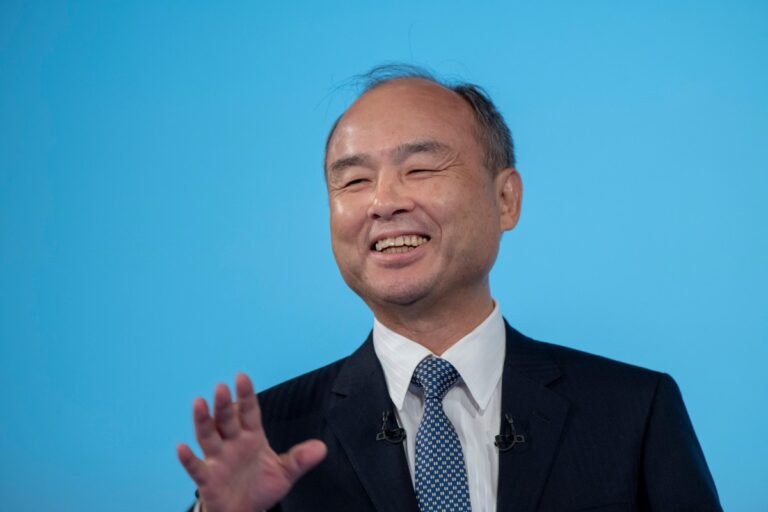
Masayoshi Son isn’t known for half measures. The SoftBank founder’s career has been studded with eyebrow-raising bets, each one seemingly more outrageous than the last.

His latest move is to cash out his entire $5.8 billion Nvidia stake to go all-in on AI. And while it surprised the business world on Tuesday, it maybe should not. At this point, it’s almost more surprising when the 68-year-old Son doesn’t push his chips to the center of the table.

Consider that during the late 1990s dot-com bubble, Son’s net worth soared to about $78 billion by February 2000, briefly making him the richest person in the world. Then came the ugly dot-com implosion months later. He lost $70 billion personally – which, at the time, was the largest financial loss by any individual in history — as SoftBank’s market cap plummeted 98% from $180 billion to just $2.5 billion. 

Amid that terribleness, Son made what would become his most legendary bet: a $20 million investment in Alibaba in 2000, one decided (the story goes) after just a six-minute meeting with Jack Ma. That stake would eventually grow to be worth $150 billion by 2020, transforming him into one of the venture industry’s most celebrated figures and funding his comeback.

That Alibaba success has often made it harder to see when Son has stayed too long at the table. When Son needed capital to launch his first Vision Fund in 2017, he didn’t hesitate to seek $45 billion from Saudi Arabia’s Public Investment Fund – long before taking Saudi money became acceptable in Silicon Valley.

After journalist Jamal Khashoggi was murdered in October 2018, Son condemned the killing as “horrific and deeply regrettable” but insisted SoftBank couldn’t “turn our backs on the Saudi people,” maintaining the firm’s commitment to managing the kingdom’s capital. In fact, the Vision Fund actually ramped up dealmaking soon after.

That didn’t turn out so well.

Techcrunch event

San Francisco
|
October 13-15, 2026

A big bet on Uber generated paper losses for years. Then came WeWork. Son overrode his lieutenants’ objections, fell “in love” with founder Adam Neumann, and assigned the co-working company a dizzying valuation of $47 billion in early 2019 after making several previous investments in the company. But WeWork’s IPO plans collapsed after it published a famously troubling S-1 filing. The company never quite recovered – even after pushing out Neumann and instituting a series of belt-tightening measures – ultimately costing SoftBank $11.5 billion in equity losses and another $2.2 billion in debt. (Son reportedly later called it “a stain on my life.”)

Son has been mounting another comeback for years, and Tuesday will undoubtedly be remembered as an important moment in his turnaround tale. Indeed, it will likely be recalled as the day SoftBank sold all 32.1 million of its Nvidia shares – not to diversify its bets but instead to double down elsewhere, including on a planned $30 billion commitment to OpenAI and to participate (it reportedly hopes) in a $1 trillion AI manufacturing hub in Arizona. 

If selling that position still gives Son some heartburn, that’s understandable. At about $181.58 per share, SoftBank exited just 14% below Nvidia’s all-time high of $212.19, which is a strong look. That’s remarkably close to peak valuation for such a huge position. Still, the move marks SoftBank’s second complete exit from NVIDIA, and the first one was exceedingly costly. (In 2019, SoftBank sold a $4 billion stake in the company for $3.6 billion, shares that would now be worth more than $150 billion.)

The move also rattled the market. As of this writing, Nvidia shares are down nearly 3% following the disclosure, even as analysts emphasize that the sale “should not be seen as a cautious or negative stance on Nvidia,” but rather reflects SoftBank needing capital for its AI ambitions.

Wall Street can’t help but wonder: does Son see something right now that others do not? Judging by his track record, maybe — and that ambiguity is all investors have to go on.


Source link

Lumines Arise is out today and I can’t wait to play it

0


Lumines Arise, the latest chapter in the popular puzzle game franchise, is out today. It’s available for PlayStation 5, including on PlayStation VR2, and on Steam, with support for both VR and Steam Deck.

I’m a bit of a Tetris fiend. If there’s any game with falling and spinning geometric pieces, be they tetrominoes or pills or puyos, I am here for it. My personal favorite iteration of the formula is Tetris Effect, because good golly is that ever a beautiful game. Normally if I saw reviews bestowing adjectives like “ecstatic,” “euphoric” and “breath-taking” on a video game, I’d roll my eyes and snark, but Tetris Effect merits all the grandiloquent accolades. So when I saw during Sony’s summer State of Play that the same studio was back to give its mesmerizing treatment to yet another puzzle game in Lumines Arise, my hype level was pretty dang high.

Since the reveal, we had some time with the Lumines Arise demo and the main takeaway was “if you loved Tetris Effect, you’ll adore Lumines Arise.” I’m delighted, but unsurprised, by that reaction. Because I watched that trailer and the tunes, the visuals, the vibes, all of it is exactly what I want to see in another Enhance project. So I am now eagerly counting down the hours until I can settle into a dark room, crank the speakers to max and get lost in yet another gorgeous puzzle flow state.


Source link

Pixel 10 Magic Cue is ‘more timely’ with ‘Private AI Compute’

0


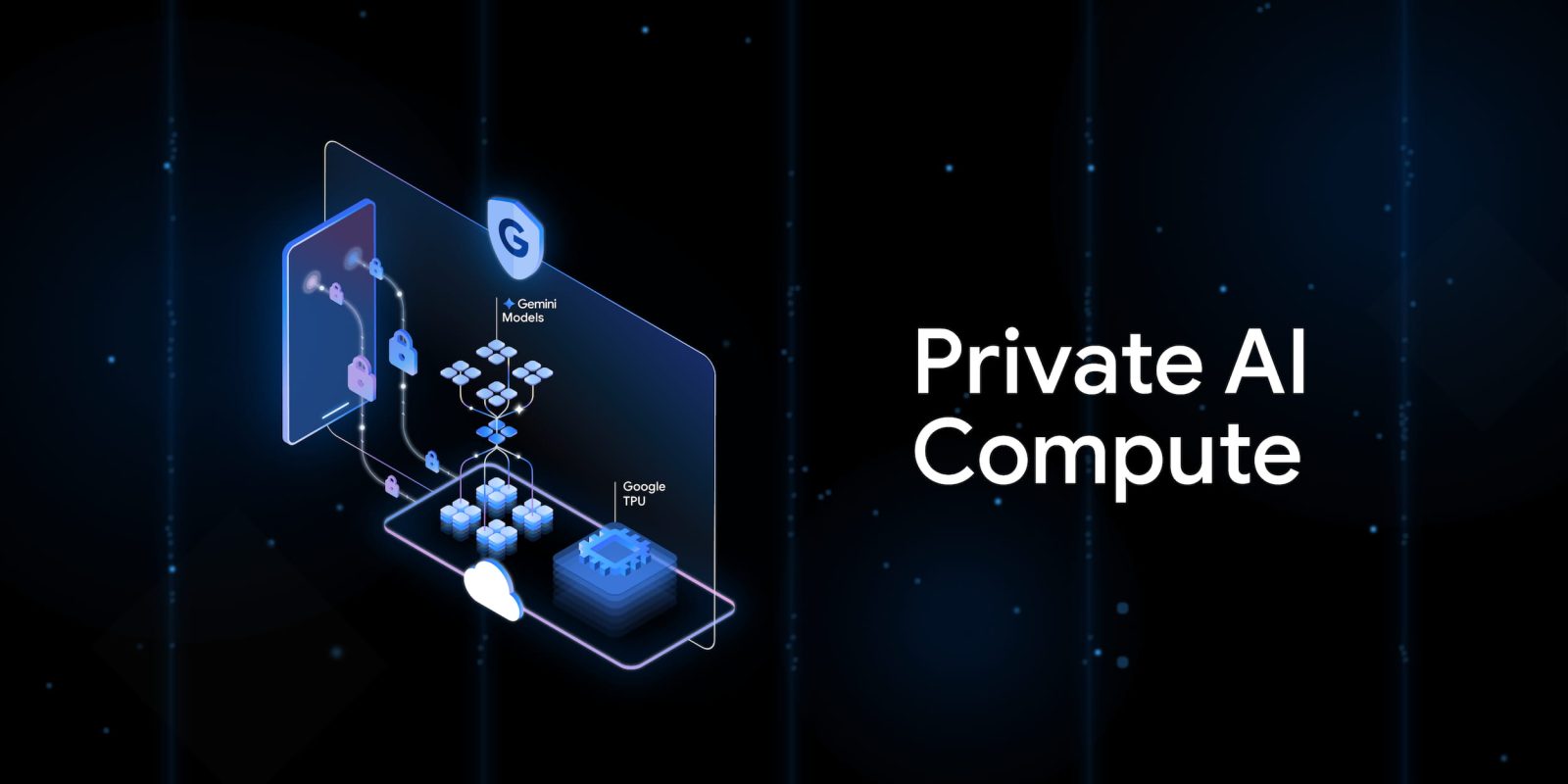
Alongside the November 2025 Feature Drop, Google announced Private AI Compute to make Magic Cue on the Pixel 10 more powerful while remaining secure.

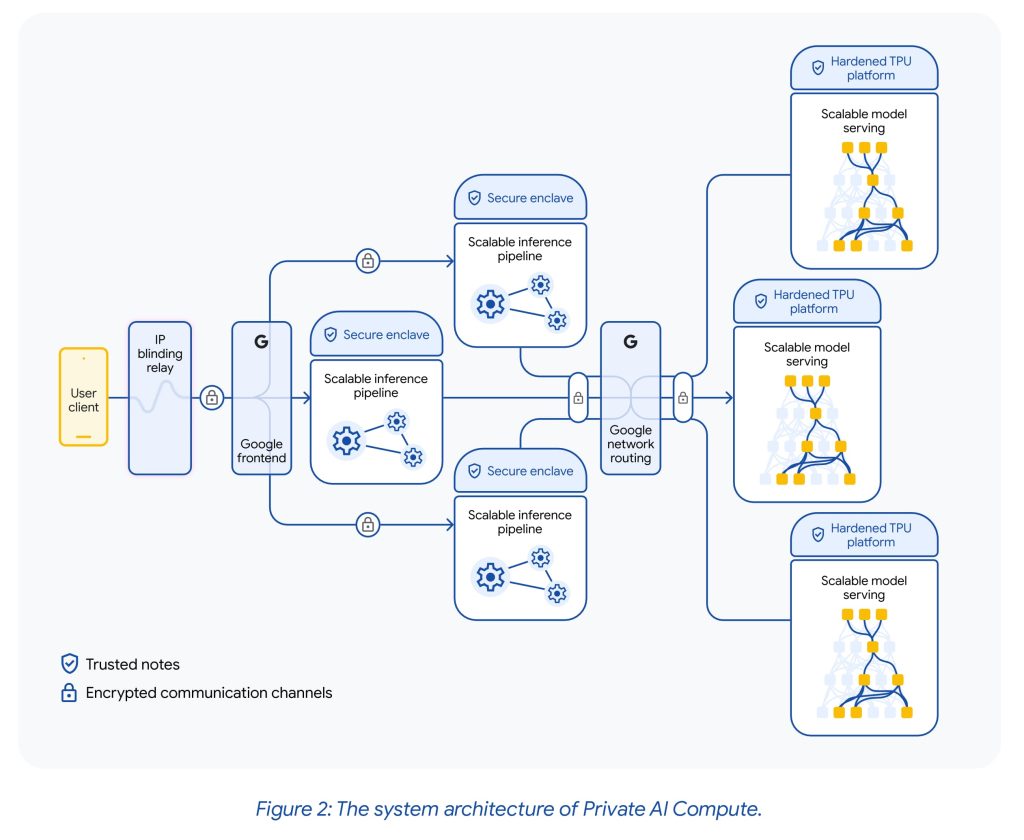
Private AI Compute is Google’s new “AI processing platform” that combines the power of cloud models with on-device processing’s privacy. 

It specifically is a “secure, fortified space for processing” sensitive user data that Google cannot access. This system takes advantage of Google’s end-to-end AI stack including CPUs and Cloud TPUs. Your phone is connected to the “hardware-secured sealed cloud environment” via encryption and remote attestation.

This is a joint effort from Google’s Platform and Devices (the hardware team), DeepMind, and Cloud divisions. In general, Google says AI that “can anticipate your needs with tailored suggestions or handle tasks for you at just the right moment” needs “advanced reasoning and computational power that at times goes beyond what’s possible with on-device processing.”

Advertisement – scroll for more content

Google published a more detailed technical brief here. This is similar in concept to Apple Intelligence’s Private Cloud Compute.

Magic Cue is now using Private AI Compute for “more timely suggestions” thanks to Gemini models in the cloud, though on-device Gemini Nano is still leveraged.

Magic Cue will continue to appear when you open a Google Messages conversation, on Phone by Google’s calling screen, the Pixel Weather homepage when you have an upcoming event, and in the Gboard suggestions row.

Additionally, Pixel Recorder is using Private AI Compute for transcription summaries in more languages. Pixel users will be able to see when Private AI Compute is called. To access, enable Developer options and go to Settings app > Security & Privacy > More security & privacy > Android System Intelligence > Network Usage log > Log network activity. 

Google teases how Private AI Compute “opens up a new set of possibilities for helpful AI experiences now that we can use both on-device and advanced cloud models for the most sensitive use cases.”

FTC: We use income earning auto affiliate links. More.


Source link

Country star who ‘died twice’ saw music legend when he flatlined

0


Country music singer Colt Ford recently shared that he saw more than just a bright white light when he flatlined.

During an appearance on “Taste of Country Nights,” Ford explained what it was like for him to briefly die twice in April 2024 before being brought back to life.

“There was a bell, it was a bright light and Toby [Keith] stepped out and said, ‘They’re not ready for you yet Little Dog, go on back down there.’ That’s how I woke up. I literally just opened my eyes, I didn’t know what happened, I didn’t know anything had transpired,” he said according to Taste of Country.

The singer said that he and Keith were “super close” and often played golf together when Keith was alive.

“He used to call me little dog daddy,” Ford said.

Keith died in 2024 at 62 years old after battling stomach cancer.

The interview asked Ford which version of Keith appeared in his vision and the singer said the late musician appeared to him “in his glory days.”

“He was larger than life, man. Toby Keith’s like John Wayne,” Ford told the interviewer.

Ford had a heart attack last April after he performed at Dierks Bentley’s Whiskey Row venue in Gilbert, Arizona, People reported. The 54-year-old was taken to the Banner Desert Medical Center’s intensive care unit in Mesa, Arizona.

Ford later spoke out on the incident on a call with the Big D & Bubba show. He revealed that he “died twice” during the ordeal, including while being rushed to the hospital.

“They brought me back,” Ford said. “They saved my life. The Lord had more for me to do.”

He added that one of his doctors told him his odds of living were incredibly slim.

“He said, ‘I would give you a 0.1% chance that you would have survived,’” Ford said.

“I had so much trauma in my body and my heart,” he said. “I had three stints put in (my heart).”

Ford has had a history of health issues. In 2022, he was diagnosed with Myasthenia Gravis, an incurable autoimmune disease that affects one’s facial muscles, eyes and throat, Taste of Country reported.

Ford was also diagnosed with eye cancer in 2021, according to People. The country music star had to go on chemotherapy for several days.

If you purchase a product or register for an account through a link on our site, we may receive compensation. By using this site, you consent to our User Agreement and agree that your clicks, interactions, and personal information may be collected, recorded, and/or stored by us and social media and other third-party partners in accordance with our Privacy Policy.


Source link

Lovable says it’s nearing 8 million users as the year-old AI coding startup eyes more corporate employees

0


Lovable, the Stockholm-based AI coding platform, is closing in on 8 million users, CEO Anton Osika told this editor during a sit-down on Monday, a major jump from the 2.3 million active users number the company shared in July. Osika said the company — which was founded almost exactly one year ago — is also seeing “100,000 new products built on Lovable every single day.”

The metrics suggest rapid growth of the startup, which has raised $228 million in total funding to date, including a $200 million round this summer that valued the company at $1.8 billion. Rumors have swirled in recent weeks — potentially sparked by its own investors — that new backers want to invest at a $5 billion valuation, though Osika said the company isn’t capital constrained and declined to discuss fundraising plans.

Speaking to me onstage at the Web Summit event in Lisbon, Osika notably didn’t mention another number: Lovable’s current annual recurring revenue. The company, which uses a mix of free and paid tiers, hit $100 million in ARR this June, a milestone it shared publicly. But questions have emerged since about whether the vibe coding boom is sustainable.

Research from Barclays this summer, along with Google Trends data, showed that traffic to some of the buzziest services, including Lovable and Vercel’s v0, had declined after peaking earlier this year. (Traffic to Lovable was down 40% as of September, according to the Barclays analysts.) “This waning traffic begs the question on whether app/site vibecoding has peaked out already or has just had a bit of a lull before interest ramps up,” they reportedly wrote in a note to investors.

Still, Osika said retention remains strong, citing more than 100% net dollar retention — meaning users spend more over time. He also said the company has “just passed” the 100-employee mark and is now importing leadership talent from San Francisco to bolster its Stockholm headquarters.

Lovable emerged from GPT Engineer, an open source tool Osika built that went viral among developers. But he says he quickly realized the bigger opportunity lay with the 99% of people who don’t know how to code. “I woke up a few days after building GPT Engineer and I realized, look, we’re going to reimagine how you build software,” Osika said. “I biked to my co-founder’s place, and I said, I have this great idea. I woke him up.”

The platform has attracted an eclectic user base. More than half of Fortune 500 companies are using Lovable to “supercharge creativity,” according to Osika. At the same time, he said, an 11-year-old in Lisbon built a Facebook clone for his school, while a Swedish duo is making $700,000 annually from a startup they launched seven months ago on the platform.

Techcrunch event

San Francisco
|
October 13-15, 2026

“What I hear from people trying Lovable is, ‘It just works,’” Osika said, crediting what he described as Swedish design sensibility.

Security remains a thornier issue for the vibe coding sector. When I raised a recent incident in which an app built with vibe coding tools leaked 72,000 images into the wild, including GPS data and user IDs, Osika acknowledged the problem.

“The part of the engineering organization where we’re moving the quickest on hiring is security engineers,” he said, adding that his goal is to make building with Lovable “more secure than building with just human-written code.” In fact, he said, before users can deploy, Lovable now runs multiple security checks, though the platform still requires users building sensitive applications — banking apps, for instance — to hire security experts, just as they would with traditional development.

Osika was similarly matter-of-fact when I asked about competition from OpenAI and Anthropic, the AI giants whose models power Lovable but that have also released their own coding agents. He sees the market as big enough for multiple winners. “If we can unlock more human creativity and human agency . . . and just driving the change so that anyone can create if they have good ideas, [and] build businesses on top of that, that should be celebrated, regardless of whoever does that.”

It’s a decidedly collegial stance in an industry not known for it. (Even Osika has engaged in some light social media sparring with Amjad Masad of competitor Replit.) But he said his focus right now is on building “the most intuitive experience for humans” rather than obsessing over rivals.

Osika described Lovable’s mission as building “the last piece of software” — a platform where everything a product organization needs, from understanding users to deploying mission-critical features, can be done through a simple interface.

“Demo, don’t memo,” a popular phrase among product leaders, captures how companies now use Lovable, he said. Employees can now quickly prototype ideas rather than writing long presentations, then test them with early users before committing resources.

For all the hypergrowth and investor attention, Osika — dressed simply in a beige T-shirt and matching button-down, floppy hair framing his face — appeared very much at ease. The 30-something former particle physicist, who was the first employee at AI company Sana Labs before founding Lovable, has gone from open source developer to venture-backed founder to must-have conference guest in rapid succession. Yet he seemed more interested in discussing European work culture than dwelling on his company’s trajectory or the attention suddenly being showered on him.

“What I care about is that everyone who’s at the company, they’re mission driven, they really care about what they’re doing and how we as a team succeed,” he said, pushing back against Silicon Valley’s intensifying hustle culture. “The best people in my team today, most of them, they have kids, and they really, really care about what we’re doing. They’re not working 12 hours, six days a week.”

Though he added: “Although it’s a startup, so they’re probably working more than most jobs.”


Source link