Home Blog Page 15

Microsoft taps India’s Varaha for durable carbon removal offtake

0


Microsoft has signed a deal with Indian startup Varaha to buy more than 100,000 tons of carbon dioxide removal credits over the next three years, through 2029, expanding its portfolio of carbon removal projects as the tech giant scales up AI and cloud operations.

The project will turn cotton crop waste, which is often burned after harvest, into biochar — a charcoal-like material that can be added to soil, storing carbon for long periods while also helping reduce air pollution from open-field burning. It will initially focus on the western Indian state of Maharashtra and involve around 40,000–45,000 smallholder farmers.

The agreement comes as large corporations, including Microsoft, ramp up spending on carbon removal — projects designed to physically remove carbon dioxide from the air. The Redmond-based software maker is working toward its goal of becoming carbon-negative by 2030. However, Microsoft’s total greenhouse gas emissions rose 23.4% in fiscal year 2024 from a 2020 baseline, primarily driven by value-chain emissions linked to its growing cloud and AI business. Microsoft has not yet reported on its carbon progress for 2025.

With the rapid expansion of AI operations, energy use and emissions are rising, pushing companies to look beyond the U.S. for carbon removal projects that can take carbon dioxide out of the atmosphere. India has increasingly emerged as an attractive market for such projects because of its large volumes of agricultural waste and the scale of its farming economy.

Varaha will develop 18 industrial reactors that will operate for 15 years, with a total projected removal volume exceeding 2 million tons of carbon dioxide over the project’s lifetime, the companies said in a statement on Thursday.

One of the biggest gaps in carbon removal markets is not just installing equipment to produce biochar, but running projects reliably and navigating a stringent process to issue credits. Varaha’s ability to deliver credits at scale helped it emerge as the world’s second-largest player in durable carbon deliveries and drew Microsoft’s attention, co-founder and CEO Madhur Jain said in an interview.

A Farmer spreading Biochar in their farm to enhance soil qualityImage Credits:Varaha

Microsoft’s requirements for digital monitoring, reporting, and verification meant Varaha had to build bespoke systems in-house, Jain told TechCrunch, adding that working with tens of thousands of smallholder farmers in India makes tracking and logistics far more complex than biochar projects in the U.S. or Europe that rely on biomass concentrated at a single industrial site.

Techcrunch event

San Francisco
|
October 13-15, 2026

“More than 30% of our team has worked in agriculture,” Jain said, adding that the experience has helped Varaha design systems that work on the ground with farmers.

The project’s first reactor will be located next to Varaha’s 52-acre cotton research farm in Maharashtra, where the startup works with farmers to test practices such as applying biochar to soil under real-world conditions. The startup plans to scale up to 18 reactors across India’s cotton-growing belt under Microsoft’s commitment.

Varaha has rapidly scaled its biochar operations over the past year, Jain said. In 2025, it processed about 240,000 tons of biomass, producing roughly 55,000–56,000 tons of biochar and generating around 115,000 credits, up from around 15,000–18,000 a year earlier, he added.

The startup expects volumes to rise further as new contracts kick in, with Jain saying it aims to at least double its 2025 throughput in 2026 to around half a million tons of biomass and close to 250,000 tons of carbon sequestered.

Currently, Varaha has 20 projects in total across India, Nepal, and Bangladesh — 14 in advanced stages and another six in early stages — spanning regenerative agriculture, biochar, agroforestry, and enhanced rock weathering and works with around 150,000 farmers. These projects have the potential to sequester about 1 billion tons of carbon dioxide over lifetimes ranging from 15 to 40 years, Jain said.

A Gassifer to convert biomass into biocharImage Credits:Varaha

Beyond carbon credits, the latest project aims to reduce open burning of cotton stalks, which contributes to seasonal air pollution in parts of India, while returning biochar to farms to improve soil health and reduce dependence on chemical fertilizers.

“This offtake agreement broadens the diversity of Microsoft’s carbon removal portfolio with Varaha’s biochar project design that is both scalable and durable,” said Phil Goodman, Microsoft’s CDR program director, in a prepared statement.

While the Varaha deal highlights Microsoft’s push to diversify its carbon removal portfolio, the volumes remain small compared with its overall footprint, as the software giant reported (PDF) total greenhouse gas emissions of 15.5 million metric tons of carbon dioxide equivalent in FY2024.

Microsoft contracted for about 22 million metric tons of carbon removals in FY2024 as part of its carbon-negative strategy. In recent months, Microsoft has signed a string of large carbon removal agreements. These include backing AtmosClear’s Louisiana project to remove 6.75 million metric tons of carbon dioxide over 15 years, and agreeing to buy 3.6 million carbon removal credits from a biofuels plant in Louisiana owned by C2X.

Like Microsoft, Google has also been signing carbon removal deals as the rapid AI advancements push up energy use and emissions. Google agreed to buy 100,000 tons of carbon removal credits from Varaha in January 2025, as its largest biochar deal.

Since its inception in 2022, Varaha has raised around $50 million across different instruments. The startup counts RTP Global, Omnivore, Orios Venture Partners, IMC Pan Asia Alliance Group’s Octave Wellbeing Economy Fund, and Japan’s Norinchukin Bank among its backers. In November, Mirova — a French climate-focused investment firm backed by Kering and other corporate investors — invested $30.5 million in Varaha to expand its regenerative farming program.
Source link

Verizon says its service is back after a 10-hour outage

0


Verizon’s network is experiencing technical issues that are impacting calls and wireless data. Verizon customers on X have reported seeing “SOS” rather than the traditional network bars on their smartphones, and even the network provider’s own status page struggled to load, likely due to the number of customers trying to access it.

Based on the experience of Verizon users on Engadget’s staff, the services that are impacted appear to be calls and wireless data. Text messages continue to be delivered normally, at least for some users. On DownDetector, reports of a Verizon outage started growing around 12PM ET and numbered in the hundreds of thousands at their peak.

DownDetector also shows spikes in outage reports on competing networks like AT&T and T-Mobile, but in terms of magnitude, they’re much smaller than the issue Verizon is facing. For example, Verizon peaked at 181,769 reports, while AT&T’s was just 1,769 reports. The difference between the two is great enough that those AT&T reports could be from people trying to contact Verizon customers and thinking that their personal network was the problem.

In a post on the cell provider’s news account on X, Verizon acknowledged the issues with its network. “We are aware of an issue impacting wireless voice and data services for some customers,” Verizon wrote. “Our engineers are engaged and are working to identify and solve the issue quickly. We understand how important reliable connectivity is and apologize for the inconvenience.”

Based on DownDetector’s map of outage reports, issues with Verizon’s network appear to be concentrated in major cities in the eastern United States. The majority of reports appear to be coming out of Boston, New York and Washington DC, though the map also shows growing hot spots in Chicago, San Francisco and Los Angeles.

At 2:14PM ET, Verizon shared on X that its engineering teams “remain fully deployed” to work on fixing the outage. The company didn’t share when the issue would resolved or how many of its customers are currently impacted. Reports on DownDetector have dropped since their peak at 12:43PM ET, but thousands of Verizon customers are still noticing issues with the service.

As of 3:09PM ET, Verizon has yet to share more information about the recovery of the company’s cell network. Some Verizon customers on X have noticed their cell service returning, but it’s not clear if this means the network’s technical issues have been fixed.

At 4:06PM ET, nearly two hours since the company’s last statement, at least one member of Engadget’s staff reports their service has been restored. The connectivity issues are still affecting Verizon customers, however. DownDetector received over 55,000 outage reports as recently as 3:47PM ET.

Verizon posted at 4:12PM ET that work continues on addressing the outage, but the issue hasn’t been completely fixed. According to the company, its team is “on the ground actively working to fix today’s service issue that is impacting some customers.”

As of 4:52PM ET, the Verizon’s network has been experiencing issues for around four hours, making today’s outage nearly as long as the last major outage the company had in 2024. Like that 2024 outage, Verizon has yet to share what exactly is causing the issues with its network. Without out an official update, it’s safe to assume the company is still working on a fix.

At 5:41PM ET, DownDetector latest tally still shows over 46,000 people reporting issues with Verizon’s network. Based on the platform’s map, the same cities are filing the bulk of the outage reports, though reporting appears more diffuse than before as news of the outage has spread across the country.

At 6:20PM ET, the situation was much the same. Tens of thousands of users (including Engadget editors) still don’t have proper service, and Verizon had not updated its customers since 4:12PM ET. There are intermittent reports of service coming back and then failing again but seemingly no true fix has been deployed.

At 10:20PM ET, Verizon has announced that the outage has been resolved and has encouraged subscribers still having issues to restart their devices to reconnect to the network. The company also said that it will provide account credits to affected customers.

Both T-Mobile and AT&T have confirmed that their own networks are unaffected by the issues facing their competitor. In a post on X, T-Mobile shared that its network is “operating normally and as expected.” Meanwhile, AT&T says that for any of its customers experiencing issues, “it’s not us…it’s the other guys.”

Update, January 14, 7:25PM ET: This article was published as a developing story and was updated multiple times over a period of around seven hours. These updates were additive, and noted with a timestamp within the article. As of writing, Verizon is still down for tens of thousands of users and the company’s support team has not issued an update on the stituation in over three hours. Happy Wednesday!

Update January 14, 10:39PM ET: This story has been updated to add Verizon’s latest update that the outage has been resolved.


Source link

Google rolling out Android 16 QPR3 Beta 2 to Pixel

0


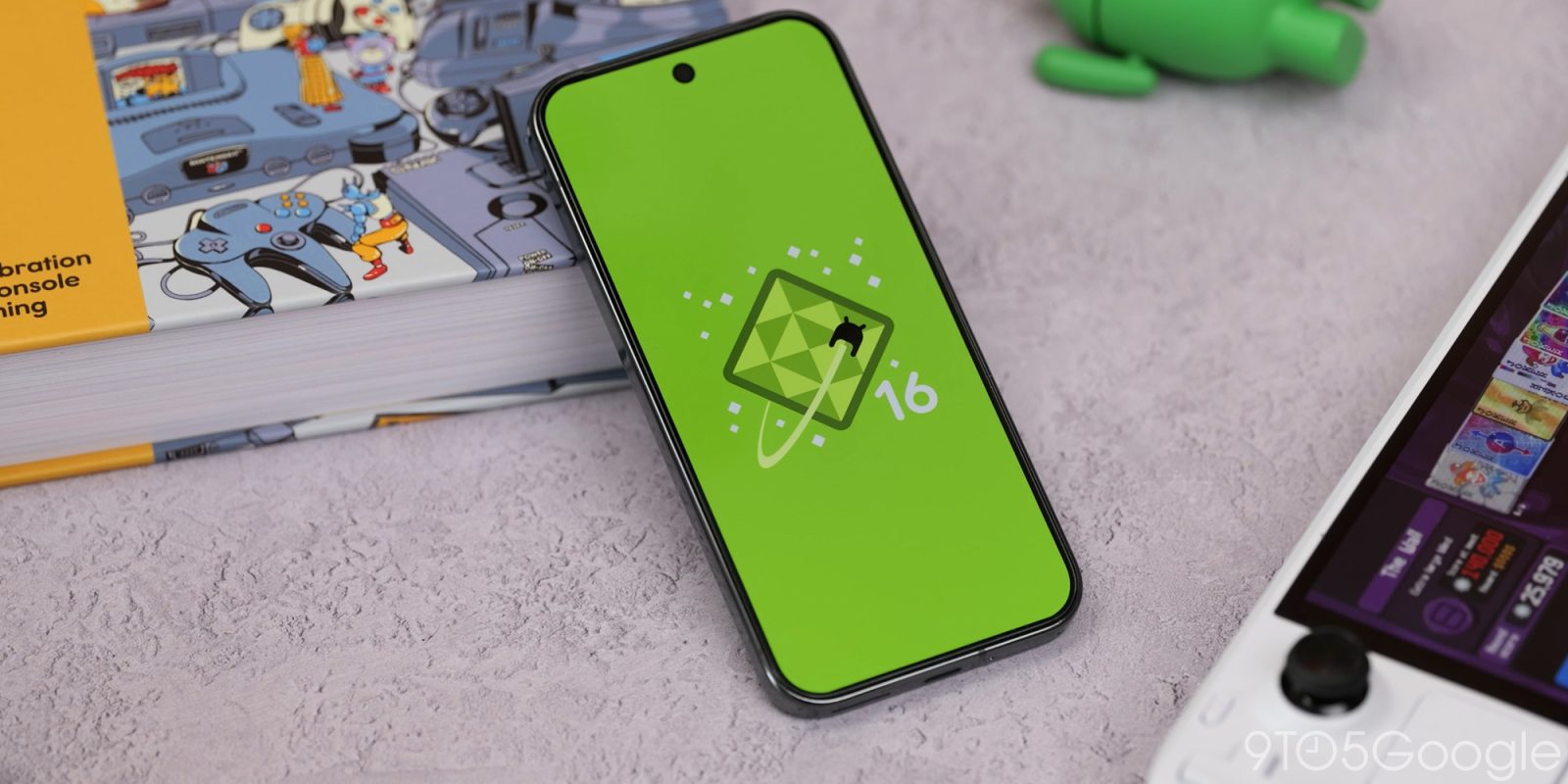
Android 16 QPR3 Beta 2 is now available for Pixel devices following last month’s release just before the holidays.

Quarterly Platform Releases bring more significant changes compared to monthly bug patches. Historically, QPRs are pretty stable, and Google officially says they are “suitable for general use.” Android 16 QPR3 should see a stable launch in March 2026.

Beta 2 addresses a wide range of stability, performance, and usability issues. Key fixes include resolving critical system crashes/device freezes, and correcting battery management issues where devices ignored charging limits or drained excessively. Significant improvements were made to connectivity, specifically addressing slow Wi-Fi speeds and missed calls. The update also resolves UI glitches in the notification shade and app drawer, ensuring smoother navigation and interaction.

Specifically:

  • An issue where the app drawer could become unresponsive when scrolling, which required updates to how UI elements were rendered.
  • Android Auto incorrectly logs extensive screen time, impacting battery life.
  • Graphical glitches and performance degradation when interacting with the notification shade in full-screen or PiP modes by improving display rendering.
  • An excessive battery drain issue occurring overnight by optimizing background process power consumption.
  • An issue where the battery charging limit was not being respected causing devices to charge to 100% instead of the set limit.
  • An issue where users experienced slow internet speeds on Wi-Fi due to a Wi-Fi connection bug.
  • A crash when accessing radio information settings.
  • Users experienced a noticeable delay and lack of feedback when switching audio outputs to speakerphone during calls; this was resolved by improving audio routing logic.
  • A display issue causing screen flickering when waking the device from Always-On Display by updating system webview.
  • An issue where certain apps, including Microsoft applications managed by Intune, were crashing on startup due to a compatibility problem with the Android system that has now been resolved.
  • An issue causing inconsistent or failed wireless charging and slow wired charging by improving the power management system.
  • System crashes that occurred when folding a foldable device with an app open by fixing an issue with activity lifecycle management during device state changes.

The Android Beta Feedback app is available on Pixel to submit problems. You can access it from the app drawer or via Quick Settings to file bugs in Google’s issue tracker, while the Android Beta community is on Reddit.

Advertisement – scroll for more content

  • CP11.251209.007.A1
  • CP11.251209.007 (Pixel 6 Pro, Pixel 6, Pixel 6a, Pixel 7 Pro, Pixel 7)

Android 16 QPR3 Beta 2 with the January 2026 security patch is available for the Pixel 6, Pixel 6 Pro, Pixel 7, Pixel 7 Pro, Pixel 7a, Pixel Tablet, Pixel Fold, Pixel 8, Pixel 8 Pro, Pixel 8a, Pixel 9, Pixel 9 Pro, Pixel 9 Pro XL, Pixel 9 Pro Fold, and Pixel 9a, Pixel 10, Pixel 10 Pro, Pixel 10 Pro XL, and Pixel 10 Pro Fold, as well as the Android Emulator.

However, there are no OTA images for the Pixel 10 series. You have to use the on-device OTA.

Most people will be installing via the Android Beta Program, but you can also flash or sideload.

FTC: We use income earning auto affiliate links. More.


Source link

Powerball: See the winning numbers in Wednesday’s $156 million drawing

0


It’s time to grab your tickets and check to see if you’re a big winner! The Powerball lottery jackpot continues to rise after one lucky winner in Arkansas won $1.7 billion in the December 24 drawing. Is this your lucky night?

Here are Wednesday’s winning lottery numbers:

06-24-39-43-51, Powerball: 02, Power Play: 2X

Double Play Winning Numbers

06-20-28-47-48, Powerball: 03

The estimated Powerball jackpot is $156 million. The lump sum payment before taxes would be about $70.5 million.

The Double Play is a feature that gives players in select locations another chance to match their Powerball numbers in a separate drawing. The Double Play drawing is held following the regular drawing and has a top cash prize of $10 million.

Powerball is held in 45 states, the District of Columbia, the U.S. Virgin Islands and Puerto Rico. The Double Play add-on feature is available for purchase in 13 lottery jurisdictions, including Pennsylvania and Michigan.

A $2 ticket gives you a one in 292.2 million chance at joining the hall of Powerball jackpot champions.

The drawings are held at 10:59 p.m. Eastern, Mondays, Wednesdays and Saturdays. The deadline to purchase tickets is 9:45 p.m.

If you purchase a product or register for an account through a link on our site, we may receive compensation. By using this site, you consent to our User Agreement and agree that your clicks, interactions, and personal information may be collected, recorded, and/or stored by us and social media and other third-party partners in accordance with our Privacy Policy.


Source link

Claudette Colvin was a civil rights pioneer. She died this week at 86 : NPR

0


In 1955, 15-year-old Claudette Colvin, a student from a Black high school in Montgomery, Ala., refused to move from her bus seat. The forgotten civil rights activist died this week.


AILSA CHANG, HOST:

More than 70 years ago, a Black teenager pushed against racial boundary lines in Montgomery, Alabama. She had learned about Harriet Tubman and Sojourner Truth at her segregated high school, and the lessons stuck with her. On March 2, 1955, Claudette Colvin refused to give her seat to a white passenger on a public bus. This was months before Rosa Parks refused to move to the back of a bus in Montgomery, but Colvin’s name is largely left out of the history books. Claudette Colvin died this week at the age of 86, and today, we’re resharing part of a Radio Diaries-produced story about that moment in 1955.

(SOUNDBITE OF ARCHIVED RECORDING)

CLAUDETTE COLVIN: My name is Claudette Colvin, and I was 15 years old when I was arrested for violating the Montgomery segregation law. Well, I was the kind of teenager that wore my hair in braids. Everybody else was battling with the straightening comb and pomade, and I didn’t mind being different.

(SOUNDBITE OF MUSIC)

COLVIN: Montgomery, it’s a nice little Southern town, but everything was segregated. This is for colored folks and this is for white folks. Couldn’t try on clothes in the store. Couldn’t go to the movie theater when a good movie come in town. You know, things that teenagers like to do. So I knew that this was a double standard. This was unfair.

(SOUNDBITE OF MUSIC)

PHILLIP HOOSE: My name is Phillip Hoose, and I wrote a book titled “Claudette Colvin: Twice Toward Justice.” March 2, 1955 was a Wednesday. Claudette got onto the bus with three other students, and they all settled themselves into a row in the middle of the bus. The rule back in Montgomery at that time was 10 seats in the front of the bus were for whites only, and the whites always had to be in front.

COLVIN: I knew that rule by heart. I was sitting near the window – the last seat that was allowed for the colored people. And so as the bus proceeded on downtown, more white people got on the bus. Eventually, the bus got full capacity, and a young white lady was standing near the four of us. She was expecting me to get up.

HOOSE: The bus driver looked in the mirror and saw the situation and said, I need those seats. And three of the girls got up and walked to the back of the bus. And Claudette didn’t.

COLVIN: I just couldn’t move. History had me glued to this seat.

HOOSE: And people started yelling in the bus, come on. Let’s go. Let’s move.

COLVIN: Hear those white people complaining to each other, talking, talking, talking, talking, talking. I could see them all moving and talking to each other. I didn’t know what was going to happen.

HOOSE: The bus driver called for a police officer, and a police officer boarded the bus and confronted Claudette.

COLVIN: Gal, why are you sitting there? You didn’t know the law? And I said, I paid my fare and it’s my constitutional right. But I remember they dragged me off the bus because I refused to walk.

CHANG: Colvin wanted to fight. Her family contacted a lawyer to file a federal lawsuit to desegregate the buses. But because of her age and lack of training in the movement, the larger Civil Rights community felt that the timing just wasn’t right.

(SOUNDBITE OF ARCHIVED RECORDING)

COLVIN: They thought I would have been too militant for them. They wanted someone mild and genteel like Rosa. They didn’t want to use a teenager.

(SOUNDBITE OF JAY MCSHANN’S “BLUE TURBULENCE”)

COLVIN: To me, it doesn’t bother me not being named, as long as we have someone out there so we can tell our story.

(SOUNDBITE OF JAY MCSHANN’S “BLUE TURBULENCE”)

CHANG: In 1956, about a year after Claudette Colvin refused to give up her seat, her lawyer filed the landmark federal lawsuit Browder vs. Gayle. The case ended segregation in public transportation in Alabama, and the star witness was Claudette Colvin. Colvin’s death was announced Tuesday by the Claudette Colvin Legacy Foundation.

(SOUNDBITE OF JAY MCSHANN’S “BLUE TURBULENCE”)

Copyright © 2026 NPR. All rights reserved. Visit our website terms of use and permissions pages at www.npr.org for further information.

Accuracy and availability of NPR transcripts may vary. Transcript text may be revised to correct errors or match updates to audio. Audio on npr.org may be edited after its original broadcast or publication. The authoritative record of NPR’s programming is the audio record.


Source link

The FTC’s data-sharing order against GM is finally settled

0


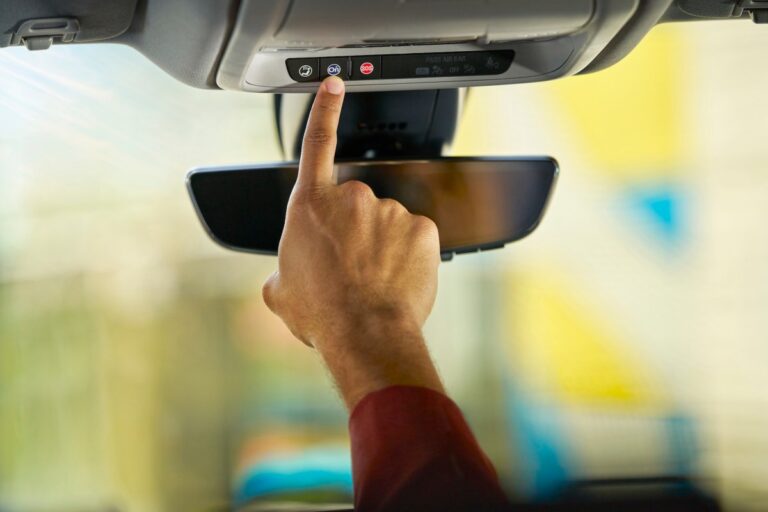
The Federal Trade Commission said Wednesday it has finalized an order that bans General Motors and its OnStar telematics service from sharing certain consumer data with consumer reporting agencies. The finalized order, which comes a year after the agency reached a proposed settlement with GM, also requires the automaker to be more transparent with its consumers and obtain their explicit consent on any data collection.

The finalized order comes nearly two years after a New York Times report showed how GM and OnStar collected, used, and sold drivers’ precise geolocation data and driving behavior to third parties, including data brokers LexisNexis and Verisk. The data was collected through GM’s Smart Driver program, a free feature contained within its connected car apps that tracked and rated driving behaviors and seatbelt use. Data brokers sold this information to insurance providers, which could affect customers’ rates, the NYT reported at the time.

GM discontinued the Smart Driver program in April 2024 across all of its brands, citing customer feedback. GM said at the time it unenrolled all customers and ended its third-party telematics relationships with LexisNexis and Verisk.

The FTC alleged that GM and OnStar used a misleading enrollment process to get consumers to sign up for its OnStar connected vehicle service and OnStar Smart Driver feature. The FTC also alleged the automaker failed to clearly disclose that the data would be collected and sold to third parties.

Under the order finalized Wednesday, GM is also required to obtain explicit consent from consumers prior to collecting, using, or sharing connected vehicle data. This process occurs at the dealership when a consumer buys a car from a GM brand. At that point, the OnStar system is linked to that particular vehicle VIN number and the new owner is asked whether they agree or not with data collection, according to GM.

There are some exceptions to the data collection ban, however. GM is allowed to share location data with emergency first responders and for internal research, the FTC said. GM confirmed this, noting it collects data for internal research and development and sometimes shares de-identified, or anonymized data (not associated with specific drivers or vehicles) with select partners to enhance city infrastructure and improve road safety. For instance, data has been shared with the University of Michigan, which used it for urban planning.

GM must also establish a way for all U.S. consumers to request a copy of their data and seek its deletion and give them the ability to disable the collection of precise geolocation data from their vehicles. GM says it has already complied with these mandates.

Techcrunch event

San Francisco
|
October 13-15, 2026

GM says it began overhauling its policies and programs on data collection and privacy in 2024. For instance, the automaker said it has consolidated many of its U.S. privacy statements into a single, simpler statement and expanded its privacy program that allows customers to access and delete their personal information.

“The Federal Trade Commission has formally approved the agreement reached last year with General Motors to address concerns,” an emailed statement from GM reads. “As vehicle connectivity becomes increasingly integral to the driving experience, GM remains committed to protecting customer privacy, maintaining trust, and ensuring customers have a clear understanding of our practices.” 


Source link

Voice and data services down for many customers

0


Verizon’s network is experiencing technical issues that are impacting calls and wireless data. Verizon customers on X have reported seeing “SOS” rather than the traditional network bars on their smartphones, and even the network provider’s own status page struggled to load, likely due to the number of customers trying to access it.

Based on the experience of Verizon users on Engadget’s staff, the services that are impacted appear to be calls and wireless data. Text messages continue to be delivered normally, at least for some users. On DownDetector, reports of a Verizon outage started growing around 12PM ET and numbered in the hundreds of thousands at their peak.

DownDetector also shows spikes in outage reports on competing networks like AT&T and T-Mobile, but in terms of magnitude, they’re much smaller than the issue Verizon is facing. For example, Verizon peaked at 181,769 reports, while AT&T’s was just 1,769 reports. The difference between the two is great enough that those AT&T reports could be from people trying to contact Verizon customers and thinking that their personal network was the problem.

In a post on the cell provider’s news account on X, Verizon acknowledged the issues with its network. “We are aware of an issue impacting wireless voice and data services for some customers,” Verizon wrote. “Our engineers are engaged and are working to identify and solve the issue quickly. We understand how important reliable connectivity is and apologize for the inconvenience.”

Based on DownDetector’s map of outage reports, issues with Verizon’s network appear to be concentrated in major cities in the eastern United States. The majority of reports appear to be coming out of Boston, New York and Washington DC, though the map also shows growing hot spots in Chicago, San Francisco and Los Angeles.

At 2:14PM ET, Verizon shared on X that its engineering teams “remain fully deployed” to work on fixing the outage. The company didn’t share when the issue would resolved or how many of its customers are currently impacted. Reports on DownDetector have dropped since their peak at 12:43PM ET, but thousands of Verizon customers are still noticing issues with the service.

As of 3:09PM ET, Verizon has yet to share more information about the recovery of the company’s cell network. Some Verizon customers on X have noticed their cell service returning, but it’s not clear if this means the network’s technical issues have been fixed.

At 4:06PM ET, nearly two hours since the company’s last statement, at least one member of Engadget’s staff reports their service has been restored. The connectivity issues are still affecting Verizon customers, however. DownDetector received over 55,000 outage reports as recently as 3:47PM ET.

Verizon posted at 4:12PM ET that work continues on addressing the outage, but the issue hasn’t been completely fixed. According to the company, its team is “on the ground actively working to fix today’s service issue that is impacting some customers.”

As of 4:52PM ET, the Verizon’s network has been experiencing issues for around four hours, making today’s outage nearly as long as the last major outage the company had in 2024. Like that 2024 outage, Verizon has yet to share what exactly is causing the issues with its network. Without out an official update, it’s safe to assume the company is still working on a fix.

At 5:41PM ET, DownDetector latest tally still shows over 46,000 people reporting issues with Verizon’s network. Based on the platform’s map, the same cities are filing the bulk of the outage reports, though reporting appears more diffuse than before as news of the outage has spread across the country.

At 6:20PM ET, the situation was much the same. Tens of thousands of users (including Engadget editors) still don’t have proper service, and Verizon had not updated its customers since 4:12PM ET. There are intermittent reports of service coming back and then failing again but seemingly no true fix has been deployed.

Both T-Mobile and AT&T have confirmed that their own networks are unaffected by the issues facing their competitor. In a post on X, T-Mobile shared that its network is “operating normally and as expected.” Meanwhile, AT&T says that for any of its customers experiencing issues, “it’s not us…it’s the other guys.”

This is a developing story. Our team will make frequent updates as more news occurs…


Source link

Here’s everything new in Android 16 QPR3 Beta 2 [Gallery]

0


Android 16 QPR3 is shaping up to be a sizable release, and Beta 2 is now available for Google Pixel devices. This is a big update that “addresses a wide range of stability, performance, and usability issues.”

Over the coming hours, we’ll dive into all of Android 16 QPR3 Beta 2’s new features and every single change. (The newest updates will be at the top of this list. Be sure to check back often and tell us what you find in the comments below.) Android 16 QPR3 Beta 1 screenshots appear on the left and QPR3 Beta 2 on the right.

If you want to quickly install Android 16 QPR3 Beta 2 on your compatible Pixel 6, Pixel 6 Pro, Pixel 7, Pixel 7 Pro, Pixel 7a, Pixel Tablet, Pixel Fold, Pixel 8, Pixel 8 Pro, Pixel 8a, Pixel 9, Pixel 9 Pro, Pixel 9 Pro XL, Pixel 9 Pro Fold, Pixel 9a, Pixel 10, Pixel 10 Pro, Pixel 10 Pro XL, and Pixel 10 Pro Fold be sure to check out our step-by-step guide.

Updating…

Reorganized Settings > System

Bug fixes

Key fixes include resolving critical system crashes/device freezes, and correcting battery management issues where devices ignored charging limits or drained excessively. Significant improvements were made to connectivity, specifically addressing slow Wi-Fi speeds and missed calls. The update also resolves UI glitches in the notification shade and app drawer, ensuring smoother navigation and interaction.

  • An issue where the app drawer could become unresponsive when scrolling, which required updates to how UI elements were rendered.
  • Android Auto incorrectly logs extensive screen time, impacting battery life.
  • Graphical glitches and performance degradation when interacting with the notification shade in full-screen or PiP modes by improving display rendering.
  • An excessive battery drain issue occurring overnight by optimizing background process power consumption.
  • An issue where the battery charging limit was not being respected causing devices to charge to 100% instead of the set limit.
  • An issue where users experienced slow internet speeds on Wi-Fi due to a Wi-Fi connection bug.
  • A crash when accessing radio information settings.
  • Users experienced a noticeable delay and lack of feedback when switching audio outputs to speakerphone during calls; this was resolved by improving audio routing logic.
  • A display issue causing screen flickering when waking the device from Always-On Display by updating system webview.
  • An issue where certain apps, including Microsoft applications managed by Intune, were crashing on startup due to a compatibility problem with the Android system that has now been resolved.
  • An issue causing inconsistent or failed wireless charging and slow wired charging by improving the power management system.
  • System crashes that occurred when folding a foldable device with an app open by fixing an issue with activity lifecycle management during device state changes.

FTC: We use income earning auto affiliate links. More.


Source link

Man stabbed to death during fight at Cambridge apartment complex identified

0


A man who was stabbed to death during a fight at a Cambridge apartment complex last week has been identified as 37-year-old Antoine Johnson, according to the Middlesex County District Attorney’s Office.

South Boston resident Victor Rivas, 51, pleaded not guilty to assault and battery with a dangerous weapon resulting in serious bodily injury in connection with Johnson’s death during his arraignment in Cambridge District Court on Jan. 9, according to court records. The charge had not been upgraded as of Wednesday.

A 911 caller reported the stabbing at a Norfolk Street apartment complex shortly after 7:50 p.m. on Jan. 6, the district attorney’s office said previously. First responders found Johnson with serious stab wounds and took him to a nearby hospital where he later died.

The preliminary investigation indicates that Rivas and Johnson knew each other, the district attorney’s office said. Authorities believe Rivas stabbed Johnson during a fight. Rivas was also injured.

Rivas was released on bail on Monday under special conditions, including a curfew, according to court records.

No further information about the stabbing has been released.


Source link

Claudette Colvin, arrested in 1955 for refusing to give up bus seat, dies : NPR

0


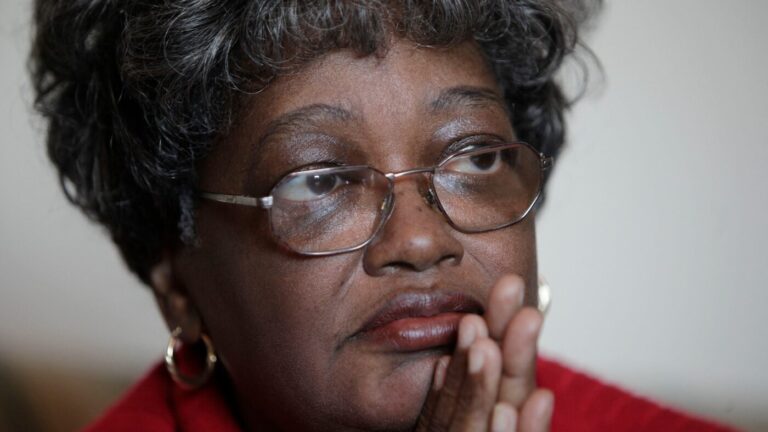
Claudette Colvin sits for a portrait, Feb. 5, 2009, in New York.

Claudette Colvin sits for a portrait, Feb. 5, 2009, in New York.

Julie Jacobson/AP


hide caption

toggle caption

Julie Jacobson/AP

MONTGOMERY, Ala. — Claudette Colvin, whose 1955 arrest for refusing to give up her seat on a segregated Montgomery bus helped spark the modern civil rights movement, has died. She was 86.

Her death was announced Tuesday by the Claudette Colvin Legacy Foundation. Ashley D. Roseboro of the organization confirmed she died of natural causes in Texas.

Colvin, at age 15, was arrested nine months before Rosa Parks gained international fame for also refusing to give up her seat on a segregated bus.

Colvin had boarded the bus on March 2, 1955, on her way home from high school. The first rows were reserved for white passengers. Colvin sat in the rear with other Black passengers. When the white section became full, the bus driver ordered Black passengers to relinquish their seats to white passengers. Colvin refused.

“My mindset was on freedom,” Colvin said in 2021 of her refusal to give up her seat.

“So I was not going to move that day,” she said. “I told them that history had me glued to the seat.”

At the time of Colvin’s arrest, frustration was mounting over how Black people were treated on the city bus system. Another Black teenager, Mary Louise Smith, was arrested and fined that October for refusing to give up her seat to a white passenger.

It was the arrest of Parks, who was a local NAACP activist, on Dec. 1, 1955, that became the final catalyst for the yearlong Montgomery Bus Boycott. The boycott propelled the Rev. Martin Luther King Jr. into the national limelight and is considered the start of the modern civil rights movement.

Colvin was one of the four plaintiffs in the landmark lawsuit that outlawed racial segregation on Montgomery’s buses. Her death comes just over a month after Montgomery celebrated the 70th anniversary of the Bus Boycott.

Montgomery Mayor Steven Reed said Colvin’s action “helped lay the legal and moral foundation for the movement that would change America.”

Colvin was never as well-known as Parks, and Reed said her bravery “was too often overlooked.”

“Claudette Colvin’s life reminds us that movements are built not only by those whose names are most familiar, but by those whose courage comes early, quietly, and at great personal cost,” Reed said. “Her legacy challenges us to tell the full truth of our history and to honor every voice that helped bend the arc toward justice.”

Colvin in 2021 filed a petition to have her court record expunged. A judge granted the request.

“When I think about why I’m seeking to have my name cleared by the state, it is because I believe if that happened it would show the generation growing up now that progress is possible, and things do get better,” Colvin said at the time. “It will inspire them to make the world better.”


Source link