Home Blog Page 156

American chess grandmaster Daniel Naroditsky dies at 29 : NPR

0


This undated photo released by the Charlotte Chess Center shows Daniel Naroditsky playing chess on the board.

This undated photo released by the Charlotte Chess Center shows Daniel Naroditsky playing chess on the board.

Kelly Centrelli/Charlotte Chess Center/AP


hide caption

toggle caption

Kelly Centrelli/Charlotte Chess Center/AP

Daniel Naroditsky, a chess grandmaster who started as a child prodigy and quickly became one of the most influential American voices in the sport, died Monday. He was 29.

The Charlotte Chess Center in North Carolina, where Naroditsky trained and worked as a coach, announced his death on social media, calling him “a talented chess player, educator, and beloved member of the chess community.”

“Let us remember Daniel for his passion and love for the game of chess, and for the joy and inspiration he brought to us all every day,” his family said in a statement shared by the center.

The cause of death was not immediately known.

Naroditsky became a grandmaster, the highest title in chess aside from World Chess Champion, at the age of 18.

Years earlier, the California-born player won the Under 12 world championship and spent his teenage years writing chess strategy books as he climbed the world rankings.

He was consistently ranked in the top 200 worldwide for traditional chess and also excelled at a fast-paced style called blitz chess, maintaining a top 25 ranking throughout his adult career. Most recently Naroditsky, known to many as Danya, won the U.S. National Blitz Championship in August.

Fellow grandmasters credited Naroditsky with introducing the sport to a wider audience by livestreaming many of his matches and sharing live commentary on others. Thousands of people regularly tuned in on YouTube and the interactive streaming platform Twitch to watch Naroditsky play.

“He loved streaming, and he loved trying to be educational. The chess world is very grateful,” Hikaru Nakamura, an American grandmaster, said on a livestream Monday.

In a final video posted to his YouTube channel on Friday titled “You Thought I Was Gone!?” Naroditsky tells viewers he’s “back, better than ever” after taking a creative break from streaming. He talks viewers through his moves as he plays live chess matches on the computer from a cozy home studio.

Other elite chess players from around the globe took to social media to express their shock and sadness.

Dutch chess grandmaster Benjamin Bok reflected on his lifelong friendship with Naroditsky, who he said he’s known since the Under 12 world championship that Naroditsky won in 2007.

“I still can’t believe it and don’t want to believe it,” Bok said on X. “It was always a privilege to play, train, and commentate with Danya, but above all, to call him my friend.”

Naroditsky was the son of Jewish immigrants to the U.S. from Ukraine and Azerbaijan. He was born and raised in San Mateo County, California, and was described by his parents as a very serious kid with an impressive attention span and memory. He went on to study history at Stanford University, earning a bachelor’s degree in 2019 after taking a year off to play in chess tournaments.

After college, he moved to Charlotte, North Carolina, where he coached the area’s top junior chess players.



Source link

European AI rising star Nexos.ai raises $30M to unlock enterprise AI adoption

0


For most enterprise companies, AI is either a promise that has yet to deliver or a security risk. The effort of Lithuania’s most famous entrepreneur duo to solve that conundrum has garnered attention — and funding.

Just months after Nexos.ai came out of stealth with an $8 million funding round led by Index Ventures, Nord Security co-founders Tomas Okmanas and Eimantas Sabaliauskas have closed a €30 million Series A (approximately $35 million) for this new startup — a a platform that helps companies adopt AI tools securely by acting as a middleman between employees and AI systems.

In Okmanas’ view, “the biggest corporate data leak” is currently in the making, as employees upload sensitive information to LLMs. Rather than banning AI use, he wants Nexos.ai to act as a “Switzerland for LLMs,” serving as a neutral intermediary. By sitting between teams and AI tools, the platform aims to keep data under control without sacrificing the productivity gains companies want but fear pursuing.

That combination of seasoned founders tackling a critical enterprise problem explains why this new round was raised so soon — with Index and Evantic Capital co-leading at a €300 million valuation (approximately $350 million), according to a company spokesperson. Previous backers Creandum and Dig Ventures also participated, along with angel backers, including the CEOs of Datadog, Klarna, Supercell, and Wix.

Evantic, the new venture firm launched by former Sequoia Capital partner Matt Miller, was persistent enough to make the round happen even though Nexos.ai wasn’t fundraising, said Okmanas. He and Sabaliauskas famously bootstrapped their previous businesses, including Nord, the $3 billion cybersecurity company behind NordVPN. But they now see the value-add from VCs.

In addition to Index’s support, Nexos.ai is now benefiting from Miller’s guidance and his ‘Legends’ network —140 operators who advise Evantic’s portfolio startups in exchange for a share of the fund’s profits. Okmanas said he is both a Legend himself and drawing on others’ expertise to shape the product — which is where the new capital will go.

Currently, Nexos’ AI product consists of an AI Workspace interface for employees and an AI Gateway for developers. The gateway acts as a control layer for security, cost management, and compliance oversight while reducing fragmentation, which Okmanas sees as a key barrier to AI adoption. The gateway provides a single access point to some 200 AI models, and the company plans to use its funding to accelerate its support of private models for sensitive data.

Techcrunch event

San Francisco
|
October 27-29, 2025

Okmanas said his team is currently doing 50 to 60 demo calls a week, but anticipates that traditional businesses will have “a lot of homework” to do to convince their boards about how they want to adopt AI. Nexos.ai could help them by making deployment easier. But first, the startup is focusing on tech-savvy companies that already use AI daily, as well as companies operating in regulated industries, which have concerns about governance and sending sensitive data to AI models hosted in foreign countries.

Okmanas and Sabaliauskas identified the AI governance gap while overseeing the portfolio of Tesonet, their company that builds and invests in startups. Tesonet portfolio companies are also among the customers that Nexos.ai is disclosing, alongside Bulgarian fintech unicorn Payhawk, which also has an office in Vilnius. According to a press release, the funding will now support expansion across Europe and North America.

For Okmanas, the mission is removing barriers to broader AI adoption. While boards debate whether AI can deliver real value, he points to results within Tesonet’s own portfolio: at Hostinger, a web hosting provider, an AI assistant reduced the need for human support. Says Okmanas, “That’s why we didn’t need to hire 500 people and saved €10 million this year alone.”

Despite talking numbers at Hostinger, Okmanas declined to disclose how much revenue Nexos.ai itself is generating. Instead, he said that by the time the company celebrates its first anniversary, the team will have grown to 100 people — mostly in Europe, where data sovereignty concerns have also started to open doors for Nexos.ai at public institutions, potentially opening up a new market beyond its enterprise focus.


Source link

Amazon’s AWS outage knocked services like Alexa, Snapchat, Fortnite, Venmo and more offline

0


It felt like half of the internet was dealing with a hangover from the morning of October 19 to the early hours of October 20. A severe Amazon Web Services outage took out many, many websites, apps, games and other services that rely on Amazon’s cloud division to stay up and running. That included a long list of popular software like Venmo, Snapchat, Canva and Fortnite. Even Amazon’s own assistant Alexa stuttered, and if you were wondering why the internet seemed to be against you — you weren’t imagining it. The good news is that, Amazon announced by 6:53PM Eastern time on October 20 that it resolved the “increased error rates and latencies for AWS Services.”

The company said it “identified the trigger of the event as DNS resolution issues for the regional DynamoDB service endpoints.” It ran into more problems as it tried to solve the outage, but it was eventually able to fix everything. “By 3:01 PM, all AWS services returned to normal operations,” it said.

At about 4:30PM ET on October 20, things seemed to be returning back to normal. Apps like Venmo and Lyft, which were either slow to respond or completely nonresponsive before, were appearing to behave smoothly.

As of 1:15PM ET on October 20, multiple services were unavailable, including asking Alexa for the weather or to turn off lights in your home. The Lyft app was also slower to respond than usual, and Venmo transactions were not completing.

According to the AWS service health page at the time, Amazon was looking into “increased error rates and latencies for multiple AWS services” in the US-EAST-1 region (i.e. data centers in Northern Virginia) as of 3:11AM ET on Monday. By 5:01AM, AWS had figured out that a DNS resolution issue with its DynamoDB API was the cause of the outage. DynamoDB is a database that holds info for AWS clients.

At about 12:08PM ET, the company posted a small statement that reiterated the above and added that the “underlying DNS issue was fully mitigated at 2:24 AM PDT.” According to the notice, some Amazon “customers still continue to experience increased error rates with AWS services in the N. Virginia (us-east-1) Region due to issues with launching new EC2 instances.” Amazon also said Amazon.com and Amazon subsidiaries, as well as AWS customer service support operations have been impacted.

“Amazon had the data safely stored, but nobody else could find it for several hours, leaving apps temporarily separated from their data,” Mike Chapple, a teaching professor of IT, analytics and operations at University of Notre Dame, told CNN. “It’s as if large portions of the internet suffered temporary amnesia.”

As of 6:35AM, AWS said it had fully mitigated the DNS issue and that “most AWS Service operations are succeeding normally now.” However, the knock-on effect caused issues with other AWS services, including EC2, a virtual machine service on which many companies build online applications.

At 8:48AM, AWS said it was “making progress on resolving the issue with new EC2 instance launches in the US-EAST-1 Region.” It recommended that clients not tie new deployments to specific Availability Zones (i.e. one or more data centers in a given region) “so that EC2 has flexibility” in picking a zone that may be a better option.

At 9:42AM, Amazon noted on the status page that although it had applied “multiple mitigations” across several Availability Zones in US-EAST-1, it was “still experiencing elevated errors for new EC2 instance launches.” As such, AWS was “rate limiting new instance launches to aid recovery.” The company added at 10:14AM that it was seeing “significant API errors and connectivity issues across multiple services in the US-EAST-1 Region.” Even once all the issues are resolved, AWS will have a significant backlog of requests and other factors to process, so it’ll take some time for everything to recover.

Many, many, many companies use US-EAST-1 for their AWS deployments, which is why it felt like half of the internet was knocked offline on Monday morning. As of mid-morning, tons of websites and other services were sluggish or offering up error messages. Outage reports for a broad swathe of services spiked on Down Detector. Along with Amazon’s own services, users reported issues with the likes of banks, airlines, Disney+, Snapchat, Reddit, Lyft, Apple Music, Pinterest, Fortnite, Roblox and The New York Times — sorry to anyone whose Wordle streaks may be at risk.

Sites like Reddit have posted their own status updates, and though they don’t explicitly mention AWS, it’s possible that the services’ paths may cross somewhere in the pipelines.

AWS offers a lot of useful features to clients, such as the ability for websites and apps to automatically scale compute and server capacity up and down as needed to handle ebbs and flows in traffic. It also has data centers around the world. That kind of infrastructure is attractive to companies that serve a global audience and need to stay online around the clock. As of mid-2025, it was estimated that AWS’ share of the worldwide cloud infrastructure market was 30 percent. But incidents such as this highlight that relying on just a few providers to be the backbone of much of the internet is a bit of a problem.

Update October 20, 2025, 9:21PM ET: This story has been updated with Amazon’s latest update that says the issue has been resolved.

Update, Oct 20 2025, 10:57AM ET: This story has been updated to include a short list of services affected in the intro.

Update, Oct 20 2025, 11:17AM ET: This story has been updated to include a reference to Reddit’s own status update website.

Update, Oct 20 2025, 1:15PM ET: This story has been updated to include a paragraph reflecting the status of popular services like Lyft, Venmo and Alexa, based on our editors’ personal experiences as of this time.

Update, Oct 20 2025, 3:15PM ET: This story has been updated to include a short statement from Amazon describing a timeline of events, when the underlying issue was mitigated and what parts of Amazon have been impacted.

Update, Oct 20 2025, 4:30PM ET: This story has been updated to reflect the status of services like Venmo and Lyft as of Monday afternoon.


Source link

Find Hub app hits 1 billion downloads on Google Play Store

0


Following the rebrand this year, the Find Hub app has reached over 1 billion downloads on Google Play.

The Android app just crossed the 1,000,000,000+ downloads milestone, with com.google.android.apps.adm first released on December 11, 2013. The app debuted as “Android Device Manager” before becoming “Find My Device” in 2017. In July of 2024, it hit 500 million downloads. 

Since then, Google introduced location sharing functionality that’s powered by Maps. It’s available in a new “People” tab. The Find Hub rebrand was announced ahead of I/O 2025 this May. For Android 16, the app got Material 3 Expressive tweaks in August, with google.com/android/find/ also fully up-to-date.

On the device front, we’ve gotten more trackers and devices, as well as UWB support.

Advertisement – scroll for more content

Looking ahead, Google teased satellite connectivity to help “you stay connected with friends and family even when you don’t have cellular connectivity.” There’s also airline integration in early 2026 to find lost luggage. 

Another notable Google milestones on the Play Store this year include:

  • 1 billion: Google Home (April), Find Hub (October)
  • 5 billion: Files by Google (January), YouTube Music (January)
  • 10 billion: Gboard (February), Google Meet (April), Google TV (May)

FTC: We use income earning auto affiliate links. More.


Source link

State freezes local aid payments to Holyoke over unreconciled cash

0


HOLYOKE — The commonwealth has stopped sending millions of dollars in local aid payments to Holyoke for the second time in 2025, because the city hasn’t kept up with its basic financial paperwork for more than three years, according to the state’s Division of Local Services.

Division officials from within the Department of Revenue say Holyoke failed to balance its books and submit required reports, warning on Oct. 1 that if the city doesn’t fix the problem within 60 days, it could face more penalties — including having to pay for outside help to clean up its records.

If you purchase a product or register for an account through a link on our site, we may receive compensation. By using this site, you consent to our User Agreement and agree that your clicks, interactions, and personal information may be collected, recorded, and/or stored by us and social media and other third-party partners in accordance with our Privacy Policy.


Source link

U.S. and Australia sign $3B critical minerals deal

0


President Donald Trump and Australian Prime Minister Anthony Albanese inked an agreement on Monday that will pump billions of dollars into critical minerals projects.

The U.S. and Australia will together contribute $3 billion to the projects over the next six months. The total project pipeline is worth $8.5 billion, the governments said.

As part of the deal, the U.S. Department of Defense will also invest in a gallium refinery in Western Australia capable of producing 100 tons per year. Currently, the U.S. imports approximately 21 tons of gallium, which represents 100% of domestic consumption, according to the U.S. Geological Survey. 

The move comes as China has restricted exports of certain minerals, including rare earth elements, that are vital to the production of electronics and electric motors. Gallium, for example, is used in microwave circuits and blue and violet LEDs, which can be used to make powerful lasers.

Alongside the critical minerals deal, Australia has agreed to buy $1.2 billion worth of autonomous underwater vehicles (AUVs) from defense startup Anduril. The White House did not specify whether the purchase agreement is new or part of a previously announced $1.12 billion program under which Anduril will deliver a fleet of Ghost Shark AUVs to the Australian Navy. That deal was announced in September.


Source link

Spotify now lets people follow venues to find out about concerts

0


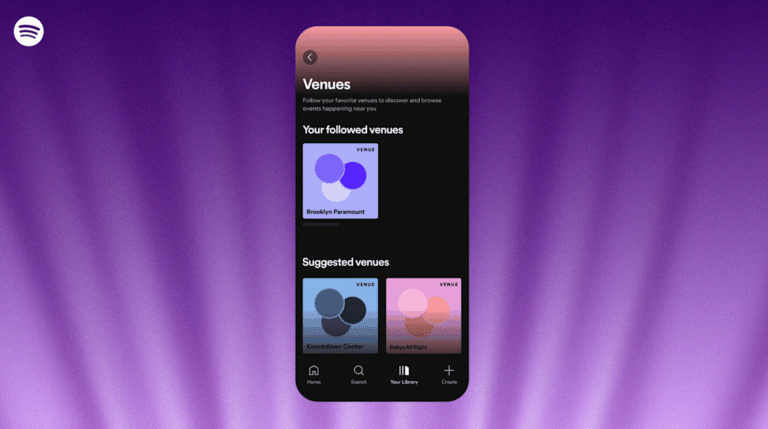
Spotify just introduced a feature that lets users . This will provide people with updates and details about upcoming concerts.

Once a venue is selected as a favorite, it gets saved in a user’s library. Browsing each venue provides information on scheduled concerts, general announcements and other stuff. Folks can even filter upcoming shows by genre. Clicking on a specific spot will also pull up “tailored suggestions for other venues” in the vicinity.

Spotify’s new venue-tracking platform will offer links to each location’s “official ticketing partner” to make it easier to scoop up some tickets. The company says it currently tracks over 20,000 venues throughout the globe, from “iconic arenas to beloved independent clubs.”

Spotify also announced a change to its live event feed. This will now update daily instead of weekly. For the uninitiated, this tool and lists nearby live events.

The platform recently added yet another tool for concert discovery in the form of with upcoming shows in the area. These playlists update every week and include 30 songs.

These are welcome tools, as artists from streaming platforms, instead relying on live ticket sales. The features could also help stem some of the bad press that’s been coming Spotify’s way lately, thanks to CEO Daniel Ek’s and the platform going running recruitment ads for .


Source link

Oura is redesigning its app weeks after Ceramic Ring launch

0


The Oura app was already one of the easiest health tracking apps to use, and the company says that its getting an overhaul to make it even better with new features.

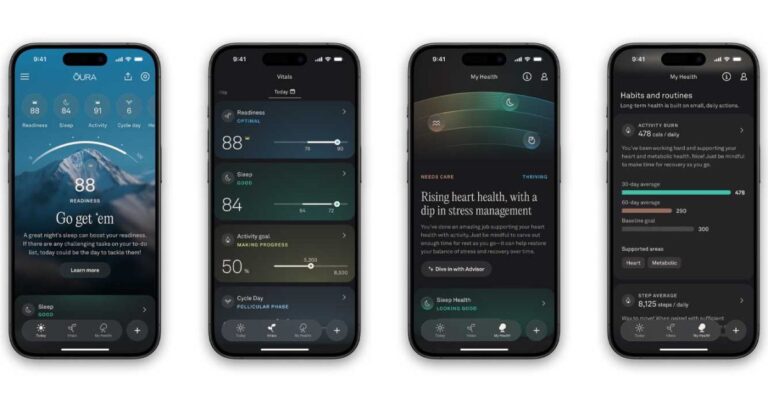
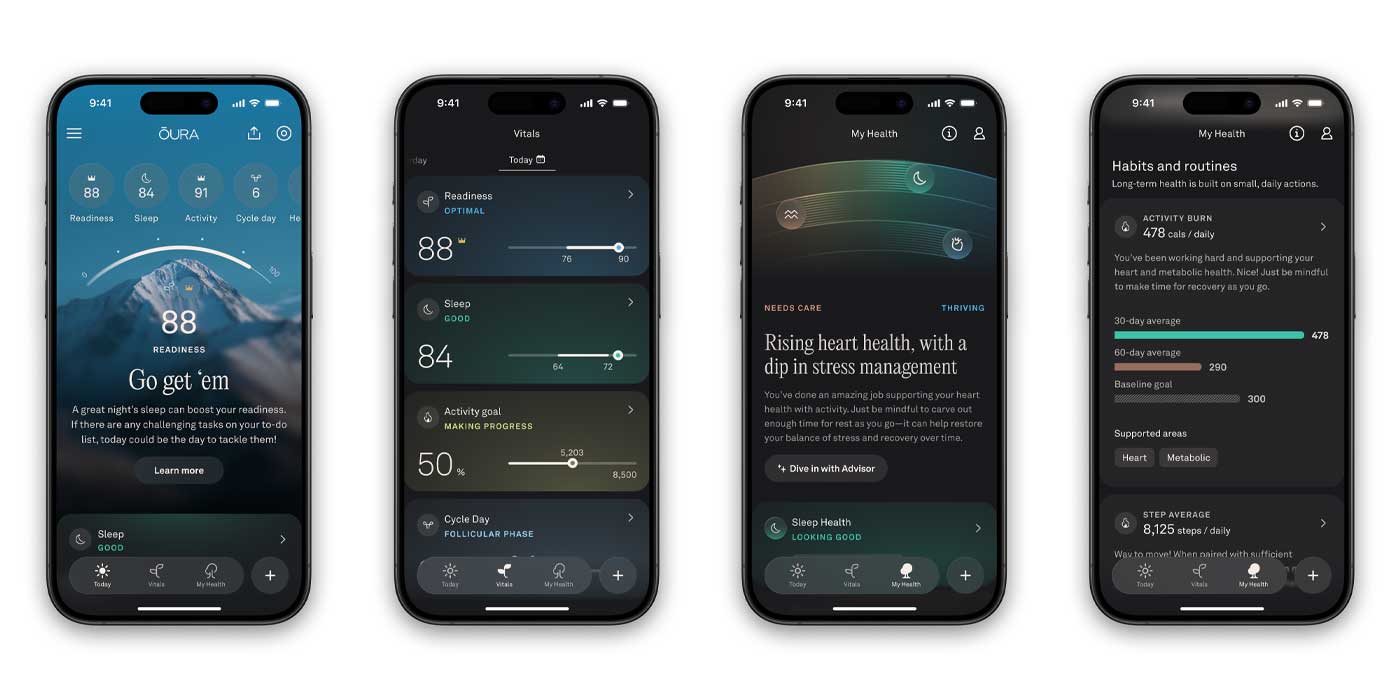
Oura says the new app will offer a more personal approach to health data as its tracked with Oura Ring devices. A new visual design and updated interface will make it a little easier to find and sift through health data without getting lost in the numbers. Of course, those numbers are always there if users prefer getting their hands dirty.

The app will be broken down into three main tabs: Today, Vitals, and My Health. The Today tab will house information on one important daily insight, while others are shown at the top. The Oura app will give users “One Big Thing” to focus on each day with the most relevant scores.

The Vitals section breaks scores like stress, sleep, and cardiovascular information down between timeframes, from days to years. The app will stack all of the familiar vitals in this tab. With the new design, parts of the app will change color depending on biometrics. Its a new visual cue for users to quickly see how they’re doing at a glance.

Advertisement – scroll for more content

The My Health portion of the app is focused on long-term data with easy access to Oura Advisor – the company’s AI model – for insights and advice.

This redesign comes as the company just launched its new Ceramic Ring 4, which brings the same specs as the previous version. The main difference is material, though having extra color variants beyond metallic tones is nice.

Cycle Insights are getting significant improvements with the update, too. According to Oura, users will be abel to get cycle phase and prediciton data from a single night of sleep rather than having to wait an entire month. The overall view will also change from a 1-month glance to a 12-month window.

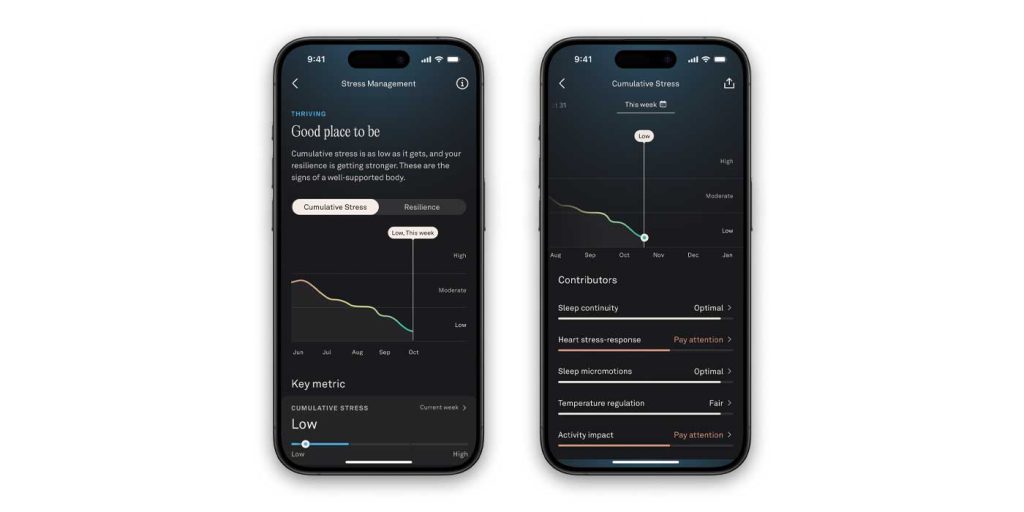
As for entirely new features, Cumulative Stress is being added to the Oura app. While the stress vital is measured on a regular basis, Cumulative Stress will give users a look at their long-term numbers. The objective physiological signal provided to the Oura Ring is compared with data from the previous month. With information on how the body handles stress over time, the Oura app can determine cumulative data. Oura provides detailed information on what studies it uses to break the data down, which we highly recommend users take a look at.

The cumulative stress feature will draw from several contirbutors to determine how the body manages and recovers from stress. That includes these factors:

  • Sleep continuity
  • Heart stress-response
  • Sleep micromotions
  • Temperature regulation
  • Activity impact

Oura says the new app design will rollout globally over the next few weeks on Android and iOS. The company also notes that Oura’s Android team has recently expanded, and the new app should bring better stability and function across devices.

FTC: We use income earning auto affiliate links. More.


Source link

Mega Millions climbs to $650M, cracking top 10 largest jackpots in game history

0


The Mega Millions jackpot has rolled to $650 million ahead of the drawing on Tuesday night, making it one of the top 10 largest prizes in game history.

The $650 million jackpot has an estimated cash value of $304.1 million. There have been no winners in the game for three and a half months, since the jackpot was last hit in Virginia on June 27.

There hasn’t been a top 10 jackpot in the game since December 2024, when the prize ultimately reached a $1.269 billion jackpot.

Mega Millions tickets cost $5 each and players must choose five numbers between 1-70, and one Mega Ball number between 1-24.

Drawings are held at 11 p.m. every Tuesday and Friday.

The top 10 largest Mega Millions jackpots in history are as follows:

  1. $1.602 billion won Aug. 8, 2023 in Florida
  2. $1.537 billion won Oct. 23, 2018 in South Carolina
  3. $1.348 billion won Jan. 13, 2023 in Maine
  4. $1.337 billion won July 29, 2022 in Illinois
  5. $1.269 billion won Dec. 27, 2024 in California
  6. $1.128 billion won March 26, 2024 in New Jersey
  7. $1.050 billion won Jan. 22, 2021 in Missouri
  8. $810 million won Sept. 10, 2024 in Texas
  9. $656 million won March 30, 2012 between three tickets in Illinois, Kansas and Maryland
  10. $650 million (estimated) on Oct. 21, 2025

If you purchase a product or register for an account through a link on our site, we may receive compensation. By using this site, you consent to our User Agreement and agree that your clicks, interactions, and personal information may be collected, recorded, and/or stored by us and social media and other third-party partners in accordance with our Privacy Policy.


Source link

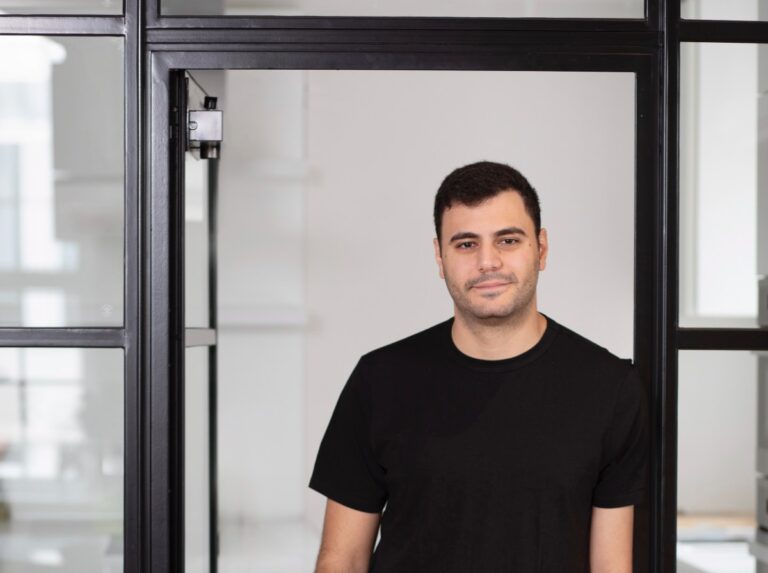
Scale AI alum raises $9M for AI serving critical industries in MENA

0


Bilal Abu-Ghazaleh had just moved to London few days before our call, splitting his time between there and Dubai.

After nearly a decade in the U.S., including a stint at Scale AI, he’s bringing that experience to his next venture: 1001 AI , a company creating AI infrastructure for critical industries across the Middle East and North Africa (MENA).

The startup recently raised a $9 million seed round led by CIV, General Catalyst, and Lux Capital. Other backers include global and regional angels such as Chris Ré, Amjad Masad (Replit), Amira Sajwani (DAMAC), Khalid Bin Bader Al Saud (RAED Ventures), and Hisham Alfalih (Lean Technologies).

Abu-Ghazaleh said his two-month-old company promises to cut inefficiencies in high-stakes sectors like aviation, logistics, and oil and gas through an AI-native operating system for decision-making. 

“Just looking at the top three or four industries like airports, ports, construction, and oil and gas, we see more than $10 billion in inefficiencies across the Gulf alone,” the founder and CEO said in an interview with TechCrunch. “That’s just in markets like the UAE, Saudi Arabia, and Qatar. Even without counting other sectors, these industries represent a massive opportunity.”

For example, any efficiencies found in airport operations can compound the savings, impacting both the airport and its airlines. Meanwhile, he said nine out of ten of the regions mega-projects fall behind schedule or go over budget, meaning even small increases in efficiencies can save these projects serious money.

1001 AI hopes to sell its decision-making AI to new projects after it launches its first product, which is scheduled by year’s end. The startup is in talks with some of the Gulf’s largest construction firms and airports, said Abu-Ghazaleh.

Techcrunch event

San Francisco
|
October 27-29, 2025

Born and raised in Jordan, Abu-Ghazaleh moved to the U.S. for college and later joined the Bay Area’s startup scene. After an early product role at computer vision startup Hive AI, he joined Scale AI in 2020 during its rapid expansion. There, he rose through the ranks from operations associate to director of the company’s GenAI operations, scaling its contributor network responsible for annotating and labeling training data.

He was later set to join Scale’s international public sector unit, which builds AI solutions for foreign governments. But when Meta invested in Scale, the company shifted direction, and Abu-Ghazaleh left to found 1001 AI.

The Gulf, particularly the UAE and Saudi Arabia, has become one of the world’s most aggressive adopters of AI. From sovereign-backed ventures like G42 in Abu Dhabi to Saudi Arabia’s National Center for AI, governments are investing billions to build local AI infrastructure and attract global talent.

For Abu-Ghazaleh, that mix of appetite, budget, and urgency makes the region a perfect testing ground. But unlike most AI startups focused on software or enterprise tools, 1001 targets real-world physical operations, an area where the company’s investors believe the potential is even greater in the Middle East.

“We’re extremely bullish on AI that solves physical-world problems at scale i.e, optimizing how airports turn around flights, how ports move cargo, how construction sites operate,” said Deena Shakir, partner at Lux Capital. “The MENA region offers significant potential in this space with mission-critical infrastructure that’s under-digitized and ripe for transformation.”

While the product is still under development, Abu-Ghazaleh offered a glimpse into how it works. The system pulls in data from a client’s existing software, models operational workflows, and issues real-time directives to improve efficiency.

“Today, an operations manager might manually call someone to reroute a fuel truck or send a cleaning crew to another gate,” said Abu-Ghazaleh. “With our system, that orchestration happens automatically. The AI orchestrator uses real-time data to reroute vehicles, reassign crews, and adjust operations without human intervention.”

Unlike most early-stage AI startups that target specific industries, Abu-Ghazaleh says 1001 can be accessible by many because operational flows across industries often look the same.

That model borrows from the rigor of consulting and contract work. The team spends weeks embedded with clients, running co-development sprints to tailor its systems to each operation’s realities, the CEO said. 

“Bilal is building the decision engine to automate that complexity with Scale-proven execution and the regional gravity to make 1001 the platform this market builds on,” commented Neeraj Arora, managing director at General Catalyst.

The new funding will accelerate early deployments across aviation, logistics, and infrastructure, while fueling recruitment in engineering, operations, and go-to-market role as it grows its team across Dubai and London.

1001 AI plans to launch its first customer deployment by the end of the year, starting with construction. Over the next five years, Abu-Ghazaleh wants the company to become the Gulf’s go-to orchestration layer for these industries before expanding globally.


Source link