Home Blog Page 159

Silicon Valley spooks the AI safety advocates

0


Silicon Valley leaders including White House AI & Crypto Czar David Sacks and OpenAI Chief Strategy Officer Jason Kwon caused a stir online this week for their comments about groups promoting AI safety. In separate instances, they alleged that certain advocates of AI safety are not as virtuous as they appear, and are either acting in the interest of themselves or billionaire puppet masters behind the scenes.

AI safety groups that spoke with TechCrunch say the allegations from Sacks and OpenAI are Silicon Valley’s latest attempt to intimidate its critics, but certainly not the first. In 2024, some venture capital firms spread rumors that a California AI safety bill, SB 1047, would send startup founders to jail. The Brookings Institution labeled the rumor as one of many “misrepresentations” about the bill, but Governor Gavin Newsom ultimately vetoed it anyway.

Whether or not Sacks and OpenAI intended to intimidate critics, their actions have sufficiently scared several AI safety advocates. Many nonprofit leaders that TechCrunch reached out to in the last week asked to speak on the condition of anonymity to spare their groups from retaliation.

The controversy underscores Silicon Valley’s growing tension between building AI responsibly and building it to be a massive consumer product — a theme my colleagues Kirsten Korosec, Anthony Ha, and I unpack on this week’s Equity podcast. We also dive into a new AI safety law passed in California to regulate chatbots, and OpenAI’s approach to erotica in ChatGPT.

On Tuesday, Sacks wrote a post on X alleging that Anthropic — which has raised concerns over AI’s ability to contribute to unemployment, cyberattacks, and catastrophic harms to society — is simply fearmongering to get laws passed that will benefit itself and drown out smaller startups in paperwork. Anthropic was the only major AI lab to endorse California’s Senate Bill 53 (SB 53), a bill that sets safety reporting requirements for large AI companies, which was signed into law last month.

Sacks was responding to a viral essay from Anthropic co-founder Jack Clark about his fears regarding AI. Clark delivered the essay as a speech at the Curve AI safety conference in Berkeley weeks earlier. Sitting in the audience, it certainly felt like a genuine account of a technologist’s reservations about his products, but Sacks didn’t see it that way.

Sacks said Anthropic is running a “sophisticated regulatory capture strategy,” though it’s worth noting that a truly sophisticated strategy probably wouldn’t involve making an enemy out of the federal government. In a follow up post on X, Sacks noted that Anthropic has positioned “itself consistently as a foe of the Trump administration.”

Techcrunch event

San Francisco
|
October 27-29, 2025

Also this week, OpenAI’s chief strategy officer, Jason Kwon, wrote a post on X explaining why the company was sending subpoenas to AI safety nonprofits, such as Encode, a nonprofit that advocates for responsible AI policy. (A subpoena is a legal order demanding documents or testimony.) Kwon said that after Elon Musk sued OpenAI — over concerns that the ChatGPT-maker has veered away from its nonprofit mission — OpenAI found it suspicious how several organizations also raised opposition to its restructuring. Encode filed an amicus brief in support of Musk’s lawsuit, and other nonprofits spoke out publicly against OpenAI’s restructuring.

“This raised transparency questions about who was funding them and whether there was any coordination,” said Kwon.

NBC News reported this week that OpenAI sent broad subpoenas to Encode and six other nonprofits that criticized the company, asking for their communications related to two of OpenAI’s biggest opponents, Musk and Meta CEO Mark Zuckerberg. OpenAI also asked Encode for communications related to its support of SB 53.

One prominent AI safety leader told TechCrunch that there’s a growing split between OpenAI’s government affairs team and its research organization. While OpenAI’s safety researchers frequently publish reports disclosing the risks of AI systems, OpenAI’s policy unit lobbied against SB 53, saying it would rather have uniform rules at the federal level.

OpenAI’s head of mission alignment, Joshua Achiam, spoke out about his company sending subpoenas to nonprofits in a post on X this week.

“At what is possibly a risk to my whole career I will say: this doesn’t seem great,” said Achiam.

Brendan Steinhauser, CEO of the AI safety nonprofit Alliance for Secure AI (which has not been subpoenaed by OpenAI), told TechCrunch that OpenAI seems convinced its critics are part of a Musk-led conspiracy. However, he argues this is not the case, and that much of the AI safety community is quite critical of xAI’s safety practices, or lack thereof.

“On OpenAI’s part, this is meant to silence critics, to intimidate them, and to dissuade other nonprofits from doing the same,” said Steinhauser. “For Sacks, I think he’s concerned that [the AI safety] movement is growing and people want to hold these companies accountable.”

Sriram Krishnan, the White House’s senior policy advisor for AI and a former a16z general partner, chimed in on the conversation this week with a social media post of his own, calling AI safety advocates out of touch. He urged AI safety organizations to talk to “people in the real world using, selling, adopting AI in their homes and organizations.”

A recent Pew study found that roughly half of Americans are more concerned than excited about AI, but it’s unclear what worries them exactly. Another recent study went into more detail and found that American voters care more about job losses and deepfakes than catastrophic risks caused by AI, which the AI safety movement is largely focused on.

Addressing these safety concerns could come at the expense of the AI industry’s rapid growth — a trade-off that worries many in Silicon Valley. With AI investment propping up much of America’s economy, the fear of over-regulation is understandable.

But after years of unregulated AI progress, the AI safety movement appears to be gaining real momentum heading into 2026. Silicon Valley’s attempts to fight back against safety-focused groups may be a sign that they’re working.





Source link

SpaceX’s Starshield satellites are reportedly transmitting signals on unauthorized frequencies

0


SpaceX may be violating international telecommunication standards by allowing its Starshield satellites to transmit to Earth on frequencies it’s not supposed to use, NPR reports. Starshield is a classified version of SpaceX’s Starlink satellite network offered on contract to government agencies “to support national security efforts,” according to the company’s website.

The report is based on findings from amateur satellite tracker Scott Tilley, who observed what appeared to be Starshield satellites broadcasting on frequencies normally dedicated to “uplink” transmissions from the Earth to satellites in orbit. Using the frequencies that way violates standards set by the International Telecommunication Union, a United Nations agency dedicated to coordinating the use of radio spectrum across the world.

Standards around which frequencies are used for uplink and downlink broadcasts to satellites were created to avoid interference, among other technical issues. “Nearby satellites could receive radio-frequency interference and could perhaps not respond properly to commands — or ignore commands — from Earth,” Tilley told NPR. It’s not clear yet whether SpaceX ignoring these rules is causing any issues with satellite communication, but should problems arise, there’s now a possible cause.

SpaceX’s first major Starshield project was a $70 million contract with US Space Force in 2023. More recently in 2024, there were reports that SpaceX’s Starshield division had been tasked with building out a network of spy satellites to gather imagery of Earth for the Department of Defense’s National Reconnaissance Office.


Source link

Google Messages rolling out account menu redesign

0


The account menu was the last non-Material 3 Expressive aspect of Google Messages and it has now been updated.

Like all other Google apps, tapping on the account avatar in the top-right corner now opens a fullscreen page instead of an overlay that let you see the app’s top bar and two or so conversations at the bottom.

The first grouping under “More from this app” lets you access Your profile, Archived, Spam & blocked, Mark all as read, and Device pairing. Then there’s Your data in Messages, Messages settings, and Help & feedback, with M3 Expressive containers leveraged.

Old vs. new

Advertisement – scroll for more content

The account switcher up top is identical to other first-party apps, and is pretty unnecessary in Google Messages. 

We’re seeing this redesigned account menu widely rolled out with Google Messages 20250922_00_RC00+ in the stable and beta channels.

Meanwhile, Google Contacts was another holdout that has been updated with a Last sync indicator and settings. To round out this family of apps, Phone by Google does not have a Google Account switcher. 

The vast majority of Google applications now have the account menu, with Gemini rolling out in recent days. One big exception are Pixel exclusive apps (though My Pixel has it) and the Play Store, though that is coming.

FTC: We use income earning auto affiliate links. More.


Source link

Mega Millions numbers: Are you the lucky winner of Friday’s $625 million jackpot?

0


Are you tonight’s lucky winner? Grab your tickets and check your numbers. The Mega Millions lottery jackpot continues to rise after someone won the $344 million prize on March 25.

Here are the winning numbers in Friday’s drawing:

09-21-27-48-56; Mega Ball: 10

The estimated jackpot for the drawing is $625 million. The cash option is about $288.8 million. If no one wins, the jackpot climbs higher for the next drawing.

According to the game’s official website, the odds of winning the jackpot are 1 in 302,575,350.

Players pick six numbers from two separate pools of numbers — five different numbers from 1 to 70 and one number from 1 to 25 — or select Easy Pick. A player wins the jackpot by matching all six winning numbers in a drawing.

Jackpot winners may choose whether to receive 30 annual payments, each five percent higher than the last, or a lump-sum payment.

Mega Millions drawings are Tuesdays and Fridays and are offered in 45 states, Washington D.C. and the U.S. Virgin Islands. Tickets cost $5 each.

If you purchase a product or register for an account through a link on our site, we may receive compensation. By using this site, you consent to our User Agreement and agree that your clicks, interactions, and personal information may be collected, recorded, and/or stored by us and social media and other third-party partners in accordance with our Privacy Policy.


Source link

Remembering NPR ‘founding mother’ Susan Stamberg : NPR

0


STEVE INSKEEP, HOST:

Susan Stamberg has died at age 87. She was a longtime NPR host and correspondent. Although, that phrase doesn’t capture what she accomplished. She established much of the sensibility of this network now heard by tens of millions. Here’s NPR’s David Folkenflik.

DAVID FOLKENFLIK, BYLINE: If you were to poll NPR listeners about Susan Stamberg, dollars to turkeys, most would recall hearing something like this.

(SOUNDBITE OF ARCHIVED NPR CONTENT)

SUSAN STAMBERG: So the raw cranberries, the small onion, plus half a cup of sugar. Finally, for the grand finale, the last ingredient.

FOLKENFLIK: She shared her mother-in-law’s recipe for cranberry sauce – excuse me – cranberry relish with millions of listeners annually. But she lived for stories like this.

(SOUNDBITE OF ARCHIVED NPR CONTENT)

STAMBERG: I’m Susan Stamberg, and I’m realizing a fantasy.

DAVE BRUBECK: (Playing piano).

STAMBERG: Dave Brubeck is sitting at my piano and playing my favorite Brubeck tune, “The Duke.”

FOLKENFLIK: She still had a yellowing copy of the song score clipped out of an old musical magazine. She’d put it atop her piano for him to play from.

(SOUNDBITE OF ARCHIVED NPR CONTENT)

BRUBECK: (Playing piano).

STAMBERG: That wasn’t bad. And you didn’t even have to read it off the music, did you?

BRUBECK: No, well, when you’ve written it yourself, you’re home free (laughter).

FOLKENFLIK: Susan’s colleagues considered her a mentor, a founding mother, but always tough and always true to herself. She was hired by NPR before its start originally to cut tape, literal audio tape, with a single-sided razor blade. At the outset, she and Linda Wertheimer insisted they deserved to have an office together. They shared the room with photocopiers.

LINDA WERTHEIMER: Susan and I disagreed on politics.

FOLKENFLIK: That’s Wertheimer.

WERTHEIMER: That is to say, I thought it was fantastically interesting. And all I wanted to do was cover politics. And Susan thought it was the most boring thing that she could imagine. And she couldn’t think why anyone would want to do that.

FOLKENFLIK: Was born Susan Levitt in Newark, New Jersey, in September 1938, and was raised and educated on Manhattan’s Upper West Side. Susan was an only child, first in her family to go to college, earning a degree from Barnard in English literature while living at home. She met and married Louis Stamberg, who would go onto a long career with the U.S. Agency for International Development. Susan worked for WAMU radio in Washington, D.C., where she made her on-air debut when the weather girl got sick, as she once recalled for the Women’s Jewish Archive.

(SOUNDBITE OF ARCHIVED RECORDING)

UNIDENTIFIED PERSON: Do you have a memory of that first time on air?

STAMBERG: (Laughter) Oh, total, total memory. Here’s how you did it. It was very sophisticated. You picked up the phone, and you dialed WE61212. And they told you what the weather was, and you wrote it down.

UNIDENTIFIED PERSON: (Laughter).

STAMBERG: We didn’t have meteorologists. There were no computers. There was no way. And there were no windows in the studio.

FOLKENFLIK: After joining NPR, she rose quickly from producer to anchor of All Things Considered in 1972. But women didn’t yet have a clear place in broadcast journalism.

(SOUNDBITE OF ARCHIVED RECORDING)

STAMBERG: And in the beginning, there were no role models. There were these men, these deep-voiced announcers. And they were the authoritative ones. (Imitating deep voice) So I lowered my voice, and I talked like this.

FOLKENFLIK: Stamberg said Bill Siemering, NPR’s first program director, was brave to put her behind the microphone.

(SOUNDBITE OF ARCHIVED RECORDING)

STAMBERG: And he said two magical words for me, to me, very early on. He said be yourself. And what he meant was we want to hear from – we want to hear voices on our air that we would hear across our dinner tables at night or at the local grocery store. And we want our announcers and our anchor people to sound that way, too.

FOLKENFLIK: Her colleague Jack Mitchell was the first producer of All Things Considered. He said her Jewish identity, with an obvious New York accent, presented yet another obstacle.

JACK MITCHELL: That did not play well with certain board members in the Midwest who felt she was, as they first said, too New York. And the president of NPR asked that I not put her in there for those because of the complaints from managers. We did it anyway, and he was very supportive afterwards.

FOLKENFLIK: Stamberg held the program All Things Considered true to its name. She once headed into a closet with Ira Flatow to learn what happens when you chomp on Wint-O-Green Life Savers.

(SOUNDBITE OF ARCHIVED NPR CONTENT)

IRA FLATOW: (Chewing).

STAMBERG: I saw it, I saw it.

FLATOW: What did you see?

STAMBERG: I saw a flash of kind of greenish light, just for a fraction of a second.

FLATOW: Oh, yeah? Let me try.

FOLKENFLIK: In 1987, she moved to host Weekend Edition. One of her favorite interviews involved the memoir of the director Elia Kazan. Among the most sensitive topics in the air, his testimony before a congressional committee, known as the House Un-American Activities Committee, or HUAC, in which he named people in Hollywood he believed to be communists. The act sparked intense debate. Stamberg didn’t duck the controversy. She led with it.

(SOUNDBITE OF ARCHIVED NPR CONTENT)

STAMBERG: And there’s lots for us to talk about. I would like to get the HUAC business out of the way first.

ELIA KAZAN: Oh, no, let’s not start with that.

STAMBERG: I’d like to.

KAZAN: There’s 40 pages in the book. And that’s all there is of HUAC in the book. And every interview that comes out, that’s the most important thing, and I’m tired of it.

FOLKENFLIK: And on it went.

(SOUNDBITE OF ARCHIVED NPR CONTENT)

KAZAN: In my life, nor in the book.

STAMBERG: I’ll tell you something, I came to your book thinking that, actually, that that was going to be, to me, the most interesting thing to read. In fact, it was not at all the most interesting.

KAZAN: Yeah, so talk about what’s interesting.

STAMBERG: You really are a director, Mr. Kazan. You’re directing this conversation.

KAZAN: (Laughter) Good for you. That’s very nice, Susan. Don’t get mad. It’s just, you know, the two sides to an interview, right?

FOLKENFLIK: Stamberg had been in NPR’s Washington studios, Kazan in New York.

(SOUNDBITE OF ARCHIVED RECORDING)

STAMBERG: When I left the studio, I said to the person who was going to edit the tape, leave that argument in, and we’ll start with it. And I’ve often asked myself, if it had been a face-to-face interview, would I have been able to be that persistent and stayed with it? I bet not.

FOLKENFLIK: A few years later, Stamberg yielded the host chair and roamed as a special correspondent. Stamberg profiled the hidden hands of Hollywood each year during Oscar season. In March 2015, she looked at loopers, the voice actors brought in after a TV show or film was shot to add texture to the sound of a scene.

(SOUNDBITE OF ARCHIVED NPR CONTENT)

STAMBERG: What about the part of never being seen? At some point, I mean, you’re working so hard here, you’re neither seen nor heard, really. You’re sort of background mumble.

UNIDENTIFIED LOOPER: (Laughter) Well, we believe that what we do is really important. And it’s collaborative. Every part of this industry has lots and lots of layers.

FOLKENFLIK: At times, she presented NPR itself with uncomfortable truths. When a national controversy broke out over a decision to terminate a prominent commentator, Stamberg said many of NPR’s leaders had not served it well.

(SOUNDBITE OF ARCHIVED NPR CONTENT)

STAMBERG: The work that we do has been so consistently extraordinary, the strongest news organization in electronic broadcasting. And that has been untarnished. So that’s the thing that I’m just trying, as a long-standing staffer, to keep in my mind and keep focused on.

FOLKENFLIK: One last measure of Susan Stamberg’s mark on the network? Her recorded voice welcomes visitors who enter the elevators at NPR’s headquarters.

(SOUNDBITE OF ARCHIVED RECORDING)

STAMBERG: Going up.

FOLKENFLIK: David Folkenflik, NPR News.

(SOUNDBITE OF SOMETHING DUKE ELLINGTON AND HIS ORCHESTRA’S “SOMETHING (THE GOUTELAS SUITE)”)

INSKEEP: I hear it every day.

Copyright © 2025 NPR. All rights reserved. Visit our website terms of use and permissions pages at www.npr.org for further information.

Accuracy and availability of NPR transcripts may vary. Transcript text may be revised to correct errors or match updates to audio. Audio on npr.org may be edited after its original broadcast or publication. The authoritative record of NPR’s programming is the audio record.


Source link

Senate Republicans deepfaked Chuck Schumer, and X hasn’t taken it down 

0


Senate Republicans shared a deepfake video of Chuck Schumer, the Senate minority leader, designed to make it seem like Democrats are celebrating the ongoing government shutdown, which has lasted 16 days.  

In the deepfake, an AI-generated Schumer repeats the phrase “every day gets better for us,” an actual quote taken out of context from a Punchbowl News article. In the original story, Schumer discussed the Democrats’ healthcare-focused shutdown strategy, and said they were not going to back away from Republicans’ playbook of threats and “bambooz[ling].” 

The shutdown is happening because Democrats and Republicans cannot agree to pass a bill funding government through October and beyond. Democrats are trying to hold onto tax credits that would make health insurance cheaper for millions of Americans, secure a reversal to Trump’s Medicaid cuts, and block cuts to government health agencies.

The video was posted Friday on the Senate Republicans’ X account. According to X’s policies, the platform prohibits “deceptively shar[ing] synthetic or manipulated media that are likely to cause harm.” Harmful content includes media that could “mislead people” or “cause significant confusion on public issues.” 

Enforcement actions include removing content, labeling warnings, or reducing visibility. X has not, as of the time of this writing, removed the deepfake or added a warning label — though the video does include a watermark denoting its AI origins. 

The Schumer video is not the first time X has allowed deepfakes of politicians to remain on the platform. In late 2024, X owner Elon Musk shared a manipulated video of former Vice President Kamala Harris in the lead up to the election, sparking debate about misleading voters.  

TechCrunch has reached out to X for comment.

Techcrunch event

San Francisco
|
October 27-29, 2025

Up to 28 states have enacted laws prohibiting deepfakes of political figures, specifically around campaigns and elections, though most don’t outright ban them if they have clear disclosures. California, Minnesota, and Texas have banned deepfakes intended to influence elections, deceive voters, or harm candidates.

The latest post comes weeks after President Donald Trump posted deepfakes on Truth Social depicting Schumer and Hakeem Jeffries, the House minority leader, making false statements about immigration and voter fraud. 

Responding to criticism of the lack of honesty and ethics, Joanna Rodriguez, the National Republican Senatorial Committee communications director, said: “AI is here and not going anywhere. Adapt & win or pearl clutch & lose.” 


Source link

WhatsApp will test a monthly cap on messages ignored by recipients

0


WhatsApp is taking a new anti-spam feature for a spin. On Friday, TechCrunch reported that the trial limits the number of messages accounts can send without a reply from the recipient. The company is currently experimenting with different limits. But it’s aiming for a number that only targets high-volume senders and spammers.

All messages from individuals and businesses are said to count toward this cap. That includes multiple unread ones sent to the same recipient. But if the person replies, those messages are removed from the monthly tally. WhatsApp will show a warning to accounts nearing the limit.

The company told TechCrunch that average users won’t likely reach the limit. It’s generally good form for individuals not to keep messaging people who don’t reply anyway. So, the test indeed sounds tailor-made for businesses and spammers. The test will roll out in multiple countries over the coming weeks.

The trial is the Meta-owned company’s latest attempt to fend off its festering spam and scam problem. Last year, it added the ability to unsubscribe from businesses’ marketing messages. This August, it began notifying users when someone not in their contacts adds them to a group. Alongside that announcement, WhatsApp said it banned over 6.8 million accounts linked to scam centers in the first half of 2025.


Source link

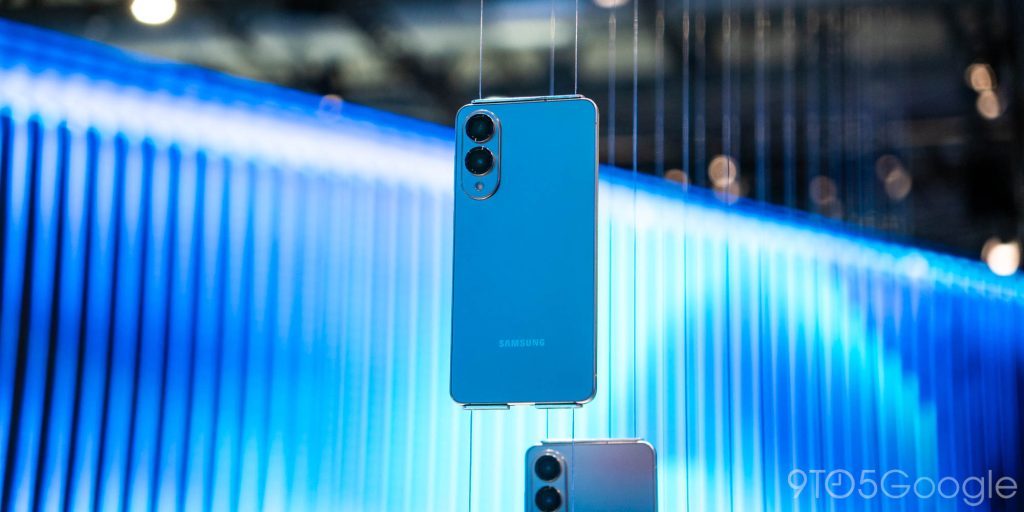
Samsung reportedly dumps Galaxy S26 ‘Pro’ branding as its 2026 vision crumbles

0


The last few months of rumors have set Samsung up for a vastly different Galaxy S-series in 2026 than we’ve seen in recent years. In the span of just a couple of days, however, those looking for a more exciting non-foldable Galaxy release have watched their dreams shatter in real-time.

According to a new report from SamMobile, the Galaxy S26 ‘Pro’ that we’ve been hearing about for months now is actually just… the Galaxy S26. It’s a revelation that certainly makes a lot of sense, considering every leak about next year’s entry-level Samsung flagship sure sounded in-line with what we’d expect from a Galaxy S25 successor. Despite some early excitement from Galaxy fans, it became obvious pretty quickly that if Samsung did ship a device called the “Galaxy S26 Pro,” it’d be a change in marketing only, a way to perhaps compete with Apple’s higher-end devices rather than squaring off more directly with the base iPhone 17.

However, combined with yesterday’s news that the Galaxy S26 Edge — and indeed, Samsung’s entire ultra-thin lineup, of which there has been exactly one device so far — is dead, replaced with a Galaxy S26+ substitution that will presumably find itself in line with what you’d expect from a sequel to this year’s Galaxy S25+. While we might see some superficial changes like a refreshed camera bump in line with Galaxy S26 Ultra leaks, I can’t imagine next year’s middle child sporting a revolutionary design.

If you’re disappointed, you’re probably not alone. Even among Samsung die-hards, I think there’s an appetite for this company to revitalize its mainline series, just as it did this past summer with the Galaxy Z Fold 7. Recent rumors tell us the Galaxy S26 Ultra is likely to remain relatively unchanged, save for that aforemention larger camera module that arrives without any real sensor upgrades. Despite that rumored — and seemingly debunked — ‘Pro’ moniker, only the S26 Edge was really set to bring any major shake-ups to Unpacked next year, and that dream, too, seems dead.

Advertisement – scroll for more content

Samsung’s Galaxy S26 lineup suddenly doesn’t sound all too exciting

Two of these three phones sure look familiar, and the other one’s apparently dead.

It’s particularly frustrating, because the market appears to be telling Samsung there’s great success to be found with a little change. The Galaxy Z Fold 7 has been selling incredibly well since its launch earlier this year, breathing some new life into a stagnant foldable market here in the US and launching Samsung into real competition with various Chinese OEMs for the first time in a few years. After slow-rolling changes to its smartphones for the better part of this decade, Samsung finally chose to make a leap with one if its biggest, most expensive devices — and was immediately awarded by the market for doing so.

Which makes the choice to keep the mainline Galaxy S-series predictably boring all the more baffling. Despite a clear appetite for something new in mobile, Samsung’s apparently content to keep marching forward to the beat of its own drum. What started off as a rumored reinvention of next year’s flagship trio, combining a fresh Edge design with larger batteries with faster charging speeds, has seemingly collapsed into the fourth or fifth year of relatively minor hardware upgrades, offering up an experience guaranteed to feel familiar to anyone upgrading from a device as old as the outgoing S22 series.

I’m not here to defend the ideas behind the Galaxy S25 Edge, a device clearly rushed to market to beat Apple to the long-rumored punch. But despite the obvious failure of that phone, the concept of a thin device from Samsung isn’t a terrible idea. Rectifying some of the more obvious mistakes baked into the Edge’s launch this year — arriving four months after the rest of the S25 lineup with fairly little fanfare and even less marketing, for starters — could’ve helped this device actually find some footing among early adopters.

Looking back at the Galaxy S25 Edge in the shadow of the iPhone Air reveals even more slip-ups on Samsung’s part, though. The decision to launch it as an alternate, more expensive mid-tier choice next to the Galaxy S25+ was obviously foolish; Apple killed its own Plus series in order to make space for the Air at $999, giving it a clear runway next to the cheaper base model and the more premium Pros. Say what you will about the iPhone Air being a lesser device compared to the entire iPhone 17 series, but Apple at least has something of a vision and a target audience for that phone.

Likewise, while I think Apple’s iPhone Air-specific MagSafe battery pack is an obvious admission of mediocre battery estimations, it also gives consumers the option to carry a custom-made accessory designed exclusively for that phone. Samsung’s decision to skip out on proper Qi2 support, something that could’ve helped paper over the S25 Edge’s poor battery life, left buyers (or would-be buyers) to consider either carrying a standard wired battery pack, or opting for a MagSafe-compatible case with a third-party battery pack that completely demolishes the benefits of the Edge’s thin-and-light design. It just didn’t come together quite as neatly as Apple’s rival product.

The worst part, though, is that I think Samsung was on the way to fixing some of these problems. Replacing the Galaxy S26+ with the Edge would allow next year’s phone to fill the same $999 price point as the iPhone Air, and launching as part of the true S26 trio would make advertising the device that much easier. Despite practically every exciting rumor about Samsung’s 2026 plans seemingly falling away, proper Qi2 support is still on the board, which could’ve helped battery concerns with a real solution.

And returning to the Galaxy S26 ‘Pro,’ I do think there’s space for Samsung to push boundaries on its base flagship, giving it something of a personality outside of “the smaller, more affordable option.” The idea of a radically redesigned Galaxy S-series with three very different experiences — one for small phone fans, one for productivity-minded mobile road warriors, one for early adopters looking for a fashion statement — could make the whole trio feel rejuvenated in a way it hasn’t been since the death of the Galaxy Note. Instead, it’s more of the same from a company that seemed ready to embrace change just a couple of months ago.

Hopefully, this gives Samsung the time and ability to return to embracing its own vision of the future of mobile, rather than trying to chase down whatever Apple’s found success with (or, in the case of the iPhone Air, what Samsung thinks Apple will find success with). The Galaxy Z Fold 7 is the perfect example of this company’s strengths coming together in a top-tier package. Maybe the Galaxy S27 series will follow suit.

FTC: We use income earning auto affiliate links. More.


Source link

Convicted Worcester bridge attacker Joshua Hubert sentenced to prison

0


Joshua Hubert, the man convicted of kidnapping and strangling his best friend’s 7-year-old daughter before throwing her off a bridge in 2017, was sentenced to 28 to 30 years in prison on Friday.

Judge Karin Bell handed down the sentence in Worcester Superior Court Friday, about a month after 43-year-old Hubert was convicted of two counts of attempted murder and one count each of strangulation or suffocation and kidnapping a child. Jurors acquitted Hubert of two rape charges. Bell found three aggravating factors, as set forward in the sentencing guidelines, applied to the case.

“The facts and circumstances underlying this case show particular cruelty,” she said.

Bell handed down sentences of 14 to 15 years on each attempted murder charge, running consecutively. She also sentenced Huber to four to five years for the strangulation, followed by four years of probation.

After the sentence was handed down, Hubert was escorted out of the courtoom in handcuffs by court officers.

Before either side argued the sentence, Bell heard victim impact statements from the girl, now 15, and her family.

The girl did not take the stand herself, though she did testify against Hubert at trial. Assistant Worcester District Attorney Emily Meyers read the statement on her behalf on Friday.

In it, she described the post-traumatic stress and depression she endured in the wake of the attack. At 10, she started cutting herself and believed for years she deserved to die the night Hubert attacked her.

The girl said she has reached a point where she is glad she survived.

“I hated myself. I thought I deserved everything that happened to me,” Meyers read. “I hope that someday the little girl I was sitting in the hospital bed finally gets her justice.”

The girl’s mother and father also delivered statements, both struggling through tears as they read. Several people in the packed courtroom cried as they spoke.

“Our family has experienced every possible negative emotion there is‚” her father said.

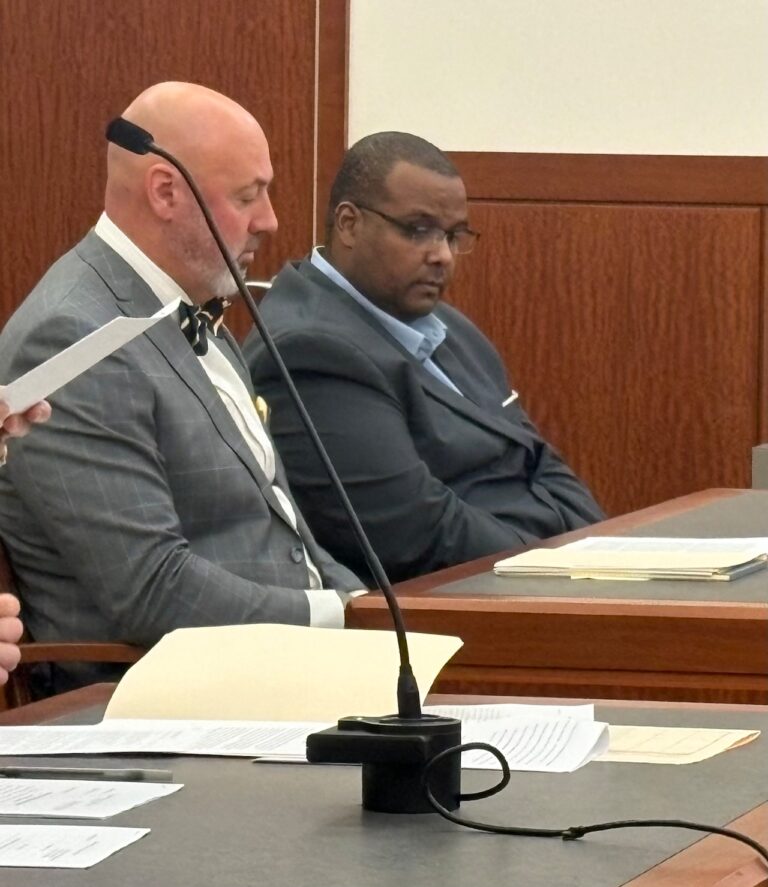
Hubert, who wore a suit with his hands cuffed together during the hearing, did not react as the statements were read out in court. He was free on bail for years prior to his conviction.

Prosecutors recommended a sentence of 36 to 40 years in prison for Hubert — 18 to 20-year sentences for each count of attempted murder, running consecutively, in a sentencing memo filed this week.

Assistant Worcester District Attorney David McShera also recommended a sentence of 14 to 15 years on the kidnapping charge, which would run concurrent to the attempted murder sentence. He sought 10 years of probation for Hubert for the strangulation and recommended he be required to register as a sex offender upon release.

The sentence proposed in the memo is a significant upward departure from what the sentencing guidelines call for, McShera acknowledged.

The guidelines call for a sentence of 5 to 7 1/2 years for convictions of attempted murder or kidnapping a child, and up to two years for strangulation.

“There is no mitigation, justification, or excuse for the defendant’s actions,” the memo reads.

Kevin Larson, Hubert’s defense lawyer, asked Bell to exercise “empathy” — for the girl and her family, but also for Hubert.

“The reason why I’m asking you to exercise empathy is what gets lost is … what it’s like to be in jail or prison for even a day, to have your freedom taken away,” Larson said.

He asked Bell to adhere to the sentencing guidelines and not adopt prosecutors’ recommendation that she take into account “aggravating circumstances.” Larson recommended a sentence of five to seven years for each count of attempted murder, running concurrently.

“It constitutes a very serious and substantial sentence for someone who has never been to jail or prison before this case,” Larson said.

Given Hubert’s age, the sentence recommended by prosecutors essentially represented a life sentence, he said.

Hubert’s trial lasted exactly two weeks from the jury selection date. It was rife with twists and turns, with prosecutors admitting there’s no forensic evidence that ties Hubert to any of the crimes — even after testing of his car, the child’s clothing and her body after the attack.

There was, however, sperm cell DNA that belonged to the girl’s father, found on her underwear after she was thrown from the bridge.

Larson has said Hubert intends to pursue an appeal based on some of those factors, including new cellphone evidence emerging mid-trial.

The attack played out on a summer night in late August 2017, after a cookout at the girl’s grandparents’ home, which Hubert attended. Hubert, prosecutors proved, kidnapped the girl from the home, then drove around Worcester with her in the trunk of his car. He strangled her, then threw her off the Interstate 290 bridge over Lake Quinsigamond.

She survived the attack, telling police at the time — and reiterating in the courtroom on Sept. 8 — that it was her “friend Josh” who threw her off the bridge.

She also testified to seeing Hubert’s face as he put her in his car. She described playing dead after he’d strangled her, put rope around her neck and a bag over her head, and stuck her in the trunk.

“I was thinking that he wanted me dead,” she said.

Irene Rotondo of the MassLive staff contributed to this report.

If you purchase a product or register for an account through a link on our site, we may receive compensation. By using this site, you consent to our User Agreement and agree that your clicks, interactions, and personal information may be collected, recorded, and/or stored by us and social media and other third-party partners in accordance with our Privacy Policy.


Source link

Former Japanese Prime Minister Murayama dies at 101 : NPR

0


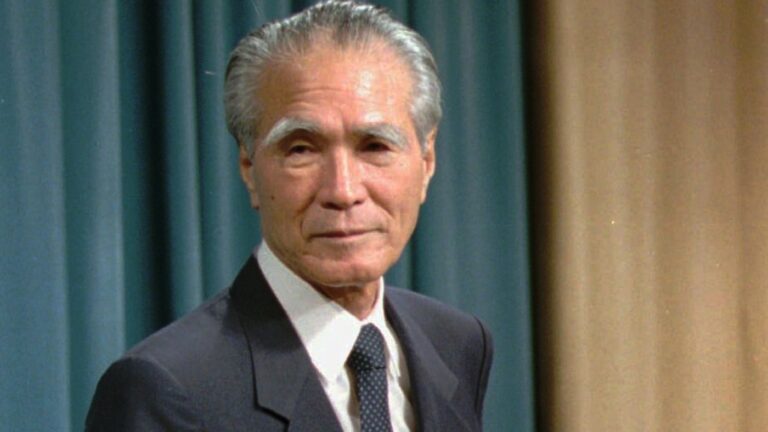
FILE - Japanese Prime Minister Tomiichi Murayama stands before reporters prior to his statement of war remorse at the prime minister's official residence in Tokyo, Aug. 15, 1995.

FILE – Japanese Prime Minister Tomiichi Murayama stands before reporters prior to his statement of war remorse at the prime minister’s official residence in Tokyo, Aug. 15, 1995.

Naokazu Oinuma/AP


hide caption

toggle caption

Naokazu Oinuma/AP

TOKYO — Japan’s former Prime Minister Tomiichi Murayama, who was known for his 1995 “Murayama statement” apologizing to Asian victims of his country’s aggression, died Friday. He was 101.

Murayama died at a hospital in his hometown Oita, southwestern Japan, according to a statement by Mizuho Fukushima, the head of Japan’s Social Democratic Party.

As head of what was then known as the Japan Socialist Party, Murayama led a coalition government from June 1994 to January 1996.

A historic apology for Japan’s actions in World War II

He is best remembered for the “Murayama statement,” an apology he issued on the 50th anniversary of Japan’s unconditional surrender ending World War II on Aug. 15, 1995. It’s seen as Japan’s main expression of remorse for its wartime and colonial past.

“During a certain period in the not too distant past, Japan, following a mistaken national policy, advanced along the road to war … and, through its colonial rule and aggression, caused tremendous damage and suffering to the people of many countries, particularly to those of Asian nations,” he said in the statement.

“In the hope that no such mistake be made in the future, I regard, in a spirit of humility, these irrefutable facts of history, and express here once again my feelings of deep remorse and state my heartfelt apology.”

A government marked by controversy

Murayama was first elected to parliament in 1972 as a socialist lawmaker after working for a labor union and serving in a local assembly.

When he became prime minister in 1994, he broke with his party’s longtime opposition to the Japan-U.S. security alliance and Japan’s Self-Defense Forces, recognizing them as constitutional in a speech given in the face of yelling by angry members of his party.

In 1995, Murayama dealt with two major disasters: a massive earthquake in the western port city of Kobe that killed more than 6,400 people, and a Tokyo subway gas attack that killed 13 and injured more than 6,000 people. He came under fire for slow responses to both.

FILE - Japanese Prime Minister Tomiichi Murayama holds a basket of Washington state apples which President Bill Clinton gave him prior to the start of their joint news conference at the White House in Washington, Jan. 11, 1995.

FILE – Japanese Prime Minister Tomiichi Murayama holds a basket of Washington state apples which President Bill Clinton gave him prior to the start of their joint news conference at the White House in Washington, Jan. 11, 1995.

Greg Gibson/AP


hide caption

toggle caption

Greg Gibson/AP

He resigned early the following year in an unexpected announcement that came as he returned to work after the 1996 New Year holidays. Murayama said he had done what he could in a year marking the 50th anniversary of the end of World War II. He said he made the decision while looking at the blue sky in the new year.

Murayama criticized his successors for questioning Japan’s wartime guilt

Murayama was active in politics even after his retirement in 2000, frequently criticizing attempts by his more nationalist successors to back away from responsibility for Japan’s wartime action.

The Murayama statement set a standard followed by all prime ministers for nearly two decades, until nationalist Prime Minister Shinzo Abe stopped apologizing in 2013 as members of his Liberal Democratic Party said it interfered with Japan’s national pride. That included Abe protege Sanae Takaichi, who was recently elected party leader and is now poised to become prime minister next week.

Murayama also criticized the government’s reluctance to acknowledge that the Japanese government during World War II systematically forced Asian women to provide sex for Japanese soldiers at military brothels.

“A historical view saying Japan’s war was not aggression, or calling it justice or liberation from colonialism, is absolutely unacceptable not only in China, South Korea or other Asian countries but also in America and Europe,” Murayama said in a statement in 2020.

He also stressed the importance of Japan establishing a lasting friendship with China, noting the “tremendous damage” his country caused to its neighbor because of its past war of aggression. “In order to build peace and stability in Asia, we must build stable politics, economics, cultural interactions and development.”


Source link