Microsoft may have made the unfortunate decision to raise the price of a Xbox Game Pass Ultimate subscription to $30 a month, but you don’t have to live by the company’s rules — at least not yet. Most online retailers are still selling codes for prepaid Game Pass subscriptions at the original $20 a month price. That means you can pay $60 for three months of Xbox Game Pass Ultimate, stack your codes and keep your subscription without having to downgrade or cancel.
Xbox
You can still purchase pre-paid Game Pass codes at their original price.
As the highest tier in Game Pass, an Ultimate subscription gives you the ability to download and play a library of over 200 games on your PC or Xbox. With Xbox Cloud Gaming, you can also stream the majority of those games to other devices, too, whether it’s a smartphone, LG TV or in-car display. It’s worth noting, though, the benefits of Ultimate did change with the introduction of the higher price. Microsoft shared that Ultimate subscribers will now also receive the benefits of an Ubisoft+ subscription at no additional cost, a $16 a month value that unlocks access to a back catalog of Ubisoft games from franchises like Assassin’s Creed and Far Cry. Starting in November, the new Ultimate subscription also includes access to Fortnite Crew, Epic’s $12 a month plan that gives you V-Bucks, battle passes and more in Fortnite.
While those new benefits might justify a higher price monetarily, whether that’s a convincing reason to stay subscribed is a separate question. This likely won’t be the last time Microsoft will raise the price of its subscription service. Avoiding those fees by buying pre-paid Game Pass codes seems like an excellent way to try out the new Ultimate before committing to cancelling your subscription, downgrading your plan or sticking with Microsoft’s new price. You can purchase three months of Xbox Game Pass Ultimate for $60 a month. Stacking four three-month codes should come out to around $240.
The Material 3 Expressive redesign of Google Wallet for Android is finally seeing a wider rollout today.
On the homepage, “Wallet” in the top-left corner is replaced by the app’s icon, while a large square FAB replaces the rectangular “Add to Wallet” floating action button.
Previously, the cards underneath the payments carousel were themed to match the pass. That is no longer the case with Dynamic Color leveraged for the backgrounds. At the very bottom, the “Archived passes” button is placed in a pill.
Old vs. new
Advertisement – scroll for more content
When you open a credit or debit card, past transactions are placed in containers for better visibility. That improved grouping also applies to the Add to Wallet menu and Settings page.
There’s also an updated tap-to-pay success animation, while the Google Wallet overlay available on newer Pixel devices has also been refreshed with M3E.
Overall, this is a straightforward modernization that’s rolling out via a server-side update (version 25.38). It’s live on most Android devices we checked today. Force stop Google Wallet if you’re not seeing the Material 3 Expressive redesign yet.
This started appearing for some users in June and has been one of the slower rollouts.
More on Google Wallet:
FTC: We use income earning auto affiliate links.More.
A man who died after falling from a boat off the coast of Newburyport Tuesday afternoon has been identified as 64-year-old Pembroke, New Hampshire, resident Edward Kinney, according to the Essex County District Attorney’s Office.
On Sept. 30 around 3:45 p.m., Newburyport police and firefighters received a 911 call reporting that a person had fallen off a boat five miles from shore and was in need of medical attention, the police department said previously.
People on the boat performed CPR on Kinney while ferrying him to a private dock on Plum Island Point, police said. First-responders were waiting at the dock when they arrived and took over life-saving efforts, and he was taken to a Anna Jacques Hospital in critical condition.
No further information about the incident has been released.
If you purchase a product or register for an account through a link on our site, we may receive compensation. By using this site, you consent to our User Agreement and agree that your clicks, interactions, and personal information may be collected, recorded, and/or stored by us and social media and other third-party partners in accordance with our Privacy Policy.
The Department of Energy said Wednesday night it was canceling 321 awards worth $7.56 billion that were largely focused on clean energy.
The agency hasn’t publicly released a list of the affected projects and, at the time of publication, it had not provided one to TechCrunch. According to E&E News and Heatmap, which have obtained the list, the majority of the cuts have hit states that went for Kamala Harris in the last presidential election, though some were in “red” states that voted for President Trump.
Direct air capture and hydrogen hub projects appear to have been wiped out as a result. California Gov. Gavin Newsom said that one of the canceled projects included $1.2 billion for the state’s hydrogen hub, the Alliance for Renewable Clean Hydrogen Energy Systems, and E&E News is reporting that hubs in Texas and Louisiana were also on the chopping block.
At least 10 direct air capture (DAC) projects totaling $47.3 million were cut, though those in Alaska, Kentucky, Louisiana, and North Dakota have survived. The oil and gas industry has been supportive of DAC projects because the captured CO2 can be injected into underperforming oil wells to boost production.
Other states affected by the billions in canceled contracts include Colorado, Connecticut, Delaware, Florida, Hawaii, Illinois, Iowa, Maryland, Massachusetts, Minnesota, New Hampshire, New Jersey, New Mexico, New York, Oregon, Tennessee, Vermont, and Washington.
The Harris-voting states with canceled projects were confirmed in a tweet from Russell Vought, the director of the Office of Management and Budget. He teased the cancellations earlier yesterday in an apparent effort to deepen partisanship during the shutdown, adding that “the Left’s climate agenda is being cancelled.”
All 16 states that he listed voted for Kamala Harris in the last presidential election, and many are controlled by Democrats at the state level. Conspicuously, Vought omitted Trump-voting states that were on the list.
Techcrunch event
San Francisco | October 27-29, 2025
The awards were originally granted by the office for Advanced Research Projects Agency-Energy, Clean Energy Demonstrations, Energy Efficiency and Renewable Energy, Fossil Energy, Grid Deployment, and Manufacturing and Energy Supply Chains.
The Department of Energy said 26% of the awards were granted between Election Day and Inauguration Day in January; the president’s authority doesn’t end after Election Day, but runs until Inauguration Day.
The awardees have 30 days to appeal the decision.
The Trump administration has made no secret that it wants to undermine any transition away from fossil fuels. Last week, the Department of Energy banned staffers from using certain words, including “climate change” and “emissions.”
In May, the agency canceled $3.7 billion worth of clean energy and manufacturing awards. Those cancellations spanned a broad list of industries, from metal manufacturing and cement companies to power plant operators and chemical plants run by fossil fuel giants.
The Trump administration’s aggressive cancellations have prompted many awardees to sue the government to retain the awards. The Environmental Protection Agency, which was quick to cancel contracts worth $20 billion, has been an early target of legal action. So far, the plaintiffs have had mixed success.
While a federal district court said the EPA’s actions were “arbitrary and capricious,” an appellate court ruled in favor of the agency, saying that the contract cancellations were valid and showed the government exercising “proper oversight and management.”
In the instance of the recent DOE cancellations, several award recipients have already appealed the decision, the agency confirmed.
Update: The article and headline have been updated to include further details about which states and programs are affected.
Amazon has announced its Prime Gaming October update, which sees it add a fresh batch of games that users can add to their libraries for free. The most noteworthy additions are probably Fallout 3: Game of the Year Edition and Fallout: New Vegas. With the of Prime Video’s surprisingly excellent Fallout TV show arriving in December, it’s an ideal time to acquaint yourself with the games it’s based on. New Vegas is particularly relevant, as season two looks like it’ll primarily be set in that game’s world and will presumably be heavily influenced by Obsidian’s beloved 2010 RPG.
Beyond that, XCOM 2 is probably worth a look, and there’s a handful of games that are giving Halloween vibes — how can you go wrong with Tormented Souls or Hellslave as we approach spooky season?
Here’s the full list of October games that you can claim for free. Most come in the form of codes you can redeem on GOG, though some others are available on the Epic Games Store or Legacy Gaming.
Vampire: The Masquerade – Reckoning of New York
Fallout: New Vegas Ultimate Edition
True Fear: Forsaken Souls Part 1
True Fear: Forsaken Souls Part 2
Lost & Found Agency Collector’s Edition
Fallout 3: Game of the Year Edition
You Will Die Here Tonight
Werewolf: The Apocalypse — Heart of the Forest
Amazon also yesterday that it’s giving its cloud gaming platform a bit of an update. As well as continuing to offer a rotating library of free games to Prime members, the company will also introduce a collection of party games designed to be played with friends on your phone. The new GameNight library will include original games developed by Amazon, such as the excellently named Courtroom Chaos: Starring Snoop Dogg, as well as classics like Angry Birds and Ticket to Ride.
The company also announced that Prime Gaming’s Twitch-related benefits will remain available after Prime Gaming is absorbed into Luna. Prime Gaming actually got its start as Twitch Prime, a benefit to Amazon Prime subscribers that eventually grew into the wider gaming offering it is now. The name is changing yet again, but it might be better in the long run for Amazon to put all of its gaming offerings under the Luna brand.
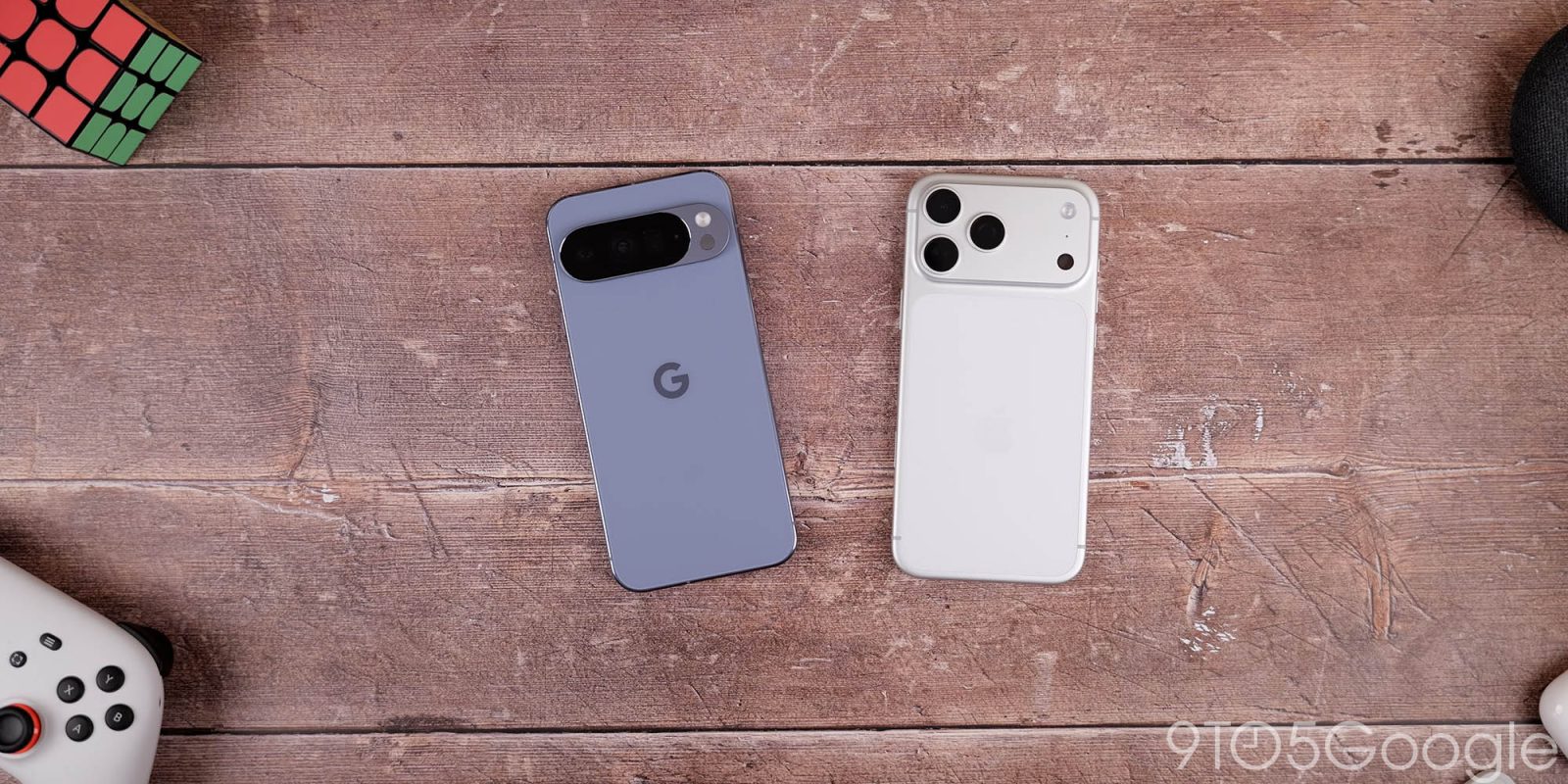
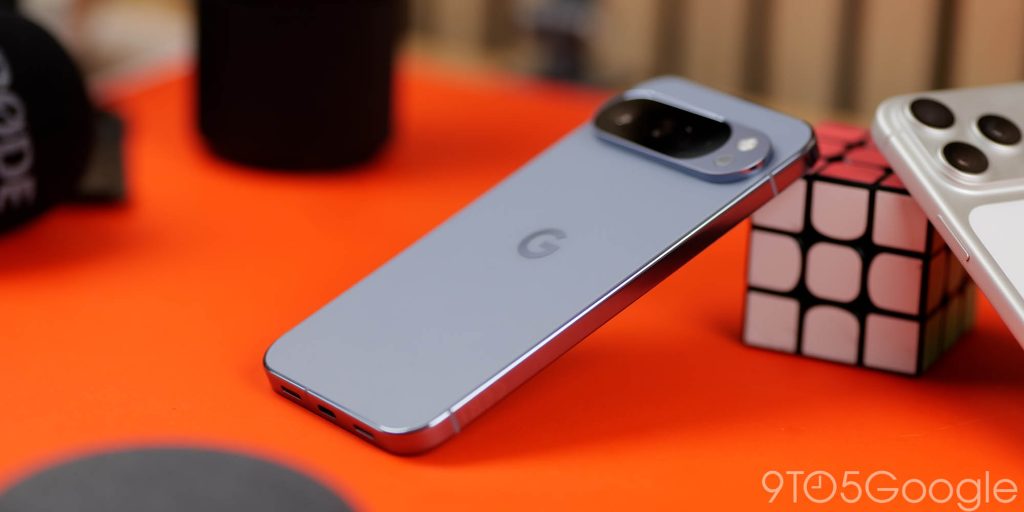
There is a new iPhone on the block, and that pulls the Pixel 10 Pro into focus as we look at what the 17 Pro can do or what Google’s phone can’t do in comparison. What has gone well, and where would we like to see improvements? Here’s everything you need to know.
Just to note: This isn’t going to be a like-for-like comparison. Instead, we’re looking at this more broadly, to determine what each device does well or where each device fails.
Hardware and design
What’s really impressive about Google’s design switch-up in the last couple of years is how the company has managed to skirt a fine line between homage and flat-out copy. Yes, it looks like some of the older post-iPhone 12 handsets. However, a little extra attention to detail is paid to the areas that make a Pixel a “Pixel.”
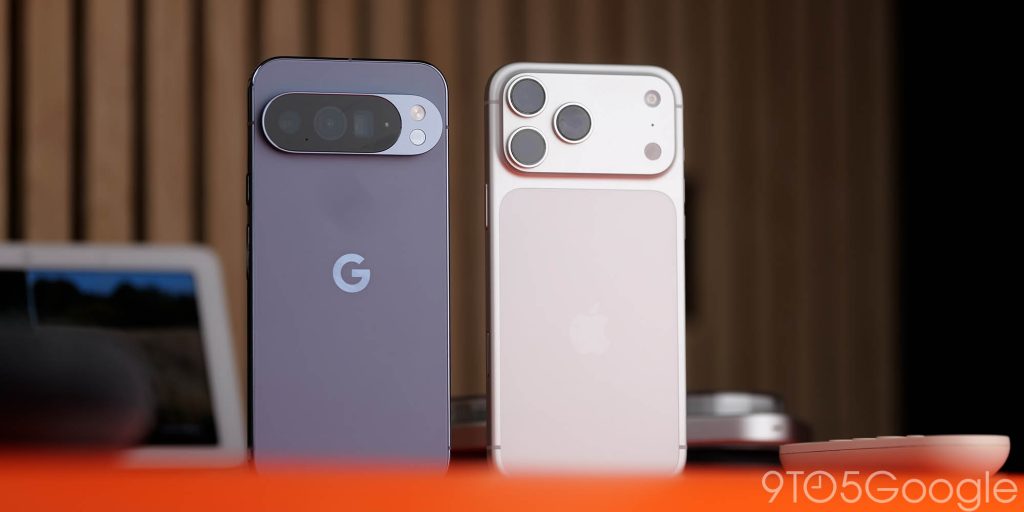
On paper, the iPhone 17 Pro Max leaves the Pixel 10 Pro in the dust. That’s not what we’re here to discuss, though. Rolling it back just a moment on the physical hardware front, if we were comparing the iPhone 16 Pro to the Pixel, there were a lot of similarities in the dimensions. Google took influence from previous generations and then ran with it.
Advertisement – scroll for more content
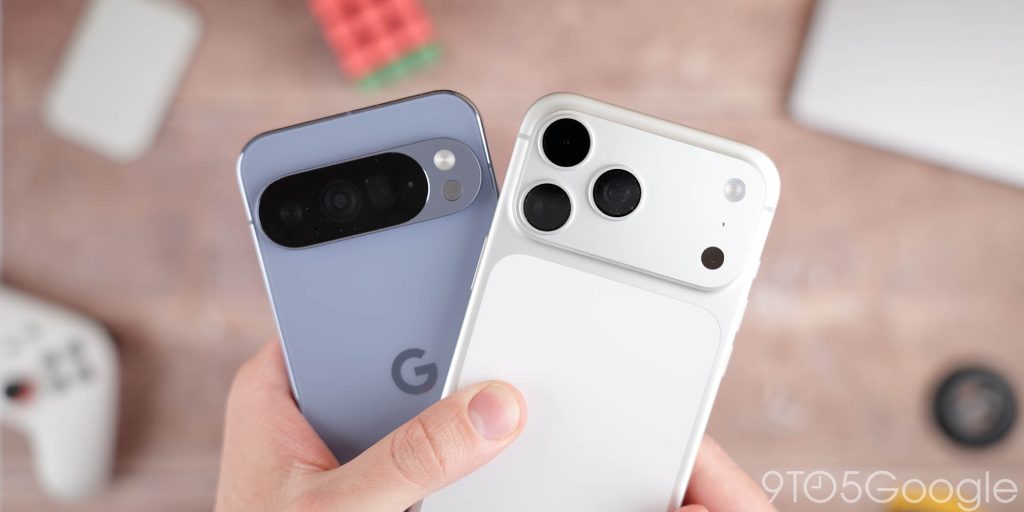
With the iPhone 17 Pro Max, the script is almost flipped. Apple has remixed a remix. The camera “plateau” is a glorified camera bar pulled right from the Pixel playbook. The return to aluminum is another minor but admittedly tedious decision lifted from Google. In essence, the iPhone 17 Pro is the most Android-like Apple device ever released – more on that in just a second.
Whether directly or indirectly, Google’s design choices for the Pixel lineup clearly have affected how other brands approach their phones. Either that, or the company simply managed to get ahead of the crowd on a common design trait.
Pixelsnap is another “stolen” hardware addition that cements the Pixel 10 Pro as a bastion for Apple fans not tempted by the iPhone 17 Pro series. Being the first premium Android maker to bring Magsafe over and support the Qi 2.2 standard is nothing to gloss over. You’re able to just tap right into the massive catalogue of accessories that already support the iPhone. In the US, where Apple still dominates, this is a huge benefit for households where there are multiple iOS devices. You don’t need to throw away or ditch anything you’ve already acquired – cases notwithstanding.
Smooth software with a hint of AI pitfalls
So long as Google does not attempt to replicate some of the most heinous areas of “Liquid Glass” and continues to focus on the core experience, there is little reason to look at what Apple is doing on a software front. We already know how important Gemini is to the overall experience of using a modern Pixel phone. So long as we get more hands-off or automated tools that don’t take center stage, it’ll be a very strong component in future builds.
By letting AI be a background focus, you can see the significant differences between Google and Apple’s recent approaches to software design. Material 3 Expressive is a big step back toward making “fun” a greater component of phone use. Animations have been overhauled for admittedly unimportant sections like the notification shade. Visuals have been refreshed to get deeper into the “You” in “Material You,” and the result is something that is not only playful, it has character.
We’re Android people round here, so being critical of iOS is part of our modus operandi. Despite our choice of mobile operating system, we do appreciate seeing just what Apple has to offer. This year it’s chalk and cheese compared to years prior. Liquid Glass is a very big visual overhaul that prioritizes clear elements and semi-transparent layers. The aim is to create obvious hierarchical structures within headers, menus, controls, and apps. All great conceptually.
The result is an accessibility nightmare of mixed visions and misguided attempts to differentiate iOS from the rest. Blurred backgrounds are just that. Backgrounds shouldn’t affect how you access something in your main viewport. This oversight means that various controls and menus can be obscured by default due to how well Apple has implemented certain clear glass elements. Credit where it’s due, conceptually, it seems like a great idea. In practice, it’s an awful experience mired in too much clarity.
Simply adding in a fresh coat of paint and improving the day-to-day experience of Android 16 means Google will undoubtedly profit from Apple’s own goal. To what extent we’re not so sure, but when you need to enable an accessibility toggle to make more of your interface usable, you, as a developer, must concede that you’ve made a mistake.
It’s also the most bug-ridden iOS experience I have ever had. Random keyboard lockups, unrendered UI elements, mismatched animations, it’s a mess. In many ways, it’s the most Android-like experience I’ve ever had on an iPhone, for better or worse. We know that many Android OEMs will attempt to replicate Liquid Glass. Google simply needs to stay the course and keep making sensible design choices that won’t alienate nor copy what Apple is messing up so badly.
Whether people are willing to make the jump is another question entirely, given the chokehold Cupertino has over the smartphone market in certain parts of the world. That said, where Apple fumbles, Google could be poised to capitalize, no matter how small the market share gains may be.
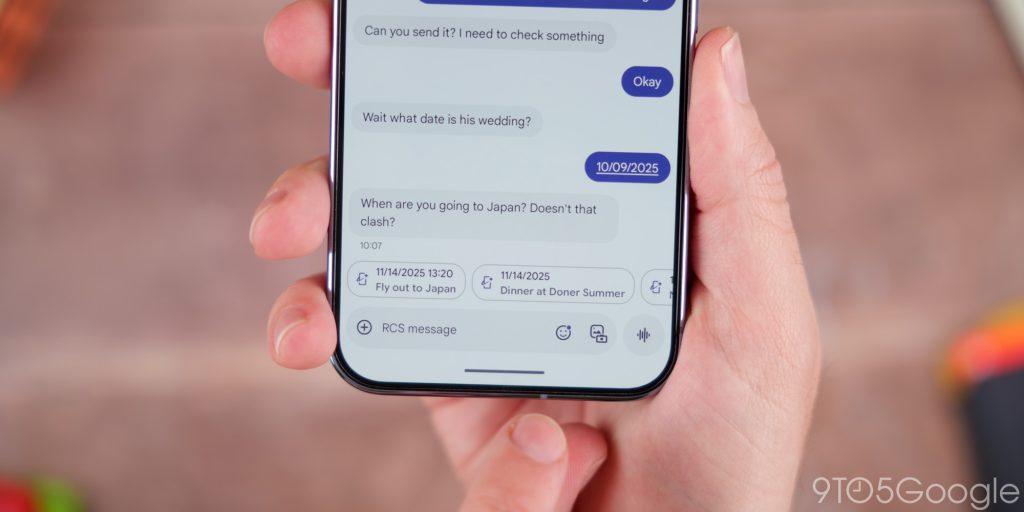
The Pixel 10 Pro has a good foundation, but with functions like Magic Cue being sold as a great timesaver powered by on-device AI models, we need more of this to be implemented in areas where people will see or use the function. Apple can’t replicate this yet, Google needs to hammer it home and make sure Magic Cue expands out into selected third-party applications like WhatsApp for messaging, Outlook for work-related emails, and generally improve how often you get help from your phone.
Camera
There are lots of similarities between the iPhone 17 Pro Max and Pixel 10 Pro XL camera hardware. It’s what each phone does with said hardware that is most important. Apple favors less fine tuning, minimal processing. You are given the tools to make your own adjustments.
On Pixel, we kind of expect one-click-done and that is certainly one of the great strengths of the Pixel 10 Pro. The downside to each approach is apparent in specific scenarios. The iPhone 17 Pro Max still doesn’t deal well with skin tones, but Google’s Real Tone algorithms mean accurate skin colors in practically every lighting situation.
You can adjust things using the iPhone’s “Photographic styles,” which is just an editing tool built into the camera application. It would be great to see Google replicate something like this, instead, Google is intent on giving budding photographers AI-powered advice and help with Camera Coach and even Add Me.
It’s two divergent visions of how to overcome the issues with mobile photography. Pro Res Zoom is another great distinction between Apple and Google. Using on-device models, your photos get enhanced with AI. The results can be exceptional, sometimes terrible. It’s a non-destructive edit, so you can revert back if you hate the look. The iPhone 17 Pro Max has an inferior zoom camera, but the lack of post-processing might be something people prefer from their camera.
Google needs to walk a fine line, as hardware is still important in a camera system. We can’t rely too heavily on AI, as at that point, we’re getting into the realms of image creation rather than photography. Sure, add neat AI-enhanced functions that help you take better photos, but don’t over-rely on those. Again, credit where it is due, the iPhone 17 Pro Max does more with camera hardware than the Pixel 10 Pro.
That is immediately obvious when comparing the video quality. There is a big gap between what Apple is doing with on-device video and the Pixel. Video Boost is truly excellent. It’s inconvenient and slows you down if you want high-quality clips. It’s very difficult to recommend to professionals who want a pro-grade video clip in a pinch. LOG video is something that only a few people will use, but it’s starting to become an expected addition on a phone with “Pro” in the name. Google should really look to add this at some point in the not-too-distant future.
Is the Pixel 10 Pro a worthy opponent to the iPhone 17 Pro Max?
About upgrading: 9to5Google often gives specific product recommendations. Sometimes, we may suggest notupgrading, due to various reasons including, but not limited to: increased device cost, negligible performance gains, or environmental impact. Whether to upgrade is always your call, but our aim is to help you make as informed a decision as possible.
Opponent might be the wrong way to describe the Pixel 10 Pro when we frame against the iPhone 17 Pro. There is a lot to like about the past couple of Pixel phones and some things we really hope improve. In our opinion, the all-important experience of using the Pixel 10 is light-years ahead of what Apple is offering with iOS 26 specifically.
Google needs to continue focusing on making life easier, tasks faster, performance better, and ultimately moving the needle now that a solid baseline has been set over the past couple of releases. If someone were to look at jumping over the walled garden and into Google’s – admittedly shrinking – meadow then a Pixel 10 Pro would be a great place to start.
Catering almost exclusively to iPhone-to-Android converts isn’t a strong business model. We still need those aforementioned improvements to ensure that current Pixel owners remain happy and continue to be customers long into the future. So long as Google continues to play to the Pixel’s strengths, there is no reason we can’t eventually have a device that surpasses an iPhone in every area.
Canadian officials are warning travelers they may face entry restrictions when crossing into the United States because of differences in passport gender identifiers.
The issue stems from the use of an “X” gender identifier on Canadian passports, which could be unrecognizable to U.S. border officials, according to the Canadian Department of Global Affairs. Therefore, Canadian officials say they “cannot guarantee your entry or transit through other countries” including the U.S.
“You might face entry restrictions in countries that do not recognize the ‘X’ gender identifier,” the department explained on its website. “Before you leave, verify this information with the closest foreign representative for your destination.”
The Canadian government also notes that individuals may be asked to provide their sex or gender information as either male or female when traveling.
This warning follows a January executive order by President Donald Trump stating there are only two biological sexes (male and female) and that U.S. passport holders must have a passport that reflects the sex they were assigned at birth.
The decision prompted government officials across the globe to warn its residents about traveling if they are trans, non-binary or hold a third-gender passport, CNN reported in April.
This includes the Canadian government that warned “federal systems in the U.S. are changing to no longer accept markers of gender identity.”
Additionally, Canadian travelers who apply for new Nexus trusted traveler cards or who renew existing ones would no longer be able to list “X” as their gender, the country’s officials said. The Nexus system is meant to expedite travel between two countries, pre-screening travelers who enter at designated points along the border, according to the U.S. Customs and Border Protection.
Cross-border travel from Canada into the U.S. has dropped since 2024, according to a study published in February.
The report found that Canadian travelers made 1.7 million trips back into the country by car in July, which is a 37% decrease in motor vehicle travel year-over-year. January through May visits went down 17% overall in the same time period.
The United States Travel Association reported that Canadians made 20.4 million visits to the country last year which generated $20.5 billion in spending and supported 140,000 American jobs.
If you purchase a product or register for an account through a link on our site, we may receive compensation. By using this site, you consent to our User Agreement and agree that your clicks, interactions, and personal information may be collected, recorded, and/or stored by us and social media and other third-party partners in accordance with our Privacy Policy.
Bryan Onel’s father was a locksmith. As for Onel, he described himself as the digital equivalent.
Ethical hacking was Onel’s hobby growing up. He studied AI at university and then turned that hacking hobby into a profession. “I spent a decade performing penetration tests for over 150 companies across all sectors,” Onel tells TechCrunch, adding that he kept easily breaking into companies that had passed their security checks.
Onel realized that security often fell within two brackets: Painful but effective, or painless but ineffective, he said. Most companies were doing the bare minimum in cybersecurity and compliance, as it often takes too much work — and tools and talent — to provide effective security defenses.
Onel’s clients kept asking if he could provide a solution to their problems, so he gave it a shot.
In 2022, he teamed up with his wife, Ora, and college friend Erik Vogelzang, and launched Oneleet, an all-in-one security compliance platform. The startup aims to help other companies get their security certifications while helping them become more secure faster.
Onel tells TechCrunch that most existing compliance platforms are evidence-collection tools, where users import data from their various products, pay a fee, and then voila! — out spits a security certificate saying they are secure.
“The result is compliance theatre,” Onel tells TechCrunch. “You’re certified on paper, but still vulnerable to all kinds of attacks.”
Techcrunch event
San Francisco | October 27-29, 2025
Oneleet is different, said Onel. The platform includes a suite of security tools: penetrating testing, code scanning, cloud data security, attack surface management, security training, and more, he said, which aims to provide a better window into a company’s security defenses.
“Because it’s integrated from the ground up, we can deploy comprehensive security with the click of a button,” Onel continued. “That saves clients hundreds of hours and eliminates the blind spots that come from managing fragmented tools.”
Oneleet then partners with independent auditors to provide formal certification reviews.
On Thursday, Oneleet announced it raised a $33 million Series A funding round led by Dawn Capital to help grow the business. Onel called his fundraising process “straightforward,” and said he met Dawn Capital in San Francisco, where he described “immediate chemistry.”
“They already had deep knowledge of the security and compliance space and immediately understood what we were building at Oneleet, so there was instant alignment,” said Onel.
Other investors in the round include Y Combinator, Dropbox co-founder Arash Ferdowsi, and former Snowflake and ServiceNow chief executive Frank Slootman. Oneleet participated in the Summer 2022 class of Y Combinator, and said two-thirds of new additions to the VC firm’s portfolio companies are now its clients.
Competitors in this space include Vanta, Secureframe, and Sprinto. For its part, Oneleet has reached $9 million in annual recurring revenue and has raised $35 million in total to date.
The fresh cash injection will be used to expand Oneleet’s engineering team, increase its AI capabilities, and to find ways to reach more customers. The goal is to end security theatre in compliance, he said, at a time when defending against cyberattacks is more important than ever.
Onel said that AI is changing the scale of cyberattacks. He said, for example, advanced bad actors are automating cyber crimes, while lowering the bar for novice hackers to strike with malicious attacks.
He said companies are also being reckless, like carelessly using “vibe coding” tools, or giving AI access to business-critical information without the right guardrails. In the world of compliance, Onel said, companies can use AI to generate fake documentation to make it seem as if the business is more secure than it is.
Onel says his company heavily uses AI, working in the background for threat modeling and other security assessments, and also helps draft policies. But, he said, the company has a human team verifying information so the client does not see any hallucinations. “We’re responsible about it,” he said.
“Good security should be invisible,” Onel continued. “Companies should spend less time worrying about security and more time building great products. We have a shot at helping companies defend themselves more effectively than ever before.”
This story was updated to fix errors regarding ARR.
Two Amazon delivery drones reportedly with a crane this morning in Tolleson, AZ. The incident occurred about two miles from a fulfillment center run by the tech company and involved two of its Prime Air drones. No injuries have been reported. Law enforcement were called to the scene, however Sgt. Erik Mendez of the Tolleson police told local radio station that the Federal Aviation Administration would be taking over the investigation.
“We’re aware of an incident involving two Prime Air drones in Tolleson, Arizona,” Amazon representative Terrence Clark said. “We’re currently working with the relevant authorities to investigate.”
Amazon offering a drone delivery option in the Phoenix area last year. The drones only fly during the day and if weather conditions are favorable. The company received to ship several more products by drone in May.
The YouTube family of apps have their own design language, and the latest change is an updated icon set that is widely rolling out to YouTube Music.
On the homepage, you’ll first notice the new icons in the bottom bar. The “Home” icon is a bit more descriptive, while you can start to make out how this new set is bubbly instead of sharp. “Samples” is a good example of how lines are noticeably thicker, with the thin outlines gone. “Explore” and “Library” are quite bold with a bit more detail.
In the top-right corner, we see the updated notification bell, while the magnifying glass gets a shorter handle.
Old vs. new
Advertisement – scroll for more content
On the Now Playing screen, we see the updated downward chevron, Cast button, and thicker dots for the overflow menu.
Then we arrive at — what I consider to be — cartoony thumbs up and down buttons. It’s oddly realistic in how you can make out knuckles, but the fact that there are only three is just like cartoons/animation. Also, the thumb is disproportionately long.
The comments button sees a more significant redraw that I somewhat like with that entirely carousel seeing updated iconography. Play/pause and previous/next get the rounded treatment, while shuffle is a bit bolder. The rounded repeat button sees the biggest update.
In the overflow menu, I like the new album icon, but the new sleep timer just looks like a circle. Finally, the Pin to Speed dial button is tilted.
Overall, I don’t mind most of the new icons as the old set (thin outlines) was getting a bit old, but some look too out of place.
This updated icon set has been widely rolling out in recent days to YouTube Music for Android, iOS, and the web. If you don’t have it yet, try force stopping YTM. There are also some reports in the main YouTube app.
FTC: We use income earning auto affiliate links.More.