The U.S. Department of Energy has taken equity stakes in Canadian company Lithium Americas and its Nevada mining joint venture with General Motors as part of a renegotiation of a federal loan.
Under the new terms, the U.S. government will take a 5% equity ownership in Lithium Americas and a 5% ownership in the Lithium Americas-GM joint venture. The equity stakes will be acquired through no-cost warrants, which are financial instruments that give the government the right to purchase shares at a set price. The new terms came out of a renegotiation with the DOE’s Loan Programs Office over a $2.26 billion loan that was awarded to Lithium Americas under the Biden Administration.
Shares of Lithium Americas spiked 34% in after-hours trading.
The DOE said the equity stakes will serve as additional collateral on the loan, helping to reduce repayment risk for taxpayers. Lithium is a key chemical element that is used in the batteries of electric vehicles and smartphones.
“Despite having some of the largest deposits, the United States produces less than 1% percent of the global supply of lithium. Thanks to President Trump’s bold leadership, American lithium production is going to skyrocket,” U.S. Energy Secretary Chris Wright said in a press release. “Today’s announcement helps reduce our dependence on foreign adversaries for critical minerals by strengthening domestic supply chains and ensures better stewardship of American taxpayer dollars. President Trump promised to do both and he is delivering.”
The announcement Tuesday is the latest action by the Trump administration to take ownership stakes in companies. The Trump administration has announced plans to take a 10% stake in Intel and MP Materials, which operates a rare earth minerals mine in the United States.
Lithium Americas is developing the Thacker Pass mine in Nevada, which is expected to produce enough lithium to make as many as 800,000 electric vehicles per year in the first phase. President Trump approved the permit for the project in January 2021, at the end of his first term.
Techcrunch event
San Francisco | October 27-29, 2025
GM bought a 38% stake in Lithium Americas last year for $625 million, which gave the automaker the right to buy the entirety of the first phase of production, and lithium from the mine for 20 years during the second phase. In total, that would be enough lithium for 1.6 million EVs over the next two decades.
Disney has demanded that Character.AI stop using its copyrighted characters. reports that the entertainment juggernaut sent a cease and desist letter to Character.AI, claiming that it has chatbots based on its franchises, including Pixar films, Star Wars and the Marvel Cinematic Universe. In addition to claiming copyright infringement, the letter questioned whether these protected characters were being used in problematic ways in conversations with underage users.
“Character.ai’s infringing chatbots are known, in some cases, to be sexually exploitive and otherwise harmful and dangerous to children, offending Disney’s consumers and extraordinarily damaging Disney’s reputation and goodwill,” the letter said.
Character.AI has been subject to legal and government scrutiny multiple times already over concerns that it has not provided sufficient safety guards for minors. The platform has been in failing to protect two different teenagers who discussed suicide with its chatbots and then took their own lives. It has also drawn the attention of the and .
For now, at least, the platform appears to be responsive to Disney’s demands. “It’s always up to rightsholders to decide how people may interact with their IP, and we respond swiftly to requests to remove content that rightsholders report to us,” a representative said, per the Axios report. “These characters have been removed.”
Disney has shown that it is willing to take legal action against AI companies. It along with Universal Studios in June on allegations of copyright infringement.
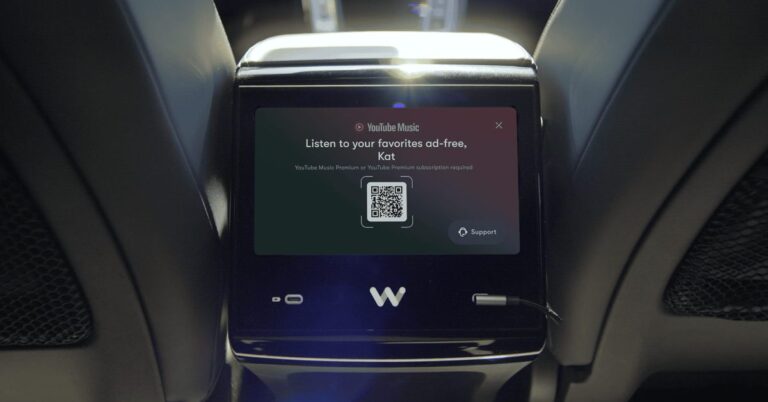
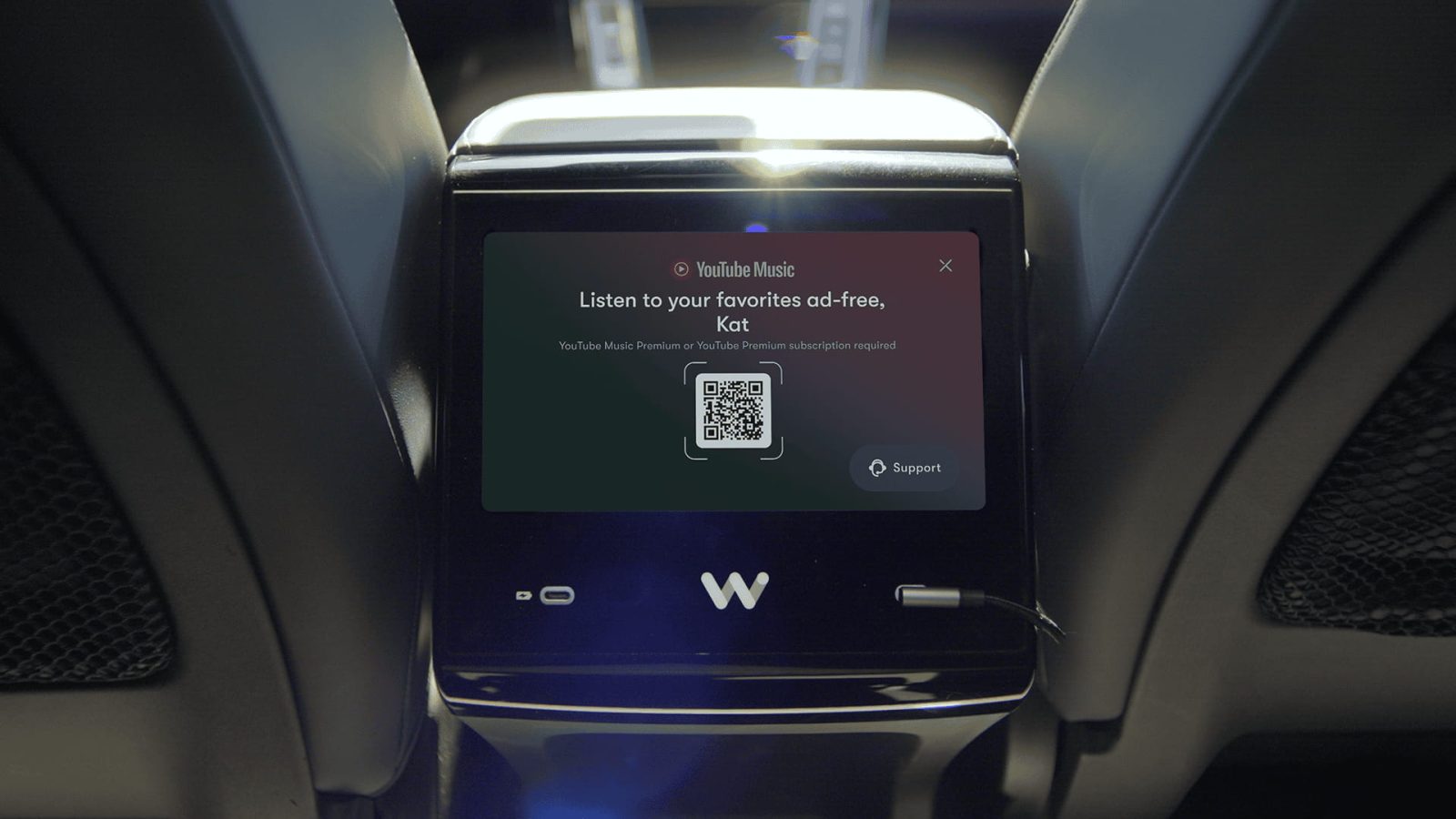
Waymo now supports YouTube Music as its third streaming provider. Meanwhile, the Waymo app now has a “My car” tab.
Google’s streaming service joins the original iHeartRadio integration and Spotify (introduced in August). Once rolled out, you can connect via a QR code in the autonomous vehicle or via the mobile client:
Open the Waymo app on your phone.
Go to Account and select Music.
Tap Spotify or YouTube Music to connect.
Waymo’s YouTube Music support will let you select playlists in your library.
Speaking of the Android and iOS app, we’re seeing a new “My car” tab between My trip (which gets a new icon) and Feedback. This new page lets you access Cabin controls to adjust the temperature, fan (Auto, Low, Medium, High, or Off), and Audio settings. The latter was introduced in August to adjust Balance & fade, Subwoofer, Bass, and Treble.
Advertisement – scroll for more content
This page also lets you set a unique car ID (initial) and color, as well as other Preferences:
Unlock automatically: When you get near the car, it’ll use Bluetooth to unlock
Cabin themes: Allow screen and audio changes for holidays and special events
Accessibility settings
Waymo One is currently available in Phoenix, San Francisco, and Los Angeles, while the cars can be accessed in Atlanta and Austin through Uber. It’s coming next to Miami and Washington, DC.
FTC: We use income earning auto affiliate links.More.
UMass Amherst police are investigating an “isolated incident” that happened on Sunday on the same athletic field on which a cancelled women’s soccer game was set to take place, according to the university.
No injuries were reported as a result of the incident on Rudd Field, and there are no ongoing threats to the campus, UMass Amherst said in a statement. The university declined to provide further details about what happened, citing concerns about protecting “the integrity of the investigation.”
UMass Amherst’s women’s soccer team posted on social media to say its game against Northern Illinois University had been cancelled at 3:30 p.m. on Sunday.
If you purchase a product or register for an account through a link on our site, we may receive compensation. By using this site, you consent to our User Agreement and agree that your clicks, interactions, and personal information may be collected, recorded, and/or stored by us and social media and other third-party partners in accordance with our Privacy Policy.
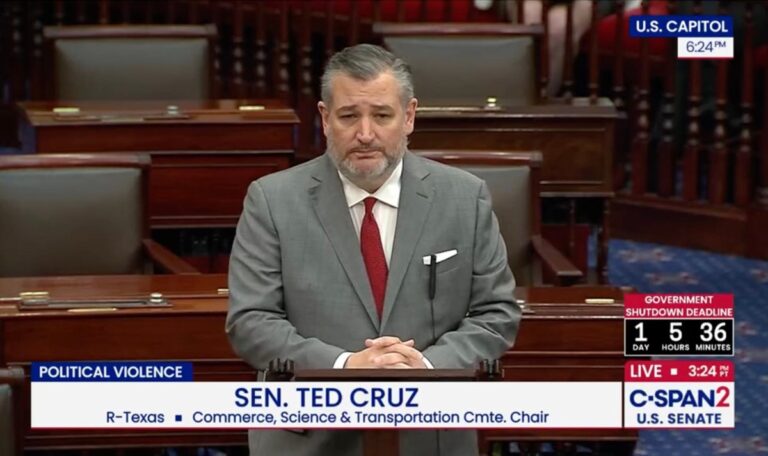
Sen. Ted Cruz (R-TX) has blocked an effort to pass legislation that would have extended data privacy protections for federal lawmakers and public officials to everyone in the United States.
On Monday night, Sen. Ron Wyden (D-OR) asked the U.S. Senate for unanimous consent from fellow senators to pass his legislation, S.2850. Wyden’s bill, if passed, would have taken bipartisan-passed provisions designed to protect government officials, lawmakers, and their families from having their personal information sold or traded by data brokers, and extend them to every American and person living in the United States.
“Members of Congress should not receive special treatment,” Wyden said on the Senate floor. “Our constituents deserve protection from violence, stalking, and other criminal threats.”
“Protecting everyone is the most effective way to protect U.S. military and intelligence personnel, including undercover officers,” Wyden added, per the congressional record.
Cruz was the sole objecting senator, who claimed without evidence that Wyden’s bill could disrupt law enforcement, “such as knowing where sexual predators are living.”
Data brokers are part of a worldwide multibillion-dollar industry of companies that profit from hoarding and selling access to huge amounts of Americans’ personal, financial, and granular location information, often collected from phones and other devices connected to the internet. This data gets sold, including to governments, who don’t need a warrant for commercially obtainable data.
The collection of huge banks of data also comes with its own risks, including security lapses and data breaches. Information bought by data brokers has been used to dox people, and in recent cases linked to the recent murders of two Minnesota state lawmakers, whose killer allegedly obtained their home addresses from data brokers.
Cruz also objected to a second piece of legislation that Wyden introduced soon after, which would have extended the protections for federal officials and lawmakers to state officials and their staff, as well as survivors of domestic violence and sexual assault.
In response, Cruz said that he was “interested in expanding the protection to as wide a universe as is feasible, as is practicable, but that answer is not yet worked out.”
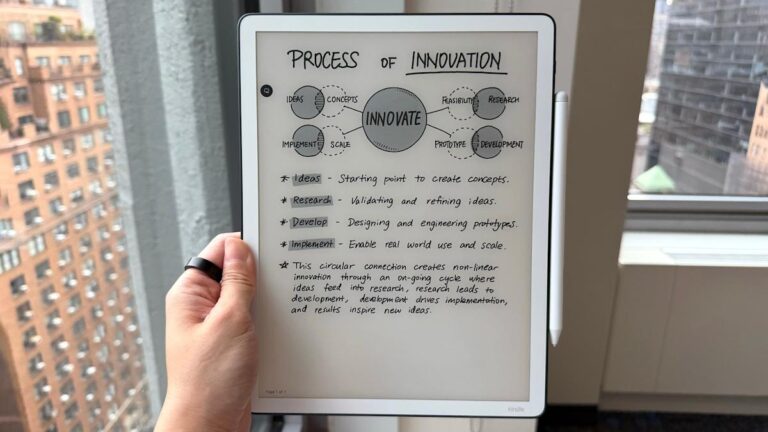
For the third generation of its Kindle Scribe line of reading-and-writing tablets, Amazon is giving the device a makeover and two new configurations. Since its introduction in 2022, the Scribe hasn’t changed much physically, with the sophomore model mostly getting a new color. This year, Amazon is launching three flavors of the Scribe. At the entry level is a model with a monochrome screen and no front light. Next is a version that has LED front lights but with a black-and-white display. Finally, at the top of the line is the Kindle Scribe Colorsoft — Amazon’s first writing tablet with a color display.
I was able to briefly check out the three new tablets ahead of the company’s launch event, and was quite impressed at the responsiveness and color saturation on the demo units I saw. Also, Amazon hasn’t given these devices a name that indicates what generation they are, simply calling them the “all-new Kindle Scribe lineup” and adding the Colorsoft label to the color model. To make things easier for this article, I’ll be occasionally referring to these as the Kindle Scribe 3.
The first thing I noticed was the Scribe 3’s shape. I’m used to the slightly thicker bezel along one long side of the display that, on the older Scribes, has been a handy place to grip the device without touching the screen. But it wasn’t just there for my thumb to hold onto. That area was also where Amazon placed many of the Kindle’s components like the processor and memory.
To reduce the size of the bezel, Amazon’s Kindle vice president Kevin Keith said “we had to engineer basically the electronics to fold behind the display.” The result is a symmetrical-looking device with a barely-there bezel that’s the same size along all sides of the 11-inch display (slightly bigger than its predecessor’s). It weighs 400 grams (or 0.88 pounds), which should make it easier to hold with one hand while taking notes. Keith also said that, at 5.4mm, the new Kindle Scribe is “thinner than the iPhone Air.” I should point out that a lot of tablets are similarly sleek. The 13-inch iPad Pro and Samsung’s Galaxy Tab S11 Ultra both have barely-there profiles of 5.1mm, while the 11-inch iPad Pro measures 5.3mm.
Cherlynn Low for Engadget
Another way Amazon was able to make the latest Scribe so thin and light was by reducing the number of layers in the display. It removed the anti-glare film on the device, using a glare-free display instead, as well as a textured glass that mimics the friction you’d get when putting pen to paper. The company also got rid of a touch layer that was on top of the display before, since it was able to use a screen with integrated touch input support. Keith said that Amazon also considered the size of the casing around the USB port to aid in shrinking the device further.
On models with front lights (all but the entry-level configuration), Amazon had to use miniaturized LED front lights since there was no longer a chunky bezel to contain them. In addition to making them smaller, the company also doubled the number of bulbs to ensure consistency of lighting across the page.
I couldn’t help reaching for the new Kindle Scribe when I saw it, mostly because it looks a lot different than its predecessor. I already found the original Scribe satisfyingly svelte and this latest model is similarly attractive. I do wonder if I might miss having something to grip onto that isn’t the screen, but that might not be a problem if Amazon’s palm rejection technology is effective.
I did notice a slight dullness in the model without the LED front lights, but it remained as easy to read as an older Kindle. The other two certainly looked a lot brighter, with the higher contrast making onscreen text and drawings look fresher and more vibrant. I’ll get to the Colorsoft model in a bit, but I appreciated how clear and saturated colors appeared on its screen.
One of my favorite updates this year is magnets. Specifically, the magnets holding Amazon’s stylus to the Scribe itself have gotten stronger. Keith said “we added more magnetic force so that it’s harder to fall off,” and when I tried pulling the pen off the tablet it required noticeably more effort than with previous models. It also snapped back on more easily. Considering this was one of my complaints about the older Scribes, I’m very encouraged to see this improvement.
The stylus itself has also been refined, with a slightly thicker, rounded silhouette that Keith said is “a little bit more ergonomic.” It still has a rubberized top that works as a digital eraser and when I used it on the new Scribe I felt the urge to brush off eraser dust, just like I did with the predecessors. The programmable action button remains present as well.
Inside the new Kindle Scribes sit a new custom chip and more memory. Amazon also added the oxide display from its Paperwhite reader, and together with the new processor, that brings a “40 percent faster overall experience with page turning,” according to Keith. The response rate also makes a significant difference in writing, which on the new Kindle Scribe is now down to under 12 milliseconds. That enables a much smoother writing experience with barely noticeable delay between putting the nib on the screen and the digital ink appearing, and because of the changes to the display, any parallax effect is “virtually gone.”
During the few moments I had to scribble on the new Kindle Scribe, I found it hard to tell if there was a big improvement in fluidity or parallax effects compared to the previous models. It’s about as responsive as before, perhaps just a touch faster at showing what I’ve written. Without a side-by-side comparison, it’s not something I can evaluate right now.
I will say that I found the latest Scribe a lot easier to hold with one hand, even in spite of the thinner bezels. That is with the caveat, of course, that I have yet to spend more than a minute writing on it. I usually have a hard time writing on the Scribe without a surface on which to prop it up, so I’m curious to see if it’ll be easier to do so with the newest model.
The Kindle Scribe Colorsoft is surprisingly vivid
I was able to get a good idea of how the Kindle Scribe Colorsoft’s color rendering compares to some of its competition, though. Every morning, I write three pages of free-flowing thoughts by hand, and I currently do so on the reMarkable Paper Pro. All my entries include highlighting of the date and time, and my experience with the color rendering on that device has been underwhelming. Technically, I can choose from yellow, green, blue, pink, orange and gray, but honestly I can barely tell the difference between yellow and orange, while blue and gray are also very close. So instead of five usable highlighter shades, I really only have three (gray is barely a hint of a tint).
The Kindle Scribe Colorsoft not only renders colors more vividly, but hues are more distinct from each other. I’d say the reMarkable Paper Pro is like reading a faded newspaper’s comic strip while the Colorsoft looks more like a glossy graphic novel. It’s still a bit muted, but you can at least see variations in shades.
Part of what makes the Colorsoft look nice is the fact that the device itself comes in a nice purplish hue that Amazon calls “fig.” With the selection of colors on its screen, I got a very autumnal vibe and was reminded of berries, for some reason. (It’s also possible I was hungry.)
Like the Kindle Colorsoft that Amazon announced in 2023, the Scribe Colorsoft uses a color filter and LEDs. What’s slightly different is a new rendering engine that Amazon said “enhances the color and ensures writing is fast, fluid and totally natural.”
While the Kindle Scribe Colorsoft has the same dimensions and weight as its monochrome counterpart, it has a slightly slower response rate of 14ms. I have only written on the Colorsoft so far, and will wait till I can spend more time with both tablets to see if this different latency makes a big difference.
Cherlynn Low for Engadget
In addition to the new hardware, Amazon also updated the Scribe’s software. All Kindles will be getting a redesigned home page that better surfaces your recently added and edited content. Based on what I saw, instead of having rows of covers on the main screen, there is now a Search bar at the very top, followed by an area on the left half below that for “quick notes.” This is basically a notepad for you to continuously update whenever you need it, so you won’t need to create a new notebook every time you want to jot down a thought. To the right of this top half is the “Jump back into” section, which will show things you were recently working on.
Below those two portions is a row of titles called “Recently added,” where things you just downloaded into your library will appear. So if you have been reading, say, The Body Keeps the Score and just bought Katabasis, you’ll find the first one at the top right and the latter in the “Recently added” section.
The search bar at the top is now powered by AI, because there is no escaping that. Thankfully, Amazon has been fairly cautious about its approach, which is particularly important for a product like the Kindle Scribe where people go to read and produce original content. The new AI feature here is a smarter search that not only indexes all your handwritten notes, but understands and groups common topics so you can search for something like “What have I told Panos Panay before?” The Scribe will scan your notebooks, find all your relevant scribblings and present everything you’ve written down across all your files and summarize its findings for you.
I didn’t have time to try this out but I am intrigued at the potential here. I make so many different to-do lists for Engadget’s events coverage that it would be nice to be able to ask “What are the tasks I need to do by the end of October” and possibly get a neatly organized list. The usefulness of this feature depends almost entirely on how intelligent the AI is, so I’ll have to wait till I can review it more thoroughly to say anything more evaluative.
Amazon is also bringing support for Google Drive and OneDrive, so you can create a folder in either service, add documents to them and the system will download them onto your Kindle Scribe. This is just an easier way to get files onto your Kindle, in addition to sending an email to the associated address or finding a way to add them to your Amazon account. OneNote support is coming as well, and it’ll allow you to export your notes as an embedded image or as a converted text document.
A “Send to Alexa+” feature is coming early next year, so you can share your notes or documents from the Kindle Scribe to the assistant. It will be able to pull information from your pages and remember or refer to them in your conversations, so you can ask it about what’s next on your to-do list or what items are already on your shopping note.
One more update on the redesigned home page: Instead of the existing “Notebooks” tab, Amazon is rolling out the “Workspace” section. Keith described this as “essentially like a new folder system.” Functionally, it didn’t appear too different from the Notebooks setup, other than making it easier to group your related documents so you can access, say, all the lists you’ve written up for your wedding planning or writing projects.
The redesigned home page will be launching later this year, and older Kindle devices will be able to update to the new software. The latest generation of Kindle Scribe will be available later this year, with the entry-level model going for $429, the version with the front light costing $499 and the Scribe Colorsoft starting at $629.
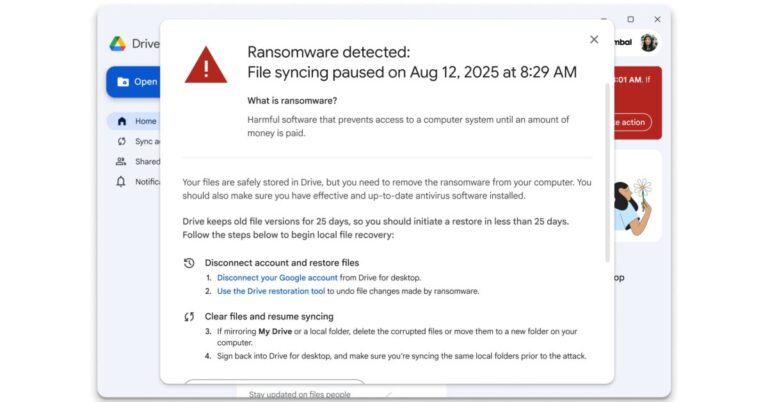
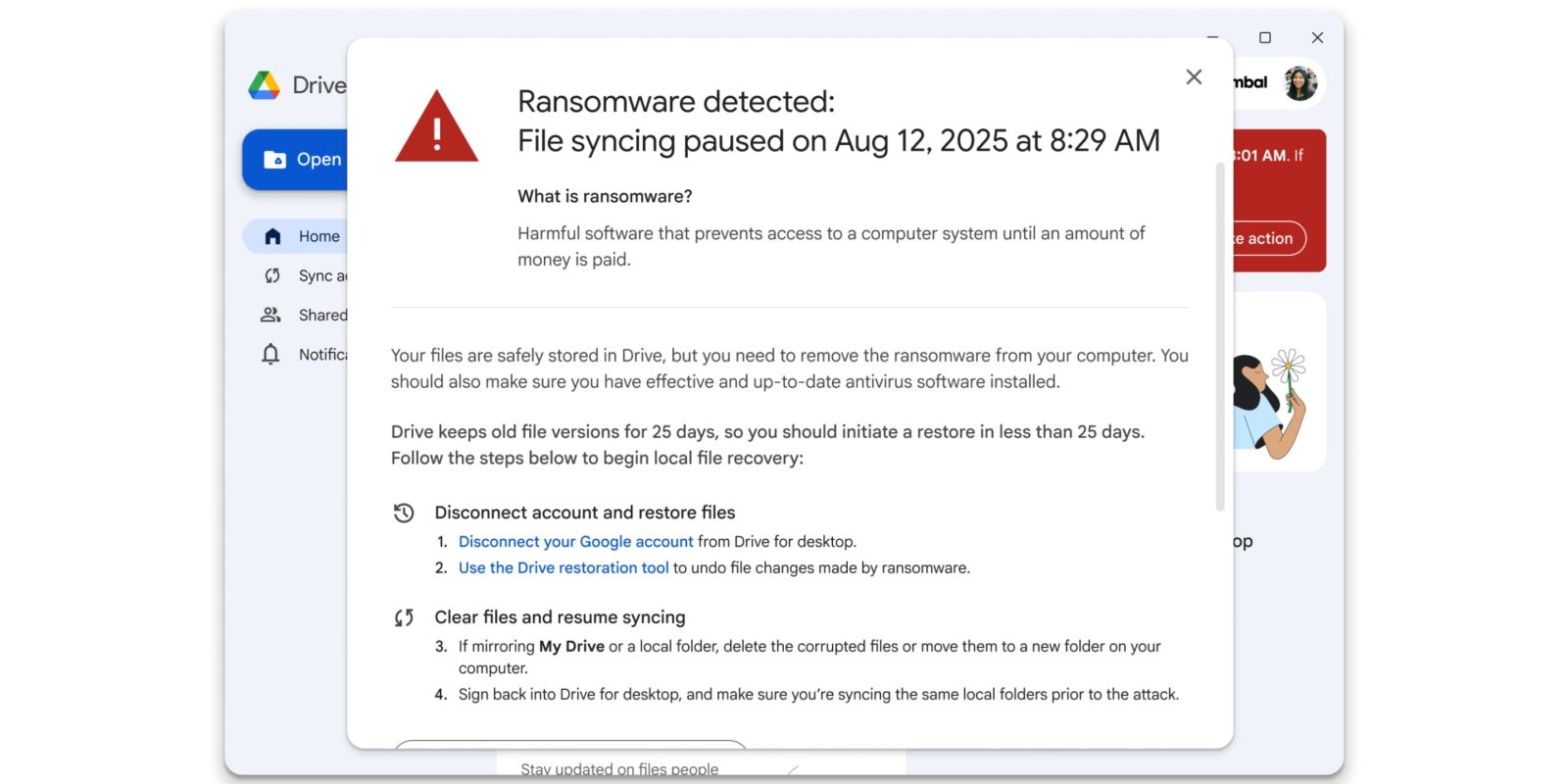
Google Drive for desktop on macOS and Windows is adding AI-powered ransomware detection that can stop syncing and allows for easy file restore.
This new approach complements antivirus software. However, if ransomware (malicious software that prevents access to your data) bypasses that layer of protection, Google will “stop it from being effective.” You’re instructed to first “remove the ransomware from your computer,” and delete the corrupted files.
Drive for desktop is leveraging an AI model to identify attempts to bulk encrypt or corrupt files. Trained on millions of real-world ransomware samples, this detection engine is “continuously analyzing file changes and incorporating new threat intelligence from VirusTotal.”
When unusual activity is detected, Drive automatically “pauses syncing of affected files, helping to prevent widespread data corruption across an organization’s Drive and the disruption of work.”
Advertisement – scroll for more content
Users will receive a prominent desktop notification when this occurs, as well as an email, on how to restore their files “to a previous, healthy state with just a few clicks.” (In companies, IT admins will also be alerted.) Google says Drive is more user-friendly than “complex re-imaging or costly third-party tools.”
This rapid recovery capability helps to minimize user interruption and data loss, even when using traditional software such as Microsoft Windows and Office.
AI ransomware detection in Drive for desktop is rolling out starting today in open beta: “It is included in most Workspace commercial plans at no additional cost. Consumers also benefit from the file restoration capability at no additional cost.”
More on Google Drive:
FTC: We use income earning auto affiliate links.More.
The Rolling Stones’ new album is “done” and set for release in 2026, according to guitarist Ronnie Wood.
The musician seemingly confirmed the news of the record in an interview with “The Sun‘s” Bizarre column, NME reported.
“Yes you will be getting a new album next year. It is done,” Wood reportedly said. “It’s done.”
While he was signing copies of his new double anthology album “Fearless” at the flagship RS No.9 shop in Carnaby Street in London, Wood also suggested that he, Mick Jagger and Keith Richards were also planning to tour again.
“Yes we are hoping to do some dates,” Wood reportedly said. “Hopefully we will be back out there but I am still waiting to find out myself.”
Wood’s statements come after Richards’ son, Marlon, teased earlier this year that the band had almost finished the record.
“They’re in town right now, recording,” he said in an interview with Record Collector in May.
“They’re in Chiswick [West London] or somewhere like that. I think they’re nearly done. They still maintain these ridiculous hours: after lunch until, like, two in the morning.”
Meanwhile, it’s been confirmed that the Stones are working with producer Andrew Watt who produced their 2023 Grammy-winning project, “Hackney Diamonds.”
“I’ve said it before, but it’s like working for Batman,” Watt told Rolling Stone earlier this month. “When the tongue is up in the air, you just go… I can say we did some recording together, but that’s all I can say.”
“Hackney Diamonds” was also the Stones’ last full-length project.
If you purchase a product or register for an account through a link on our site, we may receive compensation. By using this site, you consent to our User Agreement and agree that your clicks, interactions, and personal information may be collected, recorded, and/or stored by us and social media and other third-party partners in accordance with our Privacy Policy.
Browser maker Opera launched its AI-centric browser Neon Tuesday, with the ability to create apps through AI prompts and create repeatable prompts through a feature it calls cards. With this Opera joins a growing number of companies like Perplexity and The Browser Company that are trying to make agentic browsers happen.
The company first announced that it was working on Neon in May, but the browser was in closed preview. It will now start sending invites to select people, who can use the browser for a fee of $19.99 per month.
“We built Opera Neon for ourselves – and for everyone who uses AI extensively in their day-to-day. Today, we’re welcoming the first users who will help shape the future of agentic browsing with us,” said Krystian Kolondra, EVP Browsers at Opera, in a statement.
There are a few key parts of the browser. First, there is a plain old chatbot that you can converse with to get answers to your questions. The more agentic feature of the browser is called Neon Do, which will help you get tasks done. For instance, it can summarize a Substack blog and post the summary to a Slack channel. As the browser has the context of your browsing history, you can also ask it to fetch details from a YouTube video you watched last week or the post that you read yesterday.
Opera’s new browser can also write snippets of code, which is helpful for you to create visual reports with tables and charts. It is not clear if you can share these mini-apps with others at the moment.
The Browser Company’s Dia has a feature called Skills, which lets you invoke a prompt repeatedly like a command or an app. Neon lets you build a similar repeatable prompt using cards. Think of this as IFTTT (IF This Then That) of AI prompting. You can combine cards like “pull-details” and “comparison-table” to create a new prompt for comparing products across tabs. Just like in Dia, you can build your own Cards or use the ones that are created by the community.
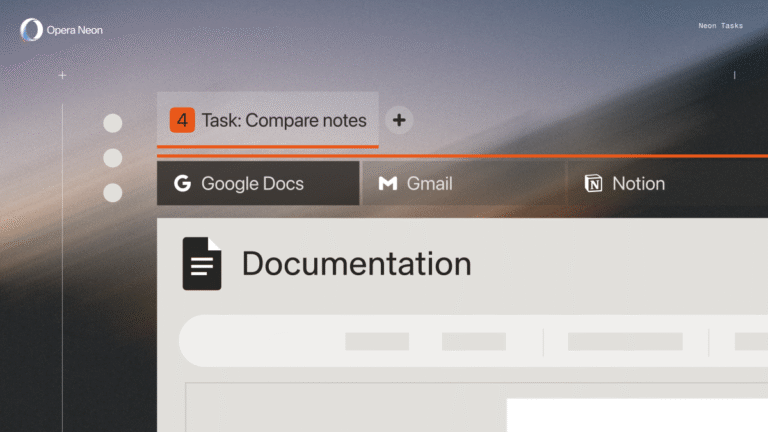
Opera Neon is also bringing a new tab organizational feature called Tasks, which are contained workspaces of AI chats and tabs. This feature is more like Tab Groups combined with Arc Browser’s workspaces feature, which has its own context for AI.
Techcrunch event
San Francisco | October 27-29, 2025
In its demo, Opera shows Neon completing tasks like ordering groceries for you. We have seen previously that demos don’t often reflect real-world scenarios — especially with AI products. That means Neon will have to prove its claim in real life.
With this launch, Opera is directly competing with the likes of Perplexity’s Comet and Dia. Big tech companies like Google and Microsoft are also adding more AI-powered features to their browsers. Unlike the competitors, Opera is positioning Neon as a product for power users with its monthly subscription.
Alphabet President Donald Trump $22 million as part of a settlement in a class action lawsuit brought against the company over the suspension of various YouTube accounts following the January 6 riot at the US capital, as first reported by the. The suit includes other plaintiffs whose YouTube channels were banned that will split an additional $2.5 million in settlement payouts.
Trump in 2021, alongside lawsuits against Twitter and Facebook over similar suspensions, claiming they infringed on his first amendment rights. Twitter, now known as X since its acquisition and rebrand by Elon Musk, paid President Trump roughly $10 million to settle that suit. Meta also with the president over his suspension from the platform for $25 million earlier this year.
This settlement comes shortly after Alphabet to the House Judiciary Committee lambasting government pressure to moderate content on its platforms. The company also shared that YouTube would be offering a path to reinstatement for accounts previously banned for COVID-19 or election integrity related misinformation.
The settlement from Alphabet will be paid to the Trust for the National Mall, a nonprofit partner of the National Park Service, and will be earmarked for construction of the that President Trump is building at The White House. The monies from the Meta settlement were similarly earmarked.
This summer Paramount, parent company of CBS, brought by the president over claims that the network intended to “confuse, deceive and mislead the public” by editing an interview with Kamala Harris. The media company paid $16 million to settle the president’s suit. Three weeks later the the $8 billion acquisition of Paramount by Skydance.