Home Blog Page 178

Dighton teen killed in Taunton car crash remembered for her ‘nurturing heart’

0


A Dighton teen who was killed earlier this month when the pickup truck she was driving crashed into the front of a Taunton home is being remembered for her “nurturing heart.”

Savannah Salemme, 18, died after the Toyota Tacoma she was driving hit the front porch of a home at 168 Tremont St. on Sept. 19 around 10:15 p.m., the Bristol County District Attorney’s Office said previously. The truck rolled into parked cars in the driveway of the home after impact and became fully engulfed in flames. She was declared dead at the scene.

Savannah Ryan Salemme, was born in Weymouth on May 22, 2007, to Arianna and Matthew Salemme, according to her obituary. She was raised in Randolph and Stoughton before her family’s move to Dighton.

Salemme went on to study HVAC services at Bristol-Plymouth Regional Technical School, according to her obituary. She graduated from the high school earlier this year with the intent of pursuing a career in the field.

“Savannah’s zest for life shined through in everything she did,” her obituary reads.

Salemme was a fan of all types of music, and was known for putting a range of genres on her playlists to match her different moods, according to her obituary. She was also a keen navigator who loved to travel and explore new places, “always seeking adventure with a fearless spirit.”

“Her nurturing heart was evident in the love and care she gave her brother Leo and cousin Aubrey, taking on their care with grace and devotion,” her obituary reads.

Salemme could often be found hanging out with her boyfriend, Shawn, at the beach or working on cars and trucks together, according to her obituary. She was also a proud member of 603 Diesel — a truck meet club with whom she found camaraderie.

“Her kindness and bountiful curiosity left an incredible mark on family, friends, classmates and teachers,” her obituary reads. “Savannah was a beautiful, kind, loving and special lady whose light will continue to shine in the hearts of all who knew her.”

In addition to her parents, Salemme leaves behind her younger sister and brother, her boyfriend, her grandparents and many other beloved family members and friends, according to her obituary. A memorial visitation is scheduled for Wednesday, Oct. 1, from 4 to 7 p.m. at Cartwright Funeral Home in Randolph.

In lieu of flowers, Salemme’s family asks that donations be made in her name to Children with Hair Loss at www.childrenwithhairloss.org or Donate Life, New England Donor Services, at www.neds.org.

“In her memory, her family encourages everyone to take a moment to crank up a favorite song, embark on a new adventure or lend a helping hand, just as Savannah did with such joy,” her obituary reads.

If you purchase a product or register for an account through a link on our site, we may receive compensation. By using this site, you consent to our User Agreement and agree that your clicks, interactions, and personal information may be collected, recorded, and/or stored by us and social media and other third-party partners in accordance with our Privacy Policy.


Source link

The AI services transformation may be harder than VCs think

0


Venture capitalists have convinced themselves they’ve found the next big investing edge: using AI to wring software-like margins out of traditionally labor-intensive services businesses. The strategy involves acquiring mature professional services firms, implementing AI to automate tasks, then using the improved cash flow to roll up more companies.

Leading the charge is General Catalyst (GC), which has dedicated $1.5 billion of its latest fundraise to what it calls a “creation” strategy that’s focused on incubating AI-native software companies in specific verticals, then using those companies as acquisition vehicles to buy established firms — and their customers — in the same sectors. GC has placed bets across seven industries, from legal services to IT management, with plans to expand to up to 20 sectors altogether.

“Services globally is a $16 trillion revenue a year globally,” said Marc Bhargava, who leads GC’s related efforts, in a recent interview with TechCrunch. “In comparison, software is only $1 trillion globally,” he noted, adding that the allure of software investing has always been its higher margins. “As you get software to scale, there’s very little marginal cost and there’s a great deal of marginal revenue.”

If you can automate services business, too, he said – tackling 30% to 50% of those companies with AI, and even automating up to 70% of those core tasks in the case of call centers – the math begins to look irresistible.

The game plan seems to be working. Take Titan MSP, one of General Catalyst’s portfolio companies. The investment firm provided $74 million over two tranches to help the company develop AI tools for managed service providers, then it acquired RFA, a well-known IT services firm. Through pilot programs, says Bhargava, Titan demonstrated it could automate 38% of typical MSP tasks. The company now plans to use its improved margins to acquire additional MSPs in a classic roll-up strategy.

Similarly, the firm incubated Eudia, which focuses on in-house legal departments rather than law firms. Eudia has signed up Fortune 100 clients including Chevron, Southwest Airlines, and Stripe, offering fixed-fee legal services powered by AI rather than traditional hourly billing. The company recently acquired Johnson Hanna, an alternative legal service provider, to expand its reach.

General Catalyst looks to double – at least – the EBITDA margin of those companies that it’s acquiring, Bhargava explained.

Techcrunch event

San Francisco
|
October 27-29, 2025

The powerhouse firm isn’t alone in its thinking. The venture firm Mayfield has carved out $100 million specifically for “AI teammates” investments, including Gruve, an IT consulting startup that acquired a $5 million security consulting company, then grew it to $15 million in revenue within six months while achieving an 80% gross margin, according to its founders.

“If 80% of the work will be done by AI, it can have an 80% to 90% gross margin,” Navin Chaddha, Mayfield’s managing director, told TechCrunch this summer. “You could have blended margins of 60% to 70% and produce 20% to 30% net income.”

Solo investor Elad Gil has been pursuing a similar strategy for three years, backing companies that acquire mature businesses and transform them with AI. “If you own the asset, you can [transform it] much more rapidly than if you’re just selling software as a vendor,” Gil said in an interview with TechCrunch this spring.

But early warning signs suggest this whole services-industry metamorphosis may be more complicated than VCs anticipate. A recent study by researchers at Stanford Social Media Lab and BetterUp Labs that surveyed 1,150 full-time employees across industries found that 40% of those employees are having to shoulder more work because of what the researchers call “workslop” – AI-generated work that appears polished but lacks substance, creating more work (and headaches) for colleagues.

The trend is taking a toll on the organizations. Employees involved in the survey say they’re spending an average of nearly two hours dealing with each instance of workslop, including to first decipher it, then decide whether or not to send it back, and oftentimes just to fix it themselves.

Based on those participants’ estimates of time spent, along with their self-reported salaries, the authors of the survey estimate that workslop carries an invisible tax of $186 per month per person. “For an organization of 10,000 workers, given the estimated prevalence of workslop . . .this yields over $9 million per year in lost productivity,” they write in a new Harvard Business Review article.

Bhargava disputed the notion that AI is overhyped, arguing instead that all these implementation failures actually validate General Catalyst’s approach. “I think it kind of shows the opportunity, which is, it’s not easy to apply AI technology to these businesses,” he said. “If all the Fortune 100 and all these folks could just bring in a consulting firm, slap on some AI, get a contract with OpenAI, and transform their business, then obviously our thesis [would be] a little bit less robust. But the reality is, it’s really hard to transform a company with AI.”

He pointed to the technical sophistication required in AI as the most critical missing puzzle piece. “There’s a lot of different technology. It’s good at different things,” he said. “You really need these applied AI engineers from places like Rippling and Ramp and Figma and Scale, who have worked with the different models, understand their nuances, understand which ones are good for what, understand how to wrap it in software.” That complexity is exactly why General Catalyst’s strategy of pairing AI specialists with industry experts to build companies from the ground up makes sense, he argued.

Still, there’s no denying that workslop threatens to undermine — to some extent — the strategy’s core economics. Even if a holding company is created as starting point, if the acquired companies reduce staff as the AI efficiency thesis suggests they should, they’ll have fewer people available to catch and correct AI-generated errors. If the companies maintain current staffing levels to handle the additional work created by problematic AI output, the huge margin gains that VCs are counting on might never be realized.

Arguably, these scenarios should perhaps slow the scaling plans that are central to the VCs’ roll-up strategies and that potentially undermine the numbers that make these deals attractive to them. But let’s face it; it will take more than a study or two to slow down most Silicon Valley investors.

In fact, because they typically acquire businesses with existing cash flow, General Catalyst says its “creation strategy” companies are already profitable — a marked departure from the traditional VC playbook of backing high-growth, cash-burning startups. It’s also likely a welcome change for the limited partners behind venture firms, who have bankrolled years of losses at companies that never reached profitability.

“As long as AI technology continues to improve, and we see this massive investment and improvement in the models,” Bhargava said, “I think there’ll just be more and more industries for us to help incubate companies.”



Source link

Snapchat introduces a paid storage option for all the Memories hoarders out there

0


Snap is imposing a new storage limit on Snapchat‘s Memories feature, which has racked up impressive numbers since its introduction in 2016. According to Snap, users have saved more than one trillion Memories across its platform, and it’s now introducing “Memories Storage Plans” for users who exceed 5GB of Memories.

In a press release, Snap detailed that the introductory storage plan allows up to 100GB of storage for Memories for $1.99 a month. Snapchat+ subscribers, who pay $3.99 a month, will get up to 250GB of storage, while Snapchat’s highest-tier Platinum subscribers will get 5TB included with their $15.99 monthly cost.

Snap said that a “vast majority” of its Snapchat users won’t notice any changes since they’re far from hitting the 5GB limit. For users who hold onto thousands of Snaps, the company is now rolling out these storage plans. To ease the transition from unlimited storage to paid options, Snap will give anyone exceeding 5GB of Memories a year of temporary storage. These new storage subscriptions follow Snap’s latest paid option for its Lens+ subscription, which costs $9 a month.


Source link

What would you change about Google Home if you could?

0


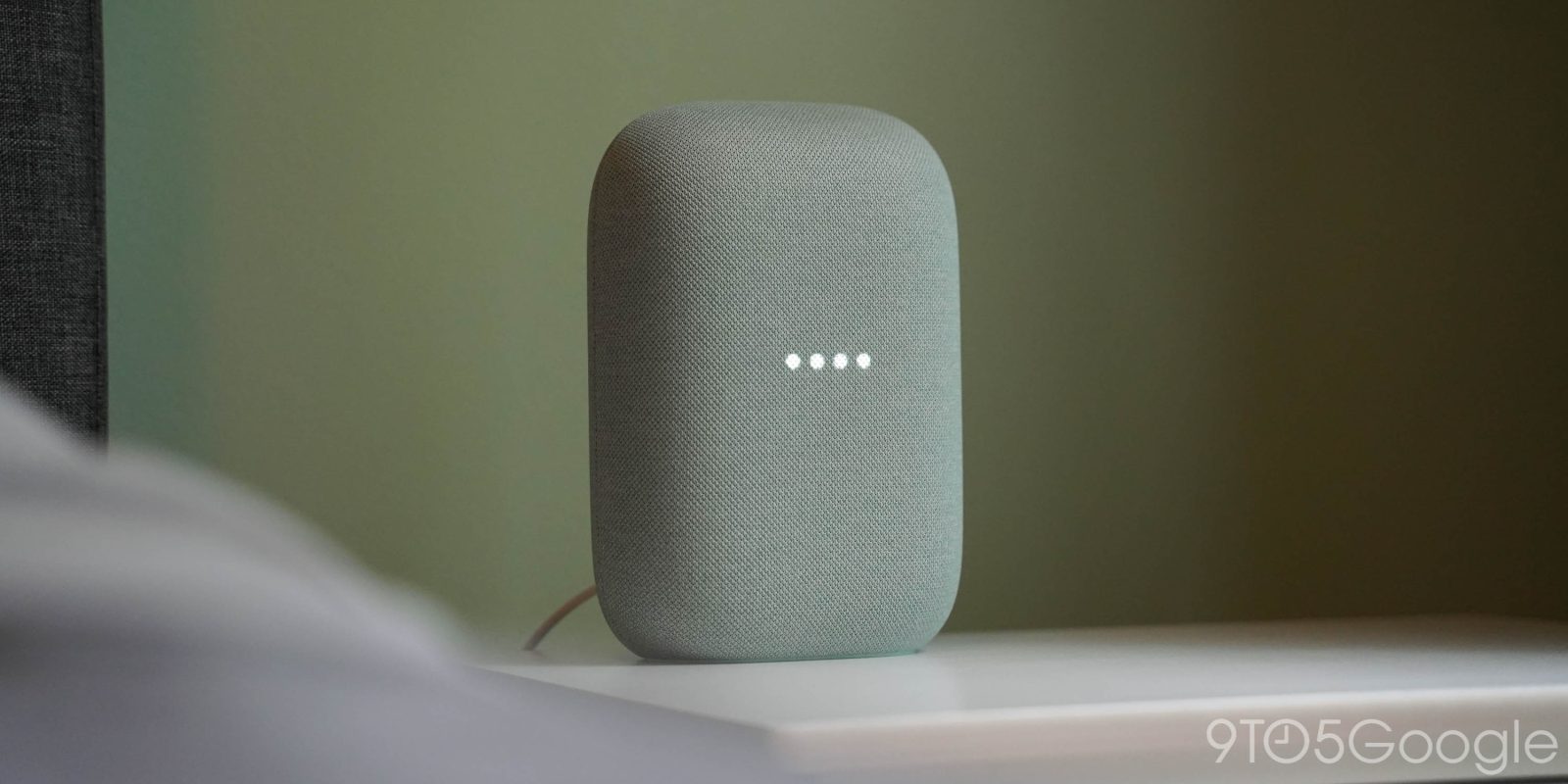
Over the years, the Google Home ecosystem – Nest included – has changed a lot, largely to fit Google’s priorities of the time. But, more often than not, any one step forward has resulted in taking two steps back which, as a user, means there’s always some annoyance at play. As Google prepares to present Home and Nest news next week, what’s the one thing you would change about Google Home if you could?


This issue of 9to5Google Weekender is a part of 9to5Google’s rebooted newsletter that highlights the biggest Google stories with added commentary and other tidbits. Sign up here to get it delivered to your inbox early!


Looking back a few years, the Home app was frankly a mess. Prior to 2023’s redesign, running a smart home via Google’s app was nothing short of horrendous. It was fine if you had maybe a dozen or so lights and devices, but anyone with multiple rooms full of lights, switches, TVs, speakers, and cameras probably remembers the annoyance that came from digging through a seemingly endless list of devices.

The Google Home redesign that followed was a huge upgrade. Between a customizable favorites tab and dedicated, easy-to-access sections, and a more powerful automations system, it was a big deal for smart home users. It wasn’t perfect, though. The Nest experience was perhaps the biggest downside, with cameras having an interface that was lacking most of the features, polish, and attention to detail that was present in the Nest app years prior. In the time since, Google has made major strides in this regard, and we’ve seen that same effort apply to the rest of the Nest catalog. Just recently, Google extended support back to Nest devices from the past decade to fully support the Home app, with thermostats and the Nest x Yale Lock being the most recent examples.

Advertisement – scroll for more content

But, nothing is perfect.

The Google Home app is, in my view, pretty good, but I know one of the biggest headaches is the ecosystem that surrounds it. The degradation of Google Assistant was so universally hated that Google had to outwardly acknowledge it and promise a fix was on the way.

Voice commands are clearly an area Google needs to fix with Home, and Gemini, at least on paper, has the ability to do that. We’ll have to wait and see what Google actually delivers on October 1, but I think we’re all hoping this is the silver bullet we’ve been waiting for.

Beyond voice commands, though, what’s something that you find frustrating about the Google Home experience?

I think everyone has that one little quirk that annoys them about any product, and Google Home is certainly no exception even if you avoid talking about voice commands.

For me, the one thing I’d love to see fixed is the integration of third-party cameras in Google Home. For instance, the Wyze cameras I’ve been testing lately show up in the Home app’s camera section, but they’re completely broken. Streams just never load no longer how long I wait, and it’s not the camera’s fault. I’ve seen the same behavior from every other third-party camera I’ve seen in the Home app over the years, including from brands such as Arlo and Reolink. Some work better than others – which is to say they load eventually – but it’s clear this experience is broken. I’d love to be able to properly use Google Home as a hub for all the cameras in my home, but that’s not something I can do today. It’s obvious that Google’s vision is to support this, but it just needs some work to fully accomplish it.

Will that happen? Hard to say. Google doesn’t really gain anything from you integrating a third-party camera in Home, so it’s probably not a priority at the very least. But third-party hardware makes up the backbone of literally any good smart home system, so it’d be crazy if it weren’t at least on the roadmap.

What about you?

What’s the one thing you would change about Google Home if you could?


This Week’s Top Stories

Qualcomm’s latest chips are here

Qualcomm this week announced Snapdragon 8 Elite Gen 5 at its annual event in Hawaii, while also showing off its next-gen Windows chip. The event also saw Google teasing its PC-like desktop experience for Android.

Alongside that announcement, major Android brands announced they would be using Snapdragon 8 Elite Gen 5. This delivered our first official look at the OnePlus 15, and Xiaomi announced the Xiaomi 17 series entirely.

More Top Stories


From the rest of 9to5

9to5Mac: Apple responds to iPhone 17 Pro scratch and durability concerns

Electrek: The 2026 Subaru Solterra EV is a big upgrade in every way, and prices still start at just $38,495

9to5Toys: Logitech debuts new wireless keyboard for Mac, iPhone, and iPad you never need to charge


Follow Ben: Twitter/XThreads, Bluesky, and Instagram

FTC: We use income earning auto affiliate links. More.


Source link

Methuen massage parlor shut down, owner charged with human trafficking

0


The owner of a Methuen massage parlor was arrested Friday on human trafficking-related charges after the city shut the business down earlier this month, according to police.

Flushing, New York, resident Suping Zhu is facing charges of trafficking a person for sexual servitude, keeping a house of ill fame and deriving support from prostitution, Methuen police said in a Sunday press release.

Methuen police began investigating Beauty Garden Spa on Wallace Street after receiving complaints from residents about the business, the police department said. Officers obtained a search warrant for the massage parlor on Sept. 4 after a “lengthy investigation” that involved surveillance and undercover operations.

During the search, investigators found living quarters for two women in the basement of the commercially-zoned building, police said. Police notified the Methuen Departments of Health, Human Services and Inspections, and the business was shut down immediately.

Investigators later discovered numerous computers, phones and business records and interviewed two women who worked at the spa, police said. The investigation resulted in a warrant for Zhu’s arrest on human trafficking-related charges.

“I am declaring war on human trafficking in the city of Methuen,” Mayor D.J. Beauregard said in the release. “We will identify and apprehend traffickers, shut down every business in Methuen that profits from this evil and hold landlords accountable if they harbor them. We will find you, and we are coming after you next.”

Beauty Garden Spa has remained closed since the search warrant was served, police said. Zhu and others may face additional charges as the investigation into the business continues.

“This operation marks the first blow in our aggressive campaign to eradicate human trafficking and sexual servitude in Methuen,” Methuen Police Chief Scott McNamara. said in the release. “ … To the ‘johns’ fueling this despicable trade, know this: you are not invisible, and we are targeting you next with the full might of the law.”

Zhu is set to be arraigned Monday in Lawrence District Court.

If you purchase a product or register for an account through a link on our site, we may receive compensation. By using this site, you consent to our User Agreement and agree that your clicks, interactions, and personal information may be collected, recorded, and/or stored by us and social media and other third-party partners in accordance with our Privacy Policy.


Source link

Remembering Tess Johnston, a former diplomat and documenter of Shanghai’s architecture : NPR

0


We remember Tess Johnston, U.S. diplomat-turned-chronicler of old Shanghai’s colonial architecture, who died at the age of 93.


AYESHA RASCOE, HOST:

Tess Johnston arrived in Shanghai as an American foreign service officer in 1981. She left 35 years later as an author and expert on the city’s vanishing colonial architecture. Johnston died earlier this month in Washington. She was 93. Frank Langfitt, NPR’s former Shanghai correspondent, has this remembrance.

FRANK LANGFITT, BYLINE: When Johnston first saw Shanghai, she marveled at the Western architecture. Everything from columned neoclassical banks along the river to villas with wrought-iron balconies and terracotta roofs.

(SOUNDBITE OF ARCHIVED RECORDING)

TESS JOHNSTON: I’ve always been an architecture buff, and I thought, oh, I’ve got to read about, you know, who built these things and, you know, who the architects were. And nothing had been written since really basically 1945.

LANGFITT: Johnston changed that. Dressed in a blazer, scarf and khakis, she roamed Shanghai, documenting the buildings and Westerners who once lived there. It was a race against the wrecking ball as the colonial buildings were demolished for modern high-rises. With Chinese photographer Erh Dongqiang, Johnston published more than two dozen books.

(SOUNDBITE OF ARCHIVED RECORDING)

JOHNSTON: We never dreamed that some of the beautiful villas that we were passing would be gone or would be modified beyond comprehension.

LANGFITT: Western powers had rebuilt Shanghai in their image after defeating China in the Opium War. Qiu Xiaolong grew up in Shanghai and writes detective novels set there. He says the Communist Party saw Shanghai’s European face as a loss of its own, and expats like Johnston filled the void and illuminated the city’s rich and complicated past.

QIU XIAOLONG: Past work is very important in a sense that it let people understand that part of history.

LANGFITT: Tina Kanagaratnam is a Singaporean businesswoman and local preservationist. She says Johnston was a walking encyclopedia of Shanghai’s cosmopolitan 1920s and 1930s.

TINA KANAGARATNAM: You know, there’s an incredible sense of loss because Tess was one of these people who you felt was sort of eternal, that she would always be there. You could always turn to her and say, now, what was that building? What was that street? And she’d have the answer or the anecdote for you.

LANGFITT: In 2016, Johnston told NPR she was proudest of her first coffee table book, which introduced the city’s Western architectural heritage to a new generation of readers. She said, quote, “I’m grateful I could be here and see it as it was.”

Frank Langfitt, NPR News, Washington.

(SOUNDBITE OF MUSIC)

Copyright © 2025 NPR. All rights reserved. Visit our website terms of use and permissions pages at www.npr.org for further information.

Accuracy and availability of NPR transcripts may vary. Transcript text may be revised to correct errors or match updates to audio. Audio on npr.org may be edited after its original broadcast or publication. The authoritative record of NPR’s programming is the audio record.


Source link

The billion-dollar infrastructure deals powering the AI boom

0


It takes a lot of computing power to run an AI product — and as the tech industry races to tap the power of AI models, there’s a parallel race underway to build the infrastructure that will power them. On a recent earnings call, Nvidia CEO Jensen Huang estimated that between $3 trillion and $4 trillion will be spent on AI infrastructure by the end of the decade — with much of that money coming from AI companies. Along the way, they’re placing immense strain on power grids and pushing the industry’s building capacity to its limit.

Below, we’ve laid out everything we know about the biggest AI infrastructure projects, including major spending from Meta, Oracle, Microsoft, Google, and OpenAI. We’ll keep it updated as the boom continues and the numbers climb even higher.

Microsoft’s $1 billion investment in OpenAI

This is arguably the deal that kicked off the whole contemporary AI boom: In 2019, Microsoft made a $1 billion investment in a buzzy non-profit called OpenAI, known mostly for its association with Elon Musk. Crucially, the deal made Microsoft the exclusive cloud provider for OpenAI — and as the demands of model training became more intense, more of Microsoft’s investment started to come in the form of Azure cloud credit rather than cash.

It was a great deal for both sides: Microsoft was able to claim more Azure sales, and OpenAI got more money for its biggest single expense. In the years that followed, Microsoft would build its investment up to nearly $14 billion — a move that is set to pay off enormously when OpenAI converts into a for-profit company.

The partnership between the two companies has unwound more recently. In January, OpenAI announced it would no longer be using Microsoft’s cloud exclusively, instead giving the company a right of first refusal on future infrastructure demands but pursuing others if Azure couldn’t meet their needs. More recently, Microsoft began exploring other foundation models to power its AI products, establishing even more independence from the AI giant.

OpenAI’s arrangement with Microsoft was so successful that it’s become a common practice for AI services to sign on with a particular cloud provider. Anthropic has received $8 billion in investment from Amazon, while making kernel-level modifications on the company’s hardware to make it better suited for AI training. Google Cloud has also signed on smaller AI companies like Lovable and Windsurf as “primary computing partners,” although those deals did not involve any investment. And even OpenAI has gone back to the well, receiving a $100 billion investment from Nvidia in September, giving it capacity to buy even more of the company’s GPUs.

The rise of Oracle

On June 30, 2025, Oracle revealed in an SEC filing that it had signed a $30 billion cloud services deal with an unnamed partner; this is more than the company’s cloud revenues for all of the previous fiscal year. OpenAI was eventually revealed as the partner, securing Oracle a spot alongside Google as one of OpenAI’s string of post-Microsoft hosting partners. Unsurprisingly, the company’s stock went shooting up.

Techcrunch event

San Francisco
|
October 27-29, 2025

A few months later, it happened again. On September 10, Oracle revealed a five-year, $300 billion deal for compute power, set to begin in 2027. Oracle’s stock climbed even higher, briefly making founder Larry Ellison the richest man in the world. The sheer scale of the deal is stunning: OpenAI does not have $300 billion to spend, so the figure presumes immense growth for both companies, and more than a little faith.

But before a single dollar is spent, the deal has already cemented Oracle as one of the leading AI infrastructure providers — and a financial force to be reckoned with.

Building tomorrow’s hyperscale data centers

For companies like Meta that already have significant legacy infrastructure, the story is more complicated — although equally expensive. Mark Zuckerberg has said that Meta plans to spend $600 billion on U.S. infrastructure through the end of 2028.

In just the first half of 2025, the company spent $30 billion more than the previous year, driven largely by the company’s growing AI ambitions. Some of that spending goes toward big ticket cloud contracts, like a recent $10 billion deal with Google Cloud, but even more resources are being poured into two massive new data centers.

A new 2,250-acre site in Louisiana, dubbed Hyperion, will cost an estimated $10 billion to build out and provide an estimated 5 gigawatts of compute power. Notably, the site includes an arrangement with a local nuclear power plant to handle the increased energy load. A smaller site in Ohio, called Prometheus, is expected to come online in 2026, powered by natural gas. 

That kind of buildout comes with real environmental costs. Elon Musk’s xAI built its own hybrid data center and power-generation plant in South Memphis, Tennessee. The plant has quickly become one of the county’s largest emitters of smog-producing chemicals, thanks to a string of natural gas turbines that experts say violate the Clean Air Act.

The Stargate moonshot

Just two days after his second inauguration, President Trump announced a joint venture between SoftBank, OpenAI, and Oracle, meant to spend $500 billion building AI infrastructure in the United States. Named “Stargate” after the 1994 film, the project arrived with incredible amounts of hype, with Trump calling it “the largest AI infrastructure project in history. Sam Altman seemed to agree, saying, ​​”I think this will be the most important project of this era.” 

In broad strokes, the plan was for SoftBank to provide the funding, with Oracle handling the buildout with input from OpenAI. Overseeing it all was Trump, who promised to clear away any regulatory hurdles that might slow down the build. But there were doubts from the beginning, including from Elon Musk, Altman’s business rival, who claimed the project did not have the available funds.

As the hype has died down, the project has lost some momentum. In August, Bloomberg reported that the partners were failing to reach consensus. Nonetheless, the project has moved forward with the construction of eight data centers in Abilene, Texas, with construction on the final building set to be finished by the end of 2026.

This article was first published on September 22.


Source link

How to record a phone call on an iPhone

0


With iOS 26, Apple has expanded its native call recording feature with transcripts, Live Translation, summaries and tighter integration with Notes. It’s a more polished and useful tool than before, especially if you rely on your iPhone for interviews, meetings or important conversations.

Call recording itself first arrived with iOS 18.1 in October 2024. The feature has always been region- and language-dependent, and that hasn’t changed. If it’s available where you live, you can capture calls directly from the Phone app without third-party apps or hardware. If it’s not, there are still alternative methods worth knowing about. Here’s how it works, plus what to do if the option isn’t available in your country.

How to check if call recording is available

First, confirm that the feature is supported in your region. Apple maintains a feature availability page that lists countries where call recording isn’t offered, including the European Union, Saudi Arabia and South Africa. If your country is on that list, you won’t see the option in the Phone app.

Before recording your phone call, you’ll need the consent of the person on the other end of the line. When you start recording, both parties hear an audio notice stating that the call is being recorded.

How to record a call on iPhone

Recording a call is straightforward:

  1. During the call, tap the More button.

The call continues as normal, but the iPhone automatically saves the audio once you hang up or tap Stop. You’ll find all recordings in iOS’ native Notes app, inside a folder called Call Recordings.

How to play back, manage and delete recordings

To listen back, open Notes, go to the Call Recordings folder, and tap the file you want. Tap Play to hear it.

From here, you can:

  • Search: Tap the More button and select Find in Transcript.

  • Copy: Tap the More button and select Add Transcript to Note or Copy Transcript.

  • Save: Tap the More button and select Save Audio Files, then select where you want to save recording (another folder or app).

  • Share: Tap the More button and select Share Audio, then select how you want to share the recording

  • Delete: Tap the More button and select Delete. This deletes the recording and any related transcript.

How to transcribe your calls

If your region and language are supported, iOS 26 also transcribes calls. Open a recording in Notes, then tap Show Transcript and Summary. Processing might take a few moments, but once it’s ready, you’ll see the conversation broken down by speaker. From there, you can search the text, copy it into another note or tap a line to jump to that part of the audio. Apple warns transcripts may not be flawless, so double check to make sure important details are correct.

Apple Intelligence summaries

With Apple Intelligence switched on, you’ll also get a generated summary of the call. This is handy if you only need the highlights — for example, the action items from a meeting or the main points of an interview. Summaries appear alongside the transcript in Notes.

How to turn off call recording

By default, call recording is enabled on supported devices. If you don’t want the option at all, navigate to Settings, select Apps, then Phone, tap Call Recording and toggle it off.

Alternatives if call recording isn’t available

If you’re in a region where the built-in feature doesn’t appear, or you’re running a previous version of iOS, there are still other ways to record calls.

In the US, federal law dictates one-party consent. This means you can record a phone call as long as you are actively participating in the conversation. However, it is important that you check state laws (in the US) or relevant laws in your country before recording a phone call. Note that these options don’t integrate with Apple Notes or Apple Intelligence, but they give you a backup if the official method isn’t supported where you live.

  • Rev Call Recorder (US only) is free to use on your iPhone. There are no in-app ads or time constraints, allowing you to record high-quality audio via the app.

  • Google Voice (US only) lets you record incoming calls via the app by pressing “4” on the keypad. The audio file appears in your Google Voice inbox afterward. The function is restricted to incoming calls, and features will depend on the account you have.

  • External recorders: You can connect a small recorder to your iPhone through USB-C or Lightning, or place a digital recorder next to your phone on speaker mode. This keeps everything offline, but audio quality can vary.

  • Speakerphone: If you have access to multiple devices, you can place your call on speakerphone and simultaneously use a separate device with the Voice Memos app open to record your call. While the sound quality is unlikely to be on par with other alternatives, it is a feasible option.


Source link

Google Home app redesign with ‘Ask Home’ rolling out on iPhone 

0


We previously spotted that the Google Home app was getting a redesign with “Ask Home” and it’s now beginning to roll out for iPhone users ahead of the October 1 announcement.

The company curiously released version 4.0.54 of Google Home for iOS on Saturday afternoon (PT). This introduces a more rounded icon with a gradient color palette, like the Google G and Gemini

After swiping away the app and relaunching, we’re seeing a big redesign (we’re in the Public Preview program). On initial launch, there’s a glow animation around a new “Ask [Home name]” bar at the top of the app that appears on the three main pages. Tap the circle at the left to set Home or Away status.

Next up is the ‘plus’ (in a vertical pill) to Add: Device, Speaker group, Automation, Link app or service, Home member, and Home. This is joined by an account menu that lets you access Settings, which is identical to the previous tab. There’s also What’s new, Inbox, Switch home, Public Preview, Help, and Feedback. 

Advertisement – scroll for more content

Google has simplified the Home app to three tabs. Home features top tabs, starting with Favorites and Devices. You can swipe between the feeds, with your current selection a rounded rectangle and everything else a circle. The actual device tiles are unchanged, while the other top tabs are Cameras, Lights, Wifi, etc. 

Save for new bottom bar icons, the Activity and Automations tabs have the same layouts. There are no changes to now playing controls.

Upon launching “Ask Home,” you have to “Acknowledge Gemini for Home disclosures.” You then get a chat UI with a carousel of device tiles that can be tapped to turn on/off or open the full control page. 

Initially, the chatbot works as device search, with tiles, actions, and Automations appearing as you type. 

More advanced prompts are not live yet, with the full redesign presumably launching on Wednesday after Google’s announcements: “Ask Home isn’t ready for your home yet, but you’ll get a notification once it is.”

Meanwhile, other things of note from Google’s Ask Home disclaimer page (emphasis ours):

  • “The Gemini for Home voice assistant will be available to everyone in your household, including guests. Keep in mind that others in the home may be able to hear responses in shared spaces.”
  • “Household members with Voice Match enabled will be able to search and view video history from compatible cameras or doorbells on smart displays, subject to subscription type. You can switch to audio-only camera history results for smart displays in your Gemini for Home voice assistant settings.”
  • “With the Gemini Live feature, and for certain Gemini for Home queries on your device, the mic will remain active to easily allow follow-up queries without the need to say ‘Hey Google’ again. The mic will turn off after a brief period of inactivity and you can always end a conversation to stop the mic. Your device’s indicator will remain visible during mic activity. Make sure others in your home are aware that the mic will remain on during that time.”

FTC: We use income earning auto affiliate links. More.


Source link

‘It wasn’t ready, aim, fire — it was fire, fire, fire’: Gauging cuts to the federal workforce in Mass.

0


Camillie Pineiro
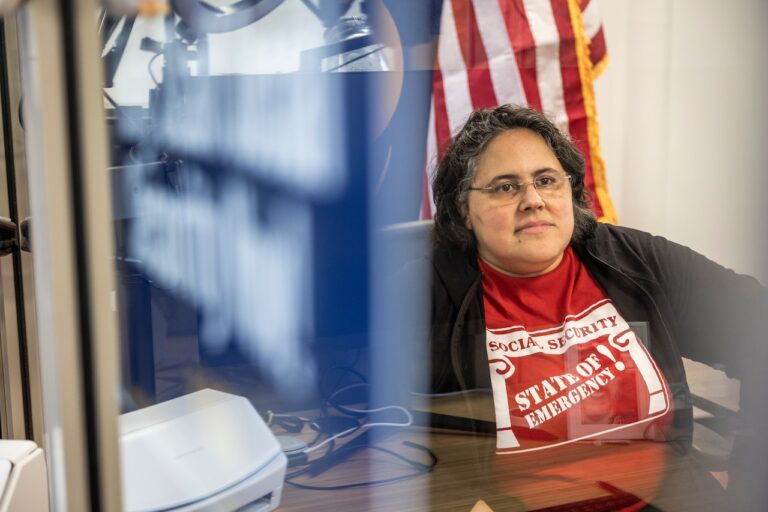
Camillie Piñeiro, president of AFGE Local 1164, in her offices in Springfield. Sept. 25, 2025. (Douglas Hook / The Republican)Douglas Hook

Last year, about 25,698 federal workers reported for duty in Massachusetts.

How many clock in today is anyone’s guess.

If you purchase a product or register for an account through a link on our site, we may receive compensation. By using this site, you consent to our User Agreement and agree that your clicks, interactions, and personal information may be collected, recorded, and/or stored by us and social media and other third-party partners in accordance with our Privacy Policy.


Source link