Home Blog Page 2

Apple says F1 streaming already exceeds everyone’s expectations

0


Apple’s exclusive deal for US broadcast rights of Formula 1 was a big shift to streaming from ESPN’s cable coverage of the past, but after the first race (the Australian Grand Prix), it seems to be going well. “The 2026 Formula 1 season on Apple TV is off to a strong start, with fans responding positively and viewership up year over year for the first weekend, exceeding both F1 and Apple expectations,” Apple VP Eddy Cue told The Hollywood Reporter.

Apple didn’t give any ratings or other details, but we can glean some clues from previous data. Last year, ESPN said the Australian GP averaged 1.1 million viewers, way up from the previous record of 659,000 in 2019. If Cue’s comments were accurate, that means Apple TV’s audience was above that, which would be impressive considering that it’s a streaming-only service.

When Apple’s Formula streaming deal was first announced, F1 CEO Stefano Domenicali was bullish on the deal. “It will allow us to enter in the houses of other people in a different way, in great quality that is very important for us,” he told Racer. Indeed, Apple is pouring resources into it in a way that ESPN never did. That includes advanced tech that offers multiple ways for fans to watch, including Multiview, Podium Viewer, driver cams and 4K Dolby Vision coverage, Cue noted.

Apple has jumped into Formula 1 racing in other other ways as well, taking advantage of a surge in the sport’s popularity aided by Netflix’s series Formula 1: Drive to Survive. The streaming service’s F1 movie starring Brad Pitt did huge box office numbers and is likely to see a sequel. Apple also struck a deal with Netflix on the aforementioned Drive to Survive series to share streaming of the current season eight (which details the F1 2025 championship). That agreement will also allow Netflix to stream the F1 Canadian Grand Prix live, along with Apple TV.


Source link

100x ‘Pro Res Zoom’ renamed

0


Google is rolling out the first update to Pixel Camera of 2026, though version 10.3 is a minor release.

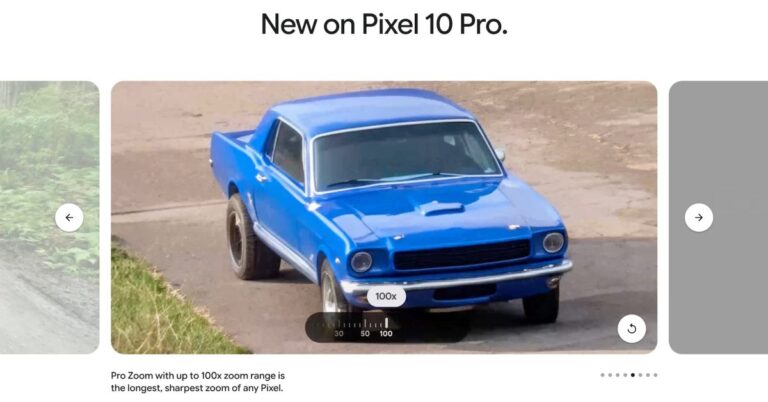
The only user-facing change we’ve noticed so far is that “Pro Res Zoom” on the Pixel 10 Pro and Pixel 10 Pro XL has been renamed to just “Pro Zoom.” This is reflected in the Settings > Model download page, as well as the Camera Help page.

10.2 vs. 10.3

You should also see the new name reflected in “Processing” prompts and other descriptions. The Pixel 10 Pro product listing has also been renamed.

Advertisement – scroll for more content

This update was first available for the Pixel 10a, and it’s now rolling out to all other devices via the Play Store

The Android 16 QPR3 March 2026 update fixed an issue that “caused the camera service to crash, improving overall camera stability” for the Pixel 9+. 

Meanwhile, the Connected Cameras feature now supports external devices like a “webcam, DSLR camera, or other Pixel phone camera via USB.” This is available on the Pixel 6+ over USB with compatible cameras that support the USB Video Class specification. However, there’s a curious device restriction for other Pixel cameras support: 

  • For Pixel 6 and later (except Pixel 10 and Pixel A-series devices), you can connect to other Pixel phones (except Pixel 10 and Pixel A-series devices), GoPro cameras, and USB cameras.
  • For Pixel 10 and Pixel A-series devices from Pixel 6a and later, you can only connect to GoPro cameras and USB cameras.

FTC: We use income earning auto affiliate links. More.


Source link

How to watch Jensen Huang’s Nvidia GTC 2026 keynote

0


Nvidia kicks off its annual GTC developer conference in San Jose, California, next week with CEO Jensen Huang’s keynote scheduled for Monday at 11 a.m. PT / 2 p.m. ET.

GTC — which stands for GPU Technology Conference — is Nvidia’s flagship annual event, where the chipmaker typically uses the spotlight to announce new products, champion partnerships, and lay out its vision for the future of computing. Huang’s keynote will focus on Nvidia’s role in the future of computing and AI. You can watch the two-hour address in person at the SAP Center or livestream the talk on the event’s website.

The broader three-day event is focused on what’s coming next for AI across industries, including healthcare, robotics, and autonomous vehicles, among others.

On the software side, it’s rumored that Nvidia will release an open source platform for enterprise AI agents, dubbed NemoClaw, as originally reported by Wired. The platform would give businesses a structured way to build and deploy AI agents (software that can carry out multistep tasks autonomously) and would position Nvidia to mirror similar offerings from companies like OpenAI.

On the hardware side, the company is also rumored to be releasing a new chip designed to accelerate the AI inference process — the process by which an AI model applies what it has learned to generate responses or make decisions, as distinct from the initial training process, which requires far more computing power. Faster, cheaper inference is widely seen as one of the last bottlenecks to scaling AI applications broadly. The chip, if confirmed, would represent Nvidia’s latest bid to dominate not just the training market, where it already commands an estimated 80% share, but the inference market as well, where competition from custom chips built by Google, Amazon, and others is fast intensifying.

Kevin Cook, a senior equity strategist at Zacks Investment Research, told TechCrunch that attendees should also expect to learn what the company plans to do with its relationship with Groq, the inference company Nvidia reportedly paid $20 billion late last year to license its technology. There’s a lot of curiosity around this tie-up, given that Jonathan Ross, Groq’s founder; Sunny Madra, Groq’s president; and other members of the Groq team agreed to join Nvidia to help advance and scale that licensed tech.

There will, of course, also be a range of partnership announcements and demonstrations showcasing Nvidia’s AI capabilities across industries.

Techcrunch event

San Francisco, CA
|
October 13-15, 2026


Source link

This web app lets you ‘channel surf’ YouTube like a ’90s kid watching cable

0


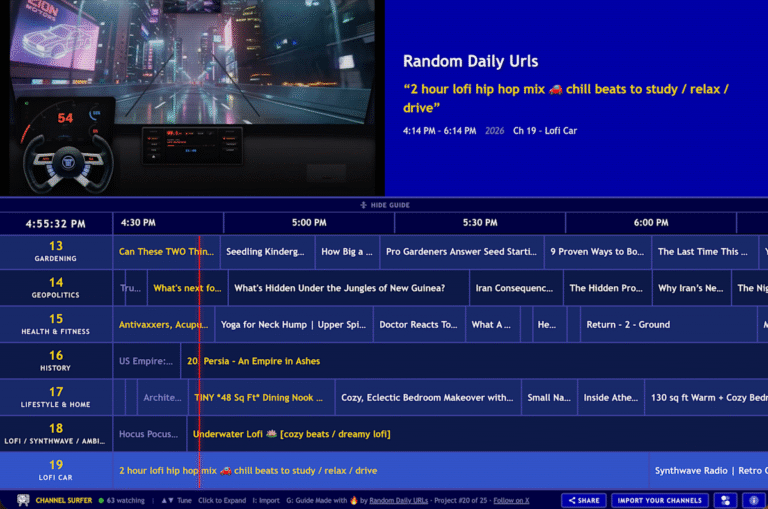
Many of us remember the halcyon days of being a kid in the ‘90s, spending a weekend afternoon with remote control in hand and a seemingly endless well of stuff to watch on TV. Now you can relive the experience thanks to the appropriately named Channel Surfer web app. It’s essentially a YouTube discovery tool that surfaces interesting videos, but presented in a retro homage to the cable channel screen.

Channel Surfer is the work of developer Steven Irby. He has 40 channels on the app right now, mostly grouping content by theme. There are channels for typical cable fare like news and sports, but also music, movies and a number of more tailored tech subjects like AI, gaming, gadgets and space.

“I built Channel Surfer because I’m tired of the algorithms and indecision fatigue,” he told TechCrunch, which is where we discovered the app. “I miss channel surfing and not having to decide what to watch. I want to just sit and tune into what’s on and not think about what to watch next.”

It seems Irby isn’t alone, because he posted on X that the number of views he’s getting for Channel Surfer already broke 10,000 on its first day.


Source link

Gemini rolls out overlay redesign that adds full Tools menu [U]

0


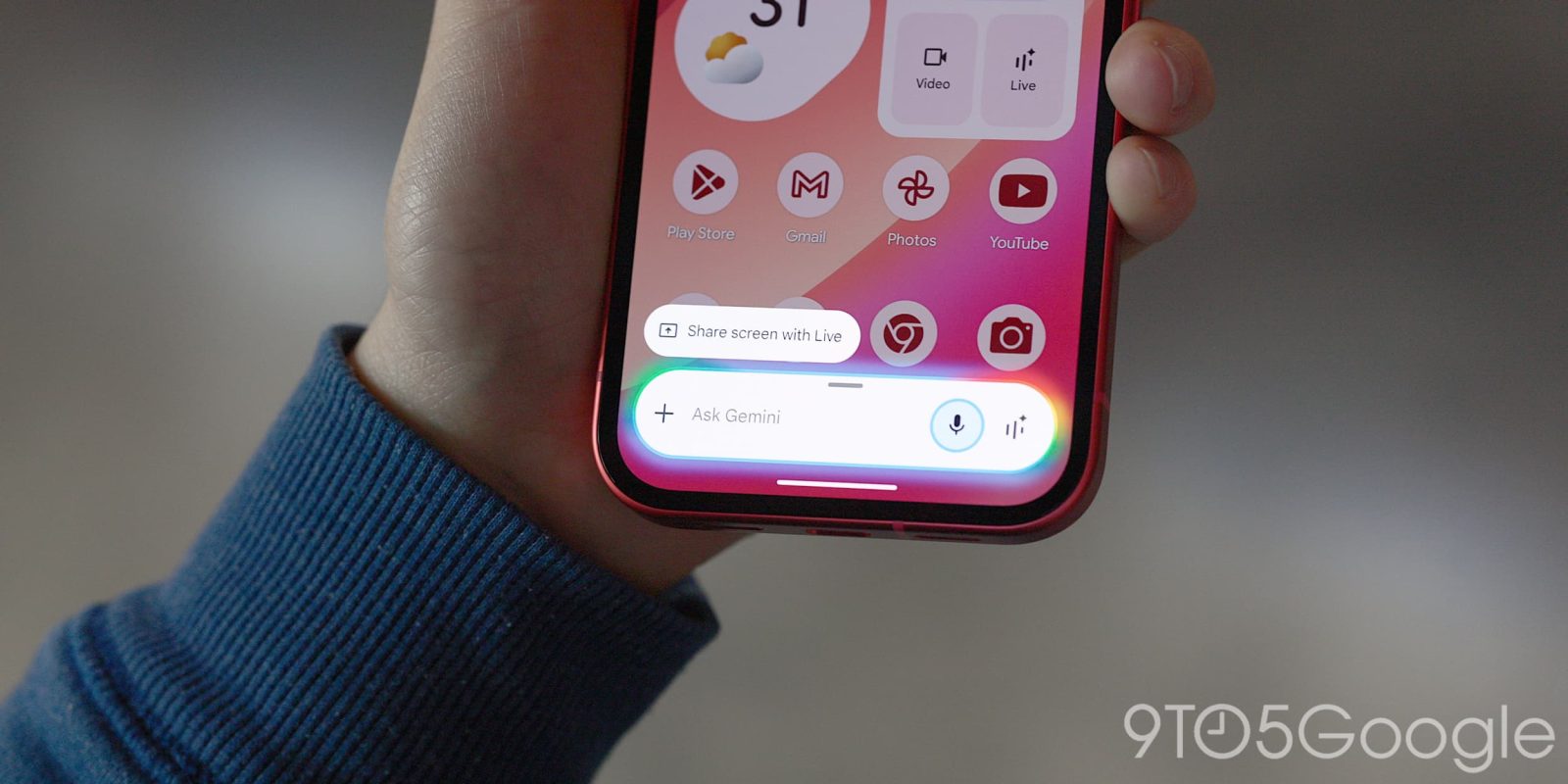
The latest Gemini overlay redesign gives you access to more of the prompt box and Tools menu anywhere on Android.

Update 3/12: Google is now widely rolling out this new Gemini overlay. We’re seeing it with stable version 17.8 of the Google app. If you don’t have it yet, be sure to Force stop from App info.


Original 2/26: This redesign adds the Gemini Tools menu to the pill-shaped overlay. It appears to the right of the ‘plus’ icon for attachments, which is unchanged today. The “Ask Gemini” hint has been centered to make room.

Old vs. new

Advertisement – scroll for more content

Tapping lets you create images, videos, and music, as well as use Canvas, Deep Research, and Guided Learning. Google AI subscribers will see the Personal Intelligence toggle. This design is nearly identical to what you find inside the Gemini app, but you now get descriptions for each tool.

  • Create image: Visualize and edit
  • Create video: Bring ideas to life
  • Create music: Make music with Gemini
  • Canvas: Vibe code apps or create docs
  • Deep research: Get detailed reports
  • Guided learning: Study and learn new things

When typing, you’ll notice that the overlay morphs from the pill into a two-line, rounded rectangle. All that’s missing is the model switcher.

We’re seeing this redesign with the latest Google app beta (version 17.7). It’s not live on all Google Accounts, and still in the process of rolling out. 

Google is also testing a new floating pill for Gemini Live that we saw earlier this month.

More on Gemini app:

FTC: We use income earning auto affiliate links. More.


Source link

Law enforcement shuts down botnet made of tens of thousands of hacked routers

0


A global coalition of law enforcement agencies shut down a botnet made of tens of thousands of hacked home and small business routers on Wednesday.

The operation targeted SocksEscort, which offered paid proxy services and was built on a botnet of hacked routers used to commit various crimes, such as hacking into victims’ bank and cryptocurrency accounts, and to file fraudulent unemployment insurance claims, according to an announcement published on Thursday by the Justice Department. The DOJ said the crimes facilitated by SocksEscort cost Americans millions of dollars.  

Europol said in its announcement of the operation that the SocksEscort botnet allegedly compromised more than 369,000 routers and Internet of Things devices in 163 countries, and that the infected routers “have been disconnected from the service.” The law enforcement agency said SocksEscort was used to facilitate ransomware, distributed denial of service (DDoS) attacks, and the distribution of child sexual abuse material (CSAM).

“Customers of the criminal service paid for licences to abuse these infected devices, hiding their original IP addresses to engage in various criminal activities,” said Europol. “Upon infection with the malware, the modems’ owners would not be aware that their IP addresses were used for illegitimate activities.”

The content of the SocksEscort official website was replaced by a notice announcing the seizure, as part of the law enforcement operation. 

The botnet was composed of around 280,000 routers since last January, and was powered by malware called AVRecon, according to cybersecurity firm Black Lotus Labs, which tracked SocksEscort and worked with law enforcement in the takedown operation 

“This botnet posed a significant threat, as it was marketed exclusively to criminals,” the company wrote in its post about the takedown. “Notably, over half of its victims were located in the United States or the United Kingdom, enabling attackers to conduct highly targeted operations.”

In 2023, Black Lotus Labs called SockEscort “one of the largest botnets targeting small-office/home-office (SOHO) routers seen in recent history.” 

At the time, cybersecurity journalist Brian Krebs reported that SocksEscort was born in 2009 as a Russian-language service selling access to thousands of hacked computers.


Source link

Microsoft’s Copilot Health can use AI to turn your fitness data and medical records ‘into a coherent story’

0


Microsoft has unveiled Copilot Health, an AI-powered tool it claims can help make sense of your medical records, health history and fitness data from wearables, should you grant it access to that information. The company said it will be in a “separate, secure space” in the Copilot app and that the idea is to help provide you with more context and insights so you can ask your doctor the right questions when you see them.

Copilot Health is designed to help you better understand your medical information as a whole, Microsoft says. It is not “intended to diagnose, treat or prevent diseases or other conditions and is not a substitute for professional medical advice,” the company pointed out in a blog post.

The tool can pull in activity, fitness and sleep data from more than 50 devices, including Apple Watch, Oura and Fitbit. Through HealthEx, it can access health records that include visit summaries, medication details and test results from more than 50,000 hospitals and provider organizations in the US. It can tap into lab test results from Function, should you allow it to do so.

Copilot Health can take all those details and apply “intelligence to turn them into a coherent story,” such as helping you pinpoint the reasons why you don’t sleep too well, the company suggested. It can access real-time provider directories in the US to help users find clinicians based on factors like location, specialty, spoken languages and insurance coverage.

Microsoft says that, across AI-powered consumer products like Copilot and Bing, users ask more than 50 million health-related questions every day. “We’ve improved the quality and reliability of answers by elevating information from credible health organizations across 50 countries, as verified by our clinical team using principles independently established by the National Academy of Medicine,” the blog post states. “Responses include clear citations with easy links to source material, alongside expert‑written answer cards from Harvard Health.”

As far as privacy is concerned, Microsoft says Copilot Health data and conversations are siloed from the broader Copilot app and there are extra access and safety controls in place, including “encryption at rest and in transit.” You can delete your information and cut off the app’s access to health records and wearable data at any time. Microsoft also notes that it won’t use your Copilot Health information to train its models.

The company explained that Copilot Health was informed by its responsible AI principles. Microsoft built the tool in collaboration with its own clinical team and with the expertise and feedback of more than 230 physicians from dozens of countries. “Copilot Health has achieved ISO/IEC 42001 certification, the world’s first standard for AI management systems, meaning an independent third party has verified how we build, govern and continuously improve the AI behind this service,” it noted.

Microsoft has opened up a waitlist for those interested in trying Copilot Health. The tool will initially be available in English in the US for those aged 18 and over. The company is working on adding support for more language and voice options and it will announce availability for those and other territories down the line.

While users will be able to try Copilot Health for free at first, Microsoft plans to charge for access via a subscription, according to The New York Times. The company has not yet disclosed pricing details.

The Copilot Health announcement comes just a couple of days after Amazon expanded its Health AI tool beyond One Medical. It’s now available on the Amazon website and app. Prime members in the US have the option to chat about certain conditions with a One Medical provider via direct message at no extra cost. Earlier this year, OpenAI announced that it was testing ChatGPT Health. Anthropic has healthcare tools as well.

Given how tough it is for many folks to access affordable healthcare and the fact their data and health records are often spread across a number of providers, some might believe there are benefits of using such tools from AI companies.

However, there’s a big difference between tracking your sleep or calling your doctor after an Apple Watch detects signs of atrial fibrillation and entrusting all of your medical information to a chatbot. There are also issues like AI hallucinations and chatbots providing users with straight-up bad advice, as well as the possibility that an LLM-based tool might downplay or exaggerate potential risks.


Source link

Disney+ adds ‘Verts’ with vertical video movie clips, more

0


As short-form vertical video continues to dominate the internet, Disney+ is now adding its own take on the trend with the addition of “Verts,” and there’s more in the pipeline.

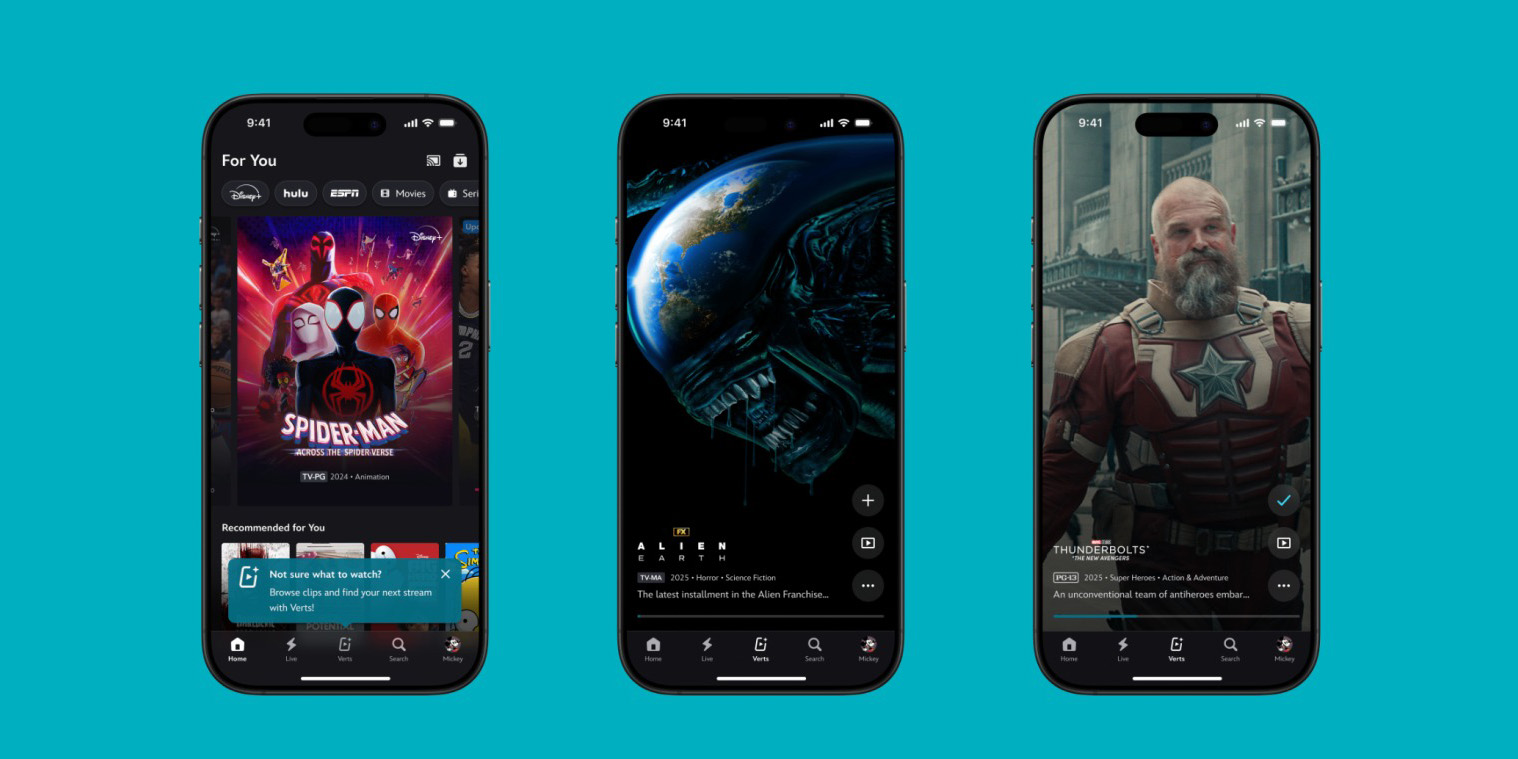
Disney announced that, starting today, the Disney+ app in the US will add a tab for “Verts,” a short-form vertical video feed that includes movie clips and previews.

“Verts” are positioned as a discovery tool, with the ability to jump into the actual movie or TV show, as well as add those titles to their watchlist. Disney says:

With a tap of the new Verts icon in the navigation bar on mobile, users enter a vertical video feed and can swipe through a stream of scenes and moments from movies and shows on Disney+, and seamlessly add to their Watchlist or jump directly into playback.

Disney adds that an “advanced algorithm” will tailor the feed of videos to your preferences and interests, though it leverages only content from Disney+, Hulu, and ESPN.

Advertisement – scroll for more content

This is far from the extent of vertical video on Disney+ from the sound of it, though. Disney explains that this is “the first scene of the first episode in a multi-season series,” with more vertical video efforts in the works.

“Verts” are now rolling out to the Disney+ apps on Android and iOS.

More on TV:

Follow Ben: Twitter/XThreads, Bluesky, and Instagram

FTC: We use income earning auto affiliate links. More.


Source link

Chinese brain interface startup Gestala raises $21M just two months after launch

0


Elon Musk’s Neuralink and OpenAI-backed Merge Labs are pushing forward with brain–computer interface (BCI) technology in the U.S. Meanwhile, Chinese serial entrepreneur Phoenix Peng is building rival efforts through two startups: NeuroXess, which develops implantable BCI systems, and a second company, Gestala, developing non-invasive ultrasound-based BCIs.

Gestala has raised $21.6 million (CN¥150 million) just two months after launching, at a valuation of $100 million to $200 million, founder and CEO Phoenix Peng told TechCrunch.

The round, co-led by Guosheng Capital and Dalton Venture with participation from Tsing Song Capital, Gobi Ventures, Fourier Intelligence, Liepin and Seas Capital, was heavily oversubscribed, with investor commitments totaling more than $58 million, Peng added.

This is the largest early-stage funding in China’s BCI industry. Peng will use the money towards R&D, expanding the team from 15 to about 35 employees by year-end, and building a manufacturing facility in China. The three-month-old startup aims to complete its first-generation prototype by the end of the year.

The global BCI industry is currently experiencing an investment surge in ultrasound technology. Gestala is the first ultrasound BCI company in China, though not the first globally. Several ultrasound BCI startups have emerged in the U.S. in recent years, including Merge Labs, which is among the largest.

Peng believes ultrasound could represent the next generation of brain–computer interface technology, offering the potential for broader, whole-brain access and new ways to interact with neural activity.

The founder says non-invasive ultrasound could address one of the biggest barriers to BCI adoption: the risks associated with brain surgery. Compared with implanted electrode systems, the technology can monitor a larger portion of the brain, including deep neural circuits. Using phased-array ultrasound, the system can also precisely stimulate or suppress neural activity without the need for surgery, he explained.

Techcrunch event

San Francisco, CA
|
October 13-15, 2026

Despite rising geopolitical tensions, Peng still hopes the U.S. and China can collaborate on deep-technology research.

“Both countries bring different strengths,” Peng said. “China offers large-scale clinical research capacity and efficient supply chains, while the U.S. has world-class scientific talent.” Joint efforts could also focus on building large clinical datasets to support global neuroscience research, he mentioned.

The company is exploring several uses for its tech. Medically, chronic pain management is the startup’s lead program. Chronic pain affects large populations in both the U.S. and China, and existing academic studies suggest ultrasound stimulation can significantly reduce pain levels, Peng said.

The startup is also studying applications in mental health conditions, including depression, PTSD, autism and OCD, as well as stroke rehabilitation. Other longer-term targets include Alzheimer’s disease, essential tremor and Parkinson’s disease. In total, the company is researching six to eight potential indications, though most remain at the early research stage rather than in clinical trials.

Gestala says its advantage over global rivals comes down to speed and scale. By leveraging China’s integrated manufacturing ecosystem, the startup believes it can move from development to production faster than many international competitors.

The company is also working with major Chinese hospitals to accelerate clinical trials at significantly lower costs — roughly 20% to 33% of comparable studies in the U.S. or Europe. At the same time, Gestala is building what it calls an “Ultrasound Brain Bank,” a large clinical dataset designed to train AI models to decode brain signals and support future neurological diagnostics.



Source link

Google Play will let you try a game before you buy it

0


Google Play has introduced a new feature called Game Trials, which will let you play a portion of paid games for free before you commit to buying them. It’s now rolling out to select paid games on mobile, and it’s coming soon to Google Play Games on PC. Titles that offer Game Trials will show a button marked “Try” on their profile pages. When you click it, you’ll see how long you can play the game before you have to buy it. In Google’s example, the survival and horror game Dredge will give you 60 minutes of free play time, after which you’ll get the option to either buy the game or delete it from your device.

Google has also announced that it’s releasing more paid indie games over the coming months, including Moonlight Peaks, Sledding Game and Low-Budget Repairs. It has launched a new section in the Play store, as well, to feature games optimized for Windows PCs. You can wishlist the games from that section to get a notification when they’re on sale.

Finally, the company is rolling out Play Games Sidekick, the Gemini-powered Android overlay it announced last year, to select games downloaded from Play. Sidekick can show you relevant info and tools for whatever game you’re playing without having to do a search query. But if you’d rather ask other people for gaming advice instead of an AI, you can also look at a game’s Community Posts, a feature now available in English for select titles on their Play pages.


Source link