Home Blog Page 268

Runway now has its sights on the video game industry with its new generative AI platform

0


The AI startup Runway, which recently partnered with AMC Networks, is now trying to break into the gaming industry. The company has plans to launch its latest platform, called Game Worlds, next week, according to The Verge. The new tool lets Runway users create something akin to an interactive text-based game that can generate text and images from AI.

Even though Game Worlds can only produce basic designs for now, the company’s CEO, Cristóbal Valenzuela, is hoping this will be the first step towards more AI use in the gaming industry. Valenzuela told The Verge that “generated video games are coming later this year,” adding that Runway is looking to partner with video game companies, which will be able to use the company’s AI tools, while it gets access to video game datasets to train its AI on. However, the use of AI in video games has already drawn a lot of criticism from industry professionals, even leading to the SAG-AFTRA union striking against video game companies using its members’ likenesses and voices to train AI.

Runway has faced its own controversy for reportedly training its AI on YouTube videos and pirated movies despite being against the video platform’s terms. Still, Runway is looking to replicate the similar success it’s had with major TV and film studios. In the AMC deal, the AI company would help create promotional materials and help “accelerate pre-visualization during development.” Before AMC, Runway secured a partnership with Lionsgate to provide its AI for the studio’s “pre-production and post-production process.” As for the gaming world, Runway wouldn’t be the first to introduce generative AI since the industry has seen other examples already, like Ubisoft using a tool called Ghostwriter to create video game dialogue.


Source link

Gmail for Android rolling out ‘mark as read’ button in notifications

0


Google is making a notable quality-of-life improvement to Gmail notifications by adding a “Mark as read” button on Android.

To date, Gmail for Android notifications let you “Reply” and pick between “Archive” or “Delete” (Settings > General settings > Default notification action).

Some Gmail users (via Android Authority) are beginning to see a new “Mark as read” option that appears first in the row of actions. Immediate access to this from notifications provide a convenient way to triage email without opening the actual app. It’s less drastic an action compared to archiving and removing from your inbox entirely. 

So far, there are only two reports of this server-side rollout in the past week. It’s not available on devices we checked today. Historically, Gmail takes quite a bit of time to widely roll out features. 

Advertisement – scroll for more content

Current vs. upcoming

Meanwhile, Google continues to slowly make the Material 3 Expressive redesign available to more Android users.

More on Gmail:

FTC: We use income earning auto affiliate links. More.


Source link

Bruins select another center in 5th round

0


BOSTON — It took the Bruins until the fifth round to draft a player from Canada as they continued to add to their center depth.

Boston selected Cole Chandler, a 6-foot-2, 188-pound pivot from Bedford, Nova Scotia with the 133rd pick in the 2025 NHL Draft.

Chandler, who played for the Shawinigan Cataractes of the Quebec Major Junior Hockey League had 13 goals and 19 assists in 64 games.

He joins James Hagens and Will Moore among the organization’s newest centers.

Elite Prospects offered this scouting report on Chandler:

“Cole Chandler is a worker capable of pursuing the puck, engaging opponents defensively, and making quick and smart passes to teammates. There are a lot of subtle skills in his game — proactive contact, quick reads and reactions on loose pucks and pass receptions, slip passes through pressure.”

The Bruins have now picked two centers, a winger and two defensemen. so far in this draft.

Barring a trade, Boston has just one pick left. They’ll pick at No. 165 in the sixth round and don’t have a seventh-round selection.


Source link

FBI, cybersecurity firms say a prolific hacking crew is now targeting airlines and the transportation sector

0


The FBI and cybersecurity firms are warning that the prolific hacking group known as Scattered Spider is now targeting airlines and the transportation sector.

In a brief statement on Friday shared with TechCrunch, the FBI said it had “recently observed” cyberattacks resembling Scattered Spider to include the airline sector.

Executives from Google’s cybersecurity unit Mandiant and Palo Alto Networks’ security research division Unit 42 also said they have witnessed Scattered Spider cyberattacks targeting the aviation industry.

Scattered Spider is a collective of mostly English-speaking hackers, typically teenagers and young adults, who are financially motivated to steal and extort sensitive data from company networks. The hackers are also known for their deception tactics, which often rely on social engineering, phishing, and sometimes threats of violence toward company help desks and call centers to gain access to their networks, and sometimes deploy ransomware.

The FBI’s statement added that the hackers may target large corporations and their third-party IT providers, meaning “anyone in the airline ecosystem, including trusted vendors and contractors, could be at risk.”

The warning comes as at least two airlines have reported intrusions this month. 

Hawaiian Airlines said late Thursday that it was working to secure its systems following a cyberattack. Canada’s second largest airline, WestJet, reported a cyberattack on June 13 that remains ongoing and unresolved. Media reports have linked the WestJet incident to Scattered Spider.

This fresh wave of Scattered Spider attacks comes soon after the cybercriminal gang targeted the U.K. retail sector and the insurance industry. The hackers have previously broken into hotel chains, casinos, and technology giants

Updated with an additional statement from the FBI.


Source link

Former press secretary turned TV journalist Bill Moyers is dead at 91 : NPR


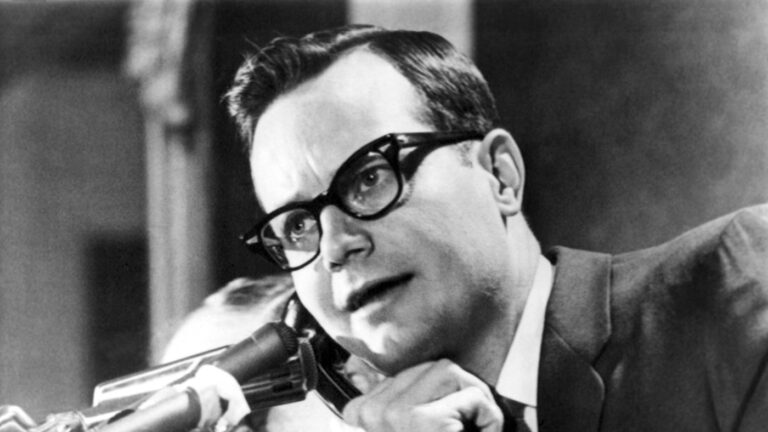
White House press secretary Bill Moyers appears at a press briefing at White House in Washington on Feb. 25, 1966.

Then White House press secretary Bill Moyers appears at a press briefing at White House in Washington on Feb. 25, 1966.

William J. Smith/AP


hide caption

toggle caption

William J. Smith/AP

Bill Moyers, the former White House press secretary who became one of television’s most honored journalists, masterfully using a visual medium to illuminate a world of ideas, died Thursday at age 91.

Moyers died in a New York City hospital, according to longtime friend Tom Johnson, the former CEO of CNN and an assistant to Moyers during Lyndon B. Johnson’s administration. Moyers’ son William said his father died at Memorial Sloan Kettering in New York after a “long illness.”

Moyers’ career ranged from youthful Baptist minister to deputy director of the Peace Corps, from Johnson’s press secretary to newspaper publisher, senior news analyst for “The CBS Evening News” and chief correspondent for “CBS Reports.”

But it was for public television that Moyers produced some of TV’s most cerebral and provocative series. In hundreds of hours of PBS programs, he proved at home with subjects ranging from government corruption to modern dance, from drug addiction to media consolidation, from religion to environmental abuse.

In 1988, Moyers produced “The Secret Government” about the Iran-Contra scandal during the Reagan administration and simultaneously published a book under the same name. Around that time, he galvanized viewers with “Joseph Campbell and the Power of Myth,” a series of six one-hour interviews with the prominent religious scholar. The accompanying book became a best-seller.

His televised chats with poet Robert Bly almost single-handedly launched the 1990s Men’s Movement, and his 1993 series “Healing and the Mind” had a profound impact on the medical community and on medical education.

In a medium that supposedly abhors “talking heads” — shots of subject and interviewer talking — Moyers came to specialize in just that. He once explained why: “The question is, are the talking heads thinking minds and thinking people? Are they interesting to watch? I think the most fascinating production value is the human face.”

(Softly) speaking truth to power

Demonstrating what someone called “a soft, probing style” in the native Texas accent he never lost, Moyers was a humanist who investigated the world with a calm, reasoned perspective, whatever the subject.

From some quarters, he was blasted as a liberal thanks to his links with Johnson and public television, as well as his no-holds-barred approach to investigative journalism. It was a label he didn’t necessarily deny.

“I’m an old-fashion liberal when it comes to being open and being interested in other people’s ideas,” he said during a 2004 radio interview. But Moyers preferred to term himself a “citizen journalist” operating independently, outside the establishment.

Public television (and his self-financed production company) gave him free rein to throw “the conversation of democracy open to all comers,” he said in a 2007 interview with The Associated Press.

“I think my peers in commercial television are talented and devoted journalists,” he said another time, “but they’ve chosen to work in a corporate mainstream that trims their talent to fit the corporate nature of American life. And you do not get rewarded for telling the hard truths about America in a profit-seeking environment.”

Over the years, Moyers was showered with honors, including more than 30 Emmys, 11 George Foster Peabody awards, three George Polks and, twice, the Alfred I. duPont-Columbia University Gold Baton Award for career excellence in broadcast journalism. In 1995, he was inducted into the Television Hall of Fame.

From sports to sports writing

Born in Hugo, Okla., on June 5, 1934, Billy Don Moyers was the son of a dirt farmer-truck driver who soon moved his family to Marshall, Texas. High school led him into journalism.

“I wanted to play football, but I was too small. But I found that by writing sports in the school newspaper, the players were always waiting around at the newsstand to see what I wrote,” he recalled.

He worked for the Marshall News Messenger at age 16. Deciding that Bill Moyers was a more appropriate byline for a sportswriter, he dropped the “y” from his name.

He graduated from the University of Texas and earned a master’s in divinity from Southwestern Baptist Theological Seminary. He was ordained and preached part time at two churches but later decided his call to the ministry “was a wrong number.”

His relationship with Johnson began when he was in college; he wrote the then-senator offering to work in his 1954 re-election campaign. Johnson was impressed and hired him for a summer job. He was back in Johnson’s employ as a personal assistant in the early 1960s and for two years, he worked at the Peace Corps, eventually becoming deputy director.

On the day John F. Kennedy was assassinated in Dallas, Moyers was in Austin helping with the presidential trip. He flew back to Washington on Air Force One with newly sworn-in President Johnson, for whom he held various jobs over the ensuing years, including press secretary.

Moyers’ stint as presidential press secretary was marked by efforts to mend the deteriorating relationship between Johnson and the media. But the Vietnam war took its toll and Moyers resigned in December 1966.

Of his departure from the White House, he wrote later, “We had become a war government, not a reform government, and there was no creative role left for me under those circumstances.”

He conceded that he may have been “too zealous in my defense of our policies” and said he regretted criticizing journalists such as Pulitzer Prize-winner Peter Arnett, then a special correspondent with the AP, and CBS’s Morley Safer for their war coverage.

A long run on television

In 1967, Moyers became publisher of Long Island-based Newsday and concentrated on adding news analyses, investigative pieces and lively features. Within three years, the suburban daily had won two Pulitzers. He left the paper in 1970 after the ownership changed. That summer, he traveled 13,000 miles around the country and wrote a best-selling account of his odyssey: “Listening to America: a Traveler Rediscovers His Country.”

His next venture was in public television and he won critical acclaim for “Bill Moyers Journal,” a series in which interviews ranged from Gunnar Myrdal, the Swedish economist, to poet Maya Angelou. He was chief correspondent of “CBS Reports” from 1976 to 1978, went back to PBS for three years, and then was senior news analyst for CBS from 1981 to 1986.

When CBS cut back on documentaries, he returned to PBS for much less money. “If you have a skill that you can fold with your tent and go wherever you feel you have to go, you can follow your heart’s desire,” he once said.

Then in 1986, he and his wife, Judith Davidson Moyers, became their own bosses by forming Public Affairs Television, an independent shop that has not only produced programs such as the 10-hour “In Search of the Constitution,” but also paid for them through its own fundraising efforts.

His projects in the 21st century included “Now,” a weekly PBS public affairs program; a new edition of “Bill Moyers Journal” and a podcast covering racism, voting rights and the rise of Donald Trump, among other subjects.

Moyers married Judith Davidson, a college classmate, in 1954, and they raised three children, among them the author Suzanne Moyers and author-TV producer William Cope Moyers. Judith eventually became her husband’s partner, creative collaborator and president of their production company.




Source link

Peter Thiel is utterly wrong about Alzheimer’s

0


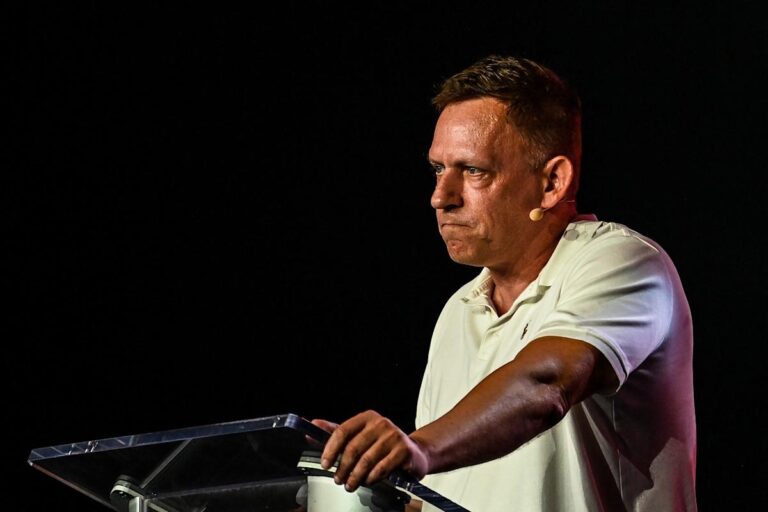
The New York Times ran a lengthy interview this morning between columnist Ross Douthat and venture capitalist and PayPal founder Peter Thiel. There’s a reason it was published in the opinion section.

Thiel, a Trump booster whose allies — including Vice President JD Vance — now litter the White House, was given free reign to discuss a variety of topics across over an hour of softball questions. Is Greta Thunberg the literal antichrist? Are the three predominant ideological schools in Europe environmentalism, “Islamic Shariah law” and “Chinese Communist totalitarian takeover”? Is AI “woke” and capable of following Elon Musk to Mars? Peter seems to think so! Perhaps the “just asking questions” school of journalism could add “hey, what the fuck are you talking about” to its repertoire.

Admittedly, many of these assertions fall squarely into the realm of things that exist within Thiel’s mind palace rather than verifiable facts, with at least one notable exception. Relatively early in their chat, Peter tells Ross the following [emphasis ours]:

If we look at biotech, something like dementia, Alzheimer’s — we’ve made zero progress in 40 to 50 years. People are completely stuck on beta amyloids. It’s obviously not working. It’s just some kind of a stupid racket where the people are just reinforcing themselves.

It’s a pretty bold claim! It’s also completely untrue.

“There was no treatment 40 or 50 years ago for Alzheimer’s disease,” Sterling Johnson, a professor of Geriatrics and Gerontology at the University of Wisconsin, Madison, told Engadget. “What we’ve been able to do in the last 20 years has been actually pretty extraordinary. We’ve developed markers that help us identify when this disease starts, using the using amyloid markers and tau biomarkers, we know that the disease actually begins 20 years before the symptoms do, and that is a critical thing to know if we are going to prevent this disease.”

At the moment, Alzheimer’s remains incurable. But the absence of a miracle cure does not negate the accomplishments thus far in detection and prevention. “The first treatments were these window dressing treatments. It’s like treating the symptoms like you would treat a cold […] The first generation of amyloid therapy was that kind of approach where it just addressed the symptoms by amping up the neurons and increasing the neurotransmitters available to the to the brain cells.” Johnson, whose team runs one of the largest and longest studies on people at risk for developing Alzheimer’s disease, added, “Now we have opportunities to actually modify the disease biology through the amyloid pathway, but also we’re focused on the other proteinopathy — which is tau — and there’s clinical trials underway.”

Thiel, a well-known advocate for advancements in radical life extension (including a reported interest in injecting himself with the blood of young people) sees the state of scientific research in this area as sluggish and risk averse. But the groundbreaking work is happening at this moment. Professor Johnson pointed to a monoclonal antibody called gantenerumab. In an early test of 73 participants with inherited mutations that would cause them to overproduce amyloid in the brain, it cut the number of participants who developed Alzheimer’s symptoms practically in half. “The big phase-three prevention trials are happening right now.” Those are using lecanemab and donanemab, two other monoclonal treatments, which Johnson clarified are “already known to be better than gantenerumab at clearing out beta-amyloid.”

For someone who fashions himself as a heterodox thinker, Thiel certainly seems to have stumbled on a remarkably similar talking point to current Trump administration FDA head Robert F Kennedy Jr. “Alzheimer’s is a very, very good example of how [National Institute of Health] has gone off the rails over the past 20 years ago with research on amyloid plaques” Kennedy said at a Department of Health budgetary hearing last month. He claimed the NIH was “cutting off any other hypothesis” due to “corruption.”

Unsurprisingly, the Alzheimer’s Association has called this “demonstrably false.”

“In reality, over the most recent 10 years available (2014-2023), less than 14% of new National Institutes of Health (NIH) Alzheimer’s projects focused on amyloid beta as the therapeutic target,” the organization wrote, “As of September 2024, the National Institute on Aging was investing in 495 pharmacological and non-pharmacological trials. To state that Alzheimer’s research is focused on amyloid to the exclusion of other targets is clearly wrong.”

If I, personally, wanted more robust medical research and a chance at eternal life (I don’t), greasing the wheels of an administration broadly gutting funding for science would be a strange way to make that happen. But this is the sort of incoherence we’ve come to expect from tech oligarchs: they say what benefits them, even if it’s nonsense on its face, even if a moment’s reflection reveals it to be patently false. What’s embarrassing is the paper of record giving them free reign to do it.

Update June 27, 2025 2:15ET: This story now includes additional clinical trial information.


Source link

Samsung rumored to unveil ‘tri-fold’ in July, launch in October

0


Following a previous teaser, it’s been rather unclear when Samsung planned to launch its “tri-fold” smartphone. Now, a leaker is offering some further details, claiming that the Samsung “tri-fold” will be unveiled alongside the Galaxy Z Fold 7 and will launch a bit later in the year.

According to leaker Setsuna Digital on Weibo, Samsung will launch the Galaxy Z Fold 7 and Flip 7 in July with availability in August. The event – also expected to launch the Galaxy Watch 8 series – will allegedly also serve as the initial launchpad for Samsung’s “tri-fold” device.

The actual release for that device, though, wouldn’t be until October.

This feels similar to Samsung’s Galaxy S25 Edge launch. The device was initially teased at the Galaxy S25 launch in January, but wasn’t released for a few months, finally making its full debut in May. It would make sense for Samsung to do something similar with the “tri-fold” device, rumored to be called the “Galaxy G Fold.”

Advertisement – scroll for more content

Notably, Samsung is also rumored to tease “Project Moohan” during this event, with the Android XR headset also expected to go on sale in October.

Samsung’s Unpacked event is confirmed for July 9.


Samsung has reservations open now for the Galaxy Z Fold 7 and Flip 7, with a $50 credit when you pre-order and up to $1,150+ in savings. Reservations are free, and there’s no obligation to actually buy a device if you sign up, but there’s no other time you can get that $50 credit (which can go towards Galaxy Watch 8), 3x reward points, and other perks.


More on Samsung:

Follow Ben: Twitter/XThreads, Bluesky, and Instagram

FTC: We use income earning auto affiliate links. More.


Source link

In James Hagens, Bruins have a reason to be optimistic

0


BOSTON — Don Sweeney didn’t get cute. He didn’t get antsy or overthink the situation.

When the good fortune shone on the Bruins at the NHL Draft on Friday, and a player who fit exactly what the franchise needed was available, the general manager simply drafted him.

There were so many rumors about the Islanders trading up to draft James Hagens, a Hauppauge, N.Y, native, that fans at their Long Island draft party actually booed when Adam Sandler revealed the pick wearing his Happy Gilmore Bruins jersey.

Sweeney confirmed that he had received calls from general managers interested in trading for the Bruins’ pick.

But he rejected whatever was on the table and chose Hagens, a player he hopes will be a key piece for the Bruins’ next wave of success.

“We had some opportunities,” Sweeney said. “But when James was there, we felt like we had to make the pick and wanted to make the pick.”

Most of the time, teams need to make their own luck. But there was something serendipitous about the whole progression for the Bruins. After a rough year, they desperately needed some good fortune and Hagens fell into their laps. The Bruins’ lack of a playmaking center was evident all year, and suddenly there he was, gift-wrapped at No. 7.

But it was more than that.

The Bruins had been watching Boston College all year because they had four previous draft picks playing in Chestnut Hill. But for most of that time, getting Hagens, who started the year as a candidate to go No. 1 overall, was a pipe dream.

After unloading key veterans at the trade deadline, Sweeney spent much of the past three months accumulating frequent-flyer miles bouncing around the continent to scout prospects. But the answer was just up the road. Thirty-one of BC’s games were so close that Sweeney could have stayed through the third period and slept at home after the game was over.

But seeing all those other players in all those other places gave Sweeney a better sense that Hagens was special, a kid who already loved the city and chose it as a recruit.

Sweeney sounded like he expected Hagens to spend another year chasing Beanpots and Frozen Fours before tangling with the Canadiens and Panthers, but he’s not far away. Certainly closer than BC teammate Dean Letourneau, Boston’s first-round pick a year ago.

It’s not a stretch to think he’ll be threading passes to David Pastrnak in April of 2026 and for years to come.

Friday felt a little like June 24, 1998. On that night, Celtics fans watched the NBA Draft from Vancouver, never expecting Paul Pierce, who was projected to go in the top five, to fall to all the way to them at 10. But he slid and the Celtics gleefully picked him.

Long before Pierce became a Hall-of-Fame-bound scorer who led Boston to the 2008 NBA title, Pierce represented a reason for optimism from draft day until the start of the season for a reeling Celtics fanbase.

Hagens’ side wasn’t quite as unexpected. possible. There were whispers of that possibility all week, but when Brady Martin went to Nashville at No. 4, it felt a little like Pierce night.

Saying that Hagens could have the hockey version of Pierce’s career would be unfair expectations to place on anybody. He could still be a bust. But right now, he offers real hope and that’s worth something. A Bruins fan on the fence about whether or not to renew their season tickets is more likely to put their annual deposit down than they were a week ago, and they’ll certainly pay added attention to BC.

There are obviously no sure things in any draft, but for the Bruins, this is added reason for optimism that wasn’t there a week ago.

That’s a good start.


Source link

Rob Biederman join the stage at All Stage 2025

0


If you’re a founder looking to grow your startup, chances are you’re wrestling with more than just product or capital. Talent, scale, and smart execution are the real battlegrounds. That’s exactly what TechCrunch All Stage 2025 is built to address on July 15 at Boston’s SoWa Power Station.

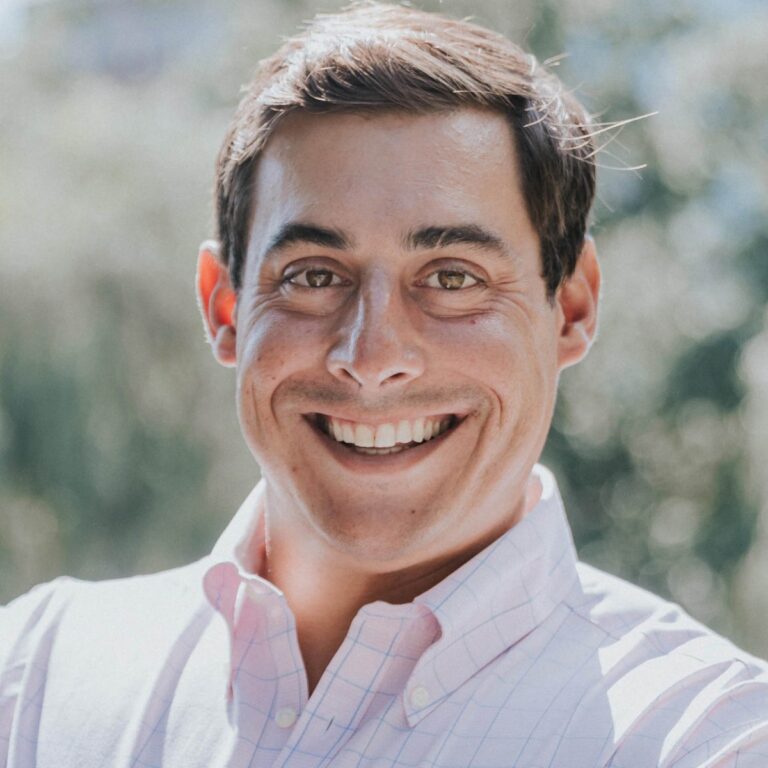
Rob Biederman, managing partner at Asymmetric Capital Partners and one of the sharpest minds in talent, tech, and scaling strategy, will share his insights in a roundtable session. This is THE place where you can ask him directly what it takes to scale.

See many more top startup leaders taking the stage to share honest insights, hands-on strategies, and lessons learned in the trenches. As a special surprise as we get closer to the event, we’re launching a limited-time 60% or more discount on two passes. That brings Founder Passes to $155, Investor Passes down to just $250, and students still get a chance to attend for just $99. 

Check out the best option for you and your team right here to learn how to secure VC funding, recruit the right early hires, manage founder finances, navigate the messy middle of growth at all stages of scaling, and more.

What Biederman brings to TechCrunch All Stage

Simply put, he’s built solutions where most startups get stuck and is set on sharing those fixes to those in need.

Before launching Asymmetric, Biederman co-founded Catalant Technologies, where he spent eight years as co-CEO, turning the company into the market leader for on-demand, high-skill talent. Today, Catalant powers how major companies deploy workforces, connecting them with more than 70,000 consultants and 1,000 boutique firms.

He now serves as chairman of Catalant, is the co-author of “Reimagining Work,” and teaches scaling technology ventures at Harvard Business School, where he’s an executive fellow. In short, Biederman doesn’t just talk about scale — he teaches it, builds it, and funds it.

With a background that includes private equity at Goldman Sachs and Bain Capital, and a Harvard MBA earned with Baker Scholar honors, Biederman brings both operational experience and investment discipline to every conversation.

At TechCrunch All Stage, Biederman will break down what most founders overlook when it comes to scaling: how to evolve your thinking about talent, execution, and long-term growth.

TechCrunch All Stage Rob Biederman

Join the event where founders go to grow

TechCrunch All Stage isn’t just another startup conference — it’s a strategy session for people building real companies. You’ll walk away with tools, frameworks, and stories from top operators who’ve scaled beyond the early-stage maze.

And Biederman’s insights on hiring, leadership, and operational leverage could easily reshape how you think about growth.

Join us in Boston on July 15

TC All Stage tickets at these low rates are going fast, and there is limited seating available in the sessions, so it’s time to get your ticket now and be in the room where seeds can scale and startups go IPO.


Source link

Remembering Bill Moyers : NPR


A remembrance of Bill Moyers, the former White House press secretary for President Lyndon B. Johnson, who became one of television’s most honored journalists. He died Thursday at age 91.


A MARTÍNEZ, HOST:

Broadcaster Bill Moyers has died. Moyers’ journalism career spanned four decades. He was known for his mild-mannered and probing interviews on issues ranging from money in politics to racial inequality.

(SOUNDBITE OF ARCHIVED RECORDING)

DAVID BRANCACCIO, BYLINE: I think Bill Moyers is the greatest journalist of my lifetime.

MARTÍNEZ: Yeah, you know that voice. It belongs to Marketplace Morning Report host, David Brancaccio. He co-hosted one of Moyers’ programs on PBS in the 2000s and said what you saw on screen was not an act.

BRANCACCIO: I remember Bill as the person who taught me very clearly that we think of our audience as engaged members of our communities and society, not as necessarily consumers.

STEVE INSKEEP, HOST:

He was an engaged member of the audience of this program. He wrote me a letter once about something he didn’t like. Bill Moyers grew up in…

MARTÍNEZ: (Laughter).

INSKEEP: …It’s true. It’s true. I was happy to hear from him. Moyers grew up in Marshall, Texas. He’d wanted to play football but was too small, so he settled for writing about sports in the school paper. He graduated from the University of Texas. He got a master’s degree in divinity. He preached part time at two churches but later decided his calling to the ministry was, quote, “a wrong number.” He was 30 years old when he became White House press secretary to President Lyndon Johnson. He resigned two years later in 1967 as the U.S. grew more involved in the Vietnam War. He talked about this with Fresh Air.

(SOUNDBITE OF ARCHIVED NPR BROADCAST)

BILL MOYERS: If you want to make creative policy, it was not a good time. And to be in government – because of the war – was consuming everybody’s energy, everybody’s passion and everybody’s time. And it was very hard to be constructive in such a destructive era.

MARTÍNEZ: In his later years, Moyers often offered sobering reflections on U.S. society, especially what he saw as the causes of corruption and of rising inequality.

(SOUNDBITE OF ARCHIVED NPR BROADCAST)

MOYERS: We are so close to losing our democracy to the mercenary class, it’s as if we’re leaning way over the rim of the Grand Canyon, and all that’s needed is a swift kick in the pants – look out below. The predators in Washington are only this far from monopoly control over a government. They’ve bought the political system lock, stock and pork barrel, making change from within impossible.

MARTÍNEZ: Veteran broadcaster, Bill Moyers. He died yesterday at the age of 91. And it’s good that he kept you in check, Steve.

INSKEEP: Absolutely.

MARTÍNEZ: Gave you that swift kick in the pants.

INSKEEP: (Laughter) I’m always happy to hear from the audience, so it was kind of flattering. Anyway, amazing, amazing historical figure.

(SOUNDBITE OF MUSIC)

Copyright © 2025 NPR. All rights reserved. Visit our website terms of use and permissions pages at www.npr.org for further information.

Accuracy and availability of NPR transcripts may vary. Transcript text may be revised to correct errors or match updates to audio. Audio on npr.org may be edited after its original broadcast or publication. The authoritative record of NPR’s programming is the audio record.


Source link