Apple on Thursday announced a series of updates to its developer policies to comply with the EU’s Digital Markets Act (DMA). The news, which was expected, arrived just in time to meet the deadline of June 26, after which the iPhone maker would risk new fines. The changes involve both how app developers can communicate with their customers and the fees Apple charges.
EU regulators had earlier fined Apple €500 million for non-compliance with the DMA and were threatening to impose further penalties, forcing Apple’s hand.
In terms of Apple’s new “anti-steering” rules, which dictate customer communications, EU app developers will now be able to link to alternative ways to pay for subscriptions and other in-app purchases outside the App Store across any channel. That means they can share this link on a website, an alternative app marketplace, within another app, and more. These links can also be accessed outside the app or within the app using a web view or native experience, Apple said, and don’t have to use warning screens or the text that Apple previously required.
In addition, instead of dropping its Core Technology Fee (CTF), Apple introduced a more complex fee structure.
There’s now an initial acquisition fee (2%) and a store services fee. The latter is either 13% or 5%, depending on the tier the developer chooses. (Small Business program members pay 10%). Tier 1 developers have access to a more limited set of App Store services, including app reviews, manual updates, and antifraud measures. Tier 2 provides access to marketing tools, automatic updates, curation and personalization features, app insights, and more.
Then, for apps that want to link to alternative methods of payment via the StoreKit External Purchase Link Entitlement (EU) Addendum, there’s a Core Technology Commission (CTC). This will ultimately replace the Core Technology Fee (CTF).
Before today, the developers paid the Core Technology Fee of €0.50 for each app install after the app topped 1 million downloads. That will continue for developers on the alternative EU business terms.
For developers on the standard terms in the EU, the CTC — a 5% commission — will instead apply. Developers who currently pay the old CTF will move to the new rules by January 1, 2026.
“The CTC reflects the value Apple provides developers through ongoing investments in the tools, technologies, and services that enable them to build and share innovative apps with users,” Apple said in a statement.
Epic Games CEO Tim Sweeney, whose company sued Apple and won the right to use alternative payments without a commission in the U.S., reacted to the news on X, calling it more malicious compliance from Apple.
“Apple’s new Digital Markets Act malicious compliance scheme is blatantly unlawful in both Europe and the United States and makes a mockery of fair competition in digital markets. Apps with competing payments are not only taxed but commercially crippled in the App Store,” he said.
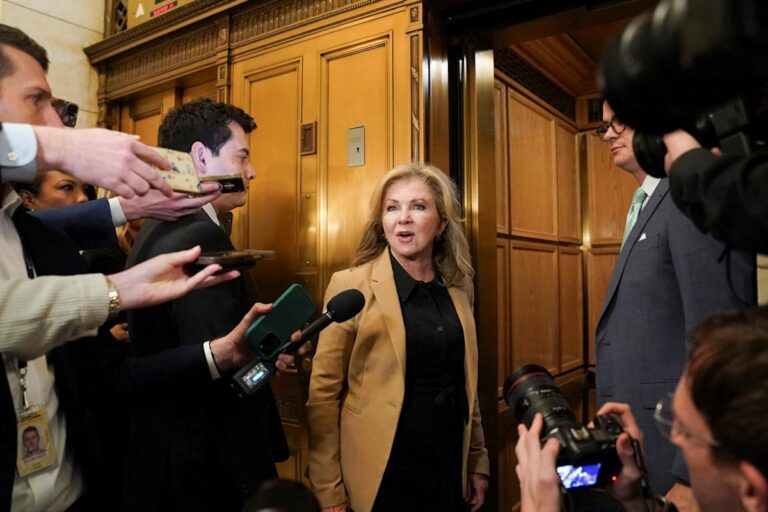
Senators Marsha Blacburn (R-Tenn.), Mike Blumenthal (D-Conn.), Amy Klobuchar (D-Minn.) Dick Durbin (D-Ill.) and Mike Lee (R-Utah) have reintroduced a bill that would force app store owners like Apple and Google to allow third-party payment systems and sideloading apps, among a collection of other developer-friendly changes. The bill, called the Open App Markets App, was originally introduced in 2021, but it never came up for a vote after passing through the Senate Judiciary Committee in 2022.
The Open App Markets Act applies its changes to app stores with 50,000 monthly users or more, most obviously applicable to the Apple App Store and the Google Play Store. Like the original bill, the reintroduced Open App Markets Act wants covered companies to allow things like sideloading, third-party app stores and alternative payments systems, while protecting developers ability to “tell consumers about lower prices and offer competitive pricing.” It would also prevent app store operators from privileging their own apps and services in app store search results.
“We created the App Store to be a safe and trusted experience our users love and a fantastic business opportunity for developers in the U.S. and around the world. We face intense competition everywhere we operate, and we are proud to be an engine for innovation and economic growth,” an Apple spokesperson says. “We are concerned this EU-style regulation will open our users to new privacy and security risks, and will continue to advocate on their behalf.”
While the aims of the new bill are largely the same as the original one, the legal environment is meaningfully different. Apple has been forced to allow third-party app stores and alternative payment systems in the European Union following the introduction of the Digital Markets Act in 2022. Thanks to its failure to make good on the small concession Epic won via its lawsuit, Apple has also been forced to allow developers to direct customers to pay for things outside of the App Store and its in-app payments system. The Open App Markets Act would make these kinds of changes the law in the US.
It seems possible the bill could pass, too. Regulatory pressure on tech companies has only increased since 2021. For example, Utah recently passed an age-verification law that would require app stores to only allow users 18 and up to make an account.
Update, June 26 2025, 1:51PM ET: Added comment from Apple.
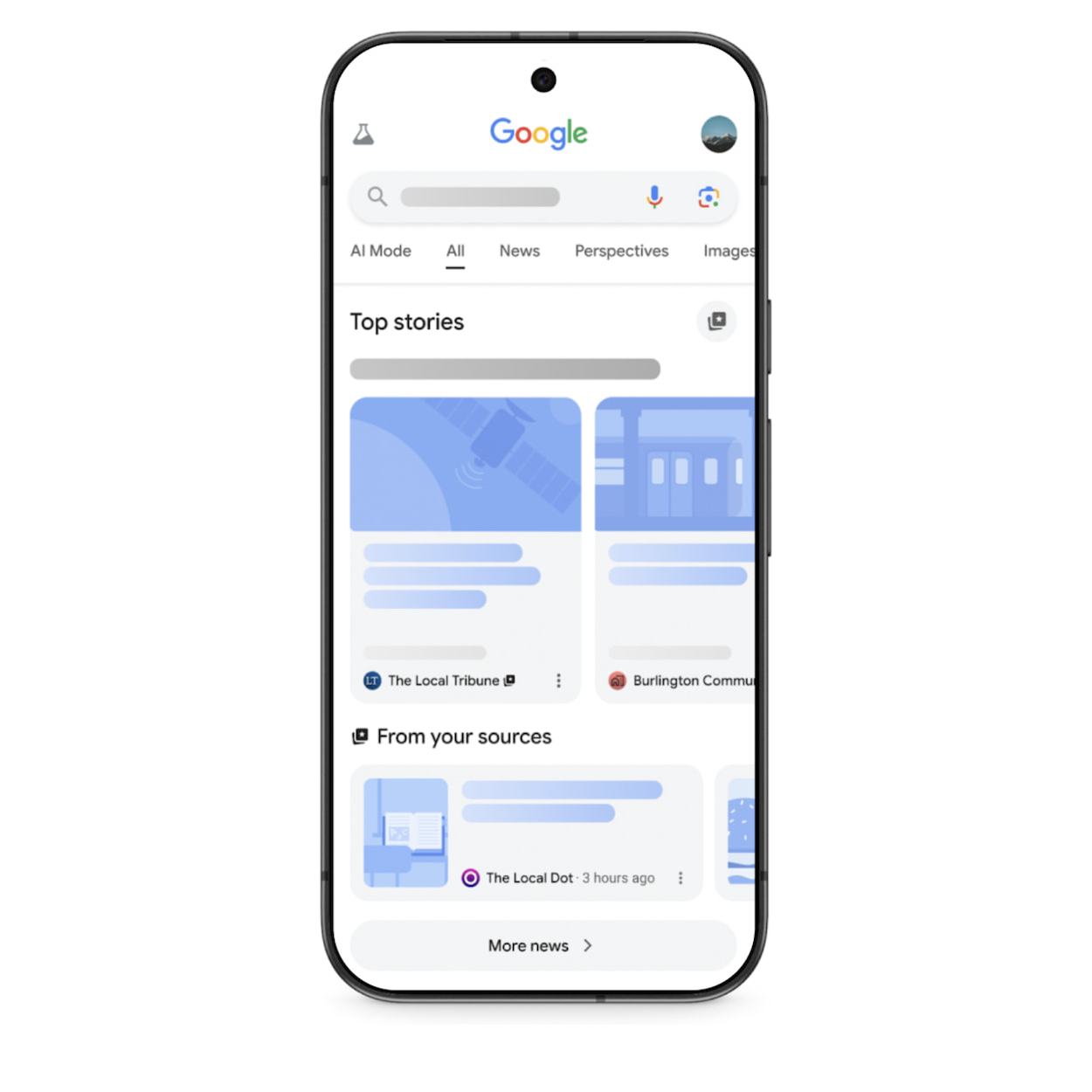
With Preferred sources, Google is testing a new way to customize and personalize the Top Stories carousel that appears when you search for news.
Google is letting you “choose to see more results in Top Stories from the sites you love.” At the moment, “results for ‘Top stories’ are selected algorithmically.”
To set your Preferred sources, tap the new starred page icon in the top-right corner of the Google carousel after you opt-in to the experiment. This will let you select publications like “your favorite sports blog or local newspaper” if that “site is publishing fresh content.”
After setting up, “you’ll start to see more of the latest updates from your selected sites in Top Stories when they have new articles or posts that are relevant to your search.” They will appear alongside the usual (algorithmic) selection.
Advertisement – scroll for more content
Next to the site name in the bottom row, a starred icon will appear. Google might also surface a “From your sources” carousel underneath Top Stories.
This experiment is available in English in the US and India.
Google today is also reminding users about the existing Search personalization — which is noted at the bottom of the results page, with a link to “Try without personalization” — feature. If enabled, “features such as Top Stories and What People Are Saying will automatically update to show new content since your last visit.”
And when you look at your recent searches (in the drop down under the Search bar), we’ll let you know if new updates are available in Top Stories.
Additionally, “results you return to often will be promoted in your results when relevant for your search” if personalization is enabled.
More on Google Search:
FTC: We use income earning auto affiliate links.More.
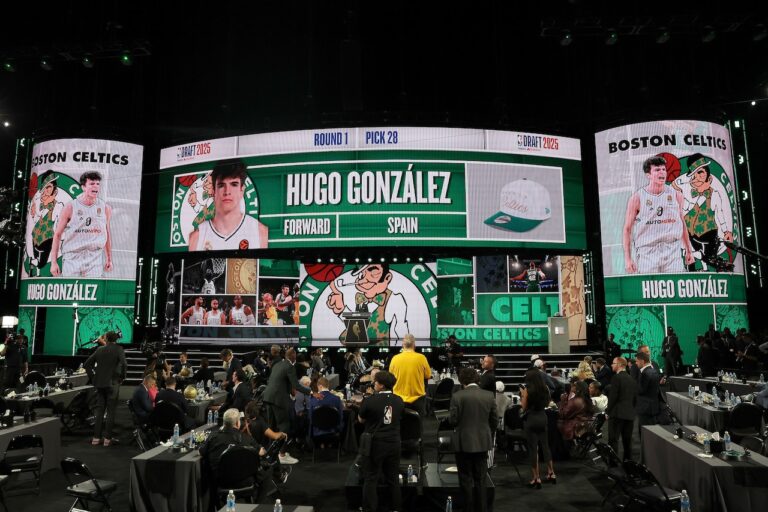
While it was getting late in Boston by the time the Celtics were on the clock for the 28th pick in the 2025 NBA Draft, it was even later in Spain. Despite that, Hugo Gonzalez stood up into the wee hours of the morning as there was a chance he would be taken in the first round.
The wait ended up worth it even after it was past 5 a.m. in Spain. The C’s picked Gonzalez with their first-round pick, landing the Real Madrid wing. Gonzalez’s team had just won Liga ACB title earlier as it was a huge night for him.
“I just talked to him,” Stevens said at his news conference after the first round. “It’s 5 in the morning over there. I said, ‘Enjoy your night.’ He goes, ‘Eh, it’s a little late.’ So I said, ‘OK, maybe I’ll enjoy it for you.’”
The plan is for Gonzalez to come stateside for his rookie season this fall as he’ll develop with the franchise going forward. Stevens said he’s not sure yet if Gonzalez will play in Summer League, set for July 10-20 in Las Vegas, considering he’ll need to get to Boston plus he’s coming off his own season with Real Madrid.
Regardless, the Celtics drafted a 6-foot-6 wing they hope will become a rotation player down the line. The C’s were rumored to be a potentially-active team come draft night, but instead, they stayed pat at 28th overall. And by the sounds of it, they’re thrilled they landed the Real Madrid product.
“We’ve been watching Hugo for a long time,” Stevens said. “He’s obviously been on everybody’s radar I think for a long time and then followed his year with a great Real Madrid organization and team closely and watched him in all the U-18s and those types of things. Just a big fan of how he plays. He’s tough, he’s hard playing, he cuts, he goes after the ball, he competes. He’s got all the intangibles of a winning basketball player. There’s things he can get better at just like everybody else at that age, but competitiveness is at a high level.”
In the fight for top AI talent, Meta just reportedly snagged a win, poaching three OpenAI researchers despite rival Sam Altman’s public mockery of Mark Zuckerberg’s lavish hiring tactics.
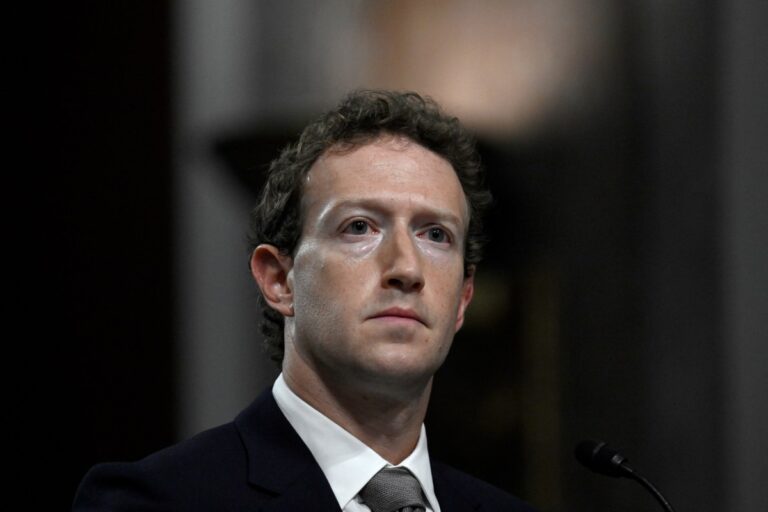
The latest victory in Zuckerberg’s widely-reported recruiting blitz: Lucas Beyer, Alexander Kolesnikov, and Xiaohua Zhai – who established OpenAI’s Zurich office – have joined Meta’s superintelligence team, the WSJ reports, suggesting Zuckerberg’s methods can deliver.
As Altman, the CEO of OpenAI, first revealed in a recent podcast with his brother Jack, Zuckerberg has been dangling $100+ million compensation packages in an effort to lure top talent from OpenAI. The Journal subsequently reported that Zuckerberg has been personally WhatsApping hundreds of top AI researchers, coordinating targets through his “Recruiting Party 🎉” chat before hosting dinners at his homes in Palo Alto and Lake Tahoe.
The strategy is producing mixed results. Zuckerberg recently bagged Scale AI’s CEO Alexandr Wang with a $14 billion investment, making the 28-year-old one of tech’s priciest hires ever. But bigger game has eluded the Meta CEO, says the WSJ, including OpenAI co-founders Ilya Sutskever and John Schulman, both of whom have gone on to co-found newer startups.
In that podcast, Altman said of Zuckerberg’s charm campaign: “I’m really happy that, at least so far, none of our best people have decided to take him up on [those offers].”
We’re getting yet another Hollywood sequel. Deadline reports that Aaron Sorkin will be directing The Social Network II, a follow-up to the film that chronicled the development of Facebook and the ensuing lawsuit against Mark Zuckerberg. The next movie will take its inspiration from a 2021 by The Wall Street Journal into the harms caused by Facebook and the company’s failure to address those problems.
Sorkin has a long career as a writer, including the screenplay for The Social Network, but only three credits as a director on his resume. There’s no production date for the movie at this time, and it’s unknown whether actors from the original will return to their roles, most notably Jesse Eisenberg as Zuck.
Facebook certainly provides no shortage of potential inspiration for a biopic. Just in the past six months, the platform dug a deeper hole for itself when it tried to a tell-all memoir with some from a former employee. Facebook also its third-party fact checkers and gutted its own hate speech policy, which was unsurprisingly followed by an in violent content and harassment. But given all the negative hits for Facebook’s reputation, viewers may not be too excited about spending two hours or more stewing in all the crappy stuff the network has done.
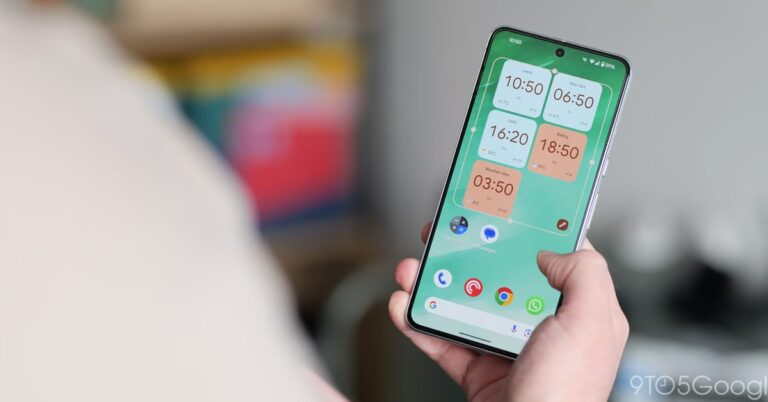
Google is rolling out a small update to the Clock app — version 7.14 — on Android that makes a pair of visual tweaks. It follows the last release in April.
Update 6/25: Google Clock 7.14 is now widely rolling out via the Play Store. All users will notice the updated M3 toggles, while Pixel owners get the new icon style for weather conditions that will match At a Glance in the upcoming Android 16 QPR1 redesign.
With this update, the Timer Starter widget remains exclusive to Pixel and is not available on third-party Android phones.
Original 6/18: Throughout the app, Google Clock 7.14 uses the latest Material 3 switches. These on/off toggles have the same general shape, but are slightly taller and narrower. The off state features bolder outlines and a less prominent circular handle. (Developers have the optional ability to add checkmark or ‘x’ icons inside the circle, like Google Wallet settings.)
Advertisement – scroll for more content
In the Clock app, you’ll find these updated switches in the Alarm tab and Settings list.
These components are a few years old (2022) at this point, but adoption in first-party apps has been slow. With Material 3 Expressive, Google did not update this component.
Old vs. new
Meanwhile, the (world) Clock tab features an updated weather condition icon set. Instead of being traditionally colored (like a yellow sun), everything is now gray. It’s a more subtle look that can be less distracting, though it doesn’t stand out as much compared to before when you are quickly skimming the list.
Google Clock 7.14 is slowly rolling out via the Play Store and not yet widely available.
FTC: We use income earning auto affiliate links.More.
The Worcester Red Sox were shut out by the Scranton/Wilkes-Barre RailRiders, 4-0 on Wednesday.
Worcester did not let a run to score until the sixth inning. The Red Sox had just three hits as a team and dropped their second game in a row in Scranton/Wilkes-Barre.
The RailRiders were held silent until the sixth inning.
Worcester (41-35) will face Scranton/Wilkes-Barre on Thursday, June 26 in the third game of the RailRiders’ six-game series with the Red Sox.
A federal judge sided with Meta on Wednesday in a lawsuit brought against the company by 13 book authors, including Sarah Silverman, that alleged the company had illegally trained its AI models on their copyrighted works.
Federal Judge Vince Chhabria issued a summary judgment — meaning the judge was able to decide on the case without sending it to a jury — in favor of Meta, finding that the company’s training of AI models on copyrighted books in this case fell under the “fair use” doctrine of copyright law and thus was legal.
The decision comes just a few days after a federal judge sided with Anthropic in a similar lawsuit. Together, these cases are shaping up to be a win for the tech industry, which has spent years in legal battles with media companies arguing that training AI models on copyrighted works is fair use.
However, these decisions aren’t the sweeping wins some companies hoped for — both judges noted that their cases were limited in scope.
Judge Chhabria made clear that this decision does not mean that all AI model training on copyrighted works is legal, but rather that the plaintiffs in this case “made the wrong arguments” and failed to develop sufficient evidence in support of the right ones.
“This ruling does not stand for the proposition that Meta’s use of copyrighted materials to train its language models is lawful,” Judge Chhabria said in his decision. Later, he said, “In cases involving uses like Meta’s, it seems like the plaintiffs will often win, at least where those cases have better-developed records on the market effects of the defendant’s use.”
Judge Chhabria ruled that Meta’s use of copyrighted works in this case was transformative — meaning the company’s AI models did not merely reproduce the authors’ books.
Furthermore, the plaintiffs failed to convince the judge that Meta’s copying of the books harmed the market for those authors, which is a key factor in determining whether copyright law has been violated.
“The plaintiffs presented no meaningful evidence on market dilution at all,” said Judge Chhabria.
Both Anthropic and Meta’s wins involve training AI models on books, but there are several other active lawsuits against technology companies for training AI models on other copyrighted works. For instance, The New York Times is suing OpenAI and Microsoft for training AI models on news articles, while Disney and Universal are suing Midjourney for training AI models on films and TV shows.
Judge Chhabria noted in his decision that fair use defenses depend heavily on the details of a case, and some industries may have stronger fair use arguments than others.
“It seems that markets for certain types of works (like news articles) might be even more vulnerable to indirect competition from AI outputs,” said Chhabria.
Liquid Glass is a huge new change coming to iOS 26. (Apple)
It’s true: Apple’s iOS 26 (not iOS 19) is coming your way this fall with some cool new features you’ll want to try. Here’s what we’re excited about: the iPhone is finally getting a fresh home and lock screen redesign dubbed Liquid Glass, a look and feel that will extend across all of Apple’s upcoming operating systems. The overhaul was one of several big changes coming to iOS, macOS, iPadOS and the rest of Apple’s software suite, all of which were showcased during the company’s WWDC keynote on June 9. If you’re a developer, you can check out the iOS 26 beta 2 now; the public beta coming in July.
After overpromising on AI plans at WWDC 2024, Apple kept its iOS roadmap focused more on basic quality of life improvements this year. There are multiple useful additions coming to the Phone and Messages apps on your iPhone, for instance: Apple execs outlined the ability to weed out spam texts or other unknown senders and an option to hold your spot on a phone call when you’ve been waiting for a representative to pick up. Plus, a treasured feature that we took for granted is coming back (hint: it’s in the Photos app).
Keep reading to check out the most notable features coming to your iPhone this fall, according to Apple. Also, make sure your iPhone is eligible to download the iOS 26 update (thankfully, most recent models are).
What is iOS 26?
While the current iPhone operating system is iOS 18, Apple is skipping the numbering ahead to iOS 26 later this year. The company has decided to line up its iOS version numbers with a year-based system, similar to car model years. So while iOS and its sibling operating systems will be released in late 2025, they’re all designated “26” to reflect the year ahead.
It’s official, we’re moving to iOS 26. (Apple)
What is Liquid Glass design?
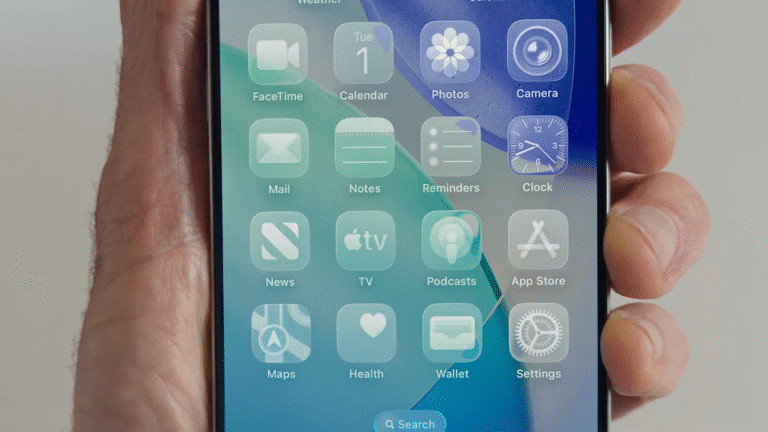
Let’s be honest. Out of everything announced at WWDC this year, the new Liquid Glass design was the star of the show. The iPhone’s home and lock screens have looked pretty much the same year after year — the last exciting thing (in my opinion) was the option to add your own aesthetic to your home screen by customizing your apps and widgets. So seeing the home and lock screens’ new facelift is refreshing.
So what exactly is Liquid Glass? Apple calls it a “new translucent material” since, well, the apps and widgets are clear. However, the screen can still adapt to dark and light modes, depending on surroundings. You’ll also notice buttons with a new floating design in several apps, like Phone and Maps. They’re designed to be less distracting than the current buttons, but are still easy to see. While the design overhaul has proven to be controversial since its announcement, some — including Engadget’s own Devindra Hardawar — like the new direction, even if it’s somewhat reminiscent of Microsoft’s translucent Windows Vista Aero designs from nearly twenty years ago.
That said, as of the newly released iOS 26 beta 2, Apple has already incorporated some user feedback into the design, dialing back the transparency in at least some places. And while it will continue to evolve, Apple users won’t be able to escape it: Liquid Glass was designed to make all of Apple’s OSes more cohesive. Here’s a look at how the translucent aesthetic will look with the new macOS Tahoe 26 on your desktop.
What are the new and notable features of iOS 26?
iOS 26 has a laundry list of new features. Among the most worthwhile:
Phone app redesign: You’ll finally be able to scroll through contacts, recent calls and voicemail messages all on one screen. It also comes with a new feature called Hold Assist that’ll notify you when an agent comes to the phone so you can avoid the elevator music and continue on with other tasks.
Live Translation in Phone, FaceTime and Messages: iOS 26 is bringing the ability to have a conversation via phone call or text message with someone who speaks another language. Live Translation will translate your conversation in real time, which results in some stop-and-go interactions in the examples Apple shared during its presentation.
Polls in group chats: Tired of sorting through what seems like hundreds of messages in your group chat? You and your friends will soon be able to create polls in group messages for deciding things like which brunch spot you’re eating at or whose car you’re taking on a road trip.
Filtering unknown senders in Messages: If you haven’t received spam texts about unpaid tolls or other citations, you’re lucky. For those of us who have, those annoying messages will soon be filtered away in a separate folder.
Visual Intelligence: Similar to a reverse Google image search, this new feature will allow you to search for anything that’s on your iPhone screen. For instance, if you spot a pair of shoes someone is wearing in an Instagram photo, you can screenshot it and use Visual Intelligence to find those shoes (or similar ones) online.
Photos tabs are back: For anyone who’s still frustrated with the Photos changes made last year, you’ll be happy to know that your tabs are coming back. Library and Collections will have their own separate spaces so you don’t have to scroll to infinity to find what you’re looking for.
Apple’s Hold Assist will be nifty for those pesky services that put you on hold for 10 or more minutes. (Apple)
Which iPhones will be able to upgrade to iOS 26?
A few iPhone models that run the current version of iOS — iPhone XR, XS and XS Max — won’t be compatible with the latest upgrade. But any iPhones released in 2019 or later will be eligible for the iOS 26 update.
Not listed here are the presumed new iPhone 17 models (or maybe iPhone 26?) that are all but certain to be announced and released in September.
When will the iOS 26 beta be available?
The iOS 26 public beta will become available in July via the Apple Beta Software Program. If you’re not already a member, you’ll need to sign up to try out all the latest features. Just visit beta.apple.com and sign up with your phone number or email address. It’s free.
Once you’re in and the beta is available, you can install it by going to Settings > General > Software Update and selecting iOS 26 public beta.
A word of caution: Don’t sign up with your main iPhone unless you’re OK with any risks that occur with using an OS that isn’t finalized.
When will the final version of iOS 26 be released?
iOS 26 will be released to the public this fall. It usually comes in September, within a week of the Apple iPhone event. Last year, it rolled out to iPhone users on September 16 — exactly one week after the iPhone 16 lineup was announced.