Home Blog Page 283

Spotify, Discord, Snapchat and more were down for hours

0


Google Cloud experienced outages today that led to disruptions for many online services. Reports of issues for Google products and others began around 2 PM ET. The company was able to restore function to its own apps, but several other businesses have continued to experience problems for some users.

In an update at 4:16PM ET, Google said, “We have identified the root cause and applied appropriate mitigations. Our infrastructure has recovered in all regions except us-central1. Google Cloud products that rely on the affected infrastructure are seeing recovery in multiple locations. Our engineers are aware of the customers still experiencing issues on us-central1 and multi-region/us and are actively working on full recovery. We do not have an ETA for full recovery.”

DownDetector outages June 12, 2025 2:27pm CentralDownDetector outages June 12, 2025 2:27pm Central

Screenshot from DownDetector at about 3:25PM ET

Spotify, Discord, Snapchat, Etsy, UPS and OpenAI all experienced a high volume of reports on DownDetector, with some informing users of disruptions. Even the Pokemon Trading Card Game and Pokemon Go weren’t spared issues. Snapchat acknowledged the ongoing issues on its support page. OpenAI has posted that users may have trouble logging in due to “issues affecting multiple external internet providers.” AWS also experienced a higher-than-usual volume of reports on DownDetector during the outage, but Amazon clarified in a statement to Engadget that it has no broad service issues and noted that its AWS Health Dashboard is a better indicator of its current status than DownDetector.

Almost all services have now returned to normal operation. By 5PM ET, Spotify’s main page loaded for our editors and reports of outages on DownDetector had fallen back to close to their baseline. Other platforms like Snapchat and Discord also seemed to be functioning normally for us. Google said at the time that its products were coming back online across multiple regions and that it expected the recovery to be complete “in less than an hour.” However, as of 7:13PM ET, the company noted that several Google Cloud components were still experiencing “residual impact.” Google Cloud Dataflow, Vertex AI Online Prediction and Personalized Service Health are all still somewhat affected, and the company has not provided a timeline for when everything will be back to normal.


Source link

Android 16 QPR1 Beta 2 updates status bar chip for phone calls

0


With Android 16 QPR1 Beta 2, it’s slightly easier to manage ongoing calls, including Gemini Live, from the status bar chip.

Previously, tapping the pill-shaped chip when in a call would open the responsible app. With Android 16 QPR1 Beta 2 (via Android Authority), this action opens (slides down) the ongoing call notification. 

As such, you can quickly Hang Up, adjust the Speaker, and Mute. This is somewhat similar to how Android 15 QPR1 introduced a prominent status bar chip for screen Casting, recording, and sharing. That trio offers a smoother animation for the dialog box that opens at the center of your screen. 

What you get with the calling chip is the same notification as additionally evidenced by the ability to expand/shrink it with the corner chevron. It’s the same behavior as Live Updates.

Advertisement – scroll for more content

This new call chip behavior in Android 16 QPR1 also applies to Gemini Live to quickly Hang Up or Hold. With the latter action, you can resume a session with two quick taps.

More on Android 16:

FTC: We use income earning auto affiliate links. More.


Source link

‘Alone’ season 12 premiere’s tonight, how to watch new season for free

0


Ten new participants must survive in the Great Karoo desert in a new season of “Alone,” premiering on Thursday, June 12.

The new season premieres at 9 p.m. ET on the History Channel. Those without cable can watch the show for free through Philo or DIRECTV each offering a free trial to new users. Sling is another option for streaming the show, and promotional offers are available.

The popular survival reality TV series with no camera crews and is the ultimate test of human will, returns for season 12 on June 12.

Season 12 marks one of the most visually stunning and intense seasons of “Alone” yet, in one of the most intense and dangerous locations in series history—South Africa, according to the History Channel’s description of the new season.

For the first time on “Alone,” ten new survivalists navigate the rugged and unforgiving Great Karoo Desert and face off searing heat, foul water, unpredictable storms and exotic and dangerous animals.

The new season will see frequent animal encounters, significant game harvests, unexpected medical extractions, impressive shelter builds, and creative foraging techniques, History added. The survivalists’ mental willpower and wilderness skills are put to the test as they attempt to master new territory in hopes of being the last person standing.

Below is a look at season 12 of “Alone” from the History Channel’s YouTube Channel:

How can I watch “Alone” without cable?

Those without cable can watch the show for free through Philo or DIRECTV each offering a free trial to new users. Sling is another option for streaming the show, and promotional offers are available.

What is Philo?

Philo is an over-the-top internet live TV streaming service that offers 70+ entertainment and lifestyle channels, like AMC, BET, MTV, Comedy Central and more, for the budget-friendly price of $28/month.

What is DIRECTV?

The streaming platform offers a plethora of content, including streaming the best of live and on-demand, starting with more than 75 live TV channels.

What is Sling?

Sling TV is the first app-based TV service letting you stream live television and on-demand content over the internet. With Sling TV, you get to choose the television option that’s right for you, including Channel Add-ons, Premiums Add-ons, DVR Plus and more.


Source link

After a string of successes, early-stage fund Felicis raises fresh $900M

0


Felicis founder Aydin Senkut is celebrating his 20th year as an institutional early-stage investor by announcing the firm’s biggest fund yet: a $900 million Fund X.

This follows the $825 million Fund IX raised in 2023 and the $600 million Fund XIII raised in 2021. Felicis, a seed and Series A firm, is known for backing a long string of successes, including Ayden, Bonobos, Ring, Shopify, and Twitch, among others. Since being founded in 2006, Felicis has backed over 50 unicorns and had over 125 exits, it says.

Lately, Felicis, like most VCs, has been all over AI. Its portfolio now includes, for example, Browser Use, Poolside, Runway, and Supabase. “We believe dozens of $100B+ AI companies will emerge this decade (not merely $1B or $10B),” Felicis wrote in its blog post, adding that 70% of its active portfolio are what it considers AI native startups. 

Senkut did not immediately respond to a request for additional comment.


Source link

The Beach Boys’ Brian Wilson has died at age 82 : NPR


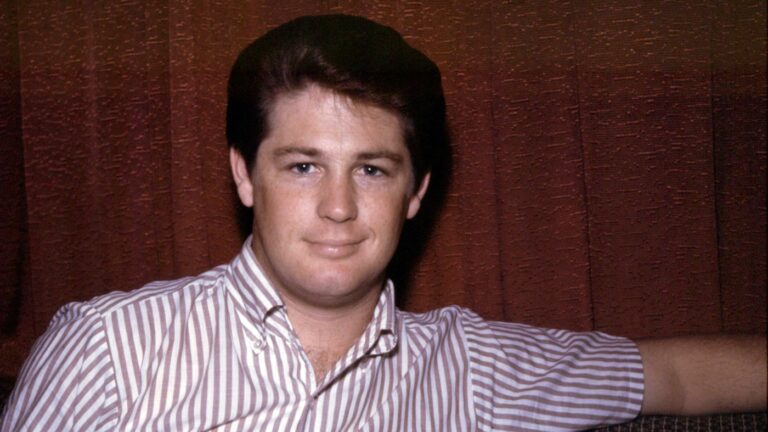
Brian Wilson in 1965.

Brian Wilson in 1965.

Michael Ochs Archives/Getty Images


hide caption

toggle caption

Michael Ochs Archives/Getty Images

Brian Wilson in 1965.

Brian Wilson in 1965.

Michael Ochs Archives/Getty Images

Brian Wilson, who co-founded the iconic California band The Beach Boys and turned teen pop into a poetic, modernist musical form, has died at age 82.

“We realize that we are sharing our grief with the world,” Wilson’s family wrote in a statement on his website Wednesday.

The most frequently invoked description of Wilson’s music came from the artist himself when, playing on a phrase coined by Phil Spector, he declared that his goal was to write a “teenage symphony to God.” Grounded in dreams of an idealized youth, his songs reflected vast ambition enmeshed in the belief that pop could be a conduit to the sublime.

Beyond the recording studio where his mastery shone, Wilson struggled: He was abused by his father as a child, and mental health struggles, including audio hallucinations (later diagnosed as schizoaffective disorder), led him into isolation at the height of The Beach Boys’ success. His greatest musical works made room for the deep melancholy he experienced while evoking an almost otherworldly beauty, the sunset smear of a soul longing for peace.

This elevated quality infuses even the playfully slight songs of the early Beach Boys. As one of the first major rock bands of the 1960s, The Beach Boys made hit fodder of subjects like drag racing, high school rivalries and, of course, surfing to express the empowerment, freedom and fun many white middle-class kids felt as the post-war boom empowered their generation. Southern California became the mythologized center of the new American dream, and Brian Wilson‘s music was its soundtrack.

The Beach Boys on November 2, 1964 in London England. From left to right, Dennis Wilson (1944 - 1983)Brian Wilson, Mike Love, Al Jardine and Carl Wilson (1946 - 1998).

The Beach Boys on Nov. 2, 1964, in London, England: Dennis Wilson (1944-1983, from left to right), Brian Wilson, Mike Love, Al Jardine and Carl Wilson (1946-1998).

Keystone/Getty Images


hide caption

toggle caption

Keystone/Getty Images

The Beach Boys on November 2, 1964 in London England. From left to right, Dennis Wilson (1944 - 1983)Brian Wilson, Mike Love, Al Jardine and Carl Wilson (1946 - 1998).

The Beach Boys on Nov. 2, 1964, in London, England: Dennis Wilson (1944-1983, from left to right), Brian Wilson, Mike Love, Al Jardine and Carl Wilson (1946-1998).

Keystone/Getty Images

A pop mind like no other

That playfully adventurous sound reflected Wilson’s childhood obsessions — jazz and doo-wop harmonies and the work of American composers like George Gershwin. Raised in the working-class Los Angeles suburb of Hawthorne, an aerospace industry hub, Wilson became a student of music as a teenager, spending hours with his record player, memorizing the harmonies of his favorite group, The Four Freshman.

Like many teenagers, he and his brothers Carl and Dennis Wilson saw rock and roll as a means to social success. His father, Murry, a would-be songwriter with a propensity for abuse, saw his sons’ talents as a ticket to greater financial success. He managed the homegrown group, christened The Beach Boys in 1961, until Brian broke away from him in 1964, after going through his first nervous breakdown.

Even as he battled internal unrest, Wilson immediately set a new musical bar for teen-oriented pop music, as The Beach Boys found national success on Capitol Records. The seeming simplicity of early-1960s Beach Boys hits like “California Girls” and “I Get Around” was exponentially enriched within the sonic frameworks Wilson created, inspired by jazz harmonies, American composers and the then-nascent Black pop sounds of Chuck Berry and the girl groups.

As the 1960s unfolded, Wilson pushed the boundaries of the three-minute pop song in ways few could replicate. The Beatles’ American arrival in 1964 set the stage for what some fans have deemed the greatest friendly rivalry in popular music. Wilson and the songwriting team of John Lennon and Paul McCartney continually checked and wrecked each other, pushing themselves toward greater achievements with each competitive release.

YouTube

Wilson’s genius peaks on ‘Pet Sounds’

Beatles producer George Martin called The Beach Boys’ 1966 opus, Pet Sounds, “a spur” for the Beatles’ game-changing concept album Sgt. Pepper’s Lonely Hearts Club Band, while Wilson reportedly broke down and cried when he heard “Strawberry Fields Forever,” declaring, “They got there first.”

Wilson had arrived first in that game with Pet Sounds, which remains, some 60 years after its release, the apex of Top 40 pop as existential reverie. Released when Wilson was 24 and already in retreat from fame (he stopped touring with The Beach Boys after his 1964 breakdown), Pet Sounds was Wilson’s little Moby Dick, a masterwork encompassing all he believed music could do: 13 songs evoking what the critic Richard Goldstein identified as “loneliness [as] an active pursuit,” played by a group of Los Angeles studio musicians so skilled that they were dubbed the Wrecking Crew and produced by Wilson to exceed their meticulously crafted frames via sound effects like barking dogs, rattled soda cans and crickets whose voices Wilson captured in the twilight.

Wilson, who rarely wrote lyrics alone, worked with the advertising copywriter Tony Asher on verses that conjured the liminal space between adolescence and adulthood, captured in images like the shorn locks of a surfer girl on “Caroline, No” and poignant declarations like one song’s title, “I Just Wasn’t Made For These Times.” The other Beach Boys provided vocals prompted by Wilson’s instructions at the piano.

In many ways, Pet Sounds was his solo effort, his band members more symphony members than mates. The deep introversion Pet Sounds communicates was the result of this process, spurred on in part by Wilson’s worsening mental health, affected by both drug use and the feeling that the pop world that had granted him power no longer had room for his dreams.

A modest success upon release, Pet Sounds is now generally acknowledged as one of the greatest albums of all time. (The rock-era canonizing institution Rolling Stone magazine ranks it at No. 2 — right behind Marvin Gaye’s What’s Going On.)

YouTube

Wilson followed it in late 1966 with the single “Good Vibrations,” created through a revolutionary process: He convened his favorite studio musicians across 17 recordings sessions, amassing 90 hours of tape, and then assembled the song from the fragments.

“You would sit with a music stand, blank piece of paper, and you’d wait until Brian got around to giving you your notes, because he knew exactly what he wanted,” harmonica player Tommy Morgan told NPR in 2000. “He knew every note in his head.”

“Good Vibrations” was a critical and commercial smash that, for many listeners, announced the full arrival of psychedelia. Wilson’s next effort, however, capsized his artistic success. Smile was to be a song cycle co-written by the adventurous songwriter Van Dyke Parks that furthered Wilson’s experimental journey, but by most accounts, a combination of Wilson’s obsessiveness and the commercial desires of his Beach Boys bandmates and his label put a halt to the project. A watered-down version, Smiley Smile, came out in 1967. After decades of anticipation by music connoisseurs, Wilson completed Smile with new collaborators in 2004.

A retreat from public life

Although legally bound by a new contract with Reprise Records to continue to work with The Beach Boys, Wilson retreated further into himself in the 1970s. He briefly co-owned a health-food store, the Radiant Radish, and worked on home demos, occasionally contributing to recordings that became minor Beach Boys hits. By 1973, he had become perhaps rock’s most famous recluse, rarely leaving his Bel Air home.

Brian Wilson, smiling, at a Paul Simon tribute concert in 2005.

Brian Wilson, smiling, at a Paul Simon tribute concert in 2005.

Vince Bucci/Getty Images


hide caption

toggle caption

Vince Bucci/Getty Images

Brian Wilson, smiling, at a Paul Simon tribute concert in 2005.

Brian Wilson, smiling, at a Paul Simon tribute concert in 2005.

Vince Bucci/Getty Images

In the mid-’70s, Wilson’s then-wife, Marilyn, hired psychotherapist Eugene Landy, known for his controversial “24-hour therapy,” to help Wilson out of a food-and-drugs spiral that had caused his weight to balloon to more than 300 pounds; Landy gradually overtook Wilson’s life, becoming not merely a constant, controlling companion but his manager and, on his 1988 solo debut, musical collaborator. Wilson and Landy parted ways in 1991 after his family intervened.

Wilson’s spirits were bolstered by his second wife, Melinda, and he began to recover and manage his mental illness, eventually growing strong enough to embark upon a true comeback, collaborating with second- and third-generation power pop musicians including Andy Paley, Darian Sahanaja of Wondermints, and the producer Don Was. He reunited with The Beach Boys for a tour and an album, That’s Why God Made the Radio, released in 2012.

In his final years, Wilson — whose daughters from his first marriage, Carnie and Wendy, found pop success of their own in the trio Wilson Phillips — cared for his five adopted children with Melinda until her death in 2024 and pursued an eclectic array of projects, including the tribute recording Brian Wilson Reimagines Gershwin, several highly collaborative solo albums and frequent tours reprising Beach Boys classics, including Pet Sounds.

A subdued presence onstage and in interviews after decades of struggling with mental illness, Wilson enjoyed the renown his history-changing music offered him and continued to share the message that beauty and love can help heal even the most broken people.


Source link

The Fujifilm X-E5 is basically an interchangeable lens X100VI

0


If you have ever looked at the said to yourself, “Man, I wish Fujifilm would just make an interchangeable lens version of this camera,” consider your request answered. Four years after the , the company has announced the X-E5, a compact, $1,699.95 camera that should appeal to the same crowd that loves X100VI.

Inside, the X-E5 has Fujifilm’s latest X-Trans CMOS 5 HR sensor. That’s the same sensor you’ll find on the X100VI, and . It’s capable of capturing 40.2-megapixel stills, and video at up to 6.2K and 30 frames per second. Thanks to improvements Fujifilm has made to the sensor’s pixel structure, the X-E5 offers a native 125 ISO, and there’s AI-based autofocus to make it easier to capture moving subjects such as animals, birds, insects, motorcycles, planes and more.

Also new to the X-E5 is the inclusion of in-body image stabilization (IBIS). It offers up to seven stops of stabilization near the center of the frame and six stops toward the periphery.

Fujifilm has also once again tweaked the exterior of the camera. If the X-E4 was a bit too minimalistic for your taste, the good news is the X-E5 has a front grip where Fujifilm did away with that on the X-E4. The camera’s top plate is machined from a single piece of aluminum, an addition that should make the X-E5 feel more premium than its predecessor. On the top, you’ll find all the usual dials, including one for shutter speed and another for exposure compensation.

A closeup of the Fujifilm X-E5's film simulation dial. A closeup of the Fujifilm X-E5's film simulation dial.

Fujifilm

There’s also an entirely new dial dedicated to Fujifilm’s film simulations. In addition to the usual presets like Classic Chrome and Velvia, you can save up to three of your own recipes for easy access. As before, the external LCD can flip up 180-degrees to make it easier to capture selfies and vlog.

Fujifilm has also redesigned the X-E5’s viewfinder. It offers two new modes. First, there’s a “Classic” mode, which simplifies the interface so it’s more like what you would find on an old film camera. All your exposure settings are displayed along the bottom of the screen in a deep red color, with the light meter present on the side. Alternatively, the other new mode, “Surround View,” displays a black, semi-transparent or outlined area outside of the aspect ratio you’ve set. In practice, that should make it easier to frame your shots.

Alongside the X-E5, Fujifilm announced a new pancake lens, the XF23mm f/2.8 R WR. It’s a full stop slower than the fixed, 35mm equivalent you’ll find on the X100VI, but it’s about the same size and should be a lot faster to focus thanks to inclusion of a direct current motor.

Fujifilm will offer the X-E5 in black and silver. The camera will be available starting in August. At $1,699.95 for just the camera body, the X-E5 is twice as expensive as its predecessor. In fact, it’s more expensive than the $1,599 X100VI, which features a leaf shutter and hybrid optical viewfinder. Personally, I’m sad about that since the X-E4 was my recommendation for a great starter camera.


Source link

Google TV Streamer gets rare discount in limited Amazon sale

0


While the Google TV Streamer isn’t the outright best Android TV box, it is a solid set-top box that is now a little more enticing as part of a limited Amazon sale.

Despite the fact that there are cheaper and more capable options littering the market, discounts on the Google TV Streamer 4K have been few and far between. This marks only the second time Amazon has offered a direct discount, making it a noteworthy deal. While not its absolute lowest price, it’s on sale for just $6 shy of the all-time low at $85, making it an excellent chance to save if you were already in the market for a competent TV companion. It’s also priced matched to a recent Google Store sale.

Here’s a quick overview: The Google TV Streamer 4K launched last summer as a powerful successor to the now-discontinued Chromecast with Google TV (4K). It boasts a new set-top box design and some minor internal hardware upgrades, including a 22% faster processor, double the memory, and 32GB of onboard storage. There is room for an Ethernet port and a full-sized HDMI port too. But sadly, neither of these are in the box, but considering the Google TV Streamer is on sale, you can pick up a high-quality HDMI cable and still have some change left over.

google tv streamer sale

Beyond its marginally enhanced performance, the Streamer delivers stunning 4K HDR video resolution and supports Dolby Vision and Dolby Atmos audio. It also includes a redesigned remote that allows you to use your voice to find shows, get answers, and control smart home devices. Plus, its customizable button lets you quickly open your favorite app or the home panel, and you can even make the remote ring to easily find it when it’s misplaced.

Advertisement – scroll for more content

As we note, this isn’t the outright best streaming option you can buy. It’s still a solid product that will be supported for much longer than many of the competition – which is important when you factor in the Google TV Streamer sale pricing. While not an outright steal, it’s still a decent chunk of change knocked off.

More on Google TV Streamer:

FTC: We use income earning auto affiliate links. More.


Source link

Holyoke man arrested after ATV crash into police cruiser

0


HOLYOKE – Carlos Alvarez, 39, of Holyoke, was arrested after crashing his ATV into a police cruiser on June 8.

Police responded to Vernon Street around 6:15 p.m. after reports of dangerous all-terrain vehicle operation. Officers saw a moped and three ATVs, including one that identified as Alvarez’s.


Source link

Meta sues AI ‘nudify’ app Crush AI for advertising on its platforms

0


Meta has sued the maker of a popular AI “nudify” app, Crush AI, that reportedly ran thousands of ads across Meta’s platforms. In addition to the lawsuit, Meta says it’s taking new measures to crack down on other apps like Crush AI.

In a lawsuit filed in Hong Kong, Meta alleged Joy Timeline HK, the entity behind Crush AI, attempted to circumvent the company’s review process to distribute ads for AI nudify services. Meta said in a blog post that it repeatedly removed ads by the entity for violating its policies, but claims Joy Timeline HK continued to place additional ads anyway.

Crush AI, which uses generative AI to make fake, sexually explicit images of real people without their consent, reportedly ran more than 8,000 ads for its “AI undresser” services on Meta’s platform in the first two weeks of 2025, according to the author of the Faked Up newsletter, Alexios Mantzarlis. In a January report, Mantzarlis claimed that Crush AI’s websites received roughly 90% of their traffic from either Facebook or Instagram, and that he flagged several of these websites to Meta.

Crush AI reportedly evaded Meta’s ad review processes by setting up dozens of advertiser accounts and frequently changed domain names. Many of Crush AI’s advertiser accounts, according to Mantzarlis, were named “Eraser Annyone’s Clothes” followed by different numbers. At one point, Crush AI even had a Facebook page promoting its service.

Facebook and Instagram are hardly the only platforms dealing with such challenges. As social media companies like X and Meta race to add generative AI to their apps, they’ve also struggled to moderate how AI tools can make their platforms unsafe for users, particularly minors.

Researchers have found that links to AI undressing apps soared in 2024 on platforms like X and Reddit, and on YouTube, millions of people were reportedly served ads for such apps. In response to this growing problem, Meta and TikTok have banned keyword searches for AI nudify apps, but getting these services off their platforms entirely has proven challenging.

In a blog post, Meta said it has developed new technology to specifically identify ads for AI nudify or undressing services “even when the ads themselves don’t include nudity.” The company said it is now using matching technology to help find and remove copycat ads more quickly, and has expanded the list of terms, phrases and emoji that are flagged by its systems.

Meta said it is also applying the tactics it has traditionally used to disrupt networks of bad actors to these new networks of accounts running ads for AI nudify services. Since the start of 2025, Meta said, it has disrupted four separate networks promoting these services.

Outside of its apps, the company said it will begin sharing information about AI nudify apps through Tech Coalition’s Lantern program, a collective effort between Google, Meta, Snap and other companies to prevent child sexual exploitation online. Meta says it has provided more than 3,800 unique URLs with this network since March.

On the legislative front, Meta said it would “continue to support legislation that empowers parents to oversee and approve their teens’ app downloads.” The company previously supported the US Take It Down Act, and said it’s now working with lawmakers to implement it.


Source link

Brian Wilson biographer discusses the legacy of the genius behind The Beach Boys


Brian Wilson, the troubled genius behind The Beach Boys, has died at age 82. NPR’s Steve Inskeep speaks with biographer Peter Ames Carlin about Wilson’s legacy.


Source link