Home Blog Page 308

The NFL’s Tariff Problem: How Trade Wars Affect Sports Equipment Costs

0

The NFL’s Tariff Problem: Analyzing the Impact of Trade Wars on Sports Equipment Prices

The ongoing trade wars in the United States are reshaping many industries, and the realm of professional sports, particularly the NFL, is feeling the pressure as well. One of the most pressing issues tied to these trade disputes is the rising cost of sports equipment. If you’re a fan of the game or anyone involved in youth leagues, understanding how tariffs impact equipment prices can help you better prepare for the season.

Tariffs are taxes imposed on imported goods. When the U.S. government places tariffs on foreign products, manufacturers often pass those costs onto consumers. For NFL teams, this means that items like helmets, pads, and uniforms are subject to increased prices. This situation is further complicated by the fact that many pieces of sports equipment are produced overseas.

The ramifications of these tariffs reach far beyond just NFL teams. Players, coaches, and even fans are impacted by the increased costs. Let’s break it down:

  • Impact on NFL Teams: With equipment costs on the rise, teams may struggle to balance their budgets. This can lead to changes in how much they can spend on player salaries or training facilities.
  • Effects on Players: For players, higher equipment costs may mean a need for modifications to contracts or endorsements. This can affect the free agency process and overall player mobility.
  • Fan Impact: Fans often look to support their favorite teams by purchasing merchandise. If the teams pay more for uniforms and gear, those extra costs could trickle down to the fans.

Manufacturers have started to feel the pinch as well. Companies that produce NFL gear must decide whether to absorb increased costs or pass them on to the consumers. This balancing act can determine which firms thrive and which struggle to stay afloat.

One example to consider is the equipment specifically designed for player safety – such as helmets and protective pads. Rising costs in these essential items can create serious concerns, as teams might be compelled to purchase less effective gear due to price hikes.

Data from recent industry reports indicates that tariffs have already caused a significant spike in pricing. Here’s a snapshot of the changes:

Equipment Type Price Increase (%)
Helmets 15%
Pads 20%
Uniforms 10%

Furthermore, as trade wars continue, manufacturers are exploring local production options. However, the transition to domestic production poses its challenges, including the need for skilled labor and compliance with local regulations. This shift could provide more jobs in the U.S. but might come at the expense of higher production costs.

Moreover, youth leagues could also feel the impact of these increased prices. Parents are often concerned about how to afford equipment for their children. If prices continue to climb due to tariffs, many families may reconsider league participation altogether or opt for second-hand equipment, which can compromise safety standards.

If you are interested in how these regulatory changes are shaping the sports industry, it’s important to stay informed. Following reputable sources can provide ongoing insights into pricing trends and trade policy. You can check out Forbes for updates and analyses directly affecting the NFL.

The NFL is not just a professional sports league; it’s a microcosm of broader economic trends fueled by trade wars. Understanding the impact of tariffs on sports equipment prices sheds light on the business side of professional football. As fans, players, and stakeholders, it’s crucial to keep an eye on how these factors can affect everything within the NFL ecosystem.

How Rising Costs of Equipment Affect Team Budgets and Player Performance

The increasing costs of sports equipment can create significant strain on team budgets, especially in professional leagues like the NFL. Teams must navigate a variety of factors, including player equipment, training facilities, and health and safety standards, while also keeping an eye on their overall financial health. When expenses rise, team management faces tough decisions that can directly impact player performance and team dynamics.

As the landscape of professional sports continues to evolve, teams must make smart investments. However, with tariffs and trade wars affecting the global supply chain, the price of equipment is on the rise. This situation begs the question: how do these rising costs affect team budgets and ultimately, player performance?

Impact on Team Budgets

Professional sports teams operate within strict salary caps, meaning every financial decision has repercussions. Here’s how rising equipment costs can affect team budgets:

  • Increased Equipment Expenses: The basic costs of helmets, pads, shoes, and other essential gear have escalated due to tariffs. When teams must pay more for these necessities, it reduces the available budget for other areas, such as player salaries or facility upgrades.
  • Higher Maintenance Costs: As equipment costs rise, maintaining high-quality gear becomes even more crucial. Teams may need to invest in better storage and maintenance solutions, putting further strain on their budgets.
  • Training and Recovery Equipment: Rising costs may also affect training and recovery tools. Teams might forego investing in cutting-edge technology or resources to save money, which can impede player development and recovery.

Effects on Player Performance

Player performance is intrinsically linked to the quality of equipment and support systems. Here’s how steep equipment costs can adversely affect an athlete’s game:

  • Decreased Quality of Equipment: If budgets tighten, teams may choose cheaper equipment alternatives. Unfortunately, lower quality gear can lead to injuries or may not offer players the performance edge they need.
  • Reduced Training Opportunities: With equipment costs rising, there’s a risk that teams will cut back on training sessions or limit access to advanced training tools. This can be detrimental, especially for younger players learning their positions.
  • Impact on Morale: A well-equipped team fosters a sense of pride. If players notice that their gear is outdated, it can lead to decreased morale and motivation.

In light of rising costs and their impact, many organizations are exploring options to mitigate these challenges. Some strategies may include:

  • Strategic Partnerships: Teams can partner with major equipment manufacturers, allowing them access to quality gear at a discounted price.
  • Sponsorship Deals: By selling naming rights to training equipment or facility areas, teams can offset costs.
  • Investing in Innovation: Some teams may opt to invest in equipment that enhances performance and safety, though this requires careful budgeting.

Additionally, teams are vying for ways to stay competitive amid rising costs. It’s essential to consider how equipment is not just a matter of performance, but also of safety and player longevity.

Player Safety and Equipment Quality

In the NFL, where injuries can sideline a player for an entire season, having high-quality equipment is non-negotiable. Intensive research and innovations in safety gear, such as helmets designed to reduce concussions, are crucial. However, as prices rise, teams face tough moral and financial choices when investing in the well-being of their players.

To tackle these concerns, organizations and governing bodies within sports need to step up. Collective bargaining agreements can reflect these needs, ensuring that player safety isn’t compromised for financial gain. Moreover, teams can work collaboratively with manufacturers to create solutions that are beneficial for both.

Ultimately, the rising costs of sports equipment serve as a reminder of the delicate balance between finances and player welfare. To truly advance, both aspects must be considered. For further insights, teams can look into resources from NFL or Athletic Business.

As the leagues evolve and adapt to the harsh realities of economic pressures, one thing remains clear: the cost of equipment directly impacts the essence of the game, determined by how teams navigate these challenges for the betterment of both budgets and player performance.

The Role of Sponsorships in Mitigating Equipment Cost Increases for NFL Teams

The escalating costs of sports equipment in the NFL, exacerbated by tariffs and trade wars, have put considerable financial pressure on teams. To help alleviate these costs, many NFL organizations have turned to sponsorships. These deals not only provide teams with funds but can also significantly subsidize the expenses linked to equipment procurement. Let’s explore how sponsorships play a critical role in mitigating these equipment cost increases for NFL teams.

One of the most influential aspects of sponsorship is its ability to inject much-needed funds into team budgets. Various companies are eager to partner with NFL teams, aiming to leverage the massive fan base and high visibility that comes from the association. The revenue from these ventures can be funneled directly into purchasing high-quality equipment, which is essential for player safety and performance.

Across the league, sponsorships manifest in various forms:

  • Equipment Sponsorship: Brands like Adidas and Under Armour often sponsor teams or specific players, providing them with gear at a discounted rate or for free. This arrangement helps teams maintain their competitive edge while keeping costs in check.
  • Corporate Partnerships: Financial firms, consumer goods manufacturers, and tech companies regularly enter into partnerships with teams, resulting in substantial financial support that can offset rising equipment costs.
  • Endorsements: Individual players with lucrative endorsement deals can sometimes leverage these relationships to acquire equipment or negotiate better pricing for the whole team.

These sponsorships are particularly crucial in light of tariffs imposed on imported goods, which can significantly inflate equipment prices. For instance, a simple football helmet that may have cost $300 could see drastic price increases due to tariffs on the materials used for manufacturing. Here’s how sponsorships help to counter these rising expenses:

Equipment Item Base Cost Tariff Impact Potential Sponsor Contribution
Football Helmets $300 +15% $100
Player Cleats $150 +10% $50
Training Gear $200 +12% $75

As seen in the table, the rising costs due to tariffs can be significant. However, with a sponsor’s contribution, teams can significantly lessen the financial burden. For example, the increase of 15% on football helmets due to tariffs can be mitigated by a sponsorship deal, effectively lowering the net cost for a team.

Strategically, sponsorships not only help teams save money but also promote strong connections with brands. These partnerships often involve promotional events where companies engage with fans, enhancing the overall game-day experience. This interaction serves a dual purpose: it satisfies fans while simultaneously providing exposure and recognition for the sponsors. Websites like SportBusiness report that successful sponsorships lead to increased brand loyalty among consumers, making them more likely to purchase from these companies. This can be advantageous for teams as well, as increased brand loyalty often translates into higher merchandise sales.

Moreover, effective sponsorship management requires teams to choose partners that align with their values and fan base. When teams engage companies that resonate with their audience, they witness higher engagement levels, which can result in stronger financial commitments from sponsors. Creating authentic and meaningful partnerships encourages companies to invest more, further alleviating equipment expenses.

As the NFL contends with rising equipment costs due to tariffs and trade wars, sponsorships emerge as a vital financial tool for teams. These partnerships not only inject funds directly into the budgets but also foster a community of brands that contribute to the overall enhancement of the sport. As teams navigate the challenges of increasing costs, leveraging these sponsorship relationships will remain essential to maintaining competitive performance on the field.

For more information on the role of sponsorships in professional sports, you can also visit Sports Business Journal.

Consumer Reactions to Price Changes in NFL-Branded Merchandise Due to Tariffs

The landscape of NFL-branded merchandise has seen significant changes recently due to the impact of tariffs. These tariffs, resulting from ongoing trade disputes, have led to rising costs for the production and import of sports equipment and apparel. As a fan or a consumer, you might be wondering how these price increases affect your purchasing decisions regarding NFL gear.

When the costs of materials rise due to tariffs, companies often pass these increases onto consumers. For example, if the price of a jersey or helmet goes up, fans may reconsider their purchases or even delay buying new merchandise altogether. This hesitation can affect overall sales and the willingness of fans to invest in their favorite teams.

Consumer reactions to price changes in NFL-branded merchandise present interesting trends. Understanding what influences these reactions can help brands adapt their marketing strategies effectively. Here are a few key factors that come into play:

  • Brand Loyalty: Many NFL fans feel a deep connection to their teams. This loyalty can outweigh price increases, meaning hardcore fans may still purchase merchandise regardless of cost hikes.
  • Perceived Value: The perceived value of NFL merchandise often plays a significant role in consumer decisions. If fans believe that a jersey or equipment is worth the price—perhaps due to quality or brand prestige—they are more likely to make a purchase even if it costs more than before.
  • Economic Climate: The broader economic situation can also influence purchasing behavior. If the economy is strong, consumers might feel more comfortable affording the increased prices. Conversely, during economic downturns, even loyal fans may hesitate before spending on non-essential items.
  • Alternative Options: In response to rising prices, consumers may seek alternative merchandise. This can include unofficial gear or second-hand items. The availability of cheaper alternatives may limit official merch sales as price-sensitive fans look to save money.
  • Promotions and Discounts: Sales, promotions, or discounts can sway consumer decisions significantly. If an official NFL retailer lowers prices temporarily, it may encourage fans to take the plunge and buy merchandise they were previously avoiding due to higher prices.

Recent surveys highlight some shifts in consumer behavior regarding NFL merchandise due to tariff-induced price increases. Here’s a snapshot of findings:

Age Group Percentage Willing to Pay More Preferred Merchandise Type
18-24 30% Apparel
25-34 45% Collectibles
35-44 50% Equipment
45+ 20% Home Décor

This data indicates a generational divide. Younger fans might be less willing to absorb price hikes, while older fans exhibit a greater tendency to prioritize quality or nostalgic items. It’s crucial for NFL brands to tailor their marketing messages and product offerings to align with these differing preferences to maintain and grow their customer base.

Social media discussions also provide insights into consumer sentiment regarding price changes in NFL merchandise. Platforms like Twitter and Facebook have become forums where fans share opinions on increasing prices and express their willingness (or unwillingness) to buy at higher costs. Brands that engage in these conversations can both gauge sentiment and reinforce loyalty through responsive customer service and outreach.

As the NFL navigates the complexities introduced by tariffs, understanding consumer reactions will play a significant role in shaping future strategies. Brands that address price sensitivity through meaningful engagement and tailored offerings may thrive despite economic challenges.

If you’re eager to stay updated on how tariffs affect the cost of your favorite NFL merchandise, visit resources such as the NFL website or the Forbes articles on sports merchandise for regular updates and insights. These platforms will help you stay informed on price changes and potential promotions as the landscape evolves.

Ultimately, the relationship between tariffs and consumer purchasing decisions in the NFL sphere is complicated, but being informed can help you navigate these changes without breaking the bank. Keep your passion for your team alive while being mindful of how external factors can impact your wallet.

Future Trends: Preparing for Ongoing Trade Changes and Their Effects on the Sports Industry

The sports industry is no stranger to change. With the evolving landscape of global trade, the impact of tariffs and trade wars is a growing concern for sports equipment manufacturers and consumers alike. As you navigate this shifting environment, understanding the emerging trends is essential for stakeholders, fans, and athletes. The following outlines some crucial factors shaping the future of the sports industry.

Rising Costs of Sports Equipment

One immediate consequence of ongoing trade changes is the rising cost of sports equipment. Tariffs imposed on imported goods can cause manufacturers to raise prices, impacting the final costs consumers pay. If you’re a fan or an athlete looking for gear, here are key points to consider:

  • Increased production costs often translate to higher retail prices.
  • Brands may seek alternative suppliers or manufacturers to minimize expenses.
  • Local production may rise, but it could lead to a limited selection or decreased quality.

Shift in Manufacturing Locations

Global supply chains are increasingly complex, and tariffs force companies to rethink their manufacturing strategies. Manufacturers may move production to countries with lower tariffs, even if it’s away from established hubs. Consider the following factors:

  • Manufacturers may relocate to nations like Vietnam and Bangladesh, which may not impose high tariffs.
  • Increased automation and technology may minimize labor costs and make production more convenient.
  • Local economic impacts will vary, with potential job losses and gains in different regions.

Consumer Behavior Changes

As equipment costs rise, consumer spending patterns are likely to evolve. You might start to see trends such as:

  • Shifts toward second-hand or refurbished sports gear.
  • Increased interest in low-cost brands or generic alternatives.
  • Greater emphasis on online shopping, where price comparisons are easier.

Impact on Sponsorship and Advertising

The financial pressures of increased equipment costs can also ripple through the sponsorship ecosystem. Companies that sponsor teams or events might reassess their marketing budgets based on evolving trade rules. This could lead to:

  • Less spending on advertising, while brands focus more on social media and direct engagement.
  • A shift in partnerships, focusing on highly engaged or niche audiences instead of mass appeal.

Technological Advances and Innovation

As the sports industry grapples with trade changes, innovation will remain crucial. Companies may invest in technology to offset costs, which could benefit you as a consumer in the following ways:

  • Wearable technology may enhance athlete performance and provide real-time data.
  • Improved manufacturing processes may lead to higher-quality, more durable products.
  • Enhanced online shopping experiences may provide better personalization for consumers.

Long-term Adjustment Strategies

To adapt to these ongoing trade changes, stakeholders in the sports industry can take several proactive steps:

  • Diversify suppliers to protect against sudden tariff changes.
  • Invest in more resilient supply chains to withstand global disruptions.
  • Conduct regular market analysis to identify trends quickly.

In just a few years, the impact of trade policies could have dramatically altered the sports equipment landscape. For those interested in staying informed, regular updates from sources such as USA Today and Sports Business Journal can be immensely helpful. Many organizations provide valuable insights into how ongoing international relations affect commerce in the sports sector.

As you consider your next purchase or investment in sports equipment, remember the implications of international trade and how they shape the industry. Whether you’re an athlete, a team manager, or just a fan, understanding these trends is essential to navigating the future of sports.

Conclusion

The NFL’s tariff challenges reveal the intricate connection between global trade policies and the sports industry. As equipment costs continue to rise due to tariffs, NFL teams face increased pressure on their budgets, which ultimately affects player performance and overall team competitiveness. These rising costs can trickle down to players who may find themselves using less effective gear, compromising their performance on the field.

Sponsorships play a crucial role in alleviating some financial burdens, allowing teams to invest in quality equipment while keeping budgets manageable. However, as tariffs influence consumer prices for NFL-branded merchandise, fans also bear the brunt. Their reactions to price hikes could reshape how merchandise is promoted and sold, necessitating a careful approach from both teams and manufacturers.

Looking ahead, the NFL and its associated businesses must adapt to continuously changing trade landscapes. This necessitates strategic planning and innovative solutions to navigate tariffs successfully. Collaboration with manufacturers and exploring new markets can provide alternative avenues to reduce costs and safeguard competitive standings in the league.

As the sports industry evolves, staying informed about the implications of trade wars will be vital. Embracing flexibility and creativity in dealing with these economic challenges will not only protect NFL teams but also ensure that fans remain engaged and enthusiastic about the sport they love. Ultimately, understanding the broader impact of tariffs on the NFL enables stakeholders to mitigate risks and harness opportunities in a continually shifting environment.

The Art Of War In Business: 5 Lessons From The India-Pakistan Cease-Fire

0

The Art of War in Business: Strategic Insights from the India-Pakistan Cease-Fire

In the complex world of business, there are numerous strategies drawn from various fields, including military tactics. One of the most intriguing comparisons can be made between military history and business practice, particularly through significant geopolitical events. The India-Pakistan cease-fire provides several valuable lessons on negotiation, strategy, and tactical positioning that can enlighten business leaders today.

Understanding the Importance of Timing

One lesson from the India-Pakistan cease-fire is the critical importance of timing in negotiations. Just like military leaders must choose the right moment to advance or retreat, business professionals must recognize when to push for deals and when to hold back. Timing can make or break negotiations, making it vital to gauge external factors—such as market conditions or changes in public sentiment.

Strategic Positioning for Advantage

In any confrontation, how one positions themselves can determine the outcome. Similarly, in business, strategic positioning is essential. By understanding your market and competitors, you can better navigate challenging circumstances. Key elements to consider include:

  • Analyzing competitor moves
  • Identifying gaps in the market
  • Leveraging strengths to exploit weaknesses

Just as military leaders analyze the terrain and enemy strategies, business leaders must constantly assess their environment and adapt their strategies accordingly.

Utilizing Diplomacy as a Tool

The cease-fire between India and Pakistan illustrates the power of diplomacy. In business, effective communication can resolve conflicts that otherwise could escalate into damaging disputes. Implementing diplomatic strategies can help save time, build relationships, and foster trust among stakeholders. Here are practical ways you can enhance your diplomatic skills:

  1. Practice active listening to understand others’ perspectives.
  2. Engage in open dialogue to foster transparency.
  3. Be willing to find middle ground in conflicts.

By honing these skills, you can improve collaboration within your team and with external partners.

Building Resilience through Preparedness

One critical aspect of the cease-fire negotiations has been the demonstration of resilience. Both parties prepared for multiple scenarios, understanding that outcomes could shift unexpectedly. In business, developing a robust crisis management plan is essential to remain resilient in the face of sudden changes. This preparedness can include:

  • Conducting risk assessments
  • Creating contingency plans for potential setbacks
  • Training employees to handle crises effectively

Businesses that prepare for disruption are more likely to survive and thrive, much like nations that strategize effectively for peace and stability.

Leveraging Alliances and Partnerships

During the India-Pakistan cease-fire, the importance of alliances was evident. Nations surrounding the two countries had significant influence and related interests. In business, forming partnerships can create synergies that enhance a company’s capabilities. Key strategies to cultivate strong alliances include:

Strategy Benefits
Joint ventures Shared resources and risks
Strategic alliances Access to new markets
Networking events Increased industry connections

Strong alliances can not only provide financial benefits but also foster innovation and open new opportunities for growth.

The Role of Public Perception

The India-Pakistan cease-fire highlights the significance of public perception. Just as nations must consider the viewpoints of their citizens, businesses must understand their brand image. Engaging with customers and stakeholders transparently builds trust and loyalty. Consider the following tactics:

  • Regularly communicate your company values and mission.
  • Solicit feedback to improve your offerings continually.
  • Engage in corporate social responsibility initiatives to enhance public image.

A positive public perception leads to customer loyalty and ultimately contributes to long-term success.

By applying these strategic insights drawn from the cease-fire between India and Pakistan, you can navigate the competitive landscape of business with greater effectiveness. Understanding the art of negotiation, strategic positioning, and relational dynamics is essential for any business leader looking to succeed in today’s complex marketplace. For more insights on global business dynamics, visit World Bank and International Monetary Fund.

Negotiation Tactics: Learning from Historical Conflicts

Negotiation can shape the outcome of conflicts, and studying historical conflicts offers valuable lessons that can guide modern negotiations. Understanding the strategies employed in these historical events can enhance your negotiation skills, whether in business or personal matters. Here are key tactics that you can learn from various historical conflicts.

1. Value of Preparation

One major lesson from historical negotiations is the importance of preparation. The American Revolution highlighted how meticulous planning and familiarization with the enemy’s tactics can lead to victory. For instance, the Continental Army, under George Washington, studied British strategies and adjusted their own accordingly.

In your own negotiations, gather as much information as possible. Analyze what the opposing party values and their potential weaknesses. This groundwork can give you a significant advantage.

2. Build Strong Relationships

During the Camp David Accords in the late 1970s, U.S. President Jimmy Carter facilitated negotiations between Israel and Egypt through personal relationships. By fostering an environment of trust, Carter was able to help both parties reach a historic agreement.

In any negotiation, invest time in cultivating relationships. People are more likely to concede on certain points if they feel respected and understood. Take the time to listen actively to ensure both parties feel heard.

3. Focus on Common Goals

Another important lesson comes from the Oslo Accords, where negotiators worked toward a common goal: peace. Focusing on shared interests can reduce tensions and lead to creative solutions. The peace talks between Israel and Palestine demonstrated the importance of mutual benefits in negotiations.

When entering a negotiation, identify shared values or goals with the other party. Remind both sides of the benefits they stand to gain if an agreement is reached, leading to a more cooperative environment.

4. Adapt and Be Flexible

Conflict resolution during the Korean War was marked by constant changes in strategy. The ability to adapt based on real-time situations helped negotiators find common ground. For instance, North Korean and United Nations negotiators had to revise their positions multiple times, ultimately demonstrating flexibility was key to reaching a truce.

In your negotiations, be prepared to pivot. Having a rigid plan may lead to failure, especially if circumstances change. Maintain openness to alternative solutions and allow for adjustments as discussions progress. This flexibility can help facilitate a more favorable outcome.

5. Strategic Compromise

The Treaty of Versailles after World War I exemplifies both the importance of compromise and the consequences of failing to achieve it. While leaders sought to impose harsh penalties on Germany, such uncompromising tactics later contributed to future conflicts. Recognizing the need for balance can prevent subsequent issues and foster goodwill.

Embrace the art of compromise in your negotiations. Understand that giving and taking can lead to more sustainable agreements. Often, both sides must feel like winners for a deal to last.

Helpful Tactics Recap

  • Preparation: Conduct thorough research on the opposing party.
  • Relationship Building: Cultivate trust and understanding.
  • Focus on Common Goals: Identify shared interests.
  • Adaptability: Be open to changing your strategies if necessary.
  • Strategic Compromise: Find a balance that satisfies both sides.

Negotiation tactics drawn from historical conflicts can significantly enhance your effectiveness in reaching agreements. To delve deeper into negotiation techniques and historical examples, consider exploring resources like Harvard Law School’s Program on Negotiation and American Bar Association’s Business Law Publications. Embrace these strategies in your next negotiation, and see how they can transform your outcomes.

Engaging with historical contexts allows you to craft a more informed approach to negotiations. By employing these tactics, you’re likely to find greater success in securing agreements that last.

The Role of Communication in Conflict Resolution

Effective communication is essential in resolving conflicts, whether in personal relationships, workplaces, or international negotiations. The way we convey our thoughts and emotions can make a significant difference in the outcomes of disputes. Here are several key aspects of communication that play a pivotal role in conflict resolution:

Understanding Perspectives

To satisfactorily resolve a disagreement, it is crucial to understand all parties’ viewpoints. Listening actively and empathetically allows individuals to grasp the root of the issue at hand. When people feel heard, they are more inclined to engage positively in discussions. Below are some techniques to enhance your understanding during communication:

  • Active Listening: Focus entirely on what the other person is saying without planning your response while they speak.
  • Paraphrasing: Repeat what you’ve heard in your own words to confirm your understanding.
  • Acknowledgment: Validate their feelings by recognizing emotions tied to their perspective.

Clarity and Conciseness

Communicating clearly and concisely prevents misunderstandings and confusion. Using straightforward language can keep discussions on track and lessens the likelihood of escalation. Aim for a direct approach while expressing your opinions. Here are some tips to communicate more clearly:

  • Avoid Jargon: Use simple language that everyone understands, especially when addressing a diverse audience.
  • Stick to Facts: Present objective data rather than subjective opinions to support your points.
  • Be Specific: Provide concrete examples to illustrate your thoughts effectively.

Nonverbal Communication

Body language, tone of voice, and eye contact all contribute to how your message is received. Being aware of nonverbal cues can enhance your ability to connect with others, creating an environment for resolution. Some important aspects include:

  • Body Language: Open posture can convey openness and willingness to engage positively.
  • Eye Contact: Maintain appropriate eye contact to show that you are attentive and involved in the discussion.
  • Facial Expressions: Ensure your expressions match your words to avoid sending mixed signals.

Controlled Emotion

Conflict is often fueled by heightened emotions. Maintaining control over your emotions during discussions is essential for effective communication. Here’s how to manage emotions:

  • Stay Calm: Take deep breaths to compose yourself if you feel overwhelmed.
  • Pause: If emotions escalate, take a brief break to regroup before continuing the conversation.
  • Expressing Emotions: Use “I” statements to express how you feel without blaming or attacking others.

Negotiation and Compromise

Being open to negotiation and compromise is crucial in conflict resolution. Successful resolution often involves some give-and-take from all parties involved. Consider the following strategies:

  • Identify Common Goals: Focus on finding shared interests to create solutions beneficial for both sides.
  • Be Willing to Change: Flexibility can lead to more satisfactory outcomes.
  • Document Agreements: Writing down conclusions helps ensure all parties are clear on what was decided.

In a world where conflicts are inevitable, the ability to communicate effectively can lead to constructive resolutions. By employing these communication strategies, individuals can bridge gaps and resolve disputes through understanding, clarity, and compassion.

For more insights on conflict resolution and the impact of communication, visit Mind Tools and CNBC.

Adapting Military Strategies to Corporate Challenges

In today’s competitive landscape, businesses face challenges that often mirror the complexities of military conflict. Utilizing strategies that have stood the test of time in military contexts can provide significant advantages. Here are some key insights on how to adapt military strategies to navigate corporate challenges effectively.

Understanding the Terrain

Just as a military leader assesses the battlefield, a business strategist must evaluate the market landscape. This involves understanding the competitive environment, identifying potential threats, and exploiting opportunities. Key steps include:

  • Conducting thorough market research.
  • Analyzing competitors’ strengths and weaknesses.
  • Mapping industry trends and consumer behaviors.

By appreciating the ‘terrain’ of your industry, you can position your business more effectively and make informed decisions tailored to your environment.

Formulating a Clear Strategy

A well-conceived plan is crucial in both business and warfare. A successful strategy outlines goals, target markets, and tactics for achieving objectives. To develop a robust corporate strategy, focus on:

  • Defining your mission and vision clearly.
  • Setting short-term and long-term goals.
  • Identifying resources and skills needed to implement the strategy.

Utilizing the Strategic Management Insight framework can help in drafting a mission statement that aligns your organizational efforts with market demands.

Resource Allocation

In military operations, resource management is critical for success. Similarly, a business must allocate resources wisely to achieve its goals. Effective strategies include:

  • Prioritizing key projects and initiatives.
  • Investing in technology and innovation.
  • Training employees to enhance their skills and productivity.

Establishing an appropriate budget and ensuring the right people are in the right roles can dramatically increase efficiency and effectiveness.

Adaptability in the Face of Change

The ability to adapt quickly to changing circumstances is a hallmark of successful military leaders, and it holds true for business leaders as well. Rapid changes in consumer preferences, new technologies, or economic downturns can impact your strategy. Enhance adaptability by:

  • Encouraging a culture of innovation within your team.
  • Promoting open communication to respond quickly to feedback.
  • Regularly reviewing and adjusting your strategies based on current market dynamics.

Intelligence and Information Sharing

A successful military operation is often built on efficient information sharing. In a corporate environment, gathering, analyzing, and sharing important data can set you apart. Implement systems to ensure:

  • Access to real-time market data for decision-making.
  • Collaboration among departments to harness diverse perspectives.
  • Clear communication channels to disseminate critical information promptly.

Leveraging data analytics tools can provide a significant insight advantage, driving informed decisions that can steer your business toward success.

Strategy Military Application Business Application
Assessing the Terrain Mapping the battlefield Conducting market research
Setting Objectives Defining mission outcomes Establishing business goals
Resource Management Logistics management Budget allocation
Adapting to Changes Adjusting tactics Shifting strategies
Intelligence Gathering Gathering intel on enemy Market analytics and insights

Military strategies into your corporate playbook can equip you to tackle contemporary challenges head-on. Stay vigilant, remain strategic, and always be prepared to adapt as you lead your business through an increasingly competitive environment.

For more insights on strategic management principles, visit Strategyzer.

Analyzing Risk and Reward: Business Lessons from Military Standoffs

The stakes are high in both business and military standoffs. When analyzing risk and reward, several strategic lessons can be drawn from military confrontations. Given the complexity of these situations, there is ample opportunity for businesses to learn about negotiation, strategy, and the fine balance required to achieve success.

Understanding the dynamics of a standoff can provide insights that are invaluable in a corporate setting. Here are some key lessons:

  • Preparation is Key: Just as military leaders prepare for conflicts by assessing capabilities and strategies, businesses must conduct thorough market research and internal assessments. Understanding strengths, weaknesses, opportunities, and threats (SWOT analysis) can guide decision-making and enhance readiness.
  • Risk Assessment: Identifying potential risks and rewards is essential. In military terms, this means evaluating the potential for casualties or victories. Businesses must weigh the pros and cons of launching a new product or entering a new market. What are the potential gains? What are the risks involved? This assessment aids in making informed decisions.
  • Negotiation Tactics: Military standoffs often involve negotiations, and the same is true in business. Learning how to negotiate effectively can lead to better outcomes. For example, understanding your counterpart’s position can allow you to address their needs while reinforcing your own objectives. Techniques such as building rapport and finding common ground can facilitate productive discussions.
  • Crisis Management: When tensions escalate, the ability to manage crises is crucial. This is evident in military scenarios where disputes can quickly escalate into conflicts. For businesses, having a crisis management plan allows for swift action when challenges arise. This can protect the company’s reputation and help in mitigating losses.
  • Flexibility and Adaptability: In both military and business landscapes, situations can change rapidly. Sticking to rigid plans can be detrimental. Companies need to be agile, able to pivot and adapt to new challenges. Keeping an open mind and being willing to adjust strategies based on real-time developments is essential for survival.

Let’s dive deeper into the risk reward balance. It is crucial for every business to analyze these factors before making significant business moves. By implementing the lessons from military standoffs, companies can not only identify potential threats but also recognize opportunities that arise from the same circumstances.

Factor Military Standoff Business Context
Preparation Strategic military planning and intelligence Market research and SWOT analysis
Risk Assessment Evaluating the impact of conflict Cost-benefit analysis of new ventures
Negotiation De-escalating potential conflict Achieving win-win agreements
Crisis Management Preparing for potential fallout from conflict Having contingency plans and exit strategies
Flexibility Changing strategy based on battlefield dynamics Adapting to market changes swiftly

Furthermore, embracing a culture of continuous learning based on these lessons can position businesses ahead of their competitors. In the ever-evolving business landscape, understanding these dynamics is not merely beneficial; it is essential for growth and stability.

To explore more about risk management in business and learn from military strategies, check out the resources from RAND Corporation and Harvard Business Review.

Integrating the lessons from military standoffs into business strategy can significantly enhance a company’s ability to make sound decisions and navigate challenges effectively. By prioritizing preparation, conducting thorough risk assessments, mastering negotiation tactics, and staying flexible, businesses can strive for success amidst the uncertainties of the market.

Conclusion

Understanding the lessons from historical conflicts like the India-Pakistan cease-fire can provide invaluable insights into the art of war in business. Negotiation tactics used during these tense moments highlight the importance of preparing for discussions with a clear strategy, while also being flexible enough to adapt to changing circumstances. Effective communication plays a pivotal role in resolving conflicts, emphasizing that clear, open dialogue is essential when navigating challenges in the business world.

Adapting military strategies to corporate challenges can empower leaders to recognize their competitive landscape and stay ahead of adversaries. Just as military leaders must assess their resources and capabilities, business professionals should consistently evaluate their strengths and weaknesses against market conditions. This approach not only aids in making informed strategic decisions but also prepares organizations to tackle unexpected obstacles.

Analyzing risk and reward through the lens of military standoffs teaches us that successful businesses must weigh potential gains against possible setbacks. Striking the right balance between risk-taking and caution is crucial for sustained growth and stability. By absorbing these lessons and applying them to your business practices, you can create a resilient organization poised for success. Embracing these strategic insights will empower you, as a leader, to engage in conflict resolution, manage negotiations effectively, and drive your company forward with confidence.

Judge Allows Deportation of Venezuelans Under Alien Enemies Act

0


President Trump has long reveled in his reputation as a maximalist, issuing a huge demand, creating a crisis and setting off a high-pressure negotiation.

But increasingly often, he ends up backing down and simply declaring a win. His opponents appear to be catching on, sharpening their tactics based on Mr. Trump’s patterns and his unapologetically transactional attitude toward diplomacy.

The dynamic has played out repeatedly in recent weeks as Mr. Trump backed off, to varying degrees, on his plans to transform Gaza into the “Riviera of the Middle East,” turn Canada into the 51st state and beat China into submission with tariffs.

Now, two very different tests are emerging. One is over where Mr. Trump stands, with America’s biggest allies or with President Vladimir V. Putin of Russia, on preserving Ukraine’s sovereignty and safety in any cease-fire deal. The other, with Iran, may determine whether he is really willing to stand aside and let Israel bomb Iran — or join in, despite the risks — if he cannot extract a better nuclear deal than what President Barack Obama got, and cut off Iran’s pathway to a bomb.

Both those negotiations lack the numeric symmetries of tariff negotiations. Thousands if not millions of lives are potentially at stake. Both involve decades of grievance, dating back to the Iranian revolution and the breakup of the Soviet Union.

And Russia and Iran appear to be honing their strategies after watching Mr. Trump in action. Emissaries from those countries are hinting to Mr. Trump’s negotiator, Steve Witkoff, that there may be some investment opportunities for Americans if the United States eases off its demands. Mr. Witkoff, like Mr. Trump, has a history in real estate.

Emissaries from Russia and Iran have hinted to Mr. Trump’s negotiator, Steve Witkoff, that there may be some investment opportunities for Americans if the United States eases off its demands.Credit…Eric Lee/The New York Times

China proved an interesting example of Mr. Trump taking a maximalist approach only to climb down later. And in that case, too, Beijing appeared to be watching and learning Mr. Trump’s patterns.

When Mr. Trump placed tariffs on Chinese-made goods more than a month ago, he warned Beijing’s leaders, and those of other nations on the receiving end of his “reciprocal” tariffs, “Do not retaliate.” Defiance was useless. The best deals would come for those who showed up in Washington early, with a list of concessions.

President Xi Jinping of China ignored that advice. He matched the tariffs and matched again, until the figure on China’s imports to the United States hit an eye-watering 145 percent. For five weeks, Mr. Xi followed the road toward mutually assured economic destruction. Inflation and shortages loomed. Cargo ships turned around.

It took Mr. Trump roughly 40 days to back down, agreeing to an initial 30 percent tariff — still punishingly high — with no consequential Chinese concessions other than an agreement to work things out over the next 90 days.

The climb-down was so striking that it set off a predictable market rally that has now stretched over two days, Mr. Trump’s ultimate measure of approval.

But it also clarified Washington’s goals. Ever since Mr. Trump began slapping tariffs on U.S. adversaries and allies alike, central questions have loomed: Were tariffs, in the president’s mind, a mechanism to reshape the global trading order? To force a re-industrialization of America, even to produce products it makes little sense to make in America? Or is he envisioning a new source of income intended to supplement taxes to pay for a government that for 30 years has spent far more than it takes in?

At various moments, Mr. Trump has suggested all three were at play. But it now seems evident that what really excites him is using the tariffs as a cudgel, and to make his minimum 10 percent tariff on all foreign goods look like a bargain, even if it is onerous to consumers. Everything above that number is highly negotiable.

“President Trump’s willingness to use whatever economic means necessary to bring our trading partners to the table appears to be working in the short term,” Michael B. Froman, who served as United States Trade Representative under Mr. Obama, said on Tuesday. “A slew of negotiations are underway, and concepts of a plan have been agreed to,” he said.

“The question is to what end, and at what cost?” asked Mr. Froman, now the president of the Council on Foreign Relations. “Will his negotiating tactics cause lasting damage, including making it more difficult to get partners to work with us on other important priorities, which undermines potential economic wins?”

In the case of China, Treasury Secretary Scott Bessent set some narrow goals, which sounded very much like the Biden administration’s rationale for placing export controls on chips and chip-making equipment headed for China, and to block Huawei, the Chinese telecommunications giant, from the U.S. market.

“We do not want a generalized decoupling from China,” Mr. Bessent said Monday on CNBC. “But what we do want is a decoupling for strategic necessities.”

He now has 90 days to work out what that looks like, and to see if China cracks down further on exporters of fentanyl, another effort that dates back to the Biden era.

Treasury Secretary Scott Bessent has set some narrow goals in the negotiations with China.Credit…Pete Marovich for The New York Times

While those talks drag into the summer — the 90-day period will expire in mid-August, unless it is extended — it seems likely that the critical moment will come in the negotiations with Russia and Iran.

Over the weekend, Mr. Trump reluctantly joined another big demand, this one against Russia. It was issued by Europe’s top leaders during a visit to Kyiv, after they called the American president and agreed on the language. It gave Russia until Monday to agree to a 30-day cease-fire.

Mr. Putin ignored the deadline, betting he would pay little price. Instead, he ordered drone attacks on Ukraine, and offered a negotiating session with Ukraine on Thursday in Istanbul. Mr. Trump leaped to endorse the idea, abandoning the condition that a cease-fire had to come first, so Ukraine was not negotiating while facing a Russian onslaught.

Mr. Trump had also offered on Monday to show up at the talks himself as he made his way home from the Middle East. But it seems unlikely Mr. Putin will be there, reducing the allure. On Tuesday, Mr. Trump said he would send Marco Rubio, now occupying dual roles as secretary of state and national security adviser, along with Mr. Witkoff and Keith Kellogg, his Ukraine adviser.

Mr. Putin clearly senses that Mr. Trump cares little about the sanctity of Ukraine’s borders or even who is responsible for the invasion. (Soon after taking office, Mr. Trump contended that Ukraine itself was responsible, contributing to the late-February blowup with President Volodymyr Zelensky in the Oval Office.)

Much of the conversation in Istanbul will focus on the control of territory that Russia now occupies, and whether Ukraine has to radically reduce its armaments, and whether NATO needs to pull back both troops and arms near Russian borders. Mr. Zelensky has vowed to attend, adding to the potential for a standoff. As Stephen Sestanovich, a Russia expert and longtime diplomat who wrote a book a decade ago entitled “Maximalist,” noted after a recent trip to Ukraine, ever since the Oval Office argument “the Ukrainians have found a way to combine gratitude with inflexibility and make it work for them.”

But in recent times, Mr. Putin, getting with the program, has dropped hints about joint Russian-American energy and mining operations, tempting a deal-hungry president to get something out of a Ukraine agreement, beyond his search for a Nobel Peace Prize. Mr. Witkoff sounded thrilled with that idea in an interview with Tucker Carlson.

Now the Iranians are trying a similar tactic.

After several weeks of conflicting statements about whether Iran could be allowed to continue enriching uranium, which can fuel a nuclear weapon, Mr. Witkoff said last week, in an interview with Breitbart, “we believe they cannot have enrichment, they cannot have centrifuges, they cannot have anything that allows them to build a weapon.”

The demands seemed pretty clear.

But the Iranians contend that Mr. Witkoff took a far more gentle approach in the negotiating room last weekend, and did not rule out allowing some nuclear activity in Iran. Meanwhile the Iranians, according to several Iranian and other officials, have begun floating ideas for nuclear energy joint ventures, perhaps with the United States, perhaps with Saudi Arabia, their regional rival. The key is all sanctions would be lifted and Iran would preserve some of the capabilities that Mr. Witkoff, and in recent days Mr. Trump, has suggested must be mothballed or dismantled.

On Tuesday in Riyadh, the Saudi capital, Mr. Trump said he was offering Iran “a new path and a much better path toward a far better and more hopeful future.” Then he said: “The time is right now for them to choose.”


Source link

Ferrari under pressure as Lewis Hamilton prepares for home debut at Emilia Romagna GP, says Vicky Piria | F1 News

0


After a hugely disappointing start to the 2025 Formula 1 season for Ferrari, Sky Sport Italia’s Vicky Piria assesses the mood among the tifosi ahead of the team’s return home for this weekend’s Emilia Romagna Grand Prix.

Following a strong finish to 2024 and the off-season arrival of Lewis Hamilton from Mercedes, Ferrari were expected to mount challenges for both the drivers’ and constructors’ titles.

Instead, reigning constructors’ champions McLaren have been in a league of their own, with Red Bull and Mercedes putting up far more fight than Ferrari over the opening six rounds of the season.

Concerningly for Ferrari, their worst display yet came last time out in Miami, with Hamilton finishing in eighth a minute behind winner Oscar Piastri, and his team-mate Charles Leclerc just three seconds better off in seventh.

It is then, perhaps, not the most ideal timing, from a Ferrari perspective, for the first of their two home races on the 2025 calendar, with Imola hosting this weekend before the Italian Grand Prix at Monza in September.

Please use Chrome browser for a more accessible video player

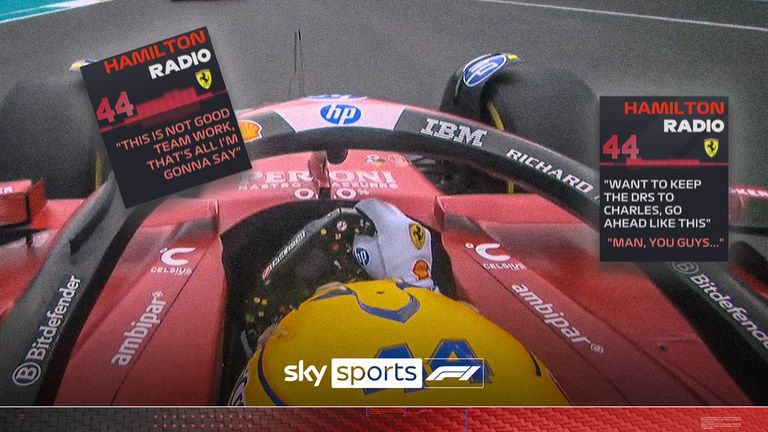
Lewis Hamilton sends jabs at Ferrari on team radio during the Miami Grand Prix

Car changes questioned as high expectations not met

Former W Series driver and Sky Sport Italia pundit Piria, believes heightened expectations ahead of the season have made the team’s slow start to the campaign even more painful.

She said: “The excitement was huge, but then everything kind of got worse and worse because Miami was pretty bad for Ferrari. The gap between McLaren and Lewis was a minute, so that definitely was something that Italians did not expect.

“I think Fred (Vasseur), since he started his journey in Ferrari, he’s always been really careful of keeping expectations down to earth. But this year it was different, everybody was really excited.

“Now everybody is obviously a bit disappointed.”

Please use Chrome browser for a more accessible video player

Speaking on the F1 Show Podcast, Ted Kravitz analyses why Ferrari’s performance has gone ‘backwards’ since the Chinese Grand Prix

Ferrari notably overhauled their 2024 car despite ending the season extremely strongly, leading some to question in recent weeks whether taking a more developmental approach to last year’s model would have been a better option.

Piria said: “The talk of the people is, ‘you finished the season on a high last year, why did you go along, and completely change the car?’

“The switch from push rod to pull rod, and they changed a lot of the rear suspension, which is probably the hard point for Ferrari at the moment, having that rear really cling on the ground because they’re really slippery. There’s a lot of oversteer going on.”

‘The tifosi passion is too strong for booing’

While there is frustration at Ferrari’s start to the season, Piria believes the tifosi will arrive in Imola full of hope that a reversal of their recent form is possible.

She said: “At the end of the day, the passion is so strong that I don’t believe people will be booing Ferrari. People will be definitely cheering Ferrari and hoping for something to happen.

“The season is still long. If we think about it, it was around this time of year in 2024 that McLaren really changed the game, in a way, so they definitely think that something is still possible.

Please use Chrome browser for a more accessible video player

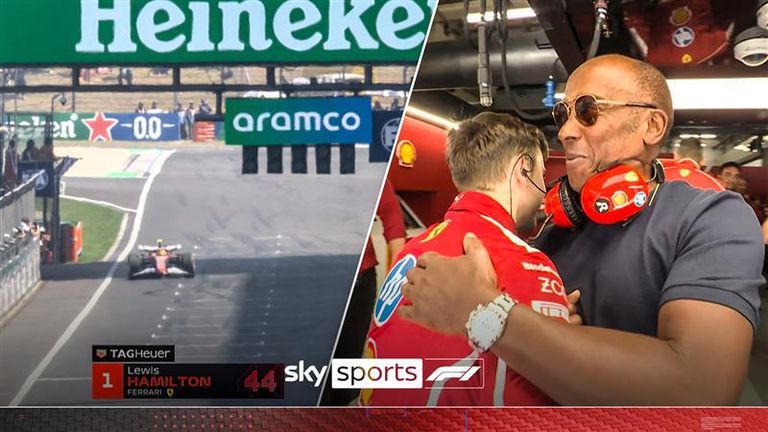
Hamilton led from start to finish as he claimed his first victory with Ferrari in the Sprint at the Chinese Grand Prix

“There will be frustration. I mean, Italians are known to be really emotional. I’m the first one to be really emotional. So that definitely will come up.

“If you think about Lewis Hamilton’s sprint win in China, his podium in Miami. It takes a lot of time for the tifosi to really get angry and disappointed, but it does not take a lot of time for them to regain their hopes again.

“And I really think that if these things don’t work, it just takes one race for them to really go ahead and really celebrate.”

‘Last chance to avoid focus to switching to 2026’

Just about every team on the grid are expected to bring significant upgrades to Imola, with the first European race of the season the usual arrival point for new parts.

This season’s Imola updates are seen as even more important than usual, with major changes to the regulations next year meaning teams not competing for victories are likely to shift their resources and focus to 2026.

Piria said: “There are obviously some upgrades. I think the feeling is that everybody will really rush into the upgrades in this part of the year because, if you wait, it’s probably too late.

“And later on in the season, I think your focus and energy needs to be switched to 2026. So, it’s really these next two, three races that teams, and especially Ferrari, will bring upgrades.

Please use Chrome browser for a more accessible video player

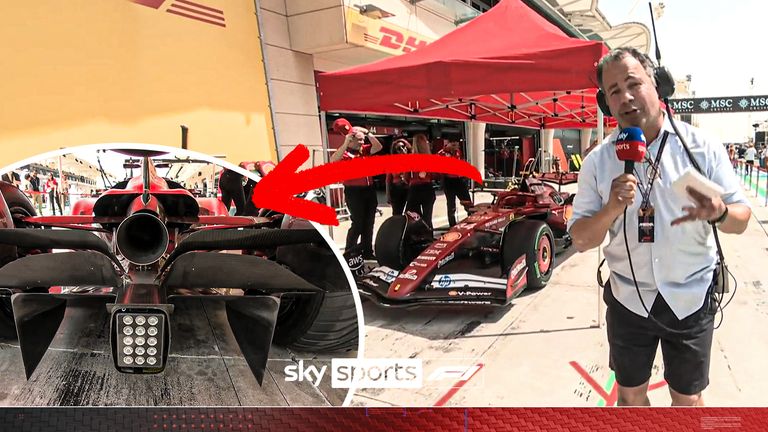
Sky Sports Formula 1 reporter Ted Kravitz assessed Ferrari’s first upgrade package of the season at the Bahrain Grand Prix

“It really is important that these upgrades work because if the upgrades work and they get closer to the leaders, then obviously you can continue investing on this year. But otherwise, I think you need to switch and look at 2026. And that’s what Ferrari will have to do.

“That’s why Imola will be important. Imola and Barcelona really will be two really pivotal proving grounds to understand if the focus needs to stay on 2025 or just switch straight away to 2026.

“Because, honestly, if they’re so far off in Barcelona, then probably it’s better they focus on next year.”

‘A lot of pressure on Vasseur’

Ferrari team principal Frederic Vasseur has enjoyed a largely successful tenure since taking on the role at the start of 2023, but is likely to come under increasing pressure should his squad’s struggles persist.

Piria said: “If we think about it, this is the first year that it’s actually 100 per cent Fred. He’s got his technical team, he’s worked on his car, he’s got the drivers he’s chosen, and things are not working the way they’re supposed to work.

Please use Chrome browser for a more accessible video player

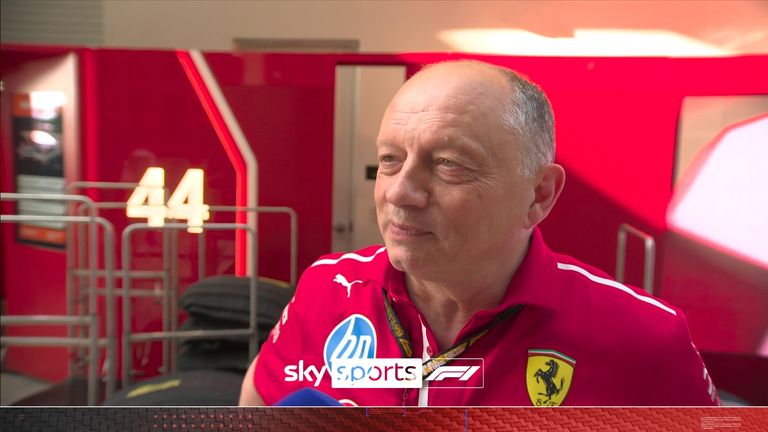
Ferrari team principal Fred Vasseur defends Ferrari’s team orders dispute at the Miami Grand Prix

“We’ve seen with this F1 car that it really takes something small for it to underperform or to perform really well. So, I do think still there’s some chance for them to pull themselves up.

“It’s something that we see a lot in Italian football. As soon as a team underperforms, they go ahead and change the trainer. So, for sure there’s going to be a lot of pressure on Fred.

“There was in the past on Mattia Binotto when he was underperforming, so knowing the tifosi, there will be. But then again, we’re talking about really just a few tenths of a second, and it doesn’t take much to change the picture.

“But if the situation that we saw in Miami goes ahead for the next races, then definitely there will be pressure on Fred.”

‘Kimi-mania’ to provide welcome distraction?

There has been some Italian success for the motorsport-mad nation to enjoy, with Andrea Kimi Antonelli making an encouraging start to his debut campaign with Mercedes.

The 18-year-old claimed his maiden F1 pole position in the Miami Grand Prix Sprint and has won the hearts of many Italians as he prepares for his first home race.

Please use Chrome browser for a more accessible video player

Mercedes’ teenage rookie Kimi Antonelli makes F1 history, becoming the youngest pole-sitter by taking the Sprint pole at the Miami GP

Piria said: “There’s a lot, a lot, a lot of excitement for Kimi. I think Italians did not expect him to be this fast, to be also this charismatic, to also really shows his Italian origins.

“He’s taking lasagna for the whole team on Thursday for them to eat. That is something that Italians will love. I think that a lot of focus is switching onto Kimi.

“I think there was anticipation for Kimi, but I think the tifosi did not absolutely expect Kimi to be so fast and so charismatic. So now it’s just like a Kimi-mania, especially after his pole position in Miami.

Please use Chrome browser for a more accessible video player

Antonelli joins the Sky F1 team after becoming the youngest pole-sitter in F1 history

“This will be a really important race for Kimi because he knows the track really well. He did quite a lot of testing here with the F1 car last year. It’s a track he knows well. it’s a track he feels good at, and he’s coming from Miami where he knows that he felt good.

“So I think there’s going to be even another step in him being fast and probably challenging George (Russell) in some way. So, I really think that there will be a lot of expectations for that.”

F1’s European season begins with the Emilia Romagna Grand Prix this weekend, live on Sky Sports F1. Stream Sky Sports with NOW – no contract, cancel anytime


Source link

The World Is Wooing U.S. Researchers Shunned by Trump

0


Help Wanted. Looking for American researchers.

As President Trump cuts billions of federal dollars from science institutes and universities, restricts what can be studied and pushes out immigrants, rival nations are hoping to pick up talent that has been cast aside or become disenchanted.

For decades, trying to compete with American institutions and companies has been difficult. The United States was a magnet for top researchers, scientists and academics. In general, budgets were bigger, pay was bigger, labs and equipment were bigger. So were ambitions.

In 2024, the United States spent nearly $1 trillion — roughly 3.5 percent of total economic output — on research and development. When it came to the kind of long-term basic research that underpins American technological and scientific advancements, the government accounted for about 40 percent of the spending.

That’s the reason political, education and business leaders in advanced countries and emerging economies have long fretted over a brain drain from their own shores. Now they are seizing a chance to reverse the flow.

“This is a once-in-a-century brain gain opportunity,” the Australian Strategic Policy Institute declared, as it encouraged its government to act.

Last week, at the urging of more than a dozen members, the European Union announced it would spend an additional 500 million euros, or $556 million, over the next two years to “make Europe a magnet for researchers.”

Such a sum is paltry when compared with U.S. budgets. So it’s understandable if their appeals are met with a request to “show me the money.”

After all, salaries tend to be much lower in Europe. In France, for example, a 35-year-old researcher can expect to earn around €3,600 (about $4,000) a month before taxes, according to the French Education and Research ministry. A postdoctoral fellow at Stanford would stand to earn the equivalent of around €6,000 (about $6,685) a month in the United States.

Still, there is interest. Of 1,600 people who responded to a March poll in the journal Nature — many of them Ph.D. or postdoctoral students in the United States — three out of four said they were considering leaving the country because of the Trump administration’s policies.

And Europe’s more generous social safety net can make up for a large part of the salary differential, said Patrick Lemaire, the president of the College de Sociétés Savantes Académiques de France, an arm of an international council that represents about 50,000 academics in France.

“There is much less money in Europe, and the salaries are much lower,” he said. “But you also have very good social security and health care, which is free; school and university tuition are free.”

Here are some of the pitches offered by countries and universities around the world.

In addition to the European Union, France pledged to put cash on the table last week. President Emmanuel Macron said his government would spend $113 million on a program to attract American researchers.

Other academic institutions are putting up their own money. Aix Marseilles University said it would spend up to $16.8 million to fund 15 foreign researchers. The offer has so far attracted more than 50 applicants, according to the journal Science. The University of Paris-Saclay is also establishing five new positions for American researchers.

Diana Morant, the minister of science, innovation and universities in Spain, said the government was budgeting an additional €45 million to lure scientists “despised or undervalued by the Trump administration.” The program offers American researchers an extra $200,000 grant on top of a million-dollar package normally offered.

Catalonia, Spain’s prosperous northeastern region, announced a $34 million program to attract American researchers who “can see their academic freedom restricted.” Twelve universities will be helping to sponsor 78 “high quality” scientists in total from the United States over the next three years.

Set to Bruce Springsteen’s “Born in the U.S.A.,” an Instagram post by Brian Mikkelsen, the chief executive of the Danish Chamber of Commerce, made this appeal: “This is a direct invitation to American researchers.” Talented people are losing their jobs or funding because politics is overshadowing science, he said. “We want you to know there is an alternative. In Denmark, we value science. We believe in facts.” He said the chamber and the society of engineers were asking to fast-track 200 positions for researchers over the next three years. There was no mention of funding.

Johan Pehrson, Sweden’s minister of education, organized a meeting last month with officials from nine universities to discuss how to attract disgruntled talent. “To American academics and scientists: We need you!” he wrote on X. Alas, there was no musical accompaniment or money mentioned.

“Academic freedom is under pressure in the U.S.,” said Jonas Gahr Store, the prime minister of Norway. The government is offering 100 million kroner, or $9.6 million, to fund experienced American and other international researchers next year.

The Labour Party government is reportedly planning to spend 50 million pounds, or $66 million, to finance and relocate international scientists.

The University Health Network in Toronto and other foundations are devoting 30 million Canadian dollars ($21.5 million) to recruit 100 young scientists from the United States and elsewhere. In April, the University of British Columbia initiated “U.S. Applicant Week” and reopened applications for some graduate programs to give American students another chance to apply.

Citing Trump administration policies, Portugal’s NOVA Medical School announced that it would budget an additional $2 million to cover the salaries of “international researchers of excellence” for three years and some relocation costs.

“The destruction of freedom of science and democracy in the U.S.A. leaves me speechless,” Eva-Maria Holzleitner, the minister of women, science and research, said in an Instagram video. “We are working on programs to provide a safe haven for students and scientists at risk.”

Last month, Austria opened its own national portal on Euraxess — Researchers in Motion, a platform supported by 43 European nations that offers a wide database of job offers, scholarships and grants as well as information about organizing a research project in Europe.

The Australian Academy of Science began a global talent search last month, with its president stating there was an “urgent and unparalleled opportunity to attract the smartest minds leaving the United States.” The callout asked for donations to finance the effort.

Ireland, Belgium, South Korea and China have also talked about starting programs directed at researchers, scientists and students in the United States.

Liz Alderman contributed reporting from Paris.


Source link

Hull KR and Leeds Rhinos to head to Las Vegas in 2026 as Super League representatives | Rugby League News

0


Hull KR and Leeds Rhinos have been chosen as the two Super League clubs to head to Las Vegas in 2026 when rugby league one again descends on Sin City, live on Sky Sports.

Taking place on February 28 2026, four NRL clubs plus the two Super League teams will take part in a huge day of rugby action at Allegiant Stadium, with the two NRL clashes plus the Super League bout all live on Sky Sports.

For the NRL, Canterbury Bulldogs, St George Illawarra Dragons, Newcastle Knights and North Queensland Cowboys have been chosen, meaning 16 different clubs will have played in Vegas in the last three years.

The Las Vegas round is a concept that started in 2024 when the NRL took two of its season-opening games to Las Vegas and saw the Manly Warringah Sea Eagles take on South Sydney Rabbitohs and Sydney Roosters face Brisbane Broncos, the Roosters and Sea Eagles coming away with wins.

Please use Chrome browser for a more accessible video player

Tyler Dupree – the nephew of Super Bowl winner Billy Joe Dupree – gets the opening try in Las Vegas for the Wigan Warriors against the Warrington Wolves

Then in 2025, Super League joined the party as Wigan Warriors dominated Warrington Wolves in front of quite the atmospheric crowd. That game took place alongside an international between Australia Jillaroos and England Women, plus Canberra Raiders vs New Zealand Warriors and reigning champions Penrith Panthers against Cronulla-Sutherland Sharks.

Now, after bids were put forward by the Rhinos, Robins, plus St Helens, Hull FC and Huddersfield Giants to RL Commercial via an application process, it is Willie Peters’ and Brad Arthur’s sides that will be charged with keeping that Super League party atmosphere going in 2026.

Please use Chrome browser for a more accessible video player

Jake Wardle put the finishing touch on a fantastic team try from Wigan Warriors against Warrington Wolves in Las Vegas

Rhodri Jones, the managing director of RL Commercial, said: “Congratulations to Hull KR and Leeds Rhinos for embracing the unique opportunity provided by taking a Betfred Super League fixture to Las Vegas in 2026 – and for submitting such strong bids to represent British rugby league in Nevada next year.

“It was a huge statement of intent by Wigan Warriors and Warrington Wolves to pursue the opportunity of making history in Vegas in 2025, and it is a credit to the impact they made that we have been able to work so closely with the NRL on ensuring a continued northern hemisphere presence.

“Super League’s first Las Vegas fixture delivered a huge spike in profile and glamour for the whole competition, as reflected in the viewing figures on Sky Sports, and in the response from other sports and the wider sporting public.

“It was vital that the two clubs to follow the trail blazed by the Warriors and the Wolves next year would be equally strong representatives of the Betfred Super League and the sport of rugby league, and we are confident in the ability of Hull KR and Leeds Rhinos to achieve that.”

Please use Chrome browser for a more accessible video player

Relive Super Bowl LVIII through the eyes of Taylor Swift!

The matches will once again be staged at the 65,000-capacity Allegiant Stadium, one of the most high-tech stadia in the world which is located just west of the Strip.

The Allegiant Stadium has been home to a number of iconic events, including Kansas City Chiefs’ dramatic overtime Super Bowl victory against the San Francisco 49ers in 2024. This means it has seen Usher perform a half-time show and Taylor Swift on the field celebrating with Travis Kelce following his win.

Talking of Swift, the Allegiant was also a stop on her epic Eras Tour, which broke a multitude of records and went on for over two years.

Throughout the year, it is also the home of the Las Vegas Raiders and is where more than 40,000 attended the NRL’s first Vegas promotion back in 2024.

Sky Sports will again show every game of Super League live this season – including two matches in each round exclusively live, with the remaining four matches each week shown on Sky Sports+ via the red button.


Source link

Elizabeth Pochoda, Journalist Who Traversed the New York Media World, Dies at 83

0


Elizabeth Pochoda, a journalist who widely traversed the media landscape of New York during her 50-year career, editing and writing for publications as diverse as The Nation, Vogue and The Daily News in New York, died on May 8 at her home in Brooklyn. She was 83.

Her death, from complications of amyotrophic lateral sclerosis, or A.L.S., was confirmed by her daughter, the novelist Ivy Pochoda.

Ms. Pochoda (pronounced pah-CO-da), who was known as Betsy, worked at fashion magazines (Mirabella and Vogue) and shelter magazines (House & Garden). She worked at general-interest publications (she was part of the team that relaunched Vanity Fair in the early 1980s) and at niche publications (The Magazine Antiques).

And she worked at publications with starkly different readerships, including the progressive magazine The Nation — from which she decamped for awhile to co-found the august literary magazine Grand Street — Entertainment Weekly, The New York Post and The Daily News.

Not that Ms. Pochoda had any patience with readership distinctions. “I don’t believe in different brows — high, low, middle,” she told Chicago Reader in 1993. “I believe if you write about things with the proper excitement, they’re accessible to everybody.”

“Betsy just had an amazingly broad vision, whether it was in the antiques world, the political world or the arts world,” said Eleanor Gustafson, a consulting editor at Antiques, who was the magazine’s executive editor during Ms. Pochoda’s tenure as editor in chief from 2009 to 2016.

To transform Antiques into something less, well, antique and more appealing to a wider audience, Ms. Pochoda asked Ted Muehling, a designer of jewelry and decorative objects, to go to the Shelburne Museum, in Vermont, choose an object that resonated with him in its vast collection of Americana, and write about it. Toots Zynsky, a glass artist, undertook a similar mission at the Peabody Essex Museum, in Salem, Mass., which focuses on Asian, Native American and folk art.

“She was a brilliant editor and enormously creative,” said Dominique Browning, who brought Ms. Pochoda along when she moved from the top of the masthead at Mirabella to the top slot at House & Garden in the mid-1990s.

“She was very clever at connecting writers with subjects: She had Michael Pollan writing about picture windows,” Ms. Browning continued, referring to the author of “The Omnivore’s Dilemma: A Natural History of Four Meals” (2006).

Ms. Pochoda, who had “a very quirky sensibility,” Ms. Browning said, commissioned the Irish novelist Edna O’Brien to write about her fax machine, and the novelist and essayist Cynthia Ozick to write about ladles.

She also supported writers in the ways that perhaps mattered to them most: financially and typographically.

“She called me cold and told me she had wanted me to write for The Nation, but was embarrassed because the fees there were so low,” the jazz critic and writer Gary Giddins said in an interview. But once she was at Vanity Fair, he added, “she wanted to give me a contract.”

When, as a possible subject, Mr. Giddins suggested Biréli Lagrène, a teenage French jazz guitarist who had recently recorded his first album, “Betsy told her boss: ‘Gary is the only person who can do this. We have to send him to Salzburg to do the interview,’” Mr. Giddins said. “And then Betsy told me: ‘You can’t just go to Salzburg. While you’re there, you have to go to Vienna, too.’ She was an enthusiast who protected her writers.”

Katrine Ames, a writer and editor who was on the House & Garden staff with Ms. Pochoda and who later wrote for her at Antiques, recalled an assignment to profile Ulysses Grant Dietz, then the chief curator at the Newark Museum. “I told Betsy it was way over the length she’d asked for, but there was such great information, and I told her I would trim it,” Ms. Ames said in an interview. “And she said: ‘No, I’m not going to cut a word. I’m just going to put it in smaller print.’”

The youngest of three children, Elizabeth Jane Turner was born on Dec. 13, 1941, in Chicago. Her father, Frederick, was a lawyer; her mother, Frances (Franklin) Turner, managed the household.

After earning a B.A. in English literature at Connecticut College, she went on to get a Ph.D. in medieval literature from the University of Pennsylvania in 1968. That same year, she married Philip Pochoda, an assistant professor of sociology at the University of Pennsylvania, who later became an editor and book publisher.

Ms. Pochoda was a professor of English literature at Temple University when, in 1976, she was offered the job of literary editor for The Nation on the strength of a recommendation from Philip Roth.

“I’d written a review of his comic fantasy ‘The Breast,’ and we met for drinks in Philadelphia after his class at the University of Pennsylvania,” Ms. Pochoda recalled in a tribute to Mr. Roth in The Nation after his death in 2018. “I was a fledgling academic, and I told him that I wanted out, that tenure was the worst thing that could befall me.”

“Betsy found journalism exciting,” Mr. Pochoda said in an interview. “We were both active in the antiwar movement, and Betsy was very outfacing about her beliefs and her cultural politics. The Nation was a much better fit than a life of academia.”

As The Nation’s books and arts editor, Ms. Pochoda was eager to “take on the rising tide of cant — she was keen on critics of received opinion,” Katrina vanden Heuvel, then the editor of the magazine and now its editorial director and publisher, said in an interview.

“She wanted to take on the big books, the books on the best-seller lists,” she said, adding: “She was not earnest. Betsy hated earnest. But she was tough. She was steel.”

Ms. Pochoda was as sharp and witty a writer as many of those she edited. “Here is a curious moment in the annals of American literary fetishism,” she wrote in a 2019 column for The Nation about the auction of Mr. Roth’s personal effects, taking due note of the mild interest in “the master’s Sandy Koufax baseball card and a badly chipped Pat and Dick Nixon souvenir plate.”

They were, she observed, “the leavings of a man well known for taking to heart Flaubert’s advice that writers should live modestly if they want to be wild and original in their work.”

Ms. Pochoda’s marriage ended in divorce. In addition to her daughter, Ivy, she is survived by a granddaughter and a brother, Frederick W. Turner.

“My tremendous mother passed this morning after a brief battle with A.L.S.,” Ms. Pochoda wrote in an Instagram post on Thursday. “Because she’s not around to edit this post, it’s going to be filled with platitudes. She would probably ask me to revise and resubmit.”


Source link

DOGE Removes Dozens of Resurrected Contracts From Its List of Savings

0


Elon Musk’s Department of Government Efficiency is no longer claiming credit for killing dozens of federal contracts after The New York Times reported last week that they had already been reinstated.

The Times had identified 44 revived contracts, and 43 of them were still featured on the group’s online “Wall of Receipts” as of last week. Then, late Sunday, Mr. Musk’s group deleted those claims for 31 of the contracts from its website, eliminating $122 million of the savings it claimed to have achieved by cutting federal contracts.

Those savings had actually disappeared days or weeks before, when federal agencies reversed cancellations they had made at the behest of Mr. Musk’s group. One revived contract, which DOGE said was worth $108 million, was restored by the Department of Veterans Affairs after eight days. Mr. Musk’s group still listed it as “terminated” for two months after that.

The presence of revived contracts on DOGE’s list of “terminations” was the latest in a series of data errors that have inflated its success at saving money. In the past, the group has deleted other errors from its “Wall of Receipts” site after new reports found that they were double-counting the same cancellations or claiming credit for killing contracts that had ended decades before.

On Sunday night, Mr. Musk’s group also added more than 800 new terminated contracts and raised its overall savings estimate — across all government activity, not only contracts — to $170 billion from $165 billion. The group did not delete all of the resurrected contracts identified by The Times. It left 12 on the site, still claiming that terminating those had saved taxpayers $121 million.

Harrison Fields, a White House spokesman, said the webpage would continue to be updated. He defended Mr. Musk’s group in a statement: “DOGE is working at record speed to cut waste, fraud and abuse, producing historic savings for the American people.”


Source link

Trump Can Use Alien Enemies Act Against Venezuelan Gang, Judge Rules

0


A federal judge on Tuesday opened a path for the Trump administration to move forward with deporting a Venezuelan man under the Alien Enemies Act, a wartime law, but ruled that it must first give him notice in his native language, 21 days to object and an “opportunity to be heard” in court.

The ruling, by Judge Stephanie L. Haines of the Western District of Pennsylvania, could provide a legal opening for the administration to restart deportations under the Alien Enemies Act of Venezuelans whom it considers to be members of Tren de Aragua, a gang that the White House has designated as a terrorist organization. It applies only within Judge Haines’s district, a portion of Pennsylvania that includes Pittsburgh and the Moshannon Valley Processing Center, a privately run immigration detention facility near Philipsburg.

The decision by Judge Haines, who was nominated by President Trump during his first term, cut against recent rulings by three other federal judges — in Texas, Colorado and New York — all of whom had determined that the administration was using the Alien Enemies Act unlawfully.

Those judges found that Mr. Trump’s proclamation invoking the act improperly stretched its meaning, ruling that mass migration — even by people who may be members of Tren de Aragua — does not constitute an “invasion” or “predatory incursion,” as the act requires. Judge Haines is the first to find that Mr. Trump’s proclamation under the act was legal.

The American Civil Liberties Union, which has taken the lead in challenging deportations under the Alien Enemies Act, said it would appeal Judge Haines’s decision.

The Supreme Court agreed in early April to temporarily allow the administration to proceed with its use of the law, provided it gave migrants the opportunity to challenge their deportations in court. As a result, judges around the country have been considering a series of challenges from migrants potentially subject to deportation under the law, including about 10 brought by the A.C.L.U.

One of those challenges has returned to the Supreme Court, where a ruling related to a group of Texas detainees could come any time.

Like some of her colleagues, Judge Haines found that the administration had not given detainees held under the Alien Enemies Act sufficient due process, as required by the Supreme Court. But her finding that Mr. Trump’s proclamation under the act was legal increases pressure on the Supreme Court to resolve issues surrounding the president’s use of the 18th-century statute.

“We disagree with the ruling and will appeal because the Alien Enemies Act is a wartime measure that cannot be used during peacetime to address migration or criminal activity,” said Lee Gelernt, a lawyer for the A.C.L.U. “But we are pleased that the court rejected the government’s argument that they can remove people in a mere 12 hours.”

Mr. Gelernt said that “at the appropriate time,” he also planned to contest the government’s claim that his client, known by the initials A.S.R., was in fact a member of Tren de Aragua. The government has used an eight-point scale that assesses tattoos and clothing to decide who is and is not deportable under Mr. Trump’s proclamation, according to court documents.

The A.C.L.U. has also brought a separate suit in Federal District Court in Washington, seeking to protect a related group of immigrants: about 140 Venezuelan men who were sent to El Salvador under the act in March and have been there ever since in the custody of jailers at a notorious prison known as CECOT.

The judge overseeing that case, James E. Boasberg, has indicated that he probably has the authority to consider the suit even though the men are no longer on U.S. soil. At a hearing last week, Judge Boasberg suggested that American officials might have what is known as “constructive custody” over the men because the Trump administration sent them to El Salvador under a deal with the Salvadoran government.


Source link

The Stock Market’s Boomerang Month Has Put Investors in a Bind

0


The stock market is now higher than before President Trump’s broad and steep tariffs sent share prices into a tailspin. The 10-year government bond yield is now largely in line with where it started the year. On Tuesday, a widely watched measure of inflation nudged lower.

Judging from a snapshot of today’s financial markets, it would be easy to conclude that very little had happened over the last four and a half months.

As the administration has dialed down its trade offensive, delaying the worst of the tariffs announced on April 2 and promoting a long list of trade deals in the works, stocks have risen and the unnerving volatility in the government bond market — which Mr. Trump noted when he first began pausing his tariffs — has subsided.

On Tuesday, the latest reading of the Consumer Price Index showed a slower pace of inflation in April than economists had predicted, despite widespread concerns that tariffs could have sped up price increases.

The S&P 500, which came close to hitting a bear market early last month, is now up slightly since the start of the year, after a 0.7 percent gain on Tuesday.

Still, investors remained cautious, and complain that the outlook remains uncertain, with little clarity on what the final level of tariffs will be.

That leaves them in a tricky position, with many saying they have little conviction as to where the economy is headed but they cannot afford to wait on the sidelines and miss out on the possibility that tariffs will be lowered further and stocks will rise.

In the meantime, investors are still trying to parse how the tariffs that remain in place — including 30 percent tariffs on many Chinese imports — are affecting consumer spending and corporate profits

John Kerschner, a portfolio manager at Janus Henderson, said signs of tariff-fueled inflation are not likely to show up in the economic data for months.

“The market will wait with bated breath for those readings to make a determination of where we actually stand on tariff induced rising prices. Thus, market uncertainty will likely remain elevated,” Mr. Kerschner said.

The Federal Reserve is also in a wait-and-see mode, unwilling to keep lowering interest rates before the inflationary effect of the new tariffs is known. That’s because lower interest rates stimulate the economy and could add a further tailwind to inflation.

Market bets on when the Fed will next lower interest rates have gradually been pushed further out. At the start of this year, investors were anticipating that the Fed would lower interest rates at its meeting last week. Now, investors expect the first rate cut of the year to arrive at the September meeting.

Ellen Zentner, chief economic strategist for Morgan Stanley Wealth Management said the lower than expected reading in the Consumer Price Index on Tuesday “doesn’t mean tariffs aren’t impacting the economy, it just means they aren’t showing up in the data yet.”

“Wait-and-see is still the name of the game, and until that changes, the Fed will remain on the sidelines,” she added.

The longer uncertainty prevails, the more it becomes its own economic force, separate from the tariffs. Uncertainty means businesses hold off on making investment decisions and consumers pull back from spending, slowing economic growth.

Beneath the surface, that concern is still evident in the markets.

The Russell 2000 index of smaller companies, which are more at risk from a downturn in the economy, has risen from its lows, but remains 14 percent lower than its peak in November. The S&P 500 is only 4 percent below its February high.

The lowest-rated corporate debt continues to show some signs of strain.

Then there is the dollar, which has sent the most pointed signal of concern about tariffs. The dollar index, which measures the currency against a basket of its peers, has fallen 6.9 percent so far this year.

That is the dollar’s biggest slide since the end of 2022, when the Fed pivoted from raising interest rates, which had strengthened the dollar, to holding them steady.

But even now, as tariffs have de-escalated, the dollar has regained ground.

“As far as markets are concerned, there’s now a belief that the worst of the trade war has passed, and that the trend is now towards de-escalation,” noted analysts at Deutsche Bank said in a recent research note. But they also warned, “The U.S. is not out of the woods yet.”


Source link