Home Blog Page 309

Tiny Company With China Ties Announces Big Purchase of Trump Cryptocurrency

0


A struggling technology company that has ties to China and relies on TikTok made an unusual announcement this week. It had secured funding to buy as much as $300 million of $TRUMP, the so-called memecoin marketed by President Trump.

GD Culture Group, a publicly traded firm with a Chinese subsidiary, has only eight employees, its public filings show, and recorded zero revenue last year from an e-commerce business it operates on TikTok, the Chinese-owned video-sharing app.

But on Monday, GD Culture Group became the latest business with foreign ties to seize on Mr. Trump’s crypto venture, which channels profits directly to the Trump family and has generated conflicts of interest that have alarmed ethics experts. (Memecoins like $TRUMP are a type of cryptocurrency based on an online joke or celebrity mascot and have traditionally not had any utility beyond speculation.)

In its statement, GD Culture Group, which is traded on the Nasdaq, said it would spend $300 million on a stockpile of Bitcoin and $TRUMP, using proceeds from a stock sale to an unnamed entity in the British Virgin Islands, a popular tax haven. It confirmed that investment plan in a securities filing late Tuesday.

The purchase would create clear ethical conflicts, enriching Mr. Trump’s family at the same time that the president tries to reach a deal that would allow TikTok to keep operating in the United States rather than face a congressionally approved ban.

The announcement also shows how investors around the world, including some that have virtually no public footprint, have latched on to the president’s crypto ventures to boost their own business prospects.

Just asserting a connection to Mr. Trump’s business can quickly raise a company’s profile. GD Culture Group’s struggling stock rose 12 percent on Monday, before losing those gains the next day.

“Make no mistake. These foreign entities and governments obviously want to curry favor with the president,” said former Representative Charles Dent, a Pennsylvania Republican who was the chairman of the House Ethics Committee. “This is completely out of bounds and raises all sorts of ethical, legal and constitutional issues that must be addressed.”

Investors in foreign countries have rushed to stock up on the $TRUMP coin since it hit the market in January. Some have stated explicitly that they hoped to use their purchases to influence Mr. Trump.

GD Culture Group was less clear about its intentions. In its statement, the company said it wanted to “enhance its balance sheet with high-performance, scalable digital assets.”

But any purchase by GD Culture Group would be the first known example of a China-linked firm buying Mr. Trump’s memecoin. In its financial disclosures, the company has noted that its subsidiary, Shanghai Xianzhui, might be influenced by demands from the Chinese government, though that is not unusual wording for a Chinese company.

“The Chinese government may intervene or influence its operations at any time,” the company said in an annual report filed in March.

In recent weeks, the Trump family has faced an intensifying backlash in Washington over its business dealings with foreign countries.

On the Senate floor on Tuesday, Senator Christopher S. Murphy, Democrat of Connecticut, spent 20 minutes walking through the various sources of overseas money pouring into the Trump family business, including the memecoin, a real-estate deal involving the government of Qatar and a separate $2 billion crypto deal with a firm backed by the United Arab Emirates.

“If a mayor of a small town was selling meetings at City Hall for a thousand bucks, he would be run out of town on a rail, but that’s exactly what Donald Trump is doing in the Middle East and all over the world,” Mr. Murphy said.

Representatives for the White House, the Trump Organization and GD Culture Group did not respond to requests for comment.

Mr. Trump started selling the $TRUMP coin three days before his inauguration, one of several crypto ventures that he and his sons have pursued. The coin’s price briefly surged, then crashed just as quickly, costing investors billions of dollars.

Last month, Mr. Trump and his business partners announced that the top 220 buyers of the coin would be invited to a dinner with the president at his golf club in Virginia, sparking another round of frantic trading that further enriched the Trump family. An analysis by The New York Times and the crypto forensics firm Nansen found that many of the coin’s buyers were based overseas in countries including Mexico, Singapore and Australia.

Under federal law, foreign investors are barred from donating to a political campaign or a president’s inaugural fund. But Mr. Trump’s crypto ventures have offered a new avenue for these overseas buyers to support him financially.

In April, a Mexico-based shipping firm, Fr8Tech, announced that it would spend $20 million on Mr. Trump’s memecoin as a way to “advocate for fair, balanced and free trade between Mexico and the U.S.”

The statement by GD Culture Group did not mention any policy objectives. Xiaojian Wang, the chief executive, said the company was embracing “industrial transformation” through cryptocurrencies and moving to “strengthen our financial foundation.”

It was unclear how exactly GD Culture Group had secured the funding to buy hundreds of millions of dollars of crypto. In its statement, the company did not reveal any information about the entity in the British Virgin Islands that agreed to purchase its stock.

In its filing with the S.E.C. on Tuesday, GD Culture Group confirmed its plans to buy $TRUMP — but again omitted any information about the entity that is financing the purchase.

Historically, the British Virgin Islands has been a favorite jurisdiction for overseas investors seeking to maintain confidentiality, because it is easy to set up a shell company there.

Matthew Goldstein contributed reporting.


Source link

Chasing Tax Cuts, Trump and Republicans Want to Make States Pay

0


When Gov. Wes Moore of Maryland signs his state’s budget into law as soon as Tuesday, it will signify the end of a difficult saga in which local leaders cut spending and raised some fees just to close a larger-than-expected $3 billion deficit.

But Mr. Moore, a Democrat, is already bracing for the next fiscal fight. Maryland and its finances are highly influenced by the federal government, and the Trump administration is looking to cut vast swaths of the aid it sends to states.

“We just made in Maryland the largest cuts to our budget in 16 years,” Mr. Moore said in a recent interview, adding that the steep cuts being contemplated in Washington could quickly prove “deeply damaging.”

Across the country, state leaders are beginning to express alarm about the budgetary fallout from President Trump’s economic agenda, warning that they will not be able to pick up the bill if the federal government reduces its funding for major public services. To governors and other officials, many of whom are Democrats, the fear is that Washington could sharply curtail federal programs that help states improve their infrastructure, respond to natural disasters, expand education and provide a suite of health, housing and nutrition benefits to the poor.

Republicans have framed their thinking as a matter of fiscal necessity and federalism, arguing that states should shoulder more of the financial burden for their citizens at a time when the national debt exceeds $36 trillion. But Mr. Trump has made no secret about the fact that many of his preferred budget cuts are meant to help offset his costly and ever-expanding legislative ambitions, including his desire to cut taxes.

In recent weeks, Mr. Trump has suggested that Washington could provide less to states in response to major storms, forcing local officials to assume more recovery expenses. His new budget proposed scaling back federal aid to states on programs varying from public education to mental health. And Republicans in Congress this week proposed forcing local governments to assume a greater share of the costs for food stamps and other federal anti-poverty programs.

For states like Colorado, which recently shrank its spending to close a roughly $1 billion deficit, a sharp decrease in federal funding could result in even more staggering cuts. Gov. Jared Polis, a Democrat, pointed to the example of Medicaid, the federally backed program managed by the states that provides health insurance to low-income families.

If congressional Republicans sharply reduce the amount they reimburse states for Medicaid, as some lawmakers have proposed, then Colorado is unlikely to be able to pick up the entire bill, Mr. Polis said. The result, he added, likely would be “hundreds of thousands of Coloradans losing the health care they have today.”

On Sunday, House Republicans released a draft plan for Medicaid that would limit states’ future ability to tax hospitals and other medical providers, a move meant to undercut a strategy that has historically helped those officials obtain federal funding.

At least eight states have warned in the meantime that they expect revenue disruptions on the horizon because of federal uncertainty, according to an analysis by the National Association of State Budget Officers. Some specifically cited spending cuts and other federal developments, including Mr. Trump’s global tariffs, as a source of their complicated fiscal predicaments.

Brian Sigritz, the director of state fiscal studies at the organization, said many states were also projecting less revenue growth and “will not be able to absorb the federal cuts” Republicans are pursuing.

The dynamic highlighted the difficult and consequential math facing Mr. Trump. Every fiscal change that he and his party is contemplating could carry significant ripple effects throughout the economy, affecting the public services on which millions of Americans and businesses rely.

Issuing his first budget since returning to office, Mr. Trump this month called for a sweeping retrenchment in Washington. The Trump administration proposed $163 billion in cuts targeting a staggering array of federal climate, education, health and housing programs, while increasing military spending and funding the president’s pledge to conduct more aggressive deportations.

Explaining the recalibration, Russell. T. Vought, the White House budget director, denounced broad categories of federal spending as wasteful or “woke.” Mr. Vought added that some of the proposed cuts reflected a belief that federal services “could be provided better by state or local governments (if provided at all).”

Under the banner of “revitalizing federalism,” the Trump administration recommended slashing $4.5 billion in education funds under a structure that White House officials have said “empowers states.” Mr. Trump also targeted more than $1 billion at the Environmental Protection Agency, and argued that its pollution-reducing grants had become a financial “crutch for states.”

And the administration looked to strip $2.4 billion from a federal program to help local officials finance clean water improvements. The president’s budget posited that states “are responsible for funding local water infrastructure projects, not the federal government.”

“It’s astounding, and what they said with it was, ‘You’ve had enough already. You should have rebuilt all your infrastructure,’” said Deborah B. Goldberg, the state treasurer of Massachusetts, on a call this week organized by an advocacy group for Democratic finance officials. “Well, every state has aging infrastructure, and you can’t rebuild it all at once.”

A spokeswoman for the White House budget office did not respond to a request for comment.

David Ditch, a senior analyst in fiscal policy for the Economic Policy Innovation Center, a conservative group, described the president’s strategy as a necessary corrective, citing the fact that Washington is already borrowing too much. “That money is extremely costly now,” he said, referring to high interest rates.

Mr. Trump’s budget threatened to leave states in a “precarious position to backfill billions of dollars for people, and to be frank, states can’t do that,” said Kim Johnson, the senior director for public policy at the National Low Income Housing Coalition, which supports greater federal spending on rental assistance.

Under Mr. Trump’s budget, housing programs would be cut by $26 billion next year, as part of an overhaul meant to shift more of the burden of managing rental assistance to the states. Many states already have outsize demand for these programs, and Ms. Johnson said that few would have the resources to absorb the loss of billions of dollars in federal aid.

“There is absolutely no doubt in my mind that if this proposal were to go forward, there would absolutely be people losing their assistance,” Ms. Johnson added.

Mr. Trump’s budget is not law, and it ultimately falls to Congress to set the nation’s spending levels. Republican lawmakers have eagerly embraced the president’s cost-cutting philosophy, as they scramble to reduce spending and find ways to offset the price tag of their tax package.

House Republicans have looked to extract significant savings from safety net programs, including the Supplemental Nutrition Assistance Program, or SNAP, which aims to combat hunger. Under a blueprint released late Monday, party lawmakers proposed forcing states to assume some costs of providing nutrition benefits beginning in 2028. Historically, these food stamps have been federally funded.

“Their plan is just to push a bunch of these costs over to the states, and it’s going to force states, of course, to cut benefits, eligibility or both,” Senator Amy Klobuchar, a Democrat from Minnesota, said on Tuesday.

G.O.P. lawmakers have also targeted Medicaid, considering at times whether to limit the amount they reimburse states for covering low-income patients. While Republicans have dialed back some of their earlier, more aggressive proposals to cut the program, they still have tried to rethink some of the financing in Medicaid so that they can extract more than $800 billion in health-related savings over the next decade to pay for their tax ambitions.

“We are prepared to stop the billions of dollars in waste, fraud and abuse in the Medicaid program by beginning to rein in the loopholes,” said Representative Brett Guthrie, a Republican from Kentucky and chairman of the House Energy and Commerce Committee. The panel convened Tuesday to start considering the Medicaid changes, which drew early protests from program supporters.

Studying a menu of early options, the nonpartisan Congressional Budget Office found in an analysis released earlier this month that state budgets would be able to absorb some, but not all, of the financial blow from a loss in federal funding, likely resulting in millions of people losing benefits.

In an updated report published by Democrats, the spending watchdog concluded that about 8.6 million people could lose insurance from the full suite of health changes that congressional Republicans seek. That figure could rise to 13.7 million if another set of federal health subsidies are allowed to expire at the end of the year, as planned, the analysis found.

“With the magnitude of the reduction in federal financing for Medicaid, it seems like it would be very challenging for states to make up and offset that amount and that magnitude of reduction,” said Robin Rudowitz, the director of the program on Medicaid and the uninsured at KFF, a nonprofit health policy research group.

Facing the potential loss of billions of dollars, a growing roster of state leaders had sounded alarms even before Republicans released that Medicaid plan, stressing that they cannot make up for a significant shortfall in federal support.

“We don’t have the ability to backfill any loss of federal funding,” Mr. Polis said.


Source link

Money Talks (and Listens) at Saudi Investment Forum Attended by Trump

0


The White House on Tuesday said that President Trump, while in Saudi Arabia, had secured $600 billion in deals with the Saudi government and firms. But the details the White House provided were vague and totaled less than half that number.

And a closer look at the projects the administration provided shows several were already in the works before Mr. Trump took office.

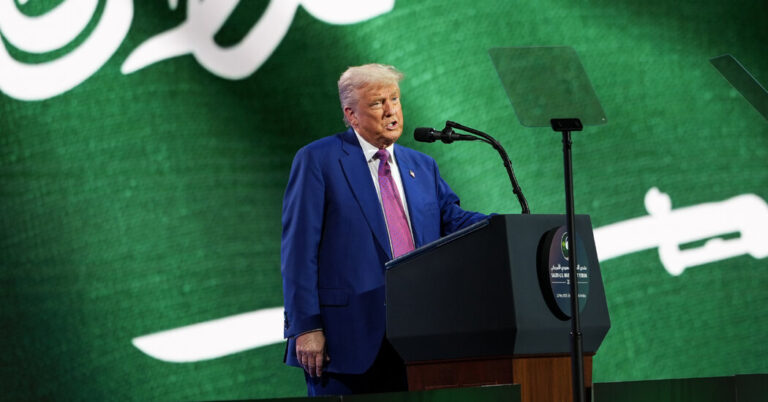
The announcement was made just before Mr. Trump spoke to a gathering of business leaders at the U.S.-Saudi Investment Forum in Riyadh, where he said the only country hotter than the United States was Saudi Arabia.

“We are rocking,” he said. “The United States is the hottest country, with the exception of your country.”

Before turning toward serious foreign policy matters, including news that he was lifting sanctions on Syria, Mr. Trump meandered through his favorite talking points, bashing his predecessor, former President Joseph R. Biden Jr., and boasting of carrying swing states in the election.

“The Arabian Peninsula — beautiful place, by the way,” he said. “Beautiful place.”

The biggest deal announced was what the administration called “the largest defense sales agreement in history.” The nearly $142 billion agreement will provide the kingdom with state-of-the-art warfighting equipment and services from over a dozen American defense industry companies.

The White House also included a commitment from the Saudi company DataVolt to move forward with plans to invest $20 billion in artificial intelligence data centers and energy infrastructure in the United States.

It also touted more than $2 billion in work American firms were performing on Saudi infrastructure projects, among them King Salman International Airport, King Salman Park and Qiddiya City, a massive entertainment complex. The construction company Jacobs announced its involvement in the new Saudi airport project last August. AECOM, likewise, had already won a contract to provide design and project management services for the Qiddiya City project.

The deals announced by the White House totaled around $283 billion — less than half the $600 billion promised by the Saudi crown prince — but the administration said those were “just a few of the many transformative deals secured in Saudi Arabia.” White House officials said more such deals would be forthcoming. (Organizers of the investment forum said that 145 deals were signed, totaling more than $300 billion.)

The White House said the package also included extensive training and support to build the capacity of the Saudi armed forces.

In his remarks at the conference, Mr. Trump hailed the kingdom’s rapid development and claimed the Biden administration had done little for the region.

He also went after Iran, calling it “the biggest and most destructive” force threatening the stability and prosperity of the Middle East, and vowing it would never have a nuclear weapon. At the same time, he said he was offering Iran “a new path and a much better path toward a far better and more hopeful future.”

“I have never believed in having permanent enemies,” Mr. Trump said.

The American president drew sustained applause when he announced that the United States would lift sanctions against Syria, giving the new government there a chance to rebuild a country devastated by its long civil war.

But there was silence in the crowd after he said it was his “fervent wish” that Saudi Arabia join the Abraham Accords, the 2020 deal in which two of its neighbors established diplomatic relations with Israel. The normalization of relations with the Israeli government is deeply unpopular among Saudis, polling shows, and Saudi officials say that recognizing Israel would hinge on the creation of a Palestinian state.

Mr. Trump also spoke of the war in the Gaza Strip between Israel and Hamas.

“The people of Gaza deserve a much better future,” he said. “But that will or cannot occur as long as their leaders choose to kidnap, torture and target innocent men, women and children for political ends.”

The White House announcement about the deals came hours after Mr. Trump and Crown Prince Mohammed bin Salman signed a series of agreements between the United States and Saudi Arabia.

They included a letter of intent on future defense capabilities; a memorandum of understanding with the Justice Department; cooperation on space and infectious diseases; and memorandums of understanding on energy and mineral resources.

They also included an agreement between NASA and the Saudi Space Agency for a Saudi CubeSat to fly on NASA’s Artemis II test flight. The CubeSat will measure aspects of space weather at a range of distances from Earth.

The United States and Saudi Arabia also signed an agreement between the Smithsonian’s National Zoo and the Royal Commission for AlUla to support the conservation of the endangered Arabian leopard through the creation of a dedicated exhibit in Washington.

Before signing the agreements, Mr. Trump again encouraged Saudi Arabia to increase its investment in the United States beyond $600 billion over four years. Mr. Trump asked that number to be raised to $1 trillion, though economists say the kingdom does not have such financial resources available.

“We have the biggest business leaders in the world here,” Mr. Trump said. “They’re going to walk away with a lot of checks.”

Mr. Trump spoke to those gathered at the U.S.-Saudi Investment Forum, which served as a meeting place for the world’s rich and powerful. He has stocked his White House with billionaires, including Elon Musk, the world’s richest man; Scott Bessent, the treasury secretary; and David O. Sacks, his A.I. and crypto adviser. All spoke at the event.

“How do we win the A.I. race?” Mr. Sacks told those gathered. “The answer is that we have to build the biggest partner ecosystem. We need our friends like the Kingdom of Saudi Arabia and other strategic partners and allies to want to build on our tech.”

The gathering at times felt like a Make America Great Again rally, if one attended by the chief executives of IBM, BlackRock and Citigroup. Many of them already have Saudi ties. One Saudi host joked that guests were “making aviation great again.”

Mohammad Bahareth, 40, a Saudi self-help influencer who runs a private space firm, showed up at the forum wearing a “Trump 2028” hat paired with a red tie. “President Trump always comes as a businessman,” he said. “This is the business mind-set.”

“We want technology,” Mr. Bahareth said. “We want enablement. We want to train our youth. We want the skills to be a superpower in this region.”

Leaders from Amazon, the defense giants Lockheed Martin and Northrop Grumman, and Halliburton were in attendance. So were Jensen Huang, the chief executive of Nvidia, the world’s largest semiconductor company; Alex Karp, the chief executive of the software company Palantir Technologies; and Patrick Soon-Shiong, the businessman who owns The Los Angeles Times.

The president of FIFA, Gianni Infantino, also spoke at the event. Saudi Arabia plans to host the World Cup in 2034.

The kingdom has been attempting to transform itself from a country wholly reliant on oil production into a more diverse economy. Saudi officials say that oil used to represent as much as 90 percent of government revenues; that figure is now closer to 60 percent, although economic activity remains highly dependent on oil, petrochemicals and oil-driven government spending.

Larry Fink, chief executive of BlackRock, the American investment firm, said Saudi Arabia had made “a statement to the world that we’re going to do it ourselves, that we’re going to build our economy, and we’re going to build our economy in a way that we are taking control.”

Mr. Trump told his advisers he wanted to score pledges of more than $1 trillion during his overseas trip, which will include stops in Qatar and the United Arab Emirates, two of the world’s wealthiest countries per capita.

Mr. Trump has claimed that, during a visit to Saudi Arabia during his first term in 2017, he secured $450 billion of investments in the United States. But an analysis by Tim Callen, an economist and former International Monetary Fund mission chief to Saudi Arabia, found that this amount did not fully materialize. The export of American goods and services to Saudi Arabia while Mr. Trump was in office from 2017 to 2020 totaled $92 billion, Mr. Callen found, less than the total during President Barack Obama’s second term.

The two other countries on Mr. Trump’s trip are expected to deliver major deals, as well.


Source link

PGA Championship tee times: Rory McIlroy grouped with Scottie Scheffler and Xander Schauffele at Quail Hollow | Golf News

0


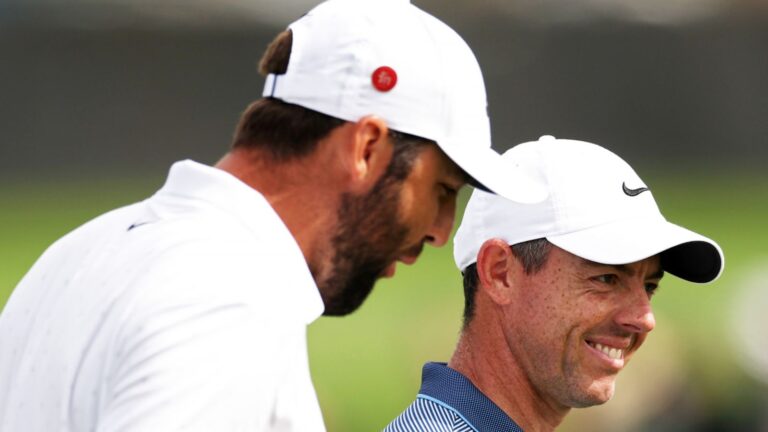
Rory McIlroy has been given a star-studded group at the PGA Championship after being drawn alongside Scottie Scheffler and Xander Schauffele for the first two rounds at Quail Hollow.

The world’s top three have been put together for the first two days of the PGA Tour’s flagship event, live from Thursday on Sky Sports, just as they were for two of last year’s majors and the opening two rounds of The Players in March.

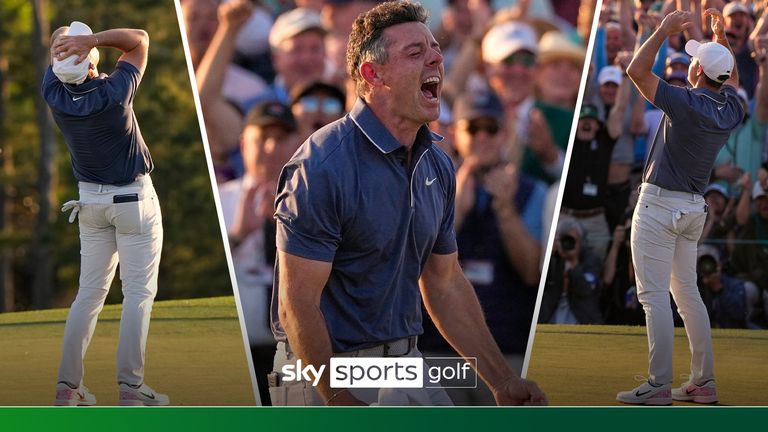
McIlroy features in a major for the first time since becoming golf’s newest career Grand Slam champion with a dramatic victory at The Masters, where he defeated Justin Rose in a play-off, with the world No 2 now chasing a fourth win of an already impressive 2025.

Please use Chrome browser for a more accessible video player

Watch highlights of McIlroy’s remarkable round to win The Masters in a play-off against Justin Rose and complete the career Grand Slam

The Northern Irishman – a four-time winner of the Truist Championship at this week’s venue – has been handed an early-late draw and will begin his bid for a sixth major victory at 8.22am local time (1.22pm UK time) on Thursday.

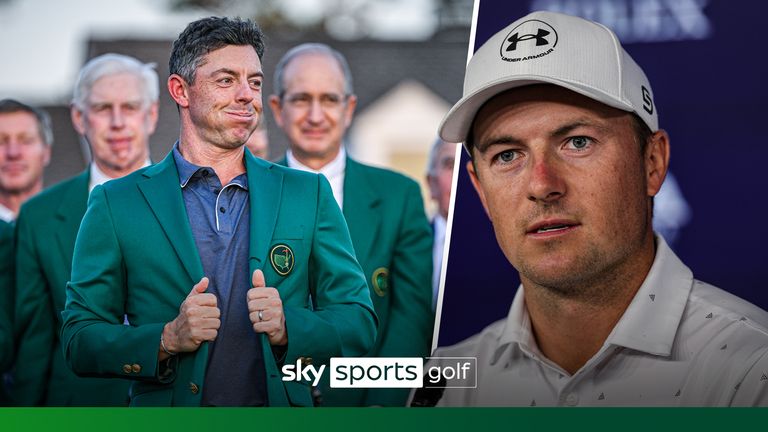
Former world No 1 Jordan Spieth, looking to emulate McIlroy and complete the career Grand Slam, is also out late alongside 2018 Masters champion Patrick Reed and Ryder Cup star Ludvig Åberg.

Please use Chrome browser for a more accessible video player

Jordan Spieth hopes he can become the seventh member of the ‘Grand Slam club’ at the PGA Championship this week and admits he was inspired by McIlroy’s achievement at The Masters

Spieth won The Masters and the US Open in 2015 before claiming The Open in 2017, with this year his ninth attempt at finding the major required to join McIlroy, Tiger Woods, Jack Nicklaus, Gary Player, Ben Hogan and Gene Sarazen in golf’s most exclusive club

Justin Thomas, who claimed the first of his two PGA Championship titles when it was held at this venue in 2017, is in a threeball with fellow double major champions Dustin Johnson and Collin Morikawa.

More to follow…

Thursday’s selected UK start times

USA unless stated

1238 Brooks Koepka, Rickie Fowler, Shane Lowry (Irl)

1322 Scottie Scheffler, Rory McIlroy (NIrl), Xander Schauffele

1814 Justin Thomas, Dustin Johnson, Collin Morikawa

1825 Jordan Spieth, Patrick Reed, Ludvig Åberg (Swe)

Who will win the PGA Championship? Watch throughout the week live on Sky Sports. Live coverage of the opening round begins on Thursday from 1pm on Sky Sports Golf. Get Sky Sports or stream with NOW.

Golf Now logo.

Get the best prices and book a round at one of 1,700 courses across the UK & Ireland


Source link

At Airbnb, New Services and ‘Experiences’

0


For 17 years, Airbnb has taken on the hotel industry, and now, two billion guests later, the company is upping the competition. In an announcement today, Brian Chesky, Airbnb’s chief executive, said the company will offer the kinds of services typically found at hotels, including room service, spa treatments and personal training, all bookable on Airbnb’s redesigned app. Other services could include meals prepared by professional chefs, and salon treatments like hair, nails and makeup.

The company is also reimagining Airbnb Experiences, its service that offers tours and events hosted by experts, to emphasize authentic cultural, culinary, sports and wellness activities run by locals. Initial offerings are available in 100 cities, including a tour of the recently restored Cathedral of Notre-Dame in Paris with Axelle Ponsonnet, one of the architects who restored the cathedral after it partially burned down in 2019. A ramen-making master class in Tokyo with the chef Saburo Ishigoka and a lucha libre training experience with a professional wrestler in Mexico City are among other new experiences.

“Airbnb is currently used as a noun and a verb, and it means a place to stay,” Mr. Chesky said in a recent interview. “The question we then asked was what if you could Airbnb more than an Airbnb and essentially monetize the biggest asset in your life, which is probably not your home but your time, passion and skill set.”

The company tested the idea when it launched Airbnb Experiences in 2016, but faced issues over quality and reliability.

Mitch Bach, the chief executive and co-founder of Trip School, an independent organization that trains tour guides, said the main issue with the original rollout was that the experience providers, though deeply embedded in their local culture, lacked the professionalism of trained tour guides.

Airbnb “purposefully eschewed tourist attractions, which is the bread and butter of a marketplace like Get Your Own Guide or Viator,” Mr. Bach said. “I think their bet was that around that brand and the genius of Airbnb’s position in the market, they could organically scale this, but they found very clearly that they couldn’t.”

In the reboot, Airbnb said it is focusing on quality and professionalism, with rigorous, ongoing vetting of tour providers’ “expertise, reputation and authenticity.”

Mr. Chesky said that the new product is still uniquely “Airbnb.” “We are finding the most interesting people in the world and designing new experiences,” he said, citing the Notre-Dame tour as an example of using an expert outside of the travel industry to offer a unique lens.

In some cities, Airbnb is launching a line of experiences that it calls “originals,” designed specifically for the company. These include pastry-making with the French Bastards Bakery chef Raphaelle Elbaz in Paris, or playing beach volleyball at Rio de Janeiro’s Leblon Beach with the Olympian Carol Solberg. The company is also teaming up with celebrities like Megan Thee Stallion and Sabrina Carpenter to host dancing and glamour sessions.

Airbnb said that many users found the company’s earlier experiences too expensive. At an average price of $65 per person, the new experiences are more affordable, Airbnb said, and are easier to organize. With the new app, users will be able to book homes, experiences and services in one place. Once the bookings are confirmed, a new “trip mode” allows guests to view and edit their itineraries. There is also a social component that allows people to see and interact with people booked on the same experience.

“I’ve always believed that Airbnb was destined to do more than just provide a place to stay,” Mr. Chesky said.


Follow New York Times Travel on Instagram and sign up for our Travel Dispatch newsletter to get expert tips on traveling smarter and inspiration for your next vacation. Dreaming up a future getaway or just armchair traveling? Check out our 52 Places to Go in 2025.


Source link

Trump’s China Deal Eases Tariffs but Doesn’t Resolve Future Uncertainty

0


The temporary reduction in tariffs that the United States and China announced in Geneva on Monday will lift, at least for now, the de facto trade embargo that had been in place between the two countries for the past month. It will reduce the chances that American shoppers will face empty shelves during the holiday season and perhaps limit the price increases they will have to endure. It sent stock prices soaring around the world.

But the deal does little to clear the cloud of uncertainty that has hung over the U.S. economy since President Trump took office in January.

If anything, the latest news serves only to reinforce the degree to which trade policy lies in the hands of one man, who sees his unpredictability as a strategic strength and scoffs at the kind of careful, deliberative process that has characterized policymaking under previous administrations.

In a little over a month, Mr. Trump has imposed steep tariffs on virtually every U.S. trading partner, then rolled them back temporarily. He has raised tariffs on China, then increased them further in response to Chinese retaliation, and now rolled back those tariffs as well — but only partially, and only for 90 days. Those back-and-forth decisions followed an earlier series of reversals, which on at least two occasions included tariffs that were announced and rescinded within a single day.

“Many of our trading partners now look at the U.S. and say, ‘Is this now the way trade policy continues in the future?’” said Steven J. Davis, a Stanford economist who has studied the way uncertainty affects the economy. “I think it’s quite clear that other countries around the world are reassessing their view of the United States as a reliable trading partner.”

A measure of economic policy uncertainty developed by Mr. Davis and two co-authors hit a record high this month, even surpassing the levels during the global financial crisis in 2008 and the coronavirus pandemic in 2020. Research has shown that such bouts of extreme uncertainty are damaging in their own right, discouraging companies from hiring and investing.

In the short run, the truce announced on Monday could provide some much-needed clarity. Under the agreement, which lasts 90 days, the United States will cut tariffs on goods from China to 30 percent from 145 percent. China will make a similar reduction in the retaliatory duties that it imposed on imports from the United States.

The new rates are still far above those in place before Mr. Trump took office and will almost certainly result in higher prices for consumers. But the reduction was large enough that it should allow for trade between the two countries — which had all but halted while the prohibitive 145 percent tariffs were in place — to resume to some degree. Many economists expect imports to surge in the coming weeks as companies race to restock while the lower rates remain in effect.

To investors, the agreement also served as a signal that leaders of both countries were looking for a way to step back from the full-blown trade war that had erupted over the past month. Economists had warned that the standoff could lead to “stagflation” — the combination of high inflation and slow growth — as the steep decline in commerce led both to higher prices and reduced demand for workers to drive delivery trucks, pack boxes and stock shelves. That outcome now seems less likely.

Stock indexes surged on Monday following the announcement and continued to rise on Tuesday. The S&P 500, which had fallen sharply when tariffs were announced, has now turned positive for the year.

“What it does is it signals that there is real, tangible progress,” said Sina Golara, a management professor at Georgia State University who specializes in supply chain issues. “There seems to be strong will and a political push to getting a deal. That’s all positive.”

But the agreement with China — like the framework deal with the Britain that was announced last week and the temporary rollback of tariffs imposed on other trading partners last month — is an executive action taken by Mr. Trump. It is not a legally binding treaty ratified by Congress. As a result, there is nothing to stop Mr. Trump from raising tariffs again at the end of the 90 days, or even before then.

On Monday, Mr. Trump said that if China doesn’t agree to a trade deal within the 90-day window, tariffs will go back up and be “substantially higher,” although not to 145 percent.

“If you’re just looking to get your imports in from China, I do think you have at least enough near-term certainty to start shipping as much as possible,” said Alex Jacquez, a former economic adviser to former President Biden who now works at the Groundwork Collaborative, a progressive think tank. “What I don’t think this does is decrease any long-term uncertainty because we still don’t know what the aim of Trump’s negotiations are with China or with anyone else.”

The short-term nature of the deal is likely to limit the benefits, said Gene Seroka, the executive director of the Port of Los Angeles. Companies will bring in products they need urgently, he said, but they will be reluctant to make bigger commitments, knowing the tariff rates could change yet again.

Executives he has spoken to are “hopeful, but very cautious,” Mr. Seroka said. “By no means has anybody said we’re out of the woods.”

For Learning Resources, an educational toy company in Vernon Hills, Ill., the 145 percent tariff rate was effectively an embargo. Rick Woldenberg, the chief executive, quipped at the time that the rate might as well be “100 billion percent.” He immediately paused some shipments, stopped filling open jobs and sued the Trump administration, arguing it had overstepped its authority.

With tariffs now lowered to 30 percent, Mr. Woldenberg said he would probably restart shipment of some of the goods that were stranded in China.

“We’ll probably bring it in because who the hell knows what they’ll do next,” he said. “This is, I suppose, better than the other kinds of chaos we were going through.”

But Mr. Woldenberg isn’t lifting his hiring freeze or making the other investments that have been on hold since tariffs took effect.

“We’re clinging to every dollar,” he said. “We’re going to need them because I have a new tax I have to pay.”

In surveys, many companies have said they are holding off on making hiring and investing decisions until they see where tariffs end up. A mere 90-day pause is unlikely to move them off the sidelines.

“When I’m out talking to business leaders, they don’t know what’s going to happen,” said Austan D. Goolsbee, the president of the Federal Reserve Bank of Chicago, in an interview on Monday. “They can’t make decisions counting on this or any other thing lasting in a permanent way.”

Nor can the Fed itself. Officials have warned in recent months that the tariffs are likely to lead to higher prices and slower growth. But the constant changes in trade policy have made it hard for the central bank to chart a clear path forward for interest rates. Instead, policymakers are essentially on hold, waiting to see how the economy responds before making any decisions.

The deal in Geneva will reinforce that caution, said Sarah House, an economist at Wells Fargo.

“This is a good example of why they’re in wait-and-see mode,” she said. “This is an indication of why they’re not trying to get out ahead of the impacts of these tariff policies, because they could be walked back at any moment, on any weekend.”

Colby Smith contributed reporting.


Source link

Is Slate Auto’s Electric Truck the Answer to Expensive Cars?

0


When Slate Auto, a start-up, unveiled a roughly $25,000 electric pickup truck last month, social media lit up with comments. Many people saw the no-frills vehicle, with an easy-to-repair body and nostalgic hand crank windows, as a refreshing antidote to today’s overstuffed and increasingly unaffordable cars.

How unaffordable? Average monthly payments on new cars have soared to $739 in March from $537 in January 2019, according to Cox Automotive. The average new car costs $47,400, with electric models around $59,200. High interest rates, now around 9.4 percent for a 72-month loan, have made cars even more of a financial stretch.

“Prices and interest rates are both high and stuck,” said Mark Schirmer, director of industry insights for Cox Automotive. “If you haven’t been in the market since 2018, it’s got to be shocking what a car costs.”

President Trump’s tariffs of 25 percent on imported cars and parts have consumers scrambling to buy before prices rise even more. Cars that cost less than $30,000 are especially vulnerable — nearly 80 percent of those are subject to tariffs. They include consumer staples like the American-made Honda Civic and Toyota Corolla, which rely on imported parts. Supplies of budget models are expected to shrink, and automakers may stop importing certain models entirely.

Enter Slate, a company based in the Detroit suburbs backed by venture capital firms and Jeff Bezos, the Amazon founder.

Chris Barman, a former Fiat Chrysler engineer and Slate’s chief executive, said the Slate Truck was expressly designed to ease sticker shock, although it won’t be available until late 2026. The company plans to produce the pint-size truck at a retrofitted printing plant in Indiana, with a capacity for 150,000 a year.

True to its name, the truck is designed to be a blank slate to which buyers can add more than 100 accessories, like power windows and heated seats, as their budgets allow or needs change. There is no built-in stereo or touch-screen display, but there are docks for phones or tablets, saving money and avoiding the digital obsolescence that often plagues auto entertainment and navigation systems.

“We think hardworking Americans are looking for good value for the money,” Ms. Barman said in a recent interview.

That message appealed to Liv Leigh, 41, who hopped inside a Slate Truck during its public debut at the Long Beach Airport in California in April. Ms. Leigh, a biomedical designer and electric-car enthusiast, paid $50 to reserve a Slate.

She watched the company’s employees transform the two-seat pickup into a five-passenger sport utility vehicle in about one hour, with a clever conversion kit aimed at do-it-yourself owners. Ms. Leigh appreciated the truck’s tidy size, shorter than a Civic, and its modest 150-mile range.

“I love the idea of an absolute base, beater truck, where I can stick a dog or muddy bikes or plywood in back,” Ms. Leigh said. “I don’t need a giant vehicle to haul stuff.”

Ms. Barman said efficient design and production were key to the company’s promised low prices. The truck’s gray plastic-composite body panels eliminate any need for a steel body-stamping plant or paint shop, which can cost automakers many millions of dollars.

Where a Ford Model T, an egalitarian car of another age, famously came only in black, Slate offers vinyl body wraps in 13 colors, for an extra $500. Buyers can also opt for a larger, factory-installed battery with a 240-mile range.

“That all keeps costs down, but also feeds into giving customers freedom of choice,” Ms. Barman said. “They can outfit the vehicle the way they want it, not the way a manufacturer has designed it.”

Slate hopes that a U.S.-based supply chain, including batteries made by SK On, a South Korean company, will make the pickup eligible for a $7,500 federal tax credit. Republican lawmakers on Monday released a budget bill that would eliminate that incentive and dismantle other Biden-era climate and energy policies.

That all depends on Slate’s successfully navigating a treacherous path for electric vehicle start-ups. Several young automakers, including Fisker, Nikola and Canoo, have sought bankruptcy protection and shut down.

With or without subsidies, Slate has a viable business plan, Ms. Barman said.

The company hopes to price its truck in the mid-$20,000s before government incentives, which would undercut the Nissan Leaf, which is the most affordable electric car at $29,300 but no longer eligible for tax credits. Chevrolet plans to offer a redesigned Bolt S.U.V. by year end for roughly $30,000. The General Motors brand intends the Bolt to qualify for the tax credit, dropping its effective price to roughly $22,500.

Erin Keating, the executive analyst of Cox Automotive, praised the Slate Truck’s ingenuity. But she said a pickup with two seats, short range and a bare-bones interior might not appeal to American car buyers who have grown accustom to having many tech and creature comforts.

“There’s nothing wrong with trying to crack the affordability crisis, but I don’t see this as a massive volume seller,” Ms. Keating said. “Ultimately, this is an extremely small E.V. with almost nothing in it, in a market with a growing number of affordable choices with much longer range.”

The Ford Maverick is a potential rival that may argue for or against Slate’s prospects. That compact pickup is two feet longer than the Slate. It seats five passengers and offers many more features. A hybrid version can reach 40 miles per gallon and travel more than 500 miles on a full tank.

Ford sold 131,000 Mavericks last year, suggesting there is strong demand for small, energy-efficient trucks. The company has raised the starting price of the hybrid version of the truck by $4,200 since 2024, to $28,150, including an increase last week that Ford Motor acknowledged was partly a response to tariffs on the truck, which is assembled in Mexico. The company said it was not passing on the full cost of the tariffs to customers and would offer all of its cars for the same price it sells them to employees until early July.

As much as any vehicle category, America’s pickup trucks epitomize how cars have changed over the last several decades, mostly by becoming bigger, more powerful and a lot more expensive. Some lavish pickups can cost as much as large European luxury sedans. Electric trucks from Tesla, Rivian and Ford range from $70,000 to more than $100,000.

Ms. Barman sees a market opening for entry-level truck fans, families shopping for a second car, empty nesters, and businesses such as landscapers, contractors and delivery workers. The company expects to sell many trucks to people who otherwise would buy a used car, the average price of which is $26,000.

One big challenge for Slate, or other companies hoping to sell more affordable cars, is that despite what they say they want, many Americans don’t seem to buy such cars.

Ms. Keating noted that roughly two dozen models on the market start at less than $25,000. All are small cars or S.U.V.s, including the market’s lowest-price car, the $18,300 Nissan Versa.

Nearly every midsize family sedan starts at less than $30,000, including the Honda Accord, Toyota Camry and Hyundai Sonata. But many Americans have rejected those cars in favor of bigger vehicles. S.U.V.s, pickups and minivans now account for more than 80 percent of the market.

Mr. Trump’s trade policies remain a wild card. Analysts expect tariffs will add thousands of dollars to the prices of new cars and drive up the demand and prices for used cars.

Americans bought 1.5 million new cars in April, 400,000 more than in April 2024. But analysts said people were buying now to avoid being raked over later. Jonathan Smoke, the chief economist at Cox Automotive, said new-car inventories had fallen to their lowest levels in two years, suggesting that prices could rise as dealers run out of cars made before tariffs took effect. S&P Global Mobility, another research firm, has lowered its forecast for new-car sales and now expects them to fall 4 percent this year.

For people seeking safe harbor in a financial storm, electric cars are a smart choice, Ms. Keating said. Between government and automaker incentives, new electric cars were discounted by 13.3 percent on average in March, a nearly $8,000 savings.

Ms. Leigh recently leased a Chevrolet Equinox for two years, paying $5,500 upfront, which works out to a monthly payment of $230. The electric S.U.V. has a 319-mile driving range. “Some people don’t realize how many incentives are out there,” she said.


Source link

CNN’s New Streaming Service Will Debut This Fall

0


CNN is getting ready to launch a streaming service. Again.

Three years after CNN’s parent company killed the hotly anticipated (and very expensive) CNN+ service shortly after it was released, the news network will introduce a new streaming product this fall that packages live and on-demand programming.

Mark Thompson, the company’s chief executive, told employees about the service in a town-hall meeting on Tuesday afternoon. Some of the details about the service remain unclear, including pricing and an exact release date. But Mr. Thompson said the new service would be tied to the company’s recently introduced subscription product, which gives paying members unlimited access to articles posted on CNN.com.

CNN is also taking pains to avoid alienating its most valuable customers: traditional cable distributors. Those customers will have free access to CNN’s streaming service.

Alex MacCallum, CNN’s executive vice president of digital products and services, said in a statement that bundling the video service with CNN’s existing digital subscription product will allow “audiences to get the most out of CNN in one seamless and simple way.”

Like most other news organizations, CNN is trying to find new sources of revenue as its traditional business declines. Earlier this year, Mr. Thompson said in an interview that the company’s “future prospects will not be good,” if CNN does not follow its audiences to new platforms “with real conviction and scale.”

Mr. Thompson, who previously led a digital turnaround at The New York Times, has focused his attention on CNN’s digital business since he joined the company in 2023. Investments in the digital efforts are fueled, in part, by a $70 million investment from Warner Bros. Discovery, its parent company.

Mr. Thompson hired Ms. MacCallum, a former executive at The Times, to lead the network’s digital push, and is planning to add 200 digital-focused employees this year. The network laid off roughly 200 employees focused on its traditional TV operations earlier this year.

CNN’s new service won’t look like CNN+, its failed $300 million splashy foray into streaming that was stuffed with well-known news and entertainment personalities. The new service will be more stripped-down, resembling the network’s traditional cable experience, although not an exact replica. Subscribers will also have access to a library of original shows and documentaries.


Source link

Tesla Board Chair Robyn Denholm Made $198 Million Selling Stock as Profit Fell

0


In March, after a steep decline in Tesla’s share price, Elon Musk told employees, “Hang on to your stock.”

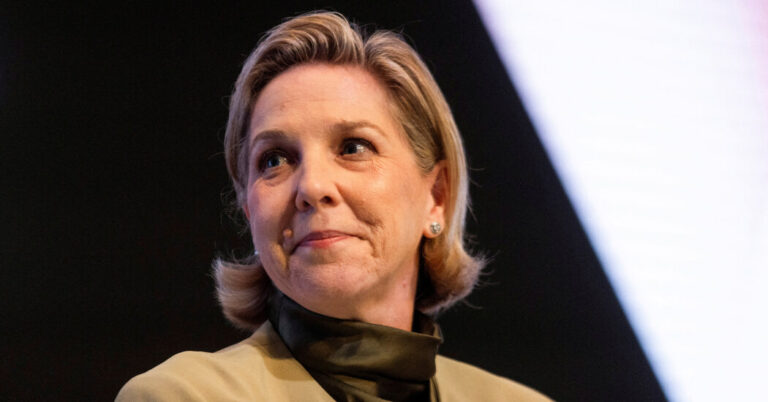
The chair of Tesla’s board, Robyn Denholm, has not heeded his advice. Ms. Denholm has made $198 million in the past six months selling Tesla stock that she earned for serving on the board, according to a New York Times analysis of securities filings.

That brings her total profit on the sale of Tesla stock to more than $530 million since becoming the board’s leader in late 2018, far more than her peers have made at the most valuable U.S. companies during that time, the analysis shows.

The share sales raise questions about Ms. Denholm’s confidence in Tesla’s prospects. Her most recent sales, executed under a prearranged trading plan filed last summer, came as Mr. Musk, the company’s chief executive, took a time-consuming role in the Trump administration. Tesla’s car sales have plunged partly because Mr. Musk’s political activities have turned off some car buyers. The company’s quarterly profit fell in the first three months of 2025 to its lowest level in four years.

Ms. Denholm earned the right to buy those shares, what are known as stock options, for serving on the board, a part-time position. Tesla granted the options between 2014 and 2020, and its share price has soared since then, giving Ms. Denholm has the right to buy shares for a lot less than their current price. Last week, for example, she bought more than 112,000 shares for $24.73 apiece and sold them the same day for more than $270.

“To dump her stock, it doesn’t send a message that this is a board chair who is invested in the future of the company,” said the New York City comptroller, Brad Lander, who oversees the city’s five public pension funds. As of March, those funds held more than three million Tesla shares, valued at the time at roughly $817 million.

A spokesman for Ms. Denholm said Tesla paid board members in a manner that was “completely aligned with shareholder interests.”

“The reason the value of the Tesla directors’ options has increased is because Tesla has outperformed its industry peers and created outsized returns for the owners of the company, the shareholders,” he said in a statement.

Stock options, which for years made up the bulk of Tesla directors’ compensation, are only valuable if the company’s share price rises, as Tesla’s did. Those who exercise their options to buy company stock can sell or hold onto their new shares.

Ms. Denholm has sold more than 1.4 million Tesla shares and continues to hold 85,000 of them and roughly 49,000 stock options, according to the Times analysis. Equilar, a compensation consulting firm, reviewed the methodology. Her latest wave of stock sales were carried out under the plan she set into motion in July, soon after Mr. Musk endorsed Donald J. Trump for president.

Under securities regulations, executives and other insiders can use such plans to trade shares in their companies. They are not required to disclose many details of their plans, including the reason for them or the conditions under which shares will be sold. They also have a lot of leeway to cancel the plans.

A native of Australia and veteran technology executive, Ms. Denholm has maintained a low profile and rarely speaks publicly about Tesla or Mr. Musk. She was recruited to the Tesla board in 2014 and appointed chair in 2018 after Mr. Musk agreed to step down from the position under a settlement with the Securities and Exchange Commission.

She and other board members have been criticized by some investors, activists and a Delaware judge for not serving as counterweights to Mr. Musk, who is widely seen as brash and impulsive. Tesla directors have also been faulted for failing to ensure that he remains focused on Tesla.

“Musk operates as if free of board oversight,” Chancellor Kathaleen St. J. McCormick of the Delaware Court of Chancery wrote last year when she ruled in favor of a shareholder who had challenged Mr. Musk’s 2018 pay package, valued at around $56 billion. Judge McCormick, in that ruling, described Ms. Denholm’s style of overseeing Mr. Musk as “lackadaisical.”

Tesla has appealed the decision, which voided Mr. Musk’s pay package, and Ms. Denholm has pushed back on Judge McCormick’s critique.

“Anybody who knows me, knows that I am not lackadaisical, now that I know what that word means,” Ms. Denholm told the Financial Times last year. “It is probably the furthest from the truth. I am really intense and very diligent in what I do.”

During the trial over Mr. Musk’s pay, Ms. Denholm described the money she had made from her Tesla board service as “life-changing.” Director pay at Tesla was subject to a separate lawsuit that Ms. Denholm and other board members settled in 2023.

Mr. Musk, who has long been a part-time chief executive of Tesla, has taken on even more responsibilities over the years. He has become a regular presence in Washington, leading President Trump’s efforts to slash government spending and dismiss federal government employees.

Mr. Musk said recently that he would cut back his time in Washington to one or two days a week. His attention will likely remain divided, however, because he also leads several other businesses, including SpaceX and X, the social media site he owns.

Ms. Denholm’s first sales under her recent trading plan took place in November, the week after the presidential election, as Tesla’s share price was climbing. The stock reached a new high a few weeks later, in December. She continued to sell through early May, as the company faced consumer backlash over Mr. Musk’s political activities and the stock price fell.

The stock is now down around 34 percent from its peak after recovering some of its losses over the last few weeks.

Mr. Musk acknowledged Tesla’s difficulties during a meeting with company employees in March. “If you read the news it feels like, you know, Armageddon,” he said half-jokingly.

He went on to advise workers not to sell their stock, saying that Tesla would become the most valuable company in the world as it perfects self-driving taxis and robots that resemble and move like humans. “The future is incredibly bright,” he said.

Ms. Denholm’s sales have far outstripped those by other Tesla directors, with the exception of Mr. Musk, who remained on the board after stepping down as chair.

She and other current and former Tesla board members agreed to settle a shareholder lawsuit over their pay in 2023, collectively agreeing to return compensation valued at $735 million. They denied wrongdoing. Stock options valued at more than $130 million were canceled on May 1 to satisfy Ms. Denholm’s obligations under that settlement, securities filings show.

Board members agreed in June 2021, after that lawsuit was filed, to forgo new equity grants.

Ms. Denholm also made more money selling her company’s stock than the leaders of other corporate boards during the same period. The Times reviewed stock sales by board chairs at the most valuable U.S. companies who, like Ms. Denholm, are not executives at those companies.

The nonexecutive chair with the next-highest profit from selling shares in the company he oversees was Stephen Hemsley of UnitedHealth Group. Mr. Hemsley has earned more than $100 million from the sale of UnitedHealth shares since November 2018, though he received all of that stock while he was chief executive of the health care company.

UnitedHealth Group confirmed the findings, but declined to comment. On Tuesday, the company announced Mr. Hemsley would retake the chief executive job in addition to serving as chairman.

Share sales by executives and directors often predict poor performance by the companies they lead, some academic research has found.

Leaders like Ms. Denholm have access to nonpublic information and a deep understanding of how broader economic forces may affect company performance. That can make their trades especially profitable, according to Nejat Seyhun, a professor of finance at the University of Michigan.

Insiders “set up plans when they have information,” Professor Seyhun said. If conditions change, “they can cancel those plans.”


Source link

Goodison Park: Everton Women to make stadium their permanent home from the 2025/26 season | Football News

0


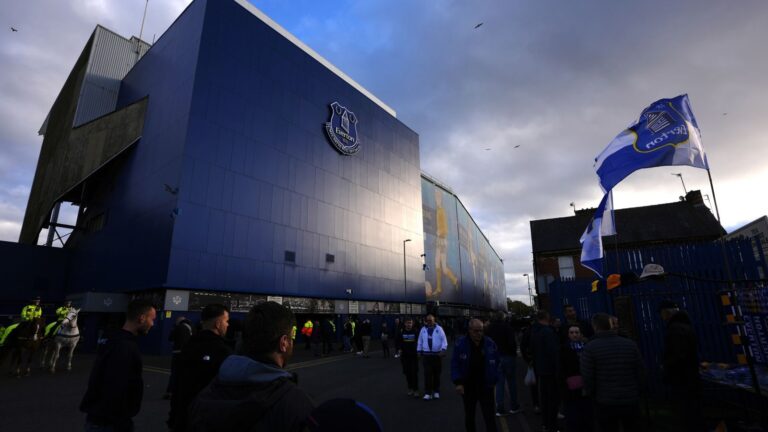
Goodison Park will become the permanent home of Everton Women from the 2025/26 season.

It comes as the men’s senior team move to the Everton Stadium this summer, located at Bramley-Moore Dock, keeping Goodison Park as a key part of the club.

Everton will make upgrades to the stadium to ensure it is in the best condition to welcome the women’s team when their season begins, with a club statement adding it will ‘also generate economic opportunities for local businesses through matchday footfall’.

Goodison Park will also host selected academy matches and expand Everton in the Community’s L4 campus.

Since 2020, the women’s team have been playing their home games at Walton Hall Park, which will continue to serve grassroots, community and development programmes for women’s and girls’ football.

They have also previously played games at Goodison Park, including the Merseyside derby against Liverpool Women.

An Everton statement also said: “The decision follows an in-depth review of the Goodison Legacy project by The Friedkin Group (TFG) since their takeover in December.

Honoka Hayashi celebrates with her team-mates after doubling Everton's lead against Man City
Image:
Everton Women finished eighth in the WSL last season

“The move addresses Everton Women’s rapid growth and need for a larger, more suitable venue than Walton Hall Park.

“TFG’s commitment to the women’s team has been evident through recent investments in players and staff. The ambition is to create a team capable of challenging for honours – backed by high-quality facilities and a world-renowned home.”

Everton CEO Angus Kinnear said: “We know how treasured Goodison is, not only to every Evertonian, but to the game itself, and being able to keep such an iconic stadium at the heart of the legacy project is something that has been incredibly important to us.

“The women’s game has grown significantly in recent years, and we believe that growth will continue and accelerate. We’re under no illusions; there are obstacles we need to overcome to make this a success both practically and economically, but we’re confident that we will overcome those challenges.”

Please use Chrome browser for a more accessible video player

Highlights from the WSL match between Everton and Spurs

Everton Women’s head coach Brian Sorensen added: “Moving to Goodison Park is a huge moment for everyone connected to Everton Women. To call one of the most iconic stadiums in world football our permanent home is a privilege and a clear sign of the ambition this club has for the women’s team.

“Our players will now have a stage that matches their potential, our fans will have a place to build an even stronger matchday culture, and young girls across Merseyside will see that this is a club where dreams can grow and come true.”

Goodison Park has a rich history in women’s football

As Everton Women move permanently in to Goodison Park, it is a reminder that the ground has played a part in the history of women’s football in England.

On 27 December 1920, the stadium played host to one of the landmark events in women’s football: a match between the Dick, Kerr Ladies and St. Helens Ladies, with an attendance of more than 45,000 people and thousands more outside.

The Dick, Kerr team – made up of munitions factory workers from the North West – were the most famous and successful women’s team of their era. They won the game 4-0.

Finnigan: Leading the team out at Goodison will be a career highlights

Everton Women captain Megan Finnigan:

“This move is a testament to where the women’s game is right now and, more importantly, where it is heading.

“Goodison is a magical stadium with a deep heritage and close ties to the local community.

“Leading the team out for that first home match of next season will be nothing short of a career highlight – and the prospect of what Everton Women can become with such an iconic ground to call our home is hugely exciting.”

Such was the interest, a police escort was required to help the teams get through the crowds of fans as they made their way into the stadium. £3,100 (worth £130,000 in 2025) was raised for servicemen’s benevolent funds.

Just months later, the FA banned women from playing on affiliated pitches – a rule that was not overturned for the next 50 years and stunting the progress of women’s football in England.

That game 125 years ago at Goodison remains a symbol of what women’s football could be, and what it could mean to fans.

“This is about more than just bricks and mortar – it’s about building a legacy,” said Richie Gillham, Secretary of the Everton FC Heritage Society and Member of the Everton Fan Advisory Board.

“The women that graced Goodison Park that represented both Dick, Kerr Ladies and St Helens weren’t just footballers, they were pioneers. At a time when society placed strict limits on what women could do, these players challenged the boundaries and captured the imagination of huge crowds up and down the country.

“Evertonians have a saying of ‘if you know your history’, that is why it is fitting and deeply meaningful that the very same ground that held the record attendance for a women’s fixture for so many years will now become home to Everton Women and they will now have the honour of inspiring the next generation.”


Source link