Home Blog Page 311

World Test Championship: Australia captain Pat Cummins returns for Lord’s final | Cricket News

0


Captain Pat Cummins, Josh Hazlewood and Cameron Green were all named to return from injury in Australia’s squad for the World Test Championship final at Lord’s.

All-rounder Green has not played for Australia since September following back surgery, but has been playing as a batsman only for Gloucestershire with a century in his first innings followed by a string of low scores.

Cummins missed the two-Test tour of Sri Lanka at the start of the year with an ankle issue, while fellow pace bowler Hazlewood missed that series after picking up a side strain during the previous series against India. He has also been sidelined by a shoulder problem.

Please use Chrome browser for a more accessible video player

South Africa guaranteed their place in the World Test Championship final at Lord’s after a two-wicket victory over Pakistan in Centurion

Chairman of selectors George Bailey admitted Australia were “fortunate” to welcome the trio back.

He said: “It means a lot to the group to reach the final and they are very much looking forward to the challenge South Africa will present at Lord’s.”

Australia take on South Africa at Lord’s from June 11 to 15 with the same squad then heading to the West Indies for a three-Test series.

World Test Championship 2023-25

World Test Championship 2023-25

Position Team Points Matches Points percentage
1 South Africa (qualified) 100 12 69.44
2 Australia (qualified) 154 19 67.54
3 India (eliminated) 114 19 50.00
4 New Zealand (eliminated) 81 14 48.21
6 England (eliminated) 114 22 43.18
6 Sri Lanka (eliminated) 60 13 38.46
7 Bangladesh (eliminated) 45 12 31.25
8 West Indies (eliminated) 44 13 28.21
9 Pakistan (eliminated) 47 14 27.98

England men Test matches this summer ☀️

All games at 11am UK and Ireland; all live on Sky Sports

  • vs Zimbabwe: Thursday May 22-Sunday May 25 – Trent Bridge
  • vs India: Friday June 20-Tuesday June 24 – Headingley
  • vs India: Wednesday July 2-Sunday July 6 – Edgbaston
  • vs India: Thursday July 10-Monday July 14 – Lord’s
  • vs India: Wednesday July 23-Sunday July 27 – Emirates Old Trafford
  • vs India: Thursday July 31-Monday August 4 – The Kia Oval

Ashes series in Australia 2025-26 🏏

All times UK and Ireland

  • First Test: Friday November 21-Tuesday November 25 (2.30am) – Optus Stadium, Perth
  • Second Test: Thursday December 4-Monday December 8 (4.30am) – The Gabba, Brisbane
  • Third Test: Wednesday December 17-Sunday December 21 (12am) – Adelaide Oval
  • Fourth Test: Thursday December 25-Monday December 29 (11.30pm) – Melbourne Cricket Ground
  • Fifth Test: Sunday January 4-Thursday January 8 (11.30pm) – Sydney Cricket Ground


Source link

Fed Official Still Bracing for Economic Slowdown Despite China Tariff Pause

0


A temporary reprieve in trade tensions between the United States and China has reduced, but not eliminated, the odds of a shock to the economy that carries a whiff of stagflation, a top official at the Federal Reserve warned on Monday.

Austan D. Goolsbee, president of the Federal Reserve Bank of Chicago, said tariffs and the uncertainty around President Trump’s policies still risked a combination of higher consumer prices and slower growth.

Mr. Goolsbee welcomed the decision by the United States and China to lower tariffs on each other’s imported products for 90 days. But he said the temporary nature of the deal and the extent of the levies still in place would weigh significantly on the economy.

“It is definitely less impactful stagflationarily than the path they were on,” Mr. Goolsbee, who is one of 12 Fed officials to vote on policy decisions this year, said in an interview. “Yet it’s three to five times higher than what it was before, so it is going to have a stagflationary impulse on the economy. It’s going to make growth slower and make prices rise.”

Under the agreement forged over the weekend, the United States reduced its tariff on Chinese imports to 30 percent from its current minimum 145 percent level, while China lowered its levy on American goods to 10 percent from 125 percent.

Taking into account these reductions, as well as the tariffs that remain in place with nearly all of America’s trading partners, economists estimate that consumers still face an effective tariff rate of around 15 percent.

The deal with China is the latest twist in what has been a tumultuous period for both the economy and global financial markets, as Mr. Trump has repeatedly changed which countries and products he wants to tariff and by how much. Before announcing the truce with China, the White House had also put in place a 90-day delay on so-called reciprocal tariffs that Mr. Trump had imposed on dozens of countries last month.

These policies, plus shifting plans related to forthcoming tax cuts and other central pillars of Mr. Trump’s agenda, have upended forecasts for the economy. Officials at the Fed have for weeks warned that tariffs will stoke higher inflation and slower growth. What is unclear is the magnitude of the shock, which will depend on which tariffs will actually stay in place and for how long, as well as how consumers and businesses respond.

Already, the uncertainty around these policies has started to have an impact. Surveys show that consumers have become increasingly downbeat about the economic outlook and that businesses are essentially frozen in place until there is more clarity about what Mr. Trump has planned.

“The way that we’re doing this is not free for the economy,” Mr. Goolsbee said. Businesses he has spoken to want to make big investments and hire people, but the prospects that any of these negotiated tariff truces could lapse have made decisions like that much more difficult.

As a result, the Fed is in a wait-and-see mode about whether and when it might restart interest rate cuts. The central bank paused reductions in January after reducing borrowing costs by a percentage point last year, arguing that a patient approach was prudent when it was not yet clear how much impact Mr. Trump’s actions would have on the economy.

Mr. Goolsbee again endorsed a waiting approach on Monday, pointing to the inherent uncertainty being stoked by the Trump administration.

“Their statements are coming with explicit recognition that this isn’t permanent and that it’s going to be revisited in the near future,” he said of the White House’s communications about tariffs. “Part of those announcements are explicitly putting off into the future major decisions, so that’s why it feels like there is in corporate America a lot of sitting on the hands. If they’re sitting on their hands, that backs into the wait-and-see posture of the Fed.”

Mr. Goolsbee said the Fed could afford to take its time before making any policy decisions. The labor market is still in solid shape, and there are not yet acute signs of strain. But the risks to inflation are not negligible, and it is still possible that tariffs of the nature that Mr. Trump is willing to keep in place could lead to a much more persistent problem, Mr. Goolsbee said.

“If we could get the dust out of the air, it would make sense to think that rates would be going down,” he said. “But the bar for action has to be high when there’s so much uncertainty.”

Mr. Goolsbee said that what would concern him was if either the labor market started to deteriorate notably or expectations about inflation over a longer time horizon started to rise significantly.

“Stagflation is a very uncomfortable situation for a central bank,” he said.


Source link

How the India-Pakistan Clashes Unfolded and What We Know About the Cease-Fire

0


India and Pakistan both claimed victory on Sunday after agreeing to a truce in a rapidly escalating conflict that was sparked by a deadly terrorist attack on the Indian side of Kashmir last month, raising concerns that the two nuclear powers could end up in all-out war.

India, blaming the April 22 attack on Pakistan’s history of sheltering terrorist groups, launched airstrikes across the border, with Pakistan responding in kind. The clashes quickly escalated, with both countries hitting deeper into each other’s territory than at any time in the last 50 years.

On Saturday, President Trump announced that the two sides had agreed to a cease-fire with the help of American mediators and, as the first full day of the fragile truce appeared to hold on Sunday, congratulated them for halting the aggression. While the damage will take weeks and months to tally, especially in a space of media blackouts and extreme disinformation, here is what we know about how the clashes played out.

In its opening round of airstrikes, before dawn on Wednesday, India struck targets deeper inside Pakistani territory than it had in decades, and by all accounts hit close enough to facilities associated with terrorist groups that it could claim victory.

It quickly became clear, though, that it had not been a clean strike but more of a protracted engagement between the two air forces — each side’s jets going at the other’s, with the boundary between them as a line that neither crossed. And India lost aircraft in the exchanges, including at least two of its most advanced fighter jets. Indian officials have declined to comment on the details of their aircraft loss, but they have not rejected reports that they lost jets.

The toll from the strikes was conflicting. India’s defense minister told a parliamentary briefing that they had killed “100 terrorists.” Pakistan put the death toll from India’s initial strikes around 30.

On the second day, as a diplomatic push for an off-ramp intensified, India said it had thwarted a Pakistani attempt overnight to hit military targets across a dozen border cities and towns. In response, it had taken the kind of action that analysts say almost always escalates a conflict: It struck sensitive military targets, particularly air defense systems in the Pakistani city of Lahore.

“A move like that is quite strident and would have concerned Pakistani forces, because in other contexts, taking out air defenses is a prelude to more serious action,” said Kim Heriot-Darragh, a strategic and defense analyst at the Australia India Institute. “You’d knock out defenses to open a corridor through which aircraft could fly and strike their actual target.”

Diplomats and analysts are uncertain about just how the events of early Thursday morning played out, but it is clear that something major had changed and was seen as an important shift in the pattern of escalation. Whether Pakistan was using a mass of drone incursions and missiles to actually try to hit India’s military sites or just to warn India and probe its air-defense systems for something bigger later is still unclear.

While attention was focused on the escalation in the skies, intense cross-border shelling inflicted heavy civilian casualties and forced tens of thousands of people to leave their homes in Kashmir.

Pakistan’s astonishing official response — a complete denial that it had done anything on the second night — left two explanations for the events: that it was just a probing mission, which Pakistan did not want to distract from the actual retaliation that was coming, or that it was an initial retaliation that had not succeeded.

But India nonetheless took the opportunity to damage crucial Pakistani military sites, and with that all bets were off. Pakistan vowed it would retaliate. The only way the escalation could be arrested was the way it had always been: with an outside power stepping in to tell both sides to knock it off.

On the nights of Friday and Saturday, the situation escalated rapidly to an air war with few holds barred, but in which ground forces had not been moved.

Pakistan launched an immense campaign of drone and missile strikes, targeting military bases across several Indian cities — this time with acknowledgment from the Indian side that, although its air defenses had thwarted much of the barrage, there was damage to equipment and loss of security personnel.

Indian officials on Monday said they had lost five members of the country’s security forces.

There was evidence, including satellite images shown by the Indian military, that India had also managed to cause damage on the Pakistani side, targeting airfields and more defense systems, and also striking near one of Pakistan’s crucial strategic headquarters. Pakistan’s military acknowledged for the first time on Tuesday that it had sustained casualties, confirming that 11 soldiers had been killed in the clashes, with 78 others wounded.

What alarmed the United States, and intensified the diplomatic push for the cease-fire that was announced late on Saturday, was not only that the two sides were increasing strikes to sensitive sites, but also just what the next step in a rapid escalation ladder for two alarmed nuclear powers could mean.

While the scores are still being tallied, and damage assessed, the four days may have fundamentally changed the reality of conflict in this part of the world toward noncontact warfare: barrages from a distance until the very last stages of battle, but still leading to escalation and the potential loss of restraint.

The abundance of new-generation technology, particularly cheap drones and loitering munitions, might initially suggest more precision targeting and less human cost. But in this latest India-Pakistan conflict, those technologies still prompted a rapid cycle of escalation that led to concerns that the use of nuclear weapons could be put on the table.

Zia ur-Rehman contributed reporting from Karachi, Pakistan.


Source link

A Toxic Pit Could Be a Gold Mine for Rare-Earth Elements

0


There’s a tale told about a miner who found copper cans in his garbage dump in the early days of mining. Wastewater from copper mining had flowed through his land, he said, and turned steel cans into copper.

The story might be apocryphal, but the process is real, and it’s called cementation. Montana Resources, the mining company that took over from the Anaconda Copper Company, still uses this alchemical trick in a process at its Continental Pit mine in Butte, Mont.

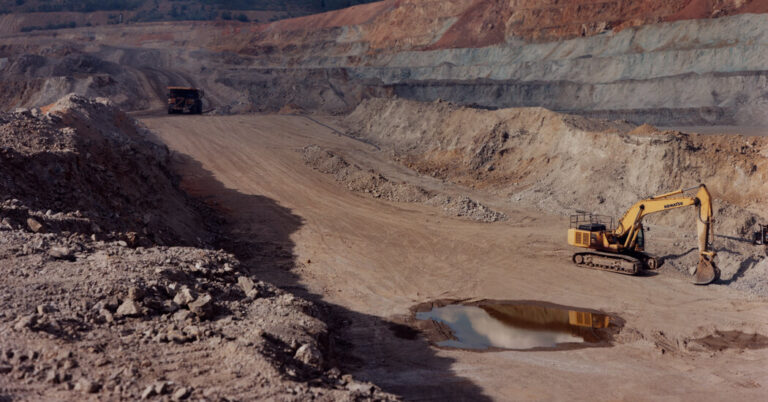
Next to the mine is the Berkeley Pit, which is filled with 50 billion gallons of a highly acidic, toxic brew. Montana Resources pipes liquid from the pit, enabling it to cascade onto piles of scrap iron. The iron becomes copper and is gathered for production.

While methods to remove metals from water have been around a long time, in recent years the global scramble for metals critical to manufacturing and technology advances has given birth to a new generation of extraction technologies and processes.

One of the mineral-rich sources researchers are focused on is wastewater, including the brine from desalination plants, oil and gas fracking water and wastewater from mining. Researchers at Oregon State University estimate the brine from desalination plants alone contains metals valued at about $2.2 trillion.

“Water is the ore body of the 21st century,” said Peter S. Fiske, director of the National Alliance for Water Innovation at the Department of Energy’s Lawrence Berkeley National Lab California. “Technology now is allowing us to pick through the garbage piles of wastewater and pick out the high-value items.”

Research on the extraction of rare earths, a set of metallic elements, from waste is widespread as the need for them increases significantly. Researchers at Indiana Geological and Water Survey at Indiana University, for example, are studying the potential for mining rare earths in coal waste, including fly ash and coal tailings. And researchers at University of Texas at Austin have created membranes that mimic natural ones to separate rare earths from waste.

Not only is mining wastewater more economical and faster than starting new mines, it is also cleaner.

Among the big waterborne prizes in the pit next to Butte are two light rare-earth elements (REEs), neodymium and praseodymium. They are vital for small, powerful magnets in electric vehicles, for medical technology and for defense purposes, such as precision-guided missiles and satellites. A single F-35 fighter jet uses 900 pounds of rare-earth metals.

“We’re turning a giant liability into something that’s contributing to defense,” said Mark Thompson, vice president for environmental affairs at Montana Resources. “There’s some high-level metallurgy going on here. Real egghead stuff.”

This is a critical time for research into domestic production of rare earths. Not only does the United States lag far behind China, but President Trump’s trade war has spurred China to threaten to further restrict rare-earth mineral exports as a result of the Trump tariffs. Experts with the critical minerals security program at the Center for Strategic and International Studies say the large gap would enable China to expand its defense capabilities far more quickly than the United States could.

Both Greenland and Ukraine are the focus of the Trump administration’s attention in large part because the countries have significant deposits of rare earths.

Mr. Trump also just ordered the government to move toward mining large portions of the ocean floor, including in international waters, for its mineral riches.

There are 17 types of metals known as rare earths, all of which have been found in the Berkeley Pit. They aren’t rare in prevalence, but they are called that because they are often scattered in small concentrations.

Rare earths are sorted into two kinds: heavy and light. Heavy rare earths — such as dysprosium, terbium and yttrium — have a greater atomic weight and are typically more rare, meaning they sell in smaller quantities and are prone to shortages. Light metals, by contrast, have a lower atomic weight.

Acid mine drainage is a highly toxic pollutant created when sulfur-bearing pyrite in rock is exposed to oxygen and water during mining. The drainage then oxidizes and creates sulfuric acid and poisons waterways. It’s one of the country’s biggest environmental problems, and tens of thousands of abandoned mines have contaminated 12,000 miles of streams.

However, the acid also dissolves zinc, copper, rare earths and other minerals out of the rock and into the water, providing an opportunity for the right technology to extract them — which didn’t exist until recently.

Paul Ziemkiewicz, director of the water research institute at West Virginia University, has researched the pit water in Butte for 25 years. He and a team of researchers from Virginia Tech and L3 Process Development, a chemical engineering firm, developed a method to extract critical metals from acid mine drainage in West Virginia’s coal mines, the same process used in Butte. Large, densely woven plastic bags are filled with a mudlike sludge from the water treatment plant. The water slowly percolates out, leaving a preconcentrate of about 1 to 2 percent rare earths that need further refinement, with chemical processes. The final step in the patented process is an extraction with solvents that creates pure rare-earth elements.

“One of the nice things about acid mine drainage is the concentrates we get are particularly enriched in heavy rare earths,” Dr. Ziemkiewicz said. “The light ones aren’t as valuable.”

The Butte project is awaiting word on a Department of Defense grant of $75 million to build a concentrator, the last step needed to refine the preconcentrate to rare earths and begin full-scale production.

Zinc is also plentiful in the acid-mine-drainage mix here and, because it fetches a higher price, is important as a way to pay for the process. Nickel and cobalt are also extracted.

While rare-earth elements are much in demand, China produces a majority and manipulates prices to keep them low, which forces out competition. That’s why the Defense Department is funding much of the work on rare-earth elements and other metals. The United States has just one operational rare-earths mine, in Mountain Pass, Calif., which produces around 15 percent of the global supply of rare earths.

The Berkeley Pit has been a festering sore since 1982, when, the Anaconda Copper Company closed the open-pit mine, turned off the pumps and let water fill it. The water is so acidic from acid mine drainage that when tens of thousands of snow geese flew over it on their migration in 2016, many landed on the surface and were quickly poisoned. About 3,000 birds died.

The Atlantic Richfield Company and Montana Resources are required to treat the pit water in perpetuity to keep it from reaching levels that could contaminate the area groundwater. (Montana Resources mines the Continental Pit, next to the Berkeley Pit.) The Clean Water Act requires that companies treat acid mine drainage, an expensive process. Adding another level of treatment to the Horseshoe Bend plant here is less costly than building a new one and can offset the costs of treatment or even turn a profit.

There have been dozens of research efforts to liberate the suspended metals from the water. Mr. Thompson displayed a map with lines radiating out from Butte, showing where water samples had been sent to research facilities across the country. But the metal-producing process that’s going on now is the first one that’s proven economical.

While the riches in the mineral soup here have been known for decades, a way to extract them was elusive, until Dr. Ziemkiewicz’s team developed the new method. He has been producing rare earths at two coal mines in West Virginia where acid mine drainage is a problem. Each mine produces four tons of rare earths a year.

The Berkeley Pit, however, has a much richer concentration of rare earths in solution and a higher volume of water and is expected to produce 40 tons a year. Dr. Ziemkiewicz believes this process if used at other mines could eventually provide nearly all of the U.S. imports of rare-earth elements needed for defense purposes, which, he said, currently amount to about 1,400 tons.

But demand for rare earths could increase by as much as 600 percent in the coming decades, according to some estimates.

In the global effort to clean water and produce critical minerals, the lab at Lawrence Berkeley researches an array of water-filter-related technology, especially experiments to improve membranes. It operates a particle accelerator called Advanced Light Source, which creates very bright X-ray light that enables scientists to study various membranes at the atomic scale.

The lab has worked with outside researchers to create a new generation of filters, called nanosponges, that are designed to trap a single target molecule, such as lithium.

“It’s an atomic catcher’s mitt,” said Adam Uliana, the chief executive of ChemFinity, a Brooklyn company studying the use of nanosponges for cleaning many different types of waste. “It catches one and only one type of metal.”

Lithium, cobalt and magnesium are critical minerals, in addition to rare earths, that have attracted considerable attention from researchers.

Ion exchange, a proven technique for removing metals and pollution from water, is gaining interest. Lilac Solutions, a start-up in Oakland, Calif., has developed the specialized resin beads needed to extract lithium from brine with ion exchange and plans to start its first production facility at the Great Salt Lake in Utah.

The company’s technology pumps brine through ion exchange filters, extracts the mineral and returns the water to its source, a process David Snydacker, the company’s president, said caused very little environmental disturbance. If it proves to work at scale, it could revolutionize lithium extraction and reduce or eliminate the need for underground mines and open pits.

Magrathea Metals is a start-up in Oakland that makes magnesium ingots from salty brines left over after seawater has been desalinated. The company allows the brines to dry, which leaves behind magnesium chloride salts. An electrical current — which can utilize off-peak renewable energy — heats the solution and separates the salts from the molten magnesium, which is cast into ingots.

Its chief executive, Alex Grant, said this process is extremely clean, though it has yet to be used to manufacture magnesium at a large scale. The Department of Defense has funded much of its work.

China produces 90 percent of the world’s magnesium. The metal is smelted with something called the Pidgeon process — . heated with coal-fired kilns to around 2,000 degrees, which is highly polluting and carbon-intensive. Dr. Fiske expects a lot more innovation.

“Three vectors are converging,” he said. “The value of some of these critical materials is going up. The cost of conventional mining and extraction is going up, and the security of international suppliers, especially Russia and China, is going down.”


Source link

Germany Has a Long History of U.S. Investment. That May Be Changing.

0


President Trump has defended his decision to introduce tariffs on goods from other countries by arguing that it will lead companies to shift production to the United States, bringing back jobs.

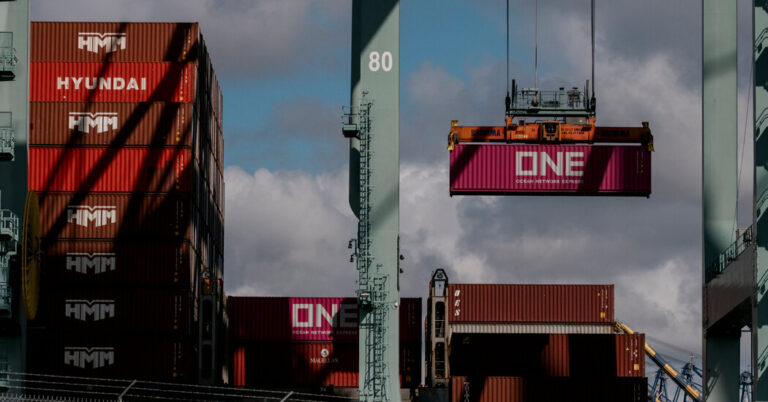
For German companies, which have been producing their goods in the United States since the late 1800s, such arguments ring hollow. Thousands of German companies already have factories in the United States, accounting for 12 percent of the country’s foreign investments.

Automakers like BMW and Mercedes-Benz have long had plants in the United States. In 2023, the candy maker Haribo opened its first U.S. plant in Wisconsin, after decades of importing its gummy bears.

Many German companies are now calling that strategy into question. Recent surveys indicate that German manufacturers are pulling back from investing in the United States, and those that already have a footprint there are more gloomy about their futures.

The German Chamber of Commerce and Industry regularly polls the 6,000 German companies with U.S. factories to gauge their outlook on the economy. For years, those companies held an “above average” view, said Volker Treier, the head of foreign trade at the chamber. But since Mr. Trump announced the initial round of tariffs on April 2, sentiment has dropped.

“They have fallen against the trend,” Mr. Treier said. “Because tariffs are poison.”

Instead, it appears that many German firms are keeping their investments at home. Only 19 percent of companies in Germany said they were looking to invest in North America, down from 25 percent, according to a separate survey of 216 German financial executives by the consulting firm Deloitte.

German companies also appear to be more willing to invest at home, since a new government under Friedrich Merz was sworn in last Tuesday with a mandate to reduce bureaucracy and bring down energy prices. Many are also hoping to cash in on the 500 billion euros (about $564 billion) the government plans to borrow to invest in infrastructure over the next 12 years.

That excitement could change in the weeks before the 90-day suspension of tariffs ends in July, or if the European Union and Washington are able to reach a trade agreement.

In their first call since Mr. Merz took office, the chancellor and Mr. Trump “agreed to resolve the trade disputes quickly,” Mr. Merz’s office said.

Among the German industries hardest hit by the tariffs was the automotive sector, which has had a significant presence in the United States since the mid-1990s, when BMW and Mercedes-Benz set up plants in the South. Roughly a decade later, Volkswagen followed.

Leaders of the three companies have held talks in Washington, hoping to ease the tariffs. Both Mercedes and Volkswagen, which owns Audi, have said they were considering moving the production of some models to the United States, which the White House celebrated this month as proof that the president’s strategy was working.

Beyond the leading automakers, dozens of smaller German companies produce goods in the United States, contributing to Germany’s overall direct investment there, worth $657.8 billion in 2023. That was more than three times as much as the $193.1 billion that flowed into Germany from American companies in the same year.

That discrepancy is certain to feature in tariff negotiations involving Mr. Merz and Mr. Trump, who has zeroed in on the trade deficit, in which Germany sells more goods to the United States than it buys.

“We have invested more, our companies have created more jobs in the U.S. than American companies in Germany,” Mr. Treier said. “That to me is the most important starting point for when we talk about fairness.”

For German companies, the reason to set up production in the United States has been driven by factors like the ease of market access and a desire to produce locally.

Haribo’s move to Wisconsin was part of a shift to a locally focused strategy, said Christian Bahlmann, a senior vice president at the company. “We are pursuing this long-term plan — regardless of the current customs policy,” he said.

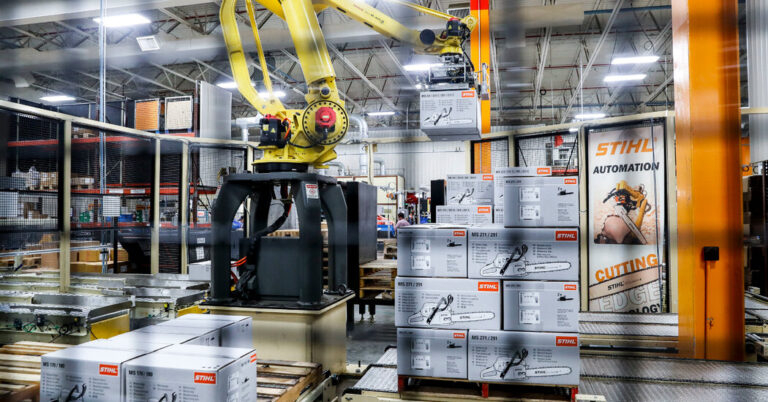
Stihl, a maker of chain saws and other power tools, is based in the southwestern German city of Waiblingen. But for decades, it has run a factory in Virginia.

“We did that in 1974 not because of administrative pressure, but because we believe in local production,” the chairman of Stihl, Michael Traub, told reporters recently, stressing that the move had been based on good business sense, not politics.

That locally focused approach is now helping Stihl to avoid some of the worst effects of Mr. Trump’s import taxes. But the company still relies on batteries and other components that are shipped to the United States from its factories in Europe and Brazil, which means that prices of some items will inevitably go up, Mr. Traub said.

“We will do everything to avoid increasing prices,” he said. “We believe that tariffs are taxes, and at the end of day, our consumers will have to pay them.”


Source link

Emilia Romagna GP: F1 European triple-header begins in Imola and could define title race | F1 News

0


Formula 1 heads to the iconic Imola this week for the Emilia Romagna Grand Prix and the start of a European triple-header which could dictate the path of the title race.

After making it four wins from the opening six races of the season last time out in Miami, Oscar Piastri has a 16-point advantage over McLaren team-mate Lando Norris, with Red Bull’s Max Verstappen 32 points adrift of the Australian and Mercedes’ George Russell 38 points back.

McLaren were utterly dominant in race trim as they won by more than half a minute and, should that continue, the Drivers’ Championship will quickly become a two-horse race.

But there are some critical factors to consider and a technical clampdown that could shake things up over the coming weeks, with this weekend’s event in Imola followed by the Monaco Grand Prix (May 23-25) and the Spanish Grand Prix (May 30-June 1) – all live on Sky Sports F1.

Upgrades galore at Imola

Every team is expected to bring some form of upgrade to Imola given that there has been a weekend off since the Miami Grand Prix, and that it’s easier for them to transport new parts to European events.

Teams generally also want to avoid bringing upgrades to Monaco due to it being an outlier circuit and an increased risk of crashes, therefore would have been targeting Imola several months ago.

Ferrari already brought a new floor to Bahrain in April and Verstappen ran a revised floor in Miami. However, neither of those updates have made appeared to make a significant impact on their respective deficits to McLaren.

Please use Chrome browser for a more accessible video player

Sky Sports F1’s Ted Kravitz talks through the big upgrades Ferrari brought to Bahrain

In the case of Red Bull, Christian Horner claimed the new floor is “part of a sequence of parts that will be introduced over the coming races” which suggests we will see minor upgrades on the RB21 in Imola, possibly Monaco, and Spain.

“There is no big update for Imola. We’re at the stage of these regulations where it’s all incremental gains,” said Horner.

“We’ve been unhappy at certain races this year with performance, but we’ve still been dragging results out of the car. We’re the only team to have won a race other than McLaren this year. We’ve had a couple of poles as well. We’re working very hard to improve the car and improve that situation.

“It’s a long way to go. This championship is an absolute marathon. I don’t think you can exclude anybody in the top, probably, six at the moment as a potential contender – such is the length. And if last year teaches us anything, things can change very quickly.”

Please use Chrome browser for a more accessible video player

Ted Kravitz takes us through the major Red Bull upgrade brought to Miami

Last year did change quickly as Red Bull went from dominating the early stages of 2024 to McLaren and Ferrari suddenly being on their tails from Miami and ahead in the second half of the championship.

McLaren have been quiet about their development plans but their car has no clear weaknesses, so they will be careful to not change too much and go down the wrong path like Red Bull 12 months ago.

One factor McLaren are considering though is to make changes that will help Norris feel more comfortable in the car.

The British driver has been open that he’s “not as confident” this season compared to the end of last year but appeared to make a step forward in Miami as he was quicker than Piastri in the final stint.

Please use Chrome browser for a more accessible video player

Lando Norris admitted he’s trying to work on things behind the scenes than relying solely on McLaren upgrades to improve his performance this season

Last month, Stella said McLaren are working on improving the car to make it easier to drive, particularly in qualifying, which would help both drivers.

“This is something that the team can solve,” he said.

“This is something that the team are trying to, if you want, put on a clear and precise engineering basis so that the tests and the new parts that we will bring will be exactly the ones needed.”

Please use Chrome browser for a more accessible video player

Craig Slater checks out the life-size Lego F1 replica cars that took 22,000 hours to make displayed at the Miami Grand Prix

Mercedes are set to bring a reasonable upgrade to Imola as they also look to bridge the gap to McLaren, which is mostly from more tyre degradation.

Toto Wolff said: “The team at Lauda Drive have been working hard to do that and we will be bringing several updates over the coming races.

“F1 is a relative game, though, and we know our competitors will make progress too. It will be interesting to see how that plays out on track.”

Please use Chrome browser for a more accessible video player

Watch as the drivers take to their life-size Lego F1 cars for the track parade in Miami!

Ferrari team principal Frederic Vasseur confirmed there will be “some small upgrades” in Imola, which will be the first time Lewis Hamilton has raced in front of the Tifosi in red.

The raft of new parts we see over the next month will be key because the teams will put full focus into the 2026 cars and the huge regulation change.

From the second half of the season onwards, the drivers will likely have to deal with whatever is underneath them for the remaining races, which is why the current stage of the development battle is pivotal.

Please use Chrome browser for a more accessible video player

Speaking on The F1 Show Podcast, Ted Kravitz analyses why Ferrari’s performance has gone ‘backwards’ since the Chinese Grand Prix

New Monaco strategy rules to revitalise F1’s Jewel in the Crown

F1 heads straight to Monaco after Imola for a race that will see a new pit stop rule in a bid to make the Grand Prix more exciting.

In February, F1 announced there it will be mandatory to pit at least twice during the 78 laps around the Principality.

A lack of overtaking at F1’s most famous race has led to largely processional racing in recent years due to the tight nature of the circuit and the bigger cars.

Last year, the top 10 started and finished in the same positions, with a red flag on the opening lap taking out any strategic element.

Please use Chrome browser for a more accessible video player

There was a big crash between Sergio Perez and Haas’ Kevin Magnussen at the start of the 2024 Monaco Grand Prix, which also took out the car of Nico Hulkenberg

New strategy rules could lead to mistakes on the pit wall. Will teams not pit early on to get a cheaper pit stop under a Safety Car? Will some drivers do their two pit stops almost straight away? Will others leave it until the last 20 laps? It will be a strategists’ dream and nightmare, depending on how the cards fall.

“I think it will definitely help the Sunday, especially with strategy,” last year’s winner Charles Leclerc told Sky Sports News.

“The excitement on Sunday is maybe a bit less than what you will hope. The Saturday is incredible but the Sunday maybe needs a little bit of spice and hopefully this will give it.”

Please use Chrome browser for a more accessible video player

Fernando Alonso and Lance Stroll have their say on whether Monaco could improve with more pit stops after F1 has revealed plans to enforce changes for ‘better racing’

With two pit stops, we are likely to see the drivers pushing more compared to driving several seconds off the pace, knowing it is almost impossible for the car behind to overtake.

There will be plenty of excitement about whether an overcut or undercut is the way to go and more flat out racing on a street circuit leads to the possibility of more mistakes.

Reigning world champion Verstappen, who won the Monaco Grand Prix for the first time in 2021, said: “The focus you need to have is so much higher than any other track because it’s so narrow.

Please use Chrome browser for a more accessible video player

Lance Stroll was one of a few drivers to make an overtake in Monaco last year

“Other street circuits you have time to rest, there’s a bit more space or run-off areas but in Monaco you don’t. A little lock up or mistake, you turn a little bit too early and you’re in the wall.

“Okay, you’re not driving on the limit all the time in the race but that is sometimes a danger as well because you tend to relax and then make a mistake. You need to keep telling yourself ‘focus, don’t relax, keep at it’. It’s a very challenging race.”

Please use Chrome browser for a more accessible video player

Highlights of the 2024 Monaco Grand Prix

Controversial flexi-wing clampdown in Spain

It would not be a proper F1 season without a technical controversy.

After the so-called ‘mini-DRS’ controversy of last season around the level of bodywork flexing being seen on some teams’ rear wings when running at speed on track, the FIA announced new load tests for wings will be introduced at the Spanish Grand Prix at the end of May. Flexible bodywork is outlawed in F1.

New deflection limits for rear wings were introduced at the season-opener in Melbourne but the new tests in Barcelona will focus on front-wing flexing.

Footage at various races this year has shown wings on several cars moving on the straights, which may aid with straight line speed, before reverting to a stationary position for the corners, so the car still gets the benefit of having maximum downforce.

Please use Chrome browser for a more accessible video player

Anthony Davidson was at the SkyPad to take a closer look at McLaren’s ‘controversial’ rear-wing last year

There have been plenty of eyeballs on McLaren, who were forced to make adjustments after last year’s Azerbaijan Grand Prix due to flexing.

“That makes no difference to us,” McLaren chief executive Zak Brown told De Telegraaf when discussing the impact of the stringent tests.

“We are not worried at all about that rule change. In recent times, there have been many suggestions from others about our car. And none of it was accurate.

“But the more they are distracted and focused on our car rather than their own performance, that’s a good thing.”

Please use Chrome browser for a more accessible video player

Ted Kravitz and Bernie Collins explain why McLaren haven’t been penalised by F1’s flexi-wing clampdown

Red Bull team principal Christian Horner added: “For sure it will have an effect, but how much it will affect your competitors versus your own is difficult to predict. But it’s a significant change. It’s not just a tweak. It will affect all of the cars. It’s just to what quantum.”

Ferrari will hope the combination of upgrades and the flexi-wing test brings them back into play as they trail McLaren by 152 points in the Constructors’ Championship.

“Everybody will have a new front wing in Barcelona,” said Vasseur.

“By definition and by regulation, I think it will be perhaps a reset of the performance of everybody.”

F1’s European season begins with the Emilia Romagna Grand Prix this weekend, live on Sky Sports F1. Stream Sky Sports with NOW – no contract, cancel anytime




Source link

There Are Two Chinas, and America Must Understand Both

0


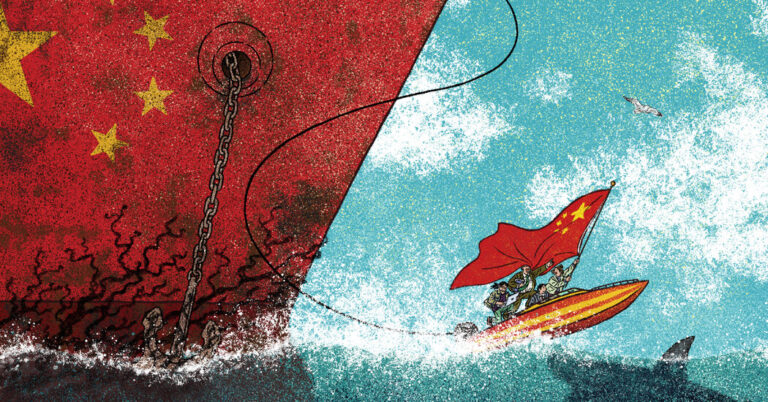
Two Chinas inhabit the American imagination: One is a technology and manufacturing superpower poised to lead the world. The other is an economy that’s on the verge of collapse.

Each reflect a real aspect of China.

One China — let’s call it hopeful China — is defined by companies like the A.I. start-up DeepSeek, the electric vehicle giant BYD and the tech powerhouse Huawei. All are innovation leaders.

Jensen Huang, the chief executive of the Silicon Valley chip giant Nvidia, said China was “not behind” the United States in artificial intelligence development. Quite a few pundits have declared that China would dominate the 21st century.

The other China — gloomy China — tells a different story: sluggish consumer spending, rising unemployment, a chronic housing crisis and a business community bracing for the impact of the trade war.

President Trump, as he tries to negotiate a resolution of a trade war, must reckon with both versions of America’s arch geopolitical rival.

The stakes have never been higher to understand China. It’s not enough to fear its successes, or take solace in its economic hardships. To know America’s biggest rival requires seeing how the two Chinas are able to coexist.

“Americans have too many imagined notions about China,” said Dong Jielin, a former Silicon Valley executive who recently moved back to San Francisco after spending 14 years in China teaching and researching the country’s science and technology policies. “Some of them hope to solve American problems using Chinese methods, but that clearly won’t work. They don’t realize that China’s solutions come with a lot of pain.”

Just like the United States, China is a giant country full of disparities: coastal vs. inland, north vs. south, urban vs. rural, rich vs. poor, state-owned vs. private sector, Gen X vs. Gen Z. The ruling Communist Party itself is full of contradictions. It avows socialism, but recoils from giving its citizens a strong social safety net.

Chinese people, too, grapple with these contradictions.

Despite the trade war, the Chinese tech entrepreneurs and investors I talked to over the past few weeks were more upbeat than any time in the past three years. Their hope started with DeepSeek’s breakthrough in January. Two venture capitalists told me that they planned to come out of a period of hibernation they started after Beijing’s crackdown on the tech sector in 2021. Both said they were looking to invest in Chinese A.I. applications and robotics.

But they are much less optimistic about the economy — the gloomy China.

The 10 executives, investors and economists I interviewed said they believed that China’s advances in tech would not be enough to pull the country out of its economic slump. Advanced manufacturing makes up about only 6 percent of China’s output, much smaller than real estate, which contributes about 17 percent of gross domestic product even after a sharp slowdown.

When I asked them whether China could beat the United States in the trade war, nobody said yes. But they all agreed that China’s pain threshold was much higher.

It’s not hard to understand the anxiety felt by Americans frustrated with their country’s struggles to build and manufacture. China has constructed more high-speed rail lines than the rest of the world, deployed more industrial robots per 10,000 manufacturing workers than any country except South Korea and Singapore and now leads globally in electric vehicles, solar panels, drones and several other advanced industries.

Many of China’s most successful companies have gained resilience from the economic downturn and are better prepared for the bad days ahead. “They’ve been DOGE-ing for a long time,” said Eric Wong, the founder of the New York hedge fund Stillpoint who visits China every quarter, referring to the Trump administration’s cost-cutting effort known as the Department of Government Efficiency. “By comparison, the U.S. has been living in excess for a long time.”

But as we marvel at China’s so-called miracles, it is necessary to ask: At what cost? Not just financial, but human.

China’s top-down innovation model, heavily reliant on government subsidies and investment, has proved to be both inefficient and wasteful. Much like the overbuilding in the real estate sector that triggered a crisis and erased much of Chinese household wealth, excessive industrial capacity has deepened imbalances in the economy and raised questions about the model’s sustainability, particularly if broader conditions worsen.

The electric vehicle industry shows the force of the two Chinas. In 2018, the country had nearly 500 E.V. makers. By 2024, about 70 remained. Among the casualties was Singulato Motors, a start-up that raised $2.3 billion from investors, including local governments in three provinces. Over eight years, the company failed to deliver a single car and filed for bankruptcy in 2023.

The Chinese government tolerates wasteful investment in its chosen initiatives, helping fuel overcapacity. But it is reluctant to make the kind of substantial investments in rural pensions and health insurance that would help lift consumption.

“Technological innovation alone cannot resolve China’s structural economic imbalances or cyclical deflationary pressures,” Robin Xing, the chief China economist at Morgan Stanley, said in a research note. “In fact,” he wrote, “recent advances in technology may reinforce policymakers’ confidence in the current path, increasing the risk of resource and capital misallocation.”

The Chinese leadership’s obsession with technological self-reliance and industrial capacity is not helping its biggest challenges: unemployment, weak consumption and a reliance on exports, not to mention the housing crisis.

Officially, China’s urban unemployment rate stands at 5 percent, excluding jobless migrant workers. Youth unemployment is 17 percent. The real numbers are believed to be much higher. This summer alone, China’s colleges will graduate more than 12 million new job seekers.

Mr. Trump was not wrong in saying factories are closing and people are losing their jobs in China.

In 2020 Li Keqiang, then the premier, said the foreign trade sector, directly or indirectly, accounted for the employment of 180 million Chinese. “A downturn in foreign trade will almost certainly hit the job market hard,” he said at the onset of the pandemic. Tariffs could be much more devastating.

Beijing is playing down the effect of the trade war, but as negotiators held talks last weekend with their U.S. counterparts, its impact was obvious. In April, Chinese factories experienced the sharpest monthly slowdown in more than a year while shipments to the United States plunged 21 percent from a year earlier.

All of the economic fallout will be shouldered by people like a man I spoke to, with the surname Chen, a former university librarian in a megacity in southern China. He asked that I not use his full name and where he lived to shield his identity from the authorities.

Mr. Chen lives in the gloomy China. He stopped taking the vaunted high-speed trains because they cost five times as much as a bus. Flying is often cheaper, too.

He lost his job last year because the university, one of the top ones in the country, was facing a budget shortfall. Many state-run institutions have had to let people go because many local governments, even in the wealthiest cities, are deeply in debt.

Because he’s in his late 30s, Mr. Chen is considered too old for most jobs. He and his wife had given up on buying a home. Now with the trade war, he expects that the economy will weaken further and that his job prospects will be dimmer.

“I’ve become even more cautious with spending,” he said. “I weigh every penny.”


Source link

Hasan Piker, Popular Left-Wing Streamer, Says He Was Detained at Airport

0


Hasan Piker, a popular Turkish American online streamer, said he was stopped and questioned for hours about his political beliefs by U.S. Customs and Border Protection after flying back to the United States from overseas on Sunday.

Mr. Piker, 33, said in a live broadcast on Monday that he was asked about his job, his beliefs on Gaza and President Trump and other topics he discusses on his livestreams while being held for two hours at an airport in Chicago.

Mr. Piker, who was born in the United States, said he was passing through Global Entry, a U.S. Customs and Border Protection program that eases security checks for travelers deemed to be low-risk, when an agent asked him to step aside.

According to Mr. Piker, a U.S. Immigration and Customs Enforcement agent led him to an area that he described as a “detention center,” where he was taken into a room for questioning.

“It’s very obvious they knew who I was,” Mr. Piker said, using an expletive.

Mr. Piker has about 4.5 million followers combined on YouTube and Twitch. His fluency between culture and ideology has led many to brand him a Joe Rogan of the left.

Tricia McLaughlin, a spokeswoman for the Department of Homeland Security, said in a statement on social media that Mr. Piker’s “claims that his political beliefs triggered the inspection are baseless.”

“Upon entering the country, this individual was referred for further inspection — a routine, lawful process that occurs daily, and can apply for any traveler,” she said. “Once his inspection was complete, he was promptly released.”

Mr. Piker described the conversation as “really, really interesting” and “very cordial.” He said the agent asked him what he did for work, the topics he talked about in his streams and whether he discussed the news, including the war in Gaza and President Trump.

“They straight-up tried to get something out of me that I think they could use to basically detain me permanently,” Mr. Piker said, using an expletive again. “There is no direct connection or direct involvement.”

Mr. Piker also described the agent, who identified himself as Iraqi, as “very sympathetic.” When he asked the agent why he was being detained, Mr. Piker said the agent told him it was “routine.”

He said he was also repeatedly asked about his opinions on and whether he was involved with Hamas, the Houthis, an Iranian-backed militant group that controls northern Yemen, and Hezbollah. Throughout the questioning, Mr. Piker said he was transparent in his responses and repeated the same answers, including describing himself as a “pacifist” who wanted wars to end.

In his broadcast, Mr. Piker said he planned to submit an online inquiry about why he was stopped.


Source link

RFK Jr. Swims in D.C.’s Rock Creek, Which Flows With Sewage and Bacteria

0


Robert F. Kennedy Jr., the health secretary, posted photos on Sunday of himself and his grandchildren swimming in a contaminated Washington creek where swimming is not allowed because it is used for sewer runoff.

Rock Creek, which flows through much of Northwest Washington, is used to drain excess sewage and storm water during rainfall. The creek has widespread “fecal” contamination and high levels of bacteria, including E. coli, and the city has banned swimming in all of its waterways for more than 50 years because of the widespread contamination of Rock Creek and other nearby rivers.

“Rock Creek has high levels of bacteria and other infectious pathogens that make swimming, wading, and other contact with the water a hazard to human (and pet) health,” the National Park Service wrote in an advisory on its website, adding “All District waterways are subject to a swim ban — this means wading, too!”

But Mr. Kennedy over the weekend shared photos of himself swimming in Rock Creek, with one image showing him completely submerged in the water. Mr. Kennedy said in the social media post that he had gone for the swim in Rock Creek during a Mother’s Day hike in Dumbarton Oaks Park with his family — including his grandchildren, who are also seen in the photos swimming in the contaminated water.

Dumbarton Oaks Park is downstream from Piney Branch, a tributary of Rock Creek that receives about 40 million gallons of untreated sewage and storm water overflow each year, according to the D.C. Water and Sewer Authority. City authorities are planning to build a tunnel that will reduce the amount of sewage that flows into Piney Branch and Rock Creek.

A spokeswoman for Mr. Kennedy did not respond to a request for comment.

It was the latest in a series of peculiar incidents related to Mr. Kennedy’s outdoorsman persona.

As a teen in the 1970s, Mr. Kennedy earned a reputation as a reckless adventurer, eating bushmeat and enduring disease on trips to South America and on African safaris. He later earned notoriety for his handling of the carcasses of dead animals — including a whale and a baby bear.

Mr. Kennedy has also said that a parasitic worm had “got into my brain and ate a portion of it and then died.”


Source link

Fox to Launch New Streaming Service, Fox One, This Fall

0


Fox Corp. revealed new details about its streaming service on Monday, including that it would debut this fall and would be called Fox One.

The announcement came ahead of the company’s upfront, an annual pitch to entice advertisers with a slate of upcoming shows. Lachlan Murdoch, the company’s chief executive and son of the Fox Corp. founder, Rupert Murdoch, previewed the service on a quarterly earnings call. The name Fox One, he said, was a reference to the combined heft of the company’s TV shows, cable channels and broadcast network, including National Football League games.

“Whether it’s the Super Bowl, the election cycle or the upfront, our company is at its best when we work together as one,” Mr. Murdoch said.

Mr. Murdoch did not say how much Fox would charge viewers, only that it would not be less than what its cable subscribers pay.

Unlike Disney or Warner Bros. Discovery, which have put paid streaming services at the center of their businesses, Fox Corp. has until now adopted a more piecemeal approach. The company, which owns the Fox News cable channel and the Fox broadcasting network, operates the Fox Nation streaming service and Tubi, a free ad-supported service with TV shows and movies.

The Fox Nation streaming service will continue to exist as a stand-alone product within Fox Corporation, but Fox One subscribers will be able to bundle their subscriptions with Fox Nation. Mr. Murdoch also said that Fox had been approached by operators of other streaming services about offering a bundled subscription, though he did not identify them.

Fox recently announced plans to team up with Disney and Warner Bros. Discovery on a sports-focused streaming service called Venu. That service was canceled before it got off the ground amid legal challenges.

Like Venu, Fox One is meant to coexist with the company’s lucrative traditional TV business. In his remarks, Mr. Murdoch said that the service was aimed at the “cordless” market, referring to viewers who do not have a pay-TV subscription. Traditional cable customers who already have access to Fox channels will be able to get Fox One free of charge.

“It would be a failure if we attract more connected subscribers,” Mr. Murdoch said, adding, “We do not want to lose a traditional cable subscriber to Fox One.”


Source link