Home Blog Page 319

U.S. Starts Investigation Into Imported Planes and Parts

0


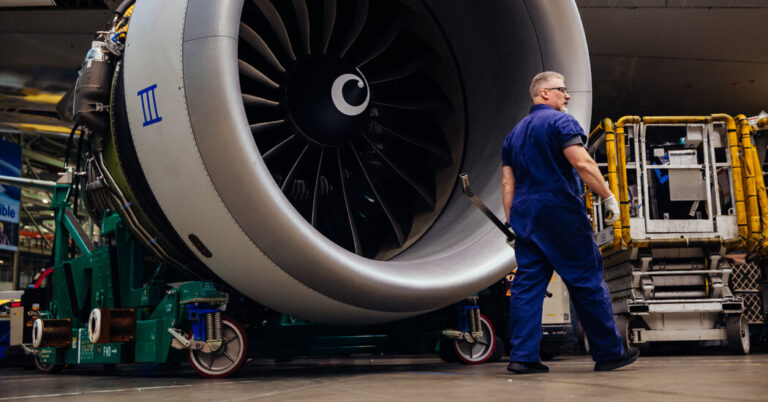
The Trump administration has started an investigation into the import of commercial aircraft, jet engines and related parts that could lead to new tariffs on top of the many it has already put in place.

According to a federal notice posted online on Friday, the commerce secretary, Howard Lutnick, started the investigation on May 1 under a provision of the Trade Expansion Act, which allows the president to impose tariffs on foreign products in the interest of national security.

President Trump has already used that authority to impose tariffs on aluminum and steel, and to start similar investigations, including one last month into semiconductors and pharmaceuticals.

As part of the new investigation, the Commerce Department said, it will seek industry input on demand for aircraft, engines and parts and whether that could be fulfilled domestically; the role that foreign suppliers play in the market; the extent to which foreign governments favor those businesses; and other issues.

Tariffs on imports could hurt the aerospace industry, which has produced one of the largest trade surpluses of any industry for years, but relies heavily on specialized suppliers that are spread out around the world. In some cases, crucial parts may be produced by only a few manufacturers or just one. The aerospace industry is expected to export about $125 billion this year, according to IBISWorld, second only to oil and gas.

“Our record of trade surpluses, job creation and innovative contributions to both air transport and national defense is the best news story for the American economy among all manufacturing sectors,” Eric Fanning, the president of the Aerospace Industries Association, said in a statement. “We look forward to engaging with the Department of Commerce to identify opportunities to strengthen our domestic supply chain while also maintaining the trade framework that has enabled our global leadership in aerospace.”

Boeing, which makes commercial airplanes, recently described the direct effects of the tariffs that Mr. Trump had imposed so far as minor, but said it was concerned about the toll they could have on its suppliers. The company’s chief executive, Kelly Ortberg, told Wall Street analysts last month that Boeing was paying 10 percent tariffs on components for wide-body jets imported from Japan and Italy, but that the company expected to recover those costs when the planes were sold.

RTX, which makes plane engines and parts, estimated last month that tariffs this year would cost it $850 million. GE Aerospace, another engine maker, said it expected $500 million in tariff costs this year.

Governments have often tried to protect and nurture their aviation industries with tariffs and subsidies. The United States and the European Union quarreled for many years over whether the other was providing unfair subsidies to Boeing and Airbus, the world’s largest makers of commercial planes. Airbus is based in France and has extensive operations in several European countries.



Source link

A Top Travel Trend: ‘Set-Jetting’ to Locations From Movies and TV

0


Have you found yourself dabbling with the idea of spending your next vacation at the White Lotus, a luxury resort famous for its obnoxious guests and regular murders?

Welcome to the world of “set-jetting,” in which the settings of popular movies and TVs shows like “The White Lotus” become pilgrimage sites for fans.

The White Lotus resorts are, of course, fictional. But the Four Seasons properties where the HBO series films are real. And after Seasons 1 and 2, which were set in Maui and Sicily, travelers flocked to those properties, and both reported a tenfold increase in bookings, according to Marc Speichert, the executive vice president and chief commercial officer of Four Seasons Hotels and Resorts. A representative said the company was not able to share booking numbers at this time for its resort in Koh Samui, Thailand, where the latest season was set.


How it’s pronounced


The term set-jetting — a play on “jet set,” itself coined in the late 1940s — appears to date to a 2007 New York Post article describing the allure of trips inspired by films like “The Queen” (Brocket Hall, near London) and “Pan’s Labyrinth” (the Segovia region of Spain).

The concept behind the term goes back to at least the 1960s, said Daniel L. Spears, an associate professor of hospitality and tourism at the University of North Texas, who has studied the trend. After the 1965 blockbuster “The Sound of Music,” tourism to Austria surged, Dr. Spears said, particularly to Mirabell Garden in Salzburg, the setting for the song “Do-Re-Mi.” And the number of visitors to Hawaii ballooned in the decade after the Elvis Presley romantic comedy “Blue Hawaii” debuted in 1961, Dr. Spears said.

Set-jetting picked up steam in the early 2000s, when the “Lord of the Rings” franchise began to draw large numbers of Shire- and Rivendell-obsessed tourists to New Zealand, and “Game of Thrones” did the same for Iceland and Dubrovnik, Croatia. Since then, the options have exploded.

One of the biggest players in the field, the luxury travel company Black Tomato, offers an array of set-jetting vacations, including adventures that’ll make you feel as if you’re in a “Yellowstone” episode, with horseback riding, river rafting and a fireside dinner with cowboys.

If you fancy a tuxedo and a stiff (and shaken) martini, Black Tomato’s menu of James Bond-themed trips is vast, including a training session with a stunt coordinator who worked on the five latest 007 films, and private access to Aston Martin Works in Buckinghamshire, England.

Travelers are spending big on set-jetting. Black Tomato’s clients typically pay $10,000 to $20,000 per person for a 10-day trip, said Brendan Drewniany, the company’s head of public relations. And about 15 percent of the inquiries the company receives are related to set-jetting, he added, with recent spikes in searches for Hawaii and Thailand.

It’s a long way mentally from the once-idyllic Coco Palms Resort featured in “Blue Hawaii” to the unsettling plot lines of “The White Lotus.” Why are so many people traveling to places — like the Albuquerque of “Breaking Bad” or the English Midlands of “Saltburn” — that are not exactly the stuff of ukulele solos and flower leis?

It might be that the immersive nature of streaming establishes a deep bond with the characters and the place, giving fans a “sense of nostalgia,” Dr. Spears said. “There’s a dark turn, but there’s also an emotional connection.”


Source link

Pinterest Agreed to Settle Christine Martinez Lawsuit for $34.7 Million


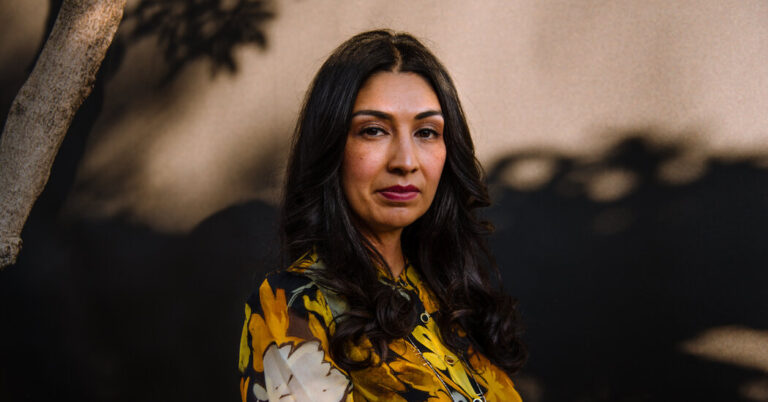
Pinterest recently agreed to pay $34.7 million to settle a lawsuit from an early adviser who claimed she had co-created the platform without compensation.

Christine Martinez, 44, who was a friend of Ben Silbermann and Paul Sciarra, two of Pinterest’s three co-founders, sued the company in 2021 for breach of implied contract, idea theft, unjust enrichment and unfair business practices. She said she came up with many ideas for the app — like organizing images on “boards” — but was never paid for her contributions, despite promises she would be.

Pinterest, a virtual pinboard company that has many female users, disclosed the settlement with Ms. Martinez in a November 2024 financial filing.

“No one wants to find themselves in the litigation process, and I’m just really, really excited and frankly just relieved to be past it,” Ms. Martinez said in an interview on Friday.

“Ms. Martinez provided beneficial marketing and community growth input and strategies during the early phase of Pinterest’s founding,” according to a statement that was part of the settlement, which was provided by Ms. Martinez. “The parties are pleased to amicably resolve this legacy matter.”

Pinterest declined to comment.

The settlement follows a series of complaints and legal disputes against Pinterest by some of its female employees and executives.

In 2020, Pinterest paid $22.5 million to settle a gender discrimination suit filed by Françoise Brougher, its former chief operating officer, who said she was fired after experiencing sexist treatment at the company. That same year, more than 200 employees signed a petition demanding the company change its policies after three former workers accused Pinterest of racial and sex discrimination and retaliation.

Mr. Silbermann, who was Pinterest’s chief executive, left that role in 2022.

Ms. Martinez, who had a background in e-commerce and interior design, claimed in her lawsuit that Mr. Silbermann and Mr. Sciarra sought her advice for the company that became Pinterest a year before it was founded in 2010.

She said she came up with the idea for the picture boards and the platform’s signature “Pin it” phrase, and also helped persuade top design and lifestyle bloggers to use and promote the site. A portion of Pinterest’s programming code was named after her in homage, according to the lawsuit.

She never signed a formal contract with Pinterest, but it was implied she would eventually be compensated, she said. Pinterest went public in 2019 and has a market capitalization of more than $18 billion.

Ms. Martinez is now a board member and strategic adviser for Jingo, an online A.I. shopping platform that caters to women.


Source link

Baffled by the Trump Tariffs, C.E.O.s Lean on the Word ‘Uncertainty’

0


Corporate America is stumbling in the dark, and so are investors.

Ford and General Motors executives say they can’t estimate what lies ahead. There’s too much fog even to hazard a guess, so both companies have suspended earnings guidance — signals about future sales and profits — leaving investors to navigate on their own. And the automakers are not the only ones. A broad range of companies, including Delta Air Lines, Southwest Airlines, the footwear company Skechers, UPS and the engine manufacturer Cummins, say they can’t talk confidently about the future.

It’s earnings season again on Wall Street, and it’s a strange one. Typically, publicly traded companies release their recent financial data every three months and then discuss what to expect in the weeks ahead. Not this time.

The backward-looking performance data is available, as usual, but it’s already ancient history. The Trump administration’s on-again, off-again imposition of the steepest tariffs in a century has shifted the outlook for the global economy and for individual businesses so thoroughly that many executives, especially those affected directly by tariffs, can’t project ahead in a meaningful way.

“Given material tariff-related near-term risks and the potential range of outcomes, we are suspending guidance for full year 2025,” Sherry House, Ford’s chief financial officer, said this week.

She enumerated some of the things that Ford doesn’t know: “These near-term risks include, among other things: industrywide supply chain disruption impacting production; future or increased tariffs in the U.S.; changes in the implementation of tariffs, including tariff offsets; retaliatory tariffs and other restrictions by other governments and the potential related market impacts; and finally, policy uncertainties associated with tax and emissions policy.” That’s quite a list, but it’s a realistic one.

No wonder “uncertainty” has become a go-to word for corporate executives. They uttered it in 87 percent of earnings calls this season, compared with 38 percent in the previous three months, according to John Butters, the vice president and senior earnings analyst of FactSet. Executives used “tariffs” in 93 percent of earnings calls. “Recession” came up in 30 percent of these discussions, versus 3 percent in the previous quarter.

Solid economic and market assessments require knowledge of how far the administration will go with tariffs and other matters weighing on consumers and businesses. Right now, it’s impossible to know.

Consider the precarious state of U.S. relations with its three biggest trading partners, Mexico, Canada and China.

President Trump wants the U.S. military to enter Mexico to fight the drug cartels. This past Sunday, he confirmed that he had urged Claudia Sheinbaum, Mexico’s president, to approve a U.S. military incursion.

In a statement this past weekend she told the Mexican public how she responded. “I told him, ‘No, President Trump, our territory is inviolable, our sovereignty is inviolable, our sovereignty is not for sale.” She added, “We will never accept the presence of the army of the United States on our territory.”

But is this really the end of the matter? With Mr. Trump, it would be unwise to make that assumption.

Then, there’s Canada. In a White House meeting this past week with Mark Carney, Canada’s new prime minister, Mr. Trump insisted, yet again, that one day Canada would become the 51st state. Prime Minister Carney quickly responded: “It’s not for sale it won’t be for sale, ever.” Mr. Trump could have left well enough alone — but he did not. “Never say never,” the president said.

Because North American car production in Canada, Mexico and the United States is intertwined, diplomatic relations among the three countries have a direct bearing on the prospects of the big car companies. Where tariff levels will end up is crucial to the automotive industry — and, of course, to U.S. workers and consumers. Without greater certainty, production will slow or stop, and prices will rise.

But it’s not just autos that are affected by Mr. Trump’s vacillating threats and rules on tariffs. Just about everywhere you look, you can find companies engaged in tortuous maneuvers to maximize profits and cope with possible tariffs, whatever they will end up being.

Take Apple. Tim Cook, the company’s chief executive, said on a May 1 earnings call that tariffs in the three months starting in June are most likely to add $900 million to Apple’s costs. But, he said, that estimate assumes “the current global tariff rates, policies and applications do not change for the balance of the quarter, and no new tariffs are added.” That assumption, of course, is probably not valid. It might be partially why Mr. Cook warned that “this estimate should not be used to make projections for future quarters.”

Many Apple products have been made in China for years, but even that’s changing quickly because of the tariffs.

“We do expect the majority of iPhones sold in the U.S. will have India as their country of origin and Vietnam to be the country of origin for almost all iPad, Mac, Apple Watch and AirPods products,” Mr. Cook said. “China would continue to be the country of origin for the vast majority of total product sales outside the U.S.”

How much iPhones and other Apple gadgets will cost, and whether Apple can maintain its fat 47 percent gross margin in coming quarters, are crucial questions for investors in the giant company.

So are U.S. relations with China, which have fallen to their lowest ebb in decades. U.S. tariffs on many Chinese products now stand at 145 percent, a level so high that it amounts to “the equivalent of an embargo,” in the words of Scott Bessent, the Treasury secretary. Apple, is, for now, benefiting from a temporary exemption from tariffs on smartphones from China, though higher tariffs on semiconductors (key ingredients of smartphones and much else) are being contemplated by the Trump administration, and the smartphone exemption may be rescinded. In addition, Apple has come under pressure to shift manufacturing to the United States, which would increase iPhone costs, too.

The first official U.S.-Chinese meeting since the start of the trade conflict is scheduled for this weekend in Geneva. But both sides have dampened expectations. It represents a start, they say, but it isn’t very likely that there will be substantive negotiations.

Because of tariff-induced distortions, economic data has become difficult to parse. Businesses and consumers rushed to buy imported goods in the first months of the year, before tariffs kicked in. The U.S. trade deficit soared, which affected gross domestic product figures for the first quarter — pushing what would have been three months of positive growth into a negative territory. And the import surge may already be over. Container ship traffic from China to U.S. West Coast ports has plummeted, which could mean shortages of imported products on U.S. store shelves in a few weeks.

“Uncertainty about the economic outlook has increased further,” the Federal Reserve said in a statement this past week. And Jerome H. Powell, the Fed chair, said in a news conference, “There’s so much uncertainty about the scale, scope, timing and persistence of the tariffs.” Until it’s clear whether the greatest imminent economic threat from tariffs is higher inflation or a slowdown in the economy — both could develop, in a dreaded phenomenon known as stagflation — the Fed will hold interest rates steady, Mr. Powell said.

The stock market has been remarkably resilient, considering the scale of the looming, self-inflicted harm that the tariffs could bring on the U.S. economy. Stock analysts have begun, ever so slowly, to take the tariff shock into account in their estimates. But while they are projecting a deceleration in profit growth for U.S. corporations, they have not, for the most part, included the possibility of a recession. They are penciling in a likely reduction in the rate of profit growth this year — but expect profits to keep growing — with a re-acceleration in 2026.If they are right, the stock market is likely to rise over the next couple of years.

And they may be right. But, really, they are basing these projections on scant evidence. Risk averse investors will want to stash a substantial sum in a safe place for the short term, because U.S. government policy may roil the markets. It’s not a pleasant outlook but it’s what the economic situation requires.


Source link

Deep-Dish Pizza and Malört in the Vatican? Chicago Pope Spurs Memes


Deep-dish pizza shall be served in place of communion wafers. Michael Jordan shall be declared the Greatest of All Time. And the Trevi Fountain shall be dyed green.

If internet memes became reality, Pope Leo XIV of Dolton, Ill., a southern suburb of Chicago, would turn Vatican City into Downtown Chicago, complete with a reflective kidney bean statue and carts serving ketchup-less hot dogs. Malört — Chicago’s unofficial liquor with a burning-tires aftertaste — would replace red wine as a symbol of the blood of Christ.

These and other whimsical suggestions started popping up on social media moments after Robert Francis Prevost’s Chicago roots came to light on Thursday.

“Canes nostros ipse comedit,” the marquee at Wieners Circle, a famous Chicago hot dog joint, joked in Latin. “He has eaten our dogs.”

Chicago drips with personality and has larger-than-life cultural figures and its fair share of corrupt politics, all of which are mixed with a touch of little-brother syndrome, making it a uniquely meme-able city. The food is polarizing, the history is stranger than fiction, and the traditions — like dying the river green on St. Patrick’s Day and playing softball without gloves — are somewhat bizarre.

“We definitely don’t take ourselves too seriously,” said Shermann Thomas, 43, a Chicago historian who also goes by the name Dilla. “The only rule is we don’t want anybody else talking crap about us.”

If the new pope found himself scrolling through social media, he would perhaps get a chuckle at the memes that ribbed Chicago for its quirks and poked at the paradox of a modern city entwining with a 2000-year-old tradition.

The jokes were so plentiful that people started posting their drafts of jokes that didn’t quite make the cut.

“The existence of Chicago Pope implies the existence of MLA Pope and APA Pope,” a user posted. Another user joked, “Chicago Pope, Tuesdays on NBC.”

In a city filled with diehard sports fans who have had little to celebrate of late, the sports jokes wrote themselves. Could this be the first time a pope has ever listened to “The Super Bowl Shuffle” or screamed at Steve Bartman? What is his opinion about the Chicago Bulls trading Elton Brand for Tyson Chandler?

“Daaaaaa Pope,” the Chicago Bears’ quarterback Caleb Williams posted on X.

Artificial intelligence, which is usually contributing to brain rot or helping high school students cheat, was working overtime at making some quality memes. Fake images of the pope baptizing an Italian beef sandwich and wearing a Chicago Bears cassock circulated.

For Mr. Thomas, the city historian, a lot of the city’s humor comes from how many different cultures fit themselves inside such a small area. Only Chicago could be home to Al Capone, the Latin Kings and the pope, he said.

This story could go on for another 500 words, filled with silly Chicago pope jokes. And it would be delightful. But we’ll leave you with perhaps the most relatable meme of the day:

“The Popemobile just cut you off on I-94.”


Source link

Mitchell holds lead with Lowry and McIlroy close behind

0


Highlights from the second round of the Truist Championship in Pennsylvania.


Source link

British Airways Owner Buys 32 Boeing Planes Worth $13 Billion

0


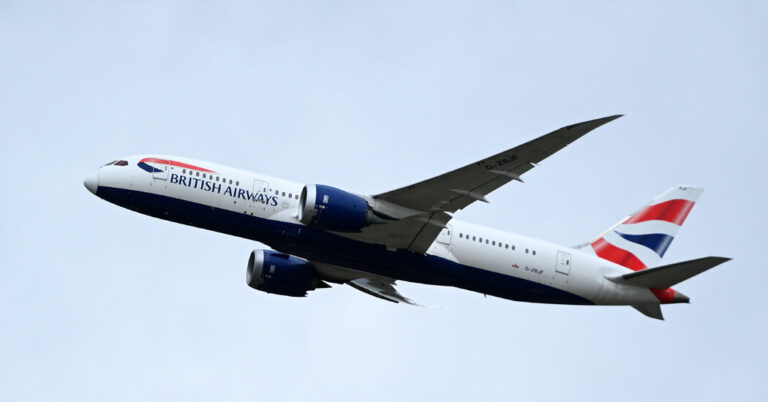
British Airways will get 32 new Boeing planes, in a deal worth nearly $13 billion, its parent company announced on Friday, a day after U.S. officials teased a big order was coming for America’s largest plane maker.

IAG, which owns British Airways and other European airlines, said it had ordered the Boeing aircraft as well as 21 planes from Airbus, a French aerospace company, to be delivered between 2028 and 2033. Most of the planes were replacements for aging aircraft, but about a third were to expand the group’s fleet as it took a bet on long-haul flights.

The announcement came after Howard Lutnick, the U.S. commerce secretary, said Thursday that Britain would buy $10 billion worth of Boeing planes as he announced details of what he called a “strong” trade deal between the two countries. The plane order, however, is a commercial agreement and not part of the governments’ trade deal.

Mr. Lutnick also said the United States would scrap tariffs on jet engines and other parts from Rolls-Royce, a British company, although the arrangement was not included in the documents published on Thursday by the U.S. and British governments.

On Thursday, the two nations agreed on a framework to lower U.S. tariffs on cars and steel for British imports, while Britain increased market access for American beef and ethanol. President Trump and Keir Starmer, the British prime minister, warmly congratulated each other on agreeing to the first trade deal since the U.S. administration substantially raised tariffs on its trading partners. But this agreement is not final: More negotiations will take place, and it is unclear when the tariff reductions will take effect.

The Boeing order, announced alongside IAG’s quarterly earnings report, was for 787-10 aircraft with a list price of $397 million (in dollar pricing from January) each, making the order for 32 planes worth $12.7 billion. But the company said it had a secured a discount on that price. IAG has the option to buy 10 more planes.

IAG also said it bought 21 Airbus A330-900neo aircraft for its other airlines, which include Aer Lingus and Iberia, in a deal worth nearly $8 billion, and with the option to buy 13 more.

Luis Gallego, the chief executive of IAG, described it as a “milestone” order that was part of a long-term strategy to upgrade its fleet, including to more energy-efficient planes.

“Looking ahead to the next decade, these new aircraft will enable us to strengthen our core markets and further improve our customer experience, while continuing to drive long-term value for our shareholders,” he said.

British Airways flies both Boeing and Airbus planes. In March, IAG ordered six aircraft from each company for British Airways, which will be delivered later in the decade. Those planes are not part of the order announced on Friday.

IAG made the announcement as it reported 198 million euros in operating profit in the first quarter of 2025, up from €68 million a year ago. The company’s share price rose nearly 3 percent on the London Stock Exchange.

The company also said the closure of Heathrow Airport for a day in March, because of a power outage and a nearby fire, cost British Airways about €50 million.


Source link

Trump Officials Seek to Bring First White Afrikaners to U.S. as Refugees Next Week

0


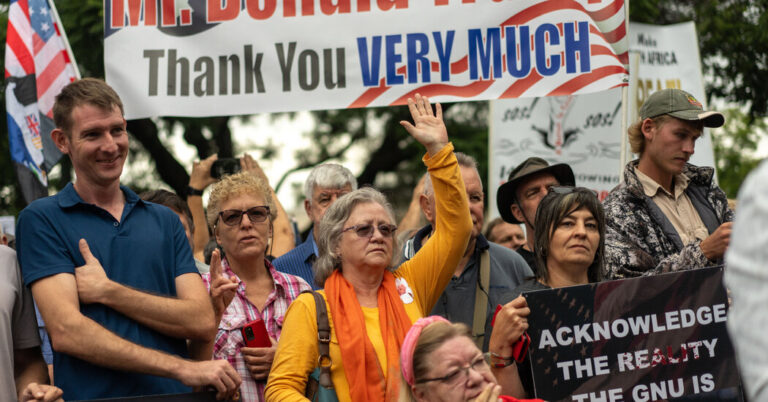
The Trump administration is planning to bring the first group of white South Africans it has classified as refugees to the United States on Monday, according to officials briefed on the plans and documents obtained by The New York Times.

Although the president halted virtually all other refugee admissions shortly after he took office in January, his administration hastily put together a program to allow in white South Africans, who he claims have been the victims of racial persecution in their home country.

The administration plans to send government officials to Washington Dulles International Airport in Virginia for an event marking the arrival of the South Africans, who belong to the white minority Afrikaner ethnic group, according to a memo from the Department of Health and Human Services.

A top State Department official told South African officials on Friday that the United States planned to transport 54 Afrikaners to the United States on a charter flight scheduled to leave Johannesburg on Sunday, according to a person briefed on the call, who spoke on the condition of anonymity to share details of the private conversation.

The arrival of the Afrikaners would cement Mr. Trump’s efforts to upend a program that for decades has allowed thousands of people fleeing war, famine and natural disaster to find safe haven in the United States.

While the program remains suspended for refugees across the world, such as Congolese families in refugee camps and Rohingya seeking safety, white South Africans were processed much faster than is normal for these cases.

Refugees can often wait years in camps around the world before they are processed and approved to travel to the United States. Before the first Trump administration, refugee resettlement took an average of 18 to 24 months, according to the American Immigration Council, an advocacy group for immigrants. Many refugees must wait years longer.

The Afrikaners, however, had to wait no more than three months.

South African government officials have vigorously disputed the claim by the United States that Afrikaners qualify for refugee status and conveyed those doubts in a diplomatic memo sent to the State Department this week, they said.

Alvin Botes, South Africa’s deputy foreign minister, also discussed the Afrikaner resettlement and other bilateral issues between the countries in a call on Friday with Christopher Landau, the U.S. deputy secretary of state, according to a spokesman for South Africa’s foreign ministry.

“It is most regrettable that it appears that the resettlement of South Africans to the United States under the guise of being ‘refugees’ is entirely politically motivated and designed to question South Africa’s constitutional democracy,” the spokesman, Chrispin Phiri, said in a statement.

He added that Afrikaners’ claims of discrimination “do not meet the threshold of persecution required under domestic and international refugee law.”

The arrival of the white South Africans comes after Mr. Trump signed an executive order suspending refugee admissions when he entered office. Then, in February, Mr. Trump created an exception for the resettlement of Afrikaners while also cutting all U.S. financial assistance to South Africa, accusing the government of supporting America’s enemies, like Iran, and attacking its allies, like Israel.

Mark Hetfield, the president of HIAS, a Jewish resettlement agency, said his organization was committed to welcoming Afrikaners.

“But we are profoundly disturbed that the administration has slammed the door in the face of thousands of other refugees approved by D.H.S. months ago, notwithstanding courts ordering the White House to let many of them in,” Mr. Hetfield said, referring to the Department of Homeland Security. “That’s just not right.”

Many Afrikaners say they are denied jobs, targeted by criminals and ignored by the government because of their race. Mr. Trump’s support of Afrikaners dates back to his first term. But this year he came to their side after South Africa’s president enacted a law allowing the government to seize land from private owners without providing compensation in rare instances.

Stephen Miller, Mr. Trump’s deputy chief of staff and the architect of his immigration agenda, told reporters outside the White House on Friday that “what’s happening in South Africa fits the textbook definition of why the refugee program was created.” He added: “This is persecution based on a protected characteristic, in this case, race. This is race-based persecution.”

He criticized previous administrations’ handling of the refugee program and said Mr. Trump was “returning the refugee program to what it was intended to do.”

Supporters of the measures in South Africa say they are necessary to undo the vestiges of colonialism and apartheid, when the white-minority government brutally repressed Black South Africans and drove them off their land. The South African government has sparred with Mr. Trump and his officials, saying that they are spreading misinformation.

Within weeks of announcing that Afrikaners would be eligible for refugee status, the administration deployed teams to Pretoria, the South African capital, to screen white South Africans for consideration, according to the documents obtained by The Times. The teams studied more than 8,000 requests from people expressing interest in becoming refugees, and the U.S. government identified 100 Afrikaners who potentially could be approved. Trump administration officials have been directed to focus particularly on screening white Afrikaner farmers.

The resettlement of refugees is normally funded in large part by the State Department. But Mr. Trump suspended that program when he took office.

So the administration will be relying more on another agency that has traditionally supported refugees: a refugee office in the Department of Health and Human Services. That office has been reaching out to organizations assisting refugees in recent days to prepare them for the arrival of the Afrikaners, according to a department memo obtained by The Times. The Lever reported this week on the imminent arrival of the Afrikaners in the United States and the administration’s plan to use emergency refugee funds to assist them.

The administration is preparing to help the Afrikaners find “temporary or longer-term housing” and “basic home furnishings, essential household items and cleaning supplies,” according to the memo. The administration is also planning to help the Afrikaners secure “groceries, weather-appropriate clothing, diapers, formula, hygiene products and prepaid phones that support the day-to-day well-being of households,” the memo said.

Advocates for refugees said the rapid mobilization to allow the Afrikaners to resettle highlighted the administration’s inaction on other refugees, even sometimes in the face of court orders.

“Thousands of refugees from across the globe remain stranded in limbo despite being fully vetted and approved for travel, including Afghan allies, religious minorities and other populations facing extreme violence and persecution,” said Timothy Young, a spokesman for Global Refuge, a resettlement agency. “We hope this development reflects a broader readiness to uphold the promise of protection for all refugees who meet longstanding legal standards, regardless of their country of origin.”

This week, a federal judge ordered the Trump administration to lift the ban on refugees who were cleared for travel before Mr. Trump took office and to give them the opportunity to finally enter the country.

The rapid arrival of Afrikaners “flies in the face of the government’s claims that they aren’t able to process already-approved refugees, even after multiple courts have ordered them to do so immediately,” Melissa Keaney, a senior supervising attorney at the International Refugee Assistance Project, said in a statement. “Thousands of refugees unlawfully stranded by President Trump’s refugee suspension are in limbo and are ready to restart their lives in the United States. There is no more time for excuses.”


Source link

Trump Administration Live Updates: President Moves to Fire 3 Members of Product Safety Agency

0


Members of the board that oversees the U.S. Holocaust Memorial Museum clashed over email on Friday after one member sent a blistering letter that invoked the Holocaust as he condemned the institution’s silence on President Trump’s recent firings of Biden appointees to the board.

In late April, Mr. Trump fired a number of board members appointed by former President Joseph R. Biden Jr., including Doug Emhoff, the husband of former Vice President Kamala Harris, as well as other former senior administration officials.

The firings were widely criticized as an effort to politicize an organization dedicated to educating the world about one of the worst atrocities in history. But the museum’s statement at the time made no mention of the terminations and instead emphasized an eagerness to work with the Trump administration.

Kevin Abel, who was appointed to the museum’s board by Mr. Biden in 2023, wrote in his letter on Friday that Mr. Trump’s “campaign of retribution” had been met with troubling “public silence” by the museum.

Mr. Abel wrote that while it was “understandable” that museum leaders might fear speaking out at the risk of losing funding, it was vital to do so.

“At this juncture of rising threats and a swirling atmosphere of hatred, it is ever more imperative that the United States Holocaust Memorial Museum, the one institution that can most credibly call out the administration’s attack of its Council for what it is, not choose to remain silent,” Mr. Abel wrote, invoking Martin Niemöller’s words “about the danger of not speaking out,” which he noted were “inscribed on the wall of the Museum’s permanent exhibition.”

The message sparked a flurry of responses on Friday morning from fellow board members on a large email chain.

“Get over yourselves,” Representative Max Miller of Ohio, a Republican board member, wrote to Marsha Borin, a Biden appointee who was dismissed, after she had weighed in agreeing with Mr. Abel’s letter.

“I’m sure you’re upset and that is understandable and I am sorry for those who were removed,” wrote Mr. Miller, who was appointed by Mr. Trump in 2020. “We all serve at the pleasure of The President.”

The United States Holocaust Memorial Council, which was established by Congress in 1980, is led by appointees who typically serve five-year terms. There are 55 members appointed by the president and five from the House and Senate.

Mr. Abel wrote in his initial letter to other board members, “The dissonant message cannot be lost on us, however, when a Holocaust museum remains silent in the wake of acts of retribution and messages of hate emanating from an administration that has systematically torn at the fabric of our society’s protections and norms and has shown no sign of restraint in its enthusiastic promotion of uncivility.”

He went on: “The Holocaust teaches us that by using fear to buy silence, the Nazis were able to incrementally isolate, demonize, and then murder millions of Jews.”

Mr. Abel told the The New York Times in an email that he remained on the board and planned to stay unless his correspondence resulted in being pushed out. He declined further comment.

A representative for the museum did not immediately respond to a request for comment.

On the email chain, Daniel Huff, whom Mr. Trump appointed to the board in 2020, during his first term, objected to Mr. Abel’s invocation of Dietrich Bonhoeffer, an anti-Nazi dissident. Mr. Abel had quoted his famed line, “Not to speak is to speak. Not to act is to act.”

“Everyone is citing Bonhoeffer,” Mr. Huff wrote. “Ok, if anyone on here spoke up publicly when Biden broke the seal by dismissing Trump appointees from boards en masse in 2021 (e.g. Paul Packer from the American Heritage Commission), send me proof and I will personally call White House PPO and ask that you be reinstated. That is a bona fide offer.”

In 2021, a spokesman for the museum suggested to CNN that the removal of council members by a new administration would be unprecedented.

Mr. Biden had fired a number of members of other boards, including Sean Spicer, the former White House press secretary, whom Mr. Trump had appointed to the board of the U.S. Naval Academy. Mr. Spicer sued and the courts affirmed in a similar case the president’s power to remove such appointees, which has expanded Mr. Trump’s powers.

This week, Mr. Trump named a number of new members to the board overseeing the Holocaust museum, including Sigalit “Siggy” Flicker, a former “Real Housewives of New Jersey” television star; Alex Witkoff, the son of Steven Witkoff, the president’s Middle East envoy; and Sid Rosenberg, a radio host who spoke at Mr. Trump’s Madison Square Garden rally in October.

Another response to Mr. Abel came from Kimberly Marteau Emerson, who wrote that she had been one of the 13 members fired late last month. She said that she, too, was “deeply disappointed by the Museum’s resounding silence both publicly and internally.”

Ms. Emerson wrote that she had found herself thinking often about Thomas Mann, who she described as “the German intellectual whose public criticism of the Nazi regime led him to exile from Germany in 1933.”

“I have, in particular, considered his 1943 speech on BBC where he said, ‘Tolerance becomes a crime when applied to evil,’” she wrote. “Mann is challenging us to consider silence not as safety, but as moral risk. Silence is self-censorship framed as self-protection. But how do you draw the line between self-protection and moral abdication?”

The chain of emails prompted Stuart E. Eizenstat, the chair of the board, to weigh in.

“We are all appointed by the President and can be removed by the President,” he wrote, adding, “Communications like this can be counterproductive and could have unintended consequences that could hurt the Museum.”

Board members, however, continued to send messages afterward.


Source link

A CEO’s Guide to Surviving Trump’s Trade War

0


Randy Carr watched the news on his laptop the way you look at a doctor about to administer a shot — nervously and braced for pain. It was April 2, and President Trump was in the Rose Garden about to unveil new tariffs.

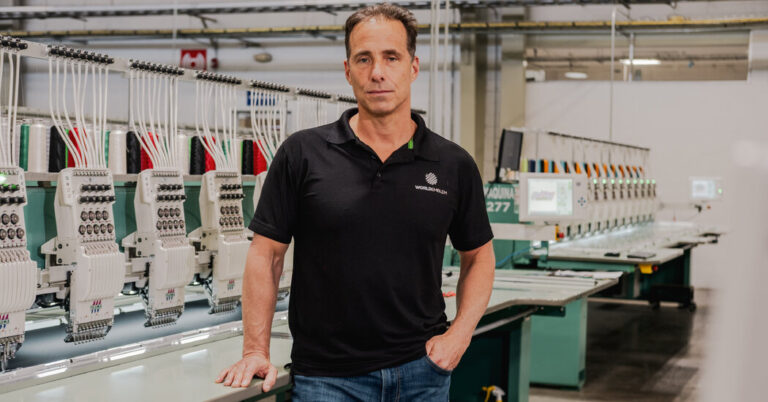
An upbeat, slightly jacked 52-year-old, Mr. Carr is the chief executive of World Emblem, a privately held company based in Fort Lauderdale, Fla., that produces about 150 million embroidered patches a year, most of which end up on shirts and hats. He radiates so much energy that even sitting down he appears to be set on vibrate. He’s intense about everything, including his diet, which he described one recent afternoon, karate chopping a tabletop for emphasis.

Two hundred grams of protein a day (bam!), lots of vegetables (bam!), low carbs (bam!), no sugar (bam!). He gets up at 5 a.m. to lift weights every morning and runs five miles every afternoon.

“It’s about being the best I can be every day, for everybody here,” he said. “I wouldn’t want to compete with this company.”

His father started World Emblem in 1990, with two machines in a warehouse in a suburb of Miami. The company’s fortunes were improving by the time it opened a factory in Mexico, in 2005. Today that operation is the size of eight football fields and employs more than 800 people. In a typical week, it produces about 2.5 million emblems.

There is now $40 million worth of equipment in the plant, a major investment that on April 2 looked as if it was about to become a disastrous liability. Mr. Trump had already imposed, and paused, 25 percent tariffs on Mexico. Mr. Carr feared that if those tariffs were reimposed he’d have to oversee a kind of emergency evacuation. He’d already done the math. It would take about 1,000 trucks, and perhaps two years, to transport many tons of embroidering machines to World Emblem’s smaller factories in Georgia and Texas.

More than a dozen members of his sales team were gathered in Fort Lauderdale, all of them trying to ignore the “Liberation Day” news. Seated nearby, Mr. Carr muted his computer and did his best to keep poker face. First, the crawl on CNBC said that China would get hit with a market-rattling 34 percent tariff, on top of the 20 percent already in place. Then, one by one, other countries were walloped. Eventually, Mr. Trump said that Mexico and Canada would face a 10 percent tariff.

Ten percent, Mr. Carr thought. We can live with that.

Soon after, he read something else. Companies covered by the US-Mexico-Canada Agreement, which replaced the North American Free Trade Agreement in 2020, were exempt. World Emblem was one of them.

Not a 10 percent tariff. No tariff.

It took a moment to put it all together. The prices of competitors in China would soar. His would stay the same. Euphoria set in.

“I said, ‘Guys, we just hit the lottery,’” he recalled recently. “Within about 20 minutes, I’m on the phone with my director of marketing. I’m saying, ‘All right, 10X our spending. You have 24 hours to come up with a campaign to leverage this opportunity.’”

World Emblem was soon running ads on LinkedIn and Google.

“Affected by Tariffs? We’ve got you covered!” read one.

“Why World Emblem? No tariffs = no price increase,” read another.

The tone of the ads were so triumphalist, amid so much gloom, that they caused a bit of blowback.

“Read the room, jackass,” wrote one detractor.

Within days, Mr. Carr had reconsidered the notion that he’d “dodged a bullet,” as he put it. World Emblem owns a subsidiary in California that sources many of its products from China and Southeast Asia. Come to think of it, some of World Emblem’s raw materials, like dye, come from China, too. Those prices were going up. And if tariffs helped tip the U.S. economy into recession, the company would suffer.

The sense he’d won much of anything, let alone the lottery, slowly vanished. One afternoon in mid-April, he swiveled a little frenetically in an office chair on the second floor of World Emblem’s factory in Aguascalientes, Mexico. He sized up the changing economic landscape and didn’t like what he saw. The company, he realized, was about to learn a lesson as pointed as any parable. When tariffs hit virtually the entire world, there is no safe harbor.

“This is not just about my customers,” he said. “It’s also about their customers, and their customers’ customers. And consumers. Because demand is about to go down.”

It’s hard to remember now, but World Emblem’s move to Mexico was exactly what the U.S. government wanted. One objective of the North American Free Trade Agreement, which went into effect in 1994, was to help Mexico build its middle class, which would ease the flow of migrants north.

A few years before NAFTA took hold, Jerold Carr, Randy’s father, started Emblem Service Center, as it was initially called, near Miami. It was a do-over. The elder Carr’s first emblem company had failed in 1988.

It was a dark period for Randy Carr, then a teenager. His parents had just divorced, and his father, still smarting from the collapse of his business, would fly into rages when Randy asked about it.

“If you’re defined by your work and your work goes south, what are you?” said Randy Carr. “It was rough for him. He was angry.”

He was also nearly broke. He called Randy and his older brother, Jamie, and said he could no longer afford their college tuition. Both dropped out and started working for their father.

To economize, all three Carrs shared a one-bedroom apartment. The company didn’t make money for five years, because profits were poured back into the business. Jerold kept saying he just wanted to achieve long-term viability before he died. In 2000, Jerold was killed by an aneurysm. Randy, then 26, started running the company which by then was doing about $4 million a year in sales with 50 employees. Jamie became the sales director.

The Mexico idea came from a lawyer he met through a friend. Wages would cost one third as much as domestic wages, the lawyer said. During a multicity road trip in the country in 2005, Mr. Carr was initially unimpressed. At one point, he and the lawyer were briefly pulled over by federal police, who were carrying assault rifles. Nothing happened, but it reinforced the impression he’d gleaned from popular culture, and concerned friends, that Mexico was dangerous.

The upsides, though, were too enticing and eventually, he tiptoed in. He started with a 25,000-square-foot facility and signed personal guarantees to get a loan of $1 million.

“The government was incredibly supportive,” he recalled. “It reimbursed our training costs for all employees for the first six months. The governor came to our ribbon-cutting. In the States, I can’t get my phone calls returned.”

Today, World Emblem does just north of $100 million a year. Growth has been gradual, never in a straight, upward line.

“I still have paranoia that we’re going to go broke,” he said. “Like, every day.”

Aguascalientes is in the dead center of Mexico, and today, it’s a city of about 1.4 million. Nissan first moved there in 1982 and has since invested billions of dollars. Dozens of companies have followed.

The outer edges of the city could pass for a thriving, dusty exurb in the American southwest. There’s a new mall, filled with chains like Sephora and Boss, a multiplex cinema, high-end restaurants — one especially sleek steakhouse offers a “basil beef steak tower” — a Walmart, Starbucks galore, and a Marriott, which typically has a lobby filled with Japanese executives.

The factory is bright, clean and hums at a decibel level loud enough to require earplugs. Workers, most of them women, operate massive made-in-Japan machines that are essentially looms attached to computers, which can sew dozens of patches in minutes. Walk around at any time of day or night — the first shift starts at 7 a.m., the third ends at 1 a.m. — and you’ll see emblems for corporations, sports teams, colleges, high schools and random designs, like a cartoonish, three-dimensional cat, bug-eyed and hurtling through the air.

A few years ago, Mr. Carr told an underling to hire new employees devoted to nonfungible tokens, a.k.a. NFTs, works of art that double as unique digital assets. There was an NFT craze at the time. Maybe, Mr. Carr thought, some customers would want to monetize their emblems, crypto-style.

“For two weeks, he was very upset that I hadn’t hired an entire NFT team,” said Carolina Deves Rodriguez, the head of marketing. “Then NFTs started to die out and he was like, ‘I’m glad you never did that NFT thing.’”

Mr. Carr has encountered few hitches in Mexico. His unionized work force is mostly stellar and friendly. The pace of production on the floor is a little slower than he’d like, he said, a cultural difference that he’s making peace with, gradually.

But the economic benefits of the country are not what they used to be. Demand for labor in Mexico rose after Covid as more U.S. companies decided to move manufacturing out of Asia and closer to home. Prices for everything from fuel to buses have been rising in Aguascalientes. The union recently asked for a 15 percent raise. (“That’s, like, ridiculous,” Mr. Carr said.) Last year, he looked at those rising overhead costs and started scouting other countries where he could open a factory.

On Feb. 1, when President Trump announced 25 percent tariffs on goods from Canada and Mexico, a move out of Mexico suddenly seemed urgent. In Mr. Carr’s typical turbocharged style, he wanted to fly to the Dominican Republic, which he’d decided was the ideal location, the next day. After touring a handful of sites, World Emblem signed a letter of intent on a vacant lot in an industrial park.

He also called a bunch of his biggest customers, all of whom are wholesalers of shirts and hats, most of them based in the United States. He told them that he would eat 50 percent of the tariffs, but pass along the rest to them. Some were understanding, many were livid. They were already reeling from tariffs imposed on China and other countries that produce their garments.

“I’ve got to tell you, there are still some relationships that have yet to recover,” he told me in mid-April, after the Mexico tariffs had been lifted. “Irreparable damage.”

Mr. Carr is also expanding his factories in Georgia and Texas, where he now employs a total of about 242 workers. Until relief from tariffs was announced on April 2, adding square footage to U.S. facilities seemed like the only tariff-free path to growth, and it was consonant with Mr. Trump’s ambition to expand the U.S. manufacturing base.

But even if Mr. Carr staffs up domestically, the job pays between $15 and $20 an hour, which has not been enough to attract native-born Americans.

“Most of our employees in the U.S. are foreign born. South and Central America from Venezuela, Mexico, Cuba,” said Mr. Carr. “Less than 10 percent were born in the United States.”

Mr. Carr has no idea what hourly wage would lure in U.S.-born Americans. He just knows that what he offers appeals to very few of them, and that if he paid more, he could not compete.

Now there’s a new problem. Some of the immigrants Mr. Carr employs have been spooked by the Trump administration’s hostility to immigrants. Five Venezuelans in the Georgia and Texas plants have quit in recent weeks. Maybe he’ll have to raise wages.

Making emblems, even with so much automation, is difficult, repetitive and tiring. In Aguascalientes, Carmen Esparza Noriega, 39, was securing a piece of red polyester fabric on one of the huge embroidering machines on the factory floor and took a brief break to describe her day.

Her shift starts at 7 a.m. and ends nine-and-a-half hours later, at 4:30 p.m. She gets a 15-minute break in the morning, and 30 minutes for lunch. She rides a bus to work every day, paid for by the company. Lunch is subsidized.

On the verge of her 19th year at the company, she earns $162 a week.

That’s a sum that goes further in Mexico than in the United States, but still, she said through an interpreter, “It’s not enough.” Her shoulders hurt. So does one of her knees, a consequence of standing most of the day. There was no joy in her eyes when she said that her daughter recently joined the World Emblem payroll.

I first met Mr. Carr on April 1, the day before the tariff reprieve that he didn’t know was coming. He sat at a restaurant in Fort Lauderdale, gnawing through a tuna wrap and describing the anxiety he’d endured in the previous two months.

For three days, World Emblem had to pay tariffs on what it imported from its own factory in Mexico. Total cost: $100,000. Because of an administrative mistake by the company’s customs broker, another $80,000 was sent to U.S. Customs in error.

“I called our broker and he said, ‘You’re not the only person dealing with this. It’s chaos.’ I said, ‘I don’t care about anybody else. I care about me right now,’” Mr. Carr recalled. “So now I have to go to customs to try to get it back, which will take six months.”

The tariff threat in Mexico has passed, for the time being. He has other worries. He’s long had a hunch that his father’s first company flopped because it didn’t innovate. Starting last year, the company was spending $150,000 a month on A.I. to help streamline orders. In January, that outlay was suspended. So was hiring. He’s since restarted both, but, as he put it, “Every day, I’m wondering if that’s smart or not.”

Not long ago, his 23-year-old son joined the company. Like this father, Mr. Carr hopes to hand off a thriving enterprise. The Trump administration doesn’t grasp how buffeted his and thousands of other companies are by tariffs imposed on everyone else, Mr. Carr said. Or how much time it takes for any corporation to change direction.

He describes the trade policy decisions of recent months as a “nightmare.” What he won’t do is criticize the author of that policy, or discuss whether he supports the president. Given how fraught politics have become, caution might be wise. But it’s more than that.

“I’m a capitalist,” he said. “We’re given the rules of the game, and have to play by those rules. Whether I like them or not, is not really relevant. We’ve got to survive.”


Source link