Home Blog Page 323

Newcastle send scouts to watch RB Leipzig forward Benjamin Sesko as a potential Alexander Isak replacement – Paper Talk | Football News

0


The top stories and transfer rumours from Friday’s newspapers…

DAILY MAIL

Newcastle have sent scouts to watch RB Leipzig striker Benjamin Sesko in action to line up potential replacements for Alexander Isak.

In the event he stays, Newcastle are monitoring the situations of Matheus Cunha, Bryna Mbeumo and Liam Delap to support Isak next season.

Aston Villa are one of several Premier League clubs interested in Newcastle winger Harvey Barnes.

Newcastle are still considering a move for Burnley goalkeeper James Trafford this summer.

THE TELEGRAPH

Arsenal’s new sporting director, Andrea Berta, is believed to favour a move for striker Viktor Gyokeres in what is shaping up to be a key summer transfer window for the club.

THE SUN

Manchester United goalkeeper Andre Onana had his £350,000 car impounded due to not having insurance.

Alejandro Garnacho could still leave Manchester United this summer despite claiming he was happy at the club.

Please use Chrome browser for a more accessible video player

Manchester United boss Ruben Amorim reiterated Bruno Fernandes’ importance to his side amid transfer rumours

Manchester City midfielder Kevin De Bruyne has received a shock proposal from Liverpool as he prepares to leave the Etihad at the end of his current contract this summer.

DAILY EXPRESS

Spain are ready to battle with England and Nigeria to secure the international allegiance of Manchester United prospect Victor Musa.

A Leeds United supporter is fighting for his life in a coma after suffering life-threatening injuries during his side’s Championship title celebrations on Monday.

DAILY MIRROR

Mikel Arteta will be backed in the transfer market with a big summer spend on four major signings to turn Arsenal into winners.

Please use Chrome browser for a more accessible video player

Mikel Arteta reveals PSG’s bench told him the best team lost after two legs of gallant effort from his Arsenal side as their Champions League dream came to an end with a 3-1 defeat on aggregate

Marcus Rashford is said to have partnered with super-agent Pini Zahavi as well as indicating a willingness to lower his salary demands in order to help facilitate a move to Barcelona.

SCOTTISH SUN

Serie A side Udinese have scouted Reo Hatate as they weigh up a big-money summer swoop for the Celtic midfielder.

Vaclav Cerny’s future at Rangers remains up in the air as he prepares to return to his parent club Wolfsburg at the end of the season.

Source link

Musk-Tied Investor Clashes With One of World’s Biggest Asset Managers

0


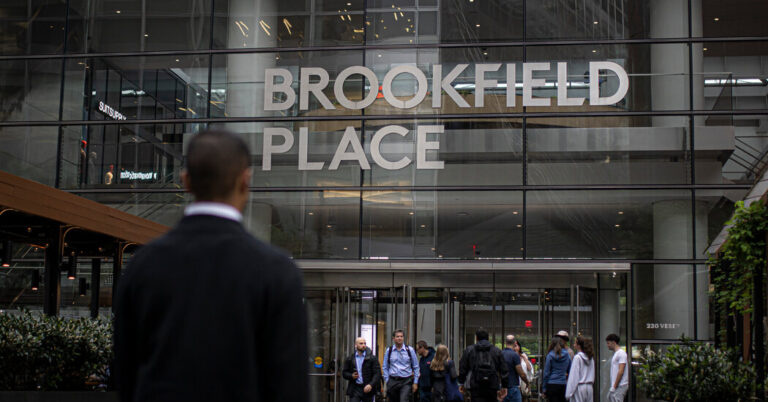
A prominent Silicon Valley investor is in a bitter dispute with his former employer, one of the world’s largest asset managers, accusing it of fraud and attempted bribery.

In a lawsuit filed on Thursday in California, Josh Raffaelli, who until late last year was a fund manager at Brookfield Asset Management, said the company had mistreated investors in his funds as it sought to make up for losses in other parts of its business.

The 84-page complaint is notable in part because Mr. Raffaelli has close ties to Elon Musk, the world’s richest man. That relationship enabled Mr. Raffaelli’s funds to put money into Mr. Musk’s private companies, a coveted opportunity in Silicon Valley. But among Mr. Raffaelli’s allegations is that Brookfield improperly limited the amount that he could invest in a Musk company on behalf of Brookfield’s clients.

In December, shortly after Mr. Raffaelli filed a whistle-blower complaint with the Securities and Exchange Commission, Brookfield fired him, according to his lawsuit.

“Brookfield repeatedly betrayed the trust and best interests of its investors, and then fired the employee who challenged its behavior,” said Mark Mermelstein, Mr. Raffaelli’s lawyer.

Brookfield manages more than $1 trillion on behalf of pension plans, government investment funds and financial institutions. Until January, its chairman was Mark Carney, Canada’s new prime minister.

“This suit is absolutely without merit and these baseless claims run counter to how Brookfield manages its business,” said Kerrie McHugh, a spokeswoman for Brookfield. “We will vigorously defend against this meritless suit, which was brought by a disgruntled former employee.”

Mr. Raffaelli, 45, has had a long career in Silicon Valley. In 2004, he became an analyst at what was then called Draper Fisher Jurvetson, a leading venture capital firm. At the time, Mr. Musk was on the ascent in Silicon Valley. He had recently founded the rocket company SpaceX and made an early investment in Tesla, which would become the world’s most valuable car company.

By 2009, Mr. Raffaelli was a board observer at both SpaceX and Tesla, according to his LinkedIn profile. That entitled him to attend the companies’ confidential board meetings. The proximity to Mr. Musk also gave Mr. Raffaelli the opportunity to invest his clients’ money in the billionaire’s private ventures. In Silicon Valley, that access made Mr. Raffaelli a hot commodity in his own right.

In 2017 he joined Brookfield, working out of its San Francisco office. His job was to manage a handful of funds that would invest clients’ money in technology companies. His base salary was $500,000, but his bosses told him that if his funds performed well, his total compensation could ultimately be in the tens of millions of dollars, according to the lawsuit, filed on Thursday in Superior Court in San Mateo, Calif.

In part to attract outside investors, Brookfield agreed to put its own money in Mr. Raffaelli’s funds, meaning the company’s financial interests would be aligned with those of its clients. By 2024, his funds collectively managed more than $1.75 billion, most of which came from pension funds and other outside investors.

Tapping his contacts in Mr. Musk’s orbit, Mr. Raffaelli arranged for his funds to invest in several of Mr. Musk’s private businesses, including SpaceX, the artificial-intelligence company xAI and the tunnel-building venture known as the Boring Company, according to Mr. Raffaelli’s lawsuit and people familiar with the investments.

But Brookfield soon encountered financial problems, according to the lawsuit. The Covid-19 pandemic had hammered the commercial real estate industry, in which Brookfield and its affiliates were major investors. Brookfield Property Partners, the asset management firm’s sister company, lost about $2 billion in 2020.

That set the stage for Brookfield to begin engaging in fraud, Mr. Raffaelli said in the lawsuit.

Short on cash, Brookfield in 2024 backtracked on some of its pledges to put hundreds of millions of dollars into Mr. Raffaelli’s funds alongside outside investors, the lawsuit said.

Around the same time, Brookfield also vetoed a proposal from an unspecified “major foreign conglomerate” that wanted to invest up to $100 million in one of Mr. Raffaelli’s funds, the lawsuit said, describing that decision as “indefensible.”

The combined result was that there was less money than expected for Mr. Raffaelli to invest. That, in turn, limited the potential upside for Brookfield’s outside clients, the lawsuit said.

Already, Mr. Raffaelli said, he had been forced to sharply reduce — from $25 million to $5 million — the amount that one of his funds planned to invest in Mr. Musk’s xAI. (The lawsuit did not identify xAI by name, but people familiar with the investments confirmed it.)

“That is like walking away from the chance to buy Facebook or Apple stock” at a bargain price, the lawsuit said. “The markets expected this investment to go nowhere but up, and that is exactly what has happened.” The estimated value of xAI has more than tripled to $80 billion over the past year.

Last summer, Brookfield informed Mr. Raffaelli that the firm was thinking of merging his funds into a company called Pinegrove Capital Partners, according to his lawsuit.

Mr. Raffaelli started looking into Pinegrove, an asset manager that was mostly owned by Brookfield. He was alarmed by what he found. He said that Pinegrove had exaggerated its capital levels by more than $100 million, making it appear financially stronger than it really was. Hundreds of institutions — including nonprofit organizations and pension funds for police officers and firefighters — had been persuaded under false pretenses to entrust their money to Pinegrove, according to the lawsuit.

Last October, Mr. Raffaelli anonymously reported his findings to Brookfield through the company’s whistle-blower website. A few weeks later, he said, he submitted a complaint to the S.E.C.

Shortly after, Mr. Raffaelli’s boss, Anuj Ranjan, told him that Brookfield’s chief executive had signed off on the decision to fold his funds into Pinegrove. According to the lawsuit, Mr. Ranjan acknowledged to Mr. Raffaelli that the move was not good for his clients but was designed to prop up Pinegrove and save money for Brookfield. Mr. Raffaelli viewed this as a violation of federal securities laws.

Mr. Ranjan did not respond to a request for comment.

The investors in Mr. Raffaelli’s funds needed to approve the Pinegrove merger. Brookfield pushed Mr. Raffaelli to pitch them on it “because his credibility would resonate better with the investors that trusted him,” the lawsuit said.

In exchange for his help, Mr. Raffaelli said, Brookfield offered to pay him an amount “way beyond” what he was currently owed. He said the head of the company’s human resources department then sent him a spreadsheet showing he could eventually be due as much as $46 million under his existing compensation agreement.

Mr. Raffaelli said he viewed that as Brookfield offering him a bribe.

The following week, Mr. Raffaelli sent the general counsel at Brookfield Asset Management the complaint he had previously sent to the S.E.C.

“As uncomfortable as this is for me, I wanted to share with you that I felt I had an obligation to blow the whistle on certain illegal conduct,” he wrote, according to the lawsuit.

Nine days later, Mr. Raffaelli said, he was fired.


Source link

U.S.-U.K. Trade Deal Builds on Close Ties but Leaves Some Tariffs in Place

0


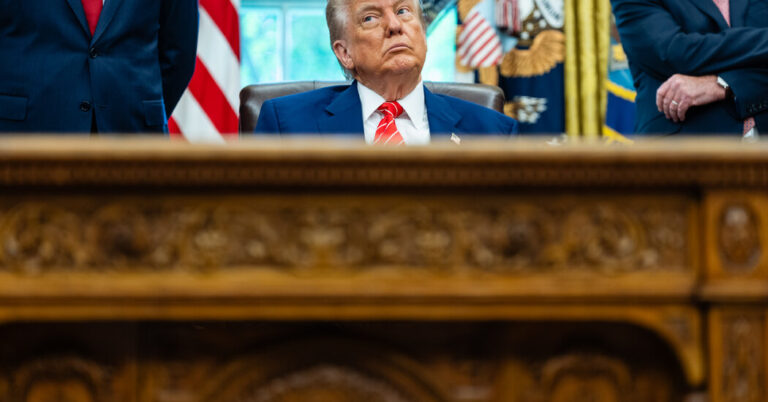
President Trump announced on Thursday that the United States intended to sign a trade deal with Britain that would bring the two nations closer and roll back some of the punishing tariffs he issued on that country’s products.

Both sides consider a trade pact deeply beneficial, and a deal has been under discussion since Mr. Trump’s first term. But the announcement on Thursday was still short on details, reflecting the haste of the Trump administration’s efforts to negotiate with more than dozen nations and rework the global trading system in a matter of months.

The agreement, which Mr. Trump said would be the first of many, would include Britain’s dropping its tariffs on U.S. beef, ethanol, sports equipment and other products, and buying $10 billion of Boeing airplanes. The United States in return said it would pare back tariffs that Mr. Trump has put on cars and steel, though it will leave a 10 percent levy in place for all British exports.

Neither government has said when the agreement will go into effect. Officials from both governments will need to meet in the coming months to hammer out specific language, leaving open the potential for disagreements. The British government said it was still pushing to bring down the 10 percent tariff on most other goods.

Nevertheless, the leaders of both nations hailed their cooperation in joint announcements on Thursday that invoked the deep relationship between their countries. Speaking from the Oval Office, with Prime Minister Keir Starmer of Britain on speakerphone, Mr. Trump called it a “great deal for both countries.” Mr. Starmer noted that it was the 80th anniversary of the Allies’ victory in Europe in World War II.

“There are no two countries that are closer than our two countries,” Mr. Starmer said. “And now we take this into new and important territory by adding trade and the economy to the closeness of our relationship.”

Both British and American businesses, including U.S. cattle ranchers and dairy farmers, also praised the arrangement, though some lamented that tariffs between the two countries would remain higher than they were when Mr. Trump came into office.

The announcement comes as the United States races to finalize agreements with more than a dozen other countries eager to avoid Mr. Trump’s high tariffs. U.S. officials have been negotiating with India, Israel, Japan, South Korea and Vietnam, among other trading partners, for agreements that would drop tariffs between the countries.

Trump officials are also headed to Geneva this weekend to discuss trade issues with Chinese officials, amid an intense standoff that has shut off U.S. trade with China and is threatening to put many companies out of business.

Amid the festering disputes with many countries, an agreement with Britain appeared to be low-hanging fruit for the Trump administration. British officials have eyed an agreement with the United States since leaving the European Union in 2020 as a way to offset reduced trade with Europe, and Mr. Trump has pushed for a deal with Britain since his first term.

Mr. Trump, who is fixated on trade deficits, has also praised the country for having relatively balanced trade with the United States. Last month, the president imposed the same 10 percent global tariff on Britain that he put on other countries, but not the higher “reciprocal” tariffs that were applied to many countries that ship the United States more products.

Officials said Thursday that the agreement would leave the 10 percent tariff on British exports in place but roll back others that Mr. Trump has put on cars and steel. In return, Britain would offer billions of dollars of market access for American beef and other exports.

One of the most contentious issues for Britain in recent months has been the hefty tariffs Mr. Trump applied to automotive imports, which threatened British companies like Jaguar Land Rover and Aston Martin.

Under the terms of the new arrangement, Britain will be allowed to send 100,000 vehicles to the United States under a tariff of 10 percent. The British government said that any cars shipped beyond that level would face a 27.5 percent tariff, and that U.S. tariffs on British steel would fall to zero. Britain sent 92,000 vehicles to the United States in 2024, according to data from Oxford Economics.

U.S. firms in turn would gain more ability to sell to the British government, and streamlined customs procedures when selling into Britain, according to a White House fact sheet. In addition, the governments said they would cooperate on issues of economic security, like enacting global technology controls and setting up a secure supply chain for important products like steel and pharmaceuticals.

U.S. officials hope the deal will send a message to other American trading partners that if they agree to open up their markets, they too could see some of the tariffs Mr. Trump has applied rolled back.

Mr. Trump’s defenders have praised his deal-making ability and said that the global tariffs he has issued have given him extraordinary leverage over other countries. Critics have painted the president as increasingly desperate to solve a crisis of his own making, as tariffs begin to push up U.S. prices and dampen the economy.

Wall Street welcomed news on Thursday, seeing it as a sign that the Trump administration might move to mend ties with other trade partners. The S&P 500 ended the day 0.6 percent higher after paring back some gains from earlier on Thursday.

Rob Haworth, a senior investment strategy director at U.S. Bank Asset Management, said the market was “cheering progress on this deal.” But he added, “this is clearly a market on edge, and I think we’re not out of the woods yet.”

The National Cattlemen’s Beef Association, which represents ranchers, praised the deal for expanding U.S. access to the British market.

“With this trade deal, President Trump has delivered a tremendous win for American family farmers and ranchers,” said Buck Wehrbein, a Nebraska cattleman who heads the group.

Other analysts were less impressed. Paul Ashworth, the chief North America economist for Capital Economics, wrote in a note that “the ‘full and comprehensive’ trade deal between the U.S. and the U.K. announced in a rush today by President Donald Trump and PM Keir Starmer is no such thing.”

“This rush to demonstrate progress on ‘deals’ reveals a rising desperation within the administration to roll back tariffs before they hit G.D.P. growth and inflation,” Mr. Ashworth added.

Britain is the United States’ 11th-largest trading partner in goods, representing 2.9 percent of total U.S. trade in the first quarter of the year. The United States sent $80 billion of machinery, airplanes, natural gas, crude oil and other products to Britain in 2024, while it bought $68 billion of cars, pharmaceuticals and other goods in return.

The United States is Britain’s largest single trading partner, though most of that trade relationship is in services, which are not affected by tariffs.

The Trump administration notified Congress of its intent to negotiate a trade deal with Britain back in 2018. But the talks never got much traction in Mr. Trump’s first term because of British resistance to America’s chemically treated beef and chicken, as well as fears that the United States would push for American companies to gain deeper access to Britain’s National Health Service.

During the Biden administration, British officials continued to advocate a trade deal but did not make much progress because of Democrats’ skepticism.

In late February, at a party at the British ambassador’s residence in Washington, Mr. Starmer, who was visiting, told Commerce Secretary Howard Lutnick of Britain’s interest in focusing on trade, according to a person with knowledge of the conversation. Mr. Lutnick, who oversees a portfolio that includes U.S. trade policy, connected with his counterpart in the U.K. government, Jonathan Reynolds. British officials made clear to the Trump team they wanted to be the first country to make a deal.

Mr. Trump’s special envoy to Britain, the former producer of his show “The Apprentice,” Mark Burnett, was involved in the early discussions and was a proponent of trying to secure an early deal with the country.

With Mr. Lutnick focusing on the big picture and Jamieson Greer, the U.S. trade representative, working through the details and execution, the governments hammered out a framework. Mr. Trump also engaged directly with Mr. Starmer, including putting in an 11th hour call to push for more in the agreement, the British prime minister said Thursday.

Mr. Trump liked the idea of Britain being the partner for his first deal, given the country’s special relationship with the United States, and he thought the agreement would send a good signal to the world, according to a person with knowledge of his thinking. Britain is also not a major source of automobiles or steel for the United States, which helped persuade American officials to drop the tariffs on those products.

The deal also provides Mr. Starmer a much-needed political victory, appearing to vindicate his strategy of cultivating a relationship with Mr. Trump.

But some analysts have noted that the agreement left many tariffs in place and skipped over more contentious issues, like opening Britain’s health care market to U.S. companies, or the digital service tax that Britain has imposed on American tech firms. They suggested that trade talks with other governments that are less closely allied with the United States could be tougher to finalize.

“If we’re 40 days out from Liberation Day, and the first deal and the only deal is with a country where we run a bilateral trade surplus that was not seen as a problem coming into Liberation Day, I take it as a kind of bearish signal about how difficult the next deals are going to be,” said Josh Lipsky, the chairman of international economics at the Atlantic Council, a think tank.

Other industry executives expressed nervousness about the precedent that rolling back tariffs on foreign steel, aluminum and cars might set for other negotiations, or complained about the concessions being unfair for U.S. industry.

Matt Blunt, the president of the American Automotive Policy Council, which represents Ford, General Motors and Stellantis, said his group was “very disappointed” that the administration had prioritized Britain over Canada and Mexico, which remain subject to 25 percent automotive tariffs and buy far more from U.S. factories.

It would now be cheaper, Mr. Blunt said, to import a car from Britain than one from Mexico or Canada that might source half its parts from the United States.

Mark Landler, Eshe Nelson and Danielle Kaye contributed reporting.


Source link

Kenneth Walker, 73, Journalist Who Bared Apartheid’s Brutality

0


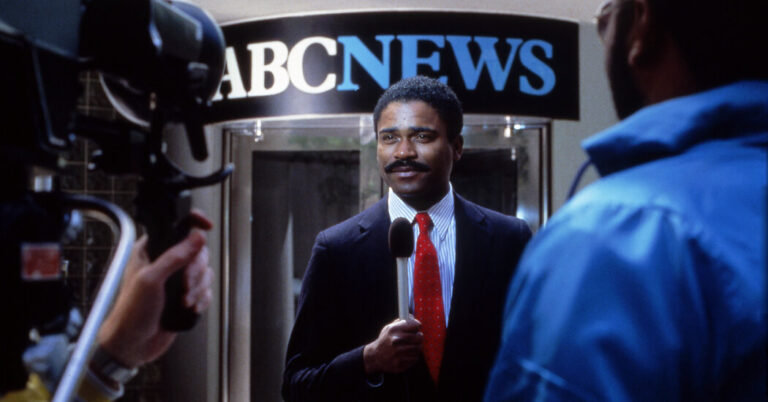
Kenneth Walker, an Emmy Award-winning journalist whose reporting for the ABC News program “Nightline” helped bring the brutality of South Africa’s racist apartheid system to the attention of the American public, propelling it onto the agenda of U.S. policymakers, died on April 11 in Washington. He was 73.

His cousin and executor, Jeff Brown, said his death, in a hospital, was caused by a heart attack, It was not widely reported at the time.

Mr. Walker’s weeklong coverage of South Africa’s often brutal policy of racial segregation — produced for “Nightline” with Ted Koppel, the program’s anchor, and a team of reporters — won a 1985 Emmy Award from the National Academy of Television Arts and Sciences for outstanding analysis of a news story. It was also awarded an Alfred I. duPont-Columbia Gold Baton.

“In the way that only television can, ‘Nightline’ revealed for viewers the pain, anguish and rage that suffuses the struggles of this divided country,” the duPont-Columbia citation said. “Masterfully executed and exquisitely produced, it was perhaps the most powerful, certainly the most extraordinary, television of the year.”

The National Association of Black Journalists named Mr. Walker journalist of the year in 1985 for that reporting. The association had already given him an award for his work in print journalism — for his four-part series on apartheid for The Washington Star — and when he won the association’s top award for radio journalism in 2001, he became the first person to receive its highest honors for print, television and radio.

The association later honored him further, with its Frederick Douglass Lifetime Achievement Award.

During his four-decade career, Mr. Walker was a reporter for The Washington Star (from 1969 to 1981, when it folded), for “Nightline” (from 1981 to 1988) and for NPR, where he served as Africa bureau chief from 1999 to 2002.

Mr. Koppel recalled in an interview that Mr. Walker “was one of a number of African American staffers at ‘Nightline’ who were gently, and not so gently, pushing for more attention being paid to Nelson Mandela when he was still in jail and was anything but a hero to millions of people, including the president of the United States” (Ronald Reagan at the time).

Mr. Walker helped persuade ABC executives to spend about $1 million to send the “Nightline” production crew to South Africa for several weeks, Mr. Koppel said: “His legacy is that he was instrumental in helping to convince us that is something we ought to do. The program changed minds in the United States and South Africa, and won more awards than just about any program we’ve ever done.”

But Mr. Walker didn’t limit his criticism to other countries. He was also outspoken about racism in America and the special responsibility of Black journalists.

In 2021, at the annual round table held by Richard Prince, the former Washington Post reporter and editor who writes the online column Journal-isms, Mr. Walker described the United States as an “active crime scene” that warranted a United Nations investigation into crimes against humanity because of numerous racist incidents that “the media, including most Black journalists, are ignoring.”

He favored reparations for slavery, and he criticized the negative portrayal of Black people on television and in popular music.

He also lamented the scarcity of Black reporters; he wrote in a 2022 Facebook post that racist hiring practices had “made it impossible for the media to keep the public informed.”

Kenneth Reginald Walker was born on Aug. 17, 1951, in Washington. His father, William, was a cabdriver; his mother, Lillie, was a government clerk.

After graduating from Archbishop Carroll High School in 1969, he worked at The Washington Star as a copy boy while attending the Catholic University of America on a scholarship. He left school before graduating to support his growing family and became a reporter at The Star.

Mr. Walker is survived by two stepsisters, Tabia Berry and Vikki Walker Parson, and three grandchildren. His marriages to Jacquelyn DeMesme and Ra’eesah Moon ended in divorce. A daughter from his first marriage, Maisha Hunter, died in 2017.

As a reporter for The Star, Mr. Walker covered the White House and the Supreme Court, and also served as a national and foreign correspondent.

While he was still at The Star, he began to work in TV, as the host of a weekend public affairs show on the ABC affiliate in Baltimore, focusing on issues of particular interest to Black viewers. After The Star folded in 1981, he was hired at ABC as general assignment reporter. He went on to cover the White House and the Justice Department for the network.

When “60 Minutes” broadcast a segment on apartheid in December 1984, Mr. Walker prodded ABC to also cover racial segregation in South Africa. (The “Nightline” team that eventually won an Emmy for that coverage included the executive producer, Richard Kaplan; three senior producers, William Moore, Robert Jordan and Betsy West; and two reporters, Mr. Walker and Jeff Greenfield.)

“Blacks in the U.S. wrote and called ABC and the other networks en masse, something that doesn’t happen very often,” Mr. Walker was quoted as saying in “Black Journalists: The NABJ Story” (1997), by Wayne Dawkins. “Also, Black South African resistance had escalated to the point where it could no longer be ignored.”

Mr. Walker later briefly anchored “USA Today: The Television Series”; produced “The Jesse Jackson Show,” a syndicated talk show that aired in 1990 and 1991; and founded Lion House Publishing, whose books included “Black American Witness: Reports From the Front” (1994) by Earl Caldwell, a former reporter for The New York Times.

After leaving NPR, Mr. Walker remained in South Africa, where he served as communications director for the humanitarian organization CARE.

He returned to Washington in 2015, in need of a kidney transplant. A high school classmate, Charlie Ball, with whom he connected through an alumni group, proved a match and donated a kidney.

“Charlie’s gift has also been as much a gift of spirit as one of life,” Mr. Walker said in 2019. “As a member of the last generation of the civil rights movement, I have spent my life on the front lines of America’s continuing struggle with its formerly enslaved citizens. Sometimes it seems as if that struggle is being won. Sometimes not. In my lifetime, it has never seemed more out of reach than it is today, when white supremacist terrorism is growing steadily.”


Source link

Did Littler tell Leeds crowd to SIT DOWN after Aspinall misses 9-dart attempt?

0


Luke Littler reacts after Nathan Aspinall comes agonisingly close to a nine-darter.


Source link

Crypto Bill Stalls in the Senate as Democrats Balk

0


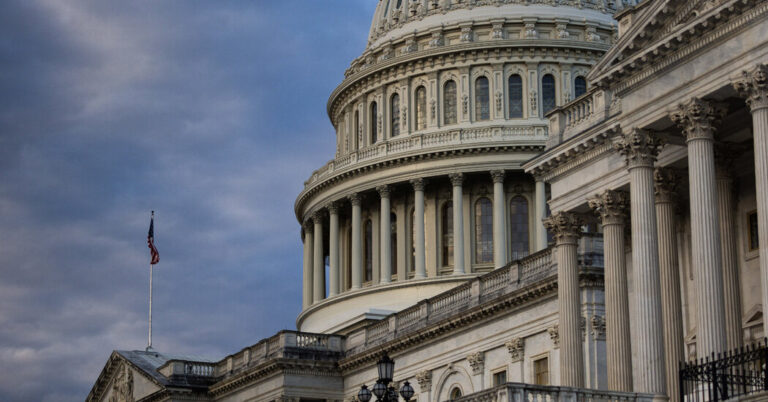
A first-of-its-kind bill to regulate parts of the cryptocurrency industry stalled in the Senate on Thursday, after Democrats blocked it amid concerns in their party about how President Trump and his family are profiting from crypto.

On a vote of 48 to 49, the measure failed to muster the 60 votes necessary to advance. It would have regulated so-called stablecoins, a type of cryptocurrency tied to the value of an existing asset, often the U.S. dollar. The vote was a setback for the industry, which has made significant advances in Washington with the backing of Mr. Trump and a bipartisan group of lawmakers.

The legislation has divided Democrats, many of whom were reluctant to back legislation that could benefit Mr. Trump, whose ties to the industry have prompted corruption allegations.

As the stablecoin bill began making its way through Congress, a bipartisan group of senators on the Banking Committee supported it, voting in March to send it to the Senate floor for a full vote. At the time, the measure appeared to be on a glide path toward passage, with proponents confident they would be able to deliver a bipartisan bill to Mr. Trump’s desk over the summer.

But less than two weeks after the banking panel’s action, reluctance began brewing among other Democrats on Capitol Hill when a cryptocurrency firm affiliated with the president’s family, World Liberty Financial, announced it would issue a stablecoin. Democrats’ concerns deepened after the Trump-affiliated firm inked a deal with an Emirati venture fund backed by the government of Abu Dhabi that would grant them $2 billion in deposits.

Democratic backers also had concerns that the bill lacked provisions to crack down on money laundering in the industry or guarantee that bad actors who had been barred from engaging in traditional American financial markets would not be able to use the cryptocurrency to regain a foothold.

But the overriding worry for Democrats, who have labored to figure out how and when to mount an effective resistance to Mr. Trump, was that they could be seen as delivering a victory to the president when they had the opportunity to block the bill.

To move forward in the Senate, the legislation needed 60 votes, meaning at least seven Democrats would have to support pushing it past procedural hurdles and toward a final vote. In the end, none were willing to do so.

Senator Ruben Gallego, Democrat of Arizona and a supporter of the legislation, had made a last-minute appeal to Republicans to delay the vote until Monday.

“Legislation of this scope and importance cannot be rushed,” he said, adding that he and other Democrats wanted more time to review the bill.

“I want to be clear that we do have enough members across the aisle that want to see this pass in a good manner,” Mr. Gallego said.

But his efforts fell short; Republicans insisted on voting on Thursday, saying Democrats would have a chance to modify the bill during debate.

“We’ve done everything we can to accommodate their concerns,” Senator John Thune, Republican of South Dakota and the majority leader, said before the vote. “At some point, they’re going to have to take yes for an answer.”

Mr. Thune switched his vote from a yes to a no so he could try to bring it up again in the future. He said Democrats were “moving the goal posts” in intensive talks over the legislation, suggesting they were simply trying to deny Republicans a win on the issue.

One Republican, Senator Josh Hawley of Missouri, joined Democrats in opposing moving forward with the bill, citing concerns with the involvement of technology companies in the cryptocurrency industry.

“We’ve been working with negotiators for 48 hours now, and I was told that they were getting close to text to include Big Tech prohibitions,” he said. “But they haven’t done it.”


Source link

The Fed Could Be on Hold Until September, Economists Say

0


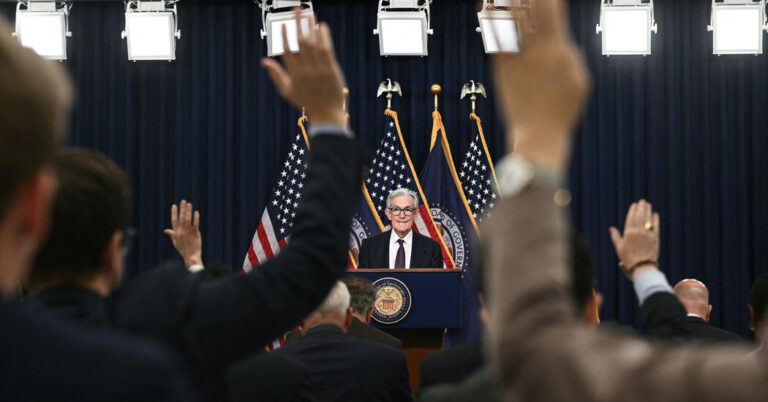
More than 20 times during a roughly 45 minute news conference on Wednesday, Jerome H. Powell, the chair of the Federal Reserve, referenced the idea of waiting to see how President Trump’s policies would ripple through the economy before taking any action on interest rates.

Mr. Powell, who spoke after the Fed opted to extend a pause on interest rate cuts, said the central bank had the flexibility to do so because the economy overall was still on solid footing. He also stressed that it was the most prudent decision at a time when there was so much uncertainty about how much tariffs would raise inflation and slow growth.

“It’s really not at all clear what it is we should do,” he told reporters.

Forecasts for when the Fed will restart interest rate cuts have been in a constant state of flux, whipsawing on every twist and turn in the global trade war or on any new data point that sheds a sliver more light on the state of the economy. But what is starting to set in is that the Fed may in fact be on hold for quite a bit longer than initially expected — and far longer than Mr. Trump would like. The president on Thursday again pressed Mr. Powell to lower interest rates, calling him a “fool.”

Economists are increasingly coalescing around September as the most plausible time for the Fed to restart interest rate cuts. Some have penciled in an even later start date. The longer the Fed waits, the higher the odds that officials may have to lower borrowing costs more aggressively to shore up the economy.

“The likelihood of them moving doesn’t really start to increase until you get to the September meeting,” said Tiffany Wilding, an economist at asset manager Pimco. She said a larger-than-usual half-point cut would be firmly on the table at that point and that she expects the Fed to keep lowering rates into the next year.

“I don’t think that using the playbook of 25 basis point increments per meeting for cuts is the right one to use here,” Ms. Wilding said, pointing to the possibility that the economy could weaken abruptly.

Mr. Powell on Wednesday was clear that the current backdrop was not one in which the Fed could be pre-emptive with interest rate cuts — unlike during Mr. Trump’s first-term trade war when inflation was subdued and the economy was at risk of stagnating.

That is primarily because inflation has been running above the central bank’s 2 percent target for four years, but also “because we actually don’t know what the right response to the data will be until we see more data,” Mr. Powell said.

What that means in practice is that the Fed will need to have concrete evidence in hand that the economy is languishing before feeling confident that it can lower interest rates without having to worry about stoking inflation. That could take time to show up.

“In their view, they can’t really make policy on the basis of a forecast,” said Dean Maki, chief economist for Point72, a hedge fund. “Right now, there is just too much uncertainty about where policy is going to go, about how that policy is going to ripple through the economy and about what the timing of that is.”

So far, the data the Fed has points to low layoffs and an overall solid labor market. Spending has slowed but not stalled completely. The question is how long that lasts if consumers have already turned much more downbeat about the outlook, and businesses are seeing early signs of sluggish sales and have begun to retrench.

Mr. Maki is still forecasting a July cut, but said he could envision the Fed pushing that back to September if there are not yet “significant signs” that the labor market is deteriorating. That would include rising unemployment claims and a couple of soft monthly jobs reports.

Traders in federal funds futures markets are still holding out some hope for a downshift in borrowing costs in July, after scaling back their bets for a June move on Wednesday. But there are reasons to think that the data will not have turned decisively enough in time for that.

The Trump administration is working against a July 9 deadline to mint trade deals with countries after pausing more onerous tariffs initially announced in April. On Thursday, it is set to announce its first agreement with the United Kingdom.

Top officials will also meet with their counterparts in China in Geneva, Switzerland this weekend to work toward a deal to reduce the minimum 145 percent tariffs Mr. Trump put in place on imports from the country.

White House officials are also wrangling with lawmakers to pull together a multi-trillion-dollar tax cut package by July 4.

With trade policy particularly fluid, Christopher J. Waller, a Fed governor, acknowledged last month that it was unlikely that “anything dramatic” would happen in the economic data before there was more clarity on that front.

“I don’t think you’re going to see enough happen in the real data in the next couple of months, until you get past July,” he said. The Fed will have only two more job reports in hand by the time it meets at the end of that month in addition to three inflation reports.

Much will depend on how significantly tariffs, which are a tax on imports, stoke inflation. If protectionism leads to persistently higher prices, that would have much more far-reaching consequences for the economy than a one-off spike. A lot will also depend on how consumers respond to the increase.

Ms. Wilding expects the pop in inflation from tariffs to come before any notable rise in the unemployment rate. One theory is that higher prices will cause consumers to cut back on spending, further weighing on companies’ already-strained margins. Layoffs may follow if the downshift is big enough, but they may not be the first way in which businesses try to reduce costs given the acute labor shortages most faced in the aftermath of the pandemic.

Michael Feroli, the chief economist at JPMorgan, expects the labor market to weaken enough by late summer to prompt the Fed to cut in September. Kathy Bostjancic, the chief economist at Nationwide, has also penciled in a cut then, but thinks the Fed will have to go big with a half-point reduction.

Other economists see the Fed on hold for even longer. Deutsche Bank’s team has the first cut coming in December. Larry Meyer, a former Fed governor who is now an economist at research firm LHMeyer, expects no rate cuts until 2026.

“The first thing the Fed has to do is contain inflation expectations in word or deed,” he said. “I think that means not easing this year.”

Market-based measures of inflation expectations, to which the Fed pays closest attention, suggest that inflation will indeed remain contained after jumping this year. Survey-based gauges paint a more worrying picture, a divergence that some economists say is a sign that expectations about future inflation are not as under control as officials would like.

Mr. Powell on Wednesday said there was “no cost” to the Fed waiting for now to make a policy move. The central bank was “well positioned to respond in a timely way to potential economic developments,” he said, suggesting the central bank would quickly adjust course if the circumstances changed. If the Fed saw a “significant deterioration,” Mr. Powell said, in the labor market, it would “look to be able to support that.”

He added one caveat, however: “You’d hope it wasn’t also coming at a time when inflation was getting very bad.”


Source link

A Kentucky Boy Mistakenly Orders Almost 70,000 Dum-Dums Lollipops

0


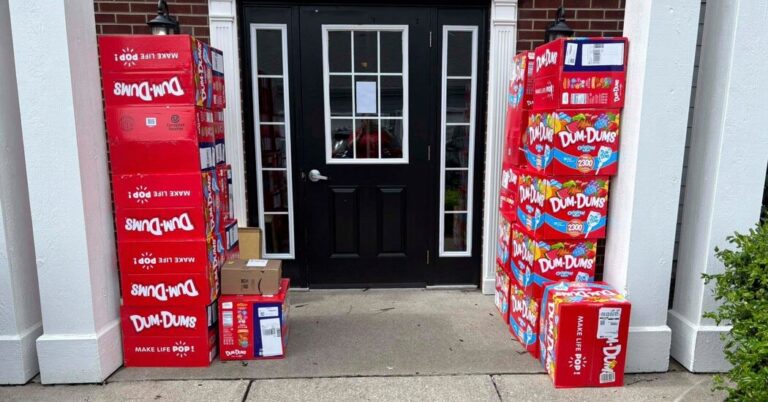
On Sunday morning, as Holly LaFavers was preparing to go to church, a delivery worker dropped off a 25-pound box of lollipops in front of her apartment building in Lexington, Ky.

And another. And then another. Soon, 22 boxes of 50,600 lollipops were stacked five boxes high in two walls of Dum-Dums. That was when Ms. LaFavers heard what no parent wants to hear: Her child had unwittingly placed a massive online order.

“Mom, my suckers are here!” said her son, Liam, who had gone outside to ride his scooter.

“I panicked,” Ms. LaFavers, 46, said. “I was hysterical.”

Ms. LaFavers said in an interview that Liam, 8, became familiar with Amazon and other shopping sites during the pandemic, when she regularly ordered supplies. Since then, she has occasionally let him browse the site if he keeps the items in the cart.

But over the weekend, Liam had a lollipop lapse. He told his mother he wanted to organize a carnival for his friends, and mistakenly, he said, he ordered the candy instead of reserving it.

And so the double ramparts of suckers rose on their doorstep, where the excesses of e-commerce crossed paths with tight-knit community.

Ms. LaFavers said that she discovered something was amiss after a shopping trip early on Sunday, when she checked her bank balance online. “It was in the red,” she said.

The offending item was a $4,200 charge from Amazon for 30 boxes of Dum-Dums. Frantic and upset, she called Amazon, which advised her to reject the shipments. Ms. LaFavers was able to turn away eight of the boxes, totaling 18,400 lollipops, but the 22 boxes containing 50,600 lollipops had already landed.

“My Alexa didn’t even ding to tell me they had been delivered,” she said.

Ms. LaFavers said that she was then told by Amazon that it could not take the candy back for a refund because it was food. So she tried to send back to the virtual shopping world what it had unloaded on her in the first place.

“Hi Everyone! Liam ordered 30 cases of Dum-Dums and Amazon will not let me return them. Sale: $130 box. Still sealed,” she wrote on Facebook on May 4.

The post attracted the attention of local news stations and national media outlets, highlighting the financial treachery of online activity.

Parents commiserated on her Facebook page and shared solutions, like detaching payment methods from online accounts, setting up alerts for large purchases or simply keeping children off phones. One child spent $980 on virtual Roblox game currency. A 3-year old playing on a phone during an airport delay spent $300 on movies. A woman’s granddaughter spent $1,000 on Google Play.

“As a mom that has experienced unwanted orders, I feel your pain,” a woman wrote.

Companies offer steps on how to prevent and dispute unauthorized purchases in online shopping and games.

Roblox advises parents to use password-protected purchasing, and to call its customer service center before initiating a dispute with a payment provider, which would stall the refund process. Epic, the makers of Fortnite, has safeguards that include an “intent-to-buy” step, and purchase cancellations.

On Apple devices and accounts, family-verification settings include controls called Ask to Buy for a child’s device, or “don’t allow” for in-app purchases.

Google Play’s purchase-verification process also has additional safeguards on family accounts that reverify the user is authorized to make a purchase on apps meant for children ages 12 and under.

Amazon eventually told Ms. LaFavers that it would give her a refund., In an email, the company said that it “worked directly” with her “to turn a sticky situation into something sweet.”

On Wednesday, after the refund came through, Ms. LaFavers decided to give away the Dum-Dums instead of selling them. One neighbor offered to distribute some on Halloween. A local chiropractor asked for two boxes, and a bank in Somerset, Ky., said they would take five boxes.

“I am giving them to the individuals that offered to buy them from me, or I am donating them to a charity or a school or church,” Ms. LaFavers said. “People that I have relationships with were willing to buy those to help me out.”

Spangler Candy Co., the company that has made Dum-Dums since 1924, invited Ms. LaFavers and Liam to visit its factory in Ohio. “We also love that so many people jumped in to offer to purchase the extra cases,” said Kirk Vashaw, its chief executive, in an email.

Liam’s online browsing privileges are on pause. But Ms. LaFavers said he, too, had tried to find a way to recoup her money, telling his mother: “It’s OK, mom, we can sell my Pokémon cards.”


Source link

Proposed Medicaid Cuts Put Vulnerable Republicans in a Political Bind


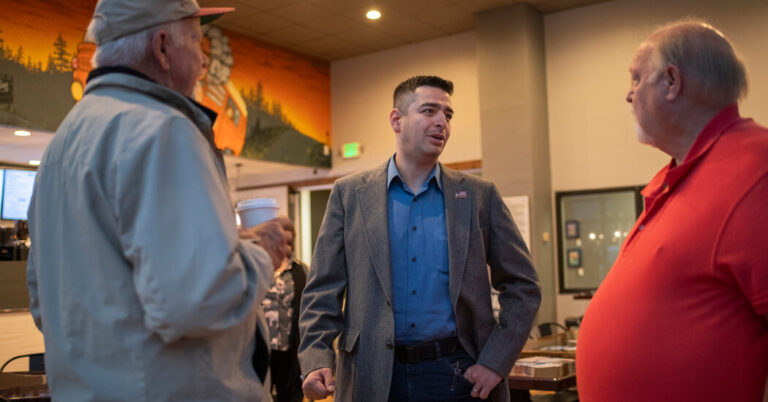
Representative Gabe Evans, Republican of Colorado, secured his ticket to Washington in November when he defeated a Democratic member of Congress by less than 1 percentage point — just 2,449 votes.

Now Mr. Evans, 39, is helping to write legislation that could cement his own ticket back home.

The first-term congressman, whose swing district just north of Denver includes 151,749 Medicaid recipients, sits on the Energy and Commerce Committee. The Republican budget resolution that lays the groundwork for sweeping legislation to enact President Trump’s domestic agenda instructs the panel, which has jurisdiction over Medicaid, to slash spending by $880 billion over the next decade to help pay for a large tax cut. That number is impossible to reach without substantially reducing the cost of Medicaid, the government program that provides health insurance for lower-income Americans.

As Republicans in Congress struggle to coalesce around the core pieces of what Mr. Trump calls his “one big, beautiful bill,” Mr. Evans and other G.O.P. lawmakers from some of the most competitive districts in the country are facing committee votes next week to approve cuts to popular programs that could come back to haunt them politically.

And Democrats are gleeful at the prospect of Republican incumbents going on the record supporting the effort.

“These members of Congress won with fewer votes than the number of people in their district on Medicaid,” said Jesse Ferguson, a veteran Democratic strategist and a former spokesman for the Democratic Congressional Campaign Committee. “Voting for this is like being the captain of the Titanic and deciding to intentionally hit the iceberg.”

The group includes Representative Mariannette Miller-Meeks, Republican of Iowa, who also sits on the Energy and Commerce Committee and is on even shakier ground than Mr. Evans, despite having warded off a challenger multiple times. Last year, Ms. Miller-Meeks, who represents 132,148 Medicaid recipients, won her seat by 0.2 percent, or 799 votes. Her local office in Davenport has been besieged by demonstrators concerned about spending cuts.

Also on the panel is Representative Thomas H. Kean Jr., a Republican from a highly competitive district in New Jersey.

On the Agriculture Committee, which must find $230 billion in cuts over a decade, Republicans are feuding over how much to slash from federal food assistance programs, with those from competitive seats wary of reductions that could hit their constituents. That panel also includes some of the most endangered Republicans in the House: Representatives Rob Bresnahan Jr., a first-term Republican from Pennsylvania; Don Bacon of Nebraska; Zach Nunn of Iowa; and Derrick Van Orden of Wisconsin.

Both committees are expected to meet next week to work on and finalize their bills, although that could change if Republicans fail to reach agreement on what cuts should be included. The panels had been slated to meet this week, but pushed off the meetings amid lingering disagreements.

“Many of them have been talking in private to their leadership, telling them that this is a really tough vote for them,” Representative Angie Craig of Minnesota, the ranking Democrat on the Agriculture Committee, said of Republicans.

Adding to their dilemma, Mr. Trump has said he does not want to “touch” Medicaid, and some far-right thought leaders are blaring alarms about cutting the program.

“Medicaid — you got to be careful, because a lot of MAGA’s on Medicaid,” Stephen K. Bannon, the former adviser to Mr. Trump, said recently on his “War Room” podcast. More than 60 percent of Trump voters said Medicaid was “very important” to their communities, according to a recent KFF poll.

As the G.O.P. struggles to cobble together legislation that can please its right flank, which is demanding deep cuts, without alienating moderates who oppose them, many vulnerable lawmakers fear that they are setting themselves up to take a tough vote on something that may never become law.

Representative Nick LaLota, a New York Republican who opposes Medicaid cuts, said he and his colleagues had no interest in going through the difficult process of writing and voting for a bill that ultimately could not pass the Senate, which has embraced a fraction of the spending cuts the House has.

“We’re not looking to float a trial balloon,” Mr. LaLota said in an interview. “We only want to vote for something that’s real, that’s passable by the Senate and that the president will sign.”

Such concerns are one reason that Speaker Mike Johnson was forced this week to drop one of the most aggressive options the G.O.P. was considering to cut Medicaid costs: lowering what the federal government pays states to care for working-age adults who became eligible for the program through the Affordable Care Act’s Medicaid expansion.

Privately, many Republicans on Capitol Hill said they expected the House to miss its self-imposed Memorial Day deadline to write and pass the bill, and eventually settle on a Senate-approved package of tax cuts that includes no major changes to Medicaid, food assistance or any other popular program. Such an outcome would enrage fiscal conservatives on the hard right, who are demanding that the package not add to the deficit and who could bring down the whole package if they refused to go along.

Some vulnerable Republicans who oppose cutting Medicaid said they were still hoping to find other ways to reduce the program’s costs, such as imposing work requirements and tightening rules to ensure that undocumented immigrants, who are barred by law from the program, cannot receive any of its services. And they note that there are other proposals to raise the federal revenue needed to offset tax cuts.

“There are ways to cut the Energy and Commerce budget which aren’t just health care,” Mr. LaLota said. “I’m not so fatalistic that it’s a tough vote.”

But cleaning up Medicaid fraud and tightening rules generate far less money than what the Republican plan requires. And the Congressional Budget Office on Wednesday wrote that after estimating the budget impact of four different options for cutting Medicaid, all of them would have the same overall result: “enrollment would decrease and the number of people without health insurance would increase.”

Democrats have for weeks been working to capitalize on the potential impact of the cuts.

They have targeted vulnerable Republicans with billboards in their districts, accusing them of voting to cut Medicaid in order to give billionaires like Elon Musk a tax cut. The National Republican Campaign Committee issued a cease-and-desist letter about the billboards, calling them defamatory.

“All national Democrats have are pathetic lies and fear-mongering tactics to distract from their failures,” a spokesman for the committee, Mike Marinella, said in a statement.

Mr. Evans, for his part, has been trying to thread the needle by criticizing the way his state administers Medicaid, charging that it has paid millions of dollars to deceased people and undocumented immigrants.

“The overall goal is to be able to protect the program by cutting out the fraud, waste and abuse,” he told a Colorado public radio station last month. He declined to comment for this article.

Ms. Craig said her hope was that some center-leaning Republicans would stand up to their leaders and simply draw a red line on any cuts to the Supplemental Nutrition Assistance Program or Medicaid.

“The real question is whether the moderates on my committee are really going to take this to the mat and fight these cuts or if they’re going to cave,” Ms. Craig said.

For newcomers to Congress like Mr. Evans and Mr. Bresnahan, the situation has echoes of the difficult position that Representative Marjorie Mezvinsky, a one-term Democratic congresswoman from Pennsylvania, faced in 1993 when she voted for President Bill Clinton’s budget after originally opposing it because it did not include enough spending cuts.

As she cast the deciding vote, Republicans knew they were witnessing a political death.

On the House floor, they chanted, “Goodbye, Marjorie!”

She was defeated the following year.


Source link

Chester May Festival: Ryan Moore masterclass as Mount Kilimanjaro climbs to Dee Stakes glory for Aidan O’Brien | Racing News

0


Mount Kilimanjaro came from the clouds to provide Aidan O’Brien with yet another win in the Boodles Raindance Dee Stakes at Chester.

O’Brien is now the leading trainer in the race’s history, and this was his seventh win in eight renewals.

While none of his winners have gone on to follow up at Epsom, this son of Siyouni is now a general 20/1 chance for the blue riband Classic.

As Great David came over from a wide draw to lead the field at a strong pace, Ryan Moore was some way off the gallop.

He looked to have a mountain to climb as they turned into the straight, with High Stock taking over at the head of affairs, but the even-money favourite got going late on to win by a neck.

Ryan Moore gives Mount Kilimanjaro a well-earned pat after Dee Stakes victory
Image:
Ryan Moore gives Mount Kilimanjaro a well-earned pat after Dee Stakes victory

Paul Smith, son of co-owner Derrick, said: “It was a great ride by Ryan, he was very patient. I think the pace was very honest and Ryan didn’t panic and the horse quickened up well and showed a nice attitude.

“As we’ve always said, they learn so much here – it’s almost like they have two races in one. He’ll come forward again from this, so we’re delighted with him.

“I think he’ll go for a Derby of some sorts, either Epsom or the French Derby was mentioned as well. There’s options for him and we’ll just see how the trials go and juggle them and see where they all go.”

Coolmore representative Kevin Buckley said: “I thought this fella showed a great turn of foot and I suppose it gives us the option of either going to Epsom or going to France with him.

“It was a good performance and Ryan was very complimentary. I was impressed and it makes it a record of Dee Stakes wins for Aidan with 12.”


Source link