Home Blog Page 329

TikTok, Facing a U.S. Ban, Tells Advertisers: We’re Here and Confident

0


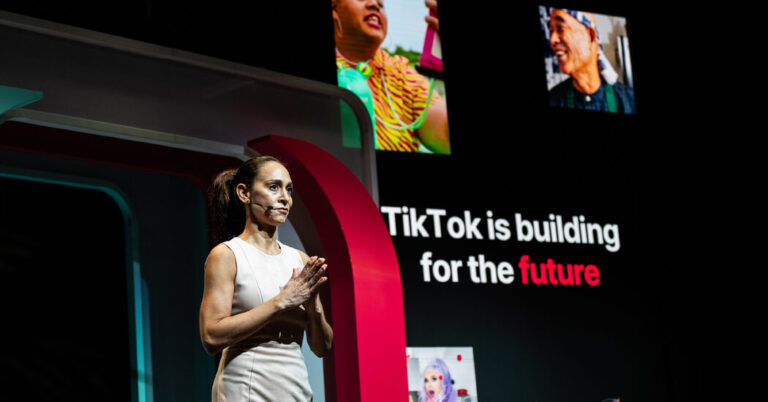
“TikTok is here — we are here,” Khartoon Weiss, the company’s vice president of global business solutions, told a packed warehouse of advertisers on Tuesday in Manhattan.

“We are absolutely confident in our platform and confident in the future of this platform,” she declared.

That statement was the closest TikTok advertising executives got to addressing the app’s uncertain fate in the United States in the company’s annual spring pitch to marketers. Under a federal law and executive order, the app is set to be banned in the country next month if the Chinese owner of the company, ByteDance, does not sell it.

Hundreds of representatives from companies like L’Oreal and Unilever and various ad agencies scrambled to find seats for an event hosted by the comedian Hasan Minhaj that heavily emphasized TikTok’s role as a cultural juggernaut.

TikTok was more than a video platform, Mr. Minhaj told the crowd. TikTok was “the cultural moments you talk about at work, the jokes you talk about in your group chat, the language you use in your everyday life,” he said.

The tone of the event marked a departure from TikTok’s presentation a year ago, when the company was smarting from the federal law that promised to ban the app in the United States because of national security concerns related to the company’s Chinese ownership. Last year’s pitch started with one of TikTok’s top executives telling roughly 300 attendees that the company would fight the law in court and prevail and was “not backing down.”

TikTok did not actually win in court — the Supreme Court unanimously upheld the law in January — but the company has earned an unusual reprieve from President Trump. He has essentially put a pause on the law, which was set to go into effect in January, most recently giving the company until June to find new owners. On Sunday, he suggested he would extend the reprieve again if ByteDance needed more time.

The presentation on Tuesday was a reminder that beyond the battles in Washington, TikTok faces the same pressures as any other major social media company — winning ad dollars and promising major brands safe spaces for their messages to run. TikTok has a foothold among marketers hawking everything from clothing to beauty hacks despite competition from Meta’s Instagram Reels and Google’s YouTube. TikTok says it has 170 million users in the United States.

At the event, the company promoted new tools that would let marketers run their messages alongside viral trends, and it pitched advertisers on the additional exposure they could get from running ads on TikTok during the Super Bowl. Ms. Weiss also told marketers that the company was eager to develop ways for advertisers to capitalize on search queries, as people increasingly use TikTok as an alternative to popular search engines like Google.

Krishna Subramanian, chief executive and co-founder of the influencer marketing firm Captiv8, attended the advertiser presentation and said that the audience had benefited from the reassurance about TikTok’s future.

“Hearing that TikTok is here to stay from TikTok leadership becomes really powerful, as we think about our strategies for 2025,” he said. “Seeing their investments within generative A.I., within product, within cultural moments — it’s where brands need to be.”

The event also highlighted some of the turnover that has taken place at TikTok in its past year of turmoil. Blake Chandlee, TikTok’s former president of global business solutions, who kicked off the event in 2024, recently resigned from his role, following the departures of other prominent executives in ad sales.

Mr. Minhaj’s appearance at TikTok’s presentation marks the start of a star-studded season of pitches from television networks and other tech companies to advertisers. YouTube’s annual advertiser pitch this month will feature a performance from Lady Gaga.

“Ten years ago, I was just a struggling comedian performing at dive bars, doing the occasional keynote for Vine,” Mr. Minhaj said. “I would have loved to have TikTok when I was starting out as a comic — we have seen comedians build entire careers off of it.”

Source link

Blackstone President Donates $125 Million to Tel Aviv University

0


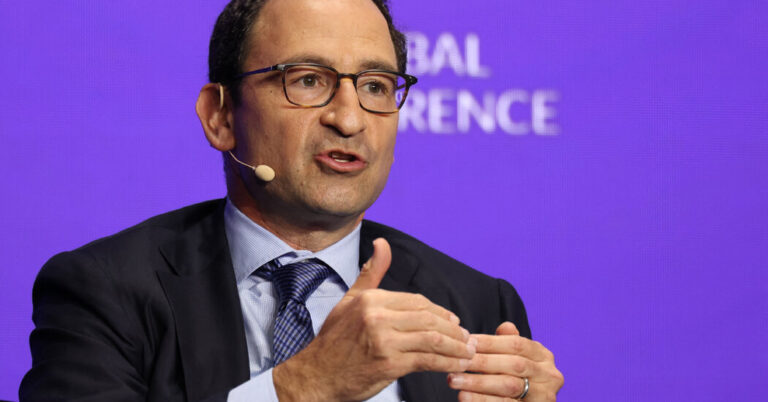
As Israel faces a doctor shortage, Jonathan Gray, the president of the investment firm Blackstone, and his wife, Mindy, are donating $125 million to Tel Aviv University’s health science and medical school.

The donation, through the Grays’ foundation, is the largest ever to Tel Aviv University, and is expected to allow the medical school enrollment to increase by a quarter. The funds will support, among other things, a new 600-bed dormitory, scholarships and new teaching facilities.

Israel’s limited capacity for medical training has contributed to a persistent shortage of doctors. As of 2020, the number of doctors per capita was about 10 percent below the average of countries in the Organization for Economic Cooperation and Development.

“When Israeli students go to study medicine abroad, some of them stay — and for us, it’s a loss” Professor Ariel Porat, the university’s president, said. “This is the brain drain that people talk about in many other fields, but it’s especially acute with doctors.”

And Israel’s doctors are getting older, exacerbating the problem. Nearly half of the country’s doctors are older than 50, and about 25 percent are at least 67 years old.

In response to the shortage, Israeli officials have announced a number of initiatives to recruit more doctors, including interest-free loans for Israeli medical students studying abroad if they agree to return to Israel after graduation.

Mr. Porat said the Grays’ donation is likely to have an impact on the broader Israeli health care system. Tel Aviv University is Israel’s largest university, and includes schools of medicine, dentistry, public health as well as 18 affiliated hospitals.

Besides bolstering the overall number of students, the donation is also expected help the university double the number of Arab Israeli students in medical school, in part by offering scholarships and discounted housing in the school’s new dormitories, Mr. Porat said. About a quarter of Israel’s doctors are Arab Israeli.

The university’s Faculty of Medical and Health Sciences will be renamed the Gray Faculty of Medical and Health Sciences. It was previously known as the Sackler Faculty of Medicine and Health Sciences, after the billionaire Sackler family, owners of the opioid maker Purdue Pharma. The family, who have been sued for spurring the opioid epidemic, agreed to remove their name in 2023. The university said at the time it would enable the school to raise more money by offering naming opportunities.

Mr. Gray and his wife, both American Jews, are active philanthropists. Their foundation focuses on supporting low-income youth from New York and cancer research. Both say they feel a longstanding connection to Israel. Hamas’s Oct. 7 attack on Israel “awakened a need to express that connection in a far more concrete way,” Mr. Gray said in a statement.

Shortly following the attack, the Gray Foundation gave $1 million to a program that pays for eighth graders in public and charter schools in New York to visit the Museum of Jewish Heritage in Lower Manhattan.

As Mr. Gray and his wife looked for a larger-scale donation, they first met with Mr. Porat in New York last year. The Grays later traveled to Israel and met with university leadership, the medical faculty and students.

“We can think of no better way to accelerate healing,” they said in a statement, “than by supporting an institution that touches the lives of so many.”


Source link

Ryder Cup 2025: Europe ‘in great shape’ says vice-captain Edoardo Molinari ahead of Bethpage Black test | Golf News

0


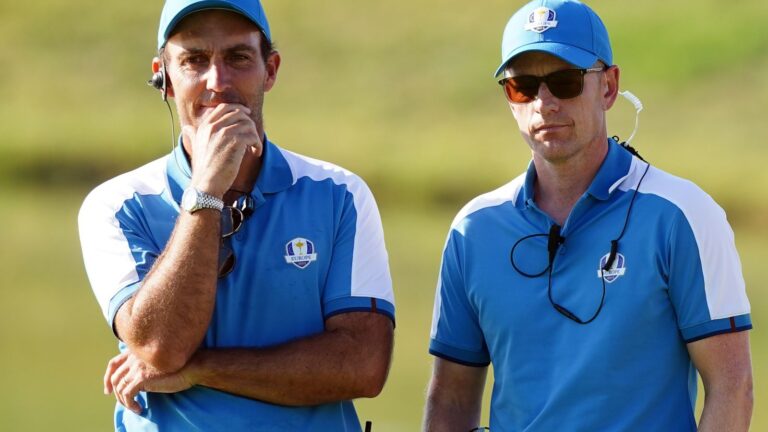
Europe vice-captain Edoardo Molinari says the team is “in great shape” ahead of the 2025 Ryder Cup on US soil this September, while he also backed former world No 1 Jon Rahm to rediscover his best form in time for Europe’s defence.

Molinari will again be part of captain Luke Donald’s team at Bethpage Black, having formed part of his support staff during Europe’s 16.5-11.5 success in Rome in 2023.

Image:
Edoardo Molinari (L) will again be a vice-captain for Luke Donald (R) at Bethpage Black after performing the role during Europe’s 2023 success in Rome

Europe have themselves been handily beaten in the last two Ryder Cups held in the USA, their last victory being their famous ‘Miracle at Medinah’ win in 2012, but there is optimism again in 2025.

Rory McIlroy won The Masters – along with The Players Championship and AT&T Pebble Beach Pro-Am – to complete the career Grand Slam, while Sepp Straka, Thomas Detry, Ludvig Åberg and Viktor Hovland have also been victorious on the PGA Tour so far this season.

“I think our team is in great shape,” Molinari said on the Sky Sports Golf Podcast. “There’s a lot of guys that have been playing well recently – even some of the non-superstars we had in Rome.

Subscribe now on: Apple Podcasts | Spotify | Spreaker

“Thomas Detry is one that hadn’t won yet on the PGA Tour, and he managed to clinch his first win at Phoenix. There’s just so many guys that have been playing well and hopefully we can keep that momentum going until September.”

Molinari not concerned over Rahm form

Jon Rahm was certainly one of the superstars on the European team two years ago in Rome, with the two-time major winner unbeaten in securing three points from his four matches.

The Spaniard has only two LIV Golf tournament wins though since his defection to the Saudi-backed league in late 2023, while his best showing at a major since was his tied-seventh finish at The Open last year – his only top 10.

Please use Chrome browser for a more accessible video player

Jon Rahm says the last Ryder Cup was the best golf experience of his life and he’s hoping to be part of the team again in 2025 in New York.

“Not really [concerned],” Molinari said of Rahm’s game. “Jon loves the Ryder Cup so much that he will probably round into form later this summer – I’m pretty sure about that.

“Every year you feel like you have seven or eight guys that are easy to predict, and then you have a couple ones that are way left field. I think it’s going to be the same this time around.

“Hopefully we’ll have all of our top guys in the best form of their life, but one way or the other we’ll have a strong team and one that will be able to put up a fight against a very strong American side.”

Please use Chrome browser for a more accessible video player

Luke Donald reflects on how he guided Team Europe to Ryder Cup success in Rome

Bethpage Black in New York is expected to play host to a raucous home crowd when the Ryder Cup takes place from September 25 to 28, but despite Europe’s struggles on US soil in their most recent visits, Molinari believes they’ll be able to deal with the hostile atmosphere.

“I think you just control what you can control,” he said. “You cannot control the crowds, but you can control how you behave and how you react to the crowds. There’s a lot of things you can do not to make it influence yourself.

“I think we’ll be prepared, we’ll be ready for it. I know it will be loud and very difficult, but sometimes in the difficulty lies opportunity as well. I’m sure some players will love it and hopefully they’ll be able to perform at their best.

“Make birdies, put some blue on the board and the noise level will go down very quickly.

“As I said, it’s going to be tricky, it requires a lot of patience, a lot of determination, grit and hard work but we’ll try our best.”

Molinari tips McIlroy again at Quail Hollow

Molinari also reacted to McIlroy’s famous Masters win at Augusta National last month, ending an 11-year major drought as he also became only the sixth golfer in history to complete the career Grand Slam, tipping him to be “up there again” at the PGA Championship at Quail Hollow – live on Sky Sports Golf from Thursday, May 15.

Please use Chrome browser for a more accessible video player

Watch highlights of Rory McIlroy’s rollercoaster Masters win in a play-off against Justin Rose to complete the career Grand Slam!

“It was great with Rory winning [The Masters],” Molinari said. “Anyone that knows Rory a little bit was extremely relieved for him and very happy for him.

“You could see how much it meant to him. It’s been a long time coming and it was just so good to see.

“He’s got a lot of weight off his back now, he can play a bit more freely – especially at majors – and I wouldn’t be surprised if he’s up there again at Quail Hollow. He loves it around there.

“It’s a course where he has played well before, one that definitely suits him and anyone that is really good off the tee. I’m very curious to see what’s going to happen next week. I think it’s going to be a fantastic second major of the year.”

Listen to the full Edoardo Molinari interview on the latest edition of the Sky Sports Golf podcast, hosted every week by Jamie Weir. Subscribe now on Apple Podcasts, Spotify or Spreaker, while vodcast editions can be found on the Sky Sports Golf YouTube channel.

Golf Now logo.

Get the best prices and book a round at one of 1,700 courses across the UK & Ireland


Source link

Trump Officials to Meet With Chinese Counterparts Amid Trade Standoff

0


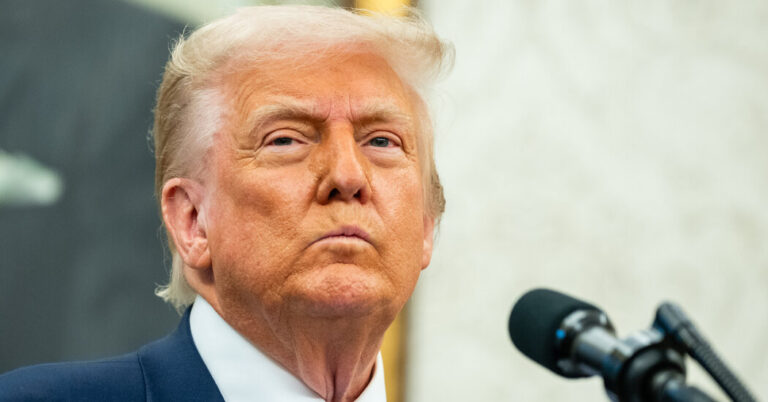
Top officials from the Trump administration will meet with their Chinese counterparts in Switzerland this week, the first formal meeting about trade between the United States and China since President Trump raised tariffs on Chinese imports to triple-digit levels last month.

Scott Bessent, the Treasury secretary, and Jamieson Greer, the United States trade representative, plan to meet with Chinese officials during a trip to Geneva, where they will discuss trade and economic matters, according to separate announcements from the office of the trade representative and the Treasury Department.

A spokesperson for the Chinese Ministry of Foreign Affairs said that He Lifeng, the vice premier for economic policy, would visit Switzerland from May 9 to 12 and hold talks with Mr. Bessent.

The meeting could help to defuse an economically damaging trade standoff that has persisted between the world’s largest economies for a month. In early April, Mr. Trump escalated tariffs on Chinese exports to a minimum of 145 percent, to punish Beijing for retaliating against his earlier levies.

While both sides appear to be interested in reducing those tariffs, neither has wanted to make the first move. It remains unclear how quickly the United States and China might strike any kind of agreement, or what its contents could be.

The Trump administration has criticized China for its role in bringing fentanyl and ingredients to make the drug to the United States, as well as a bevy of unfair trade practices. Mr. Trump and his advisers have also censured China for failing to stick to the terms of a trade deal the president negotiated in his first term. China, in return, has called Mr. Trump’s tariffs “illegal and unreasonable.”

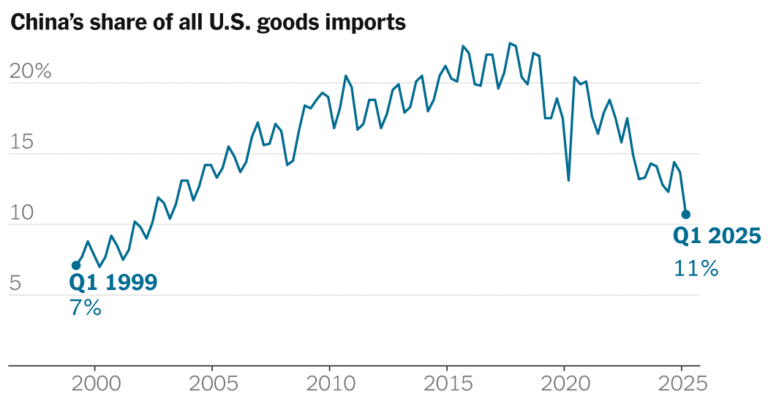
Businesses have complained that high tariffs on both sides of the Pacific have brought trade to a halt and threaten to put many American companies out of business. In the first quarter of this year, the U.S. share of imported goods from China fell to its lowest level in more than two decades, as trade ties between the countries became increasingly strained.

Speaking from the White House on Tuesday, during a visit by the Canadian prime minister, Mr. Trump said the Chinese were eager for a meeting. “They want to meet, and they’re doing no business right now,” he said.

Asked about the talks in Switzerland, a spokesperson for the Chinese Ministry of Commerce said that U.S. officials had “continuously leaked information about adjusting tariff measures and actively conveyed information to China through various channels, hoping to talk with China on tariffs and other issues.”

“China has carefully evaluated the U.S. information,” the spokesperson said. “On the basis of fully considering global expectations, China’s interests and the calls of the U.S. industry and consumers, China has decided to agree to engage with the U.S.”

“If the United States wants to resolve the issue through negotiations,” the spokesperson added, “it must face up to the serious negative impact of unilateral tariff measures on itself and the world, face up to international economic and trade rules, fairness and justice, and rational voices from all walks of life, show sincerity in talks, correct its wrong practices, meet China halfway and resolve the concerns of both sides through equal consultation.”

Mr. Bessent and Mr. Greer are also expected to meet with the Swiss president, Karin Keller-Sutter, to discuss a potential trade deal.


Source link

Chinese Imports to US Hit 20-Year Low as Tariffs Sink In

0


The share of U.S. imports from China in the first quarter of the year fell to its lowest point in over 20 years, as the high tariffs President Trump has put on Chinese goods clamped down on trade.

U.S. imports from China reached $102.7 billion in the first three months of the year, data released by the Commerce Department showed Tuesday. That puts the share of imported goods from China at just 11 percent in the first quarter, down sharply from over 22 percent seven years ago.

While the share of imports from China tends to fluctuate with seasonal swings in purchasing, Mr. Trump’s decision in early April to ratchet up U.S. tariffs on China has clearly begun to cascade through supply chains. Because it takes many weeks for products to move from Chinese factories onto cargo ships across the ocean and into American stores, U.S. consumers are, in many cases, just beginning to see the effect of higher prices from the tariffs. But as the summer goes on, those effects are likely to compound.

Both the United States and China have expressed openness to talking about some kind of trade deal that would lower the tariffs, though it remains unclear how quickly any deal could be made.

While some companies appear to have slowed or halted their imports because of current tariffs, others are still rushing to import more products ahead of new tariffs taking effect.

Data released Tuesday morning showed that the U.S. trade deficit in goods and services rose sharply in March, increasing to $140.5 billion compared with $123.2 billion in February, and continuing a sharp upward trend seen since the November election.

Omair Sharif, the founder and president of the research firm Inflation Insights, said the surge in imports of consumer goods in March was almost entirely driven by the ingredients pharmaceutical companies need to make drugs. Mr. Trump has said that he planned to impose tariffs on prescriptions and other medicines in the next few weeks.

“That reflected drugmakers rushing to get ahead of any sectoral tariffs on pharmaceutical goods from the administration,” Mr. Sharif wrote in a note to clients. “In other words, there was far less of everything else, like toys, furniture, appliances, kitchenware, apparel, etc., imported in March than suspected.”

Matthew Martin, senior U.S. economist at Oxford Economics, said that imports may remain high from countries that have had their tariffs paused for 90 days, but for China, an additional tariff that the president had put in effect in March “began to bite.”

The average U.S. tariff rate on China rose to over 100 percent in April, he said, which will push China’s share of total imports sharply lower.

Lydia DePillis contributed reporting.


Source link

Trump’s Order to Sanitize Black History Meets Institutional Resistance


Late last month, when two federal grants to the Whitney Plantation in Louisiana were rescinded, the Trump administration seemed to be following through on its promise to root out what President Trump called “improper ideology” in cultural institutions focused on Black history.

After all, the plantation’s mission was to show visitors what life was truly like for the enslaved, contrary to the watered-down Black history that the president seemed to back.

Then just as quickly, the grants were restored a few weeks later, the Whitney Plantation’s executive director said in an interview.

Because the money had already been approved, “maybe it was an exposure for lawsuits,” the executive director, Ashley Rogers, said, “but who knows?”

Ever since Mr. Trump issued an executive order in March denouncing cultural institutions that were trying to “rewrite our Nation’s history, replacing objective facts with a distorted narrative driven by ideology rather than truth,” sites like the Whitney Plantation have lived with such uncertainty. An order specifically targeting the Smithsonian Institution tasked Vice President JD Vance and other White House officials with “seeking to remove improper ideology from such properties.”

But reversals like the one in Louisiana and actions by the Smithsonian’s National Museum of African American History and Culture seem to indicate some misgivings about the president’s order. They also show that putting historical knowledge back into the bottle after decades of reckoning with the nation’s racist history will be more difficult than the administration believes.

“The most concerning phrase that I’ve seen is ‘improper ideology,’ which sounds so Orwellian,” Ms. Rogers said. She added, “They’re couching everything as ideology, which is already odd, because what we’re talking about at Whitney Plantation is facts.”

The distortions, she said, come from “plantation museums where they do not talk about slavery, where they try to peddle you this idea that enslaved people were happy.”

When news stories claimed last week that the Smithsonian’s African American history museum had begun returning artifacts to comply with the president’s order, the Smithsonian issued a statement saying it would do no such thing.

No object had been “removed for reasons other than adherence to standard loan agreements or museum practices,” the institution said.

Two objects returned to the Reverend Amos C. Brown — an edition of “The History of the Negro Race in America,” one the first books to document African American history, the other a Bible that Rev. Brown carried during civil rights protests — were appended with an apology from the Smithsonian for any “misunderstanding” about the museum’s motives. Rev. Brown said in an interview on Monday that he had a cordial video conference with African American History Museum staff on Friday, in which they discussed making his artifacts a permanent part of the museum, pending review of a panel.

“Nothing has been resolved,” he said.

Lindsey Halligan, the White House official named on the Smithsonian executive order, said Tuesday that the review of the institution’s progress is ongoing. “We are committed to transparency and will share updates as the review progresses,” she said.

At Frederick Douglass’s stately historic home in Washington, D.C., last week, Larry Burton, a 77-year-old visitor, said that when he grew up in Memphis, Tenn., much of Black history had been hidden from him. The visit to the famed abolitionist’s house ignited both curiosity and determination to encourage others to learn.

“The rest of the time that I have I’m going to make sure that my grandchildren know their history,” he said.

That task may become more complicated if the Trump administration actually succeeds in warping historical narratives around race. The White House executive order argued that the country’s cultural institutions are trying to “rewrite our Nation’s history, replacing objective facts with a distorted narrative driven by ideology rather than truth.”

The same order specifically targeted the Smithsonian Institution, claiming that it had “come under the influence of a divisive, race-centered ideology,” with “narratives that portray American and Western values as inherently harmful and oppressive.”

Then on Friday, the president’s budget singled out the government’s 400 Years of African American History Commission for elimination, “to enhance accountability, reduce waste, and reduce unnecessary governmental entities.”

But almost five years after the murder of George Floyd opened the door for a more public and thorough examination of the nation’s past, Mr. Trump may not be able to fully slam it shut. Historical sites dedicated to Black history, and the visitors still thronging them, will have their say.

“I can’t understand why he’s doing that, trying to remove certain things that happened in history,” said Mr. Burton. He compared the administration’s attempts unfavorably to the paltry Black history education he received as a child and its effect. “It had us thinking that we were unimportant, we were insignificant,” he said. “But we have a rich history.”

No doubt, the threat still remains, especially as the White House and Congress scour the federal budget for spending cuts. The president’s budget proposal for the fiscal year that begins in October would eliminate the Institute of Museum and Library Services, the primary source of support for many Black history sites.

“Without additional support, what we’re likely to see is museums making significant programmatic cuts, a reduction in staff, increased deferred maintenance, reducing the number of days or hours that they’re open to the public, and, possibly, temporary and permanent closures,” the American Alliance of Museums said in a statement. “At the end of the day, American communities that benefit from their local museums will suffer the greatest losses.”

Some Black conservatives agree with the president’s approach.

“This constant stirring of the racial pot and racializing everything has been detrimental to our society,” Dr. Carol M. Swain, a political scientist and vice chairwoman of Mr. Trump’s 1776 Commission, said in an interview.

To Dr. Swain, 71, the very existence of the Smithsonian’s Black history museum is “problematic,” since it segregates history instead of blending the Black experience with the American story. The president’s executive order, she said, is doing the nation a public service by going after “taxpayer-funded anti-Americanism.”

Still, the sheer number of Black history sites with ties to the federal government will make change difficult. The National Park Service alone lists more than 400 parks, historic sites, seashores, and trails in their index of civil rights sites. Funders include the National Trust for Historic Preservation, the Institute of Museum and Library Services and the National Endowment for the Humanities.

All are under severe strain from Elon Musk’s cost cutters at the Department of Government Efficiency. But patrons have faith the pressure can get the administration only so far.

“I don’t think they will hinder or stop anything, because we have insight now,” said Dortha Burton, Mr. Burton’s wife. “We have knowledge now.”

The rebuff is coming from historians and curators as well.

Museums that focus on Black history “are being targeted because they tell inclusive histories of the more full, expansive American story,” said Dr. Hilary Green, author of the book, “Unforgettable Sacrifice: How Black Communities Remembered the Civil War.”

How Americans remember the past shapes the meaning of the present, she said, and getting it wrong has consequences. For instance, the “Lost Cause” mythology that the Civil War had little or nothing to do with slavery was used for generations to diminish the war’s meaning for Black liberation and the impact of slavery on American culture, economics and caste.

Ms. Rogers of the Whitney Plantation expressed understanding that the painful parts of U.S. history can make some fear being seen as “bad.” There is still a deep-seated reluctance to acknowledge the ongoing effects of slavery on American society, she said.

But she said, “a wound doesn’t get better if you ignore it. It just festers.”

After the release of the 1977 record-smashing television mini-series “Roots,” many African Americans were inspired to seek out their family histories, demanding access to records that were previously unavailable or ignored. Institutions such as libraries and archives changed the way they collected and preserved historical materials, according to Dr. Green.

Many Black communities were also stewards of their own stories, maintaining archives, passing down stories through generations, and creating local museums and historical societies to ensure their narratives and contributions were remembered and documented.

The movement culminated in the National Museum of African American History and Culture, a part of the Smithsonian Institution affectionately known as the “Blacksonian.”

Quentin Peacock, 47, had brought his family up from North Carolina to visit the museum on a recent day in April. His mind, he said, was brimming with new facts that he learned on his tour, including the friendship between Muhammad Ali and Kareem Abdul Jabbar. He was also heartened that the visitors that day were so racially diverse, underscoring his belief that telling the truth about American history is not inherently “divisive.”

“It’s an African American history museum, but there’s white history in there too,” Mr. Peacock, a Black father, said. People of all races have connections to the history presented, he added, and any attempts to interrupt or challenge its operations would be “hurtful to all cultures, not just ours.”


Source link

Blackstone President Donates $125 Million to Tel Aviv University

0


As Israel faces a doctor shortage, Jonathan Gray, the president of the investment firm Blackstone, and his wife, Mindy, are donating $125 million to Tel Aviv University’s health science and medical school.

The donation, through the Grays’ foundation, is the largest ever to Tel Aviv University, and is expected to allow the medical school enrollment to increase by a quarter. The funds will support, among other things, a new 600-bed dormitory, scholarships and new teaching facilities.

Israel’s limited capacity for medical training has contributed to a persistent shortage of doctors. As of 2020, the number of doctors per capita was about 10 percent below the average of countries in the Organization for Economic Corporation and Development.

“When Israeli students go to study medicine abroad, some of them stay — and for us, it’s a loss” Professor Ariel Porat, the university’s president, said. “This is the brain drain that people talk about in many other fields, but it’s especially acute with doctors.”

And Israel’s doctors are getting older, exacerbating the problem. Nearly half of the country’s doctors are older than 50, and about 25 percent are at least 67 years old.

In response to the shortage, Israeli officials have announced a number of initiatives to recruit more doctors, including interest-free loans for Israeli medical students studying abroad if they agree to return to Israel after graduation.

Mr. Porat said the Grays’ donation is likely to have an impact on the broader Israeli health care system. Tel Aviv University is Israel’s largest university, and includes schools of medicine, dentistry, public health as well as 18 affiliated hospitals.

Besides bolstering the overall number of students, the donation is also expected help the university double the number of Arab Israeli students in medical school, in part by offering scholarships and discounted housing in the school’s new dormitories, Mr. Porat said. About a quarter of Israel’s doctors are Arab Israeli.

The university’s Faculty of Medical and Health Sciences will be renamed the Gray Faculty of Medical and Health Sciences. It was previously known as the Sackler Faculty of Medicine and Health Sciences, after the billionaire Sackler family, owners of the opioid maker Purdue Pharma. The family, who have been sued for spurring the opioid epidemic, agreed to remove their name in 2023. The university said at the time it would enable the school to raise more money by offering naming opportunities.

Mr. Gray and his wife, both American Jews, are active philanthropists. Their foundation focuses on supporting low-income youth from New York and cancer research. Both say they feel a longstanding connection to Israel. Hamas’s Oct. 7 attack on Israel “awakened a need to express that connection in a far more concrete way,” Mr. Gray said in a statement.

Shortly following the attack, the Gray Foundation gave $1 million to a program that pays for eighth graders in public and charter schools in New York to visit the Museum of Jewish Heritage in Lower Manhattan.

As Mr. Gray and his wife looked for a larger-scale donation, they first met with Mr. Porat in New York last year. The Grays later traveled to Israel and met with university leadership, the medical faculty and students.

“We can think of no better way to accelerate healing,” they said in a statement, “than by supporting an institution that touches the lives of so many.”


Source link

Elon Musk Tried Keeping Issues at His Texas Mansion Private, Emails Show


Few people want beefs with their neighbors to become public. That includes Elon Musk.

In March, Mr. Musk’s team lobbied officials in the upscale city of West Lake Hills, Texas, to keep quiet the details of one of his mansions and security operations, according to emails to city employees obtained by The New York Times through public records requests.

In those emails, the tech billionaire’s employees asked West Lake Hills officials to make private a public meeting in April — where neighbors might speak about his $6 million house. They pointed to Mr. Musk’s work with the Trump administration as reason that his property records and communications with the city be exempted from state and federal public records laws, the emails showed.

The homeowner should be exempt because he is a “federal public official,” one of Mr. Musk’s employees wrote in an email sent to the city on March 3, adding, “We can provide federal clearance documentation if needed.”

Mr. Musk, 53, was trying to keep a disagreement with his neighbors over the construction of a 16-foot, chain-link fence and a metal gate with a camera at the mansion under wraps. He had made the changes to the property without obtaining the proper permits, violating six city ordinances, and was trying to retroactively address the issue.

His privacy push was unsuccessful. The West Lake Hills city attorney ruled against a closed meeting, the emails show. Last month, at a gathering of the Zoning and Planning Commission, Mr. Musk lost his appeal to keep the fence and gate on his property. The matter goes next to a City Council meeting, which had been scheduled for May 14 but was rescheduled for June 11 after “the applicant requested a postponement,” Trey Fletcher, the city administrator, said on Tuesday.

Mr. Fletcher declined to comment on the city documents. Mr. Musk and his team did not respond to requests for comment.

The 6,900-square-foot, six-bedroom home in West Lake Hills is one of three mansions that Mr. Musk bought over the past few years for his children and their mothers. The mansion, on a residential cul-de-sac of four homes, is where Mr. Musk stays when he is in Austin and has become a hub for his growing security operations. He bought the property in 2022 through a limited liability company.

After the 16-foot fence and separate gate were erected, neighbors complained about the structures and the traffic on the leafy street. That led West Lake Hills officials to investigate.

By March, Mr. Musk’s staff had become concerned that any documentation they send to the city would become public, the emails show. Tisha Ritta, a permit official working for Mr. Musk’s limited liability company, emailed the city to request that a hearing scheduled to discuss issues at the property be kept private.

Inna Kaplun, who was identified as a lawyer working for “the property owner,” also emailed the city, arguing the owner should be exempt from a public hearing because of numerous security personnel at the property, including federal marshals. Citing a Texas statute, the lawyer said, government entities do not have to conduct an open meeting to deliberate “security personnel or devices.”

Mr. Musk’s staff members and city officials held at least one meeting in March to discuss the property, the emails show. In mid-March, the city attorney for West Lake Hills ruled against Mr. Musk’s request for a private hearing, citing the Texas Open Meetings Act, according to an email.

At the public Zoning and Planning Commission meeting last month, city employees recommended Mr. Musk be allowed to keep the fence and gate he had built without permits, albeit with small changes required. Some of the commission’s six members questioned the city staff about the proposal, according to a recording of the meeting.

The commission ultimately voted to recommend that the City Council deny Mr. Musk the exceptions for his projects.


Source link

Oliver Oakes: Alpine F1 team principal resigns with immediate effect amid Jack Doohan future speculation | F1 News

0


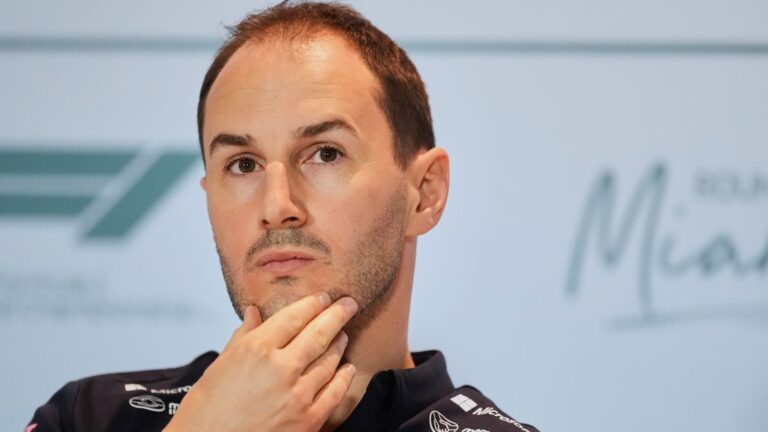
Alpine have announced team principal Oliver Oakes has resigned with immediate effect.

Oakes, who became Alpine boss last summer, will have his duties taken over by executive advisor Flavio Briatore, who oversaw multiple world titles for Benetton in the 1990s and Renault in the mid-2000s.

The shock announcement comes after Sky Sports News learned Alpine are considering dropping driver Jack Doohan ahead of the next F1 race at Imola on May 16-18, with reserve driver Franco Colapinto in line for a return.

Alpine said: “BWT Alpine Formula One Team announces that Oliver Oakes has resigned from his role as team principal. The team has accepted his resignation with immediate effect.

“As of today, Flavio Briatore will continue as executive advisor and will also be covering the duties previously performed by Oliver Oakes.

“The team would like to thank Oliver for his efforts since he joined last summer and for his contribution in helping the team secure sixth place in the 2024 Constructors’ Championship.

“The team will not be making any further comment.”

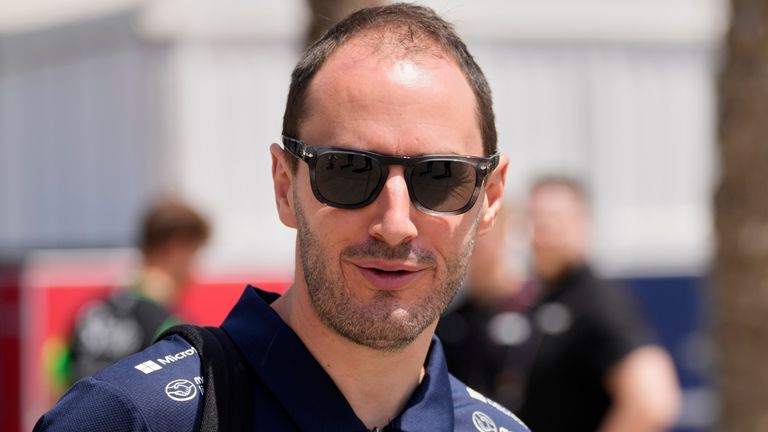
Alpine team principal Oliver Oakes walks through the paddock ahead of the Formula One Bahrain Grand Prix at the Bahrain International Circuit in Sakhir, Thursday, April 10, 2025. (AP Photo/Darko Bandic)
Image:
Oliver Oakes was the second youngest team principal in F1 history (AP Photo/Darko Bandic)

Oakes founded the Hitech Grand Prix in 2015, with the British-based outfit spearheading the single-seater championships, including Formula 2 and Formula 3. The Briton is a former racing driver and won the 2005 karting world title.

He took over from Otmar Szafnauer as Alpine team principal in August 2024 and saw the a spectacular double podium for Esteban Ocon and Pierre Gasly in Brazil later that year.

Briatore is a controversial figure in F1 after being part of the “Crashgate” scandal which saw his driver Nelson Piquet intentionally crash at the 2008 Singapore Grand Prix to help Renault team-mate Fernando Alonso win the race.

Flavio Briatore has taken up team principal duties at Alpine
Image:
Flavio Briatore has taken up team principal duties at Alpine

He received a lifetime ban from F1 for his involvement in the incident but this was overturned by a French court.

The 75-year-old returned to F1 in May 2024 as Alpine’s executive advisor.

Briatore has been involved with F1 since the early 1990s, and enjoyed championship success with Michael Schumacher in 1994 and 1995, then Fernando Alonso in 2005 and 2006.

Why has Oakes resigned?

Sky Sports’ Nigel Chiu:

“This all likely comes back to Jack Doohan’s uncertain future. So far, the 22-year-old has had a difficult rookie campaign at Alpine, including two big crashes in Australia and Japan, then a remarkable rant at the last race in Miami when he was knocked out in the first part of Sprint Qualifying.

“Doohan came into the season under huge pressure due to the signing of Franco Colapinto as Alpine reserve driver. However, Doohan has seemingly had the backing of Oliver Oakes.

Please use Chrome browser for a more accessible video player

Jack Doohan ranted at his Alpine team after being eliminated in SQ1 in Miami

“When Alpine signed Colapinto, Flavio Briatore described the Argentine as ‘among the best young talents in motorsport’ and is clearly a fan of him.

“Perhaps Briatore and Oakes have clashed over who should drive alongside Pierre Gasly this season and Briatore has won the battle, if this news is anything to go by, leading to Oakes’ shock resignation.”

F1’s European season begins with the Emilia Romagna Grand Prix on May 16-18, live on Sky Sports F1. Stream Sky Sports with NOW – no contract, cancel anytime


Source link

Senate Confirms Frank Bisignano as Social Security Commissioner

0


The Senate voted on Tuesday to confirm Frank Bisignano as commissioner of the Social Security Administration, which has been thrown into turmoil after a three-month stretch steered largely by Elon Musk’s unofficial Department of Government Efficiency.

President Trump’s nominee was confirmed by a vote of 53 to 47, which had been expected and was split along party lines.

Mr. Bisignano, a former Wall Street executive, will take the helm at a critical juncture. A series of recent changes led by DOGE, from deep job cuts to exploiting sensitive databases, have rattled current and former employees, former commissioners of both parties, beneficiaries and their advocates. They have been alarmed by the fast and seemingly haphazard moves, as well as the departure from established protocols that protect beneficiaries’ privacy and ensure they continue to receive payments.

The question is whether Mr. Bisignano, 65, the former chief of the payments giant Fiserv, will steady the agency, which delivers retirement, disability and survivor payments to 73 million Americans every month.

Senator Mike Crapo, a Republican from Idaho who leads the Finance Committee, urged his colleagues last week to vote in favor of Mr. Bisignano, emphasizing his decades of experience leading large financial institutions, and noting his commitment to improving customer service at the agency.

But Democratic lawmakers remained unconvinced, and they continued to raise many of the same concerns they grilled Mr. Bisignano about during his three-hour Senate confirmation hearing in late March: Would he give in to calls by DOGE that could further hobble the program, or will he act independently in the best interest of the agency and its beneficiaries?

Senator Elizabeth Warren, the Massachusetts Democrat, spoke against his confirmation on Monday, with concerns that Mr. Bisignano would simply “rubber-stamp” Mr. Trump’s and Mr. Musk’s agenda. “He’ll let them keep slashing services and threatening benefits,” she said from the Senate floor. “That will hurt people everywhere — from seniors who count on their monthly checks right now, to the parents of kids with a disability supported by Social Security, to every American paying into the program now for later down the line.”

Mr. Bisignano, who is viewed as a turnaround expert, has held positions at several of Wall Street’s marquee firms, including Morgan Stanley, Citigroup and JPMorgan Chase. He earned $100 million in 2017, more than 2,000 times the average employee’s salary at his firm at the time, First Data Corporation, which later merged with Fiserv.

Despite calling himself “fundamentally a DOGE person” in a February interview on CNBC, Mr. Bisignano appeared to distance himself from the recent changes occurring inside the Social Security Administration during his March nomination hearing.

That characterization was challenged at the hearing by Senator Ron Wyden, Democrat of Oregon, who produced a statement that he said was from a whistle-blower. Mr. Wyden, citing the letter, said that Mr. Bisignano had personally intervened to get key DOGE officials involved at the agency, including one who was approved in the middle of the night. Senate Republicans quickly dismissed those concerns, stating he addressed the allegations during the hearing and in writing.

“He has stated that he does not currently have a role at the S.S.A. and was not part of the decision-making process led by the acting commissioner, Lee Dudek, about S.S.A. operations, personnel or management,” Senator Crapo said in a statement.

For Mr. Dudek, the appointment caps a chaotic run, which began when Mr. Musk’s DOGE team arrived at the agency.

A former fraud adviser in middle management for the Social Security Administration, Mr. Dudek had an unlikely rise to the role of acting commissioner, overseeing an agency of roughly 57,0000 thousand employees. Mr. Dudek was given the position when Michelle King, the previous acting commissioner, left abruptly after refusing to give DOGE representatives access to sensitive private data about millions of Americans.

During Mr. Dudek’s short tenure, the Social Security Administration announced plans to cut 12 percent, or 7,000 employees, from its staff and issued stark new policies that were quickly rolled back — all while field offices experienced more technology interruptions and a rise in phone wait times.

In April, the agency began to use some of the agency’s closely guarded data systems as a tool for immigration enforcement, a move that is likely the Trump administration’s most controversial for the S.S.A., and steers it away from its mandate as a social insurance program.

Over the past two months, there were several other dizzying moves. At one point, in response to a judge’s order, Mr. Dudek threatened to shut down the system used for all of the Social Security Administration’s work — only to back down hours later. He also cut contracts to the state of Maine in retaliation for a spat its governor got into with Mr. Trump. That move was walked back as well.

Employees inside the agency have described the environment as chaotic, and morale, which was already strained because of heavy work loads spread among a thin staff, as low.

The American Federation of Government Employees General Committee, and its local unit representing Social Security workers, said in a statement that they “appreciate Mr. Bisignano’s vow to ‘run the agency in the right fashion,’ as long as that means a course correction from January.”

Alexandra Berzon contributed reporting.


Source link