Home Blog Page 330

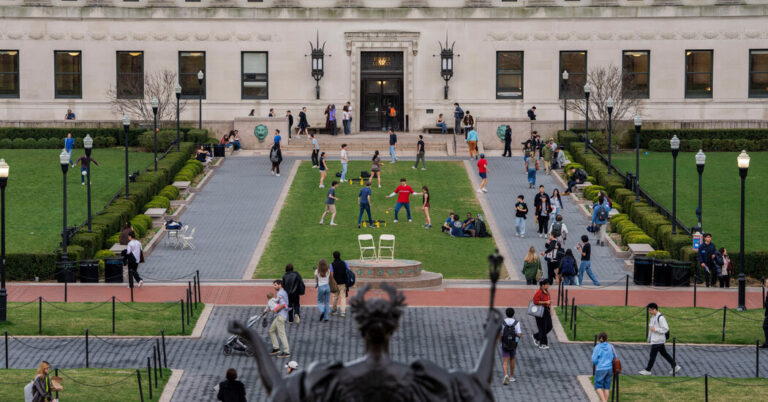
Columbia Lays Off Nearly 180 People Because of Trump Research Cuts


Columbia University announced Tuesday that nearly 180 people whose salaries had been funded by federal research grants would be laid off, as the effect of the Trump administration’s cuts on the campus deepens.

Citing intense strain on Columbia’s finances and research mission, Claire Shipman, the university’s acting president, said in the announcement that Columbia would also be “running lighter footprints of research infrastructure” in some areas affected by the cuts. The university, she added, is continuing to negotiate with the federal government for the return of the grants and is seeking alternative sources of funding.

“We have had to make deliberate, considered decisions about the allocation of our financial resources,” Ms. Shipman wrote in a note to the campus, which was also signed by other administrators. “Those decisions also impact our greatest resource, our people. We understand this news will be hard.”

A Trump administration antisemitism task force cut $400 million in funding in March because of what it described as the school’s failure to protect Jewish students from harassment. It demanded that Columbia make changes in how it functions for the money to be restored. Columbia complied with a first round of demands, but negotiations on returning the money continue.

More than 300 multiyear research grants have been cut significantly, many of them in medical research. Columbia received about $1.3 billion in federal research funds in 2023, with the National Institutes of Health providing $747 million of that. An additional $206 million came from other programs within the Health and Human Services Department.

Columbia had been temporarily paying the salaries of some of the affected researchers as departments came up with plans on how to weather the cuts, but the announcement on Tuesday signaled that effort was ending. Moving forward, scientists at Columbia can apply for grants for a limited time to complete their research and support graduate students who would otherwise be laid off.

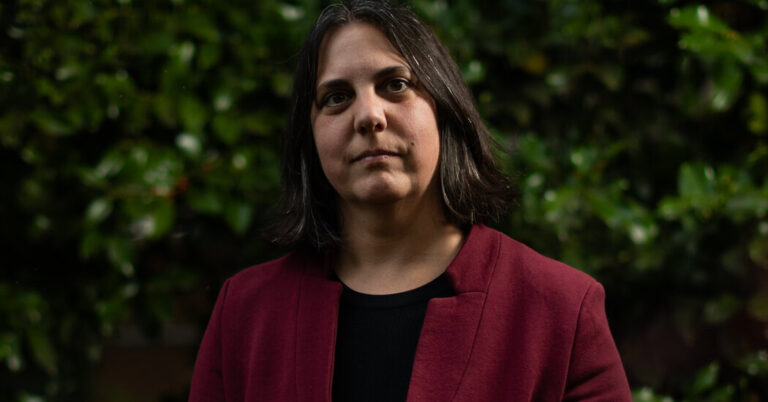
Tamara Sussman, a researcher in psychiatry at Columbia, had a federal grant canceled in March for research that examined the consequences of structural racism on substance use risk in Puerto Rican adolescents. The research assistant that she had recently hired was among those let go.

“This is a really hard time for anyone who wants to do research, but particularly for people who are starting out,” Dr. Sussman said Tuesday. “It is very disheartening to see the wheels of science kind of grinding to a halt in certain ways.”


Source link

Fearing Trump, Some Law Firms Decline Pro Bono Immigration Cases

0


Hours after Donald J. Trump was sworn in for a second term, he issued an executive order laying the groundwork for mass deportations of immigrants and denying them legal assistance.

Public interest groups focused on immigrant rights teamed up to fight the order and called in Gibson Dunn, a major law firm with the resources to help take on the White House. In January, Gibson Dunn, working with the groups, sued the Trump administration seeking to restore legal help for immigrants facing deportation.

Two months later, Gibson Dunn changed its tune.

Even though lawyers from the elite New York law firm had already been working with the public interest groups on drafting another lawsuit, Gibson Dunn said it could not put its name on this latest case, according to five people with direct knowledge of the matter who would only speak on the condition of anonymity because they feared alienating Gibson Dunn.

Lawyers from Gibson Dunn that it was afraid of incurring Mr. Trump’s wrath if the firm was associated publicly with a lawsuit that sought to restore legal representation for unaccompanied immigrant children, the five people said. Gibson Dunn is not the only large law firm shying away from immigration litigation.

Since March, Mr. Trump has targeted numerous large law firms with executive orders that would cripple their businesses by barring them from representing clients before the federal government. Many of the big firms have opted to reach deals with the White House to avoid Mr. Trump’s issuing an executive order against them. Other firms have challenged the orders in court.

Gibson Dunn has not received such an executive order or reached a deal with Mr. Trump.

But Gibson Dunn’s reticence about the recent immigration lawsuit shows that even firms that have not been targeted directly by Mr. Trump are declining to participate in legal work that challenges his agenda.

Michael Lukens, the executive director for the Amica Center for Immigrant Rights, one of the public interest groups that worked with Gibson Dunn on the immigration cases, acknowledged that he was “seeing the industry shy away from engaging in immigration pro bono.” But he credited Gibson Dunn for its support through the years.

Groups like the Amica Center have long relied on big law firms to provide legions of young lawyers and paralegals who can help prepare cases free of charge. Traditionally, pro bono work has been intended to help the poor and defenseless.

It is a dramatic change from Mr. Trump’s first term, when many big law firms frequently challenged the administration. Skadden Arps has a foundation that funds a fellowship program that enables young lawyers to work for public interest groups. In June 2017, a posting on the Skadden Foundation’s website celebrated the work of a fellow who had helped challenge Mr. Trump’s order barring people from several predominantly Muslim countries from entering the United States. That same year, Skadden rolled out an online platform to quickly pair low-income immigrants with legal services.

Some public interest groups expected that Skadden would be a reliable partner on immigration cases during the second administration. But since Skadden reached a deal with the White House in March to avert an executive order, the law firm has declined to join a public interest group on a lawsuit challenging one of Mr. Trump’s immigration policies, according to two people with direct knowledge of the matter.

Davis Polk was another big law firm that helped people ensnared in Mr. Trump’s immigration policies during his first term. In January 2017, the firm deployed some of its lawyers to Kennedy International Airport to help search for people whose family members had been detained as part of the Muslim ban.

But shortly after Mr. Trump won re-election, a prominent nonprofit reached out to Davis Polk to ask if the law firm would do research about the legality of one of Mr. Trump’s immigration proposals. The firm simply said no, according to a lawyer with the organization who asked to speak without identifying her group.

The lawyer interpreted Davis Polk’s response as “anticipatory obedience,” in part because the law firm had done similar work in the past. The firm has not been targeted with an executive order or settled with the White House.

Sirine Shebaya, executive director of the National Immigration Project, a nonprofit that litigates cases for immigrants and pushes for their rights, called the large firms’ recent pivots “part of the chilling effect” of Mr. Trump’s executive orders.

“It has gotten much harder to get law firms to take a case on pro bono,” Ms. Shebaya said.

The White House did not respond to a request for comment.

Mr. Trump has made it clear he does not want elite law firms doing work that undermines his agenda. In his executive orders, he has criticized firms for representing clients he doesn’t like and conducting “harmful activity through their powerful pro bono practices.”

Instead, he has been requiring firms that settled with him to work pro bono on causes favorable to his administration, such as veterans affairs and fighting antisemitism.

Last week, Mr. Trump signed an executive order that said law firms could be enlisted to defend police officers accused of brutality.

Public interest groups, aware of the pressure facing major law firms, are wary about criticizing the firms that are turning down immigration cases. Officials with some of these groups said they hoped that law firms would become partners with them again when Mr. Trump’s pressure starts to wane.

“The fact that we’re just 100 days in, and the Trump administration has already been incredibly successful at taking some of its legal opposition off the playing field is truly terrifying,” said Deepak Gupta, a lawyer whose firm has sued the Trump administration on behalf of a fired member of the National Labor Relations Board and a union representing employees of the Consumer Financial Protection Bureau.

For now, public interest groups are seeking new partners. One of those is David Zimmer, a lawyer in Boston, who recently started his own firm with two other longtime lawyers. Mr. Zimmer, who left the large law firm Goodwin Procter, where he was a partner focused on appeals, said he had already been approached by public interest organizations looking for pro bono help on immigration cases.

“We opened our doors in March, and have been approached to handle cases that big firms no longer wanted to be associated with,” Mr. Zimmer said.

Democracy Forward and Public Citizen, two large public interest legal groups, also said they were trying to add staff to the fill in the gaps left by large law firms declining to work on cases. Democracy Forward recently hired a number of lawyers who previously worked for the Justice Department and the Consumer Financial Protection Bureau.

Democracy Forward is one of the lead attorneys on 59 cases against the administration. Those cases are among the roughly 350 lawsuits that have been filed challenging Trump administration policies, according to a New York Times tally.

“Large law firms that were frequent defenders of the rule of law have been unwilling and unable to take up that mantle,” said Skye Perryman, the chief executive officer of Democracy Forward. “We are seeing exponential increases in demand for our work, and we are going to continue to encourage the private bar.”

Seamus Hughes contributed reporting.


Source link

Billy Horschel set to miss remaining majors in 2025 due to hip surgery in setback to Ryder Cup hopes | Golf News

0


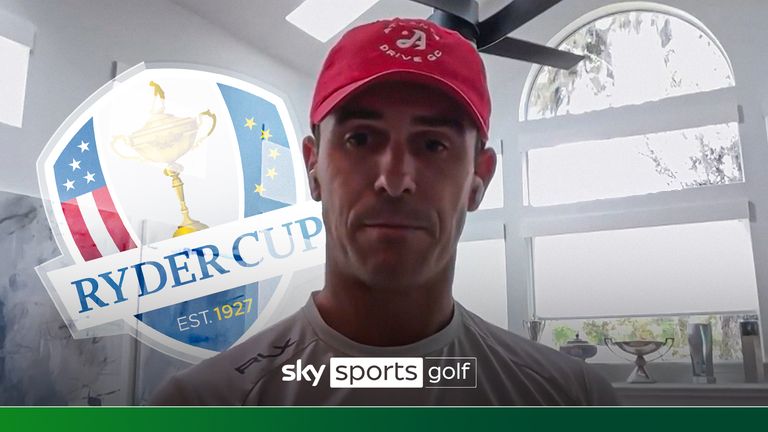
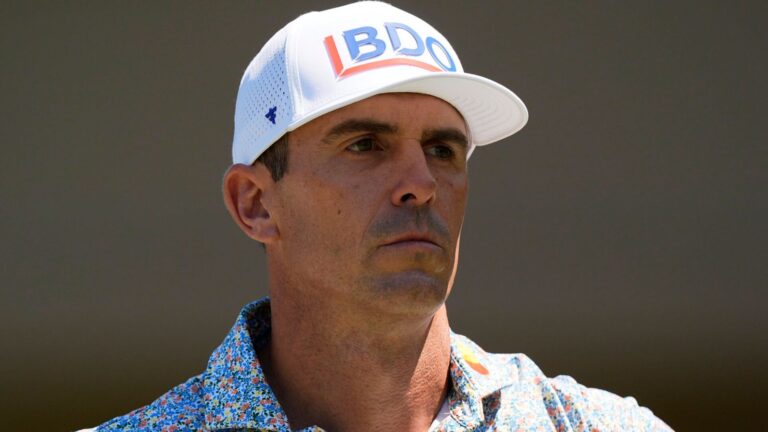
Billy Horschel is set to miss the rest of the men’s major season and has suffered a setback in his push for a possible Ryder Cup debut after confirming he will undergo hip surgery.

The former FedExCup champion last competed at the RBC Heritage in April, with Horschel withdrawing from the Zurich Classic of New Orleans due to a “lower-body injury” and skipping the Truist Championship – a Signature Event on the PGA Tour where he was exempt.

Horschel has confirmed he will undergo right hip surgery in Colorado, a procedure he described as a “preventative measure”, with the eight-time PGA Tour winner targeting a return in ‘late summer or early fall’.

It means Horschel is unlike to feature in the remaining three majors – the PGA Championship from May 15-18, the US Open from June 12-15 and The Open from July 17-20, all live on Sky Sports, with the timeline also indicating he may be unable to return to the PGA Tour this season.

Please use Chrome browser for a more accessible video player

Can Rory McIlroy win back-to-back majors? Watch the PGA Championship from Quail Hollow live this May on Sky Sports

In a statement released on his social media account, Horschel said: “Health update. After consulting with doctors and my team, I have decided to have right hip surgery early next week out in Colorado.

“It’s an unfortunate situation with so many great events left on the calendar but this is a preventative measure. I’m already itching to start rehab, get back to practicing and I look forward to returning to the course sometime around late summer/early fall.

“I would like to thank my family, friends, sponsors and partners for their continued support of me. I will share positive news on my rehab as I progress and I look forward to seeing everyone at the course again soon!”

The 38-year-old sits 58th – as of May 5- in the FedExCup standings with four top-25 finishes in 12 starts. His best performance of 2025 so far came with a tied-fourth at the Valspar Championship in late March, before he missed the cut at The Masters.

Horschel hopes to be fit to defend his BMW PGA Championship title, held at Wentworth from September 11-14, a year on from defeating Rory McIlroy and Thriston Lawrence in a play-off to win the DP World Tour’s flagship event for the second time.

Please use Chrome browser for a more accessible video player

It all came down to the second play-off hole between Rory McIlroy and Billy Horschel to decide who would claim the 2024 BMW PGA Championship

The Ryder Cup takes place two weeks later at Bethpage Black, where Team USA look to regain the trophy after their 2023 defeat to Europe in Rome, with Horschel starting the year with hopes of featuring for Keegan Bradley’s side in New York.

Horschel – who played on the winning Presidents Cup team in 2022 – is currently 16th on the Ryder Cup points standings. The top six players from the points list following the BMW Championship on August 17 make the team, with six captain’s picks completing the line-up.

“This Ryder Cup is going to be different,” Horschel told the Sky Sports Golf podcast earlier this year. “This is going to be unlike anything that any player has ever seen, or the Ryder Cup’s ever seen – it’s going to be very boisterous.

Please use Chrome browser for a more accessible video player

Billy Horschel discusses on the Sky Sports Golf Podcast how this year’s Ryder Cup is going to be different to any other

“It’s going to be like the 2002 US Open at Bethpage Black, when it first went there. The chants, the way they got on Sergio [Garcia] – the crowd’s going to be that way a little bit.

“I’m not saying it’s right and I hope it’s a respectful crowd – but they’re going to be on Europe early on! If the US side doesn’t play well, they’re going to be on the US team as well for playing bad golf. It’s going to go both ways. I think it’s going to be one of the most electric Ryder Cups that we’ve ever seen.”

Watch the PGA Tour, DP World Tour, majors and more throughout the season live on Sky Sports. Get Sky Sports or stream with NOW.


Source link

Barbie Maker Mattel Plans to Raise Prices Because of Trump’s Tariffs

0


Less than a week ago, President Trump suggested that children may have to make do with fewer toys this year.

“Well, maybe the children will have two dolls instead of 30 dolls, you know?” He said those two dolls may “cost a couple of bucks more than they would normally.”

On Monday, Mattel, the U.S. toy company and maker of Barbies, said it would raise prices on U.S. toys because of Mr. Trump’s 145 percent tariffs on imports from China. Mattel, which produces 20 percent of its U.S.-sold goods there, said in its first-quarter earnings presentation that it aims to reduce that to less than 15 percent by 2026. It also said it would suspend its financial guidance for the year, citing uncertainty over trade and tariff policies.

Factories in China produce nearly 80 percent of all toys sold in the United States. Several U.S. toy companies have said they would likely raise prices because of the tariffs.

The Toy Association, a U.S. industry group representing 850 toy manufacturers, warned shortages were likely before Christmas. Its survey of 410 small businesses that make toys found that a majority said they had canceled orders, and about half said they risked going out of business within weeks or months if the tariffs remained in place.

Mattel is one of numerous companies that suspended financial forecasts for this year, including General Motors, Snap and UPS, because of Mr. Trump’s economic policies. Mattel said that given the “volatile macroeconomic environment and evolving U.S. tariff situation, it was too difficult to predict consumer spending and U.S. sales for the year.”

Zach Warring, an analyst at CFRA Research, said that Mattel could insulate itself from tariffs by selling more of its Chinese-made goods outside the United States. Mattel can also protect its margins by raising prices, but he questioned whether U.S. customers would be willing to pay more, or if toys would instead sit on shelves and ultimately need to be discounted.


Source link

Melissa Andreatta: New Scotland Women head coach ready to immerse herself in local culture | Football News

0


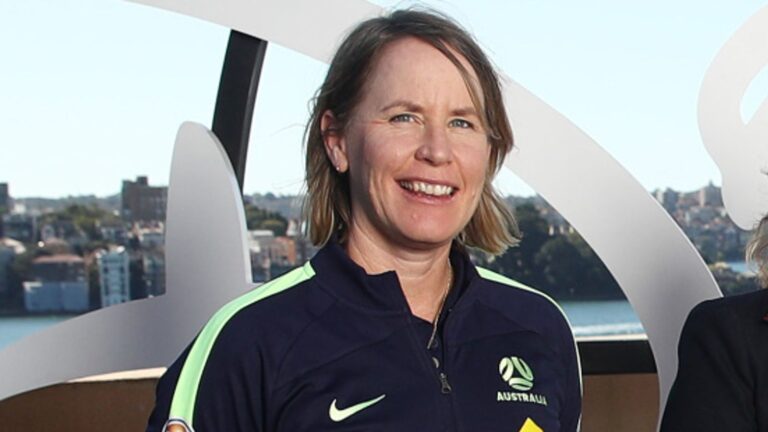
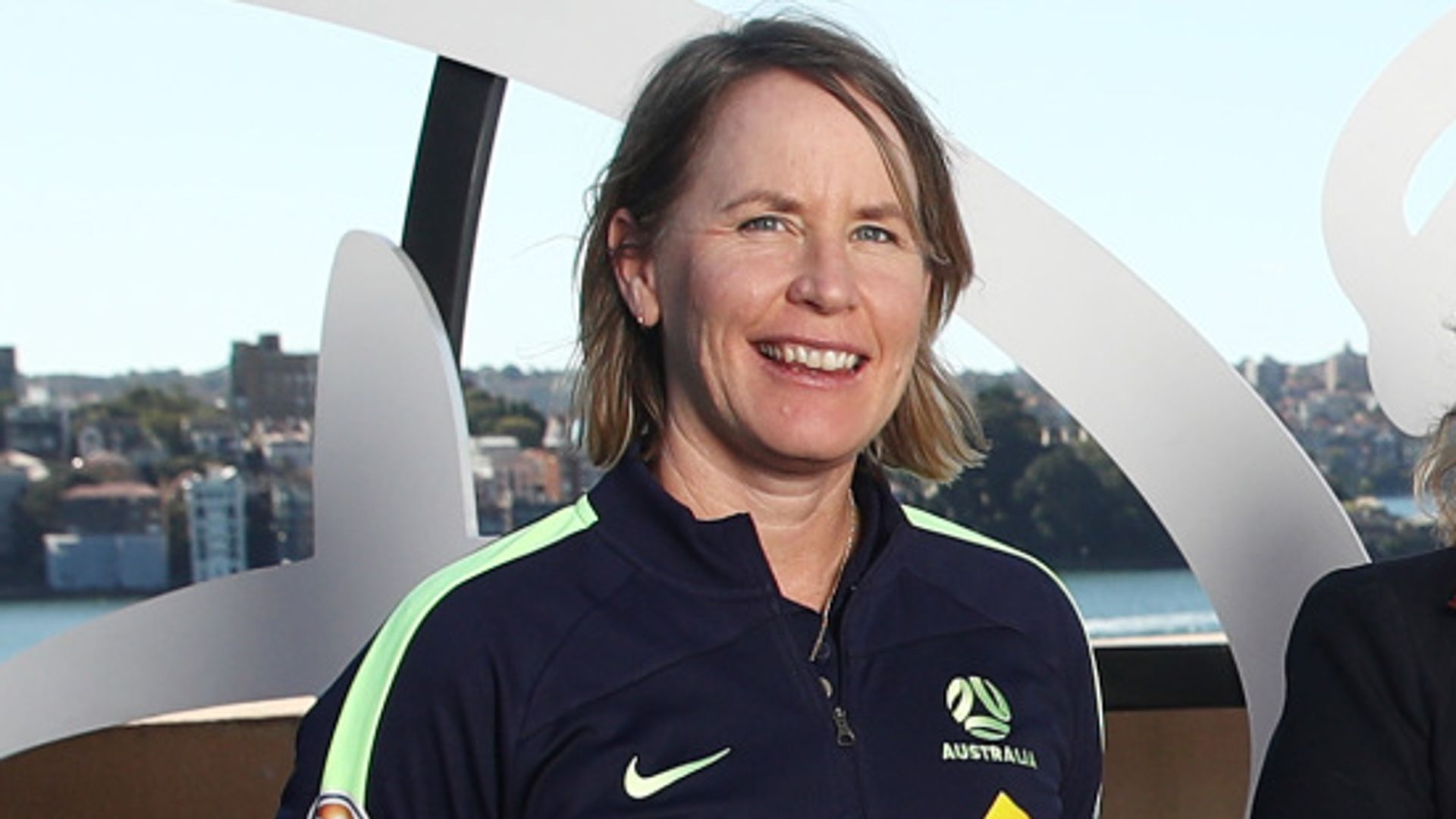
New Scotland Women head coach Melissa Andreatta plans to immerse herself in the local culture as she begins the task of trying to get the national team back to a major tournament.

The 46-year-old Australian started her new role this week after being appointed as Pedro Martinez Losa’s successor last month.

Andreatta has only ever worked in her homeland, with her most recent role as assistant head coach of the Matildas, but she has no worries about moving her family across the world.

“It’s a massive move, it took us 30 hours to get here,” she said, facing the media for the first time at Hampden on Tuesday. “I think my journey has led me towards being a head coach and this opportunity came up and why not jump at it?

“Who wouldn’t want to coach this team? The Scottish have a great history and I’m super honoured to be a part of it and to lead this great team.

“It’s a big decision when you’re asking your family to relocate and that’s what we’re doing. We want to immerse ourselves in the Scottish culture and really get to know everything about it.

“I think to really understand where football’s at and take it to where we want it to go, it’s about being here on the ground. It was tough at the start but it was easy once I got to know the people and know what the project was all about, and we’re just excited now to be here.”

Andreatta, whose first match in charge will be at home to Austria in the Nations League on May 30, said Scotland is a country that “really aligns” with her values.

“Hard-working, no-nonsense, straight-talking, humble, honest, I’m all about that as well,” she said. “Some things just turn up when they do and this opportunity is one of those. It arose and I went for it.

“I’m so honoured to have been given the opportunity to lead the team and I’m going to take it with both hands and run with it.”

Scotland have not played at a major tournament since Shelley Kerr led them to the 2019 World Cup in France. Spaniard Martinez Losa was sacked in December last year after failing to get the Scots to this summer’s European Championship in Switzerland.

“It’s all been about major tournament qualification and talent pathways, exposing our young players to international football,” Andreatta said when asked about her remit.

“Being visible, being at the games in the local league. I was at the Hearts v Hibs game at the weekend so it was fantastic to get a taste of that. Everything’s about growing the game and matching that with performance at major tournaments.

“I’m confident in the process and the progress that we can make towards qualifying for a major tournament. With the players and the experience that we have, I think anything is possible with this group with time.”

Scotland Women’s Nations League fixtures

  • May 30: Austria (H) – 7.35pm
  • June 3: Netherlands (A) – TBC


Source link

India and UK Strike Trade Deal Amid Trump’s Tariff Upheaval

0


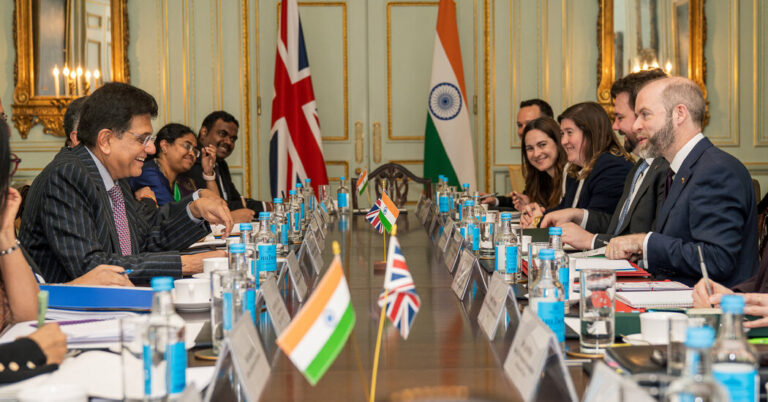
Britain and India agreed to a trade deal on Tuesday, strengthening economic ties between two of the world’s largest economies amid President Trump’s upheaval of the global trade system.

The deal, which the British government said would increase bilateral trade by £25.5 billion ($34 billion), comes three years after the negotiations began. Intense talks between Jonathan Reynolds, Britain’s business and trade secretary, and Piyush Goyal, India’s commerce minister, took place last week to finalize the outstanding issues.

The British government said India had reduced 90 percent of tariffs on goods, and within a decade most of those would become tariff free. Duties on British whiskey and gin would be halved, to 75 percent, and eventually be lowered to 40 percent. India will also reduce its car tariffs, which exceed 100 percent, to 10 percent under a quota. Britain, in turn, reduced tariffs on clothes, footwear and food products including frozen prawns.

Last year, trade in goods and services between India and Britain, the world’s fifth and sixth largest economies, totaled £42.6 billion, according to British data.

The trade agreement comes as many countries are seeking to bolster alliances and trade flows after Mr. Trump sent shock waves through the global economy by announcing, and then pausing, high tariffs on dozens of countries. The uncertainty created by the policy whiplash is expected to dampen investment and economic growth around the world.

Officials in Britain, which squeezed out 0.1 percent economic growth in the final quarter of last year, have tried to increase investment from foreign companies and sign more trade deals. Other negotiations, including those with South Korea, are continuing.

“We are now in a new era for trade and the economy,” Keir Starmer, the British prime minister, said on Tuesday. “That means going further and faster to strengthen the U.K.’s economy,” he said, adding that meant forming closer alliances and reducing trade barriers with other countries.

Since 2020, when Britain formally left the European Union, its largest trading partner, the nation has tried to strike new trade deals farther afield. A trade deal with India had proved elusive, despite being promised by former British prime ministers including Boris Johnson who, in 2022, said he was aiming to achieve such an agreement by Diwali in late October that year. But the negotiations had gotten stuck on several key issues, including India’s request for more visas for its citizens in Britain. The stalled negotiations were restarted by the new Labour government in February.

Mark Kent, chief executive of the Scotch Whisky Association, said the reduction in tariffs was “transformational” in giving producers of Scotland-made whiskey access to the world’s largest whiskey market. It has the potential to increase exports by £1 billion over the next five years.

The announcement provides a little good news for Mr. Starmer after a big setback for his governing Labour Party in regional and mayoral elections last week.

Beyond India, there is a potentially greater economic prize for Britain from new trade agreements with the European Union and the United States.

Progress on an E.U. deal is expected later this month at a summit in Britain. However, the extent to which a deal will ease the trade friction introduced by Brexit is unclear.

The European Union is Britain’s biggest and geographically closest trade partner, and the United States is the most important individual nation for trade flows. So far, Britain has not achieved exemptions from U.S. tariffs on imports — including on British cars — and President Trump’s latest threat to target movies made outside the United States has caused alarm in the British film industry.


Source link

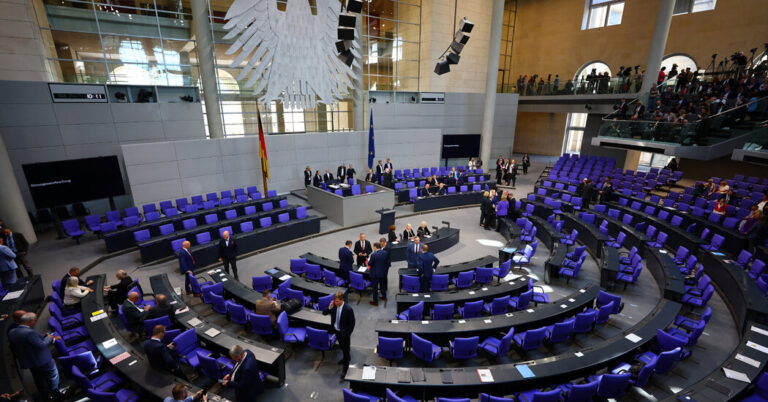
Merz Failed in First Vote to Become Germany’s Chancellor. What Happens Next?


Friedrich Merz was poised to be sworn in as Germany’s 10th chancellor on Tuesday morning, but he failed to win enough votes in parliament, which is usually merely a symbolic step. In a secret ballot, he was just six votes short of a 316-vote majority.

Parliament now has two weeks to try to rally support to make Mr. Merz or another candidate chancellor in a second vote. There is no limit on the number of votes that can take place. It was not immediately clear whether lawmakers would attempt another vote on Tuesday or wait.

If Mr. Merz fails to secure a majority in a subsequent votes, the process enters a third phase when lawmakers can select a new chancellor using relative majority. This means that more than one candidate would be put forward and the one with the most votes, not necessarily a majority, would win. Since Mr. Merz’s Christian Democrats have the most seats, he, or someone else in that party, would likely win.

But if a chancellor is elected using only a relative majority, Germany’s president, who usually plays a symbolic role, could decide to call for new elections.

This was the first time a would-be chancellor failed to secure a majority in Parliament in the 76 years of the German republic, and the transfer of power is now paused. Ministers cannot be named or sworn in, meaning that Olaf Scholz and his cabinet will remain in a caretaker government until things are resolved.

For Mr. Merz, even if he is eventually voted in, the reputational damage to him could be severe.


Source link

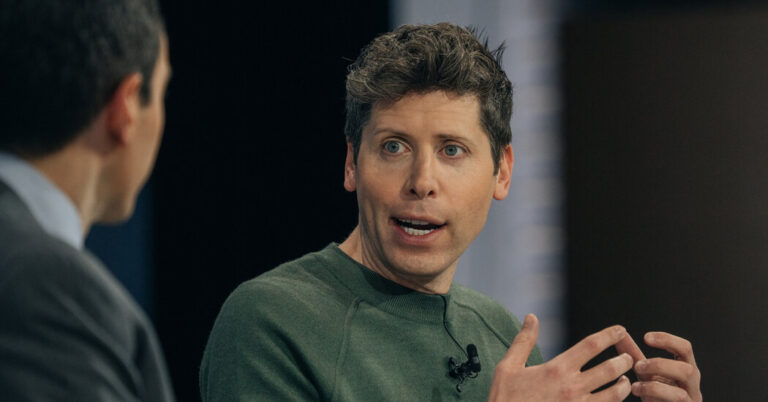
The Stakes for OpenAI’s Plan B

0


OpenAI’s decision to scale back its ambitious corporate reorganization has drawn lots of scrutiny, including what the plan means for artificial intelligence safety, potential profits for investors and an ongoing fight with Elon Musk.

What’s emerging is that in some ways, how OpenAI operates isn’t changing much. But there are still plenty of questions about the future of the consequential A.I. developer.

The latest: OpenAI announced a smaller-scale change to its famously complex structure. Remember that it was founded as a nonprofit. But in 2019, it set up a for-profit subsidiary to start raising money from investors to finance its eye-wateringly expensive A.I. research. Then last year, the company moved to turn itself into a for-profit entity in which the nonprofit held a stake but didn’t have control.

Now, OpenAI plans to turn its for-profit subsidiary into a public benefit corporation, which would still be controlled by the nonprofit, though the size of its stake remains undetermined. (Got all that?) Sam Altman, its C.E.O., said on Monday that the revised plan still gives his start-up “a more understandable structure to do the things that a company like us has to do.”

What does this mean for investors in OpenAI? Remember that they have collectively poured nearly $64 billion into the A.I. lab, valuing it at $300 billion. In some ways, little has changed, some are saying privately: They’re still keeping a piece of the company, and in fact will benefit from a planned removal of caps on the profits they can take from the business.

Altman also argued on Monday that the move essentially fulfills a requirement embedded in a recent deal with SoftBank: Become a for-profit entity by year end, or forfeit $10 billion of a planned $30 billion investment by the Japanese tech giant.

What about Microsoft? The tech giant remains perhaps the most crucial of OpenAI’s backers, as both a huge investor and a tech partner that services the bulk of its computing needs. Bloomberg reports, citing sources, that Microsoft is currently the only investor OpenAI is negotiating its reorganization with, and that the software titan hasn’t yet signed off.

Increasing strains between the two sides don’t help.

Does the move satisfy critics of OpenAI’s earlier plan? They include A.I. experts who worried that turning the company into a profit-minded business would incentivize it to forego safety for money.

They also included the attorneys general of California and Delaware, the states where OpenAI is based and where it’s legally incorporated, who worried that the company would no longer put the public interest first. They also worried about whether the nonprofit’s stake in the for-profit entity would be fairly valued.

The state attorneys general said on Monday that they’re reviewing the new plan.

There’s one critic who clearly isn’t happy: Elon Musk, who co-founded OpenAI but has since filed multiple suits to stop the for-profit conversion. (The company has argued that Musk, who has since founded a rival, xAI, is trying to impede a competitor.) A lawyer for Musk said OpenAI’s new plan was “a transparent dodge that fails to address the core issues.”

Altman dismissed concerns about Musk on Monday: “We’re all obsessed with our mission,” he said. “You’re all obsessed with Elon.”

Ford says that President Trump’s tariffs could cost it $1.5 billion this year. But the company, which makes most of its vehicles in the U.S., said it’s less affected by Trump’s 25 percent tariffs on auto parts than other carmakers. Its stock is down sharply in premarket trading, along with other automakers. General Motors said last week that the levies would increase costs by up to $5 billion this year. Ford joined European carmakers including Mercedes-Benz and Stellantis in scrapping its forecast, citing uncertainty over tariffs.

Trump’s crypto empire is complicating new sector-friendly legislation. The GENIUS Act, which seeks to establish guidelines for so-called stablecoins, has run into opposition from Democratic senators who argue that it could directly benefit the Trump family’s digital currency business, citing reporting by The Times. Elsewhere, a group of traders made a nearly $100 million profit by buying a memecoin linked to Melania Trump minutes before it was made public in January, according to The Financial Times.

The Trump administration escalates its feud with Harvard. Federal officials have disqualified the university from future research grants, in another tactic seemingly meant to bring the school back to the negotiating table over additional oversight. Relatedly, officials in France and Brussels are trying to profit from Trump’s clashes with academia by offering huge financial incentives to lure U.S. scientists to Europe to pursue their work.

Deliveroo shares jump on a $3.9 billion sale to DoorDash. The transaction would let DoorDash, a giant in the U.S. food delivery industry, expand further into Europe and the Middle East. Separately, Wonder, the owner of Grubhub, has closed a funding round that values it at more than $7 billion, Bloomberg reports.

President Trump’s threat to extend tariffs to Hollywood represents a new front in his global trade war.

Almost all his levies have thus far focused on manufactured goods, from toys to steel. But the proposed 100 percent tariff on films produced outside the United States targets services, which represents more than 70 percent of the country’s G.D.P. and is the main growth engine of the U.S. economy. The jumbo sector enjoys a trade surplus.

Questions are swirling about Trump’s idea. “Is it just movies shown in U.S. theaters, or does it include movies streamed over Netflix/Disney+, or original movies released on regular Pay-TV? Or could he be referring to content creation incentives broadly?” Jeff Wlodarczak, the head of Pivotal Research, wrote in an email to DealBook.

Trump’s legal authority also appears murky. He wrote on Truth Social that a tariff is necessary because Hollywood is being “devastated,” calling the situation a “National Security threat.” Filmmaking, he said, is “messaging and propaganda!”

Trump plans to meet industry leaders. “I want to make sure they’re happy with it, because we’re all about jobs,” he said on Monday in the Oval Office.

One thing is clear: It would hurt Hollywood’s bottom line. Shooting in the U.S. is expensive. Union rules require relatively high-cost skilled labor, and film studios have taken advantage of tax breaks overseas. (Labor groups have complained about losing work to international crews.) U.S. productions with budgets over $40 million fell 26 percent last year compared with two years ago, according to data cited in The Wall Street Journal from research group ProdPro.

In an effort to keep productions in the U.S., 38 states have given more than $25 billion in tax incentives. Gov. Gavin Newsom of California yesterday proposed a $7.5 billion tax credit for Hollywood, and called on Trump to work with him on the plan. Some have criticized these initiatives as money-losing deals for taxpayers.

The economics of the media industry were already scrambled. Video apps, podcasts and the internet more broadly have taken audiences away from traditional outlets. Streaming now dominates Hollywood, but its margins are slim compared to the fat profits the traditional pay-TV industry provided for decades. Production budgets have thinned.

Netflix could take a 20 percent hit to its profits, Jason Bazinet, a Citigroup analyst, wrote in a research note, adding that in a worst-case scenario, the tariffs could cost the streaming giant an additional $3 billion a year.

Production companies were already under pressure from plummeting ticket sales, which have dropped 22 percent since 2019, according to figures from eMarketer.

Who else could it hurt? Canada, Britain, Australia and New Zealand have emerged as popular filming locations for Hollywood productions. Officials in Australia and New Zealand vowed to support their film industries in the face of Trump’s latest tariff gambit.

That raises the possibility of retaliation. If Trump’s tariffs cut into international TV and film growth, could other countries retaliate? In April, China limited the number of U.S. films allowed into the country when Trump announced his broader tariff plan in April.

Hollywood relies on overseas markets for more than three-quarters of its box office revenue.

Who was in the room? The actor Jon Voight, one of Trump’s Hollywood advisers, discussed creating federal incentives to keep productions in the U.S., according to The Journal.


— The European Central Bank, which published new research showing how President Trump’s tariff threats have prompted E.U. consumers to shun American products, with potentially long-lasting consequences for U.S. companies. In one sign of that shift, sales of Teslas continued to plunge in Europe last month.


Much of the public commentary on Monday coming out of the Milken Institute Global Conference in Los Angeles, an annual West Coast pilgrimage for Wall Street and Silicon Valley, was focused on President Trump’s trade war.

Here are some of the most notable statements from day one:

“Tariffs are engineered to encourage companies like yours to invest directly in the United States.”

Treasury Secretary Scott Bessent told the C.E.O.s and investors in attendance that Trump’s economic agenda — including planned tax cuts and deregulation — would bolster growth in the long run.

“We have done damage to the U.S. brand — the brand for stability, predictability, regularity. … I see us moving from what was hyper-exceptionalism to merely exceptional.”

Marc Rowan, C.E.O. of Apollo Global Management, said that the fallout from the tariff fight has forced his firm to shift its investment focus away from “growthy and venture-y” companies to more established businesses.

“If it is 10 percent, most of the clients we talk to say, ‘Yeah we can absorb that.’ If it is 25 percent, not so much.”

Jane Fraser, C.E.O. of Citigroup, said that many of the lender’s clients can withstand tariffs that aren’t excessive. But she added that many said that trade uncertainty has forced them to pause some investment and hiring.

“The right thing, in my view, is we pause on China. Let’s give it a little more time. Maybe it’s 180 days.”

Bill Ackman, the billionaire investor, called for a timeout in the trade war. He told Andrew that a six-month halt would repair damage to the U.S. economy, especially to small businesses, and would improve the chances of the White House striking a deal with Beijing.


DEALBOOK WANTS TO HEAR FROM YOU

We’d like to know how the tariffs are affecting your business. Have you changed suppliers? Negotiated lower prices? Paused investments or hiring? Made plans to move manufacturing to the U.S.? Or have the tariffs helped your business? Please let us know what you’re doing.

Deals

Politics, policy and regulation

  • The Trump administration has adopted the same position as the Biden White House in asking a federal judge to dismiss a lawsuit seeking to restrict access to the abortion pill mifepristone. (NYT)

  • Defense Secretary Pete Hegseth reportedly used multiple Signal chat groups to communicate official Pentagon business. He has also ordered a 20 percent cut to the military’s senior ranks. (WSJ, NYT)

Best of the rest

We’d like your feedback! Please email thoughts and suggestions to dealbook@nytimes.com.


Source link

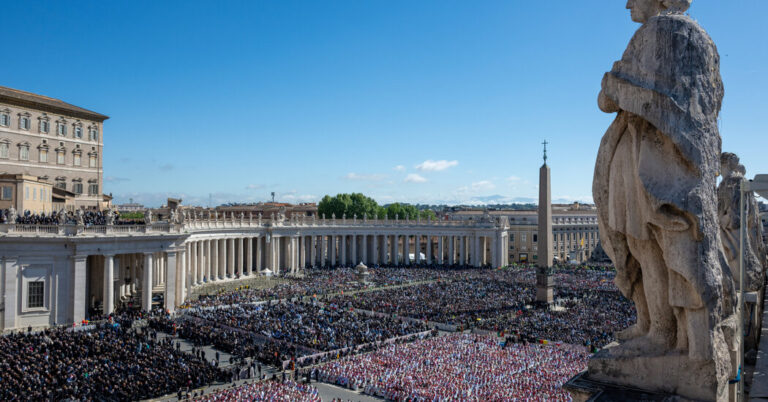
Days Before Conclave, Conservative Catholics Take the Stage in Rome


The European nobles and politicians arrived in the gardens of Palazzo Brancaccio in gowns and tuxedos, ready for aperitivi with the Catholic power brokers and pilgrims from America.

Spritzes by the grand fountain progressed to entrees inside the palace, beef cheek cooked at a low temperature and served on orange potato velouté.

Brian Burch, President Trump’s nominee to be ambassador to the Holy See, dined at a head table next to Princess Gloria von Thurn und Taxis, the German aristocrat who befriended Justice Samuel A. Alito Jr., and alongside current and former members of hard-right European political parties. One of them, Antonio Giordano, a member of the Italian Parliament in Prime Minister Giorgia Meloni’s party, welcomed the several hundred guests to Rome, and discussed their shared “urgency of protecting the family.”

“Only together we can effectively conquer the demographic winter,” he said, nodding to low birthrates and a push for pronatalist policies.

After dessert, the guests followed the sound of live music up a marble staircase into salons lined with tapestries and lit with chandeliers. Eyes popped at the vast hall of mirrors, designed in tribute to Versailles. A gilded ballroom had walls stretching up 45 feet.

And then they waltzed.

It was, after all, the first-ever “America Week Ball.”

Officially, the Catholic church was in a nine-day period of mourning following Pope Francis’ funeral. But in Rome, by happenstance of previous scheduling — or by divine providence, as some organizers believe — what has come to be called “America Week” was also taking place.

An annual elite fund-raising week for Catholic projects, America Week is largely led by influential conservative Catholic organizations that are united in their commitment to advancing traditional principles concerning marriage, faith and family.

It started in connection with the Papal Foundation, a U.S.-based charity that raises millions of dollars for Vatican projects through donations that start at seven figures.

This year, though, many participants have come to Rome to raise money for new groups, hoping to replicate in Europe the success that conservative Catholics have had in expanding their political and cultural influence in the United States.

While the cardinals spent their days in a conference room at the Vatican, contemplating who should be their next pope, hundreds of American Catholics and their European allies mingled at private galas like the ball, and made exclusive pilgrimages to some of Rome’s finest palaces, hotels and churches.

No matter what happens at the conclave, these politically engaged American conservatives are expanding their networks and institutions and investing in their long-term plans to shape the church’s future.

“The Europeans very much want to learn about philanthropy, and how we do these things, how we help groups, how we raise money, how we define what is a worthy apostolate, what is not,” said Mark Randall, an executive director for the Pontifical North American College, an American seminary in Rome.

The ball was one such new attempts to bring all these players together to network and build friendships. It was sponsored by a newly created organization, the Louis IX Foundation, which was formed by a trio of Americans including Mr. Burch. It is named after a 13th century king of France and leader of the Seventh Crusade, who mobilized western military and financial aid to defend Christendom in the east.

“He was a great reformer and restorer of the faith, supporter of many good things, just like we are trying to do,” said Mr. Randall, who helped start the group.

Some America Week events were canceled because of Francis’ death, and several church leaders declined invitations, citing the period of mourning. Others proceeded, especially as they were connected to the Jubilee Year — a rare Catholic tradition in which sins are forgiven — with leaders praying for the coming conclave and hoping for a pope who would help advance their goals.

The Acton Institute for the Study of Religion and Liberty, a policy group that endorses free-market economics, held a conference for entrepreneurs. The world’s largest Catholic news organization, EWTN, hosted a dinner on the roof of the Waldorf Astoria. Film producers spoke with philanthropists about potential projects.

The NAPA Institute, a conservative Catholic-oriented network, led a “once in a lifetime” pilgrimage for the Jubilee Year, in which guests stayed at the Hotel de Russie and had a private dinner with Cardinal James Harvey at the garden outside his residence to honor his 50 years as a priest. Cardinal Harvey is one of the 10 American cardinals with a vote in electing the next pope.

The Francis papacy created a sense of urgency for many conservative American Catholics who believed that progressive values were undermining church doctrine, and fueled their efforts to bolster lay organizations to defend their faith. They were particularly concerned about Francis’ decision to allow priests to bless couples in same-sex relationships.

“If the pope or anyone crosses the line with the magisterium, you have to push back,” said Tim Busch, president of the NAPA Institute, referring to the church’s teaching authority on morals and faith. “You can’t take over the hierarchical control of church, but you can be outspoken, and hold the line on magisterium.”

Pope Francis, he said, “walked right up the red line, but didn’t cross it.”

Several of the Americans had private meetings with cardinals while they were in Rome, when the cardinals had breaks from their pre-conclave meetings. Some leading American conservatives consider Cardinal Peter Erdo of Hungary a preferable choice for the next pope. He also has the support of the prime minister of Hungary, Viktor Orban, and was supported by Cardinal George Pell of Australia, who died in 2023.

“He’s what we need right now,” Mr. Busch said. “We need someone who can teach clearly and be strong.”

The events drew some of the most outspoken defenders of traditionalist Catholicism and right-wing politics, both in the U.S. and Europe, reflecting a growing alliance of ascendant populism that is energized by Christian fervor.

At the ball were Americans like Steve Cortes, a former Trump campaign adviser who works with Catholic Vote, as well as Europeans like Margarita de la Pisa Carrión, a Spanish European Parliament member of the hard-right political party Vox.

One of the young men waltzing was Alexander Tschugguel, a Catholic convert from Austria who became a hero to many conservatives in 2019 when he stole statues of Pachamama, a fertility goddess, that were welcomed by Pope Francis during meetings with Amazon leaders. Outraged by what he and other conservatives saw as idol worship, Mr. Tschugguel traveled to Rome, took the statues from a chapel at dawn, and tossed them into the Tiber River. (Pope Francis apologized for the incident, and the statues were recovered.)

The week’s mix of devotion, activism, money and socializing works to create particularly strong ties, with an eye toward expansive global reach for the long term. After the ball, while some attendees stayed to waltz, others strategized or flirted over cigars and cocktails, or went to nighttime Eucharistic adoration at the Chiesa di San Gioacchino in the Prati neighborhood.

The night before the ball, another group held a three-course dinner reception at the Villa Agrippina Gran Meliá, a luxury hotel with panoramic views of Rome. A main funder for both that dinner and the ball was Declan Ganley, an Irish businessman and prominent anti-abortion activist.

One influential and emerging group with a presence at the dinner was the French Riviera Institute, started by Msgr. Dominique Rey, a French bishop who is a hero to many traditionalist Catholics and who resigned from his bishopric at the Vatican’s request last year.

The group’s goal is to organize a network of influential European leaders across all parts of society “to amplify and intensify the Christian Renewal throughout Europe,” in hopes of making significant advances by the 2,000th anniversary of the resurrection of Christ in 2033. A similar group is starting in Mexico.

Their hope is to repeat the success of the NAPA Institute, which has become a force for conservative Catholic political and cultural influence in the United States.

A month before the U.S. presidential election, Mr. Burch went to Monaco for an invitation-only meeting for entrepreneurs and leaders. He is the co-founder of Catholic Vote, a conservative Catholic organization that mobilized voters for Mr. Trump in 2024.

Before boarding his flight to Europe last fall, he said in an interview that the gathering brought together like-minded Catholic Vote-type groups that were “imagining that the stars are going to align between European politics and U.S.” as populism rose in Europe. He alluded to the planned ball in Rome, and hoped to involve a future Vice President JD Vance.

Mr. Burch has not yet been confirmed by the Senate. He was already planning to attend America Week before he was nominated, and he attended the events as a pilgrim and private citizen, not in any official capacity, according to event organizers. At his confirmation hearing, he assured the committee that “I fully understand the distinction between advocacy and diplomacy.”

Still, his pending ambassadorship is a symbol of the rising strength of the conservative American Catholicism in the post-Francis era. .

“Obviously, once he is cleared, he will be a major, major player in the ball in the next year, and going forward, as the ambassador,” Mr. Randall said.


Source link

DoorDash Agrees to Buy Deliveroo in $3.9 Billion Deal

0


DoorDash said on Tuesday that it had agreed to buy Deliveroo, a British food delivery service, in a roughly $3.9 billion deal, part of its effort to expand overseas.

The deal would give DoorDash, the dominant food delivery app in the United States, a larger footprint in Europe and a presence in the Middle East, covering millions of users in more than 40 countries.

The agreement values Deliveroo, which is based in London, at about 2.9 billion British pounds, or about $3.9 billion, according to a filing with the London Stock Exchange.

Deliveroo serves nine countries, including France, Italy, Qatar, Singapore and the United Arab Emirates. It said in the filing that the acquisition would enable the companies to invest in product and technology, and strengthen Deliveroo’s position in the areas it served.

Deliveroo has faced intense competition and legal challenges to its gig-economy business model since launching in 2013. Its shares dropped as much as 30 percent in its first minutes of trading after going public in 2021.

DoorDash, which is based in San Francisco, bought Wolt, a Finnish food delivery company that operated in 23 countries, primarily in Europe, for about $8.1 billion in 2022.

DoorDash said in the filing that the terms of the acquisition, which is subject to a shareholder vote and regulatory approval, were final and would not be increased unless a third party stepped in with a rival bid. It said it expected the transaction to close during the fourth quarter of this year.


Source link