Home Blog Page 332

Credit Suisse Pays $510 Million Fine for Helping Clients Evade Taxes

0


The toll for misconduct at the fallen Swiss bank Credit Suisse just keeps getting bigger.

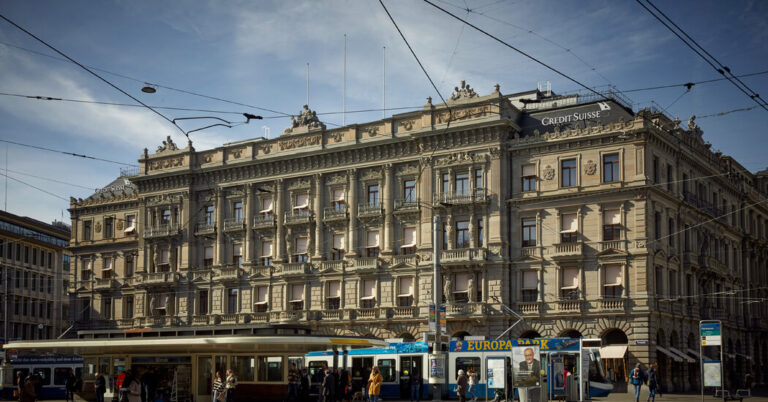
Federal prosecutors said on Monday that UBS, which rescued Credit Suisse from the brink of collapse two years ago, would pay $510 million in fines for the role Credit Suisse played in helping clients evade taxes.

Credit Suisse, among other moves, helped clients hide more than $4 billion from the Internal Revenue Service in at least 475 accounts, prosecutors said. Credit Suisse’s Singapore office was singled out for holding undeclared accounts for people who owed taxes.

The bank pleaded guilty to, in the words of prosecutors, enabling “U.S. customers to evade their U.S. tax obligations in several ways, including by opening and maintaining undeclared offshore accounts for U.S. taxpayers at Credit Suisse A.G., and providing a variety of offshore private banking services that assisted U.S. taxpayers in the concealment of their assets and income from the I.R.S.”

Prosecutors said bankers at Credit Suisse had faked records, processed false donations and done business with more than $1 billion in accounts without feigning effort at tax compliance.

UBS reported some suspicious transactions to authorities after it merged with Credit Suisse in 2023. UBS anticipated the fine and had set aside some money to pay for it, the bank said in a statement.

The Department of Justice said its investigation had stretched several years. Prosecutors may not yet be done, either, since Monday’s announcement included a commitment by the bank to cooperate in unspecified active investigations.

“UBS was not involved in the underlying conduct and has zero tolerance for tax evasion,” the bank said in its unsigned statement, which described the matter as “another of Credit Suisse’s legacy issues.”

Two years ago, Credit Suisse crumbled in a matter of weeks after a series of scandals, lawsuits and management changes. It lost $5.5 billion in the unwinding of a onetime star investment fund, Archegos Capital Management.

UBS paid nearly $400 million to cover regulatory fines related to that turmoil.

UBS, under pressure from the Swiss authorities, rescued Credit Suisse for $3.2 billion in 2023.



Source link

Pulitzer Prizes: 2025 Winners List

0


PUBLIC SERVICE

The Pulitzer committee honored ProPublica for the work of Kavitha Surana, Lizzie Presser, Cassandra Jaramillo and Stacy Kranitz for what it called “urgent reporting about pregnant women who died after doctors delayed urgently needed care for fear of violating vague ‘life of the mother’ exceptions in states with strict abortion laws.”

Finalists The Boston Globe; The New York Times

BREAKING NEWS

The Washington Post won for its “illuminating coverage of the July 13 attempt to assassinate then-presidential candidate Donald Trump,” the committee said.

Finalists Staff of The Associated Press; Staffs of The News & Observer, Raleigh, N.C., and The Charlotte (N.C.) Observer

INVESTIGATIVE REPORTING

The staff of Reuters won for its “boldly reported exposé of lax regulation in the U.S. and abroad that makes fentanyl, one of the world’s deadliest drugs, inexpensive and widely available to users in the United States.”

Finalists Staffs of The Associated Press and “Frontline”; Christopher Weaver, Anna Wilde Mathews, Mark Maremont, Tom McGinty and Andrew Mollica of The Wall Street Journal

EXPLANATORY REPORTING

The Pulitzer committee honored Mr. Ahmed, Ms. Goldbaum and Mr. Aikins for “an authoritative examination of how the United States sowed the seeds of its own failure in Afghanistan, primarily by supporting murderous militia that drove civilians to the Taliban.”

Finalists Alexia Campbell, April Simpson and Pratheek Rebala of The Center for Public Integrity, Nadia Hamdan of Reveal and Roy Hurst, contributor for Mother Jones; Annie Waldman, Duaa Eldeib, Max Blau and Maya Miller of ProPublica

LOCAL REPORTING

Ms. Zhu, Mr. Thieme and Ms. Gallagher won for a “compassionate investigative series that captured the breathtaking dimensions of Baltimore’s fentanyl crisis and its disproportionate impact on older Black men,” the committee said.

Finalists Mike Reicher, Lynda Mapes and Fiona Martin of The Seattle Times; Katey Rusch and Casey Smith, contributors, The San Francisco Chronicle, in collaboration with the University of California, Berkeley’s Investigative Reporting Program

NATIONAL REPORTING

The Pulitzer committee honored The Wall Street Journal for “chronicling political and personal shifts of the richest person in the world, Elon Musk.”

Finalists Jennifer Gollan and Susie Neilson of The San Francisco Chronicle; Staff of The Washington Post

INTERNATIONAL REPORTING

Mr. Walsh and the staff of The New York Times were honored for their “revelatory investigation of the conflict in Sudan, including reporting on foreign influence and the lucrative gold trade fueling it, and chilling forensic accounts of the Sudanese forces responsible for atrocities and famine,” the committee said.

Finalists Staff of The Wall Street Journal, notably the imprisoned journalist Evan Gershkovich and his colleagues; Staff of The Washington Post

Feature writing

The Pulitzer committee honored Mr. Warren for “a sensitive portrait of a Baptist pastor and small town mayor who died by suicide after his secret digital life was exposed by a right-wing news site.”

Finalists Joe Sexton, contributor, the Marshall Project; Anand Gopal, contributing writer, The New Yorker

COMMENTARY

Mr. Abu Toha was honored for “essays on the physical and emotional carnage in Gaza that combine deep reporting with the intimacy of memoir to convey the Palestinian experience of more than a year and a half of war with Israel,” the committee said.

Finalists Gustavo Arellano of The Los Angeles Times; Jerry Brewer of The Washington Post

CRITICISM

The committee highlighted Ms. Lange’s “graceful and genre-expanding writing about public spaces for families, deftly using interviews, observations and analysis to consider the architectural components that allow children and communities to thrive.”

Finalists Sara Holdren of New York Magazine; Vinson Cunningham of The New Yorker

EDITORIAL WRITING

Mr. Mankad, Ms. Steinmann, Ms. Falkenberg and Ms. Binkovitz won for “a powerful series on dangerous train crossings that kept a rigorous focus on the people and communities at risk as the newspaper demanded urgent action,” the committee said.

Finalists David Scharfenberg, Alan Wirzbicki and Marcela García of The Boston Globe; Opinion Staff of The New York Times, notably W.J. Hennigan and Kathleen Kingsbury

Illustrated Reporting and Commentary

Ms. Telnaes won for “delivering piercing commentary on powerful people and institutions with deftness, creativity — and a fearlessness that led to her departure from the news organization after 17 years.”

Finalists Ernesto Barbieri and Jess Ruliffson, contributors, The Boston Globe; Iran Martinez, Steve Breen, Jamie Self and Giovanni Moujaes of inewsource

BREAKING NEWS PHOTOGRAPHY

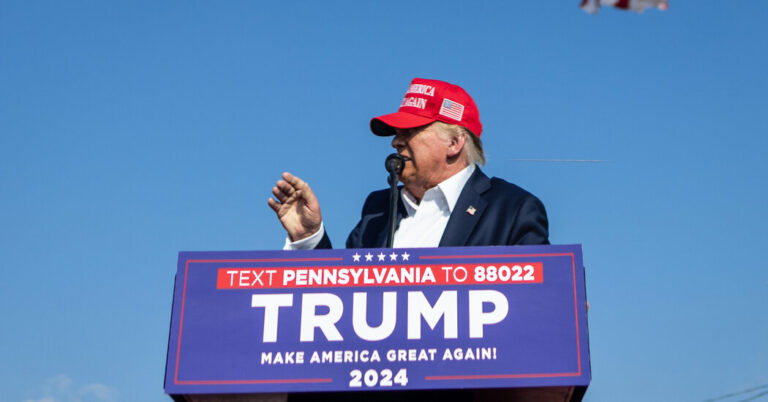
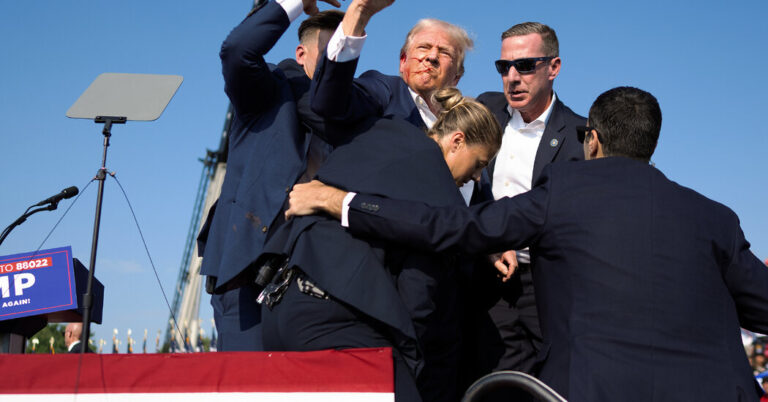
The Pulitzer committee honored Mr. Mills for “a sequence of photos of the attempted assassination of then-presidential candidate Donald Trump, including one image that captures a bullet whizzing through the air as he speaks.”

Finalists Photography Staff of Agence France-Presse; Nanna Heitmann, contributor, Tyler Hicks, David Guttenfelder and Nicole Tung, contributor, of The New York Times

FEATURE PHOTOGRAPHY

Mr. Saman was honored for “his haunting black and white images of Sednaya prison in Syria that capture the traumatic legacy of Assad’s torture chambers, forcing viewers to confront the raw horrors faced by prisoners and contemplate the scars on society,” the committee said.

Finalists Photography Staff of The Associated Press; Lynsey Addario, contributor, The New York Times

AUDIO REPORTING

The New Yorker won for its “In the Dark” podcast, which the committee called “a combination of compelling storytelling and relentless reporting in the face of obstacles from the U.S. military.” It centers on the murder of unarmed Iraqi civilians in Haditha.

Finalists Staffs of WNYC and Gothamist; Dan Taberski, Henry Molofsky, Morgan Jones and Marshall Lewy of Wondery and Audacy’s Pineapple Street Studios

FICTION

Mr. Everett’s book won for “an accomplished reconsideration of ‘Huckleberry Finn’ that gives agency to Jim to illustrate the absurdity of racial supremacy and provide a new take on the search for family and freedom,” the committee said.

Finalists “Headshot: A Novel,” by Rita Bullwinkel; “The Unicorn Woman,” by Gayl Jones; “Mice 1961,” by Stacey Levine

DRAMA

The committee called Mr. Jacobs-Jenkins’s play “a skillful blend of drama and comedy that probes how different generations define heritage.”

Finalists “Oh, Mary!,” by Cole Escola; “The Ally,” by Itamar Moses

HISTORY

This year’s history category had two winners. Ms. DuVal was honored for “a vivid and accessible account” of Native American nations and communities over a thousand years, the committee said. Ms. Fields-Black won for “a richly-textured and revelatory account of a slave rebellion.”

Finalists “Plantation Goods: A Material History of American Slavery,” by Seth Rockman

biography

The committee called Mr. Roberts’s book “a beautifully written double biography of Carl Linnaeus and Georges-Louis de Buffon.”

Finalists “John Lewis: A Life,” by David Greenberg; “The World She Edited: Katharine S. White at The New Yorker” by Amy Reading

MEMOIR OR AUTOBIOGRAPHY

The Pulitzer committee honored Ms. Hulls’s graphic memoir, describing it as “an affecting work of literary art and discovery whose illustrations bring to life three generations of Chinese women.”

Finalists “Fi: A Memoir of My Son,” by Alexandra Fuller; “I Heard Her Call My Name: A Memoir of Transition,” by Lucy Sante

poetry

The committee highlighted a collection of Ms. Howe’s “drawn from decades of work that mines the quotidian modern experience for evidence of our shared loneliness, mortality and holiness.”

Finalists “An Authentic Life,” by Jennifer Chang; “Bluff: Poems,” by Danez Smith

GENERAL NONFICTION

Mr. Nathans’s book won for its “prodigiously researched and revealing history of Soviet dissent,” the Pulitzer committee said.

Finalists “Until I Find You: Disappeared Children and Coercive Adoptions in Guatemala,” by Rachel Nolan; and “I Am on the Hit List: A Journalist’s Murder and the Rise of Autocracy in India,” by Rollo Romig.

MUSIC

A composer and percussionist, Ms. Ibarra was honored for her musical tribute to ecosystems and biodiversity. The committee wrote that the artist’s work “challenges the notion of the compositional voice by interweaving the profound musicianship and improvisatory skills of a soloist as a creative tool.”

Finalists “The Comet,” by George Lewis, libretto by Douglas Kearney; and “Jim is Still Crowing,” by Jalalu-Kalvert Nelson.

Special citations

Mr. Stone, a journalist, was honored posthumously for his “groundbreaking work” covering the civil rights movement as the first Black columnist for The Philadelphia Daily News, in addition to his role as co-founder of the National Association of Black Journalists.


Source link

Best of Baller League night seven: Big brawls, Mourinho impressions and ripped shirts!

0


Take a look at the best moments from Baller League night seven as John Terry’s temper flares and Angry Ginge and Sharky go face to face in a huge brawl.


Source link

Ford Says Tariffs Will Cost Company $1.5 Billion in 2025

0


Ford Motor said on Monday that the Trump administration’s tariff policies were likely to lower its 2025 profit, before interest and taxes, by about $1.5 billion. The company also dropped its forecast for the year, saying that predicting the future had become too hard.

Ford is less affected by President Trump’s 25 percent tariffs on vehicles than other automakers because most of the vehicles it sells in the United States are made in the country. General Motors said last week that the tariffs would increase its costs $4 billion to $5 billion this year.

“We believe we are well positioned to adapt to the changes tariffs are driving in our industry,” Ford’s chief financial officer, Sherry House, said in a conference call.

The company said the administration’s shifting tariff policies had the potential to disrupt to automotive supply chains, and they could force other nations to impose retaliatory tariffs on U.S. exports. It also noted further uncertainty in the Trump administration’s tax and emission policies.

“We felt it prudent to suspend our full-year guidance,” Ms. House said.

Ford had previously said it expected earnings for 2025, before interest and taxes, to be $7 billion to $8.5 billion.

The Trump administration has levied 25 percent tariffs on imported vehicles and auto parts. It has raised tariffs on imported steel and aluminum, which are used extensively in cars and trucks.

Those and other tariffs imposed by Mr. Trump signify a major shift in U.S. trade policy, especially as it affects trade between the United States, Canada and Mexico. For decades, cars and auto parts have been shipped across North America with little or no tariffs.

Ford currently makes a few vehicles, including a key electric model, the Mustang Mach-E, in Mexico, and the company plans to start making heavy-duty pickup trucks in Canada in 2026. Ms. House said the automaker was not considering changing its heavy-duty truck plans.

The company also reported that its profit in the first three months of the year fell to $471 million from $1.3 billion in the same period a year ago. Ford blamed lower vehicle sales because it had paused production at some factories to prepare for new models and made other changes aimed at reducing inventories of unsold cars and trucks.

Its revenue in the quarter declined 5 percent, to $40.7 billion. Ford narrowed its loss on electric vehicles to $849 million from a loss of $1.3 billion a year ago. Profit from selling mainstream, internal combustion vehicles fell to $96 million from $901 million. Profit from selling commercial trucks and related services declined to $1.3 billion from $3 billion last year.


Source link

The New York Times Wins 4 Pulitzer Prizes

0


The New York Times won four Pulitzer Prize awards on Monday, including for reporting on Sudan’s civil war and the failures of the United States in the war in Afghanistan, as well as photographs of the moments surrounding the attempted assassination of Donald J. Trump in Pennsylvania.

The Times also won in collaboration with The Baltimore Banner, a nonprofit news outlet, for an investigation into the deadly opioid crisis.

The New Yorker won three awards, for commentary and feature photography as well as for its investigative podcast, “In The Dark.”

Started in 1917, the Pulitzer Prizes are presented annually by Columbia University for excellence in journalism and letters. ProPublica won the award for public service, considered the most prestigious of the Pulitzers, for its coverage of the impact of state abortion bans across the country. The reporters Kavitha Surana, Lizzie Presser and Cassandra Jaramillo and the photographer Stacy Kranitz used death certificates and hospital records to uncover how the bans had directly led to preventable deaths of mothers.

The staff of The Washington Post won the prize for breaking news reporting for their coverage of the attempted assassination of Mr. Trump at his rally in Butler, Pa., in July, which incorporated audio and visual forensics along with traditional reporting.

Ann Telnaes, formerly of The Washington Post, was awarded a prize for illustrated reporting and commentary. Ms. Telnaes, a cartoonist, resigned from The Post in January after the publication rejected a cartoon depicting its owner, Jeff Bezos. The Pulitzer board credited her with “delivering piercing commentary on powerful people and institutions with deftness, creativity — and a fearlessness that led to her departure from the news organization after 17 years.”

Reuters was awarded the investigative reporting prize for “Fentanyl Express,” a series that examined the drug trade behind America’s opioid crisis. The investigation showed how easy it was to obtain the chemicals needed to make fentanyl from China and how the packages evaded customs inspections in Mexico and the United States.

The national reporting award went to the staff of The Wall Street Journal for its coverage of Elon Musk, the world’s richest man. The coverage revealed details about Mr. Musk’s influence in conservative politics, use of illegal drugs and conversations with the Russian president, Vladimir V. Putin.

Azam Ahmed, Christina Goldbaum and Matthieu Aikins of The New York Times won the explanatory reporting award for their investigation into the consequences of the war in Afghanistan and what the United States left behind when it pulled out. The reporting uncovered a systematic campaign of forced disappearances by an Afghan general backed by the U.S. military.

Declan Walsh and the staff of The New York Times won the award for international reporting for their coverage of the ongoing civil war in Sudan, including revealing the role of the United Arab Emirates in the conflict and its devastating human toll.

Doug Mills of The New York Times won the breaking news photography prize for his photos capturing the attempted assassination of President Trump last year, including an image in which a bullet can be seen.

Alissa Zhu, Nick Thieme and Jessica Gallagher of The Baltimore Banner and The New York Times were awarded the local reporting prize for an investigative series that showed the sheer scale of Baltimore’s fentanyl crisis and found that the city had become the drug overdose capital of the United States. It is the first Pulitzer Prize for The Banner, a nonprofit newsroom that started in 2022. The work was done in collaboration with The New York Times’s Local Investigations Fellowship.

The feature writing prize went to Mark Warren, a contributor for Esquire magazine, for “Right-Wing Media and the Death of an Alabama Pastor: An American Tragedy,” which examined the suicide death of a Baptist pastor in a small town after a website exposed his online life.

Mosab Abu Toha, a contributor to The New Yorker, won the commentary award for deeply personal and reported essays documenting the experience in the Gaza Strip during the continuing war with Israel.

Moises Saman, a contributor to The New Yorker, was awarded the feature photography prize for his images in Syria after the fall of the Assad regime, including black-and-white photographs of the notorious Sednaya detention facility. The staff of The New Yorker was awarded the audio reporting prize for the “In the Dark” podcast, which investigated the murder of 24 Iraqi civilians by U.S. Marines during the Iraq War.

The prize for criticism was given to Alexandra Lange, a contributing writer to Bloomberg CityLab, for her writing about public spaces for families and how architecture and design can help communities flourish.

Raj Mankad, Sharon Steinmann, Lisa Falkenberg and Leah Binkovitz of The Houston Chronicle were awarded the editorial writing prize for a series about hazardous rail crossings and blocked intersections in the city that demanded action from lawmakers.

In the prizes for arts and letters, the novel “James,” by Percival Everett, was awarded the fiction prize. “James” reimagines the story of Huckleberry Finn from the perspective of the enslaved character Jim.

Purpose,” by Branden Jacobs-Jenkins, won the drama prize. The play follows a reckoning within a prominent Black family with ties to the civil rights movement.

The history award was given to “Native Nations: A Millennium in North America,” by Kathleen DuVal, and “Combee: Harriet Tubman, the Combahee River Raid, and Black Freedom during the Civil War,” by Edda L. Fields-Black.

The biography prize went to the author Jason Roberts for “Every Living Thing: The Great and Deadly Race to Know All Life,” which is a double biography of the 18th-century scientists Carl Linnaeus and Georges-Louis de Buffon and their attempts to taxonomize the world.

Feeding Ghosts: A Graphic Memoir,” by Tessa Hulls, was awarded the autobiography prize. The book illustrates three generations of the author’s Chinese family history and the trauma handed down. “To the Success of Our Hopeless Cause: The Many Lives of the Soviet Dissident Movement,” by Benjamin Nathans, was awarded the general nonfiction prize.

The poetry prize went to “New and Selected Poems,” by Marie Howe, a collection of more than four decades of poetry that observes everyday life. “Sky Islands,” by Susie Ibarra, was awarded the prize in music. The composition, which was inspired by the rainforests of Luzon in the Philippines, premiered in July at the Asia Society in New York.

The Pulitzer Prize Board also awarded a special citation to Chuck Stone, a pioneering Black journalist who covered the civil rights movement and was a legendary columnist at the Philadelphia Daily News. Mr. Stone also co-founded the National Association of Black Journalists. He died in 2014 at 89.


Source link

Trump Crypto Deals Provoke Senate Backlash and Calls for Investigation

0


Senate Democrats are demanding changes to cryptocurrency legislation pending in Congress, responding partly to growing evidence that the Trump family is using its connections and President Trump’s power to profit from crypto trading.

The pushback intensified late last week after a closed-door meeting among Senate Democrats in which Senator Chuck Schumer, the Democratic leader, told colleagues they should not commit to voting for the so-called GENIUS Act, a bill backed by the crypto industry.

For months, the bill had appeared to be gliding toward passage, with support from both parties, and it was scheduled for a procedural vote this week. But in the meeting, Senate Democrats expressed concern that the legislation would directly benefit the Trump family’s crypto business, citing reporting by The New York Times.

Among the concerns the senators raised, according to lawmakers, is that the Trump-affiliated crypto firm, World Liberty Financial, recently secured a deal to take $2 billion in deposits from an Emirati venture fund backed by the government of Abu Dhabi, as The Times reported last week.

“It’s a selling of influence, a conflict of interest, just a massive form of corruption we haven’t witnessed,” Senator Jeff Merkley, Democrat of Oregon, said in an interview, echoing comments he said he made at the meeting. “And it needs to be ended.”

And Senator Elizabeth Warren, Democrat of Massachusetts, pushed other Democrats to take a stand on the matter.

The Senate legislation “will make it easier for the president and his family to line their own pockets,” Ms. Warren said in a statement. “This is corruption and no senator should support it.”

Those ethical concerns have contributed to a broader unease about the bill among Democrats. Several senators have also pointed to other issues, arguing that the legislation lacks sufficient protections against money laundering.

Representatives for the White House, the Trump Organization and World Liberty did not immediately respond to requests for comment.

Crypto executives have lobbied for months to pass the GENIUS Act, a bill that would make it easier for U.S. companies to deal in stablecoins, a type of cryptocurrency that maintains a price of $1. It would be one of the first formal acts by lawmakers to create a regulatory system that could help the industry grow in the United States. Crypto traders like to use stablecoins because they do not swing in value the way other digital currencies do, making them convenient for many types of business transactions.

But a boost to the industry would also be a boost to World Liberty, expanding the market for a stablecoin that it recently began issuing.. The Trump family and its partners are already positioned to take in tens of millions of dollars a year in revenue, if not more, on those stablecoins issued by World Liberty.

That prospect has prompted pushback from Democratic lawmakers.

At the meeting on Thursday, Democrats raised a series of objections to the bill, pointing to Mr. Trump’s conflicts of interest, as well as language that would help overseas stablecoin firms evade some of the new rules.

On Saturday, a group of nine Democrats, including four who voted to advance the legislation out of the Senate Banking Committee, announced that they would not support it without major changes. They argued that the bill lacked strong provisions to stop money laundering and police foreign crypto firms but did not mention Mr. Trump’s crypto business.

Senate Republicans need at least seven Democrats to vote with them to move the legislation past procedural hurdles, so the opposition that has emerged could kill the legislation, potentially a major blow to the crypto industry’s policy objectives in Washington.

During the 2024 election cycle, crypto firms spent more than $130 million backing congressional candidates, including Democrats in tight races, like Senator Elissa Slotkin of Michigan and Senator Ruben Gallego of Arizona. Mr. Gallego, who voted to advance the GENIUS Act out of the Banking Committee, was one of the lawmakers who signed the statement this weekend expressing concerns about the bill.

Mr. Merkley and Ms. Warren separately moved on Monday to ask the Office of Government Ethics to investigate the Trump family’s growing cryptocurrency business deals, calling them “a startling degree of foreign influence and the potential for a quid pro quo that could endanger national security.”

A version of the stablecoin bill is also pending in the House, where Democratic leaders plan to protest Mr. Trump’s role in the industry on Tuesday by walking out of a hearing on the industry.

Representative Sam Liccardo, Democrat of California, who supports stablecoin legislation, said the recent moves by the Trump family have frustrated crypto executives who have been pushing Congress to finalize the bill.

“I’ve increasingly been hearing concern in Silicon Valley from crypto industry leaders — deep discomfort with how Trump has wrapped this industry into a kleptocratic scheme managed by his sons,” Mr. Liccardo said.

Even some Senate Republicans and longtime crypto advocates, have expressed concerns about the efforts by Mr. Trump and his family to profit from crypto. “This is my president that we’re talking about, but I am willing to say that this gives me pause,” Senator Cynthia Lummis, Republican of Wyoming, told NBC News last week.

A onetime crypto skeptic, Mr. Trump embraced digital currencies on the campaign trail last year, promising to turn the United States into the “crypto capital of the planet.” In September, he and his sons announced they were starting World Liberty, a business that would offer its own digital currencies.

Once in office, Mr. Trump appointed leaders at major federal agencies who support the industry and quickly ended a Biden administration crackdown. But the crypto world’s primary aim in Washington was to secure ambitious legislation that would cement the industry’s standing in the U.S. financial system.

The GENIUS Act was the first bill to pick up momentum. In March, the Banking Committee voted 18 to 6 to advance the legislation, with Mr. Gallego and four other Democrats supporting it.

Soon it became clear that the stablecoin rules would directly intersect with Mr. Trump’s business. About two weeks after the committee vote, World Liberty announced it would offer its own stablecoin, called USD1, which could be extraordinarily profitable for the Trump family.

Companies that issue stablecoins operate similarly to banks: The issuers make money by accepting deposits from buyers, giving them coins in return and then investing those deposits to generate a yield that the companies keep.

Last week, one of World Liberty’s founders announced at a crypto conference that a venture capital firm backed by the government of Abu Dhabi would use $2 billion worth of USD1 to conduct a major industry transaction — effectively funneling money into a business led by the U.S. president’s family.

Recent reporting from The Times about the Abu Dhabi transaction and other conflicts of interest trailing World Liberty circulated widely in the Capitol last week. Senate Democrats distributed research memos citing those investigations and attacking the legislation as a vehicle for the Trump family to “corruptly profit from his cryptocurrency schemes,” according to copies obtained by The Times. Representative Maxine Waters, Democrat of California, read aloud one of The Times’ articles in its entirety during a committee hearing last week.

At the meeting of Senate Democrats, Mr. Schumer said he was worried about language in the legislation that could allow Tether, a foreign company that was targeted by U.S. regulators in the past, to offer stablecoins in the United States without following many of the bill’s requirements, according to congressional aides. He urged Democrats to examine classified briefings the Banking Committee had put together about Tether.

A spokeswoman for Tether did not respond to a request for comment. Some details of the meeting were reported earlier by Axios.

Senate aides said on Monday that negotiations are continuing to try to address some of the concerns that Democrats have raised, as lawmakers from both parties, including Senator Kirsten Gillibrand, Democrat of New York, a co-sponsor of the bill, look for a way to move the legislation toward passage.

Mr. Trump has shown no signs that he is deterred. On Monday, he posted an illustration of himself with his fist in the air on his social media platform, Truth Social, urging his supporters to buy a cryptocurrency called $Trump, another new business that has generated more than $100 million in fees for his family and its partners.

On Monday night, a super PAC supporting Mr. Trump was scheduled to hold a fund-raiser at his Trump National Golf Club in Virginia, sponsored by crypto executives, who were asked to pay $1.5 million apiece to attend.


Source link

C Palace vs N Forest – Live match updates

0


Full Time
After Extra Time
This is a live match.
Extra Time
Half Time

Crystal Palace
vs Nottingham Forest. Premier League.

Selhurst Park.


Source link

OpenAI Backtracks on Plans to Drop Nonprofit Control


OpenAI said on Monday that it was restructuring as a public benefit corporation, allowing the nonprofit that controls OpenAI to retain its grip on the company.

The nonprofit will be OpenAI’s largest shareholder.

Sam Altman, OpenAI chief executive, created the artificial intelligence organization with several other Silicon Valley figures, including Elon Musk, as a nonprofit in late 2015. In 2018, after Mr. Musk left in a power struggle, Mr. Altman attached OpenAI to a for-profit company so he could raise the billions of dollars needed to build A.I. technologies.

But the nonprofit retained its grip in what become an unorthodox structure that some saw as an albatross to the company’s growth. Last year, Mr. Altman and his company began working on a plan to shift control from the nonprofit to OpenAI’s investors, so that it would be more attractive to investors.

The company, however, backtracked from that plan and the nonprofit will now maintain control. The decision is a victory for OpenAI’s critics, including Mr. Musk, who said the company was too focused on profits and had abandoned its early plan to build A.I. systems with safety foremost in mind.

A public benefit corporation is often described as an organization designed to create public and social good and allows outsiders to invest in much the same way they invest in other companies.

“I am very happy we made the decision for the nonprofit to maintain control,” Mr. Altman said during an press briefing. He added that the new change “sets us up to have a more understandable structure to do the things that a company like our has to do.”

OpenAI said that it is still negotiating the nonprofit’s stake in the new corporation and that the nonprofit would pick the board members of the new corporation.

The Japanese conglomerate SoftBank recently led a $40 billion funding round in OpenAI that values the company at $300 billion. If this shift is not completed by the end of the year, SoftBank will have the option to reduce its total contribution to $20 billion, said a person familiar with the latest investment deal.

This is a developing story. Check back for updates.


Source link

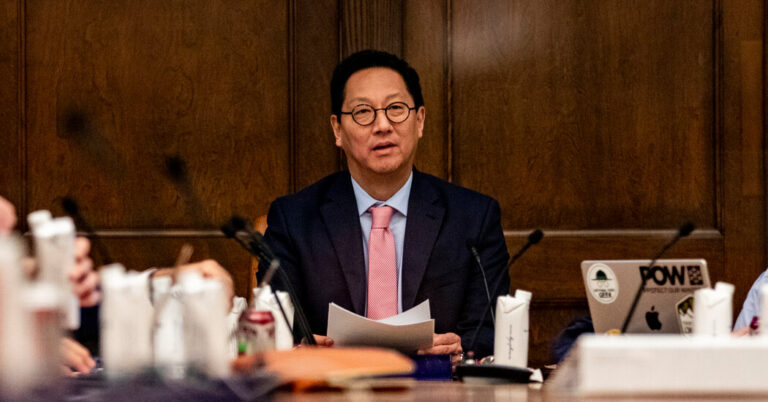
University of Michigan President, Santa Ono, Set to Lead University of Florida


The University of Florida is poised to name the president of the University of Michigan, Santa Ono, as its next leader, after months of uncertainty and rising concerns about political pressure on top campuses.

Dr. Ono was announced on Sunday as the sole finalist for Florida’s top job and said he would assume the role this summer. He could receive up to $3 million in total cash compensation annually and become the highest-paid public university president in the United States.

Although Michigan and Florida are among the nation’s best-regarded schools, both have faced substantial turmoil in recent years, and Dr. Ono, whose style frustrated many in Ann Arbor, is moving from one lightning rod to another.

In March, the University of Michigan announced that it would shut down its primary diversity, equity and inclusion effort, a program that was the subject of internal dispute but had nevertheless been regarded as a model for the higher education industry. Last week, eight people brought a federal lawsuit that accused the university of retaliation because they participated in pro-Palestinian protests.

Dr. Ono is planning to step into a Florida presidency that Ben Sasse, a Republican who had represented Nebraska in the U.S. Senate, abruptly left last summer.

The boards of both the university and the university system must still ratify Dr. Ono’s hiring, but those steps are seen as formalities. The university, which Dr. Ono plans to visit on Tuesday, did not immediately release any contract terms. A board committee voted in February, though, to offer up to $3 million in what it described as “total cash compensation.”

In October, Dr. Ono agreed to a contract extension at Michigan that would have kept him in Ann Arbor until 2032 and raised his base salary to $1.3 million. Now Dr. Ono is set to leave the university after less than three years in its presidency, the shortest tenure of any permanent Michigan leader.

James H. Finkelstein, a professor emeritus of public policy at George Mason University who has studied the contracts of university leaders, said Dr. Ono was positioned to have the highest pay of any public school president in the country, perhaps earning as much within a year or two at Florida as he would have in the early 2030s at Michigan.

Over the last year, Michigan has faced a number of issues that have divided its campus. It fired a diversity programs administrator after she was accused of making antisemitic comments. Last spring, the university allowed an encampment related to the war in Gaza to stand for weeks before the authorities dismantled it.

And conflict over the war extended into the student government after pro-Palestinian activists won elections and stopped funding for campus groups unless the university divested from certain companies. The university refused, and the student government leaders were ultimately impeached and removed. Earlier in Dr. Ono’s presidency, Michigan faced a five-month strike by graduate student instructors.

Florida has also been involved in fights that resonated beyond its campus. The administration of Gov. Ron DeSantis said recently it had intervened in the University of Florida’s search for a new College of Liberal Arts and Sciences dean after a social media account accused the four finalists of being “radical DEI progressives.”

The university soon suspended its search, and Florida’s interim president, Kent Fuchs, said it was “inadvisable to appoint a new dean without the full participation of the next president.”

But one of Governor DeSantis’s aides promoted a social media post that had castigated the candidates. The aide, Bryan Griffin, added that the administration had “worked with” the university and that the search had been “halted.”

“UF leadership was cooperative & has committed to holding off,” Mr. Griffin, Mr. DeSantis’s communications director, wrote on social media.

Dr. Ono will fill a role that Mr. Sasse left less than 18 months into a five-year, $10 million contract. After Mr. Sasse quit, he came under fire for the university’s spending and hiring during his tenure. Florida’s board had also been concerned about the university’s decline — from No. 5 to No. 6 — in the U.S. News & World Report rankings of public universities. The university later fell to No. 7.

Florida would be Dr. Ono’s fourth presidency. In addition to Michigan, he also led the University of British Columbia and the University of Cincinnati.

“Ono is one of the few presidents today who is a professional president,” said Dr. Finkelstein.

Judith A. Wilde, a research professor at George Mason who collaborates with Dr. Finkelstein, noted that roughly 80 percent of college leaders hold just one top job in their careers. About 18 percent, she said, go on to a second presidency.

In a statement released by Florida, Dr. Ono expressed enthusiasm for his latest role.

“No other public university combines U.F.’s momentum, its role as the flagship of one of the nation’s most important states, the extraordinary support from state leaders and a shared vision across its entire community,” he said.


Source link

Scott Bessent Urges Investors to Bet on Trump’s Economic Plan

0


Treasury Secretary Scott Bessent urged skittish global business leaders on Monday to ignore President Trump’s economic naysayers and ramp up investment in the United States, defending an economic agenda that economists warn will slow economic growth and exacerbate inflation.

Speaking to executives, entrepreneurs and policymakers, Mr. Bessent argued that the Trump administration’s economic plans go beyond trade policy and will pay off in the long run. He urged them to also focus on Mr. Trump’s plans to cut taxes and regulation, which he said would spur job creation and output.

“Tariffs are engineered to encourage companies like yours to invest directly in the United States,” Mr. Bessent said in remarks at the Milken Institute Global Conference in Los Angeles. “You’ll be glad you did — not only because we have the most productive work force in the world. But because we will soon have the most favorable tax and regulatory environment as well.”

His comments came just hours after Mr. Trump ordered up new tariffs on foreign film producers, a decision that left many in Hollywood puzzled about how such a tax would work.

The Treasury secretary has been working to ease concerns among investors that Mr. Trump’s trade plans will destabilize the global economy. Last month the president levied tariffs on countries around the world and escalated a trade fight with China, which sent financial markets plunging.

Since then, Mr. Bessent has been racing to negotiate trade deals with dozens of countries. He has also signaled that the China tariffs are not sustainable, offering hope that Mr. Trump would soon begin negotiations to lower them.

“Our goal with trade policy is to level the playing field for our great American workers and companies,” Mr. Bessent said.

Business leaders continue to be on edge about the Trump administration’s haphazard approach to setting trade policy.

Mr. Trump on Sunday night posted on Truth Social that he was directing his government agencies “to immediately begin the process of instituting a 100% Tariff on any and all Movies coming into our Country that are produced in Foreign Lands.” However, on Monday a White House spokesman said that “no final decisions on foreign film tariffs have been made” and that the administration was still considering its options.

Despite Mr. Bessent’s calls for investors to take a longer-term view on the U.S. economy, executives at the Milken Institute gathering made clear that the tariffs were taking a real toll.

“What we’re hearing from clients is that they’re prepping for headwinds,” said Jan Fraser, the chief executive of Citigroup, who noted that some businesses were pulling spending forward, some were delaying investment and all were being more cautious while they waited to see how the Trump administration proceeded with its tariff plans.

Harvey Schwartz, the chief executive of the Carlyle Group, said that a trade war between the United States and China was problematic for the world economy and that the tariffs have sapped some of the enthusiasm about Mr. Trump’s economic agenda that was prevalent when he took office in January.

“I think we came into the year and there was this extraordinarily high expectation and momentum and everything was sort of pro-growth,” Mr. Schwartz said in a panel discussion following Mr. Bessent’s remarks. “And I think with the tariff policy, people were just left a bit confused and uncertain, because it felt like such a shift dramatically in policy.”

He added: “This is a policy initiative that we’ve never seen.”

Mr. Bessent has attempted to shift the policy discussion to tax cuts, which he has predicted Congress could pass by early July.

The Trump administration is working closely with congressional Republicans on tax legislation that would extend the 2017 tax cuts and offer new tax breaks for overtime pay, tips and Social Security benefits. Mr. Bessent said that the bill would include tax credits and deductions for research and innovation to stimulate investment in high-tech operations and tax incentives for purchasing equipment and building factories.

Mr. Bessent made the case on Monday that investors need to consider the broader agenda when thinking about where to park their money.

Describing Mr. Trump’s policies as “mutually reinforcing,” Mr. Bessent said, “Acting in concert, they push toward the same goal — to solidify our position as the home of global capital.”

Investors have grown increasingly wary of Mr. Trump’s policies in recent months, with stocks, bonds and the dollar all showing signs of weakness as fund managers fret over the uncertainty surrounding Mr. Trump’s policymaking approach.

The International Monetary Fund projected last month that global output would slow to 2.8 percent this year from 3.3 percent in 2024 and sharply downgraded its outlook for the U.S. economy.

“Clearly we are experiencing significant turbulence in global trade,” Kristalina Georgieva, the managing director of the I.M.F., said at the Milken conference on Monday. “We are now going from a predictable trade regime that we had before to what eventually is going to be a new equilibrium.

She added: “What the world is paying for that shift, from one equilibrium to something new, is not trivial.”

Despite those concerns, Mr. Bessent on Monday said Mr. Trump would prove “critics in establishment circles” wrong.

“We have the world’s reserve currency, the deepest and most liquid markets, and the strongest property rights,” Mr. Bessent said. “For these reasons, the United States is the premier destination for international capital.”


Source link