Home Blog Page 333

Travelers Face Delays as Newark Airport Chaos Enters Second Week

0


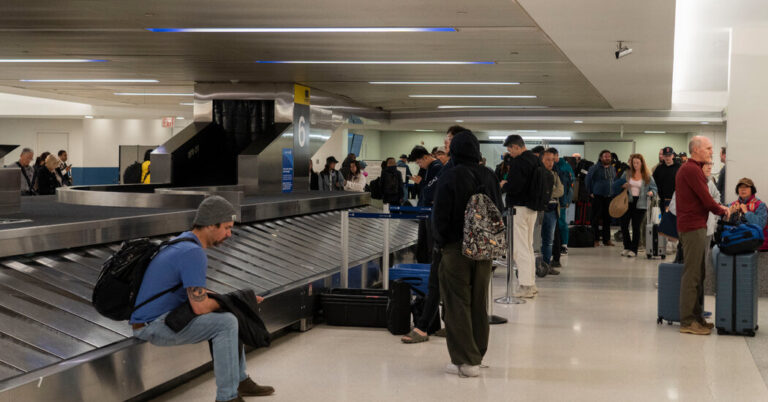
Passengers traveling through Newark Liberty International Airport on Monday were confronted with cancellations and hourslong delays as disruptions to air traffic there extended into a second week.

Low clouds on Monday prompted the Federal Aviation Administration to pause departures of planes heading to Newark, leading to delays averaging four hours and exacerbating the travel chaos at one of the nation’s busiest airports. More than 200 flights into and out of Newark had been delayed on Monday morning, according to the tracking site FlightAware.

Major flight disruptions started early last week, when the Philadelphia air traffic control center experienced equipment failures and staffing issues, the F.A.A. said. It came as one of Newark’s three runways has been closed for construction and as air traffic control centers nationwide have experienced staffing shortages. United said last week that it was forced to cut 35 round-trip flights per day from its Newark schedule.

The scene at the main United terminal at Newark on Monday was relatively calm, but travelers whose flights had been canceled expressed frustration with being directed to online customer service agents.

Senator Chuck Schumer of New York on Monday called for the Office of the Inspector General to investigate the problems at Newark, saying a “real forensic look” into safety issues and outdated technology was needed.

“To say that there is just minor turbulence at Newark Airport and the F.A.A. that would be the understatement of the year,” Mr. Schumer, the minority leader, said at a news conference. “We’re here because the F.A.A. is really a mess.”

He said the problems at Newark could be a “harbinger, if issues like these aren’t fixed.” He blamed mismanagement at the F.A.A. and cuts imposed by the Trump administration for the staffing issues, and warned that the nation’s other airports could experience similar problems if they are not addressed.

The Port Authority of New York and New Jersey, which operates Newark Airport as well as Kennedy International and LaGuardia Airports in New York, said in a statement on Monday that staffing shortages at air traffic control centers were to blame.

“The Port Authority has invested billions to modernize Newark Liberty, but those improvements depend on a fully staffed and modern federal air traffic system,” the Port Authority said. “We continue to urge the F.A.A. to address ongoing staffing shortages and accelerate long-overdue technology upgrades that continue to cause delays in the nation’s busiest air corridor.”

In a statement on Friday, Scott Kirby, the chief executive of United Airlines, Newark’s largest carrier, attributed recent flight cancellations to equipment failures and air traffic controllers who had “walked off the job.”

As a result, he added, there were “dozens of diverted flights, hundreds of delayed and canceled flights and worst of all, thousands of customers with disrupted travel plans.”

About 68 percent of the more than 3,300 scheduled departures at Newark this week were sold by United, according to Cirium, an aviation data firm.

It was not clear when the staffing and construction-related delays would clear up, and bad weather was likely to contribute to the headaches for travelers at Newark as well as at the other metro-area airports.

Low clouds and rain may limit flights in and out of the region until midweek. Rain may increase in intensity on Monday, with some thunderstorms also possible. The chance of showers will linger into Wednesday.

Judson Jones, Niraj Chokshi and Mark Walker contributed reporting.


Source link

UnitedHealth’s Move to End Cyberattack Loan Lifeline Upsets Medical Providers

0


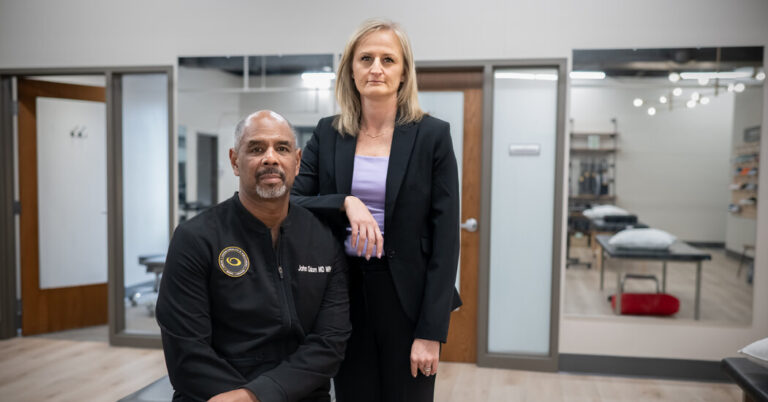
Two independent medical practices in Minnesota once hoped to expand operations but have spent the past year struggling to recover from the cyberattack on a vast UnitedHealth Group payment system.

Odom Health & Wellness, a sports medicine and rehabilitation outfit, and the Dillman Clinic & Lab, a family medicine practice, are among the thousands of medical offices that experienced sudden financial turmoil last year. The cyberattack against Change Healthcare, a division of United, paralyzed much of the nation’s health-care payment system for months.

Change lent billions of dollars to medical practices that were short on cash but has begun demanding repayments.

Dillman and Odom are suing United in U.S. District Court in Minneapolis, accusing the corporation of negligence related to the cyberattack and claiming they sustained excessive expenses because of the attack’s fallout.

In addition, Odom and Dillman asserted in court filings that the company’s insurance arm, UnitedHealthcare, has in turn been denying claims to cover patient care for being submitted late.

Lawmakers viewed the chaos caused by the cyberattack as a result of United’s seemingly insatiable desire to buy up companies like Change, alongside doctors’ practices and pharmacy businesses. The widespread disruption was a reminder of how deeply United’s sprawling subsidiaries had become embedded in the nation’s health care system.

“This is yet another sign that the rapid consolidation of major health care companies has harmed, rather than helped, American patients and doctors,” Senator Ron Wyden, Democrat of Oregon, said of the financial bind that the cyberattack had placed on practices.

Last month, the American Medical Association sent a letter to Optum, the UnitedHealth division that owns Change, saying that it was concerned that many practices were being pressured to repay loans despite continued financial difficulties from the cyberattack.

Since March 2024, Change had provided $9 billion in interest-free loans to more than 10,000 medical providers, including $569,680 to Odom and $157,600 to Dillman.

A year later, roughly $5.5 billion had been repaid, United said in court filings. About 3,500 practices, including Odom, Dillman and six other plaintiffs in the lawsuits, had made no repayments as of April 1. Several other practices and patients have also filed suits against United.

In a statement, Change said it would “continue to actively work with providers to identify flexible repayment plans based on the individual circumstances of providers and their practices.”

It added, “We have also worked with UnitedHealthcare to ensure the claims it receives are reviewed in light of the challenges providers experienced, including waiving timely filing requirements for the plans under its control.”

Change compared its efforts to recoup loans to those by the Centers for Medicare and Medicaid Services. After the cyberattack, C.M.S. provided accelerated payments to practices to cover Medicare billings delayed by the cyberattack. It has since garnished Medicare claims to recoup the funds.

In court filings, United cited data showing that only a small percentage of Odom’s and Dillman’s health care claims were rejected for being “untimely,” although those denials increased after the cyberattack.

Calling the plaintiffs’ motions a “collective shakedown,” UnitedHealth has also requested that the district court reject their request for an injunction against repayment of loans, arguing that they did not have the right to interfere in its business with thousands of other loan recipients.

An injunction, United argued, could be used by other medical practices to “hold hostage billions of dollars.”

Dr. Megan Dillman, who specializes in pediatrics and internal medicine, said she had opened her Lakeville, Minn., practice in 2022 to “bring the joy back to medicine.” She said she spent far more time with patients than the spartan 15 minutes that corporate health care operations have increasingly required of their doctors.

“I have some patients where I don’t think they would be here today if we didn’t exist,” Dr. Dillman said, citing cancers she had detected that had been missed by more hurried doctors.

Her husband, Richard Dillman, runs the business side of the practice. He called United’s repayment demands “a kick in the teeth.”

“I’d rather go through the Special Forces qualification course back to back — to back to back — than ever do this again,” said Mr. Dillman, a former Green Beret.

At the time of the cyberattack, Change’s medical-billing clearinghouse processed about 45 percent of the nation’s health care transactions, or about $2 trillion annually. The company had to take its services offline in February 2024 to contain damage from the attack, halting much of the health care system’s cash flow and unleashing chaos.

The associated breach of private information was the largest reported in U.S. health-care history. In January, United increased the reported number of people whose personal data had been exposed to 190 million from 100 million.

The U.S. Department of Health and Human Services’s Office of Civil Rights opened an investigation into the ransomware attack in March 2024. An agency spokesperson stated that it “does not generally comment on current or open investigations.” Some health care companies have been fined for breaches involving patient data.

Company officials have said that the hackers infiltrated Change’s systems by obtaining compromised login credentials and using a portal for entry that did not require multifactor authentication.

United officials confirmed that the company had paid a $22 million ransom to the Russian cybercriminals who claimed responsibility. The corporation reported in a January earnings report that the cyberattack had by then cost $3.1 billion.

Health care reimbursements didn’t begin to channel relatively freely through Change until June 2024, although United said that some of its systems had taken longer to come back online and that a few were still not at 100 percent.

At congressional hearings in May 2024, senators slammed Andrew Witty, United’s chief executive, for how the company had handled the cyberattack and the disruption it caused thousands of providers. Mr. Witty testified that the company had “no intention of asking for repayment until providers determine their business is back to normal.”

The loan terms stipulated that Change would not demand repayment until “after claims processing and/or payment processing services and payments impacted during the service disruption period are being processed.”

The meaning of “being processed” is now at the center of the court cases.

Change began seeking repayment from Dillman and Odom through what the medical practices characterized in court filings as a succession of increasingly aggressive letters. Both practices told Change they were unable to repay and neither accepted repayment plan offers. Change then in January demanded full repayment and threatened to withhold future reimbursements for patients’ health care.

“It’s disappointing but not surprising that UnitedHealth Group has decided to prioritize its bottom line over the well-being of families and small businesses,” said Mr. Wyden, who led the Senate hearing on the cyberattack.

The A.M.A. called upon the company to negotiate “an individualized, realistic repayment plan” with each practice.

Dr. Catherine Mazzola, who runs a pediatric neurology and neurosurgery practice in New Jersey, is among many others who have also battled with United over the loans.

“Optum, in my opinion, is acting like a loan shark trying to rapidly collect,” Dr. Mazzola, who is not a plaintiff in the lawsuits against United, said of the division that owns Change.

Dr. Mazzola received a $535,000 loan, and she said she had later told Change she could not repay it. She proposed a schedule but received no response. So she began paying $10,000 a month in January. But without any warning, she said, United began garnishing her reimbursements.

A United spokesman disputed her account, saying demand for full repayment would not occur without warning but after months of efforts to negotiate a plan.

Today, Dr. Odom employs about 110 people, many of whom provide rehab to older people in assisted-living facilities. If his practice had to repay the Change loan immediately, his lawsuit asserted, he would have to lay off at least 22 staff members. Dr. Odom said that could prompt assisted-living chains to drop his services and cause more financial harm.

“We face an uphill battle as such a small company,” said Dr. Meghan Klein, Odom’s president. Speaking to the gulf between her company’s finances and United’s, she said: “What is little impact to them is huge impact to us. These are a lot of people’s lives that we’re worried about.”

The Dillman Clinic, which derives about one-quarter of its income from United insurance reimbursements, would face bankruptcy if forced to fully repay its loan, according to its lawsuit.

Having leveraged their house, their cars and their retirement accounts against their practice, the Dillmans would lose all of their assets to bankruptcy, including their home, they said.

“Part of the goal of being here is to have control over my schedule,” Dr. Dillman said. But the cyberattack-driven chaos has consumed the couple’s time, leaving little for their 6-year-old daughter.

“There are days I see her for an hour,” Dr. Dillman said. “I’m missing her childhood.”


Source link

Congress’s Fight Over Trump’s Agenda Runs Through Alaska


Twice a month, planes land on the gravel airstrip in Noatak, Alaska, about 70 miles north of the Arctic Circle, carrying the diesel that residents need to heat their homes in the bitter cold.

And once a month, they receive electricity bills four times higher than those for most of the rest of the country that include two separate charges: one for the cost of the energy itself, and another for the cost of the fuel used to fly it there.

“The fuel cost is the thing that kills,” Bessie Monroe, 56, who works as an assistant to the village’s tribal administrator, said as she pulled up her bill. Even though she supplements the heat from her generator with a wood-burning stove — and can still sometimes feel the chill of wind through one of her walls — Ms. Monroe has paid roughly $250 a month for electricity for her small one-bedroom house this winter.

So a few years ago, in an effort to build a local source of electricity and save residents money, the Inupiat village of 500 worked with its utility company to install a small farm of solar panels. And when Congress approved new tax credits for clean energy projects in 2022 through the Inflation Reduction Act, signed into law by President Joseph R. Biden Jr., the village saw an opportunity to buy more.

But the fate of the project — and dozens more like it in Alaska and around the country — is now in doubt, leaving villagers unsure of their financial future.

Those doubts are at the root of an intraparty feud unfolding among Republicans in Washington, where G.O.P. members of Congress are casting about for ways to pay for President Trump’s domestic agenda. Some fiscal hard-liners have zeroed in on clean energy tax credits as a prime target for elimination.

Senator Lisa Murkowski, Republican of Alaska, has become an outspoken proponent of keeping the tax credits.

“A wholesale repeal, or the termination of certain individual credits, would create uncertainty, jeopardizing long-term project planning and job creation in the energy sector,” Ms. Murkowski and three other Republicans wrote in a letter to the Senate majority leader last month to make the case for preserving the clean energy breaks.

The calls to scrap them have already had an effect. The leading builder of solar farms along Alaska’s Railbelt, the state’s most populous region, cited uncertainty over the tax credits’ future when it pulled out of a major project. Dozens more projects have been left in limbo after Mr. Trump signed an executive order in January to freeze federal grants financed by the law.

And all of it comes as Alaskans prepare for looming natural gas supply shortfalls, which have prompted state officials to warn of the possibility of rolling blackouts.

“It seemed like two, three years ago, there was a lot of enthusiasm moving forward with a lot of these projects,” said Matt Bergan, an engineer who worked for the electric association based in the hub city of Kotzebue, 50 miles south of Noatak.

“We know what we need up here,” Mr. Bergan continued. “We need the wind and the solar and the storage to make heat, and get away from diesel fuel. And the stars were aligning. These big federal dollars were going to be coming through. We got our projects shovel-ready to go. And now all the stars have unaligned.”

Similar stories are playing out all across the country. But nowhere has the law had a more profound effect on everyday access to power than in Alaska, where energy companies have sought to leverage the tax credits to build out renewable energy infrastructure in isolated communities.

“There is still a substantial amount of money that has to come out of pocket in order to make these projects work,” said Bill Stamm, the chief executive of Alaska Electric Village Cooperative, a nonprofit electric utility serving residents in 59 locations throughout rural Alaska, including Noatak. “If you can get some of that money back, especially for folks that have a tax appetite — that I think, swayed the movers and shakers, the folks that are going to decide, ‘Do we want to actually get involved in this kind of business?’”

At an event last month in Anchorage, Ms. Murkowski recounted a conversation she had had with the interior secretary, Doug Burgum, in which he commented there would be little support from the Trump administration for wind energy projects.

“Remember that so many of the communities in the state of Alaska are never going to benefit from a natural gas pipeline,” Ms. Murkowski recounted replying. “It’s not going to do a spur out to Togiak. It’s not going to do a spur out to Kobuk. So please, please don’t forget the opportunities that come to our more rural communities that are more isolated, who need to be able to access the resources that are there.”

Even simple tasks in Noatak are often difficult. For years, the utility company servicing the village would send some diesel by barge during the spring and summer months. But the Noatak River’s water levels have since dropped so low that the utility can now only fly in the fuel. There are no roads to Noatak, and the closest city, Kotzebue, population 3,000, is more than an hour away by all-terrain vehicle.

“You could probably get to Hawaii as cheap as you can get to Noatak from Anchorage,” said Mr. Stamm, the utility executive. “So it’s not insignificant that we have to fly people there to do repairs. We have to fly all of our material in there to do repairs.”

Late last year, the planes used to fly in the diesel suffered mechanical issues and were grounded for weeks. The village rationed diesel for residents, forcing many, like Ms. Monroe, to rely heavily on their wood-burning stoves. It was 25 to 35 degrees below zero then, she and other residents recalled.

“It happens a lot, fuel shortages,” said Tristen Ashby, the village’s tribal administrator. “And some people don’t have wood stoves up here, so they only have one source of heat.”

The cold in the winters, Mr. Ashby added, “is like you wouldn’t believe.”

During that shortage, Ms. Monroe ran out of the wood she asks her 20-year-old daughters to chop. “I was asking, ‘Lord, I need wood today.’ Later on, there were two logs outside of my house. I walked out and there were two logs. And that was a humbling experience.”

When diesel is accessible, its fumes linger in the air over residential streets.

“When I came into this office, I asked the previous administrator, who got us the solar panels, ‘How could I get another farm?’” said Mr. Ashby, who, at 22, is the youngest person to ever serve as tribal administrator. “With solar energy, there’s no fuel emission. Every day we see smoke coming out of the plant.”

But the real reason he hopes to pivot to solar energy, he said, is to bring down costs.

While the average residential electricity rate in the United States is around 16 cents per kilowatt-hour, Noatak pays more than a dollar. On a recent visit, heating fuel was running $13 a gallon.

Some larger homes cost $1,700 a month to heat, and residents say it is not uncommon for them to pay their electric bills in installments. Robbie Kirk, who lives in Noatak in a house he built himself, recalled receiving a $2,500 electricity bill one month about seven years ago, when the temperature sunk to negative 60 and stayed there for weeks.

That often presents tough decisions. Mr. Kirk described how he and others each winter must decide whether to heat their water line. If they do, it drives up their electric bill. If they don’t, the pipe could freeze and burst.

The more common trade-off, he said, is deciding between spending money on heating fuel or gasoline for the ATVs and snow machines they use to drive across the snow-covered gravel roads that cut through the village. Around 5 p.m. each day, just before the single gas pump at the village store closes, a small line forms. On a recent Thursday afternoon, Tianna Sage was filling up her brother’s snow machine so he could use it to go duck hunting. She said she would need to refuel it every day for him, at the cost of $11 a gallon.

“I work three jobs to make sure the struggle is not there,” Mr. Kirk said. “But I have a lot of family here, a lot of widowed uncles, widowed aunts that they’re not able to, just not physically able to. So just watching them struggle with those decisions on whether they should buy heating fuel or buy gas. That determines — I don’t want to say how well they live their life — but how much easier it could be.”

Sitting in her office, Ms. Monroe said she still had hope that Congress would preserve the federal support for villages like Noatak. She said she would worry about her daughters’ ability to pay their bills each month if some kind of change did not come.

“Our future, it doesn’t look good, per se, with the cost of living right now,” she said. “I start to realize that all this is going to come upon them. They’re going to have to carry the burden of heating their homes or buying food.”


Source link

Ferrari team principal defends Miami GP team orders after Lewis Hamilton and Charles Leclerc vent frustration | F1 News

0


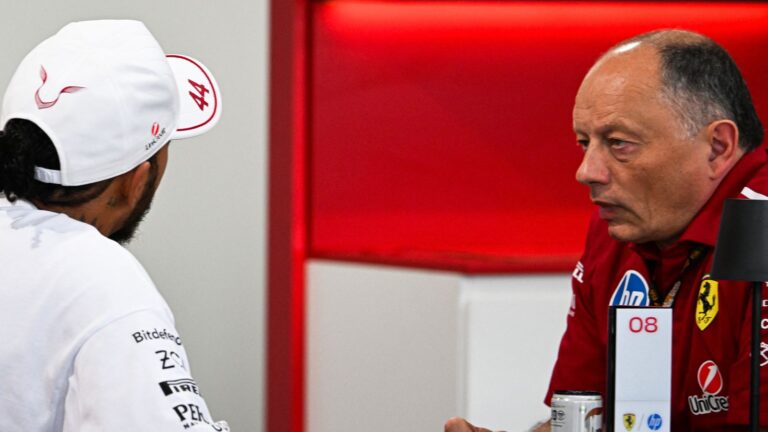
Ferrari boss Frederic Vasseur believes his team “did a good job” despite Lewis Hamilton and Charles Leclerc venting their frustration during the Miami Grand Prix.

Hamilton asked to go past team-mate Leclerc during the middle of the race as he attempted to catch Mercedes’ Kimi Antonelli for sixth but was not let through straight away.

He became increasingly frustrated before Leclerc stood aside after a few laps but could not pull away on his medium tyres.

The seven-time world champion then allowed Leclerc back by and sarcastically asked if he should also let the Williams of Carlos Sainz through, with the Ferrari pair eventually finishing seventh and eighth.

Hamilton revealed he told Ferrari team principal Vasseur not to “be so sensitive” when speaking to him post-race, and said he wouldn’t apologise for “being a fighter”.

Vasseur told Sky Sports F1: “I can understand the frustration of the guys in the cars but in the end it was well executed because Lewis was behind Charles, with a softer compound, we let him go and as per our internal rules in the team, we swapped back at the end.

“We gave the chance to Lewis to go in front of Charles because it was impossible to overtake between them if we don’t let them go and it was an opportunity for Lewis to catch Antonelli. I think we did a good job.”

Please use Chrome browser for a more accessible video player

Lewis Hamilton sends jabs at Ferrari on team radio during the Miami Grand Prix

Among the feisty radio exchanges Hamilton brought up the Chinese Grand Prix, when he moved over for Leclerc, and at one point he said “have a tea break while you’re at it, come on!”

“I had a discussion with Lewis and I can perfectly understand the frustration. They are champions, they want to win races,” said Vasseur.

“We are asking them to let their team-mate go. It’s not easy, it’s never easy. We took the responsibility to do it because it’s the policy of the team.

Please use Chrome browser for a more accessible video player

Highlights of the Miami Grand Prix

“We are racing for Ferrari first. Honestly, I think as a team we did a good job. Again, we can argue that it would have been better to do it half a lap before or half a lap later.

“But when you are in the pit wall you have to understand if the car is behind is faster because of DRS or not. It’s not an easy call. It’s always much easier to do it two hours later.

“We asked them to do it. They did it. Now the frustration when you are in the car, I can perfectly understand this. We had a discussion and it was much more relaxed.”

Button on Hamilton’s frustration on the radio

Sky Sports F1’s Jenson Button:

“They were on a different strategy. The problem is, even just one lap behind damages your tyres. It puts the temperatures up on the medium tyre, you have lost the best of it and you don’t get it back.

“I can see the frustration and this should have been a plan before that race that you decide if the car behind is on softer tyres, you let them past.”

Vasseur: Hamilton can trust me

Hamilton and Vasseur have known each other since the mid-2000s in GP2, which was the motorsport championship below F1.

Vasseur, who is in his third season as Ferrari team principal, reiterated he does “not have an issue” with Sunday’s team order dispute or the reaction of his drivers.

“He [Hamilton] can trust me, I can trust him. The same with Charles,” he said.

Please use Chrome browser for a more accessible video player

Lewis Hamilton and Charles Leclerc discuss Ferrari’s strategy during the Miami GP

“When I have to make a decision, I’m making a decision for Ferrari with the element that you have [to do it] live.

“It’s not that you have 30 minutes to have a look at the data. You have to decide which is the fastest track, if it’s coming from the DRS or not.

“Perhaps a bit slow, but it took us one lap or one-lap-and-a-half to make a decision. You can always, when you are behind, have the feeling that you have to swap in the next corner.

“And when you are in front, you say, ‘please have a look if it’s not the DRS effect’. I think it was the reverse situation 10 laps later.”

Please use Chrome browser for a more accessible video player

Sky F1’s Ted Kravitz reflects on all the big talking points from the Miami Grand Prix

Where are Ferrari in the pecking order?

Vasseur was keen to stress that the “bigger story” was Ferrari’s lack of pace as they finished nearly one minute behind race winner Oscar Piastri.

McLaren’s one-two vs Ferrari’s seventh and eighth has put them 152 points ahead of the Italian team after just six events.

Leclerc, in seventh, was 20 seconds behind George Russell in third but Vasseur believes Ferrari had the pace of Mercedes and Red Bull in race trim and need to work on their performance in qualifying with new tyres.

Please use Chrome browser for a more accessible video player

Charles Leclerc felt there was something off with the Ferrari after qualifying eighth for the Miami GP

“The pace in Miami is difficult when you are stuck in the pack. The pace was probably matching with Red Bull and Mercedes,” he said.

“I think McLaren was on another planet. We never said that we could have fought with McLaren. But with a better position, we thought we could fight with Max [Verstappen] and Mercedes.”

F1’s European season begins with the Emilia Romagna Grand Prix on May 16-18, live on Sky Sports F1. Stream Sky Sports with NOW – no contract, cancel anytime


Source link

Scott Bessent Urges Investors to Bet on Trump’s Economic Plan

0


Treasury Secretary Scott Bessent urged skittish global business leaders on Monday to ignore President Trump’s economic naysayers and ramp up investment in the United States, defending an economic agenda that economists warn will slow economic growth and exacerbate inflation.

Speaking to executives, entrepreneurs and policymakers, Mr. Bessent argued that the Trump administration’s economic plans go beyond trade policy and will pay off in the long run. He urged them to also focus on Mr. Trump’s plans to cut taxes and regulation, which he said would spur job creation and output.

“Tariffs are engineered to encourage companies like yours to invest directly in the United States,” Mr. Bessent said in remarks at the Milken Institute Global Conference in Los Angeles. “You’ll be glad you did — not only because we have the most productive work force in the world. But because we will soon have the most favorable tax and regulatory environment as well.”

His comments came just hours after Mr. Trump ordered up new tariffs on foreign film producers, a decision that left many in Hollywood puzzled about how such a tax would work.

The Treasury secretary has been working to ease concerns among investors that Mr. Trump’s trade plans will destabilize the global economy. Last month the president levied tariffs on countries around the world and escalated a trade fight with China, which sent financial markets plunging.

Since then, Mr. Bessent has been racing to negotiate trade deals with dozens of countries. He has also signaled that the China tariffs are not sustainable, offering hope that Mr. Trump would soon begin negotiations to lower them.

”Our goal with trade policy is to level the playing field for our great American workers and companies,” Mr. Bessent said.

The Trump administration is working closely with congressional Republicans on tax legislation that would extend the 2017 tax cuts and offer new tax breaks for overtime pay, tips and Social Security benefits. Mr. Bessent made the case on Monday that investors need to consider the broader agenda when thinking about where to park their money.

Describing Mr. Trump’s policies as “mutually reinforcing,” Mr. Bessent said, “acting in concert, they push toward the same goal — to solidify our position as the home of global capital.”

Investors have grown increasingly wary of Mr. Trump’s policies in recent months, with stocks, bonds and the dollar all showing signs of weakness as fund managers fret over the uncertainty surrounding Mr. Trump’s policymaking approach.

The International Monetary Fund projected last month that global output would slow to 2.8 percent this year from 3.3 percent in 2024 and sharply downgraded its outlook for the U.S. economy.

On Monday, Mr. Bessent said that Mr. Trump would prove “critics in establishment circles” wrong.

“We have the world’s reserve currency, the deepest and most liquid markets, and the strongest property rights,” Mr. Bessent said. “For these reasons, the United States is the premier destination for international capital.”


Source link

A Reporter Takes Pause at the Career Pause

0


Times Insider explains who we are and what we do and delivers behind-the-scenes insights into how our journalism comes together.

It’s not every day that a person asks a total stranger deeply intimate questions about their life, career and goals. But there I was, on the phone with someone I had found on the internet. And I had big questions, like, “How much money have you saved?” “Why did you quit your job?” And, “What exactly do you want to do with your life?”

Even before becoming a journalist, I have been ceaselessly curious — probably uncouthly so — about the philosophies people hold when it comes to their jobs, routines and money. I am the passerby who cannot resist glancing into people’s living room windows if the blinds are up. But aren’t we all? I like to think there are gems to be gleaned when people are honest about their successes and troubles, especially when it comes to finances and work.

So I perked up when the term “micro-retirement” — essentially a career timeout — came across my social media feeds a few months ago. Anecdotally, I had also heard stories of people, largely corporate professionals, who had quit their jobs to travel, work on a side project or spend more time with family. As a reporter who covers breaking news and digital trends for The New York Times, part of my job involves keeping an eye on online shifts in global conversations.

But if people were leaving their jobs in these uncertain economic times, how were they planning it? Why were they doing it? And the million-dollar question (no pun intended): How were they funding it?

I began scouring social media for mentions of mini-retirements and asked around my own social network. My editor, Joel Petterson, and I agreed that we wanted to find people from a diversity of industries who had used their hiatus for different experiences. I also wanted to find people who would be transparent about their finances.

But talking about money can be difficult. Some people I initially spoke to were reluctant to talk about their experiences publicly, perhaps out of fear that strangers on the internet would criticize their choices.

On social media, I eventually found Marina Kausar, who had worked in finance and technology and had taken three months off in 2023 to decompress. I found another source on Reddit, where she described her career break in glowing terms. They and others I spoke to expressed a similar sentiment: They were unhappy, overworked or otherwise unfulfilled in their daily grind. They were worried about what their retirements would look like, given factors like climate change, the economy and their own physical health. So they had decided to take a career hiatus.

I wanted to learn more about this pivotal juncture in the lives of younger workers, and how they had saved up for it, so I reached out to labor trend researchers. That’s how I found Kira Schabram, an assistant professor of organizational behavior at the University of Washington who has studied sabbaticals.

In a study she conducted with 50 professionals between the ages of 20 and 40, she found that many of the workers returned from their sabbaticals with a greater sense of confidence or better work-life balance, or had turned their time off into a drastic career change. But many had also reached a level of financial stability, or had reached a high point in their careers, before they made the leap. I had to wonder if many of these retirees had benefited from familial wealth and whether this trend was confined to the super wealthy.

But that didn’t seem to be the case for some people I spoke to. Some said they were happy to forgo paying student loans or burn through their savings if it meant feeling a freedom they hadn’t felt since they were children: precious time spent with family members living far away, or mornings meandering hiking trails that would normally be spent under office lights.

As I was writing the article, anxieties over the economy and the stock market were spiking. I wrote and rewrote, in my mission to explore some of the complicated feelings micro-retirees had about their time off.

When the article was published, I expected some skepticism around the feasibility of mini-retirements and warnings about their longer-term costs. After all, it’s hard to take even a micro-weekend if you’re living paycheck to paycheck or don’t have access to health care.

What took me by surprise were comments from people old and young who wanted to share the lessons they had learned after a life of work. One person recounted a decision to step back from work after watching a parent grind up the corporate ladder; he passed from brain cancer shortly after retirement. Other people said they had taken advantage of medical leave policies to treat their burnout and wondered if the issues were harder to solve than simply taking time away.

“Death is coming either way,” one commenter wrote. “We might as well take risks and see if we can make our lives better by trying something different.”

Reading those comments, I’ve found myself contemplating the same questions in the bustle of the evening commute home. Since age 15, I have worked, part time or full time, in one job or another: dishwasher at a local cafe, tutor for high school students, translator, reporter.

When, if ever, would it be a good time to step away? It’s a question I might need a weekend, or maybe even longer, to mull.


Source link

As Trump Targets Researchers, Europe Makes a Pitch to Attract Scientists


As the Trump administration slashes support to research institutions and threatens to freeze federal funding to universities like Harvard and Columbia, European leaders are offering financial help to U.S.-based researchers and hoping to benefit from what they are calling a “gigantic miscalculation.”

“Nobody could imagine a few years ago that one of the great democracies of the world would eliminate research programs on the pretext that the word ‘diversity’ appeared in its program,” President Emmanuel Macron of France said on Monday.

He was speaking at the Sorbonne University in Paris during an event called Choose Europe for Science that was organized by the French government and the European Union.

It was unthinkable, Mr. Macron said, alluding also to the withdrawal of researchers’ visas in the United States, that a nation whose “economy depends so heavily on free science” would “commit such an error.”

Ursula von der Leyen, president of the European Commission, announced an investment of 500 million euros, or $566 million, at the conference to “make Europe a magnet for researchers” over the next two years.

Although that amount is not much compared to the billions in cuts American universities face, it comes on top of the $105 billion international research program called Horizon Europe that supports scientific breakthroughs, like genome sequencing and mRNA vaccines, Ms. Von der Leyen said.

She did not mention the United States by name, but she described a global environment where “fundamental, free and open research is questioned.”

“What a gigantic miscalculation!” she said.

In Europe, there is a widespread feeling that Mr. Trump has abandoned America’s traditional support for liberty, free speech and democracy through his embrace of autocrats and the assault on science and academia. That has created strains but also a sense of opportunity on the continent, where attracting the best scientific minds to vigorous and independent universities is seen as part of a broader campaign to “rearm” Europe as an independent power.

Over the longer term, the European Commission, the executive arm of the European Union, plans to double grants for researchers who relocate and to enshrine freedom of scientific research into a law called the European Research Area Act.

“The first priority is to ensure that science in Europe remains open and free. That is our calling card,” Ms. von der Leyen said.

The Trump administration’s attack on science and threats to universities were the main impetus for the conference, which was attended by government ministers and prominent researchers from across Europe. Increasingly, the United States is seen as a strategic adversary, and opening doors to American researchers and scientists is viewed as a long-term response to that challenge.

Mr. Macron’s message to scientists was this: “If you love freedom, come help us to remain free.”

France announced its own program to lure U.S.-based researchers last month. The government promised universities and research institutions in the country up to 50 percent of the funding needed to lure international researchers, including those working in areas under pressure from the Trump administration like climate studies and low carbon energy. But no particular funding was announced until Monday, when Mr. Macron said his government would commit $113 million to the program.

Alarms in Europe began sounding when the Trump administration slashed jobs and froze science grants at leading American institutions as part of cost-cutting measures. European dismay increased when the U.S. government attacked diversity programs and attempted to dictate to universities “whom they can admit and hire, and which areas of study and inquiry they can pursue,” in the words of Harvard’s president, Alan M. Garber.

Harvard has filed a lawsuit against the Trump administration over its $2.2 billion federal funding freeze. Mr. Trump mused last week about ending Harvard’s tax-exempt status.

The U.S. government has also fired staff at U.S. centers deemed to be at the pinnacle of scientific research, including at the National Oceanic and Atmospheric Administration, the National Science Foundation, the Centers for Disease Control and Prevention and the National Institutes of Health, the world’s largest funder of biomedical research.

At the same time, some federal agencies have removed words from websites and grant applications that were deemed unacceptable to the Trump administration. Among the terms considered taboo are “climate science,” “diversity” and “gender.”

Taken together, the actions have sent a chill through academia and research institutes, with scientists worried not just for their jobs but the long-term viability of their research.

“In the United States, once a paradise for researchers, academic freedom is being challenged. The line between truth and falsehood, between fact and belief, is being weakened,” Elisabeth Borne, France’s education minister, said Monday as she opened the conference.

Universities in France have been at the forefront of attempts to benefit from a potential American brain drain. Aix Marseille University is interviewing some 300 candidates for its Safe Place for Science program, which it launched in March in response to the Trump administration’s cuts. Since then, many other universities and institutions have followed suit.

“Our self-interest, as well as our values, now command us to be the refuge for knowledge wherever it is under pressure,” said Luis Vassy, the president of Sciences Po University in Paris.

François Hollande, a former French president, has proposed a law to create a “scientific refugee” status for researchers threatened for their work in their countries.

However, some university heads and professors have criticized the initiative. They argue that while France is attempting to draw American researchers, it has also been cutting higher education and research budgets to address the country’s ballooning budget deficit.


Source link

Is This Late-Night TV’s Last Gasp?

0


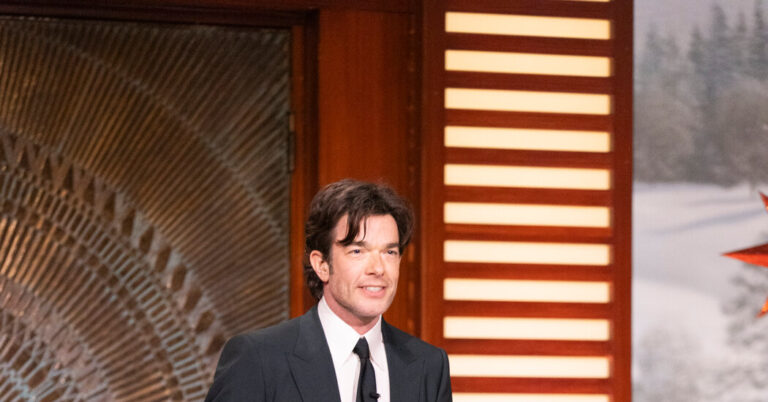
John Mulaney describes his weekly Netflix talk show as “a throwback in some ways.” Indeed, it seems to draw inspiration from numerous 20th-century late-night hosts, from Dick Cavett to David Letterman to Conan O’Brien.

“It’s almost like the way you might remember a bunch of shows from the past, but it’s not exactly what they were like,” Mr. Mulaney said in an interview from his sun-soaked office in Hollywood. He was between meetings, gearing up for the latest episode of his show, “Everybody’s Live,” which appears Wednesdays at 10 p.m. Eastern.

“No element is new,” he added, “but the way they’re being laid out might feel a little bit.”

Mr. Mulaney’s show represents an important test in the entertainment industry: Can the traditional talk show format — with an opening monologue, celebrity guests, live musical performances, a sidekick — survive in the streaming era?

Or is the future of talk shows something quite different, and much more like … podcasts?

As the television industry has leaped to streaming, many old genres have come along. Prestige dramas, crime documentaries, reality TV, stand-up specials and even soap operas have successfully crossed over. But not talk shows.

Even on traditional network and cable TV, ratings for late-night talk shows are down, and advertising revenue has plummeted. The number of shows is falling, too, so much so that last year’s Emmy Awards had one nominee fewer because of a lack of submissions. This fall, CBS will forgo programming its 12:30 a.m. slot, the first time in three decades that the network will not have an original talk show in that wee hour.

“Of all the legacy broadcast day parts — morning shows, evening news, late night — late night might be the first one headed for the wood chipper,” said Jim Bell, a former showrunner of “The Tonight Show” on NBC and now a senior executive for the 2028 Summer Olympics in Los Angeles. “It’s expensive to make, tough to monetize and no longer appointment viewing. It’s still got cultural juice, but from a business standpoint, it’s the most vulnerable.”

As recently as 2018, the five broadcast network late-night shows — hosted by Stephen Colbert, Jimmy Fallon, Jimmy Kimmel, James Corden and Seth Meyers — drew an estimated $439 million in combined advertising revenue, according to Guideline, an advertising data firm.

By 2022, that figure had fallen to $277 million, Guideline said. Last year, it plunged to $220.6 million, nearly a 50 percent decline from 2018.

Late-night hosts remain big-time celebrities, however, something that complicates the equation for media executives.

“The hosts still matter,” Mr. Bell said.

Other kinds of talk shows are doing perfectly well.

“Hot Ones,” a digital celebrity interview series conducted over spicy chicken wings, is a bona fide hit, and a bidding war for its streaming rights is expected this year. Jon Stewart’s once-a-week return to “The Daily Show” last year has been a boon for Comedy Central, minting viral moments and driving higher ratings.

Additionally, many podcasts film their shows and find large audiences on YouTube. In fact, YouTube has surpassed Spotify and Apple as the top platform for podcasts, according to several studies.

Since last year, podcast stars have signed the sort of media megadeals that used to be reserved for late-night hosts, celebrity news anchors, big producers or the cast of “Friends.” Those deals include Joe Rogan (reportedly $250 million), Alex Cooper ($125 million), the three hosts of “SmartLess” ($100 million) and the brothers Jason and Travis Kelce (another $100 million).

Mr. O’Brien quietly left late night four years ago but has had a career renaissance — including what will be back-to-back hosting gigs at the Oscars — thanks to his podcast, “Conan O’Brien Needs a Friend.” (A wildly popular appearance on “Hot Ones” last year did not hurt, either.)

“The lines between podcasts and talk shows are getting pretty blurry,” Ted Sarandos, co-chief executive of Netflix, mused during a recent earnings call. So much so that he added, “As the popularity of video podcasts grow, I suspect you will see some of them find their way to Netflix.”

Before Mr. Mulaney’s show, which premiered in March, Netflix appeared to have gotten out of the traditional talk show format altogether.

Star comedians like Chelsea Handler, Norm Macdonald, Joel McHale and Michelle Wolf all hosted talk shows on Netflix that came and went in the late 2010s. Sarah Silverman’s show on Hulu was canceled after two seasons, and even Mr. Stewart had a show (for Apple TV+) that had difficulty gaining traction.

Part of the problem could be that a format that worked for a long time in traditional television may not work in a new medium.

“On digital platforms, like YouTube or a TikTok, talent is connecting with an audience just like how talent would connect with an audience on linear television — but the way you’re doing it is very different,” said Chris Licht, a former executive producer of “The Late Show” on CBS and a former chairman of CNN. “So the format has to adjust.”

Mr. Mulaney, a renowned stand-up comedian and comedy writer, wound up hosting a talk show almost by accident. During the Netflix Is a Joke comedy festival last May, he was assigned to produce a nightly live show, one that could host the many comedic legends in Los Angeles during the event.

Mr. Mulaney originally envisioned a show that would be a bit “like MTV,” he said, where the host would serve as a sort of V.J., introducing one comic and then the next. He decided he could host it himself, and before long, the concept started to morph into the show’s current iteration.

“Then it became like, well, people can come out and I’ll talk to them, and then they’ll sit there,” Mr. Mulaney said. “Then I’m interviewing people, and we’re doing bits. Like, we couldn’t have backed into it in a more convoluted way.”

Robbie Praw, Netflix’s vice president of stand-up and comedy formats, said in an interview that the company had not initially been “looking or aspiring to do another talk show.” It was more interested “in being in the John Mulaney business” than in talk shows generally, he said, adding, “John is so singular.”

The first season of the show, called “Everybody’s in LA,” ran for all of six episodes but was a huge critical hit. Netflix went ahead and ordered 12 episodes for this year and changed the name to “Everybody’s Live.”

There has been no shortage of big-name guests. Mr. Letterman, Mr. O’Brien, Tina Fey, Bill Hader and Ben Stiller, among other comedic superstars, have appeared this season.

And though the show loosely follows one theme (planning a funeral, borrowing money, getting fired), Mr. Mulaney is not following in the footsteps of Mr. Colbert or John Oliver and dedicating much of the show to the current political news cycle.

“I was kind of like, what type of show do I want to watch?” Mr. Mulaney said. “And it is not — because the ground is well covered by great people — a topical ‘Can you believe sociopolitical story of the day?’”

The performance of “Everybody’s Live” could be a key piece of evidence to determine whether streaming executives will keep taking a stab at the format or stop altogether. Mr. Mulaney strongly suggested that he would be interested in doing another season.

It is not clear how the show is performing, but critical attention has been more muted this season. The first episode appeared in Netflix’s daily 10 most-watched TV series in the United States, but the show has not returned in the subsequent seven weeks.

Mr. Praw, the Netflix executive, said he was “extremely, extremely excited about the creative direction of the show.” He pointed to one comedic bit in April — roughly two dozen men standing onstage side by side, ranging from five to seven feet tall — while Mr. Letterman looked on as a guest.

“I had goose bumps in that moment because it had echoes of everything I used to love about David Letterman,” Mr. Praw said. “And there sat David Letterman on the couch during that. What a special moment”

He said Netflix was not prepared, however, to announce anything yet about a potential third season.

“Every show we’ve ever done we want more people to watch,” he said.


Source link

Why Warren Buffett’s Departure from Berkshire Hathaway Matters

0


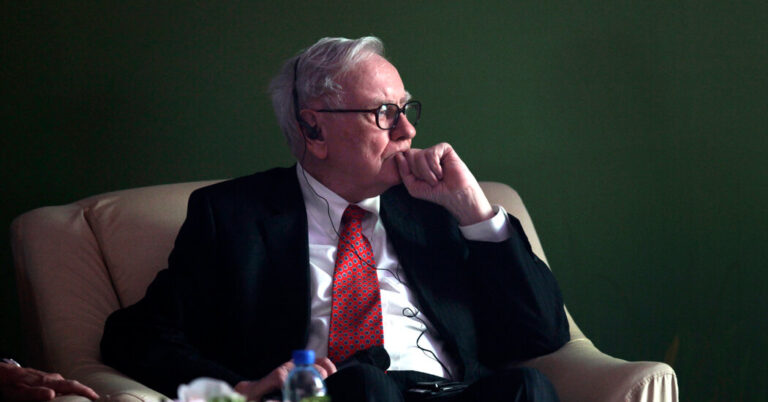
It was closing in on 1 p.m. here when Warren Buffett, seated onstage before a rapt audience of about 40,000 at the CHI Health Center, said that he was getting a “5-minute warning.”

To most of those gathered here for the annual meeting of Berkshire Hathaway, his company, it was simply a signal that the annual gathering — known as “Woodstock for capitalists — was drawing to a close. The crowd, a mix of seasoned investors and wide-eyed newcomers, didn’t know they were about to witness a historic moment.

But the second Mr. Buffett mentioned the five-minute warning, I knew something big was coming. For a decade, I had the privilege of sitting on that stage with other journalists, posing questions to him — and for so many years, his late business partner Charlie Munger — on behalf of shareholders and the wider public. He had never noted the time like that before.

Which meant that the large television monitors facing him onstage, which show real-time transcriptions of questions being posed by the audience, were now showing a countdown to words that we all had expected for years, but never knew when they would come.

After 60 years of running the company he has described as his “painting,” Buffett was about to surprise Berkshire investors — as well as his own board and his heir apparent, Greg Abel — that he planned to step down as chief executive at year end. “I want to spring that on the directors,” he said with a smile.

Even before the announcement, unease visibly rippled through the audience section where Berkshire directors and Mr. Buffett’s closest friends sat. (Among those in attendance were Bill Gates, the former American Express chief executive Ken Chenault and Hillary Clinton, with Tim Cook of Apple having left an hour beforehand.) Afterward, some exchanged glances, full of sadness and understanding; others appeared genuinely shocked.

Then, people in the crowd, many of whom were in tears, rose from their seats in a standing ovation for a singular figure in the business world.

Mr. Buffett, who turns 95 in August, is often described as a symbol of American capitalism. In truth, he is an outlier. He is more the conscience of capitalism, willing to speak uncomfortable truths about the system’s ills while others remained silent. (His public comments on issues like tariffs over the weekend are a prime example.)

The billionaire always comes across as a gentleman, and in an age of distrust he has become a trusted figure. Fellow business moguls and government officials admire him because of his success, yes — Berkshire reported $89 billion in net profit last year, and it is one of the biggest buyers of U.S. Treasury bonds — but also because he has appeared unchanged by wealth. He lives in a modest house in Omaha, and for years drove his own car, including to the drive-through at McDonald’s.

He isn’t perfect, something he would acknowledge, and urged his followers to stay humble as he discussed his own investing misses (what he called his “sins of omission”). But that also got to one of his biggest accomplishments, using his annual Berkshire letters and marathon Q&A sessions with shareholders to educate generations about business, investing and life itself.

After the announcement, I was struck by a social media post from someone I wouldn’t have considered to be a Buffett watcher, who perfectly encapsulated the importance of Mr. Buffett and Mr. Munger. “They were the good investors, dealers in reality, patient,” wrote Nick Denton, the founder of Gawker. “When the history of the rise and fall of America is written, one of the chapters will begin in Omaha, with their departure.”

(Mr. Buffett’s plan to step down was only a matter of time once Mr. Munger had died. Those who know the Berkshire chief will tell you how much the loss of his longtime friend has weighed on him. Consider that this year, Mr. Buffett chose not to run the short movie that traditionally introduces the annual meeting, in part because so many of the previous ones featured the two of them.)

But as Mr. Buffett prepares to depart, the big question is: What will happen to his masterpiece once it passes to Mr. Abel?

It has been apparent for several years now that on a day-to-day basis, Mr. Abel is already running large swaths of Berkshire’s operations, so the shift likely won’t be dramatic. But the scrutiny of “Abel’s Berkshire” will undoubtedly increase: The company wasn’t built just as a collection of disparate businesses, but as the vision of one man.

No matter what Mr. Buffett says about his handpicked successor’s qualifications — and he has been unstinting with praise — investors will likely withhold their judgment until they see the results. As Erik Gordon, a professor at the Ross School of Business at the University of Michigan, put it, “Taking over from Buffett is harder than taking over from Superman.”

Mr. Abel has said he will seek to maintain the culture that his boss meticulously built. But things will inevitably become different. Berkshire’s board gave Mr. Buffett an unparalleled degree of autonomy to operate as he saw fit, often learning about significant deals he had struck only after the fact. And Mr. Buffett rarely relied on the legions of bankers, accountants and consultants that are standard advisers to large corporations — it allowed him to move with remarkable speed and decisiveness.

Mr. Abel will have to work hard to earn even some of that latitude, and under him Berkshire is likely to operate with more guardrails. But there is speculation that Mr. Buffett will remain chairman for some period, which could afford Mr. Abel more freedom as he grows into the top job. (Eventually, Howard Buffett, Mr. Buffett’s elder son, is expected to take over as nonexecutive chairman.)

Then there is the question of what happens to the Berkshire annual meeting itself, which each year draws tens of thousands to Omaha for the chance to hear from Mr. Buffett. The event has created a powerful halo effect for the company and its stock, for the city, too, and for Berkshire-owned businesses like NetJets, Nebraska Furniture Mart and the jeweler Borsheim’s. Will Mr. Buffett continue to speak at it? Will shareholders continue to make the pilgrimage if he does not?

As the crowd filed out of the CHI Health Center, past the booths of Berkshire-owned businesses promoting their wares, there was the palpable sense of an era’s end. Mr. Buffett’s five-minute warning had arrived, and the investment world won’t be quite the same.


Source link

New footage shows Hamilton, Leclerc embrace after team orders dispute

0


Watch new footage of a wholesome exchange between Lewis Hamilton and Charles Leclerc after team orders dispute at the Miami Grand Prix.


Source link