


Earlier, Buffett warned Saturday about the dire global consequences of President Donald Trump’s tariffs.
Source link
Warren Buffett shocks shareholders by announcing his intention to retire at the end of the year

Father Whose Son Was Shot by Cincinnati Police Hits Deputy With Car, Killing Him

An Ohio man drove his car into a sheriff’s deputy, killing him in what the authorities said appeared to be an intentional act that happened the day after the driver’s 18-year-old son had been shot and killed by the Cincinnati police.
The man, Rodney L. Hinton, 38, was being held without bond on Saturday on one count of aggravated murder, according to documents in Hamilton County Municipal Court.
Mr. Hinton is accused of hitting a Hamilton County deputy who was directing traffic outside of a University of Cincinnati graduation event at approximately 1 p.m. on Friday, Chief Teresa Theetge of the Cincinnati Police Department said at a news conference on Friday.
The chief said that “there is a connection” between the fatal crash and a shooting the previous day, though there was no indication that the driver knew the deputy. The deputy’s death followed the fatal shooting by a Cincinnati police officer of Mr. Hinton’s 18-year-old son, Ryan Hinton, during a pursuit on Thursday night, Chief Theetge said.
The deputy who was killed was not publicly identified by the authorities. The sheriff praised the deputy’s work with the department.
“He was so well-liked and so well-known, we could fill this building with the law enforcement agencies that respect him, love him,” Sheriff Charmaine McGuffey of Hamilton County said at the news conference. “I knew the man and I knew what a tremendous, tremendous person he is and what a tremendous loss we have all suffered.”
At a separate news conference on Friday morning, before the fatal crash, Chief Theetge said that city police officers responded to a residential cul-de-sac on Thursday, where they found a car that had been reported stolen in northern Kentucky.
Four people were inside the vehicle and they ran when officers approached. One of the four people, identified by the authorities as Ryan Hinton, had a gun in his hand, Chief Theetge said.
According to body-camera footage shown at the news conference, Ryan Hinton briefly fell on a sidewalk as he ran from an officer, at which point the officer called out that Mr. Hinton had a gun.
As the pursuit continued, Mr. Hinton ran between two dumpsters at the end of the cul-de-sac and another officer fired multiple times. Mr. Hinton fell to the ground and the responding officers provided first aid, Chief Theetge said. There was no indication that Mr. Hinton had fired his gun, she said.
A firearm was recovered at the scene, the chief added. Another gun was found inside the stolen car, the police said. The Cincinnati police officers involved in the episode have not been publicly identified.
The Hinton family had gathered around 10 a.m. on Friday at the Cincinnati police chief’s office to view body-camera footage from the shooting, according to Michael Wright, a lawyer retained by the Hinton family in the shooting case.
Mr. Wright, who was with the family at the chief’s office, said that Rodney Hinton was very upset and walked out before the video was over. The group left the chief’s office around 11 a.m., roughly two hours before the deputy was hit, said Mr. Wright, who is not representing Rodney Hinton.
“This is a horrible, horrific incident on both ends there,” Mr. Wright said, adding that the Hinton family was “sad for the family of the police officer” and “sad because of what happened to their son.”
Gov. Mike DeWine of Ohio said in a statement on Friday that he had been briefed on the investigation, adding that he was “sickened by what appears to be an intentional act of violence.”
Connie Pillich, the prosecuting attorney for Hamilton County, said on Saturday that “unfortunately, it appears that his father was extremely distraught and, for whatever reason, may have committed this horrible offense.”
Ms. Pillich described a community on edge following the two episodes, calling the city’s mood “very fragile.”
The shooting on Thursday was the fourth police-involved shooting in the county this year, and its second fatal one. The first three shootings were investigated and determined to be justified, Ms. Pillich said. Her office is investigating the latest one.
The prosecutor’s office has contacted faith leaders, asking them to encourage their congregants to “let the process work,” she said.
European Darts Grand Prix: Gary Anderson begins title defence in style as Michael van Gerwen exits | Darts News

Gary Anderson began his defence of the Elten Safety Shoes European Darts Grand Prix title in style but Premier League Michael van Gerwen, Gerwyn Price, Nathan Aspinall, Chris Dobey and Stephen Bunting all exited.
Scotsman Anderson had taken glory at the Glaspalast in 2024, and returned to action on the Winamax European Tour with a 110.16 average – aided by nine 180s – to see off World Youth Champion Gian van Veen in a deciding leg after an enthralling day of second round action in Sindelfingen.
The Dutch ace opened their second round tie with a 142 finish, and he also took out 120 and 88 to move 5-3 up – only for Anderson to sweep to victory with legs of 14, 11 and 14 darts.
Anderson will now play another former World Champion, Rob Cross, in Sunday afternoon’s third round, after the Englishman punished 14 missed doubles from Mike De Decker to prevail 6-3 in their clash.
World No 1 Luke Humphries raced past Connor Scutt for the loss of just one leg, as he began his challenge to claim a first European Tour win of the year.
He now takes on six-time European Tour event winner Michael Smith in the last 16, after the St Helens ace came from 3-0 and 5-2 down to edge out Daniel Klose.
Home hopes in Sindelfingen will rest on the shoulders of Martin Schindler on Sunday, after the Austrian Darts Open winner began his bid for back-to-back titles with a 6-4 comeback victory against Josh Rock.
Rock led 3-1 and 4-2, but a sublime 10-darter from Schindler levelled during a run of four straight legs which propelled him into a third round date with Dirk van Duijvenbode.
Van Duijvenbode had earlier claimed his first big-stage win over Van Gerwen, pulling clear of the three-time World Champion with a trio of 14-darters before wrapping up a 6-3 triumph with a 101 average.
James Wade finished six doubles from 10 attempts as he saw off Joe Cullen 6-4, and he progresses to meet Niels Zonneveld following the Dutch left-hander’s impressive 6-2 win over Aspinall.
Dobey was another Premier League star to exit in round two as he went down 6-4 to Luke Woodhouse, who now takes on Ross Smith.
Smith – the runner-up in the Austrian Darts Open last week – finished six doubles from nine attempts as he pulled clear from three-all to defeat Dave Chisnall.
Danny Noppert came from 2-0 and 5-3 down to snatch a narrow 6-5 win over compatriot Wessel Nijman, and he now meets Andrew Gilding in a clash of former UK Open champions, after the Englishman defied checkouts of 160 and 135 from Jonny Clayton to prevail in a deciding leg.

Raymond van Barneveld turned back the clock to defeat Gerwyn Price
Raymond van Barneveld booked his spot in the final day for the second time in 2025 by edging out Price in a decider.
Van Barneveld will open Sunday’s third round action against Martin Lukeman, after the Grand Slam of Darts finalist reeled off five straight legs to wrap up a 6-2 win over Damon Heta.
Peter Wright began his bid to win a tenth European Tour title with an impressive 6-4 win over Leon Weber, averaging 105 and hitting half of his 12 attempts at a double.
Wright now faces an all-Scottish third round tie with Cameron Menzies, who defied a ton-plus average from Bunting to claim a 6-2 win over the International Darts Open winner by hitting an impressive six doubles from seven attempts.
The tournament concludes on Sunday, with the third round taking place in the afternoon session ahead of the evening’s decisive quarter-finals, semi-finals and final.
Elten Safety Shoes European Darts Grand Prix
Saturday May 3
Second Round
Afternoon Session
Danny Noppert 6-5 Wessel Nijman
Martin Lukeman 6-2 Damon Heta
Michael Smith 6-5 Daniel Klose
Gary Anderson 6-5 Gian van Veen
Luke Woodhouse 6-4 Chris Dobey
Niels Zonneveld 6-2 Nathan Aspinall
Rob Cross 6-3 Mike De Decker
Ross Smith 6-3 Dave Chisnall
Evening Session
James Wade 6-4 Joe Cullen
Andrew Gilding 6-5 Jonny Clayton
Raymond van Barneveld 6-5 Gerwyn Price
Peter Wright 6-4 Leon Weber
Dirk van Duijvenbode 6-3 Michael van Gerwen
Luke Humphries 6-1 Connor Scutt
Martin Schindler 6-4 Josh Rock
Cameron Menzies 6-2 Stephen Bunting
Sunday May 4
Afternoon Session (12pm)
Third Round
Martin Lukeman vs Raymond van Barneveld
Rob Cross vs Gary Anderson
Niels Zonneveld vs James Wade
Dirk van Duijvenbode vs Martin Schindler
Cameron Menzies vs Peter Wright
Andrew Gilding vs Danny Noppert
Luke Woodhouse vs Ross Smith
Luke Humphries vs Michael Smith
Evening Session (6pm)
Quarter-Finals
Semi-Finals
Final
Where does the Premier League head next?

The Premier League continues at the First Direct Arena, Leeds on Thursday, May 8 as Michael van Gerwen takes on Luke Humphries, while Luke Littler faces Nathan Aspinall. Watch Night 14 of Premier League Darts, in Leeds, live on Sky Sports Action from 7pm and Sky Sports Main Event from 10pm – stream with NOW.
Sky Sports will once again be the home of the Premier League in 2025, with every night exclusively live along with the World Matchplay, World Grand Prix, Grand Slam of Darts and more! Stream darts and more top sport with NOW
Trump Administration Sues Colorado and Denver Over Immigration Policies
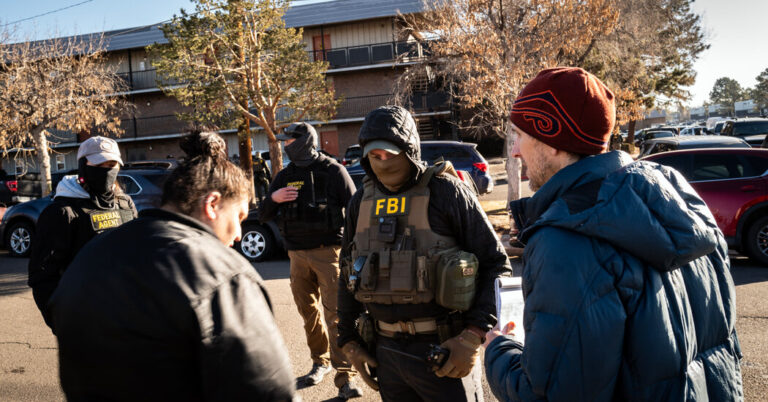
The Trump administration sued Colorado and Denver on Friday, accusing the state, city and their leaders of impeding federal immigration actions, the latest salvo in the White House’s fight to compel local governments to help carry out deportations.
The lawsuit, which was filed in federal court in Colorado and includes Gov. Jared Polis and Mayor Mike Johnston of Denver as defendants, specifically challenges state and city laws that restrict or prohibit cooperation with federal agencies.
One state law prohibits officers from holding someone solely on the basis of a civil immigration detainer, a request that a detainee not be released. Other state laws prevent state and local officials from sharing information with federal immigration authorities and stop local jails from working with the federal government to house people detained for civil immigration violations.
The lawsuit also challenges a Denver measure that bans the use of city resources to assist with immigration enforcement, and a 2017 executive order from the mayor that aimed to “establish Denver as a safe and welcoming city for all.”
The lawsuit asks the court to rule the laws unconstitutional and prohibit their enforcement.
“This is a suit to put an end to those disastrous policies and restore the supremacy of federal immigration law,” the lawsuit said.
Many liberal-leaning states and cities have laws that keep local police departments mostly removed from immigration enforcement activity, as a way to build trust with immigrant communities. Democratic officials in several cities say that the policies help immigrants feel comfortable reporting crimes and interacting with health departments and schools.
But the White House and other Republican officials say laws like these, in so-called sanctuary cities, give a safe haven to criminals and endanger residents.
In a statement, the office of Mr. Polis, a Democrat, said that Colorado was not a sanctuary state and that it worked regularly with local, state and federal law enforcement.
“If the courts say that any Colorado law is not valid, then we will follow the ruling,” the statement said.
Mr. Johnston, also a Democrat, said in an interview that his city already works with federal immigration authorities by honoring requests to notify Immigration and Customs Enforcement if what the agency calls a “removable alien” is about to be released from custody.
At the same time, Mr. Johnston said, he believes locations like hospitals, schools and courthouses must be off limits for immigration enforcement.
“What we know is we do not have thousands of undocumented individuals here with violent criminal histories,” Mr. Johnston said. “That’s the myth that’s been told.”
According to a survey last summer, overall public support for immigration to the United States decreased under the Biden administration. Some state and local officials are now tempering their language to describe sanctuary policies, and some have sought to loosen local measures that limit cooperation with federal officials.
But many officials from Democratic-led states and cities are also facing criticism from their supporters to push back against Mr. Trump’s hard-line policies.
The lawsuit against Colorado officials is similar to one the administration filed against Illinois and Chicago in February, and one against the city of Rochester, N.Y., filed last month. Both lawsuits are ongoing.
Litigation is only one part of the Trump administration’s broader effort to make states and local law enforcement do more to assist with deportation plans. The administration has sought to block funding from cities and counties that don’t cooperate.
On Monday, President Trump signed an executive order directing Pam Bondi, the attorney general, and Kristi Noem, the secretary of homeland security, to publish a list of state and local jurisdictions that the administration considers sanctuary cities. It calls for pursuing “all necessary legal remedies and enforcement measures” against them.
In Wisconsin, a memo instructing state workers to call a state lawyer if an ICE agent or federal official visits their workplace led to a sharp warning this week from the president’s border czar, Tom Homan.
“Wait to see what’s coming,” Mr. Homan said in response to a reporter’s question about the memo.
Gov. Tony Evers said he interpreted the comment as “chilling threats” that raised the possibility that elected officials could be arrested.
Last month, F.B.I. agents arrested a Milwaukee judge on charges of obstructing justice, with authorities saying she had directed an undocumented immigrant out of her courtroom through a side door while federal immigration agents waited in a hallway to arrest him. The judge’s legal team has vowed to contest the charges.
The Colorado lawsuit comes shortly after more than 100 people that federal agents said were undocumented immigrants were arrested in a raid of a Colorado Springs nightclub, according to the Drug Enforcement Administration. About 50 of the city’s police officers assisted federal agents.
That city’s mayor, himself an immigrant from Nigeria, told The New York Times that he supported the arrests.
“This immigrant mayor says, if you’re here illegally and you’re committing a crime, there should be consequences,” said Mayor Yemi Mobolade, a political independent. “You should be deported.”
Mr. Trump also has long vilified another Colorado city, Aurora, as overrun by the Venezuelan street gang, Tren de Aragua. The sprawling suburb east of Denver was a touchstone for Mr. Trump on the campaign trail, and shortly after his inauguration, federal agents raided dilapidated apartment complexes there where immigrants had lived without working plumbing or heat. ICE wouldn’t say how many people were arrested in that raid, or if it had detained any gang members.
The lawsuit filed Friday once again invoked Aurora, claiming Tren de Aragua seized control of apartment buildings in that city as “the direct byproduct of the sanctuary policies pushed by the State of Colorado.”
Aurora officials have said those claims are highly exaggerated.
Reporting was contributed by Jack Healy, Julie Bosman, Mitch Smith, Hamed Aleaziz, Tim Arango and Ernesto Londoño.
Miami GP: Mercedes boss Toto Wolff slams Red Bull for ‘total lack of judgement’ that caused Max Verstappen-Kimi Antonelli collision | F1 News
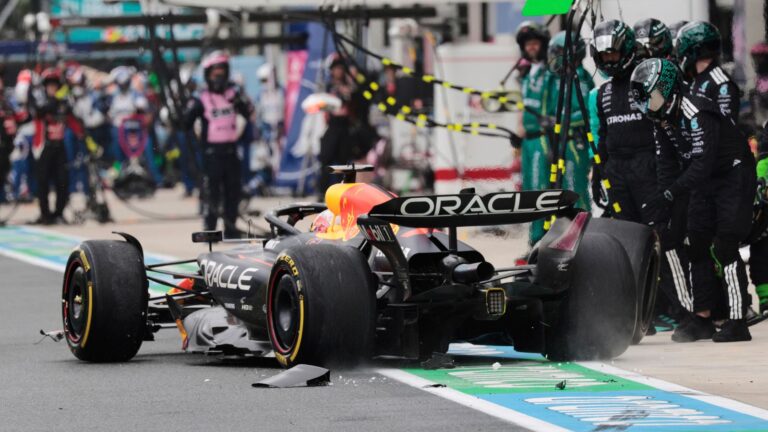
Mercedes boss Toto Wolff has criticised Red Bull for showing “a total lack of judgement” in causing a dangerous pit-lane collision between Kimi Antonelli and Max Verstappen during the Miami Grand Prix Sprint.
Verstappen and Antonelli were running in third and fourth, respectively, when they both pitted at the end of lap 12 to swap their intermediate tyres for slicks on the drying circuit.
With Verstappen running several seconds ahead of Antonelli on track, the Iatter was approaching his Mercedes pit box, which sits directly in front of Red Bull’s, as the former’s stop was coming to an end.
Red Bull released Verstappen just as Antonelli was turning to come into his stop, causing the cars to make brief contact, before Antonelli showed superb reactions and judgement to turn back out into the pit lane and avoid a potentially nasty collision with his waiting pit crew.
Verstappen, who was personally not at fault for the incident, received a 10-second penalty which demoted him out of a points-scoring positions, while Antonelli had to pit again a lap later and also finished outside of the points.

Mercedes Team Principal Toto Wolff shares his thoughts on the two incidents involving Kimi Antonelli at the Miami Grand Prix Sprint
Red Bull team principal Christian Horner admitted to Sky Sports F1 after the race that the unsafe release was a result of “human error”, but Wolff was left very unhappy.
“If it was the main race it would be seriously annoying,” he told Sky Sports F1.
“I was surprised by the total lack of judgement because it wasn’t even close to releasing without any security concerns.
“Somebody panicked there.”
Verstappen: We need to investigate error
The incident is the latest in a series of Red Bull pit-stop errors during the early stages of the season, with Verstappen having been hampered by a slow stop in Japan and a release-system issue in Bahrain.
The pit stop struggles are hugely uncharacteristic for Red Bull, who have long been considered the grid’s best in this department, winning the fastest pit stop award for the last seven years.
Verstappen said that the incidents were not related, but an investigation into the latest error is needed.

Max Verstappen says he felt relieved that no one was injured during their pit-stop blunder which saw the Red Bull driver released unsafely into the path of Kimi Antonelli
“They have all been different incidents [this year],” Verstappen told Sky Sports F1. “You can’t compare these things.
“We all don’t want that to happen but it happened. It’s something we need to investigate but I’m just happy no one got injured. With these cars if you hit someone, it’s not great.
“It’s super clear what happened, so there’s not much more for me to add.”
The incidents have followed the departure from Red Bull of former sporting director Jonathan Wheatley, who had overseen their pit lane operations before leaving to become Sauber team principal.

Highlights of the Sprint race from the Miami Grand Prix
Former world champion and Sky Sports F1 pundit Jenson Button believes it is taking Red Bull “too long” to adjust to Wheatley’s exit.
Button said: “It’s such a high-pressure situation. You can practice it all you want, but it’s the live pit stops where there’s so much pressure. If you lose two or three tenths that could be losing a victory. They are all under massive pressure.
“Jonathan Wheatley has been around forever. He is just set in his ways and does exactly the same every race. For someone trying to fill his shoes, it’s like filling a driver’s shoes in a new team, it takes time to adapt but it’s taking a little too long.”
Sky Sports F1’s Miami GP schedule
Saturday May 3
- 8.35pm: Miami GP Qualifying build-up*
- 9.15pm: MIAMI GP QUALIFYING*
- 11pm: Ted’s Qualifying Notebook*

The Miami Grand Prix is a unique experience, watch our favourite moments from the last few years!
Sunday May 4
- 6pm: F1 Academy Race 2
- 7.30pm: Grand Prix Sunday: Miami GP build-up*
- 9pm: THE MIAMI GRAND PRIX*
- 11pm: Chequered Flag: Miami GP reaction*
- Midnight: Ted’s Notebook
*also live on Sky Sports Main Event
Formula 1 is in Miami for a Sprint weekend, watch it all live on Sky Sports F1. Stream Sky Sports with NOW – no contract, cancel anytime
Oil Prices Are Falling. Here’s Where That Could Spell Trouble.

Oil producing countries are bracing for a bumpy ride this year, with a precipitous drop in prices to the lowest levels in four years seen as the initial, alarming sign of looming turmoil.
A price drop benefits any country seeking to cut its fuel bill. But in oil producing nations, lower prices can feed economic troubles, and sometimes political unrest, as governments slash spending.
Analysts who had already been predicting lower oil prices because of softening demand amid increased global production said the possibility of a tariff trade war and the overall climate of uncertainty could well deepen producers’ woes.
“The steep price dive and overall volatility is sending a very strong signal that the global economy is going to be rattled this year and that will translate into a lower demand for oil,” said Gregory Brew, a specialist on the geopolitics of oil and gas with the Eurasia Group, a New York-based risk analysis organization.
Wealthy producers may be able to cushion the blow
Earlier this year, the price for benchmark crude held steady around $73 a barrel, high enough to sustain the budgets of most producing nations. But some countries, like Saudi Arabia and the United Arab Emirates, base ambitious development plans on a price of at least $90 a barrel, analysts say.
Saudi Arabia and the United Arab Emirates have earmarked hundreds of billions of dollars for giant projects to try to diversify their economies away from oil. Although Saudi Arabia pays for its Vision 2030 development program outside its annual budget, the huge, futuristic city project, Neom, depends on oil revenues.
To maintain those plans amid lower prices, these richer Gulf nations either have to draw money from their gargantuan reserve funds or borrow, analysts said. Saudi Arabia, the U.A.E. and Kuwait all have easy access to international credit, and can sustain that for years with citizens unlikely to feel the effects, analysts said.
A different story for Iran and Iraq
In Iran, international sanctions have whittled its oil customers down. There’s China, but its demand for oil has slackened markedly amid an economic slowdown. And there are small independent refineries vulnerable to secondary sanctions, which the United States has imposed against two of them in recent months. To attract buyers, Iran will quite likely have to offer steep discounts, analysts said.
Iran is negotiating with Washington over the future of its nuclear program; any agreement could bring sanctions relief. But that is unlikely this year.
Iran also faces increasing pressure to cut spending by lowering its domestic energy subsidies. When it did that in 2019, antigovernment riots erupted and were put down with force. “Keeping energy prices very low is extremely important because they know that if they don’t, then they are at a relatively high risk of uprisings, riots and demonstrations,” said Homayoun Falakshahi, an analyst at the research firm Kpler.
Next door, Iraq depends on oil for an estimated 80 percent of government revenue, so a drop in price would force it to take measures like not paying public sector salaries for chunks of time, a step sure to create domestic discontent. Since the country is not under sanctions, it too can borrow internationally to cover its bills, although that is costly.
Vulnerability in Libya, Nigeria and Venezuela
Libya’s two governments each hold a different half of the country. One runs the bank that takes in oil payments from abroad and the other controls the oil fields. Any price drop would likely ratchet up tensions between the two as they jockey over the revenue, analysts said.
Nigeria’s economy remains terribly vulnerable to a drop in oil revenue, on which it depends to help subsidize energy prices. A new, almost completed private refinery could mitigate the kind of fuel supply problems that can spark political unrest.
Aside from Iran, the other global producer most exposed to price volatility is Venezuela, whose economy collapsed during the drop in prices in 2014-15. Public sector businesses and a bloated government payroll were so dependent on high oil prices that when they collapsed, analysts said, the ensuing economic problems sparked widespread protests that the government put down violently.
Help from Russia and Iran has helped leaven the potential fallout this time around, since increased production and refinery capacity mean Venezuela is unlikely to face the kind of fuel shortages that caused widespread blackouts and fueled public anger.
And then, there’s Russia
In Russia, about one third of the federal budget, predicated on about $70 a barrel for oil, comes from energy revenues. With sanctions, Russia discounts its oil by about $10 a barrel; a $60 price matches the price cap imposed in 2022 after it invaded Ukraine.
Robust oil and gas sales, especially to China and India, have helped insulate ordinary Russians from much economic fallout from the war. The Kremlin has already eaten into its reserve funds, however, and a further price drop would make paying for the war, and everything else, challenging.
Moscow probably still has enough cash reserves to muddle through, but in the short term, there could be pain, analysts said.
How to Save Time and Money at the Airport

From long lines to overpriced food and scarce seating, airports are rife with pitfalls.
For some people, said Katy Nastro, a travel expert at Going, an app for cheap flights, “airports are like travel purgatory: You’re neither here nor there.”
But technology, advance planning and a few creative strategies can help you parry airport problems.
Calculate your transit time
Your airport journey can begin as early as 24 hours before departure, when you should check in, pay checked bags fees, which will expedite bag drop, and sign up for flight notifications by text to keep up with scheduling.
Next, determine when you should leave for the airport. The rule of thumb is to arrive two hours before departure for domestic flights (three for international), allowing yourself plenty of time to check bags, get through security (especially if you don’t have expedited clearance) and board.
“The biggest challenge with airports is the variability in how long it may take to get there, and to get from curb to gate,” said Gary Leff, the author of the aviation blog View from the Wing.
Use a map app to get a sense of travel time to the airport a week or a few days before departure. Airline websites commonly include security wait times.
If you’re checking a bag, you may need to do so no less than 45 minutes before domestic departures (check your carrier for cutoff times). Add this to your transit time, along with a comfortable cushion.
Expedite security clearance
The quickest way through security is to sign up for expedited clearance.
Travelers enrolled in TSA PreCheck usually wait 10 minutes or less at security, according to the Transportation Security Administration. Membership, which costs between $76.75 and $85, depending on the enrollment provider, is good for five years.
Global Entry, which speeds travelers through customs screening when they return to the United States, includes enrollment in TSA PreCheck. It costs $120 and is good for five years.
CLEAR allows members to use its lanes in 59 airports around the country to get to the front of the security lines ($199 a year).
Fly standby on an earlier flight
If you do breeze through traffic and security, try to fly standby on an earlier flight, recommends Brian Sumers, who writes the newsletter The Airline Observer.
“Since the pandemic, free standby is back,” Mr. Sumers said, noting that even Southwest Airlines, which previously prohibited the practice, offers standby if space is available.
Bring your own food
Airports are notorious for inflated food prices. A sandwich that might cost $5 at a grocery store can easily run twice that at the airport.
So bring your own meals and snacks. Just make sure they can clear security (for instance, yogurt is considered a liquid, and containers over three ounces can be confiscated). Also, bring an empty water bottle to refill after clearing security.
If you can’t B.Y.O., Harriet Baskas, a Seattle-based author who writes the travel blog Stuck at the Airport, recommends browsing food courts and ordering appetizers or kid-size portions to keep costs down.
Pack your electrical needs
Many airports have vastly expanded the availability of electrical outlets to charge devices. But nabbing one can be competitive, and sometimes the outlets don’t work.
“I’ve merrily worked away while believing my laptop or phone was charging only to discover that the entire bank of powered chairs was unplugged,” Ms. Baskas said. “I’ve learned to check first before settling in.”
She recommends taking a multi-outlet cord so you can share a plug with other travelers.
Get around the issue with your own external battery. George Hobica, who founded the flight search engine Airfarewatchdog, takes one powerful enough to charge several devices at once.
Get some exercise
Use wait time to stretch your legs. Exercise delivers both physical and mental benefits, and long airport concourses offer convenient walking tracks.
Colleen Lanin, who writes the travel blog Colleen Travels Between and has been covering family travel for 16 years, suggests tiring the kids out with exercise before boarding.
“When my children were young, I paid them a small amount of money for each lap they ran around our backyard before we headed out, and they could spend their earnings on an item at the airport gift shop,” she said.
During layovers, she encourages parents to find a quiet area and play a game of Red Light Green Light or Simon Says.
Wait at an uncrowded gate
As long as you are monitoring the flight boarding call on an app, there’s no reason to be at a crowded gate where seats are scarce. Find a convenient unoccupied gate and wait there.
Use airport resources
Airport websites will help you find yoga rooms (San Francisco), art exhibits (Philadelphia), live music schedules (Austin-Bergstrom), outdoor terraces (Denver) or a butterfly garden (Singapore Changi).
Or ask an airport employee for recommendations.
“The folks at the information booths are usually happy to share favorite spots, and you don’t need to be a kid to ask them for crayons and a coloring book or a collectible airport trading card,” said Ms. Baskas.
Be your own rebooking agent
When a flight is delayed or canceled, passengers inevitably start lining up to talk to the gate agent. But log in while you’re waiting. With the airline’s app; you can usually get information more efficiently.
“Typically, customers will have the same access to seats on the app as agents at the desk can see,” Mr. Sumers said.
With storms or cascading delays, seat availability can be fluid.
“If you’re vigilant on the app, you may find seats that weren’t available just one minute before,” Mr. Sumers added.
Have an escape plan
You may not be able to escape an airport, especially during a delay, but you can treat yourself to a break.
Ms. Baskas keeps $30 in her wallet to buy a treat like a special dessert or a hardcover book.
“That makes me feel better at the moment and won’t show up on the credit card bill later to remind me of a stressful time,” she said.
Hikers Stumble Upon a Pile of Gold Coins, Igniting a Historical Hunt

Two hikers were strolling in the foothills of the Krkonose Mountains in the Czech Republic in early February when they noticed something shiny peeking out of a stone wall. They pulled out what turned out to be an aluminum can, looked inside and found a small fortune.
Inside was a treasure trove of 598 gold coins, neatly organized into columns and wrapped in black fabric, said Miroslav Novak, the head of the archaeological department of the Museum of Eastern Bohemia, which later took possession of the stash.
A few feet away, the hikers unearthed a second cache: a metal box containing gold items, including 16 snuffboxes, 10 bracelets, a comb, a chain with a small key and a powder compact.
The discovery of the treasure, worth as much as $680,000, has set off a search among historians and amateur sleuths to figure out who might have hidden the riches.
“What is exceptional in this case is the volume,” Dr. Novak said.
He estimated that the gold coins were worth around 7.5 million Czech Koruna, or about $340,000. The other items, if they are solid gold and not merely gold plated, could be worth another $340,000, he said.
But what was really intriguing, he said, was how recently the items were buried.
While archaeological discoveries are fairly common in the region, with many dating back to the Bronze Age or medieval times, the newest coin in this collection was from 1921, indicating that the treasure had been hidden within about the past century.
That relative recency has offered a tantalizing lead to researchers, who think they may be able to track down the owner of the treasure through archival research and solve the mystery of why it was hidden.
“It’s possible that someone might come across some information, perhaps in the newspapers of the time, that someone robbed a jewelry store or something like that, and suddenly it might lead us to a clue,” Dr. Novak said.
He said he had already received a steady stream of suggestions — and a few conspiracy theories — about who the owner might be.
Was it a soldier returning from a war? A merchant fleeing the area during conflict? Or perhaps the wealthy heiress of a nearby family?
The coins offer perhaps the best — yet most confounding — clues.
None of the money circulated in the area where it was discovered. Roughly half the coins are from Western European countries, including France and Belgium. The rest are from regions around the world, including the Balkans, the Ottoman Empire, Russia, Tunisia and other parts of Africa.
The Balkan coins have holes drilled in them, indicating that they were most likely used to adorn the headbands or necklaces that were part of folk costumes or wedding attire, Dr. Novak said.
Online, some suggested the gold could have been the collection of a guard at a prisoner-of-war camp, while others were sure it was hidden by a local dentist.
Experts at the museum and other historians have looked to the region’s tumultuous history for explanations. Bohemia, what is today western Czech Republic, witnessed huge waves of migration and forced expulsions after 1938.
Before World War II, about 120,000 Jewish people lived in Bohemia and Moravia, now eastern Czech Republic, which were occupied by Germany in 1938, according to the United States Holocaust Memorial Museum. About 26,000 Jews fled the area before 1941, and around 82,000 were later deported.
Other groups also fled during Germany’s occupation, said Martin Vesely, an associate professor of history at Jan Evangelista Purkyne University in the Czech Republic. About 200,000 people relocated, including many Czechs, he said.
After the war, in 1945, around three million Germans, seen as culpable for the war and Nazi crimes, fled or were deported from the area.
“Perhaps the person ended up in a concentration camp, or maybe it was a German who simply couldn’t return to retrieve it,” Dr. Novak said.
At the end of the war, the territory that is now the Czech Republic absorbed around 1.7 million refugees from across Europe, Dr. Vesely said, including people from Belgium, Estonia, France, Hungary, Latvia, Poland, Spain and the Balkans. Many arrived carrying all of their possessions.
“The problem is that there are a huge number of possibilities,” Dr. Vesely said. “Central Europe was swept through by a huge number of people in various directions back and forth during those years, so anything could have happened.”
The personal objects found with the coins, including the snuff boxes and compact, may be key to resolving the mystery. The stash contained a mix of items used by both men and women, and given how many items were included, may have been buried by a group rather than a single person, Dr. Vesely said.
The museum has begun to scour the items for engravings or other markings, but so far they have yielded few hints. Two of the snuff boxes, however, have yet to be opened.
“We’ll see if the last two help us in any way,” Dr. Novak said.
2000 Guineas: Ruling Court grabs Classic glory for William Buick and Charlie Appleby at Newmarket | Racing News

Ruling Court, trained by Charlie Appleby and ridden by William Buick, cane out on top in the Betfred 2000 Guineas at Newmarket.
The choice of William Buick, the son of Justify was ridden confidently by the Godolphin No 1, with Kieran Shoemark never far behind on the John and Thady Gosden-trained Craven scorer Field Of Gold, as they raced from stalls 11 and 10 respectively.
Shoemark was still motionless as Buick was urging his mount to quicken entering the dip, where Ruling Court showed a willing response to soon head the Classic field and join stablemate Shadow Of Light, who had emerged as a real danger from those who started on the far side.
Ruling Court’s stamina came to the fore as he knuckled down to fight his Dewhurst-winning stablemate in the closing stages and having beaten off that rival and Mickael Barzalona, he kept on strongly as Field Of Gold came home strongly to get within half a length of the 9-2 scorer.
Full report to follow…
Rumstar in Royal Ascot picture with Palace House win
Rumstar enjoyed the biggest success of his career with a taking performance in the Hong Kong Jockey Club World Pool Palace House Stakes at Newmarket.
Jonathan Portman’s five-year-old won the Cornwallis over track and trip as a juvenile and ended last season by scooping Listed honours at Ascot, but put himself in the picture for all the major sprinting prizes this season with victory in this Group Three event.
Sent off at 7-1 in the hands of Robert Hornby from stall one, the son of Havana Grey moved stylishly into contention approaching the final furlong and showed plenty of speed to run down Irish raider She’s Quality before asserting in the closing stages to score by a length and a quarter.

Rumstar tasted success at Newmarket
Portman said: “We’ve very much been looking forward to running him, it seems a long time since October – he’s been in fantastic form, he looks stronger this year.
“It’s great to be winning in this company. When he won at Ascot we were worried it would be too soft, I think he’s fine unless it’s too heavy. The Rowley Mile has been very kind to me, we’ve won lots of nice races here. We’ll be back whenever we can.
“I think we had him where we wanted him for today. Sprinters can improve with age and he’s definitely stronger this year, I don’t weigh them but he’s definitely heavier.”
Rumstar was cut to 25-1 from 50s for the King Charles III Stakes at Royal Ascot and that could Group One event could now be on the agenda.
Portman added: “I had to ring the owner the other day to ask permission to enter him for £4,000 or whatever it was to put him in at Royal Ascot and he still hasn’t recovered today, so hopefully now I’ve spent it we’ve probably got to go there now.
“Do I think he’s a Group One sprinter? Probably not, but with these sprinters you never know. There’ll probably be plenty from overseas, but this is where we want to be.”
They Help Companies Set Prices. Tariffs Are Making It Trickier.

We import a few raw materials for our manufactured products such as yttrium oxide, which is derived from a rare earth metal. We also import technical ceramic parts mainly produced by two exceptional suppliers from China. One immediate effect of the tariff is that we had a shipment of raw materials en route when the 145 percent tariff was imposed — so our cost has just increased dramatically.
We also have 15 to 20 transactions pending with Chinese suppliers of technical ceramic parts, and our margins will be trimmed significantly — by as much as 35 to 45 percent.
We are now factoring tariffs into any new price quotations. For example, a part we ordered in January, that cost $1.57 per unit, in April costs $2.97 because of the new tariffs. Even though we anticipated paying the January rate, we have to pay the higher April rate since it’s dependent on when the part comes in. Even with that price increase, we are trimming our own margins. Our customers will definitely have to pay higher prices going forward, but it is too early to tell whether they will accept higher prices or postpone or cancel projects.
We did receive a letter recently from a major customer stating they would not accept any price increases attributable to tariffs.
We’re also dealing with inbound shipping problems. This has to do with the end of the de minimis exemption. Many of the parts we import qualify for this exemption, but not anymore. Now, companies like FedEx are required to collect a tariff on any shipment valued at more than $1, so we think the end of de minimis is causing deliveries to be delayed. The bottom line is we’re having problems getting shipments now.
On the export side of our business, we have a major China customer that purchased approximately $60,000 worth of our goods in March, and the shipment was prepared to leave just as China said it would apply reciprocal tariffs after President Trump announced his tariffs of 145 percent on “Liberation Day.” As a result, our customer asked us to store the product, hoping that the issue will be resolved shortly. I wrote to them and said, “We’re glad to hold it, but I strongly doubt that it will be resolved shortly.”
Before this, our China business had been growing significantly. About 40 percent of our sales come from exports. I would not be surprised if our China sales now drop by 50 to 75 percent. And the hit may not be reversible because our customers in China will likely search for domestic suppliers.
The tariffs have already baked in a recession. I expect our total sales to decrease by 15 to 20 percent if a recession hits. We experienced an 18 percent decline in 2008, so we have some basis for our prediction. And this is all being brought on by an unforced error, namely the 145 percent tariffs on China and around the globe. We find that our China suppliers are extremely competent and very responsive, and we enjoy working with them. We have no plans to change our supply chain.
It’s a bit like an earthquake in the Indian Ocean. It’s not felt thousands of miles away, but the tsunami will eventually hit us, and that’s what this feels like. The tsunami is inflation and unemployment.
We’d like to know how the tariffs are affecting your business. Have you changed suppliers? Negotiated lower prices? Paused investments or hiring? Made plans to move manufacturing to the U.S.? Or have the tariffs helped your business? Please let us know what you’re doing.
Thanks for reading! We’ll see you Monday.
We’d like your feedback. Please email thoughts and suggestions to dealbook@nytimes.com.