Home Blog Page 341

US Hiring Stayed Strong Amid Early Days of Tariff Policy, Jobs Report Shows

0


The latest message from the data on the U.S. economy is simple: so far, so good, until further notice.

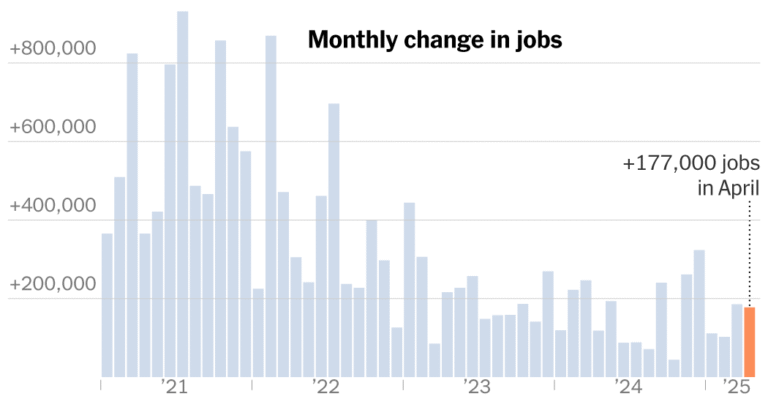
The labor market remained in a healthy state of balance as America entered a global trade war in April. U.S. employers added 177,000 jobs last month, the Labor Department reported on Friday. And the unemployment rate was unchanged at 4.2 percent.

Both numbers were based on surveys taken in the immediate wake of the Trump administration’s move in early April to institute the highest level of tariffs on imports since the 1930s, although some of those levies have been paused for 90 days. The payroll gains extended the streak of U.S. job growth to 52 months.

Data released earlier this week showed that the U.S. economy contracted in the first three months of the year. But that was largely a result of a surge in imports as firms and households bought goods to try to get ahead of the tariffs. The trajectory of trade and consumer spending going forward remains unclear.

The picture of a steady job market, even if slightly backward looking, was reassuring for investors, who have been parsing through economic data for signs of a trade-induced deterioration. The S&P 500 rallied after the release and has now erased all its losses from early April.

“What we can take away from today is that the U.S. economy has entered the trade war on strong footing,” said Rebecca Patterson, a senior fellow at the Council on Foreign Relations and former chief investment strategist at Bridgewater Associates. “But the longer tariffs are in place and the higher the tariff levels are, the greater the risk that this optimism quickly fades.”

The vast majority of analysts say the eventual effect of Mr. Trump’s high tariffs on the labor market will be fully felt only in the weeks and months to come. Still, the early impact is reverberating through currency markets, global freight patterns and corporate business plans.

Ocean container bookings from China to the United States have dropped 60 percent since early April. Several large, publicly traded companies — General Motors, Delta Air Lines and UPS, among them — have pulled their forecasts for rest of the year — something that has not happened at this scale since the pandemic shock of March 2020.

Many businesses reliant on shipments from China have halted inbound orders. Import taxes on Chinese goods, which are set at a minimum of 145 percent, are so high that in many cases the import taxes are effectively a trade embargo.

The U.S. economy is more oriented than ever around services, which constitute about 70 percent of U.S. commercial activity. Yet goods purchases still make up a major chunk of household spending, and more than 40 percent of U.S. manufacturers rely on imported parts or finished goods.

Consumer sentiment has plunged in the past few months. And forecasters at major banks have dialed up the risk of recession and higher inflation this year.

The early rollout of other Trump administration policies — including the slashing of the federal civil service and of immigration inflows — will also be felt throughout the rest of the year. Federal government employment declined by 9,000 in April and is down by 26,000 since January — not enough to pull down overall employment. But once many of these workers run out of severance, they may find themselves as job seekers in a much weaker job market.

Lower immigration will reduce labor supply and competition for jobs, which may put some downward pressure on the unemployment rate. But it may also limit job growth, especially in industries that continue to report labor shortages like care work and construction work.

Average hourly earnings growth for U.S. workers, which is up 3.8 percent over the past year, has kept up a solid pace since overtaking inflation in 2023. But a broad range of households continue to feel squeezed by the increased cost of living in recent years.

Tariffs, if kept in place, may worsen the strain.

In response to investor expectations of a trade-induced slowdown, the global price of oil has fallen. And that, in turn, has led to cheaper gasoline. But several calculations by nonpartisan institutions indicate that President Trump’s tariffs — which are essentially taxes on domestic importers — could costs American families thousands of dollars annually.

Adidas said this week that steeper tariffs would eventually lead to higher-priced sneakers and sportswear for U.S. customers. Executives at Procter & Gamble, which makes products like Bounty paper towels and Tide detergent, said last week that the company would most likely increase prices for some products to deal with the effects of higher tariffs. And officials at Hasbro recently said the toymaker would “have to raise prices.”

The Trump administration’s elimination of a loophole that allowed items worth $800 or less from China to enter the United States without import fees may lead to the most immediately visible impact for customers doing summer shopping online.

There are fears that inflation, which is currently a tame 2.4 percent on a yearly basis, may rise again because of the trade war, even as growth slows. That could put the Federal Reserve, which is responsible for preserving employment and managing inflation, in a tricky position. If the labor market slows and prices rise, the Fed may find its two goals in tension.

These fears and gyrations are a major shift from the state of play in February, when much of Wall Street and top business leaders in Corporate America expected interest rate cuts, tax cuts, deregulation and more precisely calculated tariffs to extend the bull market that America has been experiencing in the past three years.

For businesses looking to adapt to whatever this new unfolding reality may bring, “forecasting the degree of deterioration requires both humility and agility,” said Daleep Singh, head of global macroeconomic research at PIMCO, and a deputy national security adviser during the Biden administration. “The list of uncertainties is long and growing.”

At the moment, the business community is hanging on every word from top Trump officials, who have been openly hinting that the White House is nearing a “framework” for new trade deals with different nations, though they have not yet announced any actual deals.

Most executives expect that, as trade negotiations go on, Mr. Trump “will continue to pivot and declare victories in order to truncate the worst outcomes,” Mr. Singh said. “But the reversals may be too late.”

In the same way that a pullback on trade has lagged effects, the potential resuscitation of more normal relations may also take several months to be felt — with a major slowdown of investment and hiring by U.S. businesses in the meantime.

And there is little guarantee that America will preserve or improve upon previous trade arrangements. European, Asian and Latin American allies of the United States are already in talks to create trade lines less subject to the volatility of American hegemony.

Nevertheless, the U.S. dollar remains the most dominant currency in world trade, and the spending power of American consumers is still unmatched. And those starting points do offer the Trump administration substantial buffers as officials jockey to reshape the global order.

U.S. company balance sheets are healthy overall. And U.S. households are also in historically solid shape overall, despite disparities. Two-thirds of U.S. households are homeowners, and most of them still have relatively low-rate, fixed mortgages. Credit card companies, such as Visa, are reporting that despite the negative national mood, consumers continue to spend in seemingly confident fashion as summer beckons.

That has left some analysts skeptical that the economy is anywhere near recession.

“If all the China tariffs remain in place, we may start hearing signs of stress in some impacted pockets of the economy by Memorial Day, but even that likely seems too soon,” says Peter Williams, managing director of macroeconomic research at 22V Research, an investment strategy and quantitative analysis firm.

The threat, of course, is that those pockets of weakness may metastasize.

Alan Bass and his family run a trade-exposed business, Stevens International, a wholesale distributor based in Magnolia, N.J., serving over 1,000 hobby and game shops.

“What we’re doing is we’re bringing things in from around the world that are not readily available in the U.S., and then offering them to retailers and consumers,” Mr. Bass, 35, said.

They carry more than 40,000 items — toys, paints, arts and crafts supplies and niche plastic model kits — and most of their 300 or so suppliers are from abroad, many of them from China.

The sky-high tariffs are such a shock to their business that they have halted all orders from China and paused hiring. Mr. Bass plans on placing recent orders, currently out at sea, in “bonded” warehouses — places where importers pay a fee to have their shipped goods temporarily stored onshore without having to pay customs duties.

His broader plan, and hope, is that the trade war blows over by the end of summer.

“A good chunk of who we buy from are just foreign companies whose products are not available here,” Mr. Bass said. “It’s not someone who has outsourced their work. It’s just someone that’s not an American company.”

Madeleine Ngo contributed reporting.



Source link

Google Plans to Roll Out Gemini A.I. Chatbot to Children Under 13


Google plans to roll out its Gemini artificial intelligence chatbot next week for children under 13 who have parent-managed Google accounts, as tech companies vie to attract young users with A.I. products.

“Gemini Apps will soon be available for your child,” the company said in an email this week to the parent of an 8-year-old. “That means your child will be able to use Gemini” to ask questions, get homework help and make up stories.

The chatbot will be available to children whose parents use Family Link, a Google service that enables families to set up Gmail and opt into services like YouTube for their child. To sign up for a child account, parents provide the tech company with personal data like their child’s name and birth date.

Gemini has specific guardrails for younger users to hinder the chatbot from producing certain unsafe content, said Karl Ryan, a Google spokesman. When a child with a Family Link account uses Gemini, he added, the company will not use that data to train its A.I.

Introducing Gemini for children could accelerate the use of chatbots among a vulnerable population as schools, colleges, companies and others grapple with the effects of popular generative A.I. technologies. Trained on huge amounts of data, these systems can produce humanlike text and realistic-looking images and videos.

Google and other A.I. chatbot developers are locked in a fierce competition to capture young users. President Trump recently urged schools to adopt the tools for teaching and learning. Millions of teenagers are already using chatbots as study aids, writing coaches and virtual companions. Children’s groups warn the chatbots could pose serious risks to child safety. The bots also sometimes make stuff up.

UNICEF, the United Nation’s children’s agency, and other children’s groups have noted that the A.I. systems could confuse, misinform and manipulate young children who may have difficulty understanding that the chatbots are not human.

“Generative A.I. has produced dangerous content,” UNICEF’s global research office said in a post on A.I. risks and opportunities for children.

Google acknowledged some risks in its email to families this week, alerting parents that “Gemini can make mistakes” and suggesting they “help your child think critically” about the chatbot.

The email also recommended parents teach their child how to fact-check Gemini’s answers. And the company suggested parents remind their child that “Gemini isn’t human” and “not to enter sensitive or personal info in Gemini.”

Despite the company’s efforts to filter inappropriate material, the email added, children “may encounter content you don’t want them to see.”

A Google email to parents this week warned about the risks of Gemini for children.

Over the years, tech giants have developed a variety of products, features and safeguards for teens and children. In 2015, Google introduced YouTube Kids, a stand-alone video app for children that is popular among families with toddlers.

Other efforts to attract children online have prompted concerns from government officials and children’s advocates. In 2021, Meta halted plans to introduce an Instagram Kids service — a version of its Instagram app intended for those under the age of 13 — after the attorneys general of several dozen states sent a letter to the company saying the firm had “historically failed to protect the welfare of children on its platforms.”

Some prominent tech companies — including Google, Amazon and Microsoft — have also paid multimillion-dollar fines to settle government complaints that they violated the Children’s Online Privacy Protection Act. That federal law requires online services aimed at children to obtain a parent’s permission before collecting personal information, like a home address or a selfie, from a child under 13.

Under the Gemini rollout, children with family-managed Google accounts would initially be able to access the chatbot on their own. But the company said it would alert parents and that parents could then manage their child’s chatbot settings, “including turning access off.”

“Your child will be able to access Gemini Apps soon,” the company’s email to parents said. “We’ll also let you know when your child accesses Gemini for the first time.”

Mr. Ryan, the Google spokesman, said the approach to providing Gemini for young users complied with the federal children’s online privacy law.


Source link

Waltz’s Use of Messaging Platform Raises New Security Questions


Michael Waltz got himself in trouble with the White House when, as national security adviser, he inadvertently added a journalist to a sensitive chat on Signal, a commercial messaging app.

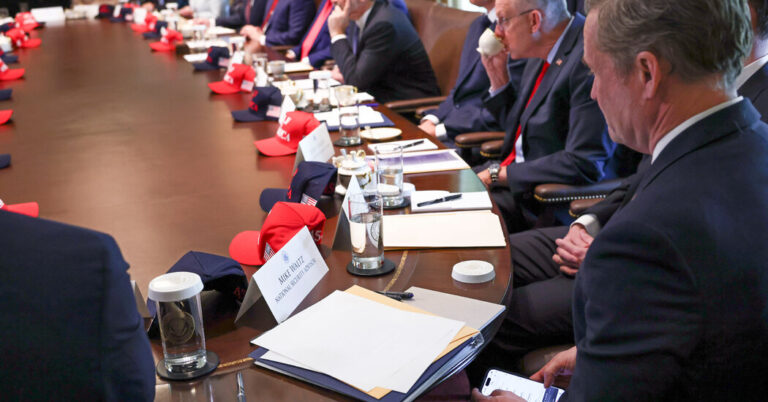
Now, as he leaves that job, he has raised a new set of questions about White House use of the encrypted app. A photograph of him looking at his phone on Wednesday during a cabinet meeting makes it clear that he is communicating with his colleagues — including the secretary of state and the director of national intelligence — using a platform originally designed by an Israeli company that collects and stores Signal messages.

This discovery of the new system came when a Reuters photographer, standing just over Mr. Waltz’s left shoulder, snapped a photo of him checking his phone.

He was not using a privacy screen, and when zoomed in, the photo shows a list of messages and calls from several senior officials, including Vice President JD Vance and Steve Witkoff, the special envoy who is negotiating on three fronts: the Israel-Hamas talks, the increasingly tense dance with Vladimir V. Putin about Ukraine and the Iran nuclear talks. Secretary of State Marco Rubio and Tulsi Gabbard, the director of national intelligence, are also on his chat list.

While the app that Mr. Waltz was seen using on Wednesday looks similar to Signal, it is actually a different platform from a company that advertises it as a way to archive messages for record-keeping purposes. That is critical, because one concern that came up when senior officials were using the app was whether it complied with federal record-keeping rules.

One of Signal’s benefits is that it is both encrypted and can be set to automatically delete messages. But while that is a feature for users seeking secure communications, it is a problem for the National Archives, as it seeks to retain records.

It is not clear if Mr. Waltz began using the alternative app when he became national security adviser or after a nonprofit watchdog group, American Oversight, sued the government for failing to comply with records laws by using Signal.

While the real version of Signal gets constant security updates and messages are kept encrypted until they reach a user’s phone, security experts question how secure the alternative app is.

“This is incredibly dumb,” said Senator Ron Wyden, the Oregon Democrat who is a longtime member of the Senate Intelligence Committee. “The government has no reason to use a counterfeit Signal knockoff that raises obvious counterintelligence concerns.”

Cybersecurity experts said the platform that Mr. Waltz was using is known as TeleMessage, which retains copies of messages, a way of complying with the government rules. The screen in the photograph shows a request for him to verify his “TM SGNL PIN.” Time stamps indicate that the communications were as recent as the morning of the cabinet meeting.

TeleMessage, founded in Israel, was purchased last year by Smarsh, a company based in Portland, Ore.

The TeleMessage platform accepts messages sent through Signal, and captures and archives them.

Security experts said the use of the TeleMessage raised a number of questions. Some said it appeared that the company had in the past routed information through Israel, which is renowned for its electronic spying skills.

But a Smarsh representative said data from American clients did not leave the United States. Tom Padgett, the president of Smarsh’s enterprise business, said the collected information was not routed through any mechanism that “could potentially violate our data residency commitments to our customers.”

Mr. Padgett also said the information was not decrypted while being collected for record-keeping purposes or moved to its final archive. Security experts said that whenever information is de-encrypted, security vulnerabilities could be introduced. “We do not de-encrypt,” Mr. Padgett said.

Smarsh representatives took issue with the idea that their platform was a modified version of the Signal app. They said their platform simply allowed financial institutions and governments to capture communications on various channels to comply with record-keeping regulations.

But cybersecurity officials said questions remained about how the TeleMessage platform worked, and what vulnerabilities it could introduce into Signal communications.

Signal is built on open-source code, which allows other organizations to make their own version that uses the same encryption. But Signal Messenger, the company that makes and controls the app, does not support alternative versions and actively tries to discourage their use.

Mr. Waltz’s use of TeleMessage was reported earlier by the publication 404 Media. According to the publication, the U.S. government contracted with TeleMessage in December 2024 to archive Signal and WhatsApp messages. Smarsh representatives said they have worked with the federal government for a decade but declined to discuss specific contracts.

It is not clear if the U.S. government audited TeleMessage to determine how it handles the messages and whether it might break or damage the end-to-end security of Signal. Representatives of the National Security Council staff did not immediately respond to requests for comment. Smarsh representative said they allowed security audits.

Mr. Wyden said the U.S. government and the Navy had developed secure communications tools that comply with record-keeping rules. Using the modified version of Signal is far less secure, he said.

“Trump and his national security team might as well post American battle plans on X at this rate,” Mr. Wyden said.

In response to reports of the photo, Steven Cheung, the White House communications director, said in a social media post that “Signal is an approved app that is loaded onto our government phones.”

As part of the lawsuit filed by American Oversight, government officials have submitted statements saying that the Signal messages from the chat Mr. Waltz created to discuss strikes on the Houthi militia in Yemen are no longer retrievable.

Chioma Chukwu, the interim executive director of American Oversight, said she had concerns about the use of the modified app.

“The use of a modified Signal app may suggest an attempt to appear compliant with federal record-keeping laws, but it actually underscores a dangerous reliance on unofficial tools that threaten national security and put our service members at risk,” she said. “Americans have a right to transparency and to know their leaders are following the law, not hiding behind unauthorized workarounds.”


Source link

U.S. Job Growth Remained Strong in April

0


A solid labor market has for months given the Federal Reserve comfort that it could hold off on interest rate cuts until it had more clarity about how President Trump’s policies would impact the economy. New data released on Friday reinforced that patient approach.

Officials at the central bank are widely expected to keep interest rates steady when they announce their next decision on May 7. After lowering interest rates by a percentage point last year, the Fed has since January opted against making additional reductions. That has left interest rates at a range of 4.25 percent to 4.5 percent.

Until this point, officials have felt little urgency to lower interest rates because the economy so far has stayed on solid footing. Mr. Trump’s attempts to reset global trade relations through steep tariffs now risk upending that.

Despite the president’s decision in April to temporarily pause more stringent levies from taking effect on nearly all of the country’s trading partners, businesses have struggled to navigate the uncertainty. Many have shelved big investments and slowed hiring, and some are already raising prices. Surveys suggest that consumers also have turned much more downbeat about the outlook, fueling concern that this pessimism will eventually translate to less spending.

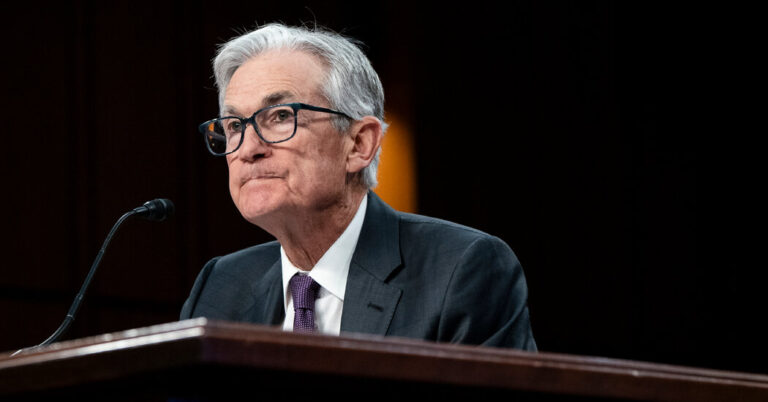
The fear is that consumers will cut back so aggressively that businesses will be forced to lay off workers, worsening the economic slowdown. Jerome H. Powell, the chair of the central bank, has warned that in addition to denting growth, tariffs of the nature Mr. Trump is pursuing also risk stoking inflation.

That combination risks putting the Fed in a bind and further in the cross hairs of Mr. Trump. The president has in recent weeks stepped up his attacks on Mr. Powell, railing on the Fed chair to lower interest rates. On Friday, he again renewed that pressures, writing in a social media post: “NO INFLATION, THE FED SHOULD LOWER ITS RATE!!!”

The central bank is responsible for fostering low, stable inflation as well as a healthy labor market. Officials are now having to game out what they would do if their goals for the economy come into tension with one another.

The latest jobs report, which showed better-than-expected monthly payrolls growth and a steady unemployment rate, is welcome news for officials. It follows inflation data earlier this week that confirmed that in March, price pressures stayed somewhat subdued even as it remained above the Fed’s 2 percent target.

Officials are now debating whether the forthcoming surge in consumer prices will just be a temporary adjustment that fades over time, or if it will lead to persistently higher inflation.

Having just grappled with surging inflation in the aftermath of the pandemic, the Fed has stressed the importance of ensuring that tariff-related price pressures do not mushroom into a bigger problem. Last month, Mr. Powell said that containing inflation was crucial to fostering a healthy labor market.

“Without price stability, we cannot achieve the long periods of strong labor market conditions that benefit all Americans,” he said at an event at the Economic Club of Chicago.

That emphasis suggests there is a high bar for the Fed to restart interest rate cuts. Officials will need to see clear evidence that the economy is weakening before taking action, something that could take time.

Christopher J. Waller, a governor, said in a recent interview that he did not expect tariffs to impact the economy in a significant way before July, suggesting no near-term cuts.

Preston Mui, a senior economist at research and advocacy group Employ America, said he expects the labor market to gradually slow over the next couple of months rather than sharply collapse.

“When it gets sharp is when you have these big spikes in layoffs,” he said. That will depend on what Mr. Trump does with tariffs. If the president reverses course by the self-imposed 90-day deadline in early July, the labor market may avoid a more painful hit. If tariffs remain in place, or the uncertainty around trade policy lingers, the damage could start to mount.

After Friday’s report, traders in federal funds futures markets scaled back their expectations for interest rate cuts from the central bank this year. They see much lower odds of a June reduction but continue to forecast a quarter-point cut in July. Over the course of the year, they see the Fed cutting at least three times.


Source link

Justice Dept. Lawyers Say US Wants to Break up Google’s Ad Technology


The Justice Department laid out its road map on Friday to break up Google’s advertising technology empire, which would be the second request to force the company to sell pieces of its business within a year that could fundamentally alter the $2 trillion company.

The government’s comments came during a hearing convened by Judge Leonie M. Brinkema of the U.S. District Court for the Eastern District of Virginia, who ruled last month that Google had a monopoly over some portions of a sprawling system that places ads on websites. She now has to decide what measures, known as remedies, she should take to resolve her concerns.

A lawyer for the Justice Department said the government expected to ask the court to force Google to divest tools used by online publishers to sell ad space, as well as the technology that connects those publishers with advertisers looking to buy space. In the original lawsuit, the government had asked the court to force Google to sell ad technology it had acquired over the years.

To leave Google with “90 percent of publishers beholden to them is, frankly, too dangerous,” said Julia Tarver Wood, the government’s lead lawyer in the case.

Google’s lawyers said a breakup wouldn’t align with earlier legal precedent and would imperil privacy and security protections.

The Justice Department’s request is the latest legal blow to Google, which is also in the midst of a second hearing on how to remedy its monopoly over search in a federal court in Washington. In that case, the government has asked a judge to force the company to sell its popular browser, Chrome, along with other measures.

Combined, the two government requests — if granted — would likely represent the biggest reshaping of a powerful company by the federal government since the 1980s, when AT&T split into multiple companies as part of an antitrust settlement with the Justice Department.

It remains to be seen if the judges will force a breakup, viewed among antitrust experts as the most extreme solution.

In the ad tech case, which was filed in 2023, government lawyers argued that Google had dominated the mostly invisible technology that delivers ads to websites around the internet. That system runs an auction for open ad space on a website, like a news publisher’s, in real time as the page loads.

The government argued that Google had illegally monopolized three parts of that system: tools that websites used to post their open ad space, tools used by advertisers to purchase it and the software that connected the two sides of each transaction.

Judge Brinkema ruled last month that Google had broken the law to protect its monopoly over the publisher tools and the software that connects buyers with sellers of ad space, known as an ad exchange. The government did not prove Google was a monopolist when it came to the tools used by advertisers, she added.

At Friday’s hearing, Judge Brinkema said she would convene a hearing to determine the remedies in September.

To resolve its concerns, the Justice Department said it planned to ask the judge to force Google to sell its ad exchange, which facilitates transactions between buyers and sellers of ad space.

The government will also look to make the code from Google’s publisher ad tools that run auctions for ad space available to publishers and other ad tech companies. Later, the government wants Google to sell the tools that handle other functions for publishers, like record keeping.

Google’s lead lawyer, Karen Dunn, said the plan would not comply with legal precedent. Even if the court seriously considered breaking up Google’s ad technology business, the government’s proposal would be challenging, she added.

Few buyers would exist for the technology, and the ones that could afford it are “enormous tech companies,” Ms. Dunn added. Plus, important security and privacy protections provided by Google would disappear.

“It is very likely completely impossible, what they’re talking about,” she said, without causing serious problems.

Google has instead proposed that the court require the company to change or abandon some of the practices the government said it used to cement its power, and said it would take steps to open up its ad auction bidding system in ways that would benefit publishers.


Source link

Reform UK Surges as Conservatives Lose Seats: 4 Local Elections Takeaways


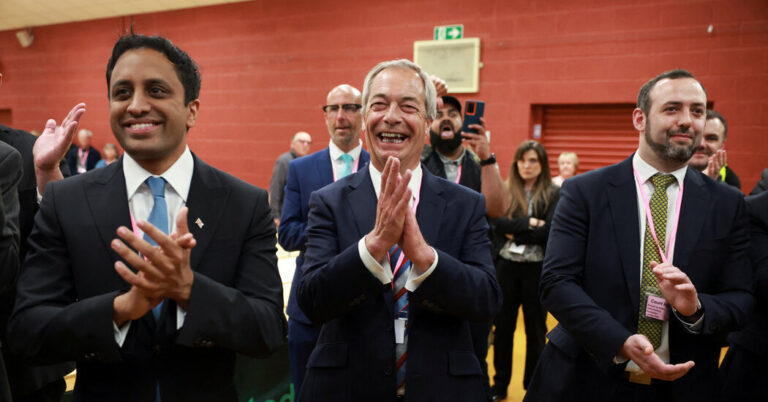
Nigel Farage’s Reform U.K. party has emerged as the biggest winner of the first major polls since Labour swept into government last summer.

Voters have been selecting councilors for about 1,600 municipal seats in 23 areas, as well as six regional mayors.

Here are four takeaways from a night that saw Britain’s two major political parties suffer significant losses.

The right-wing populist party headed by Mr. Farage won a special election in Runcorn and Helsby, in northwestern England, meaning it now has five lawmakers in Parliament. The party also won two mayoralties: in Greater Lincolnshire, and in Hull and East Yorkshire. It also gained control of several local authorities and won hundreds of municipal seats.

The party was initially called the Brexit Party but rebranded itself after Britain formally withdrew from the European Union.

Results on Friday indicated that Reform’s efforts to shed its image as a single-issue party were bearing fruit. Brexit is now rarely discussed by its politicians, who have been focusing on a hard line on immigration.

Reform contested its highest number of seats ever in the local elections, after a series of regional political rallies where attendees were urged to sign up as candidates and were rapidly vetted using artificial intelligence.

Mr. Farage seems to have learned from President Trump about campaign strategy by holding events attended by thousands of people in recent months.

While Reform was the biggest winner, the Conservatives and Labour were the biggest losers. The two parties, who have dominated British politics for decades, lost municipal seats not just to Reform but also to the centrist Liberal Democrats and the left-wing Green Party.

At least eight of 23 local authorities contested were left without one party winning a majority of seats, leaving political control there uncertain.

Luke Tryl, executive director of More In Common U.K., a political research group, said the results reflected many voters’ “total disillusionment.”

“In our focus groups, there is just this real sense that the status quo isn’t working for anyone,” he said. “If you look at British politics since Brexit it’s been the public pressing the button saying, ‘We want change’. They don’t feel they’ve got it, and the result of that is that politics is splintering away from the typical mainstream.”

Mr. Tryl said that for many voters he had interviewed, choosing Reform was a “roll of the dice” because of deep unhappiness with the last Conservative government and with Labour’s performance so far.

Turnout was low. Only 46 percent of eligible voters took part in the Runcorn special election and 30 percent in the race for the Greater Lincolnshire mayor.

While the governing party lost several major races and council seats, there were some silver linings for Prime Minister Keir Starmer.

The Runcorn special election was lost to Reform by just six votes, while Labour retained three mayoral positions in Doncaster, North Tyneside and the West of England.

The results appeared to continue an international trend of incumbent governments being punished in the polls.

Akash Paun, program director for the Institute for Government research institute, said local elections had long been a “vehicle for protest voting.”

“Even less than a year into the Labour government, it’s quite obvious that there is a lot of dissatisfaction and frustration,” he said. “There was no lengthy honeymoon that new prime ministers seem to expect.”

Mr. Paun noted that while last year’s general election was hailed as a “Labour landslide,” the party received only 34 percent of the national vote.

“There wasn’t a huge wave of support in the first place,” he said.

Less than a year after losing a record 251 parliamentary seats at the general election, the party lost more than 500 municipal seats and won just one of six mayoral races.

Attacked by Reform to the right and the Liberal Democrats to the left, the Tories are facing what some experts describe as an existential crisis.

Patrick English, director of political analytics at YouGov, a polling company, said the Conservatives could take limited comfort from the fact that they were defending local elections from a “very high-water mark” set in 2021, when the party was buoyed by a wave of support for Boris Johnson’s response to the Covid pandemic.

But, he added, “The context in English local elections is that if you’re the opposition, you should be doing well and you should be winning. But the Conservatives aren’t doing well because they’re fighting for their political life on the right with the threat from Reform.”

The Tories’ current leader, Kemi Badenoch, is not popular, but there is no obvious successor, and party officials fear a fresh round of infighting.

The Conservative parliamentary group has shrunk so significantly that party bosses have raised the threshold for provoking a confidence vote in the leader, so Ms. Badenoch may remain in post for a while.


Source link

U.S. and China Dig In on Trade War, With No Plans for Formal Talks

0


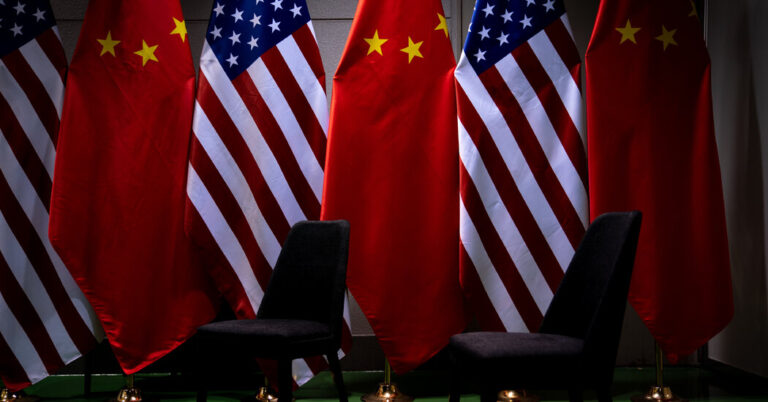
As trade tensions flared between the world’s largest economies, communication between the United States and China has been so shaky that the two superpowers cannot even agree on whether they are talking at all.

At a White House economic briefing this week, Treasury Secretary Scott Bessent demurred multiple times when pressed about President Trump’s recent claim that President Xi Jinping of China had called him. Although top economic officials might usually be aware of such high-level talks, Mr. Bessent insisted that he was not logging the president’s calls.

“I have a lot of jobs around the White House; running the switchboard isn’t one of them,” Mr. Bessent joked.

But the apparent silence between the United States and China is a serious matter for the global economy.

Markets are fixated on the mystery of whether back-channel discussions are taking place. Although the two countries have not severed all ties, it does seem that they have gone dark when it comes to conversations about tariffs.

“China and the U.S. have not held consultations or negotiations on the issue of tariffs,” Guo Jiakun, a spokesman for China’s foreign ministry, said at a news conference last Friday. “The United States should not confuse the public.”

However, China’s Commerce Ministry said this Friday that it was now considering holding talks with the Trump administration after repeated attempts by senior U.S. officials to start negotiations. White House and Treasury Department officials did not respond to requests for comment about whether such outreach had occurred.

The standoff over when and whether Washington and Beijing will hold economic talks comes as the Trump administration is scrambling to reach trade deals with dozens of countries that could soon face high tariffs. On April 2, Mr. Trump imposed what he calls “reciprocal” tariffs on countries that he believes have unfair trade and other economic barriers. Those levies, which sent global financial markets plunging, were paused for 90 days to give countries time to reach agreements with the United States.

China, which reached a largely unfulfilled trade pact with Mr. Trump during his first term, has indicated that it has little interest in talking about a new agreement until the United States rolls back what it views as a barrage of aggressive and unfair trade measures.

Mr. Trump increased tariffs on Chinese imports to a minimum of 145 percent last month, in a bid to force China into trade negotiations. Chinese officials responded by issuing their own tariffs on American products and clamping down on exports to the United States of minerals and magnets that are necessary for many industries.

The economic toll of the tit for tat is starting to become clear. The International Monetary Fund last month lowered its growth outlook for both countries and the world, warning that the tariffs had made a downturn more likely. Government data released this week showed Chinese factory activity slowing in April and first-quarter growth in the United States weakening.

During a cabinet meeting on Wednesday at the White House, Mr. Trump acknowledged that children in the United States may wind up with fewer dolls that cost more. But he insisted that he would continue to push for a “fair deal” with China, which he described as the “leading candidate for the chief ripper-offer.”

The Trump administration is focused on trade deals with about 18 of America’s most important trading partners that are subject to the reciprocal tariffs. Mr. Bessent indicated that talks with China would operate on a separate track from the other negotiations.

The Treasury secretary is expected to take the lead on the China negotiations while Howard Lutnick, the commerce secretary, oversees most of the other talks. However, Mr. Trump has not formally appointed or authorized a U.S. official to negotiate on his behalf with China, leaving Chinese officials to believe that the Trump administration is not ready or serious about trade talks.

Mr. Bessent, who had an introductory call with his Chinese counterpart in February, said that he held informal talks with Chinese officials over issues such as financial stability during the spring meetings of the International Monetary Fund and the World Bank last week. He said that they spoke about more “traditional things” but did not say that trade was discussed. The Treasury Department did not issue a summary of any meetings with Chinese officials.

In an interview with Fox News this week, Jamieson Greer, the United States trade representative, said that he met virtually for over an hour with his Chinese counterpart before April 2 but that there had been no talks since Mr. Trump announced his “Liberation Day” tariffs.

Mr. Trump has suggested that Mr. Xi should call him to begin the talks personally, noting their strong personal relationship. But that is not how China typically handles important economic matters. The United States and China traditionally work out their economic differences through a structured dialogue with formal meetings and working groups led by a top economic official from each country.

“This very personalistic approach by President Trump, who wants to negotiate directly with President Xi, doesn’t match with the Chinese system at all,” said Craig Allen, a fellow at the Asia Society Policy Institute’s Center for China Analysis. “In the Chinese system, these things are carefully negotiated in advance, they go up multiple channels and it is highly controlled and scripted, and when it gets to the leader stage it is highly choreographed.”

Mr. Allen, who until recently was the president of the U.S.-China Business Council, suggested that China was most likely mindful of the acrimonious meeting that Mr. Trump had with President Volodymyr Zelensky of Ukraine in February and that Mr. Xi would be wary of a situation that could lead to a public confrontation with Mr. Trump.

During the Biden administration, Treasury Department officials worked with China to create economic and financial working groups of midlevel staff members that were intended to prevent tensions over tariffs and export controls from spiraling out of control. Those lines of communication do not appear to be in use in the Trump administration, which tends to view them as a waste of time.

“That is exactly the kind of thing that these groups can help do — help make sure that the policy you deploy is well tailored to achieve the objective and communicates to the other side what you’re trying to achieve before it’s too late and you instead have to react to potentially unintended consequences or a message that was not intended to be transmitted,” said Brent Neiman, a University of Chicago professor who was the Treasury’s deputy under secretary for international finance during the Biden administration.

During Mr. Trump’s first term, the president initially assigned the Treasury secretary at the time, Steven T. Mnuchin, to lead trade delegations to China. He later appointed Robert E. Lighthizer, his trade representative, who was viewed as more hawkish, to oversee the talks.

Veterans of that trade war believe the current deadlock could be more protracted because the tariffs are higher and both sides believe they are winning. If U.S. growth continues to slow while prices start to rise, it could add to the urgency for Mr. Trump to get real talks with China going.

“I think at some point we have to give them a graceful off ramp,” said Wilbur Ross, who served as Mr. Trump’s commerce secretary during his first term. “Whether that is somebody from our side calling them first or whether it’s simply appointing who will be our main representative — it may be at some point we need to make a symbolic gesture.

Michael Pillsbury, a top China adviser to Mr. Trump during his first term, said Beijing was most likely waiting to see what the deals that the Trump administration reaches with other nations such as India and Japan look like before engaging directly.

“They don’t want to start the formal talks because they want to know the bottom line from others first,” said Mr. Pillsbury, who speaks to U.S. and Chinese officials.

He noted that the trade fight has become a major point of national pride for China and that it believes that Mr. Trump’s demands — which Beijing does not fully grasp — will soften as American markets gyrate and midterm elections in the United States draw closer.

“Delay is very much in their interest, and a speedy deal is very much in Trump’s interest,” Mr. Pillsbury said.


Source link

Solid Jobs Report Reinforces Fed’s Patient Approach to Interest Rate Cuts

0


A solid labor market has for months given the Federal Reserve comfort that it could hold off on interest rate cuts until it had more clarity about how President Trump’s policies would impact the economy. New data released on Friday reinforced that patient approach.

Officials at the central bank are widely expected to keep interest rates steady when they announce their next decision on May 7. After lowering interest rates by a percentage point last year, the Fed has since January opted against making additional reductions. That has left interest rates at a range of 4.25 percent to 4.5 percent.

Until this point, officials have felt little urgency to lower interest rates because the economy so far has stayed on solid footing. Mr. Trump’s attempts to reset global trade relations through steep tariffs now risk upending that.

Despite the president’s decision in April to temporarily pause more stringent levies from taking effect on nearly all of the country’s trading partners, businesses have struggled to navigate the uncertainty. Many have shelved big investments and slowed hiring, and some are already raising prices. Surveys suggest that consumers also have turned much more downbeat about the outlook, fueling concern that this pessimism will eventually translate to less spending.

The fear is that consumers will cut back so aggressively that businesses will be forced to lay off workers, worsening the economic slowdown. Jerome H. Powell, the chair of the central bank, has warned that in addition to denting growth, tariffs of the nature Mr. Trump is pursuing also risk stoking inflation.

That combination risks putting the Fed in a bind and further in the cross hairs of Mr. Trump. The president has in recent weeks stepped up his attacks on Mr. Powell, railing on the Fed chair to lower interest rates. On Friday, he again renewed that pressures, writing in a social media post: “NO INFLATION, THE FED SHOULD LOWER ITS RATE!!!”

The central bank is responsible for fostering low, stable inflation as well as a healthy labor market. Officials are now having to game out what they would do if their goals for the economy come into tension with one another.

The latest jobs report, which showed better-than-expected monthly payrolls growth and a steady unemployment rate, is welcome news for officials. It follows inflation data earlier this week that confirmed that in March, price pressures stayed somewhat subdued even as it remained above the Fed’s 2 percent target.

Officials are now debating whether the forthcoming surge in consumer prices will just be a temporary adjustment that fades over time, or if it will lead to persistently higher inflation.

Having just grappled with surging inflation in the aftermath of the pandemic, the Fed has stressed the importance of ensuring that tariff-related price pressures do not mushroom into a bigger problem. Last month, Mr. Powell said that containing inflation was crucial to fostering a healthy labor market.

“Without price stability, we cannot achieve the long periods of strong labor market conditions that benefit all Americans,” he said at an event at the Economic Club of Chicago.

That emphasis suggests there is a high bar for the Fed to restart interest rate cuts. Officials will need to see clear evidence that the economy is weakening before taking action, something that could take time.

Christopher J. Waller, a governor, said in a recent interview that he did not expect tariffs to impact the economy in a significant way before July, suggesting no near-term cuts.

Preston Mui, a senior economist at research and advocacy group Employ America, said he expects the labor market to gradually slow over the next couple of months rather than sharply collapse.

“When it gets sharp is when you have these big spikes in layoffs,” he said. That will depend on what Mr. Trump does with tariffs. If the president reverses course by the self-imposed 90-day deadline in early July, the labor market may avoid a more painful hit. If tariffs remain in place, or the uncertainty around trade policy lingers, the damage could start to mount.

After Friday’s report, traders in federal funds futures markets scaled back their expectations for interest rate cuts from the central bank this year. They see much lower odds of a June reduction but continue to forecast a quarter-point cut in July. Over the course of the year, they see the Fed cutting at least three times.


Source link

Newmarket tips: John Gosden’s Green Impact backed for glory in 2000 Guineas Classic | Racing News

0


Kate Tracey, Sam Boswell and Declan Rix return in search of winners across a massive weekend of racing on the latest episode of Weekend Winners.

On Saturday afternoon, all eyes will be on Newmarket for the first British Classic of the season – the 2000 Guineas.

Ten runners are set to go to post over the mile at Headquarters, with Field Of Gold well-fancied early in the market for the John Gosden and Juddmonte combination.

Kate Tracey…

“I feel like this price about Field Of Gold will divide people. It’s unoriginal, but he is the horse to beat, so I think why deviate from that? The only English Classic that the great John Gosden is yet to win is the 2000 Guineas, whereas he’s farmed races like the St Leger in the past. The Craven win is the reason you want to side with him, he was so impressive over the likes of Wimbledon Hawkeye.

Field Of Gold runs out an impressive winner of the Craven Stakes at Newmarket
Image:
Field Of Gold ran out an impressive winner of the Craven Stakes at Newmarket

“He travelled oh so well throughout the race and then pulled way inside the final furlong. It wasn’t that well run a contest so he had to come from further back, continuing to change his course of direction throughout – although he was getting plenty of cover from the wind that day. He is a big horse who appears to have grown into his frame and is likely to go on improving.”

Sam Boswell…

“You wonder if Jessica Harrington’s Green Impact has been overlooked. She shouldn’t be, given she’s incredibly capable as a trainer. I’m a bit surprised there hasn’t been more talk in the lead-up about this horse. For all Field Of Gold was very impressive last time out, you have to remember John Gosden’s record in the race – not to say that’s a reason Field Of Gold can’t win – and Craven winners have a two-out-of-50 success rate in the 2000 Guineas.

“At 16/1, I’ll definitely be having an each-way play on Green Impact. I also thought Wimbledon Hawkeye was a big price as well but hopefully plenty of the horses here take a step forward.”

Declan Rix…

“Field Of Gold is absolutely the right favourite – I thought he was sensational in the Craven. I did notice he has a crossed noseband on him now which maybe gives Kieran Shoemark a little more control, given he’s always been a strong traveller. The way he carried Kieran through the race was so impressive but we haven’t got the biggest of fields [for this 2000 Guineas] and I think six of the runners are making their seasonal debuts and they’re all horses to the fore in the market. There’s plenty of unknowns, maybe just enough to steer away from him at 7/4.

“I just think Green Impact is interesting, both physically and on pedigree. Jessie Harrington described him as a “big, lanky teenager” in the build-up to this race and he’s really filled out over the winter. He’s progressed and I just thought he was a thoroughly likeable professional, a really mentally mature horse. The form when he won the KPMG Champions Juvenile has worked out and I thought it was a good performance on the clock as well. He could ideally be a 10-furlong horse in time but I think he’s deceptively quick and classy. He’ll be nice and prominent – a ride I like at Newmarket – and if the vibes about him are right he should be shorter than 16s.

Watch Weekend Winners in full on the At The Races YouTube channel…


Source link

Live Updates: Trump to Unveil 2026 Budget Proposal, Seeking Substantial Cuts Across Government

0


The Trump administration, which has made clear that it aims to slash government spending, is preparing to unveil a budget proposal as soon as next week that includes draconian cuts that would entirely eliminate some federal programs and fray the nation’s social safety net.

The proposed budget for the 2026 fiscal year would cut billions of dollars from programs that support child care, health research, education, housing assistance, community development and the elderly, according to preliminary documents reviewed by The New York Times. The proposal, which is being finalized by the White House’s Office of Management and Budget, also targets longstanding initiatives that have been prized by Democrats and that Republicans view as “woke” or wasteful spending.

Technically, the president’s blueprint is merely a formal recommendation to Congress, which must ultimately adopt any changes to spending. The full extent of President Trump’s proposed cuts for 2026 is not yet clear. Rachel Cauley, a spokeswoman for the Office of Management and Budget, said in a statement that “no final funding decisions have been made.”

But early indications suggest the budget will aim to formalize Mr. Trump’s disruptive reorganization of the federal government. That process — largely overseen by the tech billionaire Elon Musk — has frozen billions of dollars in aid, shuttered some programs and dismissed thousands of workers from their jobs, prompting numerous court challenges.

The early blueprint reflects Mr. Trump’s long-held belief that some federal antipoverty programs are unnecessary or rife with waste, fraud and abuse. And it echoes many of the ideas espoused by his budget director, Russell T. Vought, a key architect of Project 2025 who subscribes to the view that the president has expansive powers to ignore Congress and cancel spending viewed as “woke and weaponized.” He previously endorsed some of the cuts to housing, education and other programs that Mr. Trump is expected to unveil in the coming days.

The White House is expected to release the budget as soon as next week, according to two people familiar with the matter, who spoke on the condition of anonymity to describe the highly secretive process. The president is expected to couple his blueprint for 2026 with a second measure — also set for release next week — that would slash more than $9 billion in previously approved spending for the current fiscal year, including money that funds PBS and NPR.

In total, the proposed cuts are likely to inform Republican lawmakers as they look for ways to fund their economic agenda, including a package that would extend and expand a set of tax cuts enacted during Mr. Trump’s first term. Their ambitions are projected to cost trillions of dollars, though Republican leaders have explored whether to invoke a budget accounting trick to make it seem as though their tax package does not add considerably to the federal debt.

In an interview with Time published on Friday, Mr. Trump suggested that he liked the idea of making millionaires pay higher taxes to help offset tax cuts for others but also said it would be politically untenable.

Some of the cuts the administration is envisioning could exacerbate the federal deficit. The White House is looking to reduce about $2.5 billion from the budget of the Internal Revenue Service with the goal of ending the Biden administration’s “weaponization of I.R.S. enforcement,” which it said targeted conservatives and small businesses. Budget scorekeepers have previously said that cuts to the I.R.S. would reduce the amount of revenue coming into the government, since it would make it harder for the tax collector to go after businesses and people who owe money but do not pay.

In many cases, the draft budget slashes many federal antipoverty programs, generally by cutting their funds and consolidating them into grants sent to the states to manage. The full extent of those changes is not clear, but the result could be fewer programs and dollars serving low-income Americans, who may be at risk of losing some benefits.

Among the most prominent programs that could be eliminated is Head Start, which provides early education and child care for some of the nation’s poorest children.

Documents reviewed by The Times show the White House is considering a $12.2 billion cut, which would wipe out the program. The budget document says Head Start uses a “radical” curriculum and gives preference to illegal immigrants. A description of the program also criticizes it for diversity, equity and inclusion programming and the use of resources that encourage toddlers to welcome children and families with different sexual orientations.

Despite the Trump administration’s pledge to make housing more affordable, the budget draft would reduce funding for several programs that support housing developments or provide rental assistance. The budget proposes saving $22 billion by replacing the Department of Housing and Urban Development’s rental assistance programs with a state-based initiative that would have a two-year cap on rent subsidies for healthy adults.

The draft budget also eliminates the Home Investment Partnerships Program, cutting the $1.25 billion fund that provides grants to states and cities for urban development projects on the basis that it is “duplicative” of other federal housing programs. It also cuts the $644 million housing block grant programs for Native Americans and Native Hawaiians, saying that these would be unnecessary because of new, unspecified initiatives such as enhanced “opportunity zones” that would give states greater incentives to provide affordable housing.

The overhaul of the nation’s health research apparatus, a few years after the coronavirus pandemic killed millions of people around the world, could also be drastic, with about $40 billion in proposed cuts to the Department of Health and Human Services.

The draft budget recommends cutting $8.8 billion from the National Institutes of Health, which it declared has “broken the trust of the American people with wasteful spending, misleading information, risky research and the promotion of dangerous ideologies that undermine public health.”

The proposal would consolidate and shrink some of the agency’s core functions that focus on chronic diseases and epidemics. It would entirely eliminate funding for some divisions, such as the National Institute on Minority Health and Health Disparities, which would lose the $534 million that it currently receives.

The budget for the Centers for Disease Control and Prevention would be almost halved, to $5.2 billion from $9.2 billion. Associated programs such as the National Institute for Occupational Safety and Health and Public Health Emergency Preparedness and Response would be eliminated. A note in the preliminary document refers to overdose prevention funding by the Substance Abuse and Mental Health Services Administration as the “Biden crack pipe.”

Although Mr. Trump has said he prioritizes “law and order” in his presidency, his budget proposes about $2 billion of combined cuts to the F.B.I., the Drug Enforcement Administration and the Bureau of Alcohol, Tobacco, Firearms and Explosives. The D.E.A. cuts would scale back international counternarcotics efforts in European countries that are equipped to crack down on drug trafficking. The A.T.F. cuts would eliminate offices at the agency that the Trump administration says have “criminalized law-abiding gun ownership through regulatory fiat.”

The proposal said the goal was to invest in getting F.B.I. agents into the field and to eliminate diversity, equity and inclusion programs at the bureau that were “pet projects” of the Biden administration.

“Importantly, this administration is committed to undoing the weaponization of the F.B.I. that pervaded during the previous administration, which included targeting peaceful, pro-life protesters, concerned parents at school board meetings and citizens opposed to radical transgender ideology,” said the note explaining the proposed cuts.

As part of Mr. Trump’s “America First” approach, the budget draft calls for more than $16 billion in combined cuts for economic and disaster support for Europe, Eurasia and Central Asia, as well as humanitarian and refugee assistance and U.S.A.I.D. operations.

“To ensure every tax dollar spent puts America First, all foreign assistance is paused,” the draft budget document said. “To be clear, this is not a withdrawal from the world.”


Source link