Home Blog Page 343

How a U.S. Tax Loophole Supercharged China’s Exports

0


When Congress raised the threshold for imported goods to enter the United States tax-free to $800 from $200 nearly a decade ago, it threw open the door to the American consumer market.

Chinese companies rushed in. First on platforms like eBay and Amazon, and then on apps like Shein and Temu, exporters funneled the products of China’s vast manufacturing supply chain straight to doorsteps in the United States.

This single policy change in 2016 helped transform the economic relationship between the two countries.

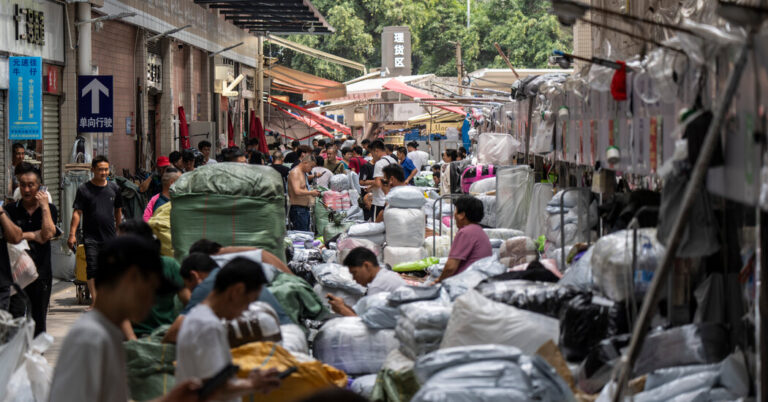
While the United States has received factory goods from China for decades, and China’s manufacturing efficiency has loaded the supply chains of American businesses, the expanded tariff-free loophole got American shoppers hooked on buying their exercise clothes and household gadgets online at rock-bottom prices. And in China, millions found work in factories that sold goods on e-commerce marketplaces — not just China’s own, like Shein, Temu and TikTok, but also Amazon and Walmart.

This trade had ballooned. Some four million packages a day entered the United States last year with no customs inspection and no duties paid.

That changed on Friday, when the latest measure unraveling trade between the world’s two largest economies took effect. Most packages from mainland China and Hong Kong are now subject to tariffs even if they are worth less than $800.

People in both countries are already feeling the change. American shoppers are seeing higher prices when they check out on their phones, and Chinese exporters are scrambling to find buyers outside the United States.

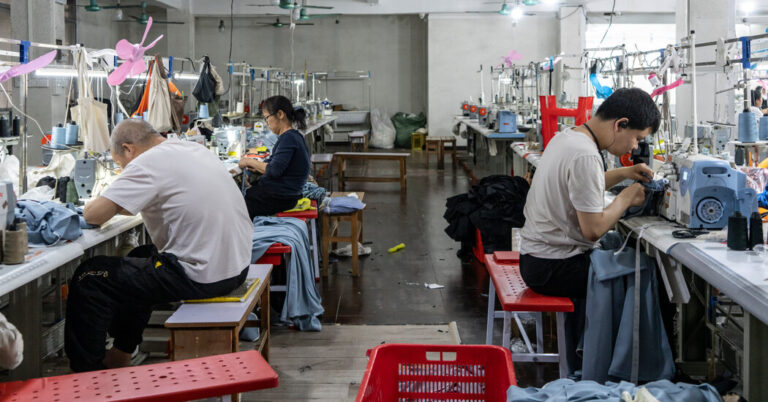
Some factories in southern China, where much of this manufacturing is centered, have suspended operations since the beginning of April, raising concerns that laborers will be put out of work.

Zhang Yikui, who sews clothes that sell on Shein and Amazon at a factory in Guangzhou, the hub of China’s garment industry, said his factory used to make 100,000 pieces a month. Now orders are down to around 60,000, Mr. Zhang said on Thursday. He and about 40 colleagues, surrounded by piles of Shein bags, were sewing denim dresses.

Mr. Zhang was resolute that they would find buyers. “People in other countries still need to wear clothes,” he said. “And in the United States, they don’t make this kind of thing at all.”

Even little-known manufacturers in China had been able to build successful businesses selling to Americans, said Eddie Chan, an e-commerce consultant in Hong Kong who previously helped run Walmart’s China e-commerce operation.

“Over the last couple of months, things changed so fast,” he said.

The trade tensions pose a major challenge for China’s economic growth, which has largely been powered by exports. In April, while President Trump ratcheted up tariffs to 145 percent for more than half of China’s exports to the United States, new orders for export sank to their lowest level since the end of 2022, according to official data released this week.

Ting Lu, chief China economist at Nomura, a Japanese bank, said in a note to investors this week that almost six million people in China could lose their jobs in the near term because of the tariffs, and as many as 16 million in the long run.

The Chinese government has struggled to wean the country off its decades-long dependence on real estate. The collapse of the real estate market, where most Chinese households build their wealth, propelled a sharp decline in prices and left consumers reluctant to spend.

China’s cross-border e-commerce industry, with thousands of factories as its lifeblood, has been one of the few bright spots.

The rise of marketplace platforms like Amazon and Shein, which was founded over a decade ago, coincided with a push by the Chinese government for small businesses to do more to reach overseas markets.

The apps acted like a funnel for the huge variety of goods made in Chinese factories. They enabled Chinese businesses to send packages directly to shoppers, allowing them to move inventory swiftly in response to buying trends, and made it possible for even small factories in China to be global businesses, said Moira Weigel, a Harvard professor writing a book about online marketplaces.

All this was made even easier in 2016. The thinking in Congress was that raising the tax-free limit to $800 would give consumers and small businesses more access to cheap goods from overseas, and that other countries would respond by opening their markets more to American goods, spurring U.S. exports. But the United States remained an outlier among its main trading partners. China’s threshold for tax-free imports is $7.

For nearly a century, federal law has carved out inexpensive goods, known as de minimis imports, from import taxes. The threshold, which had stood at $1 for decades, was raised to $5 in 1978 and $200 in 1993.

The bump to $800 opened the floodgate, and China has been by far the biggest exporter of de minimis goods. In 2018, Chinese companies exported about $5 billion in single packages, with an average value of $54. By 2023, that total had soared to $66 billion, according to data from the Congressional Research Service.

The trade tensions, and the end of the tax-free policy in the United States, threaten to bring all this to a grinding halt.

Han Dongfang, founder at China Labor Bulletin, which tracks protests over factory closures in China, warned that the impact of the tariffs could be “way worse” than the pandemic for the country’s workers.

Some factories have turned to e-commerce platforms in Europe and Southeast Asia in search of new markets for their products. E-commerce consultants in China are offering tutorials to help businesses sell their goods on eBay in Japan or Amazon in Brazil.

Other Chinese sellers tried to stockpile goods in the United States. Some bought warehouse space from Amazon and Walmart.

The Chinese government has responded by not only imposing high tariffs on U.S. imports but encouraging consumers to buy products made in China. But that could prove difficult if more people are unemployed, said Qiu Dongxiao, head of the economics department at Lingnan University in Hong Kong.

“Even those people who have jobs right now are very cautious when they spend money because they are not sure whether they will still have their jobs tomorrow,” Mr. Qiu said.

Siyi Zhao contributed reporting.


Source link

Trump Ends Chinese Tariff Loophole, Raising the Cost of Online Goods

0


The Trump administration on Friday officially eliminated a loophole that had allowed American shoppers to buy cheap goods from China without paying tariffs. The move will help U.S. manufacturers that have struggled to compete with a wave of low-cost Chinese products, but it has already resulted in higher prices for Americans who shop online.

The loophole, called the de minimis rule, allowed products up to $800 to avoid tariffs and other red tape as long as they were shipped directly to U.S. consumers or small businesses. It resulted in a surge of individually addressed packages to the United States, many shipped by air and ordered from rapidly growing e-commerce platforms like Shein and Temu.

A growing number of companies used the loophole in recent years to get their products into the United States without facing tariffs. After President Trump imposed duties on Chinese goods during his first term, companies started using the exemption to bypass those tariffs and continue to sell their products more cheaply to the United States. Use of the loophole ramped up in Mr. Trump’s second term as he hit Chinese goods with a minimum 145 percent tariff.

U.S. Customs and Border Protection processed a billion such packages in 2023, the average value of which was $54.

In a cabinet meeting at the White House on Wednesday, Mr. Trump referred to the loophole as “a scam.”

“It’s a big scam going on against our country, against really small businesses,” he said. “And we’ve ended, we put an end to it.”

Mr. Trump’s decision was related partly to concerns about the loophole’s use as a conduit for fentanyl into the United States.

The exemption allowed companies shipping inexpensive goods to submit less information to customs officers than other standard shipments. The administration said drug traffickers were “exploiting” the loophole by sending precursor chemicals and other materials used to manufacture fentanyl into the United States without having to provide shipping details.

Growing use of the loophole also threatened U.S. jobs in warehousing and logistics. It encouraged major American retailers to ship more products directly from China to consumers’ doorsteps, avoiding larger shipments that were subject to tariffs and then distributed through U.S. warehouses and delivery networks.

Kim Glas, the president of the National Council of Textile Organizations, which represents American textile makers and fought to eliminate the loophole, said it had “devastated the U.S. textile industry.” Ms. Glas said it had allowed unsafe and illegal products to flood the U.S. market duty-free for years. More than half of all de minimis shipments by value contained textile and apparel products, she said.

“This tariff loophole has granted China almost unilateral, privileged access to the U.S. market at the expense of American manufacturers and U.S. jobs,” she said.

But opponents of ending the exemption complained that the move would significantly raise prices for American consumers, hurt small companies that had built their businesses around the loophole and slow the flow of trade between the countries. The change is expected to weigh on airlines and private carriers like FedEx and UPS, which have had a steady business flying small-dollar goods across the world to the United States.

The changes, which apply to shipments from mainland China and Hong Kong, went into effect at 12:01 a.m. Friday. They are likely to sow pain and confusion for consumers as well as small retailers.

Temu recently started listing “import charges” on its site, while Shein’s website tells shoppers that tariffs are “included in the price you pay.”

Gabriel Wildau, a China analyst at Teneo, an advisory firm, said the change would “take a bite out of Chinese exports” and “force online retailers whose main selling point is dirt cheap prices to raise their prices dramatically.”

“It’s a price shock for price sensitive U.S. consumers who really enjoyed access to cheap goods,” he said.

The Trump administration has also promised to eliminate the loophole for shipments from other countries, but said it was waiting until the government figured out how to deal with collecting fees from such packages. U.S. customs officials are already burdened by the Trump administration’s increased enforcement of immigration rules and vast expansion of global tariffs.

The administration briefly turned off the de minimis exception for China in early February, before realizing that the sudden change was overwhelming shipment channels, including the Postal Service. Mr. Trump then reversed that order to give his advisers more time to establish systems that could accommodate the change.

The de minimis exception was created in the 1930s to ease the work of customs officials who were required to collect tariffs in cases where the revenue would be less than the cost of collecting the duties. Congress raised the threshold for de minimis packages to $5 in 1978 and $200 in 1993, and then to $800 in 2016.

In recent years, pressure to eliminate the loophole has grown. Lawmakers have been considering legislation to reform the de minimis rule, and the Biden administration proposed changes last year that would narrow the exception when it came to China.

One potential issue with the current rules is that they appear to create a discrepancy that allows goods moved through the Post Office to be subject to lower tariffs than goods moved using private carriers.

Goods that come into the United States from China via private carriers like DHL or FedEx will be subject to tariffs of at least 145 percent — for example, adding $14.50 of duties to a $10 T-shirt. But shipments that come in through the Postal Service face either a tariff of 120 percent of the value of the goods or a fee of $100 per package, which increases to $200 in June.

Shipments that come in through private carriers also appear to be subject to other duties, like the tariffs Mr. Trump imposed on China in his first term, and most-favored-nation duties set by the World Trade Organization. But shipments that travel through the Postal Service are not.

In addition, the Postal Service appears to face less scrutiny for collecting tariffs on goods shipped from China to other countries and then into the United States through foreign postal services.

The United States, for now, still offers the de minimis exception for countries other than China. But starting Friday, goods made in China are not supposed to qualify for de minimis, even if they are routed through another country before coming to the United States. Private carriers like UPS and FedEx are required to collect information on the origin of products, so that tariffs still must be paid for a Chinese-made good that is shipped into the United States via Canada, for example.

But the Postal Service has not been legally required to collect information on where products originate, and neither are foreign postal services. That could lead to an increase in schemes that try to bypass China tariffs by using the post office.

Peter Eavis and Julie Creswell contributed reporting.


Source link

Nat Sciver-Brunt becoming England captain was ‘straightforward’ choice, says Charlotte Edwards | Cricket News

0


Charlotte Edwards has backed Nat Sciver-Brunt to lead England forward and insists she was a clear choice to take over as the team’s new captain.

Sciver-Brunt, who has been on maternity leave after the birth of her first child, succeeds Heather Knight as skipper, having previously served as vice-captain.

Knight departed her post after nine years in the wake of England’s 16-0 whitewash Ashes defeat, with Sciver-Brunt assuming the role with 259 appearances across all formats to her name.

“It was pretty straightforward. I was pretty sure it was going to be Nat,” said Edwards.

“She leads from the front in what she does, she has the full respect of the group, and what I’ve been most impressed with are her leadership qualities.

“She’s pretty laid back, quite unassuming for one of the best players in the world. I’ll just hand her the reins on matchday and she’ll do what she does best.

“It’s her team and she’s got to drive this team forward. She’s very excited.”

Please use Chrome browser for a more accessible video player

Sky Sports Charles Dagnall reflects on the decision to replace England captain Heather Knight and says it was inevitable given recent performances and the departure of head coach Jon Lewis

Sciver-Brunt was named ICC Women’s Cricketer of the Year in 2022 and 2023 and is currently No 3 in the ICC ODI batting rankings.

She is tasked with reigniting England as they nurse the wounds of a heavily scrutinised Ashes campaign.

“Losing 16-0 isn’t just because they’re not fit enough, it’s that Australia were better than us,” said Edwards.

“It was clear in the winter. I call it the ‘f’ word. But I’ve been so impressed by the standards. They’ve clearly worked very hard in the period after the Ashes.”

Sciver-Brunt’s time as captain begins on May 21 with a white-ball series against the West Indies, followed by five T20s and three ODIs against the visiting India.

Please use Chrome browser for a more accessible video player

Newly appointed England’s women’s cricket head coach Charlotte Edwards says she’s aiming to ‘find the blueprint’ to help the team win major events

Edwards also insisted Sciver-Brunt’s predecessor Knight will still play a significant role for England.

“For me it’s about Heather enjoying her cricket and focusing on her batting. She’s playing as well as I’ve ever seen her,” said Edwards.

“We’ve had some good conversations around where I see her role in the team, and I also want to see her bowling a bit more.

“She’s been great around the group, she gets on really well with Nat – they’ve been great friends for a number of years – and I genuinely think we’re going to see Heather Knight score a lot of runs over the next couple of years.”

England Women’s summer fixtures

All times UK and Ireland; all games live on Sky Sports

T20 international series vs West Indies (May)

  • First T20: Wednesday May 21 (6.30pm) – Canterbury
  • Second T20: Friday May 23 (6.35pm) – Hove
  • Third T20: Monday May 26 (2.30pm) – Chelmsford

One-day international series vs West Indies (May-June)

  • First ODI: Friday May 30 (1pm) – Derby
  • Second ODI: Wednesday June 4 (1pm) – Leicester
  • Third ODI: Saturday June 7 (11am) – Taunton

T20 international series vs India (June-July)

  • First T20: Saturday June 28 (2.30pm) – Trent Bridge
  • Second T20: Tuesday July 1 (6.30pm) – Bristol
  • Third T20: Friday July 4 (6.35pm) – The Kia Oval
  • Fourth T20: Wednesday July 9 (6.30pm) – Emirates Old Trafford
  • Fifth T20: Saturday July 12 (6.35pm) – Edgbaston

One-day international series vs India (July)

  • First ODI: Wednesday July 16 (1pm) – Southampton
  • Second ODI: Saturday July 19 (11am) – Lord’s
  • Third ODI: Tuesday July 22 (1pm) – Chester-le-Street


Source link

SharkNinja Recalls 1.8 Million Pressure Cookers After Burn Reports

0


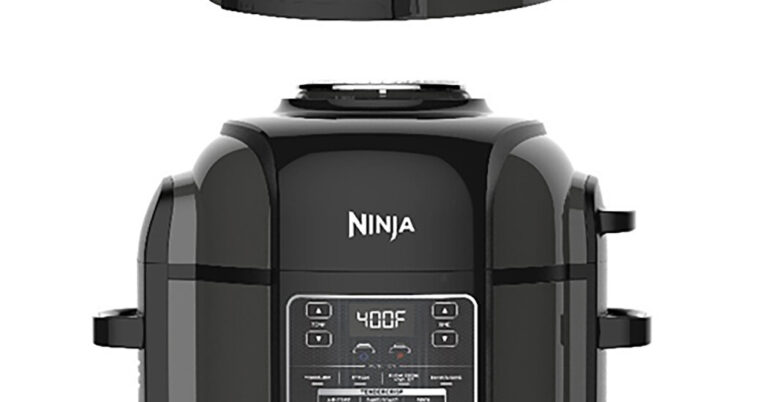
SharkNinja is recalling more than 1.8 million pressure cookers after it received more than 100 reports of burn injuries, federal safety regulators said on Thursday. The injuries prompted more than two dozen lawsuits against the company.

The company, based in Needham, Mass., is recalling its Ninja Foodi OP300 Series Multi-Function Pressure Cooker, which also functions as an air fryer, after customers reported that the pressure cooker’s lid could be opened during use and that hot food could “escape” and pose a burn risk.

The affected products have a 6.5-quart capacity, the U.S. Consumer Product Safety Commission said in a recall notice. The company sold about 1.85 million of the devices in the United States and about 184,000 in Canada, the agency said.

SharkNinja has received 106 reports of burn injuries, including more than 50 reports of second- or third-degree burns to the face or body, the safety commission said, adding that 26 lawsuits have been filed against the company.

“The safety of our customers is a top priority for SharkNinja,” the company said in a statement on Thursday, noting it was cooperating with the safety commission.

“This addresses reports that some consumers have been able to open the pressure-cooking lids of certain units of these cookers during use, resulting in burn injuries from hot contents,” the company added.

The devices were sold for about $200 at retailers such as Walmart, Costco, Sam’s Club, Amazon and Target and online at ninjakitchen.com from January 2019 through March 2025, the commission said.

People who have bought the devices should immediately stop using the pressure-cooking function and contact SharkNinja for a free replacement lid, the commission said.

“Consumers can continue to use the product’s air frying and other functions,” the recall notice said.

The model numbers affected, which are listed in the recall notice, can be found on a label on the side of the cooker.

Customers who have the devices can contact the company at 888-370-1733 or sharkninja@rqa-inc.com.


Source link

GM Cuts Profit Forecast by 20% and Says Auto Tariffs Will Cost It Billions

0


General Motors cut its profit forecast for 2025 on Thursday by more than 20 percent and said the Trump administration’s tariffs would increase its costs by $4 billion to $5 billion this year.

In a conference call with analysts, G.M. executives said the company now expected to make $8.2 billion to $10.1 billion this year, down from a previous forecast of $11.2 billion to $12.5 billion.

“G.M.’s business is fundamentally strong as we adapt to the new trade policy environment,” the company’s chief executive, Mary T. Barra, said.

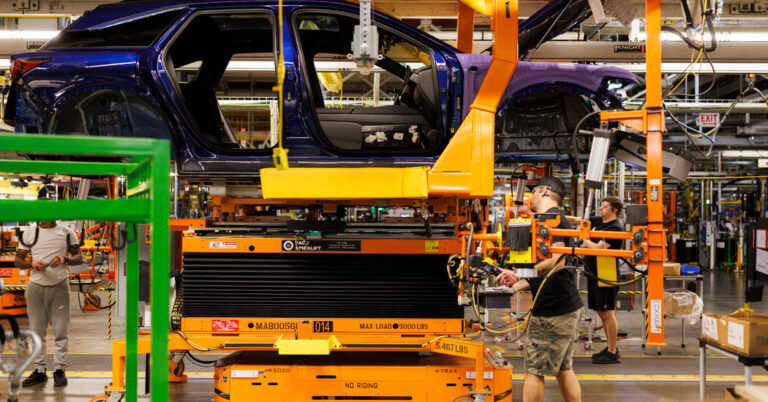
In April, President Trump imposed tariffs of 25 percent on imported vehicles and will begin imposing the same duty on imported auto parts on Saturday. On Tuesday, the president modified how the tariffs are applied to give automakers some relief, including partial reimbursement for tariffs on imported parts for two years.

Ms. Barra said G.M. hoped to offset about 30 percent of the impact of the tariffs by increasing production in U.S. plants, cutting costs and working with suppliers to raise their domestic production of parts and components.

G.M. had previously said it was increasing pickup truck production at a plant near Fort Wayne, Ind., which will reduce the number of vehicles it imports from Canada and Mexico. Ms. Barra said output at the Fort Wayne factory would increase by about 50,000 trucks this year.

She also said G.M. now planned to make more battery modules in its U.S. plants to raise the portion of domestic content in its electric vehicles.

About $2 billion in tariff-related cost increases will come from vehicles that are made in Canada, Mexico and South Korea and sold in the United States.

Analysts have predicted that the tariffs will add thousands of dollars to the cost of new cars and trucks, and that some or all of that will be passed on to consumers. In the call, G.M.’s chief financial officer, Paul Jacobson, said the company now expected new vehicle prices to rise 0.5 percent to 1 percent this year. Previously, the company forecast that pricing would fall by 1 percent to 1.5 percent.

Other automakers are also planning to produce more vehicles in the United States. Mercedes-Benz said Thursday that it would build a new vehicle at an Alabama factory as part of what the German carmaker called a “deepening commitment” to manufacturing in the United States.

While the company did not mention tariffs, Mercedes and other carmakers have been at pains in recent weeks to emphasize how many cars they already build in the United States and their plans to make more. Mercedes did not provide details about the car, except to say it will be a new design tailored to the U.S. market and begin production in 2027.

The company’s factory near Tuscaloosa, Ala., primarily assembles luxury sport utility vehicles, including electric models, for sale in the United States and export to other markets.

Jack Ewing contributed reporting.


Source link

When Taxpayers Fund Shows Like ‘Blue Bloods’ and ‘S.N.L.,’ Does It Pay Off?

0


New Yorkers — and residents of many other states — have paid more for entertainment in recent years than just their Netflix or Hulu subscriptions.

Each New York household has also contributed about $16 in taxes, on average, toward producing the drama series “Billions” since 2017. Over that period, each household has also paid roughly $14.50 in production incentives for “Saturday Night Live” and $4.60 for “The Irishman,” among many other shows and movies.

Add it all up, and New York has spent more than $5.5 billion in incentives since 2017, the earliest year for which data is readily available. Now, as a new state budget agreement nears, Gov. Kathy Hochul has said she wants to add $100 million in credits for independent productions that would bring total film subsidies to $800 million a year, almost double the amount from 2022.

Other states also pay out tens or hundreds of millions each year in a bidding war for Hollywood productions, under the theory that these tax credits spur the economy. One question for voters and lawmakers is whether a state recoups more than its investment in these movies and shows — or gets back only pennies on the dollar.

New York has one of the largest tax credit programs and makes most of its data public, so we totaled its spending to see which productions benefited the most.

Television shows that film multiple seasons in New York have received the most money over time, though movies filmed in the state also receive credits:

The basic premise of the incentive program is that for every dollar of qualified spending by a production, whether for a camera operator or costumes, New York will reimburse 30 cents. (It won’t reimburse for some types of spending, like big salaries for movie stars.)

Supporters say jobs are created when productions choose to film in New York. The state also makes at least some of the money back, both directly (crew members pay taxes) and indirectly (more money spent on craft services means local catering companies grow and pay more taxes). Calculating just how much money is returned relies on a series of assumptions.

A recent study commissioned by Empire State Development, the agency that administers the tax credit, found that for every dollar handed out, about $1.70 was returned via local or state taxes, meaning the program was profitable for the state.

But many economists say these programs are money losers. A separate study commissioned by the New York State Department of Taxation and Finance estimated a return of only 31 cents on the dollar.

Two New York state senators in the Democratic majority, Michael Gianaris and James Skoufis, agree that states are in an escalating competition to attract productions. They disagree if that game is one New York should try to win.

“There is a race that is taking place among the states and that is why we have to adjust it,” said Mr. Gianaris, the deputy majority leader, citing a desire to keep up with increases from New Jersey. “It’s constantly a re-evaluation based on what other jurisdictions are doing and whether we need to adjust our program to maintain our success.”

Mr. Skoufis wants out: “It’s a race to the bottom. The loser is the taxpayer.”

Either way, the race between neighbors is heating up. In recent years, New Jersey has expanded its program to $800 million a year, up from $100 million in 2021. Some productions have benefited from both states: “Severance” received tax credits for its first season from New Jersey ($1.1 million) and New York ($39.6 million).

In 2010, New Jersey provided a natural experiment of what happens when a state leaves the race, when Gov. Chris Christie suspended the state’s program. He cited budgetary concerns and frustration that “Jersey Shore” — approved for a tax credit — depicted the state negatively. New Jersey’s film industry shrank quickly, though not entirely.

A recent survey of incentive programs by The New York Times estimated that states had paid out more than $25 billion over 20 years. Last year, Gov. Gavin Newsom of California cited the size of New York’s subsidies when he proposed increasing his state’s tax credits to $750 million from $330 million.

New York’s development agency treats all applicants equally. Its program’s administrators make no judgment as to whether a credit is needed to bring a production to New York. “Saturday Night Live” and a new CBS procedural would both be eligible for the same tax credits, even if the latter has far more flexibility to pick its location.

Mr. Gianaris, whose district is in Queens, says estimates of the New York program’s value don’t account for tourism. New York has a “massive tourism economy built around the fact that New York is a character” in TV and movies, he said. “There’s unmeasurable impact of that, which is why I think the credit is more than just the balance sheet.”

To qualify for the program, films or shows are not required to have their fictional worlds based in New York. “Pretty Little Liars,” for instance, received a $30 million credit in 2024 even though the story is set in Pennsylvania.

But many shows that film in the state do make New York a central part of their programs. Of the 10 productions that have received the most tax credits since 2017, eight are primarily set in New York.

The same isn’t true for every state. In New Jersey, productions receiving tens of millions of dollars in tax breaks often set their stories in New York.

Even as states compete for productions, their incentive programs often pit different parts of a state against one another.

Mr. Skoufis, who represents part of the Hudson Valley, north of New York City, said there are “some entrenched interests that benefit from the program — unions and other stakeholders.” He added, “My colleagues love soundstages in their district.”

Although the program offers an additional 10 percent reimbursement to productions in upstate New York, a majority of productions are in New York City. In 2024, just 15 percent of tax credits went to productions filmed outside the city.

New York City gets a lot of the tax dollars in return: One study, also commissioned by Empire State Development, found that the city receives almost half the additional tax dollars generated by the film incentives, though it is the state that pays the incentives.

Lawmakers who represent areas where the film industry has thrived have a reason to keep the money flowing, even if it doesn’t all flow back to state coffers.

Justin Marlowe, director of the University of Chicago’s Center for Municipal Finance, said lawmakers often make decisions on tax incentives without detailed information. As a result, they often do so with an eye toward preventing a bad political outcome.

“As a public finance person, I look at this and say this is really not good for taxpayers that we play this silly zero sum game,” Professor Marlowe said. “And you can’t blame state legislators for playing it because they have to, right? If they don’t, they suffer political consequences.”


Source link

Spurs vs Bodo/Glimt | The Verdict

0


On The Verdict, Patrick Rowe and Gail Davis recap Tottenham Hotspur’s victory over Bodo/Glimt in their first-leg clash of the Europa League semi-final.


Source link

U.S. Dollar Falls. The Euro Could Step Up as Reserve Currency

0


The U.S. dollar has fallen about 9 percent in the past three months, according to an index that tracks its performance against a basket of major trading partners. Not since the 1970s has the currency performed so badly in a president’s first 100 days.

The drop isn’t surprising. The U.S. economic outlook is far cloudier than it was on Inauguration Day, as President Trump’s tariffs set the stage for slower growth and higher inflation. U.S. assets look far less attractive now.

But could there be something more existential afoot? Questions are swirling about the dollar’s global standing and whether after more than seven decades as the world’s most important currency, it’s on the cusp of shedding that status.

Trump’s policies and his threats to longstanding norms like the political independence of the central bank have prompted a rethink among investors about how much more exposure they want to have to U.S. assets. That skepticism looks likely to endure. “Something is in motion that is irreversible,” said Jens Nordvig of the research firm Exante Data.

There are obvious caveats. Just because the dollar is weaker now doesn’t mean it has lost all its primacy. A sudden shift away from the United States still seems far-fetched because there are few places to go.

“The rest of the world is eager, if not desperate, to reduce reliance on the dollar as a payment and reserve currency,” said Eswar Prasad, a former official at the International Monetary Fund who is now an economics professor at Cornell University.

Attempts to weaponize the dollar through policies like sanctions would be less potent, and having multiple sources of liquidity during times of stress could make for a less fragile global financial system, some currency experts say.

“The reality, though, is that there are no robust alternatives,” Mr. Prasad said.

The euro is perhaps best positioned to eventually seize the opportunity created by Mr. Trump. It is a widely used and favored currency among central banks. There are now more euro-denominated safe assets available, as Germany and other countries increase spending. And the European Central Bank has also shown more willingness to serve as the region’s lender of last resort, a crucial function for an international currency.

When would the euro become a reserve currency? “We’re at the best position to become one in some years,” Luis de Guindos, the E.C.B.’s vice president, said recently. But there would have to be much more meaningful economic, financial and regulatory integration across Europe for that to happen. It would take time.

Other alternatives like China’s renminbi face even higher hurdles. Investors cannot transact freely in the country’s financial markets because of capital controls, and the currency is heavily managed by the government — two insurmountable barriers to the Chinese currency assuming a more global role.

Another idea that has gained traction is a shared currency issued by the so-called BRICS group of countries, which includes Brazil, Russia, India, China and South Africa. Already some of the participating countries, like Brazil and India, have backed off from the proposals following threats by Mr. Trump that they would have to “wave goodbye to America” if they did so.

Shifting away from the dollar presents as big of a challenge as trying to shift the world away from using English, said Stephen Jen, a currency expert who runs Eurizon SLJ Capital.

“People can bicker on whether French is more beautiful or German more precise, but none of that matters — when more people speak English, more will learn to speak English,” he said. “Dollar liquidity is deep. No one administration can destroy the dollar, certainly not President Trump in 100 days.”


Source link

U.S. Prosecutors Accuse Large Insurers of Paying Kickbacks for Private Medicare Plans

0


The Justice Department on Thursday accused three of the nation’s largest health insurers of paying hundreds of millions of dollars in illegal kickbacks over several years to insurance brokers that steered people into private Medicare plans.

Federal prosecutors also accused two of the insurers of colluding with brokers to discriminate against people with disabilities, by discouraging enrollment in the private Medicare plans because the insurers believed coverage would be more costly.

About 12 percent of Medicare beneficiaries are younger than 65, covered by the federal insurance program because they are disabled. Their care can be expensive given complex health needs.

According to the complaint, originally brought by a whistle-blower and joined by the Justice Department, three of the nation’s largest health insurance companies — Aetna; Elevance Health, formerly known as Anthem; and Humana — are accused of paying kickbacks to three large brokers, eHealth, GoHealth and SelectQuote, to increase enrollment in their Medicare Advantage plans. Those brokerage firms are also charged with misconduct.

The complaint, filed in a federal court in Boston, asserted that the kickbacks occurred from at least 2016 through 2021, and it accused Aetna and Humana of discriminating against people with disabilities.

Aetna, Elevance, GoHealth and Humana denied the allegations, while the others did not immediately respond to requests for comment.

The lawsuit is one of the first indications by the Trump administration that some Medicare Advantage plans will continue to be subject to federal scrutiny. Critics of these plans, including congressional lawmakers, have faulted the incredibly popular policies for using overly aggressive marketing tactics and overcharging the federal government. Medicare Advantage plans now cover more than half of all individuals enrolled in the federal program.

During the Senate confirmation hearing for Dr. Mehmet Oz, now the administrator of the Centers for Medicare and Medicaid Services, he replied to senators concerned about excess in the private plans that there was a “new sheriff” in town.

Brokers often play a pivotal role in helping older and disabled Americans eligible for Medicare to decide which private plan to choose. In the complaint, the brokers are accused of steering an individual into the plan that paid them the most rather than the one best suited to that person’s needs.

In recent years, small local brokerages have given way to large national organizations employing many agents and using call centers and websites, like the companies named in the suit. They now tend to rely on computer programs to help brokers identify the best plan for each caller, a technology that could make the kind of steering described in the lawsuit easier.

Last year, the Biden administration finalized a regulation designed to lower the fees insurers could pay these companies to enroll patients, after congressional testimony and consumer complaints that insurers were awarding bonuses for enrolling more people in particular plans, regardless of their individual needs. But a lawsuit has put the rule on hold.

In referring to cases involving people with disabilities, federal prosecutors were blunt: “The alleged efforts to drive beneficiaries away specifically because their disabilities might make them less profitable to health insurance companies are even more unconscionable,” U.S. Attorney Leah B. Foley said. “Profit and greed over beneficiary interest is something we will continue to investigate and prosecute aggressively.”


Source link

Amazon’s Mixed Earnings Report Sends Share Prices Down


As much as Amazon may have wanted to dodge the spotlight in President Trump’s trade war, there was no avoiding it for America’s largest online retailer.

First, the e-commerce company was entangled in the fleeting spat Tuesday with the White House over a faulty report that Amazon was going to show shoppers the costs of tariffs.

Two days later, the economic reality arrived when Amazon reported among the slowest growth ever in its North American retail business.

The region, Amazon’s largest, contributed to first-quarter financial results that showed the slowest overall sales growth since the depths of the pandemic, the company reported Thursday. Sales from January through March rose to $155.7 billion, 9 percent more than the same period a year earlier. Profit was $17.1 billion, up 64 percent.

For the current quarter, which ends in June, Amazon told investors to expect sales of $159 billion to $164 billion, and for operating profits to shrink to as low as $13 billion. Amazon added “tariff and trade policies” to the list of factors it says can make its forecasts uncertain.

The results were mixed compared with Wall Street’s expectations. Amazon’s stock price was down more than 3 percent in aftermarket trading following the earnings release.

“Obviously, none of us know exactly where tariffs will settle or when, Andy Jassy, the chief executive of Amazon, said on a call with investors. He said the company is “pretty maniacally focused” on keeping prices down, by purchasing extra inventory in advance of tariffs and will be helping sellers on Amazon’s marketplace do the same.

Investors have been trying to untangle how President Trump’s on-again-off-again tariffs would affect Amazon customers. Some speculated that consumers may have accelerated purchases in March and April ahead of more tariffs kicking in, boosting spending in an otherwise uncertain environment.

Mr. Jassy said Amazon customers have done some “heightened buying” of certain types of products, although he did not specify which ones.

Many different components drive revenue in Amazon’s retail business. The online sales of products it offers directly to customers grew 5 percent to $57.4 billion, and the services it provides to sellers who list products on its site grew 6 percent to $36.5 billion.

Advertising, which investors view as a promising and profitable business, grew 18 percent to $13.9 billion.

Investors have long focused on Amazon’s cloud computing business, which generates most of the company’s profit. Mr. Jassy, who ran the cloud business before his promotion to chief executive, has been building up the company’s artificial intelligence offerings. The cloud business grew 17 percent, to $29.3 billion, in the first quarter.

Mr. Jassy said Amazon could have sold more cloud services if it had more capacity at its data centers, the remote buildings filled with computers that power the modern internet and A.I. He added that he expects the constraints to ease in the coming months. The company has been racing to build more infrastructure, and the release on Thursday showed Amazon spent more than $24 billion on capital expenses in the first three months of the year, about $2 billion less than the previous quarter.In February, Amazon said it was planning to spend about $100 billion on capital expenditures in 2025.


Source link