
Home Blog Page 353

Liverpool: Where can Arne Slot improve the Premier League champions next season? | Football News

0


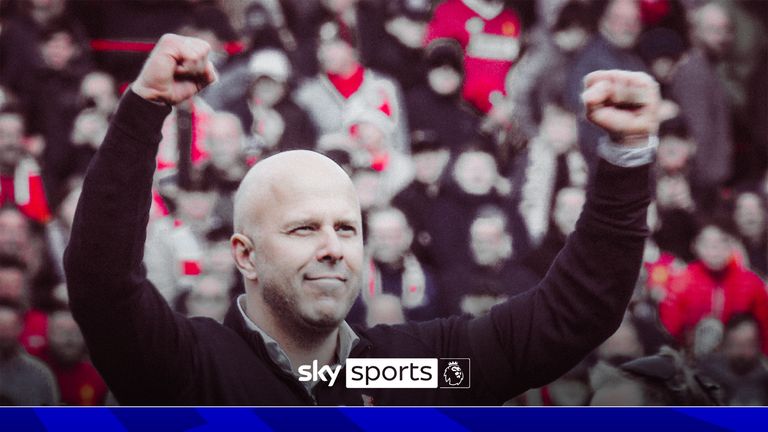
Arne Slot has masterminded Liverpool’s record-equalling 20th top-flight title, but, worryingly for the rest of the Premier League, the Dutchman says his side will only get better next season – so where can the champions strengthen?

Slot may have become the first Dutch coach to win the Premier League after the Reds dismantled Tottenham Hotspur at Anfield on Sunday, but it has not taken long for the Liverpool head coach to start turning his attention towards defending the title next season.

“We can definitely improve,” Slot said ominously when asked to look back on his incredible debut campaign in charge at the club. “I think we have to become even better.”

Liverpool need at least five or six players – three to go straight in the team and three to be strong backups – with still so many areas of the team to improve.

Sky Sports’ Jamie Carragher

Former Liverpool captain Jamie Carragher agrees, telling Sky Sports the Reds “need at least five or six players – three to go straight in the team and three to be strong back-ups – with still so many areas of the team to improve” next season.
Please use Chrome browser for a more accessible video player

Gary Neville heaps praise on the job that Arne Slot has done in his first season at Liverpool given the huge shoes of Jurgen Klopp that he had to fill

Having brought in just Giorgi Mamardashvili from Valencia – before loaning him back to the LaLiga side – and Juventus’ Federico Chiesa last summer, Slot is reportedly set to be backed in the transfer market by the club’s owners the Fenway Sports Group [FSG].

So where will the Liverpool head coach and sporting director Richard Hughes look to strengthen a team with the fourth-oldest average starting XI age [27.65] this season in order to try and win title No 21?


Sunday 4th May 4:00pm


Kick off 4:30pm


Jeepers ‘keepers

Alisson demonstrated with his incredible player-of-the-match display against PSG at the Parc des Princes in March that he remains arguably the best goalkeeper in the Premier League.

Please use Chrome browser for a more accessible video player

Alisson looks back on Liverpool’s season

However, while the Brazilian is still only 32, he only has a contract at Anfield until 2027, while the soon-to-be-arriving Mamardashvili has already made it clear he is coming to the club to challenge for a first-team spot next season.

Were Saudi clubs to reignite their interest in Alisson after he turned down a big-money approach last summer, then it will be interesting to see if Michael Edwards, CEO of Football at FSG, cashes in on both him and Caoimhin Kelleher, who is expected to leave Anfield if a suitable offer is received for the Reds No 2, in order to help fund a squad rebuild.

Major defensive shake-up?

Left-back is a priority position for Liverpool this summer after Andy Robertson’s relative drop off in form this season, with the club interested in signing Bournemouth’s Milos Kerkez. However, they are not the only suitor for the Hungary international, while Ajax’s Jorrel Hato – who can play as a left-back and left-sided centre-back – is also reportedly on the Reds’ radar.

Meanwhile, Trent Alexander-Arnold is expected to shortly confirm his departure on a free transfer to Real Madrid, leaving Conor Bradley as Liverpool’s only recognised right-back.

And then there is the heart of the defence, with Carragher claiming his former club “needs a centre-back as back-up to the two [Virgil van Dijk and Ibrahima Konate] that we have.”

Please use Chrome browser for a more accessible video player

Highlights from the Premier League match between Liverpool and Tottenham Hotspur

The situation is complicated slightly by the fact Konate has still to agree the contract extension offered to him late last year, with his current deal running out in just over 12 months’ time.

But, in an ideal world, it is understood Hughes would want to bring in a new left-footed centre-back, with Bournemouth’s Dean Huijsen and Crystal Palace’s Marc Guehi reportedly under consideration, while Kostas Tsimikas, Jarell Quansah and Joe Gomez could all be sold to help increase Slot’s summer transfer budget.

Support for Gravenberch?

While left-back is a key area for Liverpool this summer, along with a striker and a wide forward, if they are successful with those positions, they will then look to move on to a new central midfielder.

This is a position Slot identified as needing strengthening on his arrival last summer, only for the club to miss out on their first-choice target when Spain holding midfielder Martin Zubimendi turned down a move to Anfield in order to stay at Real Sociedad this season.

Please use Chrome browser for a more accessible video player

The Football Show takes a closer look at Liverpool’s title-winning performance against Tottenham and singles out Alexis Mac Allister as the driving force behind the 5-1 victory

That late change of heart may have actually been a blessing in disguise for Slot, who used Ryan Gravenberch in the role instead with huge success.

Carragher, however, still thinks Liverpool need to strengthen in this area, telling March’s The Overlap Fan Debate: “I don’t think he [Slot] has any time for four or five players in that squad. I can accept that this season as this isn’t really his squad, but next season I’m sure he’ll bring players in. He needs a centre midfielder to replace Endo, someone younger.”

And the Reds are reportedly pondering a summer move for Crystal Palace’s impressive young England defensive midfielder Adam Wharton, while a more attacking option could be Lyon’s Rayan Cherki, with the club understood to be open to letting Harvey Elliott leave.

‘Lack of pace in the attack is glaring’

As mentioned, Hughes and Edwards will definitely target a new striker and a wide forward next season after Darwin Nunez’s much-publicised travails in front of goal and Diogo Jota’s continued injury struggles this campaign, with the former expected to leave after the Reds turned down a big-money offer for his services from the Saudi Pro-League in January.

Luis Diaz is one of a number of players to have been energised under Slot this campaign, but with the 28-year-old’s contract expiring in the summer of 2027 and Barcelona reportedly keen on signing the forward, the club must decide whether to hand the Colombian a new bumper deal as he is still on the same terms from when signing in January 2022, or to cash in.

Please use Chrome browser for a more accessible video player

Take a look at the best goals from Liverpool during their title winning season

“The lack of pace in the team is glaring in the attack,” said Carragher, with Brentford’s Bryan Mbeumo reportedly under serious consideration to be Mohamed Salah’s long-term replacement on the righthand side of the attack, while Brighton’s Joao Pedro is also believed to have admirers at Anfield.

“The other attackers [apart from Salah] Liverpool have got are good players, not great players. Liverpool need to buy two attackers. Not squad players, but players to play alongside Salah.”




Source link

Washington State Lawmakers Vote to Limit Rent Increases

0


After a protracted battle, Washington State lawmakers voted Sunday to limit annual residential rent increases to no more than 10 percent, positioning the state to become the third in the country to adopt statewide rent regulations.

Among the key provisions of House Bill 1217:

  • Annual rent increases would be capped at 7 percent plus the rate of inflation, or 10 percent in all — whichever is less.

  • A flat annual increase of 5 percent would be applied to people who own homes in mobile home parks and rent the land on which they sit.

  • Only lease renewals would be affected by the new measure. Landlords would be allowed to increase rents at will when properties become vacant.

  • The rules would not apply to new buildings for the first 12 years they are occupied.

Between 2001 and 2023, median residential rents in Washington State rose by 43 percent, adjusted for inflation, outpacing the 26 percent rise in renters’ incomes over the same period, according to the Center on Budget and Policy Priorities, a national research group.

And while there is broad consensus that more housing needs to be built, supporters of the caps say they can offer short-term predictability and protections for tenants who have been forced to move because of steep price increases.

The issue has long been a priority for Democrats, and the Legislature nearly passed a similar bill in 2024. But this year, with a more turbulent economy, supporters say the problem has never been more urgent.

“At a time when people worry whether they’ll lose their federal benefits, we can help assure them that here in Washington you won’t face an excessive rent hike,” said Emily Alvarado, a Democratic state senator and one of the bill’s sponsors, during a floor debate Friday night.

Most economists have historically been skeptical of rent control, saying it does more harm than good. But that has started to change somewhat in recent years.

In Washington, opponents say rent regulations would discourage new development and reduce the availability of rental homes. And for years, Republicans, joined by moderate Democrats, have scuttled various proposals.

But progressives gained more clout after last year’s elections and have pushed an agenda that also includes tax increases and spending cuts.

Andrew Barkis, a Republican state representative, said in an interview that the new bill was “driven by ideology.” He said that an earlier version, which called for a 10 percent cap, plus inflation, and exempted most single-family home rentals that were not owned by a corporation, was better. That version had cleared the Senate.

“You put an artificial cap on this, I can guarantee you that every single rent is going to go up,” Mr. Barkis said

Rent regulations have typically been embraced by municipalities, not states. More than 300 local governments regulate rents, including New York City, Los Angeles and San Francisco.

When states get involved, it has often been to prevent local jurisdictions from enacting rent regulations. More than 30 states have done that — including Washington, which blocked local rent regulations in 1981, when Republicans last controlled the governor’s office and Legislature.

The new bill — which survived some last-minute procedural drama and was passed on Sunday, the last day of the legislative calendar — would not lift that ban. Instead, it is aimed at protecting tenants throughout the state, including those in towns that may be unable or unwilling to take their own action.

Until now, California and Oregon had been the only states to adopt statewide rent regulations, both passed in 2019. The cap is 7 percent plus the inflation rate in Oregon, and 5 percent plus inflation in California; both states set a maximum of 10 percent. But there are efforts in both states to lower those caps.

The bill heads to Gov. Bob Ferguson, a Democrat who took office this year. While Mr. Ferguson has not stated his intentions, many legislators and lobbyists anticipate he will sign the legislation. It would take effect immediately.


Source link

Single Travelers Are Finding Love in Airport Lounges

0


Brittany Romano, 32, was not looking to start her own long-distance rom-com last September when she showed up to JetBlue’s lounge at LaGuardia Airport 10 minutes before her flight was set to board — but she did.

That’s where she met Matt Harrington, 35, a schoolteacher from Pasadena, Calif. He had spied her rushing through security, and when she stopped in the lounge for her usual routine — “take a shot and use the restroom” — he sent her a tequila shot and took one himself. Then the two jogged to catch their plane, as it turned out they were on the same flight to Los Angeles.

Ms. Romano, an entertainment journalist who lives in New York, assumed that would be that, but Mr. Harrington begged a flight attendant to switch his seat so he could sit with her. More tequila shots followed over the course of the six-hour flight; the pair still talk daily.

There has always been something magical about an airport love story. “Airports are lawless,” said Natalie Stoclet, 32, a writer and designer based in Mexico City, who once had a flirtation with a man she met in the Iberia lounge at the Madrid airport. “You can have a cocktail at 8 a.m., wear compression socks with no shame and delusionally stare at the departures board, convincing yourself that you could change your flight and start a new life in Paris. Anything goes.” (Her lounge fling fizzled out, but at least she still has “a good airport story,” she said.)

But airport lounges, those calmer, semi-exclusive spaces away from the deadening realities of modern air travel, have increasingly become a locus of romance for millennials, who post TikTok videos of themselves getting dressed up to go to the lounge early before a flight, hoping to find their soul mate or, at the very least, a fresh romance. It’s the new, “I’m looking for a man in finance,” if you will.

“Romanticizing airports thinking I will casually find my future travel loving husband at one,” one TikTok user wrote. “Waiting mysteriously in the Emirates lounge waiting for my future husband to sweep me off my feet as I live in my own movie,” another user captioned her clip. “Can we have a designated ‘singles lounges’ at airports please,” asked a third.

Grace Ma, 38, an investor in New York, and a Delta and American Express Centurion lounge fanatic, said that lounges are the new members-only clubs — though more intimate and less intimidating — which makes them a prime location for dating. “It’s more of a targeted location to meet like-minded people versus going to a bar in a random city,” she said. “Someone who has access to a nice airport lounge likely already checks off a few boxes for you, which could be psychologically more comforting. For example, they are willing to spend the money to enter, they have travel status, they are flying a certain class airfare.”

Rachel Childress, 32, a server at the Delta One lounge in Logan Airport, in Boston, met her current partner there when he came in as a guest. In addition to the luxuries a lounge experience offers, it lowers the hurdles to meeting someone, she said.

“There’s also no obligation to have to see someone again. It makes connections more thrilling,” she said. “Plus, thinking about how crazy it is that your paths crossed with someone? The sequence of events that had to occur for you to meet them? It’s fate.”

Jennifer Higginbotham, 41, the director of premium services operations strategy and support, for American Airlines said “in-flight and Admirals Club meet-cutes are common.” The airline even hosted a wedding in its Nashville lounge. (Ms. Higginbotham’s husband proposed to her at Chicago O’Hare International Airport, so she’s quite the expert on airport love stories.)

Claude Roussel, who manages lounge experiences for Delta Air Lines, said the carrier’s public relations team has a plan of action for managing proposals, which includes decorating the lounge, helping facilitate the proposal, and creating a special food and drink cart for the couple — often involving photogenic espresso martinis.

Kishshana Palmer got the full experience. Ms. Palmer, 45, met cute in the Delta lounge at Hartsfield-Jackson Atlanta International Airport’s Terminal B, in the summer of 2023. Her boyfriend proposed in the same lounge a year later. “Suddenly team members come out from the four corners of the earth,” she said. “They make me reapply my lipstick and then tell him, ‘Do it again,’ because this brotherman didn’t think to film it.” But he broke things off before their aviation-themed wedding took place.

Ms. Palmer remains hopeful: “I still feel like I’m going to find my boo, and probably in another airport lounge,” she said.

Delta also pulled out all the stops last year when Ryan Scheb, 35, proposed to Philip Tuzynski, 37, at LaGuardia’s Delta Sky Club. The two are self-proclaimed “aviation geeks” from New York, whose idea of romance is sitting in the airline lounge with a cocktail, watching the planes take off.

While the promise of everlasting love is all well and good, not everyone is looking for commitment. Sometimes, a fling will do. YOLO-era singles chalk up the trend to two things: There is little to lose, and you’re both right there.

Silas Forest, 29, a creative director in Los Angeles, was lounging through a layover in the Delta Sky Club at Miami airport when he saw a cute guy out of the corner of his eye. They exchanged shy grins and nods, but then it was time for Mr. Forest to go to his gate, two terminals away. “I’m standing in line when I feel a tap on my shoulder, and I turn to find the man. I’m instantly smiling but surprised he found me. My group is called, and I tell him I’ve got to go, but feel the urge to lean in for a kiss. He also leans in and we kiss in front of a bunch of people,” he said. “I boarded my plane grinning ear to ear.”

Mr. Forest got the man’s contact information, but decided “to leave it at that — just one magical moment in the Miami airport.”

Benjamin Schmidt, 29, a New York writer, opened his Grindr app at a Delta lounge in San Francisco and agreed to meet a match at the lounge bar. “We flew back to New York together, with some discreet and playful hand-holding on the plane and flirty conversation,” he said. And then it ended. “It felt like I rented a boyfriend for the day,” Mr. Schmidt said.

Ms. Romano pointed out that airports offer few rules of behavior, and lounges give you the perfect setting for casual dating. “They have better lighting, free drinks, and no ‘What’s your bio?’ awkwardness,” she said. “The best part? If it’s not a match, one of you actually has to leave.”

This love-in-the-lounge trend is more than a pang of nostalgia for rom-com fantasies or a millennial need to dissociate from reality. Travel experts and frequent travelers alike predict that airline lounges will begin to play a much bigger role in people’s romantic lives for one reason: Dating app culture has backfired.

“App culture, besides it being gamification, is designed for you to opt out,” said Ms. Palmer. Meeting someone in person, you start searching for something in common, she added. “And here, the lounge is your thing that you have in common.”

This all led Iñigo Merino, 30, to start a dating app aimed at fliers. “There’s so much digital burnout, of just being constantly online. We’re bombarded. And then there’s this love-hate relationship we have with dating apps,” said Mr. Merino, the founder and chief executive of Wingle, a new app that allows you to connect with users at the airport lounge and aboard your flight.

Wingle users put in their flight details, and when they arrive at the airport, they can flag their location — like which lounge they are in. Once the plane takes off, the seat map illuminates with other users, allowing users to start a chat. And when the plane lands, the chat disappears. “So, either what happens in the air stays in the air, or you share your contact information so you can continue the conversation in real life,” Mr. Merino said.

When people are traveling, he said, they are “in another mind-set, so you can make more meaningful connections. I mean, you’re stuck in this metal tube with up to 300 people, and I’m sure that among those hundreds of people there’s someone that you can have an interesting conversation with.”


Follow New York Times Travel on Instagram and sign up for our Travel Dispatch newsletter to get expert tips on traveling smarter and inspiration for your next vacation. Dreaming up a future getaway or just armchair traveling? Check out our 52 Places to Go in 2025.


Source link

Apartments for Rent in a Former Office, but You Have to Live in Midtown

0


For many New Yorkers, Midtown Manhattan, with its gleaming skyscrapers and busy transportation hubs, lacks an element of cool and cachet that its more culturally vibrant neighbors have. Hordes of office workers, commuters and tourists typically flood the area, leaving it feeling anything but residential.

What Midtown does have, though, is a glut of underutilized office buildings. Two in particular brought Nathan Berman, chief executive of Metro Loft Management, to the area: the hulking buildings of Pfizer’s former headquarters on East 42nd Street near Grand Central Terminal. Metro Loft, along with David Werner Real Estate, is converting the buildings into about 1,600 rental apartments.

Once completed, the project would be the largest office-to-apartment conversion nationwide, Mr. Berman said. The first tenants are expected to move in at the end of next year.

The developers also recently bought an office building around the corner from the Pfizer site to create roughly 450 residences, 25 percent of which will be affordable housing.

“We go where there is opportunity to convert what we believe to be undervalued assets, and we can do that anywhere in Manhattan,” Mr. Berman added. “Right now, Midtown seems to be presenting the most opportunities for us.”

Mr. Berman has spent over two decades converting office buildings in the financial district, but the Pfizer project is his first in Midtown. He believes that future tenants, whom he calls “active younger professionals,” will forgo more traditional neighborhoods like Greenwich Village, Chelsea or the Upper East Side, with their charming cafes and green spaces, for splashy building amenities like a gym, a rooftop pool, lounges, co-working spaces, and a washer and dryer in each apartment.

“No one even needs a grocery store anymore, since everything gets delivered,” Mr. Berman said.

In addition, he said, as more companies order employees back to their desks, he hopes more people will want to live closer to the office, even if they have to be on site only part of the week. People “want to walk or bike or even scooter to their offices,” he said.

Arpit Gupta, an associate professor of finance at New York University’s Stern School of Business, said the proximity to thousands of workplaces was one of Midtown’s selling points. And once people move in, it’ll help the neighborhood: More tenants will eventually attract “the construction of retail, food and beverage industries, which serve to attract other renters in a positive cycle,” she said.

Metro Loft was one of the first to transform moribund office buildings in the financial district into apartments. Mr. Berman’s first big project downtown, at 17 John Street, was converted in 1998. Since then, he has converted 15 buildings in the financial district, with four more in development and others in the pipeline.

In cities across the country, more office buildings have been turned into housing, as officials clamor to solve for the mismatch between a surfeit of outdated office buildings and a lack of housing.

This year, nearly 71,000 residences have either been approved, remain under construction or are in the planning phase, which is more than triple the number from three years ago, according to a February report from RentCafe. New York, which is the country’s largest office market, has over 8,300 offices set to be converted into apartments this year.

In other cities, developers often opt for areas with a mix of commercial and residential properties. Michael Pestronk, the chief executive of the development company Post Brothers, prefers converting office buildings into apartments in neighborhoods already replete with housing, he said. But his Philadelphia-based firm — which, according to its website, has worked on more than 30 properties — recently started work on converting buildings in Washington, D.C.

“We’ve certainly done developments in tertiary neighborhoods, but with the number of opportunities we’re seeing today, we feel like we don’t need to be in pioneering locations,” Mr. Pestronk said, referring to areas not considered traditionally residential. “Instead, we’re focused on main locations that are very obvious in terms of the demand.”

Many developers have been keen to convert office buildings as more properties sell at a discount, many of them in central business districts that for years have suffered from empty buildings and streets.

“From 2012 to 2019, these buildings that we’re converting were trading — even if they were basically obsolete — for $400 to $500 per square foot, and now they’re $100 to $200 a square foot,” Mr. Pestronk said.

Adapting older commercial properties can also be less costly than building new housing. Research from CBRE, a real estate firm, estimates the cost of conversion to be $100 to $500 or more per square foot, depending on the original layout. Those costs are still as much as 20 percent less than building something new because the edifice is retained, Mr. Pestronk said.

The biggest cost differential, he said, is from the time saved. Construction on a conversion can be completed as much as one year faster than building something from the ground up.

“The speed to market is worth almost as much as the savings from reusing the structure,” he added.

Commercial structures also have thicker floor slabs, built to accommodate heavy equipment, making them ideal for reducing noise in closer living arrangements.

But not all empty or outdated buildings can be converted. Estimates vary, but a Moody’s Analytics study from 2023 of New York offices found that only 3 percent were suitable for transformation. A study for the Brookings Institution suggested that 9 to 11 percent of buildings nationwide could be converted, a statistic that translates into about 2,500 buildings.

The difficulty in turning office buildings into apartments is that they are laid out differently. Office buildings, for example, may not have windows that open or have too much space from wall to wall.

Buildings that are converted are usually gutted and reimagined. The old Pfizer buildings have floors that are roughly 200 feet deep, and Mr. Berman will have to divide the space to meet light and air regulations, such as the requirement that each apartment has a minimum distance between an operable window and building walls.

Mr. Berman has had experience doing this. Most recently, he did it at 25 Water Street in New York’s financial district, which had a depth almost as large as Pfizer’s old offices. The solution: Create two atriums so that more windows can be added to apartments. The plan is to do the same at the Pfizer buildings.

Then there are complex zoning restrictions and higher interest rates, and even experienced developers like Mr. Berman could run into unexpected expenses that put a project at risk. Not to mention potential tariffs, which are a wild card that will affect the price of materials needed for new construction as well as conversions.

Post Brothers recently faced foreclosure at one of its buildings in Washington, and Metro Loft encountered financial problems because of rising interest rates at two properties, even though both were more than 90 percent occupied.

“If you’re highly leveraged and your rate doubles, it will put you in a tough situation,” a spokesperson for Metro Loft said.

As for whether young people will happily move to the bustle of Midtown: If the past is any indication, it’s possible. It happened in both the financial district and Hudson Yards, the mixed-use area on the western edge of Manhattan where Pfizer has relocated. Mr. Berman hopes to replicate the success in Midtown.

He said, “Shaking and transforming buildings in the middle of what is an office area takes an empty office building off the market and brings in residential and that will invigorate an area.”


Source link

Canada Election: It’ll Be Carney or Poilievre Against Trump’s Tariffs

0


Canadians vote on Monday to determine which political party forms their next government.

But President Trump’s tariff assault on Canada and his vow to annex the country and make it the 51st state have turned the federal election into a referendum on which of the two contenders — Prime Minister Mark Carney of the Liberal Party or Pierre Poilievre, leader of the Conservatives — can best handle the American president, Ian Austen writes for DealBook.

The only English-language election debate last week opened with the moderator asking Carney, who has been the prime minister for just over a month, what the “starting point” would be for talks with the Trump White House.

“The starting point has to be one of strength,” Carney responded.

Both candidates have promised a tough response. Trump’s belittling of Canada’s sovereignty and his tariffs, which have already led to layoffs and concerns about factory closings, have prompted a surge of patriotism among Canadians and open hostility toward the United States — the country’s largest trading partner. In sharp contrast with Mexico’s approach of dealing with Trump, both Carney and Poilievre have vowed to fight back.

Here are the strategies they’ve campaigned on:

  • Hit back: Carney has emphasized his commitment to retaliatory tariffs. Poilievre has said that they are necessary to “deter” Trump’s trade attacks. Canada has imposed tariffs on imports from the United States that are expected to generate about 38 billion Canadian dollars annually, or about $27 billion.

    Trump has imposed tariffs against key sectors of Canada’s industrial economy: 25 percent levies on autos, aluminum and steel, and a similar levy on goods that are outside the scope of the trade agreement among the United States, Canada and Mexico. A tariff on auto parts is scheduled to take effect on Saturday.

    Autos and auto parts are Canada’s largest exports to the United States outside of oil and gas.

  • Diversify: A former governor of the Bank of England and the Bank of Canada, Carney conspicuously made his first trip as prime minister to meet with leaders in Britain and Europe. Canada has a free-trade agreement with Europe, but it is unclear how much potential Canada has to significantly raise exports to that market.

    Poilievre, a lifelong politician, has vigorously pushed to build a pipeline across Canada to ship oil and liquefied natural gas to Europe. Canada currently exports more than 80 percent of its energy to the United States. Carney has also suggested finding new energy markets and building pipelines.

  • Canadianize: To end the current process of auto parts crossing the border several times, Carney has suggested the creation of “all-in-Canada” parts manufacturing network. He has offered no details on how he would persuade manufacturers to adjust their supply chains to suit Canada’s goals.

Neither candidate has gotten specific. Carney says his experience as a central banker and in private investment (he has a doctorate in economics, worked at Goldman Sachs and was chairman at Brookfield Asset Management and at Bloomberg) makes him the ideal negotiator and economic crisis manager.

Poilievre, who was campaigning on crime, taxes and high prices for food and housing before the tariffs and before the election was called, has not focused as directly on the trade war. Polls show the Liberals slightly ahead of the Conservatives in the popular vote, but the Liberals are likely to have a strong majority of the seats in the House of Commons to form the next government.


DEALBOOK WANTS TO HEAR FROM YOU

We’d like to know how the tariffs are affecting your business. Have you changed suppliers? Negotiated lower prices? Paused investments or hiring? Made plans to move manufacturing to the U.S.? Or have the tariffs helped your business? Please let us know what you’re doing.

China’s Huawei reportedly develops a new A.I. chip to take on Nvidia. It’s meant to compete with Nvidia’s most advanced semiconductor; TikTok parent Bytedance is among those in discussions to place orders, The Wall Street Journal reported. It’s the latest example of Beijing’s push to move away from U.S. technology in the face of export controls.

America’s academic leaders make a stand against President Trump. After the White House froze billions in federal funding for leading universities, a group has formed to counter the president’s broad attacks, with more than 400 college leaders signing a letter opposing Trump’s moves to audit curriculums and oversee hirings. Meanwhile, a private collective of top universities has banded together to plot strategy, according to The Wall Street Journal.

Gordon Brown lodges a criminal complaint against Rupert Murdoch’s papers. The former British prime minister alleges he has been a “victim of the obstruction of the course of justice” by Murdoch’s U.K. papers, as the phone hacking scandal that forced the closure of one of the media mogul’s tabloids and led to a split of his empire, continues. His U.K. company has denied the accusations.

There’s more confusion on Monday about the state of U.S.-China tariff talks, as new data shows that global trade has begun to falter and jittery investors brace for a huge earnings week.

The latest: Beijing on Monday outright denied President Trump’s claim that Xi Jinping, China’s leader, called him to discuss their tit-for-tat trade clash. Trump told Time last week that they had in fact spoken, and that talks were progressing. Beijing’s statement comes after Treasury Secretary Scott Bessent, who has become a point person on trade negotiations, told ABC’s “This Week” on Sunday that he wasn’t aware of whether the two leaders had spoken.

Who to believe? Companies are focusing their attention on Wall Street and Washington. Several business leaders have used the earnings-call spotlight to warn about tariffs. The hope is that the message may reach Trump administration officials, adding to pressure on the White House to find an off-ramp with trading partners.

That said, Trump pushed back on the notion that he was swayed by restive bond holders in deciding earlier this month to pause implementation of reciprocal tariffs. “​​The bond market was getting the yips, but I wasn’t,” Trump told Time.

Meanwhile, the trade fallout worsens. Cargo shipments between the two countries have plummeted, and Temu, the popular Chinese retailing app that’s been hit especially hard by Trump’s tariffs, has jacked up costs for U.S. customers, Bloomberg reports. Economists have forecast that the levies could reignite inflation and ding economic growth, while retailers have begun to warn it could lead to empty store shelves.

That puts extra focus on a big week for earnings and economic data. What’s in store:

  • Personal Consumption Expenditures, the Fed’s preferred inflation gauge, and first-quarter G.D.P., are set for release on Wednesday with recession fears on the rise.

  • Friday is jobs day. Some economists expect to see a tariff-driven drop-off in hiring for the April payrolls report.

  • There’s also an earnings-palooza, with four of the Magnificent 7 stalwarts set to report. First up in that grouping are Microsoft and Meta (on Wednesday); Apple and Amazon follow on Thursday.

Big Tech earnings have fueled a slew of market rallies over the past two years, and Google’s Alphabet and Tesla helped give stocks a boost last week. Can the tech giants keep the streak alive, or will trade-war tensions prevail?

Spotify has paid more than $100 million to podcast publishers and creators since January, Jessica Testa is first to report for DealBook.

The payout is the result of a program introduced this year that opened up new revenue streams to eligible hosts. But it is also an attempt to draw more creators (and their audiences) to Spotify, as the rise of video podcasting has driven many of them to YouTube.

Video has come to dominate podcasting. More than half of Americans over the age of 12 have watched a video podcast — but primarily on YouTube, according to an Edison Research report from January. The service claims to reach 1 billion podcast consumers every month, making it the dominant platform for podcasts — a media king and kingmaker — and leaving onetime audio-only platforms like Spotify and Apple Podcasts in the dust. (Spotify introduced video podcasts in 2019.)

Compared with YouTube, Spotify has become a podcast underdog, with about 170 million monthly podcast listeners among its total audience of 675 million. One indication of how far Spotify has to go to catch up to the top player: YouTube paid out more than $70 billion to creators and media companies from 2021 to 2024.

The company reports earnings tomorrow and is expected to make about 540 million euros in pretax income on 4.2 billion euros in sales, according to S&P Capital IQ.

But Spotify remains a major player in the industry thanks in part to its talent roster — it distributes and sells advertising for the biggest podcast in the world, “The Joe Rogan Experience.” And it achieved its first full year of profitability in 2024. (Rogan’s podcasts are also available on YouTube.)

The new partner program aims to chip away at YouTube’s dominance. Spotify previously paid creators only by sharing advertising revenue with them, much like YouTube. Now it also gives them incentives to upload videos, with eligible creators earning additional money based on how much premium subscribers engage with their videos.

The company is trying to attract more viewers. At the same time that Spotify announced the partnership program in November, it announced that paid subscribers in certain markets wouldn’t have to watch dynamic ads in video podcasts. Video consumption has already increased by more than 40 percent since January, according to Spotify.

Can Spotify persuade creators to shift priorities? David Coles, host of the horror fiction podcast “Just Creepy: Scary Stories,” said he is re-evaluating his “home platform” after his Spotify revenue recently surpassed his YouTube revenue. Last quarter, Coles said he received about $45,500 from Spotify. After joining the company’s new partner program, his quarterly Spotify income rose to about $81,600.

This increase can be even more dramatic for larger shows and podcast companies, like YMH Studios, a comedy network with 2.1 million YouTube subscribers that produces popular podcasts including “2 Bears, 1 Cave.” While declining to share exact figures, YMH Studios said its quarterly Spotify revenue more than tripled after joining the partner program.

Although creators emphasized that these are still early days, Alan Abdine, the head of advertising revenue at YMH Studios, called the new payment program “a game-changer” and “a very happy surprise.”


Scott Pelley, the “60 Minutes” correspondent. He delivered an extraordinary on-air rebuke last night during the news program’s first episode since the resignation of Bill Owens, who had led the award-winning CBS program since 2019. Paramount, which owns CBS and is led by Shari Redstone, is now in mediation with President Trump over his $20 billion lawsuit against CBS News. It comes as Redstone is seeking government approval for her company’s merger with Hollywood studio Skydance.


Artificial Intelligence

  • Elon Musk’s artificial intelligence business xAI is looking to raise $20 billion at a valuation of $120 billion. (Bloomberg)

  • Google’s A.I. staff in the U.K. plan to unionize to fight against the company’s plans to sell its services to defense contractors. (FT)

Politics, policy and regulation

  • President Trump’s son, Don Jr., and tech entrepreneur Omeed Malik started a private Georgetown club for the ultra rich who want to get even closer to the president. (Politico)

  • Some Republican lawmakers could sink President Trump’s tax bill over key issues such as the SALT deduction and the Inflation Reduction Act. (WSJ)

Best of the rest

  • Behind the private group chats on Signal and WhatsApp that are shaping tomorrow’s conversations on podcasts, X, and Substack. (Semafor)

  • Five years after Carlos Ghosn escaped in a crate, the fugitive and former head of Nissan is now teaching business strategy at a university in Lebanon. (WSJ)

We’d like your feedback! Please email thoughts and suggestions to dealbook@nytimes.com.


Source link

Spotify Paid $100 Million to Podcasters as Creator Wars Heat Up

0


Spotify has paid more than $100 million to podcast publishers and creators since January, the company told The New York Times’s DealBook.

The payout is the result of a program introduced in 2025 that opened up new revenue streams to eligible hosts. But it is also an attempt to draw more creators (and their audiences) to Spotify, as the rise of video podcasting has driven many of them to YouTube.

Video has come to dominate podcasting. More than half of Americans over the age of 12 have watched a video podcast — but primarily on YouTube, according to an Edison Research report from January. The service claims to reach 1 billion podcast consumers every month, making it the dominant platform for podcasts — a media king and kingmaker — and leaving onetime audio-only platforms like Spotify and Apple Podcasts in the dust. (Spotify introduced video podcasts in 2019.)

Compared with YouTube, Spotify has become a podcast underdog, with about 170 million monthly podcast listeners among its total audience of 675 million. One indication of how far Spotify has to go to catch up to the top player: YouTube paid out more than $70 billion to creators and media companies from 2021 to 2024.

The company reports earnings on Tuesday and is expected to make about 540 million euros in pretax income on 4.2 billion euros in sales, according to S&P Capital IQ.

But Spotify, which is listed on the New York Stock Exchange but is based in Stockholm, remains a major player in the industry thanks in part to its talent roster — it distributes and sells advertising for the biggest podcast in the world, “The Joe Rogan Experience.” And it achieved its first full year of profitability in 2024. (Mr. Rogan’s podcasts are also available on YouTube.)

The new partner program aims to chip away at YouTube’s dominance. Spotify previously paid creators only by sharing advertising revenue with them, much like YouTube. Now it also gives them incentives to upload videos, with eligible creators earning additional money based on how much premium subscribers engage with their videos.

The company is trying to attract more viewers. At the same time that Spotify announced the partnership program in November, it announced that paid subscribers in certain markets wouldn’t have to watch dynamic ads in video podcasts. Video consumption has already increased by more than 40 percent since January, according to Spotify.

The question now is whether Spotify can persuade creators to shift priorities.

David Coles, host of the horror fiction podcast “Just Creepy: Scary Stories,” said he is re-evaluating his “home platform” after his Spotify revenue recently surpassed his YouTube revenue. Last quarter, Mr. Coles said he received about $45,500 from Spotify. After joining the company’s new partner program, his quarterly Spotify income rose to about $81,600.

This increase can be even more dramatic for larger shows and podcast companies, like YMH Studios, a comedy network with 2.1 million YouTube subscribers that produces popular podcasts including “2 Bears, 1 Cave.” While declining to share exact figures, YMH Studios said its quarterly Spotify revenue more than tripled after joining the partner program.

Although creators emphasized that these are still early days, Alan Abdine, the head of advertising revenue at YMH Studios, called the new payment program “a game-changer” and “a very happy surprise.”


Source link

Myles Lewis-Skelly exclusive: ‘Genius’ Mikel Arteta has Arsenal ready for PSG test in Champions League semi-final | Football News

0


Arsenal defender Myles Lewis-Skelly believes the Gunners are ready for the challenge of facing Paris Saint-Germain in the Champions League semi-finals thanks to their “genius” boss Mikel Arteta.

The Gunners are gearing up for a special night at the Emirates Stadium as they prepare for the first leg of their Champions League semi-final against the French champions on Tuesday.

Arsenal last played in a Champions League semi-final in 2009 and their sole appearance in the showpiece of Europe’s premier club competition arrived three years earlier when they suffered a 2-1 defeat to Barcelona.

Lewis-Skelly, who has enjoyed a stellar breakthrough season in north London, insists his side are ready for the occasion that awaits against PSG and says there will be “no excuses” going into the game.

“As a team, we are prepared and we are ready,” Lewis-Skelly told Sky Sports.

“We are in good form currently and we are excited to play PSG because they are in good form too.

“It will be a good challenge for us because they are in good form and have a full team out.

“There are no excuses going into the game. We are ready.”

Myles Lewis-Skelly produced an outstanding performance
Image:
Lewis-Skelly impressed in both games against Real Madrid

Lewis-Skelly’s confidence has a lot to do with Gunners head coach Arteta.

The 18-year-old praised Arteta’s thoroughness and insists there is so much to learn from his manager.

“His attention to detail is incredible,” he said.

“I love to learn so learning from him and the way he handles and approaches the games, it’s fascinating. There’s so much I can take from him.

“He’s a genius really.”

‘Move to left-back a smooth process’

Myles Lewis-Skelly impressed for Arsenal in their 3-0 win over Real Madrid in the Champions League
Image:
Lewis-Skelly came through Arsenal’s academy as a midfielder

Part of that learning process for Lewis-Skelly has been adapting to a new role.

His remarkable rise this season has come at left-back, despite him coming through the Gunners’ academy as a midfielder, and it’s a journey he has enjoyed.

“It’s been a smooth process because I love to learn and I love to improve,” he said.

“That pursuit of learning every day and to grow, I love to ask questions. If I don’t know the answer yet I’ll make sure to ask the question.

“It was a smooth process for me because obviously I’m a midfielder by trade, but the position wasn’t unnatural to me.

“I’ve enjoyed it.”

Please use Chrome browser for a more accessible video player

Peter Smith and Dougie Critchley look at the stats behind Myles Lewis-Skelly’s ‘excellent’ season at Arsenal.

Does he miss playing in midfield?

“Due to our playing style, I tend to go inside some of the time,” he said. “I will play wherever the manager needs me, and it is important to be versatile.

“The top players in the world are able to occupy different positions.

“So, for me, I will do whatever it takes to be in the team.”

Being adaptable. Obviously I’m a midfielder by trade and have been playing out of position. Learning how to be adaptable and effective in anything you are on the pitch. Being that player that can play other positions on the pitch and helping other players, that’s so important.

Lewis-Skelly on his biggest learning this season

‘The person I’ve become is because of Hale End’

This season has been a huge success story for Arsenal’s academy at Hale End with both Lewis-Skelly and Ethan Nwaneri breaking into the first-team squad.

Run by former defender Per Mertesacker, the academy has also produced the likes of Bukayo Saka and Emile Smith Rowe in recent seasons.

“The person I’ve become is because of Hale End, they instil good values in you,” Lewis-Skelly said.

“It allows you to cope with the step up to the first team because at our academy it is in the DNA to produce players for the first team.

Ethan Nwaneri and Myles Lewis-Skelly take a break from team training in Dubai
Image:
Nwaneri and Lewis-Skelly take a break from team training in Dubai

“For example, Nathan Butler-Oyedeji made his Premier League debut this week. From David Rocastle to Eddie Nketiah to Reiss Nelson to Bukayo Saka and Emile Smith Rowe, it’s something our club values and we are all together.”

Is there even more to come from the academy?

He added: “There’s Max [Dowman] coming through but it is not just him. There’s going to be someone that comes through because it is in the Hale End DNA to produce players. Everyone will come through in their own time.”

Lewis-Skelly on Nwaneri: ‘He’s my brother’

Ethan Nwaneri celebrates scoring Arsenal's second goal against PSV during the UEFA Champions League Round of 16, first leg
Image:
Ethan Nwaneri celebrates scoring Arsenal’s second goal against PSV during the UEFA Champions League Round of 16, first leg

Nwaneri made his first team debut for Arsenal aged 15 and 181 days in September 2022 to become the youngest player in the Premier League but – like Lewis-Skelly – it is this season where he has really made his mark.

And Lewis-Skelly believes it’s been a real help for both players to have come through together.

“It’s been great because me and Ethan have been friends from a young age,” he said.

“Our similar journeys, coming up together, it’s been so good for us supporting each other. Because we are from similar areas, we’ve been friends for so long. That’s my brother.”

He added: “We are similar and opposite at the same time.

“I’m more outgoing and I like to talk to people. He’s more serious but once you get to know him, he’s a good guy.”

From Sunday League times. It has been so long. Ever since we met, we just connected straight away.

Lewis-Skelly on his first meeting with Ethan Nwaneri

Lewis-Skelly on THAT Bernabeu experience

Since getting into the team, Lewis-Skelly hasn’t looked back.

Arsenal will head into Tuesday’s last-four tie brimming with confidence following their 5-1 aggregate win against Real Madrid.

The Gunners won the first leg 3-0 at the Emirates before a 2-1 success at the Bernabeu in the second leg, and while Declan Rice took a lot of the headlines for his performances, Lewis-Skelly produced displays that should be beyond his 18 years.

However, it is something the Arsenal fans are becoming use to, even at the early stage of his career.

“I felt comfortable [at the Bernabeu],” he said.

“I had the trust from my manager and my team-mates, so that boosted me. It allows me to have confidence in myself because they believe in me.

“It helps a lot.”

Please use Chrome browser for a more accessible video player

Arsenal’s Myles Lewis-Skelly reflects on his breakthrough season, a goal on his England debut, THAT Erling Haaland celebration and his position in the team going forward.

When asked about what was going through his head playing at the Bernabeu for the first time and the realisation of facing Real Madrid and the likes of Kylian Mbappe and Jude Bellingham, he added: “I just wanted to be present in the moment, engaging fully in the moment I am in and taking it all in.

“I wanted to remind myself that I’d been here before, and I tried to stay calm and remain calm.

“The calmer you are, the clearer you think. That was my thought process.

“[Facing Real Madrid and top players] It’s something that on my journey I want to accomplish, to reach this level and beyond.

“The thought I was playing against those big names, we respect them a lot because they can change the game at any moment, but we don’t fear them.

“The fact they can change the game; it is exciting for us defenders. We always have to be concentrated and knowing we can slip up and in a split-second they can capitalise. For me, it is exciting.”

Lewis-Skelly on his and Arsenal’s season so far…

Arsenal defender Myles Lewis-Skelly:

“There have been a lot of ups and downs this season but as a team we’ve been so resilient.
Through injuries, through adversity, I feel like we’ve shown our courage.

“We’ve shown the world, and we’ve proved to ourselves that we can do it.

“For me personally, there have been lots of ups and downs as well.

“I’ve enjoyed the process and how I’ve integrated into the team.

“From playing U21s, to training and through to playing, I’ve really enjoyed the process.”

‘Confidence comes from preparation’

England's Myles Lewis-Skelly celebrates scoring their side's first goal of the game during the 2026 FIFA World Cup Qualifying, Group K match at Wembley
Image:
Lewis-Skelly celebrates his debut England goal

From the small sample size we’ve seen already from Lewis-Skelly, it’s hard to see what could faze him.

To go with his Arsenal breakthrough and playing in the biggest games like the one at the Bernabeu, there has also been an England debut and a goal on that first start.

Where does that confidence come from and is it natural?

“The confidence comes from my preparation,” he said.

“From young, my mum has installed in me the positive psychology of journalling, manifestation and gratitude. Ultimately, believing you are the best.

“It’s something I still work on today. So, if I look a certain way or play in a certain way it is because I feel it in my mind. That’s where I’ve been before.”

Please use Chrome browser for a more accessible video player

The best of Myles Lewis Skelly ahead of his first call up to the England men’s senior squad.

When asked about journalling, he added: “I probably do it every day, morning and night, just to capture my thoughts.

“Visualisation is also a big one for me.

“Mental rehearsal and always thinking about the next thing or taking the time to be present and visualising what you want and what you want to be as a person.”

Lewis-Skelly on the players he looks up to…

Arsenal defender Myles Lewis-Skelly:

“I like Marcelo. He’s a very attacking full-back. I like his passing range.

“I also like (Paolo) Maldini. His ability to read the game and his timing of tackles, it’s exceptional. Watching YouTube clips of something like that is really beneficial for me.”

“For Arsenal, I liked Patrick Vieira a lot. His ability to command the pitch, attacking and defending, it was incredible to see. The way he carried himself was astonishing.”

Lewis-Skelly’s football dreams

It’s something that seems to be standing him in good stead in his short Arsenal career so far, but what are the dreams and goals for Lewis-Skelly in the long-term?

“I want to outwork my potential,” he said. “I just want to be the best version of me every day.

“I feel like it would take me to a good position in this industry.

“I just want to be a sponge and take everything in, becoming the best version I can.”

And the dreams for Arsenal?

“It’s so special [the situation we are in].

“We just want to keep pushing and the next opportunity is to win the Champions League.

“That’s what our minds are on.

“Just win. We’ve got to do the best we can.”


Source link

Rubio Says Trump Will Decide This Week on Continuing Ukraine War Talks

0


Secretary of State Marco Rubio said Sunday that the Trump administration will decide this week whether to continue pursuing a negotiated settlement in Russia’s invasion of Ukraine or to turn its attention to other matters.

This week will be “very important,” Mr. Rubio said on NBC’s “Meet the Press.” “We have to make a determination about whether this is an endeavor that we want to continue to be involved in or if it’s time to sort of focus on some other issues that are equally if not more important in some cases.”

“But we want to see it happen,” he added. “There are reasons to be optimistic, but there are reasons to be realistic of course as well. We’re close, but we’re not close enough.”

Mr. Rubio did not give further details of the state of the talks.

It was not clear if the timeline he offered was meant to pressure Ukraine and Russia to agree to enter direct discussions toward a deal, or whether President Trump and his aides were seriously considering walking away.

In an interview on CBS News’s “Face the Nation,” Sergey V. Lavrov, the foreign minister of Russia, did not suggest any settlement was imminent. “We are ready to reach a deal,” he said. “But there are still some specific points — elements of this deal which need to be fine-tuned.”

Russia launched a barrage of missiles and drones at Kyiv last Thursday that killed at least 12 people, prompting unusually sharp criticism from Mr. Trump. Mr. Lavrov said in the interview, which was recorded on the day of the strikes, that Russia still had not agreed to a U.S. proposal for a 30-day full cease-fire that the Ukrainians have said they accepted.

Mr. Rubio’s remarks came a day after Mr. Trump met with President Volodymyr Zelensky of Ukraine in the halls of the Vatican while both leaders were attending the funeral of Pope Francis. Aides posted photos of the two men sitting together in conversation in St. Peter’s Basilica.

It was the first time the two men had met in person since an explosive Oval Office meeting in February, when Mr. Trump and Vice President JD Vance berated Mr. Zelensky in front of reporters, saying he had not shown sufficient gratitude.

Tensions flared over the winter and spring as Mr. Trump made statements favoring the perspective of President Vladimir V. Putin of Russia. Mr. Trump has also said he wants to form economic partnerships with Russia, while also trying to press Ukraine into a deal with his administration on critical minerals extraction.

In meetings this month in Paris and London and in exchanges via allied channels, U.S. and Ukrainian officials, including Mr. Rubio, have discussed possible terms of a negotiated settlement involving Russia and traded proposals and counterproposals.

Several of the most contentious issues include the Trump administration’s insistence that the United States recognize Crimea as Russian territory and give de facto acceptance to Russian occupation of much of the land in eastern Ukraine that Mr. Putin’s military has seized since 2014.

Mr. Trump also wants to declare that Ukraine cannot join the North Atlantic Treaty Organization, at least under his watch.

After he met with Mr. Trump on Saturday, Mr. Zelensky thanked the U.S. president in a social media post and said the encounter was a “very symbolic meeting that has potential to become historic, if we achieve joint results.”

Steven Cheung, a White House spokesman, called the discussion “very productive.”

Another photo from Saturday showed Mr. Trump and Mr. Zelensky chatting with President Emmanuel Macron of France and Keir Starmer, the prime minister of Britain. The French and British leaders have expressed an urgent need for allied nations to provide security guarantees to Ukraine in the event of a negotiated settlement, something that Mr. Zelensky says is critical but that the Trump administration insists should be done by the Europeans and not the Americans.

Mr. Zelensky said in his social media post that he had discussed security guarantees with Mr. Trump.

On Friday, Steve Witkoff, a real estate businessman who is a special envoy for Mr. Trump, met with Mr. Putin in Moscow for three hours. After hearing about the results of that meeting, Mr. Trump wrote on social media on Saturday: “A good day in talks and meetings with Russia and Ukraine. They are very close to a deal, and the two sides should now meet, at very high levels, to ‘finish it off.’”

Both Mr. Witkoff and Mr. Rubio had planned to attend a set of talks with Ukrainian officials in London last week, but they canceled after Mr. Zelensky’s aides objected to the main elements in the settlement proposal that the two Americans presented to Ukrainian negotiators in Paris on April 17. Other U.S. officials did attend the talks in London on Wednesday.

After the Paris talks, Mr. Rubio said the Trump administration would decide “in a matter of days whether or not this is doable in the next few weeks.” He said at the time that the United States would “need to move on” if it did not appear possible to reach a compromise with all parties to end the war in Ukraine.


Source link

Sweetgreen’s CEO on Robots, RFK Jr. and Why Salads Are So Expensive

0


When Jonathan Neman was a student at Georgetown in the mid-2000s, he and some friends wanted to start a restaurant. A fast-food restaurant, but it would be healthy. And cool.

The documentary “Super Size Me” had made waves, and “we were going to be rejecting the fast food of the previous generation,” Mr. Neman said.

He and his business partners, Nicolas Jammet and Nathaniel Ru, opened the first Sweetgreen in 2007, on the edge of campus on M Street in Washington. As they expanded, they decided against franchising the brand, keeping control of every new location. Soon it became a buzzy millennial lifestyle brand. It sponsored an annual music festival. It went public in late 2021.

Sweetgreen now has more than 250 restaurants across the United States. The chain is known for its endlessly customizable salads — and for how quickly the cost of all those extra toppings and dressings can add up. (A recent lunch there cost me $16.28.)

The company also runs a growing number of locations that include what it calls the Infinite Kitchen, with salad-slinging robots that assemble bowls faster than human workers.

With great fanfare, Sweetgreen recently put fries on its menu — air-fried in avocado oil, to make customers feel better about adding a side of carbs to a salad. Much of its food is sourced locally, including avocados from California, which will limit the hit the company takes on tariffs, executives have told investors.

And Sweetgreen doesn’t cater just to office workers eating salads at their desks. Mr. Neman, 40, said he had heard that teenagers were “obsessed” with the salads, which wasn’t the case when Sweetgreen started. “The fact that they think that eating healthy is cool is something that we envisioned,” he said at his office in Los Angeles, where the company is now based.

Back in Washington, the Trump administration is also thinking about what goes into food. Health Secretary Robert F. Kennedy Jr., the standard-bearer of the “Make America Healthy Again” movement, recently declared that “sugar is poison” and pushed to ban artificial dyes in foods.

Some of those aims resonate with Mr. Neman, whose company worked with the former first lady Michelle Obama’s “Let’s Move” campaign. But he — like many other company leaders — is trying to talk about the company’s priorities (like eliminating seed oils) without being pulled into the polarized politics of the moment.

“We say we’re not red or blue, but we’re green,” he said.

This interview was condensed and edited for clarity.

Sweetgreen is all about healthy ingredients. Now, there is the “Make America Healthy Again” movement and R.F.K. Jr. pushing to ban artificial dyes in food. What are your thoughts on that?

As it relates to “Make America Healthy,” funny story: In 2016, during a festival, we had a campaign that was a joke, a play on “Make America Great Again.” We made “Make America Healthy Again” hats.

Wow.

We are on the team of anyone who wants to help make America healthier. Back in the days of the Obama administration, we partnered very closely with Michelle Obama.

With R.F.K. Jr., I’ll speak to the parts related to our world. I think bringing more transparency to our food system is great. I think some of those dyes are bad. Sweetgreen has never sold soda very intentionally. We’d make a lot more money if we did. A lot of people wish we did. We never have and I don’t think ever will.

We don’t like to get involved in the rest of it. So we’re not trying to insert ourselves politically, either me personally or as a brand.

Have you communicated with the White House about healthy foods?

We haven’t been directly involved at this point. But if there’s a place for us to help, we’re totally up for it.

There have been cuts at the Food and Drug Administration, which oversees food safety. Do you have any concerns around food safety in the U.S. right now?

I think some of the things I’ve seen could be a little bit alarming. Others seem great.

What are the things that concern you?

I’d want to be careful to have certain guardrails around food safety, for example. And to be careful that there are not any adverse impacts to moving too fast. But overall, I think more transparency around the food system, promoting more real food, getting rid of these artificial chemicals that are allowed in our food and removing any conflicts of interest in people that are regulating our food are all good things.

Let’s talk about the robots. Will they help with profitability?

Absolutely. So what we’ve seen is at the store level, the Infinite Kitchen adds at least seven points of margin. So if you look at our store, right now we’re about a 20 percent margin business. An Infinite Kitchen store should be at least seven points better.

So as more robots make more salads, can people expect prices to come down?

We are very conscious of making sure that Sweetgreen can be something for everyone. I think automation does give us a hedge as labor costs continue to go up, to be able to drive more value and offer that to our customer.

How much is too much to pay for a salad?

It really depends what you put in it. When you think about the cost of something, you have to sometimes think about the total cost. There’s the cost to you, but when you eat certain things, what’s the cost to your health? What’s the cost to the environment? People are paying not only for the quality of the taste in the food, but the fact that it’s made by hand, the fact that we pay our farmers and our team members fairly.

What’s your back story? Tell me about your parents and growing up in Los Angeles.

My parents immigrated here in 1979. They were Iranian Jews who came during the revolution. And that was a big part of my story growing up because I think about how fragile your life and reality can be.

I’m the oldest of four boys. Being Jewish is a big part of my identity. I’ve always been very connected to Israel and my Jewish faith and big family.

My dad has four siblings. They each have four kids, so 20 cousins. Shabbat every Friday. A lot of us Persian Jews came to Los Angeles during that time.

Entrepreneurship is really a part of the culture. Growing up, I knew very few people who worked for big companies. Everybody was a small-business owner in some way. My dad and his brothers worked together. They started a textile business.

I always knew I wanted to be in business. From a very early age my dad would take me to work with him. One of my earliest memories was that I’d want to put on a suit — because he put on a suit — and go to his factory and walk around.

You had this great network of entrepreneurs during the start-up process. Were you calling your dad?

I had a lot of mentors in the community, including my dad. Always was and still is. I always give my dad a lot of credit because I don’t think he expected me to go to Georgetown and then to, like, start a little salad shack.

What was it like to be an entrepreneur in Washington at that time?

Entrepreneurship has become a lot sexier over the past 20 years. At the time, especially at Georgetown, that wasn’t the culture. The cool thing was going to get a job in government or consulting or banking.

I got accepted to what I thought was my dream job, at Bain & Company, the consulting firm.

I would have had to leave D.C. The restaurant was up and running. I spoke to my partners, like what should I do? Should I stay? Should I go? They’re like, “It’s one restaurant now. Why don’t you go and get these skills and then see what happens?” I went and realized consulting wasn’t really for me, especially after being an entrepreneur.

Finally, it was actually a conversation with someone at Bain. I always remember this conversation because he’s like: “Listen, you have two big opportunities to take huge risks in your life. One is now. The other is after your kids are out of school. You don’t have anything to worry about right now.”

I remembered this phrase: “You can’t fall from the floor.”

Time for the lightning round. Do you have any secret Sweetgreen menu tips?

The big unlock to the secret menu is the mixing of dressings. Putting two together, like spicy cashew with a green goddess. You have this whole different experience.

Do you use A.I.? If so, what was the last question you asked a bot?

I do use A.I. a lot. The last thing I did was not a work thing. It was personal. I have two kids, a 2-year-old and a 4-year-old. I put a picture of them in and asked what they’re going to look like when they grow up. It has blown my mind because I can’t unsee it now.

What other C.E.O. do you admire?

I’d always looked up to Howard Schultz. I think what he did at Starbucks was amazing.

Do you work on a plane, or do you zone out?

I work a lot on the plane. It’s this amazing quiet time where I can do a lot of the work that I can’t do day to day.

How do you sign off your emails?

Usually just “JN.” If it’s a more inspirational message, I’ll write, “Onward.”


Source link

'Absolutely shocking!' | Jutanugarn FLUFFS chip on 18th to lose her lead

0


Ariya Jutanugarn fluffed her chip shot three inches on the 18th at the Chevron Championship to blow her lead forcing a playoff


Source link