A former employee of Walt Disney World who hacked into menus used by its restaurants and edited them — changing prices, adding profanity and altering listed allergens — was sentenced to three years in prison by a federal judge in Florida this week.
None of the changes, including falsified information about food allergens that could have been harmful to visitors, ever appeared before the public, according to court records. The menu alterations were caught and court records show that none of the changes ever reached the printing stage.
The former employee, Michael Scheuer of Winter Garden, Fla., was sentenced on Wednesday in federal court in Orlando, Fla., after pleading guilty in January to one count of computer fraud and one count of aggravated identity theft.
Mr. Scheuer, 40, was ordered to pay restitution of about $620,000 to Disney and $70,000 to the unidentified software company that provides Disney with its menu creation program.
While court documents do not mention Disney World, menus that were entered into evidence in Mr. Scheuer’s case are from the hundreds of restaurants at Walt Disney World in Orlando.
Disney World representatives did not respond to messages seeking comment.
In early June 2024, Mr. Scheuer had returned from paternity leave, court documents show. A few days later, he had an argument with a supervisor about menu creation, according to the documents, and he was told that he would be suspended.
Instead, he was fired for unspecified misconduct, the documents state.
An investigation by the Federal Bureau of Investigation later revealed that, beginning around that time and over approximately the next three months, there were multiple hacks into servers that hosted the menu creation program.
Those changes included price cuts or hikes of a few dollars, profanities and altering allergens in certain items.
On a drink called the “Giddy-Up” — a blend of vodka, lemonade and iced tea — he lowered the price by $2, according to court records, and took two ounces off a 10-ounce filet mignon. In another instance, “shellfish” was changed to “hellfish.”
On a couple of menus, either the prices or the descriptions of the items disappeared.
He changed a wine region — Golden, Colo. — to the location of a mass shooting, Aurora, Colo. He also edited “Infamous Goose” — high-quality imported wine from New Zealand — to “Infamous Moose.”
More crucially, Mr. Scheuer edited certain menu items, falsely showing that they were safe for people with allergies to peanuts, tree nuts, shellfish and milk, according to his plea agreement.
Prosecutors said “the discreet way in which these changes were made was likely by design, specifically to avoid detection.”
But Mr. Scheuer’s lawyer, David Haas, said that his client had only been trying to get the attention of Disney so that it would respond to him.
“He knew the menu changes would be identified in Disney’s extensive menu review process,” Mr. Haas said in a court document.
Disney had indeed noticed, and it had contacted the F.B.I., identifying Mr. Scheuer as a possible suspect. In September, the F.B.I. executed a search warrant at Mr. Scheuer’s home and seized several electronic devices.
The criminal complaint also shows that Mr. Scheuer blocked 14 Disney employees from their company accounts through denial-of-service attacks. Some of the targeted workers were former colleagues involved in his firing, according to court records.
On one occasion, Mr. Scheuer drove to the home of one of the targeted employees shortly before 11 p.m., walked to the front door and gave a thumbs-up to the Ring doorbell camera before leaving, court records show.
Gregory W. Kehoe, the interim U.S. attorney for the Middle District of Florida, said that Mr. Scheuer’s actions were at least partly attributable to a mental health episode. Prosecutors asked for a 70-month sentence.
Mr. Haas said in an interview on Friday that “Mr. Scheuer remains remorseful and apologetic to his former co-workers,” adding that he was grateful to the judge for imposing only a 36-month sentence.
Stocks are on a three-day winning streak as investors cheer cooling trade-war tensions. Another boost has come from the Fed and from Google, whose shares are up nearly 5 percent in premarket trading on decent first-quarter results.
But while Washington and Beijing seem to be easing off their brinkmanship, it may be too late to reverse the damage to the economy and business psychology.
The latest: China may suspend some of its most onerous levies on vital U.S. imports — including plane leases, medical equipment and industrial chemicals — Bloomberg reports. That comes as President Trump reportedly considers dialing back levies on China imports, and is open to some exceptions on key imports, like car parts. (Worth noting: Beijing and Washington can’t even agree on whether they have begun talks.)
Stocks in Asia and Europe, the dollar and U.S. Treasury bonds and notes are rebounding on those dovish trade signals. This week’s rally is the most sustained run since Trump’s introduction of reciprocal tariffs this month, pushing the S&P 500 out of correction territory.
A de-escalation would signal what C.E.O.s have been saying for months: A full-on trade war would clobber global commerce. Still, businesses are wondering whether Trump and Beijing are laying the foundation for a too-big-to-tariff trade regime in which goods like autos and tech are spared, but nonstrategic imports get heavily taxed.
Companies and households are feeling some pain. Chipotle, Procter & Gamble and several airlines have warned that consumers are worried about tariffs and have begun to pull back on spending. (More on that below.) There is pain in the real estate market, too.
“I don’t care if you call it a recession or not, in this industry that’s a recession,” Bob Jordan, the C.E.O. of Southwest Airlines, told Bloomberg. The airline plans to cut flights.
Separately, a rejiggering of global supply chains appears underway.Apple is accelerating its move to shift all iPhone production intended for shipment to the U.S. market to India from China by next year, according to The Financial Times.
That’s a potentially huge win for India, which went on a charm offensive this week with Vice President JD Vance as it seeks tariff relief.
Fed officials are watching the fallout.Christopher Waller, a Fed governor, and Beth Hammack, the Cleveland Fed’s president, both said they were open to cutting interest rates. That would please Trump and could take the heat off Jay Powell, the Fed chair. The rub: A cut would indicate that the central bank is worried about tariffs hitting growth and the labor market.
The futures market on Friday morning was penciling in three to four rate cuts this year as recession concerns grow.
DEALBOOK WANTS TO HEAR FROM YOU
We’d like to know how the tariffs are affecting your business. Have you changed suppliers? Negotiated lower prices? Paused investments or hiring? Made plans to move manufacturing to the U.S.? Or have the tariffs helped your business? Please let us know what you’re doing.
HERE’S WHAT’S HAPPENING
President Trump wants to exploit the ocean’s mineral resources. He has signed an executive order that would pave the way for mining vast tracts of the seabed in stretches of international waters, most likely leading to a showdown with American allies and marine conservationists. It comes as the Interior Department is weighing whether to allow mining and drilling in or near six national monuments, The Washington Post reports.
Elon Musk’s X sues Minnesota over a deepfake law. The social media company argues that the law, which is meant to punish platforms for failing to stamp out the use of A.I.-powered distortion tools to influence elections, would lead to the “censorship of wide swaths of valuable political speech and commentary.” The lawsuit sets up another clash between Musk and the state’s attorney general, Keith Ellison, who has sued the Trump administration over Musk’s government cost-cutting efforts.
Regulators outline concessions for Paramount ahead of its big merger. Paramount has reportedly told the F.C.C. that it will continue to pull back on diversity, equity and inclusion efforts as it seeks approval for its merger with Skydance, The Wall Street Journal reports. This comes after a CBS News executive resigned, citing interference from corporate managers. Paramount, which owns CBS, and Trump have agreed to a mediator for his $20 billion lawsuit against the news network.
Corporate crystal balls get cloudier
Stock indexes are up again, partly driven by tech giants including Google. But a slew of earnings announcements on Thursday revealed further damage from President Trump’s ever-shifting trade policies.
PepsiColowered its full-year profit outlook to flat from mid-single-digit growth. “Relative to where we were three months ago, we probably aren’t feeling as good about the consumer now,” Jamie Caulfield, its C.F.O., told analysts.
Procter & Gamblecut its earnings forecast for the current quarter and said that consumers should likely expect higher prices starting this summer.
“The consumer has been hit with a lot, and that’s a lot to process,” Andre Schulten, P&G’s chief financial officer, told analysts, citing tariff uncertainty and “divisiveness and nationalistic rhetoric.”
“What we’re seeing, I think, is a logical response from the consumer to pause,” he added.
American Airlineswithdrew its full-year guidance after domestic travel demand declined in the first three months of the year. The company also said that the tariffs had affected its ability to absorb costs in buying new planes.
“Aircraft cost too much already,” Robert Isom, American’s C.E.O., told analysts. “This is not something we would intend to absorb. And I’ll tell you, it’s not something that I would expect our customers to welcome,” he added.
Intel announced lower-than-expected guidance for the current quarter, citing the uncertain economic environment. The company is already seeking to turn itself around under its new C.E.O., Lip-Bu Tan, and said it plans to cut 20 percent of its work force.
Merck, the pharma giant, lowered its full-year profit guidance, saying the tariff fights between the United States and China, where it has a large presence, will add costs of $200 million. The outlook doesn’t account for planned levies on U.S. drug imports.
“As we look at the environment, I mean, clearly, what’s happening does make it more complex to get things done, because of the uncertainty everyone is wrestling with,” Robert Davis, Merck’s C.E.O., told analysts.
Google did better than expected, partly because a wider campaign of artificial intelligence responses to search queries helped ad sales. (That may be short-lived, as executives fear A.I. responses will eventually cannibalize their search business, according to testimony at a recent antitrust hearing.) But its advertising and cloud business slowed down compared with the previous quarter, with executives offering a clue about why.
“We’re obviously not immune to the macro environment,” Philipp Schindler, Google’s chief business officer, told analysts about ad sales this quarter. Schindler didn’t offer more specifics beyond noting that the end of the de minimis exemption for small imports could hurt ad sales. The Chinese e-commerce giants Shein and Temu, which the change will affect significantly, are major buyers of Google ads.
Trump takes on a once-favored lawyer over Harvard
When Harvard prepared to clash with the White House, one of the lawyers it hired was a legal counselor well known to Trump world: Bill Burck of Quinn Emanuel Urquhart & Sullivan, perhaps in the hopes that he could broker a truce.
That doesn’t seem to have worked, with President Trump having publicly ordered his family business to fire Burck as an outside ethics adviser. It’s another sign of the messiness involved in the president’s fight against elite institutions.
Burck should be “forced to resign, immediately, or be fired,” Trump wrote on Truth Social on Thursday, after calling Harvard “a threat to Democracy” and an “Anti-Semitic, Far Left Institution.”
Shortly after, Eric Trump, one of the president’s sons who helps run the Trump Organization, said in a statement that the company intended to cut ties with Burck: “I view it as a conflict, and I will be moving in a different direction.”
Burck has advised on both sides of Trump-related matters. The former federal prosecutor represented several Trump administration officials in the president’s first term. In January, he was hired to advise Trump Organization executives on potential ethics dilemmas. (Eric Trump said then that Burck was “one of the most respected attorneys in the country.”)
But Burck also represented the law firm Paul Weiss in its settlement talks with the administration, including its agreeing to provide free legal services to causes that Trump favors. Quinn Emanuel is also representing Kilmar Armando Abrego Garcia, a Maryland man whom the Justice Department has acknowledged was mistakenly deported to a notorious prison in El Salvador.
Harvard is still pressing its fight against the administration, even as some backers urge the school to settle instead. Lawyers for the university asked a federal judge this week to expedite its lawsuit over Trump’s freezing of billions of dollars in funding.
Separately, Harvard is reportedly in talks to sell about $1 billion worth of stakes in private equity funds, according to Bloomberg. The move comes amid the pressure from Trump, as well as financial stress from sluggish markets.
In other education news: Mark Zuckerberg and his wife, Dr. Priscilla Chan, are shutting two Bay Area schools they founded, with parents questioning whether it was tied to the Meta chief’s retrenchment from D.E.I. (A school official denied that was the case.)
THE SPEED READ
Deals
Politics, policy and regulation
Best of the rest
We’d like your feedback! Please email thoughts and suggestions to dealbook@nytimes.com.
It is in a president’s interest to ensure that the economy and the stock market are strong. Yet the Trump administration has been doing just the opposite.
The mood in the markets has been upbeat this week, largely because the president and his advisers softened their stances, rolling back some of their threats toward both China and the Federal Reserve. Periods of relative calm like this last one have been a relief, but they haven’t lasted long, for good reasons.
Start with President Trump’s imposition of tariffs on countries around the world, especially his decision to start a trade war with China. Then, consider his repeated verbal attacks on the Fed and its chair, Jerome H. Powell, which have threatened the independence of the central bank.
Add the weakening and wholesale dismantling of a host of important government agencies, the defunding of universities and the open consideration of policies that could dislodge the U.S. dollar and Treasury bonds from their place at the center of world finance. There’s plenty more.
Fundamentally, investors and business executives are jittery, and economists have profound concerns about the potential damage being done to the United States as well as countries around the world.
I’ve had an eerie feeling about what we’ve been seeing. It’s like watching a hurricane forming out in the ocean, one that could head right to New York City. Preparing for weather events like this is important. But this slow-moving storm is something different. It is self-inflicted — started by the man in the Oval Office, who has the power to limit the damage, if no longer to avoid it entirely.
The Economic Effect
Economists have scrambled to comprehend the logic behind the Trump policies, many of which seem self-destructive. For example, the Trump tariffs, as proposed, would induce a supply shock on the United States roughly equal to a doubling of the price of oil, the Peterson Institute for International Economics estimated.
Oil price shocks have set off runaway inflation and often led to recessions. A shock of this magnitude is “something every government of the United States has tried to resist, and it’s hard to imagine being something that anyone would willingly embrace,” Lawrence Summers, a former U.S. Treasury secretary, said this month.
He added that the Trump tariff policies are “the biggest invitation to stagflation that we’ve had since the 1970s.”
Stagflation is a combination of high inflation and slow growth. Yet tariffs on the scale proposed by the president could bring it about — simultaneously raising prices while discouraging consumption and investment, and throwing people out of work.
On the growth front, the outlook is already much dimmer than it was before Inauguration Day in January. The International Monetary Fund said on Tuesday that the Trump-initiated tariff wars would slow economic growth around the world to 2.8 percent this year from 3.3 percent in 2024; in the United States, it would drop to 1.8 percent in 2025, down from 2.8 percent.
Tariffs are a tax on consumers. Based on the tariffs in place or proposed through April 15, U.S. consumers “face an overall average effective tariff rate of 28 percent, the highest since 1901,” according to the Budget Lab at Yale, a nonpartisan research center.
This year, the tariffs would increase prices for the average household by 3 percent, the center said, which is “the equivalent of an average per household consumer loss of $4,900.” But many people will cut back spending or substitute cheaper products, reducing their costs. Even so, “the post-substitution price increase settles at 1.6 percent, a $2,600 loss per household,” the Budget Lab said.
There will be a toll on jobs, too. Because of the tariffs, the unemployment rate by the end of this year is expected to be 0.6 percentage points higher, the researchers said, and there could be 770,000 fewer people on payrolls.
But this is all still fluid. After imposing tariffs unilaterally — and, in some cases, using statutes in novel and questionable ways, which are being contested in the courts — Mr. Trump invited countries around the world to engage in negotiations. One day next month, he could well declare that the trade talks have been satisfactory and that the tariffs will come down.
At the moment, however, the situation is fraught, particularly between the United States and China. The United States has imposed tariffs of 145 percent on China, which has responded with 125 percent tariffs on U.S. goods. Both countries have additional restrictions on specific items. Unless a rapprochement is reached soon, U.S.-China trade will be sharply curtailed.
On Tuesday, Scott Bessent, the Treasury secretary, and Mr. Trump said the trade war would de-escalate once negotiations started. But Chinesespokesmen in Beijing on Thursday said there would be no talks unless the United States treated China with respect and dignity.
The president clearly hopes for a new trade deal with China. Yet he remains a “tariff man” who sees more harm than good in “globalization,” the decades-long knitting together of world economies. Countries around the globe have, understandably, begun to rethink their trade routes, investments and loyalties, doing what they can to insulate themselves against the stress emanating from the United States.
The Markets
On a flimsy reed, the U.S. stock market built a modest rally this past week. But U.S. stocks are still down sharply this year — while the stock markets in many countries in Europe and Latin America are up by double digits.
U.S. bonds have been steadier, though yields remain stubbornly high. One reason is the assessment in the bond market that the tariffs could pull the Fed into another bout with inflation. The Consumer Price Index stood at a 2.4 percent annual rate in March. It’s been well above the Fed’s 2 percent target since 2021.
On Wednesday, the Fed’s Beige Book, its survey of conditions across the nation, said that because of the tariffs, “uncertainty around international trade policy was pervasive.” Fed policymakers meet next month, but until the outlook is clearer, the central bank is unlikely to take action on interest rates.
A Fed rate cut would probably cheer the stock market and stimulate the economy..
But Fed independence may be prized even more. Economists have found that when central banks are well fortified against attacks by politicians, monetary policy tends to be steadier and economies stronger.
So on Wednesday, when the president said that his many comments berating Mr. Powell had been misinterpreted, and that he actually had “no intention” of trying to shorten Mr. Powell’s tenure as Fed chairman, the stock market rallied. Even at the cost of higher interest rates, it seemed that traders were pleased that the Fed’s role as market guardian would remain intact.
The Outlook
Assessing where the markets go from here is especially difficult because much of it depends on the president. He has sometimes muted his voice but has not disguised his disdain for Mr. Powell. And while he has backpedaled periodically about tariffs, he has never renounced his commitment to raising them.
That leaves the markets in a quandary because the president is breaking with decades of tradition and economic teaching. A vast majority of economists view tariffs as ill advised, and see the president’s focus on the country-by-country balance of trade as baffling.
Insisting that all trade everywhere needs to be balanced, and that imbalances are inherently “unfair,” as the president has done, is like insisting that there’s something wrong with spending money at the supermarket and being paid by your employer. Your individual accounts are, arguably, out of balance: You’re spending money with one and getting money from the other. But who cares? It’s hard to see anything unfair about that.
On a national scale, the United States buys things it wants or needs and cannot grow or make domestically at a reasonable price, like bananas or iPhones. It pays for them in a variety of ways — with exports of machinery or software, music or movies, or through borrowing or investment income, and obtains immense benefits through this exchange.
Imposing some specific tariffs to protect national security may make sense, as does taking steps to restore prosperity to domestic regions that have suffered when local industries have been unable to compete with foreign companies. But imposing the highest tariffs in more than a century all over the world? The consensus is that this approach is unwise.
No wonder the markets respond favorably at hints that the tariffs will be negotiated downward.
Yet uncertainty about the Trump policies is rife in financial circles.
It’s beginning to show up in corporate earnings calls, with chief executives lowering their projections for the next year — or indicating they are less certain about them. Stock analysts have become nervous. They have downgraded S&P 500 earnings and revenues sharply, according to FactSet, an independent financial research service. CBS News reported that Target and Walmart have warned the president that his tariff policy is disrupting supply chains and could leave store shelves bare in the weeks ahead.
Perceptions of market risk have increased. As a multiple of earnings, stock prices have fallen. The sense that owning U.S. Treasuries has become riskier may be a reason for higher bond yields. When investments seem riskier, you want a better price, or a better yield, for bearing that risk. This is a weight on the markets, and while it may be lifted temporarily by emollient words, it remains a heavy burden.
Perhaps the most hopeful augury for the markets is that the first year of a president’s term is often the worst for stocks and bonds.
The theory of the presidential cycle goes like this: Fresh from an election victory, and far from the next one, it’s an auspicious time for a politician to take tough action. If you are going to set off a recession, do it early in your first year in office because there’s time to recover. Soon, though, with midterm elections in sight, it will be time to stimulate the economy and the markets.
That realization might bring about a shift in administration policy.
But I wouldn’t go too far with this.
If Mr. Trump were to abandon all the tariffs he has proposed — and there is no sign of that actually happening — the problems he has already introduced wouldn’t all vanish.
By tearing asunder the fabric of international relations, he has raised enduring questions about the validity of U.S. promises in trade and diplomacy, and added deep uncertainty to the planning of businesses, investors and workers around the world.
He can improve the situation, and I certainly hope he does, but it’s too late to pretend that none of this has happened.
A third round of talks between Iran and the United States over Tehran’s nuclear activities concluded Saturday after several hours of negotiations, partly in writing, between senior officials and teams of technical experts from both sides.
Abbas Araghchi, Iran’s foreign minister, said in an interview with Iran’s state television that the talks were “very serious” and focused on details of a potential agreement. He said disagreements remained between Tehran and Washington, but that he was “cautiously optimistic that we can progress.”
Mr. Araghchi said the negotiations would resume next Saturday with Oman continuing to mediate the talks, which include Steve Witkoff, President Trump’s special envoy, and the teams of experts. But while the U.S. negotiators agreed that the talks would continue, no timing was given, according to a senior American official who spoke on condition of anonymity to discuss sensitive negotiations.
“The atmosphere of the negotiations was very serious and productive,” he said. “We moved away from some of the larger issues, but it doesn’t mean we have resolved all our differences.”
“We have disagreements on issues large and small,” he added, “but there will be discussions in capitals this week to reduce our differences.”
The senior American official said that next round of talks would be in Europe, with Oman facilitating. The official said the talks lasted four hours, and called them productive.
Another person familiar with the negotiations said that the next round would most likely occur in the next two weeks, but that the U.S. side needed some time to consider information and proposals from the Iranians. The U.S. side wants to move the talks to a more convenient location closer to the United States, the person said.
Both the U.S. and Iranian teams put forward a framework for the negotiations and discussed a range of issues on Saturday, though nothing was agreed to, the person added.
“I think we’re going to make a deal with Iran. Nobody else could do that,” Mr. Trump predicted in an interview with Time magazine published on Friday. Mr. Trump abandoned a previous nuclear deal with Iran in 2018, during his first term, saying it was a flawed agreement.
The talks have the potential to reshape regional and global security by reducing the chance of a U.S.-backed Israeli attack on Iranian nuclear facilities and preventing Iran from producing a nuclear weapon. A deal could also transform Iran’s economic and political landscape by easing American sanctions and opening the country up to foreign investors.
What happened on Saturday?
Steve Witkoff, Mr. Trump’s Middle East envoy; Abbas Araghchi, the Iranian foreign minister; and teams of technical experts from both sides met in the Gulf sultanate of Oman, which is mediating the talks. Iranian state media reported that the talks began around midday.
This round included the nuts-and-bolts “expert talks,” which brought together nuclear and financial teams from both sides to hash out technical details, such as the monitoring of Iran’s nuclear facilities and what would happen to its stockpiles of highly enriched uranium, along with easing sanctions.
Mr. Trump himself has defined the objective of the negotiations as preventing Iran from obtaining nuclear weapons. Officials in his administration, however, have sent mixed messages about what that means.
That narrower goal of preventing Iran from having a nuclear weapon would not address other concerns Israel has with Iran’s advanced missile program, its support of proxy militias around the Middle East and its hostility to Israel.
An Iranian Foreign Ministry spokesman, Esmail Baghai, said on Saturday that the issue of the country’s defense and missile capabilities had “not been and will not be raised in indirect negotiations with the United States.”
What’s at stake?
A new nuclear agreement could delay or avert a broader conflict between Iran and Israel and the United States. Israel and Iran have traded direct attacks since the war in Gaza began on Oct. 7, 2023.
The New York Times reported last week that Israel had planned to attack Iranian nuclear sites as soon as next month, but the Israelis were waved off by Mr. Trump, who wanted to negotiate an agreement with Tehran instead.
Mr. Trump, in his Time interview, said he did not stop Israel’s attack.
“But I didn’t make it comfortable for them, because I think we can make a deal without the attack. I hope we can,” he said. “It’s possible we’ll have to attack because Iran will not have a nuclear weapon.”
An Iranian drone was part of a military parade this month in Tehran. Israel and Iran have traded direct attacks since the war in Gaza erupted in 2023.Credit…Arash Khamooshi for The New York Times
Iran has been enriching uranium to around 60 percent purity, just short of the levels needed to produce a weapon. It has amassed enough to build several bombs if it chooses to weaponize, according to the U.N.’s nuclear watchdog, the International Atomic Energy Agency.
Iran says its nuclear program is for peaceful purposes, and the I.A.E.A. has said it has not found signs of weaponization.
If its nuclear facilities are attacked, Iran has said it would retaliate fiercely and would consider leaving the U.N. Treaty on the Non-Proliferation of Nuclear Weapons.
Iran’s economy and the future of its 90 million people are also on the line.
Years of sanctions have created chronic inflation — exacerbated by economic mismanagement and corruption. Now, many Iranians say they feel trapped in a downward spiral and hope that a U.S.-Iran deal would help.
What happened in previous talks?
The first round of nuclear talks was in Oman two weeks ago, followed by a second round in Rome last weekend.
Both sides have said the negotiations have been constructive and that they were moving in the right direction.
Iranian officials have said they are willing to reduce enrichment levels to those specified in the 2015 nuclear agreement with the Obama administration — 3.67 percent — around the level needed to produce fuel for nuclear power plants.
What are the sticking points?
The question of whether to allow Iran to continue enriching uranium has divided Mr. Trump’s advisers.
Mr. Witkoff has described a possible agreement that would allow Iran to enrich uranium at the low levels needed to produce fuel for energy, along with monitoring.
But in a recent podcast interview, Secretary of State Marco Rubio suggested that Iran could have a civilian nuclear program without enriching uranium domestically — by importing enriched uranium, as other countries do.
Steve Witkoff, President Trump’s Middle East envoy, left, with Mike Waltz, the national security adviser, in February in Washington.Credit…Eric Lee/The New York Times
And Michael Waltz, the national security adviser, has said the United States was seeking a total dismantling of Iran’s nuclear program, a position Iran has deemed a nonstarter.
Iran invited the United States to invest in its nuclear program and help build 19 more nuclear reactors as an extra measure of security, according to Mr. Araghchi, the foreign minister.
“The trillion-dollar opportunity that our economy presents may be open to U.S. enterprises,” Mr. Araghchi said in a speech he shared on social media. “This includes companies which can help us generate clean electricity from non-hydrocarbon sources.”
Agreeing to limits on how much enriched uranium Iran can possess and to what level it can enrich exposes Mr. Trump to criticism that he is only replicating the key elements of the Obama-era nuclear agreement, which Mr. Trump has condemned as “one of the worst and most one-sided transactions the United States has ever entered into.”
Analysts say some possible measures to improve on the Obama-era deal could include more stringent monitoring of Iran’s nuclear activities, joint ventures to run the nuclear facilities and making Iran’s guarantees permanent.
How did we get here?
The two sides came into the negotiations with deep distrust.
The previous deal between Iran and the United States and other world powers, signed during the Obama administration, was called the Joint Comprehensive Plan of Action.
It put measures in place to prevent Iran from weaponizing its nuclear program by capping enrichment of uranium at 3.5 percent, transferring stockpiles of enriched uranium to Russia and allowing monitoring cameras and inspections by the I.A.E.A.
European companies pulled out of Iran, and banks stopped working with Iran, fearing U.S. sanctions.
About a year after the deal was reached, Iran, not seeing any financial benefits, moved away from its obligations and increased its levels uranium enrichment, gradually reaching 60 percent.
What comes next?
So far, there appears to be political will on both sides to reach a new deal, and discussions are scheduled to continue.
Iran’s supreme leader, Ayatollah Ali Khamenei, who had barred negotiating with Mr. Trump in the past, authorized the talks and said the negotiating team has his support.
Iran’s supreme leader, Ayatollah Ali Khamenei, said the negotiating team had his support.Credit…Arash Khamooshi for The New York Times
But a deal is not necessarily around the corner.
Talks could still break down at the technical level, which was the most challenging part of previous negotiations.
It is also possible that an interim deal could be reached to freeze uranium enrichment while a permanent deal is hashed out.
Lara Jakes and David E. Sanger contributed reporting.
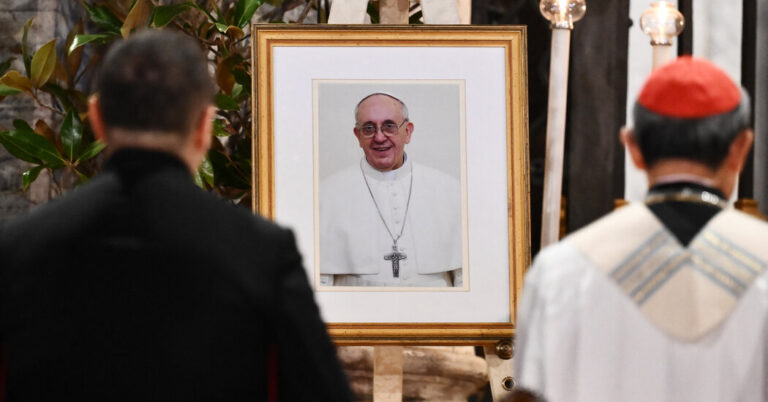
Founded by Conrad Hilton, the hotel magnate, the foundation is one of the biggest financial backers of Catholic sisters’ work around the world, and has given roughly $28.5 million to Vatican-led initiatives, including Vatican departments, the majority of that since 2020. Regardless of the conclave’s outcome, the foundation is committed to continuing its partnerships with the Vatican, and to support programs focused on Catholic sisters, Sr. Jane added.
Francis saw donors as vital partners. He looked to them not only to fund the causes dear to him but also to plug the Vatican’s creaky finances. In February, while the pope was recovering from a near-death bout of double pneumonia, he created the Commissio de Donationibus pro Sancta Sede, a committee to fund-raise directly for the curia, or the Vatican’s governing hierarchy, and to shore up its many budget shortfalls. Francis’ initiative was bold: He was essentially betting that donors would be happy to openly fund church bureaucracy as well as the Roman Catholic Church’s far-flung missions around the world.
Such an ask would have been an extremely tough sell when the Francis papacy began.
Back then, the church’s financial reputation was in tatters.Accounting intrigue and scandal at the Vatican Bank loomed over the last conclave. In 2013, just before Francis was elected pope, Italian banking authorities had shut off most of the A.T.M.s in the Vatican and blocked credit card transactions at the Vatican Museum, until the microstate could prove it was meeting international anti- money-laundering standards. Decades of mismanagement and corruption scandals had taken their toll.
The church seemed to need a great business mind as much as it needed a towering theologian.
To donors’ relief, Francis modernized the Vatican’s financial oversight. A year into his papacy, he created an auditor general and beefed up internal anti-corruption controls. He also introduced some financial transparency (though it’s far from business-world standards) and brought in outside auditors, such as KPMG and EY, to help keep a lid on costs and make the Holy See’s curia run more professionally.
He also worked more closely with the church’s major donors, and their influence on the church grew.
At the same time, the Vatican hosted a series of impact-investing summits to bring more Wall Street money to causes close to Francis, many of the same ones that donors often focus on. The pope became a featured speaker at major international events, addressing in 2023 the Clinton Global Initiative.
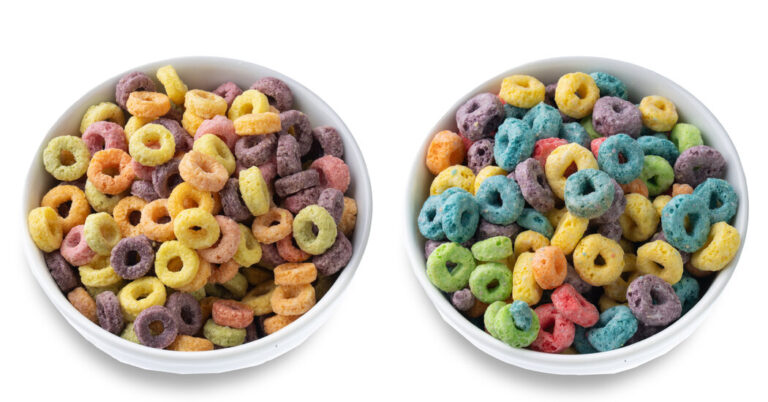
A box of Froot Loops sold in the United States contains vivid rings of red, orange, green, purple, yellow and blue — neon colors derived from synthetic dyes, like Red No. 40, Yellow No. 5, Blue No. 1 and Yellow No. 6. In a box sold in Canada, the colored rings obtain paler shades from the juices of blueberries, watermelon and huito, an Amazonian fruit. And not a single one is blue.
The manufacturer in both countries, WK Kellogg, formerly known as the Kellogg Company, can clearly make Froot Loops without synthetic dyes. The question is: Will it and other big food companies adopt the approach in United States? And will consumers, raised on color-popping cereals, flame-colored nacho chips and neon blue sports drinks consume those foods if they are a bit more … beige?
Robert F. Kennedy Jr., the secretary of the Department of Health and Human Services, wants them to. On Tuesday, Mr. Kennedy, who has long criticized artificial dyes used in Froot Loops and other processed foods as part of a larger food system that he says contributes to chronic disease and poor health, announced that he had reached “an understanding” with major food manufacturers to remove commonly used petroleum-based food colorings from their products by 2026.
The meaning of “an understanding” remains unclear. No food companies attended the press conference, and few have said they will remove synthetic colors, which the Food and Drug Administration currently allows. But a shift may be coming. This week, citing expected demand from consumers, the beverage giant PepsiCo, which also makes Doritos and Lay’s potato chips, said it would either phase out synthetic colors or offer consumers natural color options in the next couple of years.
Mr. Kennedy is perhaps hoping that using his bully pulpit as head of the agency that oversees the F.D.A. will be enough to push big food companies to change their ways. They have responded to pressure before. About a decade ago, a number of companies tried shifting to natural colors. Most notably, Kraft Macaroni & Cheese successfully replicated its characteristic orange noodles by switching to turmeric and paprika. But other companies struggled. Some reverted to synthetic dyes after sales slumped.
For some critics of synthetic dyes, however, Mr. Kennedy’s announcement was a disappointment. Dr. Peter Lurie, a former F.D.A. official and the executive director of the Center for Science in the Public Interest, said the government should move more forcefully to eliminate the dyes.
“History tells us that relying on voluntary food industry compliance has all too often proven to be a fool’s errand,” Dr. Lurie said in a statement.
Rewriting the Recipe
No matter how much pressure Washington exerts, shifting to natural colors won’t happen overnight. It is not as easy as simply replacing Yellow No. 6 with carrot juice, said James Herrmann, marketing director of food colors at Sensient Technologies, a company that manufactures colors — both artificial and natural — for the food and beverage industry.
It can take up to two years to develop the seeds, grow the plants and concoct the combination of, say, red cabbage and black carrot extract that produces a desired shade, he said. And it’s not just getting the color right. Food companies are likely to have to make adjustments to their manufacturing processes and facilities.
Light and heat are enemies of natural colors, causing them to fade, change or even, in some cases, separate, Mr. Herrmann said. Natural colors must be kept cool, and they have a relatively short shelf life, which means adding refrigeration and ensuring a steady supply of them, he said. He added that colors from carrot or beet juice and their synthetic cousins might have different viscosities, requiring factories to change pumps or the piping used to apply the colors.
Also, more natural dye is needed to achieve a satisfying color than synthetic dye, so recipes may have to be reformulated. “Your sugar or flour may be off,” Mr. Herrmann said.
And that’s assuming enough carrots, cabbage, beets and spirulina (an algae) are available to replicate the oranges, greens and blues of chips and sports drinks. Mr. Herrmann, whose company uses proprietary seeds for most of its colorings, said he wouldn’t “put the seed in the ground for the crop until we know there’s a customer there for it.”
“If everybody switches at once,” he added, “there is simply not enough material around the world available to meet the demand.”
Because it can take 10 times as much material from natural colors to mimic a small amount of synthetic dyes, costs could very likely climb as well.
Late Tuesday, the Consumer Brands Association, the trade organization for the food industry, said in a statement that the ingredients in the food supply “have been demonstrated to be safe” and “removing these safe ingredients does not change the consumer packaged goods industry’s commitment to providing safe, affordable and convenient product choices to consumers.”
Stacy Flathau, a co-chief corporate affairs officer at WK Kellogg, said in an emailed statement that 85 percent of its cereals contained no artificial colors, but that it was removing synthetic colors from those sold in schools. The company added that it was looking forward to working with the F.D.A. to identify ways to remove artificial colors from foods containing them.
Growing Colors From Scratch
Concerns about the safety of food colorings, especially regarding behavior in children, have been on the rise. A 2021 health assessment by the State of California suggested that “synthetic food dyes are associated with” behaviors “such as inattentiveness, hyperactivity and restlessness in sensitive children.” In Europe, food containing some dyes come with a warning label to that effect. Health Canada, which allows the use of food dyes but with strict restrictions on the amounts, notes on its website that it deems the evidence of those effects in children to be insufficient.
California banned artificial dyes in school meals in 2024, and just last month, West Virginia enacted a statewide ban, the most comprehensive in the country. More states are considering restrictions.
Sensient had been building its portfolio of natural colors, assuming that, by 2030, food companies will have moved away from synthetics. But the timeline could be speeding up.
Sensient develops its natural colors starting with the seed. It has developed a variety of beets, for instance, that are larger and more saturated in color, Mr. Herrmann said. The company provides those seeds to contract farmers around the world. After the produce is harvested, Sensient pulps, pulverizes and strains the purple sweet potatoes, red radishes and grapes into a rainbow of extracts, powders and liquids.
The process also eliminates the flavors of most of the underlying fruits, vegetables or other plants, but not all.
“You’re never going to take the taste out of strawberry juice. It’s going to be a little acidic, a little strawberry-ish. And that works well for a strawberry flavor in a kids’ cereal,” said Linsey Herman, a vice president of research and development at Nature’s Path, which makes organic cereals and other foods. “But nobody is dying for a carrot-flavored cereal.”
Even though the color, whether natural or synthetic, doesn’t often change the taste profile of the frosted pastry or chip or soda, the appearance does signal certain flavors — or intensity of flavors — to consumers, said Charles Spence, a professor of food psychology at the University of Oxford.
“If you reduce the color saturation level of a drink, your mind may tell you it’s going to taste less sweet or less sour than the original color,” Mr. Spence said. “Duller hues may signal that this is a duller flavor or stale for some people, while for others it may signal that it’s a more natural color, something found more in nature.”
In recent years, Mr. Herrmann said, about 80 percent of new foods and beverages hitting the market were being made with natural colors. But food companies have dragged their feet on making the switch with popular existing products over fear that consumers may spurn them.
“They have to understand what their die-hard fans want,” he said, “and make sure the natural product reaches the synthetic shades as closely as possible.”
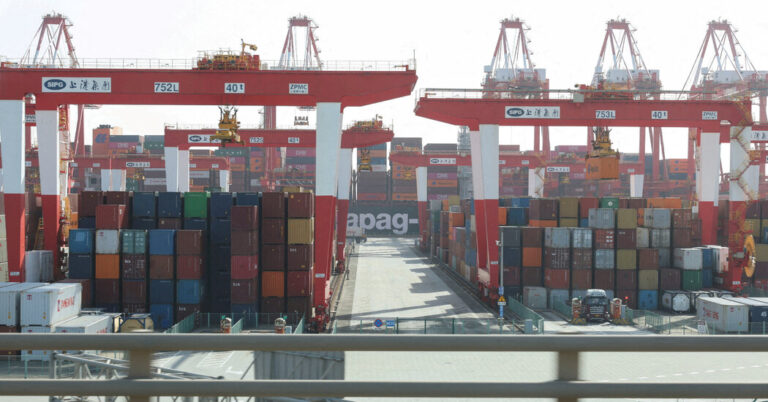
The exact cause of the blast at the Shahid Rajaee port in the city of Bandar Abbas was not immediately clear, but the Iranian authorities did not suggest it was sabotage or a deliberate attack.
The state-run Islamic Republic News Agency quoted an official as saying the explosion was likely set off by containers of chemicals that caught fire. It sent up immense clouds of black smoke, according to footage from the scene distributed by an Iranian broadcaster and video from social media that was verified by The New York Times.
Masoud Pezeshkian, the Iranian president, said the country’s interior minister was heading to the region to oversee an investigation into the explosion. He expressed “deep sorrow and sympathy” for the explosion’s deadly toll.
Bandar Abbas is strategically located along the Strait of Hormuz, where the Persian Gulf meets the Gulf of Oman — a busy shipping lane for the world’s oil and natural gas.
In 2020, Israel launched a cyberattack that hampered operations at the Shahid Rajaee port as part of its long-running shadow war with Iran. Israeli officials did not immediately respond to a request for comment on Saturday’s explosion.
But in an apparent attempt to rebuff rumors of Israeli involvement, the office of the Iranian attorney general issued a statement denouncing “online activists” who spread rumors that undermined the “psychological security of society.”
The explosion came around the time that American and Iranian officials began meeting in Oman on Saturday for a third round of talks on Iran’s nuclear program.
Last week, The New York Times reported that Israel had planned to attack Iranian nuclear sites as soon as next month, but it was waved off by Mr. Trump, who wanted to negotiate an agreement with Tehran instead. But Mr. Trump has also vowed to prevent Iran from obtaining a nuclear weapon, including by military action if necessary.
Three months ago, things were looking pretty good for Tim Fulton and Ramper Innovations, a manufacturer of airplane equipment based in Sitka, Alaska.
Mr. Fulton was spending his days inside his workshop doing what he loved: building the company’s main product — a fold-up conveyor belt that unfurls in the belly of a plane to load and unload cargo or luggage. He had an order from the U.S. Air Force that he was confident would serve as a catalyst and bring in new customers from Asia and the Middle East while luring potential investors.
Then, the tariffs from President Trump struck.
The New York Times heard from Mr. Fulton and hundreds of other American business owners who said they have been stunned into paralysis by Mr. Trump’s barrage of tariffs. They are reassessing their product lines and supply chains and even putting their operations on hold.
Mr. Fulton, 66, was floored at the size of the tariffs and how quickly and chaotically they were applied. There were tariffs on Mexico and Canada and steel and aluminum. Mr. Trump hit dozens of countries with higher “reciprocal” tariffs he then put on hold when financial markets crashed. China struck back and the import tariff on Chinese goods ratcheted up to 145 percent.
Even though Ramper makes its products in the United States and buys as much of its components as possible from American companies, there is no getting around the tariffs. Some essential parts, such as motorized and static rollers from Japan, are only available overseas. The raw materials needed to build other critical parts are also imported. Most of Ramper’s U.S. suppliers rely on imports for some part of their supply chain.
Ramper raised its price 17 percent — a ballpark estimate for how much the tariffs would inflate its costs. Mr. Fulton also warned prospective customers that he may need to increase his price further if tariffs pushedhis costs up by more than 5 percent. Prospective customers balked at the higher prices and the uncertainty of what the final price might be.
After years of refining and testing his foldable conveyor belt, a robust pipeline of interested buyers disappeared overnight, Mr. Fulton said. Potential investors turned gun-shy, afraid to plow money into a company at the mercy of arbitrary tariff policies.
“I feel like things have ground to a halt,” said Mr. Fulton, who started the company in 2019after working 38 years as a ramp agent, an airline ground crew member who loads and unloads baggage.
With no orders to fill, Mr. Fulton rented out his home in Alaska and temporarily moved to Brazil, where his wife is from, because the cost of living is lower. And instead of closing deals with investors to raise more money, he is consulting a bankruptcy lawyer.
Businesses are rushing to cancel factory orders or halt shipping containers before they leave China, unable to afford the tariff when the ships arrive in America. They are pausing capital investments and new hiring, and scaling back spending to only the bare necessities. Future products are being scrapped, because they are no longer financially viable.
And the logistics firms, marketing agencies and others in the ecosystem of companies that support small businesses are feeling the sting as the wheels of commerce slow down.
“Everything is stuck and no one knows what to do,” said Kristina Anisimova, who owns SinoImport USA, a supply chain management firm based in Mooresville, N. C.
Ms. Anisimova said one-third of her customers, most of whom work primarily with Chinese factories, are suspending shipping orders, hoping that the tariffs are eventually eased.
She said the unluckiest companies are the ones whose shipments are already in transit, because they no longer have the option of delaying or stopping an order. When their goods arrive in the United States, some of those companies will be forced to pay twice as much as they had budgeted to take delivery of their products.
“When you consider a project, you can see what you have to pay. But in this situation, you cannot predict anything,” said Ms. Anisimova. “And now everything is on pause.”
She said the timing is also bad because May, June and July tend to be busy months for Chinese factories ramping up to churn out products to ship to the United States for the year-end shopping season.
Robb Stilnovich, owner of Premier Columbaria, a supplier of cremation memorials based in Centralia, Wash., said coming off a record year in 2024, his company was considering remodeling its warehouse to store more inventory and buying a new forklift. But those plans are now on hold.
Premier Columbaria’s modular granite memorials manufactured in China are now carrying an import tax of 174 percent, compared to 29 percent last year. He ships 80 to 100 containers a year from China.
Without any certainty in what projects might end up costing, his cemetery customers are choosing to wait and see how things shake out. His future orders were down 97 percent compared to a year ago.
He said one prospective customer had agreed to place an order with a 150 percent markup. Mr. Stilnovich came up withthat number based on what his shipping company had estimated weeks ago was the maximum tariff that could be applied. But when the actual rate surged even higher, the customer canceled.
“Everybody just hit pause, and they’re saying ‘Let’s see what happens in six months,’” said Mr. Stilnovich, 53. “If I am down 97 percent compared to last year, I can’t stay in business too long.”
He is also worried about how the pause will affect his longtime Chinese factory partner, who has worked with his company for two decades and has specialized equipment and know-how critical to producing his products. Mr. Stilnovich said he was on his way to Xiamen, in southeastern China, to help manage layoffs at that partner’s factory.
Mr. Stilnovich said he has three containers in transit. He expects to be taxed at 50 percent for two of those containers because they shipped before the latest escalation in tariffs. For the last one, he expects the shipment to carry a 174 percent tariff, requiring him to pay $80,000 at the port.
He said exposure to such unforeseen costs is “devastating” to his company, a family-run operation of 20-plus years. Mr. Stilnovich’s wife takes care of the back office and his brother handles sales. He said they have inventory and projects lined up until August, but then things “drop off a cliff.”
Any pause is especially harsh for small businesses with limited cash flow. They are usually working without much cushion to weather a sudden interruption, and they have less negotiating power to persuade suppliers to hold orders for an extended period of time.
For Mr. Fulton of Ramper Innovations, the priority has become working on deals to maintain some momentum for his company even if the baggage-loading product is no longer made in the United States. He has an agreement with an Italian company that will license his product and make it in Europe for sale in European, Middle Eastern and African markets. He is looking into a similar deal with potential partners in Thailand or India.
It’s not what he envisioned when he invested his retirement funds into the company. He wanted to manufacture in America. Specifically he wanted to prove wrong the naysayers who said making a product in Alaska was crazy.
While Mr. Fulton said he is trying to remain positive and optimistic, he said he is not sure how the company is going to make it.
“It puts a lump in my heart when I allow myself to think about what’s coming down,” he said. “There are these places where I might be able to get a finger hold, but it doesn’t feel like I’m going to be able to pull myself up.”
Port Vale secured automatic promotion to League One after beating AFC Wimbledon 2-0 at the Cherry Red Records Stadium.
Second-half goals by Jayden Stockley and Jaheim Hedley ensured Vale would finish in the top three and also made a dent in the home side’s push for the play-offs.
Vale created the first real attempt of the game which saw Lorent Tolaj fire over from 12 yards out following a cross by Ryan Croasdale.
Please use Chrome browser for a more accessible video player
Jayden Stockley’s header puts Port Vale ahead against AFC Wimbledon.
The hosts responded with a Sam Hutchinson effort from the edge of the area which was kept out at full-stretch by Ben Amos in first-half injury time.
Vale upped the tempo in the second half, and they struck twice within the space of three minutes just after the hour.
Please use Chrome browser for a more accessible video player
Jaheim Headley gets Port Vale’s second goal in three minutes against AFC Wimbledon.
Hedley’s 64th-minute free-kick was flicked on by Stockley past the outstretched hand of Owen Goodman to open the scoring.
Then, three minutes later, Hedley got on the scoresheet himself when he fired home after being found by George Byers.
Wimbledon saw manager Johnnie Jackson sent off after the second goal and the hosts struggled to get back into the contest as Vale comfortably held on to confirm their return to League One.
Darren Moore delight as Port Vale win immediate promotion back to League One
Port Vale boss Darren Moore:
“Today was a case of getting the promotion sealed, and that’s what we secured. Next week we’ll see our fans and it will be a packed house at Vale Park.
“I’m really pleased for everyone connected with the club, I was pleased with the performance as much as anything.
“We know that to come here, it’s not an easy place to come to. They haven’t given much away here all season.
“But the manner we took the game to them was really pleasing, and I’m so proud of the players.
“We had moments in the game, and credit to the players after the disallowed goal for regaining their focus.
“The header from Jayden was textbook, and the second goal from Jaheim is a fantastic well-worked goal.”