


Highlights of the Super League clash between Leeds Rhinos and Hull KR.
Source link
TWO reds and LATE drama as Hull KR beat Rhinos!

F.D.A. Scientists Are Reinstated at Agency Food Safety Labs
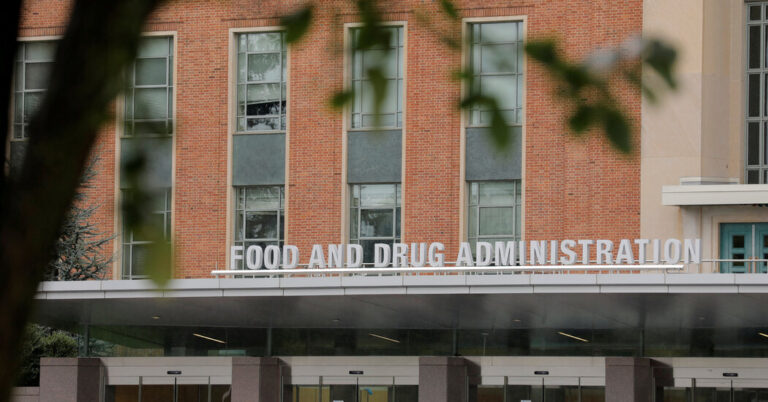
Federal health officials have reversed the decision to fire a few dozen scientists at the Food and Drug Administration’s food-safety labs, and say they are conducting a review to determine if other critical posts were cut.
A spokesman for the Department of Health and Human Services confirmed the rehirings and said that several employees would also be restored to the offices that deal with Freedom of Information requests, an area that was nearly wiped out.
In the last few months, roughly 3,500 F.D.A. jobs, about 20 percent, were eliminated, representing one of the largest work force reductions among all government agencies targeted by the Trump administration.
The H.H.S. spokesman said those employees called back had been inadvertently fired because of inaccurate job classification codes.
The decision to rehire specialists on outbreaks of food-related illnesses and those who study the safety of products like infant formula follows contradictory assertions made by Dr. Marty Makary, the F.D.A. commissioner, in media interviews this week.
“I can tell you there were no cuts to scientists or inspectors,” Dr. Makary said Wednesday on CNN.
In fact, scientists had been fired from several food and drug safety labs across the country, including in Puerto Rico, and from the veterinary division where bird flu safety work was underway. Scientists in the tobacco division who were dismissed in February — including some who studied the health effects of e-cigarettes — remain on paid leave and have not been tapped to return, according to employees who were put on leave.
How many fired employees will be permitted to return remained unclear.
About 40 employees at the Moffett Lab in Chicago and at a San Francisco-area lab are being offered their jobs back, the department spokesman said. Scientists in those labs studied a variety of aspects of food safety, from how chemicals and germs pass through food packaging to methods for keeping bacteria out of infant formula. Some scientists in Chicago reviewed the work and results of other labs to ensure that milk and seafood were safe.
Dr. Robert Califf, the F.D.A. commissioner under President Joseph R. Biden, said the terms “decapitated and eviscerated” seemed fitting to describe the steep loss of expertise at the agency. He said the F.D.A. was already falling behind on meetings meant to help companies develop safe products — and to design studies that give clear answers about their effectiveness.
“Most of it is really at this level of fundamental, day-to-day work that has a huge impact overall, but it’s not very controversial,” he said. “It’s just that it takes work, and they have to have people to do the work.”
Dr. Makary has also said the layoffs did not target product reviewers or inspectors. But their work has been hampered by voluntary departures, the elimination of support staff and the broader disruption at an agency where many are fleeing for the exits, according to former staff members.
Hundreds of drug and medical device reviewers, who make up about one-fourth of the agency work force, have recused themselves from key projects, Dr. Scott Gottlieb, a former agency commissioner, said on CNBC. Under F.D.A. ethics rules, staff members who are interviewing for jobs cannot do agency review work on products by companies where they are seeking employment — or for a competitor.
Dr. Gottlieb also said cuts to the office of generic drug policy wiped out employees with expertise in determining which brand-name drugs are eligible to be made as lower-cost generics, calling those job eliminations “profound.” Approving generic drugs can save consumers billions of dollars.
Support staff for inspectors investigating food and drug plants overseas were also cut, raising security concerns. Dozens of workers who lost their jobs attended to security monitoring to ensure that inspectors were safe, especially in hostile nations.
2-Year-Old U.S. Citizen Was Deported ‘With No Meaningful Process,’ Judge Suspects

A federal judge in Louisiana expressed concern on Friday that the Trump administration had deported a 2-year-old U.S. citizen to Honduras “with no meaningful process” and against the wishes of her father.
In a brief order issued from Federal District Court in the Western District of Louisiana, Judge Terry A. Doughty questioned why the administration had sent the child — known in court papers only as V.M.L. — to Honduras with her mother even though her father had sought in an emergency petition on Thursday to stop the girl from being sent abroad.
“The government contends that this is all OK because the mother wishes that the child be deported with her,” wrote Judge Doughty, a conservative Trump appointee. “But the court doesn’t know that.”
Asserting that “it is illegal and unconstitutional to deport” a U.S. citizen, Judge Doughty set a hearing for May 16 to explore his “strong suspicion that the government just deported a U.S. citizen with no meaningful process.”
The case of V.M.L., which was reported earlier by Politico, is the latest challenge to the legality of several aspects of President Trump’s aggressive deportation efforts.
The administration has already been blocked by six federal judges in courts across the country from removing Venezuelan migrants accused of being gang members to El Salvador under a rarely invoked wartime statute. It has also created an uproar by wrongfully deporting a Maryland man, Kilmar Armando Abrego Garcia, to El Salvador and so far refusing to work to bring him back.
According to court papers, the 2-year-old girl had accompanied her mother, Jenny Carolina Lopez Villela, and her older sister, Valeria, to an immigration appointment in New Orleans on Tuesday when they were taken into custody by officials from U.S. Immigration and Customs Enforcement.
Ms. Lopez Villela was scheduled for an expedited removal from the country on Friday. And in a filing to Judge Doughty, lawyers for the Justice Department claimed that she “made known to ICE officials that she wanted to retain custody of V.M.L. and for V.M.L. to go” with her to Honduras.
But in a petition filed by the child’s custodian, Trish Mack, on Thursday, her father claimed that when he spoke briefly with Ms. Lopez Villela, he could hear her and the children crying. The father reminded her, the petition said, that “their daughter was a U.S. citizen and could not be deported.”
The father, who was not identified by name in the petition, tried to give Ms. Lopez Villela the phone number for a lawyer, but he claims that officials cut short the call.
The detention of V.M.L. “is without any basis in law and violates her fundamental due process rights,” the petition said. “She seeks this court’s urgent action and asks the court to order her immediate release to her custodian Trish Mack, who is ready and waiting to take her home.”
Judge Doughty said in his order that he tried to investigate what had happened himself by trying to get Ms. Lopez Villela on the phone on Friday shortly after noon to “survey her consent and custodial rights.”
The judge expressed concern that a plane carrying the mother and her daughters was by then already “above the Gulf of America.” His suspicions were confirmed, he wrote, when a lawyer for the Justice Department told him at 1:06 p.m. that day that Ms. Lopez Villela and presumably her children “had just been released in Honduras.”
The White House and the Department of Homeland Security did not immediately respond to messages seeking comment.
Virginia Giuffre, Voice in Epstein Sex Trafficking Scandal, Dies at 41
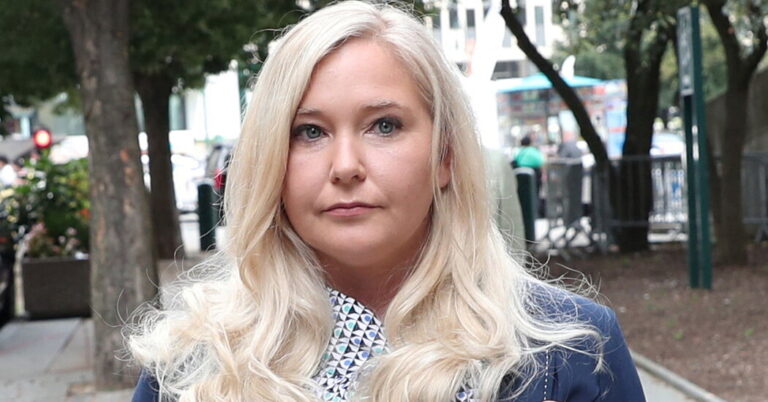
Virginia Giuffre, a former victim of Jeffrey Epstein’s sex-trafficking ring who said she was “passed around like a platter of fruit” as a teenager to rich and powerful predators, including Prince Andrew of Britain, died on Friday at her farm in Western Australia. She was 41.
Ms. Giuffre died by suicide, according to a statement from the family. Ms. Giuffre (pronounced JIFF-ree) wrote in an Instagram post March that she was days away from dying of renal failure after being injured in a crash with a school bus that she said was traveling at nearly 70 m.p.h.
In 2019, Mr. Epstein was arrested and charged by federal prosecutors in the Southern District of New York with sex trafficking and conspiracy, and was accused of soliciting teenage girls to perform massages that became increasingly sexual in nature.
Barely a month after he was apprehended, and a day after documents were released from Ms. Giuffre’s successful defamation suit against him, Mr. Epstein was found hanged in his cell in the Metropolitan Correctional Center in Lower Manhattan. His death, at 66, was ruled a suicide.
In 2009 Ms. Giuffre, identified then only as Jane Doe 102, had sued Mr. Epstein, accusing him and Ghislaine Maxwell, his co-conspirator and the daughter of the disgraced British media magnate Robert Maxwell, of recruiting her to join his sex trafficking ring when she was a minor under the guise of becoming a professional masseuse.
In 2015, she was the first of Mr. Epstein’s victims to give up her anonymity and go public, selling her story to The Mail on Sunday, a British tabloid.
“Basically, I was training to be a prostitute for him and his friends who shared his interest in young girls,” Ms. Giuffre was quoted as saying in Nigel Cawthorne’s book, “Virginia Giuffre: The Extraordinary Life Story of the Masseuse Who Pursued and Ended the Sex Crimes of Millionaires Ghislaine Maxwell and Jeffrey Epstein” (2022).
“Ghislaine told me that I have to do for Andrew what I do for Jeffrey,” she said.
Ms. Giuffre accused Mr. Epstein, a millionaire financier, and Ms. Maxwell, a British socialite, of forcing her to have sex with Prince Andrew, also known as the Duke of York. He flatly denied the accusations, but relinquished his royal duties in 2019.
In 2021 she sued the prince, who is the younger brother of King Charles II, for sexually assaulting her at Ms. Maxwell’s home in London and at Mr. Epstein’s homes in Manhattan and Little St. James in the Virgin Islands.
A widely published photograph showed Prince Andrew with his hand around her waist; he said he had no memory of the occasion.
After Prince Andrew agreed to settle the suit by Ms. Giuffre in 2022, he praised her in a statement for speaking out and pledged to “demonstrate his regret” for his association with Mr. Epstein “by supporting the fight against the evils of sex trafficking, and by supporting its victims.”
The settlement included an undisclosed sum to be paid to her and to her charity, now called Speak Out, Act, Reclaim.
In interviews and depositions, Ms. Giuffre said she was recruited to the sex ring in 2000 while working as a locker room attendant in President Trump’s Mar-a-Lago resort in Palm Beach, Fla. By her account she was reading a massage therapy manual when she was approached by Ms. Maxwell and was invited to become Mr. Epstein’s traveling masseuse. She said that the pair then groomed her to perform sexual services for wealthy men.
She sued Ms. Maxwell for defamation in 2015; they settled on an undisclosed sum in 2017. Ms. Maxwell’s trial and conviction in 2022 were viewed as a legal reckoning that Mr. Epstein had denied the judicial system — and his victims — by hanging himself. Ms. Maxwell was sentenced to 20 years in prison.
Virginia Louise Roberts was born on Aug. 9, 1983, in Sacramento to Sky and Lynn Roberts. When she was 4, the family moved to Palm Beach County, where her father was a maintenance manager at Mar-a-Lago.
She said she ran away from home after having been molested by a close family friend since she was 7. She was placed in foster homes, boarded with an aunt in California, fled to the former hippie haven of Haight-Ashbury in San Francisco, lived on the streets when she was 14 and spent six months with a 65-year-old sex trafficker who abused her.
Compared to living on the streets and earning $9 an hour for her summer job at Mar-a-Lago, Mr. Epstein’s offer to make $200 a massage — several times a day — was, Mr. Cawthorne wrote, one that “Virginia had determined for herself she could not refuse.”
But her mandate went well beyond. She told the BBC in 2019 that she was “passed around like a platter of fruit” to Mr. Epstein’s friends and ferried around the world on private jets.
In 2002, when she was 19, she enrolled in the International Training Massage School in Thailand to become a professional masseuse and was assigned to recruit a young girl for the ring. There, she met Robert Giuffre, an Australian martial arts instructor, and they married.
The couple had three children and lived in Australia, Florida and Colorado before settling in Perth in 2020. They have since separated. A complete list of survivors was not immediately available.
Ms. Giuffre told The Miami Herald in 2019 that the birth of her daughter in 2010 prompted her to speak publicly about her victimization. She also explained why she had originally agreed to let Mr. Epstein and Ms. Maxwell groom her as a masseuse and to provide sexual services.
“They seemed like nice people so I trusted them, and I told them I’d had a really hard time in my life up until then — I’d been a runaway, I’d been sexually abused, physically abused,” Ms. Giuffre said. “That was the worst thing I could have told them because now they knew how vulnerable I was.”
Hank Sanders contributed reporting.
Downtown L.A. Has Seen Its Share of Violence. Then Someone Went After Its Trees.

On a busy stretch of Grand Avenue in downtown Los Angeles, three orange-and-white traffic cones sit atop the dirt in grates on the sidewalk where three trees once stood.
It’s not a construction site. It’s a kind of crime scene.
The three trees were some of the victims of one man’s bizarre eight-day tree-killing spree that destroyed more than a dozen mature trees in and around downtown Los Angeles, blocks from City Hall and Frank Gehry’s Walt Disney Concert Hall.
The man, the authorities said, roamed the streets in the middle of the night and used a chain saw to cut elm, ficus and other trees. Some were sawed right across the middle. Others were left with bare branches. Officials said the damage totaled $347,000. He was apprehended on Earth Day.
Downtown Los Angeles is one of those urban American places that has, in a sense, seen it all.
There have been violent attacks that made headlines, such as a shooting at a Target in December that injured two security guards. There is homelessness, with tents and encampments spread across sidewalks and doorways. It had emptied out during the pandemic but has experienced a revival as tourists and residents flock to popular spots like Grand Central Market. Downtown remains a hub of protests and gatherings, including a parade last year celebrating the Dodgers’ World Series victory.
But the sight of butchered trees, some of the few spots of greenery in a landscape of concrete and skyscrapers, has rattled and saddened Angelenos far beyond downtown.
The case sparked an intense manhunt, prompting the police to ask the public for tips and scour surveillance footage. The mayor, the district attorney and city leaders have weighed in. There have been news conferences calling for increased investments in public safety. After the wildfires that destroyed thousands of homes and upended thousands of lives three months ago, some residents have wondered: What’s next?
Blair Besten, the executive director of the nonprofit Historic Core Business Improvement District, said that while crime is not uncommon in the city, losing the trees felt personal for many residents of downtown.
“It’s just one of those things,” Ms. Besten said. “How bad can it get?”
One of the first trees was chopped down on April 14. Others were damaged in the days afterward. In all, at least 13 trees were destroyed or mutilated, and investigators were reviewing evidence to see if more trees had been cut down.
On Tuesday, the police said they had arrested a man at a homeless encampment who they believed was responsible. Detectives relied on tips from residents in the neighborhood and the surveillance footage they examined from several buildings and other sites.
The man, Samuel Patrick Groft, 45, of Los Angeles, was charged with felony vandalism, and he was being held in a county jail on a $150,000 bail. The police declined to comment about the motive behind the attack.
Records show that Mr. Groft has had several run-ins with the law, including charges of assault with a deadly weapon, burglary and vandalism.
In 2023, Mr. Groft told The University Times, the student newspaper of California State University, Los Angeles, that he had been experiencing homelessness for several years. Mr. Groft said that he had been offered a shared room through a public program, but declined the offer because he did not want to live with a “schizophrenic guy.”
The Los Angeles County Public Defender’s Office, which is representing Mr. Groft, declined to comment about his case on Friday.
Cassy Horton, a co-founder and board member of the Downtown Los Angeles Residents Association, an advocacy group of neighbors, said the felled trees have become a rallying cry to call attention to downtown’s needs.
“It’s not just a neighborhood where people go home at 5,” Ms. Horton said. “To have something like that taken away, when it’s so hard for us to move the needle already to improve the neighborhood, I think really hurt people, and it felt very senseless.”
Ysabel Jurado, a city councilwoman who represents downtown, told reporters at a news conference on Thursday that two trees would replace each one that was cut down, thanks to the help of nonprofits in the area.
“For many of our DTLA residents, the public right of way is their front yard, so the loss of these trees is personal,” Ms. Jurado said in a statement.
Among the trees that were damaged were three Chinese elms and one ficus tree on Grand Avenue, along with another ficus tree, one sycamore and one palm, according to the city’s street services department, StreetsLA.
Ms. Horton, who has lived downtown for three years and has worked there since 2009, said she has seen the trajectory of the area go from bustling with foot traffic to being “gutted” during the height of the coronavirus pandemic lockdowns.
Since that time, downtown Los Angeles has slowly come back to life. Tourists regularly visit to take rides up the Angels Flight Railway, two funiculars that carry people up a steep slope in the Bunker Hill area. Others stop at the bars and restaurants on their way to a concert or a Lakers game at Crypto.com Arena on the west side of downtown.
“It is the place that people come after the Dodgers win,” Ms. Horton said. “It’s the place that people come to protest new policies from the Trump administration. It is our natural convening place.”
Claudia Oliveira, the chief executive and president of the Downtown Los Angeles Chamber of Commerce, said the episode “struck a nerve” there because residents have already had to contend with so many other issues.
“A person should not be walking around with a chain saw,” Ms. Oliveira said. “That’s not normal.”
Nathan Hochman, the Los Angeles County district attorney, said on Thursday that Mr. Groft had been charged with eight felony counts of vandalism. Mr. Groft could face additional charges as investigators gather more evidence.
“What took years to grow only took minutes to destroy,” Mr. Hochman said in a statement, adding that his office will prosecute “anyone who engages in such criminal conduct to the fullest extent of the law.”
If convicted, Mr. Groft could face more than six years in prison.
Even after the arrest, the experience has been unnerving for many.
“What could be a tree today can be a person tomorrow,” Ms. Oliveira said. “It’s scary.”
Sheelagh McNeill contributed research.
Rory McIlroy, Shane Lowry six off pace at PGA Tour’s Zurich Classic of New Orleans after troubled finish | Golf News

Rory McIlroy and Shane Lowry head into the weekend six shots off the lead at the Zurich Classic of New Orleans team event after a costly finish to their second round.
The defending champions finished their round in the day-two foursomes format with back-to-back bogeys on the 17th and 18th holes to drop them into a nine-way tie for 16th place after a three-under par round of 69.
The pair had been six under for the round through 12 holes with the highlight an eagle three at the par-five second but had already registered bogey at the 13th before their disappointing finish.
American duo Isaiah Salinda and Kevin Velo continue to lead the way although also shot 69 on Friday a day after their stunning 14-under 58 in the fourballs.
Andew Novak and Ben Griffin are on 16-under after a second-round 66, while English duo David Skinns and Ben Taylor are tied fifth after a 67.
Watch the Zurich Classic of New Orleans throughout the week live on Sky Sports. Early coverage continues Saturday from 2pm on Sky Sports Golf ahead of full coverage from 6pm, with extra action on Sky Sports +. Get Sky Sports or stream with NOW.

Get the best prices and book a round at one of 1,700 courses across the UK & Ireland
Trump Budget to Take Ax to ‘Radical’ Safety Net Programs
The Trump administration, which has made clear that it aims to slash government spending, is preparing to unveil a budget proposal as soon as next week that includes draconian cuts that would entirely eliminate some federal programs and fray the nation’s social safety net.
The proposed budget for the 2026 fiscal year would cut billions of dollars from programs that support child care, health research, education, housing assistance, community development and the elderly, according to preliminary documents reviewed by The New York Times. The proposal, which is being finalized by the White House’s Office of Management and Budget, also targets longstanding initiatives that have been prized by Democrats and that Republicans view as “woke” or wasteful spending.
Technically, the president’s blueprint is merely a formal recommendation to Congress, which must ultimately adopt any changes to spending. The full extent of President Trump’s proposed cuts for 2026 is not yet clear. Rachel Cauley, a spokeswoman for the Office of Management and Budget, said in a statement that “no final funding decisions have been made.”
But early indications suggest the budget will aim to formalize Mr. Trump’s disruptive reorganization of the federal government. That process — largely overseen by the tech billionaire Elon Musk — has frozen billions of dollars in aid, shuttered some programs and dismissed thousands of workers from their jobs, prompting numerous court challenges.
The early blueprint reflects Mr. Trump’s long-held belief that some federal antipoverty programs are unnecessary or rife with waste, fraud and abuse. And it echoes many of the ideas espoused by his budget director, Russell T. Vought, a key architect of Project 2025 who subscribes to the view that the president has expansive powers to ignore Congress and cancel spending viewed as “woke and weaponized.” He previously endorsed some of the cuts to housing, education and other programs that Mr. Trump is expected to unveil in the coming days.
The White House is expected to release the budget as soon as next week, according to two people familiar with the matter, who spoke on the condition of anonymity to describe the highly secretive process. The president is expected to couple his blueprint for 2026 with a second measure — also set for release next week — that would slash more than $9 billion in previously approved spending for the current fiscal year, including money that funds PBS and NPR.
In total, the proposed cuts are likely to inform Republican lawmakers as they look for ways to fund their economic agenda, including a package that would extend and expand a set of tax cuts enacted during Mr. Trump’s first term. Their ambitions are projected to cost trillions of dollars, though Republican leaders have explored whether to invoke a budget accounting trick to make it seem as though their tax package does not add considerably to the federal debt.
In an interview with Time published on Friday, Mr. Trump suggested that he liked the idea of making millionaires pay higher taxes to help offset tax cuts for others but also said it would be politically untenable.
Some of the cuts the administration is envisioning could exacerbate the federal deficit. The White House is looking to reduce about $2.5 billion from the budget of the Internal Revenue Service with the goal of ending the Biden administration’s “weaponization of I.R.S. enforcement,” which it said targeted conservatives and small businesses. Budget scorekeepers have previously said that cuts to the I.R.S. would reduce the amount of revenue coming into the government, since it would make it harder for the tax collector to go after businesses and people who owe money but do not pay.
In many cases, the draft budget slashes many federal antipoverty programs, generally by cutting their funds and consolidating them into grants sent to the states to manage. The full extent of those changes is not clear, but the result could be fewer programs and dollars serving low-income Americans, who may be at risk of losing some benefits.
Among the most prominent programs that could be eliminated is Head Start, which provides early education and child care for some of the nation’s poorest children.
Documents reviewed by The Times show the White House is considering a $12.2 billion cut, which would wipe out the program. The budget document says Head Start uses a “radical” curriculum and gives preference to illegal immigrants. A description of the program also criticizes it for diversity, equity and inclusion programming and the use of resources that encourage toddlers to welcome children and families with different sexual orientations.
Despite the Trump administration’s pledge to make housing more affordable, the budget draft would reduce funding for several programs that support housing developments or provide rental assistance. The budget proposes saving $22 billion by replacing the Department of Housing and Urban Development’s rental assistance programs with a state-based initiative that would have a two-year cap on rent subsidies for healthy adults.
The draft budget also eliminates the Home Investment Partnerships Program, cutting the $1.25 billion fund that provides grants to states and cities for urban development projects on the basis that it is “duplicative” of other federal housing programs. It also cuts the $644 million housing block grant programs for Native Americans and Native Hawaiians, saying that these would be unnecessary because of new, unspecified initiatives such as enhanced “opportunity zones” that would give states greater incentives to provide affordable housing.
The overhaul of the nation’s health research apparatus, a few years after the coronavirus pandemic killed millions of people around the world, could also be drastic, with about $40 billion in proposed cuts to the Department of Health and Human Services.
The draft budget recommends cutting $8.8 billion from the National Institutes of Health, which it declared has “broken the trust of the American people with wasteful spending, misleading information, risky research and the promotion of dangerous ideologies that undermine public health.”
The proposal would consolidate and shrink some of the agency’s core functions that focus on chronic diseases and epidemics. It would entirely eliminate funding for some divisions, such as the National Institute on Minority Health and Health Disparities, which would lose the $534 million that it currently receives.
The budget for the Centers for Disease Control and Prevention would be almost halved, to $5.2 billion from $9.2 billion. Associated programs such as the National Institute for Occupational Safety and Health and Public Health Emergency Preparedness and Response would be eliminated. A note in the preliminary document refers to overdose prevention funding by the Substance Abuse and Mental Health Services Administration as the “Biden crack pipe.”
Although Mr. Trump has said he prioritizes “law and order” in his presidency, his budget proposes about $2 billion of combined cuts to the F.B.I., the Drug Enforcement Administration and the Bureau of Alcohol, Tobacco, Firearms and Explosives. The D.E.A. cuts would scale back international counternarcotics efforts in European countries that are equipped to crack down on drug trafficking. The A.T.F. cuts would eliminate offices at the agency that the Trump administration says have “criminalized law-abiding gun ownership through regulatory fiat.”
The proposal said the goal was to invest in getting F.B.I. agents into the field and to eliminate diversity, equity and inclusion programs at the bureau that were “pet projects” of the Biden administration.
“Importantly, this administration is committed to undoing the weaponization of the F.B.I. that pervaded during the previous administration, which included targeting peaceful, pro-life protesters, concerned parents at school board meetings and citizens opposed to radical transgender ideology,” said the note explaining the proposed cuts.
As part of Mr. Trump’s “America First” approach, the budget draft calls for more than $16 billion in combined cuts for economic and disaster support for Europe, Eurasia and Central Asia, as well as humanitarian and refugee assistance and U.S.A.I.D. operations.
“To ensure every tax dollar spent puts America First, all foreign assistance is paused,” the draft budget document said. “To be clear, this is not a withdrawal from the world.”
Justice Dept. Policy Now Allows Pursuit of Reporters’ Records in Leak Inquiries
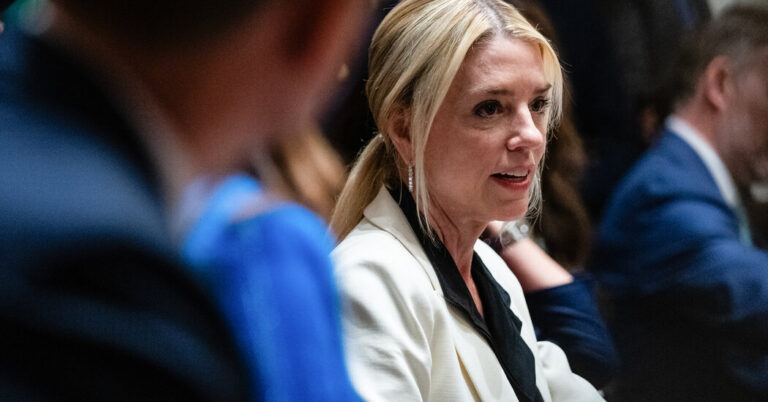
Attorney General Pam Bondi on Friday said that federal authorities may once again seek reporters’ phone records and compel their testimony in leak investigations, reversing a Biden administration policy meant to protect journalism from intrusive efforts to identify and prosecute leakers.
An internal Justice Department memo from Ms. Bondi said that the change was necessary to safeguard “classified, privileged and other sensitive information” — a far broader set of government secrets than is protected by the criminal code, which focuses primarily on making it illegal to share classified information.
From his first days in the White House in 2017, President Trump has complained bitterly about leaks of all kinds. He is also the only president to have faced criminal indictment for allegedly mishandling classified information after he left the White House, in a case that was ultimately dismissed.
Given Mr. Trump’s confrontational approach to the press, First Amendment advocates have long expected his administration to rescind Biden-era protections for journalists. But the vague phrasing of the new memo at times appeared to call for more than simply restoring past policy.
The Bondi memo said federal prosecutors “will continue to employ procedural protections to limit the use of compulsory legal process to obtain information from or records of members of the news media.” In the past, such protections have included requiring senior-level Justice Department approvals before seeking court orders for such information. The memo did not describe the protections.
The Justice Department, Ms. Bondi wrote, “will not tolerate unauthorized disclosures that undermine President Trump’s policies, victimize government agencies, and cause harm to the American people.” Even if the Trump administration were to pursue leak investigations beyond the traditional ambit of classified information in order to get a warrant, prosecutors would still have to convince judges that a crime might have been committed.
Bruce D. Brown, the president of the advocacy group Reporters Committee for Freedom of the Press, said that some of the most important reporting in U.S. history had come from reporters using confidential sources.
“Strong protections for journalists serve the American public by safeguarding the free flow of information,” he said.
The Justice Department has typically shied away from prosecuting journalists for merely possessing classified information. When prosecutors have sought reporters’ data, it has nearly always been part of an effort to identify and prosecute the person who gave the reporters the information. But the main criminal statute that governs such cases dates back to World War I, and is broadly worded.
The Bondi memo says that Justice Department officials, when deciding whether to use court orders aimed at journalists, will consider whether there are “reasonable grounds to believe that a crime has occurred and the information sought is essential to a successful prosecution,” and whether prosecutors have made all other reasonable attempts to get the information.
Prosecutors must also consider whether “absent a threat to national security, the integrity of the investigation or bodily harm,” the government has pursued negotiations with the journalist in question.
Tariff Uncertainty and Recession Fears Fuel the ‘No Buy’ Movement

With many Americans concerned that President Trump’s tariffs will make most products more expensive and possibly tip the United States into a recession, some consumers say they are opting out of spending on a wide range of items.
Instead of shopping lists, they are making “No Buy” lists.
No more outfits destined to be worn only once. No more “just because” T.J. Maxx runs. No more salon haircuts and manicures. No more eating out at restaurants. No more TikTok Shop.
This uncertain economic moment is reinvigorating a trend that took off early this year: No Buy 2025. (See also: “Low Buy” and “Slow Buy.”)
How it’s pronounced
/nō bī/
Even before the tariff threat, in thousands of videos on TikTok, users lamented how their closets and bathroom cabinets were filled to the brim with never-worn boots and years-old unopened face creams. They were unsubscribing from brands’ emails and texts, blocking retailers on X and opting out of personalized ads on TikTok. They promised themselves — and their followers — that they would stick to the challenge for the year.
It wasn’t necessarily a resolution to buy absolutely nothing. But many saw it as a moment to focus on “underconsumption.”
Now, with America imposing a minimum 10 percent tariff on nearly all its trading partners and a tariff of more than 100 percent on many Chinese goods, the no-buy challenge has become more urgent. People are preparing for higher prices on a range of products and, if a trade war drags on, the possibility that layoffs will follow and that they will have no choice but to cut back.
One TikTok user said she was adding “trendy clothes” from Shein and YesStyle to her no-buy list “because these things are getting tariffs on them anyway.”
Americans have flirted with the idea of commercial minimalism in the past, according to Silvia Bellezza, an associate professor at Columbia Business School. In a 2022 article she co-wrote with Anne V. Wilson, the authors draw a timeline of influences, including minimalist art in the 1960s, John Lennon’s plea to “imagine no possessions” in the 1970s and the now-famous 1982 photograph of Steve Jobs wearing a simple black sweater while sitting on the floor of his sparsely furnished room.
The concept of less is more came to the fore again in the 2010s, Ms. Bellezza said in an interview, as Americans were introduced to Marie Kondo’s concepts of decluttering through her book and Netflix series.
Social media has long encouraged people’s spending — or overspending — habits. The apps are rife with videos of influencers hawking everything from press-on nails to kitchen strainers.
But online platforms also have the power to give a face to this latest wave of minimalism.
“Social media allows you to make nonconsumption visible because it’s the act of nonconsuming that becomes Instagrammable,” Ms. Bellezza said.
The “No Buy” hashtag helps keep it “trendy and young,” she added.
(For what it’s worth, just as some U.S. consumers are declaring a “No Buy” year, some are leaning into “reckless consumerism” with the mind-set of “Nothing even matters anymore, why not finally book that vacation to Greece?” Others, in a bid to beat the tariff price bumps, are panic buying items to stockpile.)
For some who had already made “No Buy” pledges, the new economic uncertainty is causing some consternation.
As one TikTok user recently mused: “Now I have to cut out more. Am I just going to be eating croutons to get through the summer? I don’t know.”
FINAL FACE-OFF! Eubank and Benn go head-to-head after weigh-in drama


Following a dramatic check weigh-in, Chris Eubank Jr and Conor Benn had a final face-off before Saturday’s huge fight at Tottenham Hotspur Stadium.
Source link