Home Blog Page 360

China Is Weighing Tariff Exemptions on Some U.S. Imports

0


The Chinese government is considering whether to exclude some essential products from its retaliatory 125 percent tariffs on American goods, said the head of an American business group in China.

Officials from China’s commerce ministry canvassed businesses in China to identify imports from the United States that are crucial to supply chains and vulnerable to China’s new trade barriers, Michael Hart, president of the American Chamber of Commerce in China, said at an event in Beijing on Friday.

“There are some companies who have said that if a long-term tariff war continued, their business model would not work in China and we would see them exit,” Mr. Hart said. “We shared that with the Chinese government because they are of course trying to foster foreign direct investment.”

Lifesaving drugs and other health care products were one of the clearest sectors of concern, Mr. Hart said.

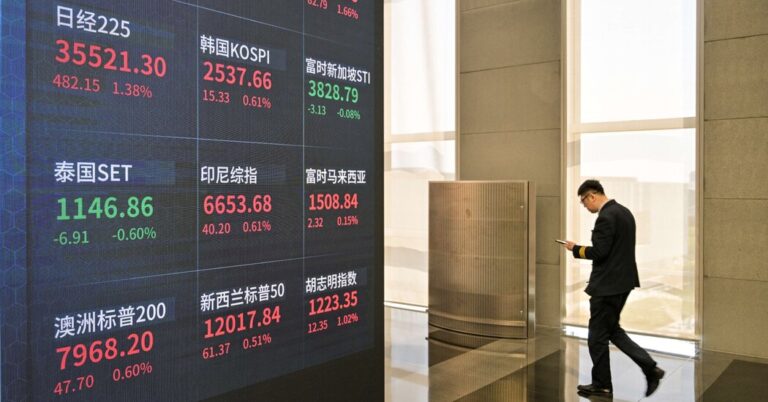
Markets in Asia and Europe rose on Friday as investors looked for signs that the trade tensions between the world’s two largest economies were starting to ease.

The trade tensions pose a major challenge for China’s economic growth, which has been powered by exports. President Trump ratcheted up tariffs this month to 145 percent for more than half of China’s exports to the United States.

Some factories in southern China have already suspended operations since the beginning of this month, raising concerns about whether unemployment could increase in China.

Chinese officials have responded by not only imposing extraordinary tariffs on U.S. imports but encouraging consumers to buy products made in China.

But there are some goods that China does not make. China depends on foreign companies for advanced computer chips, and many in the country’s tech industry have hoped semiconductors will escape the tariffs.

There have also been indications that China may be relenting on tariffs on semiconductors made in the United States. A state-backed trade association in China said this month that a significant portion of advanced chips would be exempt from China’s tariffs if they were made outside the United States even if they were sold to China by an American company.

Many advanced chips are designed by American companies like Nvidia, Qualcomm and AMD but manufactured in Taiwan. The guidance said that for the purposes of tariffs, China would not consider such chips as originating in the United States.

Reports have circulated in Chinese media outlets and on Chinese social media this week that Beijing had decided not to put tariffs on some semiconductor-related products made in the United States. The Chinese government has not announced such a policy.

On Thursday, a logistics and warehousing company in Shenzhen said on social media that it had been notified that eight types of chip-related products originating in the United States would be exempt from additional tariffs. A representative from the company, when reached by phone on Friday, could not confirm the reports.

Caijing, a Chinese business magazine, published a report on the exemptions on Friday morning. The report was removed within hours.

Guo Jiakun, a spokesman for the Chinese foreign ministry, said he was not familiar with the situation when he was asked on Friday at a news briefing whether China was considering rolling back some tariffs on U.S. products.

“Right now we are in a situation of unintended consequences,” Mr. Hart said. “The United States and China are both doing the same exercise where they are starting to understand that there may have been some unintended consequences to businesses and supply chains from the tariffs, and I think that’s why we are seeing both of them look at making exceptions.”

Siyi Zhao and Joy Dong contributed research.


Source link

Video Catches Nun Bidding Unique Farewell to Pope Francis, an Old Friend

0


Before thousands lined up for a momentary glWaimpse of Pope Francis’s body and a chance to pay their respects, one elderly nun stood facing the pontiff’s coffin, bidding a tearful farewell to her longtime friend.

A video captured the last tender moments Sister Geneviève Jeanningros shared with the man with whom she was known to be a confidante. Wearing a modest blue veil over her silver hair, Sister Geneviève stood alone and wept, rubbing her face with her hand.

Sister Geneviève is a member of a Catholic religious community called the Little Sisters of Jesus, and she said she became friends with the pontiff while he was serving as the bishop of Buenos Aires.

In a video posted by her order, Sister Geneviève said she had chided the church in a letter for not sending senior clergy to the funeral of her aunt, a nun who disappeared in the 1970s during Argentina’s military dictatorship and who was later found dead. She said that Pope Francis, who was then known as Cardinal Jorge Bergoglio, had responded by calling her the same evening.

Until last year, Sister Geneviève had lived at a fairground outside Rome in a camper, serving the disadvantaged.


Source link

China Rejects Trump Claim of Tariff Talks With Xi

0


President Trump, whose trade war with China has rattled financial markets and threatened to disrupt huge swaths of trade, suggested on Friday that he had been in touch with Xi Jinping, China’s president, even as Chinese officials insisted that no negotiations were occurring.

In an interview with Time on Tuesday, Mr. Trump said Mr. Xi had called him, though he declined to say when, and asserted that his team was in active talks with China on a trade deal. Asked about the interview outside the White House on Friday morning, the president reiterated that he had spoken with the Chinese president “numerous times,” but he refused to answer when pressed on whether any call had happened after he imposed tariffs this month.

Mr. Trump’s comments appeared aimed at creating the impression of progress with China to soothe jittery financial markets, which have fallen amid signs that the world’s largest economies are in a standoff. The S&P 500 is down 10 percent since Mr. Trump’s Jan. 20 inauguration.

But the president’s claims of talks have been rejected by Chinese officials, who have repeatedly denied this week that they are actively negotiating with the United States.

“China and the U.S. have not held consultations or negotiations on the issue of tariffs,” Guo Jiakun, the spokesman for China’s foreign ministry, said in a news conference on Friday. “The United States should not confuse the public.”

Chinese officials have repeatedly said the United States should stop threatening China and engage in dialogue on the basis of equality and respect. On Thursday, He Yadong, a spokesman for China’s Commerce Ministry, said there were “no economic and trade negotiations between China and the United States.”

“Any claims about progress in China-U.S. economic and trade negotiations are baseless rumors without factual evidence,” he said. The Chinese Embassy in Washington declined to comment on Friday, and White House spokespeople did not respond to a request for comment.

Mr. Trump ratcheted up tariffs on Chinese imports to a minimum of 145 percent this month, in a bid to force China into trade negotiations. But Chinese officials responded by issuing their own tariffs on American products and clamping down on exports to the United States of minerals and magnets that are necessary for many industries, including the defense sector.

The Chinese also appear to have ignored Mr. Trump’s suggestions that the best way to resolve the issue would be for Mr. Xi to get in touch with him directly. With the two governments at an impasse, businesses that rely on sourcing products from China — varying from hardware stores to toymakers — have been thrown into turmoil. The triple-digit tariff rates have forced many to halt shipments entirely.

Trump officials have admitted that the status quo with China on trade is not sustainable, and some have considered paring back levies on the country. But the White House insists it will not do that unless a deal is reached for China to do the same.

Asked in the Time interview if he would call Mr. Xi if the Chinese leader did not call first, Mr. Trump said no.

“We’re meeting with China,” he said. “We’re doing fine with everybody.”

Mr. Trump also said, without evidence, that he had “made 200 deals.” He claimed that he would finish and announce them in the next three to four weeks.

Mr. Trump announced higher “reciprocal” tariffs on nearly 60 countries at the beginning of April. The White House has since said it received requests from dozens of countries to negotiate trade terms, and Peter Navarro, the White House trade adviser, has said the administration would strike “90 deals in 90 days.”

Karoline Leavitt, the White House press secretary, said this week that the Trump administration had received 18 proposals on paper and that the trade team was “meeting with 34 countries this week alone.”

But many trade experts have expressed skepticism, given that past U.S. trade deals have taken on average over a year to negotiate.

The president told Time that trade with countries like China had been unfair and needed to be changed. “You can’t let them make a trillion dollars from us,” he said.

Mr. Trump said he would look individually at companies seeking exemptions from tariffs. He also said he had a list of products that would be fine to import. “There are some products I really don’t want to make here,” he said.

But Mr. Trump insisted that tariffs were encouraging companies to move back to the United States, and that he would consider having high tariffs a year from now a “total victory” because the country would be “making a fortune.”

“This is a tremendous success,” he said. “You just don’t know it yet.”

In public, Mr. Trump has been saying that his tariffs are working out well, that countries are coming to him begging for deals and that everything will work out beautifully for the American people.

In private, the president’s team has been less cheery. Major retailers have briefed Mr. Trump on their expectations for empty store shelves if his tariffs are kept in place. His top economic advisers, Treasury Secretary Scott Bessent and Commerce Secretary Howard Lutnick, were so alarmed by the sell-off in the bond markets, and the potential for a widespread financial panic, that they urged Mr. Trump to put a 90-day pause on his reciprocal tariffs two weeks ago.

Since then, his team has focused on how to de-escalate his trade war with China without appearing to have capitulated.

Mr. Trump and some of his advisers believed that the Chinese economy would be highly vulnerable to U.S. tariffs, given the country’s dependence on exporting to the United States. But they appear to have misunderstood the extent of the president’s leverage over Mr. Xi.

Chinese officials have made clear, through their statements to the news media, that they have not appreciated the bullying tone from Mr. Trump and that any negotiations need to be run through a formal process.

Beijing has also carefully censored and curated information in China about the trade war, and emphasized the country’s resilience and ability to withstand pain.

Mr. Trump, meanwhile, has seen his poll numbers drop. His approval rating on the economy — always a strength for him — has now become a weakness. Republican lawmakers fear a wipeout in the 2026 midterms, compounding the pressure on Mr. Trump to make deals that will restore a sense of economic well-being.

Eswar Prasad, a professor of trade policy at Cornell University and the former head of the China division for the International Monetary Fund, said both countries seemed to recognize the need to begin negotiations but each wanted to initiate them on their own terms.

“The narrative in Beijing seems to have shifted in recent days, with policymakers there stiffening their backs and feeling that they can ride this out,” he said. “Their perception seems to be that the Trump team will come to them as the U.S. economy is suffering proportionately more damage from the escalating trade war.”


Source link

Is Google Breaking Up? + Seasteading Is Back + Tool Time

0


This week, with big developments in two antitrust cases against Google, we discuss how the company may be forced to change its business. Then we’re joined by the journalist Mark Yarm to discuss his recent visit to an underwater home for his article about techno-utopians who want to colonize the ocean. And finally, it’s tool time! We’ll tell you about our latest experiments with ChatGPT’s o3, Casey’s newest journaling practice and Kevin’s continued battle to get to inbox zero.

Tickets to Hard Fork live are on sale! See us June 24 at SFJAZZ.

Guest:

  • Mark Yarm, an executive editor at PCMag and the author of “Everybody Loves Our Town: An Oral History of Grunge.”

Additional Reading:

“Hard Fork” is hosted by Kevin Roose and Casey Newton and produced by Rachel Cohn and Whitney Jones. This episode was edited by Matt Collette. Engineering by Alyssa Moxley and original music by Dan Powell, Marion Lozano, Sophia Lanman and Rowan Niemisto. Fact-checking by Ena Alvarado. Our executive producer is Jen Poyant.

Special thanks to Paula Szuchman, Pui-Wing Tam, Dahlia Haddad and Jeffrey Miranda.


Source link

Madrid Open LIVE! Raducanu takes on Kostyuk in second-round clash

0


Madrid Open LIVE! Raducanu takes on Kostyuk in second-round clash


Source link

Stocks on Track for a Weekly Gain as Investors Hope for Easing Trade Tensions

0


The stock market is heading for a weekly gain, as investors latch on to any signs of easing trade tensions.

The head of an American business group in China on Friday said that the Chinese government is considering exempting some products from its 125 percent retaliatory tariffs on U.S. goods. Michael Hart, president of the American Chamber of Commerce in China, said that the commerce ministry had canvassed businesses in China to identify U.S. imports that were crucial to supply chains and vulnerable to China’s new trade barriers. For some companies, he said, “their business model would not work in China, and we would see them exit” if the trade war persisted long-term.

The S&P 500, which was roughly flat as trading got underway Friday morning, was nearly 4 percent higher for the week, though it remains sharply lower since President Trump returned to office.

The stock market has seen dramatic swings in recent days, with Wall Street grasping for scraps of information about tariffs, trade and other crucial issues that can shift from day to day. Monday saw a sharp sell-off, followed by three days of sizable gains.

Also on Friday, the Chinese government reiterated that it was not engaged in trade negotiations with officials in Washington, pushing back against Mr. Trump’s claim that the U.S.-China talks were underway. “The United States should not confuse the public,” a spokesperson for the Ministry of Foreign Affairs said.

Markets in Asia were broadly higher, with Japan’s Nikkei 225 gaining 1.8 percent and Taiwan’s benchmark index up 2 percent. In Europe, stocks were gaining ground.

Reports circulating in Chinese media outlets and on Chinese social media this week said that Beijing had decided not to subject some semiconductor-related products that were made in the United States to retaliatory tariffs. The Chinese government has not announced any such policy.

In the United States, executives at consumer-oriented companies have said that worries over the global economy is dampening spending. On Thursday, PepsiCo cut its full-year guidance outlook, citing a reduction in consumer spending as well as the impact of increased global tariffs. Procter & Gamble, which makes household staples like Tide detergent, also cut its full-year outlook and said whiplash on tariff policy had factored into a “pause” in consumption.

Elsewhere in the markets:

  • Shares in Alphabet, Google’s parent company, rose about 3 percent in early trading on Friday. On Thursday, the technology giant reported a large jump in quarterly profit. The tech-heavy Nasdaq Composite index inched higher.

  • The yield on 10-year Treasury bonds fell three basis points, to 4.27 percent.

  • Oil futures wobbled, with Brent crude falling about 1 percent, to under $66 a barrel.

  • Gold continued its slide, to below $3,300, after briefly reaching a record $3,500 an ounce on Monday.

Claire Fu and Siyi Zhao contributed research.


Source link

Israel’s A.I. Experiments in Gaza War Raise Ethical Concerns

0


In late 2023, Israel was aiming to assassinate Ibrahim Biari, a top Hamas commander in the northern Gaza Strip who had helped plan the Oct. 7 massacres. But Israeli intelligence could not find Mr. Biari, who they believed was hidden in the network of tunnels underneath Gaza.

So Israeli officers turned to a new military technology infused with artificial intelligence, three Israeli and American officials briefed on the events said. The technology was developed a decade earlier but had not been used in battle. Finding Mr. Biari provided new incentive to improve the tool, so engineers in Israel’s Unit 8200, the country’s equivalent of the National Security Agency, soon integrated A.I. into it, the people said.

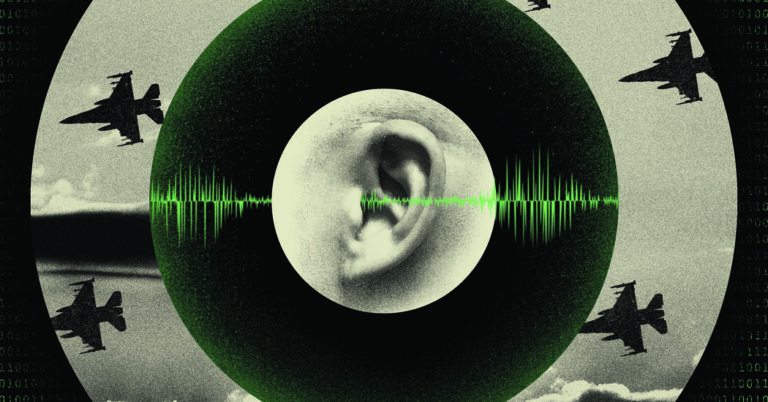
Shortly thereafter, Israel listened to Mr. Biari’s calls and tested the A.I. audio tool, which gave an approximate location for where he was making his calls. Using that information, Israel ordered airstrikes to target the area on Oct. 31, 2023, killing Mr. Biari. More than 125 civilians also died in the attack, according to Airwars, a London-based conflict monitor.

The audio tool was just one example of how Israel has used the war in Gaza to rapidly test and deploy A.I.-backed military technologies to a degree that had not been seen before, according to interviews with nine American and Israeli defense officials, who spoke on the condition of anonymity because the work is confidential.

In the past 18 months, Israel has also combined A.I. with facial recognition software to match partly obscured or injured faces to real identities, turned to A.I. to compile potential airstrike targets, and created an Arabic-language A.I. model to power a chatbot that could scan and analyze text messages, social media posts and other Arabic-language data, two people with knowledge of the programs said.

Many of these efforts were a partnership between enlisted soldiers in Unit 8200 and reserve soldiers who work at tech companies such as Google, Microsoft and Meta, three people with knowledge of the technologies said. Unit 8200 set up what became known as “The Studio,” an innovation hub and place to match experts with A.I. projects, the people said.

Yet even as Israel raced to develop the A.I. arsenal, deployment of the technologies sometimes led to mistaken identifications and arrests, as well as civilian deaths, the Israeli and American officials said. Some officials have struggled with the ethical implications of the A.I. tools, which could result in increased surveillance and other civilian killings.

No other nation has been as active as Israel in experimenting with A.I. tools in real-time battles, European and American defense officials said, giving a preview of how such technologies may be used in future wars — and how they might also go awry.

“The urgent need to cope with the crisis accelerated innovation, much of it A.I.-powered,” said Hadas Lorber, the head of the Institute for Applied Research in Responsible A.I. at Israel’s Holon Institute of Technology and a former senior director at the Israeli National Security Council. “It led to game-changing technologies on the battlefield and advantages that proved critical in combat.”

But the technologies “also raise serious ethical questions,” Ms. Lorber said. She warned that A.I. needs checks and balances, adding that humans should make the final decisions.

A spokeswoman for Israel’s military said she could not comment on specific technologies because of their “confidential nature.” Israel “is committed to the lawful and responsible use of data technology tools,” she said, adding that the military was investigating the strike on Mr. Biari and was “unable to provide any further information until the investigation is complete.”

Meta and Microsoft declined to comment. Google said it has “employees who do reserve duty in various countries around the world. The work those employees do as reservists is not connected to Google.”

Israel previously used conflicts in Gaza and Lebanon to experiment with and advance tech tools for its military, such as drones, phone hacking tools and the Iron Dome defense system, which can help intercept short-range ballistic missiles.

After Hamas launched cross-border attacks into Israel on Oct. 7, 2023, killing more than 1,200 people and taking 250 hostages, A.I. technologies were quickly cleared for deployment, four Israeli officials said. That led to the cooperation between Unit 8200 and reserve soldiers in “The Studio” to swiftly develop new A.I. capabilities, they said.

Avi Hasson, the chief executive of Startup Nation Central, an Israeli nonprofit that connects investors with companies, said reservists from Meta, Google and Microsoft had become crucial in driving innovation in drones and data integration.

“Reservists brought know-how and access to key technologies that weren’t available in the military,” he said.

Israel’s military soon used A.I. to enhance its drone fleet. Aviv Shapira, founder and chief executive of XTEND, a software and drone company that works with the Israeli military, said A.I.-powered algorithms were used to build drones to lock on and track targets from a distance.

“In the past, homing capabilities relied on zeroing in on to an image of the target,” he said. “Now A.I. can recognize and track the object itself — may it be a moving car, or a person — with deadly precision.”

Mr. Shapira said his main clients, the Israeli military and the U.S. Department of Defense, were aware of A.I.’s ethical implications in warfare and discussed responsible use of the technology.

One tool developed by “The Studio” was an Arabic-language A.I. model known as a large language model, three Israeli officers familiar with the program said. (The large language model was earlier reported by Plus 972, an Israeli-Palestinian news site.)

Developers previously struggled to create such a model because of a dearth of Arabic-language data to train the technology. When such data was available, it was mostly in standard written Arabic, which is more formal than the dozens of dialects used in spoken Arabic.

The Israeli military did not have that problem, the three officers said. The country had decades of intercepted text messages, transcribed phone calls and posts scraped from social media in spoken Arabic dialects. So Israeli officers created the large language model in the first few months of the war and built a chatbot to run queries in Arabic. They merged the tool with multimedia databases, allowing analysts to run complex searches across images and videos, four Israeli officials said.

When Israel assassinated the Hezbollah leader Hassan Nasrallah in September, the chatbot analyzed the responses across the Arabic-speaking world, three Israeli officers said. The technology differentiated among different dialects in Lebanon to gauge public reaction, helping Israel to assess if there was public pressure for a counterstrike.

At times, the chatbot could not identify some modern slang terms and words that were transliterated from English to Arabic, two officers said. That required Israeli intelligence officers with expertise in different dialects to review and correct its work, one of the officers said.

The chatbot also sometimes provided wrong answers — for instance, returning photos of pipes instead of guns — two Israeli intelligence officers said. Even so, the A.I. tool significantly accelerated research and analysis, they said.

At temporary checkpoints set up between the northern and southern Gaza Strip, Israel also began equipping cameras after the Oct. 7 attacks with the ability to scan and send high-resolution images of Palestinians to an A.I.-backed facial recognition program.

This system, too, sometimes had trouble identifying people whose faces were obscured. That led to arrests and interrogations of Palestinians who were mistakenly flagged by the facial recognition system, two Israeli intelligence officers said.

Israel also used A.I. to sift through data amassed by intelligence officials on Hamas members. Before the war, Israel built a machine-learning algorithm — code-named “Lavender” — that could quickly sort data to hunt for low-level militants. It was trained on a database of confirmed Hamas members and meant to predict who else might be part of the group. Though the system’s predictions were imperfect, Israel used it at the start of the war in Gaza to help choose attack targets.

Few goals loomed larger than finding and eliminating Hamas’s senior leadership. Near the top of the list was Mr. Biari, the Hamas commander who Israeli officials believed played a central role in planning the Oct. 7 attacks.

Israel’s military intelligence quickly intercepted Mr. Biari’s calls with other Hamas members but could not pinpoint his location. So they turned to the A.I.-backed audio tool, which analyzed different sounds, such as sonic bombs and airstrikes.

After deducing an approximate location for where Mr. Biari was placing his calls, Israeli military officials were warned that the area, which included several apartment complexes, was densely populated, two intelligence officers said. An airstrike would need to target several buildings to ensure Mr. Biari was assassinated, they said. The operation was greenlit.

Since then, Israeli intelligence has also used the audio tool alongside maps and photos of Gaza’s underground tunnel maze to locate hostages. Over time, the tool was refined to more precisely find individuals, two Israeli officers said.


Source link

How to Talk to Your Children About Money in These Uncertain Times

0


Stock market gyrations. Inflation. Layoffs of federal workers. A possible recession.

Children may overhear their parents talking about these things and not fully understand what’s going on or how it may affect their family’s finances. But if the children have questions, parents should be ready to talk, experts say.

“Parents are the biggest influence on kids’ financial learning,” said Ashley LeBaron-Black, an assistant professor of family life at Brigham Young University.

Here are some tips for having conversations about money.

The nation’s economy seemed on solid ground at the beginning of the year, but economists expect that growth slowed in the first quarter amid uncertainty surrounding President Trump’s tariffs. Inflation has steadied, but the threatened tariffs could push prices higher again. At the same time, high borrowing costs are weighing on households, particularly those with lower incomes, and more people are late in paying their credit card bills. The stock market has whipsawed as Mr. Trump has repeatedly revised his tariff plans. And consumer expectations for the economy over the coming months have soured.

Parents shouldn’t assume their children are oblivious to these issues, said Rebecca Maxcy, director and principal investigator at the University of Chicago’s Financial Education Initiative.

Children may not grasp the details, but they’ve overheard adults discussing prices at grocery stores and restaurants. And they’re probably hearing unfamiliar terms, like tariffs, from television or online or from friends at school. This month, for example, news reports discussed the possible impact of the Trump administration’s proposed tariffs on the pricing and availability of the new Nintendo Switch 2 video game console, an item of interest for many children.

“It’s everywhere, it’s so in your face, and kids are hearing it and seeing it,” Ms. Maxcy said.

Children are intuitive, she said, and can pick up on concerns their parents have about the cost of living or the effect of market swings on their retirement savings or college savings.

If a child wonders how the family may be affected by changes in the economy, talking through the concerns can help reduce fear and confusion, said Maureen Kelley, a certified financial therapist in Denver. “You want to keep it honest but age-appropriate.”

Rather than saying the family may need to cut back on spending, Ms. Kelley said, you can try “We’re being more careful with our money right now” or “We’re adjusting how we spend our money.”

Parents can emphasize any steps they have taken to prepare for financial potholes — like creating a rainy-day savings fund, said Deana Healy, vice president of financial planning and advice with Ameriprise. They might say, “Yes, things are perhaps uncertain, but here’s what we’ve done.”

If your child asks what all this may mean for your family, it can be a “prime moment” to have a conversation because that will make any potential belt-tightening more understandable, Ms. Maxcy said. “You can say, ‘We’re making some changes,’ instead of all of a sudden saying ‘No’ all the time,” she said.

Avoid having money talks with children when you’re stressed, Ms. Maxcy said. If you’re busy and not ready to talk, say you’ll find time to chat when things are quieter. “Maybe don’t have the conversation if you just opened your 401(k) statement,” she quipped.

Robin Gurwitch, a psychologist and professor at Duke University Medical Center, recommends broaching the subject with children even if they don’t ask, because they have probably heard about economic concerns, especially if they’re on social media.

“You can say: ‘There’s a lot of talk about our economy and tariffs. I’m wondering what you’ve heard about that.’” Once parents understand what the child knows, they can address any concerns or correct misperceptions.

Because some teenagers may brush off inquiries from parents, Dr. Gurwitch said, it can help to address their concerns indirectly. Perhaps you can ask, “What do your friends think about this?” If your teenager says her friends are worried they may not be able to buy a dress for prom, she’s probably concerned as well. Then, Dr. Gurwitch said, you can reassure her that the family can afford a new prom dress, if that’s the case or, if money is tight, discuss a budget.

The overall message to children, she said, should be, “We are here to support you even if things are uncertain or scary.”

John Lanza, who has written books about allowances and family finances, said including children in budgeting could help give them some sense of control.

“Kids want to be a part of the solution,” Mr. Lanza said.

If, for instance, a household goal is to eat at home most nights instead of dining out, make it a game by having children suggest meals and help cook them. And if you can swing it, offer to give your children some of the savings as pocket money.

Parents may feel that they need to have all the answers, but “it’s fine to admit you’re not an expert,” said Scott Rick, an associate professor of marketing at the University of Michigan’s business school who has studied financial decision making.

If your children ask about tariffs, for instance, and you don’t have enough knowledge on the topic, you can encourage their curiosity, and show that it’s all right to ask about money, by offering to research the subject with them.

“You might say: ‘I’d like to get a better handle on that myself. Can we look into it together?’” Dr. Rick said.

Some parents may avoid talking about money with their children because they feel guilt or shame about past financial mistakes, said Yanely Espinal, a financial educator and an author. But it’s smart to talk about money at home “early and often,” she said. Research suggests that education from parents during childhood is linked to healthy financial behaviors in young adults, she said, particularly responsible credit card use.

You probably already have some resources handy. Simply sharing a receipt after going to the store, for instance, can lead to talks about how much things cost, said Cynthia Fitzthum, a financial education expert at St. Cloud State University in Minnesota.

Dr. LeBaron-Black’s parents once gathered her and her siblings around a stack of Monopoly money and counted out how much income they made each month, she said. “I thought, ‘That looks like a lot,’” she recalled. Then her parents started subtracting: the amount they spent for the mortgage, heat, electricity and food. By the end, there was still a little left. But the point was made. The family’s needs were covered, but they had to spend wisely.

Reading and discussing books, including those not explicitly about money, can start conversations about why characters make the choices they do and how money may have played a role, Ms. Maxcy said. For young children, she suggested “A Bike Like Sergio’s,” about a boy who desperately wants a cool bicycle.

Dr. Fitzthum suggests a book for third to fifth graders, “Beatrice’s Goat,” about a young girl in Uganda who receives a goat and the impact it has on her family. Without using wonky terms, it introduces concepts like income, savings and even opportunity costs — the economic principle that making one choice can mean you miss out on the benefit of making a different one.

Kelly Li said she had decided to write the “Little Economists” series of books for children ages 3 to 5 after becoming a mother and learning that many Americans lacked savings. (Ms. Li, who previously worked in finance, wrote the books — with titles like “What Is Money?” and “What Is Inflation?” — under the surname Lee.)

The Council for Economic Education, which focuses on economic and financial instruction in kindergarten through high school, offers a free Financial Fun Pack on its website with exercises families can use at home.


Source link

Hegseth’s Personal Phone Use Created Vulnerabilities, Analysts Say

0


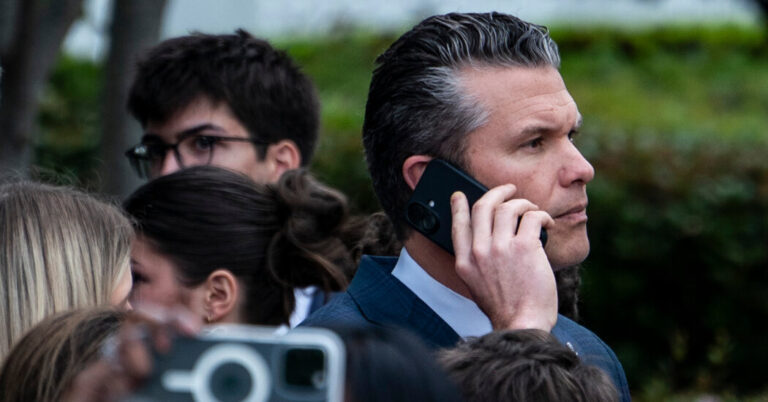
Defense Secretary Pete Hegseth’s personal phone number, the one used in a recent Signal chat, was easily accessible on the internet and public apps as recently as March, potentially exposing national security secrets to foreign adversaries.

The phone number could be found in a variety of places, including WhatsApp, Facebook and a fantasy sports site. It was the same number through which the defense secretary, using the Signal commercial messaging app, disclosed flight data for American strikes on the Houthi militia in Yemen.

Cybersecurity analysts said an American defense secretary’s communications device would usually be among the most protected national security assets.

“There’s zero percent chance that someone hasn’t tried to install Pegasus or some other spyware on his phone,” Mike Casey, the former director of the National Counterintelligence and Security Center, said in an interview. “He is one of the top five, probably, most targeted people in the world for espionage.”

Emily Harding, a defense and security expert at the Center for Strategic and International Studies, added: “You just don’t want the secretary of defense’s phone number to be out there and available to anyone.”

The chief Pentagon spokesman, Sean Parnell, did not respond to request for comment.

Mr. Hegseth’s use of Signal to convey details of military strikes in Yemen first surfaced last month when the editor of The Atlantic wrote an article that said he had been added, apparently accidentally, to an encrypted chat among senior U.S. government officials. The New York Times reported this week that Mr. Hegseth included sensitive information about the strikes in a Signal group chat he set up that included his wife and brother, among others.

Soon after the first Signal chat about Yemen became public in March, Der Spiegel, the German news publication, found the phone numbers of Mr. Hegseth and other senior Trump officials on the internet.

That Mr. Hegseth’s private cellphone number was easily available through commercial providers of contact information is not surprising, security experts said. After all, Mr. Hegseth was a private citizen until Donald J. Trump, who was then the president-elect, announced that he wanted the former National Guardsman and Fox News weekend anchor to run the Pentagon, an $849 billion-a-year enterprise with close to three million employees.

It has now become routine for government officials to keep their personal cellphones when they enter office, several defense and security officials said in interviews. But they are not supposed to use them for official business, as Mr. Hegseth did.

Even low-level government workers are instructed not to use their personal cellphones and laptops for work-related matters, according to current and former government officials, who spoke on the condition of anonymity to discuss sensitive information.

For senior national security officials, the directive is even more crucial, one former senior Pentagon official said.

Mr. Hegseth had a significant social media presence, a WhatsApp profile and a Facebook page, which he still has.

On Aug. 15, 2024, he used his personal phone number to join Sleeper.com, a fantasy football and sports betting site, using the username “PeteHegseth.” Less than two weeks later, a phone number associated with his wife, Jennifer, also joined the site. She was included in one of the two Signal chats about the strikes.

Mr. Hegseth also left other digital breadcrumbs, using his phone to register for Airbnb and Microsoft Teams, a video and communications program.

Mr. Hegseth’s number is also linked to an email address that is in turn linked to a Google Maps profile. Mr. Hegseth’s reviews on Google Maps include endorsements of a dentist (“The staff is amazing”), a plumber (“Fast, honest, and quality work”), a mural painter (“Painted 2 beautiful flags for us — spot on”) and other businesses. (Google Maps street view blurs out Mr. Hegseth’s former home.)

“If you use your phone for just ordinary daily activities, you are leaving a highly, highly visible digital pathway that even a moderately sophisticated person, let alone a nefarious actor, can follow,” said Glenn S. Gerstell, a former general counsel for the National Security Agency.

Government cellphones, by contrast, are far more secure because they are fitted with rigorous government controls meant to protect official communications.

In using that same phone number on Signal to discuss the exact times that American fighter pilots would take off for strikes in Yemen and other sensitive matters, Mr. Hegseth opened himself — and, potentially the pilots — to foreign adversaries who have demonstrated their abilities to hack into accounts of American officials, encrypted or not, security experts said.

“Phone numbers are like the street address that tell you what house to break into,” said James A. Lewis, a cybersecurity expert. “Once you get the street address, you get to the house, and there might be locks on the doors, and you ask yourself, ‘Do I have the tools to bypass or break the locks?’”

China and Russia do, and Iran may as well, several cybersecurity experts said.

Last year a series of revelations showed how a sophisticated Chinese intelligence group, called Salt Typhoon, penetrated deep into at least nine U.S. telecommunications firms. Investigators said that among the targets were the commercial, unencrypted phone lines used by Mr. Trump, Vice President JD Vance and top national security officials.

Mr. Gerstell said he had no knowledge of Mr. Hegseth’s phone or if it was subject to attack. But personal phones are typically far more vulnerable than government-issued phones.

“It would be possible, with moderate difficulty for someone to take over a phone in a surreptitious way once they had the number assuming you clicked on something malicious,” Mr. Gerstell said. “And when really sophisticated bad guys are involved, like Russia or China, phones can be infected even if you don’t click on anything.”

Cybersecurity experts said that more than 75 countries had acquired commercial spyware within the past decade. The most sophisticated spyware tools — like Pegasus — have “zero-click” technology, meaning they can stealthily and remotely extract everything from a target’s mobile phone, without the user having to click on a malicious link to give Pegasus remote access. They can turn the mobile phone into a tracking and secret recording device, allowing the phone to spy on its owner.

Signal is an encrypted app, and its security for a commercial messaging service is considered very good. But malware that installed a key logger or keystroke capture code on a phone would allow the hacker, or nation state, to read what someone types into a phone, even in an encrypted app, former officials said.

In the case of Mr. Hegseth’s use of Signal to discuss the Yemen strike plans, spyware on his phone could potentially see what he was typing or reading before he hit “send,” because Signal is encrypted during the moments of sending and receiving, cybersecurity experts said.

One person familiar with the Signal conversation said that Mr. Hegseth’s aides warned him a day or two before the Yemen strikes on March 15 not to discuss such sensitive operational details in his group chat. That chat, while encrypted, was not considered as secure as government channels.

It was unclear how Mr. Hegseth responded to those warnings.

Mr. Hegseth also had Signal set up on a computer in his office at the Pentagon so that he could send and receive instant messages in a space where personal cellphones are not permitted, according to two people with knowledge of the matter. He has two computers in his office, one for personal use and one that is government-issued, one of the people with knowledge of the matter said.

“I guarantee you Russia and China are all over the secretary of defense’s cellphone,” Representative Don Bacon, Republican of Nebraska, who has suggested that Mr. Hegseth should be fired, told CNN this week.

Christiaan Triebert reported from New York. Greg Jaffe in Washington contributed reporting and Sheelagh McNeill contributed research.


Source link

David Gray: Hibernian head coach agrees new three-year deal at Easter Road with club third in Scottish Premiership | Football News

0


Hibernian head coach David Gray has agreed a contract extension that will keep him at Easter Road until 2028.

The 36-year-old took charge last summer following Lee Johnson’s departure and has turned the club’s fortunes around after a dismal start.

They sit third in the Premiership, but one win in their first 14 league games saw them bottom of the table with pressure increasing on the former captain.

Please use Chrome browser for a more accessible video player

Highlights from the Scottish Premiership match between Hibernian and Celtic

But Hibs are now on a 17-game unbeaten run, a post-war club record, with wins against leaders Celtic, Rangers and Edinburgh rivals Hearts.

Gray, who made 177 appearances for the Hibees as a player, has already been named Premiership manager of the month three times this season, another record for the Leith club.

Assistant head coaches Eddie May, Liam Craig and Craig Samson have also agreed contract extensions.

David Gray is Premiership manager of the month for March
Image:
Gray has been named Premiership manager of the month three times this season

Gray said: “This is a football club that means a lot to me, my family, and my staff, and we’re delighted to have signed new deals. I’ve been very open about the support we’ve received from the board and it means a lot to be backed by the Gordon family and Malky Mackay.

“There have been ups and downs this season, but the turnaround we’ve had is due to everyone’s hard work. The players and the staff have worked tirelessly to get us in the position we’re in heading into the split.

“As a collective group, we want to continue making the supporters proud. They have been with us every step of the way this season, and we can’t thank them enough for that.

“The aim for us is to build on our performances and to pick up as many points as possible. We’re excited about the future here at Hibs.”

Eddie May (L), Liam Craig and Craig Samson are also staying at Easter Road
Image:
Eddie May (L), Liam Craig and Craig Samson are also staying at Easter Road

Hibs sporting director Malky Mackay added: “I am delighted that David, and his staff have extended their commitment to our club, and they thoroughly deserve their new contracts. David is a terrific ambassador and leader for our team and this club and his staff have worked tirelessly to help Hibs succeed.

“Over the course of the season, it’s been evident to everyone how David has adapted, evolved, and improved a number of our players, which has allowed us to make great strides on the pitch.

“He is someone that fully understands the fabric of this football club and has a deep desire to be successful here. Tying down someone of David’s calibre was an important step for us, and we look forward to what the future holds.”


Source link