Home Blog Page 363

Trump Cuts Threaten Meals and Services for People With Disabilities and the Aging

0


Every Monday, Maurine Gentis, a retired teacher, waits for a delivery from Meals on Wheels South Texas.

“The meals help stretch my budget,” Ms. Gentis, 77, said. Living alone and in a wheelchair, she appreciates having someone look in on her regularly. The same group, a nonprofit, delivers books from the library and dry food for her cat.

But Ms. Gentis is anxious about what lies ahead. The small government agency responsible for overseeing programs like Meals on Wheels is being dismantled as part of the Trump administration’s overhaul of the U.S. Department of Health and Human Services. Roughly half its staff has been let go in recent layoffs and all of its 10 regional offices are closed, according to several employees who lost their jobs.

“I’m just kind of worried that the whole thing might go down the drain, too,” Ms. Gentis said.

In President Trump ’s quest to end what he termed “illegal and immoral discrimination programs,” one of his executive orders promoted cracking down on federal efforts to improve accessibility and representation for those with disabilities, with agencies flagging words like “accessible” and “disability” as potentially problematic. Certain research studies are no longer being funded, and many government health employees specializing in disability issues have been fired.

The downsizing of the agency, the Administration for Community Living, is part of far-reaching cuts planned at the H.H.S. under the Trump administration’s proposed budget.

While some federal funding may continue through September, the end of the government’s fiscal year, and some workers have been called back temporarily, there is significant uncertainty about the future. And some groups are reporting delays in receiving expected federal funds.

“There’s a lot of confusion,” said Becky Yanni, the executive director of the Council on Aging in St. Johns County in Florida. She said she has been told that the most recent funding for its Meals on Wheels program and other services might be late.

If the funding does not arrive, “in a lot of communities, you will be looking at cuts in services,” said Sandy Markwood, the chief executive officer for USAging, which represents the network of area agencies of aging.

The community living division helps coordinate services and provide funding for older and disabled Americans so they can stay at home rather than live in a nursing home. With a budget of $2.6 billion, the unit represents a minuscule fraction of total H.H.S. spending.

Under the reorganization introduced by Health Secretary Robert F. Kennedy Jr., the community unit’s responsibilities will be divided among other agencies, including the Centers for Medicare and Medicaid Services and the Administration for Children and Families.

“This consolidation allows the department to better meet the current health needs of vulnerable populations across the country,” a spokeswoman for H.H.S. said in a statement. “This does not impact the important work of these critical programs as it will continue elsewhere within H.H.S.”

So far, several programs under the unit will be eliminated under the proposed budget, including one that provides ombudsmen in nursing homes, to help ensure the safety and welfare of residents, and respite care programs, to provide a break for those caring for an older person or person with disabilities. States would also have more latitude in determining where funds should be allocated.

In addition to meal deliveries, the community living agency supports numerous programs, including the nonprofit Centers for Independent Living, that are staffed by people with disabilities, who help older adults and others with disabilities move out of nursing homes and back into the community, and find services, like transportation and legal assistance.

Theo W. Braddy, the executive director for the National Council on Independent Living, which represents the centers and people with disabilities, said the uncertainty has upended planning.

“Everybody is on edge. We can’t tell them anything because we don’t know anything yet,” he said, adding that no one from the Trump administration or H.H.S. has attempted to contact the group with updates.

Advocates say the recent cutbacks have further marginalized older Americans and those with disabilities. “The bottom line is that people in charge simply don’t care about large swaths of the American people,” said Dr. Joanne Lynne, a clinical professor of geriatrics and palliative care at George Washington University.

“We have made living with disability and old age exceedingly unpleasant,” she said. “We are on course to make it virtually intolerable.”

Community groups like Meals on Wheels are bracing for significant cuts. In addition to the potential loss of funding from the Administration for Community Living, Republican lawmakers are proposing reducing grants to states that use another stream of federal funding. The Trump administration and Republicans are also pushing for significant cuts to the Medicaid program, which provides heath care coverage for low-income Americans.

“We’re concerned about a number of potential threats happening all at once,” said Josh Protas, the chief advocacy and policy officer for Meals on Wheels America, an association of the local nonprofits. About a third of the association’s local units already have waiting lists, he said, and lower funding would result in fewer meals for fewer people.

People who are 60 or older with low incomes, and who have difficulty preparing food for themselves, typically qualify for Meals on Wheels. The demand for services is increasing as food prices rise and more people need assistance. More than two million older Americans receive food deliveries each year, and many say they would have difficulty paying for meals without the program.

“Meals on Wheels is a godsend for me,” said Richard Beatty, a 70-year-old with poor vision and limited mobility living in Baltimore. He receives deliveries four times a week and isn’t sure how he would manage without the program.

If there are cuts in funding, the programs would have to make hard choices about who would be eligible for deliveries. “We would have to make drastic changes to who we were serving,” said Dan Capone, the chief executive of Meals on Wheels South Texas, which serves roughly 300 people a week, including Ms. Gentis. His group also receives private donations, with federal funds accounting for some 40 percent of the budget, he said.

The federal community unit under the ax also plays a key role in supporting disabled Americans, including older individuals.

“So much of the work we do is about giving people dignity in their lives,” said Karen Tamley, the chief executive of Access Living, a Chicago-based center, one of 400 across the United States.

The centers connect people with a variety of services, and offer job and skills training to young adults with disabilities. They may teach someone to drive, or help them find affordable housing.

The Administration for Community Living has helped organizations navigate the state and local bureaucracies responsible for doling out federal funds. When Mr. Capone wanted more clarity as to how Texas was distributing the money, he got in touch with the unit’s regional office in Dallas. “We just started building that relationship with the field office, and that field office is gone,” he said.

“It is frustrating on a practical level,” said Fay Gordon, one of the regional administrators who was let go earlier this month. “These programs are live and need direction.”

Some groups are not waiting before starting to take steps to reduce costs. Brittany Boyd-Chisholm, the chief executive of the Center for Independent Living of Central Pennsylvania, said that more than half of her funding comes through the federal agency. She has asked all the managers, herself included, to take a cut in salary of between 5 and 10 percent and is weighing other actions. She said her center was already underfunded.

No one has provided her with any information about future grants, and her emails have not been returned. “It makes you feel completely on your own,” Ms. Boyd-Chisholm said.

Created under the Obama administration, the agency was intended to unify the work of three other agencies: the Administration on Aging, the Office on Disability and the Administration on Developmental Disabilities.

“These programs being together and working together was about efficiency and was about coordination,” said Alison Barkoff, the former acting administrator under President Biden, who stepped down last fall.

During the first Trump administration, at the height of the pandemic, the agency worked with the department’s Office for Civil Rights to ensure hospitals and doctors had clear guidelines so that if staffing fell short they wouldn’t deny care to those with disabilities.

“We had found common ground and issues to work on together,” said Daniel Davis, who worked for the agency’s Center of Policy and Evaluation, whose entire staff was laid off, according to former employees.



Source link

With Underdog Brand, Jason Kelce Takes ‘Made in the U.S.’ Seriously

0


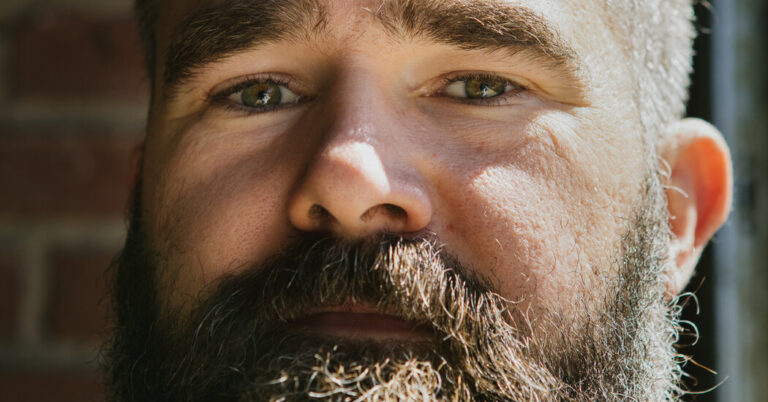
Jason Kelce, a mellow mountain of a man, has spent most of his life fretting over offensive snaps.

Now, a year into his retirement after 13 seasons as a center for the Philadelphia Eagles, Mr. Kelce has space to puzzle over other matters. Lately, he’s been thinking about sweatshirts and T-shirts. And he has thoughts. Lots of thoughts.

“On the inside of a sweatshirt, I don’t like when it feels fuzzy,” said Mr. Kelce, speaking on a video call from his Philadelphia home in April, just a few days after the birth of his fourth daughter. He wants a “heavier-duty” sweatshirt, with a smidge of stretch. Something durable, “that you can wear working or lounging around on the couch.”

Oh, and it needs to be made entirely in the United States.

To achieve all this, Mr. Kelce, 37, has taken matters into his own hands. Today, his Underdog apparel brand is debuting a tidy collection of crew neck sweatshirts and T-shirts, all produced — from the cotton to the completed garment — in the United States. These items are produced in collaboration with American Giant, a San Francisco-based company formed in 2012 that manufactures entirely in the United States.

The American Giant-produced Underdog pocket T-shirts and French terry sweatshirts will sell for $45 and $79, respectively, and will be sold on the Underdog website. They are, to Mr. Kelce’s specifications, on the burlier side. During the interview, he wore the pocket T-shirt in green, his abundant biceps mildly squeezed by the sleeves.

“I don’t want to offend anybody, I never understood the reason that somebody would want to wear Gucci, or some of these high-end brands,” said Mr. Kelce, leaving unsaid that his brother, Travis, has been known to wear a Gucci hat or two. “It’s never appealed to me.”

“I would much rather wear something that symbolized a blue-collar worker as opposed to a suit,” he added, even if he does have to wriggle into a suit when he appears as an analyst for “Monday Night Countdown” on ESPN.

That Underdog’s clothes are entirely made in the United States is the most gratifying part to Mr. Kelce.

“I grew up going into steel mills with my father,” he said of his childhood in Cleveland Heights, Ohio. “So, the concept of American workers making things was something that was ingrained early. And I just always gravitated toward it.”

Mr. Kelce has long been plotting for life after his last snap. In 2022, he started the “New Heights” podcast with his brother. It remains in the top 200 of Apple’s top podcasts, though it now runs behind his wife Kylie’s show, “Not Gonna Lie.”

While many retired athletes pour money into car dealerships or restaurant ventures, Mr. Kelce became curious about clothes.

“I was trying to come up with what’s a way that we can celebrate Philadelphia,” said Mr. Kelce, who is nothing if not an unofficial ambassador for his adopted city. “And I love wearing shirts that represent me and everything that I believe in.”

He started Underdog in 2022 as an apparel brand with vigorous nods to Philadelphia. Past graphics featured his Eagles teammates, and the name alludes to the Eagles having labeled themselves as underdogs on their way to winning the Super Bowl in 2018. It is a unique proposition from a former athlete, and one that has, to many outside the Eagles fandom, perhaps flown under the radar. Underdog does not have the techy edge of say, Tom Brady’s slick, fitness-centric Brady brand. It leans more on Mr. Kelce’s jolly, jumbo-size profile than on his on-field prowess.

The label has made prior attempts at producing in the United States, though Mr. Kelce soon learned that even if the tag said an item had been made here, “a good portion of that might be made overseas.” Garments that read “Made in the United States” can be produced from cotton or other components that derive from elsewhere.

In American Giant, Underdog found a partner that was capable of producing the whole garment, including the fabric, here in the United States. The cotton was harvested and finished in the Southeast, including in North Carolina. The garments themselves were produced in Los Angeles.

“These fabrics were custom-designed for Jason,” said Bayard Winthrop, the chief executive of American Giant who underscored that the ex-Pro-Bowler “had lots of small opinions” about how the shirts and sweats should fit and feel.

“The shirts have a really gutsy, sturdy quality to them,” said Mr. Winthrop. “They drape a certain way. They’re not clingy to the body. They’re not overly delicate.”

Last year, Mr. Kelce traveled with Mr. Winthrop to North and South Carolina see the production process firsthand, giving him a look at how clothes are made that few people ever see, or even consider. With most apparel manufacturing having been exported overseas, only 2 percent of the clothing Americans buy is manufactured domestically.

“The eye-opening part for me was how truly decentralized this is, how many people touch just one T-shirt and how many steps there are in that process,” said Mr. Kelce. “I had never really thought much about that.”

Though this project has been in the works for around two years, it debuts at an auspicious moment, as Americans are contemplating what they’re willing to sacrifice — macro- and micro-economically — to bring back American manufacturing. Hours before the interview, President Trump pulled back on steep tariffs that had unsettled the global economic landscape, though a tit-for-tat trade war with China has continued.

“I have no issues with global trade whatsoever,” said Mr. Kelce, who was evenhanded about the impact of his small stab at making his goods solely in the United States. He was, he said, not going to stop buying shirts and clothes that were not totally made here.

“I don’t think there’s any type of statement trying to be made other than, ‘Listen, there’s some really awesome reasons to support homegrown American businesses and local businesses,’” he said.

Considering Mr. Kelce’s longstanding love affair with Philadelphia, it may strike some shoppers as odd that the Underdog line is not produced there. It was discussed, but the reality, said Mr. Winthrop, was that Philadelphia, like many cities that were once manufacturing hubs, was “gutted out” when it came to apparel production.

“There is no at-scale dyeing or finishing or knitting capability in Philly,” he said. Mr. Kelce said that in the future, the company would find ways to incorporate the city into its brand. His partner, Stephen Porter, noted that anything Underdog screen printed or embroidered was done locally.

The line might not be made in Philadelphia, but his green shirt proved that Mr. Kelce knew he had to keep his fans happy.

“Philadelphia bleeds green,” he said. “If we didn’t have a green shirt, it would have felt like malpractice.”


Source link

James Forrest: Celtic winger on verge of becoming club’s most decorated player | ‘It’s incredible’ | Football News

0


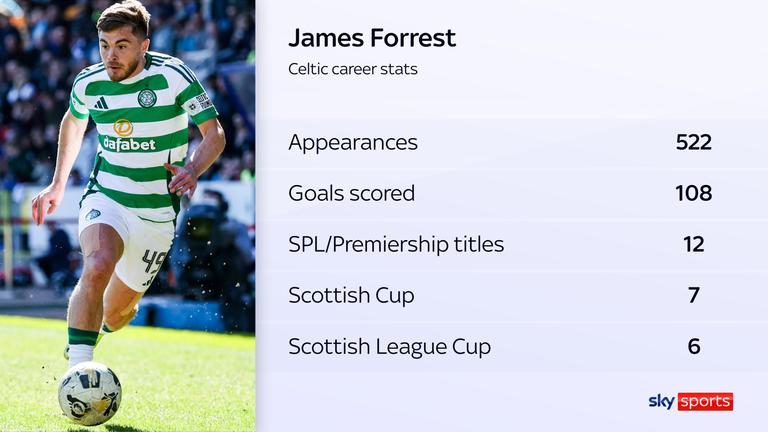
James Forrest will become Celtic’s most decorated player when they clinch the Scottish Premiership title, with the winger aiming for more “incredible” moments with the club.

The 33-year-old has won 25 major honours with the Hoops since making his debut in 2010 and will move ahead of Lisbon Lion Bobby Lennox if he helps win one more trophy for his boyhood club.

Forrest scored in his first game for Celtic against Motherwell before going on to net 108 times in 522 appearances.

Forrest scored on his Celtic debut against Motherwell
Image:
Forrest scored on his Celtic debut against Motherwell

“It’s something when you’re coming through that you don’t think about,” he told Sky Sports News.

“Sometimes people try and ask you what’s your favourite but there have been that many good ones over the years.

James Forrest has won 12 league titles with Celtic
Image:
Forrest has won 12 league titles with Celtic

“You want to make it into the first team, you want to play as many games as you can and win trophies and be part of such a successful team.

“It’s a team game, but personal accolades are nice as well. It’s just been a small part of the success over the years with Celtic.

“You see all the names there and the amount of great players that have played for this club, it’s unbelievable.”

James Forrest

The Scotland international has played under Neil Lennon, Ronny Deila, Ange Postecoglou and Brendan Rodgers during his 15 seasons and insists he is not thinking about hanging up his boots just yet.

“I’ve played here so many times and I’m still enjoying it as much as ever. I’m just going to keep working hard to be here as long as I can,” he added.

“I’m not really one for over my career to think I want to do this or I want to do that. I just try and enjoy every day in the moment.

“The amount of highs that I’ve had over the years has been incredible. I just want to keep working hard to hopefully get a few more of them to come.”

Forrest is under contract until next
Image:
Forrest is under contract until the end of next season

Forrest returned to action last month after picking up an injury in Celtic’s League Cup final win against Rangers in December and he is hoping to find the net to achieve another milestone of scoring in 16 different seasons.

“It’s one that I and a few people have recently been talking about,” he said.

“In my position, that’s what I want to do. Hopefully, I can score in the next couple of games.

Forrest has lifted the Scottish Cup seven times
Image:
Forrest has lifted the Scottish Cup seven times

“I think any footballer that you speak to will tell you that the worst bit is being injured.

“I had a bad injury so I was out for a while but I think it’s great to have such a good team and staff around you as well to get you through that.

“I’ve been really enjoying the last four games, being back involved and just looking to finish the season strong and help the team as much as possible.”

The 33-year-old has six League Cup winners medals
Image:
The 33-year-old has six League Cup winners’ medals

*James Forrest was speaking to Sky Sports News as 200 children got the chance to meet some of their Celtic heroes.

Randomly selected members of the Young Hoops Club were at an event with Daizen Maeda, Forrest, Luke McCowan and Paulo Bernardo.


Source link

Leaders of Mental Health Giant Promised Big Bonuses to Deal With Federal Investigations

0


Last year was tough for Acadia Healthcare, one of the country’s largest providers of mental health services.

A slew of federal agencies opened investigations into whether Acadia illegally held patients against their will in its psychiatric hospitals, as described in a New York Times investigation in September. The federal inquiries rattled investors, causing Acadia’s stock to plummet.

But Acadia’s troubles have been a boon to the company’s chief executive, Christopher Hunter. Its board of directors awarded him a $1.8 million bonus to help respond to “unprecedented governmental inquiries,” according to a financial filing this month. The bonus comes on top of his regular compensation, which totaled more than $7 million in 2024.

Acadia’s chief financial officer and general counsel were also granted bonuses of about $1 million, and the chief operating officer was promised $600,000. Acadia said the bonuses, which will be paid in March of next year, were awarded to ensure that the leaders did not leave before the investigations were completed.

The company’s board decided that keeping its leadership team was “in the best long-term interest of the company and the patients and communities it serves,” said Tim Blair, a spokesman for Acadia. “The company follows a pay-for-performance philosophy, using peer market data for benchmarking and calibration,” he added.

The Times reported that Acadia was holding patients against their will in order to maximize insurance payouts. Some patients arrived at emergency rooms seeking routine mental health care but were sent to Acadia facilities, where they were locked inside and isolated from their families. The practices began before Mr. Hunter became chief executive, in April 2022, but continued under his watch, The Times found.

The company has forcefully denied any misconduct and said it would cooperate with the investigations. “The allegation that Acadia systematically holds patients longer than medically necessary is false and goes directly against everything we do and stand for when it comes to patient care,” Mr. Hunter told investors in October.

After the article was published, Acadia told investors that several government agencies, including the Justice Department and the Securities and Exchange Commission, had begun investigations. In October, executives disclosed that admissions to their facilities were not as high as expected. That same month, shareholders brought a class-action lawsuit against the company, arguing that Acadia concealed its practices from investors.

The Times also found problems in other parts of Acadia’s businesses, including its methadone clinics, which were billing the government for services, like counseling, that it did not provide. And inadequate staffing led to a series of tragedies at one of the company’s prized women’s facilities, The Times reported Tuesday.

Since September, the company has lost roughly $5 billion of its market value and is now worth about $2 billion.

Like many chief executives, Mr. Hunter’s compensation is tied in part to Acadia’s share value. In 2024, the company’s falling stock led him to miss his performance goals, which lowered his pay, according to the April filing.

But Sarah Anderson, an executive compensation analyst at the Institute for Policy Studies, a left-leaning think tank, said that those incentives are undermined when companies like Acadia give bonuses despite poor performance.

“The whole argument of tying your compensation to the stock price is so that the executives will bear risk of their actions,” she said. “This is just going completely against that.”


Source link

After Pope Francis, Progressive Christians Feel Vulnerable

0


For 12 years, Pope Francis was the most powerful Christian on the world stage, using his voice to elevate the poor and the marginalized.

Millions of progressive Christians in the United States, Catholics and non-Catholics alike, considered him to be a powerful counterweight to a rising conservative Christian power. He was the magnetic center for their values.

His death on Monday leaves behind a question gnawing inside their minds.

In a world without Pope Francis, where their values feel particularly vulnerable, where do they go from here?

“This moment is critical now,” Bishop Sean W. Rowe, the presiding bishop of the Episcopal Church, said. “For those of us who want to embody the Sermon on the Mount, and the Beatitudes, and the love that Jesus showed in the world, this is now more important than ever.”

Pope Francis stood in contrast to a brand of Christianity that has increasing power in the United States. It is mixed with nationalism and, according to Bishop Rowe, is “not only fundamentally not Christian” but “also dangerous.”

“We have to begin to step up and communicate this message in ways that are winsome and compelling,” he added. “Politics are certainly co-opting Christian language and the Christian story. It is now ours to take that back.”

President Trump has embraced a strain of right-wing Christianity that questions the separation of church and state, and its adherents largely backed the president’s agenda. His vice president, JD Vance, is a Catholic convert who has used his interpretation of Catholic theology to justify the president’s crackdown on immigration.

Many conservative Christians, including Protestants, viewed Pope Francis skeptically. To them, the pope was soft on doctrinal matters, and risked pushing all of Christendom to surrendering its core teachings. “Francis will go down in history as the pope of liberal gesture — the vicar of equivocation,” R. Albert Mohler Jr., president of the Southern Baptist Theological Seminary, wrote in the evangelical magazine World on Monday. “Just when his church needed a firm hand and intellectual firepower, he responded with a shrug.”

But other Christians across denominations, who saw Pope Francis as their moral compass, feel a new sense of urgency with his passing.

Rev. William Barber II, a civil-rights leader and ordained minister in the Disciples of Christ denomination, said the loss of Pope Francis meant others must carry on his mission to the marginalized.

“We must now say, ‘I am Pope Francis,’” he said.

Pope Francis “was an embodiment of who I see Jesus to be whenever I read the gospels,” said Rev. Donna Claycomb Sokol, pastor of Mount Vernon Place United Methodist Church in Washington. “I think about him kissing the feet of women in prison after washing them. I think about how he was consumed with visible joy whenever he was with a child.”

As the cardinals prepare to gather in Rome for the conclave, she wondered whether any of them could stand with the voice Pope Francis did. “Or is Pope Francis one of a kind?” she asked. “What will they gravitate toward?”

The question is particularly acute for progressive Catholics. Denise Murphy McGraw, who worked to mobilize fellow Catholic voters for Kamala Harris last year from her home in upstate New York, worries about a younger generation of Catholic priests who have become more conservative.

“We are not getting that same sort of adherence to the Beatitudes, and that social justice that many people grew up with,” she said.

Sister Jeanne Hagelskamp joined the Sisters of Providence of Saint Mary-of-the-Woods almost 50 years ago because she wanted to spend her life working with the poor.

In response to Pope Francis’ attention to climate issues and his call in 2015 for nuns and priests to “wake up the world,” the women in her small community in Indiana began working in earnest on environmental policy, most recently supporting a bill that would preserve forests in the state.

That local work will continue, Sister Hagelskamp said. But she struggled through tears as she described what it meant to lose Pope Francis.

“He was an international figure that could talk about the things that most need to be talked about,” she said. “So we’ve lost our voice, we’ve lost that public voice.”

Now, she said, people like her must step into the gap, at the precise moment that her country’s cultural atmosphere and political powers have turned against them. “We know it’s not always welcome,” she said. “Yet we think that’s what God calls us to do.”

Father James Martin, a Jesuit priest and advocate for L.G.B.T.Q. Catholics who met frequently with Pope Francis at the Vatican,

drew a contrast between two moments of Catholic witness in the news in recent weeks. The first was Pope Francis’ visit last week to Rome’s main prison, an annual tradition. This year he was too frail to wash the prisoners’ feet, as he has done in the past to commemorate Holy Thursday, but he met with dozens of inmates.

The second moment was the visit by Representative Riley Moore, a Republican from West Virginia, to the prison in El Salvador where the United States wrongly deported a Maryland man with no criminal record. Mr. Moore, who is Catholic, smiled for a photograph in front of a cell containing several prisoners, giving two thumbs up to the camera.

“The two pictures could not be more different, the two different paths in Christianity,” Father Martin said. “One says we accompany people, no matter who they are, and the other says we turn our backs on them and mock them.”

The loss comes at a fraught moment for the once-robust tradition of progressive Christianity. Mainline Protestant denominations, which attract many progressive Christians, have seen their numbers and influence decline steadily in recent decades. The papacy is also open at the same time as the seat of the archbishop of Canterbury, the leader of the global Anglican Communion.

The percentage of Americans who are Catholics seems to have stabilized in recent years, but liberal Catholics are less likely to go to Mass and almost no new priests in the United States describe themselves as progressive.

Bishop Mariann Edgar Budde, the leader of the Episcopal Diocese of Washington, went to Mass on Monday night with her husband, who is Catholic. After her sermon at the inauguration prayer service when she pleaded with Mr. Trump to have mercy, many Christians have turned to her as a moral pillar.

Now, that voice is gone, and she is grieving. Not just the loss of Pope Francis, but of what feels like a whole nation and moral universe, she said. Still, the job is to hope, she said.

She pulled up Pope Francis’ speech to Congress in 2015. “‘Our efforts must aim at restoring hope, righting wrongs, maintaining commitments, and thus promoting the well-being of individuals and of people,’” she read out loud.

Her voice wavered, and then she paused to reflect.

“Whatever happens in the rest of my lifetime or yours, some of us have to keep a candle burning. We can’t let this go,” she said. “Someday the pendulum will swing back.”


Source link

The Cybercriminals Who Organized a $243 Million Crypto Heist

0


A quiet honor student who had recently graduated from Immaculate High School in Danbury, Veer Chetal was about to begin studying at Rutgers University in New Jersey. In 2022, he completed a “future lawyers” program, and a story that year on the Immaculate website showed a photo of a smiling kid with glasses wearing a Tommy Hilfiger windbreaker over a red polo.

Classmates remember Chetal as shy and a fan of cars. “He just kind of kept to himself,” says Marco Dias, who became friends with Chetal junior year. According to another classmate named Nick Paris, this was true of Chetal until one day in the middle of his senior year, when he showed up at school driving a Corvette. “He just parked in the lot. It was 7:30 a.m., and everyone was like, What?” Paris says. Soon Chetal rolled up in a BMW, and then a Lamborghini Urus. He started wearing Louis Vuitton shirts and Gucci shoes, and on Senior Skip Day, while Paris and many of his classmates went to a nearby mall, Chetal took some friends, including Dias, to New York to party on a yacht he had rented, where they took photos holding wads of cash.

Chetal said that he had made his money trading crypto; Dias says Chetal showed him trades on his phone as proof one morning during homeroom class. Once, Chetal rented a large house in Stamford, Conn., and hosted a three-day gathering with friends. “I was in the basement at one point, and I was just messing around with my friends, and I just see him, like, just on the couch, just like on his phone, pretty much avoiding everyone at the party,” Dias says. “And I thought, Oh, that’s kind of weird.” Paris remembers that during a school parade, the police stopped Chetal in his Lamborghini Urus for a traffic violation. “He literally called his lawyer on the spot before answering the cops’ questions, which everyone was like: Wow, this guy’s got, like, something going for him. Like, this guy’s got serious money.”

Independent investigators say Chetal was secretly a member of the Com, also referred to as the Comm or the Community, an online network of chat groups that has its roots in the hacking underground of the 1980s and functions as a kind of social network for cybercriminals or aspiring ones. In an affidavit from an unrelated case, an F.B.I. agent described the Com as “a geographically diverse group of individuals, organized in various subgroups, all of whom coordinate through online communication applications such as Discord and Telegram to engage in various types of criminal activity.” According to the F.B.I. affidavit and experts who study the Com, the various subgroups’ activities include swatting, which entails making false reports to emergency services or institutions like schools to trigger a police response; SIM swapping, when hackers take over a target’s phone number, sometimes by tricking customer-service representatives; ransomware attacks, using a malware that denies users or organizers access to computer files; cryptocurrency theft; and corporate intrusions.

Allison Nixon, the chief research officer of Unit 221B, a collective of cybersecurity experts, has been following this growing corner of the internet since 2011 and is widely considered to be a pre-eminent expert on the Com. She says most Com members are young men from Western countries. In group chats, many talk about college and taking classes in cybersecurity, which they use to their advantage, she says. The gateway for many is through video games like RuneScape, Roblox and Grand Theft Auto.


Source link

Markets Fade as China Calls Reports of U.S. Tariff Talks ‘Baseless’

0


Markets slipped on Thursday, reversing some of the gains from a heady two-day rally, after officials in China said they were not holding talks with the United States about easing trade tensions between the superpowers.

Stocks in Asia were mixed, while benchmarks in Europe turned mostly lower in early trading. Futures for the S&P 500 fell about half a percent, suggesting that stocks would open lower in New York. The index has seesawed this week as investors reacted to comments about trade from President Trump, with a sharp sell-off on Monday followed by two days of sizable gains.

“There are currently no economic and trade negotiations between China and the United States,” He Yadong, a spokesperson for China’s Ministry of Commerce, said on Thursday. “Any claims about progress in China-U.S. economic and trade negotiations are baseless rumors without factual evidence.”

A spokesman for China’s Ministry of Foreign Affairs, Guo Jiakun, reiterated China’s stance, which is that the tariff war was started by the United States and that China would only engage in talks under certain conditions. “China’s attitude is consistent and clear: If you want to fight, we will fight to the end; if you want to talk, the door is open,” he said.

The day before, U.S. Treasury Secretary Scott Bessent dismissed speculation that Mr. Trump was considering unilaterally lowering tariffs on China and emphasized that any moves to de-escalate trade tensions would need to be mutual. “I don’t think either side believes that the current tariff levels are sustainable,” he said.

In other developments on Thursday:

  • The U.S. dollar fell against several major currencies, including the euro (down 0.5 percent), the British pound (0.3 percent) and the Japanese yen (0.6 percent).

  • The yield on 10-year Treasury bonds, which move inversely to prices, fell three basis points, to 4.35 percent.

  • Oil futures recovered some ground, with Brent crude up slightly, to $66.40 a barrel.

Siyi Zhao contributed research.


Source link

NFL Draft 2025 storylines: Ashton Jeanty’s Saquon Barkley effect, Travis Hunter stardom and Shedeur Sanders intrigue | NFL News

0


The biggest event of American football’s offseason is upon us as the 2025 NFL Draft takes place in Green Bay, Wisconsin, on Thursday, Friday and Saturday. It is a time of great hope for fans but one of high stress for those who build NFL rosters.

Hit on a star and it can change the fortunes of your franchise for the next decade or more. Miss and general managers and coaches can find themselves searching for new jobs!

The annual selection of the leading college football players from across the United States is the final significant chance for all 32 teams to add to their rosters and it remains the league’s greatest leveller. We’ve lived through historically-dominant teams such as the New England Patriots and Kansas City Chiefs in recent times, yet the NFL has produced 12 different champions in 17 seasons.

A night and a weekend filled with incredible storylines and high drama awaits. Here are a few things to keep an eye on when the opening round kicks off at 1am Thursday night/Friday morning.

Where will the quarterbacks land?

Last year’s Draft saw quarterbacks taken with the first three picks and there were a record-tying six chosen within the first 12 selections. That rate won’t be matched this time around, but we could see three taken in round one. And if there is a surprise to be unveiled, that number could rise to four.

Cam Ward, of the University of Miami, is heading to the Tennessee Titans with the first overall pick. If that does not happen, it would be one of the biggest shocks in recent memory. Ward is a free-wheeling playmaker who should bring an exciting jolt to an attack that has been bogged down in recent years.

Please use Chrome browser for a more accessible video player

The Inside the Huddle podcast discuss whether Cam Ward is No 1-pick calibre with the quarterback touted to go first to the Tennessee Titans in the NFL Draft

But Ward epitomises the hit and miss nature of the NFL Draft, as evidenced by this quote from Pro Football Focus: “Ward’s mentality could one day make him an All-Pro – if his fundamentals don’t drop him from the league entirely.” That is quite the wide range of scenarios as Ward embarks on his NFL career.

Behind Ward, the destination of Colorado’s Shedeur Sanders – son of Hall of Fame defensive back Deion – is a major talking point. Could he go to the New York Giants third overall? This feels a bit rich. New Orleans at nine? Pittsburgh at 21? That could impact what happens with a certain future Hall of Famer by the name of Aaron Rodgers. After Pittsburgh, who knows where Sanders might land?

Mississippi’s Jaxson Dart is another likely to hear his name called in round one. And what about Jalen Milroe, of Alabama? He has been described as the most electrifying college football runner since Lamar Jackson. Will that prompt a team to take a chance on him in round one? He certainly believes so as one of 17 players in attendance in Green Bay. But most experts have Milroe going in the second or third round.

There will be intrigue aplenty at the game’s most important position.

Who takes the two-way terror?

Is he a wide receiver? Is he a cornerback? Can he buck a decades-long trend and play both positions full-time at the NFL level? Those are all questions circling around Colorado’s Travis Hunter, who is one of the most intriguing prospects to enter the league in years.

Please use Chrome browser for a more accessible video player

Colorado star Travis Hunter won the Heisman Trophy after playing on both sides of the ball in college, but can he do the same in the NFL?

Hunter won the Heisman Trophy as college football’s best player in 2024. He also won the Biletnikoff Award as college football’s best receiver and he was the Big 12 Defensive Player of the Year at cornerback. Hunter caught 96 passes for 1,258 yards and 15 touchdowns, while adding four interceptions. He was on the field for an average of 111.5 snaps per game. A typical offensive or defensive player might be on the field for 50 or 60 plays per week.

Can Hunter keep it up at the game’s highest and most physical level? If not, is he a wide receiver who plays occasionally on defense, or vice versa? The Cleveland Browns – owners of the second pick in this Draft – are the overwhelming favourites to find out. Wherever he plays on Sundays, Hunter appears to have the skills to be an elite star.

Will there be trades?

The opening round of an NFL Draft is usually littered with trades and, quite often, those have occurred before the selection process unfolds. But, as of the time of writing, all 32 teams hold their own first-round pick. That is the first time that has happened since 2014.

But some quarterback-hungry team could get desperate at the top or towards the end of round one. That period from pick 25 to 32 is worth keeping an eye on. If a team trades back into round one, they control the contract of the player for five years instead of four. That’s a big factor.

Please use Chrome browser for a more accessible video player

A look at the best of the off-field action from Super Bowl LIX

Stand-out players such as Boise State running back Ashton Jeanty and Penn State edge rusher Abdul Carter could also tempt teams to part ways with picks to move up the board.

And keep an eye out for veterans on the move. The Atlanta Falcons will still be keen to get quarterback Kirk Cousins off their books, Miami have made it clear that Pro Bowl cornerback Jalen Ramsey is available and pass rushers such as Kayvon Thibodeaux (New York Giants) and Trey Hendrickson (Cincinnati Bengals) could be moved on.

Running back relevance

Saquon Barkley’s sensational Super Bowl-winning season with the Philadelphia Eagles, which led to a pretty nice pay rise, signalled a return to power for the running back position. And that is going to be good news for Ashton Jeanty, of Boise State, who is sure to be picked in the top 10.

Jeanty enters the NFL off the back of an incredible final season in college where he rushed for 2,601 yards – second-most in college football history behind the great Barry Sanders. He also rushed for 29 touchdowns in 2024 and was runner up in the Heisman Trophy voting. The two-year starter can break tackles, get out of tight situations and score from anywhere on the field. He has been compared to Hall of Fame great LaDainian Tomlinson and should become the focal point of his team’s attack as a Pro Bowl talent at the next level.

And it is highly likely that Jeanty will not be the only running back chosen in round one. This is a good group that includes North Carolina battering ram Omarion Hampton. He has rushed for more than 1,500 yards and scored 15 rushing touchdowns in each of his final two seasons in college.

Living on the edge

The power of the pass rush will be on full display in the 2025 NFL Draft and especially in round one. Teams across the league saw what the Philadelphia Eagles were able to do to the great Patrick Mahomes in the Super Bowl with a deep and fearsome pass rush.

That means we could be looking at five or six edge rushers being chosen in round one. And while many of those who get selected tonight are proven studs, there are some who will get chosen based on their athleticism with very limited college production. So, some risks will be taken.

2025 NFL Draft

When Thursday April 24-Saturday April 26
Where Green Bay, Wisconsin
First pick Tennessee Titans
Most picks Baltimore Ravens, San Francisco 49ers (11)
Fewest picks Minnesota Vikings (4)
Mr. Irrelevant (last pick) Kansas City Chiefs
How many picks overall? 257

One very safe pick and the best edge rusher in this class is Penn State’s Abdul Carter, who is ready to take the next step up to the NFL off the back of a 12-sack season for the Nittany Lions. At this time of year, prospects are often compared to existing professionals. It is not an exact science, but it does give fans an idea of the young player heading to their team.

And that’s good news if your team picks Carter, who I don’t expect to fall past either the Cleveland Browns at number two or the New York Giants at number three. He has been compared to game-wrecking greats such as Micah Parsons and Von Miller. Encouraging!

Watch all three days of the 2025 NFL Draft live on Sky Sports Action, beginning with Round One from 1am in the early hours of Friday morning.


Source link

Elon Musk Backs Away From Washington, but DOGE Remains

0


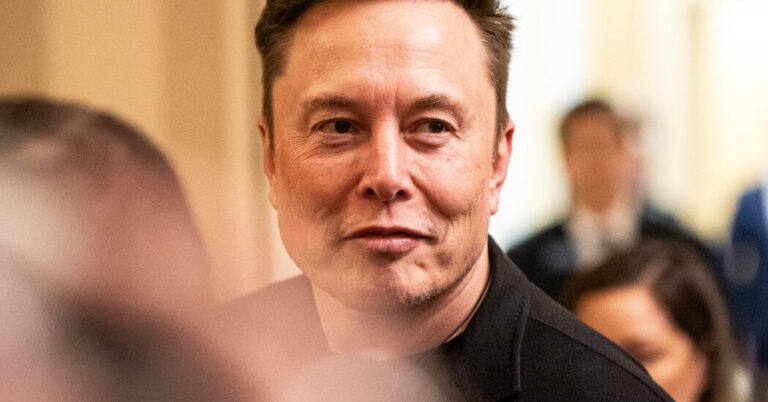
As Elon Musk sought to reassure Wall Street analysts on Tuesday that he would soon scale back his work with the federal government, the strain of his situation was audible in his voice.

The world’s richest man said that he would continue arguing that the Trump administration should lower tariffs it has imposed on countries across the world. But he acknowledged in a subdued voice that whether President Trump “will listen to my advice is up to him.”

He was not quite chastened, but it was a different Mr. Musk than a couple months ago, when the billionaire, at the peak of his power, brandished a chain saw onstage at a pro-Trump conference to dramatize his role as a government slasher.

Back then, Mr. Musk was inarguably a force in Washington, driving radical change across the government. To the president, he was a genius; to Democrats, he was Mr. Trump’s “unelected co-president”; to several cabinet secretaries, he was a menace; and to G.O.P. lawmakers, he was the source of anguished calls from constituents whose services and jobs were threatened by cuts from his Department of Government Efficiency.

As Mr. Musk moves to spend less time in Washington, it is unclear whether his audacious plan to overhaul the federal bureaucracy will have lasting power. The endeavor has already left an immense imprint on the government, and Mr. Musk has told associates that he believes he has put in place the structure to make DOGE a success. But he has still not come close to cutting the $1 trillion he vowed to find in waste, fraud and abuse.

Mr. Trump has constrained some of Mr. Musk’s influence over the past two months, telling cabinet secretaries that they were in charge of their own agencies. But the president also told the secretaries to work with Mr. Musk and DOGE to cut spending. At the same time, Mr. Musk has fought publicly and privately against the president’s steep tariffs that have threatened the manufacturing and profits of Tesla, his car company.

Mr. Musk has told friends that he has been frustrated by the encounters he has had with Mr. Trump’s trade advisers, according to a person briefed on the conversations who spoke on the condition of anonymity to describe private discussions. The billionaire has tried to work behind the scenes to persuade Mr. Trump to abandon his draconian protectionist posture, according to two people with knowledge of their conversations.

The White House did not respond to a request for comment, and a spokeswoman for Mr. Musk declined to comment. On Wednesday, Mr. Trump said the billionaire “was a tremendous help, both in the campaign and in what he’s done with DOGE.”

“He was always at this time going to ease out,” the president told reporters in the Oval Office.

Shaun Maguire, one of Mr. Musk’s closest friends and an adviser to DOGE officials, said that he was confident the endeavor would thrive without Mr. Musk’s full-time involvement. He compared DOGE to a Falcon 9 rocket — an initial thrust of energy powers the rocket even after it has separated from its engines.

“At this point, a rocket is only a couple hundred kilometers from Earth, but it has escaped its gravity well and can travel far into the solar system,” Mr. Maguire said. “DOGE has escaped D.C.’s gravity well.”

Mr. Maguire, who was involved in interviews for Pentagon appointments during the presidential transition, said he believed that “history will judge DOGE very favorably, well beyond what is appreciated today.”

Mr. Musk has placed DOGE allies across the federal government, seeking to dismantle some agencies, including the U.S. Agency for International Development and the Consumer Financial Protection Bureau.

The New York Times has identified more than 60 employees hired to work for Mr. Musk’s effort, although some have since left the federal government. Many have worked with the billionaire in the private sector, including at least 20 who have ties to Mr. Musk’s companies. DOGE is led by Steve Davis, Mr. Musk’s top adviser and enforcer.

DOGE staff members have overridden the objections of career civil servants at the Social Security Administration and the Internal Revenue Service to access closely held data about immigrants. Inside a Social Security database, Mr. Musk’s team put into place a system to list living immigrants they claimed were criminals as dead, in an effort to cut them off from financial services and to force them to leave the country.

All told, DOGE has tried to gain entry to more than 80 data systems across at least 10 federal agencies, The New York Times found. Those data sets include personal information about federal workers, detailed financial data about federal procurement and spending and intimate personal details about the American public.

Some of Mr. Trump’s advisers have watched anxiously as Mr. Musk has taken risky political swings at agencies that tens of millions of Americans rely on.

At the Social Security Administration, rushed policy changes have led to panicked beneficiaries overwhelming field offices. And a return-to-office policy and layoffs of probationary employees at the Department of Veterans Affairs have imperiled the agency’s mental health care program and threatened its ability to conduct medical research.

Mr. Musk came into the Trump administration claiming he would find governmental cost savings so large that they sounded impossible to budget experts.

In February, the group posted an online “wall of receipts” that detailed the savings from thousands of canceled grants, contracts and office leases. But that site included claims that confused “billion” with “million,” double- or triple-counted the same cancellations and even took credit for canceling programs that ended when George W. Bush was president.

Earlier this month, at a cabinet meeting, Mr. Musk said he had so far cut $150 billion from next year’s federal budget — far less than the $1 trillion he claimed he would extract.

DOGE has triggered sharp cuts to the federal work force and to the budgets of some agencies. But it is difficult to gauge exactly how much it has saved, because DOGE’s public claims have been riddled with errors and guesswork that inflated its success.

Mr. Musk’s slashing of the government has been politically costly, but he remains in good standing with the president, according to people familiar with Mr. Trump’s views.

While some of Mr. Trump’s close aides and advisers have argued with Mr. Musk, the president still praises him at nearly every opportunity, and still invites him to hang out at his clubs and to bring along his children.

Mr. Trump has told advisers that Mr. Musk put it all on the line for him. And he feels bad about what he calls left-wing “lunatics” attacking Tesla dealerships to protest Mr. Musk’s role in the Trump administration. Mr. Trump also respects the power of Mr. Musk’s social media platform, X, even as the president retains a commercial interest in Truth Social, his own platform.

In private, Mr. Trump has occasionally indicated to associates that it might be time for Mr. Musk to move on and spend more time with his companies. But the president is unlikely to ever pressure Mr. Musk to leave, or do anything deliberate to alienate him. He remains grateful for the hundreds of millions of dollars that Mr. Musk spent to elect him in 2024, and mindful of the additional $100 million that Mr. Musk has pledged to Mr. Trump’s political operation, the associates note.

Mr. Musk is now a financial cornerstone of the Republican Party, and will keep immense influence as long as he wants to stay involved in politics.

Still, Mr. Trump has recognized problems that Mr. Musk has caused, such as a plan for him to get briefed at the Pentagon on sensitive national security matters related to China — something even the president described privately as a conflict of interest and a meeting he was not told about in advance, according to people familiar with what took place. When Mr. Trump learned of that potential session from news reports, it was the first time people close to the president could remember him expressing displeasure with Mr. Musk.

Mr. Trump has also acknowledged to advisers that Mr. Musk has stumbled as a political force — most notably with his costly long-shot effort to flip a Wisconsin Supreme Court seat. Mr. Trump, a student of public opinion, has paid attention to the billionaire’s standing in opinion polls, watchful for any signs that Mr. Musk’s deep unpopularity might transfer.

But people close to Mr. Trump have also said that Mr. Musk has been helpful as a “heat shield,” absorbing unrelenting attacks that would otherwise be aimed at the president.

On Tuesday, Mr. Musk told analysts that he planned to dial back his government work to “a day or two per week” to turn his attention back to his companies. Administration officials with knowledge of Mr. Musk’s schedule said that they have already noticed he has reduced the amount of time he spends in Washington.

By dialing back the number of days he spends working for the White House, Mr. Musk can also potentially stretch out the 130 days he is allotted as a “special government employee.”

Zach Montague, Emily Badger, Wilson Andrews and Alexandra Berzon contributed reporting.


Source link

For China’s Trolls, ‘Chairman Trump’ and ‘Eyeliner Man’ Are Easy Targets

0


The Chinese are trolling the Trump administration.

A YouTuber who used to make parody music videos about the Chinese leader, Xi Jinping, produced “The Song of MAGA,” a satire of President Trump’s vision for the United States.

A nationalistic TikToker who whitewashes China’s persecution of Uyghurs in Xinjiang made a video mocking Vice President JD Vance’s purported use of eyeliner in full drag fashion while demanding an apology for a comment Mr. Vance had made about “Chinese peasants.”

In a post on the social media platform RedNote, a video of Mr. Trump admiring a portrait of himself at the Justice Department is accompanied with a North Korean song, “The Whole World Envies Us,” likening him to the dictator Kim Il-sung.

United by their disdain for the Trump administration, Chinese internet users of different political views have created an impressive collection of work. The images, videos and music, mostly generated by artificial intelligence, mock the American leaders for what the Chinese believe are ridiculous and outrageous policies and remarks.

The trolling reflects shifting perceptions of the United States in China. The Trump administration has provided rich material for the Communist Party propagandists — it has never been easier for Beijing to stand on a moral high ground. The more liberal-minded Chinese, having overcome the initial shock at actions that reminded them of their own authoritarian government, are applying their creativity to Washington.

“I love the United States, but Trump has damaged American democracy and freedom, and harmed the country’s image on the international stage,” the creator of “The Song of MAGA” wrote in a text message.

The A.I.-generated music video, based on a famous 1960s revolutionary song, “We March on the Great Road,” opens with characters resembling Mr. Trump, Mr. Vance, Secretary of State Marco Rubio and Elon Musk holding little red books in front of a large red banner that says, “SERVE THE PEOPLE.”

The lyric goes:

We march on the broad highway
High in spirit, strong in drive each day
Led by Chairman Trump, we shout “MAGA!”
Sworn to make America great again — hurrah!

In the video, the four men were depicted marching in the fashion of the Red Guards during the Cultural Revolution. The characters assembled iPhones, rode in scooters like Chinese blue-collar workers and picked tomatoes like Chinese farmers under the scorching sun.

The video’s creator, who declined to disclose their identity to me for fear of retribution, assigned the four characters modest jobs that millions of Chinese have to scrape by. Mr. Trump’s character is a cobbler. Mr. Rubio’s is a street vendor selling steamed buns. Mr. Vance’s sells produce. Mr. Musk’s works on construction sites and, sitting on the curb, sells socks and toys.

Mr. Vance has attracted the most brutal trolling. His “peasants” comment offended many Chinese. In a widely shared A.I.-generated video, a character resembling Mr. Vance, in a pink jacket, pink nails and hot pink lipstick, applies eyeliner while saying in a promotional female tone, “Sis, hillbilly brand eyeliner, made in China, reliable quality.”

Another video shows a cartoon character saying: “Vice President Vance, I’m a Chinese peasant. Do you realize your tariff policy will lead to the soaring price of your eyeliner?”

There are so many posts about the topic that Mr. Vance is now known as “the eyeliner man” on the Chinese internet.

Mr. Trump is mocked for expecting a call from Mr. Xi, who’s ghosting him, to make a trade deal. In a widely shared A.I.-generated image, a character that looks like Mr. Trump lies on a pink bed in a pastel-colored children’s bedroom. With his face resting on his hands, he stares at a smartphone. Behind him on the wall is a large portrait of Mr. Xi, smiling.

“Hahahaha, who’s going to call after a breakup?” commented a Weibo user with an internet address in the northwestern province of Gansu. “Trump, do you think you’re filming a soap opera?”

There are reasons the Chinese are mocking the four men. President Trump imposed 145 percent tariffs on Chinese goods. Mr. Vance called the Chinese people “peasants.” Mr. Rubio is (or was) a well-known China hawk. Mr. Musk parlayed his influence with Mr. Trump into an official role leading budget cuts at Voice of America and Radio Free Asia, whose programs influenced generations of Chinese. (On Tuesday, a federal judge blocked the administration from dismantling the broadcast channels, and Mr. Musk said he would cut back his government work to spend more time with his electric car company, Tesla.)

The four men are prime for ridicule because people there face fewer censorship restrictions for mocking foreign leaders than their own. It reminds me of the Soviet joke that an American said he could stand in front of the White House and yell, “To hell with Ronald Reagan,” to which a Russian replied: “That’s nothing. I can stand in front of the Kremlin and yell, ‘To hell with Ronald Reagan,’ too.”

The censors seem to be reining in the trolling. When I tried to share with a small WeChat group an image of Mr. Trump, Mr. Vance and Mr. Musk working on a Nike assembly line, it failed to go through. Links to some of the images and videos I saved no longer work.

China’s strict censorship rules have helped the country’s internet users hone their trolling expertise. It takes skill to simultaneously express views the Communist Party forbids while evading the censors.

Mr. Xi has been a favorite target. His nicknames include Winnie the Pooh, for his physical resemblance to the plump cartoon character; “Baozi,” or bun, for his publicity stunt visit to a bun restaurant early in his rule; and “Mao II,” for his revival of some Maoist ideologies.

The national censor banned more than 35,000 sensitive words and combinations of words related to Mr. Xi in 2016, according to China Digital Times, a media outlet focusing on censorship. In less than three months in 2020, RedNote, the social media platform, compiled a list of 564 new sensitive words referring to Mr. Xi.

It’s a lot safer to mock Mr. Trump.

A video blogger named Chen Rui has become a national phenomenon for his spot-on Trump impersonations.

From his furrowed eyebrows, pursed lips and tilted head, to the way he opens and closes his arms while speaking, and his intonation and English accent, Mr. Chen is top rate. He is known as the Chinese Trump.

He gained some international fame after appearing in a recent livestreaming session with the YouTube influencer IShowSpeed from Chongqing, Mr. Chen’s hometown in southwestern China. He told IShowSpeed, whose name is Darren Watkins Jr., that he would love to visit America one day.

Mr. Chen, whose online alias is Rui Ge, has a wide following on social media platforms and doesn’t talk about Chinese politics in his videos — he likes to show off Chongqing and seems to enjoy making food videos. But he frequently incorporates well-known Trump expressions, such as “You have no cards” and “You haven’t said ‘thank you.’”

In one video, while speaking English, he told his mother after washing the dishes: “You’re not thanking me. You’d better be nice.” He continued: “Maybe tomorrow, I’m not going to wash the dishes. You have no cards.” Then he repeated it in Chinese.

His mother spanked him with a bamboo back scratcher and yelled: “Do I have the cards now?”

The title of the video is “Mom Has the Cards.”


Source link