Home Blog Page 379

Republicans Debate Higher Taxes on the Rich

0


As Republicans prepare to cut trillions of dollars in taxes, they are grasping for ways to keep down costs. There are the typical conservative ideas for doing so, like cuts to health care programs, and the inventive ones, like changing how the budget is measured in the first place.

And then there is an unorthodox option Republicans on Capitol Hill and in the Trump administration are quietly considering: a tax increase on the rich.

The idea is one of many tax changes Republicans are floating. Lawmakers and lobbyists expect the party’s anti-tax antibodies to kick in and eventually block it. But even the possibility of raising taxes on high-income Americans has stirred a debate among Republicans about the party’s relationship with the richest Americans as their base of support increasingly comes from the working class.

“You’ve got these two conflicting streams of thought within the Republican Party,” said Dave Kautter, a Treasury official under the first Trump administration. “There’s ‘Let’s raise the rate so we can provide relief for lower- and middle-income people who are now part of our coalition,’ versus the traditional few that say, ‘The top rate should be as low as we can get it.’”

At issue is the marginal tax rate for Americans in the highest income bracket, a group that is largely made up of the top 1 percent of earners. Under the income tax system, Americans pay a higher rate for every dollar they make above increasing thresholds.

In their last major tax cut, in 2017, Republicans lowered marginal tax rates across income levels, including the top rate, which dropped to 37 percent from 39.6 percent. Like many of the other tax cuts Republicans passed that year, the 37 percent rate is set to expire at the end of the year if Congress does not pass another law renewing it.

For Republicans struggling with the roughly $4 trillion cost of continuing the 2017 cuts, letting the top rate snap back to 39.6 percent would be an easy way to reduce the cost of the bill. Not only would such a move save roughly $366 billion, according to the Tax Policy Center, a think tank in Washington, it could also help inoculate Republicans against attacks from Democrats accusing them of seeking to cut taxes for the rich at the expense of programs that help the poor.

So could creating another income bracket. Right now, the 37 percent rate kicks in on earnings above $609,351 for a single American. Another option would create a new income threshold, say $1 million per year, and tax earnings above that level at a higher rate.

Republicans on Capitol Hill and in the administration described the ideas as part of the early brainstorming process for their tax bill. Democrats have tried and failed to make similar moves, and without a clear champion the ideas could fizzle out. Some Republicans quickly promised to try and kill any tax increases, and leadership was circumspect.

“Generally, we’re trying to reduce taxes around here, so that’s a general principle; we’ll have to see,” House Speaker Mike Johnson, Republican of Louisiana, said when asked about the possibility of raising taxes on rich Americans.

At the same time, Republicans face deep internal pressure to not blow out the deficit with the bill they are planning, pushing the party to consider ideas it would usually avoid.

“We’ve got this incredible national debt, and so at some point you’ve got to address the elephant in the room,” Senator Bill Cassidy, Republican of Louisiana, said on raising the top rate. “Can’t tell you if it’s going to happen or not.”

After months of scrimmaging, the House and Senate in recent weeks approved a resolution outlining the contours of the legislation. Agreeing to the budget outline was the first step along a fast-track procedure, called reconciliation, for passing a bill without Democratic support in the Senate. Some Republicans only reluctantly agreed to vote for the budget blueprint and demanded that the final bill show more fiscal discipline.

Even if Republicans raised taxes on rich Americans, much of the legislation would still be dedicated to cutting taxes. Beyond continuing the 2017 tax cuts, Republicans are trying to figure out how to turn into law President Trump’s promises to not tax tips, overtime pay or Social Security benefits. And lawmakers have additional demands, some of which would provide tax breaks that help the rich, including lifting the $10,000 cap on the state and local tax deduction and eliminating the estate tax.

Those proposals are expensive, so lawmakers are studying ways to raise other taxes and craft a bill that falls within the budget they agreed to. (House Republicans have given themselves $4.5 trillion budget for tax cuts, while Senate Republicans have an allowance of roughly $5.3 trillion.)

But other ideas for raising revenue also have problems. Some Republicans whose states have benefited from clean-energy incentives have said they would oppose the total repeal of the tax credits, for example. There’s also concern about limiting how much companies can deduct in state and local taxes, another idea for raising taxes that has gained some ground. Mr. Trump’s pitch to eliminate carried interest, a loophole that hedge fund and private equity managers have enjoyed, would have to overcome fierce industry resistance, which has killed other recent attempts to narrow the tax break.

Even Republicans who say they could support raising the top individual income rate worry about how doing so could affect business owners. Many businesses pass their profits directly onto owners, who then owe individual income taxes on the earnings. In 2017, Republicans created a deduction for the owners of these businesses, often called pass-throughs, and industry groups are now furiously lobbying to protect the lower rates.

“I think as long as we can tailor it to where small businesses are not swept into it, I’m open to it,” Senator Thom Tillis, a Republican from North Carolina, said of raising the top individual rate.

Other Republicans believe raising the top rate could help the party reorient its economic agenda. Senator Josh Hawley, Republican of Missouri, who has opposed cuts to the safety-net in the bill, said he recently spoke with Mr. Trump about the need to create tax breaks for low- and working-class Americans who did not owe much in income tax. Mr. Hawley is open to raising taxes on the rich to pay for a tax break for lower-income Americans.

“I think we need to cut taxes for working folks, so if the president wants to offset that, then I’m definitely open to it,” Mr. Hawley said. “I would go so far as to argue that’s the core of his base. So we need to do something for those folks.”


Source link

What If Mark Zuckerberg Had Not Bought Instagram and WhatsApp?

0


In 2012, when Facebook chief executive Mark Zuckerberg cut a $1 billion check to buy the photo-sharing app Instagram, most people thought he had lost his marbles.

“A billion dollars of money?” joked Jon Stewart, then the host of The Daily Show. “For a thing that kind of ruins your pictures?”

Mr. Stewart called the decision “really lame.” His audience — and much of the rest of the world — agreed that Mr. Zuckerberg had overpaid for an app that highlighted a bunch of photo filters.

Two years later, Mr. Zuckerberg opened his wallet again when Facebook agreed to buy WhatsApp for $19 billion. Many Americans had never heard of the messaging app, which was popular internationally but was not well known in the United States.

No one knew how these deals would turn out. But hindsight, it seems, is 20/20.

On Monday, the government argued in a landmark antitrust trial that both acquisitions — now considered among the greatest in Silicon Valley history — were the actions of a monopolist guarding his turf. Mr. Zuckerberg, in turn, was set to contend that were it not for these deals, his company — which has been renamed Meta — would just be an afterthought in the social media landscape.

But the case, which could bring about the breakup of one of tech’s most powerful companies, largely deals in hypotheticals. Neither the government nor Mr. Zuckerberg could have predicted how technology would progress since his $1 billion check for Instagram, or what would have happened if regulators had not approved the purchases. That makes Meta’s antitrust case one of the most slippery in a tech industry that has long been defined by unpredictability.

“It was a very, very different time in Silicon Valley,” said Margaret O’Mara, a tech historian at the University of Washington, about Facebook’s acquisitions. “There was a vibe of ‘Oh wow, Facebook really is just a bunch of kids spending extravagantly!’”

I happened to have a front-row seat into Facebook’s deal making at the time, especially with Instagram. As a reporter for Wired Magazine, my office in San Francisco was next to Instagram’s headquarters. I frequented the kimchi burrito place across the street near South Park Commons — a slice of green in the city — and ate on a bench outside Instagram’s office.

Kevin Systrom, Instagram’s six-foot-five co-founder, was then 28. He often walked laps around the wood-and-iron swing set in South Park Commons while taking calls or talking product ideas with employees. Jack Dorsey, a co-founder of Twitter who identified as more of an art kid than a techie, also hung out at the same South Park playground and mused to friends about ideas that eventually became his social media app.

This was still the era in which social apps were dismissed as playthings, for posting latte art or telling people what you were having for breakfast. WhatsApp, which was growing quickly internationally, was a text messaging app without a business model. And clones of these apps were plentiful, such as Color, Flickr and VSCO in photo sharing, and Kik, Skype and Viber in messaging.

Even Facebook faced questions then about whether it was a viable business. Two months after the Silicon Valley company announced it was buying Instagram, it held one of the most disastrous tech initial public offerings since the late 1990s dot-com era.

By the time Mr. Systrom testified three months later to the California Department of Corporations — a condition of closing the deal with Facebook — shares of Facebook had fallen by nearly half from their I.P.O. price.

But in Silicon Valley, fortunes rise and fall quickly. Companies go from frivolous fancies to juggernauts in just a few years. And what may look like a shrewd business move by an executive one moment can be quickly ridiculed as a misstep the next. (Half of the aforementioned apps are dead, dying or were sold for parts long ago. My favorite kimchi burrito place is also no longer around.)

At the time, Mr. Systrom gave a positive spin on the Instagram deal as the future looked increasingly grim for Facebook.

“I’ve been taught throughout my life that there’s upside and downside in all public markets,” he said at the California Department of Corporations hearing in August 2012, which I attended on the sixth floor of the department in downtown San Francisco. “I still believe firmly in the long-term value of Facebook.”

He turned out to be right. Today, Instagram and WhatsApp are two of the most important parts of Meta’s business. Posts, videos and communications on the platforms regularly drive global conversations for sports, news, politics and culture. The apps have billions of users.

In some ways, the antitrust trial will be about competing versions of what tech history could have been. What would have happened if, say, Mr. Zuckerberg had lost the bid for Instagram to Mr. Dorsey, who was also trying to buy the photo-sharing app for Twitter? What if WhatsApp had sold to Google, which was champing at the bit to add the messaging app to its own portfolio?

What if other competitors had created superior photo-sharing apps that could have thrived if Facebook hadn’t used Instagram to crush them? And what if Facebook had screwed up both deals, or could not keep up with competing apps and fell behind even after buying Instagram and WhatsApp?

These are unknowable and can only be answered by someone with a time machine. Each side will argue their version of what would have occurred if Meta’s acquisitions had never been approved.

On the same Daily Show segment from 2012, Jessica Williams, the senior youth correspondent, said — tongue fully in cheek — that Facebook’s purchase of Instagram made perfect sense.

“Before Instagram, if I wanted my pictures to look like they were taken in the ’60s, I’d have to invent a time machine and travel back 50 years,” she said. “You know how much a time machine would cost to build?”

“Easily a billion dollars.”


Source link

Buying a Home? Without the CFPB, You Need to Be Your Own Watchdog.

0


House prices are stubbornly high, and mortgage rates remain substantially above their prepandemic level. Now, with the spring home buying season looming, shoppers have a new worry: A major federal consumer watchdog has been hobbled.

Without the Consumer Financial Protection Bureau, the agency responsible for overseeing most aspects of the home buying process, consumer advocates say home buyers need to be their own watchdogs.

“Now, when you buy a house, you are much more vulnerable to being misled,” said Sharon Cornelissen, housing director with the Consumer Federation of America. “It’s important to be on guard, because guardrails are being taken away.”

Buying a home is the biggest financial decision most Americans will make in their lives. The typical home price is about $397,000, according to the National Association of Realtors, but prices are far higher in some parts of the country. In several California counties, for instance, the median price at the end of last year was over $1.5 million, with monthly mortgage payments over $8,000.

The consumer bureau was created after the financial and housing crisis in 2007-8 to streamline oversight of lenders and financial companies serving consumers. Over the years, the bureau has moved to ease the mortgage shopping process by offering simplified forms and educational tools, and has taken action against an array of banks and lenders. In 2022, for instance, the bureau ordered Wells Fargo to pay $3.7 billion for mishandling a variety of customer accounts, including improperly denying thousands of requests for mortgage loan modifications that in some cases led borrowers to lose their homes to “wrongful” foreclosures.

On Jan. 17, in the final days of the Biden administration, the bureau reached a settlement with Draper and Kramer Mortgage Corporation for discouraging borrowers from applying for loans to buy homes in majority Black and Hispanic neighborhoods in Chicago and Boston. In an email, the lender’s lawyers said Draper and Kramer “considers the matter closed and denies” the bureau’s claims, but chose to settle in part to avoid “protracted legal costs.”

Since President Trump took office on Jan. 20, the consumer bureau has taken a hands-off approach. Last month, it dropped legal action against Rocket Homes Real Estate, which had been accused in December of illegally steering prospective borrowers to an affiliate, Rocket Mortgage. In an emailed statement, Rocket Homes said it “has always connected buyers with top-performing agents based only on objective criteria like how well they helped home buyers achieve their dream of homeownership.”

The bureau also dropped a suit against Vanderbilt Mortgage and Finance, owned by Berkshire Hathaway, for making loans to buyers of manufactured homes who it knew could not afford to repay them. A rule requiring mortgage lenders to verify that borrowers are able to pay was a key aspect of changes put in place after the financial crisis, when many people lost their homes because they couldn’t make their loan payments. In a prior statement, Vanderbilt said the lawsuit was “unfounded and untrue, and is the latest example of politically motivated, regulatory overreach.” Vanderbilt also said it exceeds legal requirements for assessing a borrower’s ability to pay.

Alys Cohen, a senior attorney with the National Consumer Law Center, said the bureau had effectively stopped overseeing if lenders were complying with consumer protection laws. Other federal regulators oversee banks, she said, but their main focus is an institution’s overall safety and soundness, rather than its treatment of consumers. States also regulate banks and other lenders.

“People may be exposed to high prices and hidden relationships they may not know about,” she said. (The center has joined a lawsuit opposing the administration’s efforts to dismantle the consumer bureau.)

The consumer bureau didn’t respond to an email seeking comment on its activities.

The relaxed oversight comes as buyers navigate what has been a challenging housing market. Lawrence Yun, chief economist with the National Association of Realtors, said in a statement that “it’s evident that elevated home prices and higher mortgage rates strained affordability” in January, when pending home sales fell almost 5 percent.

Mortgage rates have dipped recently, with the average rate on a 30-year fixed-rate home loan falling to 6.63 percent as of Thursday, down from 6.76 percent a week earlier, the mortgage financing giant Freddie Mac reported.

Research by the consumer bureau found that only about half of borrowers shop for better terms and interest rates when taking out a new home loan or refinancing a mortgage. That may be because getting quotes takes time, and consumers may get confused when comparing complex choices, leading them to rely on a loan officer they already know or a single referral from a real estate agent or friend.

Yet shopping around with different lenders to compare costs can save borrowers thousands of dollars, according to research from Freddie Mac. Getting two rate quotes could save as much as $600 annually, and getting at least four quotes could save more than $1,200 a year, Freddie Mac said.

Home buyers use referrals from their real estate agents for providers like title insurers and home inspectors, but borrowers should shop around for these providers as well, housing advocates say. The consumer bureau found last year that home loan closing costs had risen significantly, in part because rising interest rates were leading more borrowers to pay upfront for “discount points,” to reduce the rate on their loans.

Ms. Cohen, of the consumer law center, also suggested taking a home buyer education course, particularly if you are a first-time buyer. (Lenders may require the courses in some cases, such as if you seek help with a down payment.) The courses, offered in person or online, help shoppers understand what’s involved in finding, financing and owning a home, including how to select a lender. To find a course approved by the Department of Housing and Urban Development, check the agency’s website.

You can file a complaint with the consumer bureau, although it’s unclear if complaints are being processed. “The law stands,” Ms. Cornelissen said. “It’s just harder to enforce” without the bureau.

In a court filing this week, the chief of staff for the bureau’s office of consumer response said that many people “are not receiving timely responses to their complaints” and that for those facing urgent situations, like losing their home to an imminent foreclosure, “there is simply no one at the C.F.P.B. to help.”

Christopher Peterson, a professor at the University of Utah’s Quinney College of Law and an expert in consumer law, said, “I still think it’s worth complaining.” It’s not yet clear, he said, how legal fights over efforts to “de-staff” the consumer bureau will be resolved, but the law requires the bureau to maintain a complaint process.

After showing an error message for weeks, the consumer bureau’s website now opens directly onto its complaint portal.

You can also complain to the consumer protection arm of your state attorney general’s consumer office, Mr. Peterson said. State regulators may not always have the same resources and expertise as federal agencies, he said, but they may take on a larger enforcement role if the consumer bureau is diminished.

Ms. Cohen also noted that if you had certain types of government-backed mortgages, like one insured by the Federal Housing Administration, you could contact HUD’s national servicing center, which works with borrowers to prevent foreclosure. Cuts to HUD’s budget may curtail the servicing center’s functions, she said, but as of now it remains an option.

Some consumer loans require private arbitration of disputes outside the courts, but that’s not the case with mortgages, Mr. Peterson said. If you believe you were overcharged or otherwise mistreated, you can bring legal action yourself. Such claims can be complicated, he said, but because a home purchase “can affect your financial destiny for a long period of time,” a lawsuit may be worth it.

One way to find a lawyer who specializes in consumer rights law is to search the website of the National Association of Consumer Advocates.


Source link

When Elected Leaders Pursue Risky Policies, What Can Stop Them?

0


It has been a chaotic few weeks in geopolitics.

At the beginning of the month, President Trump announced tariffs that threw the global economy into turmoil. Investors panicked, stock markets plunged, and analysts predicted an imminent recession.

Mr. Trump insisted that he would not change course, even as trillions of dollars in investments vaporized. It was only when the markets for U.S. government bonds began to show signs of distress that he recently issued a partial, temporary reprieve.

Although global markets became somewhat calmer after Mr. Trump stepped back from some of his tariffs, his apparent willingness to provoke severe distress in the stock market raises a crucial question: When governments make unpopular or ill-advised decisions, what can force them to back down?

In healthy democracies, and even in many stable autocracies, leaders usually come under soft pressure to moderate their policies. They’re influenced not just by elections, but also by warnings from advisers, allies and powerful constituencies like business owners.

“We think of accountability as something that happens at the ballot box, or in a courtroom,” said Elizabeth Saunders, a Columbia University political scientist. “We vote leaders out of office, or we bring charges against them.”

But in fact, she said, leaders are more often kept in check by other, less formal types of pressure and limits, such as advisers who threaten to resign if an ill-conceived policy continues, or fellow lawmakers who warn of electoral consequences.

But if leaders amass enough power, they can ignore that soft pressure and push through unpopular policies — even if they are catastrophically damaging. In those cases, they may only respond to tougher forms of pressure, like impeachment, mass uprisings or upheaval in the bond markets.

The recent histories of countries like Turkey, India and, to some extent, Britain, offer lessons in how this phenomenon plays out.

In 2022, Liz Truss, Britain’s newly appointed prime minister, announced a plan for sweeping tax cuts financed by government borrowing. Markets reacted very badly: Stocks, the British currency and demand for British government bonds all plummeted.

(A quick primer on bonds: When governments, companies or other institutions sell bonds, they are borrowing money from investors. So bonds are basically I.O.U.’s.)

Leaders of nations tend to be especially sensitive to turmoil in the market for government bonds, because they use bonds to finance their operations.

Faced with a bond market meltdown, Ms. Truss, like Mr. Trump, was forced to reverse course within days, and she resigned two months later. Under Britain’s parliamentary system, Ms. Truss’s fellow lawmakers had an easier path to pressure her to step down as her party’s leader. Mr. Trump, by contrast, isn’t under the same constraints.

In the past, softer forms of pressure than bond market crises have often been enough to restrain American presidents.

In 1973, for example, the “Saturday Night Massacre” of resignations from President Richard Nixon’s Justice Department provoked a surge in public support for impeachment, contributing to the chain reaction of public disapproval that eventually led to Mr. Nixon’s resignation from office less than a year later.

In subsequent years, just the threat of mass resignations was often enough. “In a normal presidential administration, threats to resign might happen, but actual resignations in protest are very rare,” said Ms. Saunders of Columbia. “Far more common — yet mostly hidden until reported later in the press or in history books — are the threats to resign that never actually happen.”

In 2004, for example, President George W. Bush agreed to change parts of his surveillance policy after senior Justice Department officials, including the attorney general and the director of the F.B.I., threatened to resign.

But to work as a constraint, such resignations must have the potential to impose costs, such as damage to the president’s chances of re-election, or limits to a policy agenda.

That does not seem to be true for Mr. Trump, because these resignations also remove internal critics who might act as roadblocks to his policies, and cost him little support. The lesson Mr. Trump and his inner circle appear to have taken from his first term is that in his second, he should be more careful to surround himself with people who are loyal to his agenda, and should fire or punish those who are not.

When Danielle Sassoon, the acting U.S. attorney for the Southern District of New York, resigned in protest of the Trump administration’s decision to drop criminal charges against the mayor of New York City, in what she called a political quid pro quo, her actions did not lead to a substantial fall in public support for Mr. Trump. Nor did her resignation impede Mr. Trump’s policy agenda. In fact, it may have smoothed its path. Another attorney dropped the charges against New York’s mayor, who remains in office.

For Mr. Trump, resignations “are an upside,” Ms. Saunders said. “They are part of the point.”

Insulation from most forms of pressure is more typical of semi-democratic “hybrid” systems, in which leaders often manage to amass so much power that they are no longer sensitive to soft limits — or even to many harder ones. If leaders are unmoved by dissent or public pressure, they may stick to damaging policies long past the point of disaster.

In Turkey at the beginning of this decade, for example, President Recep Tayyip Erdogan pursued an unorthodox policy of cutting interest rates in the face of high inflation, the opposite of mainstream economic advice. He refused to change course even as inflation rates climbed to 80 percent and the cost of living soared. It was only after the 2023 election, in which he did worse than expected and had to go to a runoff against the opposition candidate, that he eventually changed course, installing a respected finance minister and a new head of the central bank to pursue a more traditional macroeconomic policy.

“I think Erdogan realized the extent to which economic grievances may have posed a threat to his re-election even on a playing field heavily tipped in his favor,” said Lisel Hintz, a political scientist at Johns Hopkins University who studies Turkish politics. But it was too late to reverse much of the damage. Turkey is still struggling with inflation, high government borrowing costs and a cost of living crisis.

The timing of elections can also blunt their effectiveness as a check. A leader years away from re-election may feel less pressure to keep voters happy in the short term. In India in 2017, Prime Minister Narendra Modi announced a sudden policy of “demonetization,” in which he effectively invalidated the country’s paper currency overnight, without warning.

The consequences were severe, including a cash shortage so acute that it drove some citizens to suicide, and the policy failed to achieve its stated goal of punishing criminals and tax evaders. But by the time India’s next national election arrived in 2019, the pain of the crisis had faded, and Mr. Modi’s party won handily.

Sometimes leaders refuse to change course for so long that they encounter one of the ultimate hard limits: being forced from office by a mass uprising. In Sri Lanka in 2021, the government banned chemical fertilizers, one of many policies imposed in an effort to shore up dwindling foreign currency reserves caused by years of economic mismanagement. The government faced a relatively weak opposition, and refused to lift the ban despite an outcry from farmers. “Gotabaya Rajapaksa was leading the administration at the time, and he had appointed his brothers and his nephew to his cabinet,” my New York Times colleague Emily Schmall, who covered the crisis, explained at the time. “He didn’t take a lot of counsel from outside his family.”

By the time Mr. Rajapaksa reversed the policy seven months later, it was too late. Cratering crop yields contributed to an economic crisis and high inflation. The government struggled to borrow money, and imports became scarce, causing shortages of fuel and food that brought mass protests to the streets.

Soon, it was all over. Protesters overran government buildings, and Mr. Rajapaksa, whose family had held power for most of the previous two decades, submitted his resignation in 2022.

For Mr. Trump, the last few weeks have revealed that his tolerance for risk and chaos remain high, leaving Americans uncertain about the future. And that could be costly. As Diane Swonk, the chief economist of KPMG, told my colleague Talmon Joseph Smith, “uncertainty is its own tax on the economy.”


Source link

Pete Marocco, Who Helped Gut Foreign Aid for Trump, Leaves State Department

0


Pete Marocco, who worked with Elon Musk’s team to oversee the gutting of foreign aid and the dismantling of the main U.S. aid agency, has left the State Department, administration officials said on Monday.

The abrupt departure comes in the middle of the department’s efforts to merge the remnants of that aid group, the U.S. Agency for International Development, into the department by mid-August.

Mr. Marocco had been acting as the head of foreign aid at the department and would have overseen the remaining aid operations, which amount to only a fraction of those active before President Trump took office.

Mr. Marocco is expected to take another job in the administration, U.S. officials say.

The State Department did not provide official comment on Mr. Marocco’s departure. But a statement from the department’s press office that was attributed to a “senior administration official” praised Mr. Marocco for finding “egregious abuses of taxpayer dollars” during his tenure. The statement provided no examples of such abuses.

Mr. Marocco’s critics said they planned to continue scrutinizing how he and Secretary of State Marco Rubio have gutted foreign aid.

“Pete Marocco’s tenure brought chaos to U.S.A.I.D., reckless and unlawful policy to the State Department, and dismantled longstanding U.S. foreign policy,” Senator Brian Schatz, Democrat of Hawaii, said in a statement, adding, “His actions deprived millions of people around the world of lifesaving aid and jeopardized U.S. credibility with our partners.”

Mr. Marocco took a senior post in the State Department in late January to oversee foreign aid. After Mr. Rubio was named the acting administrator of U.S.A.I.D. on Feb. 3, he appointed Mr. Marocco acting deputy of the agency. Mr. Rubio has publicly defended the cuts to foreign aid, saying they have been necessary to rein in an overly expansive use of aid.

Mr. Marocco left the deputy role last month, and his duties were taken over by Jeremy Lewin, a 28-year-old employee of the government-cutting task force headed by Mr. Musk, the billionaire adviser to Mr. Trump. Mr. Marocco and members Mr. Musk’s team entered the headquarters of U.S.A.I.D. in late January to take apart the technical infrastructure of the agency, and Mr. Musk later called it a “criminal organization” on social media.

In recent weeks, some U.S. officials have talked about severe tensions between Mr. Marocco and senior colleagues, including ones in top offices at the department.

But Mr. Rubio has approved all the foreign aid cuts. He announced in early March that he and Mr. Musk’s team had cut more than 83 percent of U.S.A.I.D.’s programs that had been active under 5,200 contracts. A vast majority of the agency’s 10,000 employees have been fired.

The New York Times reported last month that the cuts had gutted U.S.A.I.D. operations to such a degree that the agency had struggled to muster a response to a devastating earthquake in Myanmar, while China, Russia and other nations had sent teams immediately. After a three-person team of U.S.A.I.D. workers finally arrived in the country, they got emails saying they were being fired.

Mr. Marocco and other officials have also ended contracts that some aid agency employees had thought would be preserved. In a round of cuts early this month, Mr. Marocco and other State Department officials ended all U.S. humanitarian aid to Afghanistan and Yemen, where millions of people are suffering from a lack of food. Contracts for food aid to Niger and the Democratic Republic of Congo were also cut, as well as other programs helping about a dozen nations.

Mr. Marocco also met with an official from the government of Viktor Orban, Hungary’s authoritarian leader, and promised to halt all aid programs that “intervened” in the country’s internal affairs, according to statements released by the official, Tristan Azbej.

The Wall Street Journal reported on Sunday that Mr. Marocco had left the State Department.

Mr. Marocco worked at U.S.A.I.D. briefly during the first Trump administration, as well as at the State Department and the Pentagon. Employees at the aid agency filed a 13-page memo in September 2020 accusing Mr. Marocco of mismanagement. “Intervention is urgently needed,” it said.

In 2018, while working at the State Department as a political appointee, Mr. Marocco secretly met in the Balkans with ethnonationalist Bosnian Serb separatist leaders, whom the department had deemed off limits, according to a ProPublica report. The U.S. ambassador to Bosnia and Herzegovina rebuked Mr. Marocco. That rebuke was confirmed to The Times by a U.S. official.

A group of investigators has stated publicly that Mr. Marocco and his wife, Merritt Corrigan, who was also an appointee at U.S.A.I.D. during the first Trump administration, are in a photo of people who entered the Capitol on Jan. 6, 2021. Neither was charged, and neither has confirmed being at the building that day.

The State Department has not replied with any public comments to various email requests sent since late January about Mr. Marocco’s activities since the first Trump administration.


Source link

Lego Black Market Fetches Big Prices for Little Plastic Bricks

0


It’s one Lego kit, a collection of small plastic bricks and related accessories. What could it cost? The answer, it turns out, could be thousands of dollars.

Lego kits and minifigures, figurines that are a little over 1.5 inches tall, are commanding high prices on the secondary market, with some, like the LEGO San Diego Comic-Con 2013 Spider-Man, valued as high as $16,846.

The children’s toys have even become something of an investing opportunity for those savvy enough to know what to look for.

But with the eye-popping price tags comes a dark side: Lego kits have become a hot commodity on the black market and the target of brazen thieves.

Last year, burglars hit Bricks & Minifigs outlets in California. Thieves made off with at least $100,000 worth of Lego kits and accessories.

Last month, the Alameda County Sheriff’s Office in California recovered nearly 200 Lego sets after arresting a person in connection with a burglary at Crush Comics, a comic book store in Castro Valley, Calif.

Joshua Hunter, the owner of Crush Comics, said that members of his staff found the store’s stolen comic books for sale on eBay within hours of the theft.

The store worked with law enforcement and alerted other small business owners, including Five Little Monkeys, a toy store that recently had $7,000 worth of Lego stolen, to solve what turned out to be a spree of burglaries in the area.

Five Little Monkeys was able to recover a lot of its stolen Lego, said Meghan DeGoey, the company’s marketing director, but the theft was only the latest in what has been a growing problem.

“It’s been a problem for probably, I mean, forever, but it’s really ramped up in the last five, six years,” she said.

Five Little Monkeys has eight stores around the Bay Area, said Ms. DeGoey, and Lego stands out among its top-stolen items.

“People are really brazen when they’re going to steal,” she said, describing the way thieves will sometimes come into a store and walk right out or “do some like crazy misdirect and have a second person that tries to distract us.”

“It’s for a Lego, like for pieces of plastic, just everybody think about that,” she said.

The Lego Group, the makers of Lego, did not respond to requests for comment about the black market for its products. (The company says, by the way, that the plural of Lego is Lego, and “never, ever” Legos.)

Lego sets spend an average of two years on store shelves, and then those kits are not manufactured again, according to Shane O’Farrell, who has built a community with his Lego investing YouTube channel, where he informs others on how to get started.

The secondary Lego market is fueled by this scarcity as collectors look to complete their sets. This also means it’s not just limited editions or rare variants that go up in price — even the cheaper kits increase in value over time, he said.

Calling the underground market for Lego “unfortunate,” Mr. O’Farrell said he’s not surprised at its emergence. Lego are just like other coveted merchandise, like shoes, Pokémon cards and jewelry, that are stolen and then resold.

Other valuable Lego kits include a Piper airplane (valued at nearly $13,000); a T-rex kit (nearly $9,000); and a castle (nearly $8,500), according to the website BrickEconomy, which tracks the Lego market and trends.

“It is something that people love and it’s something that it’s easy to sell,” Mr. O’Farrell said, emphasizing that the Lego black market is “not good for anybody.”

Mr. O’Farrell stumbled onto the world of Lego investing in 2017 after he moved to the United States from Ireland and looked up a few Lego sets from his childhood purely out of nostalgia.

Then he noticed the pricing.

“The more I kind of looked into it, the more I realized it wasn’t just one or two Lego sets that were going up in value, it was like the entire market was going up in value,” he said. “It’s a very uncommon way to invest, but it’s a very sure thing from the research that I was doing.”

Mr. O’Farrell said he made $500,000 in sales in 2023. Last year, he made $250,000 in sales after purposely shrinking his business after the birth of his daughter.

Read Hayes, a research scientist and criminologist at the University of Florida and the executive director of the Loss Prevention Research Council, said the Lego black market caters to collectors in search of a “very coveted item.”

“It’s not exactly like art theft, but to a certain extent, there are collectors that just aren’t bothered by buying somebody else’s property that was stolen from them,” he said.


Source link

Meta’s Antitrust Trial Begins as FTC Argues Company Built Social Media Monopoly

0


The Federal Trade Commission on Monday accused Meta of creating a monopoly that squelched competition by buying start-ups that stood in its way, kicking off a landmark antitrust trial that could dismantle a social media empire that has transformed how the world connects online.

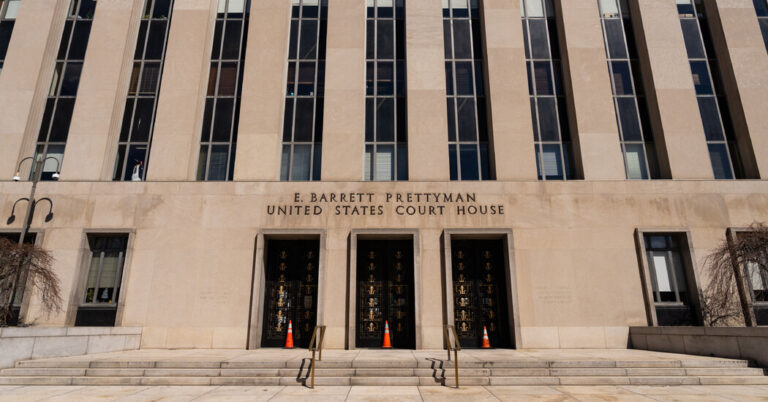
In a packed courtroom in the U.S. District Court of the District of Columbia, the F.T.C. opened its first antitrust trial under the Trump administration by arguing that Meta illegally cemented a monopoly in social networking by acquiring Instagram and WhatsApp when they were tiny start-ups. Those actions were part of a “buy-or-bury strategy,” the F.T.C. said.

Ultimately, the purchases coalesced Meta’s power, depriving consumers of other social networking options and edging out competition, the government said.

“For more than 100 years, American public policy has insisted firms must compete if they want to succeed,” said Daniel Matheson, the F.T.C.’s lead litigator in the case, in his opening remarks. “The reason we are here is that Meta broke the deal.”

“They decided that competition was too hard and it would be easier to buy out their rivals than to compete with them,” he added.

The trial — Federal Trade Commission v. Meta Platforms — poses the most consequential threat to the business empire of Mark Zuckerberg, the company’s co-founder. If the government succeeds, the F.T.C. would most likely ask Meta to divest Instagram and WhatsApp, potentially shifting the way that Silicon Valley does business and altering a long pattern of big tech companies snapping up younger rivals.

Still, legal experts cautioned that it might be challenging for the F.T.C. to win. That’s because the government must prove something unknowable: that Meta, formerly known as Facebook, wouldn’t have achieved the same success without the acquisitions. It is also extremely rare to try to unwind mergers approved years ago, legal experts said.

“One of the most difficult things for antitrust laws to deal with is when industry leaders purchase small potential competitors,” said Gene Kimmelman, a former senior official in the Obama administration’s Department of Justice. Meta, he added, “bought many things that either didn’t pan out or were integrated. How are Instagram and WhatsApp different?”

The efforts continue a yearslong bipartisan pursuit to curtail the vast power that a handful of tech companies have over commerce, the exchange of ideas, entertainment and political discourse. Despite attempts by tech executives to court President Trump, his antitrust appointees have signaled that they will continue the course.

The F.T.C.’s case against Meta is the third major tech antitrust lawsuit to go to trial in the past two years. Last year, the D.O.J. won its antitrust case against Google for monopolizing internet search. A federal judge is set to hear arguments over remedies, including a potential breakup, next week. The D.O.J. also completed a separate trial against Google for monopolizing ad technology, which is still being decided by a federal judge.

The Justice Department has also sued Apple, and the F.T.C. has sued Amazon, accusing the companies of antitrust violations. Those trials are expected to begin next year.

The case against Meta could affect its 3.5 billion users, who on average log onto Facebook, Instagram or WhatsApp multiple times a day for news, shopping and texting. Instagram and WhatsApp have attracted more users in recent years as Facebook, Meta’s flagship app, has stopped growing.

F.T.C. Chairman Andrew Ferguson was in the courtroom to listen to the government’s opening statement. Meta’s chief legal officer, Jennifer Newstead, and Joel Kaplan, its chief global affairs officer, also attended.

Presiding over the case is Judge James Boasberg, 62, the senior judge in the federal court. He is already in the national spotlight for rejecting the Trump administration’s effort to use a powerful wartime statute to summarily deport Venezuelan migrants it deemed to be members of a violent street gang.

Judge Boasberg said he had never been a user of Meta’s apps, but was familiar with Facebook Live, which has been featured in criminal trials.

During what is projected to be an eight-week trial, the government and Meta are expected to tell competing versions of the company’s 20-year growth story.

The F.T.C.’s argument hinges on Section 2 of the Sherman Antitrust Act of 1890, which forbids a company from maintaining a monopoly through anticompetitive practices.

The F.T.C. accused Facebook, as the company was previously known, of struggling to build a mobile app and fearing that Instagram would rapidly outpace it in popularity. The company overpaid when it purchased Instagram in 2012 for $1 billion, the F.T.C. argued.

In 2014, as WhatsApp grew, Meta offered to buy the company for $19 billion — also far above its market value, the government said.

The F.T.C. plans to highlight a paper trial of emails between Meta executives, alongside other evidence, to argue that the company bought the start-ups because they were threats.

The government is set to call witnesses from Meta, as well as competitors, venture capitalists, economists and media industry executives. Mr. Zuckerberg was expected to be called as the first witness as soon as Monday. The F.T.C. said former chief operating officer, Sheryl Sandberg, and Kevin Systrom, co-founder of Instagram, will testify this week.


Source link

Rory McIlroy's thrilling Masters win: Essential reading

0


Our one-stop shop with all of the best written content, videos and highlights from Rory McIlroy’s thrilling 2025 Masters triumph.


Source link

Scammers Stole Their Retirement Savings. Then the Tax Bill Arrived.

0


They were conned by skilled online criminals into draining their retirement savings. After the shock, shame and grief that followed, the victims were often left with something else: an enormous income tax bill.

Mary Ellen Strange, a 75-year-old widow who was deceived by fraudsters impersonating federal investigators, now owes the Internal Revenue Service an estimated $100,000 this year.

Linda Gilmore, an 80-year-old former nurse, has to pay nearly $50,000.

Cindy, 62, and Tina, 51, a married couple in California, owe roughly $250,000 to the federal and state governments.

Lori, a sales executive in North Carolina who owed $225,000 in the 2023 tax season, decided that filing for bankruptcy was her best option. (Several victims agreed to participate in this article if only their first names were used because of privacy concerns.)

Like thousands of others, they were drawn into cybercriminals’ fabricated worlds, which are built upon intricate plot lines and a mastery of manipulation. They had been led to believe that the scammers were government officials, Amazon fraud investigators or potential love interests, and they were tricked into transferring large sums for any number of concocted reasons.

The punishing tax bills arise because the victims pulled from individual retirement accounts or 401(k) plans, where money is taxed when it’s taken out. The withdrawals inflated their incomes, even though the funds disappeared shortly after being passed to the criminals. The victims are left with few options.

Ms. Strange lost nearly $378,000 — and that’s before taxes.

“It is a double punch,” she said. “It is a gut punch from your own government after you have been robbed blind.”

There used to be an easier way for people with the largest tax bills to deduct these losses from their income, using a tax deduction for victims of personal casualties, disasters and theft. But that and many other individual breaks were eliminated or narrowed as part of the Republican-led tax overhaul known as the Tax Cuts and Jobs Act of 2017, which helped to pay for broader tax cuts, including a reduced corporate tax rate.

The current structure of the deduction now treats victims unevenly. It can be used only with certain types of scams, even though all scams are built on a similar foundation of lies, often spun by organized criminals in faraway scam factories overseas.

The tax deduction, in its pared down form, says that personal casualty and theft losses can be claimed only in situations like federally declared disasters or “transactions entered into for profit.”

That means deductibility now depends on whether the victims had a goal of profiting when they entered into transactions with scammers.

Victims who lost money on a sham crypto trading platform operated by criminals working in Thailand, for example, have a more clear-cut path to tax relief than a person who lost the same amount to criminals posing as government officials claiming the money needs to be moved to be protected from a global hacking ring.

“This leads to profoundly disparate impacts: those that thought they were making a buck by investing with a cryptocurrency ‘guru’ are better positioned than those who fell victim to a romance scam,” Patrick Thomas, a tax lawyer, said in a letter included in a 2024 report from the Senate Special Committee on Aging.

Victims may also qualify for another type of relief, offered after the Bernie Madoff scandal, if their circumstances qualify as something related to a Ponzi scheme, which is also generally investment related.

But the relief options are less clear for the many others lured into different schemes.

“It’s a complete inequity in the current system,” said James Creech, a director at the tax advocacy and controversy practice at Baker Tilly, a large accounting and advisory firm in San Francisco.

He said there were three reasons people were usually pulled into these schemes: financial, fear and love. “But when you get to fear, that is where you get into the gray area” of the law.

He said he still tried to navigate the possibilities for his clients. Some victims who don’t fit neatly within the confines of the casualty loss deduction may still have defensible cases, he said, particularly those who thought they were safeguarding their income-producing retirement money from criminals so that it could continue to grow over time.

“But there’s a lot of work to get there,” Mr. Creech said. “This is one of those things where it really involves kind of a deep conversation with the client. My caveat with that is that it’s truly an unknown,” he added.

The I.R.S. hasn’t issued any broad guidance for online victims, but some tax lawyers have said they hear it is being developed.

To help support a case, tax experts say you need to document everything the moment you realize you’ve been a victim of a scam: File a police report with local officials (though they’re not always familiar with these crimes) and federal ones, including the Federal Bureau of Investigation’s Internet Crime Complaint Center.

If you decide to confront your scammers, first take screen shots of any online platforms or apps that you used to communicate with them, as well as online conversations, photos or anything related (such as a snapshot of a company name they used or a web address that you realize isn’t quite right). You should also create a timeline or narrative of the events.

“If you don’t have the evidence and the substantiation because it’s 18 months later and you’ve been paralyzed with fear, there isn’t much you can do,” Mr. Creech said.

Ms. Strange, the widow who lost nearly $378,000, received the initial call from her scammers last June while her dog was chasing the carpet cleaners in her home, “barking up a storm.”

That was the beginning of a seven-week ordeal of transferring money to multiple fake federal agents, using Bitcoin, gold bars and cash, all in an effort to prove her money was indeed hers and not obtained through money laundering.

“You think they are taking care of you,” she said, adding they made sure she had enough money to pay for her extensive dental work. “You think they have your interests at heart.”

Instead, they took off with her retirement savings, leaving her with $100,000 in an annuity.

Ms. Strange is now trying to navigate how to approach her 2024 tax return and liability of $100,000. She said she planned to pay her typical tax amount, and then weigh the options available given her circumstances.

One option she is considering is a settlement with the I.R.S. known as an offer in compromise. That allows taxpayers to pay the I.R.S. less than they owe because of an economic hardship, but settlements can be difficult to qualify for, especially for people with any home equity or other assets.

“With offers, generally the worse situation a taxpayer is in, the easier it is to get an offer accepted,” said Nancy Rossner, executive director of the Community Tax Law Project, which provides free advice to lower-income taxpayers with complicated tax situations.

Lori, whose romantic impostor left her with a $225,000 federal tax bill, decided to pursue a Chapter 13 bankruptcy, where she will pay her creditors, the I.R.S. chief among them, about $5,700 a month for five years.

That cleared away the $200,000 in loans she took out to help the impostor with his business, and it allowed her to keep her home and a car — a better outcome than the payment plan the I.R.S. had offered, which was only slightly less but would have left her saddled with the other debts.

“I have one choice — and it’s to get through it,” Lori said, adding that she was thankful for her AARP support group. “The real outrage is the protections that were in place through the federal government regarding income tax have been removed. It’s a disgrace.”

Ms. Gilmore, the 80-year-old retired nurse, is now living on Social Security benefits and two small annuities, and she has secured affordable housing for $2,100 a month.

She was defrauded by an online criminal posing as a priest she had known for 30 years. The scammer reached out to her on Facebook and ultimately made off with all of her liquid retirement savings. That generated a nearly $47,000 tax liability, which includes about $11,000 in state taxes owed to California. The way the states treat these situations can amplify a victims’ losses, tax experts said, generating huge tax liabilities of their own.

“I didn’t sleep for seven weeks,” said Ms. Gilmore, who started seeing a therapist and taking a small dose of an antidepressant. She said she was also carrying credit card debt from the scammer.

“I’m waiting for a reply from I.R.S. after I sent them papers they requested,” she said. “I reported everything, but I’m sure they can’t do anything about it.”

For now, the future of tax relief for victims of online scams is uncertain.

The casualty and theft loss deduction is set to spring back in its original form at the end of this year if the sweeping 2017 tax law expires. But Republicans are trying to extend that package.

There were efforts in Congress last year to bring attention to these giant tax bills, including the 92-page report from the Senate Special Committee on Aging, led at the time by Senator Bob Casey, a Democrat from Pennsylvania. Other lawmakers drafted legislation to offer more comprehensive and retroactive relief, dating back to 2018 when the deduction was curtailed. But they haven’t made it into law.

Even the original casualty loss deduction was limited. It could be claimed only by taxpayers who itemized deductions on their returns, which means the total amount of those deductions had to exceed the standard deduction for it to be worth it. And the deduction applied only to losses that exceeded 10 percent of their adjusted gross income.

“It’s really like a triple punch,” said Tina, who, with her spouse, Cindy, lost $1.2 million over six weeks to internet thieves. “We lost all of our retirement, we owe the I.R.S. a lot of money and then we have to go into further debt to hire legal representation.”

Ron Lieber contributed reporting.


Source link

UK Cuts Tariffs on Dozens of Products as Global Trade Tensions Rise

0


The British government ramped up actions to help protect businesses and households from some of the economic tumult created by President Trump’s decision to raise tariffs and upend the norms of global trade.

The government said on Sunday it would suspend tariffs on 89 products for about two years to help businesses and consumers save money. The products include those for construction, such as plywood and plastics, and everyday household items, such as pasta and fruit juices.

Officials will also increase financing support for exporters by 20 billion pounds ($26 billion), through partial loan guarantees, and give small businesses access to loans of up to £2 million.

As Mr. Trump raises tariffs on most imports, including those from Britain, to a 10 percent base line and even higher for certain goods like cars and steel, the British government has sought to calm anxieties at home. Officials have said they want to move quickly to support companies as they try to sustain fragile economic momentum.

“This week, we witnessed the uncertainty of a changing world,” Rachel Reeves, the chancellor of the Exchequer, wrote in The Observer, a Sunday newspaper. In response, the government “must rise to meet the moment,” she wrote.

The announcements on Sunday followed other interventions by the government in recent days to bolster protections for firms affected by tariffs. On April 6, the government eased rules on electric vehicle sales after Mr. Trump imposed a 25 percent tariff on cars imported into the United States. British officials also relaxed regulations to speed up timelines for clinical trials to support the life sciences sector with Mr. Trump also expected to impose levies on the pharmaceutical industry.

And on Saturday, the government took control of British Steel, the country’s last large plant producing crude steel, from its Chinese owners, Jingye, to protect jobs and make sure the blast furnaces keep operating.

“Our economy is too exposed to global disruption and supply shocks,” Ms. Reeves wrote in the Observer column. “We need a strong, smart and agile state to support key industries and back those sectors of the economy particularly affected by tariffs.”

As President Trump’s trade policy has led to widespread uncertainty, many countries are not waiting to see where tariffs settle and are already putting in place protections for their economies. Germany, Italy, Portugal and Spain announced more than 50 billion euros’ worth of financial support last week in “tariff shields” for businesses. There are concerns that the region’s weak growth could be stifled as consumers and firms spend and invest less.

The British economy is relatively trade intensive and vulnerable to outside shocks. Its largest trading partner, the European Union, is struggling with slow growth that will weigh on Britain, too. The nation’s finances are also exposed to global turmoil. For example, as the yield on U.S. Treasury bonds rises, so do those in British government debt, raising borrowing costs for the government.

Data published last week showed that the economy grew 0.5 percent in February, an unexpectedly strong rebound, driven by an increase in manufacturing output. Analysts said this could have been caused by exporters trying to front run expected tariffs and that economic strength would not be sustainable.

Despite the stronger growth, economists at Pantheon Macroeconomics slashed their forecasts for Britain’s economic growth to 0.7 percent this year, down from 1.1 percent, and forecast 0.5 percent growth in 2026, half of their previous forecast.


Source link