Home Blog Page 384

OpenAI Asks Court to Bar Elon Musk From Unfairly Attacking It

0


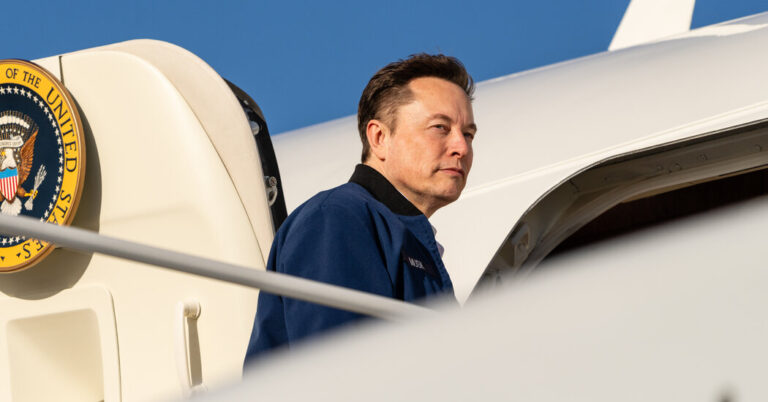
OpenAI asked a federal court on Wednesday to bar Elon Musk from unfairly attacking it through a high-profile lawsuit he filed last year, the latest move in a bitter feud between the artificial intelligence start-up and the world’s richest man.

In a filing in federal court in San Francisco, OpenAI said Mr. Musk had “made it his project to take down OpenAI.” The company requested that the tech billionaire be stopped from taking “further unlawful and unfair action” against OpenAI and asked the court to hold Mr. Musk responsible for any damage he has caused the firm.

The filing was another sign of the acrimony between Mr. Musk, who was a founder of OpenAI, and the company over the direction of the fast-evolving technology. In August, Mr. Musk sued OpenAI and two of its founders, Sam Altman and Greg Brockman, claiming they were putting the commercial interests of the company and A.I. ahead of the public good with the technology.

In a statement, OpenAI said: “Elon continues to use bad-faith tactics in an attempt to slow down OpenAI for his personal benefit. These efforts are anti-competitive and go against our mission, which is why today we filed a countersuit to stop them.”

(The New York Times has sued OpenAI and its partner, Microsoft, accusing them of copyright infringement regarding news content related to A.I. systems. OpenAI and Microsoft have denied those claims.)

Mr. Musk helped create OpenAI as a nonprofit in late 2015, along with Mr. Altman and others. But that partnership fizzled after a battle to control the company and the evolution of A.I., with Mr. Musk leaving the organization. Since then, OpenAI has released ChatGPT and become a major A.I. player with hundreds of millions of users. Mr. Altman has raised billions of dollars for OpenAI to build A.I. technologies.

Last year, OpenAI began working on a plan to shift control of the company from the nonprofit to OpenAI’s investors. Soon after, Mr. Musk sued OpenAI, Mr. Altman and Mr. Brockman, claiming they were breaching the company’s founding contract by putting commercial interests ahead of the public good.

This year, Mr. Musk and a consortium of investors offered to buy the assets of the nonprofit that controls OpenAI for more than $97 billion. OpenAI’s board of directors rejected the bid.

In the filing on Wednesday, OpenAI described Mr. Musk’s bid for the company as “fake” and said he was misrepresenting the company’s efforts to change its corporate structure.

“Musk peddles the false claim that OpenAI is planning to ‘convert’ from a nonprofit into a for-profit enterprise,” the filing said.

Marc Toberoff, Mr. Musk’s lawyer, said in a statement, “Had OpenAI’s board genuinely considered the bid as they were obligated to do, they would have seen how serious it was. It’s telling that having to pay fair market value for OpenAI’s assets allegedly ‘interferes’ with their business plans.”

OpenAI has said it plans to restructure as a public benefit corporation, or P.B.C., which is a for-profit corporation designed to create public and social good.

In a separate move on Wednesday, a coalition of nonprofit, labor and other philanthropic leaders filed a petition to the California attorney general, Rob Bonta, to investigate OpenAI’s attempt to convert the company into a public benefit corporation.


Source link

What to Know About Trump’s Order to Phase Out Paper Checks

0


Paper checks issued for tax refunds, Social Security payments and other government benefits have been dwindling and will soon be eliminated, potentially affecting hundreds of thousands of Americans.

President Trump signed an executive order on March 25 directing the federal government to stop issuing paper checks as of Sept. 30. Instead, government agencies must make payments electronically, by direct deposit to a bank account, debit card or digital wallet.

“This executive order will defend against financial fraud and improper payments, increase efficiency, reduce costs and enhance the security of federal payments,” a White House spokeswoman, Liz Huston, said in an emailed statement.

Most monthly Social Security payments and annual tax refunds are already paid by direct deposit, agency statistics show. Yet the administration said it was further “phasing out” paper to modernize how the government handled money. A fact sheet about the order said the government aimed to switch “from old-fashioned paper-based payments to fast, secure electronic payments.”

The order gives the Treasury Department just six months to carry out the mandate — “a very aggressive time frame,” Steve Kenneally, senior vice president of payments with the American Bankers Association, said on an ABA Banking Journal podcast. The order is nevertheless “welcome,” the association said, because electronic payments are “a much faster, cheaper and safer choice” for consumers and the government.

The Treasury Department did not respond to a request for comment.

Jennifer Tescher, chief executive of the Financial Health Network, said that doing away with paper checks was the right thing to do but that “consumer awareness and help making the shift” would be critical to making the change go smoothly.

“It’s all in the execution,” she said.

The White House fact sheet said the government planned a public awareness campaign to inform federal payment recipients of the change and to offer guidance.

Kathleen Romig, director of Social Security and disability policy at the Center on Budget and Policy Priorities, said she agreed that direct deposit was a “best practice” for secure payments. But, she said, newly announced verification requirements for creating online Social Security accounts could mean more people may need government help to set up the payments.

That could be challenging, given that federal agencies like the Social Security Administration and the Internal Revenue Service are facing significant staff cuts under the Trump administration.

The government’s use of paper checks has long been in decline as a result of various federal efforts and the evolution of payment technology. The government tried to make most federal payments, other than tax refunds, electronic in the 1990s, in an initiative known as EFT ’99. But the effort faced resistance, Mr. Kenneally said in the podcast, often from members of Congress who received complaints from constituents who preferred paper checks.

Over time, though, reliance on paper checks has fallen. More than 99 percent of the roughly 69 million monthly Social Security payments are made by direct deposit, according to the latest statistics from the Social Security Administration. Beneficiaries are already required to receive electronic payments except in “rare” circumstances, such as receiving a hardship waiver because of a mental impairment or geographic location, according to the agency’s website.

“The government is largely out of the check business,” Ms. Tescher said.

Still, about 486,000 paper Social Security checks go out monthly. Another 238,000 paper checks are mailed each month to recipients of Supplemental Security Income, available to people with low incomes who are blind or disabled.

Leland Dudek, the acting commissioner of Social Security, said in an emailed statement, “We support this executive order and will comply.”

The majority of federal income tax refunds are sent by direct deposit. As of March 21, the I.R.S. had issued about 55.7 million refunds for 2024 tax returns, of which about 1.9 million, or about 3.5 percent, were paper checks. (The president’s order isn’t expected to affect refunds for this spring’s tax season, which is nearing its April 15 deadline for most filers, an I.R.S. spokesman said.)

The Treasury Department has recently taken other steps to reduce paper, including eliminating the option to use tax refunds to buy the paper version of I bonds, federal savings bonds that protect against inflation.

While some people still prefer paper, checks can go astray in the mail and are increasingly subject to fraud. They can be stolen from mailboxes and cashed by someone forging a signature. In one scheme, stolen paper checks are “washed” with chemicals, to remove the recipient’s name and the amount of the check. The thief then inserts his or her own name and a larger dollar amount. Last summer, two former Postal Service employees were indicted on charges that they stole $4 million in Treasury checks from a mail facility at Kennedy Airport in New York, then sold them to others.

The president’s order specified that “limited exceptions” would be made, such as “for people without banking or electronic payment access.”

“We’ll have to see how the exceptions play out,” said Lauren Saunders, associate director of the National Consumer Law Center.

The number of Americans who are “unbanked,” or lack access to a traditional checking or savings account, has fallen in recent years. Just over 4 percent of households were unbanked in 2023, down from about 8 percent in 2011, according to the Federal Deposit Insurance Corporation.

One reason for the drop is that people can now find low-fee bank accounts through the Bank On program, run by the nonprofit Cities for Financial Empowerment Fund, Ms. Tescher said. The program works with banks nationally to certify thousands of safe, low-cost accounts. You can search online to find one that meets Bank On’s standards.

And Ms. Saunders noted that people without formal bank accounts could already get federal payments via the Direct Express program, through which the government puts payments on a prepaid debit card, allowing recipients of Social Security, disability or veterans benefits to withdraw cash or pay bills.

Direct Express serves about 3.4 million people, most of whom don’t have bank accounts. Its longtime administrator has recently come under scrutiny for poor customer service, and a new bank, the Bank of New York Mellon Corporation, will start running the program this year.

The executive order also requires that payments to the government — such as for income taxes and passport applications — must also be made electronically rather than by physical check.


Source link

Musicians Who Knew Amadou Bagayoko Pay Tribute With Their Songs

0


African music lost one of its titans last week with the death of Amadou Bagayoko, a guitarist who recorded with American rock stars, performed at the Nobel concert for Barack Obama, and became a national icon in his home, Mali.

With his wife, the singer Mariam Doumbia, Mr. Bagayoko composed the duo Amadou & Mariam, which rose to international fame in the 2000s and 2010s with hits like “Beautiful Sundays.”

Mr. Bagayoko was 70 when he died last week, of complications from a malaria infection. He and his wife, who is 66, were scheduled to perform across Europe next month. And while their fame has faded in the United States since the peak of their global success, they remained huge celebrities in Europe and in West Africa, where their music inspired generations of artists.

We asked relatives and friends of Mr. Bagayoko for their favorite songs by Amadou & Mariam, and the significance of the guitarist and his music — a blend of blues riffs, guitar solos, and djembe — to them.

Cheick Tidiane Seck, a keyboard player who knew Mr. Bagayoko since the guitarist was 14, was in neighboring Ivory Coast for a concert last week when Mr. Bagayoko died.

Mr. Seck opened the concert with “Toubala Kono,” a song he wrote with Mr. Bagayoko, whom he called a “brother.”

But he couldn’t finish performing it, he said in an interview, adding, “I would have collapsed.”

With only a spare, reverberating guitar doing circular riffs, the song revolves around loneliness, a feeling that Mr. Seck said had haunted him since his friend’s death.

Sam Bagayoko is the only one of Mr. Bagayoko’s and Ms. Doumbia’s three children who embraced a musical career. He had toured with his parents and was in Paris to organize their planned concerts in France this summer when Mr. Bagayoko died.

His parents were especially proud of how their songs kept appealing to younger generations, he said in a telephone interview from Bamako, Mali’s capital and the family’s home, where visitors were coming this week to pay tribute.

His favorite song is “Mogoya,” which he composed for his parents to perform with him. In the song, he plays the guitar with his father while his mother sings about daily life in Mali and promises that people often fail to keep.

“It was always an honor to play with my parents, but this was our last collaboration together,” said Sam, who is 45. “I will never see nor hear my father’s guitar anymore.”

Idrissa Soumaoro, a well-known musician and singer in Mali, met Mr. Bagayoko in 1973, when at 19 years old he joined the band Les Ambassadeurs du Motel de Bamako.

He quickly saw that “Amadou was bright and ambitious,” he said.

Later in that decade, Mr. Soumaoro trained Mr. Bagayoko and Ms. Doumbia at a Malian national school for blind people, where they deepened their friendship. (Mr. Bagayoko was blind, as is his wife.)

At the school, Mr. Soumaoro said, they would listen to blues for hours in a rehearsal room, working on tonalities in what Mr. Soumaoro called “research work like I’ve never done with any other musician.”

Mr. Soumaoro picked “I Think About You,” a love song that the duo released in 2005, saying, that the couple’s love “was also part of their success.”

“In it, Amadou sings, ‘I think about you, don’t abandon me,’” said Mr. Soumaoro, who is 75. “He didn’t abandon her, but the sad reality is that he has left her.”

He added, “I hope Mariam will have the strength to bear life.”


Source link

Trump officials renew opposition to ruling on Maryland man wrongly deported to El Salvador

0


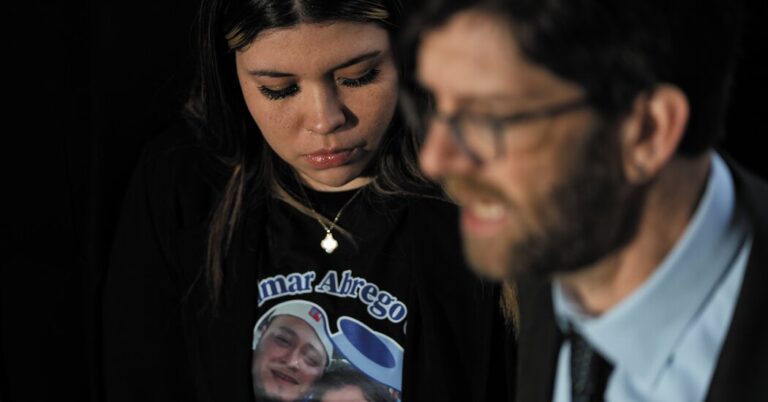
The Trump administration on Sunday evening doubled down on its assertion that a federal judge cannot force it to bring back to the United States a Maryland man who was unlawfully deported to a notorious prison in El Salvador last month.

In a brief legal filing, the Justice Department reiterated its view that courts lack the ability to dictate steps that the White House should take in seeking to return the man, Kilmar Armando Abrego Garcia, to U.S. soil, because the president alone has broad powers to handle foreign policy.

“The federal courts have no authority to direct the executive branch to conduct foreign relations in a particular way, or engage with a foreign sovereign in a given manner,” lawyers for the department wrote. “That is the ‘exclusive power of the president as the sole organ of the federal government in the field of international relations.’”

The position taken by Trump officials was not the first time they had tried to defy efforts compelling them to seek Mr. Abrego Garcia’s return from El Salvador. Still, their continued recalcitrance meant that Mr. Abrego Garcia, a 29-year-old father of three, would for now remain at the CECOT prison in El Salvador, where he was sent with scores of other migrants on March 15.

The administration’s stubbornness was also likely to heighten tensions between the White House and the judge overseeing the case, Paula Xinis. Judge Xinis has scheduled a hearing to discuss next steps in the matter on Tuesday in Federal District Court in Maryland.

The conflict has persisted even though the Supreme Court last week unanimously ordered the administration to “facilitate” Mr. Abrego Garcia’s release from Salvadoran custody. Trump officials have in fact already admitted that they made an “administrative error” when they put Mr. Abrego Garcia on the plane to El Salvador in the first place.

The dispute — just one of the legal battles involving Mr. Trump’s deportation plans — threatened to spill over into an official visit from President Nayib Bukele of El Salvador, who is set to meet with President Trump on Monday.

When the Supreme Court ruled on the case last week, it seemed at first like a victory for Mr. Abrego Garcia and his family. But the court’s order contained an ambiguous passage that Trump officials have seized on in their ongoing effort to avoid doing much of anything to ensure his return to the United States.

In their ruling, the justices agreed with Judge Xinis that the White House should do what it could to “facilitate” Mr. Abrego Garcia’s release, but they never defined the specific steps officials should take to actually “effectuate” the plan.

Indeed, they sent that question back to Judge Xinis, cautioning her that as she clarified what the administration should do, her decision needed to be made “with due regard for the deference owed to the executive branch in the conduct of foreign affairs.”

On Saturday, Mr. Abrego Garcia’s lawyers asked Judge Xinis to order the administration to send a plane to El Salvador to pick him up and to have Trump officials travel with him to “ensure his safe passage.”

But lawyers for the Justice Department, in their filing on Sunday, said that the administration should not have to do any of that because it would intrude on dealings between the White House and the Salvadoran government.

“All of those requested orders involve interactions with a foreign sovereign — and potential violations of that sovereignty,” the lawyers wrote. “But as explained, a federal court cannot compel the executive branch to engage in any mandated act of diplomacy or incursion upon the sovereignty of another nation.”


Source link

Trump’s Tariffs Leave No Safe Harbor for American Importers

0


In a world besieged by turmoil, Jacob Rothman thought he had secured a refuge.

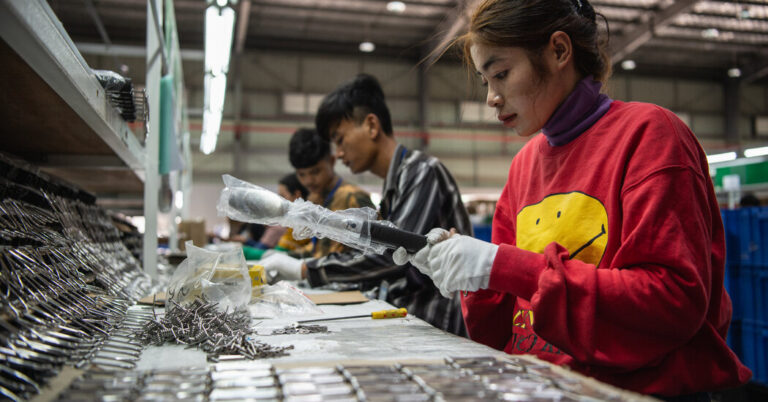
Mr. Rothman, 52, grew up in California but has spent more than two decades in China, overseeing factories that make grilling accessories and other kitchen items for Walmart and retailers around the globe. Well before the rest of the business world, he grasped the pressures bearing on the relationship between his native country and the one where he runs his business.

President Trump used his first term to impose tariffs on imports from China. President Joseph R. Biden Jr. advanced that policy. The pandemic exposed the pitfalls of American reliance on Chinese factories for an array of goods, from parts for ventilators to basic medicines.

Mr. Rothman and his company, Velong Enterprises, had correctly anticipated demand for alternatives to Chinese industry. He had forged a joint venture in Vietnam, and two more in India. He had set up a wholly owned factory in Cambodia. Come what may, he figured, he could shift production to limit his exposure to tariffs, conflicts and natural disasters.

“I thought I was really ahead of the game,” Mr. Rothman said this week, still absorbing the shock of the one thing he had not seen coming — a veritable tsunami of tariffs that hit dozens of countries at once. “It’s apocalyptic,” he said. “People don’t know what to do next.”

Even after the White House last week paused most tariffs on every country except China, Mr. Rothman remained shaken. “What does ‘safe’ even mean anymore?” he said. “With a chaos-first foreign policy, even Southeast Asia may no longer be immune.”

He assumed that tariffs could eventually be imposed on the region as the Trump administration treated Southeast Asia as an extension of Chinese business interests.

Among the enduring impacts of Mr. Trump’s sharply escalated trade war was the effective foreclosing of safe harbors. In recent years, as global supply chains have confronted a series of crises — from tariffs, to pandemic disruptions, to obstructions to shipping in the Panama and Suez Canals — multinational companies that sell their goods to the United States have sought to limit their vulnerability to trouble in any single place by spreading around their factory production.

Apple shifted the manufacture of some of its iPads and AirPods to Vietnam, while making more of its iPhones in India. Walmart moved orders to India and Mexico from China. Nike, Samsung and other major brands transferred production from Chinese factories to other countries to avoid American tariffs.

The Trump administration’s broad salvo this week appeared to decimate that strategy. American imports from China face duties reaching 125 percent. Duties on imports from Vietnam were set to increase to 46 percent, and Cambodian goods confronted tariffs of 49 percent. India faced 27 percent levies.

For the moment, the pausing of many tariffs has left China uniquely vulnerable. But importers are cognizant that levies on the rest of the world — and especially Southeast Asia — could be revived. The result is chaos, bewilderment and delay that presages rising consumer prices.

“Supply chains require long-term planning that is nearly impossible in the current environment,” said Ryan Petersen, chief executive of Flexport, a global logistics company based in San Francisco. “So many businesses are paralyzed and craving stability.”

That described the state of play for Mr. Rothman, and the kitchen items his factories make. A college religion major who considered training to be a rabbi, he now finds himself serving as the “Spatula Rabbi,” fielding calls from anxious customers around the world. As recently as last month, he was attending a major housewares trade show in Chicago, manning a booth with his Indian partners behind a banner heralding the benefits of their geographic diversity: “Building the safest supply chain on the planet.”

“I thought we were going to be the solution,” Mr. Rothman said.

Then Mr. Trump unveiled the series of enormous new taxes on American imports.

Mr. Rothman was especially shocked by the tariffs on Cambodia, given its history with the United States — the American carpet-bombing of the country during the Vietnam War, laying ground for the genocidal Khmer Rouge, followed by decades of isolation and poverty.

As the news of the tariffs reverberated last week, a major retailer delayed a $5 million order, Mr. Rothman said. Other customers may retain finished goods in his warehouses, hoping for an easing of the tariffs. He anticipates that orders will slow as much as 30 percent over the next six months.

Mr. Rothman struggles to square the upheaval with the supposed policy aims — limiting American reliance on China, while bringing factory production home to the United States.

He is mulling invitations to consider building factories in the United States, in Mississippi, Utah or Pennsylvania, for example. Walmart has a program that helps factories set up in its home state, Arkansas. But building a factory anywhere in the United States seems risky.

How can he outfit an American factory given the hefty tariffs that now hit imports of equipment and machinery from around the world? How can he hire enough people in an era of mass deportation of immigrants?

Constructing a factory is an expensive and long-term proposition. Should a future American government change the policy, Mr. Rothman’s competitors could use lower-wage countries to make their goods, while he would be stuck with a more expensive setup — a recipe for failure.

“We elect presidents every four years,” Mr. Rothman said. “Factories take at least that long to recover the costs of building. And if the world changes, and we can no longer manufacture in the U.S. in a cost-effective way, what am I doing with a factory in the U.S.?”


Source link

Trump’s Tariffs Are Already Reducing Car Imports and Idling Factories

0


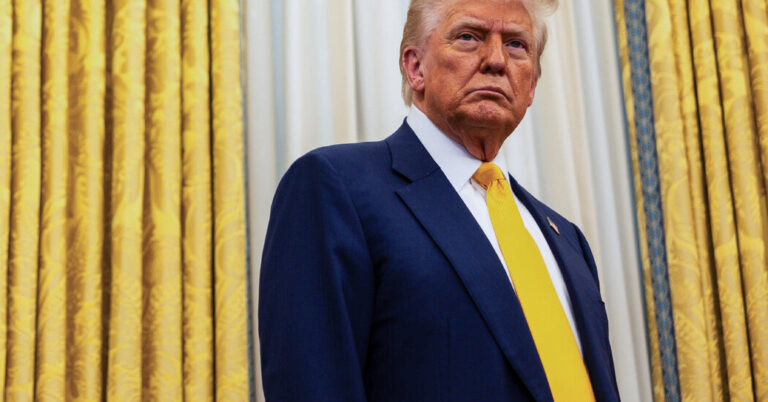
President Trump’s 25 percent tariffs on imported vehicles, which went into effect last week, are already sending tremors through the auto industry, prompting companies to stop shipping cars to the United States, shut down factories in Canada and Mexico and lay off workers in Michigan and other states.

Jaguar Land Rover, based in Britain, said it would temporarily stop exporting its luxury cars to the United States. Stellantis idled factories in Canada and Mexico that make Chrysler and Jeep vehicles and laid off 900 U.S. workers who supplied those factories with engines and other parts.

Audi, the luxury division of Volkswagen, also paused exports of cars to the United States from Europe, telling dealers to sell whatever they still had on their lots.

If other carmakers make similar moves, the economic impact could be severe, leading to higher car prices and widespread layoffs. The tariffs on cars are among the first of several industry-specific levies that Mr. Trump has in his sights and could offer early clues about how businesses will respond to his trade policies, including whether they raise prices or increase manufacturing in the United States. The president has said he also wants to tax the imports of medicines and computer chips.

Applying the new tariff to imported cars could increase their cost to consumers by thousands of dollars, sharply reducing demand for those vehicles. For some Jaguar Land Rover or Audi models, the tariffs could amount to more than $20,000 per car.

While much of the initial impact of the tariffs has been disruptive, in at least one case Mr. Trump’s duties have had the intended effect of increasing production in the United States. General Motors said late last week that it would increase production of light trucks at a factory near Fort Wayne, Ind.

The longer-term impact of the 25 percent tariffs is unclear. Many automakers are still trying to figure out how to avoid increasing prices so much that consumers can no longer afford new cars. Investors are pessimistic. Shares of Ford Motor, G.M. and Tesla have fallen in the past several days of trading.

“Everyone in the automotive supply chain is focused on what they can do to minimize the tariff impact to their own balance sheets and to prices,” said Kevin Roberts, director of economic and market intelligence at CarGurus, an online shopping site.

But carmakers have never before had to deal with the imposition of such high tariffs with such little notice. Nor have they had as little insight into what the president will do next, analysts and dealers said.

“The traditional playbook is not enough,” said Lenny LaRocca, who leads the auto industry team at the consulting firm KPMG.

Mr. LaRocca predicted that automakers would increasingly focus on producing larger, heavier sport utility vehicles and pickup trucks. Those vehicles, many of which are assembled in U.S. factories, are usually the most profitable and give companies more room to absorb the cost of tariffs rather than passing it on to customers.

Many modern assembly lines are able to produce several models, giving companies flexibility to shift to the most profitable vehicles and to abandon vehicles that don’t make as much money. Mercedes-Benz has said it will take advantage of flexible assembly lines at its factory in Alabama.

This strategy comes with downsides. It may be harder for car buyers to find moderately priced new cars. Already, the average price of a new car is almost $50,000.

Analysts say this much is clear: Tariffs will not prompt companies to open new factories or reopen closed plants right away. Companies won’t take that expensive step until they are sure that the tariffs are permanent and that investing hundreds of millions — or billions — of dollars in new production capacity will pay off.

“I haven’t seen any big moves,” Mr. LaRocca said. “It’s wait and see.”

Some carmakers and suppliers expanded their U.S. operations before Mr. Trump took office. Often, they were reacting to the coronavirus pandemic, when it became risky to rely on distant factories for critical parts. Others made big investments in factories that make electric vehicles or E.V. batteries to take advantage of incentives offered by the Biden administration.

ZF, a German parts maker, spent $500 million last year to expand a factory in South Carolina that produces transmissions for BMW and other automakers. And in recent years G.M. has opened two U.S. battery factories with a South Korean partner, LG Energy Solution, to make the most important component of electric vehicles.

In the short run, some foreign carmakers may simply stop sending vehicles to the United States, either because they can no longer make a profit or because they can make more money elsewhere. That may be the case with Jaguar Land Rover. The company, known for luxury sport utility vehicles made in Britain, sells about one-fifth of its cars in the United States.

If other companies stop selling certain models to Americans, consumers will have fewer vehicles to choose from and the remaining automakers will have more leeway to raise prices.

So far, however, the tariffs have not led to widespread price increases for new cars. Hyundai Motor said last week that it would not raise the manufacturer’s suggested retail price of Hyundai and Genesis cars until June 2.

Of course, car dealers can raise prices even if an automaker pledges not to. That happened a lot during the pandemic, when shortages of computer chips and other parts limited the supply of new vehicles.

Dealers and automakers have reported brisk sales in recent days as people have rushed to buy vehicles before the tariffs took effect. The average time that a vehicle spent on the lot fell from 77 days at the end of January to fewer than 50 days at the beginning of April, according to CarGurus.

Demand has been especially high for Japanese brands like Honda, Subaru and Nissan, apparently because buyers assume they are imported, said Sean Hogan, the vice president of Sierra Auto Group, which owns a dozen dealerships in Southern California. All three Japanese companies have factories in the United States, though they do import some cars.

Another tariff shock will come on May 3, when the Trump administration will apply tariffs to auto parts. That means that even cars made in the United States will be affected because virtually all vehicles contain components from abroad. Repairs will also become more expensive.

“The educated public is definitely making some moves to get ahead of the tariffs, which I think is smart,” Mr. Hogan said.

But the long-term impact of Mr. Trump’s trade policies is still impossible to predict, he said. “This administration moves pretty fast, and you really don’t know what’s going to happen next,” Mr. Hogan added. “Buckle up.”

Neal E. Boudette and Melissa Eddy contributed reporting.


Source link

Tempted by Trump’s Tariffs to Panic-Buy? Don’t.

0


I went to Costco on a tariff run, and did not stock up on anything.

It was tempting. Mark Cuban was on social media telling people it was not a “bad idea” to stock up on consumables as President Trump’s trade war unfolded. I love beating the system as much as the next person — it’s my literal beat in journalism.

But let’s really think this one through for a minute.

First of all, these tariffs may not persist at anything like the amounts currently in the headlines. For stocking up to make sense, you have to assume that price increases will be significant and last for at least a medium amount of time.

But let’s assume that both these things happen. Say you have a $1,000 grocery bill each month, and it somehow goes to $1,500 by Memorial Day. While predicting a 50 percent spike feels like a stretch, that extra $500 would be real money.

But you also need to have real money — extra real money — to lay a bunch of things away in your residence. Many people don’t, and going into debt to buy extras of everything will probably erase any savings.

Mr. Cuban, via email, said he had made buying shampoo, soap and razor blades in multiples work somehow, even when he wasn’t wealthy. “I started doing it in college when I read the book ‘The Only Investment Guide You’ll Ever Need,’” he said. “When you can save money by buying more than one of something, that’s a guaranteed return.”

It can be, if you use it. Most of what we eat, however, is perishable. Many of us waste some of what we purchase. Buying more could mean wasting more food — and more money.

Then there’s the practical problem, where we need to invoke the deadpan comedian Steven Wright. “You can’t have everything,” he once said. “Where would you put it?” In an extra freezer maybe, but then you’re spending hundreds of dollars more.

As for larger goods, speeding up a car or furniture purchase if you are going to need either thing in a year or two feels risky, especially if you’re borrowing sooner than you might have or pulling money out of beaten-down stocks to do so.

That said, some opportunities to save money may present themselves unexpectedly. On Thursday, Ford dropped many prices, seeking headlines and competitive advantage. It could reverse those prices just as easily.

We do not know what is going to happen next, and neither does Mr. Trump or the people who surround him. You may be worried about the shortages that occurred in 2020. The supply chain is indeed vast and unpredictable, since toilet paper requires wood pulp and berries need packaging. It is also possible that niche manufacturers will choose not to produce or export if it is unprofitable to do so.

Mr. Trump’s advisers, however, are mostly thinking about the money. Peter Navarro, a senior trade adviser, is out in public making 10-year, $6 trillion tariff revenue projections, while Commerce Secretary Howard Lutnick believes the stock market will do “extremely well” over the medium and long terms.

You see what Mr. Lutnick did there, right? The short term might be bad. Or not, though so far it sure seems that way. He doesn’t want to make a short-term prediction, because he has no earthly idea what the markets will do tomorrow or next week, let alone what will happen to the prices consumers pay. What he does know is that in a year or three, most people will have forgotten what he said on Thursday.

The futility of forecasting (and the limited utility in listening to people who engage in projectile projections) comes in part because we don’t know how countries are going to react to the U.S. tariffs, or how much courage Mr. Trump will have in maintaining them. Remember, he backed down pretty quickly not long ago when President Claudia Sheinbaum of Mexico got tough in response to his attempt to rough up her country. On Thursday, she boasted of her “preferential treatment.”

At a Costco in Brooklyn, it was business as usual. I watched a few hundred carts exiting, none of which contained unusual amounts of toilet paper or anything else.

There was just one person I could find trying to get ahead of the tariffs. Mizan Rahman had a dolly filled with Ensure and PediaSure, which he was buying to resell at Fresh Halal Meat and Grocery a few miles away. He had already loaded up on basmati rice.

Unlike many Brooklyn residents, he has a basement below the store that he can use. He also has a credit card with zero percent interest for the rest of the year to pay for this bit of hedging.

“You have to do something,” he said. “Trump is getting crazy now.”

Maybe you have to do something if you’re a business owner and you have the basement and the credit. But in general, the first rule of unexpected news moments is this: Don’t just do something. Stand there.

So I stood there, watching, and found little hoarding. Then I sat there with the hordes at the store’s red benches and had one of Costco’s $1.50 hot dogs. The price has not risen in decades. Three years ago, an executive said it never would, either.

If it does, that might be a reason to panic.

Tara Siegel Bernard contributed reporting.


Source link

Monday Briefing: China Pauses Crucial Exports

0


China has suspended exports of certain rare earth minerals and magnets that are crucial for the world’s car, semiconductor and aerospace industries. The move is in retaliation for President Trump’s sharp increase in tariffs.

The metals and the special magnets made with them can now be shipped out of China only with special export licenses. But Beijing has barely started setting up a system for issuing the licenses. Industry executives said that supplies of minerals and products outside the country could run low.

Trump’s rapidly escalating trade war with China has scrambled prospects for many global businesses. And there is no end in sight, my colleagues Ana Swanson and Ben Casselman report.

The U.S. administration has been waiting for the Chinese leader, Xi Jinping, to call Trump, but Beijing appears wary of putting Xi in an unpredictable situation with the U.S. president.

Charm offensive: Today, Xi will arrive in Vietnam, his first stop on a weeklong tour that will also take him to Malaysia and Cambodia. He is expected to oversee the signing of around 40 agreements, including deals that would advance plans for Vietnam to accept Chinese loans for part of an $8.3 billion railway connecting northern Vietnam with China.


Two Russian ballistic missiles slammed into the city center of Sumy, Ukraine, where people had gathered to celebrate Palm Sunday. At least 34, including two children, were killed yesterday in what appeared to be the deadliest attack against civilians this year.

Video of the Russian strike and its aftermath showed mangled and bloodied bodies lying motionless, burning cars and debris covering the road, as screams and sirens wailed in the background.

Ukraine’s president, Volodymyr Zelensky, said the attack showed that Moscow had no real interest in a cease-fire despite the Trump administration’s efforts to broker one. Kyiv has warned that Russia is preparing to push into the Sumy region, in Ukraine’s northeast, and open a new front in the war.

Politics: Petro Poroshenko, a former president who now leads an opposition party, spoke to our Kyiv bureau chief about prospects for peace talks. He has recently stepped up his criticism of Zelensky.


The Trump administration revived talks with Saudi officials over a deal that would give Saudi Arabia access to U.S. nuclear technology and potentially allow the country to enrich uranium.

“We’ve not reached the details on an agreement, but it certainly looks like there is a pathway to do that,” Energy Secretary Chris Wright said yesterday in Riyadh. For years, Saudi Arabia has pressed the U.S. to help it develop a nuclear energy program, as Saudi officials look beyond oil to provide energy and diversify the economy.

Iran: After a first meeting, U.S. and Iranian officials agreed to move forward in their talks on curbing Tehran’s nuclear program. A second meeting is planned for Saturday.

As climate change melts ice in the Arctic, the region is becoming more accessible and contested. The world’s major militaries from the U.S., Russia, China and Europe are all training for a winter war.

A reporter and a photographer traveled to Finland to watch the war games unfold.

Lives lived: Irmgard Furchner, whose role as a teenage secretary at a Nazi concentration camp led to her conviction as an accessory to more than 10,000 murders, died at 99.

Mario Vargas Llosa, the Nobel Prize-winning author whose novels reverberated far beyond his native Peru, died at 89.

Three times a day, a fog drifts from nozzles hidden in flower beds and rolls down the hills in the Khao Yai Art Forest in Thailand. Created by the Japanese artist Fujiko Nakaya, this is one of many works by global artists there that transcend nature.

The art forest, which opened in February, focuses on site-specific works, farming and Buddhism. The project’s owner, Marisa Chearavanont, was driven to buy the site by her search for healing in nature after the Covid lockdown. Take a look.

Cook: This rich, slow-roasted lamb is complemented by a sauce of roasted grapes and bright lemon.

Read: Our critics and editors recommend these eight new books.

Watch: The new season of Netflix’s “Black Mirror” mocks streaming services.

Travel: Lofoten, Norway, is a dreamy base for adventure.


Source link

Teenager Charged With Killing Mother and Stepfather in a Plan to Assassinate Trump

0


A Wisconsin teenager has been charged in the killing of his mother and stepfather in what the federal authorities described as an attempt to obtain the money and autonomy he believed was necessary for a plot to kill President Trump and overthrow the government.

The teenager, Nikita Casap, 17, was arrested last month in the deaths of his mother, Tatiana Casap, 35, and stepfather, Donald Mayer, 51, according to the Waukesha County Sheriff’s Department.

Sheriff’s deputies found the bodies at the family’s home in Waukesha, about 17 miles southwest of Milwaukee, after receiving a call on Feb. 28 requesting a welfare check, the department said.

According to federal documents unsealed on Friday, the fatal shootings were part of a plan by Mr. Casap, who identified with a right-wing terrorist network known as the Order of Nine Angels, to assassinate President Trump in what he believed would “foment a political revolution in the United States,” federal investigators said.

Mr. Casap also paid, at least in part, for a drone and explosives that he planned to use in an attack, according to the documents, which were filed in the U.S. District Court for the Eastern District of Wisconsin.

Mr. Casap’s lawyers could not be immediately reached on Sunday for comment.

A self-described “manifesto,” found on Mr. Casap’s phone and detailed in the federal documents, contained images and praise of Adolf Hitler, as well as instructions to others to make bombs.

“By getting rid of the president and perhaps the vice president, that is guaranteed to bring in some chaos,” Mr. Casap wrote.

According to the federal documents, sheriff’s deputies found the body of Ms. Casap covered in blankets on Feb. 28 while responding to a call from Mr. Mayer’s mother, who said that she had been unable to contact the family, and that Mr. Casap had not been at school in two weeks.

During a secondary search of the residence, deputies found Mr. Mayer’s body also covered in blankets, according to the documents. They also located a receipt for a .357 Magnum handgun, which was not in the home.

Based on cellphone records, security footage and witness statements, the authorities determined that Mr. Mayer was killed on Feb. 11 at about 6:30 p.m., and that Ms. Casap was killed about two hours later, according to the documents.

Security camera footage taken on Feb. 12 showed Mr. Casap, who was traveling with the family dog, at a truck stop in Walcott, Iowa, in Mr. Mayer’s car, according to the documents.

On Feb. 28, Mr. Mayer’s car was listed as stolen. That day, officers with the WaKeeney, Kan., Police Department stopped Mr. Casap and saw a .357 Magnum handgun on the front passenger floorboard, according to the documents.

Officers also found ammunition, the wallets and phones of both his mother and stepfather and “large amounts” of cash in dollars and euros.

Mr. Casap was charged with theft and possession of a firearm. He was later charged with several other felonies, including two counts of first-degree homicide and two counts of hiding a corpse, according to the Waukesha County Sheriff’s Department. He is scheduled to be arraigned on May 7.


Source link

Rating the favourites to win the 2025 Ballon d’Or: Is Raphinha now in pole position?

0


We’re into the defining stretch of the 2024-25 season, with trophies to be won, European spots up for grabs and relegations to be avoided. All of Europe’s domestic leagues and UEFA’s three club competitions are nearing completion, which not only prompts conversation about the end-of-year awards but the next Ballon d’Or too.

At its roots, the Ballon d’Or is a subjective award. Handed out every October to honour the best player in the game over the previous 12 months, it is decided by votes from 100 journalists, one from each of the countries in the top 100 of the FIFA world rankings. Yet, for both players and fans, it remains arguably the best way to judge and reward individual performance. Lionel Messi has the most wins, with eight, followed by Cristiano Ronaldo (five) and then Michel Platini, the late Johan Cruyff and Marco van Basten on three each.

So, with around six months to go before this year’s winner is crowned, here’s a considered analysis of those players The Athletic currently considers the main contenders. We will update these rankings regularly, so expect to see plenty of movement as individual form waxes and wanes over the rest of this season and into the next one.


1) Raphinha (Barcelona and Brazil)

Why’s he in the top 10? Raphinha leads La Liga players in goal contributions across all club competitions with 28 goals and 20 assists in his 45 games. Few could have foreseen the Brazilian having a season of this nature when he was battling relegation from the Premier League with Leeds United this time three years ago, but if Barcelona go on to complete a historic treble, few would argue against him receiving the Ballon d’Or in October.

This week Raphinha had to settle for a half-hour appearance off the bench in a 1-1 home draw against Real Betis last Saturday, with his minutes being carefully managed since he returned from international duty in South America last month. Restored to the starting XI for the visit of Borussia Dortmund in the first leg of a Champions League quarter-final on Wednesday, Raphinha scored the game’s opening goal from about two inches out before assisting both Robert Lewandowski and Lamine Yamal as Barcelona won 4-0. He is now up to a club record 19 goal contributions in the Champions League this season, matching Lionel Messi’s career-best tally from 2011-12.

Up next Barcelona return to domestic action on Saturday away at Leganes with revenge on their mind after losing 1-0 to the relegation-threatened side in December and with Raphinha on the hunt for just his third La Liga goal of 2025. That is followed by a visit to Dortmund’s Signal Iduna Park on Tuesday for what looks like a dead-rubber of a second leg.


2) Ousmane Dembele (Paris Saint-Germain and France)

Why’s he in the top 10? After displaying flashes of brilliance for years, Dembele has finally added consistency to his game this season. He has 32 goals in 41 club appearances, including 21 in 19 since the turn of the year (to go with scoring for France against Croatia last month too). Turning 28 next month, Dembele is one of the senior players in PSG’s youth-infused project under Luis Enrique, which is finally taking off, with the team in contention for a treble, including a Ligue 1 campaign where they are yet to lose after 28 of the 34 matches.

This week Dembele came off the bench for the final half-hour of PSG’s title-clinching win against Angers on Saturday before dazzling in the 3-1 defeat of visitors Aston Villa four days later in the first leg of their Champions League quarter-final. He crowned an impressive display by assisting Nuno Mendes for a potentially pivotal third goal in stoppage time.

Up next PSG have no match this weekend, so don’t play again until the return leg against Villa on Tuesday. With the home side needing to attack to claw back that two-goal deficit, Dembele should find plenty of opportunities on the counter.


Dembele underlined his Ballon d’Or credentials once more against Villa (Franck Fife/AFP via Getty Images)

3) Lamine Yamal (Barcelona and Spain)

Why’s he in the top 10? The cult of Yamal seems to grow every week as he shows off new skills while improving on those we’ve already seen. Whatever he touches seems to turn to gold. He has a record of 14 goals and 17 assists for Barcelona this season, to go with a sumptuous goal for Spain in their Nations League quarter-finals win over the Netherlands in March.

This week Yamal cut a frustrated figure last weekend against Betis, with some rarely-seen heavy touches and misplaced passes as Barca tried to break through a disciplined defence. But it was a good learning experience for him, and he proceeded to toy with Dortmund’s Ramy Bensebaini in midweek before scoring the game’s final goal with an impudent toe-poke.

Up next Yamal will be key if Barcelona are to continue their La Liga title charge at Leganes — the second leg against Dortmund a few days later is now a mere formality with that four-goal lead.


Yamal had another outstanding game in the Champions League on Wednesday (Pedro Salado/Getty Images)

4) Harry Kane (Bayern Munich and England)

Why’s he in the top 10? The Bundesliga is proving far too easy for Kane. Having scored 36 league goals in his 2023-24 debut season after a move from the Premier League’s Tottenham Hotspur, he is on 23 this time, helping put Bayern six points clear at the top with six games to go after surprisingly losing the title to Bayer Leverkusen a year ago. Vincent Kompany’s side are also in the last eight of the Champions League, where Kane has 10 goals in his 12 appearances. He also scored twice for England in their March double-header.

This week Kane scored Bayern’s go-ahead goal in a 3-1 win against Augsburg last Friday, heading home from Michael Olise’s 60th-minute cross. He struggled on Tuesday against visitors Inter in the first leg of their Champions League quarter-final, though, hitting the post in the first half from his best chance as Bayern lost 2-1.


Kane scoring against Augsburg last weekend (Sebastian Widmann/Getty Images)

Up next Kane and Co are at home on Saturday against Dortmund, who he has scored seven goals against in seven games for Spurs and now Bayern. While Der Klassiker is usually an A-list fixture, their focus will undoubtedly be more on turning the Inter tie around at San Siro on Wednesday than domestic matters.


5) Kylian Mbappe (Real Madrid and France)

Why’s he in the top 10? Mbappe is approaching the end of one of the best debut seasons ever by a Madrid forward, with 32 goals in 47 games across all competitions despite some growing pains early on. As he has found his feet, the Frenchman has overtaken Vinicius Junior and Jude Bellingham as the talisman of the team.

This week Last weekend saw a humbling for the La Liga champions as Valencia beat them at the Bernabeu for the first time in 17 years. Mbappe toiled with minimal luck against goalkeeper Giorgi Mamardashvili as Madrid fell four points behind leaders Barcelona with eight games to go. If that 2-1 defeat was a shock to the system, Tuesday brought full-fledged electrocution as Arsenal thrashed Madrid 3-0 at the Emirates Stadium in the first leg of a quarter-final to leave their hopes of back-to-back Champions League titles dangling by a thread. Mbappe missed two presentable chances in the first half before being shut out for much of the second.

Up next A trip north to Alaves, who are fighting relegation from La Liga, on Sunday could be the ideal match to either return to form or deepen the sense of crisis at Madrid. That will be followed by Wednesday’s return leg against Arsenal, a fixture which will require Mbappe to channel his inner 2021-22 Karim Benzema.


Mbappe endured a difficult night in north London on Tuesday (Justin Setterfield/Getty Images)

6) Mohamed Salah (Liverpool and Egypt)

Why’s he in the top 10? When your statistics are being compared to those of Messi and Ronaldo, it’s an indication you’re having an all-timer of a season. Salah has gone off the boil rather in the past month but still has 44 goal contributions (27 goals and 17 assists) in the Premier League alone, with Liverpool looking primed to win the title. There will be no other trophies for them in 2024-25, but this is undoubtedly one of the greatest individual seasons played out on English turf.

This week Liverpool suffered a rare league defeat on Sunday, beaten 3-2 at Fulham in a match where Salah was kept quiet for the second time in a week after the 1-0 derby win against Everton. He ended the week much more brightly, though, with confirmation of a new two-year contract.

Up next Liverpool host West Ham United on Sunday and may have a chance to extend their lead at the top of the table if Arsenal rotate players for their home match against Brentford the previous evening. Salah is due a bounce-back game having not scored a non-penalty goal in the league since February 23 and 16th-placed West Ham present the ideal opportunity for him to cut loose.


7) Alessandro Bastoni (Inter and Italy)

Why’s he in the top 10? Bastoni has been a near ever-present for treble-chasing Inter, racking up 3,193 minutes across competitions, the most by any of their outfield player. In addition to his defensive prowess, he averages the second-most pass attempts per 90 minutes (76.6) among all Serie A centre-backs this season.

This week Bastoni played only the first half away at struggling Parma last Saturday as a precaution because of a knee issue. Inter were 2-0 up at the break but conceded twice in nine minutes without him to draw the game. He then played the full 90 at Bayern in the Champions League quarter-final first leg on Tuesday, helping his team to an impressive 2-1 win.

Up next Bastoni and Inter will look to extend their three-point lead in Serie A when they entertain 15th-placed Cagliari on Saturday before the rematch with Bayern, also at San Siro, on Wednesday.


8) Robert Lewandowski (Barcelona and Poland)

Why’s he in the top 10? After facing questions over his Barcelona future at the end of last season, the 36-year-old Lewandowski has spearheaded their treble charge in this one. He is the only player in Europe’s top five leagues to get to 40 goals across all competitions and has a barely believable 123 times in 116 matches under Hansi Flick over three seasons with Bayern and now Barca.

This week Lewandowski, like his attacking partners, struggled in that 1-1 draw with Betis but came to the fore in midweek against Dortmund, another of his former clubs. He scored with a close-range header to make it 2-0, then powered home Barcelona’s third as they put one foot and a couple of toes in the Champions League semi-finals.

Up next Leganes are one of just three teams Lewandowski has faced in La Liga without scoring (although in his defence, he’s only played against them once), a record he will want to change on Saturday. A rest could do him good too, though, if Flick decides he wants him fresh for the trip to Dortmund.


Lewandowski is one of three Barcelona forwards in our top 10 currently (Lluis Gene/AFP via Getty Images)

9) Pedri (Barcelona and Spain)

Why’s he in the top 10? The front three understandably take the headlines but most of Barcelona’s good play stems from Pedri, their midfield engine. His first fully-fit season since 2019-20 has delivered one good performance after the other for Barca and Spain with excellent passes, non-stop running, defensive interventions — and the occasional goal, too.

This week Pedri was another restricted by Betis’ system but found more joy against Dortmund’s inexperienced midfield.

Up next Unlike his attacking team-mates, who might get a rest, you are almost guaranteed to see Pedri start against both Leganes and Dortmund.


10) Jude Bellingham (Real Madrid and England)

Why’s he in the top 10? Bellingham has struggled with inconsistency compared to his 2023-24 debut season with Madrid but still has 11 goals and 10 assists from midfield in 36 matches across La Liga and the Champions League. Madrid have struggled with their balance and their attack’s best moments have come when Bellingham has pulled the strings and made his signature late runs into the box.

This week Bellingham assisted Vinicius Jr’s equaliser against Valencia, and created two great openings in the first half against Arsenal before fading after the break.

Up next Alaves have been one of Bellingham’s favourite opponents — he has a goal and three assists from his three matches against them — but Madrid need him at his absolute best for the Arsenal game in midweek as they aim to conjure another Bernabeu miracle.

(Photos: Getty Images; design: Eamonn Dalton)



Source link