Home Blog Page 389

U.S. Prepares to Challenge Meta’s Social Media Dominance

0


Soon after Mark Zuckerberg co-founded Facebook in his Harvard dorm room in 2004, the social network skyrocketed in popularity. Roughly a decade later, the company experienced another round of explosive growth after buying its smaller rivals Instagram and WhatsApp, cementing its place in social media.

On Monday, Judge James Boasberg of the U.S. District Court for the District of Columbia will begin considering a landmark monopoly case involving the company — now called Meta — that hinges on a novel legal question: Did it break the law to stay dominant by acquiring the start-ups that stood in its way?

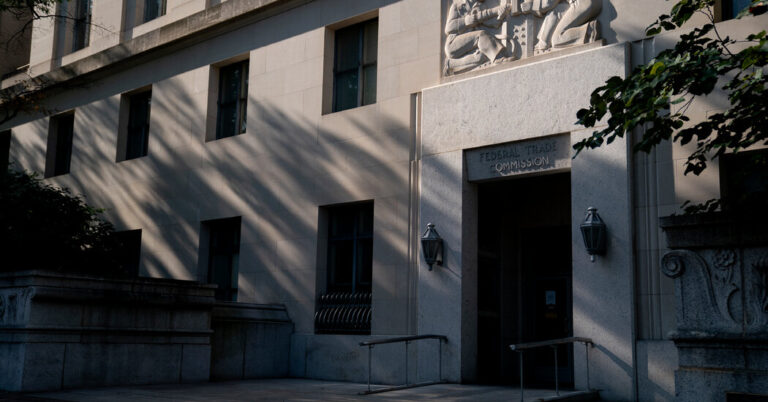
The case — Federal Trade Commission v. Meta Platforms — will for the first time try to stretch theories of U.S. antitrust law to include what regulators are calling a “buy or bury” strategy. Meta broke the law by acquiring nascent competitors to maintain its monopoly in social networking, the F.T.C. argues. Regulators are seeking to force Meta to divest Instagram and WhatsApp.

Meta has countered that it faces ample competition in social media from TikTok, Snap, Reddit and LinkedIn, and that regulators approved the acquisitions at the time. The company also hasn’t given up on settling the case: Early this month, Mr. Zuckerberg was at the White House to try to persuade the Trump administration to avert a trial.

The outcome of what is expected to be a multiweek trial, the first major tech case prosecuted by the Trump administration, could reshape the U.S. antitrust landscape as companies face intense scrutiny over mergers and acquisitions. A government victory could also have ripple effects for Silicon Valley, where start-ups bank on lucrative acquisitions by bigger companies for payouts.

Still, the F.T.C. faces an uphill battle to prove its case, legal experts said. The government’s legal argument hinges on showing that Meta would not be as dominant, and would not have stayed as dominant, if it hadn’t acquired Instagram and WhatsApp — a hypothetical situation that is difficult to prove because many factors have played into the company’s growth.

“This is a critical test case for whether the antitrust laws can be used to unwind mergers designed to eliminate upstart competition,” said Gene Kimmelman, a former senior official in the antitrust division of the Department of Justice. “A win for the government would give consumers more choices and opportunities to switch across social media platforms without having to be on Facebook.”

The lawsuit has bipartisan support and is part of the most aggressive trustbusting effort by federal regulators since the Gilded Age, with Google, Meta, Amazon and Apple facing questions over their power to control the ways consumers shop, find information and communicate.

The Justice Department last year won an antitrust suit against Google for monopolizing internet search, and a trial to determine how to remedy that monopoly is slated to start on April 21. Google is also awaiting a judge’s decision in a separate trial over claims that it illegally squashed competition in the ad tech market.

The D.O.J. has also sued Apple over claims that its tightly knit system of devices and software makes it challenging for consumers to leave. And the F.T.C. has sued Amazon, accusing it of illegally protecting a monopoly in online retail. Those cases are expected to go to trial next year.

The tech industry is closely watching the Meta trial, one of the first major signals of how aggressively President Trump may rein in the most powerful tech companies. The case originated under his first administration, before a handoff in 2021 to the F.T.C. chair Lina Khan, a Biden appointee who drew attention for her quest to break up tech monopolies.

Now Andrew Ferguson, Mr. Trump’s choice to lead the agency, has taken the baton. He has warned against concentrated power held by Meta. He is also motivated by a shared Republican view that tech platforms have censored content, particularly conservative voices.

“We don’t intend to take our foot off the gas,” Mr. Ferguson said in an interview last month with Bloomberg.

For Meta, even the idea of hiving off Instagram and WhatsApp is alarming. The company bought Instagram for $1 billion in 2012 and WhatsApp for $19 billion in 2014. At the time of the deals, the apps were small — Instagram had just 30 million users and 13 employees, while WhatsApp had 450 million users and 50 employees. Since then, both have become critical to Meta, with faster growth and engagement by users than Facebook.

The trial is expected to feature about seven hours of testimony from Mr. Zuckerberg, who will be a star witness, along with Meta’s former chief operating officer, Sheryl Sandberg, and the founders of Instagram and WhatsApp.

Meta has an army of the most expensive and experienced litigators arguing its defense, led by Mark C. Hansen, a partner at Kellogg, Hansen, Todd, Figel & Frederick. Meta plans to argue that the fast rise of the video-sharing site TikTok, in particular, shows healthy competition in the market.

“We are confident that the evidence at trial will show that the acquisitions of Instagram and WhatsApp have been good for competition and consumers,” said Chris Sgro, a spokesman for Meta. “The commission is wrongly continuing to assert that no deal is ever truly final, and businesses can be punished for innovating.”

The F.T.C. first sued Meta in December 2020, alongside a similar suit brought by 46 states. The agency’s legal argument hinges on Section 2 of the Sherman Antitrust Act of 1890, which specifies that it is illegal to maintain a monopoly by using anticompetitive practices — in this case, acquiring companies at a premium as a strategy to eliminate them as competitors.

To support its case, the F.T.C. plans to present a 2008 email from Mr. Zuckerberg saying, “It is better to buy than compete” and a 2012 memo he wrote saying that his motivation for buying Instagram was “neutral[izing] a potential competitor.”

Judge Boasberg, who has been locked in a contentious court battle with the Trump administration over its use of a powerful wartime statute to summarily deport Venezuelan migrants, will decide the case. During a recent pretrial tutorial, the judge said he had never had a personal Facebook or Instagram account.

Judge Boasberg rejected the F.T.C.’s initial case in June 2021, saying the agency needed to provide stronger definitions for the social media market and how Meta had come to monopolize it. He accepted a refiled version of the case in January 2022, but cautioned that it was far from a slam dunk.

In a ruling against Meta’s motion to dismiss the case last year, Judge Boasberg said the F.T.C. “faces hard questions about whether its claims can hold up in the crucible of trial.”

“Indeed, its positions at times strain this country’s creaking antitrust precedents to their limits,” he added.

Legal experts say the case will be challenging to prove because it hinges on determining intentions by executives more than a decade ago, during a very different internet age. The deals were approved by regulators at the time, and years of integration between the apps mean they share many of the same internal systems and data — making a breakup challenging.

“It’s asking a judge to decide if Meta tried to kill competition or got lucky and made a good bet,” said Jennifer Huddleston, a senior fellow at the Cato Institute, a think tank. “It’s assuming a counterfactual we can’t know.”
Source link

The Treasury Secretary Is Wrong About How Most Retirees See the Stock Market

0


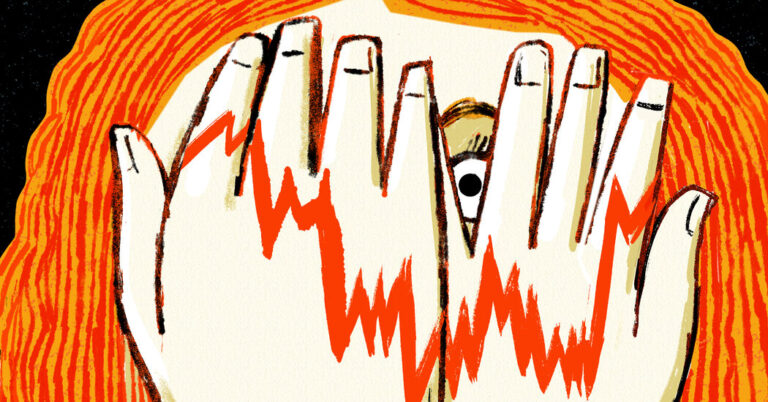
Last weekend, Treasury Secretary Scott Bessent went on television and said people who wanted to retire right now were not paying attention to the stock market.

On the NBC program “Meet the Press,” referring to those who have “put away for years in their savings account,” he said the following: “I think they don’t look at the day-to-day fluctuations of what’s happening.”

Is that true? I asked readers of our Your Money newsletter who were on the cusp of retirement whether they were watching the markets and, if so, why?

About 400 people replied. More than 90 percent of them said they were looking. They gave me an earful.

***

“I have Parkinson’s disease and am unable to work in any capacity. Naturally, I closely watch how the market performs on a daily basis.”
— Nancy London, Plain City, Ohio

“I don’t concern myself with normal market fluctuations, but what’s going on right now is anything but normal. So, yes, I am looking.” — Edward M. Kenny, Brooklyn, N.Y.

“They have no idea how ordinary people live.” — Barbara Costanzo, Milwaukee

“Of course, I am watching. I am disheartened that he and President Trump seem to be treating my hard-earned savings in such a cavalier manner.” — Cleo LaRue, League City, Texas

***

The word “cavalier” was the adjective that came up most in emails from readers, and Ms. Costanzo’s sentiment — that people in the Trump administration were out of touch — was common.

President Trump is not the first person to appoint someone like Mr. Bessent — a former hedge fund manager who is worth hundreds of millions of dollars — to run the Treasury Department. When Bill Clinton was president, he put Robert E. Rubin, a former Goldman Sachs banker, in charge.

But when you’re someone like that doing work like this, it behooves you to have some empathy — or at least sympathy — for the struggles of others.

“Secretary Bessent is highly engaged in financial literacy and encourages all Americans to invest for the long term,” according to a Treasury spokesperson. He has spoken in the past of having started work at age 9 when his father fell on hard times.

***

“We are definitely looking at the fluctuations, and likely adding time to our ‘need to work’ timeline. Mr. Bessent is mistaken.” — Becky O’Hara, Havertown, Pa.

“I wanted to retire and still wait until 70 to collect Social Security, and that is a delicate balance if the value of my investments has dropped significantly.” — Karen Walrath, Beaverton, Ore.

“If I’m faced with retirement from the federal work force now and re-entering the job market at age 59¼, I’m going to have to take a very, very different approach to finances. How the market behaves right now can potentially have catastrophic impacts for me.” — Sue Zwicker, Greenbelt, Md.

“I do take a few moments most days to check the markets, mainly out of curiosity, but also to see if I need to rebalance.” — Jeff Schmierer, Brookfield, Conn.

“I just retired 18 months ago, and sequence risk is by far the financial issue I worry about the most.” — Dennis Scholl, Miami Beach

***

So about that “sequence risk” thing: All it means is that if you start your retirement when markets are falling, you may be selling assets as your overall portfolio is declining. And when that balance falls (both from market declines and selling assets to pay for everyday spending once you’re not working), it leaves you with less money that could benefit from eventual market recoveries. All of that increases the chances that you’ll run out of money before you die.

It’s a big deal — big enough that someone running the Treasury Department would presumably consider it when suggesting that recent retirees aren’t carefully watching their “savings accounts,” which readers took to mean retirement accounts.

“Bessent is supposed to be a smart guy, so I doubt that he believes what he is saying,” writes Douglas Frazier of Savannah, Ga.

When you have to stand up in public and defend a stock market decline that your boss — the president, who likes firing people — caused, it may indeed be hard to believe everything you may be forced to say.

But that doesn’t excuse ignoring questions that many people on the cusp of retirement must consider — and how hard it is to answer them when people have retirement “savings” accounts that include stocks.

Mr. Bessent is correct that at least some people don’t look each day — it was under 10 percent of my 400 correspondents.

***

“Why look and make myself sick? We have an investment plan. I’ll stick to it and keep working a while longer. I like my job. Looking will hurt my head. Working lets me do something positive.” — Teresa Meinders Burkett, Tulsa, Okla.

“We don’t check day-to-day fluctuations. It’s too frustrating and scary, and at this point there’s nothing we can do about it.” — Mindy Evanter, Marblehead, Mass.

“I do not look at my portfolio daily, but I certainly monitor the market and, like most others over 60, am alarmed by the market response to the Trump tariffs. Secretary Bessent’s comments may have made sense historically, but when the administration takes actions that impact the global economy and lead to great uncertainty, investors become concerned.” — Patrick Grum, Atlanta

***

In a perfect world, you’ve done everything right while getting ready for retirement.

You’ve had good jobs when you wanted them and luck with your health along the way. You’ve saved more than what you need to pay for a 30-year retirement. You have several years of money stashed someplace safe to use while waiting out a sizable stock market downturn. You have the fortitude to not panic-sell — or panic-buy — investments at the wrong time.

But most people are not that lucky or are prone to worry that their luck will run out right when they want to stop working. For now, some of those people have at least managed to maintain their senses of humor.

***

“Yes, I am checking. It’s a compulsive behavior right now, though I haven’t looked yet today. Why, I do not know. Please, no tariffs on Xanax.” — Jene Teague, Austin, Texas

“Fluctuations look like this: WWWWWWW.

I don’t pay much attention.

What’s happening now is not a fluctuation.

It looks like this:

I am paying attention.” — Lynne Carmichael, San Anselmo, Calif.


Source link

Hong Kong’s Democratic Party, Once a Formidable Force, to Disband

0


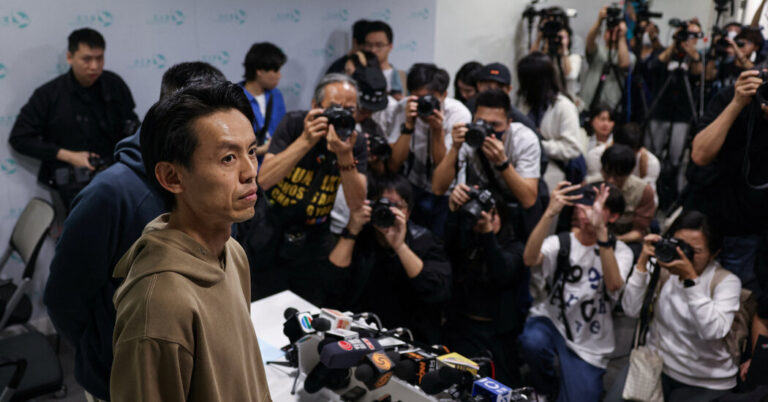
The Democratic Party in Hong Kong was for decades the city’s largest opposition party. It led protests demanding universal suffrage. Its lawmakers sparred with officials in the legislature about China’s encroachment on the region.

It was born in the 1990s of an audacious hope: that opposition politicians and activists could pressure Hong Kong’s iron-fisted rulers in Beijing to fulfill their promise of expanding democratic freedoms for the city of several million people.

On a rising wave of demands for democracy, the party grew to more than 1,000 members at its height in 2008. Its effort to maintain a moderate stance drew criticism, including from within its own ranks, from those seeking to push harder against Beijing. Yet moderation could not save the party’s leaders from being caught in the dragnet as China tightened its control over Hong Kong.

Now it is disbanding, one more casualty in Beijing’s suppression of Hong Kong’s once-vibrant political opposition.

Its leaders have been arrested and imprisoned on national security charges. Its members are effectively barred from running for local office, and routinely face harassment and threats. Raising money is hard.

“We have not achieved what we set out to do,” Fred Li, a founding member of the party who was not part of the most recent leadership, said in an interview, referring to democratization under Chinese rule. “Without money or resources, we can’t even survive ourselves.”

The party said Sunday that it held a preliminary vote and 90 percent of the roughly 110 members in attendance voted to authorize its leaders to dissolve the party. (The party plans to call another vote in the coming months before it disbands officially.)

Its chairman, Lo Kin-hei, had publicly indicated earlier that the political environment was too challenging to survive, but declined to go into details. Veteran party members like Mr. Li said that Chinese officials or their intermediaries had urged them to disband.

Other smaller pro-democracy parties and civic groups have closed since Beijing in 2020 imposed a national security law giving the authorities sweeping powers to quash opposition, part of a crackdown on free expression more generally. Even a polling group, the Public Opinion Research Institute, said in February that it would suspend all self-funded research after the national security police repeatedly detained the institute’s director for questioning. Critics of the Hong Kong government have been denied entry to the city, including a British lawmaker who tried to visit her newborn grandson this week.

The Democratic Party was established in the twilight of Hong Kong’s days as a British colony, as the city prepared to return to Chinese rule in 1997.

The party’s founders, Martin Lee, a legislator, and Szeto Wah, a union leader, led protests against the Communist Party after it sent troops to crush pro-democracy protests around Tiananmen Square in Beijing in 1989. They co-founded a political group that evolved in 1994 into the Democratic Party.

The Democratic Party sought to hold leaders accountable to two promises enshrined in treaties signed by Britain and China and outlined in the Basic Law, Hong Kong’s mini-Constitution: that the city would retain a high degree of autonomy, and that it would eventually hold direct elections for its top leader.

“They tried to present to people in power: This is what you promised us, so you have to honor it,” said Victoria Hui, a political scientist at the University of Notre Dame, who drafted speeches for Mr. Lee in the early 1990s. “For so long, they took for granted that those words would protect us.”

The party became a thorn in Beijing’s side. Mr. Lee traveled abroad to press Western leaders to hold the Communist Party in check, prompting Beijing to brand him a traitor. His party organized protests to oppose security laws in 2003, eventually forcing the ouster of Tung Chee-hwa, the city’s unpopular leader.

But public discontent rose over unemployment, high housing prices and rising competition for jobs in Hong Kong. The political system was seen as dominated by the city’s business and social elite, and demands grew for greater democracy.

The Democratic Party became a target of criticism at times, including in 2010 when it negotiated with Beijing officials on a plan to expand the number of directly elected seats in the legislature. Other opposition lawmakers rejected the measure, saying it fell short of real democracy. The move also divided the party, leading many to quit.

Despite growing calls for democratic elections, Beijing did not give Hong Kong greater public participation in the election of its leader. People occupied neighborhoods in Hong Kong for about 10 weeks in 2014 in a protest called the Umbrella Movement.

Inside the party, a younger generation began to push back against the old guard, arguing more action was needed, along with talks. The party, which had been steadily losing votes, successfully fielded a crop of new candidates in 2016 including Ted Hui, Lam Cheuk-ting and Roy Kwong, expanding its foothold in the legislature.

Mr. Hui, who was a lawmaker until 2020, said that in the past decade, the party’s nonconfrontational approach began to encounter a more impatient public. “It was a difficult balance walking a moderate path within a radicalizing society, while also needing to get tougher,” he said in an interview.

The party was caught between conflicting political forces. “Their relatively moderate position didn’t really effectively improve the relationship between Hong Kong and Beijing over the past decade,” Ma Ngok, an associate professor of government at the Chinese University of Hong Kong, said in an interview. “As younger people became more radical, the party’s influence has been on the decline.”

A major challenge came during 2019, when months of anti-government protests engulfed the city. Initially marches were family friendly, but descended into violence, with protesters throwing Molotov cocktails. Though the party had long advocated for peaceful protest, its leaders, seeking to maintain unity, hesitated to disavow the violent tactics of some protesters. Younger members of the party tried to mediate between protesters and the police.

After the pro-democracy camp held an unofficial primary in 2020, two weeks after Beijing imposed the security law, the authorities targeted the candidates who had taken part. Many Democratic Party members and leaders were swept up in mass arrests months later. Four former lawmakers from the party were convicted under national security charges and imprisoned. The government has also offered a bounty for the arrest of Mr. Hui, who fled Hong Kong in 2021 and lives in Australia.

No Democratic Party members have held elected office since Beijing imposed a drastic overhaul of the city’s political system in 2021, requiring candidates running for the local legislature and district councils to be “patriots” vetted by Beijing.

For a few years the Democratic Party held on, despite severe constraints. It sought to provide pro bono legal services for the public and to comment on current affairs and on government policies.

“In spite of the fact that we have no position anywhere, people continue to trust in us, and they come to us,” said Emily Lau, a veteran member and a former chairwoman of the party. “But still, under the circumstances, when people get arrested and so on, I think our members are very brave.”


Source link

A Congressional Outsider Becomes the Establishment Pick for Oakland Mayor

0


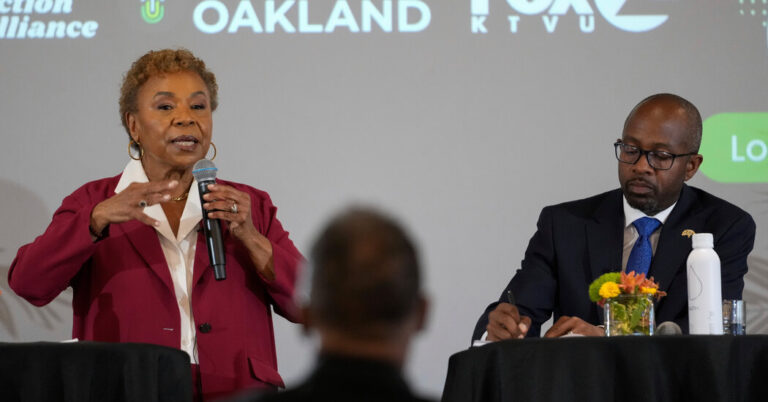
When former Representative Barbara Lee announced that she would run for mayor of Oakland, Calif., many considered her victory to be a sure thing.

After all, Ms. Lee had represented the city for more than a quarter-century in Congress and in the State Legislature before that. She gained national fame as a progressive lawmaker who was the only member of Congress to reject the use of force after the Sept. 11 attacks, reasoning that it gave the president too much war authority.

To Ms. Lee’s supporters, her return home was seen as a worthy bookend to her career, with a chance to rescue her hometown from its doldrums and political decay. Oakland, a city of 436,000 residents across the bay from San Francisco, has suffered mightily since the pandemic as it has faced soaring crime rates, the departure of its last major sports team and a yawning budget deficit.

The city had a sudden vacancy at the top because voters ousted Mayor Sheng Thao in November, a sign of their frustrations with the city’s direction and with a dark legal cloud over Ms. Thao.

But Ms. Lee, 78, is no longer considered a shoo-in to win Tuesday’s election.

Loren Taylor, a former Oakland City Council member, has gained traction with voters as a moderate candidate who has pledged to fix potholes, reduce crime and shorten 911 response times.

Ms. Lee is still considered the heavy favorite in the field of 10 candidates. But Mr. Taylor, 47, recently surpassed her in fund-raising and landed the endorsement of the editorial board at The San Francisco Chronicle. “Oakland is broken,” Mr. Taylor often says on the campaign trail, a message that has resonated with some voters.

Mr. Taylor’s momentum serves as the latest indication that residents in the liberal San Francisco Bay Area are giving greater emphasis on quality-of-life concerns than before.

Voters in November ousted Pamela Price, the progressive district attorney in Oakland and surrounding Alameda County, who had sought reductions in criminal sentencing. In San Francisco, voters last year elected a business-friendly moderate, Daniel Lurie, as their new mayor. The City Council in nearby Fremont, Calif., this year tried to make it a crime to help people living on the streets.

Mr. Taylor described himself a “pragmatic progressive.”

“We have to focus on results, and we can’t just be resting on ideological sort of values, regardless of the impact on people’s lives,” he said. “I think that’s where, frankly, the far left progressive movement has gone astray.”

Just over a year ago, Ms. Lee was campaigning to replace Dianne Feinstein in the Senate, which was the reason she did not run for a 14th full term in the House. In that race, she trailed in fund-raising and endorsements but drew support from progressives for her willingness to buck the establishment. She finished a distant fourth.

Back in Oakland, Ms. Lee has had a role reversal: She is now the establishment candidate.

Over the past three months, Ms. Lee has secured a diverse slate of endorsements from high-profile groups and leaders, including the Oakland Chamber of Commerce; labor unions; state legislators; four former Oakland mayors; and seven of the eight members of the Oakland City Council. Jim Ross, a political consultant in Oakland who is not involved in the race, called it “the most impressive group of endorsements” in a California mayor’s race that he could recall.

Much of her plan in the first 100 days doesn’t prescribe solutions but calls for collaboration. She wants to bring together police and business leaders. She hopes to convene C.E.O.s. She wants to appoint a task force of good government experts to modernize city government.

“Because I have a history of bringing different sides of views and issues together to find common ground, that is exactly what I will do as mayor,” she said.

In Oakland, Ms. Lee and Mr. Taylor do not have material differences in their stated values, and they seem to agree on what the city’s biggest problems are. If there is a contrast, it is that Mr. Taylor has more eye-catching specifics.

He has called for bringing city employees back to the office four days a week. He wants to publicize how long each building permit has been delayed through a “shot clock.”

Mr. Taylor’s recent traction seems to have come from his positioning as a pragmatist who could usher in a new generation of Democrats, as well as change a city in disarray.

“Under any normal circumstances, the people of Oakland would be throwing rose petals at Barbara Lee’s feet, but these aren’t normal times,” said Dan Schnur, a political analyst who teaches at the University of California, Berkeley. “The level of resentment and anger is off the charts.”

Though San Francisco has drawn the most national attention since the pandemic for its property crimes, fentanyl deaths and store closures, Oakland has suffered far more. Long regarded as a less expensive, gritty alternative to San Francisco, the city has lost population along with its optimism in recent years.

In November, voters ousted Ms. Thao less than two years after she took office. While the city’s woes made her vulnerable, an F.B.I. raid on her home last summer as part of a corruption investigation made political survival difficult. Then in January, Ms. Thao was indicted on federal charges of conspiracy and bribery.

The political fallout has persisted even after her departure. City documents that were under investigation by the F.B.I. included one note written by Ms. Thao’s chief of staff that referred to Black people as “tokens” that could be used to ward off the recall threat last year, The San Francisco Chronicle reported this month. Soon after the revelation, the aide, Leigh Hanson, was fired from the same chief of staff role she was performing for the interim mayor.

Whoever wins Tuesday’s election will finish out Ms. Thao’s term through the end of 2026.

Mr. Taylor, who narrowly lost a mayoral race in 2022 to Ms. Thao, has positioned himself as a challenger who will bring the kind of shake-up that Oakland needs by navigating the city bureaucracy and politics with expertise from years on the City Council.

“I’ve been on the ground working through our most difficult challenges with the community, whereas Congresswoman Lee has been in Washington, D.C., for the past 30 years,” he said.

But Ms. Lee said her congressional experience would be an advantage as mayor, vowing to fight to get the city the resources it needs from her connections. “It’s important to have a mayor who’s going to fight for whatever there is left with the federal government,” she said.

When pressed about the competitive nature of the race, Ms. Lee directed the conversation toward what she would do rather than address Mr. Taylor specifically. She thought Oakland residents were still more aligned with her than her opponent’s moderate approach.

Ms. Lee said that she thinks her goals — investing more in public safety, reducing poverty, building more affordable housing — remain in line with voters here.

“In Oakland,” she said, “we have Oakland values.”

But there are factors also working against Ms. Lee. In a special election such as this one, fewer voters turn out, and they tend to skew more moderate.

Voters in Oakland are divided. Some say the city needs the stability of a longtime member of Congress like Ms. Lee after the recent turmoil at City Hall. Others believe that Mr. Taylor, as the change candidate, would set the city on a better path.

Whitney Johnson, a dentist who has lived in Oakland for decades, said he was primarily concerned with crime. At night, he walks in the middle of his street instead of on the sidewalk, he said, so he can avoid being cornered by someone who might mug him.

Holding a cup of coffee and walking his dog through the city’s charming Rockridge neighborhood Thursday, he pointed to shop after shop where he had seen storefronts shattered or cars parked with their windows smashed.

He said he admired Ms. Lee’s record in Congress, but planned to vote for Mr. Taylor for one simple reason: “He’s different.”

David Moore, 62, said he cast his mail-in vote last week for Ms. Lee because she’s a trusted voice. He said that he doesn’t know if any mayor will have the power to change Oakland’s problems, but he hopes Ms. Lee can guide the city with an experienced hand.

Mr. Moore had one suggestion for Ms. Lee, should she win.

“Don’t have the F.B.I. come after you,” he said.


Source link

Top 5 phrases TV broadcasters shouldn’t say while covering the Masters

0


The Athletic has live coverage from Round 3 of The Masters.

Golf Channel TV analyst Brandel Chamblee was on a Barstool Sports’ golf podcast earlier this week, and there is a fascinating clip where Chamblee reviews the words or phrases that TV broadcasters are given guidance on not to utter when covering the Masters. They are replaced with more hifalutin expressions that are more on-brand for the event and its organizers at Augusta National.

Here’s the clip:

It goes without saying (and isn’t that unreasonable) that an event like the Masters won’t ever let announcers name-check other event sponsors (it’s never “Valero Texas Open,” it’s just “Texas Open.)

Here are the five I found most interesting, ranked in order of how overly self-serious they seem:

Can’t say: “Fan”
Can say: “Patron”

As Chamblee says, there is a concern that “fan” is shorthand for “fanatical.”

Can’t say: “Rough”
Can say: “Second cut.”

For a tournament defined on TV by the dulcet tones of Jim Nantz, I get it — the concept of “rough” doesn’t exist at a country club — sorry, it’s always “golf club” — like Augusta National.

Can’t say: “Sand trap”
Can say: “Bunker”

Again, the notion of anything at Augusta National being a “trap” does not fit at all with its finely manicured image.

Can’t say: “Driving range”
Can say: “Tournament practice facility”

“Rough?” “Trap?” I can at least see the outline of negative connotations ascribed to the event. And while the range is certainly there for more than just driving, this feels on-brand but unnecessary.

Can’t say: “Back nine”
Can say: “Second nine”

It’s not that I mind one over the other, but “back nine” is such a standard part of golf vernacular that it feels like Augusta National is just trying to make a point about how much they can get TV announcers to bend.

I asked colleague Richard Deitsch if there is any kind of formal policy. He said an industry source (given anonymity because, after all, this is a story about what you’re not supposed to say) told him that there is no written sheet given to broadcasters, but producers and on-air talent know what Augusta National’s expectations are about how things will be described.

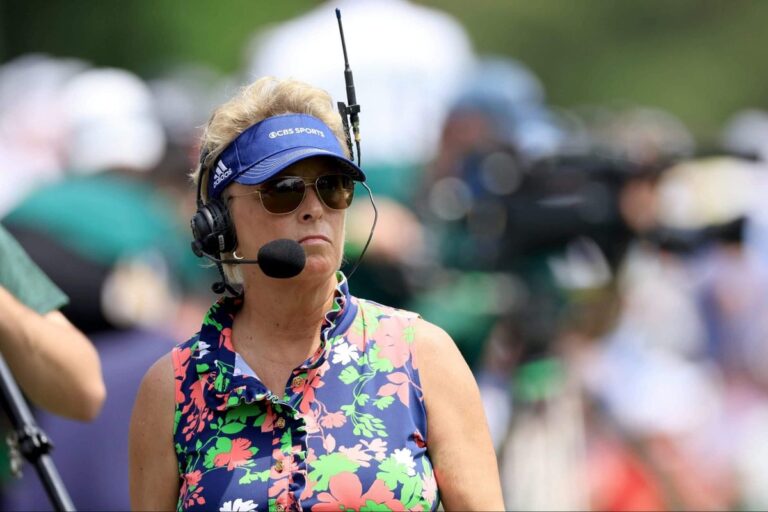
(Photo of Dottie Pepper: David Cannon / Getty Images)


Source link

A Devastating Trade Spat With China Shows Few Signs of Abating

0


President Trump’s rapidly escalating trade war with China has resulted in eye-watering tariffs on products exchanged between the countries and scrambled prospects for many global businesses that depend on the trade. And there is no end in sight.

The Trump administration has been waiting for the Chinese leader, Xi Jinping, to call Mr. Trump personally, but Beijing appears wary of putting Mr. Xi in an unpredictable and potentially embarrassing situation with the U.S. president.

With the two governments at an impasse, businesses that rely on sourcing products from China — varying from hardware stores to toymakers — have been thrown into turmoil. The triple-digit tariff rates have forced many to halt shipments entirely.

Mr. Trump has rapidly ratcheted up tariffs on Chinese products, from 54 percent on April 2 to 145 percent just one week later. The Chinese government has argued that the actions are unfair and closely matched his moves, raising its tariffs on American goods to 125 percent on Friday.

But on Friday night, the administration created a significant carve out to its tariffs on China when it exempted some electronics, including smartphones, laptops and televisions. Those products will still be subject to other tariffs that Mr. Trump has put in place, like a 20 percent fee he added to Chinese goods in response to the country’s role in the fentanyl trade.

Mr. Trump has said he would like to speak with Mr. Xi, but he has stopped short of requesting a phone call, believing that it is the Chinese government’s turn to ask for such a call, according to people familiar with the matter. Trump officials say that dozens of countries have reached out to the administration about negotiations since the levies were imposed. China did not, and instead responded with harsh words and tariffs of its own.

Across the Trump administration, some officials are concerned that the trade war could soon escalate into a national security crisis, potentially causing the Chinese to move up plans for a military invasion of Taiwan.

The Pentagon is assessing the impact of China potentially cutting off rare earth exports to the United States and possibly blocking certain critical components used in U.S. weapons systems, according to a person with knowledge of the preparations. The aim is to fully ascertain what harm the Chinese could inflict on America’s ability to produce and maintain certain weapons and ammunition.

Mr. Trump continues to express optimism, saying that he has always gotten along with Mr. Xi and that “something positive” will come out of the relationship. But analysts have suggested that the situation may already have spiraled out of control.

Julian Evans-Pritchard, the head of China economics for the research firm Capital Economics, said the fact that the Chinese authorities had repeatedly matched U.S. tariff hikes suggested that they were in no rush to negotiate.

“A partial rollback of tariffs still seems likely at some point,” he said. “But it is hard to envisage a meaningful reset in the U.S.-China relationship.”

At a briefing on Friday, Karoline Leavitt, the White House press secretary, declined to say whether the countries were in communication.

“I’m not going to comment on communications that are happening, or may not be happening, or either way, we’ll leave it to our national security team to get these discussions underway,” she said. She said the president was optimistic, and that he had “made it very clear he’s open to a deal with China.”

Speaking last week at the White House, Mr. Trump said that “China wants to make a deal. They just don’t know how quite to go about it.” He added that the Chinese were “proud people.”

Mr. Trump’s moves have taken tariffs to a level far past what would be prohibitive for trade, creating crises for many American businesses that depend on imports from China.

Rick Woldenberg, who runs Learning Resources, an Illinois-based maker of educational toys, said the latest tariffs had already forced him to pause some shipments from China. He called the rates that Mr. Trump had imposed “a joke” and said that even concessions from his suppliers could not make a dent in the fees he would owe to the U.S. government.

Learning Resources contracts with factories in Taiwan, India, Vietnam and other countries to make its products, but China is by far its biggest supplier, as it is for most toymakers. China accounted for two-thirds of all imports of toys and sporting goods to the United States last year.

Learning Resources employs about 500 people, most of them in the United States. It had planned to hire more this year to keep up with its fast-growing business, but has now abandoned some of those plans.

“We’re being asphyxiated by our very own government,” Mr. Woldenberg said.

Mr. Woldenberg said he paid about $2.3 million in tariffs and duties in 2024. This year, he would end up paying more than $100 million if sales somehow kept up with his projections from before the trade war. That’s more than he could pay if he cut every expense in the company other than base payroll.

At this point, Mr. Woldenberg said, the number hardly matters — beyond a certain level, the tariff is simply no longer something anyone in his business can afford to pay.

“He could raise it to 100 billion percent — it doesn’t matter,” he said. “It’s like a legal ban.”

Christophe Lavigne, the president of Highfield, which manufactures boats in China and the United States, said he expected to be subject to 198 percent tariffs on some of his imports, and that he has decided to simply stop his shipments for now.

He said his entire company, and the jobs of his employees and his dealers, was on the line. The pace of change was too fast and unpredictable, he added.

“We cannot adjust our production lines quickly enough,” he said. “Converting our entire supply chain in just two months is not feasible.”

Major multinational corporations have been in a better position to source products from countries besides China, but they too are reeling. Hobby Lobby, the crafting retailer, told vendors on Thursday that it was delaying shipments from China as a result of the escalating trade war, according to correspondence viewed by The New York Times.

The retailer told vendors that the back-and-forth tariffs had resulted in “a rapidly shifting and unpredictable landscape” and that it hoped diplomacy between the United States and China would “yield a more stable and balanced outcome.”

The implications of disrupting business with one of the country’s biggest trading partners have ricocheted through the economy. The dollar fell to a three-year low on Friday, while Treasury yields continued to swing. A measure of consumer sentiment also tumbled, indicating that Americans were becoming nervous about how higher tariffs might affect them.

Mr. Trump abruptly announced on Wednesday a 90-day pause on the “reciprocal” tariffs that he had unveiled the previous week on countries around the world, and which had gone into effect just hours earlier. But the threat of those tariffs, and of retaliation against U.S. exports, continues to hang over the global economy.

It remains to be seen if the United States and China might try to reach some agreement soon. People familiar with the conversations said that members of the White House National Security Council were in touch with counterparts at the Chinese Embassy, and that Cui Tiankai, the former Chinese ambassador, had held meetings in Washington and New York over the past several weeks to discuss the relationship. But there has been little sign of communication between higher-ranking officials in the Trump administration and the Chinese government.

Early in Mr. Trump’s first term, Mr. Xi flew to his Mar-a-Lago estate in Florida to meet with Mr. Trump for hours, sharing what Mr. Trump later referred to as “the most beautiful piece of chocolate cake you’ve ever seen.” But that did not stop the countries from entering into a bruising trade war. And in his second term, Mr. Trump has been even more emboldened and unpredictable.

Mr. Trump has given few indications publicly of what he wants the Chinese to do. But Trump officials say the issues are well known. In an annual report released March 31, the Office of the United States Trade Representative detailed the trade barriers that U.S. businesses face when selling abroad, dedicating almost 50 of its nearly 400 pages to China.

In recent weeks, in addition to countering Mr. Trump’s tariff threats, China has added some U.S. companies to an unreliable entity list that essentially bars them from doing business in the country. It has also imposed licensing systems to restrict exports of rare earth elements, which are essential for electric cars and other products.

On Friday, as it announced its latest increase in tariffs on American products, the Chinese government said it would not raise the rate further because it was already so high that the number no longer made any difference.

China’s Ministry of Commerce said that the United States had used tariffs “for bullying and coercion” and had ultimately become “a laughingstock.”

“If the U.S. continues its tariff numbers game, China will ignore it,” it said.

China also ratcheted up pressure on U.S. companies as it issued new regulations on Friday that will subject semiconductors made by U.S. firms overseas to higher tariffs.

The move will put pressure on companies like Intel, Global Foundries and others that have U.S. chip factories. It may also encourage chip companies to shift manufacturing out of the United States to maintain access to the Chinese market, where the bulk of global electronics are made.

Shawn McCreesh, Maggie Haberman, Karen Weise, Tony Romm and Jonathan Swan contributed reporting.


Source link

‘There are no guarantees’: Scott Bessent won't rule out a recession

0


He also said he isn’t worried about stock market turbulence, following the worst week in the market in two years.


Source link

Trump Has Added Risk to the Surest Bet in Global Finance

0


There are not many certainties in the world of money, but this traditionally has been one of them: When life turns scary, people take refuge in American government bonds.

Investors buy U.S. Treasuries on the assumption that, come what may — financial panic, war, natural disaster — the federal government will endure and stand by its debts, making its bonds the closest thing to a covenant with the heavens.

Yet turmoil in bond markets last week revealed the extent to which President Trump has shaken faith in that basic proposition, challenging the previously unimpeachable solidity of U.S. government debt. His trade war — now focused intently on China — has raised the prospect of a worldwide economic downturn while damaging American credibility as a responsible steward of peace and prosperity.

“The whole world has decided that the U.S. government has no idea what it’s doing,” said Mark Blyth, a political economist at Brown University and co-author of the forthcoming book “Inflation: A Guide for Users and Losers.”

An erosion of faith in the governance of the world’s largest economy appears at least in part responsible for the sharp sell-off in the bond market in recent days. When large numbers of investors sell bonds at once, that forces the government to offer higher interest rates to entice others to buy its debt. And that tends to push up interest rates throughout the economy, increasing payments for mortgages, car loans and credit card balances.

Last week, the yield on the closely watched 10-year Treasury bond soared to roughly 4.5 percent from just below 4 percent — the most pronounced spike in nearly a quarter century. At the same time, the value of the American dollar has been falling, even as tariffs would normally be expected to push it up.

Other elements also go into the explanation for the bond sell-off. Hedge funds and other financial players have sold holdings as they exit a complex trade that seeks to profit from the gap between existing prices for bonds and bets on their future values. Speculators have been unloading bonds in response to losses from plunging stock markets, seeking to amass cash to stave off insolvency.

Some fear that China’s central bank, which commands $3 trillion in foreign exchange reserves, including $761 billion in U.S. Treasury debt, could be selling as a form of retaliation for American tariffs.

Given the many factors playing out at once, the sharp increase in yields for government bonds registers as something similar to when medical patients learn that their red blood cell count is down: There may be many reasons for the drop, but none of them are good.

One reason appears to be an effective downgrading of the American place in global finance, from a safe haven to a source of volatility and danger.

As Mr. Blyth put it, Treasury bills have devolved from so-called information invariant assets — rock-solid investments regardless of the news — to “risk assets” that are vulnerable to getting sold when fear seizes the market.

The Trump administration has championed tariffs in the name of bringing manufacturing jobs back to the United States, asserting that a short-term period of turbulence will be followed by long-term gains. But as most economists describe it, global trade is being sabotaged without a coherent strategy. And the chaotic way in which tariffs have been administered — frequently announced and then suspended — has undercut confidence in the American system.

For years, economists have worried about an abrupt drop in the willingness of foreigners to buy and hold United States government debt, yielding a sharp and destabilizing increase in American interest rates. By many indications, that moment may be unfolding.

“People feel nervous about lending us money,” said Justin Wolfers, an economist at the University of Michigan. “They are saying, ‘We’ve lost our faith in America and the American economy.’”

For Americans, that reassessment threatens to revoke a unique form of privilege. Because the United States has long served as the global economy’s safe harbor, the government has reliably found takers for its debt at lower rates of interest. That has pulled down the cost of mortgages, credit card balances and auto loans. And that has allowed American consumers to spend with relative abandon.

At the same time, foreigners buying dollar-denominated assets pushed up the value of the American currency, making products imported to the United States cheaper in dollar terms.

Critics have long argued that this model is both unsustainable and destructive. The flow of foreign money into dollar assets has permitted Americans to gorge on imports — a boon to consumers, retailers and financiers — while sacrificing domestic manufacturing jobs. Chinese companies have gained dominance in key industries, making Americans dependent on a faraway adversary for vital goods like basic medicines.

“The U.S. dollar’s role as the primary safe currency has made America the chief enabler of global economic distortions,” the economist Michael Pettis wrote last week in an opinion piece in The Financial Times.

But economists inclined to that view generally prescribe a gradual process of adjustment, with the government embracing so-called industrial policy to encourage the development of new industries. This thinking animated the Biden administration’s economic policy, which included some tariffs against Chinese industry to protect American companies while they gained time to achieve momentum in industries like clean energy technology.

Encouraging American industry requires investment, which itself demands predictability. Mr. Trump has warned companies that the only way to avoid his tariffs is to set up factories in the United States, while lifting trade protectionism to levels not seen in more than a century.

Even an abrupt decision from the White House to pause most tariffs on all trading partners except China failed to dislodge the sense that a new era is underway — one in which the United States must be viewed as a potential rogue actor.

That Mr. Trump does not bow to diplomatic decorum is hardly new. His Make America Great Again credo is centered on the notion that, as the world’s largest economy, the United States has the power to impose its will.

Yet the pullback in the bond market attests to shock at how far this principle has been extended. Mr. Trump has broken with eight decades of faith in the benefits of global trade: economic growth, lower-priced consumer goods and a reduced risk of war.

That the gains of trade have been spread unequally now amounts to a truism among economists. Anger over joblessness in industrial communities helped bring Mr. Trump to power, while altering the politics of trade. But many economists say the trade war is likely to further damage American industrial fortunes.

The tariffs threaten existing jobs at factories that depend on imported parts to make their products. The levies have been set at rates seemingly plucked at random, economists said.

“What the market really didn’t like was the random crazy math of the tariffs,” said Simon Johnson, a Nobel laureate economist at the Massachusetts Institute of Technology. “It seemed like they didn’t know what they were doing and didn’t care. It’s a whole new level of madness.”

The immediate consequence of higher interest rates on United States bonds is an increase in what the federal government must pay creditors to keep current on its debts. That cuts into funds available for other purposes, from building schools to maintaining bridges.

The broader effects are harder to predict, yet could metastasize into a recession. If households are forced to pay more for mortgages and credit card bills, they will presumably limit spending, threatening businesses large and small. Companies would then forgo hiring and expanding.

The chaos in the bond market is at once an indicator that investors see signs of this negative scenario already unfolding, and is itself a cause of future distress via higher borrowing rates.

For years, foreign holders of American bonds have sought to diversify into other storehouses for savings. Still, the dollar and U.S. government bonds have maintained their status as the ultimate repository.

Europe and its common currency, the euro, now seem enhanced as a part of the global financial realm still subject to adult supervision. But Germany’s staunch reluctance to issue debt has limited the availability of bonds for investors seeking another place to entrust savings.

That may now change, suggested Mr. Blyth, the Brown economist. “If the Europeans decide to issue a ‘sanity bond,’ the world might jump at it,” he said.

The Chinese government has long sought to elevate the place of its currency, the renminbi. But foreign investors hardly view China as a paragon of transparency or rule of law, limiting its utility as an alternative to the United States.

All of which leaves the world in a bewildering place. The old sanctuary no longer seems so safe. Yet no other place looks immediately capable of standing in.


Source link

What to Know About Trump’s Antitrust Efforts Against Tech Giants

0


The Trump administration isn’t letting up on the tech giants.

On Monday, the Federal Trade Commission will face off with Meta in court over claims that the social media giant snuffed out nascent competitors when it bought Instagram and WhatsApp. And on April 21, the Justice Department will argue that a federal judge should force Google to sell its Chrome web browser to limit the power of its search monopoly.

Both cases, which helped set into motion a new era of antitrust scrutiny, were filed during President Trump’s first term in office. They were advanced by the Biden administration, which also filed monopoly lawsuits against Amazon, Apple and Google’s ad technology business.

Investors in Silicon Valley and on Wall Street hoped that Mr. Trump might show technology companies more deference during his second term, as he promised to deregulate industries. Some legal experts think the administration could still take a lighter hand on blocking mergers and setting proactive regulations for tech.

But so far, Mr. Trump’s appointees have promised to continue much of the scrutiny of the biggest tech companies, despite the industry’s hopes.

“I think that they may not have fully focused on how much the first Trump presidency had to do with setting in motion this re-examination of tech,” said Bill Kovacic, a former F.T.C. chairman.

Here’s what to know.

Mr. Trump appointed Andrew Ferguson as chair of the F.T.C., which enforces antitrust and consumer protection laws. Mr. Ferguson, a lawyer who spent much of his career working for powerful Republican senators, has said he wants to increase scrutiny of the ways that social media companies decide to take posts down. Conservatives have complained for years that platforms like Facebook and YouTube disproportionately censor right-leaning viewpoints.

“I will throw every resource the agency has at prosecuting the cases against Big Tech that we’ve got going,” Mr. Ferguson said in an appearance on the Bloomberg podcast “Odd Lots” this year.

The new leader of the Justice Department’s antitrust division, Gail Slater, a veteran tech and media lawyer, worked in the White House during Mr. Trump’s first term. She has also pledged to enforce antitrust laws aggressively.

“It’s now a bipartisan issue, and there’s a consensus around the need for robust antitrust enforcement,” Ms. Slater said at an event hosted this month by Y Combinator, the Silicon Valley start-up accelerator, which has pushed for more antitrust scrutiny of the tech giants.

Five government cases accuse tech companies of maintaining illegal monopolies, and all are moving through the courts. The companies deny the allegations.

  • The F.T.C. sued Meta in 2020, arguing that its acquisitions of Instagram in 2012 and WhatsApp in 2014 violated the law by using what regulators call a “buy or bury” strategy to eliminate its nascent rivals. The trial is expected to last into July and feature testimony from high-profile figures including Meta’s chief executive, Mark Zuckerberg.

  • The Justice Department sued Google in 2020 over claims that it had a monopoly in online search. A federal judge ruled for the government last year and will convene a roughly three-week hearing on how to address Google’s monopoly. The government has suggested that the company sell Chrome, among other measures. Google has proposed fewer restrictions and has said it plans to appeal.

  • The Justice Department accused Google in 2023 of illegally dominating the advertising technology business. A federal judge heard arguments in that case last year, and a ruling is expected soon.

  • The F.T.C. accused Amazon in a 2023 lawsuit of squeezing small merchants that use its marketplace to sell to consumers. A federal judge rejected Amazon’s attempt to dismiss the case last year. It is scheduled to go to trial next year.

  • The Justice Department sued Apple last year over claims that the company’s interwoven ecosystem of technology makes it hard for consumers to ditch their iPhones and iPads. Apple has asked a federal judge to dismiss the lawsuit.

The Biden administration tried and failed to block numerous tech deals, including Meta’s purchase of a small virtual reality start-up, Within. The push to stop acquisitions outraged investors who back small companies that want to cash out by being acquired by a tech giant.

Mr. Trump’s appointees say they want to get out of the way of acquisitions that don’t present a competitive problem. Ms. Slater has expressed an openness to companies’ proposing settlements — such as selling off similar assets — which can help resolve concerns about deals.

In late January, the Justice Department sued to block the business software company Hewlett Packard Enterprise from buying Juniper Networks, a networking firm, for $14 billion. It was the first lawsuit to challenge a tech deal in Mr. Trump’s second term.

During the first Trump administration, the Justice Department unsuccessfully challenged AT&T’s purchase of Time Warner.

Last year, the Justice Department and the F.T.C. agreed to divide up responsibility for investigating whether the biggest players in artificial intelligence were violating antitrust laws. The Justice Department started investigating Nvidia, while the F.T.C. took Microsoft and its partner, OpenAI.

It is unclear whether those investigations will result in lawsuits. The Trump administration has promised to clear the way for American companies to develop A.I., including rescinding a Biden-era executive order that put guardrails on the use of the technology.

The administration has solicited the industry’s input on how best to move forward with policy around the technology, an opening that companies and investors took to lobby for fewer rules.

“I think it is extremely important that we protect competition in the A.I. space, but I think it is equally important that the government not race to regulate A.I.,” Mr. Ferguson said on Bloomberg TV in March.


Source link

How Should You Invest in 529 College Savings Plans During Market Swings?

0


Investing in choppy markets, especially with an unpredictable president at the helm, can be distressing. It can be even more so if you are relying on these investments to pay for something as important as your child’s college tuition, and you need the money in the foreseeable future.

Plenty of busy parents found themselves in this position last week, reminded by the recent market plunge that college enrollment was creeping up on them, and some may not have dialed back their risky stock positions, or at least not enough.

But situations like this serve as another reminder: Market uncertainty is a constant, and yet it is part of the game we are forced to play to finance our future selves’ needs and wants. Markets periodically plunge because of global financial crises, pandemics, technology bubbles, and when the president of the United States seemingly pushes it over the edge with his index finger, which is essentially what happened after President Trump announced an aggressive tariff plan that sparked a trade war.

When Mr. Trump noticed on Wednesday that U.S. government bond markets were trembling, or getting “yippy,” as he called it, he paused most of his so-called reciprocal tariffs.

The markets rejoiced, sending the S&P 500 soaring up 9.5 percent, before sliding nearly 3.5 percent on Thursday and recovering 1.8 percent on Friday, with one measure of volatility reaching levels last seen during the pandemic-induced sell-off in 2020. The S&P 500 has sunk 12.9 percent since Feb. 19, when it reached an all time closing high. Nobody knows what comes next, or how this movie ends.

If you have money in a 529 college savings plan — or in another type of investment account — now is the time to reassess whether your mix of stocks and bonds are appropriate for your time frame and your stomach for risk.

If you cannot afford to lose a particular pot of money, and you need it soon, it is time to develop an exit strategy. For everyone else, you have the luxury of time to come up with a better long-term plan.

If you need the money in less than a year, it shouldn’t be in stocks, period. Some financial planners said they’d even swallow some losses now (by moving money into cash, even if your investments are lower), but there are several other things you might consider as well.

“I’d suggest looking at whether they have other resources to cover the first year — like cash flow, gifts, or student aid — while they give investments some time to recover,” said Daniel Milks, a financial planner in Greenville, S. C.

If you borrow more than you anticipated during the first year to avoid touching your investments, keep in mind that you can use up to $10,000 of money inside a 529 to pay off federal and many private student loans early (per beneficiary over their lifetime). Another idea: Temporarily pause or reduce savings to pay more tuition directly.

Sometimes the best solution is the simplest — the one that reduces complexity and decision-making and puts things on autopilot. Sure, there may be more precise investing strategies, but there’s a perfectly fine one called a target-date fund.

If you have a big tuition bill coming up in September and you were in an appropriate and well-managed fund like this, after these past two weeks of bluster and insane volatility, your portfolio is down just 0.35 percentage points. No lost sleep over that.

Target-date funds — whose mix of investments gradually get more conservative as a college enrollment date approaches — can be helpful for people who want a hands-off approach. But that means you’ll need to do a bit of work upfront to analyze the funds, or hire someone to help you out (a fiduciary, always).

Many 529 college savings plans provide these funds on their investment menu, but they’re not all created equally. Funds from different providers that have the same enrollment date can have different mixes of investments, and some may be riskier because they have more aggressive stock allocations.

Don’t forget to consider the type of bond and cash investments it holds, too. Bonds typically serve as a ballast when stocks drop, but they are not impervious to all shocks, as we saw this week.

You’ll also need to understand how the fund evolves over the years as you approach the enrollment date. How quickly does it change? What does it look like when college is just five or three years away? Would you be comfortable with that mix, at that point in time, if the market dropped 30 percent? And how does that compare with similar funds? What are the costs? (Stick with low-cost index funds, which simply track the performance of large swaths of the market and do not try to beat it).

CJ Stermetz, a financial planer and founder of EquityFTW, a firm in San Jose, Calif., said that the funds work especially well in times like these, because parents don’t have to worry. They know their college money is being whisked into safer investments as time marches on.
Indeed, the target enrollment date funds are similar to those targeting a retirement date, but the former sheds stocks more quickly given the compressed time frame: The funds generally start with 95 percent in stocks and five percent in bonds but then shift about 5 percentage points of the stocks into bonds each year, Mr. Stermetz explained. If you were buying a Vanguard fund for a newborn now, with a enrollment date of 2043, that’s where you’d start. It was down about 6.5 percent year-to-date, as of Thursday’s market close.

But by the time college is three years away (like Vanguard’s 2028/2029 fund), there’s about 25 percent in stocks, 54 percent in bonds and another 20 in cash equivalents. That fund was down just 1.06 year-to-date as of Thursday.

Once college is just a year or two out (2026/2027), 19 percent of investments are in stocks, 47 percent in bonds and 34 percent in cash equivalents, while the target enrollment for the 2024/2025 academic year has just 15 percent in stocks. That’s down 0.35 percent as of Thursday.

“This may not be ‘optimal,’ in the sense that it’s a one-size fits all product, but most parents are fine with that since it means it’s one less thing they have to think about,” Mr. Stermetz added.

Keep in mind that if a fund’s enrollment date that aligns with your child’s feels too aggressive, you can choose one for an older child; it will have less invested in stocks.

If you cannot afford to lose any money, Eric Maldonado, a financial planner in San Luis Obispo, Calif., suggests another approach:When your child is in high school, put the cost of the corresponding year of college into cash or money market funds. For example, if your child is a freshman in high school, put your freshman college tuition in cash, and so on.

“Whatever your mix of strategies, the key is to shift your mind-set as college nears,” said Mallon FitzPatrick, head of wealth planning at Robertson Stephens. “At some point, the goal isn’t to grow the money anymore. It’s to make sure it’s there when you need it.”

Have specific questions? Write to me at tsbernard@nytimes.com and my colleagues and I can answer them in upcoming newsletters.


Source link