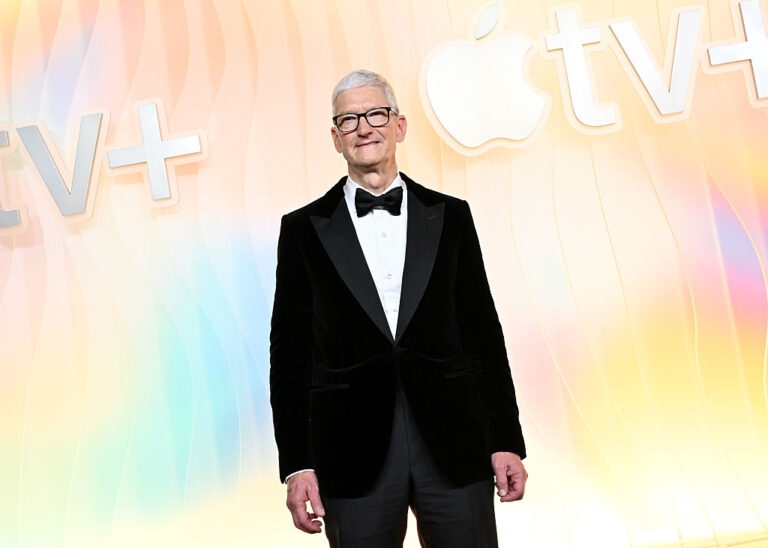
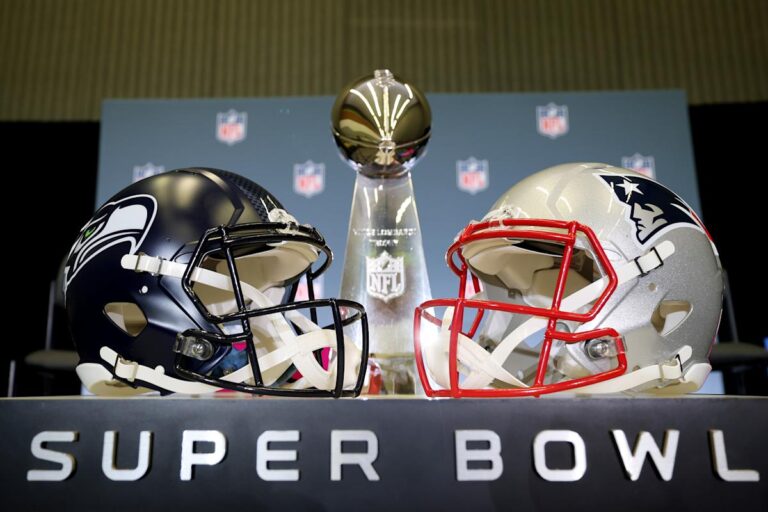
The Super Bowl is happening in Silicon Valley this Sunday, and the Patriots-Seahawks game at Levi’s Stadium is going to be packed with tech money. YouTube CEO Neal Mohan is expected to be there. Apple’s Tim Cook, too. (He has become a Super Bowl fixture since Apple Music began sponsoring the halftime show several years ago.)
Longtime VC Venky Ganesan from Menlo Ventures gave the New York Times a quote about the whole thing, saying the Super Bowl in the Bay Area is “tech billionaires who got picked last in gym class paying $50,000 to pretend they’re friends with the guys who got picked first.” Added Ganesan, “And for the record, I, too, was picked last in gym class.”
Ganesan could likely afford a $50,000 ticket if he needed one. Menlo went all-in on Anthropic, setting up a $100 million fund with the AI company in summer 2024 to invest in other AI startups. The firm has also joined numerous funding rounds for Anthropic itself, both through its flagship fund and various special purpose vehicles. (Anthropic is reportedly expected to close a $20 billion round of funding next week at a post-money valuation of $350 billion.)
Tickets are expensive across the board, averaging almost $7,000 according to the Times (with some last-minute seats still available on StubHub for closer to $3,600, according to a quick glance at the ticket reseller site). Only a quarter go to the general public; the rest are distributed to NFL teams. Of all ticket buyers, the largest group (27%) is coming from Washington State for the Seahawks, who’ve won just one Super Bowl in franchise history compared with the Patriots’ six titles, all with Tom Brady at quarterback.
Google, OpenAI, Anthropic, Amazon, and Meta are splashing out for competing ads about whose AI is best for customers, so maybe their respective CEOs will show up, too. Other than Amazon’s Andy Jassy, who reportedly splits his time between Seattle and Santa Monica, all of them have homes within an hour or so of Sunday’s game.
This is just the third time the Bay Area has hosted the Super Bowl. The first time was in 1985 at Stanford Stadium, the original football stadium at Stanford University, where the 49ers beat the Dolphins. The second took place 10 years ago at Levi’s Stadium, when the Broncos beat the Panthers.
Netflix’s acquisition of Warner Bros. Discovery isn’t quite a done deal yet. As first reported by The Wall Street Journal, the US Department of Justice has started its probe of Netflix’s proposed purchase, but is notably interested in whether the streaming giant was involved in any anticompetitive practices. According to the civil subpoena seen by WSJ, the Justice Department is looking into any “exclusionary conduct on the part of Netflix that would reasonably appear capable of entrenching market or monopoly power.”
While Netflix announced plans to acquire Warner Bros. Discovery in December at a value of $82.7 billion, the deal was expected to close in 12 to 18 months, subject to required regulatory approvals. The DOJ has the power to block the transaction and this investigation could hint at the agency’s approach, which may involve proving that Netflix put its competition at an unfair advantage.
Netflix’s attorney, Steven Sunshine, told WSJ that this probe was standard practice and that, “we have not been given any notice or seen any other sign that the DOJ is conducting a separate monopolization investigation.” Netflix also said in a statement that it’s “constructively engaging with the Department of Justice as part of the standard review of our proposed acquisition of Warner Bros.” According to WSJ, the investigation is still in its early stages and could take up to a year to complete.
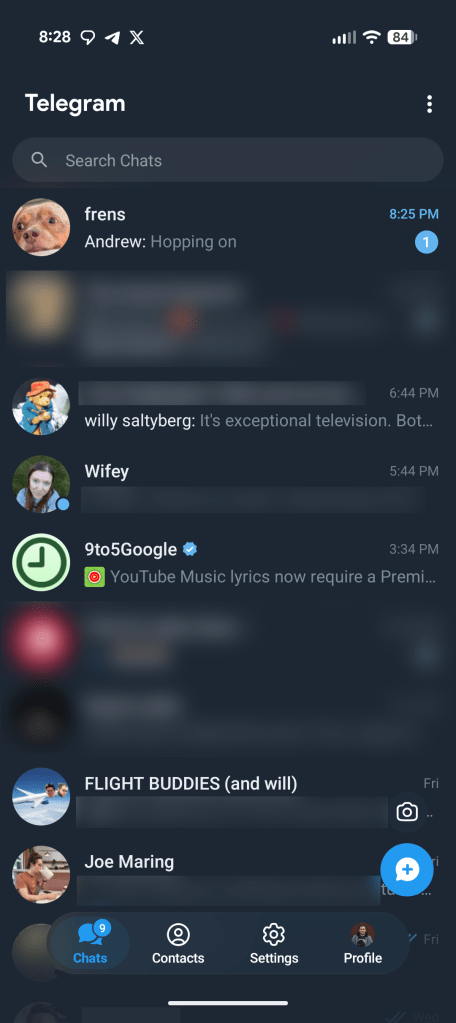
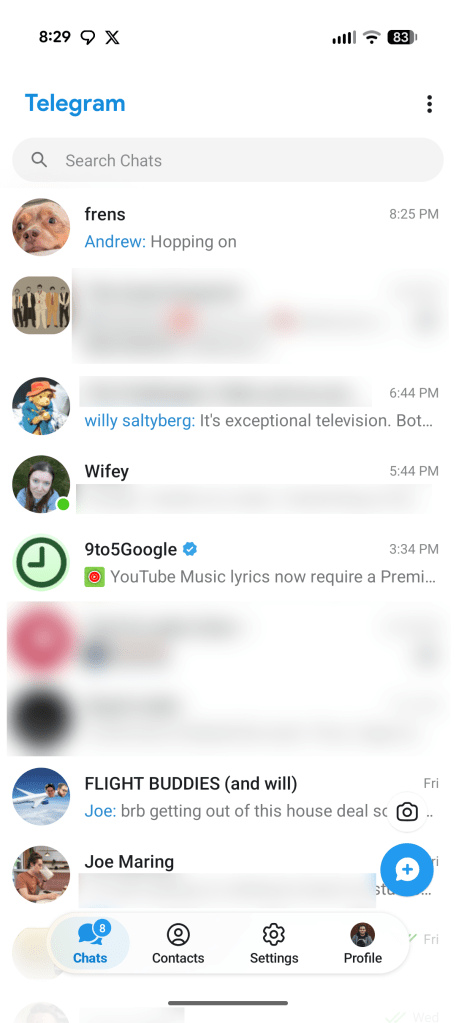
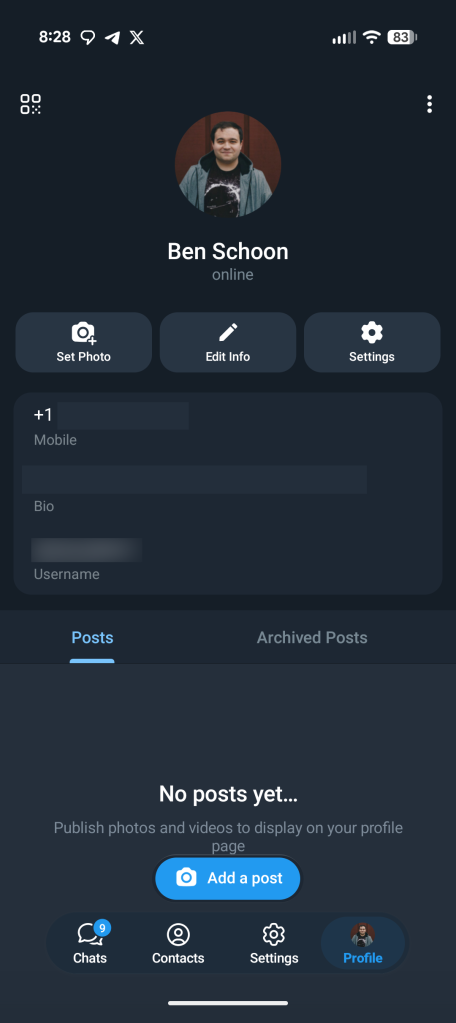
After introducing little bits and pieces last year, Telegram’s new update on Android is going all-in on Liquid Glass with new design elements throughout the UI in what is a pretty major redesign.
Available in Telegram for Android v12.4.0, rolling out now widely via the Play Store, the messaging app has picked up a fresh coat of paint, sporting a whole lot more Liquid Glass-esque design elements. This builds on the October/November 2025 update, which redesigned certain elements of the app.
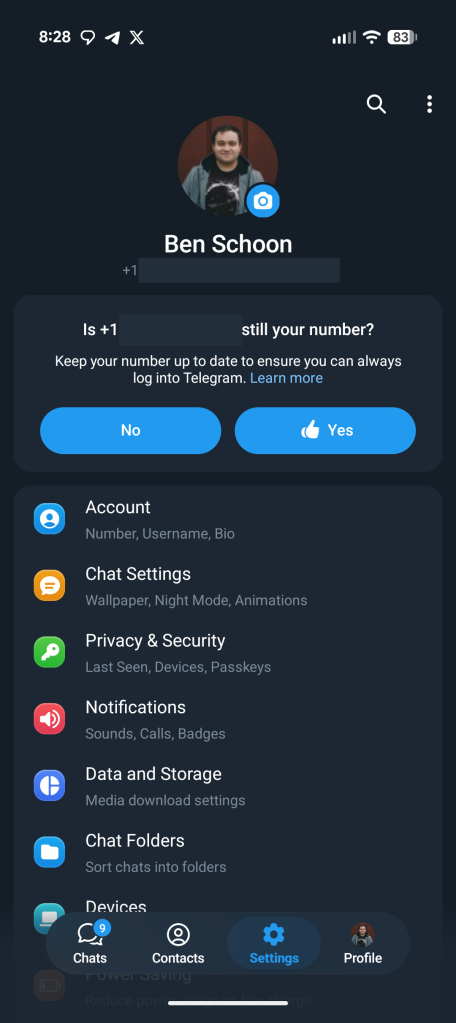
In the latest update, Telegram embraces this new look with a four-tab bottom bar that feels ripped straight out of iOS, as well as new transparent elements that are especially visible in the app’s light mode. It’s not quite the same as you see on iOS, but it’s very clearly inspired by Apple’s new design language (which, after all, is more than just transparency). The four tabs are for Chats, Contacts, Settings, and Profile, and the bottom bar stays open on all of them even as you scroll.
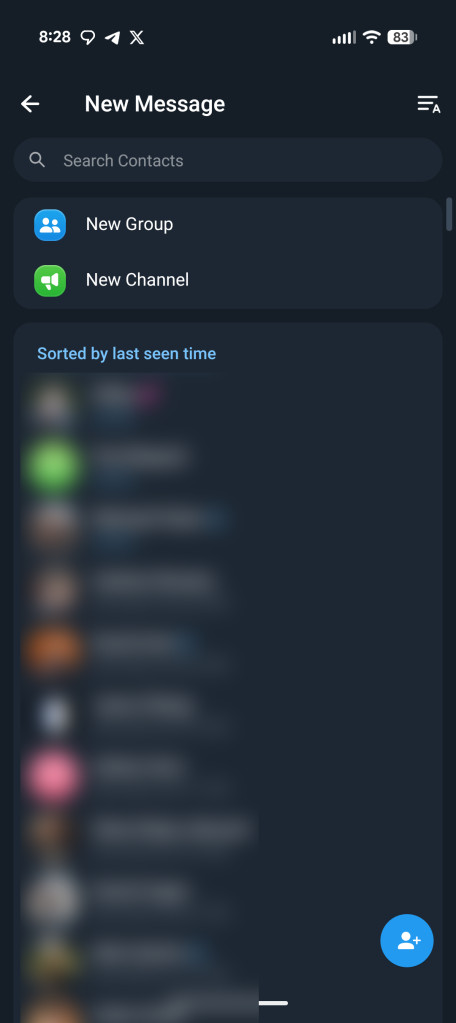
The hamburger side menu has also been entirely removed at this point, with “New Group” and other remaining features from that menu now found in a three-dot overflow menu at the top right of the chats screen.
Advertisement – scroll for more content
Telegram first rolled out full support for Liquid Glass on iOS in early January, with this Android redesign following in its footsteps. Users reactions have not exactly been positive.
Among more than 3 million documents the Department of Justice released last week that were collected during investigations into convicted sex offender Jeffrey Epstein, about 3,400 mention “Massachusetts.”
They include information on Ghislaine Maxwell’s Massachusetts driver’s license, her 2018 tax return and the FBI’s account of a person (whose name was redacted) speaking to them in 2020 about a sexual encounter with Epstein outside Boston.
The documents also detail Epstein’s visit to Westfield in 2017, a moment that provides a snapshot into his life at that time.
A few minutes past 7:30 a.m., Epstein’s jet, a Gulfstream GIV, took off from St. Thomas in the U.S. Virgin Islands. It headed north, traveling for 3 hours and 50 minutes. Its destination: The regional airport in Westfield, Massachusetts.
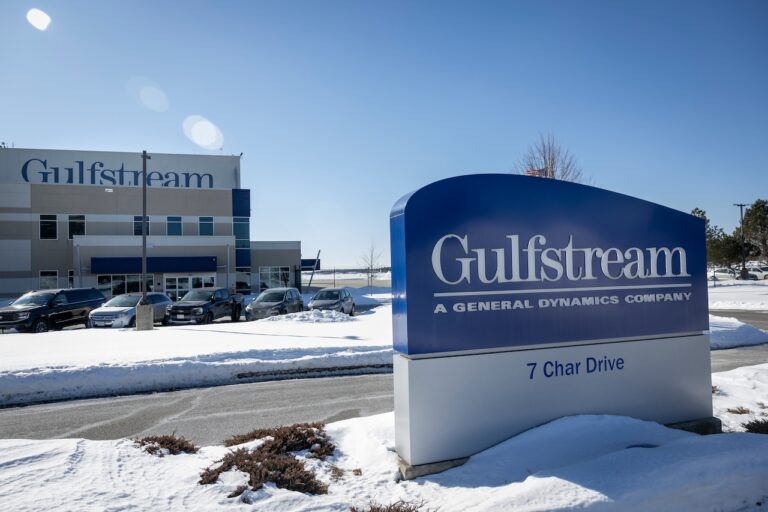
This Gulfstream jet had visited Westfield-Barnes Regional Airport before, as mechanics at the Gulfstream service center there had worked on it from time to time. A company associated with Epstein also issued checks to the airport totaling hundreds of dollars, possibly for landing fees, according to Daniel Shearer, the airport’s current manager.
Facility performed thousands of dollars of repairs
Over the years, Epstein had at least two jets serviced at the facility, records released last week show.
Gulfstream performed work on the jet in November 2015 after Epstein and his people complained of a fuel leak. A preliminary invoice to address the leak and a slew of other maintenance tasks totaled more than $58,000.
A few months later, the same jet spent almost three weeks in Westfield where mechanics performed almost $160,000 worth of work on the machine, according to a preliminary invoice. Jets of this kind sell for $1.9 million to $4.3 million, depending on their age and model.
Often, the plane would arrive at Westfield empty. But this trip on March 11, 2017, was different. According to the plane’s manifest, it carried a lone passenger — the convicted sex offender himself.
Gulfstream did not return a request for comment. Its service center in Westfield, which is about 130 miles from New York City and almost 100 miles from Boston, sits in the “busiest corridor for Gulfstream business jets,” the company said in a 2013 press release announcing an expansion of the facility.
Shearer, the airport manager, said Gulfstream is a key tenant for the regional airport, which brings in an economic impact of about $100 million a year.
When Epstein landed, he went through customs and presented a passport, according to a Department of Homeland Security document. International flights coming into Westfield have to be coordinated with U.S. Customs and Border Protection, Shearer said, as an officer will come up, meet the flight and screen the plane. It’s a process that happens about one or two times a month, he said.
Typically, the airport does not know who is using the field.
“When they show up, they’re in and out or they’re right into a car,” Shearer said. “And we don’t get manifests as to who’s coming and going.”
This photo provided by the New York State Sex Offender Registry shows Jeffrey Epstein, March 28, 2017. (New York State Sex Offender Registry via AP, File)AP
A return to ‘his lavish lifestyle’
Epstein’s trip to Westfield came at a time after the sex offender had served out his incarceration in 2009. It was beforethe Miami Herald newspaper sparked renewed interest in his case in late 2018, when it published an investigation into how the government handled criminal investigations into his actions, according to a Department of Justice report issued November 2020.
Some of his victims sued in civil court during those years, the report said, and Epstein sought to settle many of the claims. “Epstein was otherwise able to resume his lavish lifestyle, largely avoiding the interest of the press,” the department’s report said.
That wealthy lifestyle brought him to Westfield. Epstein was in the process of buying another jet.
The Gulfstream employees in Westfield were inspecting and fixing a Gulfstream G550 that Epstein was looking to purchase from Chevron, which did not return a request for comment. The parties were scheduled to close the sale at the end of March after mechanics finished looking over the plane, according to a letter Chevron sent about the transaction.
A day after his visit to Westfield, Epstein had some thoughts on the plane, expressed in his customary clipped and informal language: “i cant come up the stairs and see a bathroom door. = we have to disguise it and make it look part of one wall,” he wrote in an email.
More than two weeks after his visit to Westfield, 17 days to be exact, Epstein looked into a camera for a photo destined for the New York State Sex Offender Registry.
It was a photo widely circulated two years later. In July 2019, federal prosecutors in New York brought sex trafficking charges against Epstein. A month later, authorities say he killed himself in a federal jail.
The manifest for Epstein’s GIV said he left Westfield that day in March at 11:42 a.m., headed for an airport in Newark, New Jersey, a flight taking a little over 30 minutes.
After an hour and 15 minutes in Westfield, he was gone.
This is one of the Gulfstream GIV models, in a photograph taken in France. It is not the jet that Jeffrey Epstein had repaired in Westfield. (Wikimedia Commons photo)Staff-Shot
Other Massachusetts mentions in the Epstein Files
The reports of aircraft maintenance are far from the only Massachusetts-related records in the document releases.
This week, Mike Kennealy and Brian Shortsleeve, two Republican candidates for governor, criticized Gov. Maura Healey after the Epstein documents showed that an election consultant, James McGee, reached out to Epstein seeking a job in 2019 and touting his success working on Healey’s bid for attorney general, the Boston Herald reported. The paper also reported that Healey’s reelection campaign said McGee had misrepresented his relationship to her campaign.
The Karen Read case, included in some FBI daily news briefs, is mentioned four times in the Epstein files.
An inventor in New Hampshire, Dean Kamen, was placed on leave by the robotics program he founded, FIRST, after documents showed he regularly communicated with Epstein, according to New Hampshire Public Radio. The organization asked a law firm to investigate.
Deep tech startups in sectors such as space, semiconductors, and biotech take far longer to mature than conventional ventures. Because of that India is adjusting its startup rules, and mobilizing public capital, hoping to help more of them make it to commercial products.
This week, the Indian government updated its startup framework, doubling the period for which deep tech companies are treated as startups to 20 years and raising the revenue threshold for startup-specific tax, grant, and regulatory benefits to ₹3 billion (about $33.12 million), from ₹1 billion (around $11.04 million) previously. The change aims to align policy timelines with the long development cycles typical of science- and engineering-led businesses.
The change also forms part of New Delhi’s effort to build a long-horizon deep tech ecosystem by combining regulatory reform with public capital, including the ₹1 trillion (around $11 billion) Research, Development and Innovation Fund (RDI), announced last year. That fund is intended to expand patient financing for science-led and R&D-driven companies. Against that backdrop, U.S. and Indian venture firms later came together to launch the India Deep Tech Alliance, $1 billion-plus private investor coalition that includes Accel, Blume Ventures, Celesta Capital, Premji Invest, Ideaspring Capital, Qualcomm Ventures, and Kalaari Capital, with chipmaker Nvidia acting as an adviser.
For founders, these changes may fix what some see as an artificial pressure point. Under the previous framework, companies often risked losing startup status while still pre-commercial, creating a “false failure signal” that judged science-led ventures on policy timelines rather than technological progress, said Vishesh Rajaram, founding partner at Speciale Invest, an Indian deep tech venture capital firm.
“By formally recognizing deep tech as different, the policy reduces friction in fundraising, follow-on capital, and engagement with the state, which absolutely shows up in a founder’s operating reality over time,” Rajaram told TechCrunch.
Still, investors say access to capital remains a more binding constraint, particularly beyond the early stages. “The biggest gap has historically been funding depth at Series A and beyond, especially for capital-intensive deep tech companies,” Rajaram said. That is where the government’s earlier RDI fund is meant to play a complementary role.
“The real benefit of the RDI framework is to increase the funding available to deep tech companies at early and growth stages,” said Arun Kumar, managing partner at Celesta Capital. By routing public capital through venture funds with tenors similar to private capital, he said, the fund is designed to address chronic gaps in follow-on funding without altering the commercial criteria that govern private investment decisions.
Techcrunch event
Boston, MA | June 23, 2026
Siddarth Pai, founding partner at 3one4 Capital and co-chair of regulatory affairs at the Indian Venture and Alternate Capital Association, said India’s deep tech framework avoids a “graduation cliff” that has historically cut companies off from support just as they scale.
These policy changes come as the RDI fund is beginning to take shape operationally, Pai said, with the first batch of fund managers identified and the process of selecting venture and private equity managers under way.
While private capital for deep tech already exists in India — particularly in areas such as biotech — Pai told TechCrunch the RDI Fund is intended to act as a nucleus around which greater capital formation can occur. Unlike a traditional fund-of-funds, he noted, the vehicle is also designed to take direct positions and provide credit and grants to deep tech startups.
India’s deep tech funding grows
In terms of scale, India remains an emerging rather than dominant deep tech market. Indian deep tech startups have raised $8.54 billion in total to date, but recent data point to renewed momentum. Indian deep tech startups raised $1.65 billion in 2025, a sharp rebound from $1.1 billion in each of the previous two years after funding peaked at $2 billion in 2022, per Tracxn. The recovery suggests growing investor confidence, particularly in areas aligned with national priorities such as advanced manufacturing, defence, climate technologies, and semiconductors.
“Overall, the pickup in funding suggests a gradual move toward longer-horizon investing,” said Neha Singh, co-founder of Tracxn.
In comparison, U.S. deep tech startups raised about $147 billion in 2025, more than 80 times the amount deployed in India that year, while China accounted for roughly $81 billion, data from Tracxn shows.
The disparity highlights the challenge India faces in building capital-intensive technologies, even with its wealth of engineering talent. So the hope is that these moves by the Indian government will lead to more investor participation over the medium term.
Image Credits:Jagmeet Singh / TechCrunch
A longer-term signal
For global investors, New Delhi’s framework change is being read as a signal of longer-term policy intent rather than a trigger for immediate shifts in allocation. “Deep tech companies operate on seven- to twelve-year horizons, so regulatory recognition that stretches the lifecycle gives investors greater confidence that the policy environment will not change mid-journey,” said Pratik Agarwal, a partner at Accel. While he said the change would not alter allocation models overnight or eliminate policy risk entirely, it increased investor comfort that India is thinking about deep tech on longer time horizons.
“The change shows that India is learning from the U.S. and Europe on how to create patient frameworks for frontier building,” Agarwal told TechCrunch.
Whether the move will reduce the tendency of Indian startups to shift their headquarters overseas as they scale remains an open question.
The extended runway strengthens the case for building and staying in India, Agarwal said, though access to capital and customers still matters. Over the past five years, he added, India’s public markets have shown a growing appetite for venture-backed tech companies, making domestic listings a more credible option than in the past. That, in turn, could ease some of the pressure on deep tech founders to incorporate overseas, even if access to procurement and late-stage capital will continue to shape where companies ultimately scale.
For investors backing long-horizon technologies, the ultimate test will be whether India can deliver globally competitive outcomes. The real signal, Kumar of Celesta Capital said, would be the emergence of a critical mass of Indian deep tech companies succeeding on the world stage.
“It would be great to see ten globally competitive deep tech companies from India achieve sustained success over the next decade,” he said, describing that as the benchmark he would look for in assessing whether India’s deep tech ecosystem is maturing.
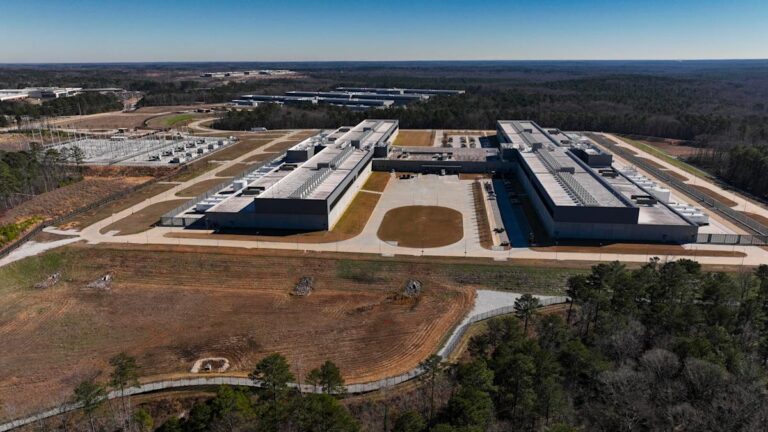
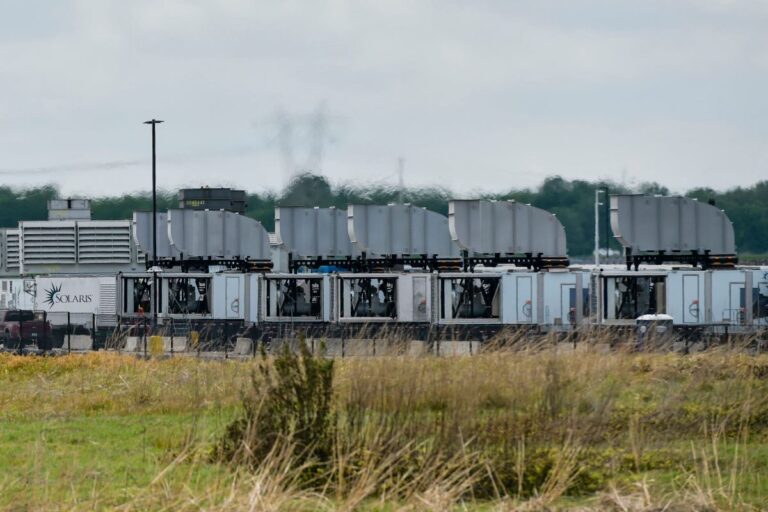
On Friday, New York State Senators Liz Krueger and Kristen Gonzales introduced a bill that would stop the issuance of permits for new data centers for at least three years and ninety days to give time for impact assessments and to update regulations. The bill would require the Department of Environmental Conservation and Public Service Commissions to issue impact statements and reports during the pause, along with any new orders or regulations that they deem necessary to minimize data centers’ impacts on the environment and consumers in New York.
The bill would require these departments to study data centers’ water, electricity and gas usage, and their impact on the rates of these resources, among other things. The bill, citing a Bloomberg analysis, notes that, “Nationally, household electricity rates increased 13 percent in 2025, largely driven by the development of data centers.” New York is the sixth state this year to introduce a bill aiming to put the brakes on data centers, following in the footsteps of Georgia, Maryland, Oklahoma, Vermont and Virginia, according to Wired. It’s still very much in the early stages, and is now with the Senate Environmental Conservation Committee for consideration.
After testing in recent months, YouTube Music looks to be widely rolling out a Premium paywall for lyrics.
Lyrics in YouTube Music now require a YouTube Premium or Music Premium subscription. The middle tab in the Now Playing screen gains a new card at the top when this has rolled out to your account: “You have [x] views remaining” and “Unlock lyrics with Premium.”
Users get five free lyrics before they have to subscribe. When that happens, you’ll only see the first few lines, with everything else blurred and unscrollable.
Google has been testing this change for a few months now, and the lyrics paywall now looks to be seeing a wide rollout around the world.
Advertisement – scroll for more content
YouTube Music Premium (in the US) costs $10.99 per month with ad-free playback, background listening, offline downloads, and AI features like Ask Music. Meanwhile, YouTube Premium is $13.99 and extends those benefits to the YouTube app.
Earlier this week, Google reported that it has “over 325 million paid subscriptions across consumer services, with strong adoption for Google One and YouTube Premium.” In 2025, revenue from YouTube ads and subscriptions came in at over $60 billion.
More on YouTube Music:
FTC: We use income earning auto affiliate links.More.
Temperatures are set to drop precipitously Saturday evening, with the National Weather Service issuing an Extreme Cold Warning for Central and Western Massachusetts until 1 p.m. Sunday, and a Cold Weather Advisory for the eastern part of the state from 6 p.m. Saturday to 1 p.m. Sunday.
Boston will drop to 3 degrees overnight, with wind gusts in excess of 30 mph pushing the wind chill value as low as minus 12 degrees. Worcester will hit zero, while Springfield will see overnight temps of minus 4 degrees; wind chills in both cities are expected to drop to minus 20 degrees.
In Pittsfield, the overnight low will reach minus 9 degrees, with a wind chill of minus 28.
The National Weather Service has issued an Extreme Cold Warning for Central and Western Massachusetts.National Weather Service
The National Weather Service cautions anyone going outside in those conditions that it only takes 10 to 30 minutes for frostbite to set in. People are urged to dress in layers, including hat, gloves and face mask.
Sunday will bring sunny skies, but temperatures won’t go above the mid teens in Central and Western Massachusetts, while Boston will top out at 19 degrees and Cape Cod & the Islands will be slightly warmer at 21 degrees.
Boston will drop to 7 degrees on Sunday night with a wind chill value of minus 10. Worcester and Springfield will again see wind chill readings around minus 15 degrees, while Pittsfield will experience a frigid low of minus 8 degrees and a wind chill of minus 21.
New Yorker state lawmakers have introduced a bill that would impose a moratorium of at least three years on permits tied to the construction and operation of new data centers. While the bill’s prospects are uncertain, Wired reports that New York is at least the sixth state to consider pausing construction of new data centers.
As tech companies plan to spend ever-increasing amounts of money to build AI infrastructure, both Democrats and Republicans have expressed concerns about the impact those data centers might have on surrounding communities. Studies have also linked data centers to increased home electricity bills.
Critics include progressive Senator Bernie Sanders, who has called for a national moratorium, as well as conservative Florida Governor Ron De Santis, who said data centers will lead to “higher energy bills just so some chatbot can corrupt some 13 year old kid online.”
More than 230 environmental groups including Food & Water Watch, Friends of the Earth, and Greenpeace recently signed an open letter to Congress calling for a national moratorium on the construction of new data centers.
Eric Weltman of Food & Water Watch told Wired that the New York bill — sponsored by state senator Liz Krueger and assemblymember Anna Kelles, both Democrats — was “our idea.” Data center pauses have also been proposed by Democrats in Georgia, Vermont, and Virginia, while Republicans sponsored similar bills in Maryland and Oklahoma.
According to Politico, Krueger described her state as “completely unprepared” for the “massive data centers” that are “gunning for New York.”
“It’s time to hit the pause button, give ourselves some breathing room to adopt strong policies on data centers, and avoid getting caught in a bubble that will burst and leave New York utility customers footing a huge bill,” she said.
Techcrunch event
Boston, MA | June 23, 2026
Last month, New York Governor Kathy Hochul announced a new initiative called Energize NY Development, which her office said would both modernize the way large energy users (i.e., data centers) would connect to the grid while also requiring them to “pay their fair share.”
The 2026 Super Bowl between the New England Patriots and the Seattle Seahawks will air on NBC this Sunday, Feb. 8. The game will also stream on Peacock. If you don’t have NBC over the air and don’t subscribe to Peacock, there are still ways to watch Super Bowl LX — and Bad Bunny’s history-making Halftime Show — for free. Here’s how to tune in.
How to watch Super Bowl LX free:
Date: Sunday, Feb. 8
Time: 6:30 p.m. ET
Location: Levi’s Stadium in Santa Clara, Calif.
TV channel: NBC, Telemundo
Streaming: Peacock, DirecTV, NFL+ and more
2026 Super Bowl game channel
Super Bowl LX will air on NBC. A Spanish-language broadcast is available on Telemundo.
In addition to hosting NBC’s Super Bowl broadcast, DirecTV’s Entertainment tier gets you access to loads of channels where you can tune in to college and pro sports throughout the year, including ESPN, TNT, ACC Network, Big Ten Network, CBS Sports Network, and, depending on where you live, local affiliates for ABC, CBS, Fox and NBC.
Whichever package you choose, you’ll get unlimited Cloud DVR storage and access to ESPN Unlimited.
DirecTV’s Entertainment tier package is $89.99/month. But you can currently try all this out for free for 5 days. If you’re interested in trying out a live-TV streaming service for football, but aren’t ready to commit, we recommend starting with DirecTV.
Peacock is the streaming home of the 2026 Super Bowl.
While a regular Peacock subscription begins at $10.99 a month for a Premium Plan and goes up to $16.99 for the ad-free Premium Plus plan, you can get an ad-supported subscription for free if you’re a Walmart+ subscriber.
Walmart+ members actually get their choice between Paramount+ or Peacock included in their membership at no additional cost. A monthly subscription to Walmart+ costs $12.99, and an annual plan usually costs $98. But you can try the service out totally free. Beyond free Peacock, Walmart+ has additional perks like five free months of Apple Music, discounts on Cinemark movie theater memberships, free shipping and delivery on Walmart purchases, discounts on gas and much more.
Instacart+ subscribers are able to get an annual Peacock Premium plan (a $109.99 value) for free. After a free 14-day trial, Instacart+ plans cost $99/year, meaning you’ll save more on Peacock simply by subscribing to the delivery service, but you’ll get tons of extras, like free grocery and restaurant delivery and a free subscription to the New York Times Cooking app.
What time is the 2026 Super Bowl?
The 2026 Super Bowl kicks off at 6:30 p.m. ET/3:30 p.m. PT on Sunday, Feb. 8. Green Day will be performing a pre-game special starting at 6 p.m. ET.
Who is playing in the Super Bowl?
The AFC champions, the New England Patriots, will play the NFC champions, the Seattle Seahawks.
Where is the 2026 Super Bowl being played?
The 2026 Super Bowl will be held at Levi’s Stadium in Santa Clara, Calif., home of the San Francisco 49ers.
Who is performing at the 2026 Super Bowl halftime show?
Bad Bunny is headlining the 2026 Super Bowl halftime performance. You can expect that show to begin after the second quarter, likely between 8-8:30 p.m. ET. Green Day will perform a pre-game show starting at 6 p.m. ET. If you’re tuning in before the game, singer Charlie Puth will perform the National Anthem, Brandi Carlile is scheduled to sing “America the Beautiful,” and Grammy winner Coco Jones will perform “Lift Every Voice and Sing.”