Home Blog Page 56

Fintech CEO and Forbes 30 Under 30 alum has been charged for alleged fraud

0


By now, the Forbes 30 Under 30 list has become more than a little notorious for the amount of entrants who go on to be charged with fraud. Notable alumni include FTX founder Sam Bankman-Fried, Frank CEO Charlie Javice, Joanna Smith-Griffin, founder of the AI startup AllHere Education, and “pharma bro” Martin Shkreli, among others. Now, another member of the list has been hit with federal charges.

Gökçe Güven, a 26-year-old Turkish national and the founder and CEO of fintech startup Kalder, was charged last week with alleged securities fraud, wire fraud, visa fraud, and aggravated identity theft.

The New York-based fintech startup — which uses the “Turn Your Rewards into [a] Revenue Engine” tagline — says it can help companies create and monetize individual rewards programs. The company was founded in 2022, and offers participating firms the opportunity to earn ongoing revenue streams via partner affiliate sales, Axios previously reported.

Güven was featured in last year’s Forbes 30 Under 30 list. The magazine notes in the writeup that Güven’s clients included major chocolatier Godiva and the International Air Transport Association, the trade organization that represents a majority of the world’s airlines. Kalder also claims to have enjoyed the backing of a number of prominent VC firms.

The U.S. Department of Justice alleges that, during Kalder’s seed round in April of 2024, Güven managed to raise $7 million from more than a dozen investors after presenting a pitch deck that was rife with false information.

According to the government, Kalder’s pitch deck claimed that there were 26 brands “using Kalder” and another 53 brands in “live freemium.” However, officials say that, in reality, Kalder had, in many cases, only been offering heavily discounted pilot programs to many of those companies. Other brands “had no agreement with Kalder whatsoever—not even for free services,” officials said in a press release announcing the indictment. The pitch deck also “falsely reported that Kalder’s recurring revenue had steadily grown month over month since February 2023 and that by March 2024, Kalder had reached $1.2 million in annual recurring revenue.” 

The government also accuses Güven of having kept two separate sets of financial books. One of those sets included “false and inflated numbers,” and was presented to investors or potential investors to hide the “true financial condition of the company,” the government claims. The DOJ also alleges that Güven used lies about Kalder as well as forged documents to obtain a category of visa reserved for individuals of “extraordinary ability,” that would allow her to live and work in the United States.

Techcrunch event

Boston, MA
|
June 23, 2026

TechCrunch reached out to Güven through her personal website. The CEO said that she would be sharing a statement about the charges on Tuesday.


Source link

Elon Musk’s SpaceX has acquired his AI company, xAI

0


Elon Musk’s SpaceX has acquired Musk’s xAI, the companies announced. The merger will “form the most ambitious, vertically-integrated innovation engine on (and off) Earth, with AI, rockets, space-based internet, direct-to-mobile device communications and the world’s foremost real-time information and free speech platform,” Musk wrote in an update.

The AI company that right now is best known for its CSAM-generating chatbot might seem like a strange fit for a rocket company. But SpaceX is key to Musk’s latest scheme to build AI data centers in space. In his update, Musk wrote that “global electricity demand for AI simply cannot be met with terrestrial solutions” and that moving the resource-intensive operations to space is “the only logical solution.” SpaceX just days ago filed an application with the FCC to create an “orbital data center” by launching a million new satellites.

Musk also claimed that, eventually, space-based data centers will enable other advancements in space travel. “The capabilities we unlock by making space-based data centers a reality will fund and enable self-growing bases on the Moon, an entire civilization on Mars and ultimately expansion to the Universe.” Notably, it’s not the first time Musk has made lofty claims about Mars. He predicted in 2017 that SpaceX would send crewed missions to Mars by 2024.

This also isn’t the first time Musk has acquired one of his own companies. He merged xAI and X last year, which means SpaceX now owns the social network Musk bought in 2022. And he recently announced that Tesla was investing $2 billion into xAI. SpaceX is planning to go public later this year in an initial public offering (IPO) that could value the company at more than $1 trillion, according to Bloomberg, which notes that SpaceX has also “discussed a possible merger with Tesla.”


Source link

Google reduces Nest Cam ‘Video not available’ error with Home 4.8

0


Version 4.8 of the Google Home app widely rolled out today with a “foundational fix” for the “Video not available” error with Nest Cams. 

Google is addressing how you might get a “Video not available” error when launching the Home app from a notification or recent event.

What the company calls a “foundational fix” for this long-standing error should let you “play back events recently captured by your cameras.” 

This update rolled out with version 4.8 of the Google Home app, which became widely available on iOS last week and Android today. It follows the December update that lets you simultaneously transfer all cameras and other devices from the Nest app to Google Home.

Advertisement – scroll for more content

Besides “Camera close-to-live playback improvements,” this release also offers “More automation starters, conditions, and actions.”

Meanwhile, as made clear by the last four release notes, Google is no longer explicitly tying changelog entries to particular app version numbers. 

More on Google Home:

FTC: We use income earning auto affiliate links. More.


Source link

Cheerios, Nutella among thousands of products recalled for rodent, bird feces exposure

0


Thousands of FDA regulated items are being recalled and pulled from shelves after federal regulators discovered rodent and bird feces at a regional distribution warehouse in Minneapolis.

Among the items are everyday staples including Cheerios and Pringles, as well as specialty items like Nutella, and even over-the-counter pain relievers and dog food.

Because the warehouse handles a wide range of FDA-regulated goods, officials moved to pull products from shelves that may have been exposed to the “unsanitary conditions” during storage — even if they were manufactured safely elsewhere.

The FDA classified the recall as Class II — meaning affected items can pose temporary or medically reversible health risks.

Affected products were sold across Minnesota, North Dakota and Indiana.

Hundreds of popular brands are included in the recall, which covers food, beverages, medicine, personal care items and pet products.

Among the most recognizable names listed are Cheerios, Pringles, Rice Krispies, Special K and Frosted Flakes.

Snacks like Skittles, Jolly Ranchers and Takis are included in the recall.

Several high-profile beverage brands are also included, such as Diet Coke, Coca-Cola and Gatorade.

The FDA says the action was taken because items were stored at a facility where contamination was observed — not because the products were manufactured in a contaminated space.

Consumers in states where affected products were sold are urged to check product labels and UPC codes against the agency’s official recall list.

While no confirmed illnesses have been reported relating to this recall, the FDA warns exposure to rodent or bird waste can carry bacteria such as salmonella.

The FDA advises consumers not to eat or use any recalled products, to destroy them and to take a photo to share with Gold Star if they plan on requesting a refund.

Pet owners are also encouraged to monitor animals closely and contact a veterinarian if a recalled pet product was consumed.

For the full list of affected products, including specific brands, sizes and UPC codes, consumers can visit the FDA’s official recall notice and product list on FDA.gov.


Source link

Coalition demands federal Grok ban over nonconsensual sexual content

0


A coalition of nonprofits is urging the U.S. government to immediately suspend the deployment of Grok, the chatbot developed by Elon Musk’s xAI, in federal agencies including the Department of Defense. 

The open letter, shared exclusively with TechCrunch, follows a slew of concerning behavior from the large language model over the past year, including most recently a trend of X users asking Grok to turn photos of real women, and in some cases children, into sexualized images without their consent. According to some reports, Grok generated thousands of nonconsensual explicit images every hour, which were then disseminated at scale on X, Musk’s social media platform that’s owned by xAI. 

“It is deeply concerning that the federal government would continue to deploy an AI product with system-level failures resulting in generation of nonconsensual sexual imagery and child sexual abuse material,” the letter, signed by advocacy groups like Public Citizen, Center for AI and Digital Policy, and Consumer Federation of America, reads. “Given the administration’s executive orders, guidance, and the recently passed Take It Down Act supported by the White House, it is alarming that [Office of Management and Budget] has not yet directed federal agencies to decommission Grok.” 

xAI reached an agreement last September with the General Services Administration (GSA), the government’s purchasing arm, to sell Grok to federal agencies under the executive branch. Two months before, xAI – alongside Anthropic, Google, and OpenAI – secured a contract worth up to $200 million with the Department of Defense. 

Amid the scandals on X in mid-January, Defense Secretary Pete Hegseth said Grok will join Google’s Gemini in operating inside the Pentagon network, handling both classified and unclassified documents, which experts say is a national security risk. 

The letter’s authors argue that Grok has proven itself incompatible with the administration’s requirements for AI systems. According to the OMB’s guidance, systems that present severe and foreseeable risks that cannot be adequately mitigated must be discontinued. 

“Our primary concern is that Grok has pretty consistently shown to be an unsafe large language model,” JB Branch, a Public Citizen Big Tech accountability advocate and one of the letter’s authors, told TechCrunch. “But there’s also a deep history of Grok having a variety of meltdowns, including anti-semitic rants, sexist rants, sexualized images of women and children.”

Techcrunch event

Boston, MA
|
June 23, 2026

Several governments have demonstrated an unwillingness to engage with Grok following its behavior in January, which builds on a series of incidents including the generation of anti-semitic posts on X and calling itself “MechaHitler.” Indonesia, Malaysia, and the Philippines all blocked access to Grok (they’ve subsequently lifted those bans), and the European Union, the U.K., South Korea, and India are actively investigating xAI and X regarding data privacy and the distribution of illegal content. 

The letter also comes a week after Common Sense Media, a nonprofit that reviews media and tech for families, published a damning risk assessment that found Grok is among the most unsafe for kids and teens. One could argue that, based on the findings of the report — including Grok’s propensity to offer unsafe advice, share information about drugs, generate violent and sexual imagery, spew conspiracy theories, and generate biased outputs — Grok isn’t all that safe for adults either.  

“If you know that a large language model is or has been declared unsafe by AI safety experts, why in the world would you want that handling the most sensitive data we have?” Branch said. “From  a national security standpoint, that just makes absolutely no sense.”

Andrew Christianson, a former National Security Agency contractor and current founder of Gobbi AI, a no-code AI agent platform for classified environments, says that using closed-source LLMs in general is a problem, particularly for the Pentagon. 

“Closed weights means you can’t see inside the model, you can’t audit how it makes decisions,” he said. “Closed code means you can’t inspect the software or control where it runs. The Pentagon is going closed on both, which is the worst possible combination for national security.”

“These AI agents aren’t just chatbots,” Christianson added. “They can take actions, access systems, move information around. You need to be able to see exactly what they’re doing and how they’re making decisions. Open source gives you that. Proprietary cloud AI doesn’t.” 

The risks of using corrupted or unsafe AI systems spill out beyond national security use cases. Branch pointed out that an LLM that’s been shown to have biased and discriminatory outputs could produce disproportionate negative outcomes for people as well, especially if used in departments involving housing, labor, or justice. 

While the OMB has yet to publish its consolidated 2025 federal AI use case inventory, TechCrunch has reviewed the use cases of several agencies — most of which are either not using Grok or are not disclosing their use of Grok. Aside from the DoD, the Department of Health and Human Services also appears to be actively using Grok, mainly for scheduling and managing social media posts and generating first drafts of documents, briefings, or other communication materials. 

Branch pointed to what he sees as a philosophical alignment between Grok and the administration as a reason for overlooking the chatbot’s shortcomings. 

“Grok’s brand is being the ‘anti-woke large language model,’ and that ascribes to this administration’s philosophy,” Branch said. “If you have an administration that has had multiple issues with folks who’ve been accused of being Neo Nazis or white supremacists, and then they’re using a large language model that has been tied to that type of behavior, I would imagine they might have a propensity to use it.”

This is the coalition’s third letter after writing with similar concerns in August and October last year. In August, xAI launched “spicy mode” in Grok Imagine, triggering mass creation of non-consensual sexually explicit deepfakes. TechCrunch also reported in August that private Grok conversations had been indexed by Google Search

Prior to the October letter, Grok was accused of providing election misinformation, including false deadlines for ballot changes and political deepfakes. xAI also launched Grokipedia, which researchers found to be legitimizing scientific racism, HIV/AIDS skepticism, and vaccine conspiracies. 

Aside from immediately suspending the federal deployment of Grok, the letter demands that the OMB formally investigate Grok’s safety failures and whether the appropriate oversight processes were conducted for the chatbot. It also asks the agency to publicly clarify whether Grok has been evaluated to comply with Trump’s executive order requiring LLMs to be truth-seeking and neutral and whether it met OMB’s risk mitigation standards.  

“The administration needs to take a pause and reassess whether or not Grok meets those thresholds,” Branch said.

TechCrunch has reached out to xAI and OMB for comment. 



Source link

TikTok says it’s ‘back to normal’ after winter storm-related outages

0


TikTok is finally “back to normal” in the US after days of technical issues and outages tied to winter storms. Less than a week after companies like Oracle took ownership of TikTok’s domestic operations, the platform faced a major power outage when one of its primary US data center sites — run by Oracle — got taken down by the storm.

The problems started last Monday, January 26, when TikTok announced it was working on a “major infrastructure issue” and warned of bugs, time-out requests, missing earnings, and more. The next day TikTok shared that progress has been made but there were still some issues. It added, “Creators may temporarily see ‘0’ views or likes on videos, and your earnings may look like they’re missing. This is a display error caused by server timeouts; your actual data and engagement are safe.”

Then, yesterday, February 1, TikTok claimed the problem was straightened out and that users shouldn’t experience any more related issues. “We’re sorry about the issues experienced by our U.S. community. We appreciate how much you count on TikTok to create, discover, and connect with what matters to you,” the platform stated in its update. “Thank you for your patience and understanding.”

A number of US users have uninstalled TikTok in response to its new ownership and technical issues. Some users also claimed that TikTok was censoring what they could post or what others saw. For instance, The Guardian reports that many people faced issues sharing videos about ICE agents killing Alex Pretti and general anti-ICE content.

On January 26, analytics firm Sensor Tower told CNBC that uninstalls of the app had increased by over 150 percent during the five days since its change in ownership, when compared to the three months before. At the same time, independent app and competitor UpScrolled saw a surge in downloads.


Source link

Phones don’t need yearly sequels, and a ‘pause’ makes sense

0


Smartphones have gotten really boring over the past few years, with most year-over-year “upgrades” just acting as a rehash of the prior year’s device with a new chipset and maybe some new colors. And yet, we just keep getting these boring upgrades. It’s been true for years now that phones simply do not need a yearly refresh anymore, but 2026 would be the year to make the switch – not that anyone is actually going to.


This issue of 9to5Google Weekender is a part of 9to5Google’s rebooted newsletter that highlights the biggest Google stories with added commentary and other tidbits. Sign up here to get it delivered to your inbox early!


Take a look at any smartphone series in recent years, you’ll see the same pattern develop. While there’s clear evolution if you look at a phone from 2020 versus the one released in 2025, there’s a lot less to talk about if you look at any two years back to back. Google Pixel has settled into a “tick tock” release cycle where “major” upgrades arrive every other year, where Samsung’s flagship Galaxy S series has been stuck in the same basic template for the past 4-5 generations.

Just look at the last four “Ultra” phones.

Advertisement – scroll for more content

It gets boring, whether you follow this industry closer or you’re just a consumer looking for an upgrade every once in a while.

And the reason for that is relatively clear.

Smartphones are a mature product now.

After 15+ years of experimenting, smartphone makers know what works, what doesn’t, what people care about, what they don’t, what makes money, what doesn’t, etc. And in terms of the actual hardware, we’ve also gotten to the point where all of the big problems have been addressed. If you look at nearly any phone today, regardless of price point, there aren’t many “big” problems left. The displays are all pretty good. The battery life is generally good enough on everything. The cameras are more or less good. There’s plenty of nuance but, at the end of the day, every device is capable in the ways that matter for the average user.

Basically, we’ve hit the law of diminishing returns. More money and time can be thrown into these products and components but, at a certain point, you just don’t get as much out of that.

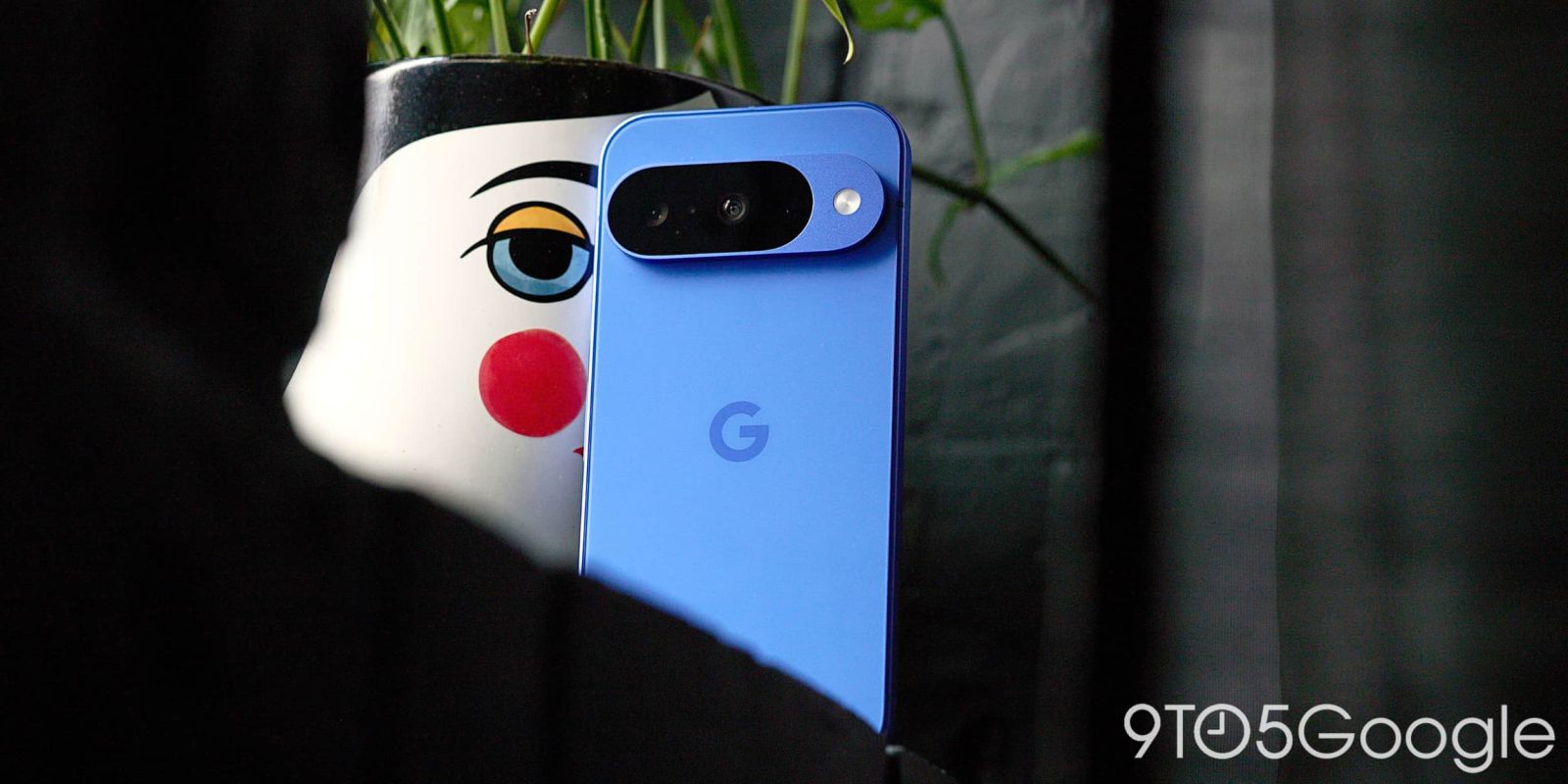
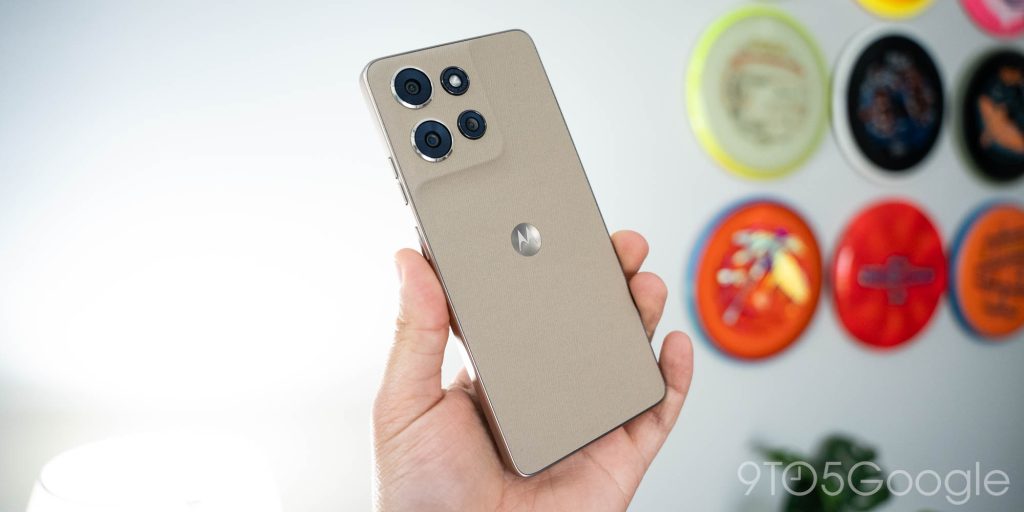
Of course, that’s not necessarily true of things like design, which have also stagnated, but that’s also something that hits a wall as products mature. There are no “problems” to address in smartphone design anymore, and at a certain point, one design just ends up looking like something that’s already out there. For instance, the Moto G pictured above looks a lot like some older designs from Oppo. And in 2025, we saw Apple’s long-awaited iPhone design refresh that picked up a lot of ideas from Google Pixel.

Those are just some of the reasons why it would make a whole lot of sense to just stop putting out rehashed devices every year just… because. It would make new releases more exciting. It would take a lot of e-waste out of the market.

And in 2026 in particular, this would make so much sense.

The smartphone market is currently in decline, a lot of brands are going to be struggling to get new devices together, and the RAM shortage is just throwing a wrench in literally everything in the tech market – and it’s not going to stop anytime soon. Taking a year off, while it might include its own set of hiccups, just makes more sense right now than it ever really has.

The sole example of a brand that will skip a yearly refresh cycle is Nothing, which this week confirmed it won’t release Phone (4) in 2026. But, before we go applaud Nothing for being a trendsetter of any kind, let’s look at the bigger picture. Nothing already skipped a “flagship” year between Phone (2) and Phone (3), and while that led to a bigger leap in generations, I’m not sure it really meant as much as it would from other brands. Nothing has yet to really figure out “flagship” phones, so skipping a generation still resulted in a release that felt rushed this year. It’s good the company isn’t just moving that into Phone (4) right away, but I’m not sure it’s because yearly refresh cycles aren’t needed – I’m starting to think Nothing just isn’t very good at making “expensive” smartphones.

Asus is sort of another example of this. Looking at the challenges ahead, Asus recently announced that it would stop making new smartphones, officially treating it as a “pause,” but it really seems like Asus is just done with smartphones as a whole. They probably won’t be the last example of that, but I do wonder if a “pause” would make sense for some other brands.

Anyway, that’s where I’m at.

Between the ever-stagnating market for smartphones, the look at a declining smartphone market in 2026, and the component shortages coming over the next year or two, it seems like a great time to just skip a mostly-pointless refresh. But, as mentioned, I don’t think anyone’s going to do it. “The machine” has been built, and changing it for the sake of logic and excitement just doesn’t make as much money as slapping on a fresh coat of paint and putting a “new” sign on it.


This Week’s Top Stories

Android’s desktop era is coming, and this is our first look

We first reported this week on a leak straight out of Google, showing off Android’s new desktop interface for “Aluminium OS.”

New Android 17 tidbits

We also first-reported this week that Android 17 is adding some new blur designs while also picking up an updated screen recording tool, “App lock,” and a new “Bubble” shortcut for apps.

More Top Stories


From the rest of 9to5

9to5Mac: Apple ‘runs on Anthropic,’ says Mark Gurman

9to5Toys: Score Apple’s AirTag 2 for $1: Buy four, get five at $100

Electrek: Kia launched this EV pickup based on the PV5 for $30,000


Follow Ben: Twitter/XThreads, Bluesky, and Instagram

FTC: We use income earning auto affiliate links. More.


Source link

Public invited to hearing to learn about Westfield intersection project

0


WESTFIELD — With the project to improve the Servistar Industrial Way and Barnes Airport Drive intersection on Southampton Road starting construction in about a year, the state Department of Transportation is inviting residents to learn more about it at a public hearing set for Feb. 25.

“It is another step in the process of assisting traffic flow by remodeling a dangerous intersection at Servicestar Way and Southampton Road, and the new entrance used by the Massachusetts Air National Guard Base,” said Mayor Michael McCabe about the project.

The purpose of the meeting, which is being held at 7 p.m., Wednesday, Feb. 25, in the Council Chambers of City Hall, is to describe the project and associated impacts while recording public input for consideration of the project’s design, according to MassDOT.

The existing intersection will be rebuilt as a single-lane “peanut-shaped roundabout,” according to MassDOT. They are also called dog bone- or hourglass-shaped roundabouts.

Pedestrians and bicyclists will be accommodated via shared-use paths around the outside of the intersection, according to MassDOT.

“MassDOT and the folks at the 104th Fighter Wing are being proactive with the city by initiating a roundabout that will incorporate the entire footprint of Servicestar Industrial Way and the access road servicing the base,” McCabe said.

A peanut roundabout operates the same as a traditional circular roundabout. Its shape is unique in order to minimize the roadway footprint and impacts to adjacent residential properties, according to the Ohio Department of Transportation. The design also includes a mountable paving stone curb to accommodate larger vehicles like trucks or farm equipment.

It also forces vehicles to slow down by requiring constant steering turns, which improves safety over traditional intersections by reducing speeds below 30 miles per hour, according to MassDOT.

The nation’s first roundabout was built in New York City in 1906, but it fell out of use until 1966, when the first modern roundabouts began popping up throughout the nation.

There are two examples in the commonwealth of a peanut roundabout: One in Cambridge at Inman Square and another at Kelly Square in Worcester.

There is also one planned for Chicopee at the intersection of Granby Road.

The project is expected to take up to three construction seasons to complete.

“There will be some anticipated growing pains during the construction phase, but it will reduce the overall speed of travel on Southampton Road, while still allowing traffic to flow relatively freely and reduce the severity of accidents in this high traffic volume corridor,” McCabe said.

The $8.9 million project is being funded through the state’s 2027 Transportation Improvement Program for the Pioneer Valley Metropolitan Planning Organization, which approves federally funded projects in Hampden and Hampshire counties.

A secure right-of-way is necessary for this project. Acquisitions in fee and permanent or temporary easements may be required. The state is responsible for acquiring all needed rights in private or public lands. MassDOT’s policy concerning land acquisitions will be presented at the hearing.


Source link

AI layoffs or ‘AI-washing’? | TechCrunch

0


How many of the companies with recent layoffs are truly adapting their workforces to the efficiencies and challenges of artificial intelligence? And how many of them were just using AI as an excuse to cover other problems?

That’s the question posed by a New York Times article on the trend of “AI-washing,” where companies will cite AI as the reason for layoffs that might actually be caused by other factors, like over-hiring during the pandemic.

AI was the stated reason for more than 50,000 layoffs in 2025, with Amazon and Pinterest among the tech companies who blamed the technology for recent cuts.

But a Forrester report published in January argued, “Many companies announcing A.I.-related layoffs do not have mature, vetted A.I. applications ready to fill those roles, highlighting a trend of ‘A.I.-washing’ — attributing financially motivated cuts to future A.I. implementation.”

Molly Kinder, a senior research fellow at the Brookings Institute, noted that saying layoffs were caused by AI is a “very investor-friendly message,” especially when the alternative might mean admitting, “The business is ailing.”


Source link

Apex Legends won’t be playable on Nintendo Switch after its next season

0


Apex Legends developer Respawn said it’s ending Nintendo Switch support for the game this summer, with the release of Season 30. After that point, it’ll work with the Switch 2 and all other currently supported platforms, but not the original Switch. “Season 29 will be the final update for Apex Legends on Nintendo Switch,” the team wrote in a post on X.

The change will take place on August 4, 2026, so Switch players still have several months left to enjoy Apex Legends on the console and make preparations for their shift to a different platform, if they plan to do so. “All players progress, purchases, and earnings are tied to their individual EA accounts,” Respawn said. “Everything that has been earned or purchased, including Apex Coins and cosmetics, will carry over to Nintendo Switch 2, even if you purchase Nintendo Switch 2 after August 4, 2026.”

The Switch 2 undoubtedly offers a better playing experience for Apex Legends than the earlier model, but the news is still a blow for current Switch 1 players who didn’t have plans of upgrading any time soon. Apex Legends first came to Switch in 2021, two years after the game’s launch on other platforms.


Source link