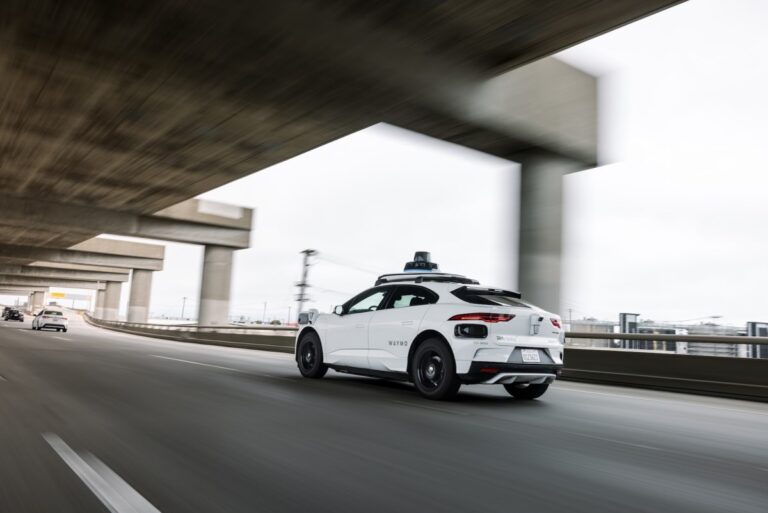
More than three-fourths of that funding will reportedly come from a source close to home — Alphabet, where Waymo is a subsidiary. (The company was incubated as part of Alphabet’s “moonshot factory” X.)
The FT reports that Waymo is bringing on new investors Dragoneer, Sequoia Capital, and DST Global, with existing backers Andreessen Horowitz and Abu Dhabi sovereign fund Mubadala also participating in the round.
When contacted by TechCrunch, a company spokesperson said in a statement, “While we don’t comment on private financial matters, our trajectory is clear: with over 20 million trips completed, we are focused on the safety-led operational excellence and technological leadership required to meet the vast demand for autonomous mobility.”
The company is expanding quickly, including with a recent launch in Miami. That growth has come with some challenges, including a number of robotaxis that stalled at traffic lights during a widespread San Francisco blackout.
Waymo has more than $350 million in annual recurring revenue, according to the FT. The company last raised a $5.6 billion Series C in 2024, valuing the company at $45 billion.
NVIDIA CEO Jensen Huang told reporters that the company will “invest a great deal of money” in OpenAI’s latest funding round, according to Bloomberg, after The Wall Street Journal on Friday reported that the two companies were rethinking a previous $100 billion deal that hasn’t “progressed beyond the early stages” of negotiations. Speaking to reporters in Taipei this weekend, Huang reportedly said it could be “the largest investment we’ve ever made.”
NVIDIA and OpenAI jointly announced in September that NVIDIA would be investing up to $100 billion in OpenAI to build 10 gigawatts of AI data centers. The companies said then that they were targeting the second half of 2026 for the first phase of the project to go online. Citing sources familiar with the discussions, The Wall Street Journal reported that Huang has highlighted privately that the agreement was nonbinding and has criticized OpenAI’s business approach as lacking discipline.
According to Bloomberg, however, Huang called the report’s claims “nonsense,” and told reporters on Saturday, “I believe in OpenAI. The work that they do is incredible. They’re one of the most consequential companies of our time.” But, Bloomberg reports, he said NVIDIA’s investment in this funding round wouldn’t come near $100 billion.
Google AI Plus came to the US this week as the more affordable alternative to AI Pro, which previously served as the entry point to premium Gemini features. Whether it’s worth downgrading comes down to how you use Google AI.
AI Plus vs. AI Pro features
Gemini app
Those looking to experience the absolute best that Google has to offer should use Gemini 3 Pro. For everyone else with prompts of a more informational nature, Thinking (Gemini 3 Flash) should absolutely suffice. The 90 Thinking prompts per day provided by AI Plus is likely enough to serve as your default model. You’d use the 30 Pro prompts as necessary, with that limit not high enough to set Pro as your default, while there’s “limited” access to Deep Research using Pro.
Then there’s the context size:
Free: 32,000 tokens or about 50 pages of text
AI Plus: 128,000 tokens
AI Pro: 1 million tokens or 1,500 pages
AI Plus offers a meaningful upgrade over free, but you’re not getting the full Gemini experience without AI Pro.
Advertisement – scroll for more content
Being able to use Nano Banana Pro for 50 images per day should be enough even for semi-professional contexts, while the 1,000 Nano Banana images is good.
As an AI Pro user, here’s what you will miss out on when downgrading to AI Plus:
Should you downgrade?
Who is AI Pro for?
AI Ultra is for those who want to live on the bleeding edge as demonstrated by Project Genie this week, as well as Project Mariner and the Gemini Agent before that.
AI Pro is still for early adopters, but specifically prosumers. Compared to Ultra, the $19.99 plan gives you Gemini features that have a greater likelihood of benefiting your life. AI Overviews in Gmail search are a great example of that, while AI Inbox might grow on you. Auto browse in Chrome might also fall into that category over time.
Who is AI Plus for?
AI Plus is for those who find Gemini — specifically the app — valuable in their life, but aren’t really early adopters of other AI.
AI Pro lets you experience the future of Gemini integrations in Google apps, but the current list of what you lose by going to AI Plus — except for upgraded Gmail AI search — is not a must-have. The onus is on Google to prove that these new features add value, and I’m sure later updates and improvements will get them there.
As such, I’m surprised that Gemini app features like Personal Intelligence and Scheduled actions are available with AI Plus. These are key features that work to advance Gemini’s goal of being a personal, proactive, and powerful assistant.
If you’re downgrading, go to the Google One 2 TB plan that is $9.99 per month versus $7.99 for AI Plus. This preserves AI Pro’s storage and other benefits like 10% at the Google Store.
FTC: We use income earning auto affiliate links.More.
A federal judge in Minnesota on Saturday said she would decline to immediately halt the Trump administration’s Operation Metro Surge in Minnesota.
The ruling by U.S. District Judge Katherine Menendez instead means that the White House can continue its hardline immigration enforcement effort while a broader legal challenge continues, NBC News and other outlets reported.
Menendez denied Minnesota officials’ request for a temporary restraining order, even as she acknowledged what she described as “profound and even heartbreaking” consequences for communities in the state, the network reported.
But “those are not the only harms to be considered,” Menendez ruled, pointing to a ruling by the Eighth Circuit Court of Appeals that “recently reiterated that entry or injunction barring the federal government from enforcing federal law imposes significant harm on the government.”
Lawyers for Minnesota argued that the Republican administration’s enforcement effort violated the 10th Amendment to the U.S. Constitution by illegally pressuring the state to change or abandon its immigration policies and bend to the will of the federal government, according to NBC News.
Menendez said those arguments, at least at this point, were not strong enough to justify blocking the operation, the network reported.
Minnesota was plunged into unrest, and the rest of the nation followed with protests, after federal agents shot and killed ICU nurse Alex Pretti on the streets of Minneapolis last week.
The news came as protesters gathered on Boston Common on Saturday for an “ICE Out Everywhere” rally that organizers insisted would be nonviolent, and one day after a national day of action that saw a similar rally on Copley Place in the city.
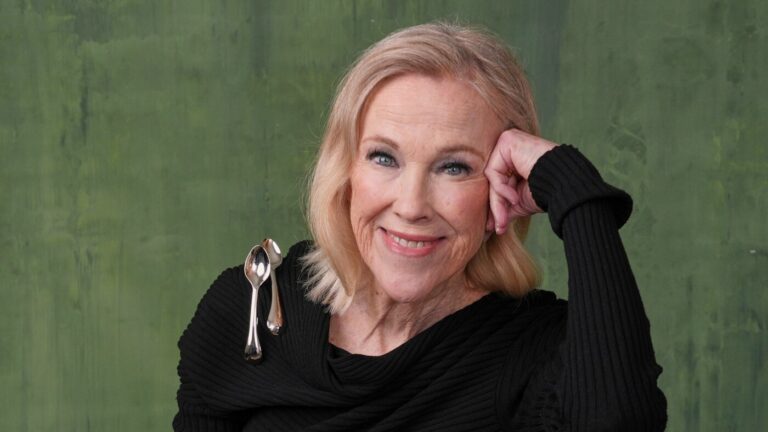
Canadian born actress and screenwriter Catherine O’Hara has died at her home in Los Angeles, following a brief illness, according to her agent and manager. She was 71 years old and was known for absurdist comedy. She enjoyed a six-decade career in TV and film playing sometimes over-the-top, but endearing characters.
In one of her most memorable roles, O’Hara played the freaked-out mom of rascally son Kevin (Macaulay Culkin) in two Home Alone movies. Later, she portrayed the self-centered, whiny matriarch in the riches-to-rags TV sitcom Schitt’s Creek— a role for which she earned an Emmy and a Golden Globe Award in 2020.
Catherine O’Hara and Macaulay Culkin in Home Alone.
Don Smetzer/20th Century Fox/Alamy
hide caption
toggle caption
Don Smetzer/20th Century Fox/Alamy
She won her first Emmy in 1982 for writing on the Canadian sketch comedy TV series Second City Television, or SCTV. She cofounded the show, and created characters such as the show biz has-been Lola Heatherton.
“I loved playing cocky untalented people,” O’Hara told Fresh Air in 1992.
On SCTV in the ’70s and ’80s, she teamed up with another Canadian comic actor, Eugene Levy. Together, they — along with an ensemble — went on to perform in a string of films by director Christopher Guest.
O’Hara and Levy were dog trainers in the Guest’s mockumentary Best in Show. And they were a folk-singing duo in A Mighty Wind.
Moira Rose (Catherine O’Hara) and Johnny Rose (Eugene Levy) in Schitt’s Creek.
Pop TV
hide caption
toggle caption
Pop TV
O’Hara and Levy also acted together as the parents in Schitt’s Creek. More recently, O’Hara acted with another Canadian, Seth Rogen, in his Apple TV comedy The Studio. She played a movie studio head who gets pushed aside.
O’Hara was born and raised in Toronto, and got her start as an understudy for Gilda Radner at the Second City Theater in Toronto.
She reportedly met her production designer husband Bo Welch on the set of the 1988 movie Beetlejuice. She reprised her spiritually possessed role in the 2024 sequel Beetlejuice Beetlejuice.
Since the news of her death some of her famous friends have paid tribute to her online.
“Mama. I thought we had time. I wanted more. I wanted to sit in a chair next to you. I heard you. But I had so much more to say. I love you. I’ll see you later.” wrote actor Macaulay Culkin.
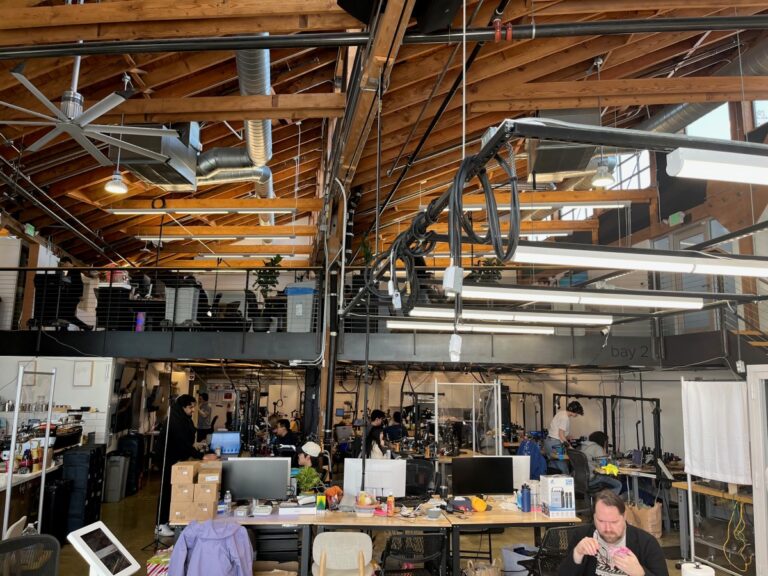
From the street, the only indication I’ve found Physical Intelligence’s headquarters in San Francisco is a pi symbol that’s a slightly different color than the rest of the door. When I walk in, I’m immediately confronted with activity. There’s no reception desk, no gleaming logo in fluorescent lights.
Inside, the space is a giant concrete box made slightly less austere by a haphazard sprawl of long blonde-wood tables. Some are clearly meant for lunch, dotted with Girl Scout cookie boxes, jars of Vegemite (someone here is Australian), and small wire baskets stuffed with one too many condiments. The rest of the tables tell a different story entirely. Many more of them are laden with monitors, spare robotics parts, tangles of black wire, and fully assembled robotic arms in various states of attempting to master the mundane.
During my visit, one arm is folding a pair of black pants, or trying to. It’s not going well. Another is attempting to turn a shirt inside out with the kind of determination that suggests it will eventually succeed, just not today. A third — this one seems to have found its calling — is quickly peeling a zucchini, after which it is supposed to deposit the shavings into a separate container. The shavings are going well, at least.
“Think of it like ChatGPT, but for robots,” Sergey Levine tells me, gesturing toward the motorized ballet unfolding across the room. Levine, an associate professor at UC Berkeley and one of Physical Intelligence’s co-founders, has the amiable, bespectacled demeanor of someone who has spent considerable time explaining complex concepts to people who don’t immediately grasp them.
Image Credits:Connie Loizos for TechCrunch
What I’m watching, he explains, is the testing phase of a continuous loop: data gets collected on robot stations here and at other locations — warehouses, homes, wherever the team can set up shop — and that data trains general-purpose robotic foundation models. When researchers train a new model, it comes back to stations like these for evaluation. The pants-folder is someone’s experiment. So is the shirt-turner. The zucchini-peeler might be testing whether the model can generalize across different vegetables, learning the fundamental motions of peeling well enough to handle an apple or a potato it’s never encountered.
The company also operates a test kitchen in this building and elsewhere using off-the-shelf hardware to expose the robots to different environments and challenges. There’s a sophisticated espresso machine nearby, and I assume it’s for the staff until Levine clarifies that no, it’s there for the robots to learn. Any foamed lattes are data, not a perk for the dozens of engineers on the scene who are mostly peering into their computers or hovering over their mechanized experiments.
The hardware itself is deliberately unglamorous. These arms sell for about $3,500, and that’s with what Levine describes as “an enormous markup” from the vendor. If they manufactured them in-house, the material cost would drop below $1,000. A few years ago, he says, a roboticist would have been shocked these things could do anything at all. But that’s the point — good intelligence compensates for bad hardware.
Techcrunch event
Boston, MA | June 23, 2026
As Levine excuses himself, I’m approached by Lachy Groom, moving through the space with the purposefulness of someone who has half a dozen things happening at once. At 31, Groom still has the fresh-faced quality of Silicon Valley’s boy wonder, a designation he earned early, having sold his first company nine months after starting it at age 13 in his native Australia (this explains the Vegemite).
When I first approached him earlier, as he welcomed a small gaggle of sweatshirt-wearing visitors into the building, his response to my request for time with him was immediate: “Absolutely not, I’ve got meetings.” Now he has 10 minutes, maybe.
Groom found what he was looking for when he started following the academic work coming out of the labs of Levine and Chelsea Finn, a former Berkeley PhD student of Levine’s who now runs her own lab at Stanford focused on robotic learning. Their names kept appearing in everything interesting happening in robotics. When he heard rumors they might be starting something, he tracked down Karol Hausman, a Google DeepMind researcher who also taught at Stanford and who Groom had learned was involved. “It was just one of those meetings where you walk out and it’s like, This is it.”
Groom never intended to become a full-time investor, he tells me, even though some might wonder why not given his track record. After leaving Stripe, where he was an early employee, he spent roughly five years as an angel investor, making early bets on companies like Figma, Notion, Ramp, and Lattice while searching for the right company to start or join himself. His first robotics investment, Standard Bots, came in 2021 and reintroduced him to a field he’d loved as a kid building Lego Mindstorms. As he jokes, he was “on vacation much more as an investor.” But investing was just a way to stay active and meet people, not the endgame. “I was looking for five years for the company to go start post-Stripe,” he says. “Good ideas at a good time with a good team — [that’s] extremely rare. It’s all execution, but you can execute like hell on a bad idea, and it’s still a bad idea.”
Image Credits:Connie Loizos for TechCrunch
The two-year-old company has now raised over $1 billion, and when I ask about its runway, he’s quick to clarify it doesn’t actually burn that much. Most of its spending goes toward compute. A moment later, he acknowledges that under the right terms, with the right partners, he’d raise more. “There’s no limit to how much money we can really put to work,” he says. “There’s always more compute you can throw at the problem.”
What makes this arrangement particularly unusual is what Groom doesn’t give his backers: a timeline for turning Physical Intelligence into a money-making endeavor. “I don’t give investors answers on commercialization,” he says of backers that include Khosla Ventures, Sequoia Capital, and Thrive Capital among others that have valued the company at $5.6 billion. “That’s sort of a weird thing, that people tolerate that.” But tolerate it they do, and they may not always, which is why it behooves the company to be well-capitalized now.
So what’s the strategy, if not commercialization? Quan Vuong, another co-founder who came from Google DeepMind, explains that it revolves around cross-embodiment learning and diverse data sources. If someone builds a new hardware platform tomorrow, they won’t need to start data collection from scratch — they can transfer all the knowledge the model already has. “The marginal cost of onboarding autonomy to a new robot platform, whatever that platform might be, it’s just a lot lower,” he says.
The company is already working with a small number of companies in different verticals — logistics, grocery, a chocolate maker across the street — to test whether their systems are good enough for real-world automation. Vuong claims that in some cases, they already are. With their “any platform, any task” approach, the surface area for success is large enough to start checking off tasks that are ready for automation today.
Physical Intelligence isn’t alone in chasing this vision. The race to build general-purpose robotic intelligence — the foundation on which more specialized applications can be built, much like the LLM models that captivated the world three years ago — is heating up. Pittsburgh-based Skild AI, founded in 2023, just this month raised $1.4 billion at a $14 billion valuation and is taking a notably different approach. While Physical Intelligence remains focused on pure research, Skild AI has already deployed its “omni-bodied” Skild Brain commercially, saying it generated $30 million in revenue in just a few months last year across security, warehouses, and manufacturing.
Image Credits:Connie Loizos for TechCrunch
Skild has even taken public shots at competitors, arguing on its blog that most “robotics foundation models” are just vision-language models “in disguise” that lack “true physical common sense” because they rely too heavily on internet-scale pretraining rather than physics-based simulation and real robotics data.
It’s a pretty sharp philosophical divide. Skild AI is betting that commercial deployment creates a data flywheel that improves the model with each real-world use case. Physical Intelligence is betting that resisting the pull of near-term commercialization will enable it to produce superior general intelligence. Who’s “more right” will take years to resolve.
In the meantime, Physical Intelligence operates with what Groom describes as unusual clarity. “It’s such a pure company. A researcher has a need, we go and collect data to support that need — or new hardware or whatever it is — and then we do it. It’s not externally driven.” The company had a 5- to 10-year roadmap of what the team thought would be possible. By month 18, they’d blown through it, he says.
The company has about 80 employees and plans to grow, though Groom says hopefully “as slowly as possible.” What’s the most challenging, he says, is hardware. “Hardware is just really hard. Everything we do is so much harder than a software company.” Hardware breaks. It arrives slowly, delaying tests. Safety considerations complicate everything.
As Groom springs up to rush to his next commitment, I’m left watching the robots continue their practice. The pants are still not quite folded. The shirt remains stubbornly right-side-out. The zucchini shavings are piling up nicely.
There are obvious questions, including my own, about whether anyone actually wants a robot in their kitchen peeling vegetables, about safety, about dogs going crazy at mechanical intruders in their homes, about whether all of the time and money being invested here solves big enough problems or creates new ones. Meanwhile, outsiders question the company’s progress, whether its vision is achievable, and if betting on general intelligence rather than specific applications makes sense.
If Groom has any doubts, he doesn’t show it. He’s working with people who’ve been working on this problem for decades and who believe the timing is finally right, which is all he needs to know.
Besides, Silicon Valley has been backing people like Groom and giving them a lot of rope since the beginning of the industry, knowing there’s a good chance that even without a clear path to commercialization, even without a timeline, even without certainty about what the market will look like when they get there, they’ll figure it out. It doesn’t always work out. But when it does, it tends to justify a lot of the times it didn’t.
America’s once-promising EV transition may have taken a U-turn, but at least some in Hollywood are trying to do their part. Rivian partnered with Grey’s Anatomy to make a custom electric ambulance for the long-running series.
The ambulance is a modified version of Rivian’s Commercial Van. The custom “vanbulance” serves a dual purpose: preventing on-set exhaust fumes (which could harm the cast and crew) and integrating a green storyline. “As an added benefit, the elimination of engine noise brought a welcome quiet while cameras were rolling,” Rivan wrote in a blog post.
Among other modifications, it has rear double doors instead of a roll-up one. (Rivian)
The vehicle includes some production-specific touches. Its walls and roof panels are removable, allowing cameras to reach angles required for interior shots. In addition, Rivian replaced the standard van’s rear roll-up door with double doors while adding a side entry to the cargo area. The company also added custom lighting and an exterior wrap reading “Seattle Emergency Response Services.”
The team consulted with the Huntington Beach Fire Department and the Los Angeles Fire Department to inform the interior layout. “Their feedback was invaluable to understand how first responders actually use their vehicles,” Rivian wrote.
At least Hollywood’s fictional worlds are transitioning to electric. (Rivian)
The Hollywood Reporternotes that the electric ambulance debuted in the November 13, 2025, episode of Grey’s Anatomy. However, it was featured more prominently in Thursday’s episode — hence Rivian choosing this week to highlight it.
Welcome to episode 86 of Pixelated, a podcast by 9to5Google. This week, Abner, Damien, and Will dig into an early Android 17 build that includes one big visual change: blurred backdrops. Is this a sign of things to come for Google’s vision of its OS, or a more minor system-level tweak? The crew also checks out a leaked look at Android’s new — albeit really familiar — desktop mode, Google’s more affordable AI Plus plan for Gemini, and Chrome’s agentic AI tools.
Subscribe
Timecodes
00:00 – Intro and Android 17 first look
18:30 – Android’s new desktop UI leaks
31:02 – Google’s new AI Plus plan
39:21 – Chrome’s “auto browse” agentic AI tools
54:56 – Forums announcement and wrap-up
Hosts
Read more
Listen to more 9to5 Podcasts
Feedback?
Drop us a line at gtips@9to5g.com, leave a comment on the post, or reach out to our producer.
FTC: We use income earning auto affiliate links.More.
Are you tonight’s lucky winner? Grab your tickets and check your numbers. The Mega Millions lottery jackpot continues to rise after someone won the $90 million prize on December 2.
Here are the winning numbers in Friday’s drawing:
11-34-36-43-63; Mega Ball: 13
The estimated jackpot for the drawing is $303 million. The cash option is about $136.7 million. If no one wins, the jackpot climbs higher for the next drawing.
According to the game’s official website, the odds of winning the jackpot are 1 in 302,575,350.
Players pick six numbers from two separate pools of numbers — five different numbers from 1 to 70 and one number from 1 to 25 — or select Easy Pick. A player wins the jackpot by matching all six winning numbers in a drawing.
Jackpot winners may choose whether to receive 30 annual payments, each five percent higher than the last, or a lump-sum payment.
Mega Millions drawings are Tuesdays and Fridays and are offered in 45 states, Washington D.C. and the U.S. Virgin Islands. Tickets cost $5 each.
If you purchase a product or register for an account through a link on our site, we may receive compensation. By using this site, you consent to our User Agreement and agree that your clicks, interactions, and personal information may be collected, recorded, and/or stored by us and social media and other third-party partners in accordance with our Privacy Policy.
Moira Rose (Catherine O’Hara) appears in a commercial for Herb Ertlinger’s fruit wine in an episode of Schitt’s Creek.
Screenshot by NPR
hide caption
toggle caption
Screenshot by NPR
Catherine O’Hara played the best drunk.
Over the course of her career, she had occasion to tackle many different women under the influence; every time, she delivered a performance that married the close observational skills of a skilled actress to the comic chops of a funny-in-her-bones comedian born to make people laugh.
Consider Marilyn Hack, the mediocre actress she played in the 2006 Christopher Guest comedy For Your Consideration. Marilyn, along with the rest of the cast of the film-within-a-film Home for Purim, becomes convinced that they will be nominated for Oscars. When she isn’t, a news crew shows up at her house, catching her as she’s throwing out the two bottles of liquor she’s clearly just guzzled, first thing in the morning.
I suppose you could call what ensues an episode of cringe comedy, as the Marilyn we meet in that scene is a pitiable figure – she’s plastered, slurring through a face immobilized by plastic surgery, whip-sawing between self-pity and bitter invective against the French actress who, in her view, stole her nomination. “Ooh-la-la,” she murmurs, cradling the reporter’s face. She turns away and starts toward her house, but then turns back, filled with the drunken confidence that she has more to say. She doesn’t, of course, she just repeats herself for the fifth time (“I diddun get NOM-inayded!”) and then invites the crew into her home. (“I have so much food! C’mon!”).
It’s funny, sure – but it’s also achingly human, and fragile, and real. That was the sweet spot she found in every role.
In her early years on the sketch comedy series SCTV, she played many, many women whose sense of self was clearly inflated by alcohol, drugs or both. Most notably, Lola Heatherton, the thinly-veiled sendup of Vegas lounge singers who was so perpetually strung out that she could barely make it through any of the glitzy variety shows she headlined.
In “Lola Heatherton: Bouncing Back to You,” she teeters on her stiletto heels as she dismisses her dancers and announces that instead of “New York, New York,” she’ll instead perform a number of her own. “YOU KNOW THE ONE!” she screams at her off-screen director, “THE ONE YOUUUU DIDN’T WANT ME TO DOOOO!”
The mood shifts. The lights go mellow. A plaintive piano plunks out a sad melody. “No-one caaaaaaaaaaaares,” she warbles, lower lip quivering in lieu of actual vibrato, “No-one daaaaaaaaaares to/You’re all just paaaaaaaa-ra-siiiiiiiiiiiiiites!”
Once again – overweening self-pity matched seamlessly to old-school showbiz: Glycerine tears and glitter.
In the 1996 Christopher Guest film Waiting for Guffman, she plays Sheila Albertson, a much more dialed-in (and dialed-down) performance. Sheila isn’t a famous actress or a Vegas chanteuse, she’s just a small-town travel agent who comes alive whenever she and her husband (Fred Ward, again) get to trod the boards in local dinner theater productions.
There’s lots of great, quotable lines in Guffman – me, I’m partial to “I’ll always have a place at the Dairy Queen,” – but anyone who’s seen the film remembers one thing: The scene in the Chinese restaurant, where Sheila proceeds to get wildly drunk.
It’s remarkable how sharply observed, how narrowly focused O’Hara is in this scene. Sheila is drunk, and she’s at that precise stage of drunkenness where her sentences begin but then, abruptly, devolve into a series of confusing gestures. The stage where she’s lagging a good 30 seconds behind the table conversation, where her resentment towards her husband starts burbling out of her in whispered asides that absolutely everyone can hear.
That scene lasts all of 1 minute and 18 seconds, but in that time, Sheila becomes the film’s most important, most indelible character.
Of course, the role for which she won the most acclaim is that of hilariously affected actress Moira Rose, in Schitt’s Creek. Moira enjoyed her wine, but she rarely got drunk – and when she did, she did so iconically.
Not right away, of course – she starts out in control, smooth, on rails. “In the lee of a picturesque ridge,” she intones, “lies a small, unpretentious winery. One that pampers its fruit … like its own babies.”
So far so good – but wait. At this point, Moira reaches for a glass of wine next to her.
… Grapples for it, really.
Then: “HI!” she chirps. “I’m Moira Rose.” (That chipper, high-pitched “HI!” is a tip-off, too. That’s not the Moira we know.) “And if you love fruit wine as much as IIII do, you’ll appreciate the crassmunship” (crassmunship?) “of a local vintner …”
And now it’s clear: Moira’s blotto, but her actorly training is allowing her to keep it together … you know, mostly.
Catherine O’Hara observed people closely, and was particularly adept at playing characters as their facades crumbled (Marilyn Hack, Lola Heatherton) or, more often, as they were just developing hairline fractures (Sheila Albertson, Moira Rose). She played drunk people for comic effect, but that effect wasn’t so much broad and slapstick (or, not simply broad and slapstick) as it was focused and – to many of us – chillingly, hilariously familiar. She found the tics, the mannerisms, the specific beats of drunkenness and used them to open us up to her characters’ frailty, their vulnerability, their humanity.
That openness, that incisiveness, that ruthlessly perceptive humor – that’s why we loved her.