Boston is expected to see overnight lows in the single digits through Thursday night and temperatures as low as -1 degrees Friday night, according to the National Weather Service. But the air outside will feel even colder due to the sub-zero wind chills the city is predicted to experience overnight through Friday night.
Wind chills in Boston in the early morning on Wednesday could dip as low as -5 degrees, according to the weather service. Towards the end of the week, an arctic air mass is predicted to reach Massachusetts and drive wind chill values down to around -10 degrees overnight on Thursday and Friday.
“As this stretch of winter weather continues with freezing temperatures and strong wind gusts through the rest of the week, we urge everyone to stay vigilant and take all necessary precautions,” Boston Mayor Michelle Wu said in the advisory.
City officials requested that residents check on older adults, people with disabilities and people experiencing homelessness in their communities during this bout of frigid weather. They ask that anyone who sees someone staying in a car or any shelter other than a home call 911 to ensure they are provided housing.
While the forecast does not reach the threshold for declaring a cold emergency, Boston Centers for Youth & Families (BCYF) and all branches of the Boston Public Library will be open to the public as warming spaces during their normal hours, city officials said. A full list of BCYF locations, the library’s branch locations, and hours for all facilities can be found on the city’s website.
City officials also advised residents and property owners to clear snow before it freezes to prevent dangerous conditions for cars and pedestrians. They asked that drivers remove parking space savers by Wednesday evening, as trash collectors will begin picking them up Thursday morning.
“While streets have been cleared, snow plowing and roadway treatment operations are ongoing as residents work to clear snow around their parked vehicles and property,” the advisory reads.
Snow removal operations in Boston are set to begin Tuesday night at 10 p.m. and continue through 5 a.m. Wednesday, according to the advisory.
Google on Tuesday announced its more affordable Google AI Plus plan is now available in all markets where its AI plans are available. This includes the U.S, where it will cost $7.99 per month.
The expansion brings the lower-cost plan to 35 new countries and territories, after earlier launches in dozens of global markets, which began with Indonesia last September.
The plan includes access to Gemini 3 Pro and Nano Banana Pro in the Gemini app, Flow’s AI filmmaking tools, research and writing assistance in NotebookLM, and more. It also offers 200GB of storage and the ability to share your plan benefits with up to five other family members.
Existing Google One Premium 2TB subscribers will automatically gain access to all Google AI Plus plan benefits over the next few days, the company says.
Initially focused on emerging markets, the Google AI Plus plan is designed as the first step beyond free access to Gemini and other AI tools for those who either don’t need or can’t afford to subscribe to the more expensive Google AI Pro plan, which is typically priced at $20 per month.
While the Plus plan’s price point varies by region, its $8 per month price point could introduce a new, more casual audience to Google’s AI technology here in the United States. Elsewhere, the plan tends to cost less than $5 per month. For instance, users in India pay ₹399 ($4.44 USD) per month.
When it first debuted, Google explained that the plan was designed to bring access to Gemini, Veo, and other creative AI tools to emerging markets at a more affordable price point. It’s also designed to compete with OpenAI’s ChatGPT Go plan, which is $8 per month in the U.S., or less in some emerging markets. These plans are meant to attract the large online population of users who could become regular AI customers over time, giving companies a boost in their AI adoption numbers.
Techcrunch event
San Francisco | October 13-15, 2026
For the time being, subscribers can take 50% off for the first two months of their subscription in a promotional offering, Google says.
The European Commission has started proceedings to ensure Google complies with the Digital Markets Act (DMA) in certain ways. Specifically, the European Union’s executive arm has told Google to grant third-party AI services the same level of access to Android that Gemini has. “The aim is to ensure that third-party providers have an equal opportunity to innovate and compete in the rapidly evolving AI landscape on smart mobile devices,” the Commission said in a statement.
The company will also have to hand over “anonymized ranking, query, click and view data held by Google Search” to rival search engines. The Commission says this will help competing companies to optimize their services and offer more viable alternatives to Google Search.
“Today’s proceedings under the Digital Markets Act will provide guidance to Google to ensure that third-party online search engines and AI providers enjoy the same access to search data and Android operating system as Google’s own services, like Google Search or Gemini,” said Henna Virkkunen, the Commission’s executive vice-president for tech sovereignty, security and democracy. “Our goal is to keep the AI market open, unlock competition on the merits and promote innovation, to the benefit of consumers and businesses.”
The Commission plans to wrap up these proceedings in the next six months, effectively handing Google a deadline to make all of this happen. If the company doesn’t do so to the Commission’s satisfaction, it may face a formal investigation and penalties down the line. The Commission can impose fines of up to 10 percent of a company’s global annual revenue for a DMA violation.
Google was already in hot water with the EU for allegedly favoring its own services — such as travel, finance and shopping — over those from rivals and stopping Google Play app developers from easily directing consumers to alternative, cheaper ways to pay for digital goods and services. The bloc charged Google with DMA violations related to those issues last March.
In November, the EU opened an investigation into Google’s alleged demotion of commercial content on news websites in search results. The following month, it commenced a probe into Google’s AI practices, including whether the company used online publishers’ material for AI Overviews and AI Mode without “appropriate compensation” or offering the ability to opt out.
We’ve been hearing warnings for months about incoming price hikes for practically every consumer electronic on the market due, in large part, to an ongoing RAM shortage. Today, we’re getting our first hints on what’s to come from Samsung throughout 2026.
As spotted by SammyGuru, the Galaxy A07 5G is heading to India after a recent launch in Thailand, and retailer leaks point to a pretty massive generational shift on pricing. Samsung apparently plans to charge customers in India ₹15,999 (~$175) for the base 4GB model, while the upgraded 6GB variant of the A07 5G will run for ₹17,999 (~$200). Both models, regardless of their RAM allotment, include 128GB of storage. Those prices might look fairly standard for Samsung’s low-end Galaxy A-series, but compared to the A07 5G’s direct predecessor, it’s actually a surprisingly large price hike — and without much to show for it.
In comparison, last year’s Galaxy A06 5G sold in similar configurations (one with 4GB of memory, one with 6GB, both with 128GB of storage) while priced significantly cheaper: ₹11,499 and ₹12,999, respectively, or about $125 and $140. That’s a significant price increase for a pair of devices that, as is Samsung’s MO, are practically interchangeable.
While it’s not always possible to notice big changes in a specs sheet, I’m certainly struggling to see where else the price hike could’ve originated from outside of our current RAM shortage. The Galaxy A06 5G and A07 5G have identical chipsets, camera specs, IP ratings, and more. Outside of a swap to a 120Hz 720p panel (improved from 90Hz on last year’s model) and a larger 6,000mAh battery that accounts for the thicker, heavier chassis, these two devices appear effectively unchanged.
Advertisement – scroll for more content
The Galaxy A07 5G won’t find its way stateside, so it’s a little difficult to read exactly what this could mean for both this year’s more premium A-series entries and, of course, the upcoming Galaxy S26 lineup. Analysts had predicted that low-end devices would be hit the most by rising memory costs — there’s just less headroom to find ways to adjust pricing. Either way, this is your first sign that upgrading to a new phone in 2026 won’t be as easy as it’s been in previous years, so you might want to start making plans before it’s too late.
FTC: We use income earning auto affiliate links.More.
If Mexico is on your 2026 travel itinerary, your “booked and busy” plans could hit a federal wall before you even leave the pier.
A massive crackdown on e-cigarettes is turning routine port stops into legal nightmares for unsuspecting cruisers.
According to Come Cruise With Me, cruisers heading to the popular destinations of Cozumel, Costa Maya and Cabo San Lucas are forbidden from bringing vape pens to the port.
Cruise News Today reports Mexico’s new law prohibits the import, sale and marketing of vapes and e-cigarettes.
The law went into effect Jan. 17.
The illegal importation trap
The danger lies in the definition of “importation.”
Several publications, including Mexico News Daily, confirm that even if a device is for personal use, bringing a vape ashore at popular ports is now legally classified as smuggling a prohibited item under a constitutional reform of Mexico’s General Health Law.
For cruisers, this means you should leave your vape on board.
If you bring a vape ashore during a port stop, you risk being charged with illegal importation — even if it’s for personal use.
Penalties include confiscation, fines up to $12,500 or even jail time.
According to reports from Cruise News Today, customs officials are utilizing high-resolution X-ray scanners to detect lithium batteries and pods.
As demand grows for privacy-first enterprise AI that can run without sending sensitive data to the cloud, SpotDraft has raised $8 million from Qualcomm Ventures in a strategic Series B extension to scale its on-device contract review tech for regulated legal workflows.
The extension values SpotDraft at around $380 million, the startup told TechCrunch, nearly double its $190 million post-money valuation following its $56 million Series B in February of last year.
Across regulated sectors, enterprises have moved quickly to test generative AI, but privacy, security, and data governance concerns continue to slow adoption for sensitive workflows — especially in legal, where contracts can include privileged information, intellectual property, pricing, and deal terms. Industry research has consistently flagged data security and privacy as key barriers to wider GenAI deployment in professional services, pushing vendors like SpotDraft to pursue architectures that keep core contract intelligence on the user’s device rather than routing it through the cloud.
At Qualcomm’s Snapdragon Summit 2025, SpotDraft demonstrated its VerifAI workflow running end-to-end on Snapdragon X Elite-powered laptops, executing contract review and edits offline while keeping the document on the local machine. SpotDraft said internet connectivity is still required for login, licensing, and collaboration features, but contract review, risk scoring, and redlining can run fully offline without sending documents to the cloud.
SpotDraft sees legal as an early proving ground for on-device enterprise AI, arguing that sensitive contracts often cannot be routed through external cloud models due to privacy, security, and compliance constraints.
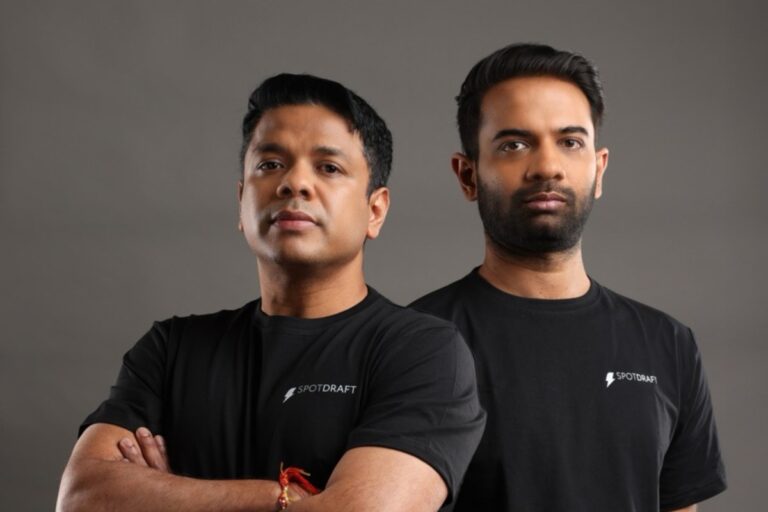
“The future of how enterprise AI is going to be — right now, there’s got to be AI that is close to the document, which is privacy critical, latency sensitive, [and] legally sensitive, and those are the things that will move on device,” said Shashank Bijapur (pictured above, left), co-founder and CEO of SpotDraft, in an interview.
SpotDraft says VerifAI’s on-device capability extends beyond simply generating summaries, with the tool designed to apply playbooks and recommendations directly inside Microsoft Word, the way legal teams already work. “VerifAI will compare a contract against your guidelines, your playbooks, your prior policies,” said Madhav Bhagat (pictured above, right), co-founder and CTO of SpotDraft.
Techcrunch event
San Francisco | October 13-15, 2026
SpotDraft’s VerifAI works in Microsoft WordImage Credits:SpotDraft
Bijapur told TechCrunch that the demand for on-device AI is emerging most clearly in tightly regulated sectors, including defense and pharma, where internal security reviews and data residency requirements can slow or block the use of cloud-based AI tools for sensitive documents.
On-device models have rapidly closed the gap with cloud-based systems, both in output quality and response times, Bhagat said. “Now we’ve come to a place where, in terms of eval, we are seeing as little as 5% difference between the frontier models, and some of these fine-tuned on device models,” he said, adding that speeds on newer chips are now “one-third of what we get in the cloud.”
Since its launch in 2017, SpotDraft said it has reached more than 700 customers, up from around 400 in February last year, and counts Apollo.io, Panasonic, Zeplin, and Whatfix among its users. The company said adoption is rising on its contract lifecycle management platform, with customers now processing over 1 million contracts annually, contract volumes growing 173% year-over-year, and nearly 50,000 monthly active users. It also expects 100% year-over-year revenue growth in 2026, after growing 169% in 2024 and posting a similar growth rate in 2025, though it did not share specific revenue figures.
SpotDraft plans to use the new capital to deepen its product and AI capabilities and expand its enterprise presence across the Americas, the EMEA region (Europe, Middle East, and Africa), and India, Bijapur said, adding that Qualcomm’s involvement extends beyond financing into joint development and go-to-market efforts for on-device deployments. The startup’s on-device workflow is currently available to a limited set of customers, and the founders expect it to expand more broadly as compatible AI PC hardware becomes more widely available.
“SpotDraft’s ability to deploy their proprietary models securely on-device using Snapdragon platforms represents a meaningful advancement for a privacy-critical industry,” said Quinn Li, senior vice president, Qualcomm Technologies, and global head of Qualcomm Ventures.
Bengaluru- and New York-based SpotDraft said it has a team of 300-plus employees, including 15–20 in the U.S., where COO Akshay Verma is based, and four to five in the UK, with the rest of the workforce in Bengaluru.
To date, the startup has raised $92 million, including the latest Qualcomm Ventures investment. Its earlier investors include Vertex Growth Singapore, Trident Growth Partners, Xeed VC, Arkam Ventures, and Prosus Ventures.
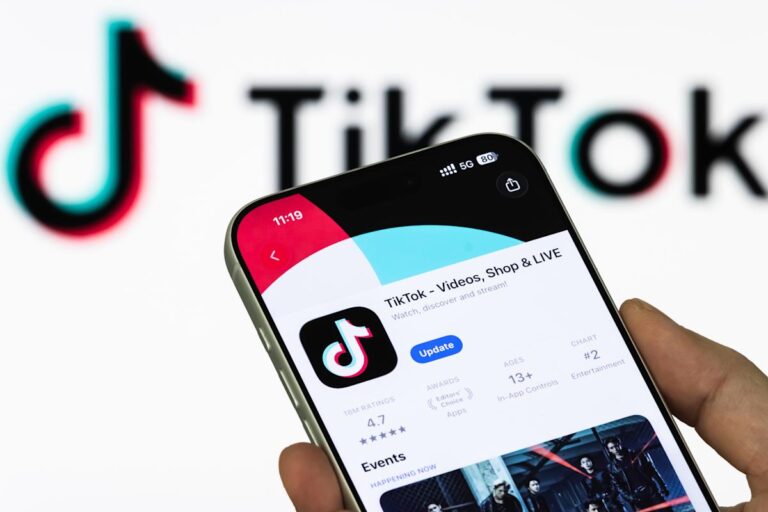
If your TikTok feed has felt a little off lately, it’s not just you. TikTok says is still working to fix its service in the US following a power outage at one of its data centers that’s caused “multiple bugs” in the app. TikTok users have reported problems logging in and uploading videos, as well as strange behavior from the “for you” algorithm. Creators have also noticed that new uploads are seemingly getting o views or likes and that in-app earnings have disappeared.
“Since yesterday we’ve been working to restore our services following a power outage at a U.S. data center impacting TikTok and other apps we operate,” the company wrote in a statement Monday. “We’re working with our data center partner to stabilize our service. We’re sorry for this disruption and hope to resolve it soon.”
In a subsequent update several hours later, the company said that the power outage had caused a “cascading systems failure” that is still affecting the app and leading to “multiple bugs,” including those affecting view counts and load times. “Creators may temporarily see ‘0’ views or likes on videos, and your earnings may look like they’re missing,” the company wrote in an update on X. “This is a display error caused by server timeouts; your actual data and engagement are safe.”
The statement didn’t directly address reported issues with the app’s recommendation algorithm. Since Sunday, users have reported seeing a wave of generic videos flood their feeds, which are typically hyper-personalized. Other users have reported seeing the same few videos repeated over and over again.
The issues come just days after TikTok finalized a deal to spin off its US business into a separate entity largely controlled by US investors. That timing hasn’t gone unnoticed by users, many of whom are already suspicious of the company pushing a terms of service and privacy policy in the hours after the deal was finalized. The problems affecting the app’s recommendation algorithm have also raised questions about TikTok USDS Joint Venture’s plans to “retrain” TikTok’s central feature.
Update, January 26, 2026, 4:18PM PT: This post has been updated to include additional information from TikTok about the outage and bugs affecting users.
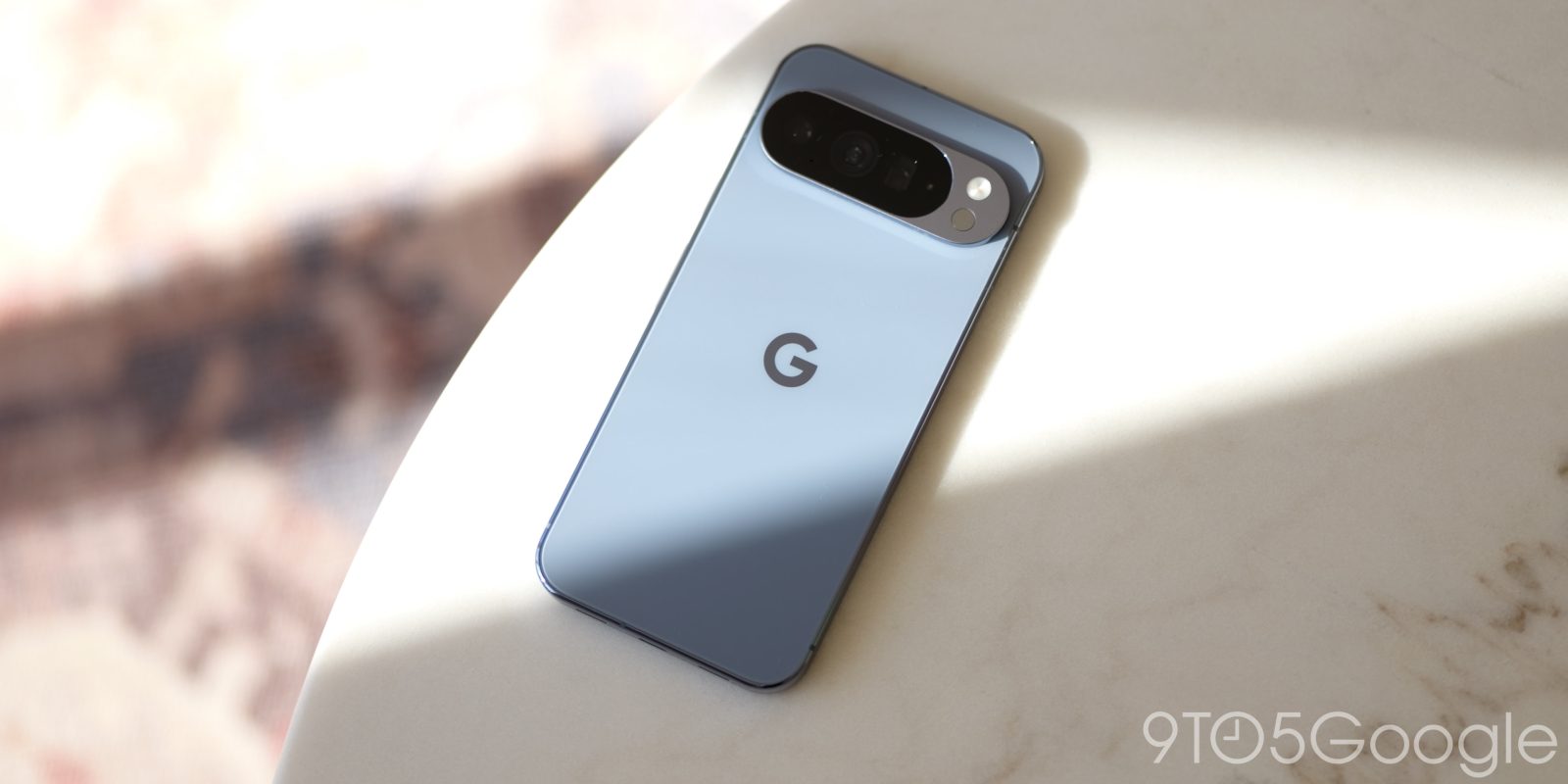
A number of Google Pixel owners have reported over the past few days that, following the latest update, their devices are running into issues with Wi-Fi and Bluetooth connectivity.
The January 2026 update for Google Pixel devices was released last week and, at first, everything appeared to be business as usual. But, as the update has rolled out more widely, a couple of strange issues have popped up. For many Pixel owners, Bluetooth and Wi-Fi are acting up across various different devices.
Trending threadson Google’sforums as well as several Reddit threads document issues with the January update, with some users noticing that Wi-Fi is suddenly not working on their Pixel and unable to even search for networks, while other users report Bluetooth refuses to turn on. There are also some isolated reports of the camera not working properly.
The issue doesn’t seem to be affecting everyone, but it’s far from a limited issue as we’re seeing a considerable number of user reports over the past few days from devices including Pixel 8 Pro, Pixel 10, Pixel 10 Pro XL, and others.
Advertisement – scroll for more content
There seems to be no obvious fix at the moment, and Google has yet to publicly acknowledge the problem outside of telling users to contact support for assistance. Users report that troubleshooting steps such as a reboot, network reset, and booting into safe mode do not appear to fix the problem. One user claims that the issue even persisted after a factory reset, but that re-installing the latest public build solved the issue on their device. Notably, Wi-Fi and Bluetooth issues do appear to have been happening in isolated incidents in the previous Pixel update, but it seems more widespread in this latest software build.
Are you having trouble with Wi-Fi or Bluetooth on a Pixel device? Let us know what issues you’re facing and what software build you’re using in the comments below or on the new 9to5Google forums.
The estimated Powerball jackpot is $30 million. The lump sum payment before taxes would be about $13.6 million.
The Double Play is a feature that gives players in select locations another chance to match their Powerball numbers in a separate drawing. The Double Play drawing is held following the regular drawing and has a top cash prize of $10 million.
Powerball is held in 45 states, the District of Columbia, the U.S. Virgin Islands and Puerto Rico. The Double Play add-on feature is available for purchase in 13 lottery jurisdictions, including Pennsylvania and Michigan.
A $2 ticket gives you a one in 292.2 million chance at joining the hall of Powerball jackpot champions.
The drawings are held at 10:59 p.m. Eastern, Mondays, Wednesdays and Saturdays. The deadline to purchase tickets is 9:45 p.m.
If you purchase a product or register for an account through a link on our site, we may receive compensation. By using this site, you consent to our User Agreement and agree that your clicks, interactions, and personal information may be collected, recorded, and/or stored by us and social media and other third-party partners in accordance with our Privacy Policy.