Home Blog Page 65

NTSB will investigate why Waymo’s robotaxis are illegally passing school buses

0


Waymo has caught the attention of the National Transportation Safety Board as the federal agency launched an official investigation into the company for its robotaxis improperly passing school buses in Austin, Texas. The NTSB said on X that it would “examine the interaction between Waymo vehicles and school buses stopped for loading and unloading students.”

The latest federal probe stems from a preliminary evaluation by the National Highway Traffic Safety Administration that looked into how Waymo reacts to stopped school buses in the Texas city. That report led to Waymo’s voluntary software recall in December. However, the school district said in a memo that the robotaxis were seen repeating the same offense days after the software update.

As for the NTSB investigation, an agency spokesperson told the Austin American-Statesman that its “investigators will travel to Austin to gather information on a series of incidents in which the automated vehicles failed to stop for loading or unloading students.” According to an NTSB spokesperson, a preliminary report will be out within 30 days, but the final report will take anywhere between 12 and 24 months.

In response, Mauricio Peña, chief safety officer for Waymo, said in a statement to multiple news outlets that “there have been no collisions in the events in question, and we are confident that our safety performance around school buses is superior to human drivers,” adding that the investigation will be “an opportunity to provide the NTSB with transparent insights into our safety-first approach.”


Source link

How to add Google Sans in Google Docs

0


Google open-sourced Google Sans and Google Sans Flex in December, and the fonts are now available for you to add in Google Docs. 

As part of the 2015 Google logo redesign, the company developed Product Sans. This led to Google Sans, a version optimized for first-party user interfaces and smaller text sizes found on Android phones.

Google Sans Flex arrived a few years after that to allow for more customization across weight, width, optical size, slant, grade, and roundedness.

Google open-sourced them to “bridge the visual gap between first-party and third-party apps.”

Advertisement – scroll for more content

The goal is a more unified experience across devices and platforms, creating clearer, more comfortable interfaces for users wherever they engage with technology.

As such, Google Sans, Google Sans Flex, and Google Sans Code — which is meant for code — can now be used in Google Docs, Sheets, and Slides, as well as the other Editors. To do so:

  1. Start a new document on the web (shortcut: docs.new)
  2. Open the font dropdown in the toolbar
  3. Select “More fonts” at the very top
  4. Search for “Google” 
  5. Select Google Sans, Google Sans Flex, and/or Google Sans Code 

Afterwards, they will appear in the dropdown menu and future documents.

Thanks tipster 

FTC: We use income earning auto affiliate links. More.


Source link

When will snow start? Mass. residents prepare for massive snowstorm

0


A massive snowstorm is set to blast Massachusetts in less than 24 hours, with some forecasts calling for up to two feet of snow by the time the storm subsides.

But when exactly should residents expect snowfall to begin?

According to the National Weather Service, anyone with errands to run on Sunday should plan on getting them done early.

Snow is expected as early as 9 a.m. in some areas, and the storm should be in full swing across the state by early afternoon, according to National Weather Service meteorologist Francis Tarasiewicz.

“For Western areas, that snow is going to arrive as early as 9 a.m. Sunday morning,” Tarasiewicz said. “Snow should be overspreading the entire state by 3 p.m.”

Boston should likely begin seeing snow by 11 a.m., while current forecasts predict Worcester and Cape Cod & the Islands will start seeing snow between 9 a.m. and 11 a.m.

Tarasiewicz said snow will be heaviest between 3 p.m. Sunday and 1 a.m. Monday, with snowfall rates reaching 1 to 2 inches per hour during that window. Snow will then continue into Monday afternoon before tapering off.

“We’ll have kind of annoying snow showers that you’ll see through much of the day Monday,” Tarasiewicz said. “We’ll have to wait until Monday afternoon for pretty much all of the snow to come to an end.”

Current forecasts call for 12 to 18 inches of snow across the state, with Boston and some coastal towns possibly in line to receive 18 to 24 inches.


Source link

Black mathematician Gladys West, who helped develop GPS, has died at age 95

0


Groundbreaking Black mathematician Gladys West, who helped develop the algorithms behind GPS, died Jan. 17 at age 95. NPR’s Scott Simon talks to Marvin Jackson, who co-wrote West’s memoir.


Source link

Legal AI giant Harvey acquires Hexus as competition heats up in legal tech

0


Harvey, the high-flying legal AI startup, has acquired Hexus — a two-year-old startup that builds tools for creating product demos, videos, and guides — as the company continues its aggressive expansion amid fierce competition in the legal tech market.

Hexus founder and CEO Sakshi Pratap, who previously held engineering roles at Walmart, Oracle, and Google, tells TechCrunch that her San Francisco-based team has already joined Harvey, while the startup’s India-based engineers will come onboard once Harvey establishes a Bangalore office. Pratap adds that she will lead an engineering team focused on accelerating Harvey’s offerings for in-house legal departments.

“What we’re bringing to Harvey is deep experience building enterprise AI tools in adjacent problem spaces,” Pratap said. “This expertise helps Harvey move faster in a market that’s becoming increasingly competitive.”

Hexus had raised $1.6 million from Pear VC, Liquid 2 Ventures, and angel investors before the acquisition. While Pratap declined to share deal terms, she said the structure was aligned around “long-term team incentives.”

The acquisition comes as Harvey looks to cement its position as one of AI’s hottest startups. The company confirmed last fall that it’s now valued at $8 billion after raising $160 million, bringing its funding across 2025 to $760 million. Andreessen Horowitz led that newest round, joined by new investors T. Rowe Price and WndrCo, alongside existing backers Sequoia Capital, Kleiner Perkins, Conviction, and angel investor Elad Gil. (It started the year with a $3 billion valuation after Sequoia led a $300 million Series D round in the company.)

Harvey now claims more than 1,000 clients across 60 countries, including a majority of the top 10 U.S. law firms.

When TechCrunch spoke with co-founder and CEO Winston Weinberg in November, he traced Harvey’s origin story back to a cold email sent to OpenAI CEO Sam Altman. Weinberg, then a first-year associate at O’Melveny & Myers, and co-founder Gabe Pereyra, a researcher who worked at Google DeepMind and Meta and was Weinberg’s roommate at the time, tested GPT-3 on landlord-tenant law questions from Reddit. When they showed the AI-generated answers to attorneys, two out of three said they’d send 86 of 100 responses with zero edits.

Techcrunch event

San Francisco
|
October 13-15, 2026

“That was the moment when we were like, wow, this entire industry can be transformed by this technology,” Weinberg said.

They emailed Altman on July 4, 2022, got on a call that same morning, and landed their first check from the OpenAI Startup Fund shortly after. According to Weinberg, the OpenAI Startup Fund remains Harvey’s second-largest investor.


Source link

Google Photos can now turn you into a meme

0


In Big Tech’s never-ending quest to increase AI adoption, Google has unveiled a meme generator. The new Google Photos feature, Me Meme, lets you create personalized memes starring a synthetic version of you.

Google describes Me Meme as “a simple way to explore with your photos and create content that’s ready to share with friends and family.” You can choose from a variety of templates or “upload your own funny picture” to use in their place.

The feature isn’t live for everyone yet, so you may not yet have access to it. (A Google representative told TechCrunch that the feature will roll out to Android and iOS users over the coming weeks.) But once it arrives, you can use it in the Google Photos app by tapping Create (at the bottom of the screen), then Me Meme. It will then ask you to choose a template and add a reference photo. There’s an option to regenerate it if you don’t like the result.

Google says Me Meme works best with well-lit, focused and front-facing portrait photos. “This feature is still experimental, so generated images may not perfectly match the original photo,” the company warns.


Source link

Google Keep for Wear OS can no longer set reminders after Tasks

0


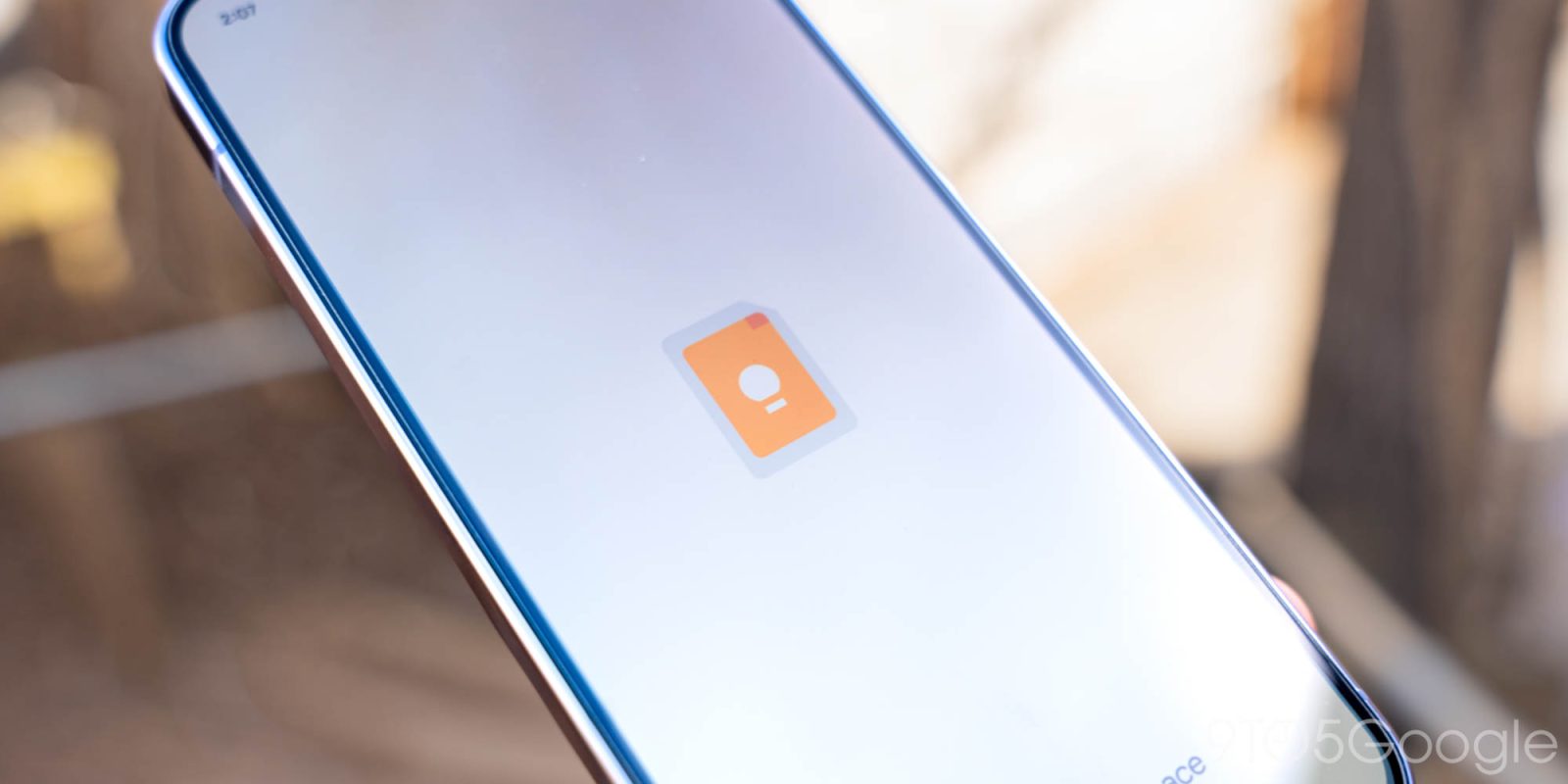
On Android, iOS, and the web, Google Keep’s Tasks migration is fairly straightforward save for the loss of location reminders. However, Google Keep for Wear OS loses the ability to create reminders entirely.

Previously, scrolling to the bottom of a note or list would let you add a reminder. The bell icon no longer appears alongside pin and archive, with those buttons adjusting accordingly. 

Old vs. new

Notes that have Tasks will still be badged with the icon on the main feed, but there’s a small bug. Upon opening the note, it takes the assigned day and date quite a while to actually load. 

Advertisement – scroll for more content

It makes no sense for Google to remove the ability to set Tasks from the Wear OS app if it remains on mobile. Zooming out, people want the ability to add deadlines to notes. 

Google presumably wants you to use Gemini and the Tasks integration to set reminders going forward. That functionality works well, but making a fairly common interaction voice-only is not ideal. 

If Google is permanently removing the functionality from Keep for Wear OS, the Google Calendar app should be updated to let you create reminders (and events). More broadly, the app desperately needs more functionality than just a lone agenda view. It should at least have a month view for you to browse.

Additionally, the Tasks Tile is far too basic. You should not be limited to items that have an assigned date. Everything should be viewable from your wrist, with a standalone Google Tasks Wear OS app going a long way.

FTC: We use income earning auto affiliate links. More.


Source link

Mega Millions numbers: Are you the lucky winner of Friday’s $266 million jackpot?

0


Are you tonight’s lucky winner? Grab your tickets and check your numbers. The Mega Millions lottery jackpot continues to rise after someone won the $90 million prize on December 2.

Here are the winning numbers in Friday’s drawing:

30-42-49-53-66; Mega Ball: 4

The estimated jackpot for the drawing is $266 million. The cash option is about $120.8 million. If no one wins, the jackpot climbs higher for the next drawing.

According to the game’s official website, the odds of winning the jackpot are 1 in 302,575,350.

Players pick six numbers from two separate pools of numbers — five different numbers from 1 to 70 and one number from 1 to 25 — or select Easy Pick. A player wins the jackpot by matching all six winning numbers in a drawing.

Jackpot winners may choose whether to receive 30 annual payments, each five percent higher than the last, or a lump-sum payment.

Mega Millions drawings are Tuesdays and Fridays and are offered in 45 states, Washington D.C. and the U.S. Virgin Islands. Tickets cost $5 each.

If you purchase a product or register for an account through a link on our site, we may receive compensation. By using this site, you consent to our User Agreement and agree that your clicks, interactions, and personal information may be collected, recorded, and/or stored by us and social media and other third-party partners in accordance with our Privacy Policy.


Source link

Who’s behind AMI Labs, Yann LeCun’s ‘world model’ startup

0


Yann LeCun’s new venture, AMI Labs, has drawn intense attention since the AI scientist left Meta to found it. This week, the startup finally confirmed what it’s building — and several key details have been hiding in plain sight.

On its newly launched website, the startup disclosed its plans to develop “world models” in order to “build intelligent systems that understand the real world.” The focus on world models was already hinted at by AMI’s name, which stands for Advanced Machine Intelligence, but it has now officially joined the ranks of the hottest AI research startups.

Building foundational models that bridge AI and the real world has become one of the field’s most exciting pursuits, attracting top scientists and deep-pocketed investors alike — product or no product.

World Labs, a direct rival founded by AI pioneer Fei-Fei Li, became a unicorn shortly after coming out of stealth. After launching its first product, Marble, which generates physically sound 3D worlds, World Labs is now reportedly in talks to raise fresh funding at a valuation of $5 billion. 

There’s little doubt that VCs would be equally eager to invest in LeCun, adding credibility to rumors that AMI Labs might be raising funding at a $3.5 billion valuation. According to Bloomberg, VCs in talks with the startup include Cathay Innovation, Greycroft, and Hiro Capital, to which LeCun is an advisor. Other potential investors reportedly include 20VC, Bpifrance, Daphni, and HV Capital. 

Regardless of who writes the checks, investors may want to note an important detail: As LeCun has made clear, he is AMI’s executive chairman, not its CEO. Instead, that role belongs to Alex LeBrun, previously co-founder and CEO at Nabla, a health AI startup with offices in Paris and New York.

LeBrun’s transition from Nabla to AMI is part of a partnership announced last December by Nabla, which develops AI assistants for clinical care and to which LeCun has been an advisor. In exchange for “privileged access” to AMI’s world models, Nabla’s board supported LeBrun’s shift from CEO to chief AI scientist and chairman, clearing the way for his new role.

Techcrunch event

San Francisco
|
October 13-15, 2026

As AMI Labs’ CEO, LeBrun will be surrounded by familiar faces. After Facebook acquired his previous startup, Wit.ai, the serial entrepreneur and AI engineer worked under LeCun’s leadership at Meta’s AI research laboratory, FAIR. According to reports, the duo will also be joined by Laurent Solly, who stepped down as Meta’s vice president for Europe last December.

The talent overlap between AMI and Meta likely won’t stop there. LeCun told the MIT Technology Review that his former employer could well be AMI’s first client. But he has also been publicly critical of some of Meta’s strategic choices made under Mark Zuckerberg’s direction. More broadly, the Review interprets AMI Labs as a contrarian bet against large language models (LLMs).

The limitations of LLMs that LeCun has pointed out include hallucinations, which are a serious concern in contexts like medicine, as LeBrun also knows firsthand. AMI Labs’ CEO told Forbes that a big reason he took the role was the prospect of applying its world models to healthcare. But the startup will also target other high-stakes applied fields.

“AMI Labs will advance AI research and develop applications where reliability, controllability, and safety really matter, especially for industrial process control, automation, wearable devices, robotics, healthcare, and beyond,” it wrote in its mission statement. “We share one belief: real intelligence does not start in language. It starts in the world.”

Unlike generative approaches, which LeCun and his team see as poorly suited for unpredictable data such as sensor input, the startup promises that its AI systems will not only understand the real world, but also have persistent memory, the ability to reason and plan, and be controllable and safe.

The startup plans to license its technology to industry partners for real-life applications, but says it also plans to contribute to building the future of AI “with the global academic research community via open publications and open source.” LeCun said he plans to keep his professor position at NYU, where he teaches one class per year and supervises PhD and postdoctoral students.

This means that the French-born researcher will remain based in New York, but he told the MIT Technology Review that AMI Labs “is going to be a global company [that’s] headquartered in Paris.” The news was welcomed by French President Emmanuel Macron, who expressed his pride that LeCun, who is also a Turing Prize winner, chose Paris. “We will do everything we can to ensure his success from France,” he said.

The startup will also have offices in Montreal, New York, and Singapore, but its decision to pick Paris for its headquarters will help consolidate Paris’ reputation as an AI hub, where it will join the ranks of H, Mistral AI and several international labs, including FAIR. It’s fitting, perhaps, that AMI is pronounced a-mee — like “ami” in French, which means “friend,” LeCun has pointed out.



Source link

Retro handheld maker Anbernic has a new gamepad with a screen and heart rate sensor

0


File this one under “Things that make you go, ‘Hmmm…'” Retro handheld maker Anbernic is launching a new controller with a screen. But unlike Nintendo’s Wii U controller, there’s no second-screen gaming capability here. Instead, the display is designed to “make customization intuitive and effortless.” Oh, and the controller also has a heart rate sensor. Because, hey, if you’re going weird, I say fully commit!

The Anbernic RG G01 has a 2.5-inch HD display that the company describes as an “HD smart screen.” The idea is to remap buttons, program macros and change other settings without requiring software on a connected device.

A person's hands holding a gamepad that has a screen on it. It shows their heart rate.

You, too, can monitor your heart rate while gaming. (Anbernic)

Meanwhile, Anbernic says the heart rate detection helps you “monitor your well-being during intense sessions.” I would hope that folks with heart conditions would use something other than a gamepad to monitor their pulse. And I don’t know why anyone else would be worried about that while gaming. (Too many Red Bulls?) Regardless, Anbernic seems to be leaning into the novelty / curiosity space here, so at least it fits the motif.

The RG G01 connects in three ways: Bluetooth 5.0, 2.4Ghz wireless and over a wire. It supports onboard calibration for the triggers, joystick and 6-axis gyroscope. There are four programmable buttons (including macro support) on the backside. The company promises a 1,000Hz polling rate in wired and wireless modes. The gamepad is compatible with PC, Switch, Android and iOS.

We don’t yet know when this glorious oddity will arrive, other than “coming soon.” We also don’t know how much it will cost. But you can watch the launch video below and see if it’s your type of strange.


Source link