Home Blog Page 74

Voice and data services down for many customers

0


Verizon’s network is experiencing technical issues that are impacting calls and wireless data. Verizon customers on X have reported seeing “SOS” rather than the traditional network bars on their smartphones, and even the network provider’s own status page struggled to load, likely due to the number of customers trying to access it.

Based on the experience of Verizon users on Engadget’s staff, the services that are impacted appear to be calls and wireless data. Text messages continue to be delivered normally, at least for some users. On DownDetector, reports of a Verizon outage started growing around 12PM ET and numbered in the hundreds of thousands at their peak.

DownDetector also shows spikes in outage reports on competing networks like AT&T and T-Mobile, but in terms of magnitude, they’re much smaller than the issue Verizon is facing. For example, Verizon peaked at 181,769 reports, while AT&T’s was just 1,769 reports. The difference between the two is great enough that those AT&T reports could be from people trying to contact Verizon customers and thinking that their personal network was the problem.

In a post on the cell provider’s news account on X, Verizon acknowledged the issues with its network. “We are aware of an issue impacting wireless voice and data services for some customers,” Verizon wrote. “Our engineers are engaged and are working to identify and solve the issue quickly. We understand how important reliable connectivity is and apologize for the inconvenience.”

Based on DownDetector’s map of outage reports, issues with Verizon’s network appear to be concentrated in major cities in the eastern United States. The majority of reports appear to be coming out of Boston, New York and Washington DC, though the map also shows growing hot spots in Chicago, San Francisco and Los Angeles.

At 2:14PM ET, Verizon shared on X that its engineering teams “remain fully deployed” to work on fixing the outage. The company didn’t share when the issue would resolved or how many of its customers are currently impacted. Reports on DownDetector have dropped since their peak at 12:43PM ET, but thousands of Verizon customers are still noticing issues with the service.

As of 3:09PM ET, Verizon has yet to share more information about the recovery of the company’s cell network. Some Verizon customers on X have noticed their cell service returning, but it’s not clear if this means the network’s technical issues have been fixed.

At 4:06PM ET, nearly two hours since the company’s last statement, at least one member of Engadget’s staff reports their service has been restored. The connectivity issues are still affecting Verizon customers, however. DownDetector received over 55,000 outage reports as recently as 3:47PM ET.

Verizon posted at 4:12PM ET that work continues on addressing the outage, but the issue hasn’t been completely fixed. According to the company, its team is “on the ground actively working to fix today’s service issue that is impacting some customers.”

As of 4:52PM ET, the Verizon’s network has been experiencing issues for around four hours, making today’s outage nearly as long as the last major outage the company had in 2024. Like that 2024 outage, Verizon has yet to share what exactly is causing the issues with its network. Without out an official update, it’s safe to assume the company is still working on a fix.

At 5:41PM ET, DownDetector latest tally still shows over 46,000 people reporting issues with Verizon’s network. Based on the platform’s map, the same cities are filing the bulk of the outage reports, though reporting appears more diffuse than before as news of the outage has spread across the country.

At 6:20PM ET, the situation was much the same. Tens of thousands of users (including Engadget editors) still don’t have proper service, and Verizon had not updated its customers since 4:12PM ET. There are intermittent reports of service coming back and then failing again but seemingly no true fix has been deployed.

Both T-Mobile and AT&T have confirmed that their own networks are unaffected by the issues facing their competitor. In a post on X, T-Mobile shared that its network is “operating normally and as expected.” Meanwhile, AT&T says that for any of its customers experiencing issues, “it’s not us…it’s the other guys.”

This is a developing story. Our team will make frequent updates as more news occurs…


Source link

Here’s everything new in Android 16 QPR3 Beta 2 [Gallery]

0


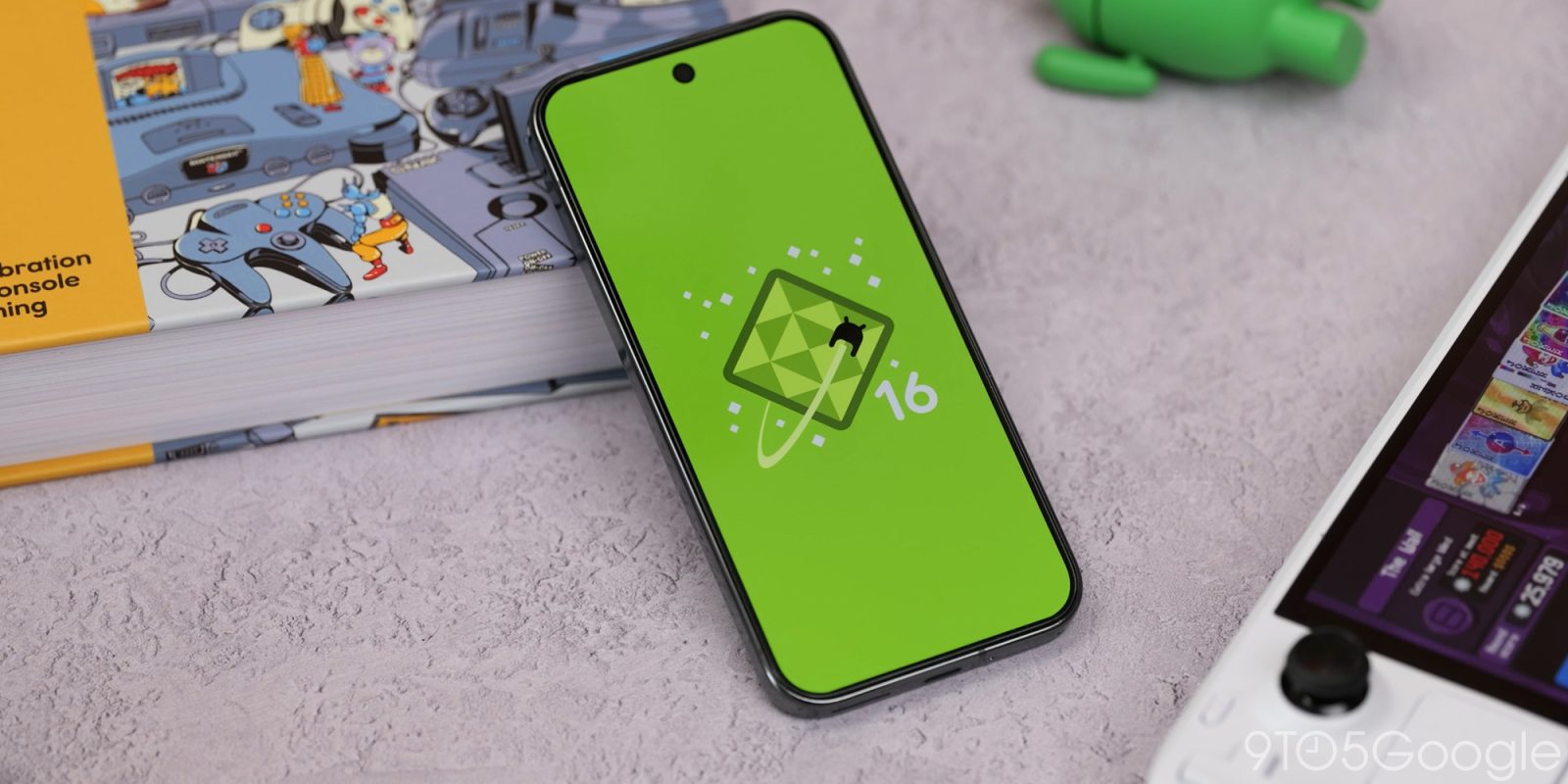
Android 16 QPR3 is shaping up to be a sizable release, and Beta 2 is now available for Google Pixel devices. This is a big update that “addresses a wide range of stability, performance, and usability issues.”

Over the coming hours, we’ll dive into all of Android 16 QPR3 Beta 2’s new features and every single change. (The newest updates will be at the top of this list. Be sure to check back often and tell us what you find in the comments below.) Android 16 QPR3 Beta 1 screenshots appear on the left and QPR3 Beta 2 on the right.

If you want to quickly install Android 16 QPR3 Beta 2 on your compatible Pixel 6, Pixel 6 Pro, Pixel 7, Pixel 7 Pro, Pixel 7a, Pixel Tablet, Pixel Fold, Pixel 8, Pixel 8 Pro, Pixel 8a, Pixel 9, Pixel 9 Pro, Pixel 9 Pro XL, Pixel 9 Pro Fold, Pixel 9a, Pixel 10, Pixel 10 Pro, Pixel 10 Pro XL, and Pixel 10 Pro Fold be sure to check out our step-by-step guide.

Updating…

Reorganized Settings > System

Bug fixes

Key fixes include resolving critical system crashes/device freezes, and correcting battery management issues where devices ignored charging limits or drained excessively. Significant improvements were made to connectivity, specifically addressing slow Wi-Fi speeds and missed calls. The update also resolves UI glitches in the notification shade and app drawer, ensuring smoother navigation and interaction.

  • An issue where the app drawer could become unresponsive when scrolling, which required updates to how UI elements were rendered.
  • Android Auto incorrectly logs extensive screen time, impacting battery life.
  • Graphical glitches and performance degradation when interacting with the notification shade in full-screen or PiP modes by improving display rendering.
  • An excessive battery drain issue occurring overnight by optimizing background process power consumption.
  • An issue where the battery charging limit was not being respected causing devices to charge to 100% instead of the set limit.
  • An issue where users experienced slow internet speeds on Wi-Fi due to a Wi-Fi connection bug.
  • A crash when accessing radio information settings.
  • Users experienced a noticeable delay and lack of feedback when switching audio outputs to speakerphone during calls; this was resolved by improving audio routing logic.
  • A display issue causing screen flickering when waking the device from Always-On Display by updating system webview.
  • An issue where certain apps, including Microsoft applications managed by Intune, were crashing on startup due to a compatibility problem with the Android system that has now been resolved.
  • An issue causing inconsistent or failed wireless charging and slow wired charging by improving the power management system.
  • System crashes that occurred when folding a foldable device with an app open by fixing an issue with activity lifecycle management during device state changes.

FTC: We use income earning auto affiliate links. More.


Source link

Man stabbed to death during fight at Cambridge apartment complex identified

0


A man who was stabbed to death during a fight at a Cambridge apartment complex last week has been identified as 37-year-old Antoine Johnson, according to the Middlesex County District Attorney’s Office.

South Boston resident Victor Rivas, 51, pleaded not guilty to assault and battery with a dangerous weapon resulting in serious bodily injury in connection with Johnson’s death during his arraignment in Cambridge District Court on Jan. 9, according to court records. The charge had not been upgraded as of Wednesday.

A 911 caller reported the stabbing at a Norfolk Street apartment complex shortly after 7:50 p.m. on Jan. 6, the district attorney’s office said previously. First responders found Johnson with serious stab wounds and took him to a nearby hospital where he later died.

The preliminary investigation indicates that Rivas and Johnson knew each other, the district attorney’s office said. Authorities believe Rivas stabbed Johnson during a fight. Rivas was also injured.

Rivas was released on bail on Monday under special conditions, including a curfew, according to court records.

No further information about the stabbing has been released.


Source link

Claudette Colvin, arrested in 1955 for refusing to give up bus seat, dies : NPR

0


Claudette Colvin sits for a portrait, Feb. 5, 2009, in New York.

Claudette Colvin sits for a portrait, Feb. 5, 2009, in New York.

Julie Jacobson/AP


hide caption

toggle caption

Julie Jacobson/AP

MONTGOMERY, Ala. — Claudette Colvin, whose 1955 arrest for refusing to give up her seat on a segregated Montgomery bus helped spark the modern civil rights movement, has died. She was 86.

Her death was announced Tuesday by the Claudette Colvin Legacy Foundation. Ashley D. Roseboro of the organization confirmed she died of natural causes in Texas.

Colvin, at age 15, was arrested nine months before Rosa Parks gained international fame for also refusing to give up her seat on a segregated bus.

Colvin had boarded the bus on March 2, 1955, on her way home from high school. The first rows were reserved for white passengers. Colvin sat in the rear with other Black passengers. When the white section became full, the bus driver ordered Black passengers to relinquish their seats to white passengers. Colvin refused.

“My mindset was on freedom,” Colvin said in 2021 of her refusal to give up her seat.

“So I was not going to move that day,” she said. “I told them that history had me glued to the seat.”

At the time of Colvin’s arrest, frustration was mounting over how Black people were treated on the city bus system. Another Black teenager, Mary Louise Smith, was arrested and fined that October for refusing to give up her seat to a white passenger.

It was the arrest of Parks, who was a local NAACP activist, on Dec. 1, 1955, that became the final catalyst for the yearlong Montgomery Bus Boycott. The boycott propelled the Rev. Martin Luther King Jr. into the national limelight and is considered the start of the modern civil rights movement.

Colvin was one of the four plaintiffs in the landmark lawsuit that outlawed racial segregation on Montgomery’s buses. Her death comes just over a month after Montgomery celebrated the 70th anniversary of the Bus Boycott.

Montgomery Mayor Steven Reed said Colvin’s action “helped lay the legal and moral foundation for the movement that would change America.”

Colvin was never as well-known as Parks, and Reed said her bravery “was too often overlooked.”

“Claudette Colvin’s life reminds us that movements are built not only by those whose names are most familiar, but by those whose courage comes early, quietly, and at great personal cost,” Reed said. “Her legacy challenges us to tell the full truth of our history and to honor every voice that helped bend the arc toward justice.”

Colvin in 2021 filed a petition to have her court record expunged. A judge granted the request.

“When I think about why I’m seeking to have my name cleared by the state, it is because I believe if that happened it would show the generation growing up now that progress is possible, and things do get better,” Colvin said at the time. “It will inspire them to make the world better.”


Source link

Tesla will only offer subscriptions for Full Self-Driving (Supervised) going forward

0


Tesla is removing the option to pay a one-time fee for its Full Self-Driving (Supervised) driver assistance software, CEO Elon Musk announced Wednesday. Going forward, the only way to access the feature will be through a monthly subscription.

The change represents a major break from how Tesla has sold access to the advanced driver assistance suite over the years. It’s also a decision that could have an impact on Tesla’s bottom line, Musk’s ability to unlock the full value of his $1 trillion pay package, and the company’s ever-swirling legal troubles. And it comes as many other global automakers are making progress on their own advanced driver assistance systems in hopes of competing with Tesla.

Tesla has sold access to its Full Self-Driving (FSD) software suite — which still does not make a car completely autonomous, and requires human supervision — at various price points over the years. The up-front price peaked at $15,000 in 2022, though more recently the company has been charging customers $8,000.

Tesla started offering access to the software via a $199-per-month subscription in 2021, and it dropped that price to just $99-per-month in 2024. Musk often encouraged customers to pay the up-front price, though, as he claimed the cost of FSD would increase dramatically as Tesla added to its capabilities.

But on Wednesday, Musk wrote in a post on X that Tesla will stop selling FSD outright starting on February 14. He didn’t say whether Tesla plans to change the pricing structure for the subscription.

Musk also did not offer an explanation for the change, but there are a few possible reasons. Musk and other Tesla executives have spoken publicly about how the adoption rate is lower than they had hoped. In October 2025, chief financial officer Vaibhav Taneja said only 12% of all Tesla customers have paid for FSD. Shifting to a subscription-only model with a lower up-front cost could help boost those numbers, especially during a first quarter that is expected to be rough for Tesla.

Boosting subscriptions would also get Musk closer to fulfilling one of the key “product goals” required for him to receive the full payout of his new $1 trillion pay package. The company has tasked him with, among other things, reaching “10 million active FSD subscriptions” (measured daily over a three-month period) before late 2035.

Techcrunch event

San Francisco
|
October 13-15, 2026

Moving to a subscription-only model could also be a legal hedge.

For a decade, Musk and Tesla promoted the idea that customers were buying cars that had all the hardware required to become autonomous vehicles, and that all the company needed to do was improve the software. But that was not true: Tesla has had to make a number of upgrades inside its vehicles in the years since, and Musk himself has said that a huge portion of existing owners (those with so-called “Hardware 3” vehicles) would likely need new hardware in their cars.

FSD was sold under this same promise. Customers who bought the software outright would eventually get a software update that would make their cars full autonomous. Tesla has still not fulfilled that promise.

Tesla currently faces all kinds of legal trouble related to these unmet promises. In December, a judge ruled that the company engaged in deceptive marketing around FSD (and its less-capable system, Autopilot) and ordered the California DMV (which brought the case) to suspend Tesla’s manufacturing and dealer licenses in the state for 30 days.

The DMV stayed the order and gave Tesla at least 60 days to comply by changing the names of those products, or ship software that delivers on the promise.

Tesla also faces a range of class action lawsuits over the claims it made about the future autonomous capabilities of its vehicles. By removing the option to buy FSD outright, the company could be capping any potential liabilities in those lawsuits should they proceed to trial.

Tesla’s FSD is still regarded as the most capable driver-assistance software on the market in the U.S. But the company’s success hasn’t stopped competitors from trying to develop their own systems. Rivian recently detailed its own efforts to release FSD-like driver assistance software, starting with a major geographic expansion to its hands-free driving feature. Ford and General Motors have their own hands-free systems. And the many rival automakers Tesla competes with in China have been developing their own solutions, with some even offering their driver assistance features as a standard option.


Source link

Bandcamp prohibits music made ‘wholly or in substantial part’ by AI

0


Bandcamp has addressed the AI slop problem vexing musicians and their fans of late. The company is banning any music or audio on its platform that is “wholly or in substantial part” made by generative AI, according to its blog. It also clarified that the use of AI tools to impersonate other artists or styles is “strictly prohibited” by policies already in place.

Any music suspected to be AI generated may be removed by the Bandcamp team and the company is giving users reporting tools to flag such content. “We believe that the human connection found through music is a vital part of our society and culture, and that music is much more than a product to be consumed,” the company wrote.

The announcement makes Bandcamp one of the first music platforms to offer a clear policy on the use of AI tech. AI-generated music (aka “slop”) has increasingly been invading music-streaming platforms, with Deezer for one recently saying that 50,000 AI-generated songs are uploaded to the app daily, or around 34 percent of its music.

Platforms have been relatively slow to act against this trend. Spotify has taken some baby steps on the matter, having recently promised to develop an industry standard for AI disclosure in music credits and debut an impersonation policy. For its part, Deezer said it remains the only streaming platform to sign a global statement on AI artist training signed by numerous actors and songwriters.

Bandcamp has a solid track record for artist support, having recently unveiled Bandcamp Fridays, a day that it gives 100 percent of streaming revenue to artists. That led to over $120 million going directly to musicians, and the company plans to continue that policy in 2026.


Source link

Samsung killed the stylus with Galaxy Fold, but it’s not gone forever

0


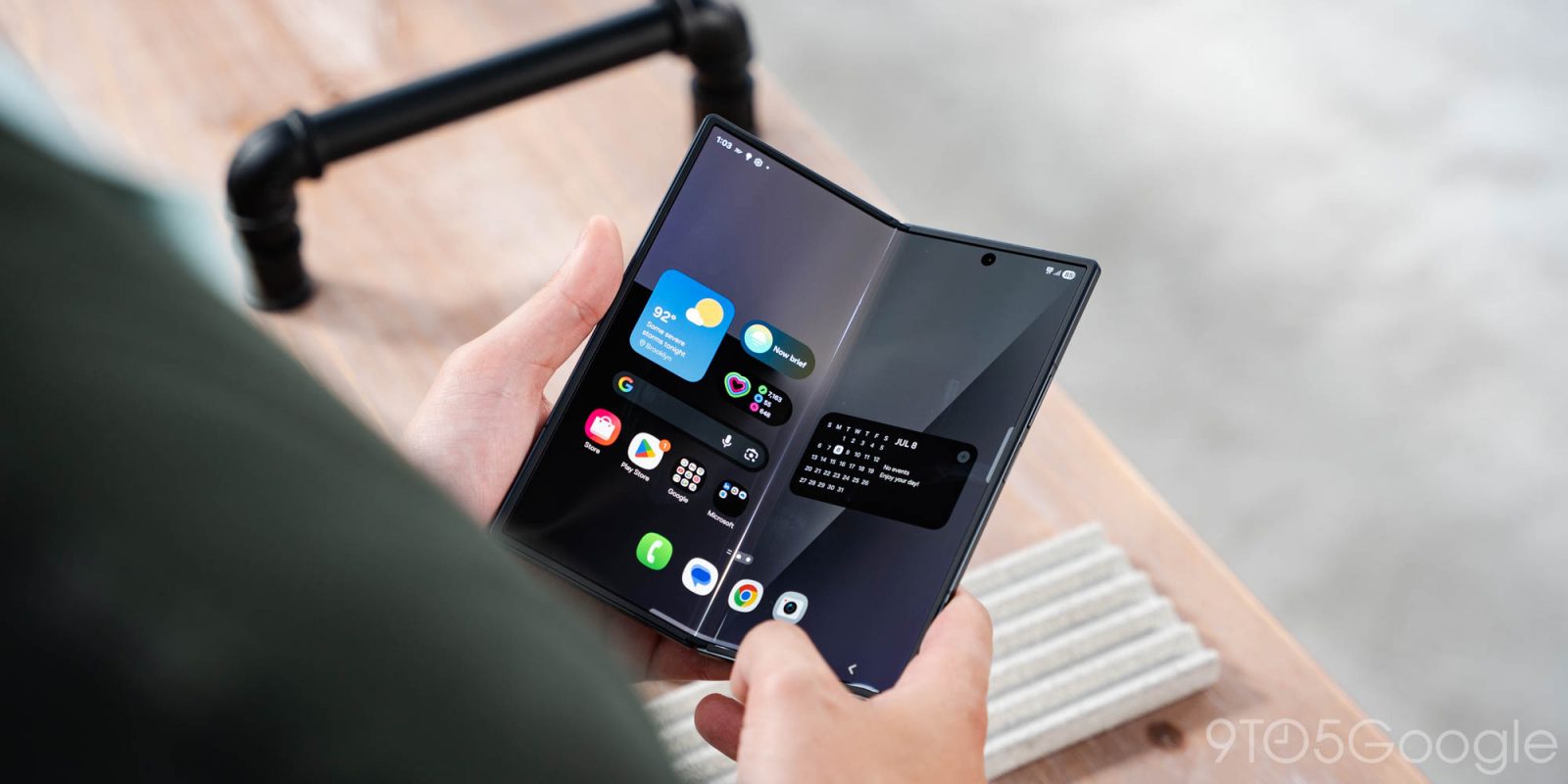
With the Galaxy Z Fold 7, Samsung killed off support for the S Pen stylus for the sake of thinness, and now everyone else is suddenly rushing to add the feature to upcoming foldables.

The S Pen is an iconic and beloved feature of Galaxy smartphones, and it only made sense for Samsung to add support in its book-style Galaxy Fold series. Support was first introduced in 2021’s Galaxy Z Fold 3, and carried on for the next few generations until it was removed in the Galaxy Z Fold 7 in 2025.

Samsung, directly calling the move a “trade-off,” offered two main reasons for removing it. First, the thin form factor of the Galaxy Z Fold 7 demanded that the needed hardware for an S Pen was removed. And, beyond that, the removal allowed Samsung to strengthen the ultra-thin glass used for the folding display.

While there’s a good chance the Galaxy Z Fold 8 revives stylus support of some kind, it’s also pretty clear that other foldable makers are rushing to fill in the gap left by Samsung.

Advertisement – scroll for more content

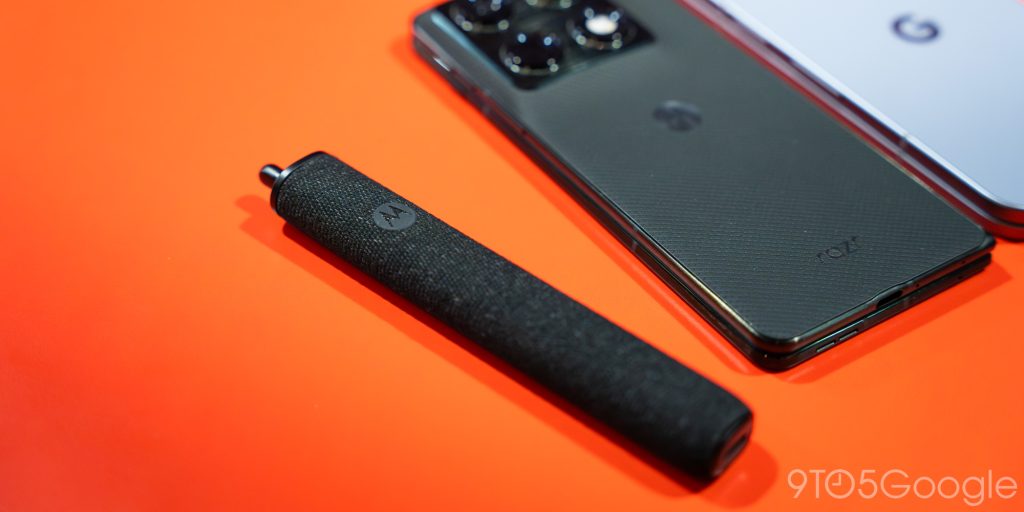
The first clear example of this is Motorola, which is offering support for a stylus on its upcoming Razr Fold. The Razr Fold was previewed at CES 2026 earlier this month, and stylus support is one of its biggest features. That’s in large part because, in the US, no other book-style foldable currently offers stylus support. Google has expressed no interest in adding stylus support to the Pixel Fold series.

Beyond that, Oppo is now said to be integrating “AI stylus support” into the upcoming Find N6 foldable according to leaker Digital Chat Station.

Stylus support isn’t new for Oppo’s foldables, as there’s been limited support in every Find N device since the Find N2, but the pen itself has been limited in sales to certain regions, on top of the Oppo Find N5 barely having hit the global stage. The OnePlus Open technically also supported Oppo’s stylus tech, but OnePlus never sold a stylus for it.

Honor, notably, also has a stylus for its foldables, but the company doesn’t advertise it very heavily at all.

While Samsung may have pulled the plug on a stylus for foldables, it’s very clear that in its absence, other companies are stepping up to fill the gap. In 2026, it sounds like we’ll have plenty of choices for book-style foldables with a stylus – will you get one?

More on Foldables:

Follow Ben: Twitter/XThreads, Bluesky, and Instagram

FTC: We use income earning auto affiliate links. More.


Source link

Mass. weather: Warm Wednesday could turn into overnight snow

0


Wednesday will bring unseasonably warm conditions across Massachusetts, with temperatures reaching the 50s in some areas.

Boston will see a high of 52 degrees in the afternoon, according to the National Weather Service, while Cape Cod & the Islands will hit 51 degrees and Worcester is forecast to reach 50 degrees. Springfield will see a high of 48 degrees, while Pittsfield will hover in the low 40s.

Cloudy weather throughout the day will turn into rain showers overnight for some parts of the state, with lower temps bringing potential for light snow. Boston has a 50-percent chance of showers starting after 8 p.m., and the National Weather Service has similar forecasts for Central and Western Massachusetts. The Berkshires have an 80-percent chance of precipitation.

Thursday will bring cooler temperatures in the 30s for much of the state, with a chance of light snow showers continuing into the morning for Central and Western Massachusetts. The National Weather Service doesn’t expect any accumulation.


Source link

Claudette Colvin, who helped spark the civil rights movement, has died

0


Claudette Colvin, whose refusal to give up her seat on a segregated Montgomery, Alabama, bus at age 15 helped spark the modern civil rights movement, has died. She was 86.


Source link

New York governor clears path for robotaxis everywhere, with one notable exception

0


New York Governor Kathy Hochul plans to introduce legislation that would effectively legalize robotaxis in the state — except for its most populous metropolis: New York City. 

Hochul, who made the comments Tuesday during her State of the State address, said the legislation would advance the next phase of the state’s autonomous vehicle pilot program. 

Details on the proposed legislation and when it might be released are thin. However, there are some hints contained within a document that outlines an array of proposals and promises Hochul made in her State of the State address. 

Among them is language to expand the state’s existing AV pilot program to allow for “the limited deployment of commercial for-hire autonomous passenger vehicles outside New York City.” 

The document goes on to say companies that want to operate robotaxi services commercially will have to submit applications that “demonstrate local support for AV deployment and adherence to the highest possible safety standards.”

It’s not clear what “limited deployment” or “highest possible safety standards” mean. Nor does the document outline how the state will track or make judgments on a company’s safety record, except that multiple agencies will be involved, including the Department of Motor Vehicles, Department of Transportation, and New York State Police.

The governor’s office told TechCrunch more will be shared in the governor’s executive budget proposal that is set to be released on January 20.

Techcrunch event

San Francisco
|
October 13-15, 2026

Still, the remarks were enough of an opening to make Alphabet-owned Waymo cheer. 

“Governor Hochul’s proposal to legalize fully autonomous vehicles is a transformative moment for New York’s transportation system,” Justin Kintz, Waymo’s head of global public policy, said in an emailed statement.

“With the Governor’s leadership, New York has the opportunity to pair its investments in slower speeds, better traffic enforcement, and first-in-the-nation congestion management strategies with Waymo’s demonstrably safe technology, creating a future where living in New York is safer, easier, and more accessible. We’re ready to work with leaders around the state to make this future a reality, and bring new infrastructure, career opportunities, and investment to the Empire State,” said Kintz.

Waymo and other companies have tried for years to enter New York state with limited success. Current New York state law mandates that drivers keep one hand on the wheel at all times. That poses a problem for robotaxi operators like Waymo since no human is behind the wheel — if there is a steering wheel at all.

The state’s AV pilot program has provided an exemption to that rule, theoretically allowing companies to develop and test autonomous vehicles in the state.

Still, there are significant hurdles, particularly in New York City. Last August, city regulators granted a permit to Waymo to test its robotaxis in the densely populated city. Under that permit, Waymo can deploy up to eight of its Jaguar I-Pace vehicles in Manhattan and Downtown Brooklyn with a human safety operator behind the wheel. A Waymo spokesperson told TechCrunch that the permit has been extended until March 31.

Even with the permit, Waymo can’t carry passengers or operate a commercial robotaxi service without getting separate licenses from the city’s Taxi and Limousine Commission.

And while legislation was introduced last year to create a framework for driverless operation, it has languished in the state Senate’s transportation committee. The governor’s proposal could help loosen that bottleneck.


Source link