The Federal Communications Commission announced Friday that it has given SpaceX approval to launch another 7,500 of its second generation Starlink satellites, for a total of 15,000 satellites worldwide.
Beyond simply allowing SpaceX to launch more satellites and expand its high-speed internet coverage, the FCC says its decision also means Starlink satellites can operate across five frequencies and to provide direct-to-cell connectivity outside the United States, along with supplemental coverage in the U.S.
Reuters reports that SpaceX had requested approval for an additional 15,000 satellites, but the FCC said it would “defer authorization of the remaining 14,988 proposed Gen2 Starlink satellites.”
SpaceX must launch 50% of the approved Starlink satellites by December 1, 2028, and the remaining 50% by December 2031, the FCC says.
X may soon provide more insight into how its algorithm works. On Saturday, Elon Musk posted on the platform to say that the company “will make the new X algorithm, including all code used to determine what organic and advertising posts are recommended to users, open source in 7 days.”
Elon Musk’s X post about open-sourcing the algorithm. (Screenshot/X)
Musk has been making promises of open-sourcing the algorithm since his takeover of Twitter, and in 2023 published the code for the site’s “For You” feed on GitHub. But the code wasn’t all that revealing, leaving out key details, according to analyses at the time. And it hasn’t been kept up to date. Of the making the new algorithm open source, Musk said in his post, “This will be repeated every 4 weeks, with comprehensive developer notes, to help you understand what changed.”
Like other Google apps, Messages for Android A/B tests many features. It can take the RCS/SMS client a rather long time to actually launch new functionality in stable. From various reports, Google announcements, and devices we’ve checked, this is the current state of Messages.
Update 1/9:
Still rolling out (beta)
These are Messages features that Google announced or have been spotted in the wild by beta users.
Instead of a toolbar, long-pressing on an image or message opens a floating menu, with Google partially centering what you’re viewing. The background gets blurred, while you feel haptic feedback.
When you long-press on an image, “Remix” in the bottom-left corner is smaller and no longer has the banana emoji. Similarly, the fullscreen viewer no longer overlays the button. Instead, it’s moved to the bottom of your screen.
Universal Profile 3.0 adds support for the Messaging Layer Security (MLS) protocol that makes possible cross-platform (Android-iOS) RCS that is end-to-end encrypted (E2EE).
You can check whether this is live for a conversation by long-pressing on a message and opening the redesigned Details page. The portion relevant to MLS is the “Encryption Protocol” section. Value “0” is the existing E2EE, while value “1” is the upcoming approach.
Read receipts redesign
Following the last redesign in early 2023, another revamp places read receipts in a circle at the bottom-right corner of message bubbles (and images).You swipe left to see all timestamps and the end-to-end encryption status, while you swipe right to reply/quote a message. This started rolling out in August 2024, with more people receiving it in November.
Ellipsis
Sending
Single check with ring
Sent
Double check with ring
Delivered
Double check solid circle
Read
In January 2025, Google tweaked the design to make the circular background white. In no longer matching the bubble color, the read receipts stand out a great deal more.
L-R: Current, redesign, latest
Recent launches (stable)
[New] Camera tweaks
Google has reduced the height of the camera viewfinder, though it now extends into the status bar. This container features rounded corners. The gallery now shows two full image rows, while some users might see part of the next row.
The Gemini FAB (floating action button) is now larger since Material 3 Expressive deprecated the small component size. It now matches the ‘Start chat” FAB when you’re scrolling.
Link preview redesign
Link previews, including YouTube, have a new design and taller cover image. The page title is larger with the domain accompanied by a favicon and more prominent background. However, Google has removed the article snippet in a downgrade to information density.
YouTube Picture-in-Picture is also back with this redesign, but you cannot open the full app immediately even if you disable Messages’ PiP system permission. You have to fullscreen the video in Messages and then tap the logo in the bottom-right corner.
Google will let you quickly “Leave group” when you’re invited by an unknown number, with options to Block and Report. This alert card above the text field explains how “Unknown sender added you” with the number prominently listed followed by how many people are in the conversation. Messages will note if anybody you know is part of the thread.
Image viewer redesign
After first testing in June, Google has rolled out a redesign of the Messages image viewer. This fullscreen interface features a blurred background and the ability to swipe left/right. Your photo or video is at the center, with a tap opening the full size. Various options are in the top-right corner, while the bottom row shows comments and frequent emojis.
Google has also updated how images are grouped together in the conversation view.
The estimated Powerball jackpot is $124 million. The lump sum payment before taxes would be about $56 million.
The Double Play is a feature that gives players in select locations another chance to match their Powerball numbers in a separate drawing. The Double Play drawing is held following the regular drawing and has a top cash prize of $10 million.
Powerball is held in 45 states, the District of Columbia, the U.S. Virgin Islands and Puerto Rico. The Double Play add-on feature is available for purchase in 13 lottery jurisdictions, including Pennsylvania and Michigan.
A $2 ticket gives you a one in 292.2 million chance at joining the hall of Powerball jackpot champions.
The drawings are held at 10:59 p.m. Eastern, Mondays, Wednesdays and Saturdays. The deadline to purchase tickets is 9:45 p.m.
If you purchase a product or register for an account through a link on our site, we may receive compensation. By using this site, you consent to our User Agreement and agree that your clicks, interactions, and personal information may be collected, recorded, and/or stored by us and social media and other third-party partners in accordance with our Privacy Policy.
Indonesian officials said Saturday that they are temporarily blocking access to xAI’s chatbot Grok.
This is one of the most aggressive moves so far from government officials responding to a flood of sexualized, AI-generated imagery — often depicting real women and minors, and sometimes showing assault and abuse — posted by Grok in response to requests from users on the social network X. (X and xAI are part of the same company.)
In a statement shared with the Guardian and other publications, Indonesia’s communications and digital minister Meutya Hafid said, “The government views the practice of non-consensual sexual deepfakes as a serious violation of human rights, dignity, and the security of citizens in the digital space.”
The ministry has also reportedly summoned X officials to discuss the issue.
Varied governmental responses over the past week include an order from India’s IT ministry for xAI to take action to prevent Grok from generating obscene content, as well as an order from the European Commission for the company to retain all documents related to Grok, which could be setting the stage for an investigation.
In the United Kingdom, the communications regulator Ofcom has said that it will “undertake a swift assessment to determine whether there are potential compliance issues that warrant investigation.” Prime Minister Keir Starmer said in an interview Ofcom has his “full support to take action.”
xAI initially responded by posting a seemingly first-person apology to the Grok account, acknowledging that a post “violated ethical standards and potentially US laws” around child sexual abuse material. It later restricted the AI image-generation feature to paying subscribers on X, though that restriction did not appear to affect the Grok app itself, which still allowed anyone to generate images.
In response to a post wondering why the U.K. government wasn’t taking action against other AI image generation tools, Musk wrote, “They want any excuse for censorship.”
Nintendo Switch 2 owners can forget about seeing Baldur’s Gate 3 in the Nintendo Store, at least as of now. In a Reddit AMA, Larian Studio’s CEO, Swen Vicke, said that the team would have loved to bring the title to Switch 2, but “it wasn’t our decision to make.”
As cryptic as that may sound, Vicke’s response hints that either Wizards of the Coast, which owns the Dungeons and Dragons IP that Baldur’s Gate 3 is set in, or Nintendo is behind the lack of a port. When it comes to Wizards of the Coast, rumors have circulated that the game studio and Wizards of the Coast may have a strained relationship. On the other hand, Larian Studios’ technical director, Bert van Semmertier, revealed in a response to another AMA question that the studio just released Divinity: Original Sin 2 on the Switch 2, adding that “we love the platform and we will certainly consider Switch 2 for the next Divinity game.”
There’s still a chance that Wizards of the Coast decides to hire another studio to pursue a port in the future, but there’s been no indication yet. As for why Larian Studios won’t be behind a potential Switch 2 port, the developer said in a statement last year that it would no longer develop any major content updates or expansions for Baldur’s Gate 3, nor work on a sequel.
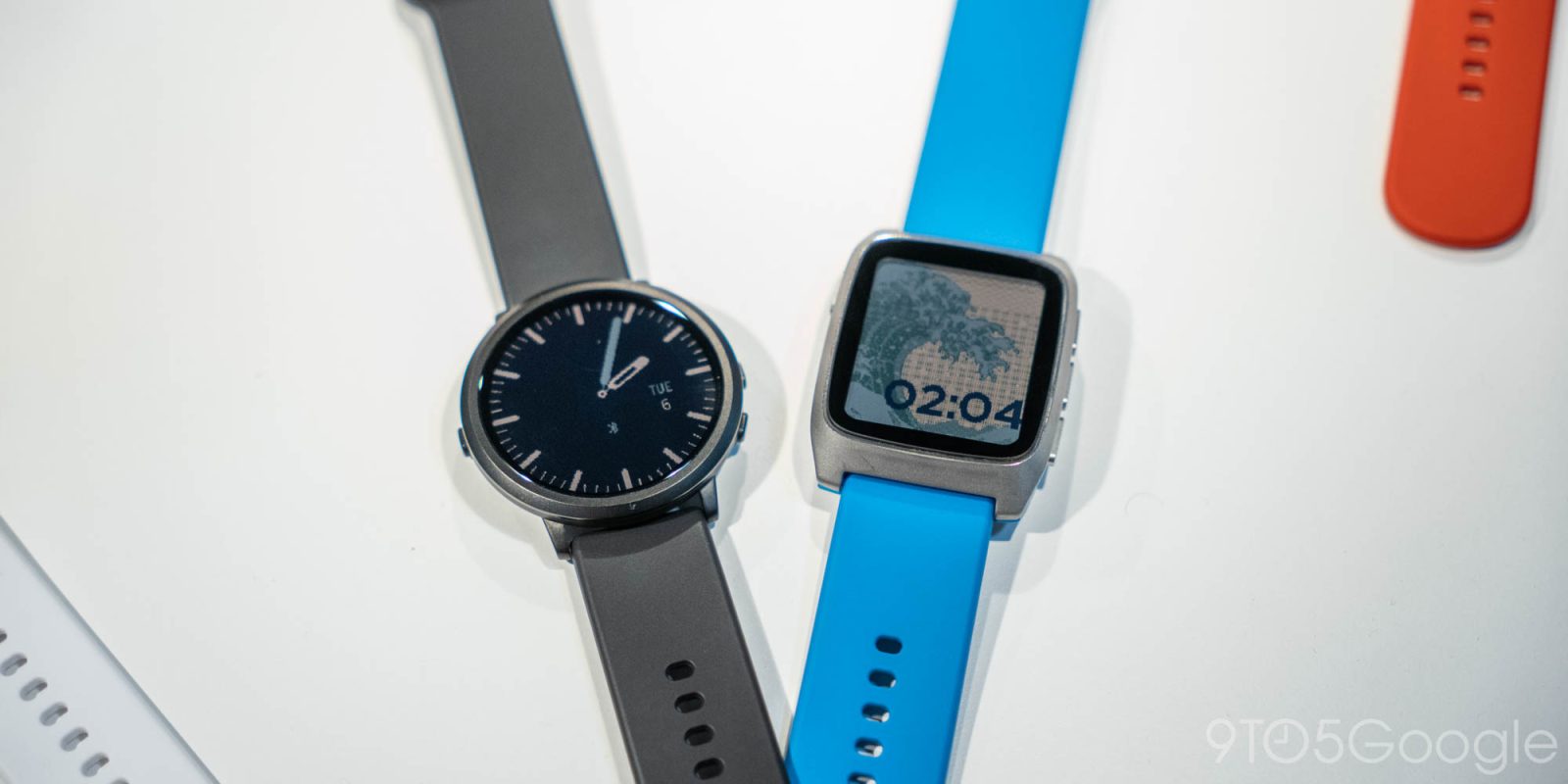
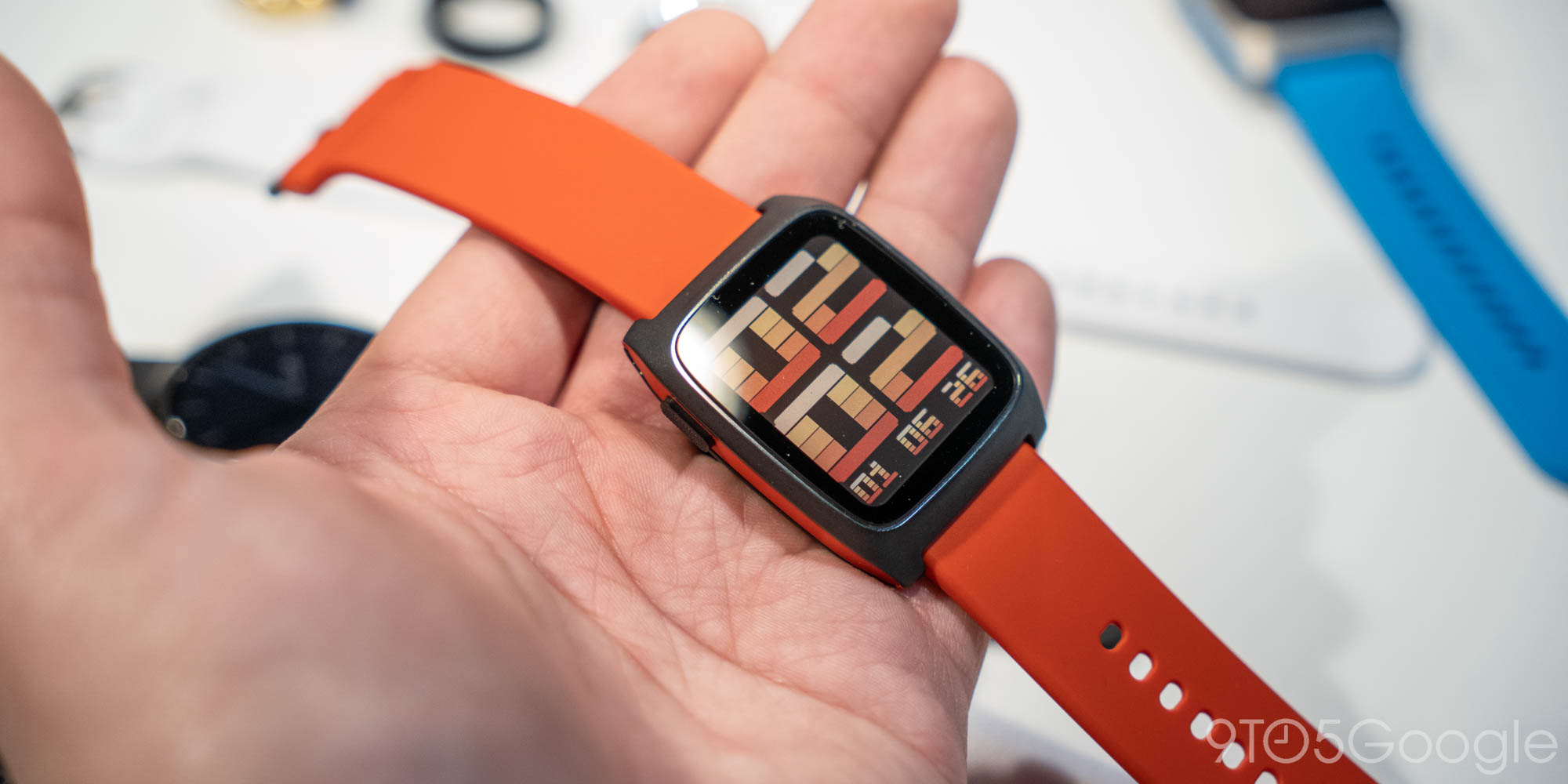
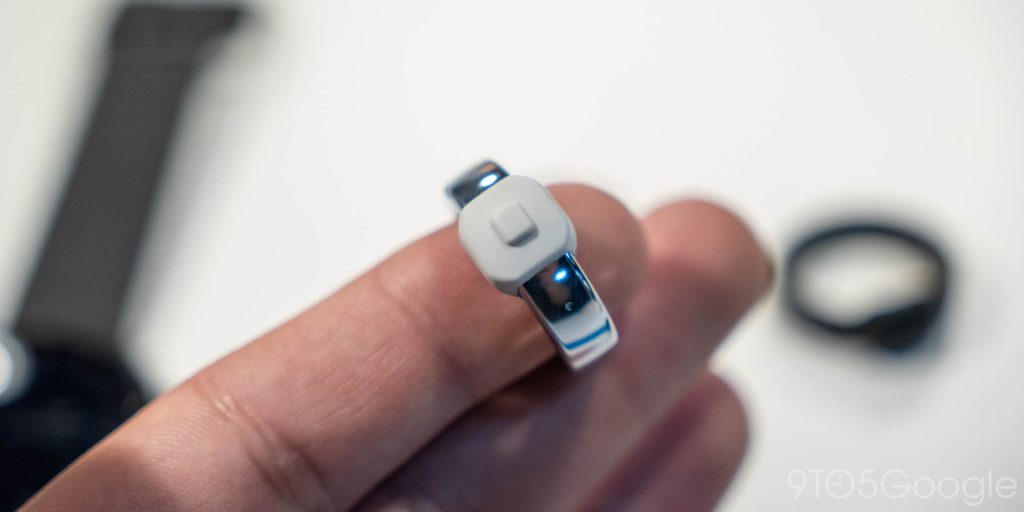
The Pebble smartwatch reboot is in full swing, with the Pebble Time 2 shipping soon and the newly-unveiled Pebble Round 2 not far behind it. After checking them out in person at CES 2026, I’m pretty stoked by the hardware, but it’s still the Index ring that makes me the most excited.
The Pebble reboot that stemmed from Google releasing the source code of PebbleOS has been great news for long-time fans of the platform. Finally, there’s a new Pebble on the market, with the “Pebble 2 Duo” being a solid continuation of the concept we last saw literally a decade ago.
But while the Duo was a good start, it’s the Pebble Time 2 that really had everyone’s heart. And the hardware absolutely delivers. The metal chassis with its little splash of blue or red color (or black, if you want something more subdued) just looks and feels so nice. It’s a small watch by modern standards, but that’s not a bad thing. Compared to the Duo, the metal buttons feel especially nice, as does the glass over the screen.
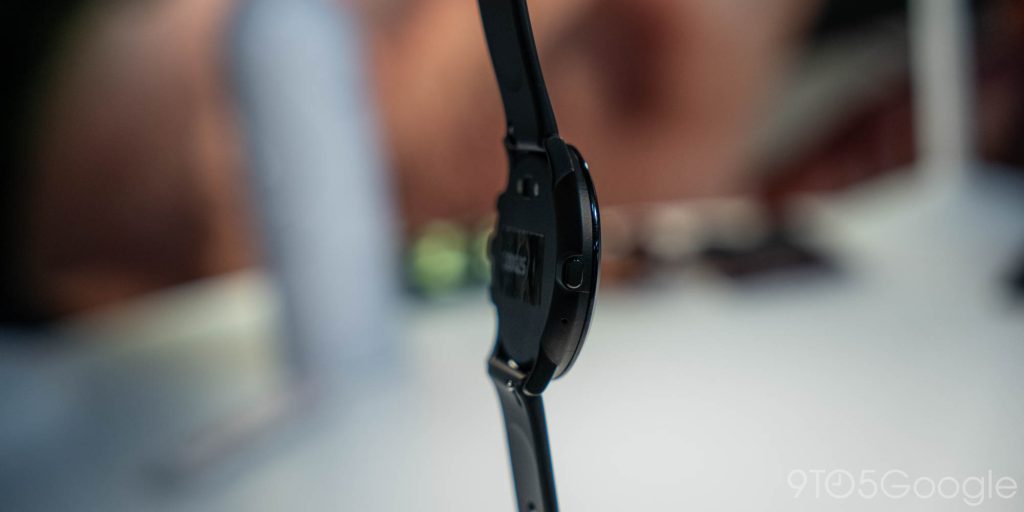
Meanwhile, the Pebble Round 2 just proves how far ahead of the curve the original was.
Advertisement – scroll for more content
The first Pebble Time Round was a stunning smartwatch back in the day, with a metal body that was far thinner than anything else. But, at the time, the compromise of its design came in the form of poor(ish) battery life and that massive bezel around the display.
The new model solves all of that, with much better battery life and an edge-to-edge display. The new design looks great in person, with that super-thin design really just feeling so foreign, and dare I say futuristic, compared to even modern smartwatches. The new face design doesn’t quite have the same charm in my book, but it’s hard to argue that it’s not a major improvement.
I’m still pretty excited to check out the Pebble Time 2 when it starts shipping in the next few months, but what I was far more excited about is the Pebble Index ring.
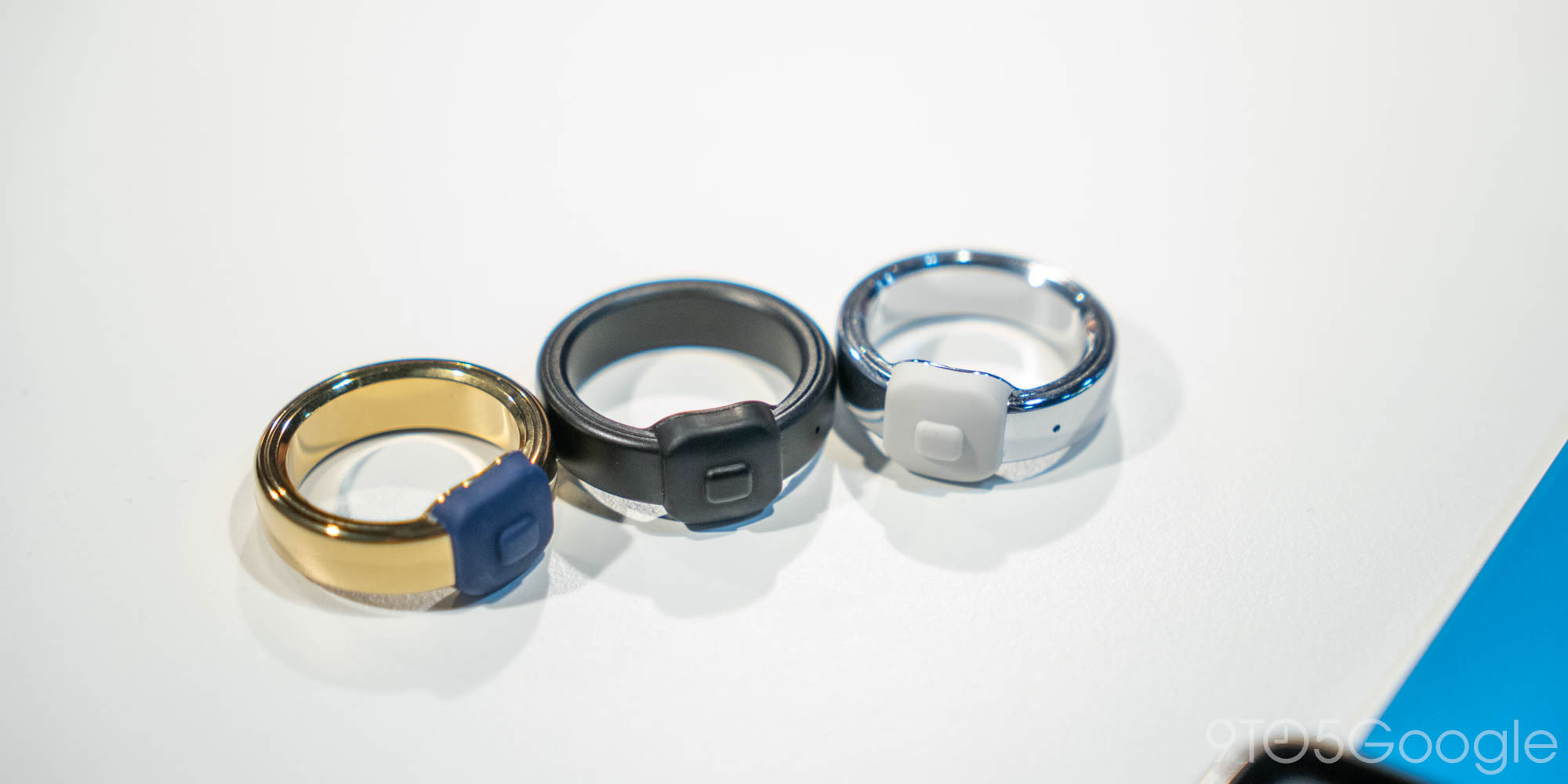
This smart ring is designed for exactly one purpose – to capture thoughts. With the click of its very tactile little button, a microphone goes hot and sends off data to the Pebble app on your phone. This means you can quickly jot down thoughts without unlocking your phone, opening a smartwatch app, or really doing anything else. Just click the button that’s literally sitting on your finger and you’re good to go.
Pebble Index – which I was told will support Google Keep in some capacity – just makes so much sense as a daily wearable. And I’m glad that the hardware actually makes it pretty viable. The Index is only marginally thicker than my wedding ring (one of those tungsten carbide rings), and the only part of it that sticks out is the actual button. While trying out the sizing kit, I found myself stuck between two sizes for a “perfect” fit, but it’s certainly close enough. I will say, though, that the size 13 limit is going to make this a non-starter for some people. I don’t have small hands, but I’d argue a lot of people are going to need a bigger size than I will to have it feel comfortable on an index finger.
The style is also going to be hit or miss for many. The black-on-black model is the only one I was ever interested, in part because it matches my wedding ring, but also because the gold model with its blue accent and the silver model with its white accent aren’t my cup of tea. From a material perspective, not having a matching color makes sense since it’d be almost impossible to match the color of a glossy material with one that’s more like rubber in a convincing way, but not everyone is going to love that look.
That said, I’m still incredibly excited for Index. I don’t think a Pebble smartwatch will ever truly be able to rip me away from the Pixel Watch lineup, but the Index is a wearable I can see adding to my daily carry.
The entire Pebble lineup – Time 2, Round 2, and Index – are all available for pre-order at repebble.com and shipping over the coming months.
Patrolman Stephen LaPorta, 43, was responding to a car crash on Route 146 when a tractor-trailer hit both the officer and his cruiser. LaPorta was declared dead at the scene.
A visitation and wake will be held from 2 p.m. to 6 p.m. Wednesday at St. Mary’s Church in Franklin. The funeral will be Thursday at 11 a.m. at St. Mary’s Church, with the burial to follow at St. Mary’s Cemetery in Uxbridge. The services are open to the public.
The Massachusetts State Police are encouraging members of the public who wish to honor LaPorta to line the procession route and attend public services.
Flags will be flown at half-staff to honor LaPorta.
CES has always been a robot extravaganza, and this year’s event saw the announcement of a number of important robotics developments, including the new, production-ready debut of Atlas, the humanoid from Boston Dynamics. Then there were all the robots on the showroom floor, where bots often serve as good marketing for the companies involved. If they don’t always give a totally accurate representation of where commercial deployment is at the moment, they do give visitors a peek at where it might be headed. And, of course, they sure are fun to look at. I spent a decent amount of time perusing the bots on display this week. Here are some of the most memorable ones I encountered.
The ping pong player
The movie Marty Supreme just came out a month ago, so I guess it’s only appropriate that there was a ping-pong-playing robot at this year’s convention. The Chinese robotics firm Sharpa had rigged up a full-bodied bot to play some competitive table tennis against one of the firm’s staff. When I stopped by the Sharpa booth, the robot was losing to its human competitor, 5-9, and I would not characterize the game that was occurring as particularly fast-paced. Still, the spectacle of seeing a robot play ping pong was impressive enough on its own, and I’m sure I have known some humans whose paddle skills were basically equivalent to (or slightly worse than) the bot’s. A Sharpa rep told me that the company’s main product is its robotic hand, and that the full-bodied bot had been debuted at CES to demonstrate the hand’s dexterity.
The boxer
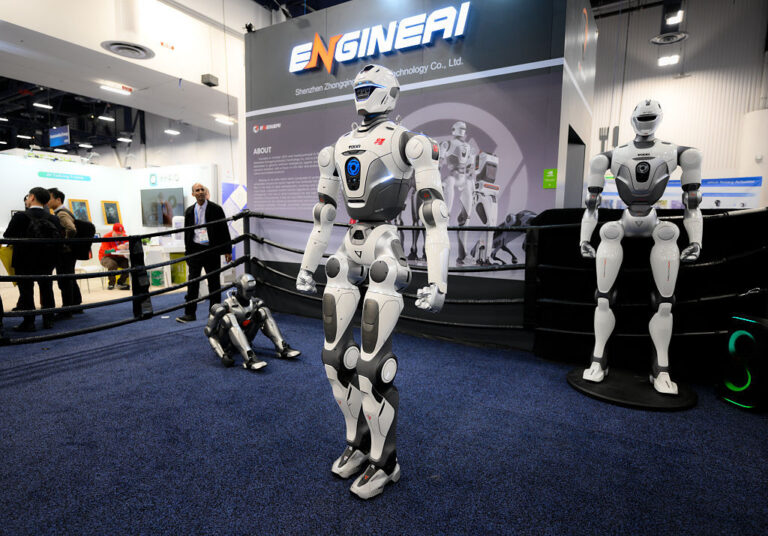
One of the exhibits that drew the largest crowds involved robots from the Chinese company EngineAI, which is developing humanoid robots. The bots, dubbed the T800 (a nod to the Terminator franchise), were in a mock boxing ring and were styled as fighting machines. That said, I never saw any of the bots actually hit each other. Instead, they would sort of shadowbox near each other, never actually making contact. They were also a little unpredictable. One kept walking out of the ring and into the audience, which naturally got a rise out of onlookers. At another point, one of the bots tripped over its own feet and then face-planted on the floor, where it lay for awhile before it decided to get up again. So, not exactly a Mike Tyson situation, but the machines still managed to evoke a spooky kind of humanoid behavior that made for high-quality entertainment. I overheard an observer quip: “That’s too much like Robocop.”
The dancer
Dancing robots have long been a staple at CES, and this year was no different. This year, the dance-move torch was carried by bots from Unitree, a major Chinese robotics manufacturer that has been scrutinized for potential ties to the Chinese military. Unitree has made a number of impressive announcements about its product base, including a humanoid bot that can supposedly run at speeds of up to 11 mph. I didn’t see any evidence of anything nefarious at Unitree’s booth this week—just a lot of bots that were feeling the groove.
Techcrunch event
San Francisco | October 13-15, 2026
The convenience store clerk
I stopped by the booth for Galbot, another Chinese company that says it is focused on multi-modal large language models and general purpose robotics. Galbot’s booth had been styled to look like a convenience store, and its bot appeared to have been synched with a menu app. A customer would come to the booth, select an item from the menu, and then the bot would go and fetch the selected merch for them. After I chose Sour Patch Kids, the bot dutifully retrieved a box off the shelf for me. According to the company’s website, the robot has been deployed in a number of real-world settings, including as an assistant at Chinese pharmacies.
The housekeeper
Creating a machine that can fold laundry has long been one of the core ambitions of the commercial robotics community. The ability to pick up a T-shirt and fold it is considered a fundamental test of automated competence. For that reason, I was fairly impressed by the display over at Dyna Robotics, a firm that develops advanced manipulation models for automated tasks. There, a pair of robotic arms could be seen efficiently folding laundry and placing it in a pile. A Dyna representative told me that the firm had already established partnerships with a number of hotels, gyms, and factories.
One of those businesses, the rep told me, is Monster Laundry, based in Sacramento, California. Monster integrated Dyna’s shirt-folding robot into its operations late last year and now describes itself as the “first laundry center in North America to debut a state-of-the-art robotic folding system from Dyna.”
Dyna also has some impressive backing. It concluded an $120 million Series A fundraising round in September that included funding from Nvidia’s NVentures, as well as from Amazon, LG, Salesforce, and Samsung.
The butler
I also stopped by LG’s section of CES to take a look at its new home robot, CLOid. It was cute but was not the fastest bot on the block. You can read my full review of that experience here.
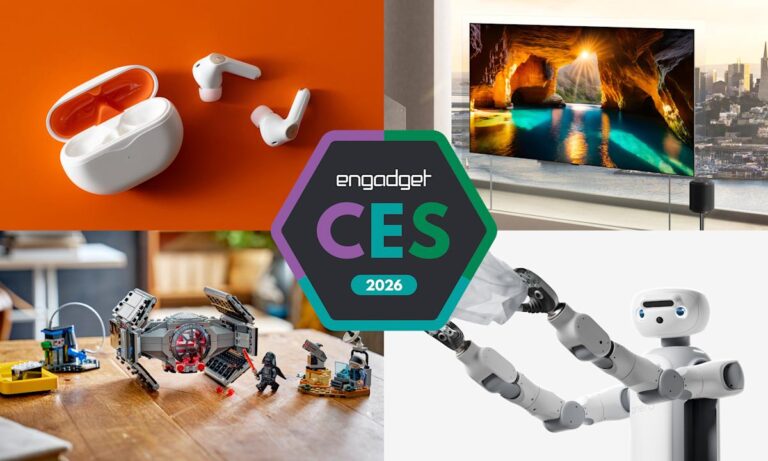
Over 4,000 exhibitors flocked to Las Vegas, Nevada this week to showcase their wares at CES 2026. The Engadget team, as usual, was out in full force covering the show. The week began with press conferences from huge companies at the show, mostly filled with AI buzzwords, vague promises and quite little in the way of hard news.
More than one company even decided to forgo announcing things during their conferences to make way for more AI chatter, only to publish press releases later quietly admitting that, yes, actually, they did make some consumer technology. It’s appropriate, I guess, that as we’re beginning to feel the knock-on cost effects of the AI industry’s insatiable appetite for compute resources — higher utility bills and device prices — companies would rather use their flashy conferences to reinforce AI’s supposedly must-have attributes rather than actually inform the public about their new products.
We’re by no means AI luddites at Engadget, but it’s fair to say that our team is more excited by tangible products that enrich our lives than iterative improvements to large language models. So, away from all of the bombast of NVIDIA’s marathon keynote and Lenovo’s somehow simultaneously gaudy and dull Sphere show, it’s been a pleasure to evaluate the crowd of weird new gadgets, appliances, toys and robots vying for our attention.
Over the course of several days of exhaustive discussion and impassioned pitching, our CES team has whittled down the hundreds of products we saw to pick our favorites. Starting with an initial shortlist of around 50 candidates across a diverse range of product categories, we eventually landed on 15 winners and our singular best in show.
If you’ve been with us all week, stay tuned for a lot more to come — despite publishing almost 200 articles from the show already, there’s still plenty we have to tell you about. For now, though, here are our winners, each introduced by the editor most familiar with it. — Aaron Souppouris, Editor-in-chief
Best robot: Switchbot Onero H1
Onero H1 robot (Onero)
We saw a lot of robots showing off intriguing and useful capabilities at CES 2026. While a lot of robots impressed us, there were fewer companies willing to commit to actually making them available. But Switchbot’s Onero H1, which we watched pick up clothes and load a washing machine, is a helper robot the company intends to sell this year.
The demo we saw was limited, but Switchbot claims it can help with an array of household chores (even if it might do them more slowly than a human). It’s also kind of cute. The company hasn’t said how much Onero will cost, though it promises the droid will be less than $10,000. A nearly five-figure price tag is still out of reach for most, but it at least gives us hope we’ll see it somewhere outside of the CES showfloor. — Karissa Bell, Senior reporter
Best accessibility tech: WheelMove
WheelMove power assist for manual wheelchairs (Cheyenne MacDonald for Engadget)
WheelMove offers a simple upgrade for manual wheelchairs that could make it much easier for the rider to navigate rough surfaces like grass and uneven dirt paths. The add-on is affixed to the front bars of the wheelchair and can lift the small caster wheels off the ground, in addition to providing power assistance with five speed options. It’s portable, has a decent range of about 15 miles — with the option to swap out its battery on the go — and could give wheelchair users greater access to areas that would otherwise be difficult to move about in. It can also keep the wheelchair from speeding up when a person is traveling on a downward slope.
This feels very much like a product that will actually see the light of day, and could be genuinely helpful. It builds upon an existing category of wheelchair accessories to address a real issue in a way that doesn’t overcomplicate things, and would work with the wheelchairs people already use. — Cheyenne MacDonald, Weekend editor
Best TV: LG Wallpaper TV (OLED Evo W6)
LG OLED Evo W6 “Wallpaper TV” (LG)
I’ve seen plenty of TVs at CES this year, but few stopped me in my tracks like LG’s OLED Evo W6. It’s the resurrection of the company’s “Wallpaper TV,” but this time it’s even thinner (about the depth of a pencil), and it’s no longer tied to a soundbar. It also uses LG’s wireless control box to reduce cabling — the only cord you need to hide is the one for power.
And best of all, the OLED Evo W6 features LG’s latest OLED technology, which promises to be about 20 percent brighter than previous generations. Video demos looked absolutely stunning, with all of the wonderful contrast and black levels we’ve come to love from OLED. But it’s also a work of art when it’s turned off, one that practically disappears when viewed from an angle. — Devindra Hardawar, Senior reporter
Best AI hardware: Subtle Voicebuds
Subtle Voicebuds (Subtle)
Subtle’s Voicebuds are earbuds with a twist: They feature an AI model that’s trained to transcribe your voice accurately in very noisy environments, or when it’s below a whisper in quiet spaces. We’ve seen these things in action on the bustling CES show floor, where they managed to transcribe several sentences amid the chaos. The only downsides is that the Voicebuds require internet access to use the best transcription models, and you need to subscribe to the Subtle app to use it. Without the app, it relies on a smaller local model for transcription.
While we still need to put the Voicebuds through their paces, they’re intriguing because we haven’t seen many genuinely useful AI hardware products. Plus, it’s been a while since we’ve seen a tiny startup deliver hardware trying to take on the likes of Apple. — Devindra Hardawar, Senior reporter
Best smart home: IKEA Matter-compatible smart home
IKEA KAJPLATS smart bulb range (IKEA)
The best smart home devices I saw at CES had nothing to do with AI or robots. It seems every other company, from Bosch to LG to Samsung, had one or both of the buzzy technologies baked into their new smart home offerings. But IKEA came to its first CES with a simple lineup of basic, Matter-enabled smart plugs, sensors, lamps and remotes at screamingly good prices. Function paired with accessible pricing is sort of what IKEA is known for, so the lineup didn’t exactly surprise me as much as make me appreciate that someone is finally simplifying and democratizing smart home stuff.
There are 21 Matter-compatible devices in all. They include a $6 smart bulb, an $8 smart plug, a $6 smart remote and a slew of home sensors. A slightly pricier ($15) globe bulb looks very lovely. Finally, there’s a smart bulb you’d actually want to look at — one that doesn’t cost $50. Another standout is the BILREA remote control. Not only is it an intuitive controller for IKEA’s smart devices and new smart lamps, it also has a magnetic mount so you don’t lose the thing. Matter devices require a hub to function. Here, you can either go for IKEA’s own DIRIGERA or use a Matter hub you already own. The new lineup should land at IKEA’s website and stores sometime in January. — Amy Skorheim, Senior reporter
Best home theater: Samsung HW-QS90H
Samsung HW-QS90H soundbar (Billy Steele for Engadget)
Many companies claim their soundbars have enough bass that you don’t need a separate subwoofer. Those promises rarely pan out, even when the company devises new technology to solve the problem. With the HW-QS90H, Samsung is pledging to do the same with its Quad Bass woofer system. Those woofers move in two directions, producing a lot more low-end tone than most soundbars are capable of on their own. What’s more, Samsung included its Convertible Fit Design tech that debuted last year, so you can lay this speaker flat or mount it on a wall and the built-in sensors will automatically adjust the driver output accordingly. So, if you’ve longed for deep bass on a soundbar without a large or ugly sub in the corner, you may finally get your wish later this year. — Billy Steele, Deputy editor
Best audio: Shokz OpenFit Pro
Shokz OpenFit Pro (Shokz)
When it comes to open fit earbuds, companies that claim to offer active noise cancellation (ANC) usually don’t deliver; It’s difficult to effectively block external sound when your ears aren’t completely sealed off. Shokz is one of the few that has cracked the code with its OpenFit Pro. The over-the-ear hook design allows the earbuds to sit outside of your ear for a clear line to your surroundings. When you need a bit more quiet, the company’s noise reduction tech does well to silence moderate sounds in a cafe, office and more. It’s seriously impressive how much noise reduction you’ll get here, and the fact that nothing is stuck in your ear canals makes them very comfortable to wear. Plus, Shokz improved overall sound quality with new drivers, and tacked on Dolby Atmos for good measure. — Billy Steele, Deputy editor
Best outdoor tech: Tone Outdoors T1
Tone Outdoors T1 (Whisper Aero)
Outdoor tool companies have increasingly shown up at CES, especially the ones that offer a range of battery-powered gear. Tone Outdoors isn’t your usual power tool outfit though; it’s a spin-off of the aerospace engineering company Whisper Aero. Through its development of quieter electric airplane engines, Whisper Aero realized its technology had other uses. Enter the T1 leaf blower.
The T1 is significantly quieter than most handheld gas models, clocking in at just 52 decibels of peak noise on average. It’s also more powerful than most of them with 880 CFM of airflow volume. The T1 can run longer too, and an upcoming backpack will extend run time for several hours. But the most important advancement here is not annoying your neighbors — or yourself — when it’s time to do some yard work. — Billy Steele, Deputy editor
Best toy: Lego Smart Play
Lego Smart Play (Lego)
Lego is constantly evolving, but rarely does it make as big a move as it did with Smart Play. The system is designed to take standard Lego sets and make them more interactive thanks to a tech-packed Smart Brick. Those bricks have a tiny chip the size of a Lego stud that enables things like motion, color and proximity sensing. They also have a tiny speaker that further helps bring Lego builds to life.
The Smart Brick is mostly a blank slate, but pairing it with Lego’s Smart Tags and Smart Minifigures is what enables these new play scenarios. Unsurprisingly, Lego introduced the Smart Play system alongside Star Wars sets that make these new immersive elements more obvious. An X-Wing piloted by Luke Skywalker can get into a dogfight with Darth Vader’s TIE fighter, and you’ll hear the engines roar to life, the characters exclaim as they come under fire and the spaceship explodes if it gets hit too many times. And Smart Play requires no setup, meaning that the technology packed into the Smart Brick fades away and lets kids (and kids at heart) get down to the business of playing. You don’t need to know how it works — it just does. — Nathan Ingraham, Deputy editor
On the XPS 14 and XPS 16, we’re getting brand new chassis featuring the latest chips from Intel, gorgeous tandem OLED displays and precision engineering that embodies everything we loved about XPS laptops from previous years. Dell also streamlined its designs with the larger XPS 16 dropping an entire pound compared to the previous generation. The company even addressed a number of our previous critiques by switching from capacitive touch controls back to a classic row of function keys and reverting to segmented touchpads instead of seamless glass ones that made it hard to keep track of your cursor.
But perhaps the best part is that Dell isn’t stopping here, because the company also teased a new version of its legendary XPS 13 slated for later this year, the thinnest and lightest member of the family yet. There are also placeholders for two more XPS models slated to arrive in the not too distant future. — Sam Rutherford, Senior reporter
Best health tech: Eyebot vision test booth
Eyebot vision test (Eyebot)
Wouldn’t it be nice if getting an updated eyeglasses prescription wasn’t as lengthy a process as it is right now? Eyebot’s new kiosk is designed to automate the process of visiting a doctor’s office to three minutes rocking up to a machine. It uses a combination of analog and digital wizardry to identify what you need to see properly in no time at all. Even better is that the prescriptions have to be signed off by a licensed eye doctor, so you can still rely on a degree of professional rigor. We like Eyebot because it proved itself in our tests: its brief examination matched my professionally completed prescription from last year. But its ability to make effective eye care accessible and affordable in a way that it isn’t at present is even more compelling than the tech itself. — Daniel Cooper, Senior reporter
Best gaming tech: ASUS ROG Zephyrus Duo
ASUS ROG Zephyrus Duo (ASUS)
The ASUS ROG Zephyrus Duo is big, weird and potentially awkward to set up. But honestly, what kind of gamer doesn’t want more screens? Even if you can’t use its second display in the middle of a firefight, more real estate means extra room for Discord, build guides or anything else you might need. Furthermore, ASUS included not one but two brilliant OLED panels with up to 1,100 nits of brightness and color accuracy so good you won’t have a problem editing photos or videos. You also get a ton of ports, and with support for up to an NVIDIA RTX 5090 GPU, the ROG Zephyrus Duo has more than enough performance to handle anything you can throw at it. — Sam Rutherford, Senior reporter
Best mobile tech: Samsung Galaxy Z TriFold
Samsung Galaxy Z TriFold (Sam Rutherford for Engadget)
Samsung might have announced the latest iteration of its foldable smartphones in Korea, but CES was the first chance for many of us to see the Galaxy Z TriFold in person. It’s a 10-inch Android tablet hidden within a 6.5-inch smartphone form factor.
The jump from the almost-square screen ratio of Samsung’s past foldables to approximately 4:3 is a major improvement. This is a device that I could happily watch entire movies on. There’s more horizontal space to read, more room to type and more bright, vivid AMOLED everything. Unfurling the sides is incredibly satisfying and, perhaps because it’s thicker, it has a reassuring heft, too. The rest of the spec sheet reflects another fashionable Galaxy phone with a 200-megapixel main camera and the biggest battery yet in a Samsung foldable.
It’ll likely be expensive though. Samsung hasn’t confirmed pricing in the US, but based on its launch cost in Korea, it could be around $2,500. — Mat Smith, UK bureau chief
Most promising concept: Lenovo Legion Pro Rollable
Lenovo Legion Pro Rollable (Lenovo)
Concept devices are hard to judge because even the ones with a ton of potential might be too difficult to make or too niche to bring to market. But with the Legion Pro Rollable concept, Lenovo created something with a simple yet powerful premise: A gaming laptop with a screen that gets wider at the touch of a button.
To make the Legion Pro Rollable, Lenovo took a regular Legion Pro 7i and then swapped its standard 16-inch display for a flexible one that can expand all the way up to 23.8 inches — with a bonus stop in between. This means you have the option to choose from 16:10, 21:9 or even 24:9 depending on the situation, which feels like an incredible way to enhance racing games, flight sims and anything else that can take advantage of extra wide aspect ratios. Granted, when its screen is fully deployed, it does look a bit ungainly. But of all the concepts we saw this year at CES, the Legion Pro Rollable is the one we hope survives to become a proper retail product someday. — Sam Rutherford, Senior reporter
Best emerging technology: IXI autofocus lenses
IXI Autofocus lenses (IXI)
IXI’s autofocusing glasses were a late addition to our discussions, but we were impressed by what could be a significant advancement in spectacle technology — something that’s been largely static since the 1950s. IXI’s glasses feature an elegant, unique, cameraless eye-tracking system that uses ultra-low-power LEDs and photodiodes to precisely monitor the user’s eye movement and focus convergence. This data drives a liquid crystal lens layer, enabling a focus switch between near and far distances in approximately 0.2 seconds. Focus your gaze elsewhere, and your glasses return to their normal prescription. Think of them as a high-tech take on the often thick and clunky multifocal lenses we’re currently stuck with.
IXI is now finalizing the production process, developing manufacturing and gaining the necessary medical certification to sell its glasses, but it has already struck deals with lens manufacturers in Europe. The company has a busy year ahead as it turns its technology into a consumer product. — Mat Smith, UK bureau chief
Best in show: Lego Smart Play
Lego Smart Play (Lego)
There’s perhaps no place better than CES to highlight how quickly industry trends die. Over the years the show has been a driver of cornerstone technologies like the VCR, DVD, flatscreen TVs, PDAs and more. Some trends stick, some don’t.
Lego could almost be seen as the antithesis of the typical CES product: The company’s core concept of creative play has remained in place throughout its long history, boosted by a gradual and ongoing evolution of block types and brand tie-ins.
Announced at its first-ever CES press conference, Smart Play represents a thoughtful integration of technology to the classic toy. A tiny chip the size of a single Lego stud allows the company’s Smart Bricks to sense what’s around them, opening up new ways to play. The system will debut with a trio of Star Wars sets, but we’re sure Lego has plans for a wide range of licensed and unlicensed options.
Our team instantly fell in love with Smart Play, and Deputy editor Nathan Ingraham had the opportunity to both build some sets and talk with some of the people behind the technology. Amid parental anxieties about screentime, it’s refreshing that Smart Play doesn’t require an app or a screen to get started. Kids can just get building. — Aaron Souppouris, Editor-in-chief




![What new Google Messages features are rolling out [January 2026]](https://eyeobserver.online/wp-content/uploads/2026/01/google-messages-logo-circle-2-768x402.jpg "What new Google Messages features are rolling out [January 2026]")




![The Pebble smartwatch reboot and Index ring [Gallery]](https://eyeobserver.online/wp-content/uploads/2026/01/pebble-round-2-time-2-1-768x402.jpg "The Pebble smartwatch reboot and Index ring [Gallery]")