Home Blog Page 87

Showtime for Android XR glasses

0


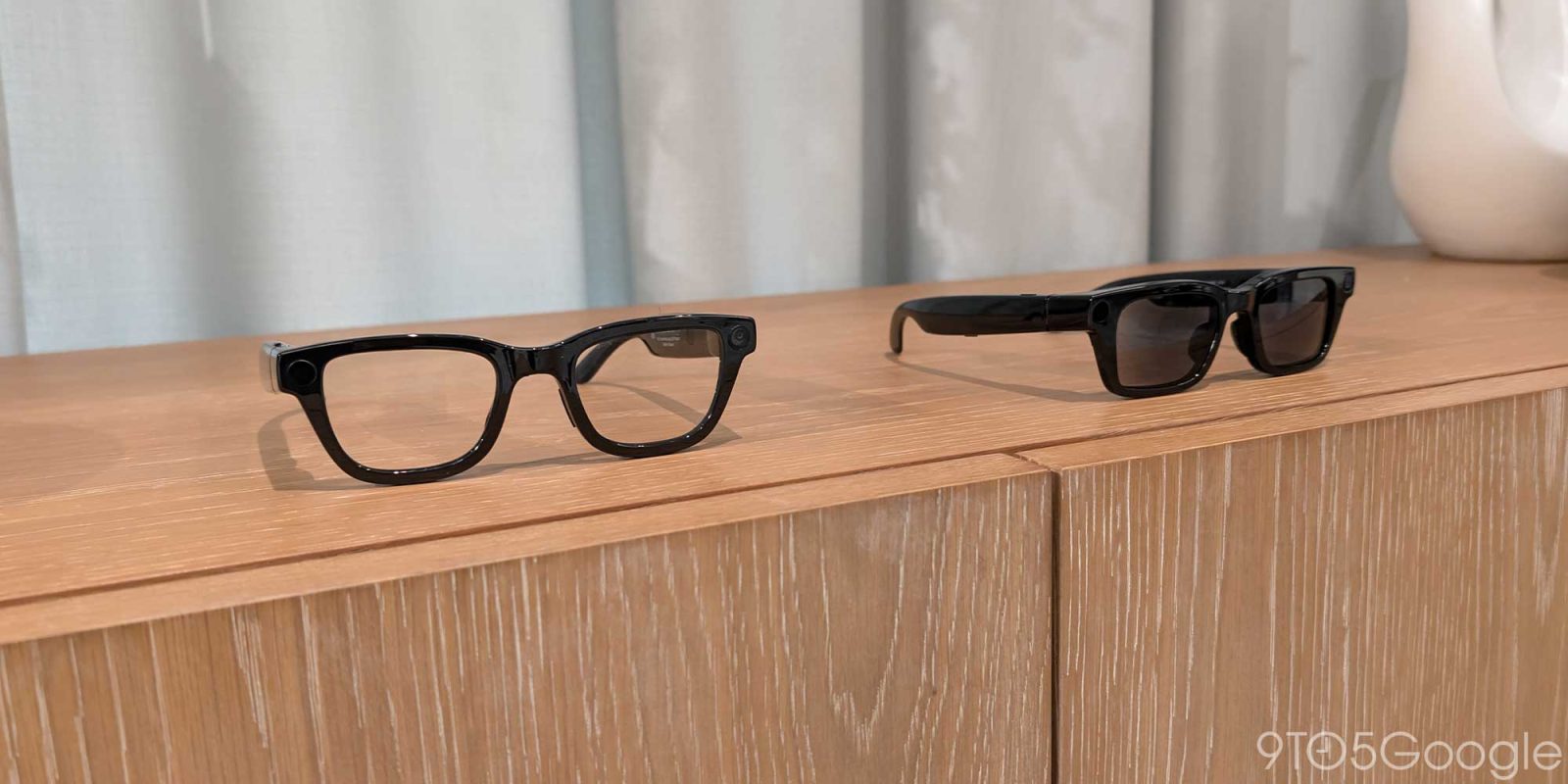
During my hands-on with Android XR glasses last month, I kept returning to the digital clock that was displayed over the real world. Professionally, I have been waiting over a decade for Google to re-enter the smart glasses space, and everything is lining up for this to happen in 2026.

It will start with screen-less glasses that just have microphones, speakers, and cameras, but the version with a single monocular display is coming soon after.

In the intervening years, Meta has been the most dominant player in the market, with a screen version arriving last year. However, I think Meta ended up pigeonholing themselves with the Ray-Ban style in trying to find a market with sunglasses.

Google’s offerings are not meant to be an accessory you just wear outside when it’s sunny or during exercise. Android XR glasses aim to replace your eyeglasses, while appealing to those who don’t have prescription lenses. They are meant to be worn all the time and become another computing device alongside your phone and even watch.

Advertisement – scroll for more content

This is why I think what Google releases this year will be the first real, wide-scale debut of smart glasses as the next consumer electronics form factor.

In terms of widespread appeal, there’s Samsung’s wide hardware reach and relationship with customers. Meanwhile, the Android-powered nature plays a big role in providing a seamless extension of your phone. The underrated flip side of that is how glasses could be a selling point for Android phones if support initially remains exclusive to the platform. (I would assume these Google/Samsung glasses will require Android phones for the foreseeable future since they will be handling so much processing.) 

I have so many questions about how Android XR glasses will be marketed and the initial feature set. 

Managing notifications will undoubtedly be a part of it, while I think the fact that you’ll always be wearing (open-ear) headphones might have an interesting impact on earbuds in the long-term future.

Then there’s having a world-facing camera at all times. The privacy and cultural implications cannot be ignored, but I think the value in having an always-ready point-of-view (POV) camera to capture pictures and videos you’d otherwise miss will be immense. It should be less distracting than holding up a phone and possibly being taken out of the moment. 

Finally, we come to the AI aspect. Google is referring to this form factor as “AI glasses.” On the positive front, this is the form factor for real-time assistants like Gemini Live that can tap into the camera for context about the world. The fact that you don’t have to physically hold up a phone should increase the likelihood you’ll invoke it. However, I am worried that evoking “AI” might constrain the appeal versus something more general and familiar like the “smart” of your phone or watch. 

Besides functionality, Google needs to have a broader narrative about why all the things that can be done on smart glasses should be literally done in front of your face. One thing Google discussed during the demos was the idea that briefly using glasses instead of staring at your phone will help you be more present in everyday life. That’s something that everyone needs to test in their lives, but that’s the kind of pitch that Google needs to have on day one.

Of all the demos last month that emphasized the surprising size and fidelity of the screen, it was the humble time overlay in standby mode that kept me infinitely amused. It reminded me that augmented reality is finally happening and that the quality, if not utility (especially by adding the date and temperature), of this iteration will be pretty high out of the gate. 

FTC: We use income earning auto affiliate links. More.


Source link

Mass. weather: Strong winds expected on Friday heading into cold, dry, weekend

0


Massachusetts residents should brace for a cold and windy Friday, according to the National Weather Service.

After a morning of snow squalls throughout the state on Thursday, Bay Staters should expect cold and dry weather for the first weekend of the year.

On Friday, winds with gusts up to 35 mph are expected in the afternoon and evening, making temperatures feel cooler. Forecasters expect wind chills in the teens and single digits. The winds are expected to diminish on Saturday.

Most of Massachusetts won’t experience any precipitation on Friday but there is a slight chance of snow in Nantucket in the early morning hours, forecasters said.

Those on the coastal waters of Massachusetts, however, should be careful due to gale warnings and small craft advisories that remain in effect until early Friday morning, according to forecasters.

Local forecasts for Friday are as follows, according to the seven-day forecast:

  • Pittsfield: High of 22 degrees, low of 11 degrees
  • Springfield: High of 27 degrees, low of 12 degrees
  • Worcester: High of 25 degrees, low of 13 degrees
  • Boston: High of 28 degrees, low of 18 degrees
  • Hyannis: High of 28 degrees, low of 20 degrees

Bay Staters on Saturday will see sunny skies with highs in the mid-to-upper 20s throughout Massachusetts. Western regions, such as the Berkshires, may have temperatures lower than the mid-20s. The coastal regions, meanwhile, could see temperatures almost reach 30 degrees, according to forecasters.

Forecasters are keeping an eye on the possibility of light snow or snow showers on Sunday. Forecast models suggest a less than 10% chance for significant snow throughout most of the state. The Cape and Island regions have a 20-30% chance of measurable snow, according to forecasters.


Source link

Perry Bamonte, The Cure’s keyboard and guitar player, dies at 65 : NPR

0


Perry Bamonte, a keyboard and guitar player in the English band The Cure, has died. He was 65 years old. In a statement, the band called him “quiet, intense, intuitive, constant and hugely creative.”


SCOTT DETROW, HOST:

The English musician Perry Bamonte has died. He was 65 years old. For years, Bamonte played guitar and keyboard in the influential post-punk band The Cure. The band announced his death in a statement, saying Bamonte had suffered a short illness at home. NPR’s Isabella Gomez Sarmiento has this appreciation.

ISABELLA GOMEZ SARMIENTO, BYLINE: Perry Bamonte became familiar with The Cure a decade before he actually joined the band. In 1979, the group released its debut album, “Three Imaginary Boys.”

(SOUNDBITE OF SONG, “GRINDING HALT”)

THE CURE: (Singing) No Light. No people. No speak. No people.

GOMEZ SARMIENTO: Shortly after, a young Bamonte saw The Cure live for the first time. He was with his friend and future Depeche Mode member Vince Clarke. As Bamonte recalled in a later interview with SiriusXM…

(SOUNDBITE OF ARCHIVED RECORDING)

PERRY BAMONTE: Vince Clarke and I went to see a Cure concert together, in 1980 it would be…

UNIDENTIFIED PERSON: Yeah.

BAMONTE: …When Matthieu had just joined the band.

UNIDENTIFIED PERSON: 1980 then, yeah.

BAMONTE: We drove to the London School of Economics to watch The Cure.

UNIDENTIFIED PERSON: LSE.

GOMEZ SARMIENTO: After playing guitar in several bands, Bamonte scored a job as a roadie and guitar tech for The Cure in 1984. For years, he became intimately familiar with the band’s sound and its members.

(SOUNDBITE OF SONG, “LOVESONG”)

THE CURE: (Singing) Whenever I’m alone with you, you make me feel like I am home again.

GOMEZ SARMIENTO: In 1990, after a massive tour in support of the goth-rock album “Disintegration,” The Cure’s keyboard player left the band. They invited Bamonte to fill his place, just as he was considering quitting music to go to art school. He took piano lessons from lead singer Robert Smith’s sister and stepped into the role. Bamonte’s first studio album with the band became its biggest commercial success – 1992’s “Wish.”

(SOUNDBITE OF SONG, “FRIDAY I’M IN LOVE”)

THE CURE: (Singing) I don’t care if Monday’s blue, Tuesday’s gray and Wednesday too. Thursday, I don’t care about you. It’s Friday…

GOMEZ SARMIENTO: Bamonte wasn’t limited to his new instrument. He also played guitar and six-string bass on the album. In a press kit for “Wish,” Robert Smith noted it was a much more guitar-forward sound for the band thanks to Bamonte’s contributions.

(SOUNDBITE OF SONG, “FRIDAY I’M IN LOVE”)

THE CURE: (Singing) It’s Friday, I’m in love. Saturday, wait.

GOMEZ SARMIENTO: Bamonte stayed with the band for 14 years, playing hundreds of shows around the world and recording several more albums.

(SOUNDBITE OF SONG, “THE END OF THE WORLD”)

THE CURE: (Singing) Go if you want to. I never tried to stop you.

GOMEZ SARMIENTO: In 2005, Bamonte left The Cure and pursued other interests, including illustrating and fly fishing. He was inducted into the Rock & Roll Hall of Fame as part of The Cure in 2019. In recent years, Bamonte rejoined the band on the road. He played his last show last fall in support of the album “Songs Of A Lost World.”

(SOUNDBITE OF THE CURE SONG, “ENDSONG”)

GOMEZ SARMIENTO: In a statement, The Cure called Perry Bamonte, quote, “quiet, intense, intuitive, constant and hugely creative.”

Isabella Gomez Sarmiento, NPR News.

(SOUNDBITE OF THE CURE SONG, “ENDSONG”)

Copyright © 2025 NPR. All rights reserved. Visit our website terms of use and permissions pages at www.npr.org for further information.

Accuracy and availability of NPR transcripts may vary. Transcript text may be revised to correct errors or match updates to audio. Audio on npr.org may be edited after its original broadcast or publication. The authoritative record of NPR’s programming is the audio record.


Source link

The top 6 media/entertainment startups from Disrupt Startup Battlefield

0


Every year, TechCrunch’s Startup Battlefield pitch contest draws thousands of applicants. We whittle those applications down to the top 200 contenders, and of them, the top 20 compete on the big stage to become the winner, taking home the Startup Battlefield Cup and a cash prize of $100,000. But the remaining 180 startups all blew us away as well in their respective categories and compete in their own pitch competition.

Here is the full list of the media/entertainment Startup Battlefield 200 selectees, along with a note on why they landed in the competition. 

Alltroo 

What it does: Helps celebrities manage their charity giveaways and fan engagement awards. 

Why it’s noteworthy: Alltroo manages the sweepstakes processes that involve a celebrity, be it an event with the celeb or a donation to charity giveaway, from promotion to managing entries to picking the winner. 

METAPYXL 

What it does: Metapyxl protects digital media with content management tools. 

Why it’s noteworthy: This platform provides artists and content creators with tools for watermarking, tracking usage, licensing terms, and analytics. 

Nebula 

What it does: A music gallery where fans get to support their favorite artists and earn royalties on them as they help them succeed. 

Techcrunch event

San Francisco
|
October 13-15, 2026

Why it’s noteworthy: Fans buy tokens in music tracks at a price the artists set and can earn royalties as that track is streamed. 

Oriane 

What it does: Oriane offers a search tool that can find brands and trends in videos using natural language search. 

Why it’s noteworthy: From tracking a brand’s mentions to tracking content creators, searching for videos has remained difficult. This platform offers AI-powered text, image, and video clip searching. 

Othelia Technologies 

What it does: AI-powered storytelling platform that helps humans create. 

Why it’s noteworthy: Othelia is designed to map a story’s structure, find connections, and offer overviews so storytellers can build, edit, and work with complex worlds. 

Transitional Forms 

What it does: Transitional Forms runs live simulations from prompts. 

Why it’s noteworthy: This patent-pending framework lets anyone create, remix, and export instant video simulations from a mobile device. The startup says it’s building SocialTV, the future of entertainment. 


Source link

How to watch the NVIDIA CES 2026 presentation live

0


During CES 2025, we watched NVIDIA tout its leading position in the artificial intelligence arena for the bulk of the presentation. But it did reveal some new hardware, including its RTX 5000-series GPUs and Project Digits desktop supercomputer (later redubbed Spark). This year, the company’s website says it’s “lighting up CES 2026 with the power of AI.” To that end, NVIDIA is pulling out all the stops at its Vegas installation, promising hands-on demos in its booth at the Fontainebleau, replete with the “latest NVIDIA solutions driving innovation and productivity across industries.”

But don’t worry if you’re not on the ground in Vegas. Here’s how you can watch the livestream of the company’s January 5 press conference, and what to expect from NVIDIA at CES this year.

How to watch the NVIDIA CES 2026 keynote

NVIDIA CEO Jensen Huang will deliver a 90-minute keynote at CES 2026. The event will be livestreamed on January 5 at 4PM ET via NVIDIA’s website (and likely on YouTube as well). We’ll embed the link here once it’s available.

What to expect

NVIDIA’s game plan for CES is suitably vague so far, including “cutting-edge AI, robotics, simulation, gaming and content creation at the NVIDIA Showcase.” It also notes there will be more than 20 demos. Although we’re unsure if all of these will be shown during the keynote, we can at least expect to see them throughout the week of CES.

Given NVIDIA’s sky-high valuation and the fact that the health of the US and global economy seems increasingly linked to infrastructure spending on AI data centers – largely powered by chips from NVIDIA and its competitors — expect Huang’s remarks to be as closely followed by Wall Street investors as technology acolytes, if not more so. Will we get any insight on a successor to the company’s Blackwell chip? A more detailed look at how NVIDIA’s partners are applying AI to real-world robotics? Time will tell, but you might want to keep your stock portfolio in a split screen while taking in Huang’s presentation.


Source link

AI Mode and the inevitability of Google Search’s next evolution 

0


A decade or so ago, I thought Google needed a newer mission than “organize the world’s information and make it universally accessible and useful.” Having never lived without the Search engine, I frankly thought the mission was solved and that Google needed a new aspirational aim. 

As the years went by, I kept hearing Google refer to it as a “timeless” mission, and I don’t think I appreciated that sentiment until the end of traditional Search. 

I do believe the era of 10 blue links is coming to a close. The through-line of technology is that people want more and more convenience at a faster speed. Getting an answer immediately was always going to win out. Google’s mission is timeless because of an inherent awareness of this. Before AI, that next frontier was visual search with Google Lens and allowing people to ask about the world without describing it beyond a picture.

Besides directly getting the answer, I think the under-appreciated advancement made possible by generative AI is both how and what you’re able to search. You can ask questions without filtering it for the machine. There’s no query translation — e.g., keywords or brevity — that you have to perform. It’s being able to spit out what’s in your head, including all the rambly context that is helpful for the prompt. 

Advertisement – scroll for more content

What you’re able to ask and get back an actual answer on is also a genuine step forward. I find that AI in Search is quite good at taking what you’re talking about, generalizing the concept, and then finding an answer that matches but is not specifically about the thing you’re asking.


Of course, there are ramifications of getting an answer immediately.

The free internet is built on advertising, and I think not having to pay for that knowledge has been a net positive for the world. (I do think it’s been taken to an extreme as this expectation of freeness has come at the expense of quite a few people thinking that nothing on the internet should be paid for.)

Getting an answer immediately without having to do anything else drastically reduces the likelihood of clicking a link. In the case of news, that is devastating for online advertising-supported media, and breaks the model that has been in place for three decades or so.

There are some queries that will still get you to click a link, but I do think that’s happening significantly less.

Of all the AI players today, I think Google has the most vested interest in maintaining online advertising. I very much want Google to take a more active role in finding a novel solution to keeping ad-supported media around in the age of chatbots.


My rediscovery of Search is all due to AI Mode, which is not even a year old. Testing started in March with a broader availability in May. Development is happening at a breakneck speed, while its reach and capabilities are expanding. 

I think AI Mode is the nicest Google Search, excluding Lens and Circle to Search, has looked in some time. 

At the start, I questioned the similarities between the Gemini app and AI Mode. The difference is solidifying as Gemini becomes more of a personal assistant, especially with personal context beginning to get really good. 

But the fact that AI Mode can also generate “Deep Search” reports, “Create Images” with Nano Banana, and offers a conversational Search Live experience with video does blur things. The most satisfactory answer I got from Google this year was that people expect modern AI tools to have those capabilities. 

I don’t disagree, but having two products that seem similar is a distinctly Google problem that isn’t the most obvious for end users. In this case, I think the responsibility will fall on Gemini to get more assistive, especially on Android, and become truly useful in your everyday life for the differences to become clear for everyone.

Once that work is done, this leaves AI Mode as the new Google Search.

FTC: We use income earning auto affiliate links. More.


Source link

Whiteout snow hits large band of Mass., drops 1.5 inches in 30 minutes

0


Snow squall advisories are in effect for parts of Massachusetts as a band of intense snowfall makes its way across the state.

The National Weather Service extended the squall warning several times on Thursday morning, with the most recent advisory running until 9:45 a.m. for southern Suffolk County, Norfolk County, Worcester County and south central Middlesex County.

Snow squall advisories
Snow squall advisories are in effect for parts of Massachusetts on Thursday, Jan. 1, 2026.National Weather Service

A snow squall is a short burst of heavy snow and wind, which can cause dangerous “whiteout” conditions.

A snow squall moving across Massachusetts was reported to have dropped 1.5 inches in a span of 30 minutes in Millis on Thursday morning, according to the National Weather Service.

The squalls could continue in the eastern part of the state for “the next few hours,” according to the National Weather Service.


Source link

Tatiana Schlossberg, granddaughter of JFK, dies at 35 : NPR

0


Tatiana Schlossberg, an environmental journalist and the granddaughter of former U.S. President John F. Kennedy, died at the age of 35 Tuesday after a nearly two-year battle with cancer.


MICHEL MARTIN, HOST:

We also want to take note here of the death of Tatiana Schlossberg. She died on Tuesday, less than two years after she was diagnosed with terminal cancer. Schlossberg was a granddaughter of President John F. Kennedy, the daughter of author and former ambassador Caroline Kennedy.

A MARTÍNEZ, HOST:

Schlossberg was an award-winning environmental journalist and a wife and mother. She shared an essay in The New Yorker last month, and shortly after giving birth to her second child, she was diagnosed with an aggressive form of leukemia.

MARTIN: While detailing her therapy and moments with family and friends, she also spoke of realizing that she would not survive. She wrote, quote, “my first thought was that my kids, whose faces live permanently on the inside of my eyelids, would not remember me.”

MARTÍNEZ: In her essay, Schlossberg criticized her mother’s cousin, Health Secretary Robert F. Kennedy Jr., for his decision to cut government funding for medical research, and she expressed regrets about being unable to protect her mother from another loss.

MARTIN: Schlossberg wrote a book in 2019, “Inconspicuous Consumption: The Environmental Impact You Don’t Know You Have.” The Society of Environmental Journalists said it gave readers, quote, “a route to feeling empowered with possibilities for positive change.” Here she is speaking about climate change during a 2019 event at Harvard University.

(SOUNDBITE OF ARCHIVED RECORDING)

TATIANA SCHLOSSBERG: This isn’t an issue that can be separated from other issues. This involves everything. A question about health care – that’s a question about climate change. A question about justice is a question about climate change. A question about agriculture or, you know, any of these things is a question about climate change.

MARTÍNEZ: Tatiana Schlossberg was 35 years old.

(SOUNDBITE OF MUSIC)

Copyright © 2025 NPR. All rights reserved. Visit our website terms of use and permissions pages at www.npr.org for further information.

Accuracy and availability of NPR transcripts may vary. Transcript text may be revised to correct errors or match updates to audio. Audio on npr.org may be edited after its original broadcast or publication. The authoritative record of NPR’s programming is the audio record.


Source link

‘College dropout’ has become the most coveted startup founder credential

0


Although iconic founders like Steve Jobs, Bill Gates, and Mark Zuckerberg famously didn’t finish college, multiple studies show that the vast majority of successful startups had founders with bachelor’s or graduate degrees.

Despite this data, the appeal of a dropout founder persists, though VC enthusiasm for the ‘un-degreed’ is far from constant. It is a phenomenon that cycles in and out of fashion, and right now it is certainly having a moment amid the AI boom.

This trend is particularly evident during Y Combinator Demo Days, where founders are increasingly touting their dropout status in their one-minute pitches.

“I don’t believe YC formally tracks dropout status but, anecdotally, in recent batches, I was struck by how many founders highlight being a dropout from college, grad school, and even high school,” said Katie Jacobs Stanton, founder and general partner of Moxxie Ventures. “Being a dropout is a kind of credential in itself, reflecting a deep conviction and commitment to building. I think it’s perceived as something quite positive in the venture ecosystem.”

Although many of the leading founders of the AI wave are young, most still opted to stay for the diploma. For instance, Michael Truell, the CEO of Cursor, graduated from MIT, and Cognition co-founder Scott Wu graduated from Harvard.

Yet despite these examples, a growing number of aspiring entrepreneurs fear that staying to graduate means missing the most critical window of the AI building cycle. Some, like Brendan Foody, who co-founded Mercor, have famously dropped out of prestigious schools like Georgetown to pursue their startups.

As Kulveer Taggar, founder of the YC-focused venture firm Phosphor Capital, told TechCrunch: “There’s just this sense of urgency and maybe FOMO.” There is a calculation right now: “I can finish my degree, or I can just start building.”

Techcrunch event

San Francisco
|
October 13-15, 2026

This fear is leading to extreme cases. One professor at an elite university recently described a student walking away from his degree in his final semester. That student was convinced that having a diploma would actually hurt his chances of getting funded.

While some founders fear that a diploma could be a negative signal, Yuri Sagalov, who leads General Catalyst’s seed strategy, suggests that VCs are less fixated on the dropout label, especially for students close to graduating: “I don’t think I’ve ever felt any different about someone who graduated or didn’t graduate when they’re in [their] fourth year and drop out.”

Even though self-taught tech prodigies can build startups without a formal education, Sagalov argues that there’s still value in the social network that a university creates and the brand of the university, even if the founder doesn’t receive a diploma.

‘You get a lot of the social value… because you can put the fact that you participated,’ Sagalov said. “Most people will look you up on LinkedIn and not care as much whether you finished or not.”

While many investors now believe founders can forego a university degree, not all VCs agree that young founders have an edge in this market.

Wesley Chan, co-founder of FPV Ventures, isn’t as eager to invest in dropouts because he prioritizes a trait most young founders haven’t developed yet: wisdom. Chan believes that wisdom is typically found in “older founders or people who have a couple of scars under their belt.”


Source link

AI is so ubiquitous ‘it will be more practical to fingerprint real media than fake media’

0


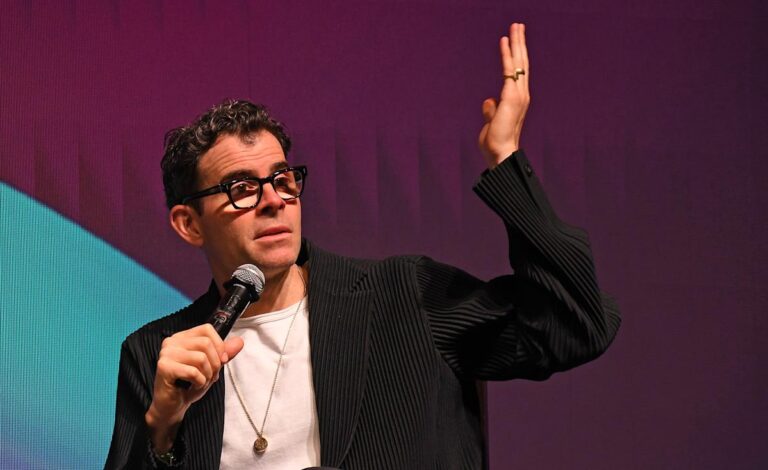
It’s no secret that AI-generated content took over our social media feeds in 2025. Now, Instagram’s top exec Adam Mosseri has made it clear that he expects AI content to overtake non-AI imagery and the significant implications that shift has for its creators and photographers.

Mosseri shared the thoughts in a lengthy post about the broader trends he expects to shape Instagram in 2026. And he offered a notably candid assessment on how AI is upending the platform. “Everything that made creators matter—the ability to be real, to connect, to have a voice that couldn’t be faked—is now suddenly accessible to anyone with the right tools,” he wrote. “The feeds are starting to fill up with synthetic everything.”

But Mosseri doesn’t seem particularly concerned by this shift. He says that there is “a lot of amazing AI content” and that the platform may need to rethink its approach to labeling such imagery by “fingerprinting real media, not just chasing fake.”

From Mosseri (emphasis his):

Social media platforms are going to come under increasing pressure to identify and label AI-generated content as such. All the major platforms will do good work identifying AI content, but they will get worse at it over time as AI gets better at imitating reality. There is already a growing number of people who believe, as I do, that it will be more practical to fingerprint real media than fake media. Camera manufacturers could cryptographically sign images at capture, creating a chain of custody.

On some level, it’s easy to understand how this seems like a more practical approach for Meta. As we’ve previously reported, technologies that are meant to identify AI content, like watermarks, have proved unreliable at best. They are easy to remove and even easier to ignore altogether. Meta’s own labels are far from clear and the company, which has spent tens of billions of dollars on AI this year alone, has admitted it can’t reliably detect AI-generated or manipulated content on its platform.

That Mosseri is so readily admitting defeat on this issue, though, is telling. AI slop has won. And when it comes to helping Instagram’s 3 billion users understand what is real, that should largely be someone else’s problem, not Meta’s. Camera makers — presumably phone makers and actual camera manufacturers — should come up with their own system that sure sounds a lot like watermarking to “to verify authenticity at capture.” Mosseri offers few details about how this would work or be implemented at the scale required to make it feasible.

Mosseri also doesn’t really address the fact that this is likely to alienate the many photographers and other Instagram creators who have already grown frustrated with the app. The exec regularly fields complaints from the group who want to know why Instagram’s algorithm doesn’t consistently surface their posts to their on followers.

But Mosseri suggests those complaints stem from an outdated vision of what Instagram even is. The feed of “polished” square images, he says, “is dead.” Camera companies, in his estimation, are “are betting on the wrong aesthetic” by trying to “make everyone look like a professional photographer from the past.” Instead, he says that more “raw” and “unflattering” images will be how creators can prove they are real, and not AI. In a world where Instagram has more AI content than not, creators should prioritize images and videos that intentionally make them look bad.


Source link