Home Blog Page 88

Will you change your Gmail address? [Poll]

0


Google quietly revealed last week that it is adding an option for users to change their Gmail address and it seems a lot of people are excited, but will you change yours?

Changing your Google account email address has been possible for years, but not if you’re using a “@gmail.com” email address. With literal billions of people using Gmail, that’s why it was a pretty big deal for a Google support page to suddenly reveal that the company is “gradually rolling out” an option to change your Gmail address.

The notice only appeared on the Hindi translation of Google’s support page at first, but as of December 31, now appears on just about every translation of the page we’ve checked – German, Spanish, Japanese, French, and many others – except for the English one.

Despite that oddity, the option is rolling out. We’ve seen a few user reports following our initial post about the change where users have successfully accessed the page used to change your Gmail address, and even successfully changed theirs over.

Advertisement – scroll for more content

You can check if the option is available on your account here, and it’ll look like the screenshot below if the option is available on your account. If it’s not available, you’ll see a message saying that “this setting can’t be changed for your account.”

After tapping “Change Google Account email,” you’re presented with a second screen that explains what happens when you change your Gmail address, how it affects various Google services, and confirms you can switch back “at any time.”

Then, you simply input the username you want and hit “Change email.” It looks remarkably simple!

But the question remains, will you actually change your Gmail address?

While many are no doubt content with their existing address, there are countless reasons to change it. Perhaps you made the account years or even decades ago and have since outgrown the subject matter, need something more professional, or have even changed your actual name in the time since the address was created. Since Google’s process automatically means you have all of your emails forwarded to the new address while keeping all of your login details and account data intact, it really takes all of the hurdles out of the switch. Notably, though, quite a few folks have mentioned that the forwarding would defeat the purpose for them, as it means that spam emails would continue.

Thanks Sterling!

More on Gmail:

Follow Ben: Twitter/XThreads, Bluesky, and Instagram

FTC: We use income earning auto affiliate links. More.


Source link

Powerball: See the winning numbers in Wednesday’s $45 million drawing

0


It’s time to grab your tickets and check to see if you’re a big winner! The Powerball lottery jackpot continues to rise after one lucky winner in Arkansas won $1.7 billion in the December 24 drawing. Is this your lucky night?

Here are Wednesday’s winning lottery numbers:

11-18-21-24-38, Powerball: 26, Power Play: 10X

Double Play Winning Numbers

24-35-42-46-68, Powerball: 14

The estimated Powerball jackpot is $45 million. The lump sum payment before taxes would be about $20.7 million.

The Double Play is a feature that gives players in select locations another chance to match their Powerball numbers in a separate drawing. The Double Play drawing is held following the regular drawing and has a top cash prize of $10 million.

Powerball is held in 45 states, the District of Columbia, the U.S. Virgin Islands and Puerto Rico. The Double Play add-on feature is available for purchase in 13 lottery jurisdictions, including Pennsylvania and Michigan.

A $2 ticket gives you a one in 292.2 million chance at joining the hall of Powerball jackpot champions.

The drawings are held at 10:59 p.m. Eastern, Mondays, Wednesdays and Saturdays. The deadline to purchase tickets is 9:45 p.m.

If you purchase a product or register for an account through a link on our site, we may receive compensation. By using this site, you consent to our User Agreement and agree that your clicks, interactions, and personal information may be collected, recorded, and/or stored by us and social media and other third-party partners in accordance with our Privacy Policy.


Source link

Remembering the jazz greats we lost in 2025 : NPR

0


Critic Kevin Whitehead reflects on the jazz notables who died this year, including Sheila Jordan, Andy Bey, Ray Drummond, Bunky Green, Chuck Mangione, Eddie Palmieri and Jim McNeely.


TERRY GROSS, HOST:

This is FRESH AIR. Today, our jazz historian, Kevin Whitehead, looks back at seven jazz notables who died this year. He earlier paid tribute to band leader Jack DeJohnette and to my late husband, the jazz critic Francis Davis. Kevin’s RIP list starts with singer Sheila Jordan.

(SOUNDBITE OF SONG, “SHELIA’S BLUES”)

SHELIA JORDAN: (Singing) So she sent me to live with my grandparents near a small coal mining town. Pennsylvania stayed. Grew up with the coal miners. Singing in the beer garden every Saturday. We used to sit around, and they’d drink. And they’d sing their songs. You are my sunshine. My only sunshine. You make me happy. But rarely did they ever find…

KEVIN WHITEHEAD, BYLINE: Sheila Jordan, who grew up partly in Western Pennsylvania, as she tells us on “Sheila’s Blues” from 1984. Jordan, who died in 2025 at 96, started singing as a kid and never stopped, building on Charlie Parker’s “Be-Bop” to find her own confident voice in all sorts of musical settings. She also taught and inspired countless other vocalists. When Sheila sang, you could hear the joy she found in jazz, which kept her eternally young. Other veteran singers who passed this year include Cleo Laine, Nancy King and Lillian Boutte. Also, the buttery smooth, bartone Andy Bey, who lingered over slow ballads. But Andy Bey also had a way with rhythm tunes like this 1970 Duke Pearson number.

(SOUNDBITE OF SONG, “I DON’T CARE WHO KNOWS IT”)

ANDY BEY: (Singing) When I look at you, it thrills me through and through. And I don’t care who knows. Baby, I’m yours.

WHITEHEAD: Musicians from the jazz rhythm section who died in 2025 include guitarist George Freeman, pianists Hal Galper, Mike Wofford and Mike Ratledge, drummers Al Foster, Greg Bandy and Louis Moholo-Moholo, tuba players Joe Daley and Jim Self, and one of the great bass players of our time, whose appointment book was always full – Ray Drummond. Bass violin is a big instrument, and Drummond was a big man who handled it with effortless grace.

(SOUNDBITE OF MUSIC)

WHITEHEAD: Another influential teacher who passed this year was alto saxophonist Bunky Green, who taught in Jacksonville for a couple of decades after a long spell in Chicago. He didn’t record so very much and not always in ideal settings, though even his ’70s funk records have their moments. Back then, his slippery phrasing and side-slipping harmony pointed the way for future alto stars Steve Coleman, Greg Osby and Rudresh Mahanthappa. Here’s Bunky Green on “Tension & Release” in 1979.

(SOUNDBITE OF BUNKY GREEN’S “TENSION & RELEASE”)

WHITEHEAD: Another much better known horn player passed in 2025. Let’s listen a bit, then I’ll tell you who it is.

(SOUNDBITE OF THE JAZZ MESSENGERS’ “SECRET LOVE”)

WHITEHEAD: The Jazz Messengers’ 1966 on “Secret Love” with trumpet hot shot Chuck Mangione. A few years later, Mangione would turn his attention to pop jazz, hitting it big in 1978 with “Feels So Good,” a terminally mellow tune that set him up for life. Chuck Mangione was a good sport about his flugelhorn-cuddling public image, spoofing himself on TV’s “King Of The Hill.” But give the man his due. His younger self could really play.

(SOUNDBITE OF THE JAZZ MESSENGERS’ “SECRET LOVE”)

WHITEHEAD: Chuck Mangione. A few other players who worked at the edges of jazz passed in 2025, including vibraphonist Roy Ayers, accordionist Guy Klucevsek, much missed pedal steel guitarist Susan Alcorn, Brazilian multi-instrumentalist Hermeto Pascoal and the great Bronx-born Latin band leader Eddie Palmieri. As a pianist, Palmieri showed off some fresh moves within the Afro Cuban tradition. Soloing on his “Dime” from 2005, every time he slams out a chord, it’s like he’s switching channels to another rhythmic profile. It’s a montuno gone postmodern.

(SOUNDBITE OF EDDIE PALMIERI’S “DIME”)

WHITEHEAD: Besides Eddie Palmieri, another formidable arranger for big bands died this year, pianist Jim McNeely, who played with New York’s Vanguard Jazz Orchestra for years. He also wrote for several European radio bands who loved how good his sleekly handsome charts made them sound. Let’s go out with a slice of Jim McNeely’s suite, “Rituals,” which riffed on themes and rhythms from Stravinsky’s “Rite Of Spring.” McNeely looking forward and back, as the jazz greats do. The stuff masters like these dreamed up is now part of the collective wisdom shared by all of us they leave behind.

(SOUNDBITE OF FRANKFURT RADIO BIGBAND & JIM MCNEELY’S “RITUALS: SACRIFICE I”)

GROSS: Kevin Whitehead is the author of “New Dutch Swing,” “Why Jazz?” and “Play The Way You Feel.” Tomorrow on FRESH AIR, we’ll continue our retrospective of some favorite interviews from 2025 with Jeff Hiller. This year, he won an Emmy for his performance in the HBO series “Somebody Somewhere” as Joel, the main character’s best friend, who runs a secret nighttime cabaret at his church for his LGBTQ friends. Jeff Hiller originally felt called to be a pastor, but being gay was a pretty major obstacle. I hope you can join us. To keep up with what’s on the show and get highlights of our interviews, follow us on Instagram at @nprfreshair.

(SOUNDBITE OF DUKE ELLINGTON’S “AULD LANG SYNE”)

GROSS: FFRESH AIR’s executive producer is Danny Miller. Our technical director and engineer is Audrey Bentham, with engineering today from Charlie Kyer (ph). Our managing producer is Sam Briger. Our interviews and reviews are produced and edited by Phyllis Myers, Anne Marie Baldonado, Lauren Krenzel, Therese Madden, Monique Nazareth, Anna Bauman, Thea Chaloner, Susan Nyakundi and Nico Gonzalez-Wisler. Our digital media producer is Molly Seavy-Nesper. Roberta Shorrock directs the show. Our co-host is Tonya Mosley. I’m Terry Gross. All of us at FRESH AIR wish you a happy, healthy and fulfilling New Year.

(SOUNDBITE OF DUKE ELLINGTON’S “AULD LANG SYNE”)

Copyright © 2025 NPR. All rights reserved. Visit our website terms of use and permissions pages at www.npr.org for further information.

Accuracy and availability of NPR transcripts may vary. Transcript text may be revised to correct errors or match updates to audio. Audio on npr.org may be edited after its original broadcast or publication. The authoritative record of NPR’s programming is the audio record.



Source link

Investors predict AI is coming for labor in 2026 

0


Concerns about how AI will affect workers continue to rise in lockstep with the pace of advancements and new products promising automation and efficiency.

Evidence suggests that fear is warranted.

A November MIT study found an estimated 11.7% of jobs could already be automated using AI. Surveys have shown employers are already eliminating entry-level jobs because of the technology. Companies are also already pointing to AI as the reason for layoffs.

As enterprises more meaningfully adopt AI, some may take a closer look at how many employees they really need.

In a recent TechCrunch survey, multiple enterprise VCs said AI will have a big impact on the enterprise workforce in 2026. This was particularly interesting because the survey didn’t specifically ask about it.

Eric Bahn, a co-founder and general partner at Hustle Fund, expects to see affects on labor in 2026. He’s just not sure exactly what that will look like.

“I want to see what roles that have been known for more repetition get automated, or even more complicated roles with more logic become more automated,” Bahn said. “Is it going to lead to more layoffs? Is there going to be higher productivity? Or will AI just be an augmentation for the existing labor market to be even more productive in the future? All of this seems pretty unanswered, but it seems like something big is going to happen in 2026.”

Techcrunch event

San Francisco
|
October 13-15, 2026

Marell Evans, founder and managing partner at Exceptional Capital, predicted companies looking to increase AI spending, will pull money from their pool for labor and hiring.

“I think on the flip side of seeing an incremental increase in AI budgets, we’ll see more human labor get cut and layoffs will continue to aggressively impact the U.S. employment rate,” Evans said.

Rajeev Dham, managing director at Sapphire, agreed that 2026 budgets will start to shift resources from labor to AI. Jason Mendel, a venture investor at Battery Ventures, added that AI will start to surpass just being a tool to make existing workers more efficient in 2026.

“2026 will be the year of agents as software expands from making humans more productive to automating work itself, delivering on the human-labor displacement value proposition in some areas,” Mendel said.

Antonia Dean, a partner at Black Operator Ventures, said even if companies aren’t shifting labor budgets toward AI projects, they will likely still say AI is the reason for layoffs or a reduction in labor costs anyway.

“The complexity here is that many enterprises, despite how ready or not they are to successfully use AI solutions, will say that they are increasing their investments in AI to explain why they are cutting back spending in other areas or trimming workforces,” Dean said. “In reality, AI will become the scapegoat for executives looking to cover for past mistakes.”

Many AI companies argue their technology doesn’t eliminate jobs but rather helps shift workers to “deep work” or to higher-skilled jobs while AI just automates repetitive “busy work.”

But not everyone buys that argument, and people are worried that their jobs will be automated. According to VCs who invest in that area, it doesn’t sound like those fears will be quelled in 2026.


Source link

How to watch Samsung’s “First Look” CES 2026 presentation

0


Samsung is arguably the 800-pound gorilla of CES, with a full spectrum of products that range from phones and computers to refrigerators to AI assistants and rolling robots. But for , the company is shaking up the schedule a bit: Instead of its longtime midday Monday press conference position, the Korean giant will front-run the entire show with a Sunday night presentation.

Samsung has already given a few hints as to what’s on the agenda, but what we’re really hoping to see is an update on the — a star of previous CES presentations that ostensibly missed its previously promised .

How to watch Samsung’s “The First Look” presentation at CES 2026

The event will stream live from the Wynn Hotel in Las Vegas on Sunday, January 4 at 10PM ET. There are several ways to tune in: you can watch via the , or via Samsung TV Plus. (We’ll embed the stream here once it appears on the channel.)

What to expect from Samsung at CES 2026

Keynote speaker TM Roh, the CEO of Samsung’s Device eXperience (DX) Division, will discuss the company’s plans for the new year and beyond, which will (of course) include “new AI-driven customer experiences,” the company . In addition, we’ll hear from the President and Head of the Visual Display Business, SW Yong and Executive Vice President and Head of Digital Appliances Business, Cheolgi Kim. Those two will “share their respective business directions for the upcoming year.”

But if you’re looking for more specifics, Samsung is following its “Advent calendar” approach to early CES announcements, with dropping nearly each day. So far, we know that — like competitors LG and Hisense — the company will be offering details on a line of (replete with confirmed screen sizes of 55 to 115 inches). Also confirmed: a full line of appliances infused with what Samsung calls .

It’s likely Samsung will map out its CES plans in greater detail as the January 4 event approaches, so we’ll update this story accordingly when it does.


Source link

Pixel 10 turns into a cartoon with dbrand’s ‘Sketch 2D’ skins

0


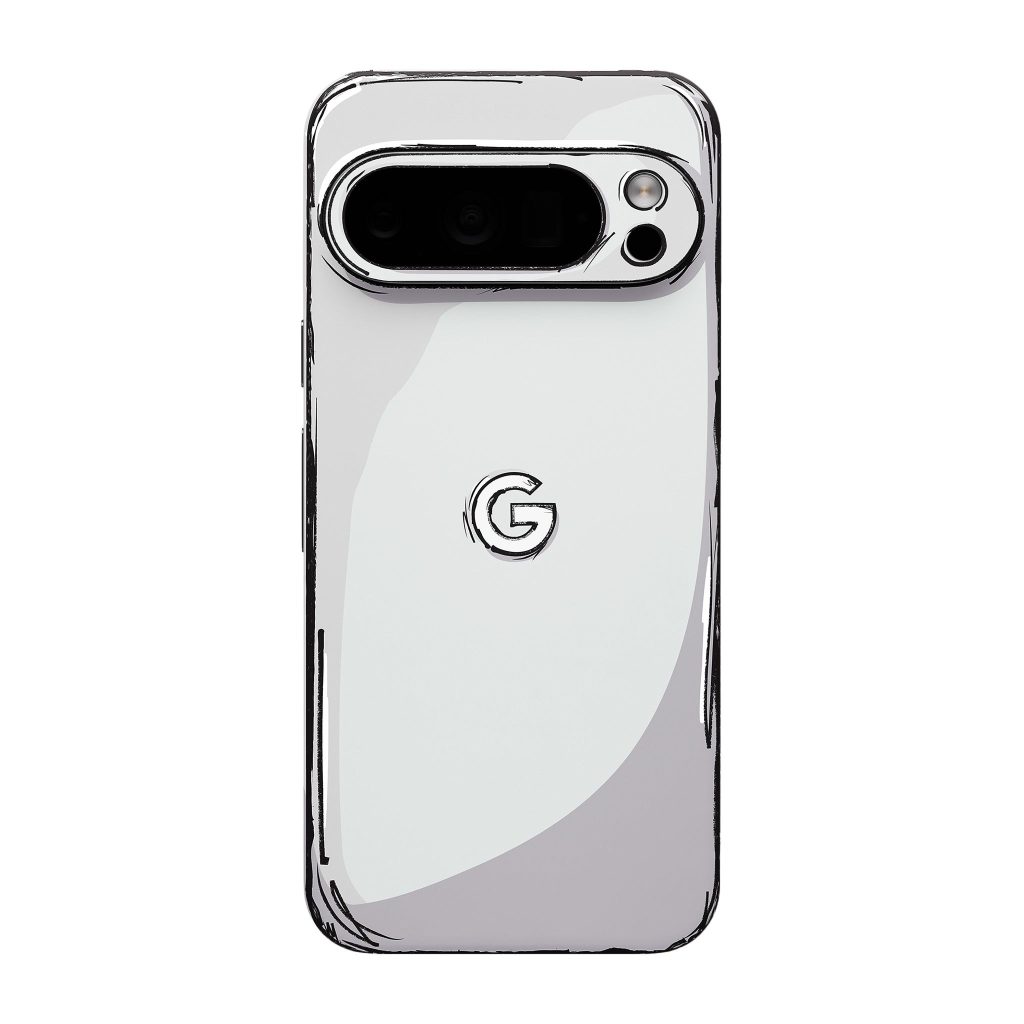
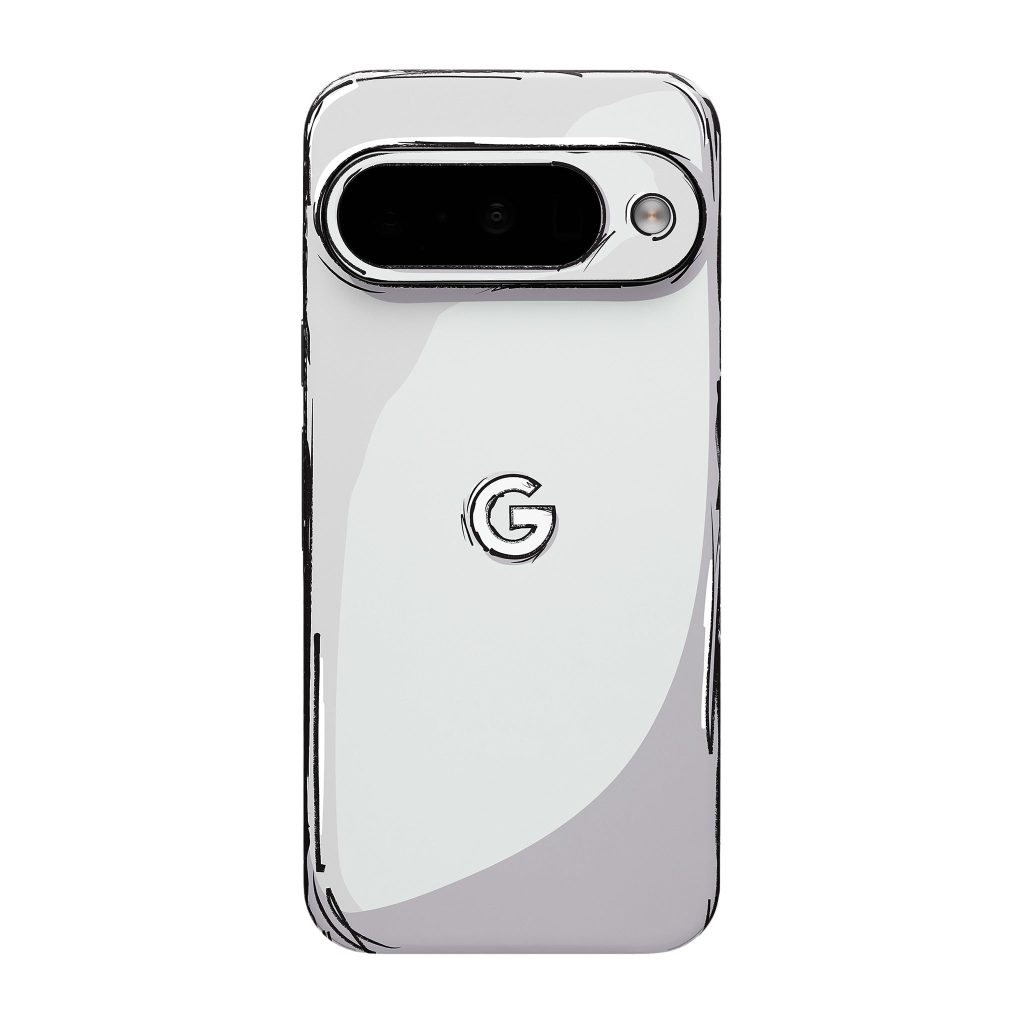
Over the holidays, dbrand has introduced a neat new skin design called “Sketch 2D” that turns your Pixel 10 – and a bunch of other devices – into a real-life cartoon.

“Sketch 2D” is the latest collection of skin designs available at dbrand, having launched last week on Christmas Day. The new design adopts the look of a classic doodle and applies it to your device, giving it a 2D cartoon look, but on a 3D object in the real world.

It’s a pretty cool look, and one that’s available for a big lineup of devices including the Pixel 10 series.

Other devices you can get a “Sketch 2D” skin for include Samsung Galaxy phones, iPhones, the Steam Deck, Nintendo Switch 2, and select others as well. Each skin costs around $25, or whatever the going main price is for dbrand skins on the device of your choice.

Advertisement – scroll for more content

“Sketch 2D” is available now on dbrand’s website.

This also comes as dbrand is launching a contest on its website where one random winner will be selected to get a Galaxy Z TriFold. The contest winner will be pulled from anyone who placed an order for anything from dbrand – even if it’s not the “Sketch 2D” design – through January 3, or those who printed and mailed a “no purchase necessary” ballot.


Follow Ben: Twitter/XThreads, Bluesky, and Instagram

FTC: We use income earning auto affiliate links. More.


Source link

Outback Steakhouse to close dozens of restaurants in the US via turnaround strategy

0


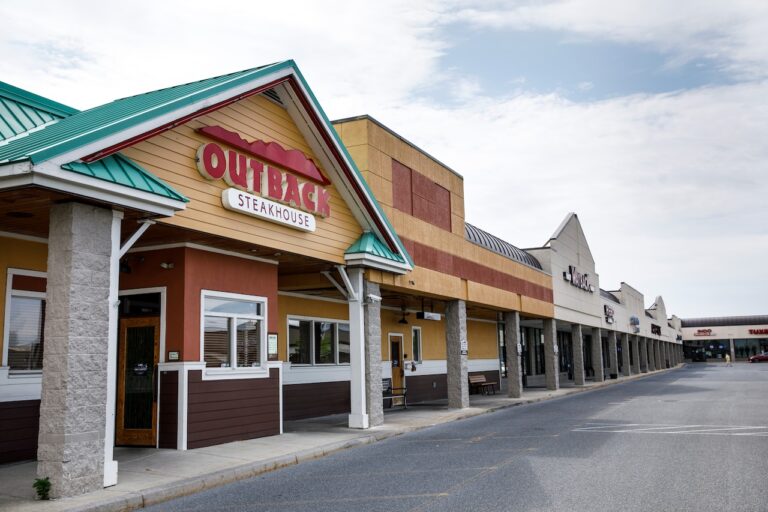
Popular steakhouse and nationwide eatery, Outback Steakhouse, confirmed it will close dozens of locations over the next few years as part of an aggressive turnaround strategy.

Bloomin’ Brands, Inc., Outback’s parent company, revealed plans to close more than 40 restaurants as part of its efforts to strengthen the brand’s financial performance in a Q3 earnings report.

“I am excited to announce our turnaround strategy, with a focus on the Outback Steakhouse brand,” Mike Spanos, Bloomin’ Brands CEO, said in a statement.

” … We believe our strategic plan will drive long-term, sustainable and profitable growth.”

The company did not specify which restaurants it plans to close.

Outback closed 21 locations in 2025 and outlined plans to not renew an additional 22 locations to support its efforts.

The company said these decisions were made to streamline its restaurant portfolio and focus on higher‑performing units as part of a broader turnaround strategy.

Bloomin’ Brands said it took a $33.2 million hit this quarter to cover the costs and lost value associated with closing the restaurants.

As of December, Outback operates more than 650 locations across the U.S., including at least eight in Massachusetts, according to its website.


Source link

Remembering the actors, musicians, writers and artists we lost in 2025

0


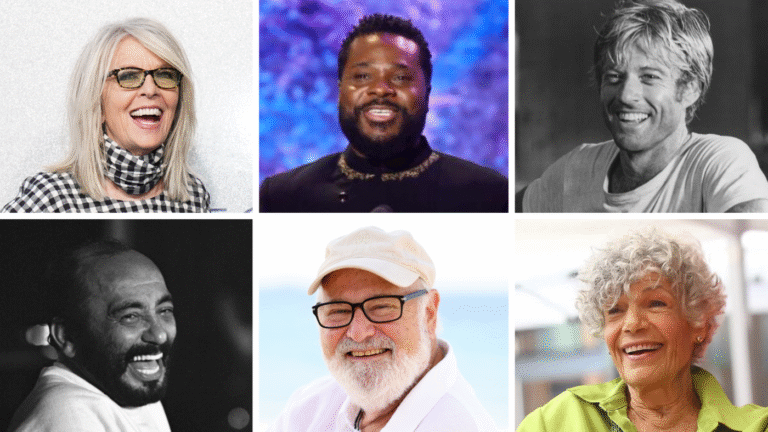
Clockwise from top left: Diane Keaton, Malcolm-Jamal Warner, Robert Redford, Susan Stamberg, Rob Reiner and Eddie Palmieri.

Every year, we remember some of the writers, actors, musicians, filmmakers and performers who died over the past year, and whose lifetime of creative work helped shape our world.


Source link

The phone is dead. Long live . . . what exactly?

0


True Ventures co-founder Jon Callaghan doesn’t think we’ll be using smartphones the way we do now in five years — and maybe not at all in 10.

For a venture capitalist whose firm has had some big winners over its two decades – from consumer brands like Fitbit, Ring, and Peloton, to enterprise software makers HashiCorp and Duo Security – that’s more than armchair theorizing; it’s a thesis on which True Ventures is actively betting.

True hasn’t gotten this far by following the crowd. The Bay Area firm has largely operated under the radar despite managing roughly $6 billion across 12 core seed funds and four “select,” opportunity-style funds that it has used to pour more capital into portfolio companies that are gaining momentum. While other VCs have grown more promotional – building personal brands on social media and podcasts to attract founders and deal flow – True has gone in the opposite direction, quietly cultivating a tight network of repeat founders. The strategy seems to be working: according to Callaghan, the firm boasts 63 exits with gains and seven IPOs amid a portfolio of some 300 companies assembled over its 20-year history.

Three of True’s four recent exits in the fourth quarter of 2025 involved repeat founders who came back to work with the firm again after previous successes, says Callaghan. Still, it’s Callaghan’s thinking about the future of human-computer interaction that really stands out in a sea of AI hype and mega-rounds.

“We’re not going to be using iPhones in 10 years,” Callaghan says flatly. “I kind of don’t think we’ll be using them in five years – or let’s say something different that’s a little safer – we’re going to be using them in very different ways.”

His argument is simple: our phones are lousy at being the interface between humans and intelligence. “The way we take them out right now to send a text to confirm this or send you some message or write an email – [that’s] super inefficient, [and] not a great interface,” he explains. “[They’re] prone to error, prone to disruption [of] our normal lives.”

So sure is he of this that True has been spending years exploring alternative interfaces – software-based, hardware-based, everything in between. It’s the same instinct that led True to bet early on Fitbit before wearables were obvious, to invest in Peloton after hundreds of other VCs said ‘no thanks,’ and to back Ring when founder Jamie Siminoff kept running out of money and even the judges on “Shark Tank” turned him away. Each time, the bet looked questionable, says Callaghan. Each time, the bet was on a new way for humans to interact with technology that felt more natural than what came before.

Techcrunch event

San Francisco
|
October 13-15, 2026

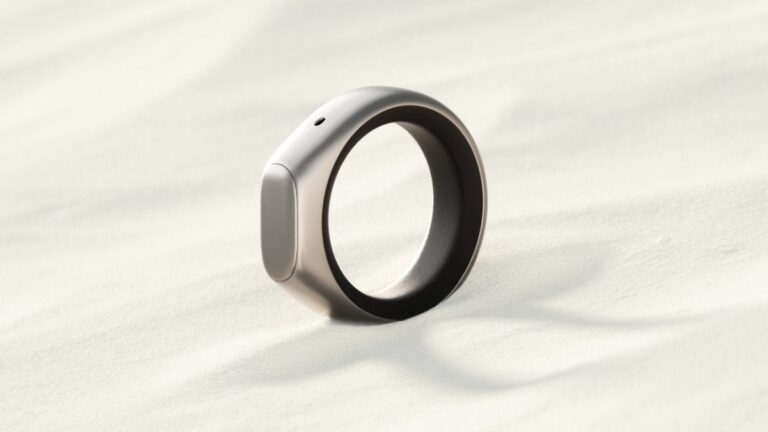
The latest manifestation of this thesis is Sandbar, a hardware device that Callaghan describes as a “thought companion” — or, in more mundane terms, a voice-activated ring worn on the index finger. Its singular purpose: capturing and organizing your thoughts through voice notes. It’s not trying to be another Humane AI Pin or compete with Oura’s health tracking. “It does one thing really well,” Callaghan says. “But that one thing is a fundamental human behavioral need that is missing from technology today.”

The idea isn’t to passively record ambient audio but to be there when an idea strikes, serving as a kind of thought partner. It’s attached to an app, leverages AI, and, according to Callaghan, represents a very different philosophy about how we should interact with intelligence.

What drew True to Sandbar founders Mina Fahmi and Kirak Hong wasn’t just the product, though. “When we met Mina, we were just absolutely aligned on vision,” Callaghan recalls. True’s team had already been thinking for years about alternative interfaces, making targeted investments around that possibility. They’d met with dozens of founders, as a result. But the approach of Fahmi and Hong – who previously worked together on neural interfaces at CTRL-Labs, a startup acquired by Meta in 2019 – stood out. “It’s about what [the ring] enables. It’s about the behavior it enables that we will very soon realize we can’t live without.”

There’s an echo here of Callaghan’s old line about Peloton: “It’s not about the bike.” To some, the bike – even its earliest iteration – was compelling. But Peloton was really about the behavior it enabled and the community it created; the bike was just the vessel.

This philosophy of betting on new behaviors — not just new gadgets — also explains how True has managed to stay disciplined about capital. Even as AI startups raise hundreds of millions at billion-dollar valuations out of the gate, True insists that it’s able to stick to what it does best, which is to write seed checks of $3 million to $6 million for 15% to 20% ownership in startups that it often gets to see first.

Callaghan says True will raise more money to fund what’s working, but he’s not interested in raising billions of dollars. “Like, why? You don’t need that to build something amazing today.”

That same measured approach colors his view of the broader AI boom. While he says (when asked) that he believes OpenAI could soon be worth a trillion dollars, and while he calls this the most powerful compute wave we’ve seen, Callaghan sees warning signs in the circular financing deals backing hyperscalers and their $5 trillion in projected CapEx spending on data centers and chips. “We’re in a very capital intense part of the cycle, and that is worrisome,” he notes.

That said, he’s optimistic about where the real opportunities lie. Callaghan thinks the greatest value creation is ahead of us – not in the infrastructure layer but in the application layer, where new interfaces will enable entirely new behaviors.

It all comes back to his core investing philosophy, which sounds almost romantic — the kind of pitch-perfect VC wisdom that would ring hollow from most people: “It should be scary and lonely and you should be called crazy,” Callaghan says about early-stage investing done right. “And it should be really blurry and ambiguous, but you should be with a team that you really believe in.” Five to ten years later, he says, you’ll know if you were on to something.

Either way, based on True’s track record of betting on hardware that many others missed – fitness trackers, connected bikes, smart doorbells, and now thought-capturing rings – it’s worth paying attention when Callaghan says the phone’s days are numbered. Being early is the whole point — and the trend lines support his thesis: the smartphone market is effectively saturated, growing at barely 2% annually, while wearables — smartwatches, rings, and voice-enabled devices — are expanding at double-digit rates.

Something’s shifting in how we want to interact with technology, and True is placing its bets accordingly.

Pictured above, Sandbar’s Stream ring. For much more from our conversation with Callaghan, tune in to the StrictlyVC Download podcast next week; new episodes drop every Tuesday.


Source link

LG announces new line of xboom speakers ahead of CES

0


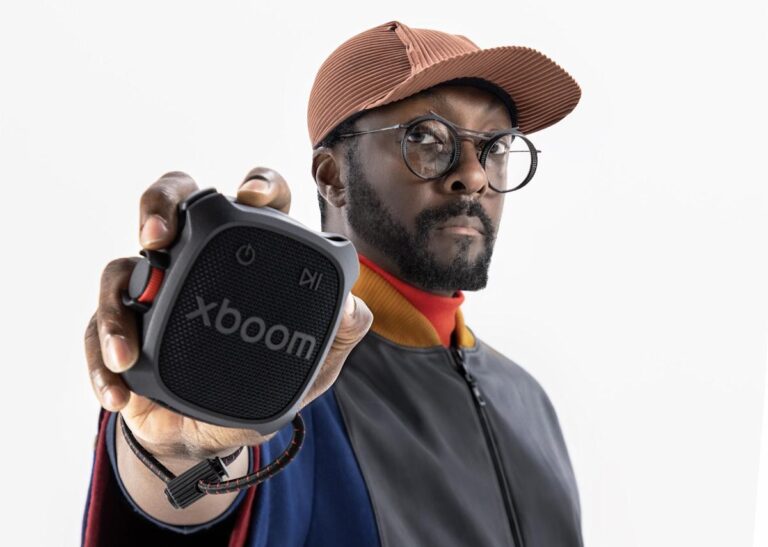
LG just revealed several new speakers in the xboom line . These speakers are part of with will.i.am from Black Eyed Peas, who is on board as the “experimental architect” involved with “development, design and brand marketing.”

These speakers are fairly different from one another, but they all have AI in common. Each speaker includes an algorithm that automatically adjusts the EQ after analyzing the audio content and the listening space. Many also feature an AI algorithm for ambient lighting, which will adjust the lights to match the song being played.

The xboom Stage 501 is intended for parties and karaoke sessions. It features additional AI that can remove vocals from “virtually any song” and even adjust the pitch. The battery lasts for around 25 hours and can operate while plugged in. The speaker delivers up to 220W of power, with dual woofers and full-range drivers. It boasts a five-sided cabinet design that allows for vertical and horizontal placement.

A boombox.

LG

The xboom Blast is a boombox with a 99Wh battery that allows for up to 35 hours of continuous playback. That’s a mighty fine metric. This is a modern boombox, so it’s designed for durability. There are edge bumpers and a side rope handle for carrying.

A speaker

LG

The Mini is a tiny doodad that can be placed just about anywhere. It offers ten hours of battery life per charge and a strap for easy placement. The speaker also includes a built-in tripod mount.

A speaker.

LG

The Rock is a, well, rock-shaped speaker that’s larger than the Mini but can still be held in the palm of the hand. The battery lasts for ten hours and the design is focused on durability. It has been tested to “seven military standards” to ensure reliability in “challenging outdoor environments.” This is an upgrade of the .

We don’t have pricing or exact availability on this stuff yet, though the speakers will be on display at LG’s booth at CES. The company has said that all four of these gadgets will come out in 2026.


Source link