Ahead of CES 2026, LG has announced its new “Gallery TV” which is designed to take on Samsung’s popular “The Frame.”
Samsung’s “The Frame” TV is an art and aesthetic-focused take on a TV, and has seen quite a bit of competition in recent years. Google TV brands such as Hisense and TCL have both released competitors, and now LG is throwing its hat into the ring.
The LG “Gallery TV” employs a formula very similar to Samsung’s – a flush-mount design, magnetic frames, and artworks that can be displayed on the TV when it’s not in active use.
Available in 55- and 65-inch models, the Gallery TV features a slim, flush-mount design with customizable magnetic frames.1 It also offers plenty of internal memory for users to curate and store their favorite content. Beyond its role as a canvas, it delivers a premium entertainment experience powered by LG’s MiniLED technology and the α (Alpha) 7 AI Processor, combining stunning 4K visuals with immersive AI Sound Pro (Virtual 9.1.2ch) audio.
The Gallery TV experience is completed by the LG Gallery+ service. LG Gallery+ serves as a comprehensive interior platform that transforms screens into versatile interior elements with a library of over 4,500 monthly-refreshed works.2 Featuring a diverse spectrum ranging from fine art to cinematic scenes, game visuals and animations, the platform allows users to decorate their homes with visuals that match their specific tastes.
While pricing and a release date have yet to be announced, LG will be showing off the new TV at CES 2026 next week.
Are you tonight’s lucky winner? Grab your tickets and check your numbers. The Mega Millions lottery jackpot continues to rise after someone won the $90 million prize on December 2.
Here are the winning numbers in Tuesday’s drawing:
18-43-49-63-69; Mega Ball: 06
The estimated jackpot for the drawing is $138 million. The cash option is about $63.3 million. If no one wins, the jackpot climbs higher for the next drawing.
According to the game’s official website, the odds of winning the jackpot are 1 in 302,575,350.
Players pick six numbers from two separate pools of numbers — five different numbers from 1 to 70 and one number from 1 to 25 — or select Easy Pick. A player wins the jackpot by matching all six winning numbers in a drawing.
Jackpot winners may choose whether to receive 30 annual payments, each five percent higher than the last, or a lump-sum payment.
Mega Millions drawings are Tuesdays and Fridays and are offered in 45 states, Washington D.C. and the U.S. Virgin Islands. Tickets cost $5 each.
If you purchase a product or register for an account through a link on our site, we may receive compensation. By using this site, you consent to our User Agreement and agree that your clicks, interactions, and personal information may be collected, recorded, and/or stored by us and social media and other third-party partners in accordance with our Privacy Policy.
Journalist and author Tatiana Schlossberg, the granddaughter of former president John F. Kennedy, has died after battling a rare form of cancer.
SCOTT DETROW, HOST:
We want to take a moment now to mark the death of Tatiana Schlossberg.
MARY LOUISE KELLY, HOST:
She was the granddaughter of a president, John F. Kennedy. But we’re remembering her today because of her work as a journalist and because of a remarkable essay she wrote for The New Yorker in which she talked about being diagnosed last year with a rare form of cancer. She’d just turned 34.
DETROW: Schlossberg hadn’t felt sick. In fact, her cancer was discovered the day she gave birth to her second child. Here’s part of what she wrote.
KELLY: (Reading) My son knows that I am a writer and that I write about our planet. Since I’ve been sick, I remind him a lot so that he will know I was not just a sick person. When I look at him, I try to fill my brain with memories. How many more times can I watch the video of him trying to say Anna Karenina? What about when I told him I didn’t want ice cream from the ice cream truck, and he hugged me, patted me on the back and said, I hear you, buddy, I hear you?
DETROW: Schlossberg writes about her daughter as well. She ends with this.
KELLY: (Reading) Mostly, I try to live and be with them now. But being in the present is harder than it sounds, so I let the memories come and go. So many of them are from my childhood that I feel as if I’m watching myself and my kids grow up at the same time. Sometimes I trick myself into thinking I’ll remember this forever, I’ll remember this when I’m dead. Obviously, I won’t. But since I don’t know what death is like, and there’s no one to tell me what comes after it, I’ll keep pretending. I will keep trying to remember.
DETROW: Tatiana Schlossberg died today. She was 35. Her essay for The New Yorker is titled “A Battle With My Blood.”
Accuracy and availability of NPR transcripts may vary. Transcript text may be revised to correct errors or match updates to audio. Audio on npr.org may be edited after its original broadcast or publication. The authoritative record of NPR’s programming is the audio record.
Universities and research labs have long been Europe’s deep tech treasure trove. Now, academic spinouts have consolidated into a solid startup funnel worth $398 billion — and VC money is following.
According to Dealroom’s European Spinout Report 2025, 76 of these deep tech and life sciences companies have either reached $1 billion valuations, $100 million in revenue, or both. These include unicorns like Iceye, IQM, Isar Aerospace, Synthesia, and Tekever, which are now inspiring more funds to back university spinouts.
Just this month, two new funds emerged that will bring more funding to talent emerging out of European tech universities, while adding breadth to a pipeline currently topped by Cambridge, Oxford, and ETH Zurich.
PSV Hafnium, out of Denmark, recently closed its inaugural fund at an oversubscribed €60 million (approximately $71 million), with a focus on Nordic deep tech. With offices in Berlin and London, but also in Aachen, U2V (University2Ventures) is targeting the same amount for its first fund, of which it recently completed the first closing.
These two newcomers join the growing ranks of European venture firms that have university spinouts as a core part of their investment thesis. Pioneered by the likes of Cambridge Innovation Capital and Oxford Science Enterprises, which have now fully matured, this category has also diversified.
While it still mostly consists of funds backed by one or several universities and institutes, it now includes independent firms that simply see spinouts as potential fund returners — and rightly so. Oxford Ionics, acquired by U.S.-based IonQ, was one of the six spinouts out of Switzerland, the U.K., and Germany that delivered exits of more than $1 billion to their investors in 2025.
These exits come alongside increased amounts of funding. According to Dealroom, European university spinouts in deep tech and life sciences are on track to raise a near all-time-high $9.1 billion in 2025. This contrasts with overall VC funding in Europe, which is down nearly 50% from its 2021 peak.
Techcrunch event
San Francisco | October 13-15, 2026
Large rounds closed in 2025 also reflect appetite for spinouts in sectors as varied as nuclear energy — Proxima Fusion — and dual-use drones — Quantum Systems, now valued above $3 billion. In many cases, these startups leverage research from specialized labs, which also explains why there is a long tail of European locations capable of producing spinouts.
Building relationships with hubs outside of Oxbridge and leading countries can also be a way for newcomers to differentiate themselves and find deals. “The Nordic’s research institutions hold extraordinary, untapped potential,” PSV Hafnium’s partners stated in a press release.
PSV Hafnium itself is a spinout from the Technical University of Denmark (DTU), but is also making early-stage investments in other Nordic countries. One of its nine checks to date went to SisuSemi, a Finnish startup leveraging a decade of research at the University of Turku to bring new surface cleaning tech to the semiconductor industry.
It is good news for teams like SisuSemi that there is more funding available to them. It also comes in addition to grants, commercialization support, and improved deal terms that contribute to an encouraging environment for Europe’s spinouts. However, one pain point remains: growth capital.
As the report’s authors note, this gap “is not a unique trend to spinouts, but something impacting the entire startup ecosystem in Europe.” Still, it is quite striking that nearly 50% of late-stage funding for European deep tech and life sciences spinouts comes from outside Europe, mainly from the U.S.
While this share has decreased over the years, Europe won’t be fully reaping the benefits of its investments in talent and research unless this changes more substantially — but that’s a broader issue to be solved.
OneXPlayer is quickly establishing itself as a company that isn’t afraid to get weird as hell. (Take, for example, its transforming dual-screen gaming portable.) Its latest venture is another retro gaming handheld that, at first glance, looks like a standard dual-screen model. But the Android-powered OneXSugar Wallet uses a single foldable screen instead.
The device was teased via a 54-second video on the Chinese video-sharing platform Bilibili. Retro Handheldsreports that the Wallet uses an 8.01-inch OLED with a 2,480 x 1,860 resolution. (That’s a 4:3 aspect ratio when unfolded.) The video also shows an asymmetrical analog stick layout with a D-pad and four action buttons.
OneXSugar Fold (OneXPlayer / Bilibi)
Given foldable phones’ long-term durability concerns, we aren’t necessarily betting on the OneXSugar Wallet being a wise purchase. We also don’t know how much it will cost. (The aforementioned weird dual-screen device retails for a whopping $799.) But at the very least, don’t be shocked if the novel form factor ends up sparking a few copycats in the competitive retro gaming industry.
Chrome on Android has offered a Reading mode for several years now, and Google is now significantly redesigning it.
The previous “Reading mode” experience did not consistently appear on every article that you would think warrants a simplified view. When it was available, you’d get a large button next to the Omnibox that eventually shrank into a circle.
Old
On some devices, we’re now seeing “Show Reading mode” in the three-dot menu underneath “Listen to this page.” This button consistently appears in the overflow regardless of what page you’re visiting. It does appear to remove the old address bar shortcut, but a button remains to quickly exit Reading mode.
Advertisement – scroll for more content
Tapping takes you to a new view that retains the Omnibox instead of taking over the entire screen like before. A “Reading mode” sheet, which takes full advantage of Material 3 Expressive containers and shape morphing, at the bottom lets you set similar customizations like before:
Fonts: Sans serif, Serif, or Mono
Text size: Up to 250%
Background color: Light, Sepia, or Dark
Your Reading mode preferences are preserved through different pages, with the manual activation option being the best part of this update.
New
We’re seeing this on two Android devices running Chrome 143 in the stable channel today. However, it’s not yet widely rolled out. There are several “Reader Mode” flags to manually trigger this before the full launch:
chrome://flags/#reader-mode-improvements
FTC: We use income earning auto affiliate links.More.
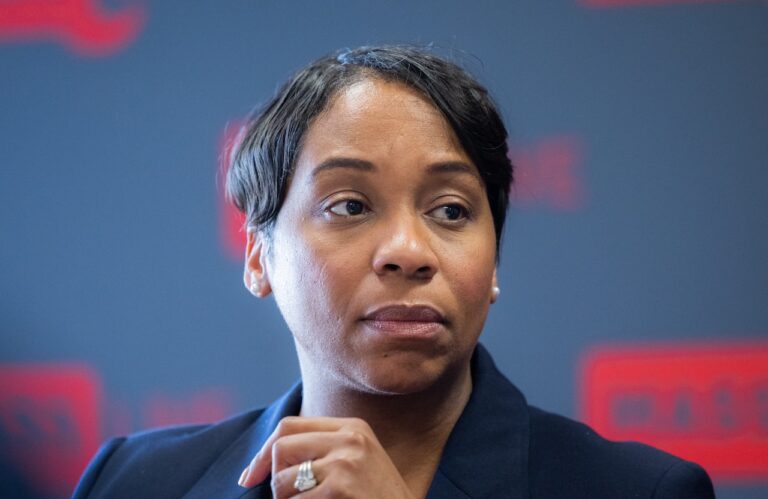
President Donald Trump’s administration will resume the review process for medical and public health research grants from the National Institutes of Health, Massachusetts Attorney General Andrea Campbell’s office announced Tuesday afternoon.
The U.S. Department of Health and Human Services (HHS), which oversees the National Institutes of Health (NIH), agreed to a settlement that would reinstate the original process for reviewing grants, a press release from Campbell’s office reads. HHS is run by Secretary of Health and Human Services Robert F. Kennedy Jr.
Earlier in the year, the Trump administration abruptly cancelled grant review meetings, according to Science Insider. The administration also paused final decisions on grant applications that received approval from panels, leaving states waiting on whether they would receive requested research funding, the press release from Campbell’s office reads.
The attorney general’s office said the delays from the administration caused harm to public research institutions.
“When the Trump Administration unlawfully stalled the review process for NIH grant applications, lifesaving studies related to Alzheimer’s disease, cancer, and other devastating illnesses were frozen indefinitely – stealing hope from countless families across the country and putting lives at risk,” Campbell said in the statement.
In April, Campbell, along with 16 other attorneys general, sued the Trump administration in connection with the delay of the grants.
The other attorneys general represent Arizona, California, Colorado, Delaware, Hawaii, Maryland, Minnesota, Nevada, New Jersey, New Mexico, New York, Oregon, Rhode Island, Washington and Wisconsin.
The settlement between Massachusetts and the HHS was agreed on Dec. 29, according to court documents. Nothing in the agreement, however, forces the HHS to ultimately award any specific grants.
“This agreement ensures that critical medical research projects are able to continue, paving the way for lifesaving medical advancements, driving job creation, and fostering academic competitiveness at Massachusetts’s world class research institutions,” Campbell said.
Cecilia Gimenez, left, who restored a version of ‘Ecce Homo’ mural by 19th century painter Elías Garcia Martínez, died Monday.
Javier Vinuela/AP
hide caption
toggle caption
Javier Vinuela/AP
Cecilia Giménez just wanted to freshen up an old painting at her church in Borja, Spain. She ended up becoming an internationally known artist.
The piece in question was a fresco by painter Elías Garcia Martínez known as Ecce Homo. It depicted a portrait of Jesus, in a red tunic with a crown of thorns on his head. By 2012, the piece was looking a little worse for wear, so Giménez took it upon herself to restore it. The result wasn’t immediately seen as an improvement, necessarily. News articles at the time said she “botched” the project, with people dubbing the new version, Ecce Mono.
The image went viral, and then became rapidly memed. Which meant the painting became way more famous thanks to Giménez. She died Monday, at the age of 94.
While the story had a fairly happy ending, the immediate wave of criticism did affect Giménez. Local news reported at the time that she was bedridden, suffering from anxiety, and that her family was trying to get her to eat.
But eventually, Aug. 25 became a local holiday to celebrate the renewed birth of the painting.
TikTok, owned by the Chinese company ByteDance, has been at the center of controversy in the U.S. for four years now due to concerns about user data potentially being accessed by the Chinese government.
As a result, U.S. users have often found themselves caught in the middle of this tension. Earlier this year, the app experienced a temporary outage in the U.S. that left millions of users in suspense before it was quickly restored. TikTok returned to the App Store and Google Play Store in February.
A number of investors competed to purchase the app, and after Trump extended the TikTok ban deadline for the fourth time, the battle is finally over. As of last week, TikTok officially signed a deal to divest a portion of its U.S. entity to a group of American investors.
This comes nearly three months after President Donald Trump signed an executive order that approves the sale of TikTok’s U.S. operations to an American investor group.
A week prior, President Trump announced that President Xi Jinping of China had given his approval of a TikTok deal, which would allow a consortium of U.S. investors to control the platform. ByteDance stated publicly that it would ensure the platform remains available to American users.
Who owns TikTok in the U.S.?
Image Credits:Bryce Durbin / TechCrunch
According to a memo viewed by TechCrunch, the investor group consists of Oracle, private equity firm Silver Lake, and investment firm MGX. Collectively, they will hold 45% of the U.S. operation, with ByteDance keeping nearly a 20% stake. Axios first reported the news, citing sources who estimate TikTok U.S. is valued at approximately $14 billion—a figure also mentioned by Vice President JD Vance.
In September, a report indicated that a “framework” deal was established between the U.S. and China, with a consortium of investors— including Oracle, Silver Lake, and Andreessen Horowitz—overseeing TikTok’s U.S. operations. These investors were expected to hold an 80% stake, and the remaining shares would belong to Chinese stakeholders.
Techcrunch event
San Francisco | October 13-15, 2026
The newly formed “TikTok USDS Joint Venture LLC” will oversee the app’s operations, including data protection, algorithm security, content moderation, and software assurance.
Oracle will serve as the trusted security partner, responsible for auditing and ensuring compliance with National Security Terms, according to the memo. The company already provides cloud services for TikTok and manages user data in the U.S. Notably, Oracle previously made a bid for TikTok back in 2020.
A White House official previously said Oracle would replicate and secure a new U.S. version of the algorithm, and the U.S.-based TikTok owners could lease the algorithm from ByteDance, which Oracle will then retrain.
ByteDance will not have access to information about TikTok’s U.S. users or any influence over the U.S. algorithm.
The deal is scheduled to close on January 22, 2026.
What users in the U.S. should know
Reports from Bloomberg indicate that when the deal is finalized, the TikTok app will be discontinued in the U.S. and users will need to transition to a new platform. However, the specifics of this platform remain largely unclear, including its features and how it will differ from the original app.
To fully understand this high-stakes drama, we’ll first revisit the timeline of TikTok’s tumultuous relationship with the U.S. government, which resulted in various legal battles and negotiations.
The drama first began in August 2020, when Trump signed an executive order to ban transactions with parent company ByteDance.
A month later, Trump’s administration sought to force a sale of TikTok’s U.S. operations to a U.S.-based company. The leading contenders included Microsoft, Oracle, and Walmart. However, a U.S. judge temporarily blocked Trump’s executive order, allowing TikTok to continue operating while the legal battle unfolded.
Things began to progress even more last year following the transition to the Biden administration. After the Senate passed the bill against TikTok, President Joe Biden signed it.
In response, TikTok sued the U.S. government, challenging the constitutionality of the ban and arguing the app and its American users were having their First Amendment rights violated. The company has consistently denied that it poses a security threat, asserting that its data stored in the U.S. complies with all local laws.
Fast-forward to today: Trump has had a change of heart since his first term and is trying to achieve a 50-50 ownership arrangement between ByteDance and a U.S. company.
There have been several contenders, including The People’s Bid for TikTok , a consortium organized by Project Liberty founder Frank McCourt. This group has the support of investment firm Guggenheim Securities and the law firm Kirkland & Ellis. Supporters include Reddit co-founder Alexis Ohanian, TV personality and investor Kevin O’Leary, inventor of the World Wide Web Tim Berners-Lee, and senior research scientist David Clark.
Image Credits:Justin Sullivan / Getty Images
Another group, called the American Investor Consortium, is led by Employer.com founder Jesse Tinsley and includes Roblox co-founder David Baszucki, Anchorage Digital co-founder Nathan McCauley, and famous YouTuber MrBeast.
At CES 2025, NVIDIA spent the bulk of its presentation touting (what else) its leading position in the artificial intelligence arena. But it also spent time talking up new hardware, including and Project Digits desktop supercomputer (later redubbed ). This year, the it’s “lighting up CES 2026 with the power of AI.” To that end, NVIDIA is pulling out all the stops at its Vegas installation, promising hands-on demos in its booth at the Fontainebleau, replete with the “latest NVIDIA solutions driving innovation and productivity across industries.”
But don’t worry if you’re not on the ground in Vegas. Here’s how you can watch the livestream of the company’s January 5 press conference, and what to expect from NVIDIA at CES this year.
How to watch the NVIDIA CES 2026 keynote
NVIDIA CEO Jensen Huang will deliver a 90-minute keynote at CES 2026. The event will be livestreamed on January 5 at 4PM ET via (and likely on YouTube as well). We’ll embed the link here once it’s available.
What to expect
NVIDIA’s game plan for CES is suitably vague so far, including “cutting-edge AI, robotics, simulation, gaming and content creation at the NVIDIA Showcase.” It also notes there will be more than 20 demos. Although we’re unsure if all of these will be shown during the keynote, we can at least expect to see them throughout the week of CES.
Given and the fact that the health of the US and global economy seems – largely powered by chips from NVIDIA and its competitors — expect Huang’s remarks to be as closely followed by Wall Street investors as technology acolytes, if not more so. Will we get any insight on a successor to the company’s Blackwell chip? A more detailed look at how NVIDIA’s partners are applying AI to real-world robotics? Time will tell, but you might want to keep your stock portfolio in a split screen while taking in Huang’s presentation.