Home Blog Page 90

How to make your startup stand out in a crowded market, according to investors

0


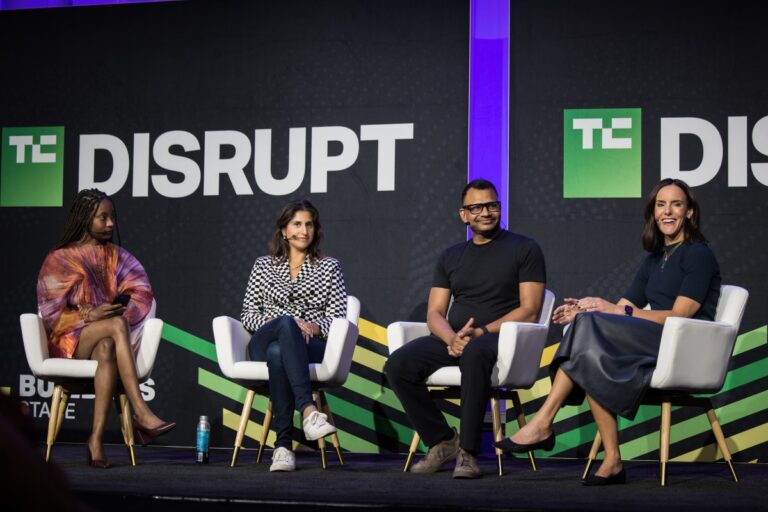
At TechCrunch Disrupt, three investors took the stage to dissect what makes — and breaks — a pitch deck. Jyoti Bansal, a founder-turned-investor; Medha Agarwal of Defy; and Jennifer Neundorfer of January Ventures shared with the crowd their candid views on what works in a pitch deck — and what doesn’t.

Their biggest pet peeve? Buzzword overload.

The more a founder says AI in the pitch, Agarwal said, the less AI the company likely uses. “The people who are doing things that are really innovative, they’ll talk about it, and it’s built in, but it’s not the core of their pitch,” she told the audience.  

Bansal, who built and sold multiple companies before becoming an investor, distilled investor expectations into three core questions. First, he asks whether there is a large enough market to tackle. Does the founder’s idea have the potential to become a huge company? And is the problem he or she is solving actually worth solving?

The second thing investors want to know is why this founder is the one who should be building the company. “There has to be something unique about you,” Bansal told the crowd, adding that this included having special members on the founding team or having special skills. “Why would you win? If the problem is interesting, there will be 20 other companies trying to solve it, so why would you win and what’s your opportunity?”  

The third thing investors want to see, Bansal said, is some validation. “Traction with customers,” he said. “Validation could be initial customer feedback, revenue, something, but some kind of validation.”  

These three questions, Bansal noted, all lead to the ultimate litmus test: Could this become a billion-dollar company?

Techcrunch event

San Francisco
|
October 13-15, 2026

The panel also addressed how AI startups can differentiate themselves as the space becomes saturated. Bansal emphasized the importance of domain expertise and a clear competitive strategy. Neundorfer said the companies that catch her attention are those enabling new behaviors rather than simply improving an existing process incrementally.  

Agarwal offered more tactical advice to founders, saying they should explain how AI technology enables their product; articulate clear go-to-market strategies; and demonstrate how their business will be more efficient than incumbents.

It’s also very important to be honest about what competitors are out there, she added. Some of you have “lost some credibility with me because you didn’t have it on your slide,” she told the founders in the audience. 

Finally, the investors shared advice for navigating the rapidly evolving landscape. Agarwal urged founders to stay on top of industry developments. Neundorfer recommended staying connected to founder networks to share tools and insights.

Bansal’s advice was simpler: “Focus on building your product.”


Source link

LG to unveil a canvas-style TV at CES 2026

0


LG will unveil a canvas-style art TV, dubbed the LG Gallery TV, at CES 2026. The new model will be offered in 55-inch and 65-inch variants, and sports a flush-mount design along with customizable magnetic frames.

The Gallery TV uses a Mini LED display and the company’s AI processor and offers 4K resolution. The new model will also leverage the LG Gallery+ service, a paid subscription with a library of over 4,500 works that users can display on the TV. Users will also be able to create custom images using generative AI or display images from personal photo libraries.

LG says the TV was developed with museum curators, and will feature a Gallery Mode that optimizes brightness and color to show off the texture of displayed artwork. The display will have some degree of reflection handling and glare reduction, though precise details were not shared. The TV will automatically adjust picture settings to maintain an optimal image in response to changing ambient light throughout the day.

This isn’t the first time LG has released an art-inspired TV. It released an ultra-thin OLED model called the in 2020. It has also released other “Gallery Design” TVs that offer wall-flush mounting in the past, but the new LG Gallery TV with dedicated art-focused features seems like a more direct competitor to or the .


Source link

Google Store New Year’s deals discount Pixel Watch 4

0


With the previous round of offers ending last week, the US Google Store is running New Year’s deals ahead of 2026.

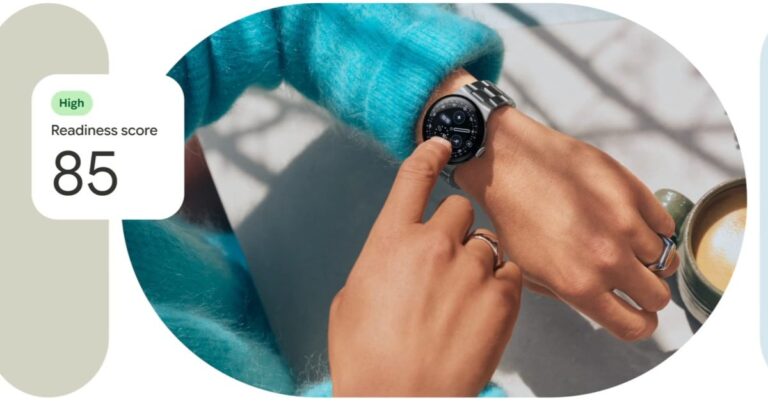
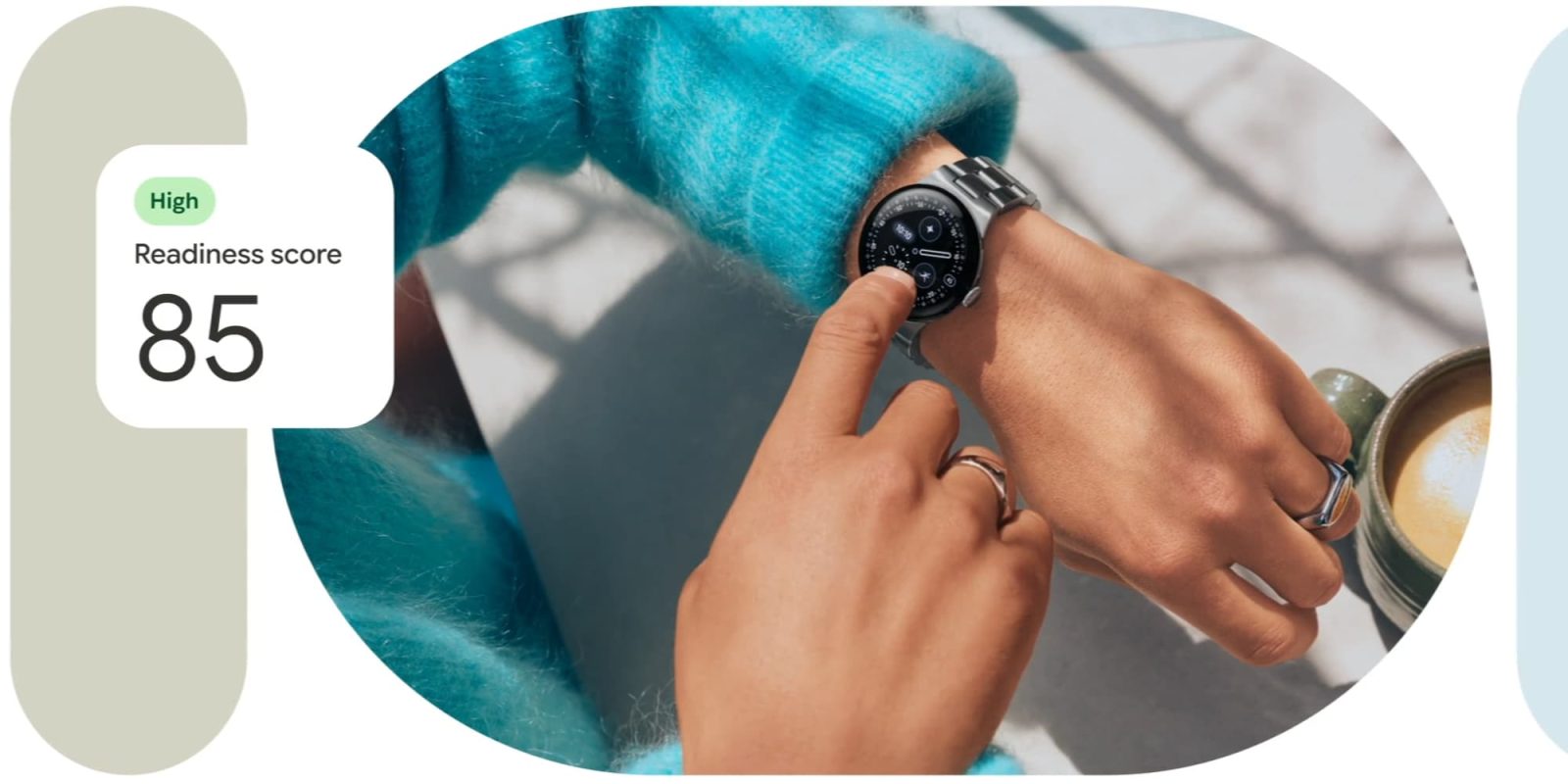
The Wi-Fi or LTE Pixel Watch 4 is once again $50 off at the Google Store. However, Amazon is currently offering a deeper $100 discount on the cellular models. 

Google is also discounting the 41mm Pixel Watch 3 LTE by $50 to $299.99. The 45mm Pixel Watch 3 Wi-Fi is $70 off to $229.99, while it’s $299.99 for the LTE version after $100 off. 

These Pixel Watch deals end on January 10, 2026 at 11:59  p.m. PT.

Advertisement – scroll for more content

The Pixel Buds Pro 2 is once again $50 off to $179 (Amazon), while it’s just $20 off the Pixel Buds 2a to $109 (Amazon). 

A decent deal today is a $199.95 bundle for the Charge 6 and Pixel Buds 2a, though keep in mind new Fitbit hardware is coming in 2026. Add both items to your cart. (I do not foresee Google making another smartwatch, like the Versa or Sense, running Fitbit OS. As such, new trackers are the most likely possibility. Google needs a $100, if not cheaper, entry-level tracker that can tap into Fitbit Coach, while abandoning the popular Charge lineup would be foolish.)

Also of note is $25 off the Google TV Streamer to $74.99 until January 4 (Amazon).

FTC: We use income earning auto affiliate links. More.


Source link

MBTA installs fare gates at South Station for commuter rail passengers

0


Beginning Tuesday, commuter rail passengers will need to tap or scan their train tickets to enter the track area at South Station, as the MBTA begins a major change in fare collection operations.

The T and and its commuter rail operator Keolis Commuter Services announced Monday that installation of fare gates at the Boston transportation hub is complete and gates will be phased into operations. The T also released a how-to video and said station staff will be available on concourses to help passengers.

The layout includes 40 gates installed around the concourse area, including 11 wider gates that allow room for wheelchairs, scooters, bicycles, luggage and strollers, according to the T.

Fare gates will be introduced to passengers incrementally, with more expected to be in service as testing is completed. Conductors will also still check tickets on board trains to verify travel zones, the T said.

South Station fare gates
A sign posted at South Station provides instructions on how to use the new fare gate system. The fare gates go live on Tuesday, Dec. 30, 2025.(Anne Brennan/MassLive)

Passengers can use the following types of tickets to exit and enter the gates: the mTicket app, CharlieCards and CharlieTickets with printed zones, $10 weekend paper tickets, Amtrak tickets and active military IDs. Stored value CharlieCards for the bus and subway are not accepted at commuter rail fare gates, and commuter rail fare gates cannot accept payment by contactless debit/credit card, phone or watch with a mobile wallet.

“The new fare gates at South Station — one of the busiest travel hubs in the Northeast — is another demonstration to our riders that we are committed to ensuring fares are collected and reinvested into the transit system to better serve the public,” MBTA General Manager Phillip Eng said.

Fare gates opened at North Station in 2022, and fare gates are also planned to open at Back Bay Station and Ruggles Station in 2026.

“Combined with upgrades to on-board sales and record conductor scans, Keolis is collecting more Commuter rail revenue than ever before on behalf of the MBTA,” Keolis General Manager John Killeen said.


Source link

Plaud Note Pro is an excellent AI-powered recorder that I carry everywhere

0


There has been a flurry of AI voice recording gadgets like Omi, Bee, and Friend that want to capture your voice and let you converse with an AI chatbot. While Bee was acquired by Amazon, and devices like the Stream ring by Sandbar and a new AI ring from former Pebble founder Eric Migicovsky are set to enter the market next year, the jury is still out on the success of wearable AI devices.

Amid all this, Plaud is thriving by targeting professional users with a different approach: a credit card-sized recording device that slips into your wallet. The company says it has shipped more than a million units and that more than 50% of its customers have converted to pro subscriptions.

The company’s latest iteration, the Plaud Note Pro, launched for pre-order in August two years after the original Note, priced at $179. After using the device for over a month, it has become an essential part of my daily carry – and its ultra-thin design makes that easy.

At just 0.12 inches thick – about the width of three stacked credit cards – it’s the thinnest AI recording device on the market and easily fits in a wallet or attaches magnetically to the back of your phone.

The company provides a wallet-like pouch and a magnetic ring accessory that attaches to MagSafe-enabled phones, allowing you to mount the Note Pro on the back of your iPhone or compatible Android device. The device is also very light at 30 grams, and you won’t feel the weight if you keep the Note Pro in your wallet.

One of the key differences between Plaud and other AI wearables is that the Note Pro doesn’t need to be connected to your phone to record audio. The device has 64GB of onboard memory, so it can store a large volume of recordings without transferring them to your phone or uploading them to the cloud.

Pluad Note Pro is as thick as a coaster Image Credits: Ivan Mehta

Plaud Note Pro has four MEMS (Micro-Electro-Mechanical Systems) microphones to pick up audio from all directions. While the company advertises that the effective audio range is 16.4 feet, I have recorded talks at conferences while sitting far from the stage and gotten satisfactory results. The device also has one voice processing unit for noise suppression, voice isolation, and echo cancellation.

Techcrunch event

San Francisco
|
October 13-15, 2026

The recording device has impressive battery life. I went to a conference earlier this month with a fully charged device and recorded a few interviews and talks there. After that, I used the device for some phone call recording and personal note-taking. Despite all that use, the device still had 55% charge after 15 days. The company says you can wring 30 hours of continuous recording and 60 days of standby from a single charge.

Plaud’s new device comes with a proprietary charger with a USB-C cable on the other end. The device takes two hours to charge from 0%, and then you are set for at least a couple of weeks unless you are recording hours of content.

Image Credits: PlaudImage Credits:Plaud.ai

One problem with wearable AI devices is that you have to ensure, through an indicator, that the device is recording (or has stopped recording). Thankfully, Plaud Note Pro has a tiny screen that displays your recording status. You can also press a button while recording to highlight a point a speaker is making, and it will show up in the AI-powered summary prominently. The screen also shows you the remaining battery level.

There is intentionality behind recording with this device. You also get haptic feedback for starting and stopping the recording. The visual indication and your action of pressing the button also make it easier to signal to a others in the meeting that you are recording the session.

Image Credits: Ivan Mehta

You can choose to just record sessions and export them to another AI transcription service you are subscribed to. Plaud natively provides 300 minutes of free transcription every month. The company also lets you customize AI-generated notes through templates suited for different profiles and tasks. You can create your own template as well. The transcription is accurate in most instances, and now you can also access the recording, transcript, and notes through a website. The company has also addressed the problem my former colleague Brian Heater had of tapping on the word and not being played the corresponding recording.

While a pendant or pin-like form factor is possibly easier to carry, the card-sized recorder offers better microphones and more versatile placement options. It’s worth buying the $179 gadget if you take a lot of in-person meetings.


Source link

Get 50 percent off plans for the holiday season

0


If cleaning up your digital life is on your New Year’s resolution list, we’ve got good news: 1Password is offering half off its subscription plans now through December 30. This includes the Individual and Families plans.

That brings the price of the Individual plan down to $24 for a year and the Families plan down to $36 for a year. The plans are nearly identical, but the Families plan accommodates five additional people. These discounts are only available to new customers and the prices expire after the year, so set a reminder to cancel or reassess.

Image for the large product module

1Password

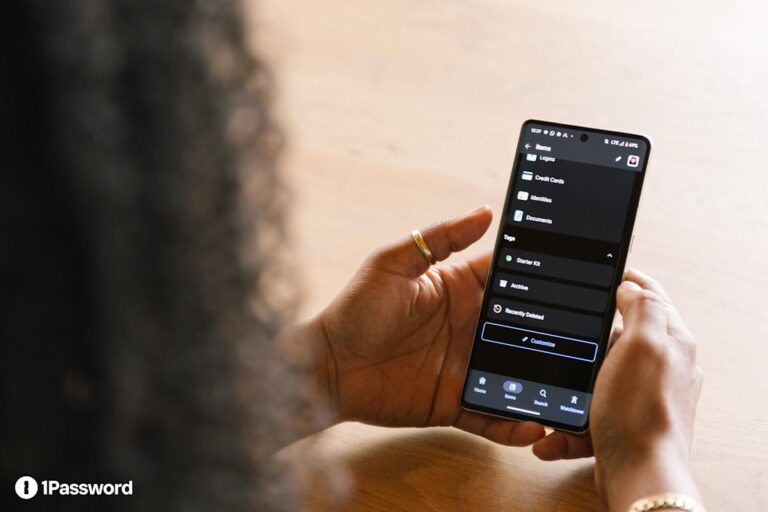
This provider topped our list of the best password managers, and for good reason. We appreciated the intuitive interface and the fact that it’s available on most platforms, so you’ll never be left out in the cold. These include Chrome, Firefox, Safari, Edge, macOS, iOS, Windows, Android and more.

Subscriptions include industry standard encryption and a “secret key” that only you know on top of a master password. There’s also two-factor authentication and the platform issues alerts when credentials have potentially been compromised.

1Password recently raised prices across the board, but this is still looking to be the best deal for our favorite password manager going into the new year. The only downside here is the one that accompanies many password managers. There is no free version. Obviously, this won’t be an issue for the year, but it could once the plan runs out.

Follow @EngadgetDeals on X for the latest tech deals and buying advice.


Source link

Google seems ready to kill the last of Stadia, convert your controller

0


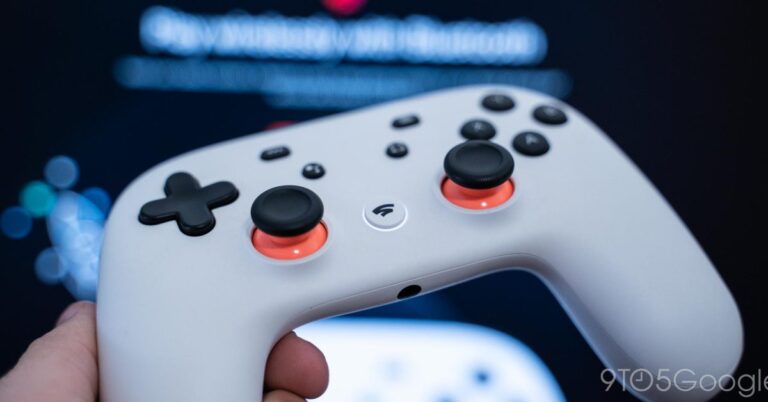
As the three-year anniversary of Stadia’s death approaches, the final “active” part of Google’s short-lived venture into cloud gaming appears to be going away, as the controller conversion tool appears to actually be going offline this week.

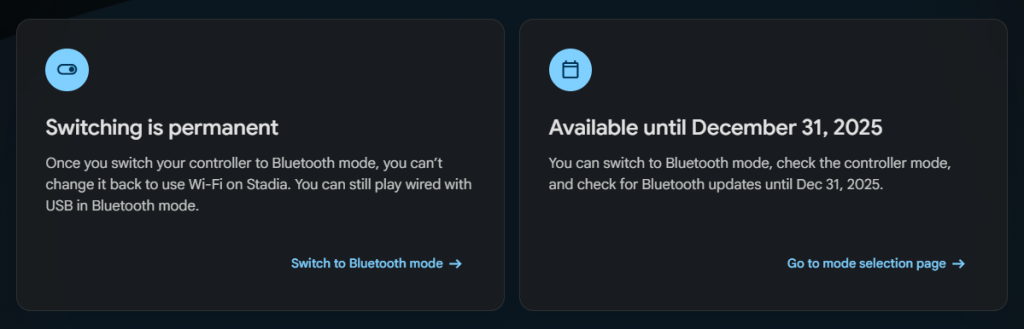
Ahead of its shutdown on January 19, 2023, Google opened up a web-based tool that could convert a Stadia Controller from its Wi-Fi mode to a Bluetooth-only mode, allowing Stadia’s only true hardware to get another life as a wireless controller for smartphones, PCs, and more.

While not perfect, it worked pretty well.

For whatever reason, though, Google has set a cutoff for this tool. From the day it was announced, it always had an end-of-life. The tool was originally set to be shut down at the end of 2023, but Google extended it for another year through the end of 2024. Then, as that deadline approached, Google once again extended it through the end of 2025.

Advertisement – scroll for more content

But now, it really seems like the tool is shutting down for good.

With just two days left, Google still says that the “Stadia Bluetooth mode” website will be available until December 31, 2025. In the past, Google granted extensions on December 15 and December 9, respectively, so it really seems the tool is set to die for good later this week, taking the last of Stadia with it.

It’s entirely possible that Google could swoop in at the last minute and change this, but the timing really makes that unlikely.

So, with that in mind, the time to convert any Stadia Controllers you have sitting around to Bluetooth mode is right now. The process takes mere minutes, and ensures the hardware will keep working for years to come. And with Steam having recently bolstered support for the Stadia Controller, that means all the more now.

RIP Stadia.

More on Stadia:

Follow Ben: Twitter/XThreads, Bluesky, and Instagram

FTC: We use income earning auto affiliate links. More.


Source link

Crash closes Mass. Pike lane in Ted Williams Tunnel in Boston — avoid area

0


The Massachusetts Department of Transportation has closed the left lane in the Ted Williams Tunnel on the Mass. Pike eastbound in Boston.

The closure is a result of an earlier crash and fuel spill. The left lane is expected to remain closed for the next several hours until cleanup is finished, according to the Department of Transportation.

As of 11:20 a.m., traffic appeared to be backed up to the Interstate 93 interchange and was also congested on I-93 headed north toward the Mass. Pike interchange, according to the traffic website Mass511.

Drivers should look for alternative routes to avoid that part of the highway, if possible, and should expect delays in the area. Use caution and reduce speed if you need to drive through the area.

Temporary signs have been placed to warn drivers of the closure.

For more information on traffic and closures, DOT says drivers can:

  • Download the Mass511 mobile app or visit www.mass511.com to view live updates and information on traffic conditions.
  • Dial 511 and select a route to hear real-time conditions. 
  • Follow @MassDOT on X to receive regular updates on road and traffic conditions. 


Source link

Sauron, the high-end home security startup for “super premium” customers, plucks a new CEO out of Sonos

0


When Kevin Hartz’s security system failed to alert him as an intruder rang his doorbell and tried to enter his San Francisco home late one night, the serial entrepreneur decided existing solutions weren’t good enough. His co-founder Jack Abraham had experienced similar frustrations at his Miami Beach residence.

In 2024, they launched Sauron — named after the sinister, all-seeing eye from “The Lord of the Rings” — to build what they envisioned as a military-grade home security system for tech elites. The concept resonated in Bay Area circles, where crime had become a constant topic during and after the pandemic, despite San Francisco Police Department statistics showing property crime and homicide rates declining last year.

The startup raised $18 million from executives behind Flock Safety and Palantir, defense tech investors including 8VC, Abraham’s startup lab Atomic, and Hartz’s investment firm A*. It came out of stealth exactly a year ago, promising to launch in the first quarter of 2025 with a system combining AI-driven intelligence, advanced sensors like LiDAR and thermal imaging, and 24/7 human monitoring by former military and law enforcement personnel.

But a year later, Sauron is still very much in development mode — a reality that its new CEO, Maxime “Max” Bouvat-Merlin, acknowledged candidly in a recent interview with TechCrunch.

After nearly nine years at Sonos, including a stint as chief product officer, Bouvat-Merlin took the helm of Sauron just last month. He’s spending his first days on the job finalizing fundamental questions: which sensors to use, how exactly the deterrence system will work, and when the company can realistically get products into customers’ homes.

The answer to that last question? Later in 2026 at the earliest — a significant delay from the original timeline.

“We’re in the development phase,” Bouvat-Merlin said. “You’ll see a phased approach where we get our solution to market as a stepping stone. All the different components — our concierge service, our AI software running on servers, our smart cameras — are building blocks coming together in a plan we just put in place very recently.”

Techcrunch event

San Francisco
|
October 13-15, 2026

Still, Bouvat-Merlin sees striking parallels between Sauron and Sonos, which both target wealthy customers first, rely on word-of-mouth growth, and combine complex hardware with sophisticated software. “I had lunch with John MacFarlane, the founder of Sonos, a few weeks ago,” Bouvat-Merlin said. “All the topics he was thinking about when starting Sonos were exactly the same topics we’re discussing at Sauron.”

Both companies faced the same strategic questions: Start with super-premium customers or mass premium? Professional installation or DIY? Build everything in-house or partner with an ecosystem? “We might make different decisions, but the questions are very similar,” he said.

The security problem

Bouvat-Merlin says he was drawn to Sauron by both the mission and an opportunity to solve a real customer problem. “Securing people’s homes is important, but I also like the deterrence aspect — changing people’s minds before they make a bad decision and get into trouble,” he said.

His research showed that market leaders in premium home security have small market shares and negative Net Promoter Scores. “People are not happy with their solutions today,” he said. “There are so many false positives that when law enforcement is called, they don’t respond because they assume it’s a false alarm.”

The company is targeting customers “where safety and security is a major concern” — people like Hartz. The plan is to start with this premium segment, establish a reputation for supporting demanding clients, then expand to what Bouvat-Merlin calls “mass premium.”

The product (that’s still taking shape)

So what exactly is Sauron building? The answer is still evolving. The offering starts with camera pods containing multiple sensors — “40 cameras and different types of sensors, potentially LiDAR and radar, potentially thermal,” Bouvat-Merlin said. These pods connect to servers running machine learning software for computer vision, all linked to a 24/7 concierge service staffed by former military and law enforcement personnel.

“Those people understand patterns,” he said. “They’re good at helping us mature our machine learning solution and train our system to detect weird behaviors.”

The deterrence system remains somewhat vague. Options being considered include loudspeakers, flashing lights, and other methods. But Bouvat-Merlin emphasized that deterrence should begin before someone enters a property, detecting when homes are being surveilled, noticing cars circling neighborhoods multiple times, and identifying threats at each stage.

“The more upfront we are with deterrence, the more we can convince people this is the wrong house to rob and the wrong decision to make,” he said.

As for the drones mentioned when Sauron first took the wraps off its plans last year, Bouvat-Merlin declined to say much. “These are roadmap conversations. I don’t want to go too deep at this point because there are so many things we could do, but we’re such a small company,” he said. He added that, bigger picture, the focus is on growing the ecosystem through partnerships rather than reinventing the wheel.

Timeline and business model

With fewer than 40 employees, Sauron plans to hire just 10 to 12 more in 2026. The company will also begin working with early adopters later in 2026, with a Series A fundraise planned for mid-year.

“Raising a Series A is not about raising because we have to — it’s because we want to,” Bouvat-Merlin said. “I want to make sure we’re showing progress and explaining how we’ll use extra funds to accelerate growth, [including to] launch our first end-to-end product, drive customer adoption, and accelerate the roadmap.”

The company has already attracted a significant list of prospective clients, he said, thanks to work by Sauron’s three founders, which include roboticist and engineer Vasumathi Raman. “We expect the strategy initially to be word of mouth, then grow differently over time.”

But Bouvat-Merlin is cautious about growth. “I want to make sure we grow sustainably and keep the experience and service premium over time,” he said. “I want to manage growing pains as much as possible while driving profitability.”

The surveillance state question

Facial recognition and privacy concerns loom large for a surveillance-heavy product. Bouvat-Merlin outlined one approach: a trust-based system where homeowners grant access to specific people. “I granted you access to my house, so now you’re in the trusted group. When you come, I detect it’s you and you’re allowed in. Everyone else is an unknown person,” he said, painting a picture of a likely scenario.

License plate detection is also being considered for identifying cars circling neighborhoods multiple times. “How do we assess if that’s a threat? The ex-military and ex-law enforcement team will be really good at helping mature our machine learning solution,” he said.

Either way, Bouvat-Merlin is confident in the opportunity ahead because of Sauron’s approach. “A lot of companies started as traditional security companies and are trying to add tech,” Bouvat-Merlin said. “We’re looking at it from the opposite angle — we’re a tech startup in San Francisco bringing technology to this market.”

Sauron is also appearing on the scene as concerns rise about crime among the most wealthy. Recent high-profile incidents include a November armed robbery at the home of tech investors Lachy Groom and Joshua Buckley in San Francisco’s Mission District, where $11 million in cryptocurrency was stolen during a 90-minute ordeal involving torture and threats.

“We see people who are wealthy attracting criminals,” Bouvat-Merlin said. “We’ve seen a lot of robberies in San Francisco and other major U.S. cities, sometimes at gunpoint. I don’t think the world is getting safer — there are probably more disparities between people at the top and bottom of the wealth spectrum. We see anxiety from prospective clients who are eager to get their homes secured.”

Still, much remains uncertain about Sauron’s path. The company must finalize everything from sensor configurations to manufacturing locations. (Bouvat-Merlin mentioned potentially starting in the U.S. for proximity and control, then moving to more affordable locations as volume grows.)

It must also determine how to serve customers in different settings, from estates with perimeters to dense urban residences, while maintaining premium service quality.

For now, Bouvat-Merlin says he’s focused on listening to his team, building credibility, and finalizing the strategy he’s putting in place. “I don’t demand that people trust me — I want to show them why they should.”

The company expects to share more details about its products later next year.



Source link

Ubisoft is rolling back Rainbow Six Siege servers after being forced to shut them down

0


Ubisoft has shut down Rainbow Six Siege‘s servers and is in the process of rolling back the fallout of a widespread breach that left various players with billions of in-game credits, ultra-rare skins of weapons, and banned accounts. As of Sunday afternoon, the status page on Rainbow Six Siege‘s website still shows “unplanned outage” on all servers across PC, PlayStation and Xbox.

The fiasco began Saturday morning when Ubisoft said on X that they were “aware of an incident currently affecting Rainbow Six Siege” and “working on a resolution.” A couple of hours later, the Rainbow Six Siege servers were shut down, following plenty of user reports showing either zero or billions in R6 credits, rare skins in their lockers and either account bans or unbans. Ubisoft later clarified Saturday afternoon on X that nobody would be banned if they spent their ill-gotten credits, but that a rollback of all transactions starting from Saturday, 6AM ET would soon be underway.

On Sunday afternoon, Ubisoft informed the playerbase that they’re currently performing a rollback, but that “extensive quality control tests will be executed to ensure the integrity of accounts and effectiveness of changes.” The company added that “this matter is being handled with extreme care and therefore, timing cannot be guaranteed” and didn’t provide an estimate for when servers would be back online.


Source link