A man was arrested Friday following an hours-long standoff with police at a Leominster home where a woman was found dead, the Worcester County District Attorney’s Office announced Sunday night.
Leominster police were called to a home on Union Street shortly before 3 p.m. by a 911 caller, the district attorney’s office said in a press release. An hours-long standoff ensued, during which Massachusetts State Police detectives, tactical operatives, K-9 officers and crisis negotiators also responded.
Police eventually arrested the man, and then found the woman dead inside the home, the district attorney’s office said. The suspect is set to be arraigned on charges connected to the woman’s death in Leominster District Court on Monday.
“Due to the domestic nature of this incident, no additional information will be released at this time,” the district attorney’s office wrote in the release.
Leominster police and the district attorney’s office are still investigating the woman’s death.
Local police said they have charged an Illinois driver who struck and killed a pedestrian while she was livestreaming on TikTok.
The New York Times reports that Tynesha McCarty-Wroten, who posts to TikTok under the name Tea Tyme, has been charged by the Zion Police Department with two felonies — reckless homicide and aggravated use of a communications device resulting in death.
In a video that has been reshared by other accounts on TikTok, woman posting as Tea Tyme can reportedly be seen speaking into her phone when there’s a loud thud. An offscreen child asks, “What was that?” then the woman replies, “I hit somebody.”
Surveillance videos reportedly showed McCarty-Wroten’s vehicle entering the intersection while the traffic light was still red, with investigators determining that she did not seem to slow down or change course before striking Darren Lucas, who was later pronounced dead at the hospital.
McCarty-Wroten’s lawyer told the NYT that evidence will show that “what happened was an accident, was a negligent act, but was not an intentional or reckless act.”
Apple isn’t ready to pay a several billion-dollar fine to UK App Store users and is filing an appeal over a major antitrust lawsuit. As first reported by The Guardian, Apple has requested to appeal to the UK’s Court of Appeal, which would escalate the case beyond the Competition Appeal Tribunal (CAT).
The latest appeal attempt follows an October decision from the CAT, where the court found that Apple engaged in anticompetitive practices by exploiting its dominant market position with the App Store to charge higher fees. The CAT’s ruling established a £1.5 billion, or roughly $2 billion, fine, but Apple said it planned to appeal and that the court “takes a flawed view of the thriving and competitive app economy.” The CAT didn’t grant Apple the appeal, leading the iPhone maker to seek a higher court to overturn the ruling.
Apple hasn’t made any official statements about its latest appeal application, but it’s likely that it will argue against the CAT’s proposed App Store developer fee rate of between 15 and 20 percent, which it reached through “informed guesswork,” instead of the existing 30 percent. If the fine does ultimately stick, the $2 billion fine would be split amongst any App Store user in the UK who made purchases between 2015 and 2024, according to The Guardian.
On a Google support page, the company says it is rolling out a new option to let users change their email address even if it is an “@gmail.com” address.
For quite some time now, Google has allowed users to change their account email address if they are using a third-party email address, but users with an “@gmail.com” address are left unable to change it, as Google says:
If your account’s email address ends in @gmail.com, you usually can’t change it.
It appears this is changing.
On the same support page that currently says that you usually can’t change your email, Google is detailing a new process that is “gradually rolling out.” The altered page weirdly only shows in Hindi at the moment, meaning you can’t see the changes in English. Everything quoted below is translated. The page was first spotted in the “Google Pixel Hub” group on Telegram.
Advertisement – scroll for more content
Google explains:
The email address associated with your Google Account is the address you use to sign in to Google services. This email address helps you and others identify your account. If you’d like, you can change your Google Account email address that ends in gmail.com to a new email address that ends in gmail.com.
This is new functionality that Google hasn’t detailed elsewhere yet, but says is “gradually rolling out to all users.”
With this change, Google will allow users to change their “@gmail.com” email address to a new “@gmail.com” address with an altered username. After changing, Google details that your original email address will still receive emails at the same inbox as your new one and work for sign-in, and that none of your account access will change. Users will be unable to change or delete their email within 12 months of the change.
When you change your Google Account email address from an email address ending in gmail.com to a new email address ending in gmail.com:
You will receive emails at both your old and new email addresses.
Data saved in your account, including photos, messages, and emails sent to your old email address, will not be affected.
You can reuse your old Google Account email address at any time. However, you can’t create a new Google Account email address that ends with gmail.com for the next 12 months. You can’t delete your new email address either.
You can sign in to Google services like Gmail, Maps, YouTube, Google Play, or Drive with your old or new email address.
Google further details that your old Gmail address will still appear in some cases, and “won’t be immediately reflected in older instances” such as events on Calendar created before the change. You’ll also still be able to send emails from the old address. The old address remains yours and cannot be used by another user.
The page is very detailed on the process, but the changes just aren’t live yet. Presumably, this support page detailing the process in Hindi went up a little earlier than intended, but it certainly seems that we’ll be hearing more about this change in the coming weeks.
When the functionality goes live, users will be able to change their Gmail address via “My Account.”
We’ll update this article if further information comes out.
Firefighters responded to the blaze at the six-bedroom, 6,500-square-foot home around 5 a.m. on Wednesday, the State Fire Marshal’s Office said previously. First responders tried to push into the house at 28 Woodworth Road, but were forced to turn back as flames spread quickly through the three-story home.
Two other adults who were inside the home at the time of the fire escaped, the State Fire Marshal’s Office said. Firefighters found Corrigan dead inside the house hours later.
Ultimately, 75 firefighters from 10 different communities responded to the four-alarm fire, the State Fire Marshal’s Office said. Fire investigators determined that the fire was accidental and began in the home’s attached garage.
Money collected through the GoFundMe campaign will go toward Kayla Corrigan’s funeral and memorial expenses, as well as temporary housing and basic necessities for the Corrigans, according to campaign organizer Amy Lund.
“In addition to losing someone we all love dearly, the fire destroyed their home and their belongings, leaving them facing both emotional devastation and sudden financial hardship,” Lund wrote on the campaign page.
Kayla Corrigan graduated from Newton Country Day School in 2022, according to her LinkedIn page. She was on track to graduate from Syracuse University with a degree in marketing management this spring.
“Kayla was a beautiful 21 year old girl who was deeply loved by many. Her absence has left a space that can never be filled,” Lund wrote.
Brigitte Bardot, the international sex goddess of cinema in the 1950s and ’60s, has died aged 91. Bardot’s animal rights foundation announced her death in a statement to news agency Agence France-Presse on Sunday, without specifying the time or place of death.
Stylish and seductive, Bardot exuded a kind of free sexuality, rare in the buttoned-up 1950s. She modeled, made movies, influenced fashion around the world and recorded albums. She married four times. Her list of lovers famously included Warren Beatty, Nino Ferrer and singer-songwriter-producer Serge Gainsbourg, with whom she recorded the French hit Bonnie and Clyde.
Bardot’s look was copied by women around the world, says Claire Schub who teaches French literature and film at Tufts University.
“Her fashion choices, her hair, her makeup, her pout … She became this icon, this legend, all over the globe,” says Schub.
But her image changed in her later years. Bardot was found guilty multiple times in her native France of “inciting racial hatred,” mainly for comments attacking Muslims.
Bardot runs along the beach in Cannes, France, on April 28, 1956.
George W. Hales/Fox Photos/Getty Images
hide caption
toggle caption
George W. Hales/Fox Photos/Getty Images
As an actor, Bardot worked with some of France’s leading directors including Henri-Georges Clouzot in La Vérité (The Truth), Jean-Luc Godard in Le Mépris (Contempt) and Louis Malle in Viva Maria!
Born Catholic to an upper-middle-class couple in Paris in 1934, Bardot studied ballet and modeled before becoming an actor. As a teenager, she appeared several times on the cover of Elle magazine, attracting the attention of Roger Vadim who was six years her senior. The two married in 1952. Bardot’s parents made them wait until she turned 18.
Vadim, an aspiring director, has been credited with turning Bardot into the iconic sex symbol she became. In his 1957 film And God Created Woman, Bardot plays a provocative young woman on a quest for sexual liberation.
Bardot arrives at a Royal Air Force base in London in April 1959.
AFP via Getty Images
hide caption
toggle caption
AFP via Getty Images
Vadim wanted Bardot’s appearances in his films to shake off sexual taboos. He once said that he wanted to “kill the myth, this odd rule in Christian morality, that sex must be coupled with guilt.”
The New York Times panned the film but wrote that Bardot “moves herself in a fashion that fully accentuates her charms. She is undeniably a creation of superlative craftsmanship.”
YouTube
The media savvy Vadim made sure Bardot appeared often in the French press. Not that it took much convincing — Bardot’s alluring images helped sell both magazines and movie tickets. “To be fair, if Vadim discovered and manufactured me,” Bardot once said, “I created Vadim.”
Bardot’s liberating sexuality
While she was one of France’s best known exports, she wasn’t always beloved at home. She was often ridiculed by critics who derided her acting even as they gushed over her body.
Reviewing the 1959 film Babette Goes to War, in which Bardot does not bare all, one critic wrote, “In deciding not to reveal her body, Brigitte Bardot wanted to unveil only her talent. Alas, we saw nothing.”
Bardot during a rehearsal of the TV program Bonne année Brigitte in which Bardot performed songs to ring in the new year in 1962.
Stringer/AFP via Getty Images
hide caption
toggle caption
Stringer/AFP via Getty Images
Despite the misogynistic comments and constant scrutiny of her private life, Bardot’s popularity coincided with changing attitudes about sex. French philosopher Simone de Beauvoir took note of France’s love-hate relationship with Bardot’s sexual appetite.
“In the game of love, she is as much hunter as she is prey,” de Beauvoir wrote in her 1959 essay for Esquire, “Brigitte Bardot and the Lolita Syndrome.”
Bardot was hounded by the paparazzi, suffered from depression and attempted suicide. “What I rejected the most during my life as an actress was the limelight,” she wrote in her autobiography, “That intense focus…ate at me from the inside.”
Bardot discusses a scene with director Louis Malle during the filming of Viva Maria! in February 1965.
William Lovelace/Express/Getty Images
hide caption
toggle caption
William Lovelace/Express/Getty Images
After starring in dozens of movies, Bardot retired from acting in 1973. She started an animal rights foundation.
Convicted for ‘inciting racial hatred’
In her later years, Bardot became notorious for her racist and homophobic comments and her association with France’s far right. Her fourth husband, Bernard d’Ormale, was an aide to Jean-Marie Le Pen, founder of the National Front party.
In her 2003 book, Un Cris dans le Silence, she disparages immigrants, gays, French schools and contemporary art. She called Muslims “invaders” and railed against the killing of animals in the name of religion. She apologized in court in 2004 but also doubled down on what she called the “infiltration” of France by Islamic extremists.
In her biography of Bardot, author and French film scholar Ginette Vincendeau writes “the high priestess of freedom resents almost everyone else’s rights to exercise it.”
Bardot, the stunning, desirable beauty who once stood for sexual freedom for women, spent the latter part of her life at her home near Saint Tropez with her husband and a menagerie of pets.
A woman stands in front of Andy Warhol’s Brigitte Bardot at Sotheby’s auction house in London on May 12, 2012.
India’s startup ecosystem raised nearly $11 billion in 2025, but investors wrote far fewer checks and grew more selective about where they took risk, underscoring how the world’s third most-funded startup market is diverging from the AI-fueled capital concentration seen in the U.S.
The selective approach was most evident in deal-making. The number of startup funding rounds fell by nearly 39% from a year earlier, to 1,518 deals, according to Tracxn. Total funding slipped more modestly — down just over 17% to $10.5 billion.
That pullback was not uniform. Seed-stage funding fell sharply to $1.1 billion in 2025, down 30% from 2024, as investors cut back on more experimental bets. Late-stage funding also cooled, slipping to $5.5 billion, a 26% decline from last year, amid tougher scrutiny of scale, profitability, and exit prospects. However, early-stage funding proved more resilient, rising to $3.9 billion, up 7% year-over-year.
Image Credits:Tracxn
“The capital deployment focus has increased towards early-stage startups,” said Neha Singh, co-founder of Tracxn, pointing to growing confidence in founders who can demonstrate stronger product–market fit, revenue visibility and unit economics in a tighter funding environment.
The AI quest
Nowhere was that recalibration clearer than in AI, as AI startups in India raised just over $643 million across 100 deals in 2025, a modest 4.1% increase from a year earlier, per Tracxn data shared with TechCrunch. The capital was mainly spread across early and early-growth stages. Early-stage AI funding totaled $273.3 million, while late-stage rounds raised $260 million, reflecting investor preference for application-led businesses over capital-intensive model development.
This was in sharp contrast to the U.S., where AI funding in 2025 surged past $121 billion across 765 rounds, per Tracxn, a 141% jump from 2024, and was overwhelmingly dominated by late-stage deals.
“We don’t yet have an AI-first company in India, which is $40–$50 million of revenue, if not $100 million, in a year’s time frame, and that is globally happening,” said Prayank Swaroop, a partner at Accel.
Techcrunch event
San Francisco | October 13-15, 2026
India, Swaroop told TechCrunch, lacks large foundational model companies and will take time to build the research depth, talent pipeline, and patient capital needed to compete at that layer — making application-led AI and adjacent deep-tech areas a more realistic focus in the near term.
This pragmatism has shaped where investors are placing longer-term bets outside core AI. Venture capital is increasingly flowing into manufacturing and deep-tech sectors. These are some of the areas where India faces less global capital competition and has clear advantages in talent, cost structures, and customer access.
While AI now absorbs a significant share of investor attention, capital in India arguably remains more evenly distributed than in the U.S., with substantial funding still flowing into consumer, manufacturing, fintech, and deep-tech startups. Swaroop noted that advanced manufacturing in particular has emerged as a long-term opportunity, with the number of such startups increasing nearly tenfold over the past four to five years — an area he described as a clear “right to win” for India given lower global capital competition.
Rahul Taneja, a partner at Lightspeed, said AI startups accounted for roughly 30–40% of deals in India in 2025, but pointed to a parallel surge in consumer-facing companies as changing behaviour among India’s urban population creates demand for faster, more on-demand services — from quick commerce to household services — categories that play to India’s scale and density rather than Silicon Valley–style capital intensity.
India versus the U.S.
Data from PitchBook shows a stark divergence in capital deployment between India and the U.S. in 2025. U.S. venture funding surged to $89.4 billion in the fourth quarter alone, according to PitchBook data up to December 23, compared with about $4.2 billion raised by Indian startups over the same period.
Image Credits:Jagmeet Singh / TechCrunch
However, that gap does not tell the whole story.
Lightspeed’s Taneja cautioned against drawing direct parallels between India and the U.S., arguing that differences in population density, labour costs, and consumer behaviour shape which business models can scale. Categories such as quick commerce and on-demand services have found far greater traction in India than in the U.S., reflecting local economics rather than any lack of ambition among founders or investors.
Recently, Lightspeed raised $9 billion in fresh capital with a strong focus on AI, but Taneja said the move does not signal a wholesale shift in the firm’s India strategy. The U.S. fund, he noted, is geared toward a different market and maturity cycle, while Lightspeed’s India arm will continue backing consumer startups alongside selectively exploring AI opportunities shaped by local demand rather than global capital intensity.
Nuances in India’s startup ecosystem
India’s startup ecosystem also saw funding for women-led startups tighten. Capital invested in women-founded tech startups held relatively steady at about $1 billion in 2025, down 3% from a year earlier, according to Tracxn’s report. Still, that headline figure masked a sharper pullback beneath the surface. The number of funding rounds in women-founded startups fell by 40%, while their first-time funded counterparts declined by 36%.
India’s women-led startups saw a 3% dip in funding in 2025Image Credits:Tracxn
Overall, investor participation narrowed sharply as selectivity increased, with about 3,170 investors taking part in funding rounds in India this year, a 53% drop from roughly 6,800 a year earlier, according to Tracxn data shared with TechCrunch. India-based investors accounted for nearly half of that activity, with around 1,500 domestic funds and angels participating — a sign that local capital played a more prominent role as global investors turned cautious.
Activity also became more concentrated among a smaller group of repeat backers. Inflection Point Ventures emerged as the most active investor, participating in 36 funding rounds, followed by Accel with 34, Tracxn data shows.
The Indian government’s participation in the startup ecosystem became more visible in 2025. New Delhi announced a $1.15 billion Fund of Funds in January to expand capital access for startups, followed by a ₹1 trillion ($12 billion) Research, Development, and Innovation scheme aimed at areas such as energy transition, quantum computing, robotics, space technology, biotech, and AI, using a mix of long-term loans, equity infusions and allocations to deep-tech funds.
That push has begun to catalyze private capital as well. The government’s growing involvement helped spur a nearly $2 billion commitment from U.S. and Indian venture capital and private equity firms, including Accel, Blume Ventures, and Celesta Capital, to back deep-tech startups — an effort that also brought Nvidia on board as an adviser and drew Qualcomm Ventures. Furthermore, the Indian government also co-led a $32 million funding for quantum computing startup QpiAI earlier this year — a rare federal move.
This growing state involvement has helped ease a risk long flagged by investors: regulatory uncertainty. “One of the biggest risks you don’t want to underwrite is what happens if regulation changes,” said Taneja of Lightspeed.
As government entities become more familiar with the startup ecosystem, Taneja added, policy is more likely to evolve alongside it — reducing uncertainty for investors backing companies with longer development cycles.
Exits in India
The reduced uncertainty has already started to show up in exit markets to some extent. India saw a steady pipeline of technology IPOs over the past two years, with 42 tech companies going public in 2025, up 17% from 36 in 2024, per Tracxn. Much of the demand for those listings has come from domestic institutional and retail investors, easing long-standing concerns that Indian startup exits depend too heavily on foreign capital. M&A activity also picked up, with acquisitions rising 7% year-over-year to 136 deals, Tracxn data shows.
Swaroop of Accel said investors had long worried that India’s public markets were mainly sustained by foreign capital, raising questions about exit durability during global downturns. “This year has disproven that,” he said, pointing to the growing role of domestic investors in absorbing technology listings — a shift that has made exits more predictable and reduced reliance on volatile overseas flows.
Image Credits:Tracxn
India’s unicorn pipeline in 2025 also reflected that shift toward restraint. While the number of new unicorns remained flat year over year, Indian startups reached $1 billion valuations with less capital, fewer funding rounds, and a smaller pool of institutional investors, pointing to a more measured path to scale compared with both previous years and global peers.
Challenges remain as India heads into 2026, particularly around how it positions itself in the global race for AI and whether late-stage funding can deepen without relying on outsized capital inflows.
Even so, the shifts seen in 2025 point to a startup ecosystem that is maturing rather than retreating — one where capital is being deployed more deliberately, exits are becoming more predictable, and domestic market dynamics increasingly shape its growth. For investors, India is emerging less as a substitute for developed markets and more as a complementary arena with its own risk profile, timelines, and opportunities.
OpenAI is looking for a new Head of Preparedness who can help it anticipate the potential harms of its models and how they can be abused, in order to guide the company’s safety strategy. It comes at the end of a year that’s seen OpenAI hit with numerous accusations about ChatGPT’s impacts on users’ mental health, including a few wrongful deathlawsuits. In a post on X about the position, OpenAI CEO Sam Altman acknowledged that the “potential impact of models on mental health was something we saw a preview of in 2025,” along with other “real challenges” that have arisen alongside models’ capabilities. The Head of Preparedness “is a critical role at an important time,” he said.
Per the job listing, the Head of Preparedness (who will make $555K, plus equity), “will lead the technical strategy and execution of OpenAI’s Preparedness framework, our framework explaining OpenAI’s approach to tracking and preparing for frontier capabilities that create new risks of severe harm.” It is, according to Altman, “a stressful job and you’ll jump into the deep end pretty much immediately.”
Over the last couple of years, OpenAI’s safety teams have undergone a lot of changes. The company’s former Head of Preparedness, Aleksander Madry, was reassigned back in July 2024, and Altman said at the time that the role would be taken over by execs Joaquin Quinonero Candela and Lilian Weng. Weng left the company a few months later, and in July 2025, Quinonero Candela announced his move away from the preparedness team to lead recruiting at OpenAI.
Just got a new Android smartphone for the holidays? If it’s your first one, it could be a little intimidating, so to get you started, here are a few apps you should immediately install or set up on a new Android device. Alternatively, if you’re not already using these apps, it might be time to give them a shot!
Use a password manager!!
We all have a ton of online accounts, and the best way to both manage and protect that data is with a password manager. Password managers usually work by encrypting your data behind a “Master Password” or some other means while allowing you to organize that data by the site it works with or in folders.
Using a password manager is one of the most important but also one of the easiest ways to enhance your online security. By using one of these, not only will you not lose or forget your passwords, but you’ll be able to use stronger passwords since you don’t need to be able to remember them by memory.
One of our favorite password managers is 1Password, with affordable pricing, excellent security that uses both a master password and a “Secret Key,” and an easy-to-use app.
Advertisement – scroll for more content
DashLane works similarly but also has an option to automatically change your passwords for you and some free functionality, too. If you really need a completely free option, though, Bitwarden is a great option. ProtonPass is a newer option that also integrates with ProtonMail, a secure email client. It also includes a neat feature where you can create email address aliases to avoid spam. The password manager itself is free, but some of the features require a subscription. LastPass isn’t our first recommendation due to some security incidents in recent years and adjustments that make the free tier a hassle to use, but it’s still better than nothing.
And of course, Google has its own password manager built into Android phones and the Chrome browser. It works pretty well! The only downside is that it’s usually good to separate your password manager from your crucial online accounts, Google absolutely being one of those, but this is again way better than doing nothing.
Up your messaging game
Google Messages (RCS)
In the US, at least, messaging has traditionally been a sore point of Android smartphones. Thankfully, Google has been hard at work trying to fix that in recent months, and now, the solution known as RCS (Rich Communication Services) is available to every Android smartphone in the world at this point.
How can you get RCS on your device, and more importantly, what’s the benefit? The benefit, firstly, is that RCS is much more capable than SMS/MMS. Pictures can be sent in higher quality, typing indicators, and more all arrive with RCS. Group chats also get a huge upgrade too. On top of that, RCS chats are now encrypted to offer better security.
Basically, RCS is like Apple’s iMessage, but for Android phones.
And, as of the past year, RCS is live by default on most iPhones, meaning RCS “just works” between millions of users.
The free app is an SMS app at heart, but it can also enable RCS messaging on any carrier and any Android smartphone too. Simply download, set it as your default SMS app, and wait for the prompt to turn on RCS. We’ve got a more detailed tutorial on the process as well, plus some tips and tricks on the best features you should turn on. RCS via Google Messages is end-to-end encrypted for both 1-on-1 messages and group chats.
Beeper: Everything everywhere all at once
The Beeper app, developed by the founder of Pebble and currently owned by the company behind WordPress, is a hub for all of your messaging apps. By connecting primarily through local bridges on your phone, Beeper can pull WhatsApp, Google Messages, Telegram, Slack, Twitter/X DMs, and so many more apps into a single app. It’s helpful for both connecting to your messaging apps through a computer, tablet, or secondary device, or just putting all of your conversations in a single place. Beeper is free to use, with some more advanced features available in a subscription.
Telegram, Signal, & other messaging apps
If you want an app for even better messaging, you can go beyond the RCS and typical SMS. Telegram is one of our favorite messaging apps, and it works a lot like the super popular WhatsApp. Unlike that app, though, Telegram works easily on multiple smartphones or tablets at one time and backs up all of your messages automatically. Plus, everything is still encrypted, and you have both voice and video calls available. The app is always getting better through updates and has improved its messaging experience greatly alongside adding a more robust video call app, too.
Discord is another great messaging alternative, offering private messages as well as “servers” to host a few friends or hundreds, all with rooms and chat admins. It’s a great experience and one that’s especially excellent for gamers.
Meanwhile, Signal is an even more privacy-focused messaging app that became especially popular when Meta-owned WhatsApp was under fire for new privacy policies. Of course, we’d be remiss if we didn’t mention the popularity of WhatsApp and Facebook Messenger both globally and in the US. While many are uncomfortable with Meta, these apps are still far better than the usual SMS you’d otherwise be using. Facebook Messenger now even defaults to end-to-end encryption, which is a big deal!
Staying connected
Google Meet
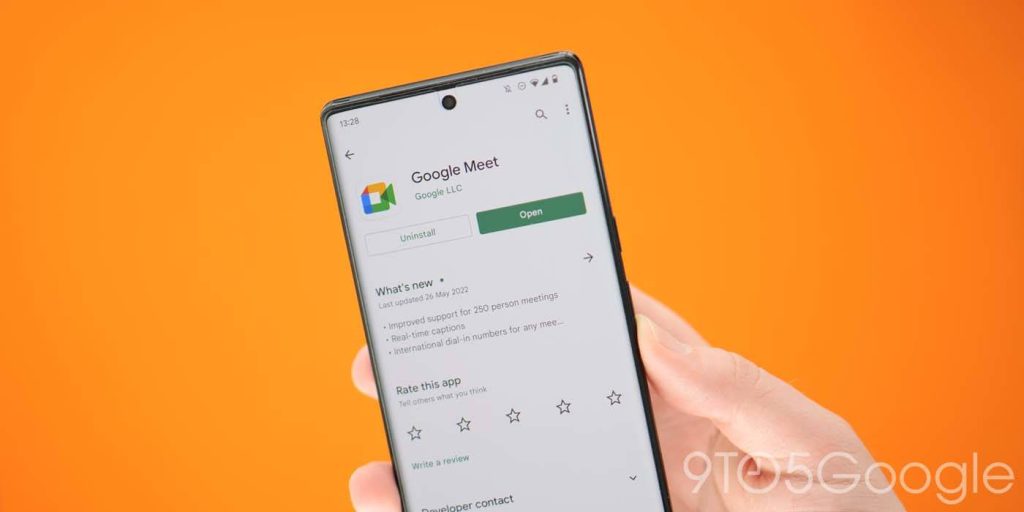
Video calling is a great way to keep up with friends and family beyond just texts and audio calls, and there are some great services to do it. Using Google Meet for calling friends and family is completely free, and it works across a ton of devices. Android phones and tablets. Chromebooks. Windows and macOS. It even works on iOS!
Think of it as Apple’s FaceTime but not locked down to one ecosystem.
The app works with your email address and features fun filters and even screen sharing on some devices. Its best feature, though, might just be how well it works on less-than-ideal connections.
Zoom
One of the most popular video calling/conferencing tools during the pandemic was Zoom. By its popularity alone, this is an app you should have installed. The service offers meetings that you can connect to with just a link or a password, easily connecting with loved ones and friends or using it for business meetings. Many schools are also using Zoom for remote learning. It’s a powerful app and one that’s not going to cost you anything unless you’re the one hosting, and even then, it’s got a free offering.
Back up your pictures and videos
Google Photos
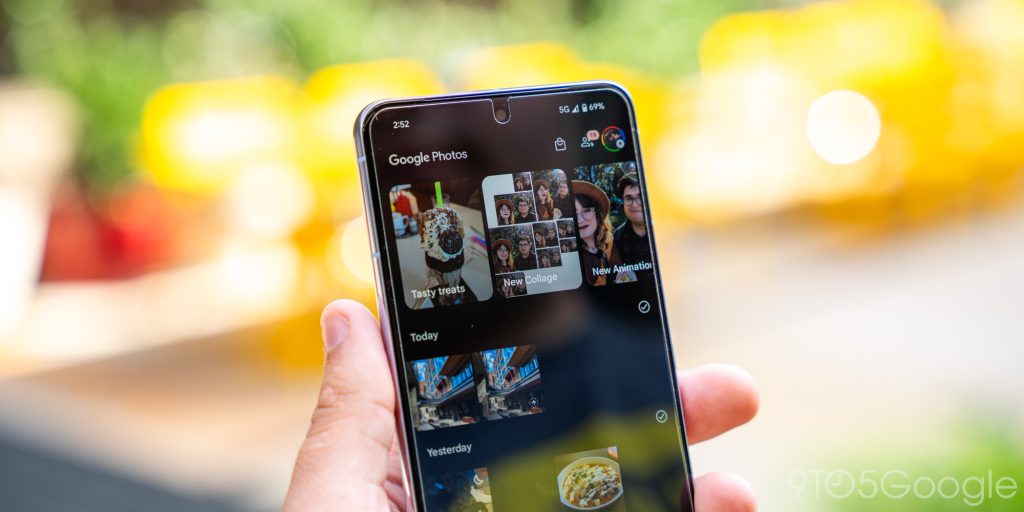
One of the first things you should install on a new Android smartphone – or an iPhone, for that matter – is Google Photos. For the vast majority of Android users, the app will be pre-installed on your device, but you’ll still need to get things set up.
To do that, simply open the app, sign in with your preferred Google account, and decide on backup options. Photos will automatically backup your pictures and videos in the background, but you’ll need to tell it if you want that done over Wi-Fi only or on cellular data, as well.
From there, you’ll just need to decide on quality. Google offers full-resolution backup as well as a slightly compressed, data-saving option that will lose a bit of quality, but you’ll be hard-pressed to tell the difference. Plus, there are some killer features available with a Google One subscription, such as Magic Eraser and a ton of helpful editing features.
You’ll get 15GB of storage for free, with rates starting at $1.99/month for additional storage through Google One, which adds storage to not only Photos, but also Drive and Gmail.
Amazon Photos and more
Outside of Google, there are some other solid options for storing your photos. Amazon Photos has one of the best values, with unlimited photo storage for Prime customers, while OneDrive has affordable rates and a robust setup for both photos and files alike.
Upgrade your keyboard
Gboard
The keyboards pre-installed on a lot of today’s most popular Android smartphones are, well, not great.
While much of it comes down to personal preference, you can get more features and, in many cases, better functionality out of a different keyboard.
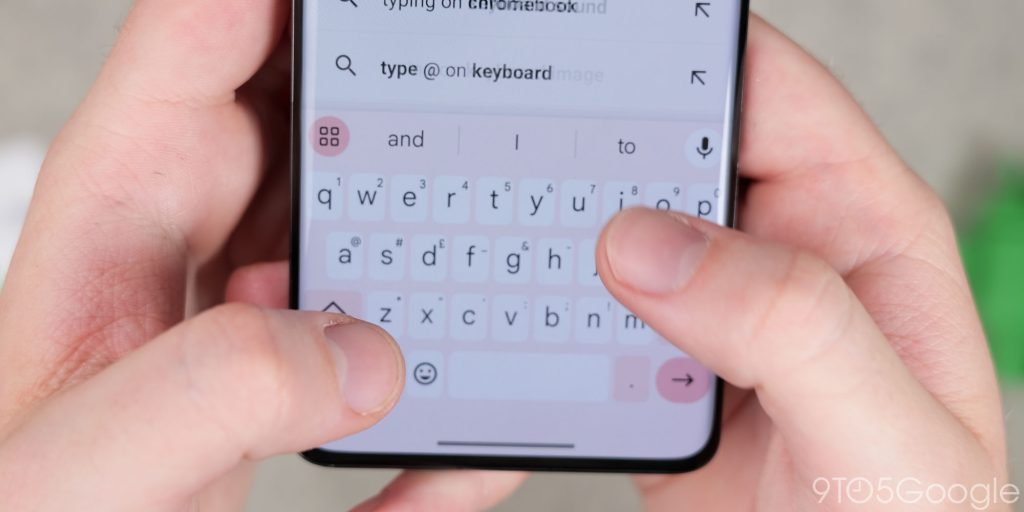
Our top pick? Google’s own Gboard. This keyboard has a great layout that’s comfortable for typers of all styles and supports features such as gesture/swipe typing, GIF search and input, and so much more. There are even unique features such as the “Emoji Kitchen,” which can create some wacky emoji stickers on the fly. You can also theme Gboard to your heart’s desire. There’s also a useful toolbar that you can customize!
Put simply, it’s an excellent keyboard that’s totally free, and if it wasn’t already on your phone (it’s not installed by default on Samsung Galaxy devices, for example), you should give it a try. Check it out on the Play Store.
SwiftKey and more
If Gboard isn’t quite your style, there’s another great option on the Play Store in the Microsoft-owned SwiftKey. This keyboard has been one of the most popular Android apps since the platform’s app store existed. Recently acquired by Microsoft, the app offers excellent gesture typing and features the neat trick of learning and adapting to your typing style and your spelling mistakes too. SwiftKey supports over 400 languages and is free. It even supports syncing your clipboard with Windows PCs.
Another keyboard you might like is Grammarly. It was popularized as a Chrome extension but works great on Android, too. The Grammarly keyboard for Android goes beyond basic spell check to offer grammar fixes and alternate phrasing to improve how you send texts and emails, and it also has some useful AI features too.
Don’t lose your phone or your data
Set Up Find Hub
Here’s another app that should already be installed on any new Android smartphone. Find Hub, formerly “Find my Device,” is a Google app designed to help you keep track of your smartphone should it be misplaced. If the app isn’t installed on your device for some reason, Find Hub is available via the Play Store.
When you open up Find Hub, you’ll be prompted to sign in with a Google account and enter your password, as well. Once that’s done, you’ll be able to see your device as well as any others attached to your account. You can then ring, lock, or wipe any device on your account. The same applies to your new phone as well as any other Android device you own, a friend’s Android phone, or even just a web browser. As a side note, the core functionality of actually finding your phone with this app is on by default in Google Play Services, but by using the app, you’ll get a bit more control as well as being able to find your other Android devices through the app as well as helping friends to find their phones.
The Find Hub app is also how you’ll use AirTag-like trackers designed for Android. These trackers can be accessed through the app and use a network of Android phones to help you find them if they’re lost. On Samsung devices, you’ll also want to set up SmartThings Find for similar functionality with Galaxy SmartTags.
Google One
If you do lose or break your phone, you don’t have to lose your data. That’s where Google One comes in handy. With any Google One storage plan (starting at just $2/month), you’ll get improved backups of your phone. By default, Android already backs up core data for free to your Google account, but the One app can back up SMS messages and MMS messages along with your photos and videos.
Backup (and transfer!) your SMS
If you’re still handling a lot of your messaging through SMS, it’s good practice to back that up. SMS Backup & Restore is a handy little client that can back up your SMS and MMS messages to Google Drive or other cloud storage for safekeeping, but the especially handy part is restoring messages. This can be useful as you set up a new phone or if you’re planning to make the switch later on.
Fitness & Health
Especially with the new year incoming, fitness and health are key. With Android, this is bolstered through the Health Connect service that, in the background on your device, can sync your health data between different apps. Some compatible apps worth trying include:
MyFitnessPal: A simple and free tracker for food intake, very helpful for weight loss
Nourish: This app not only makes it easy to track your food, but connects you with a registered dietian to improve your health and work towards your goals. It’s covered by most insurance in the US, and one I personally use
Fitbit: While it’s mostly used for Fitbit devices and the Pixel Watch, the Fitbit app is a great hub for all of your health data, especially with its upcoming Gemini overhaul that’s designed to help coach you towards your goals.
Manage your money
Google Wallet – Manage tap to pay and more
Mobile NFC payments are super convenient, and setting them up on Android is easier than ever. Google Wallet is a free and quite simple app that lets you add credit/debit cards to your phone for NFC payments, as well as holding your loyalty cards, gift cards, airline passes, and so much more. It’s also working on adding support for driver’s licenses in select US States, many of which are now available.
Google Wallet is pre-installed on most Android devices, but you might have to manually download it on a Samsung device, for example. On Samsung devices, you can also use Samsung Pay for similar features.
Money transfer apps
Sending money has gotten a whole lot easier with apps, and there are some excellent choices to do so. Here are a few popular options.
PayPal: The classic, PayPal is a great way to send money to your friends and family but is also super useful for online shopping as well as selling.
Venmo & Cash App: Both using the same basic model, Venmo and Cash App are excellent apps for sending money between friends and family with usernames for sharing and easy linking to your bank. Plus, since they’re widely used, most folks are usually going to have at least one of these two.
These are preferable to Zelle, which you likely have linked to your bank account. While Zelle works well, it’s notorious for fraud to the point of an ongoing federal lawsuit, so perhaps be careful with that one.
The best note-taking Android apps
Google Keep
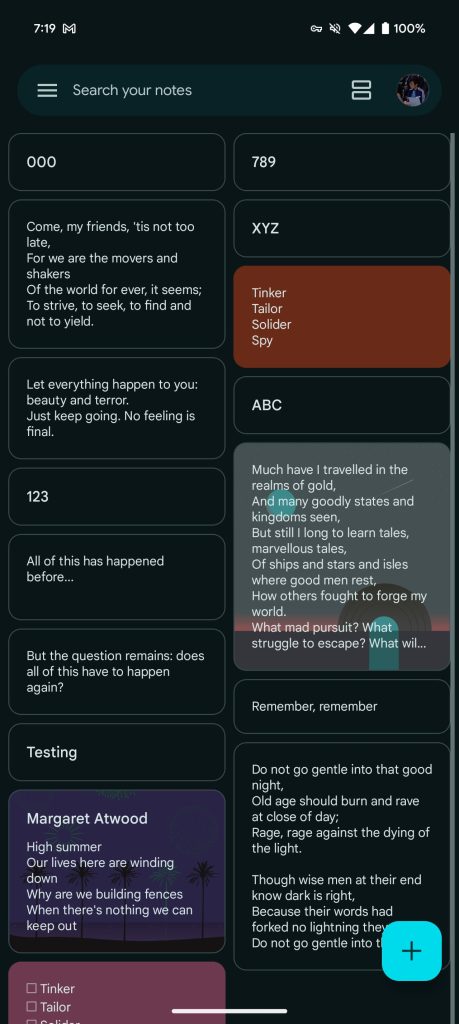
Keeping track of reminders, lists, and more can be made much easier by using a note-taking app. Personally, my favorite note-taking app on Android is Google Keep Notes, and it’s something that just seems to keep getting better over time.
If you want something that’s not from Google and has a few more advanced features, Microsoft OneNote is an excellent option. The app is completely free, though it works better with other Microsoft apps using a Microsoft 365 subscription. You can back up notes and drawings and insert pictures in the app, and like Google’s app, they’ll sync across devices with your Microsoft account. Other good options include Joplin, an open-source and multiplatform note-taking app, as well as Notion, a popular app that works across platforms and integrates some AI features.
Keep connected to your computer
Link to Windows
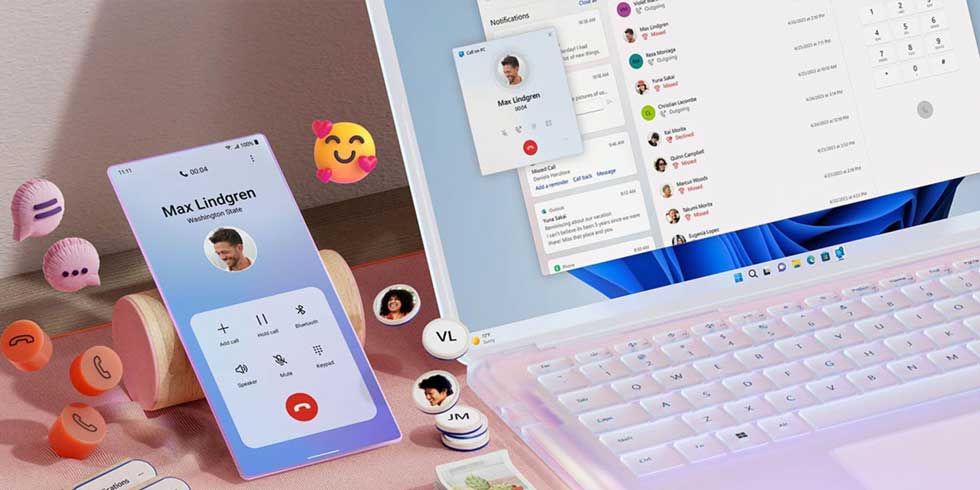
If you spend all day at a desk, it can be super convenient to keep your Android phone connected to your PC. With the Link to Windows app, that’s super easy.
After connecting, Link to Windows allows Android users to take phone calls on their PC, use messages, bring their notifications to their computer, and even access their photos and videos without hooking up any wires. You can even mirror Android apps from your phone up to your computer. Microsoft continues to build on the app and add new features and deeper integration with Windows.
Install Quick Share on your Windows PC too
If you do have a Windows PC, one app you’ll want to immediately set up is Quick Share. The AirDrop-like service is live by default on your Android phone, but the Windows app needs to be manually installed. Once it is, you’ll be able to exchange files back and forth from your phone, tablet, and PC all using the same native functionality.
Chrome Remote Desktop is simple, but always useful
The Chrome Remote Desktop app lets you connect to your computer wirelessly, and it’s dead-simple to set up. Install the app on your phone and on the Chrome browser on your PC of choice, link both to your Google account, and enable access from the PC. Boom, now you can connect from anywhere, no subscriptions or anything else needed. There are more versatile tools out there, but Chrome Remote Desktop is easy, simple, and completely free.
How to set up Chromebook Phone Hub
Alternatively, if you have a Chromebook, you can set up “Phone Hub.” This offers most of the same features as Link to Windows but further builds on it with support for setting up a hotspot and using your phone as a “key” to unlock your ChromeOS device. You don’t have to download anything to set up Phone Hub either, just follow the instructions below.
A few more noteworthy apps:
Feedly: Want to keep track of the news using personalized RSS feeds? Feedly is one of the best apps for the job, and it’s free!
Google Home/Amazon Alexa: Got some smart home speakers or displays? You’ll want to have the Google Home or Amazon Alexa apps installed, depending on what devices you own.
Kinestop: This free app allows users to start a visual overlay on Android that reduces motion sickness when using your smartphone while in a car or while otherwise moving.
On his first day as president in 2021, Joe Biden issued an order “advancing racial equity.” Last January, President Donald Trump called that goal an “immense public waste and shameful discrimination.”
Whiplash continues over what constitutes racial justice in America.
In the Pioneer Valley, some institutions that receive federal money pared away stated commitments to diversity in their hiring and operations. The Republican found the changes by comparing current wording with earlier online pronouncements available through the Internet Archive.
Organizations had good reasons – financial and legal – to keep their heads down, softening or removing promises to address racial inequality. Pressure was mounting from Washington, D.C., to abandon affirmative steps against racism.
On Jan. 20, Trump had directed the Office of Management and Budget, the attorney general and the Office of Personnel Management to terminate “all discriminatory programs, including illegal DEI and ‘diversity, equity, inclusion, and accessibility’ (DEIA) mandates, policies, programs, preferences, and activities in the Federal Government, under whatever name they appear.”
In an executive order Jan. 21, Trump widened his war on DEI to include the private sector.
The crackdown wasn’t limited to government operations – and employers across the country took note. The investigative news organization ProPublica found that more than a thousand charities retooled their mission statements to cut or tone down language that promised to address racial inequity and historic disadvantage.
Bay Path’s pivot
Before Trump returned to the White House, Bay Path University in Longmeadow had a lot to say on its website about its diversity goals. On a page labeled “Our Mission, Vision & Values,” the school listed eight overall goals to advance “every learner’s dreams of a better career, a richer life, and a brighter future.”
Today, three of those pledges are gone: “Diversity Makes Us Stronger,” “We Are Committed to Equity” and “We Pledge to Foster Inclusion and Belonging.”
The school’s archived webpage from Jan. 17, a week before Trump’s second inauguration, went deep in explaining why it held those goals. The school sought equity, it said, because “we share honest acknowledgement that pervasive, enduring and corrosive structural inequities have caused BPOC communities to suffer. … We recognize the uncomfortable and incontrovertible truth that ours is a world of imbalanced access to opportunities and resources.”
In its promise to “foster inclusion and belonging,” also removed from the webpage, the school had said this: “We value the work of being anti-racist and truly accessible to our diverse population of learners, faculty, and staff, where every voice is encouraged, heard, and respected, and authentic selves are valued.”
To be sure, jettisoning such public rhetoric doesn’t mean a college is turning away from the objectives in actual work on a campus.
Kathleen Wroblewski, Bay Path’s senior director of communications and media relations, said the university moved, on a lawyer’s advice, to change its statements after getting a “Dear Colleague” on Feb. 14 letter from the Department of Education’s Office for Civil Rights.
The letter made plain that schools faced the loss of federal funding if they didn’t adhere to the new administration’s rules.
Wroblewski said that would have hurt Bay Path students. Many are first-generation students and eligible for need-based federal Pell grants, she said. That funding is “essential to their ability to access and complete their education. … Failure to comply would have put that crucial support at risk, and with it, the educational pathways of the students we serve,” she said.
“Preparing students for successful careers is our priority,” Wroblewski said in a statement, in response to questions from The Republican. “That requires protecting the resources that make their education possible while ensuring we remain in full compliance with federal law.”
Bishop Talbert W. Swan II, president of the Greater Springfield NAACP, said institutions are doing what they can to survive.
“While we would like for them to stand strong and resist, we understand they have a constituency to serve with funds from our taxpayer dollars,” he said Friday. “They want to fly under the radar. In many ways, I can’t blame them. [The government] created a climate where these institutions feel threatened to lose funding if they don’t comply.”
Bishop Talbert W. Swan II is pastor of the Spring of Hope Church of God in Christ and president of the Greater Springfield NAACP. “While we would like for them to stand strong and resist, we understand they have a constituency to serve with funds from our taxpayer dollars,” he said of organizations that have changed their public statements about diversity, equity and inclusion. (Douglas Hook / The Republican)
Douglas Hook
Since removing content from its website, Wroblewski said the school has worked to make clear to students that it opposes “illegal discrimination in any form.”
The university’s president, Sandra J. Doran, told the school community last February that the campus, and the affiliated Cambridge College, values all of its members.
“We are an institution where every voice and perspective has been, continues to, and will always be valued,” Doran said in the statement.
The Longmeadow university was just one of many schools and nonprofits in the region that pulled back from DEI goals in mission statements.
Just a week after Trump’s orders, Boston University said it would close its Center for Antiracist Research. Across town, Northeastern University wiped mentions of DEI from its webpages and retitled its Office of Diversity, Equity and Inclusion. New name: Office of Belonging.
Over the course of 2025, words like “belonging” often replaced or joined “inclusion.”
The school said it had to act to protect itself. “Failing to comply with the law could jeopardize student financial aid and federally funded research across a range of disciplines and projects,” Northeastern said in an online post.
Baystate’s ‘Black and Brown employees’
When Trump returned, Baystate Health, one of Western Massachusetts’ largest employers, with roughly 13,000 workers, was 17 years into what it termed its “diversity, equity and inclusion journey.”
“We are committed to examining our systems and behaviors to ensure they advance equity and shared prosperity,” Baystate Health said in its online mission statement, visible as of Jan. 22.
It invited visitors to download a 2022 report on its progress toward DEI goals. “Confronting racism and bias behaviors is critical,” the company said. “We are committed to achieving equity in the hiring, promotion and retention of Black and Brown employees.”
Today, that last sentence is gone from Baystate’s online mission statement. Also edited out is language about the importance of confronting racism and bias.
The page’s earlier heading, “Our Commitment to Confronting Racism and Bias,” was replaced with “Our Commitment to Equity, Inclusion and Belonging.”
The revised statement is not a full retreat from DEI goals, though the goal is newly framed as a push to benefit “everyone.”
Baystate Medical Center has revised its online references to DEI goals. The new wording is not a full retreat from diversity goals, though the purpose is newly framed as a push to benefit “everyone.” (The Republican / file photo)Douglas Hook
Baystate says in online wording today that its vision is “to integrate equity and inclusion into every part of our work — from patient care to workplace culture — so that everyone experiences a sense of belonging and the chance to reach their fullest potential.”
Heather Duggan, Baystate’s manager of external communications, said that commitment is alive and well. She said in a statement, in response to questions, that doing right by caregivers and patients “has been at the heart of our organization for more than 140 years.” Baystate is faithful “in words and actions” to long-held goals of what she termed “welcoming and belonging, social and health justice, meaningful and structural change, and community impact.”
“While some of our language has changed, Baystate Health’s commitment to our people, our communities, and a culture of inclusion and belonging remains unwavering,” Duggan said.
The people making these changes had cause to think someone with a long reach and access to the U.S. Treasury was watching.
In his Jan. 21 executive order, the president claimed that “critical and influential institutions of American society … have adopted and actively use dangerous, demeaning, and immoral race- and sex-based preferences under the guise of so-called ‘diversity, equity, and inclusion’ … that can violate the civil-rights laws of this Nation.”
Trump ordered executive branch departments and agencies to end all DEI mandates and programs. On top of that, he called on officials charged with upholding civil rights “to combat illegal private-sector DEI preferences, mandates, policies, programs, and activities.”
More subtle changes
Some wording changes have been relatively subtle. The Caring Health Center in Springfield, for example, had used its website to declare that it stood ready to serve newcomers to America.
“As the community continues to welcome refugees and immigrants,” it said in text available on its website June 4, 2024, “our commitment to providing appropriate and accessible care is demonstrated by the use of multilingual translation services, and sensitivity to the unique cultural needs of the people we serve.”
Today, the post’s reference to “refugees and immigrants” is gone.
Attempts to reach Caring Health Center for comment last week were unsuccessful.
The Caring Health Center in Springfield has edited its online mission to remove a reference to having served immigrants and refugees. (The Republican / file photo)Douglas Hook
The newspaper also reviewed IRS documents, comparing language from nonprofits that must file Form 990 before and after Trump’s return to the White House. Part III of the form requires a mission statement. Caring Health did not adjust its mission statement in IRS Form 990 this year. As in the previous two years, the agency said it works “to bring the highest level of health care to those who are challenged by socio-economic, linguistic, and cultural barriers.”
Also in Springfield, the nonprofit Way Finders Inc., which builds and manages affordable housing, ended 2024 with a particular online commitment that did not survive 2025.
“Way Finders builds and advocates for a thriving and equitable region,” a webpage said in December 2024, “by improving the stability and economic mobility of families and individuals, together with developing and managing a wide range of housing to support strong communities.”
Today, that statement of mission does not include the word “equitable” or the term “economic mobility.” It reads, “Way Finders builds and advocates for thriving communities by strengthening housing options, supportive programs, and economic opportunities.”
The Way Finders office at 1780 Main St. in Springfield. The nonprofit, which builds and manages affordable housing, ended 2024 with a particular online commitment that did not survive 2025. (The Republican / file photo)
Back in January, The Food Bank of Western Massachusetts’ online statement of “core values” made three specific pledges related to “diversity and inclusiveness.” The nonprofit said it would “strive” to have the region’s diversity reflected on its staff and board. It said understanding inequality in access to food “is essential to conducting our work.” And it committed itself to “increasing cultural competence and inclusion.”
As of last week, that 52-word section had been winnowed, with “strive” gone, to a 19-word promise to “foster diversity, equity, inclusion, and belonging.”
Holding their ground
Many institutions in the region have held onto their promises to be inclusive.
The United Way of Pioneer Valley’s “Inclusion Policy” reads the same way as it did on Jan. 20. “Inclusion is essential to what we do, as it creates and strengthens our community,” the nonprofit said then – and now.
Gȧndara Center, in Springfield, has not changed how it lists its mission – “to promote the well-being of Hispanics, African-Americans and other culturally diverse populations” – on its IRS filing in 2025.
The nonprofit Center for Human Development made no change this year in how it described its mission to the IRS. That wording had not mentioned race; the agency said only that it is “dedicated to promoting, enhancing, and protecting the dignity and welfare of people in need.”
On its website, CHD notes that it launched a DEI program in 2022. “Diversity, equity, and inclusion should always be at the heart of what we do to support our staff and those we serve,” Jim Goodwin, the agency’s president and CEO, said in a statement on the website.
Also holding firm – and then some – is the Community Foundation of Western Massachusetts. The organization raises and manages funding for charitable groups in Franklin, Hampden, and Hampshire counties.
“We will advance equity, diversity, and inclusion throughout the region’s three counties, including our workplaces and institutions by prioritizing racial equity in all facets of our work,” it says online. “We have chosen racial equity specifically because of the pervasiveness of racism in interpersonal and intrapersonal relationships and interactions, institutions, and systems in our region and in our country throughout our history. We believe that working toward dismantling systems of racial inequality provides a framework for dismantling all other forms of oppression.”
Western New England University in Springfield maintained a promise, on its webpage, to “celebrating the diversity of our community, locally and globally, and creating a community that fosters tolerance, integrity, accountability, citizenship, and social responsibility.”
Pledges by other higher education institutions in the Pioneer Valley to pursue DEI goals remained visible on many websites, including those of Mount Holyoke College, Springfield Technical Community College and Westfield State University.
Mount Holyoke College devotes a webpage to explaining its stance on DEI.
STCC links on its website to a 59-page document that includes 22 references to “diversity.”
At some point after March 2024, Elms College in Chicopee added a specific webpage called “Our Commitment to Diversity and Nondiscrimination.” It refers specifically to diversity and inclusion and guides anyone with “questions about DEI” to contact a college representative handling that issue.
“Our Catholic mission calls us to educate and serve a diverse student population, without discrimination, in an inclusive and vibrant learning community, in an effort to effect positive change in a pluralistic world,” the college says.
American International College made pledges before President Trump’s second term and those remain unchanged in its online presence. (The Republican / file photo)
Support for DEI goals is plainly stated by American International College. The college made pledges before Trump’s second term and those remain unchanged in its online presence.
The Behavioral Health Network, which provides mental and behavioral health care to 33,000 adults and children annually, has not changed what it says online about discrimination since at least mid-2024. “We believe that all people have the right to exist free of stigma and discrimination,” it says. “We promote and value diversity throughout the BHN community and shape our services and interactions with respect to one another’s culture and personal preferences.”
Trinity Health, which runs Mercy Medical Center in Springfield, had not referred explicitly to DEI goals in its online mission statement as 2025 began. That wording cited “the spirit of the Gospel as a compassionate and transforming healing presence” and wasn’t changed this year.